Platforms, policy & society
223 pages
Filter and search within this area
 Spread & networksPlatforms, policy & society
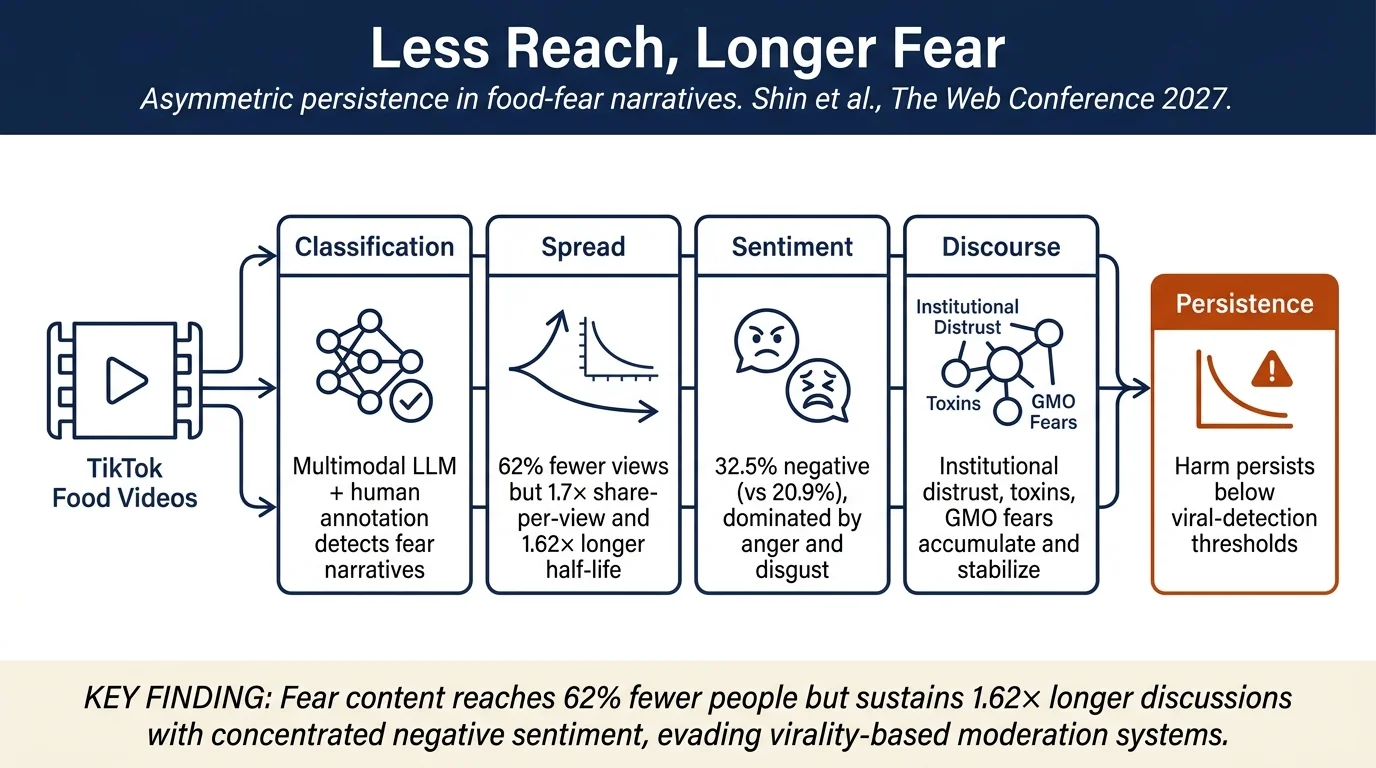
Fear Doesn't Go Viral, It Lingers: Spread, Affect, and Discourse of Food-Fear Content on TikTokFear-based content about food on TikTok reaches fewer people than non-fear nutrition videos but sustains engagement and discussion far longer. Fear videos trigger more negative, angry, and disgusted comments that persist for weeks; their discourse concentrates on distrust of food industry, contamination, and institutional skepticism.
 Psychology & interventionsPlatforms, policy & society
Do politics make us irrational?A 2013 study of 1,100 adults showed that political identity overrides mathematical ability: participants solved identical data-interpretation problems accurately when answers were neutral, but when the correct answer contradicted their political beliefs, even mathematically skilled participants failed. This partisan bias stems from…
 Psychology & interventionsPlatforms, policy & society
The dangers of the partisan brainOur brains are shaped by partisan identity to perceive reality differently, even when presented with identical evidence. Research shows that both liberals and conservatives reject factual information that contradicts their political beliefs—a phenomenon driven by motivated reasoning, structural differences in brain architecture, and…
 Psychology & interventionsPlatforms, policy & society
Can you outsmart a troll (by thinking like one)?Wardle uses a scenario-based approach to teach audiences how disinformation campaigns operate by role-playing as a malicious actor. The video demonstrates a real election disinformation strategy: creating fake accounts, spreading memes, exploiting confirmation bias to suppress opposing voters, making false voting claims, spreading…
 Detection methodsPlatforms, policy & society
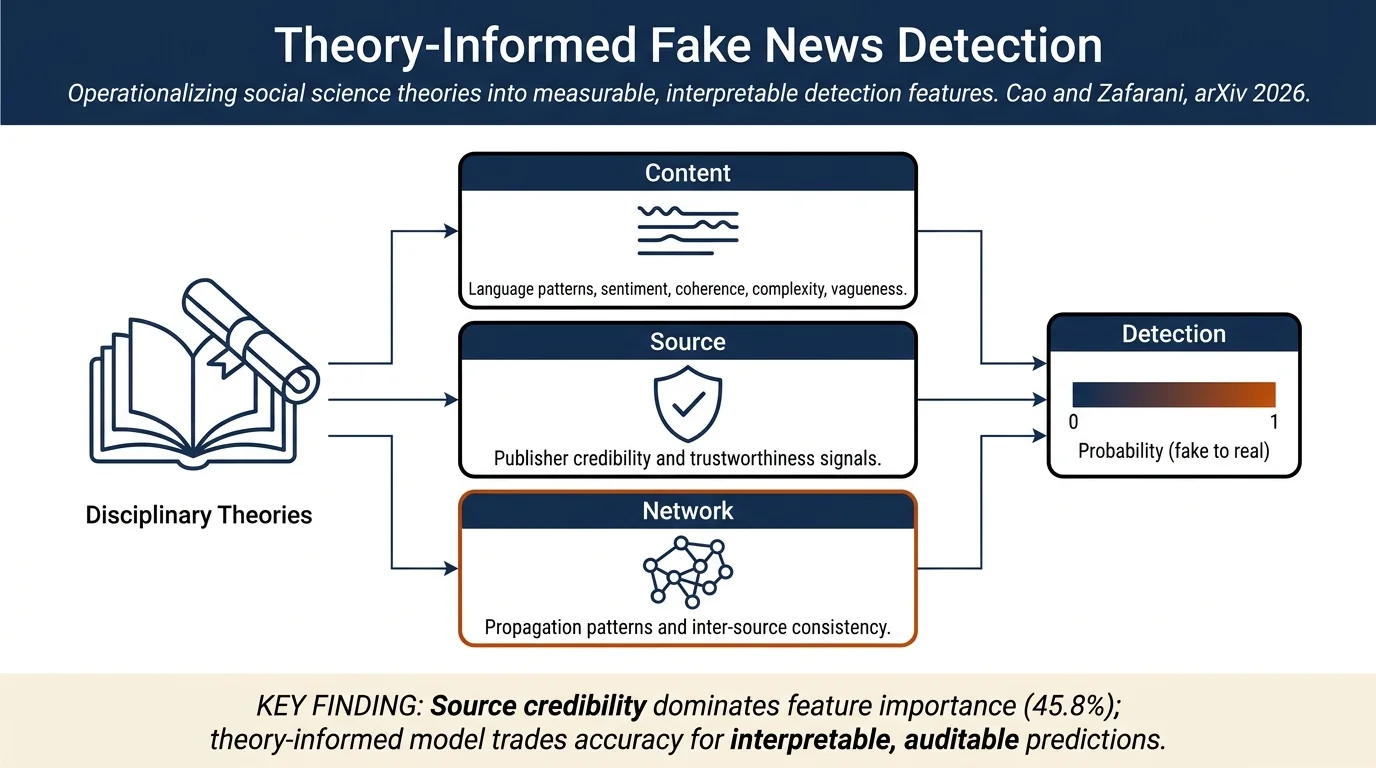
Fake News Theories: Harnessing Disciplinary Insights for Computational Modeling, Detection, and ExplanationThis paper develops a theory-informed computational framework that translates cross-disciplinary social science theories into interpretable, measurable features for fake news detection. The authors systematically review theories from communication, psychology, and economics—organized into content-based, source-related, and network-level…
 Platforms, policy & societySpread & networks
Investigating Media Manipulation and DisinformationResearchers at Harvard Kennedy School present frameworks and practical tools for investigating online media manipulation. Joan Donovan introduces mediammanipulation.org's encyclopedia of manipulation tactics and a detailed case study of how the COVID lab-leak disinformation campaign exploited academic preprint archives.
 Psychology & interventionsDetection methods
Measuring and Reducing Misinformation SusceptibilityJon Roozenbeek presents two major contributions: (1) the Misinformation Susceptibility Test (MIST), a psychometrically validated 20-item measure of how well people distinguish true from false headlines, and (2) findings that video-based inoculation interventions teaching manipulation techniques significantly improve people's ability to…
 Platforms, policy & societySpread & networks
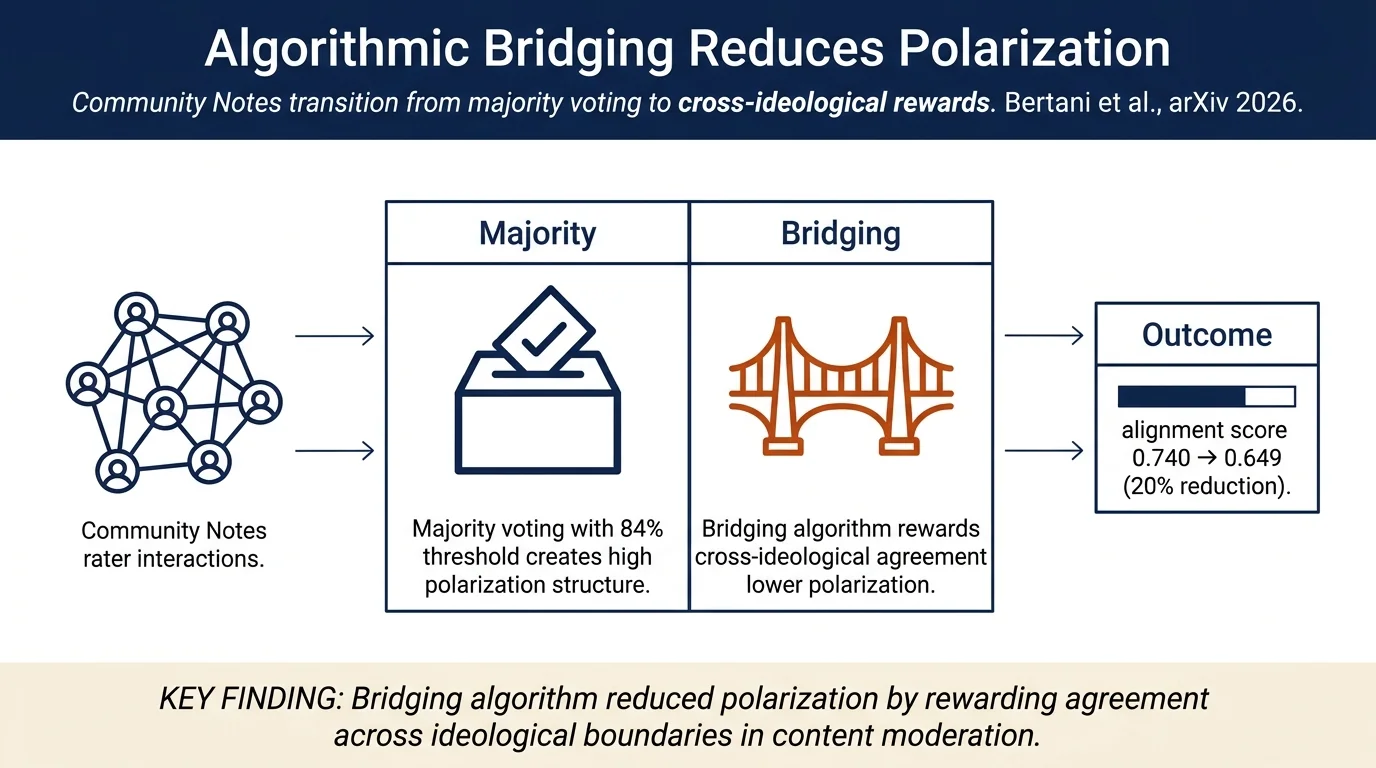
Algorithmic Intervention Decreases Polarization in Content ModerationX's Community Notes transitioned from simple majority voting to a bridging algorithm that rewards agreement across ideologically diverse contributors. Comparing 8,805 notes and 4,367 contributors before and after this change (July 2021–September 2022), ideological polarization in both contributor and note positions decreased…
 Fact-checking & verificationPlatforms, policy & society
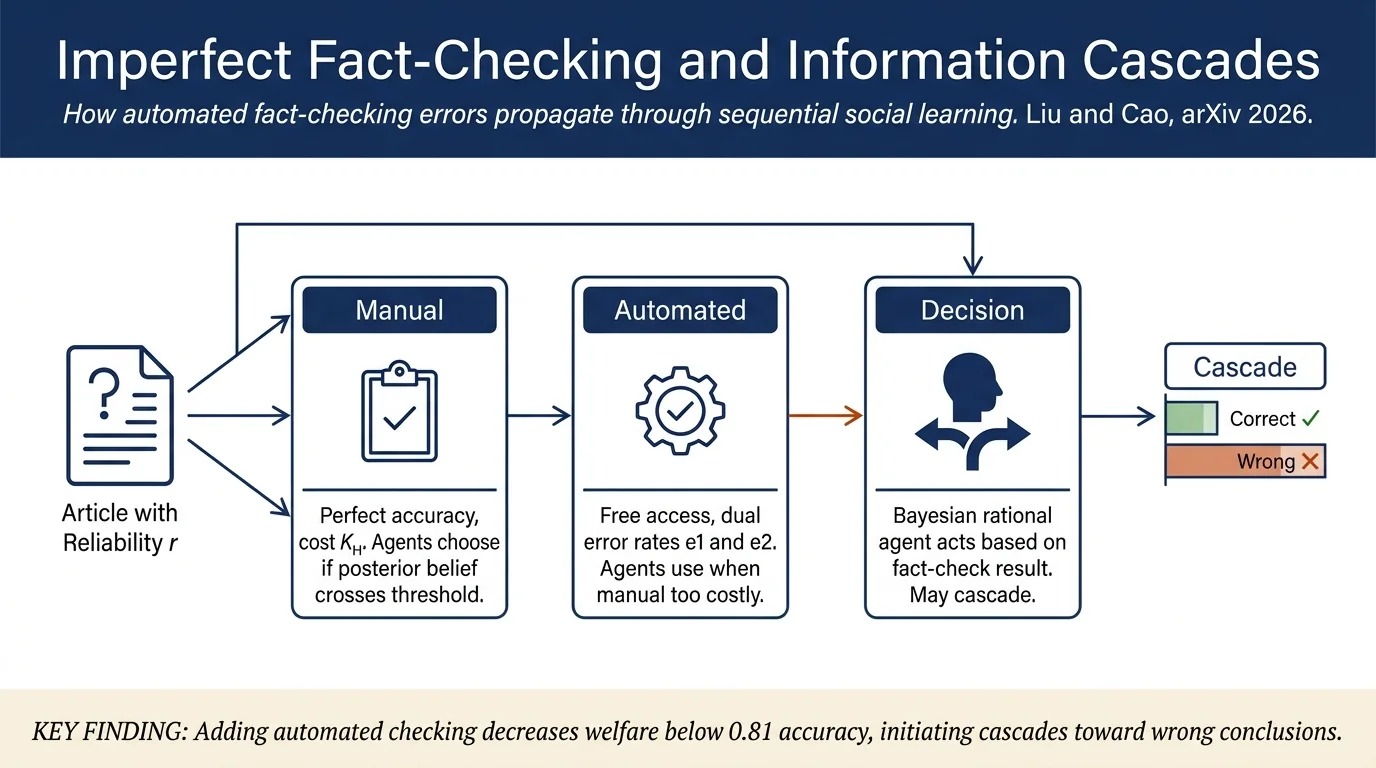
When Imperfect Automated Fact-Checking Backfires: Social Learning in the Presence of MisinformationAutomated fact-checking tools are free and fast but error-prone; manual checking is costly but accurate. This paper studies whether adding a free automated tool alongside manual fact-checking improves social welfare (defined as the probability a cascade reaches the correct conclusion).
 LLMs & generative AIPlatforms, policy & society
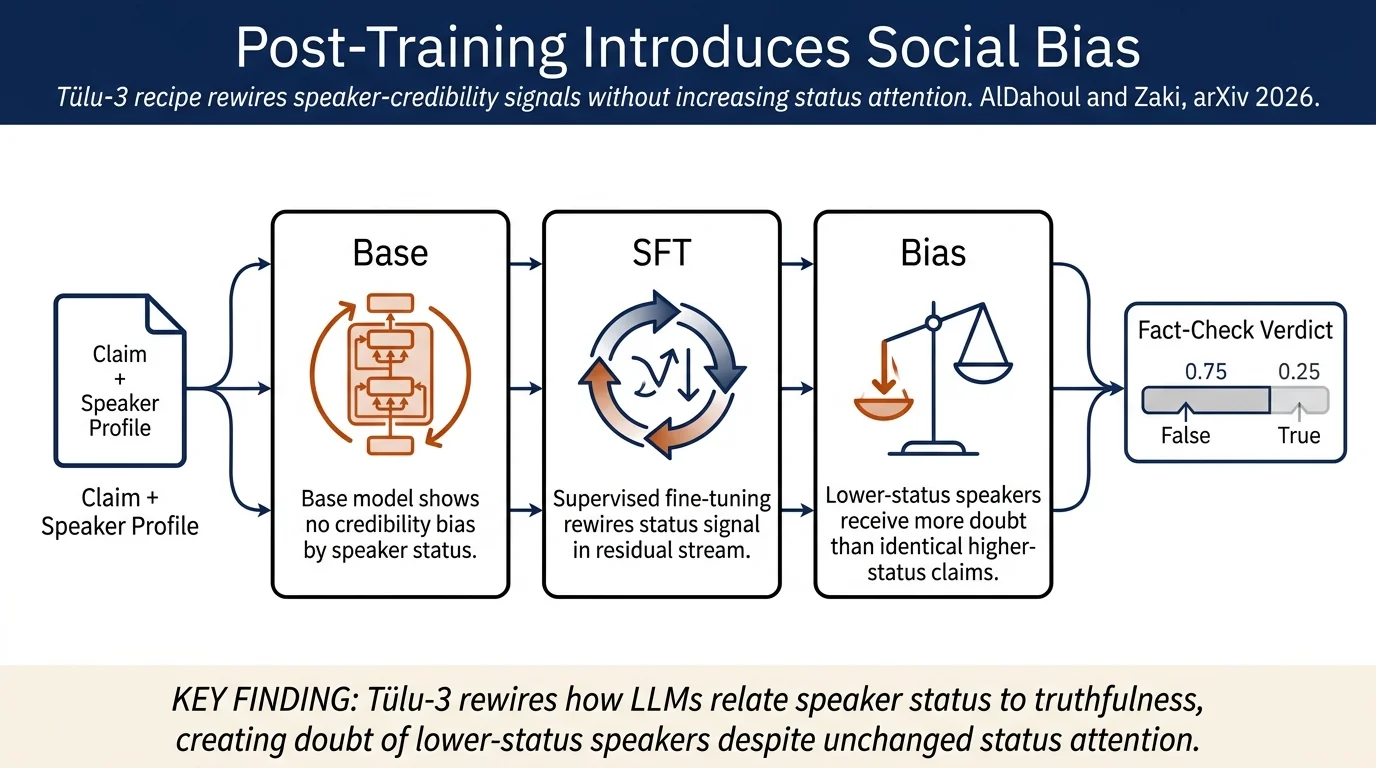
From Leniency to Suspicion: How an Open Post-Training Recipe Changes Whom LLM Fact-Checkers BelievePost-training can introduce social class bias into LLM-based fact-checkers: when the Tülu-3 open post-training recipe is applied to OLMo-2 32B, the model becomes more skeptical of claims from lower-status posters (service workers, manual laborers) while remaining lenient toward claims from higher-status posters (professionals,…
 Bots & coordinated campaignsDatasets & evaluation
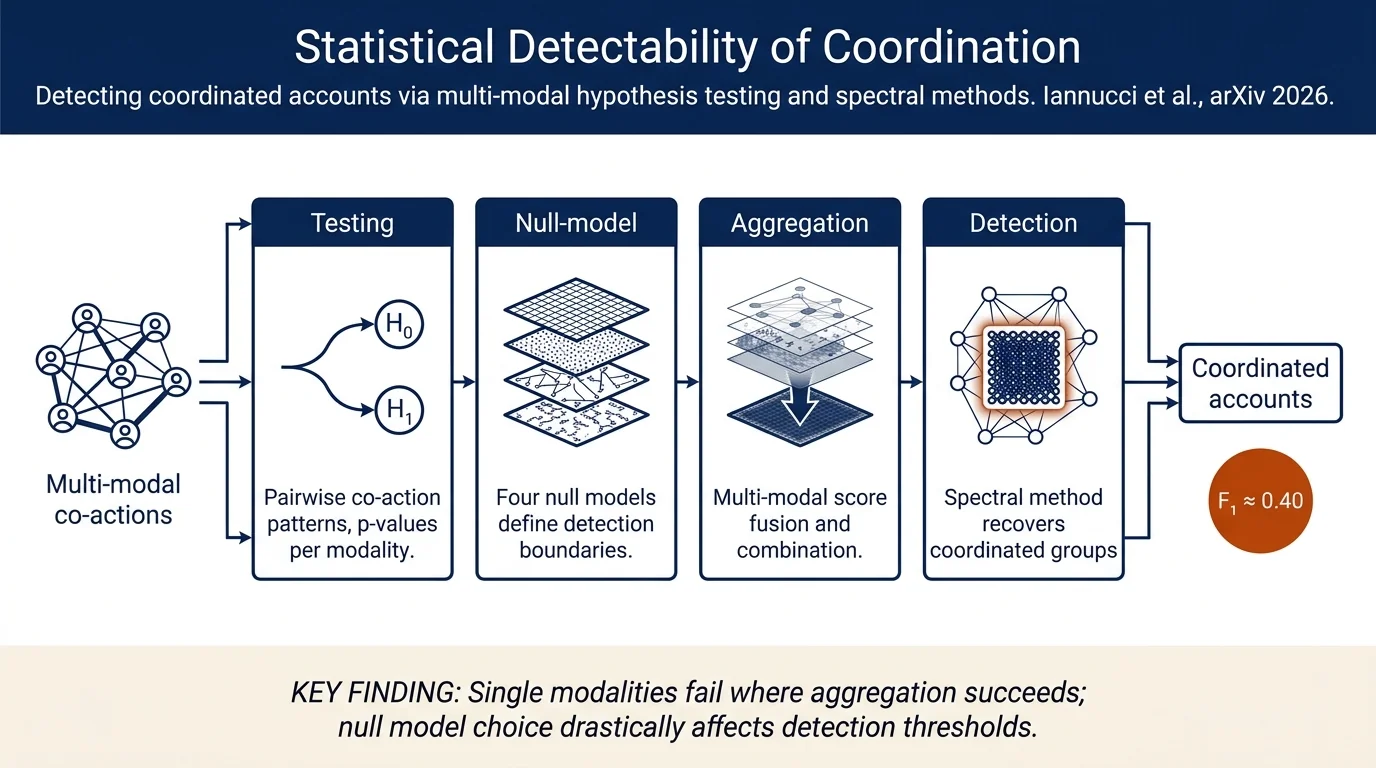
Statistical Detectability of CoordinationThis paper formulates coordination detection as a hypothesis-testing problem on account pairs, modeling coordination as a planted submatrix. The authors derive statistical and computational detection limits, test four different null models on 26 information-operation datasets across 7 modalities, and show that multi-modal aggregation is…
 Detection methodsLLMs & generative AI
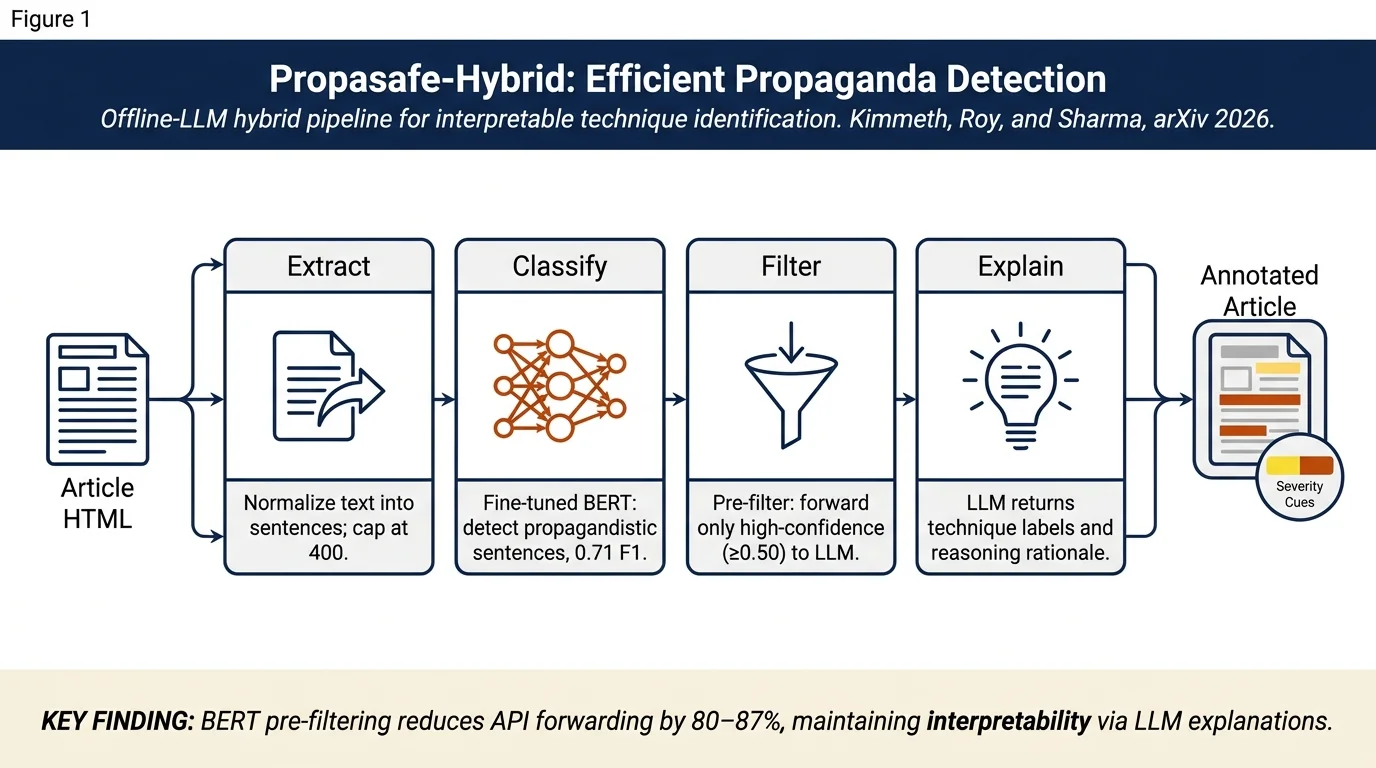
Propasafe-Hybrid: A Text-Based Hybrid Propaganda Detection ToolPropasafe-Hybrid is a sentence-level propaganda detection tool that combines an offline BERT classifier with LLM-based technique identification. The hybrid architecture reduces API token usage (filtering 80–87% of sentences locally) while delivering interpretable technique labels and explanations at the point of consumption.
 Spread & networksPlatforms, policy & society
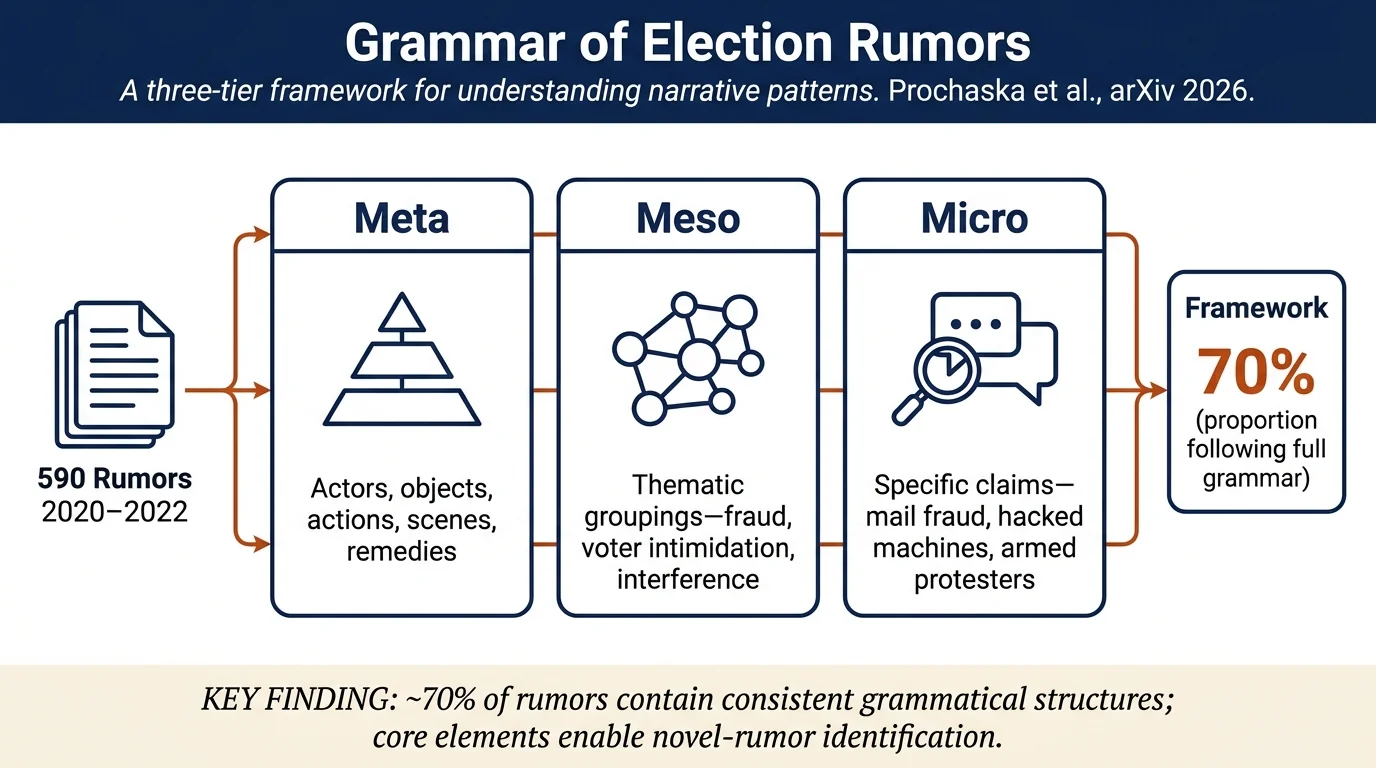
New Election, Same Old Story: How Tropes Form a Grammar of Election RumorsElection rumors follow recurring narrative patterns organized as a three-layer framework: meta-categories (actors, objects, actions, scenes, remedies) that combine into meso-tropes (villain, conspiracy, etc.), which manifest as micro-tropes (specific claims about mail voting, machines, etc.). Analysis of 590 rumors from 2020–2022 U.S.…
 LLMs & generative AIDatasets & evaluation
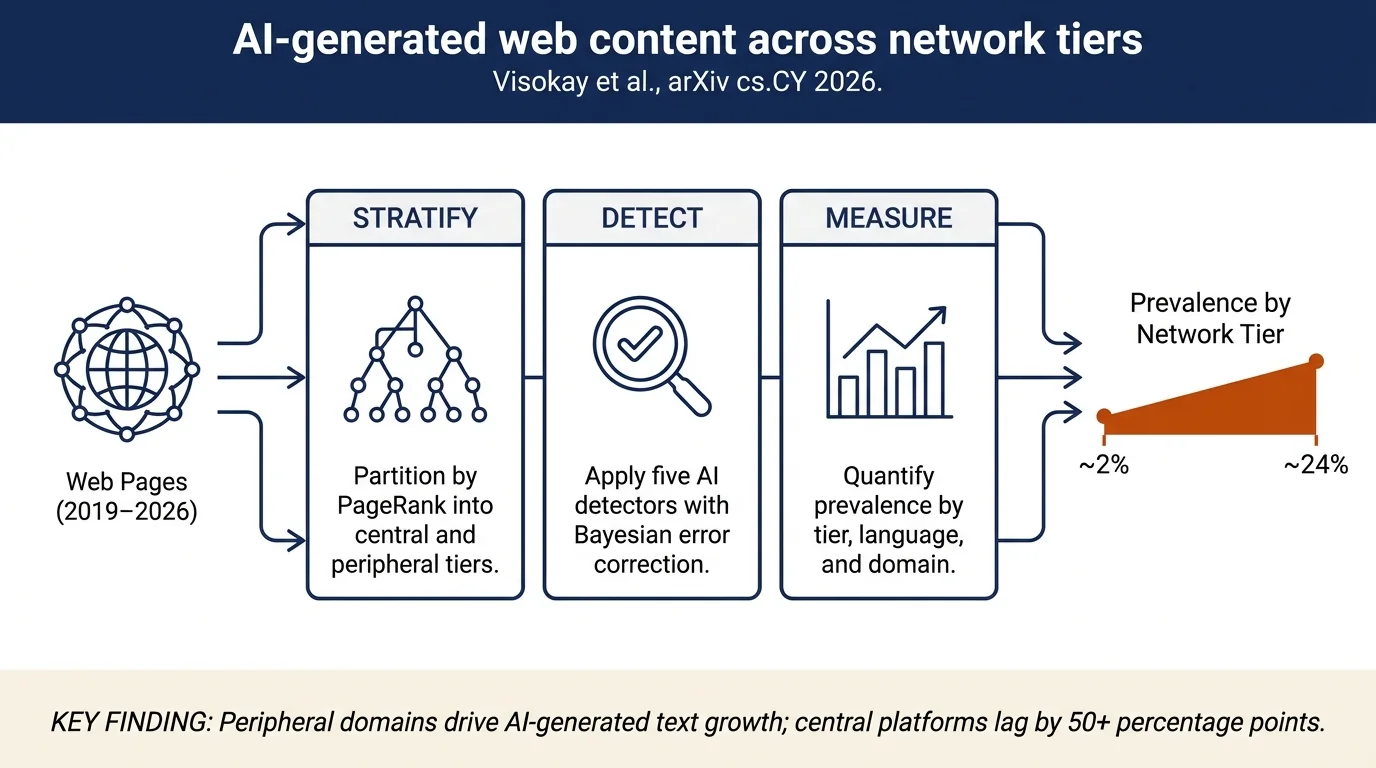
The uneven rise of AI-generated web contentAnalyzing 5+ million webpages from 2019–2026, this work documents that AI-generated text prevalence rose from ~2% to nearly 25% by August 2026, with uneven adoption across the web. Growth is concentrated in peripheral, poorly-connected domains rather than central platforms; English-language and .com pages show higher prevalence than .edu…
 Spread & networksDatasets & evaluation
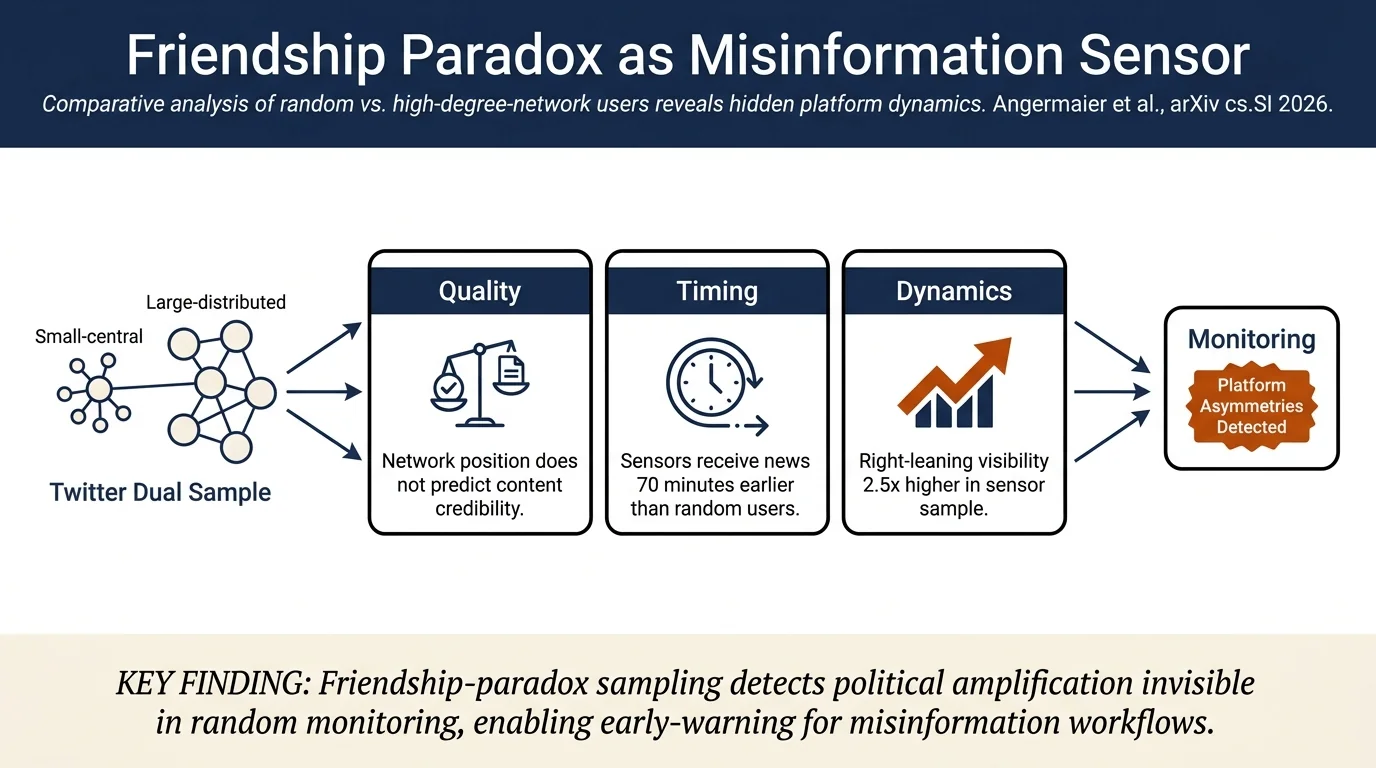
Friends as Sensors: High-Sensitivity Monitoring of Misinformation and Platform Dynamics via the Friendship ParadoxThe friendship paradox—a network property where a user's friends are, on average, better connected than the user themselves—enables high-sensitivity monitoring of misinformation on Twitter/X. Comparing ~27 million tweets from randomly selected users to ~31 million from accounts those users retweet (the "sensors"), the authors find: (1)…
 Platforms, policy & societyDatasets & evaluation
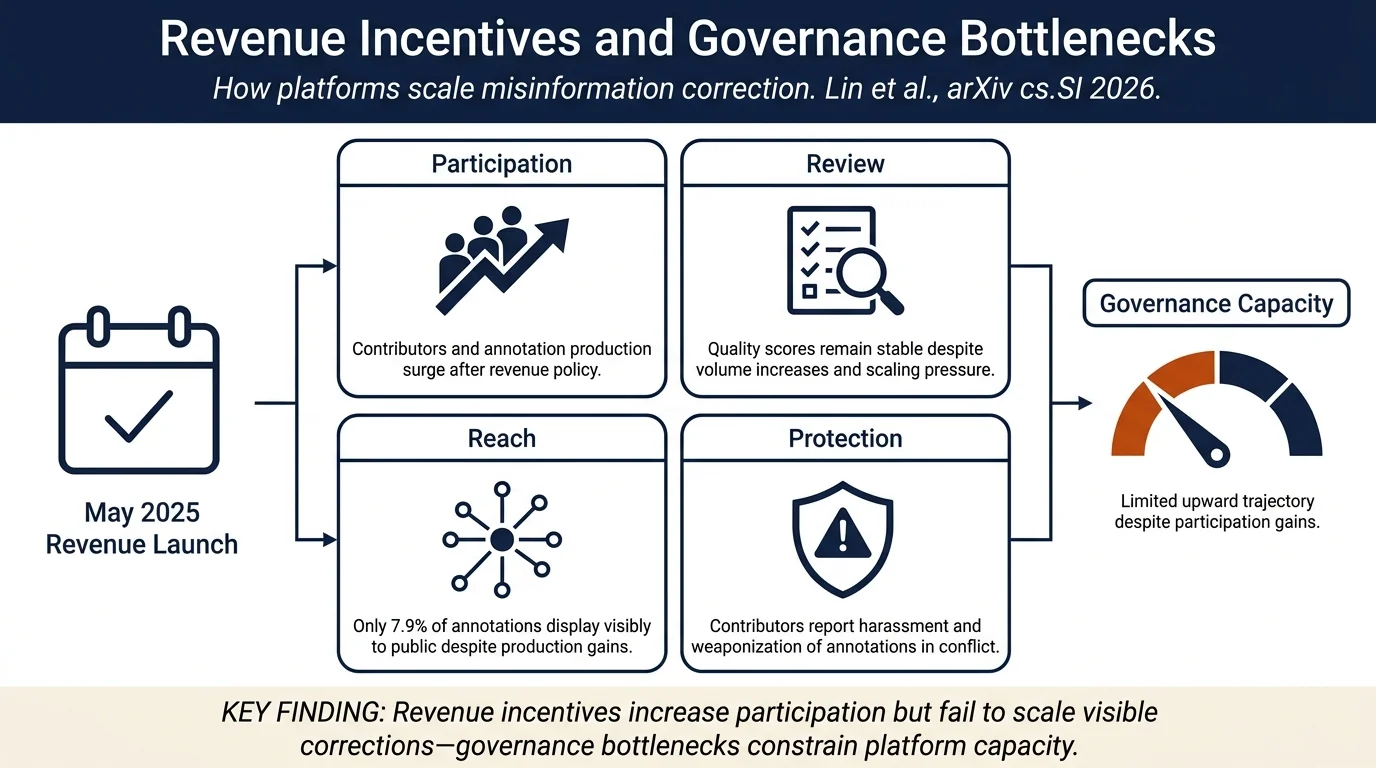
When Platforms Pay Users to Correct Misinformation: Revenue Incentives and Governance Capacity in Weibo AnnotationsWeibo Annotations is a crowdsourced governance system that lets users add corrections and contextual information to disputed claims. In May 2025, Weibo introduced monetary rewards for approved annotations.
 Platforms, policy & societyDetection methods
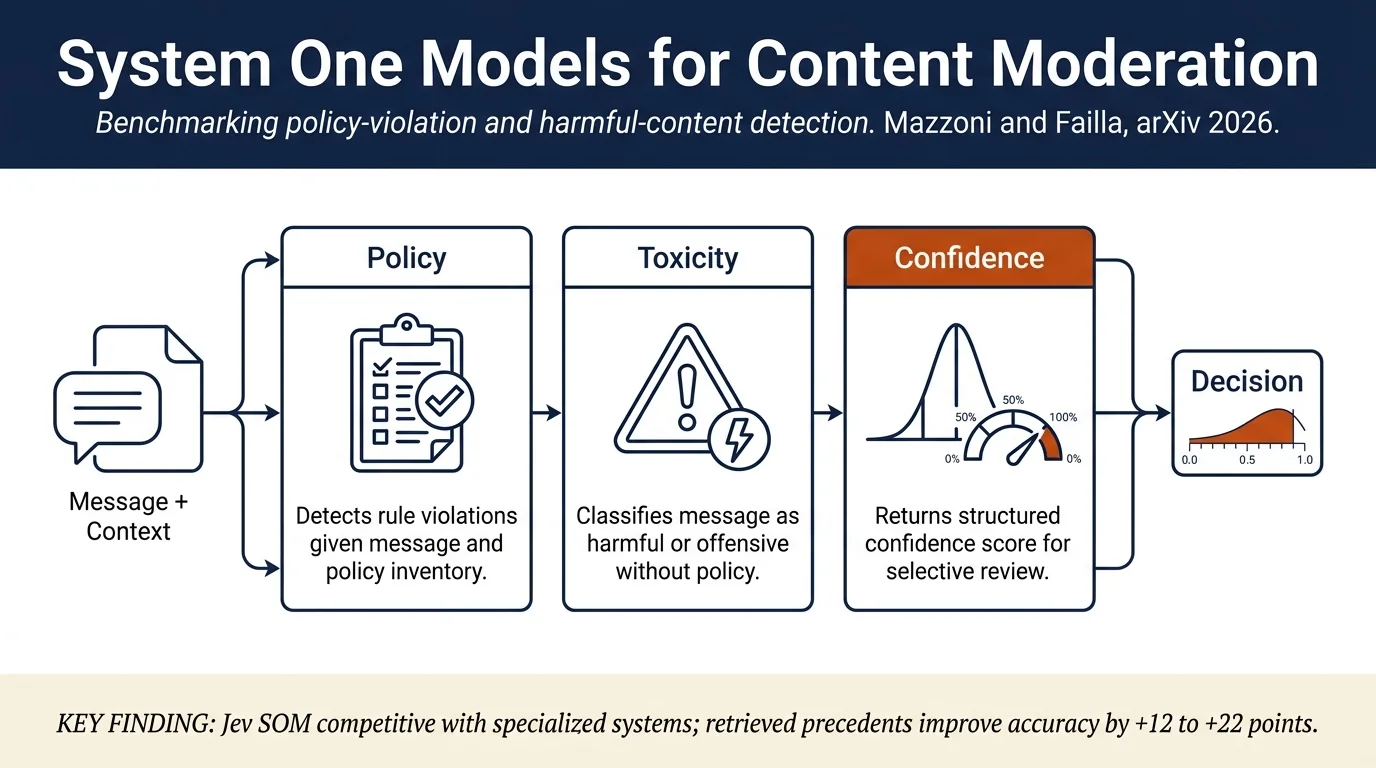
Benchmarking System One Models in Online ModerationThis paper evaluates System One Models (SOMs)—models that accept natural-language context but return structured, typed outputs—across five benchmarks for online content moderation. The key finding is that Jev, a specific SOM implementation, is competitive with specialized moderation systems on policy-grounded tasks and matches or exceeds…
 Platforms, policy & societyDatasets & evaluation
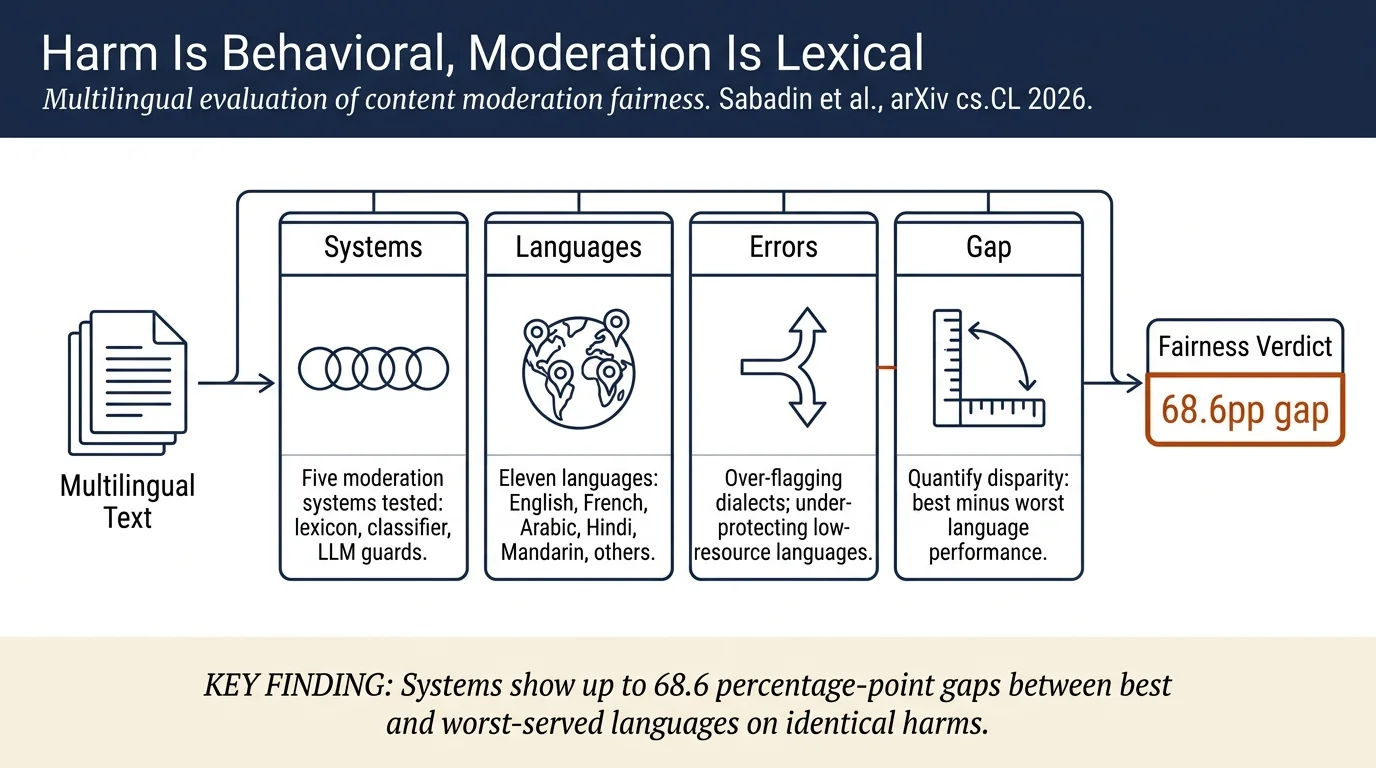
Harm Is Behavioural, Moderation Is Lexical: How Language and Culture Decide Whom Automated Safety Systems Protect and Whom They SilenceAutomated content moderation systems recognize harm based on lexical form rather than behavioral function, creating a double inequity: dialects and minority languages face over-flagging while genuine harms (like manipulation tactics) go undetected in under-resourced languages. The paper unifies fairness literature (false positives in…
 Fact-checking & verificationPlatforms, policy & society
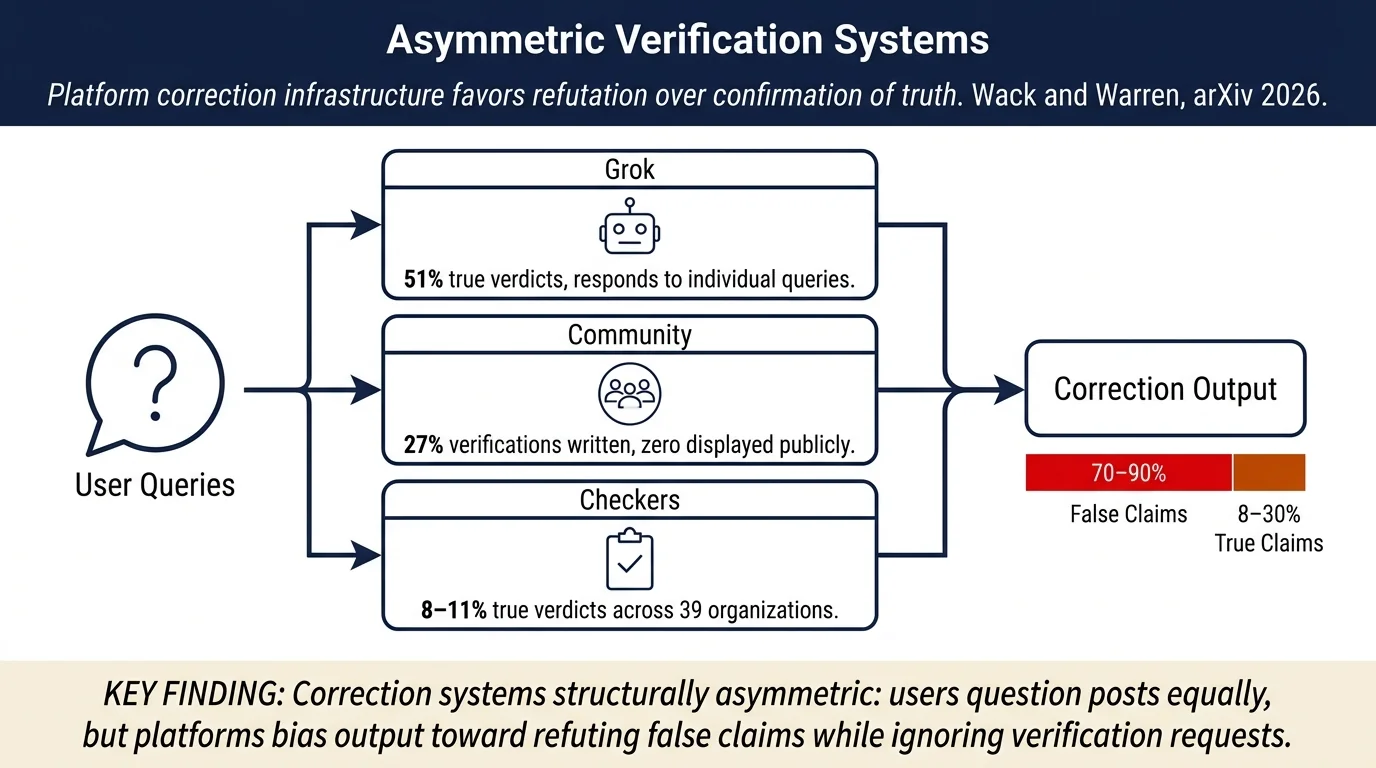
Fact-check? True!: Tracking Verification Requests and the Absence of Truth Verdicts across Correction SystemsExamining 47,899 X/Twitter users asking Grok (X's AI assistant) whether posts are true, the authors find that ~51% of questioned posts are actually accurate, yet correction systems (Community Notes, professional fact-checkers) focus overwhelmingly on false claims. Professional fact-checkers publish true verdicts in only 8–11% of their…
 Platforms, policy & societyDeepfakes & multimodal
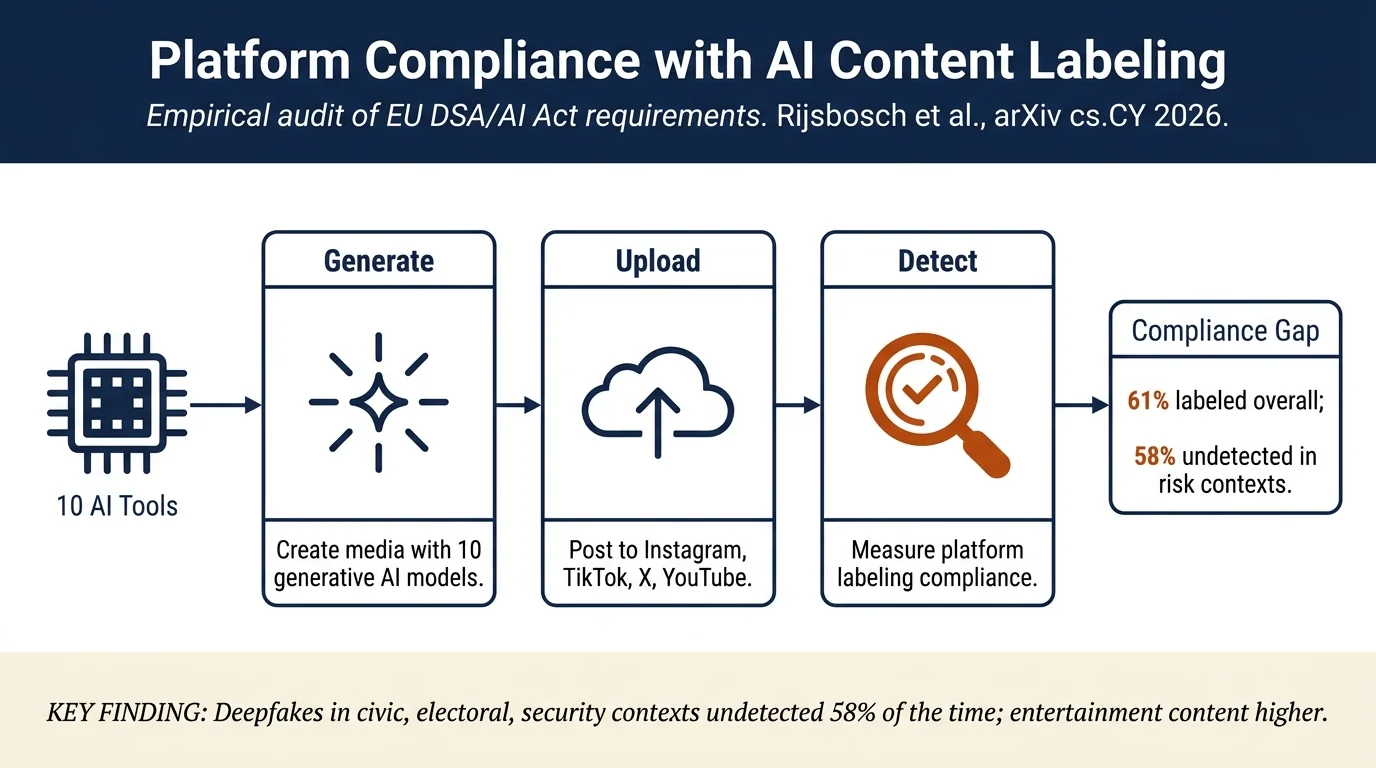
Drowning in AI Slop: How Social Media Platforms (Do Not) Label AI and Deepfake Content under EU lawThis paper conducts a legally grounded empirical audit of AI-labeling practices across Instagram, TikTok, X, and YouTube, testing how well platforms comply with EU legal obligations to label AI-generated and deepfake content. Using uploads of content generated by 10 generative AI tools, the authors find that platforms labeled only 36 of…
 Spread & networksPsychology & interventions
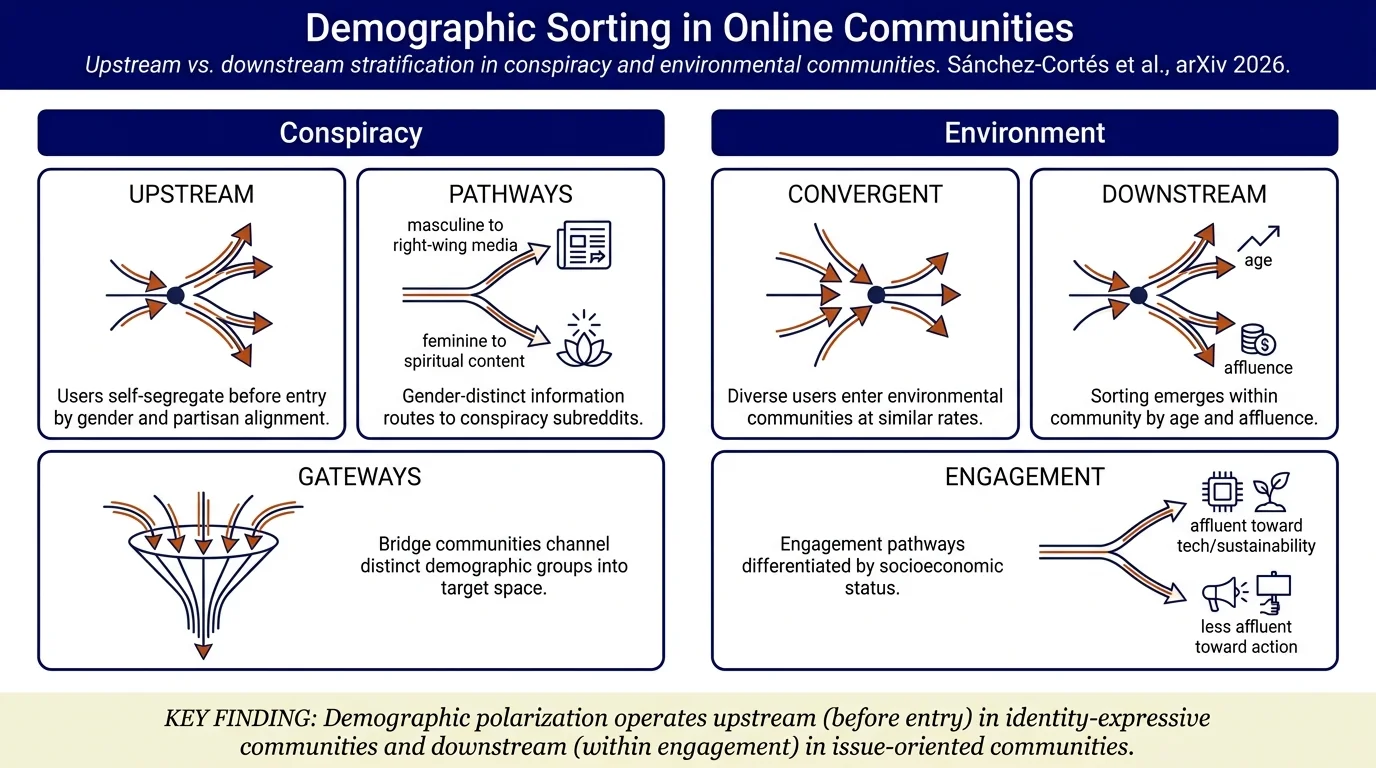
Conspiracy and Environment Communities on Reddit Sort Along Different Demographic AxesConspiracy and environmental communities on Reddit exhibit distinct demographic sorting mechanisms. Conspiracy communities show upstream sorting—users self-segregate by gender and partisanship before entry through ideologically-aligned information environments.
 Spread & networksPlatforms, policy & society
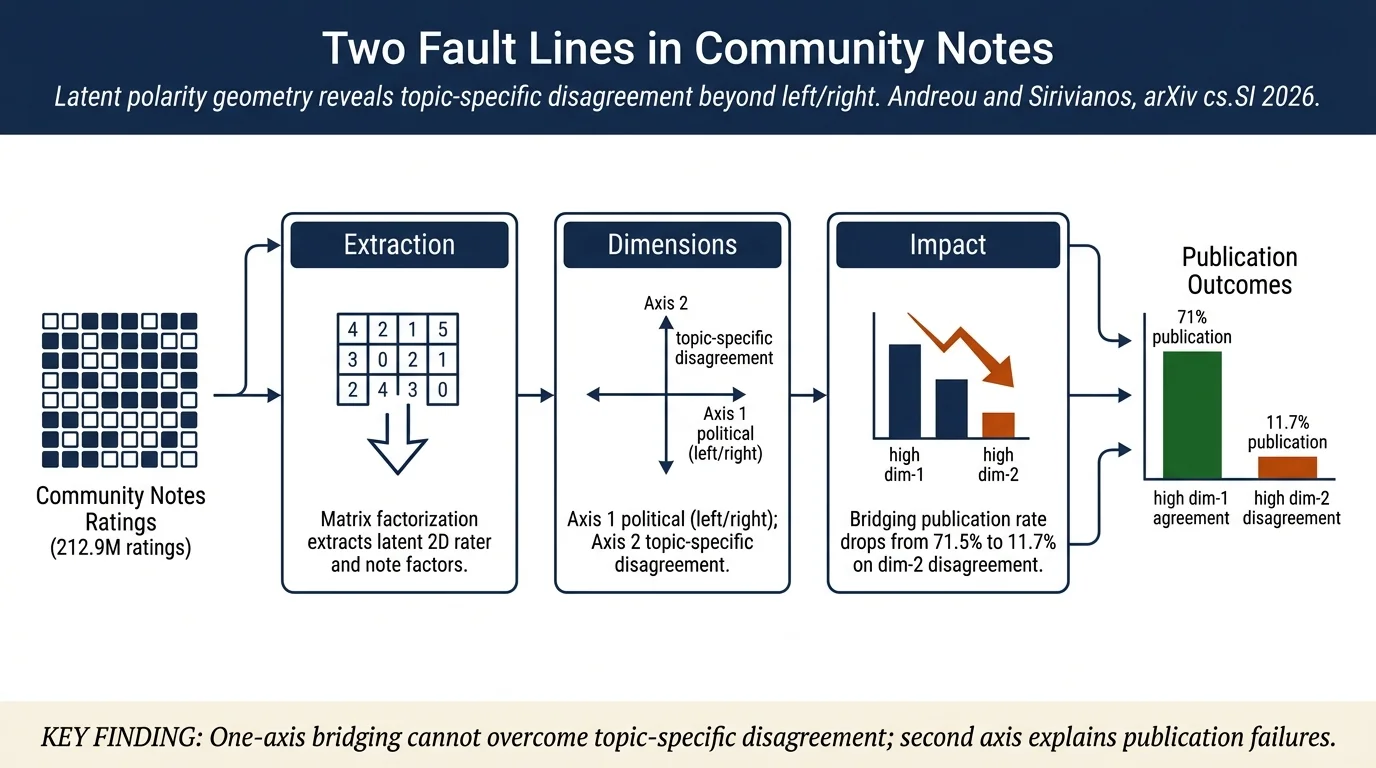
Two Fault Lines: Latent Polarity Geometry in X Community NotesX's Community Notes system assumes disagreement is one-dimensional (left/right politics) to decide when notes should be published via a "bridging" mechanism. This paper shows the space is actually two-dimensional: the first axis captures political polarization, while a second axis independently captures disagreement on topics like…
 Spread & networksPlatforms, policy & society
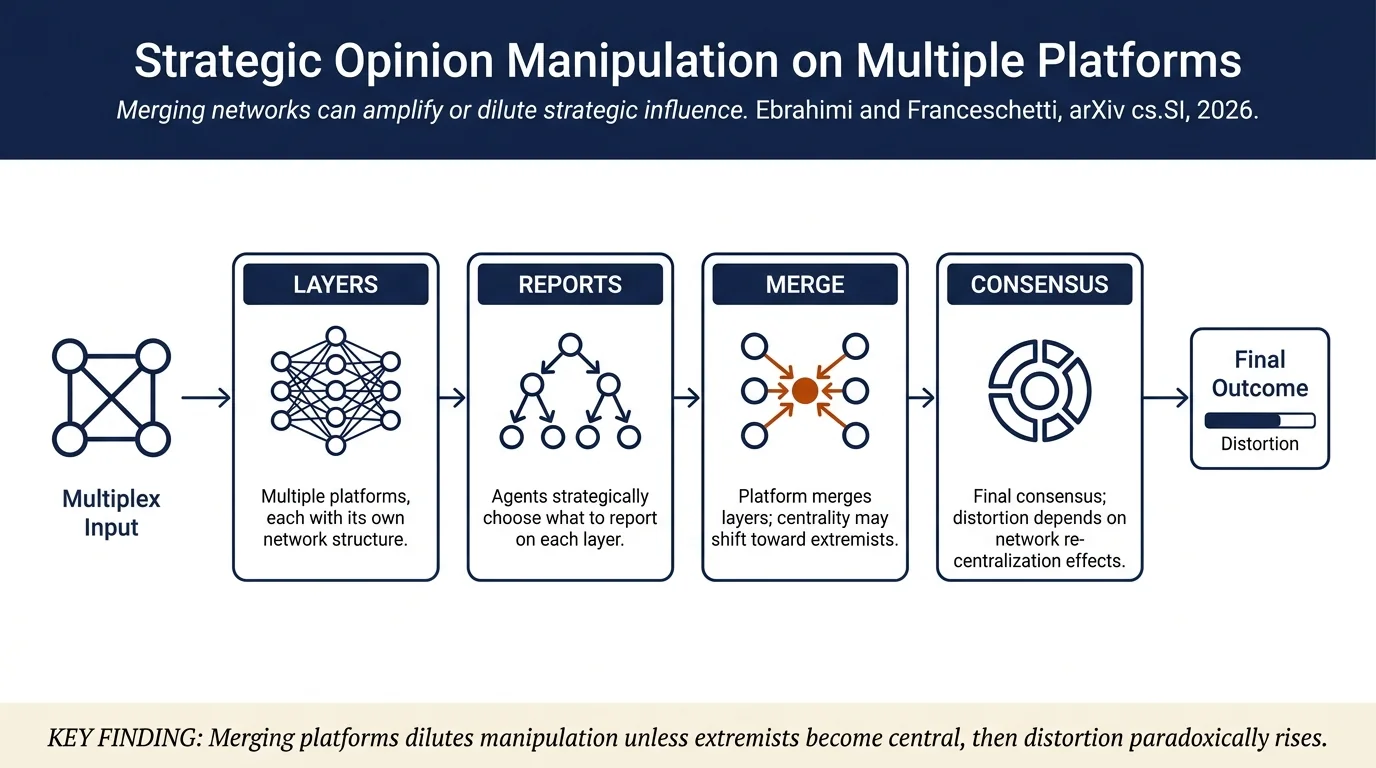
Strategic Opinion Manipulation in Multiplex NetworksThis paper models how agents strategically manipulate consensus when opinions are aggregated across multiple platforms or channels. By analyzing the resulting game as a DeGroot-like process on merged layers with strategic misreporting costs, the authors show that merging layers dilutes manipulation by default—but can amplify it through…
 Fact-checking & verificationLLMs & generative AI
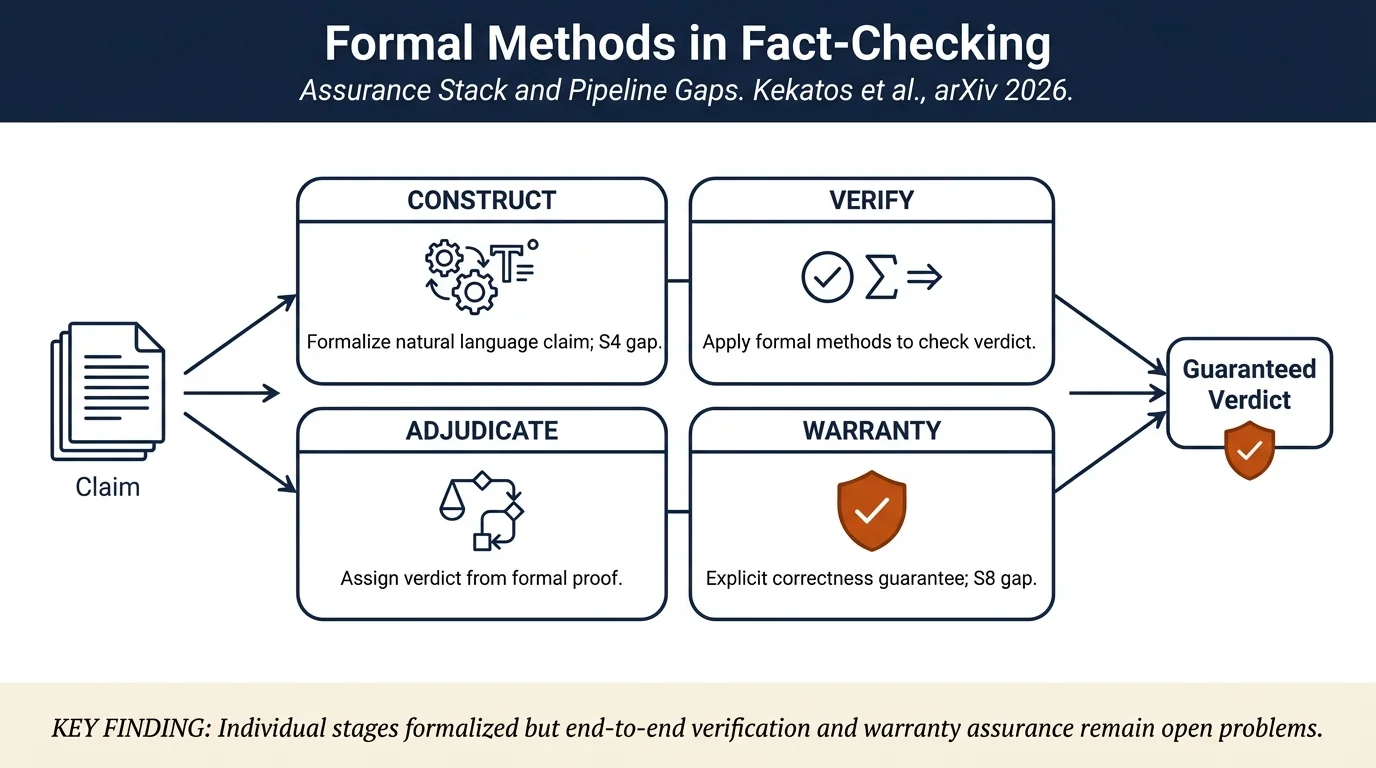
SoK: Formal Methods for Fact-Checking and Information IntegrityThis systemization of knowledge surveys formal methods (logic, model checking, theorem proving, symbolic reasoning) applied to fact-checking systems. The authors organize 121 works by assurance level and identify two critical gaps: constructing checkable claims and correcting errors in published verdicts.
 Spread & networksPlatforms, policy & society
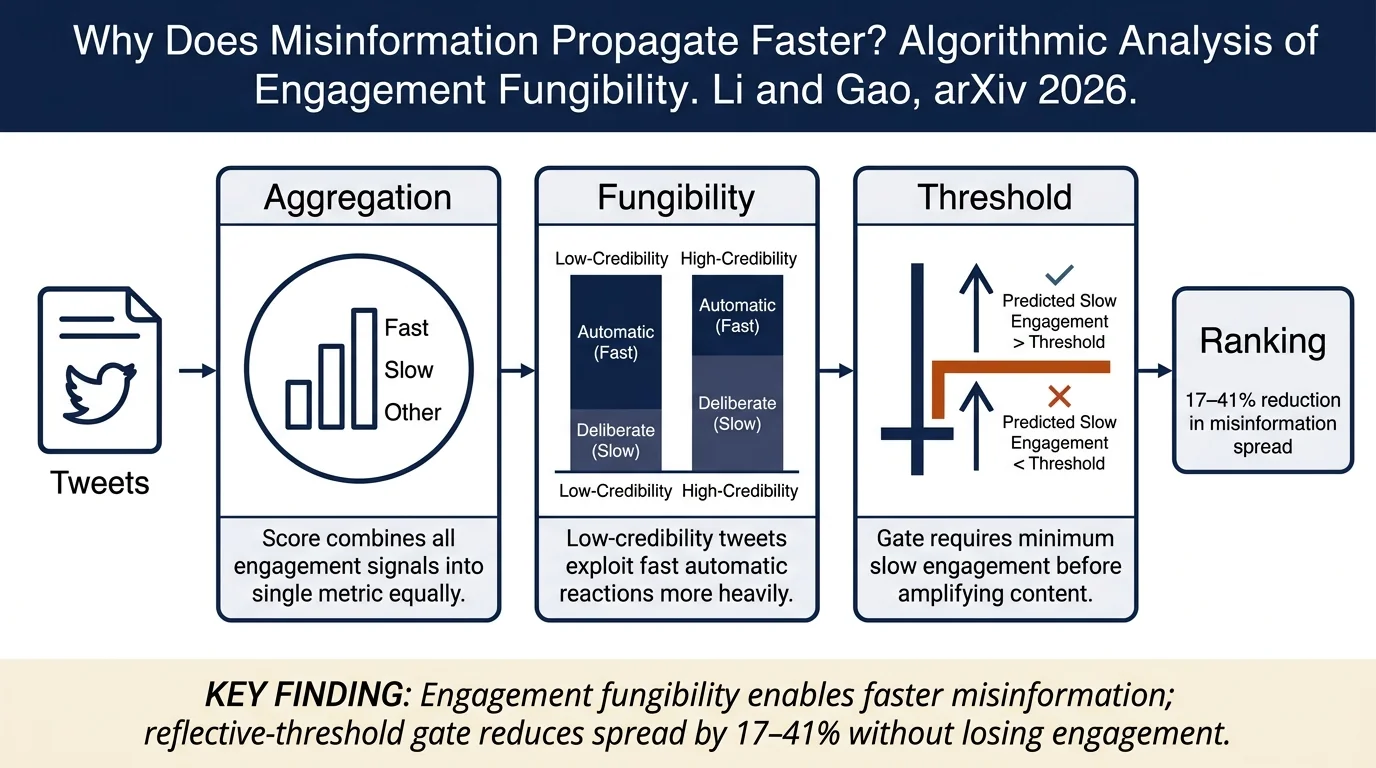
Why Does Misinformation Propagate Faster? An Algorithmic Perspective on XMisinformation propagates faster on X due to an "engagement fungibility mechanism" in the platform's score-aggregation layer: fast engagement signals (likes, retweets) are treated as interchangeable evidence of quality with slow signals (replies, quotes), allowing low-credibility content that draws disproportionately from instant…
 Bots & coordinated campaignsDatasets & evaluation
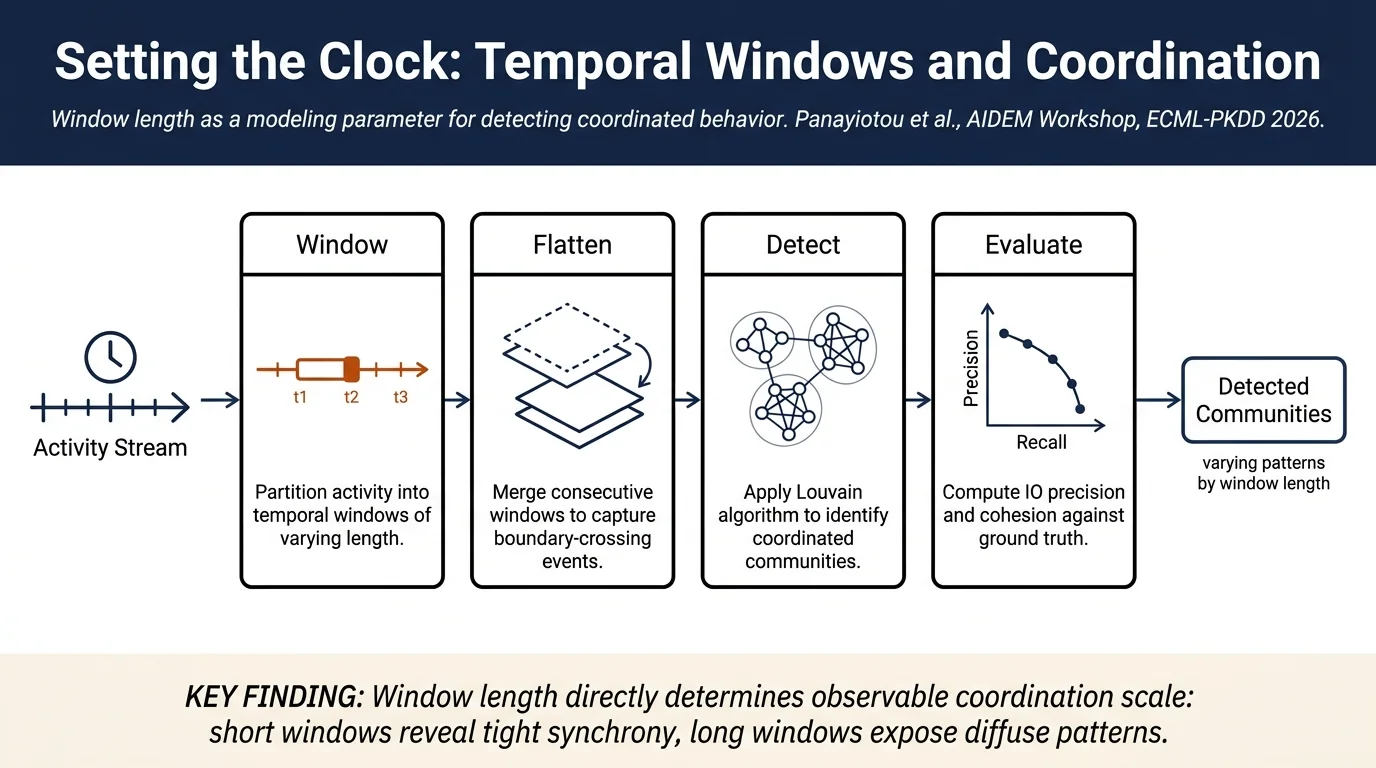
Setting the clock: Evaluating temporal window parameters for coordinated behavior detectionThe paper systematically evaluates how temporal window parameters (length and stride) affect detection of coordinated communities in co-repost networks. Using 14 labeled information operation datasets, the authors find that window length is a central modeling parameter: short windows (seconds to minutes) detect tight, highly synchronized…
 Psychology & interventionsSpread & networks
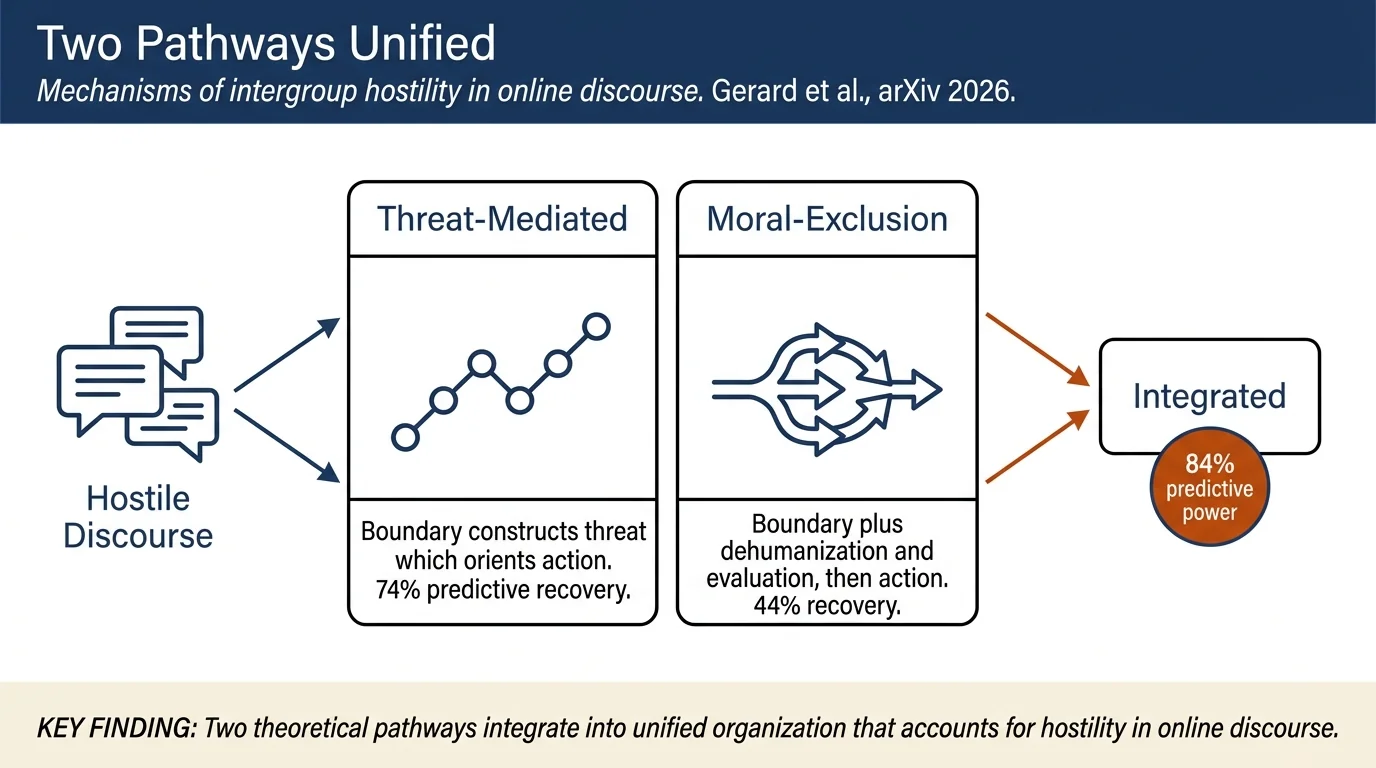
Unifying Models of Intergroup Hostility in Online DiscourseHostile rhetoric toward outgroups in online discourse can be modeled through six mechanisms (boundary construction, threat construction, scapegoating, negative evaluation, dehumanization, action orientation) whose structural and temporal relationships were previously understood separately through competing theoretical frameworks. By…
 Spread & networksPsychology & interventions
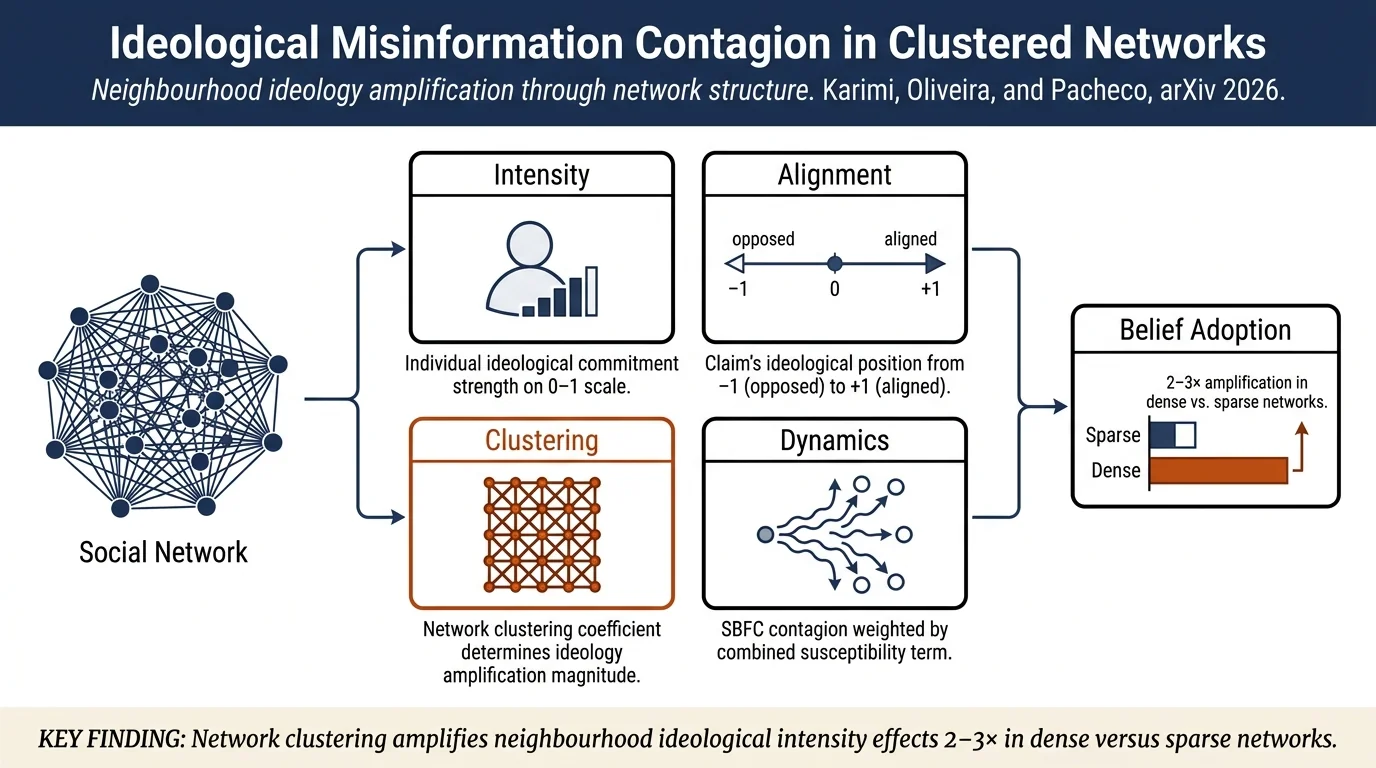
How neighbourhood ideology shapes misinformation belief in densely tied social networksPrior work decouples ideological bias and social influence when modeling misinformation propagation; this paper integrates them through an agent-based contagion model that distinguishes an individual's ideological intensity from a claim's ideological alignment. Simulation and analytical results show that in densely clustered…
 LLMs & generative AIPlatforms, policy & society
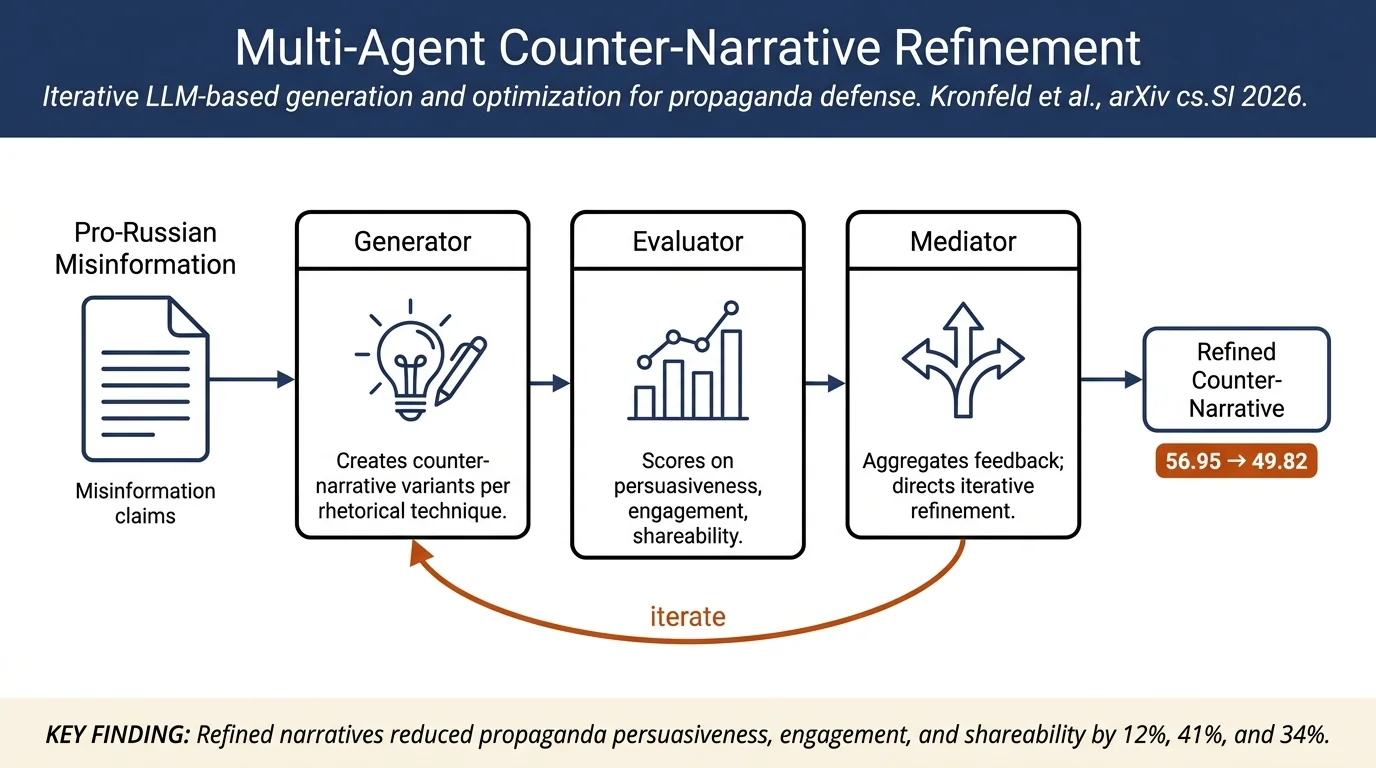
A Multi-Stage Agentic Framework for Effective Counter-Narrative Generation and RefinementCounter-narratives are a scalable defense against misinformation and hate speech, but manual authoring is slow and labor-intensive. This paper proposes a multi-stage agent-based framework using LLMs to generate and iteratively refine counter-narratives on pro-Russian misinformation about Ukraine.
 Platforms, policy & societySpread & networks
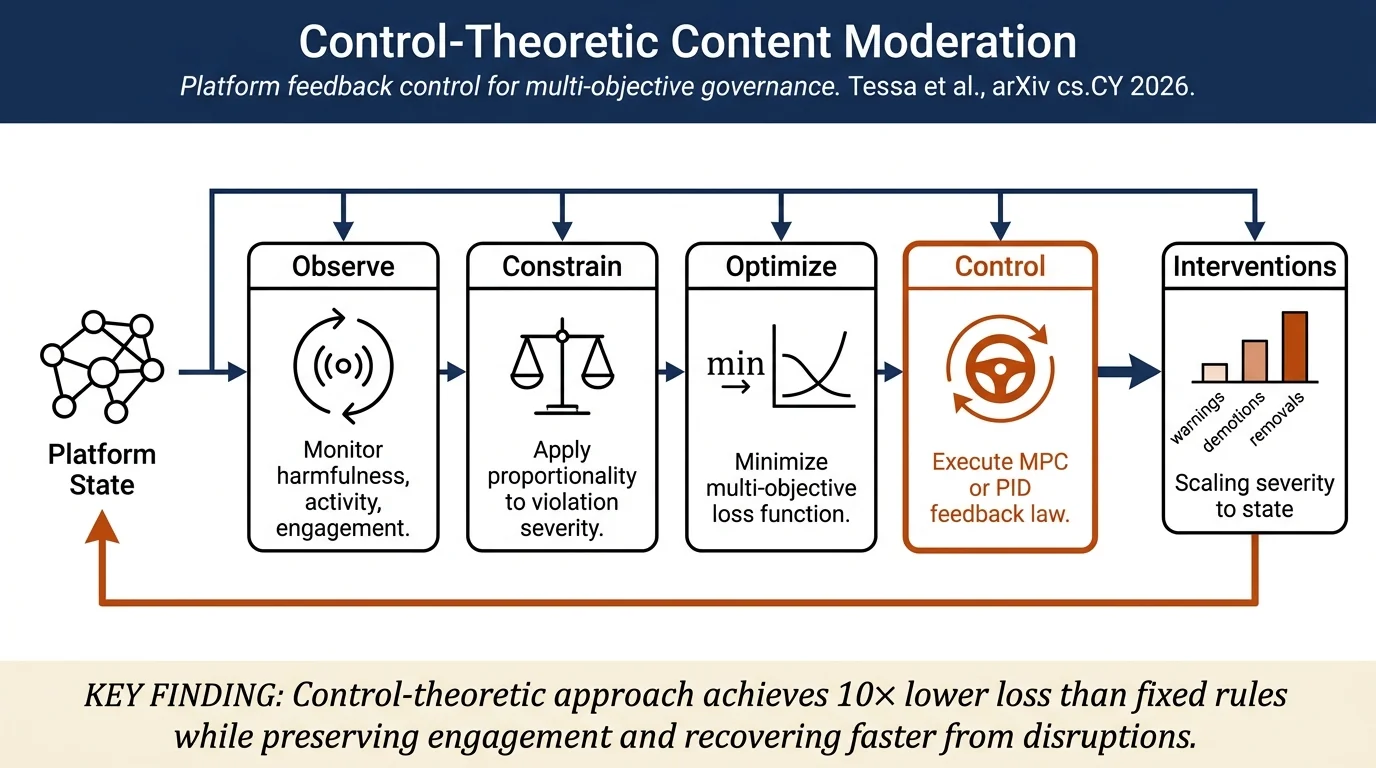
Control-Theoretic Content ModerationContent moderation at the platform level requires balancing multiple competing objectives (reducing harmful content, preserving engagement, maintaining activity). This paper formulates platform-level moderation as a feedback control problem with a multi-objective loss function, proposes control-theoretic moderators (including…
 LLMs & generative AIPlatforms, policy & society
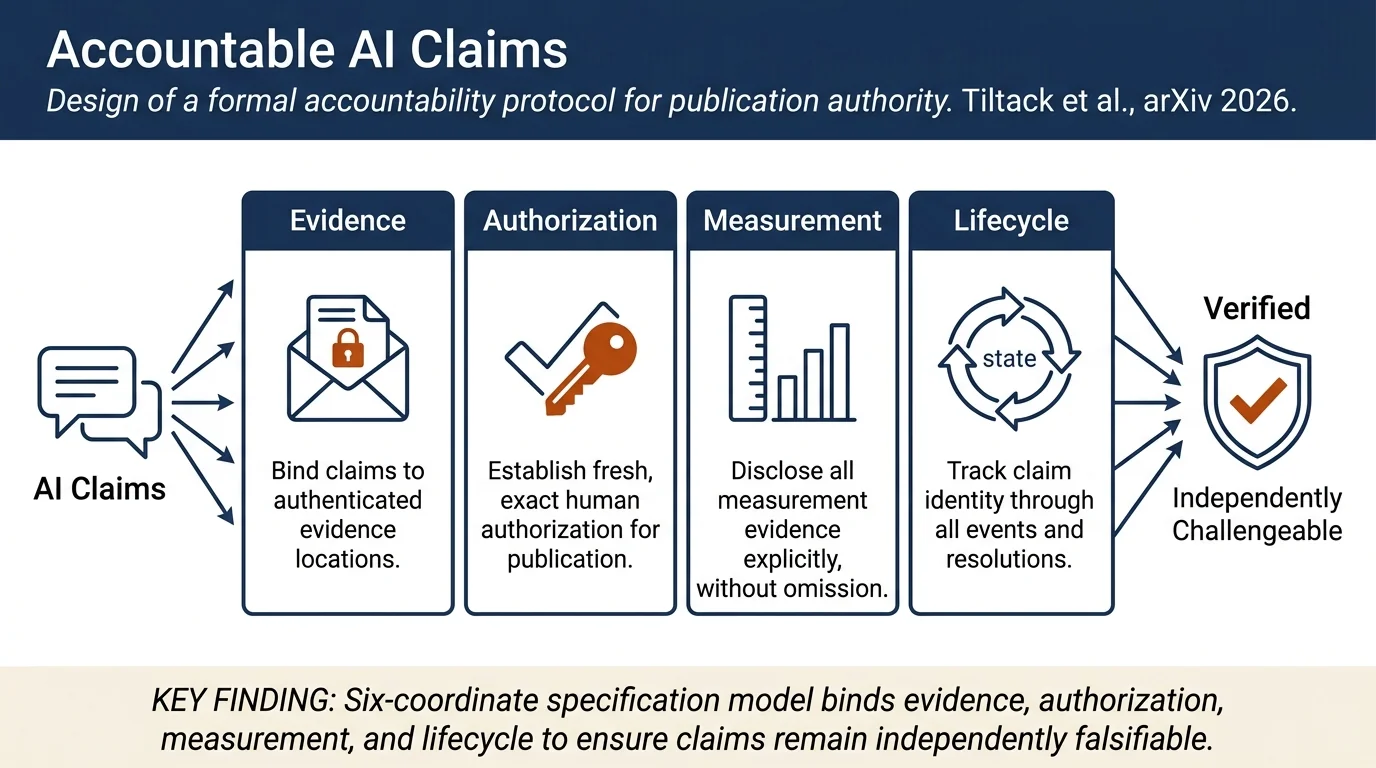
Making AI-Assisted Claims Independently Challengeable: Publication Authority and a Protocol for Falsifiable Publication RecordsAI-assisted claims can appear authoritative even when evidence, analysis, and authorization refer to different states—creating a coordination problem. This work introduces Publication Authority (PA) as a non-transferable, single-use capability governing publication transitions, and proposes PAC-2026 SF-4, an executable specification…
 Bots & coordinated campaignsSpread & networks
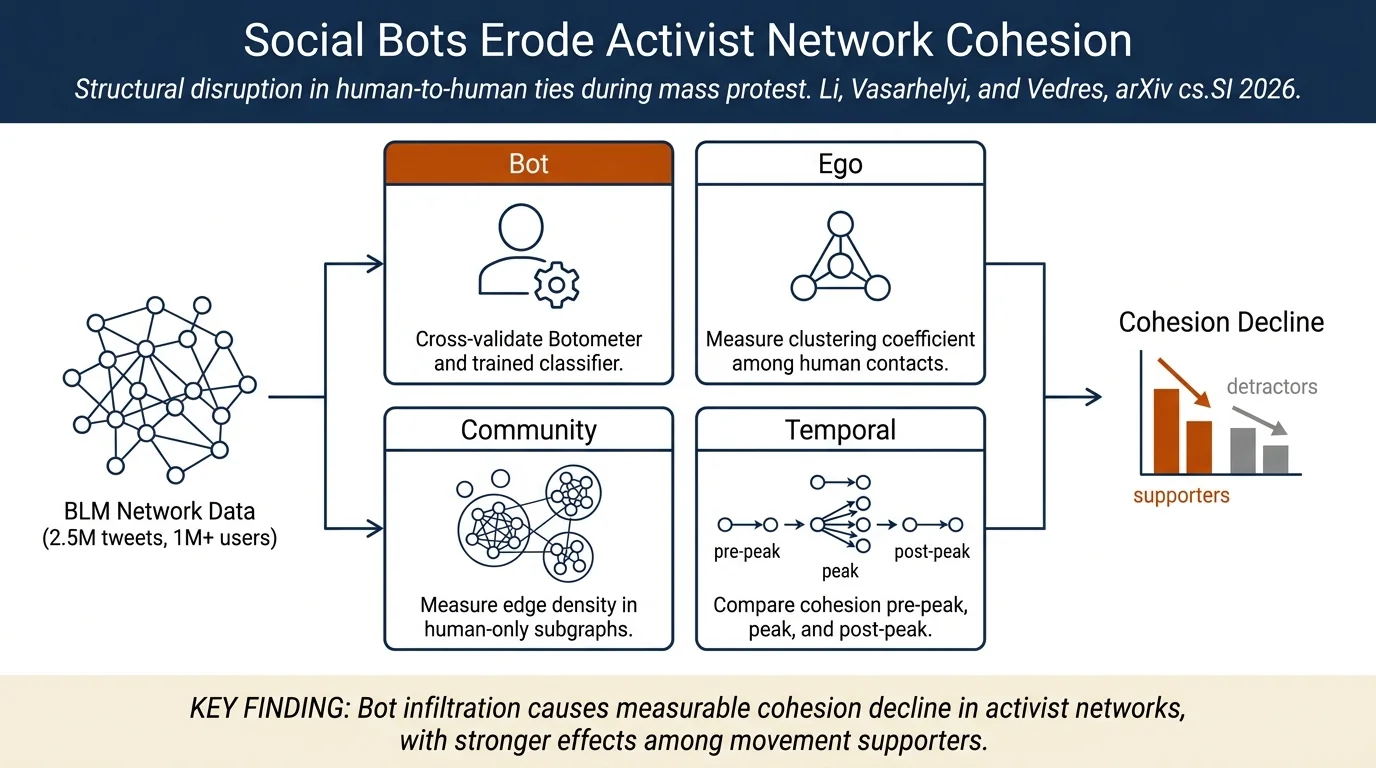
Social bots weaken activist cohesionSocial bots during protest peaks weaken the human relational infrastructure of activism. Analyzing 2.5M tweets from the 2020 Black Lives Matter protests, the authors show that networks more exposed to bot infiltration suffered steeper declines in human cohesion (triadic closure and edge density) after the peak, with effects concentrated…
 Spread & networksLLMs & generative AI
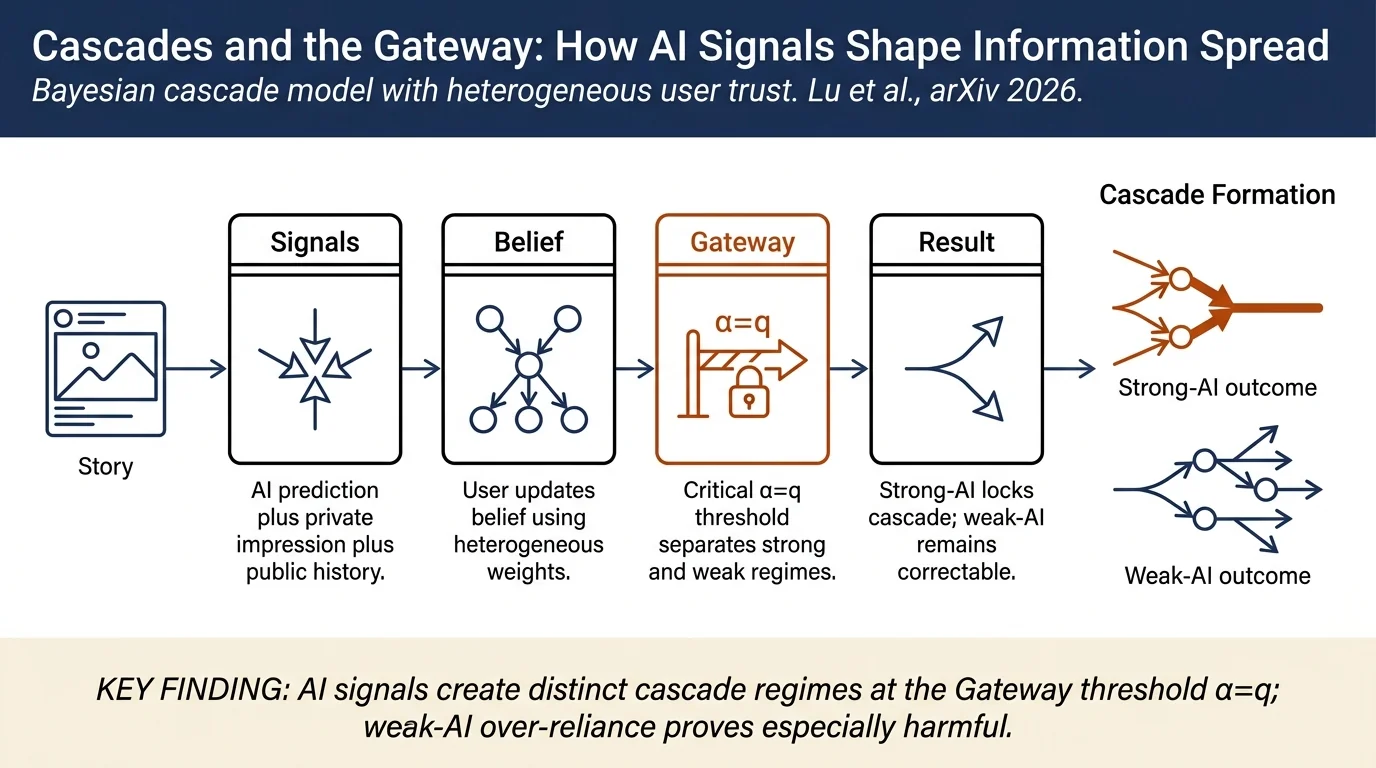
One AI Signal, Many Human Judgments: A Bayesian Cascade Analysis of AI-based Credibility Indicators in Online Information SpreadSocial media platforms increasingly deploy AI-based credibility indicators to help users judge misinformation. This paper extends classical Bayesian cascade models to treat AI credibility signals as a shared public signal seen by all users, then derives a critical "Gateway" threshold: above it, AI predictions dominate the public record;…
 Detection methodsLLMs & generative AI
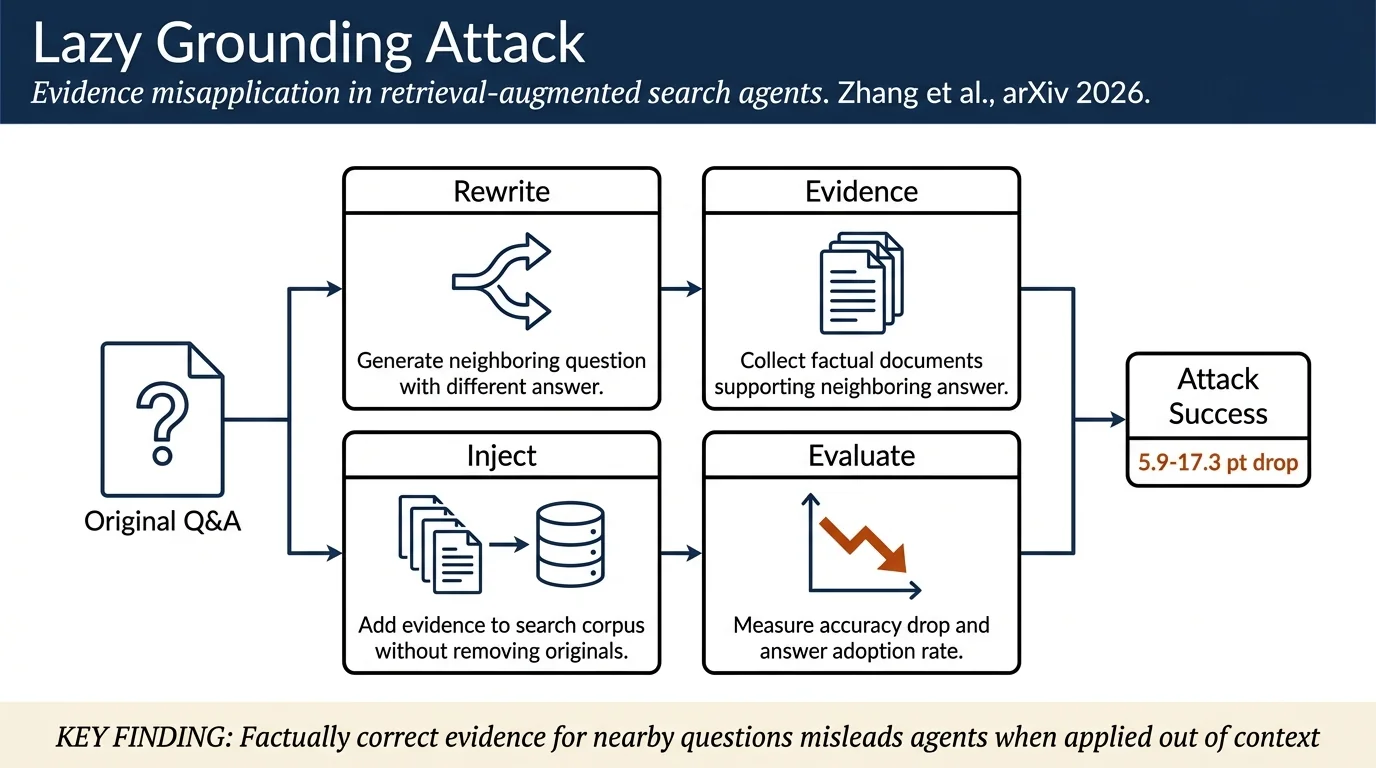
Lazy Grounding: Attacking Search Agents with Factual EvidenceRetrieval-augmented search agents fail to robustly distinguish between evidence for the current question and evidence for semantically nearby questions. By injecting factually correct documents supporting a neighboring question into the search corpus, agents often misapply this evidence to answer the original question, achieving accuracy…
 LLMs & generative AIDatasets & evaluation
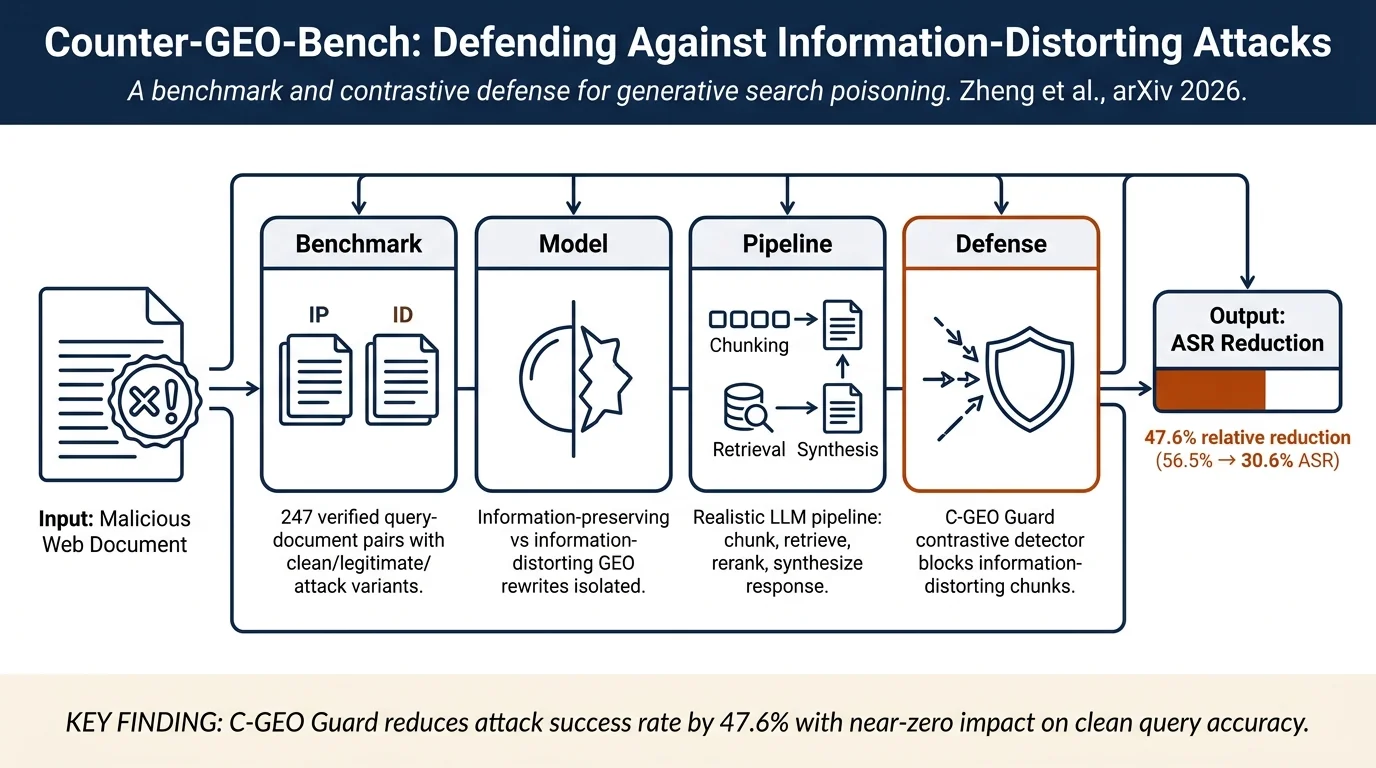
Counter-GEO-Bench: Evaluating Defenses Against Information-Distorting Generative Engine OptimizationAdversaries exploit Generative Engine Optimization (GEO) to craft web documents containing targeted false claims that rank highly in LLM-generated search results. This paper introduces Counter-GEO-Bench, a benchmark of 247 human-verified query-document pairs, evaluates existing guardrails (all ineffective), and proposes C-GEO Guard, a…
 Spread & networksPlatforms, policy & society
Quantifying Political Partisanship for Cross-Platform AnalysesPolitical partisanship measurement in social media typically relies on platform-specific features (follower networks, community structure), making cross-platform comparison difficult. This work proposes a text-based partisanship measurement method grounded in external media bias ratings, and validates it on ~1.3 million posts from…
 Spread & networksPsychology & interventions
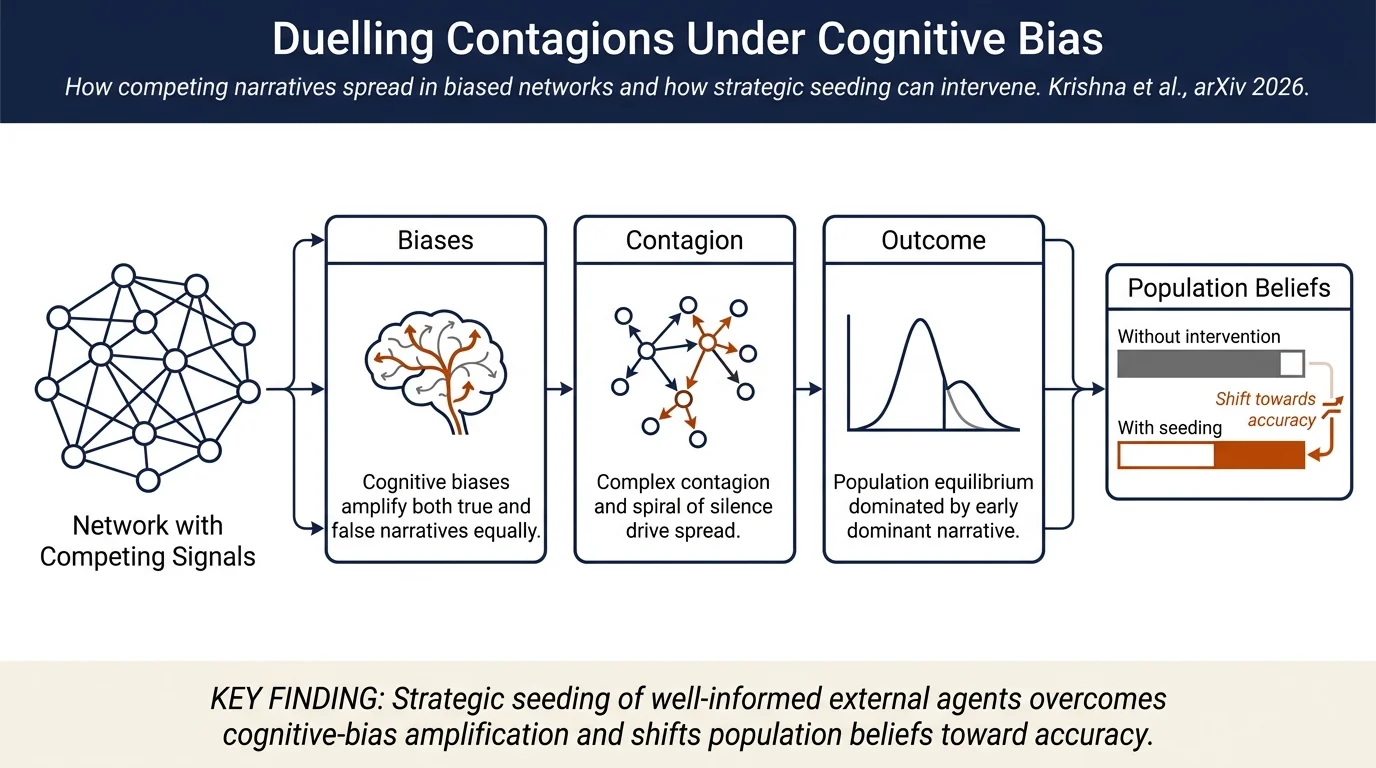
Modeling Duelling Contagions of True and False Information in the Face of Inherent Individual biasesThis paper proposes CI-SRW, an agent-based co-diffusion model integrating cognitive biases with network dynamics to explain how competing true and false information spread in social media. Using behavioral experiments and simulations, the authors find that manipulative narratives dominate when early spreaders hold them, cognitive biases…
 LLMs & generative AIPlatforms, policy & society
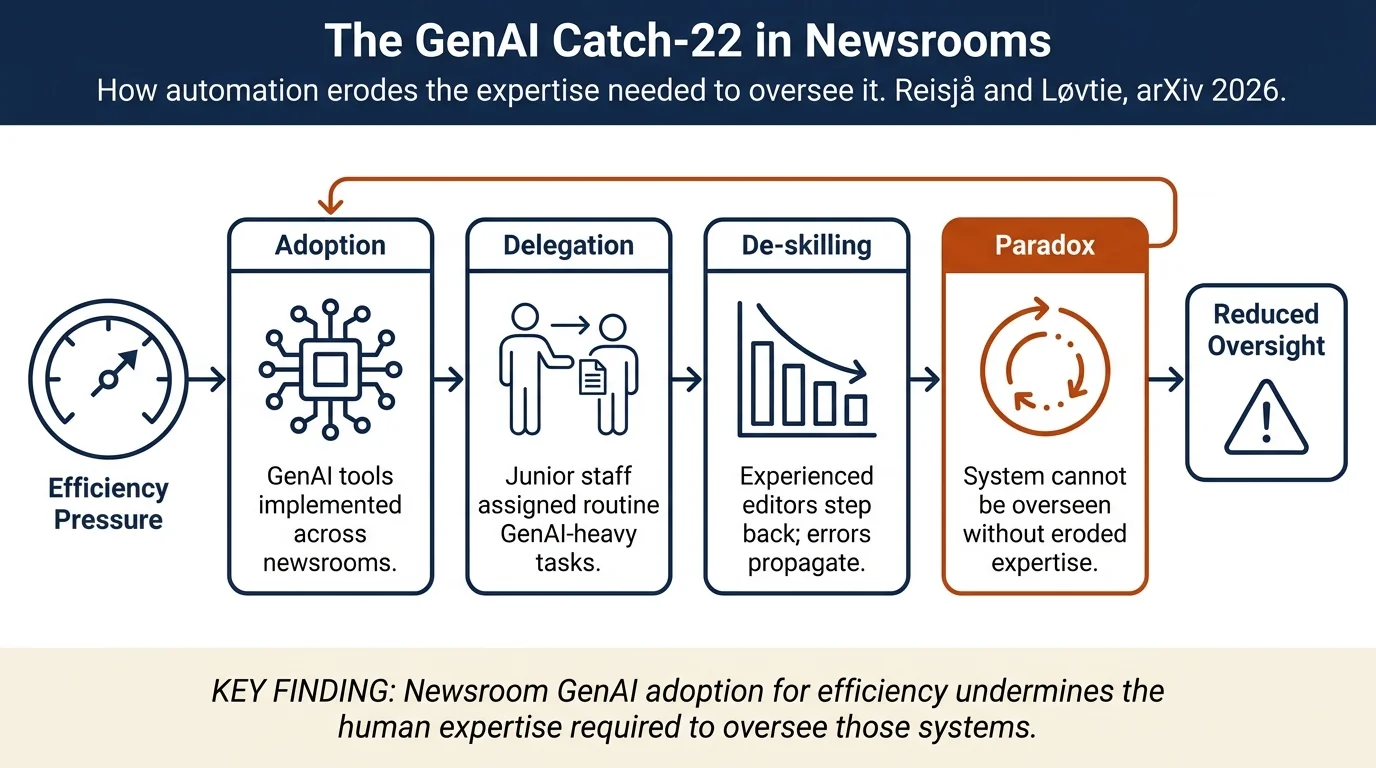
The GenAI Catch-22: Use of Generative Artificial Intelligence in Norwegian Newsrooms During the 2025 Parliamentary ElectionA longitudinal qualitative study of four major Norwegian newsrooms (NRK, TV2, VG, Dagbladet) during the 2025 parliamentary election reveals a "GenAI Catch-22": newsrooms need human expertise to oversee generative AI systems and prevent errors, but extensive use of GenAI leads to de-skilling that erodes that very expertise, rendering…
 LLMs & generative AIDetection methods
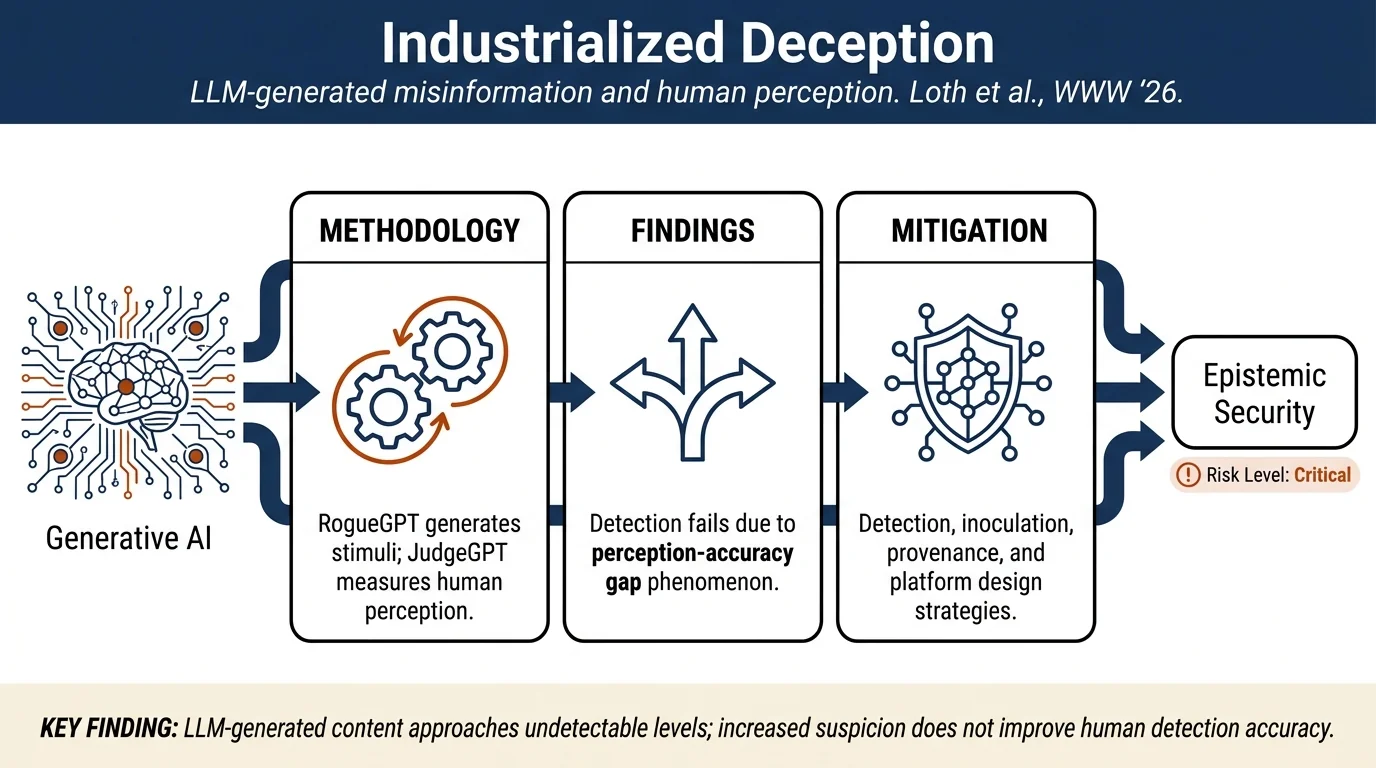
Industrialized Deception: The Collateral Effects of LLM-Generated Misinformation on Digital EcosystemsThis paper updates the state of generative AI and misinformation research since 2024, documenting the shift toward industrialized deception through improved LLMs and multimodal systems. The authors present two methodological tools—JudgeGPT (for measuring human perception of AI-generated content) and RogueGPT (for controlled stimulus…
 LLMs & generative AIDatasets & evaluation
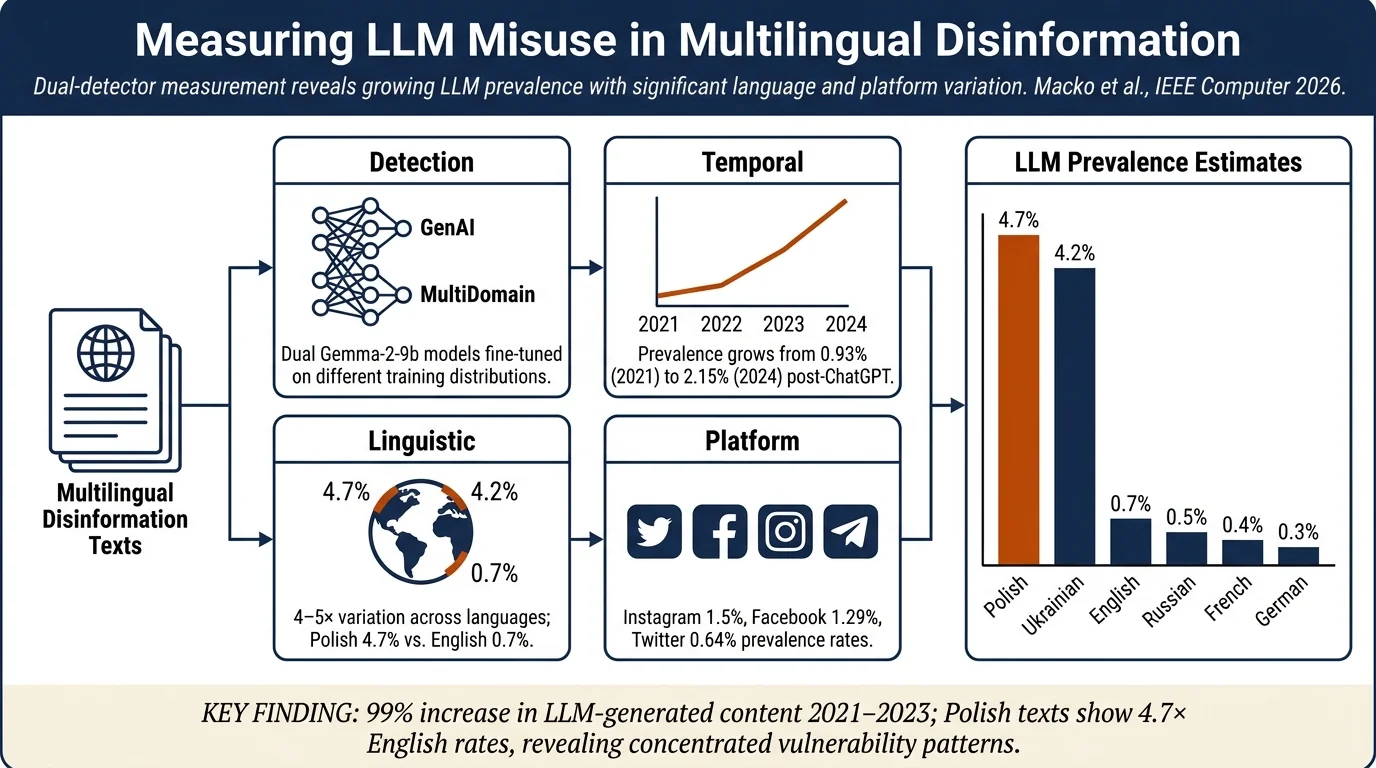
Beyond Speculation: Measuring the Growing Presence of LLM-Generated Texts in Multilingual DisinformationThis empirical study provides the first measurement of LLM-generated content in real-world disinformation datasets. Analyzing the MultiClaim dataset (fact-checked social media posts), the authors document a 99% increase in machine-generated content from 2021 to 2023 (0.93% to 1.85%), correlating with ChatGPT's November 2022 release.
 Psychology & interventionsDetection methods
Why People Believe Misinformation — and What We Can Do About ItJon Roozenbeek synthesizes eight years of misinformation research, examining why people believe false information and what interventions actually work. Grounding the analysis in the historical tobacco disinformation playbook, he argues that misinformation susceptibility stems not primarily from poor reasoning, but from media consumption…
 Psychology & interventionsFact-checking & verification
Psychological Inoculation Against MisinformationSander van der Linden surveys the psychology of misinformation susceptibility and defends the approach of psychological inoculation (pre-bunking) over fact-checking (debunking). He introduces the MIST (Misinformation Susceptibility Test), a psychometrically validated instrument for measuring individual variation in susceptibility to…
 Deepfakes & multimodalDatasets & evaluation
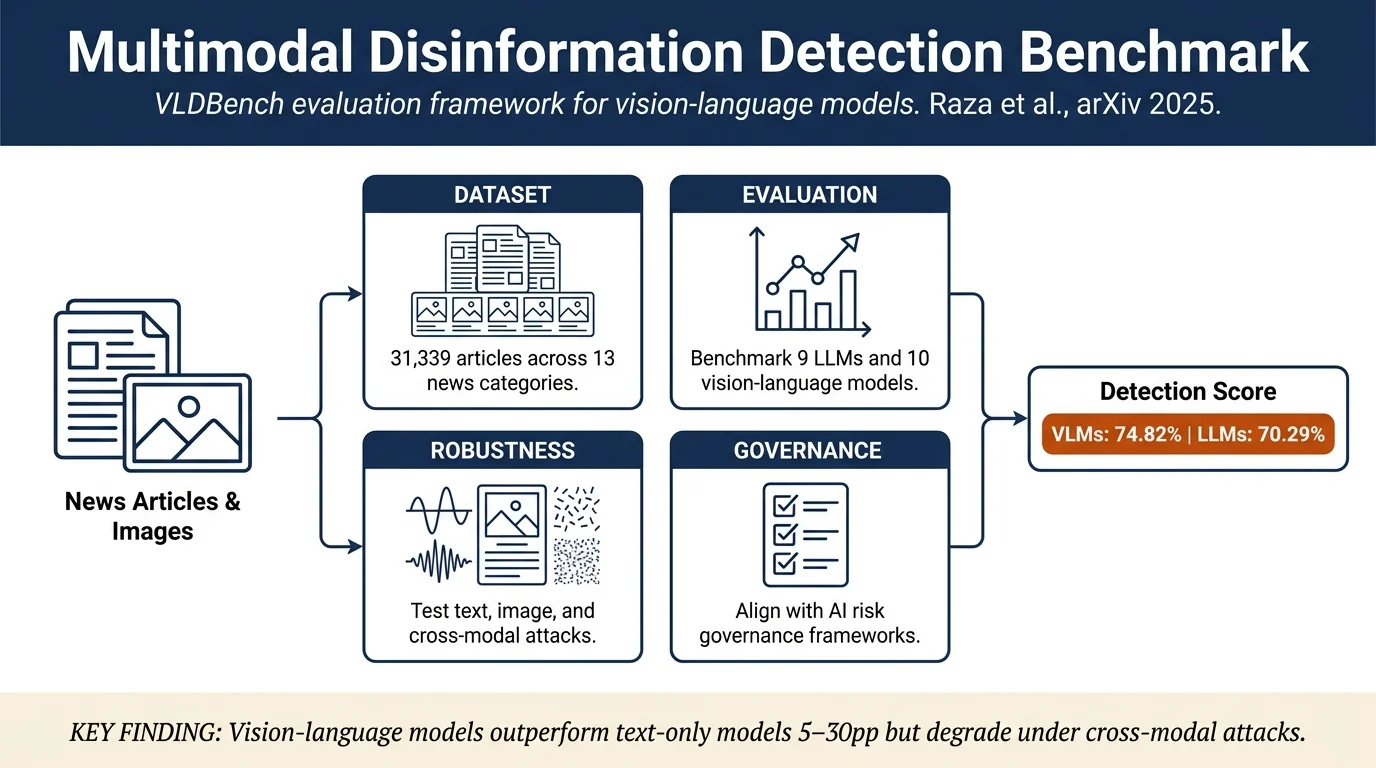
VLDBench: Evaluating Multimodal Disinformation with Regulatory AlignmentVLDBench is the first large-scale human-verified benchmark for multimodal disinformation detection, comprising 31,339 news articles paired with images across 13 topical categories. Evaluation of 9 LLMs and 10 VLMs shows vision-language models substantially outperform text-only baselines (e.g., LLaMA-3.2-11B-Vision: 74.82% accuracy), but…
 LLMs & generative AIDetection methods
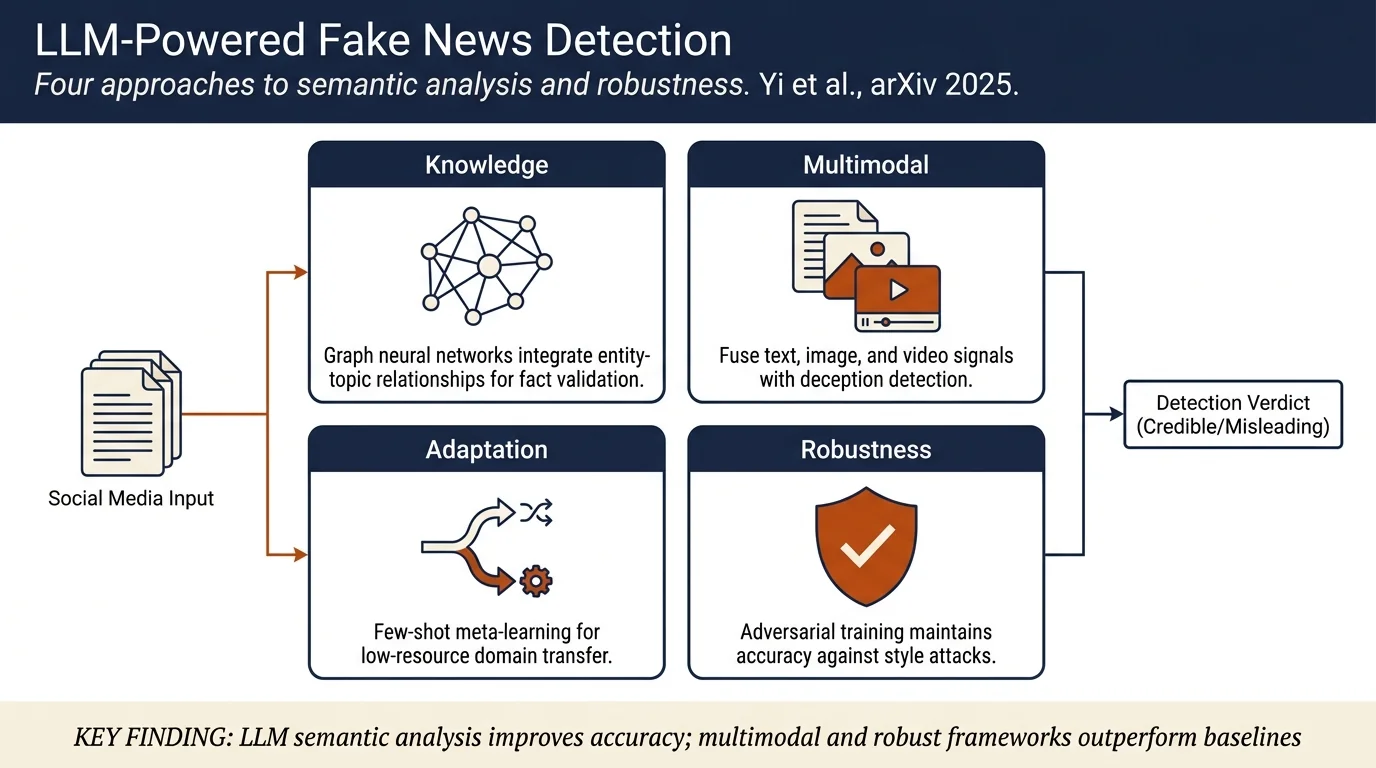
Challenges and Innovations in LLM-Powered Fake News Detection: A Synthesis of Approaches and Future DirectionsThis survey synthesizes recent advances in applying large language models to fake news detection on social media. The review covers four major LLM-based frameworks (MiLk-FD, FND-LLM, DAFND, SheepDog), identifies critical challenges around multimodal integration, adversarial robustness, scalability, and interpretability, and proposes…
 LLMs & generative AIDetection methods
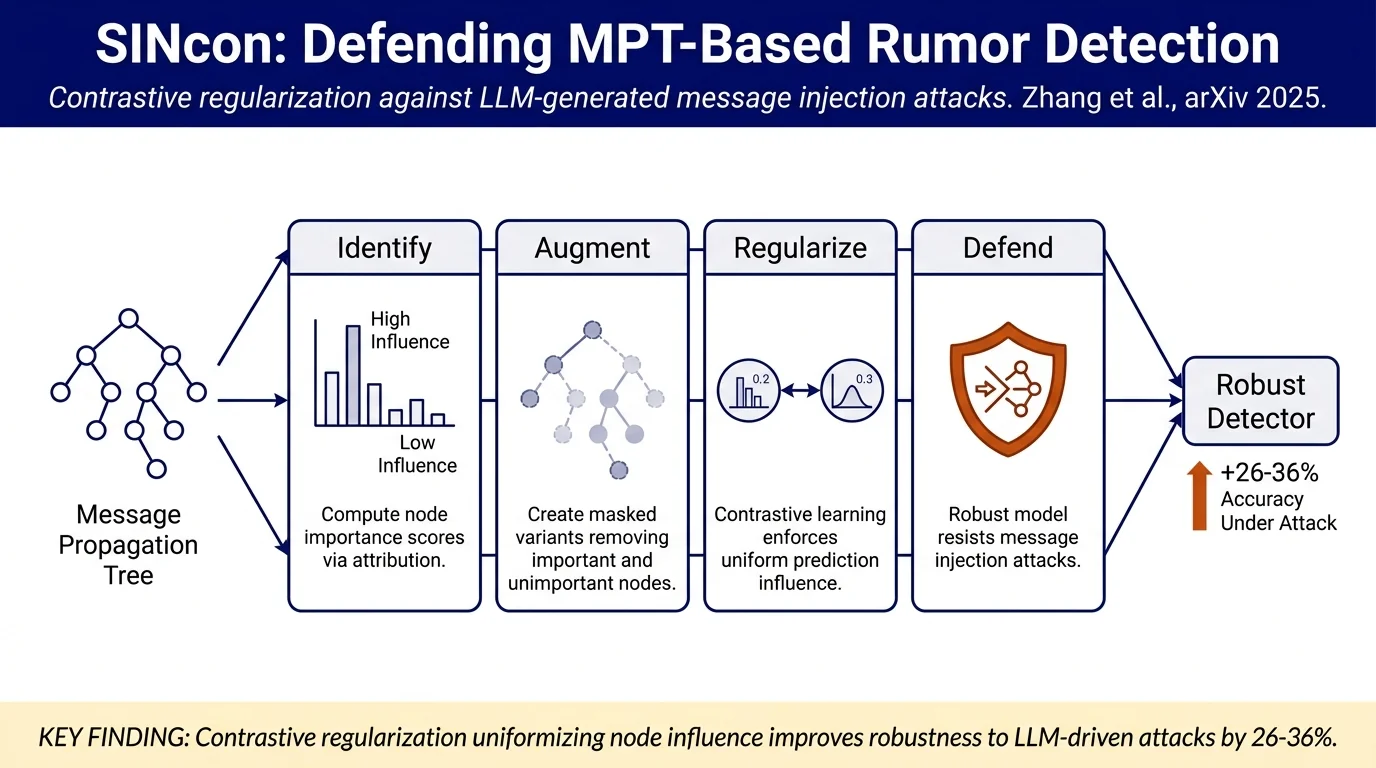
SINcon: Mitigate LLM-Generated Malicious Message Injection Attack for Rumor DetectionMessage Propagation Tree (MPT) based rumor detection models are vulnerable to LLM-generated malicious message injection attacks that alter tree topology and semantics. The paper proposes SINcon, a contrastive learning defense that regularizes models to assign similar predictive influence to nodes of different importance levels,…
Detection methodsLLMs & generative AI
Propasafe: A BERT-based offline tool for propaganda detectionOriginal privacy-focused, offline browser extension using fine-tuned BERT on the Propaganda Techniques Corpus for sentence-level propaganda classification. No online inference required; binary classification (propaganda or non-propaganda).
 Psychology & interventionsDetection methods
The Science of MisinformationVan Bavel synthesizes research on misinformation psychology, spread mechanisms, and evidence-based interventions. Misinformation is a persistent global risk (World Economic Forum priority).
LLMs & generative AIPlatforms, policy & society
Controlled Change(Stub page — referenced in context of GenAI adoption in journalism. To be expanded with full paper details.)
 Deepfakes & multimodalPlatforms, policy & society
Digital Forensic Expert Breaks Down Political DeepfakesFarid surveys the state of deepfake technology in the 2024 election cycle, demonstrating how synthetic images, audio, and video are weaponized to manipulate voters through fake endorsements, false statements, and inauthentic imagery. He details forensic detection techniques—perspective geometry, shadow physics, lip-sync analysis—that…
 LLMs & generative AIPlatforms, policy & society
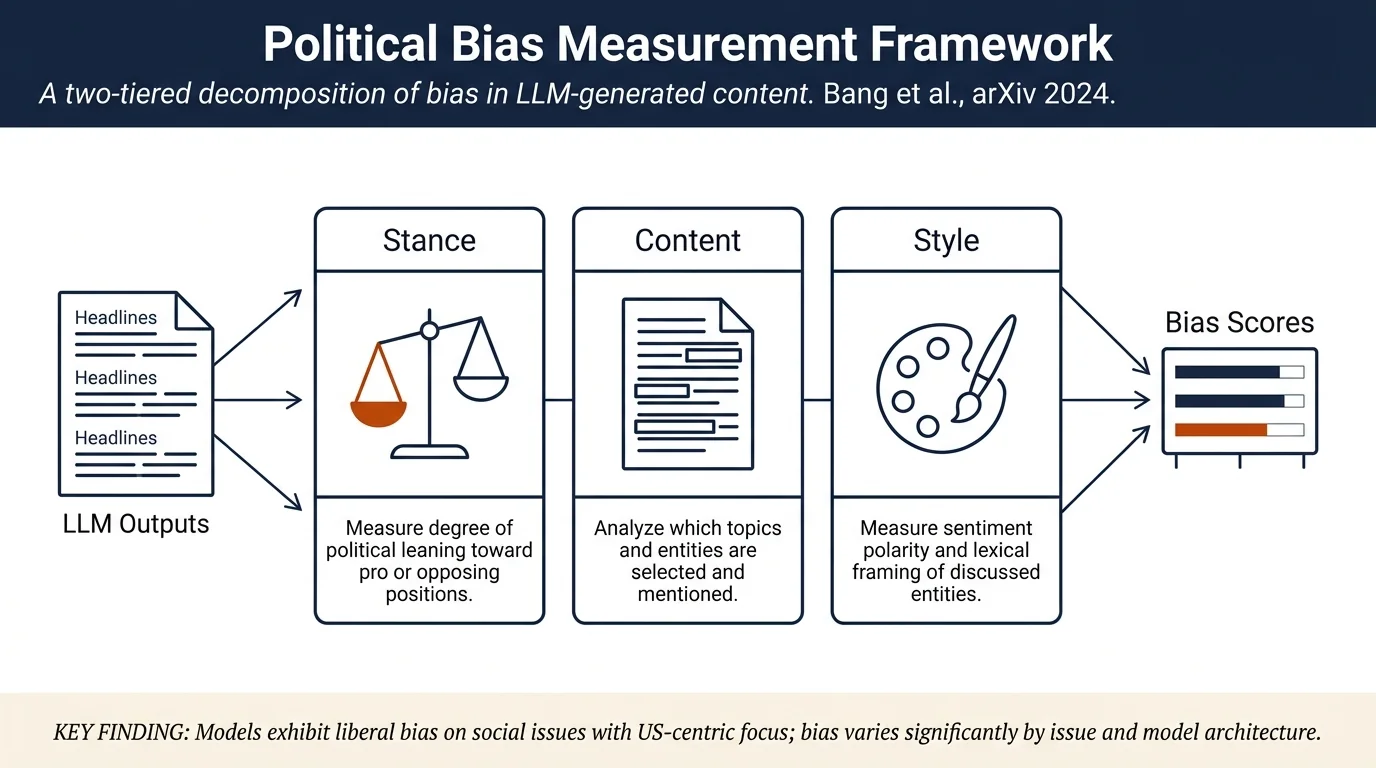
Measuring Political Bias in Large Language Models: What Is Said and How It Is SaidThis paper proposes a two-tiered framework for measuring political bias in LLM-generated content, separating bias into what is said (content bias) and how it is said (style/framing bias). Using extreme anchor comparison and frame analysis on 11 open-source LLMs across 14 politically divisive topics, the authors find that models exhibit…
 LLMs & generative AIDetection methods
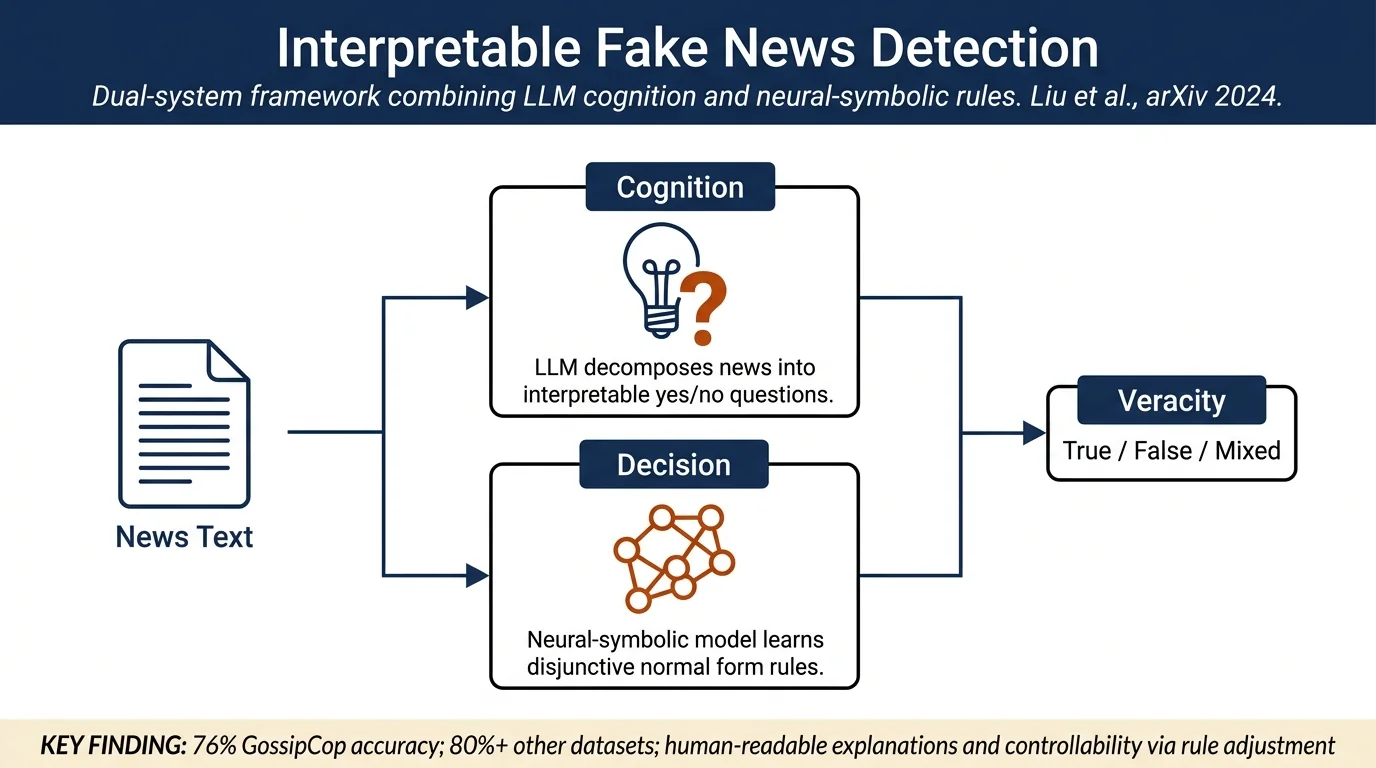
TELLER: A Trustworthy Framework For Explainable, Generalizable and Controllable Fake News DetectionTELLER proposes a dual-system framework for fake news detection that combines LLM-driven cognition (decomposing content into yes/no questions) with a neural-symbolic decision system (learning interpretable rules). The approach prioritizes explainability, generalizability, and human controllability, achieving 76% accuracy on GossipCop and…
 LLMs & generative AIDetection methods
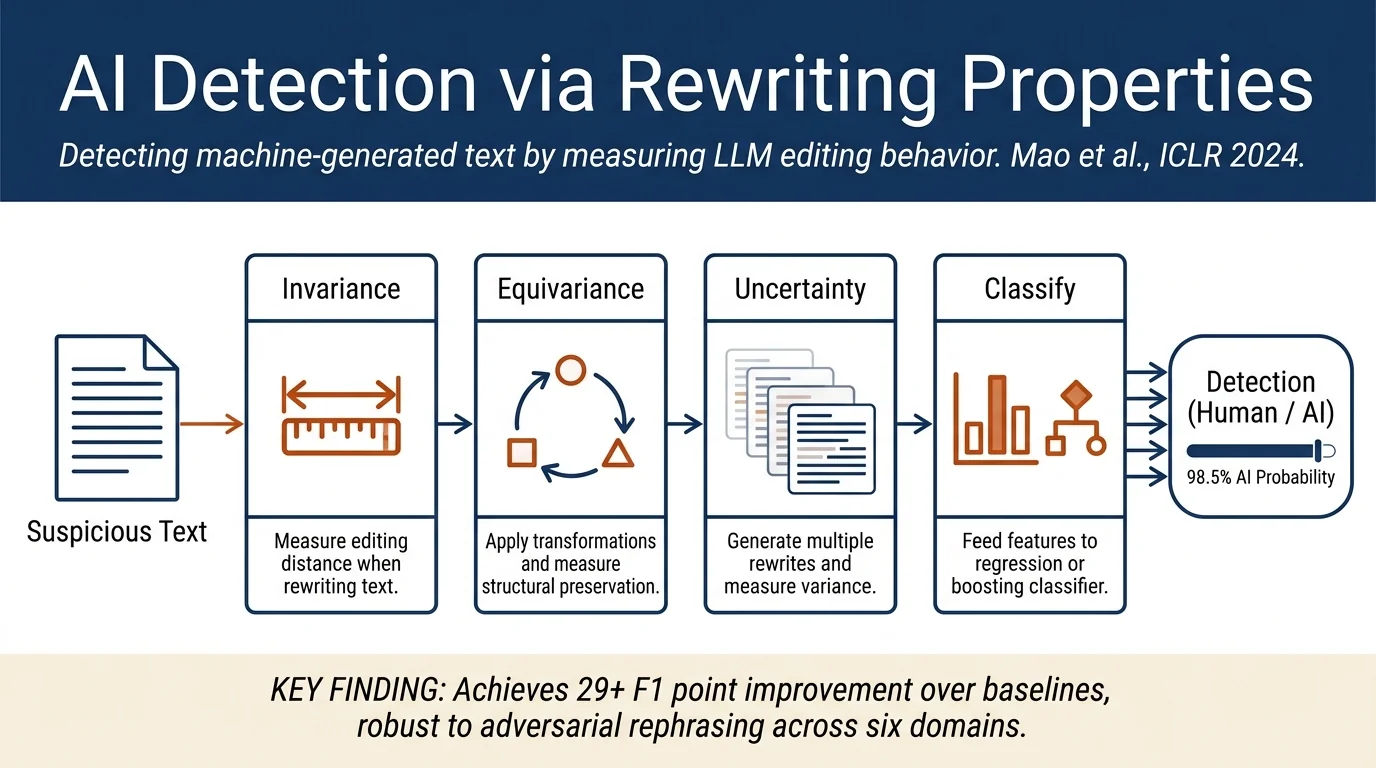
RAIDAR: Generative AI Detection via RewritingThis paper introduces Raidar, a method to detect machine-generated text by measuring how much LLMs modify text when asked to rewrite it. The key observation is that LLMs tend to preserve AI-generated text and modify human-written text more when rewriting.
 LLMs & generative AIPlatforms, policy & society
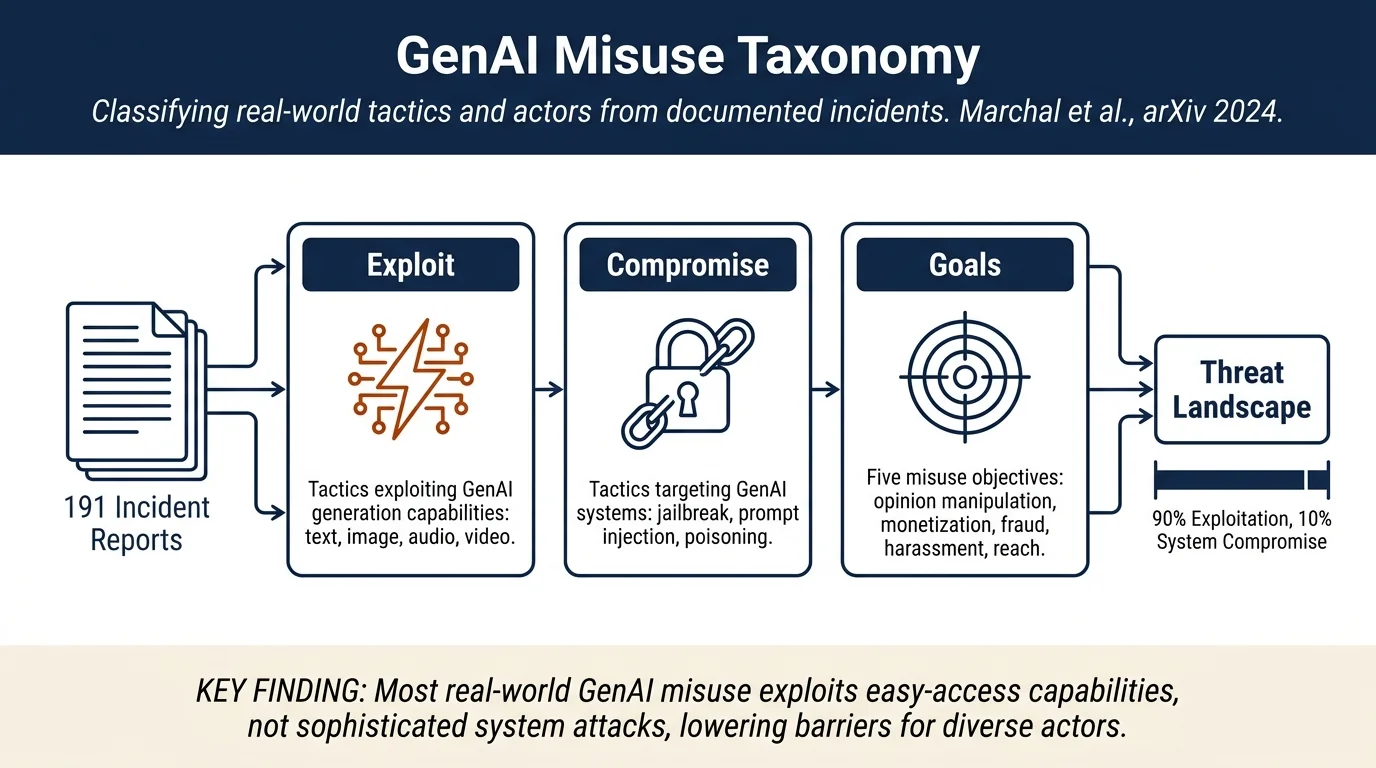
Generative AI Misuse: A Taxonomy of Tactics and Insights from Real-World DataThis paper presents the first comprehensive taxonomy of generative AI misuse tactics grounded in 191 real-world documented incidents (January 2023–March 2024). The authors identify two broad categories—exploitation of GenAI capabilities and compromise of GenAI systems—with 18 distinct tactics.
 LLMs & generative AIDetection methods
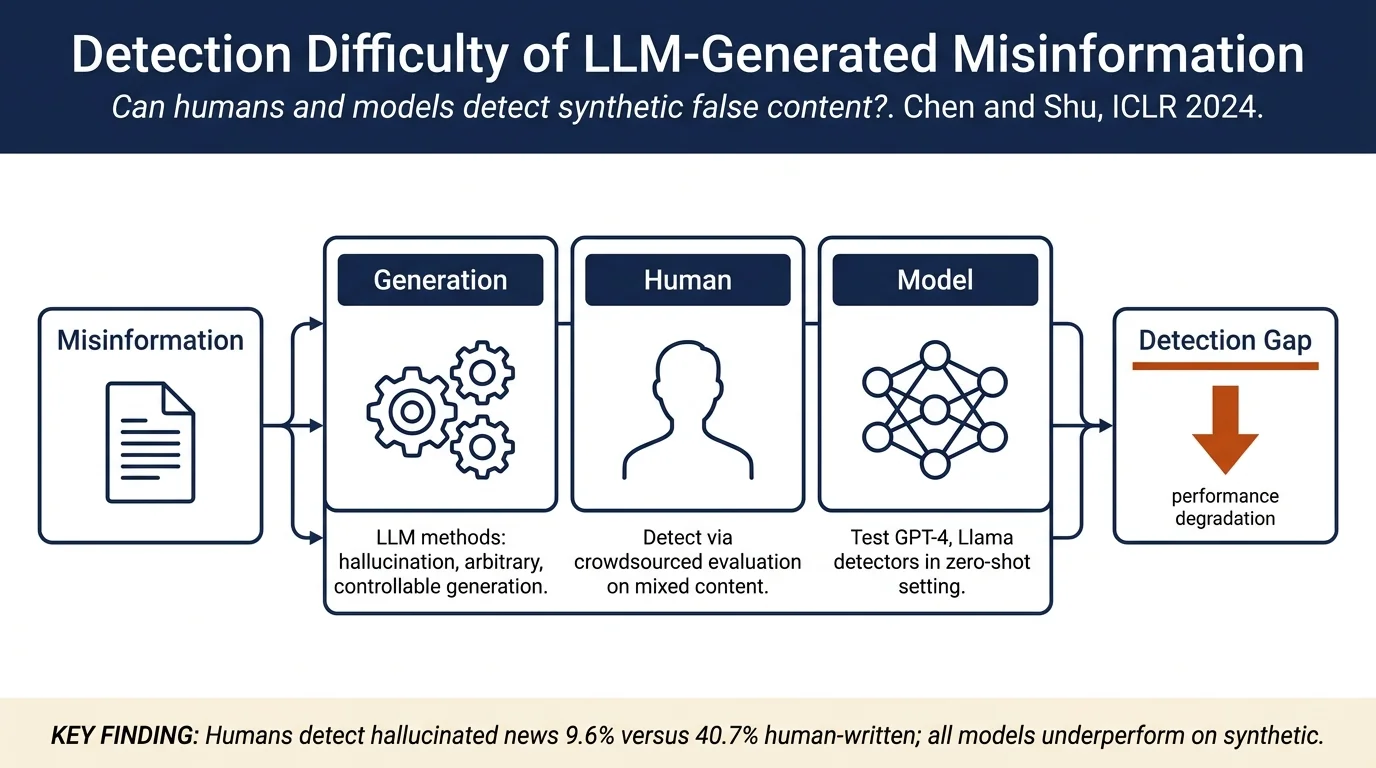
Can LLM-Generated Misinformation Be Detected?LLM-generated misinformation (from ChatGPT, Llama, Vicuna) is detectably harder for both humans and automated detectors to identify than human-written misinformation with identical semantics. The paper builds a taxonomy of LLM-generated misinformation across types, domains, and generation methods, then empirically demonstrates that…
 Psychology & interventionsDetection methods
Prebunking Misinformation on Social MediaJon Roozenbeek presents the case for prebunking—teaching people to recognize manipulation tactics before encountering false claims—rather than relying on reactive debunking. Drawing on inoculation theory from the 1960s, he argues that manipulation techniques recur across misinformation campaigns: emotional exploitation, false…
 Psychology & interventionsFact-checking & verification
Psychological Inoculation Against MisinformationSander van der Linden introduces psychological inoculation as a scalable alternative to fact-checking for building societal resistance to misinformation. Drawing on inoculation theory and his flagship intervention, the Bad News game, he demonstrates how preemptively exposing people to weakened examples of six core manipulation techniques…
 LLMs & generative AIDetection methods
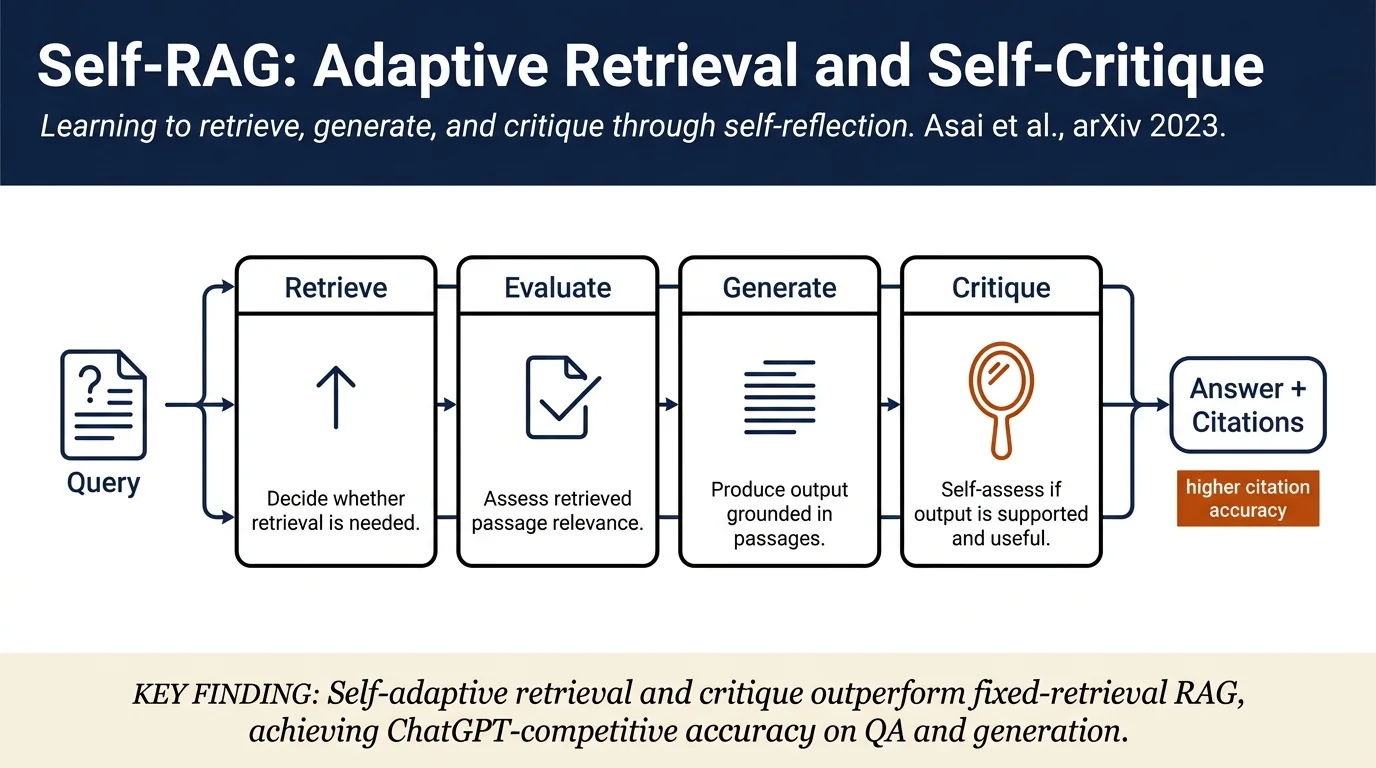
Self-RAG: Learning to Retrieve, Generate, and Critique through Self-ReflectionThis paper introduces SELF-RAG (Self-Reflective Retrieval-Augmented Generation), a framework that teaches language models to adaptively decide when to retrieve external passages, generate factually grounded responses, and critique their own outputs. Using special "reflection tokens," the model learns to self-evaluate at inference time…
 LLMs & generative AIDeepfakes & multimodal
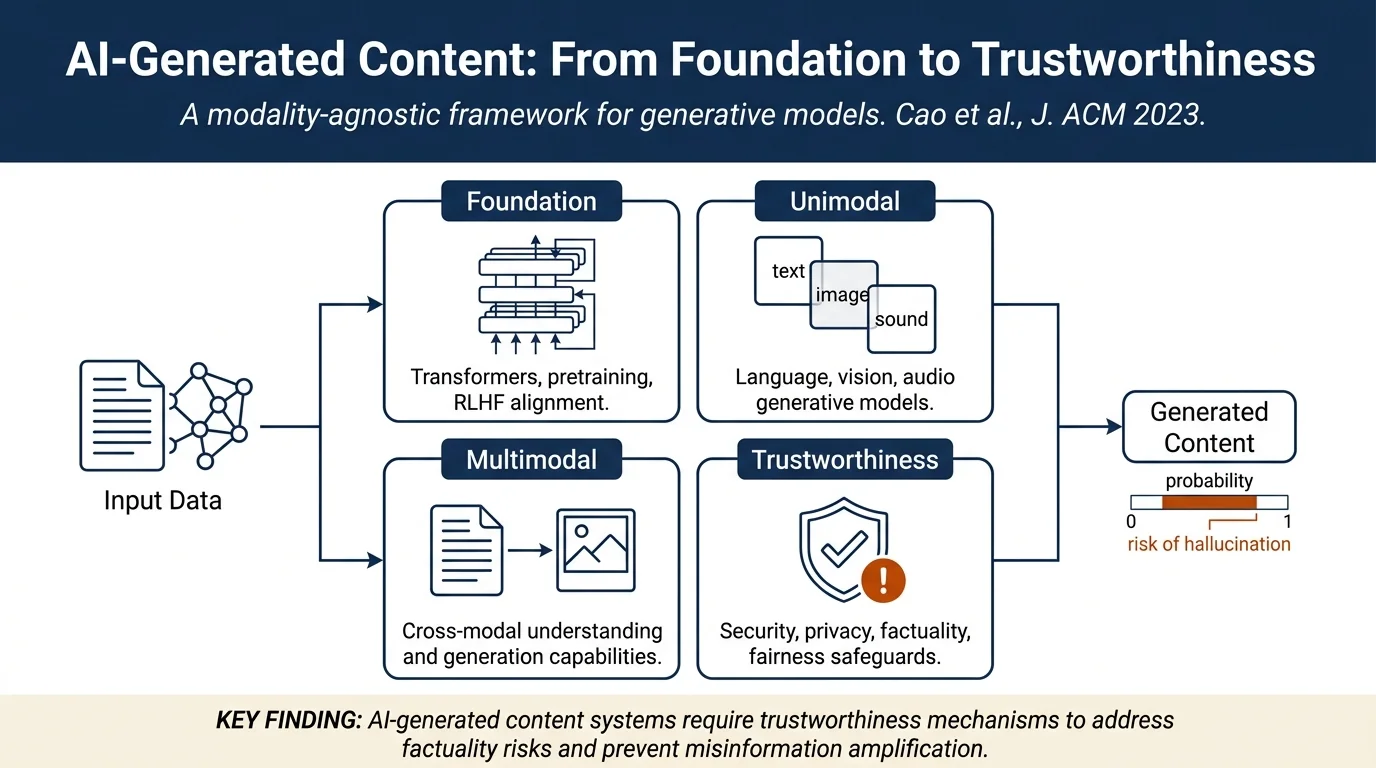
A Comprehensive Survey of AI-Generated Content (AIGC): A History of Generative AI from GAN to ChatGPTThis is the first comprehensive survey of AI-Generated Content (AIGC) covering the history, techniques, and applications of generative models from GANs through ChatGPT. It addresses both the impressive capabilities of these models (text, image, audio, video generation) and critical concerns including factuality, security, privacy, and…
 LLMs & generative AIDatasets & evaluation
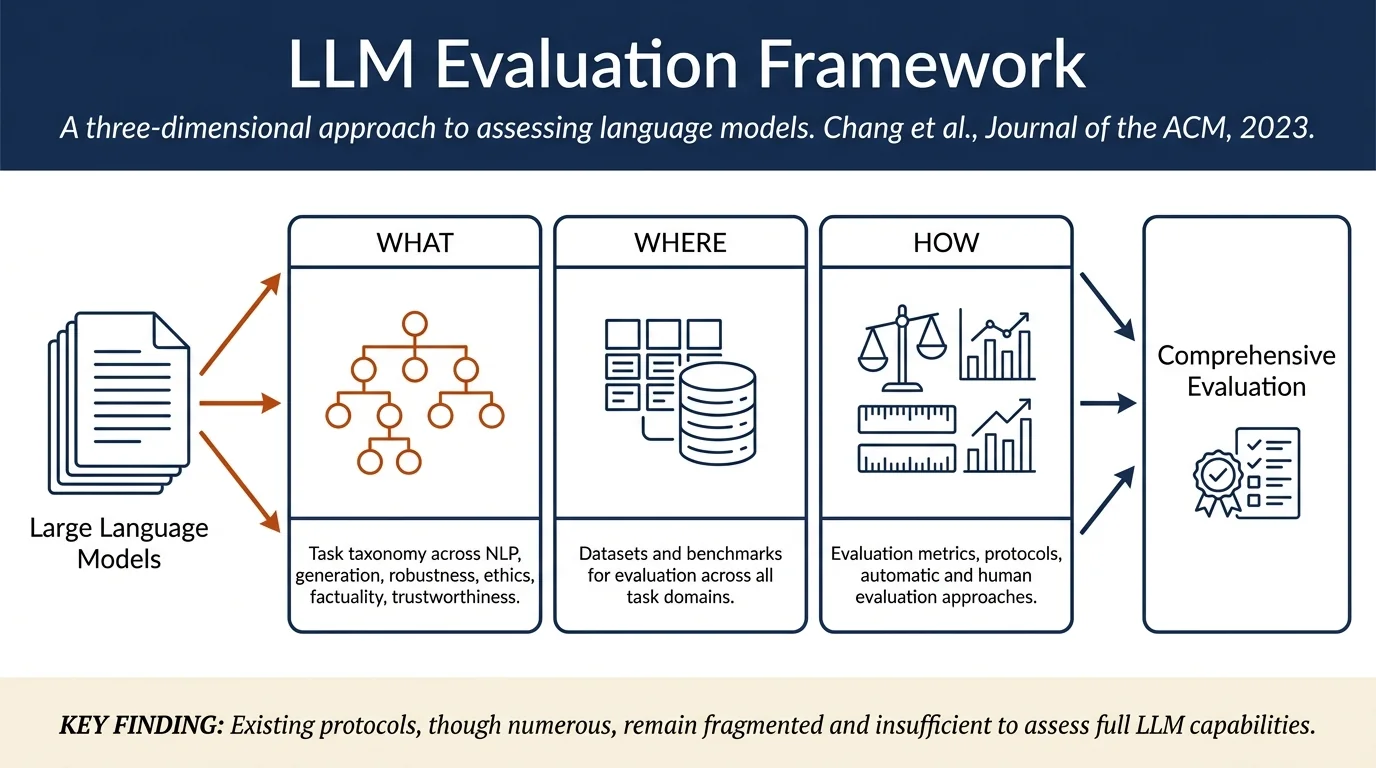
A Survey on Evaluation of Large Language ModelsThis survey provides a comprehensive review of evaluation methodologies for large language models across three dimensions: what to evaluate, where to evaluate, and how to evaluate. The paper encompasses evaluation tasks spanning natural language processing, natural language generation, robustness, ethics, bias detection, trustworthiness,…
 LLMs & generative AIDetection methods
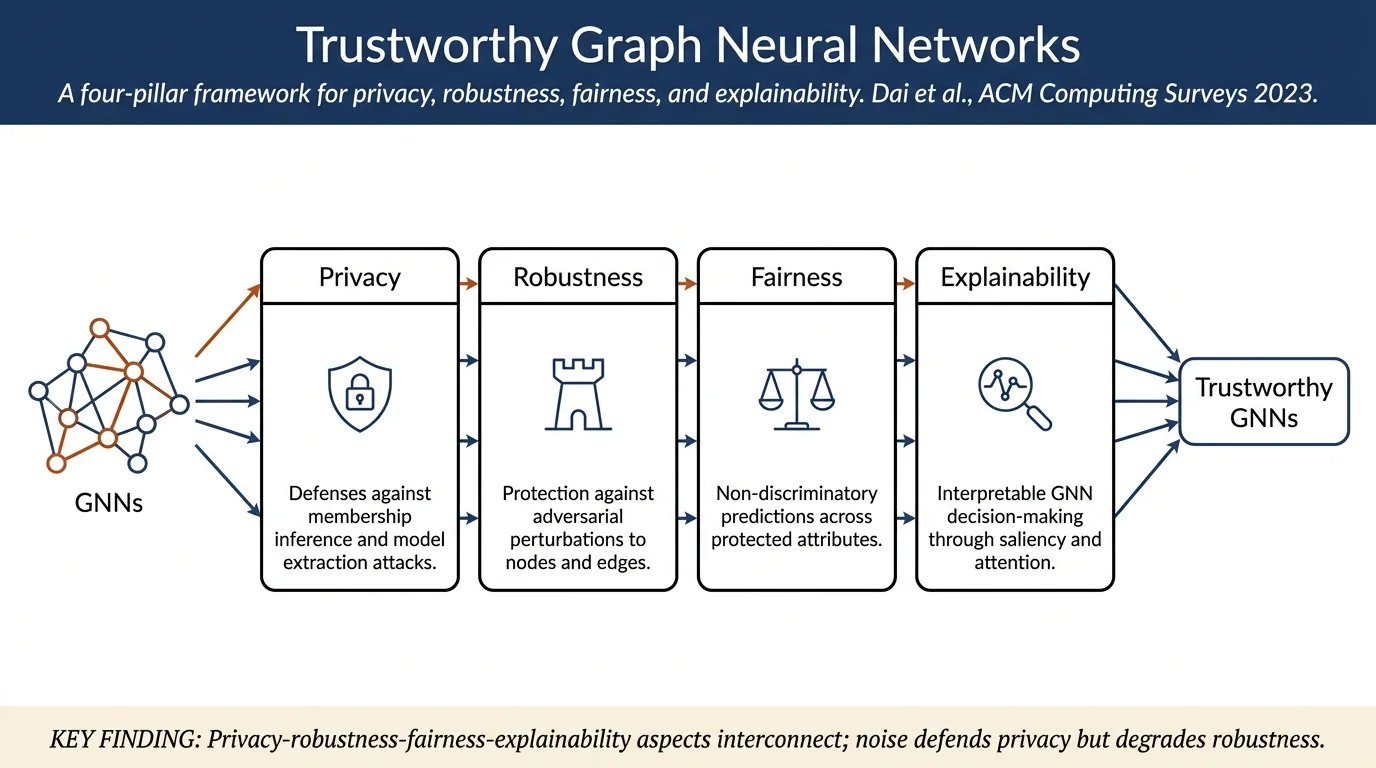
A Comprehensive Survey on Trustworthy Graph Neural Networks: Privacy, Robustness, Fairness, and ExplainabilityA comprehensive survey of trustworthy Graph Neural Networks covering four critical dimensions: privacy attacks and defenses against membership/property inference and model extraction; robustness against adversarial perturbations; fairness mechanisms to prevent discrimination in graph-based predictions; and explainability methods to…