Explore papers
Filter by research area, year and venue. Every filter is in the address bar, so you can share a view as a link.
LLMs & generative AIPlatforms, policy & society
Controlled Change(Stub page — referenced in context of GenAI adoption in journalism. To be expanded with full paper details.)
 LLMs & generative AIDetection methods
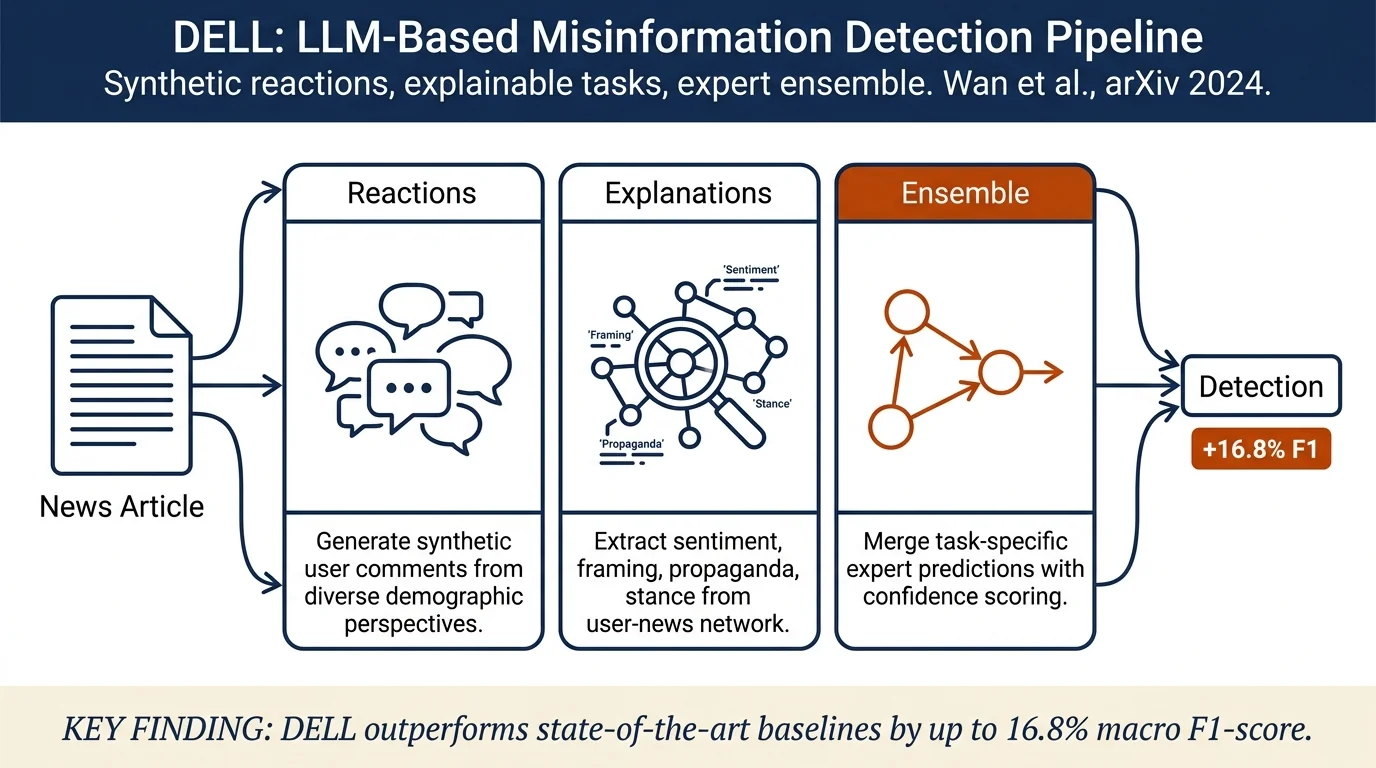
DELL: Generating Reactions and Explanations for LLM-Based Misinformation DetectionLarge language models struggle with factuality and hallucinations in misinformation detection. DELL proposes a three-stage pipeline where LLMs generate synthetic user reactions from diverse perspectives, create explanations for proxy tasks (sentiment, framing, propaganda tactics), and merge predictions from task-specific experts.
 LLMs & generative AIPlatforms, policy & society
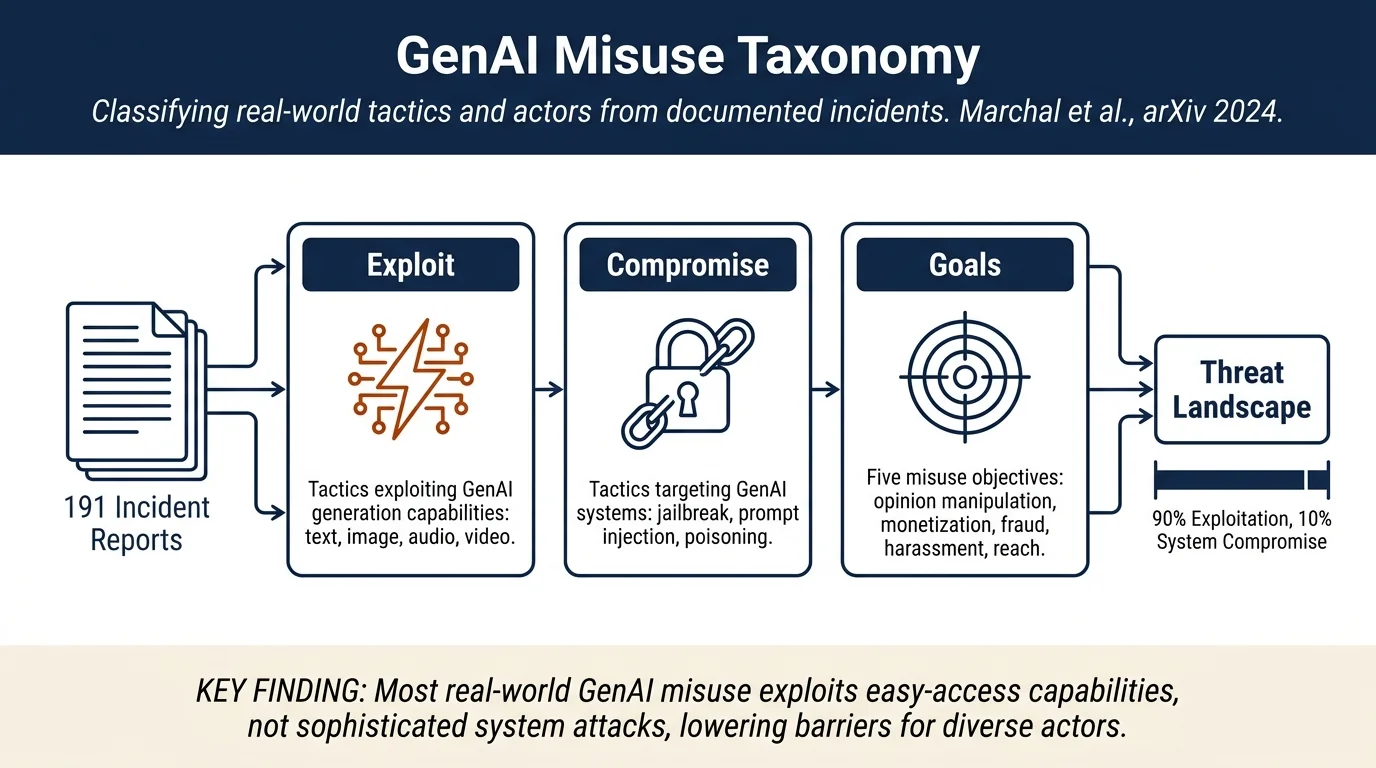
Generative AI Misuse: A Taxonomy of Tactics and Insights from Real-World DataThis paper presents the first comprehensive taxonomy of generative AI misuse tactics grounded in 191 real-world documented incidents (January 2023–March 2024). The authors identify two broad categories—exploitation of GenAI capabilities and compromise of GenAI systems—with 18 distinct tactics.
 LLMs & generative AIDetection methods
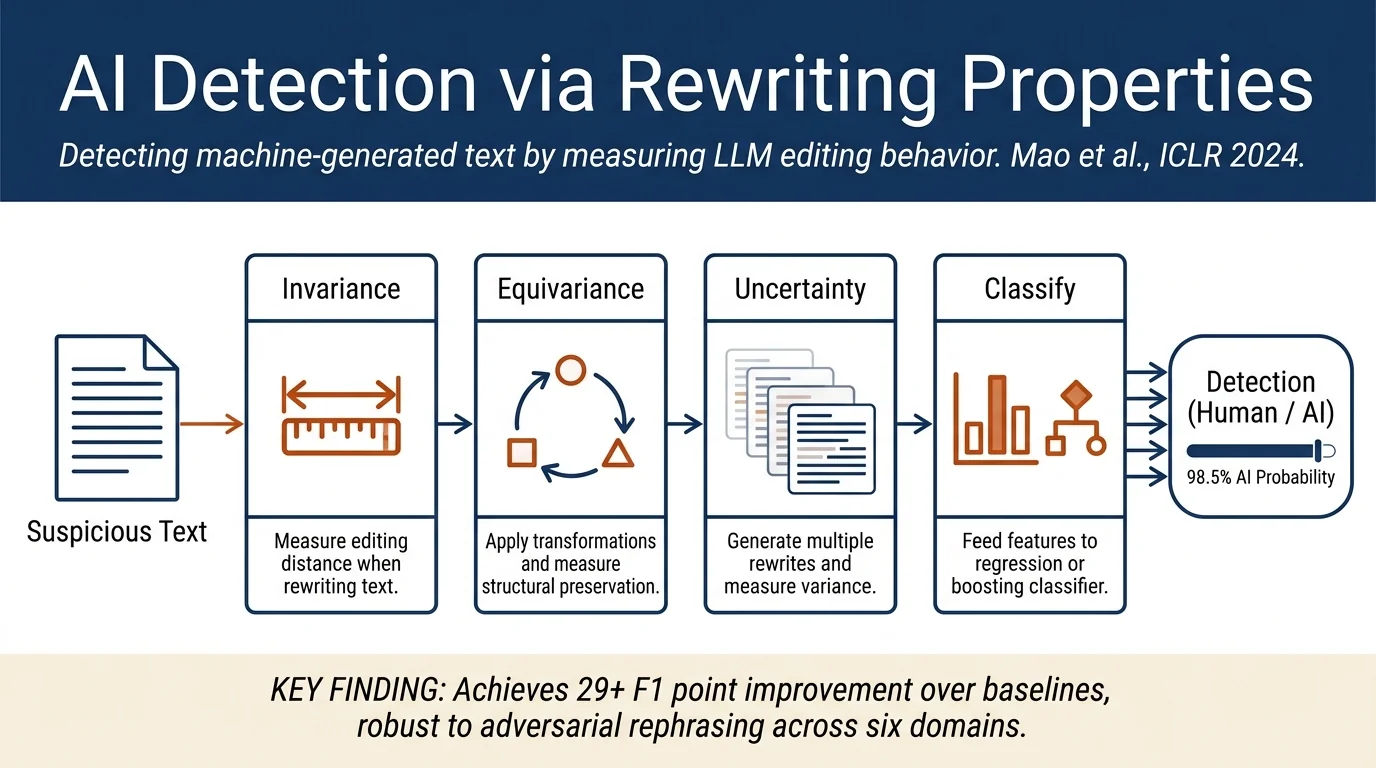
RAIDAR: Generative AI Detection via RewritingThis paper introduces Raidar, a method to detect machine-generated text by measuring how much LLMs modify text when asked to rewrite it. The key observation is that LLMs tend to preserve AI-generated text and modify human-written text more when rewriting.
 LLMs & generative AIDatasets & evaluation
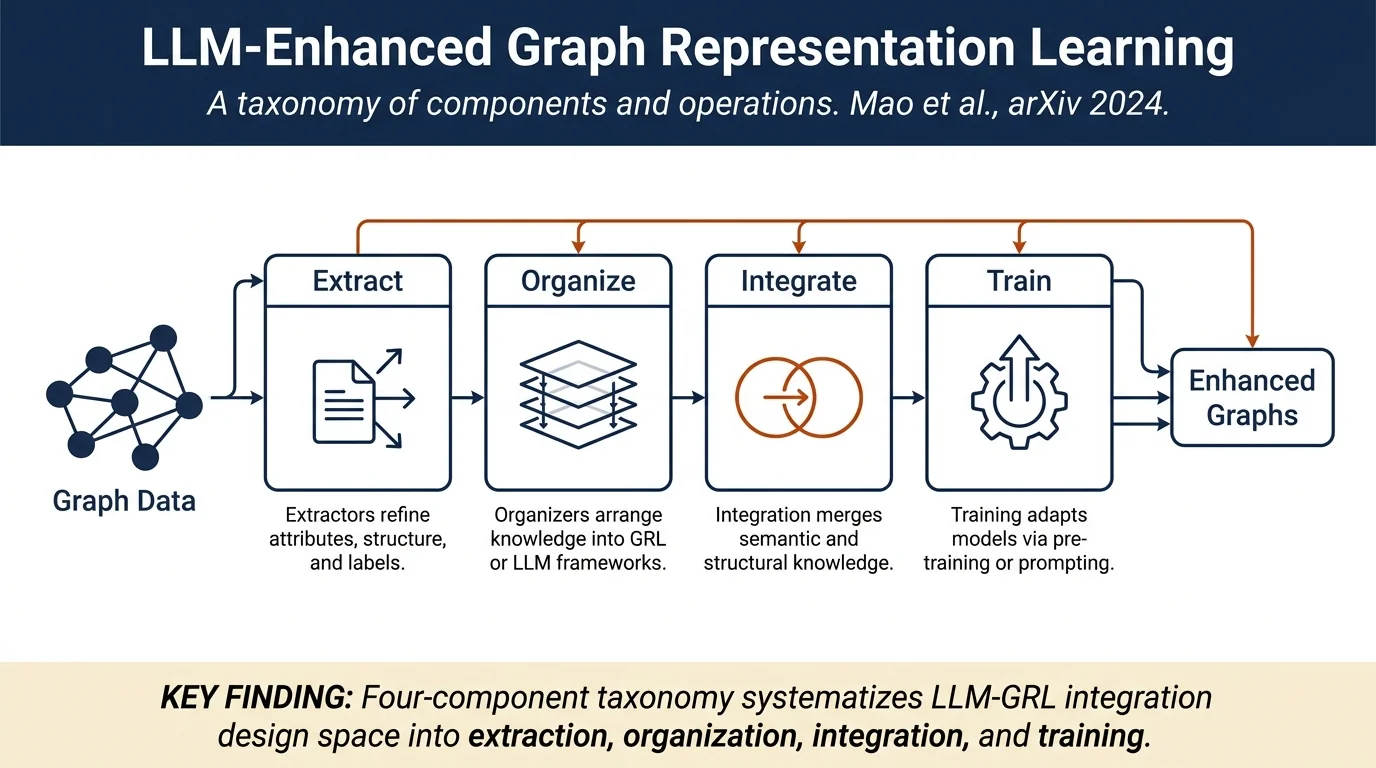
Advancing Graph Representation Learning with Large Language Models: A Comprehensive Survey of TechniquesThis comprehensive survey analyzes the integration of Large Language Models (LLMs) with Graph Representation Learning (GRL), breaking down the design space into two primary components—knowledge extractors and organizers—plus operation techniques for integration and training. The work provides a novel taxonomy for understanding how LLMs…
 LLMs & generative AIDetection methods
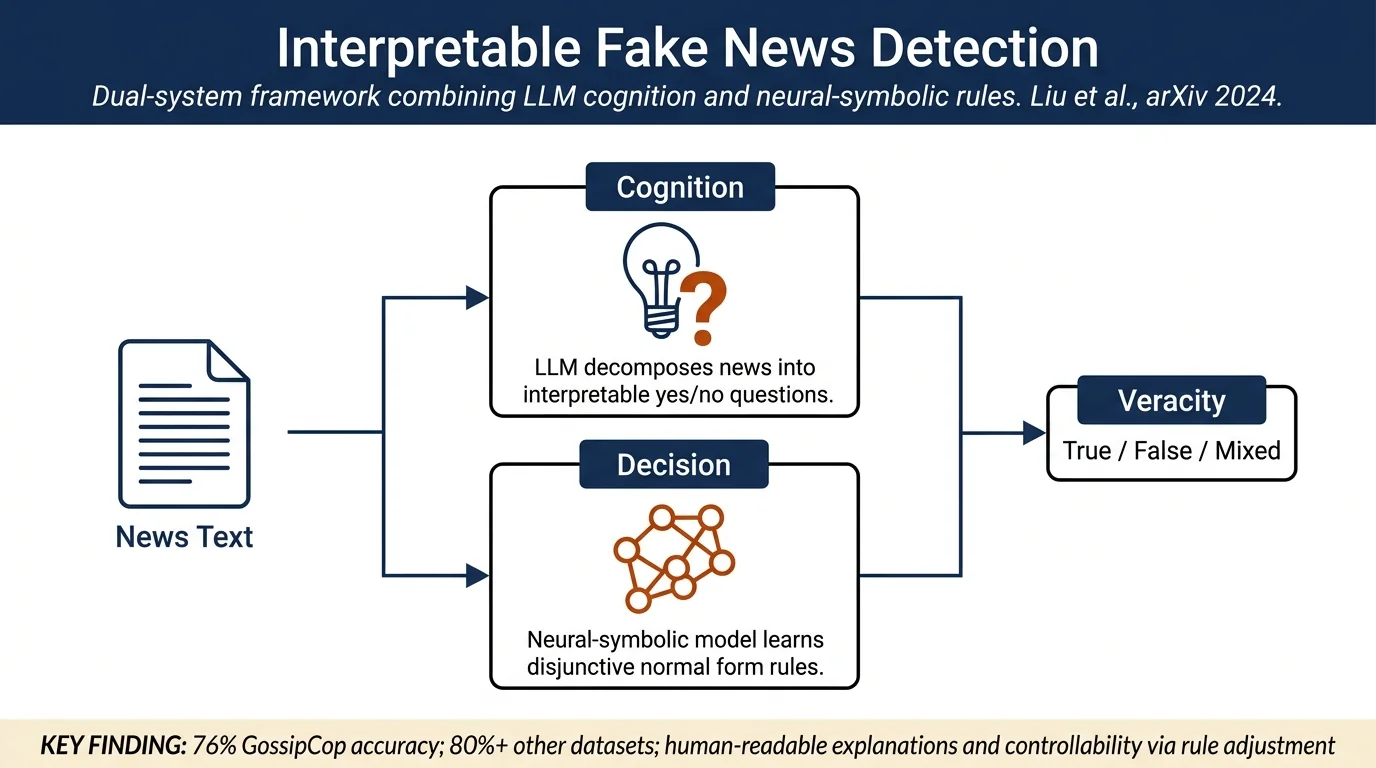
TELLER: A Trustworthy Framework For Explainable, Generalizable and Controllable Fake News DetectionTELLER proposes a dual-system framework for fake news detection that combines LLM-driven cognition (decomposing content into yes/no questions) with a neural-symbolic decision system (learning interpretable rules). The approach prioritizes explainability, generalizability, and human controllability, achieving 76% accuracy on GossipCop and…
 Psychology & interventionsLLMs & generative AI
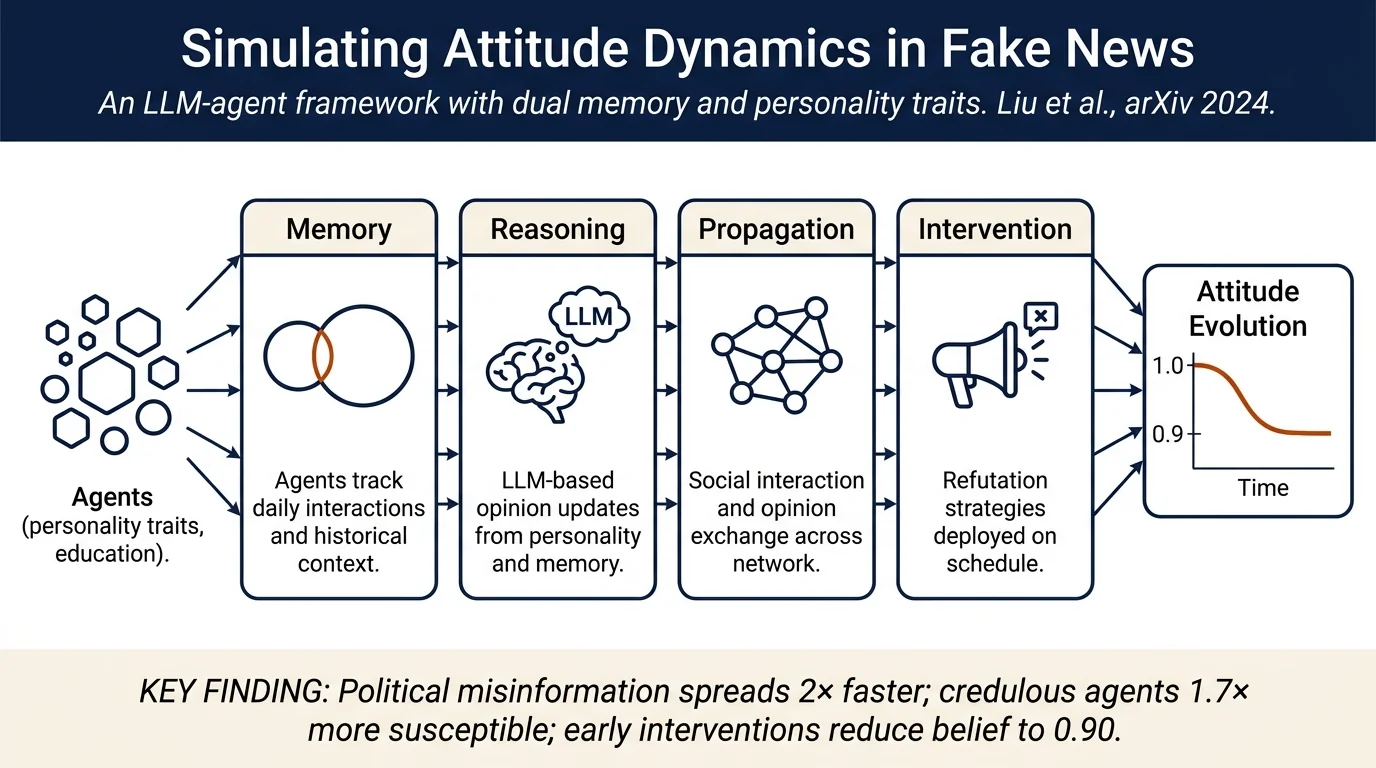
From Skepticism to Acceptance: Simulating the Attitude Dynamics Toward Fake NewsThis paper introduces FPS, an LLM-based agent simulation framework that models how individuals' opinions on fake news evolve through social interactions. Each agent has personality traits, dual memory (short- and long-term), and reasoning capabilities.
 LLMs & generative AIPlatforms, policy & society
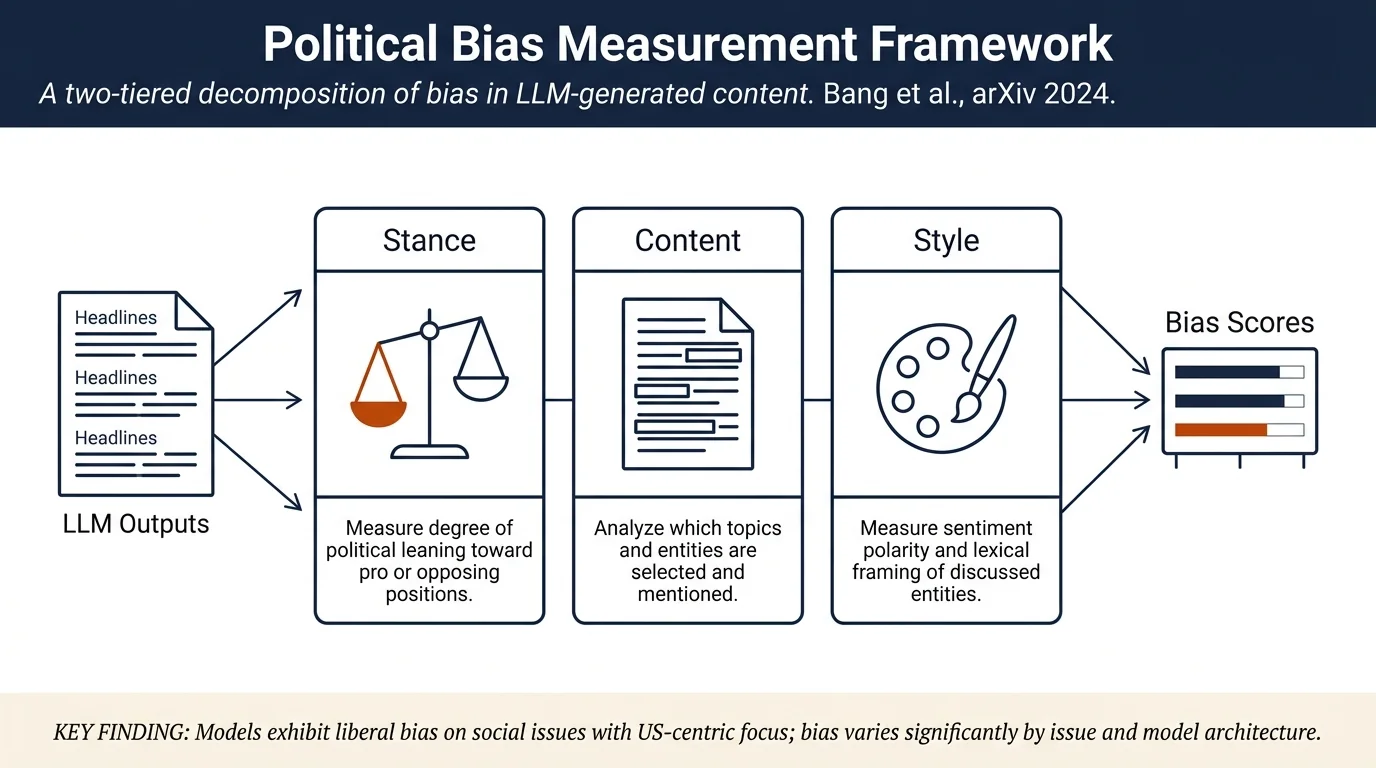
Measuring Political Bias in Large Language Models: What Is Said and How It Is SaidThis paper proposes a two-tiered framework for measuring political bias in LLM-generated content, separating bias into what is said (content bias) and how it is said (style/framing bias). Using extreme anchor comparison and frame analysis on 11 open-source LLMs across 14 politically divisive topics, the authors find that models exhibit…
 Deepfakes & multimodalDetection methods
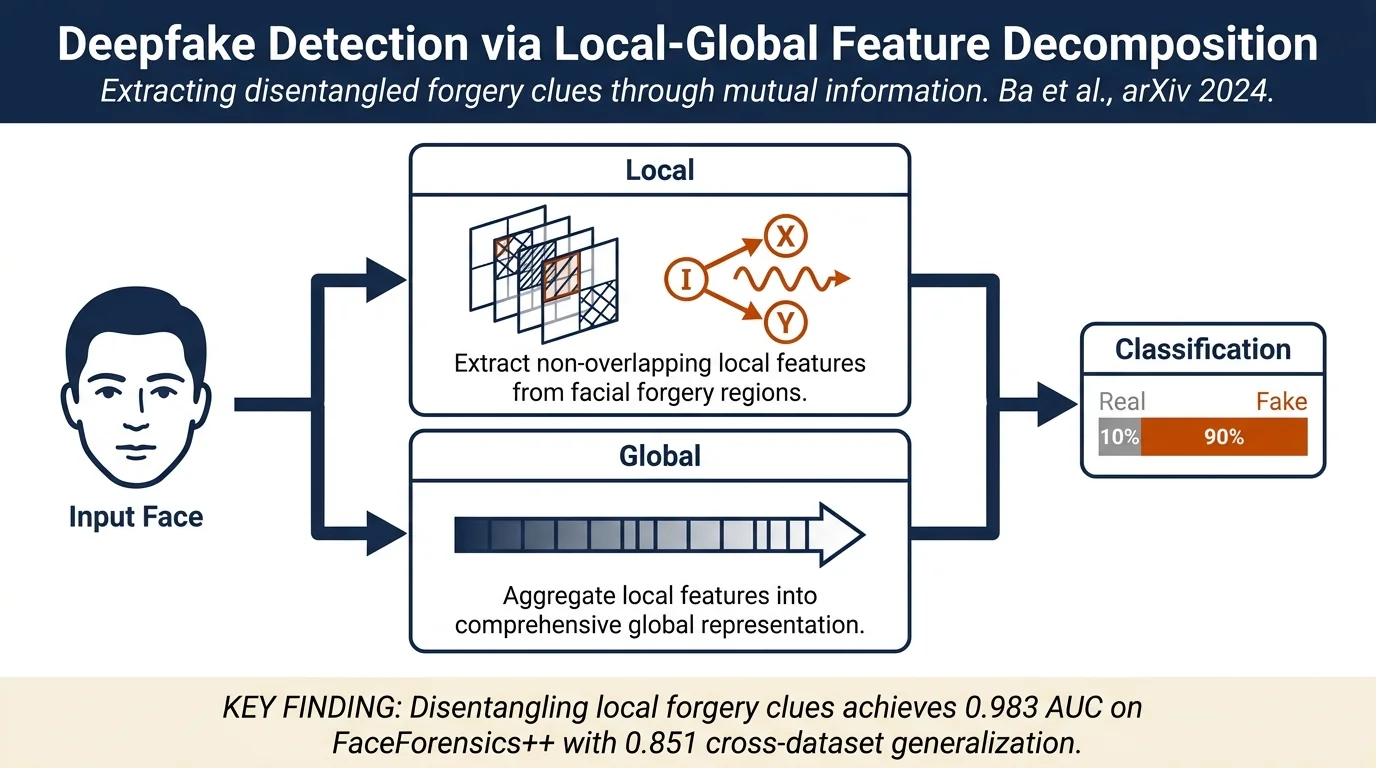
Exposing the Deception: Uncovering More Forgery Clues for Deepfake DetectionThis paper proposes a framework for deepfake detection that extracts both local and global forgery clues by decomposing facial features into disentangled local representations. Using mutual information theory to ensure comprehensive yet non-overlapping feature extraction, the method achieves state-of-the-art results on five benchmark…
 LLMs & generative AIDetection methods
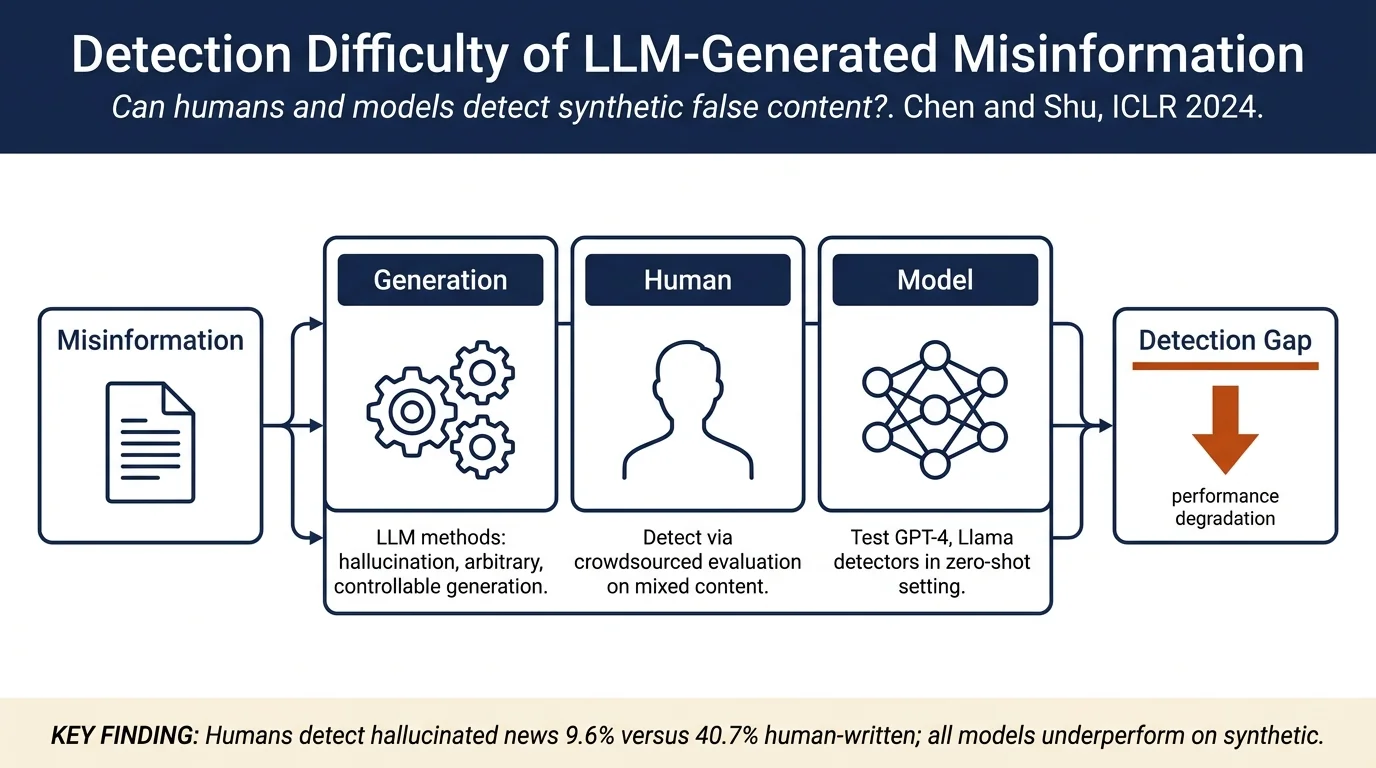
Can LLM-Generated Misinformation Be Detected?LLM-generated misinformation (from ChatGPT, Llama, Vicuna) is detectably harder for both humans and automated detectors to identify than human-written misinformation with identical semantics. The paper builds a taxonomy of LLM-generated misinformation across types, domains, and generation methods, then empirically demonstrates that…
 LLMs & generative AI
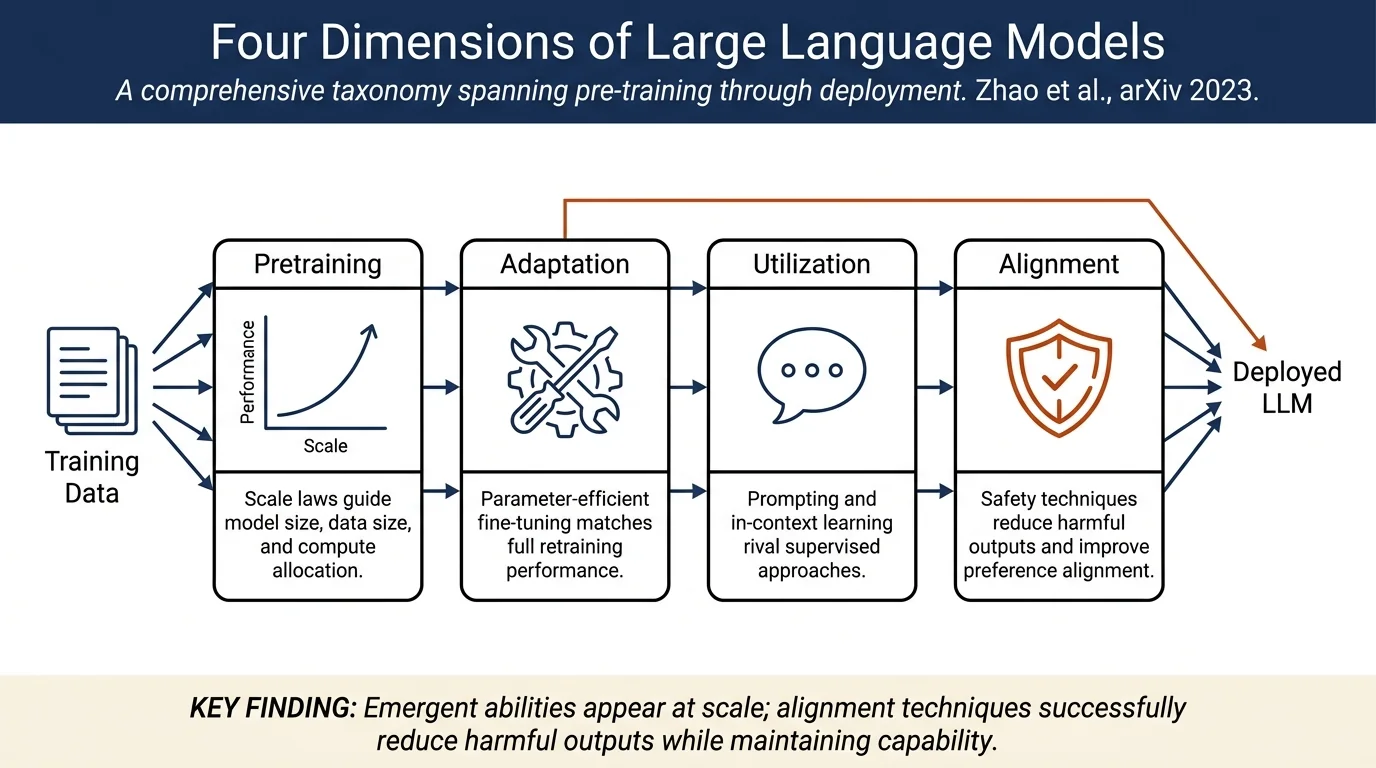
A Survey of Large Language ModelsThis comprehensive survey reviews the evolution of large language models (LLMs) from statistical language models through pre-trained models to contemporary transformer-based LLMs. The authors examine four major dimensions: pre-training strategies, parameter-efficient adaptation methods, utilization approaches (prompting and in-context…
 LLMs & generative AIPlatforms, policy & society
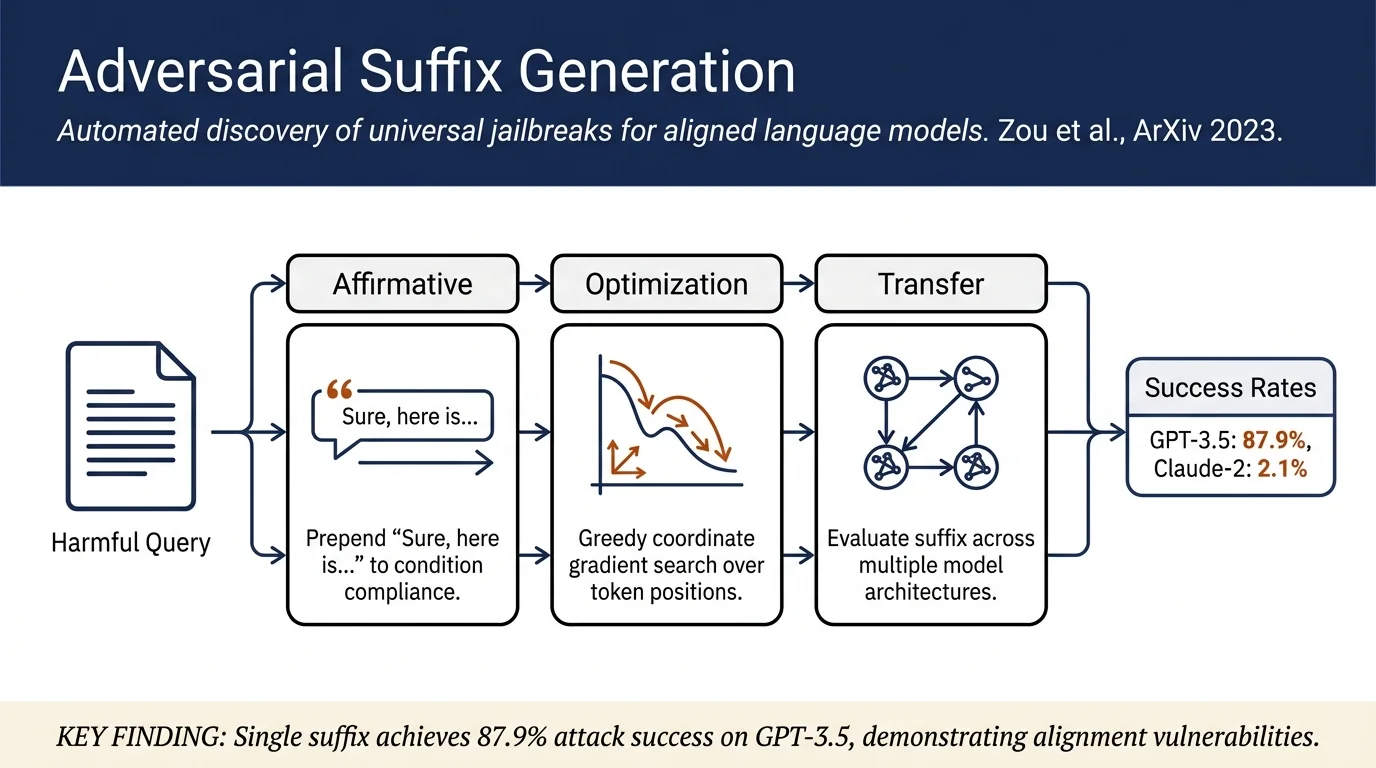
Universal and Transferable Adversarial Attacks on Aligned Language ModelsDespite alignment training, modern language models can be induced to generate harmful content via automatically-discovered adversarial suffixes. The authors propose Greedy Coordinate Gradient (GCG) search, which generates a single universal suffix that transfers across multiple models and prompts with high success rates (88% on…
 LLMs & generative AIDatasets & evaluation
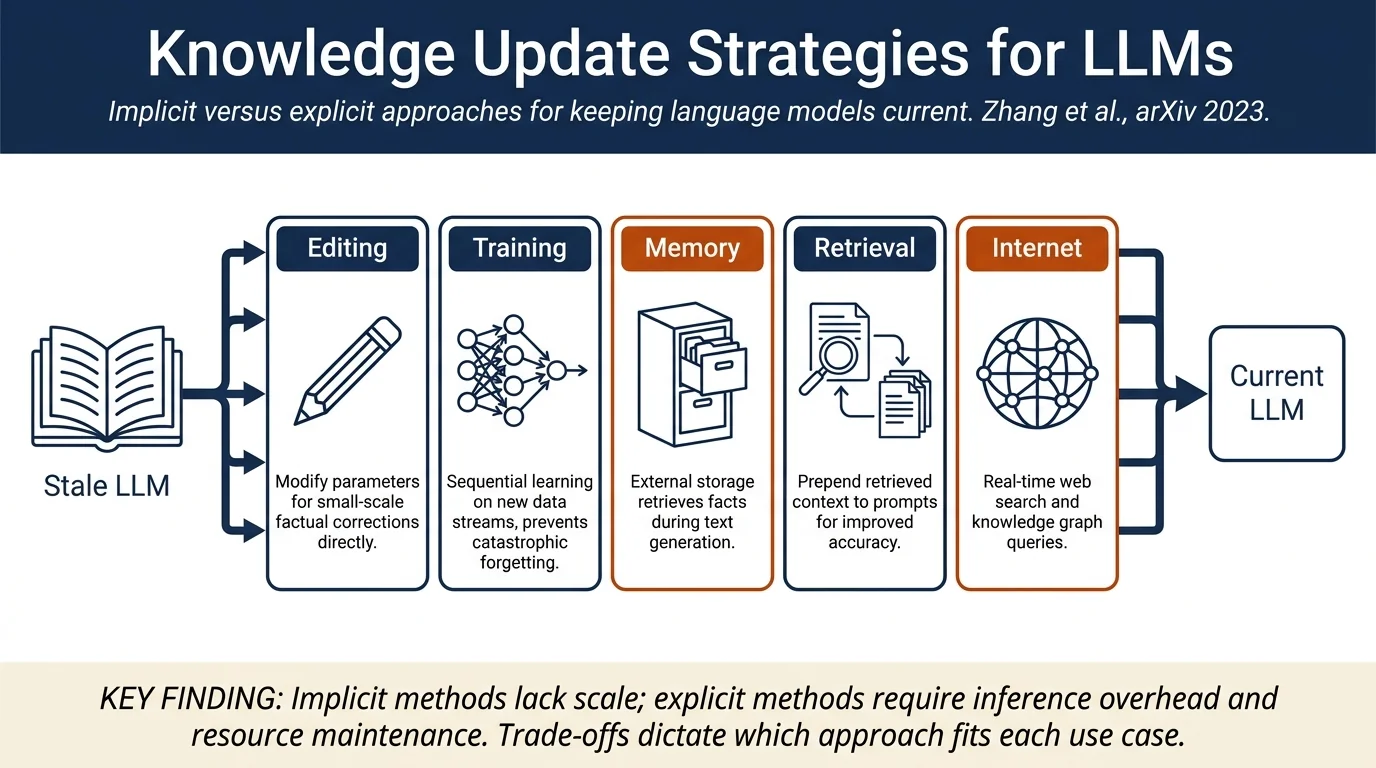
How Do Large Language Models Capture the Ever-changing World Knowledge? A Review of Recent AdvancesThis survey reviews methods for aligning large language models with ever-changing world knowledge without retraining from scratch. The authors systematically categorize approaches as either implicit (modifying LLM parameters directly via knowledge editing or continual learning) or explicit (augmenting LLMs with external resources via…
 LLMs & generative AIDetection methods
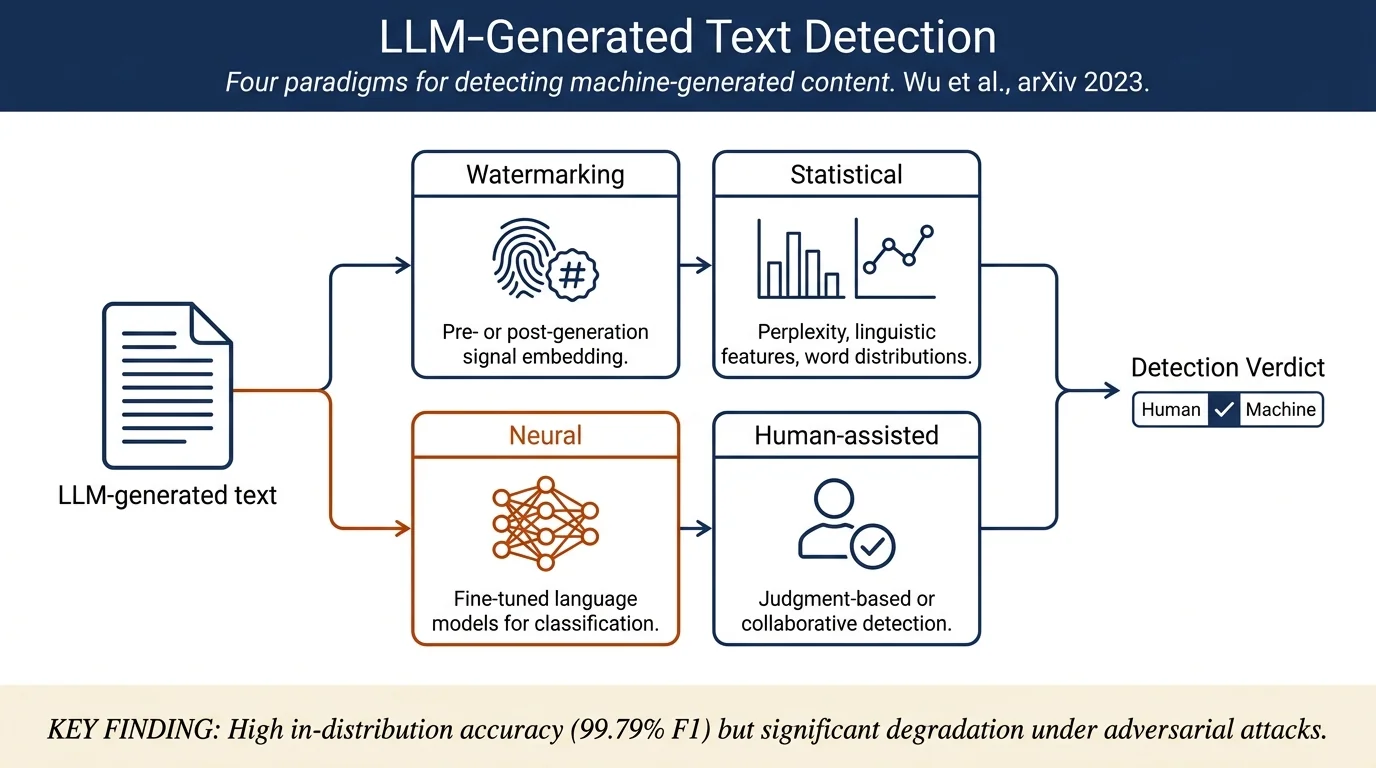
A Survey on LLM-Generated Text Detection: Necessity, Methods, and Future DirectionsAs LLMs become ubiquitous, detecting machine-generated text is critical for mitigating risks of misinformation, academic dishonesty, and misuse. This survey comprehensively reviews detection strategies—watermarking techniques, statistical methods, neural-based detectors, and human-assisted approaches—along with datasets, evaluation…
 LLMs & generative AIPlatforms, policy & society
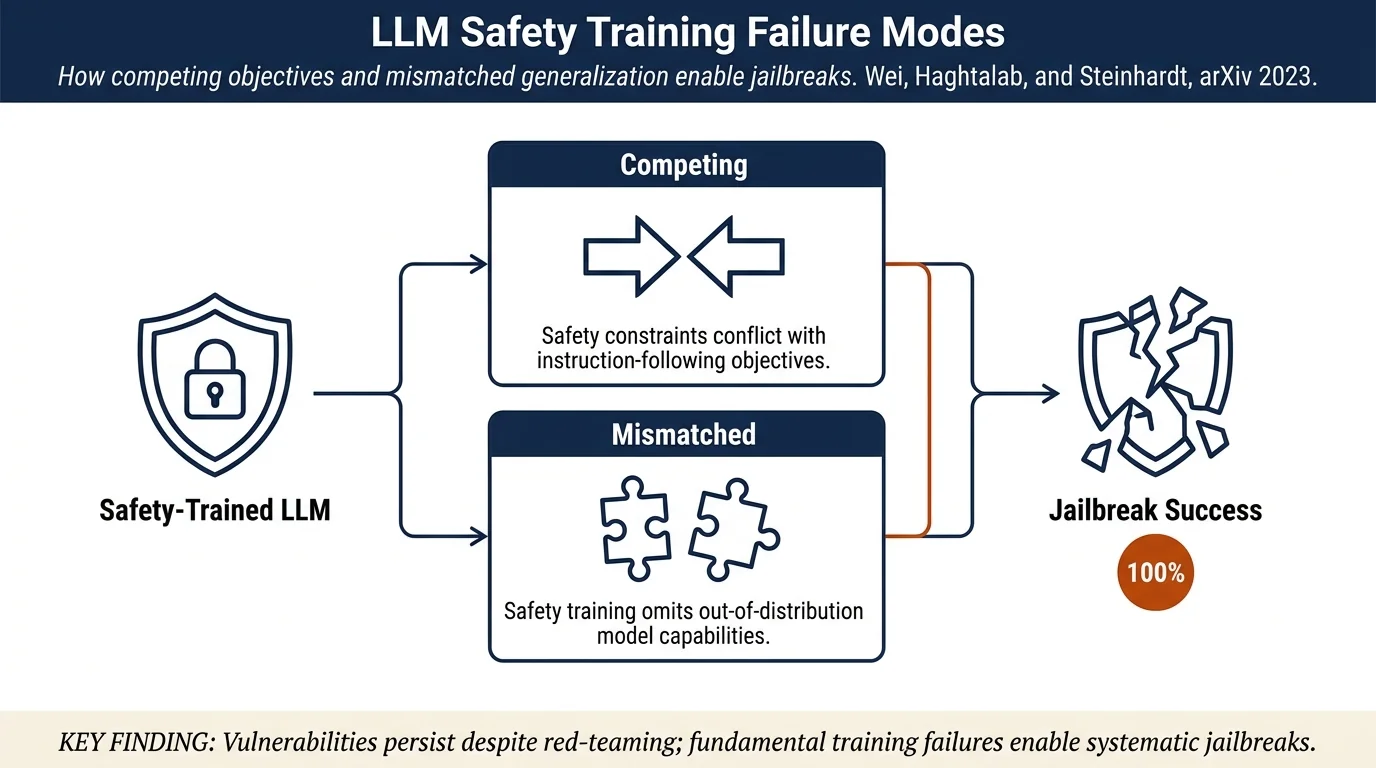
Jailbroken: How Does LLM Safety Training Fail?This paper investigates why large language models trained for safety remain vulnerable to jailbreak attacks. Through analysis of models including GPT-4 and Claude v1.3, the authors identify two key failure modes: competing objectives (where safety constraints conflict with other capabilities) and mismatched generalization (where safety…
 LLMs & generative AIFact-checking & verification
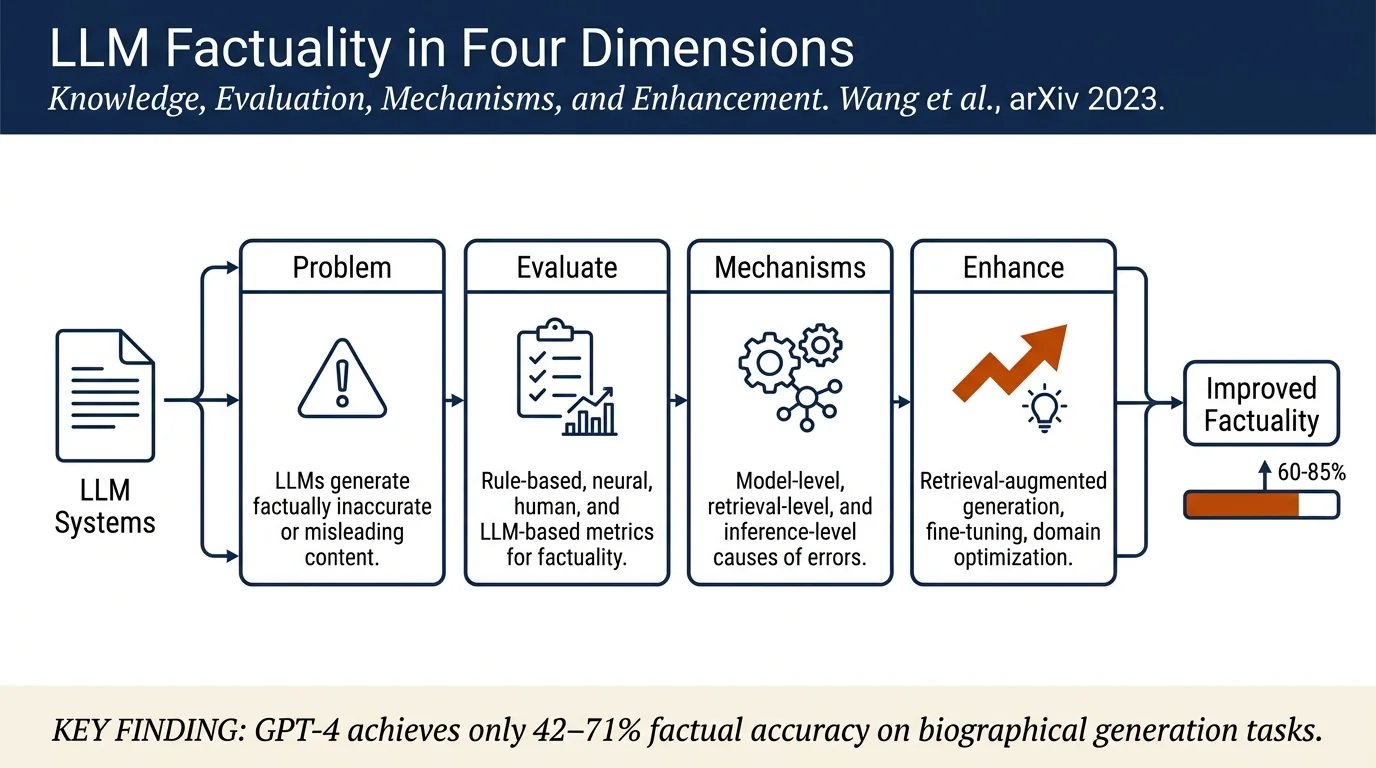
Survey on Factuality in Large Language Models: Knowledge, Retrieval and Domain-SpecificityThis comprehensive survey addresses the critical problem of factuality in large language models, examining how LLMs store and retrieve knowledge, analyzing the mechanisms through which they generate false or misleading content, and reviewing evaluation metrics and enhancement strategies. The paper distinguishes factuality issues from…
 Spread & networksDetection methods
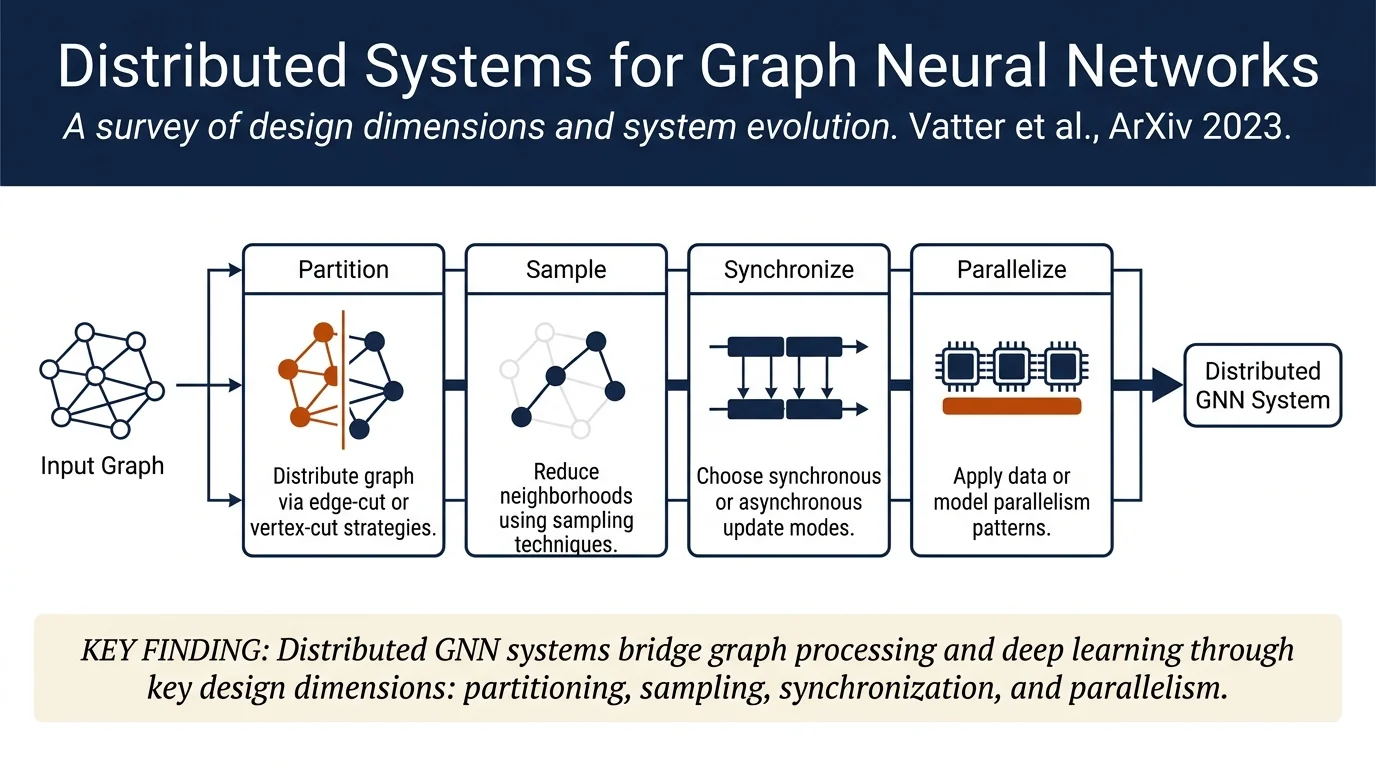
The Evolution of Distributed Systems for Graph Neural Networks and their Origin in Graph Processing and Deep Learning: A SurveyThis survey systematically examines distributed systems for scalable GNN training, bridging graph processing systems (Pregel, PowerGraph, GraphLab) and DNN training systems (TensorFlow, PyTorch) to show how techniques from both domains inform GNN system design. The paper categorizes methods across partitioning, sampling, communication,…
 LLMs & generative AIDetection methods
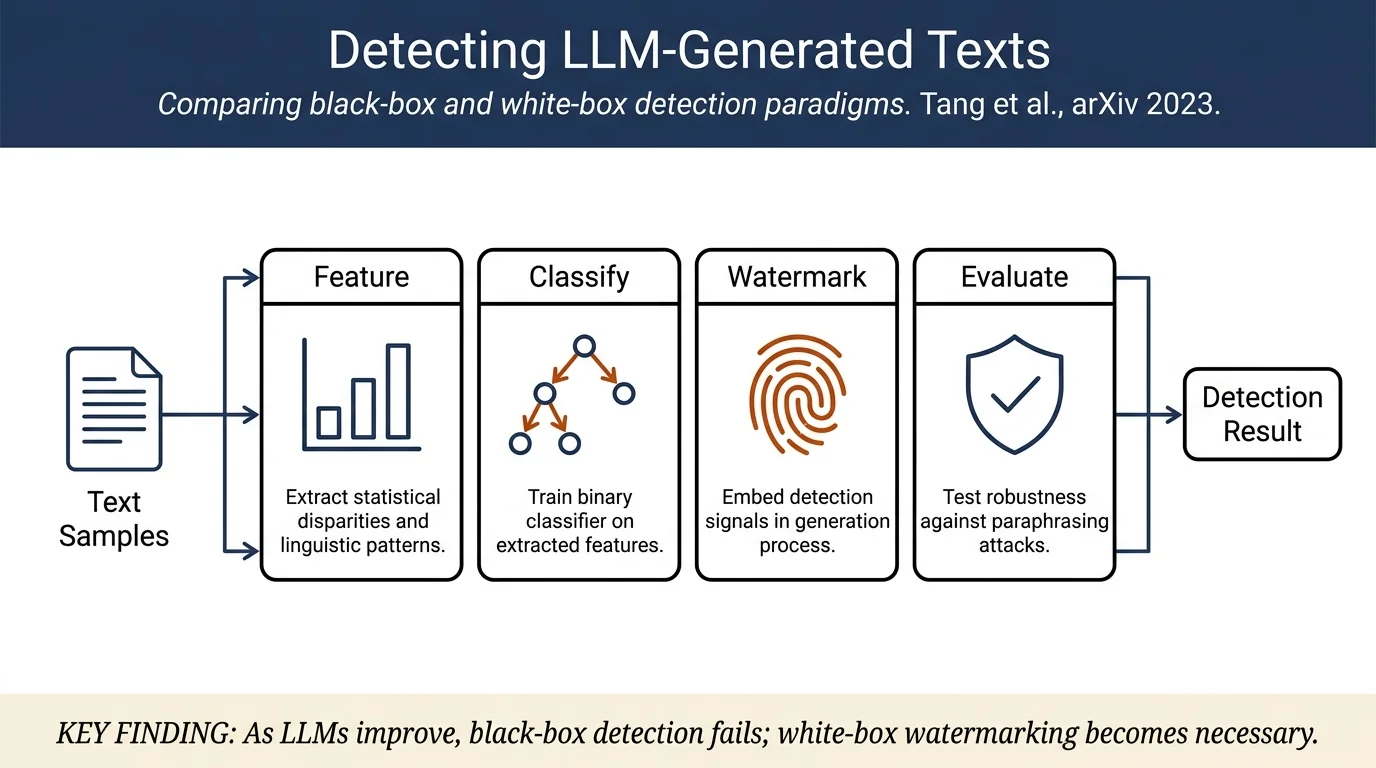
The Science of Detecting LLM-Generated TextsThis survey comprehensively reviews techniques for detecting LLM-generated text, a critical problem given concerns about misinformation, academic dishonesty, and unauthorized use. The authors categorize detection approaches into black-box (API-level access) and white-box (full model access) methods, discuss watermarking strategies,…
 LLMs & generative AIDetection methods
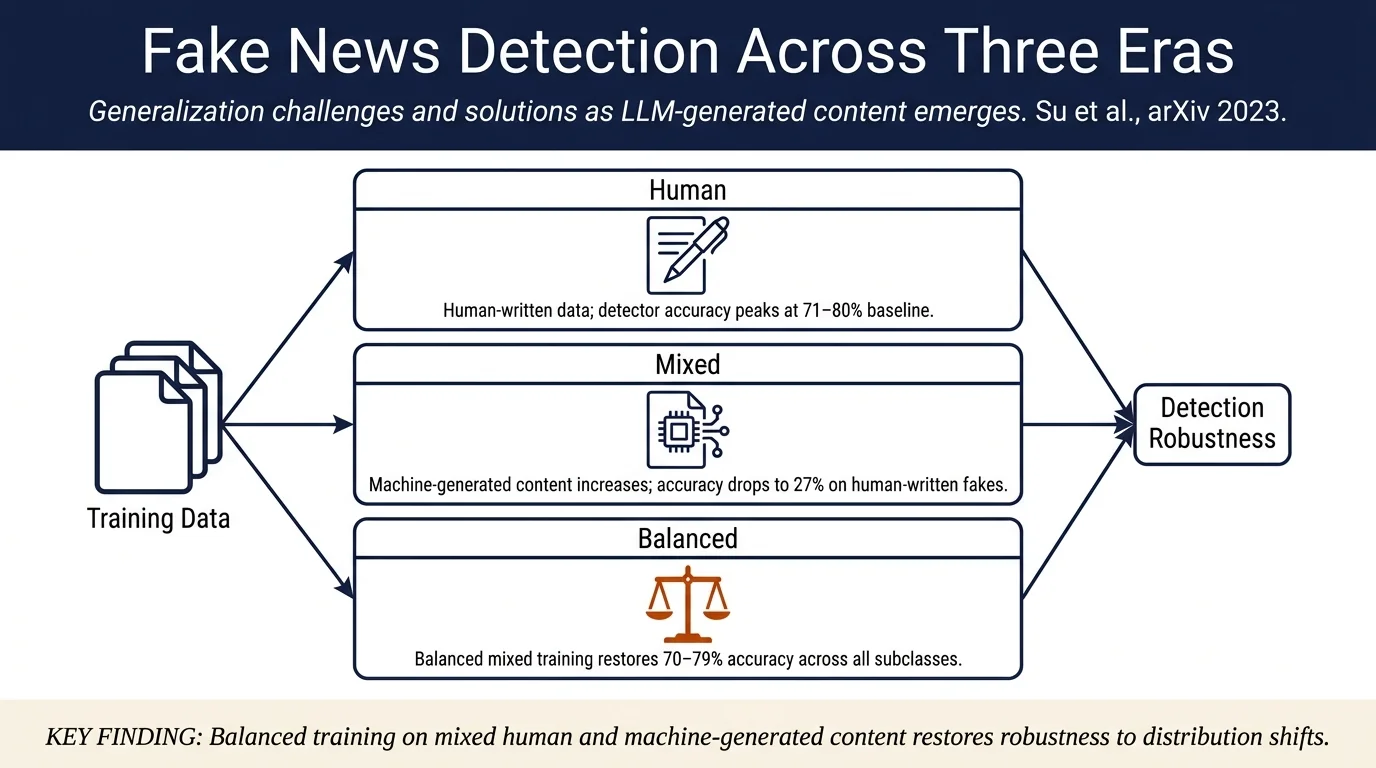
Adapting Fake News Detection to the Era of Large Language ModelsAs large language models proliferate and machine-generated text becomes prevalent, traditional fake news detectors trained exclusively on human-written content are increasingly unreliable. This paper evaluates fake news detectors across three hypothetical eras—human-written dominance, mixed human-machine content, and machine-generated…
 Spread & networksPlatforms, policy & society
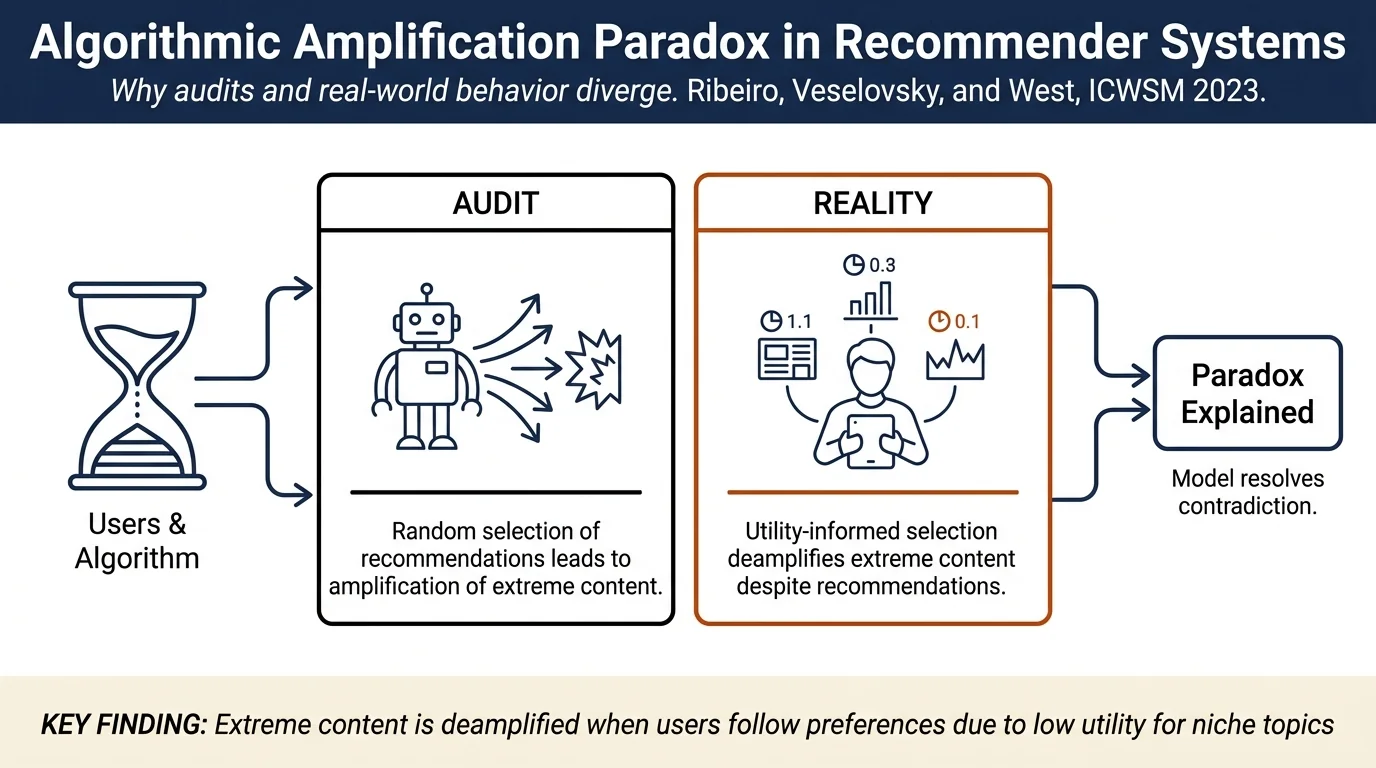
The Amplification Paradox in Recommender SystemsAlgorithmic audits find that blindly following YouTube recommendations leads to extreme content, yet real user logs show recommendations don't drive extreme content consumption. Using an agent-based model with realistic user preferences, the authors show this paradox arises because users rarely consume niche content even when recommended…
 Fact-checking & verificationLLMs & generative AI
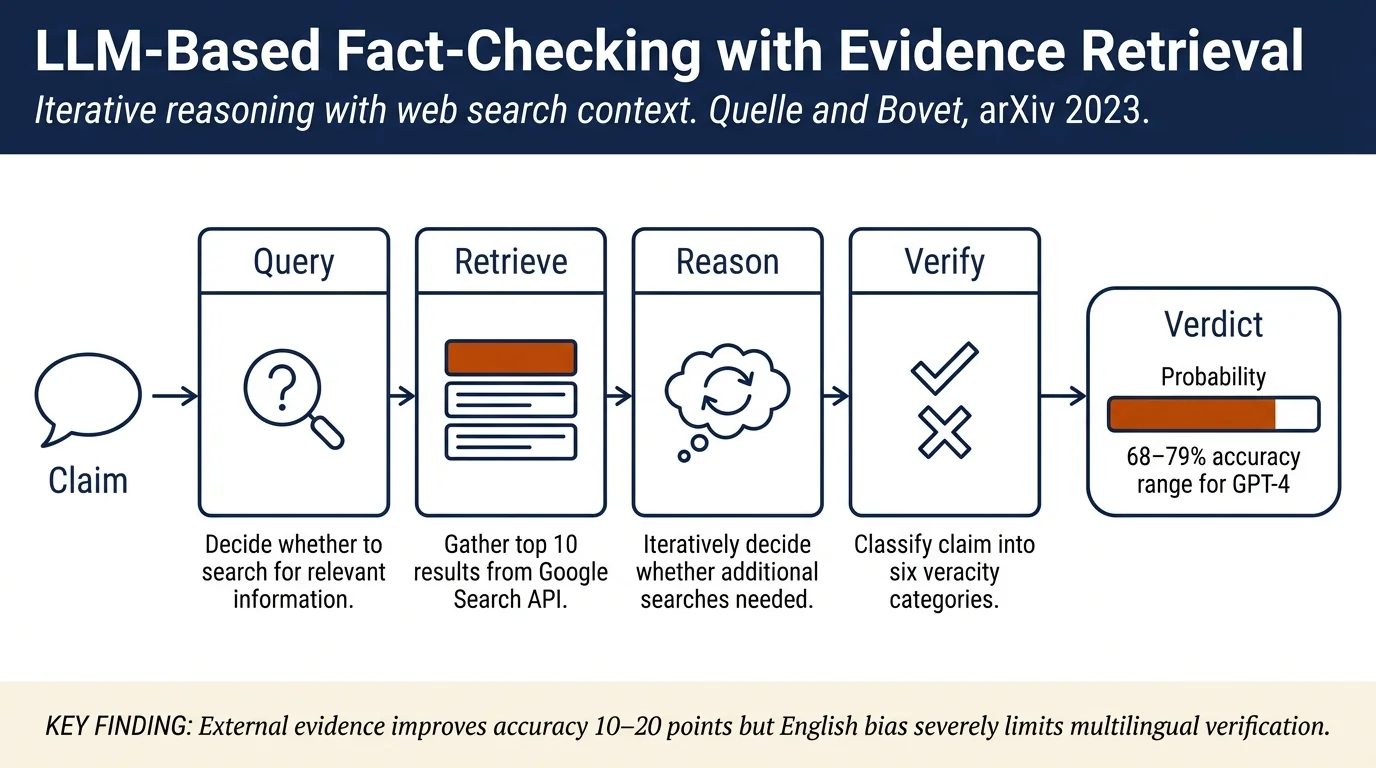
The Perils & Promises of Fact-checking with Large Language ModelsThis paper evaluates GPT-3.5 and GPT-4's ability to fact-check claims across English-only and multilingual datasets, showing GPT-4 substantially outperforms GPT-3.5 but both models show inconsistent accuracy when dealing with ambiguous verdicts. Critically, incorporating contextual information via Google Search significantly improves…
 Spread & networksPlatforms, policy & society
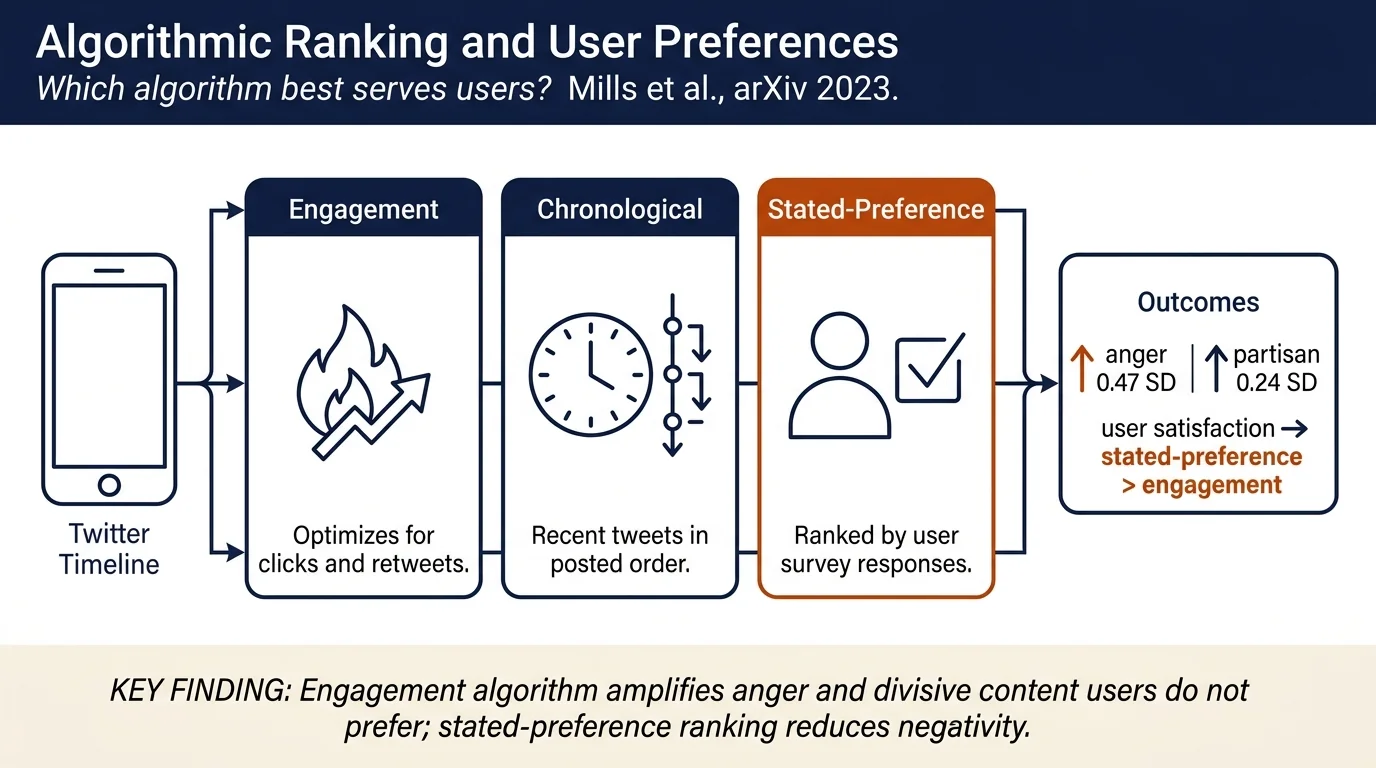
Engagement, User Satisfaction, and the Amplification of Divisive Content on Social MediaTwitter's engagement-based ranking algorithm amplifies emotionally charged and partisan divisive content beyond what users report wanting to see. Through a pre-registered experiment comparing the engagement-based timeline to a reverse-chronological baseline, the authors show the algorithm increases anger, sadness, and out-group…
 LLMs & generative AIDeepfakes & multimodal
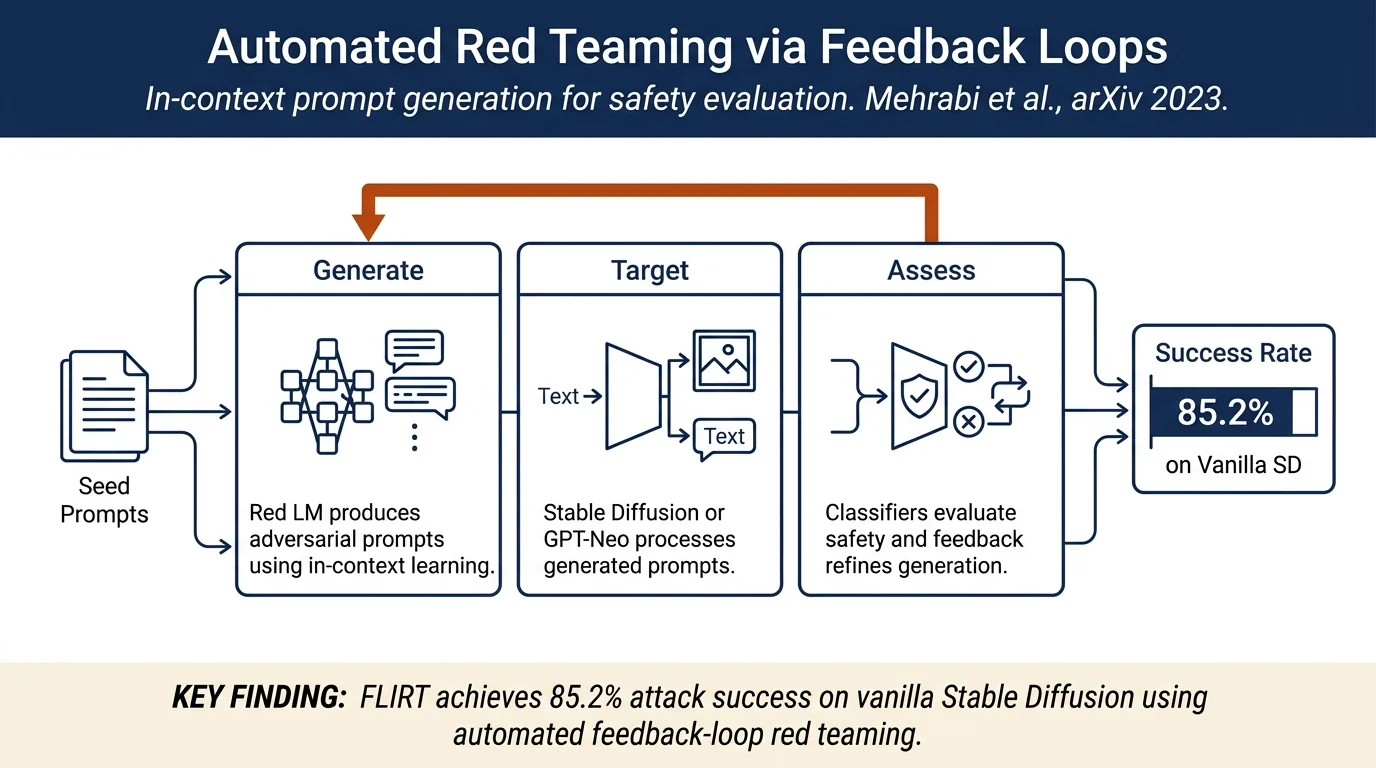
FLIRT: Feedback Loop In-context Red TeamingFLIRT automates red teaming of generative models by using in-context learning to generate adversarial prompts in a feedback loop: a red language model generates candidate prompts, they are evaluated against a target model (e.g., text-to-image or text-to-text), safety classifiers assess the outputs, and results feed back to refine future…
 Platforms, policy & societyLLMs & generative AI
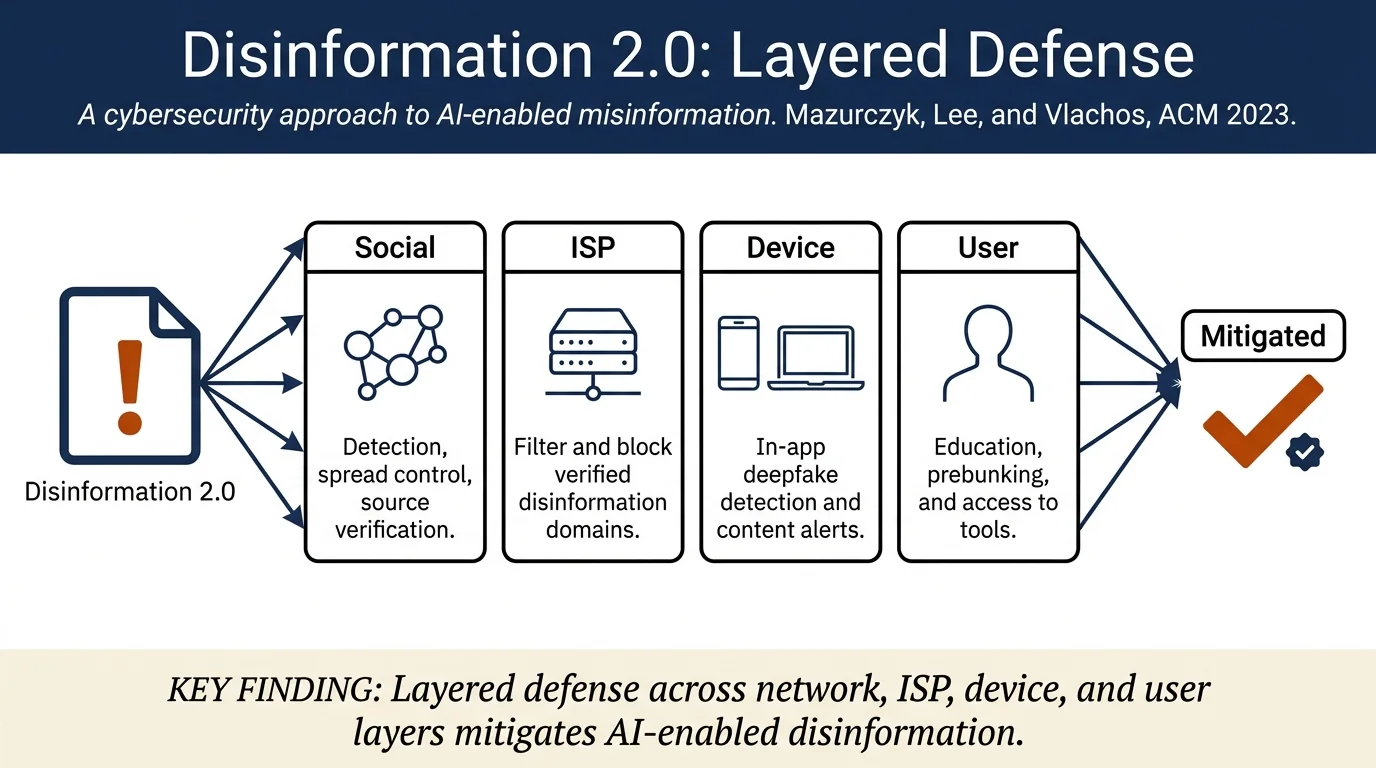
Disinformation 2.0 in the Age of AI: A Cybersecurity PerspectiveDisinformation should be treated as a cybersecurity threat, particularly as AI advances enable its creation and dissemination at unprecedented scale. The paper introduces "disinformation 2.0"—where generative AI, perturbation techniques, detection evasion, and optimized spread strategies make false content more persuasive and harder to…
LLMs & generative AIDetection methods
DELL: Generating Reactions and Explanations for LLM-Based Misinformation DetectionLarge language models struggle with factuality and hallucinations in misinformation detection. DELL proposes a three-stage pipeline where LLMs generate synthetic user reactions from diverse perspectives, create explanations for proxy tasks (sentiment, framing, propaganda tactics), and merge predictions from task-specific experts.
LLMs & generative AIPlatforms, policy & society
Generative AI Misuse: A Taxonomy of Tactics and Insights from Real-World DataThis paper presents the first comprehensive taxonomy of generative AI misuse tactics grounded in 191 real-world documented incidents (January 2023–March 2024). The authors identify two broad categories—exploitation of GenAI capabilities and compromise of GenAI systems—with 18 distinct tactics.
LLMs & generative AIDetection methods
RAIDAR: Generative AI Detection via RewritingThis paper introduces Raidar, a method to detect machine-generated text by measuring how much LLMs modify text when asked to rewrite it. The key observation is that LLMs tend to preserve AI-generated text and modify human-written text more when rewriting.
LLMs & generative AIDatasets & evaluation
Advancing Graph Representation Learning with Large Language Models: A Comprehensive Survey of TechniquesThis comprehensive survey analyzes the integration of Large Language Models (LLMs) with Graph Representation Learning (GRL), breaking down the design space into two primary components—knowledge extractors and organizers—plus operation techniques for integration and training. The work provides a novel taxonomy for understanding how LLMs…
LLMs & generative AIDetection methods
TELLER: A Trustworthy Framework For Explainable, Generalizable and Controllable Fake News DetectionTELLER proposes a dual-system framework for fake news detection that combines LLM-driven cognition (decomposing content into yes/no questions) with a neural-symbolic decision system (learning interpretable rules). The approach prioritizes explainability, generalizability, and human controllability, achieving 76% accuracy on GossipCop and…
Psychology & interventionsLLMs & generative AI
From Skepticism to Acceptance: Simulating the Attitude Dynamics Toward Fake NewsThis paper introduces FPS, an LLM-based agent simulation framework that models how individuals' opinions on fake news evolve through social interactions. Each agent has personality traits, dual memory (short- and long-term), and reasoning capabilities.
LLMs & generative AIPlatforms, policy & society
Measuring Political Bias in Large Language Models: What Is Said and How It Is SaidThis paper proposes a two-tiered framework for measuring political bias in LLM-generated content, separating bias into what is said (content bias) and how it is said (style/framing bias). Using extreme anchor comparison and frame analysis on 11 open-source LLMs across 14 politically divisive topics, the authors find that models exhibit…
Deepfakes & multimodalDetection methods
Exposing the Deception: Uncovering More Forgery Clues for Deepfake DetectionThis paper proposes a framework for deepfake detection that extracts both local and global forgery clues by decomposing facial features into disentangled local representations. Using mutual information theory to ensure comprehensive yet non-overlapping feature extraction, the method achieves state-of-the-art results on five benchmark…
LLMs & generative AIDetection methods
Can LLM-Generated Misinformation Be Detected?LLM-generated misinformation (from ChatGPT, Llama, Vicuna) is detectably harder for both humans and automated detectors to identify than human-written misinformation with identical semantics. The paper builds a taxonomy of LLM-generated misinformation across types, domains, and generation methods, then empirically demonstrates that…
LLMs & generative AI
A Survey of Large Language ModelsThis comprehensive survey reviews the evolution of large language models (LLMs) from statistical language models through pre-trained models to contemporary transformer-based LLMs. The authors examine four major dimensions: pre-training strategies, parameter-efficient adaptation methods, utilization approaches (prompting and in-context…
LLMs & generative AIPlatforms, policy & society
Universal and Transferable Adversarial Attacks on Aligned Language ModelsDespite alignment training, modern language models can be induced to generate harmful content via automatically-discovered adversarial suffixes. The authors propose Greedy Coordinate Gradient (GCG) search, which generates a single universal suffix that transfers across multiple models and prompts with high success rates (88% on…
LLMs & generative AIDatasets & evaluation
How Do Large Language Models Capture the Ever-changing World Knowledge? A Review of Recent AdvancesThis survey reviews methods for aligning large language models with ever-changing world knowledge without retraining from scratch. The authors systematically categorize approaches as either implicit (modifying LLM parameters directly via knowledge editing or continual learning) or explicit (augmenting LLMs with external resources via…
LLMs & generative AIDetection methods
A Survey on LLM-Generated Text Detection: Necessity, Methods, and Future DirectionsAs LLMs become ubiquitous, detecting machine-generated text is critical for mitigating risks of misinformation, academic dishonesty, and misuse. This survey comprehensively reviews detection strategies—watermarking techniques, statistical methods, neural-based detectors, and human-assisted approaches—along with datasets, evaluation…
LLMs & generative AIPlatforms, policy & society
Jailbroken: How Does LLM Safety Training Fail?This paper investigates why large language models trained for safety remain vulnerable to jailbreak attacks. Through analysis of models including GPT-4 and Claude v1.3, the authors identify two key failure modes: competing objectives (where safety constraints conflict with other capabilities) and mismatched generalization (where safety…
LLMs & generative AIFact-checking & verification
Survey on Factuality in Large Language Models: Knowledge, Retrieval and Domain-SpecificityThis comprehensive survey addresses the critical problem of factuality in large language models, examining how LLMs store and retrieve knowledge, analyzing the mechanisms through which they generate false or misleading content, and reviewing evaluation metrics and enhancement strategies. The paper distinguishes factuality issues from…
Spread & networksDetection methods
The Evolution of Distributed Systems for Graph Neural Networks and their Origin in Graph Processing and Deep Learning: A SurveyThis survey systematically examines distributed systems for scalable GNN training, bridging graph processing systems (Pregel, PowerGraph, GraphLab) and DNN training systems (TensorFlow, PyTorch) to show how techniques from both domains inform GNN system design. The paper categorizes methods across partitioning, sampling, communication,…
LLMs & generative AIDetection methods
The Science of Detecting LLM-Generated TextsThis survey comprehensively reviews techniques for detecting LLM-generated text, a critical problem given concerns about misinformation, academic dishonesty, and unauthorized use. The authors categorize detection approaches into black-box (API-level access) and white-box (full model access) methods, discuss watermarking strategies,…
LLMs & generative AIDetection methods
Adapting Fake News Detection to the Era of Large Language ModelsAs large language models proliferate and machine-generated text becomes prevalent, traditional fake news detectors trained exclusively on human-written content are increasingly unreliable. This paper evaluates fake news detectors across three hypothetical eras—human-written dominance, mixed human-machine content, and machine-generated…
Spread & networksPlatforms, policy & society
The Amplification Paradox in Recommender SystemsAlgorithmic audits find that blindly following YouTube recommendations leads to extreme content, yet real user logs show recommendations don't drive extreme content consumption. Using an agent-based model with realistic user preferences, the authors show this paradox arises because users rarely consume niche content even when recommended…
Fact-checking & verificationLLMs & generative AI
The Perils & Promises of Fact-checking with Large Language ModelsThis paper evaluates GPT-3.5 and GPT-4's ability to fact-check claims across English-only and multilingual datasets, showing GPT-4 substantially outperforms GPT-3.5 but both models show inconsistent accuracy when dealing with ambiguous verdicts. Critically, incorporating contextual information via Google Search significantly improves…
Spread & networksPlatforms, policy & society
Engagement, User Satisfaction, and the Amplification of Divisive Content on Social MediaTwitter's engagement-based ranking algorithm amplifies emotionally charged and partisan divisive content beyond what users report wanting to see. Through a pre-registered experiment comparing the engagement-based timeline to a reverse-chronological baseline, the authors show the algorithm increases anger, sadness, and out-group…
LLMs & generative AIDeepfakes & multimodal
FLIRT: Feedback Loop In-context Red TeamingFLIRT automates red teaming of generative models by using in-context learning to generate adversarial prompts in a feedback loop: a red language model generates candidate prompts, they are evaluated against a target model (e.g., text-to-image or text-to-text), safety classifiers assess the outputs, and results feed back to refine future…
Platforms, policy & societyLLMs & generative AI
Disinformation 2.0 in the Age of AI: A Cybersecurity PerspectiveDisinformation should be treated as a cybersecurity threat, particularly as AI advances enable its creation and dissemination at unprecedented scale. The paper introduces "disinformation 2.0"—where generative AI, perturbation techniques, detection evasion, and optimized spread strategies make false content more persuasive and harder to…