Explore papers
Filter by research area, year and venue. Every filter is in the address bar, so you can share a view as a link.
 Spread & networksPlatforms, policy & society
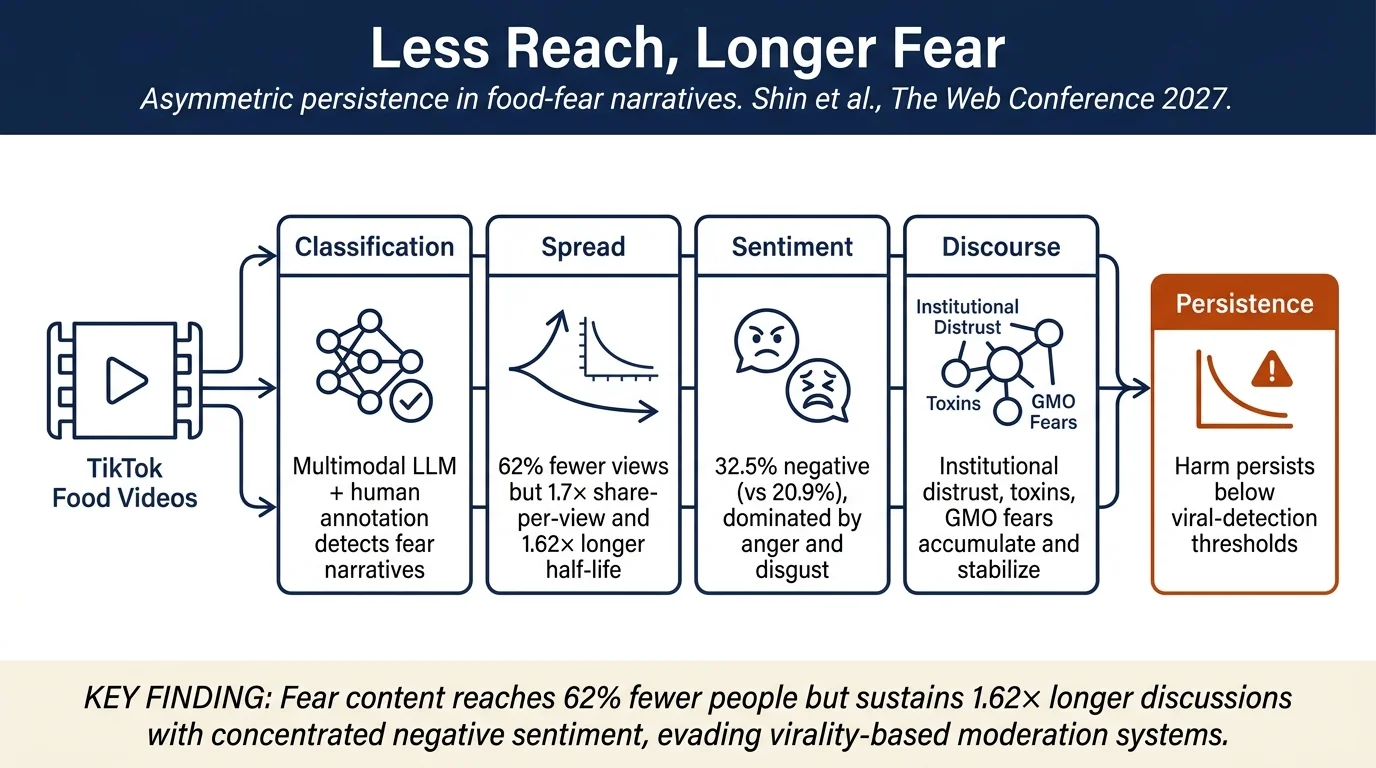
Fear Doesn't Go Viral, It Lingers: Spread, Affect, and Discourse of Food-Fear Content on TikTokFear-based content about food on TikTok reaches fewer people than non-fear nutrition videos but sustains engagement and discussion far longer. Fear videos trigger more negative, angry, and disgusted comments that persist for weeks; their discourse concentrates on distrust of food industry, contamination, and institutional skepticism.
 Detection methodsPlatforms, policy & society
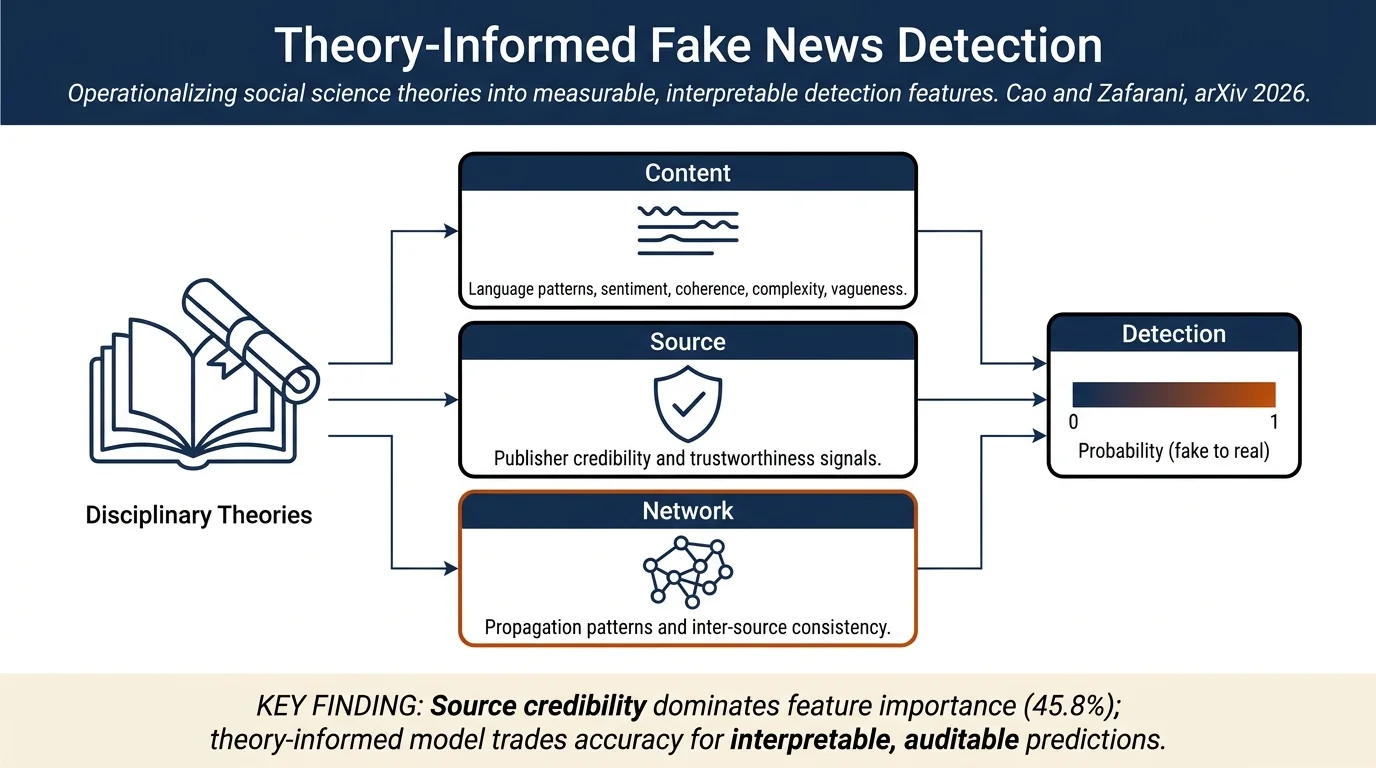
Fake News Theories: Harnessing Disciplinary Insights for Computational Modeling, Detection, and ExplanationThis paper develops a theory-informed computational framework that translates cross-disciplinary social science theories into interpretable, measurable features for fake news detection. The authors systematically review theories from communication, psychology, and economics—organized into content-based, source-related, and network-level…
 Deepfakes & multimodalDetection methods
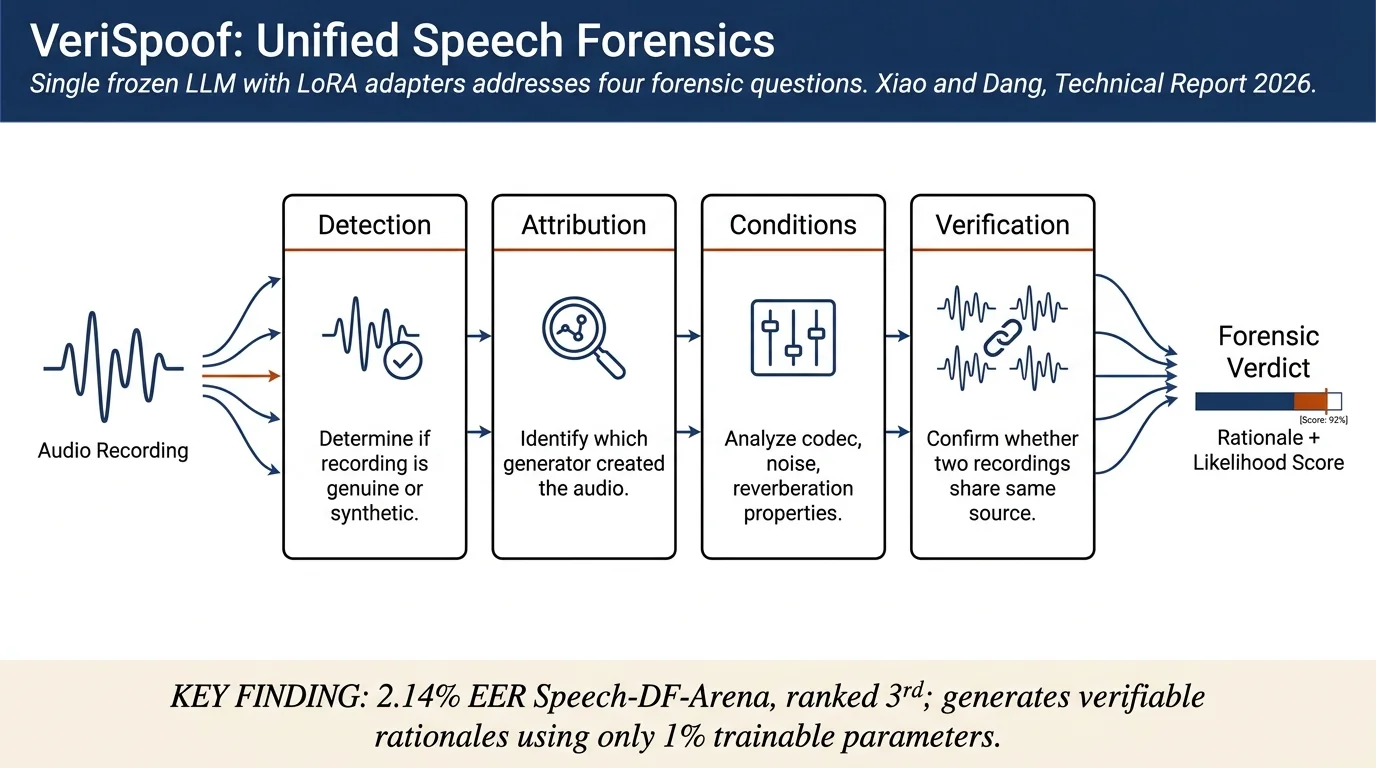
VeriSpoof: Beyond Real or Fake with One Audio LLMVeriSpoof is an audio language model system that unifies multiple forensic tasks in a single neural framework: detecting whether a speech recording is synthetic, identifying which generator produced it, analyzing recording conditions, and verifying whether two recordings share a source. The system achieves state-of-the-art results on…
 Deepfakes & multimodalDatasets & evaluation
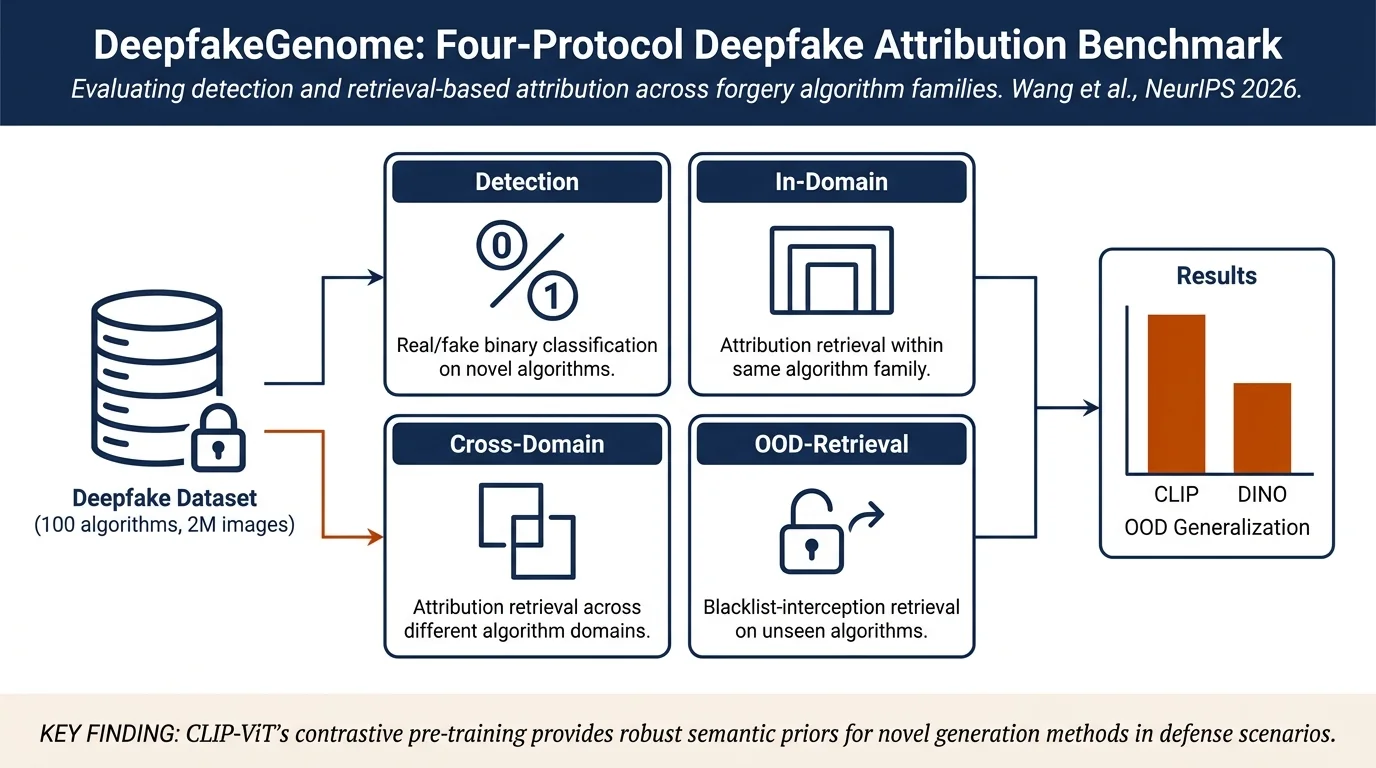
DeepfakeGenome: Toward Next-Generation Deepfake AttributionDeepfakeGenome (DFG) is a large-scale benchmark for deepfake detection and attribution covering 100 facial forgery algorithms and 2M images — 4–100× larger than prior benchmarks. The paper proposes 4 evaluation protocols using novel retrieval-based attribution metrics (mAP, Recall) instead of reject-class classification, and conducts…
 Deepfakes & multimodalDetection methods
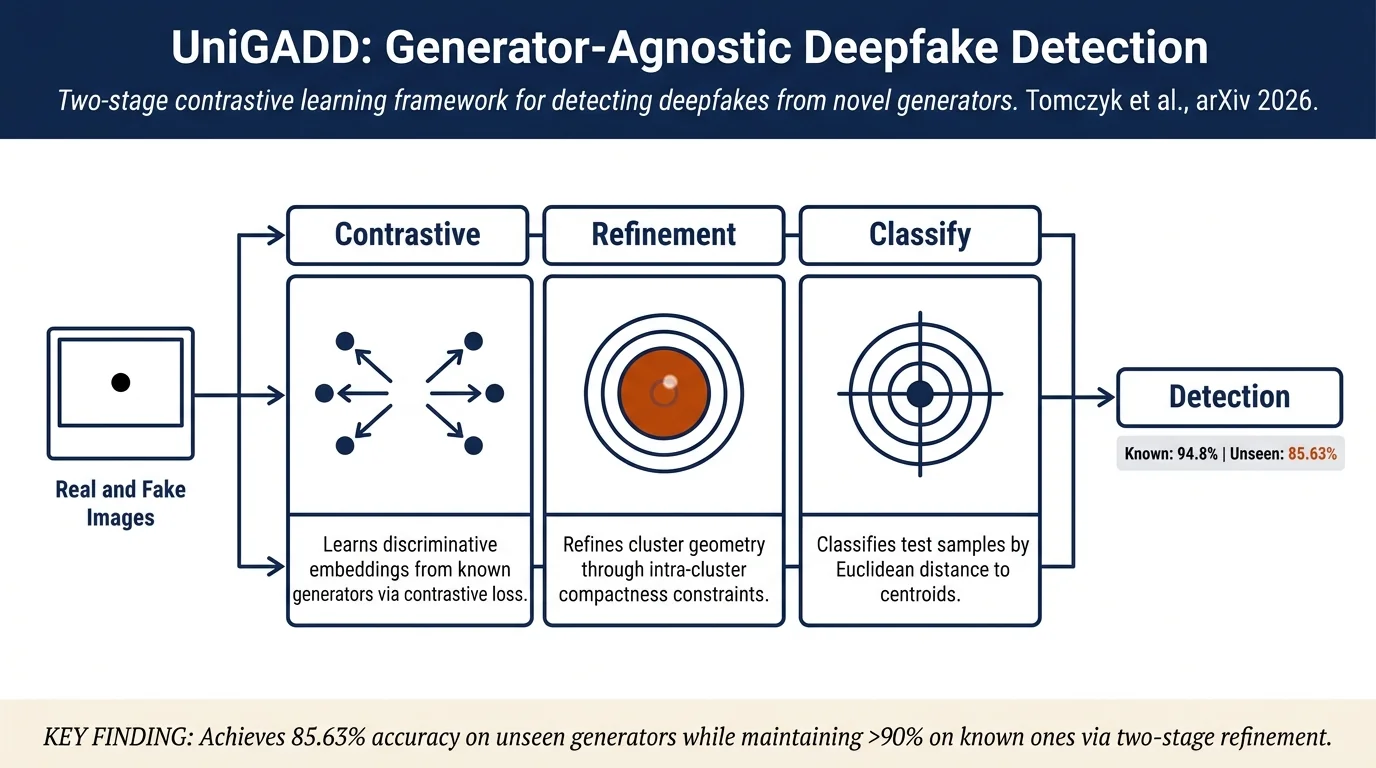
UniGADD: Universal Generator-Agnostic Deepfake DetectorUniGADD proposes a two-stage supervised contrastive learning framework for detecting deepfakes from previously unseen generators. The method learns discriminative embeddings from known fake generators in stage one, then refines cluster structure via intra-cluster compactness constraints in stage two.
 Deepfakes & multimodalDetection methods
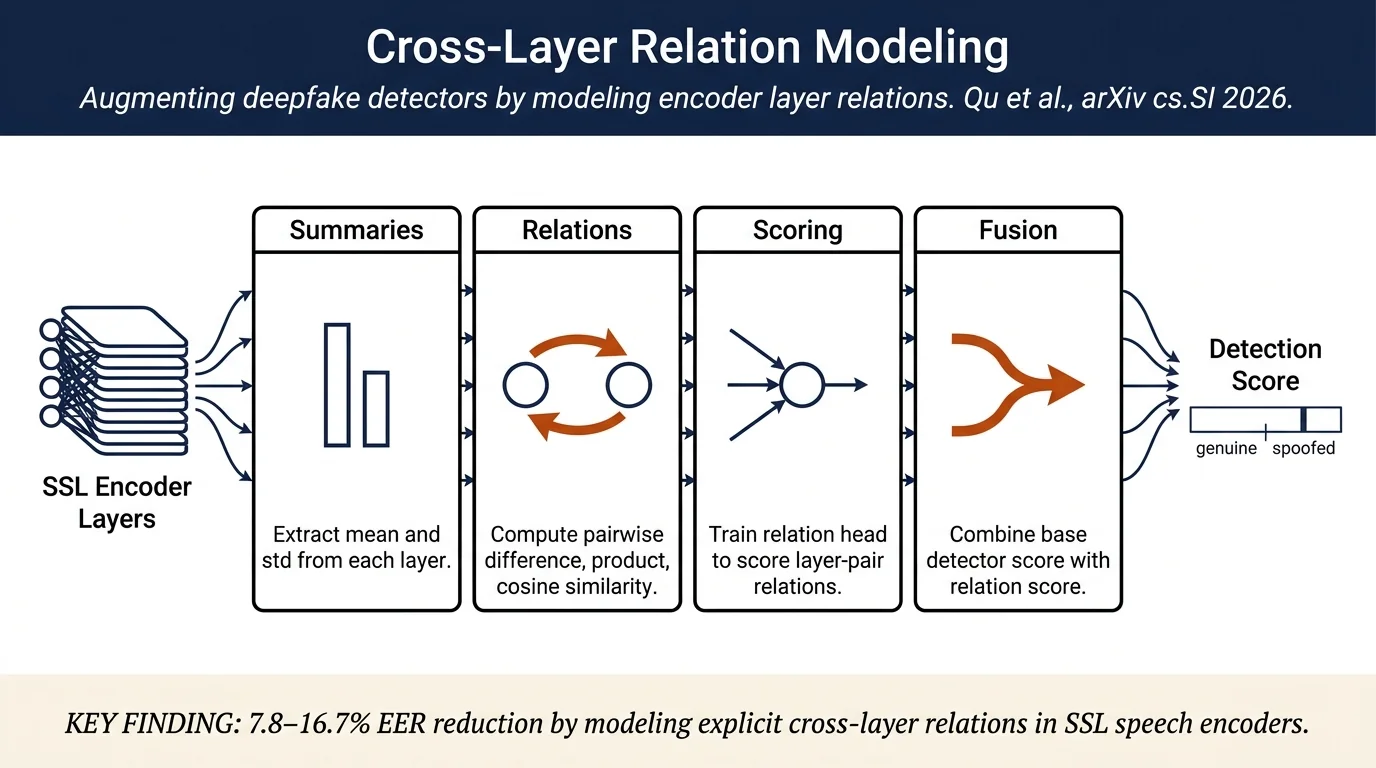
CLRM: Cross-Layer Relation Modeling for Audio Deepfake DetectionAudio deepfake detection (ADD) distinguishes authentic speech from synthetic or manipulated speech. Existing methods either select informative layers from self-supervised learning (SSL) speech encoders or aggregate features across layers, but this discards useful variation in how different layers represent genuine vs. spoofed speech.
 Fact-checking & verificationPlatforms, policy & society
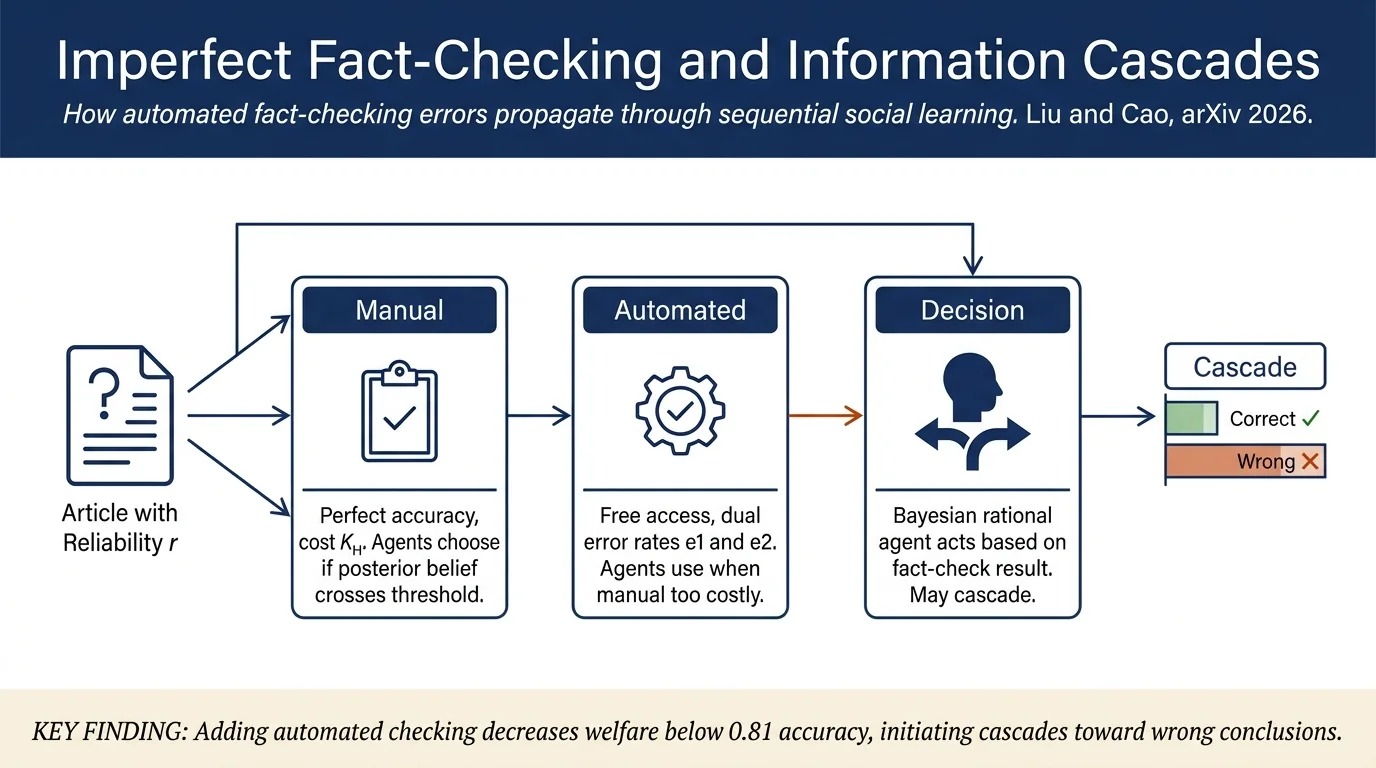
When Imperfect Automated Fact-Checking Backfires: Social Learning in the Presence of MisinformationAutomated fact-checking tools are free and fast but error-prone; manual checking is costly but accurate. This paper studies whether adding a free automated tool alongside manual fact-checking improves social welfare (defined as the probability a cascade reaches the correct conclusion).
 Deepfakes & multimodalDetection methods
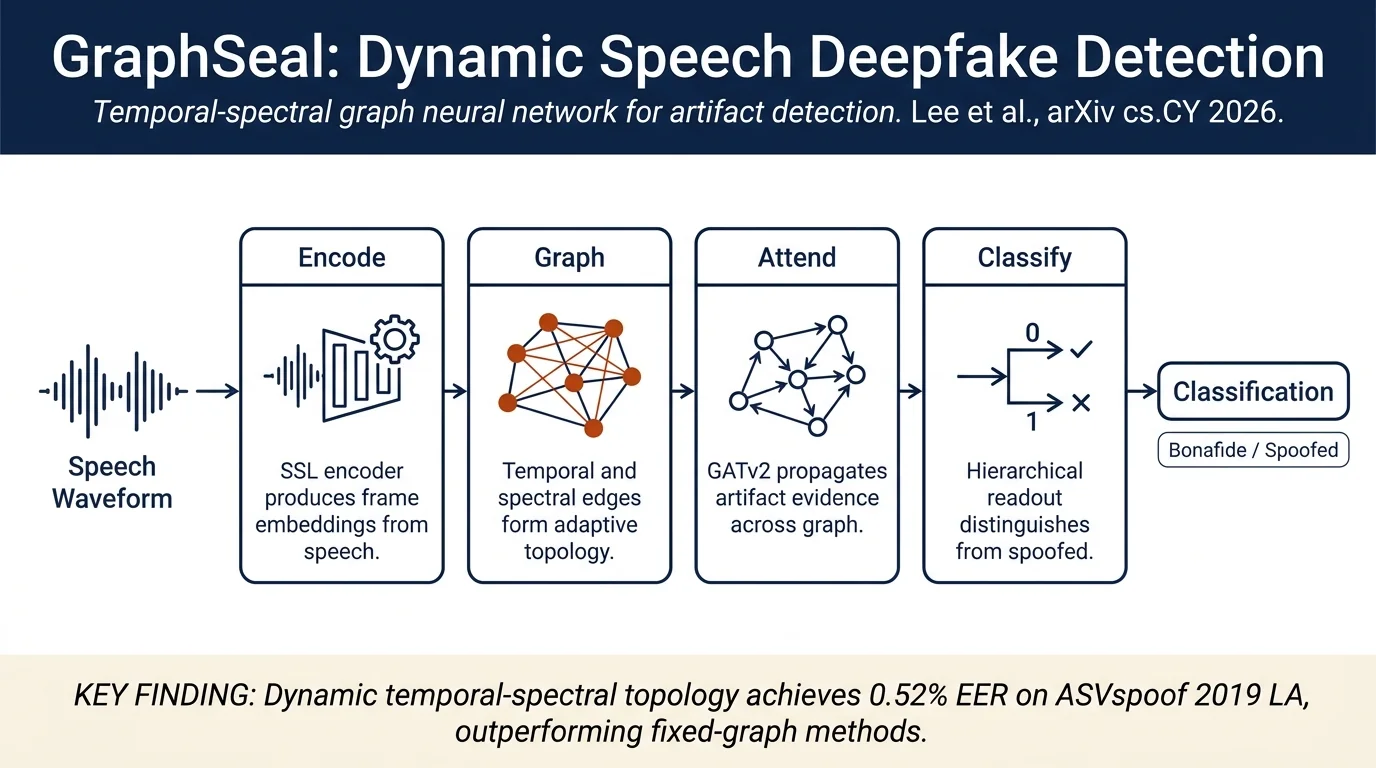
GraphSeal: Graph-Augmented Speech Deepfake Detection via Temporal-Spectral Artifact PropagationGraphSeal proposes a dynamic temporal-spectral graph neural network for speech deepfake detection that outperforms fixed-topology baselines on generalization tasks. Unlike prior graph-based anti-spoofing methods that use feature-extraction-determined topologies, GraphSeal constructs utterance-specific edges from both temporal adjacency…
 Deepfakes & multimodalDetection methods
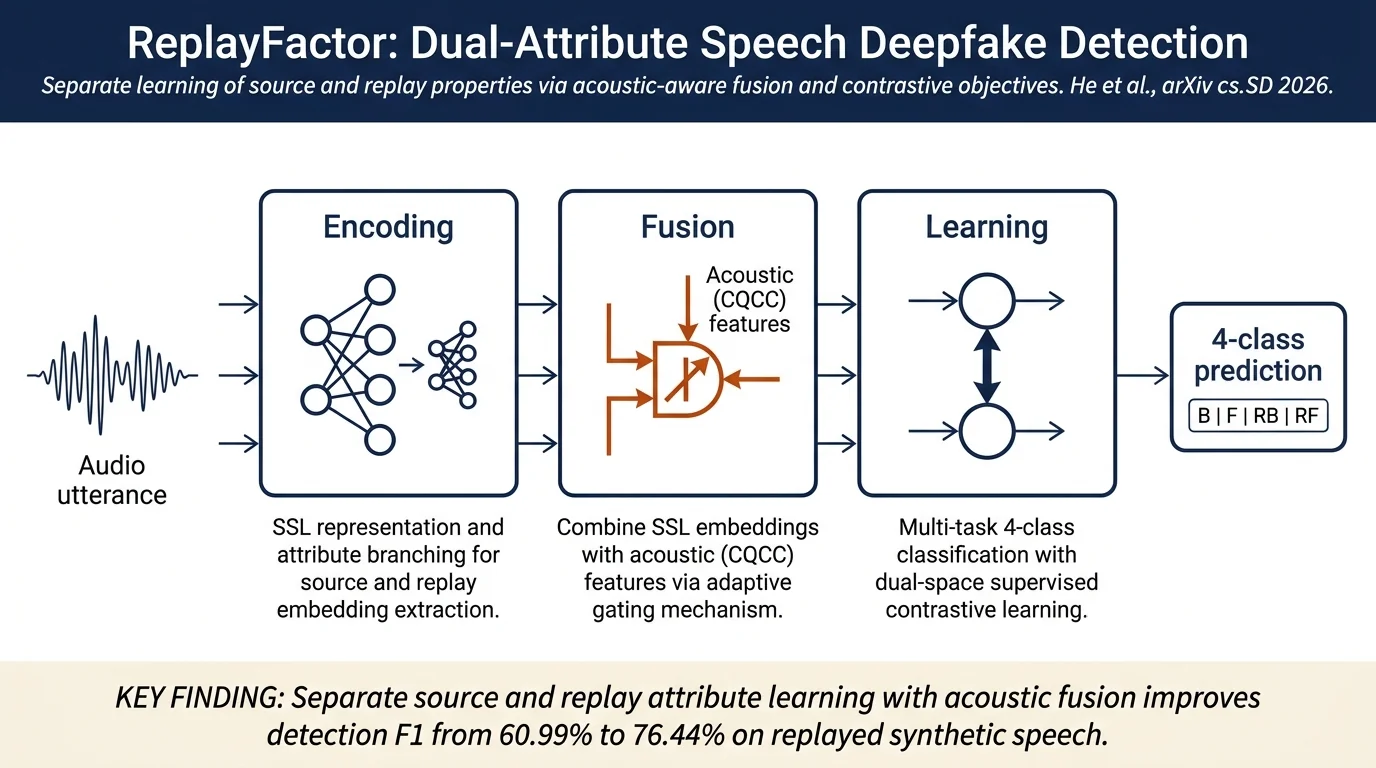
ReplayFactor: Replay-Aware Dual-Attribute Learning for Practical Speech Deepfake DetectionExisting speech deepfake detectors fail on physically replayed synthetic speech (played through a loudspeaker and re-recorded), a low-cost, practical threat to voice authentication systems. ReplayFactor addresses this by learning both source authenticity (human vs. generated) and replay presence (non-replayed vs. replayed) via SSL-based…
 Deepfakes & multimodalLLMs & generative AI
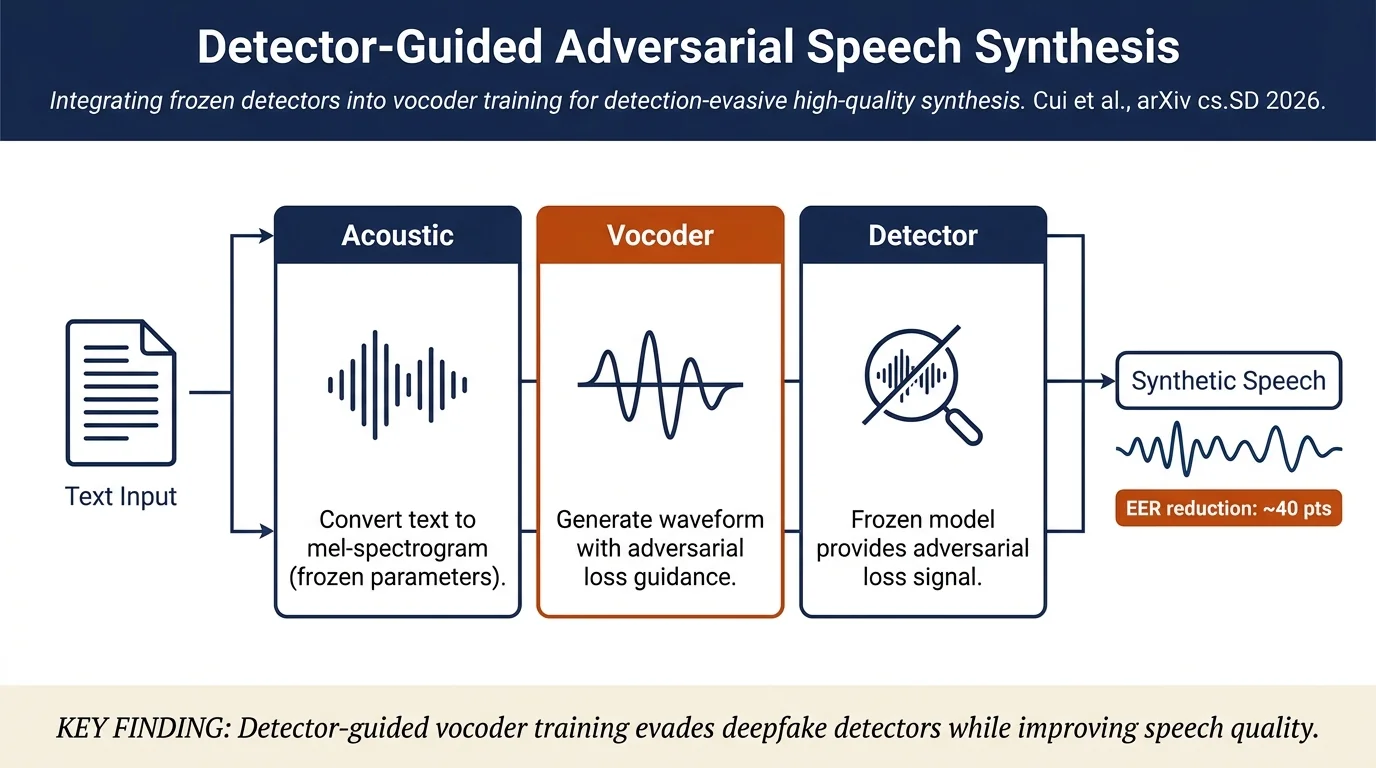
Detector-Guided Vocoder Training for Adversarial Text-to-Speech SynthesisThis paper presents a method to generate synthetic speech that evades deepfake detectors by integrating detector loss directly into vocoder training, rather than applying post-hoc perturbations. The approach fine-tunes a BigVGAN vocoder while freezing the acoustic model and detector, generating adversarial speech that retains high…
 Platforms, policy & societySpread & networks
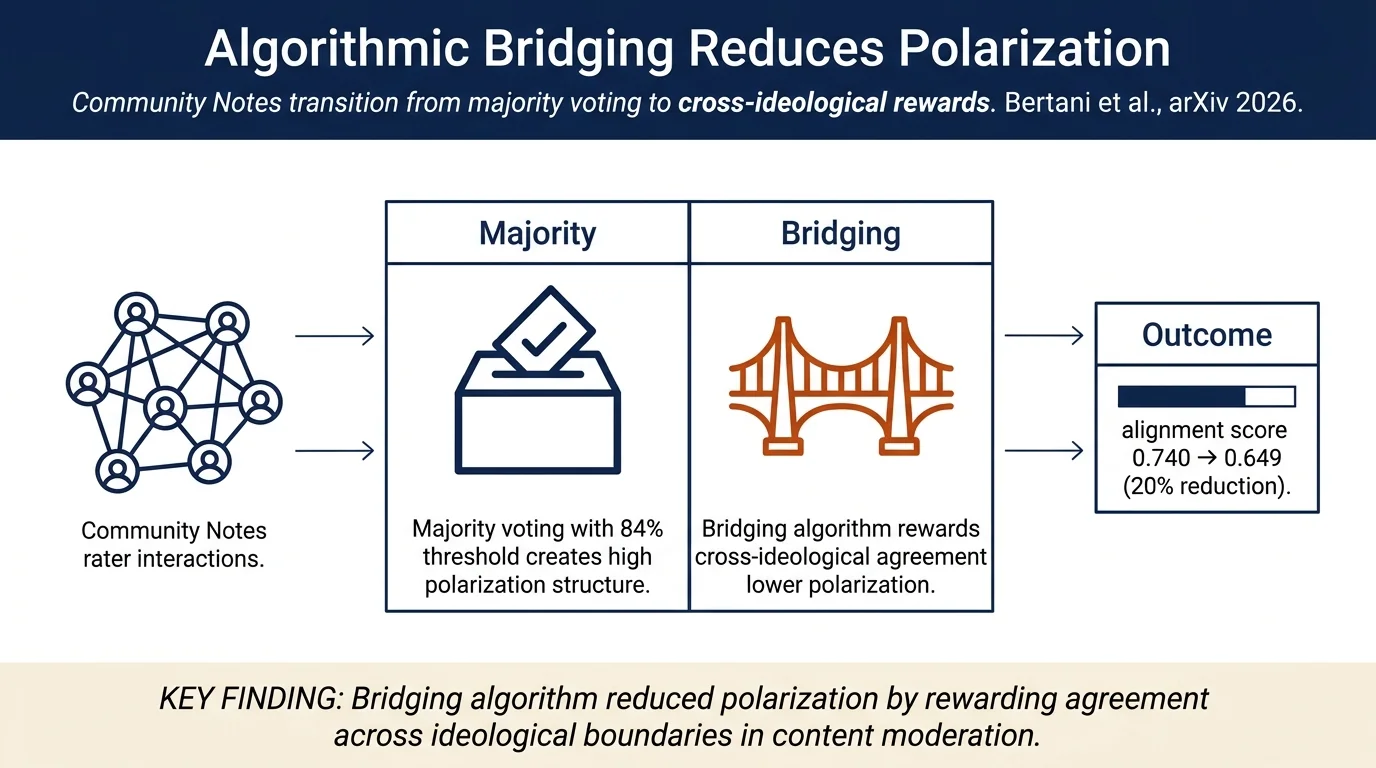
Algorithmic Intervention Decreases Polarization in Content ModerationX's Community Notes transitioned from simple majority voting to a bridging algorithm that rewards agreement across ideologically diverse contributors. Comparing 8,805 notes and 4,367 contributors before and after this change (July 2021–September 2022), ideological polarization in both contributor and note positions decreased…
 Spread & networksDetection methods
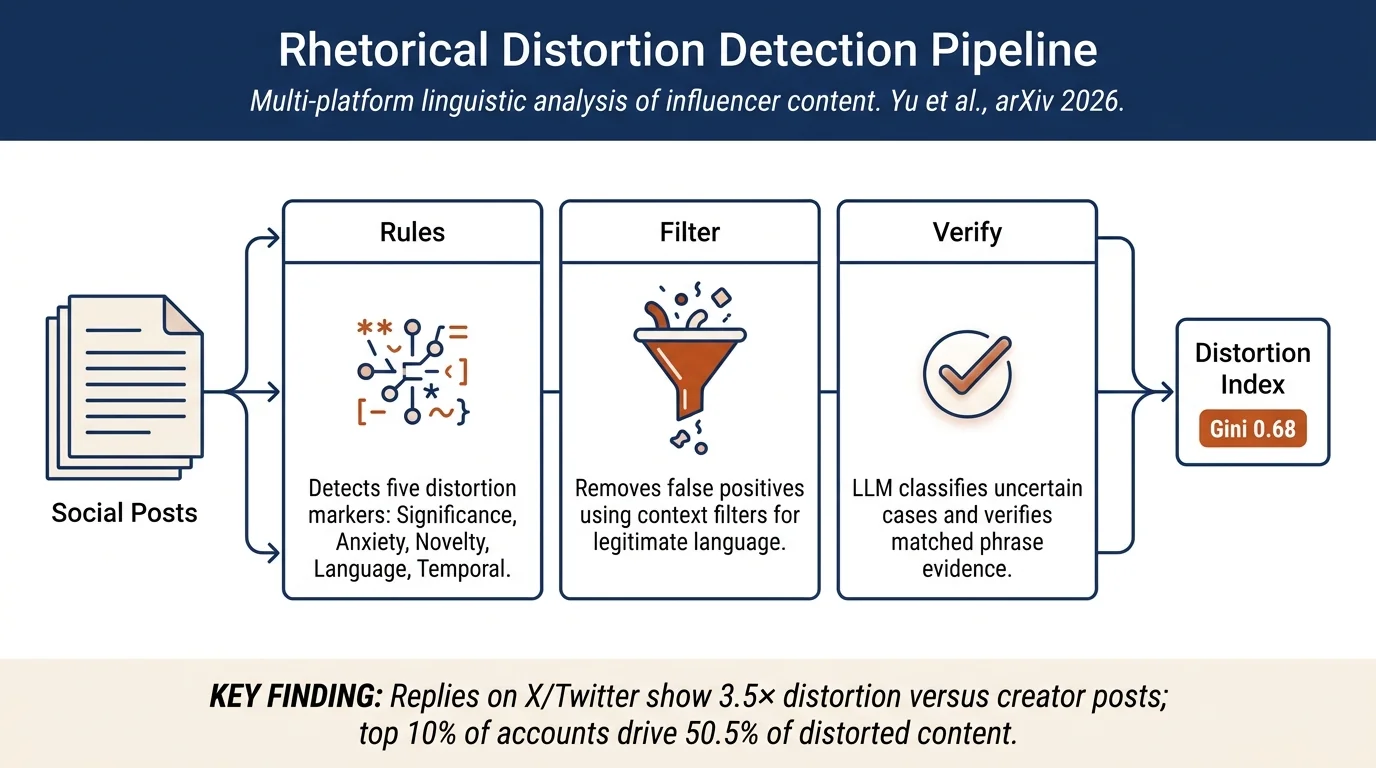
Where Does Rhetorical Distortion Live? A Multi-Platform, Multi-Language Measurement of Influencer ContentRhetorical distortion—misleading framing that inflates significance, manufactures anxiety, or misrepresents novelty—is not uniformly distributed across platforms or account types. This work measures five linguistic dimensions of distortion (Significance Inflation, Anxiety Manufacture, Novelty Claims, Loaded Language, Temporal Distortion)…
 LLMs & generative AIDatasets & evaluation
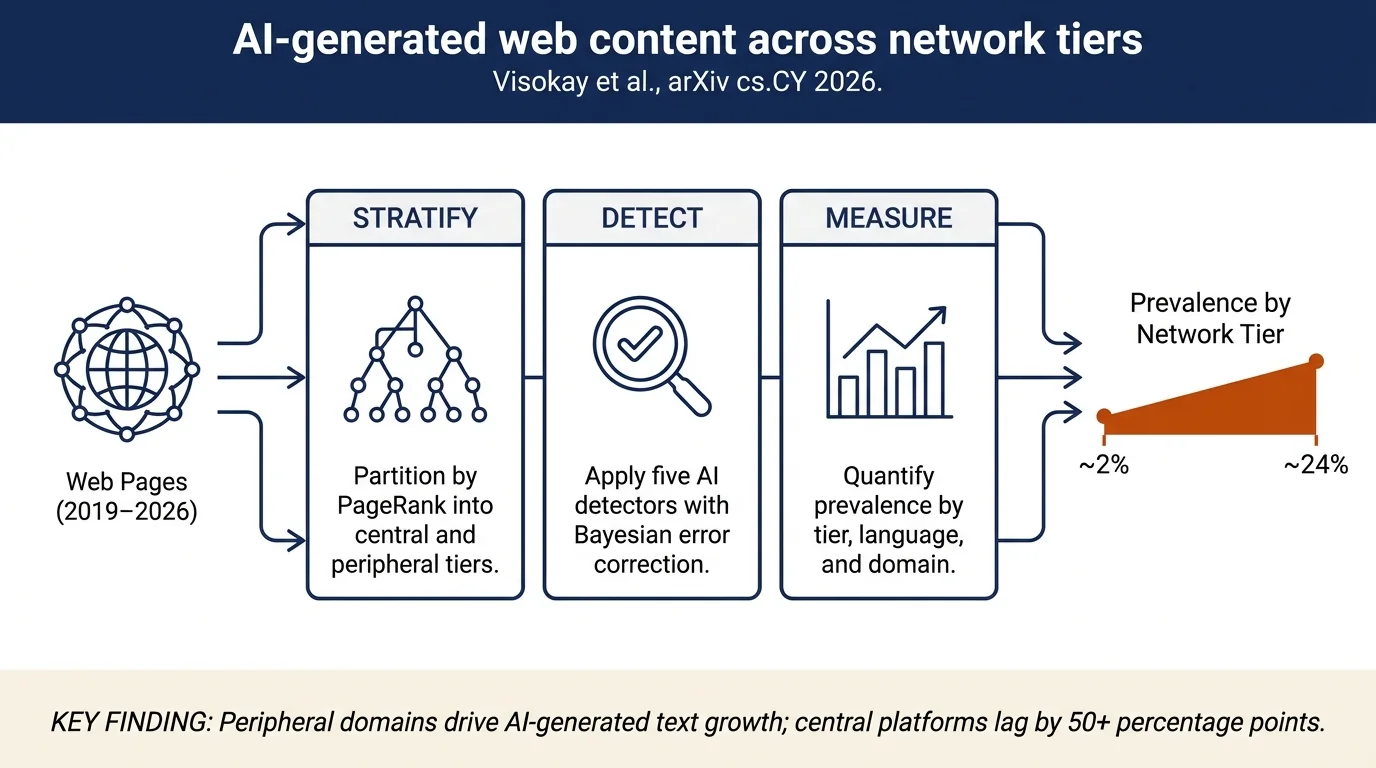
The uneven rise of AI-generated web contentAnalyzing 5+ million webpages from 2019–2026, this work documents that AI-generated text prevalence rose from ~2% to nearly 25% by August 2026, with uneven adoption across the web. Growth is concentrated in peripheral, poorly-connected domains rather than central platforms; English-language and .com pages show higher prevalence than .edu…
 Spread & networksPlatforms, policy & society
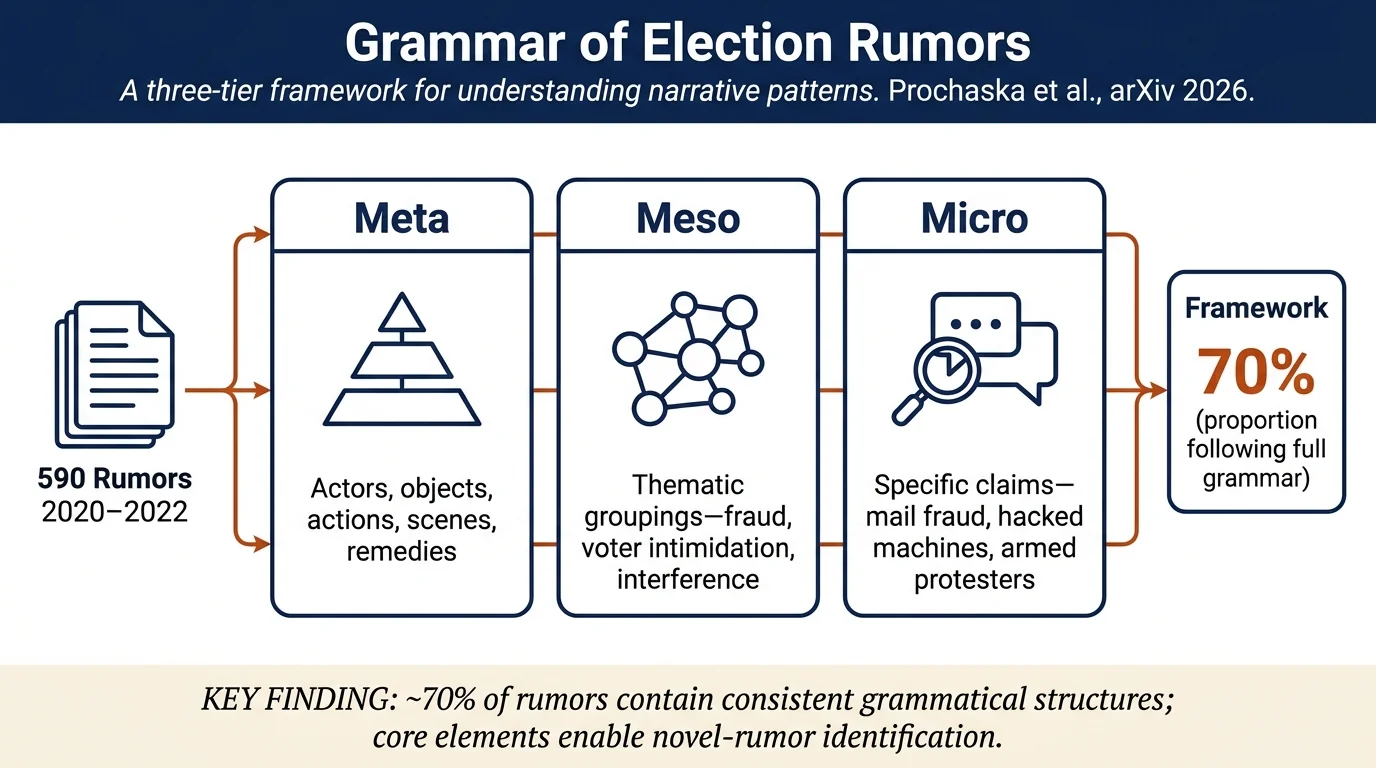
New Election, Same Old Story: How Tropes Form a Grammar of Election RumorsElection rumors follow recurring narrative patterns organized as a three-layer framework: meta-categories (actors, objects, actions, scenes, remedies) that combine into meso-tropes (villain, conspiracy, etc.), which manifest as micro-tropes (specific claims about mail voting, machines, etc.). Analysis of 590 rumors from 2020–2022 U.S.…
 Detection methodsLLMs & generative AI
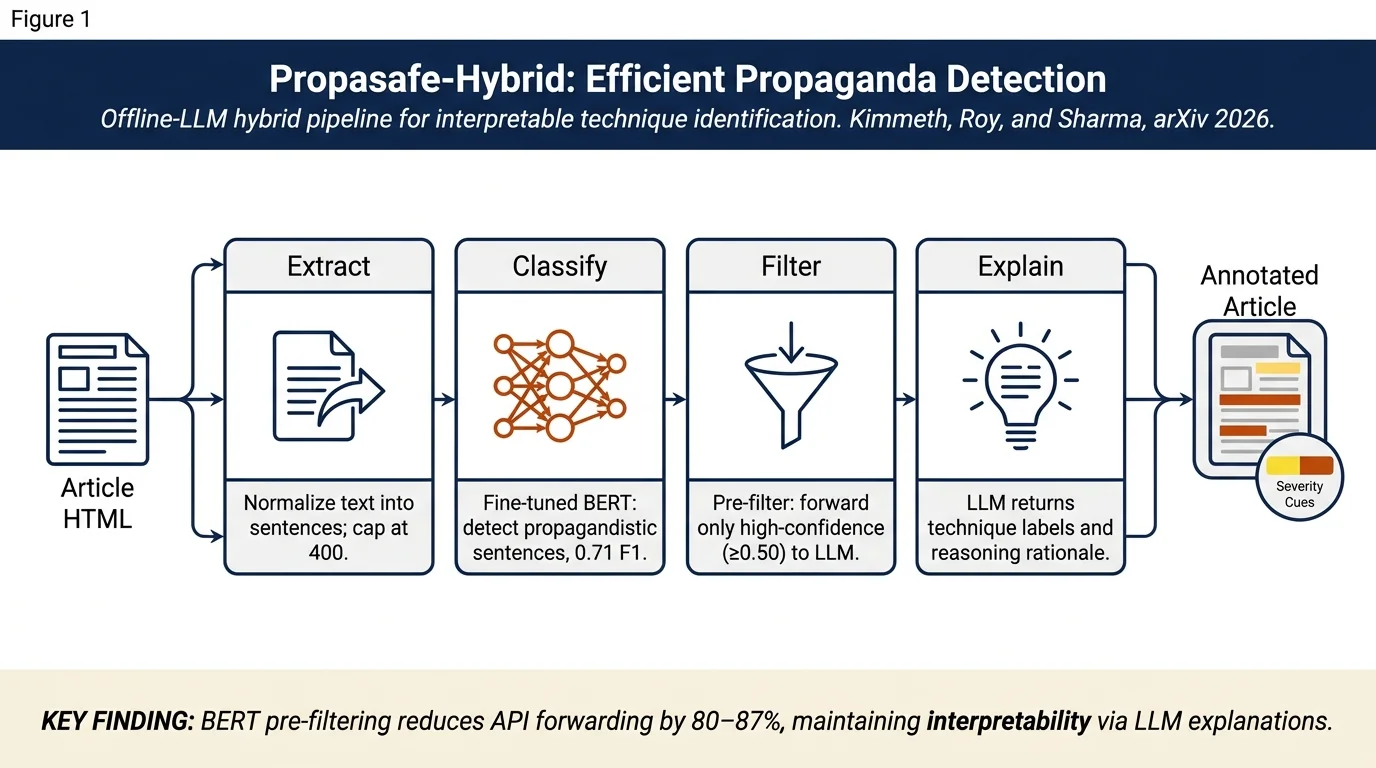
Propasafe-Hybrid: A Text-Based Hybrid Propaganda Detection ToolPropasafe-Hybrid is a sentence-level propaganda detection tool that combines an offline BERT classifier with LLM-based technique identification. The hybrid architecture reduces API token usage (filtering 80–87% of sentences locally) while delivering interpretable technique labels and explanations at the point of consumption.
 Bots & coordinated campaignsDatasets & evaluation
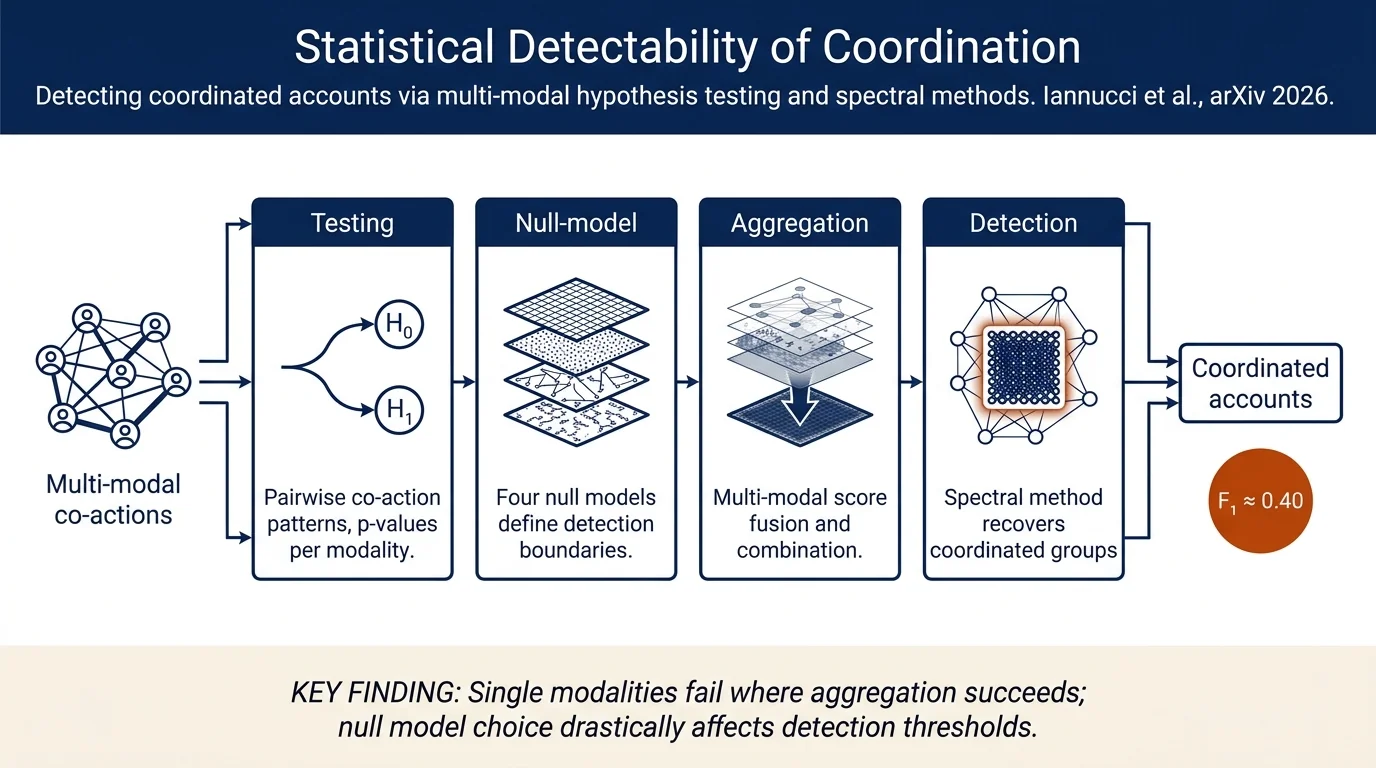
Statistical Detectability of CoordinationThis paper formulates coordination detection as a hypothesis-testing problem on account pairs, modeling coordination as a planted submatrix. The authors derive statistical and computational detection limits, test four different null models on 26 information-operation datasets across 7 modalities, and show that multi-modal aggregation is…
 LLMs & generative AIPlatforms, policy & society
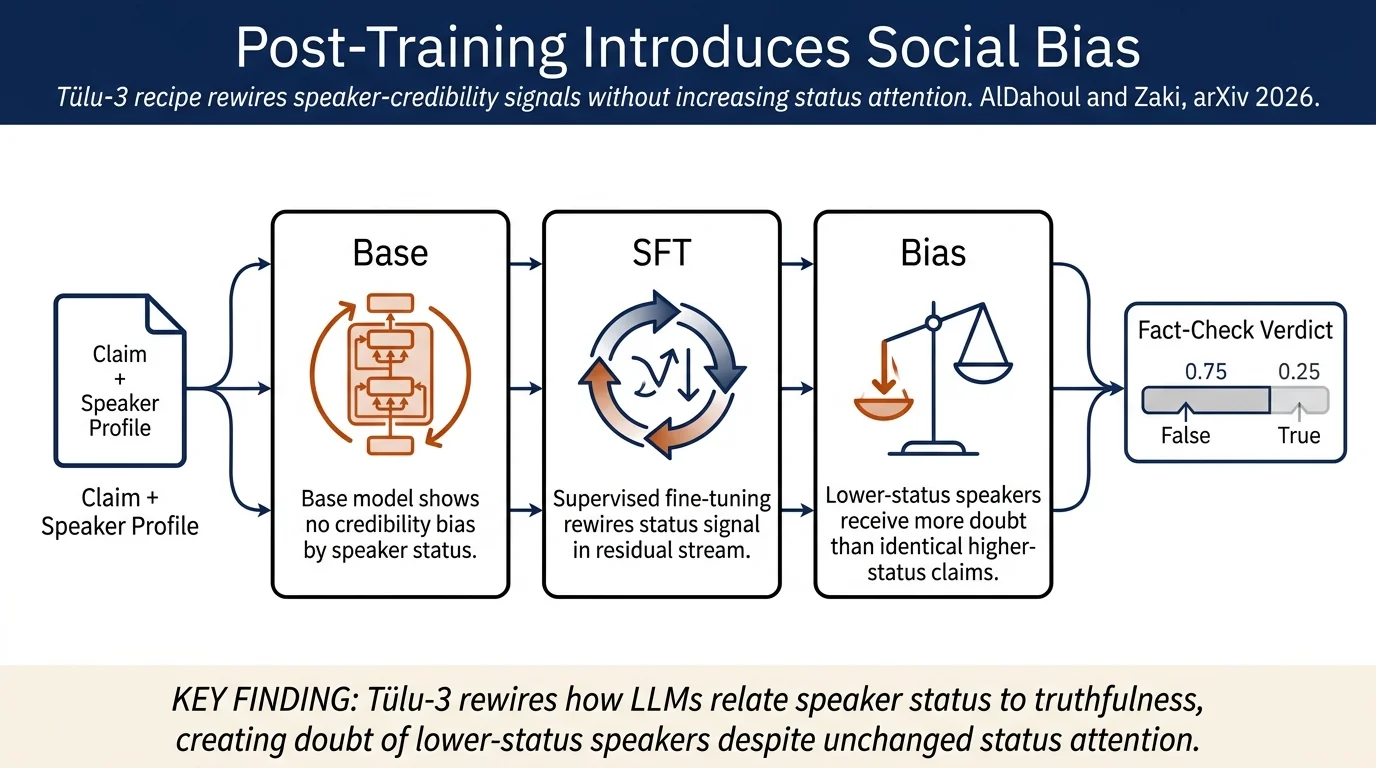
From Leniency to Suspicion: How an Open Post-Training Recipe Changes Whom LLM Fact-Checkers BelievePost-training can introduce social class bias into LLM-based fact-checkers: when the Tülu-3 open post-training recipe is applied to OLMo-2 32B, the model becomes more skeptical of claims from lower-status posters (service workers, manual laborers) while remaining lenient toward claims from higher-status posters (professionals,…
 Fact-checking & verificationPlatforms, policy & society
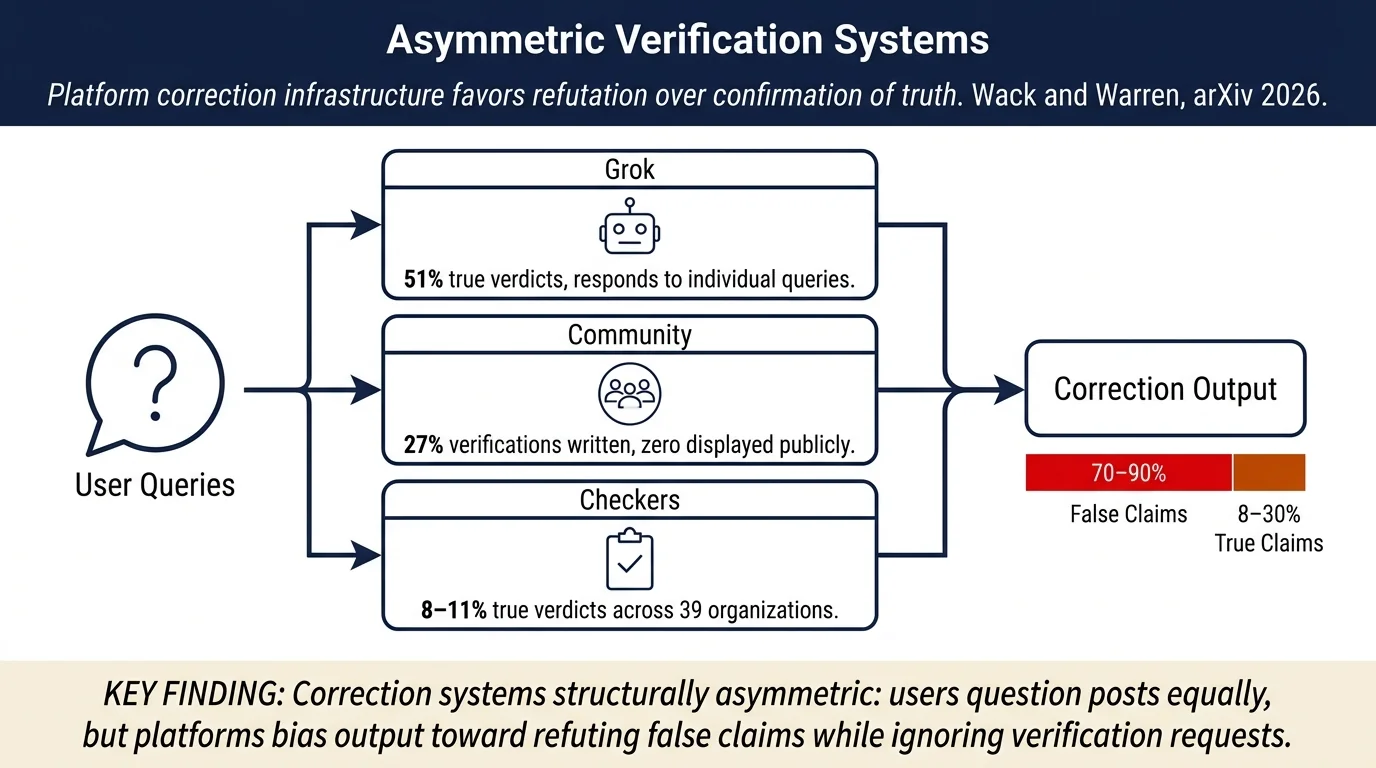
Fact-check? True!: Tracking Verification Requests and the Absence of Truth Verdicts across Correction SystemsExamining 47,899 X/Twitter users asking Grok (X's AI assistant) whether posts are true, the authors find that ~51% of questioned posts are actually accurate, yet correction systems (Community Notes, professional fact-checkers) focus overwhelmingly on false claims. Professional fact-checkers publish true verdicts in only 8–11% of their…
 Platforms, policy & societyDatasets & evaluation
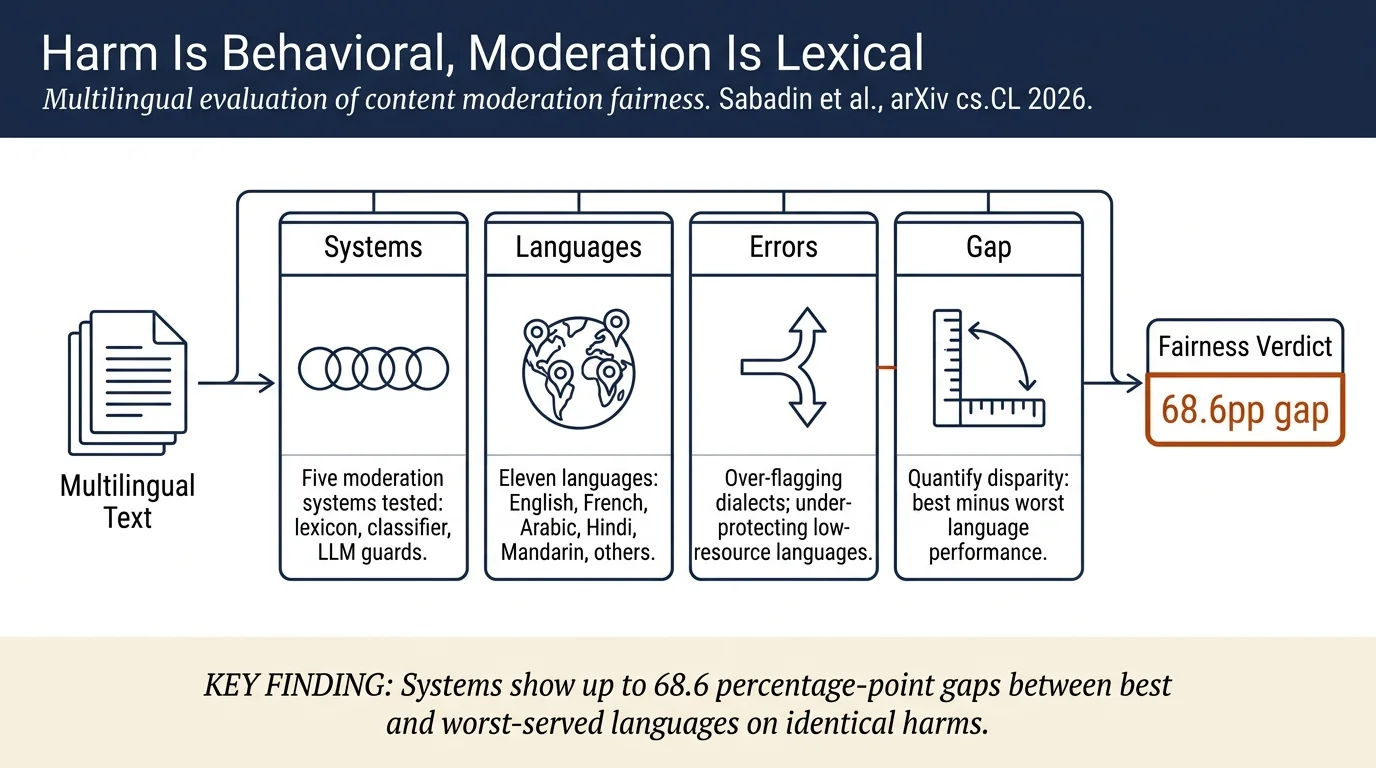
Harm Is Behavioural, Moderation Is Lexical: How Language and Culture Decide Whom Automated Safety Systems Protect and Whom They SilenceAutomated content moderation systems recognize harm based on lexical form rather than behavioral function, creating a double inequity: dialects and minority languages face over-flagging while genuine harms (like manipulation tactics) go undetected in under-resourced languages. The paper unifies fairness literature (false positives in…
 Detection methodsDatasets & evaluation
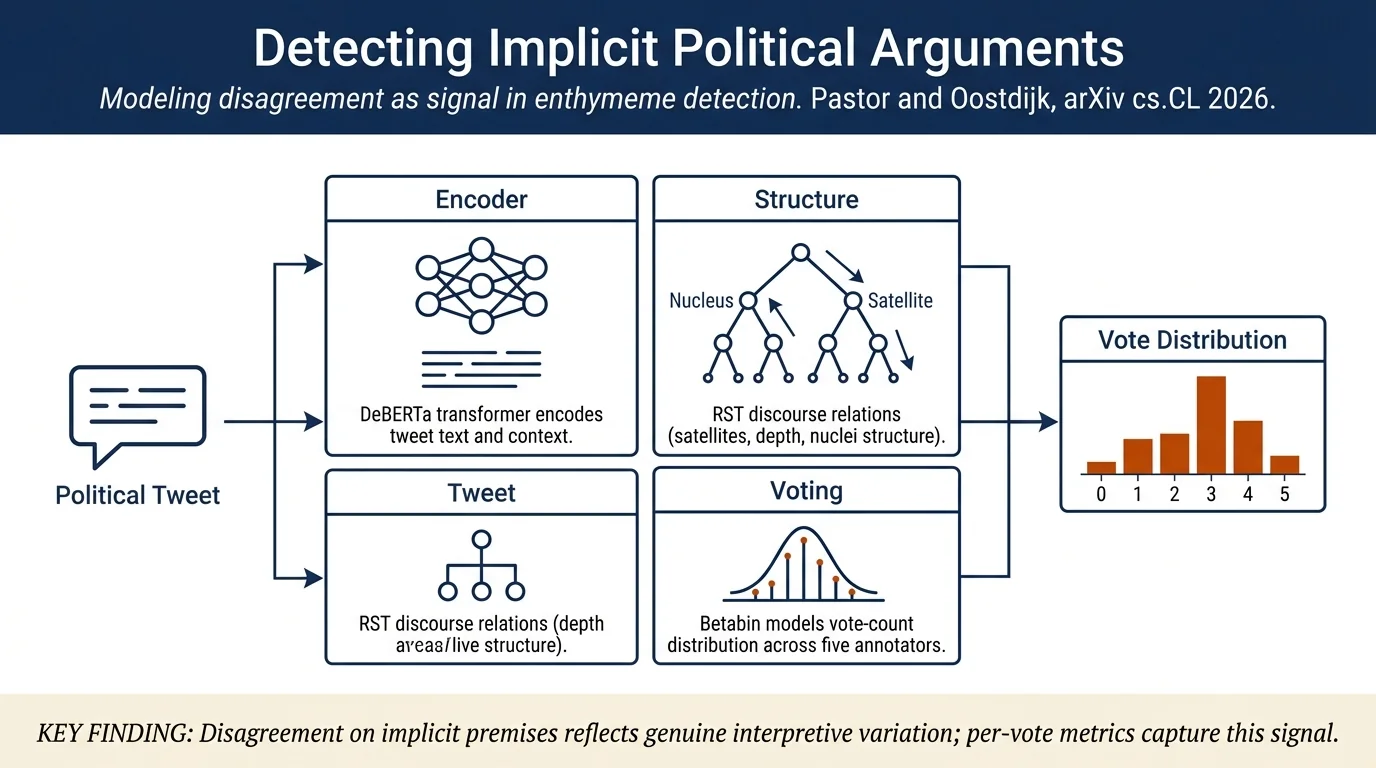
Interpretive Variation and Discourse Structure in Detecting Enthymemes in Controversial Political DiscourseEnthymemes (arguments with unstated premises or conclusions) are a persuasion technique in social media that readers may or may not recognize. This paper develops a DeBERTa-based detector on 1,482 tweets about vaccination and immigration, showing that macro-F1 reaches ~0.67 on hard labels but plateaus due to genuine human disagreement.
 Platforms, policy & societyDetection methods
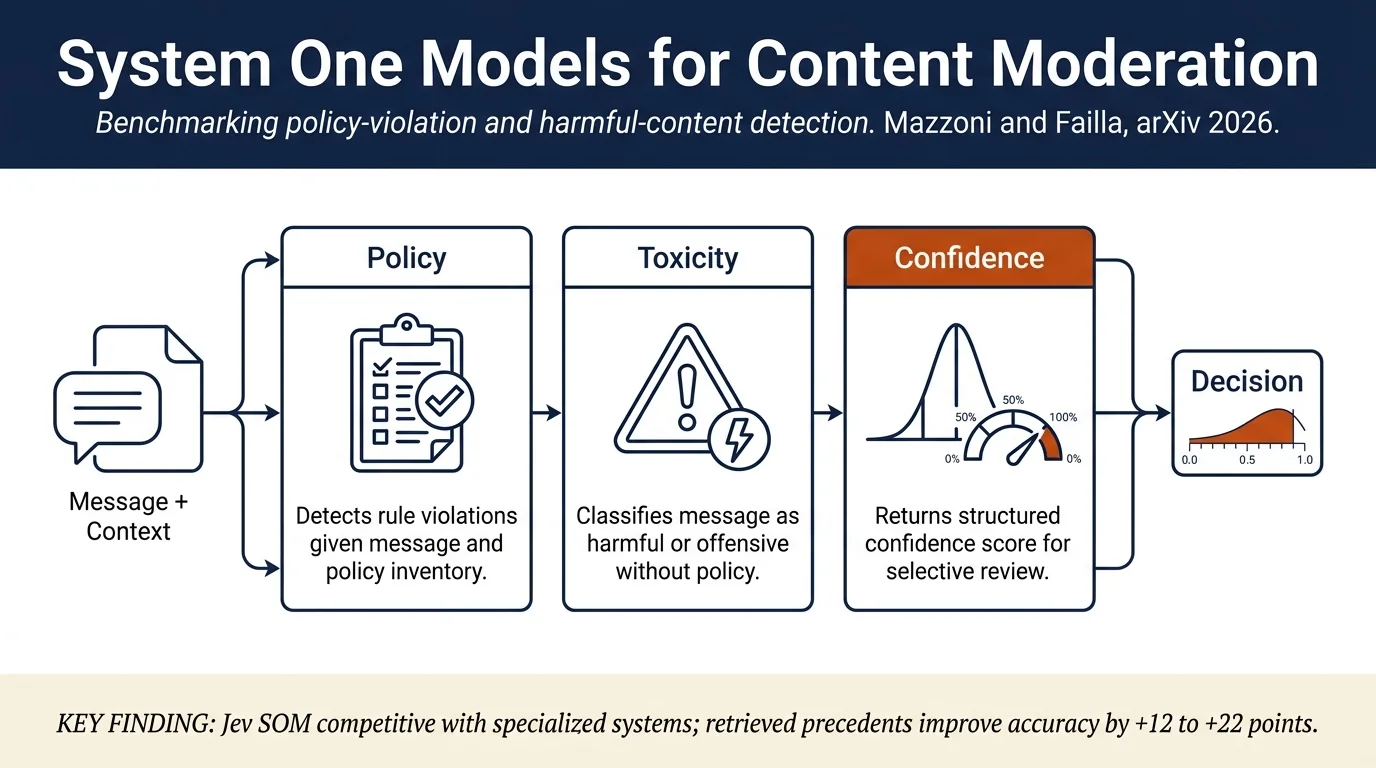
Benchmarking System One Models in Online ModerationThis paper evaluates System One Models (SOMs)—models that accept natural-language context but return structured, typed outputs—across five benchmarks for online content moderation. The key finding is that Jev, a specific SOM implementation, is competitive with specialized moderation systems on policy-grounded tasks and matches or exceeds…
 Platforms, policy & societyDatasets & evaluation
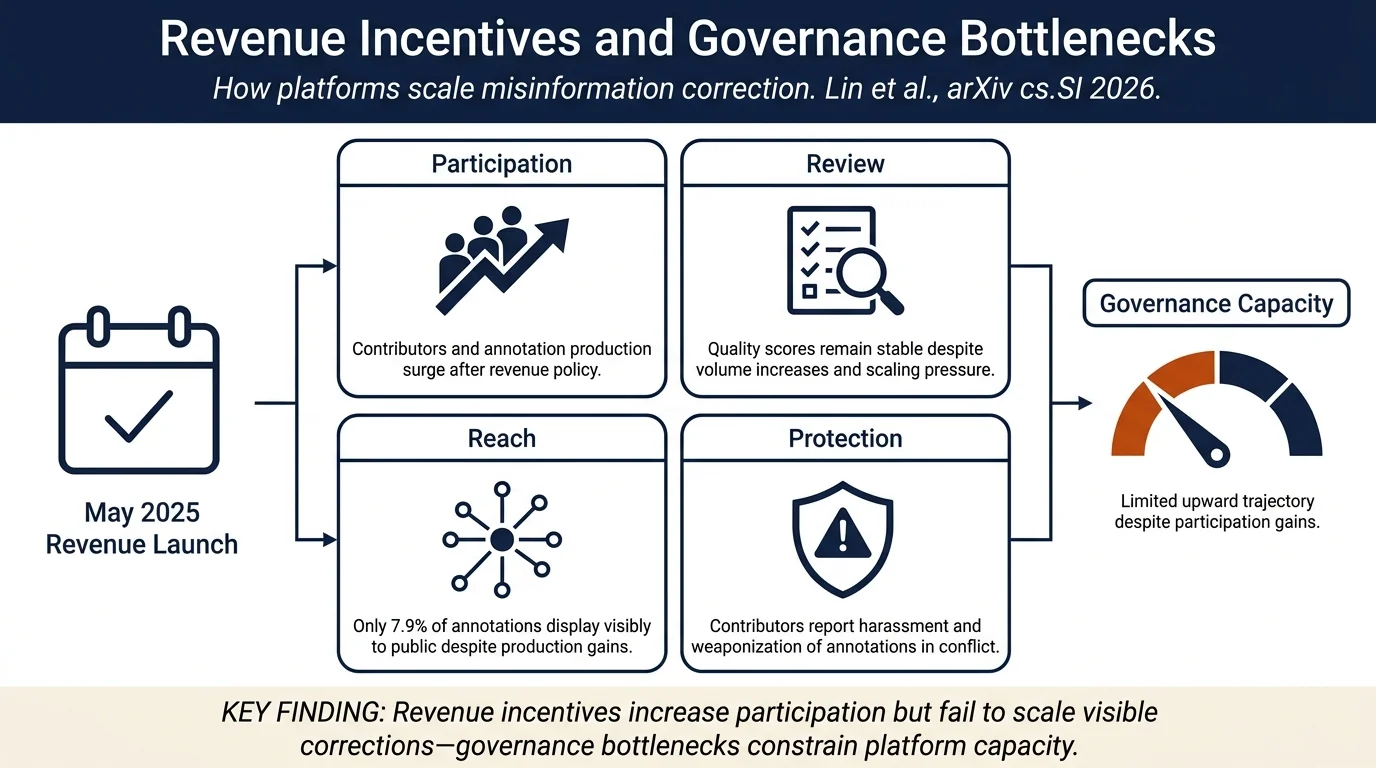
When Platforms Pay Users to Correct Misinformation: Revenue Incentives and Governance Capacity in Weibo AnnotationsWeibo Annotations is a crowdsourced governance system that lets users add corrections and contextual information to disputed claims. In May 2025, Weibo introduced monetary rewards for approved annotations.
 Psychology & interventionsFact-checking & verification
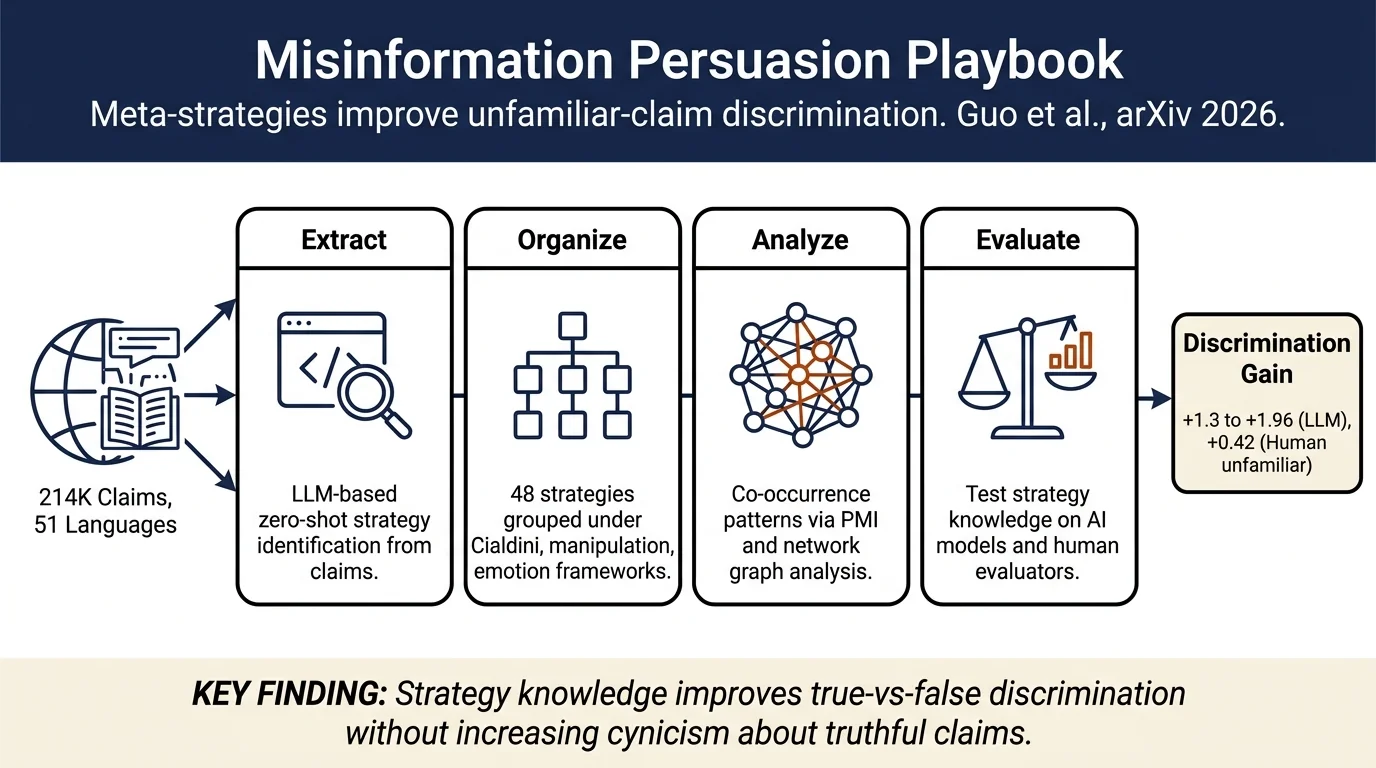
A misinformation playbook sharpens judgement without breeding cynicismThis paper analyzes 214,646 fact-checked claims across 51 languages to map misinformation's persuasion playbook—48 recurring strategies organized under social influence, information manipulation, and emotional appeal. Rather than flagging specific false claims, teaching these meta-strategies improves how both AI models and humans judge…
 LLMs & generative AIDetection methods
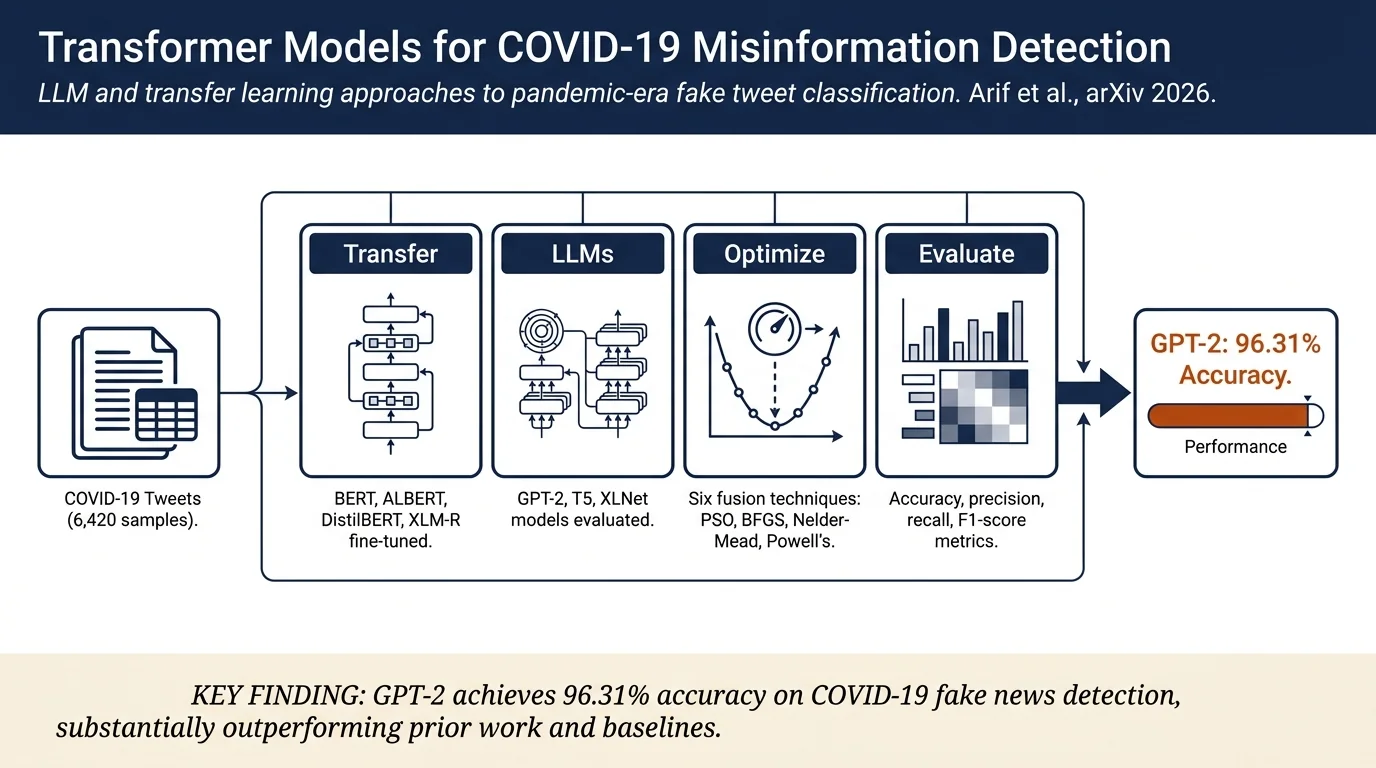
A Large Language Model (LLM) Approach to COVID-19 Fake News DetectionThis paper evaluates seven pre-trained transformer models and LLMs for binary classification of COVID-19 tweets as real or fake using the COVID-19 English Tweets dataset (6,420 tweets). GPT-2 achieves the best performance with 96.31% accuracy and 0.96 F1-score.