Explore papers
Filter by research area, year and venue. Every filter is in the address bar, so you can share a view as a link.
 Datasets & evaluationLLMs & generative AI
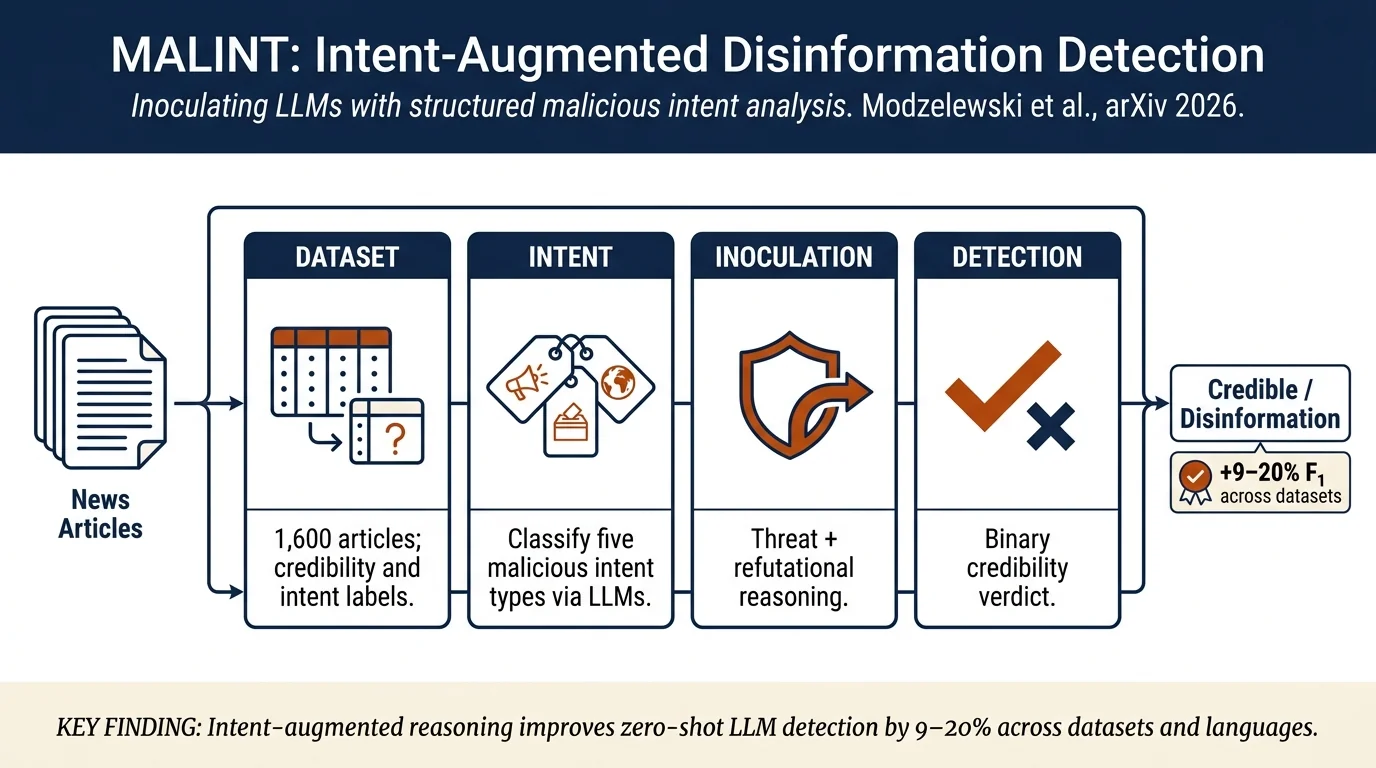
MALicious INTent Dataset and Inoculating LLMs for Enhanced Disinformation DetectionMALINT is the first human-annotated English corpus pairing 1,600 news articles with annotations of both credibility and the malicious intentions behind disinformation. The paper evaluates 12 language models on intent classification and proposes Intent-Based Inoculation (IBI), an intent-augmented reasoning approach that improves zero-shot…
 LLMs & generative AIDatasets & evaluation
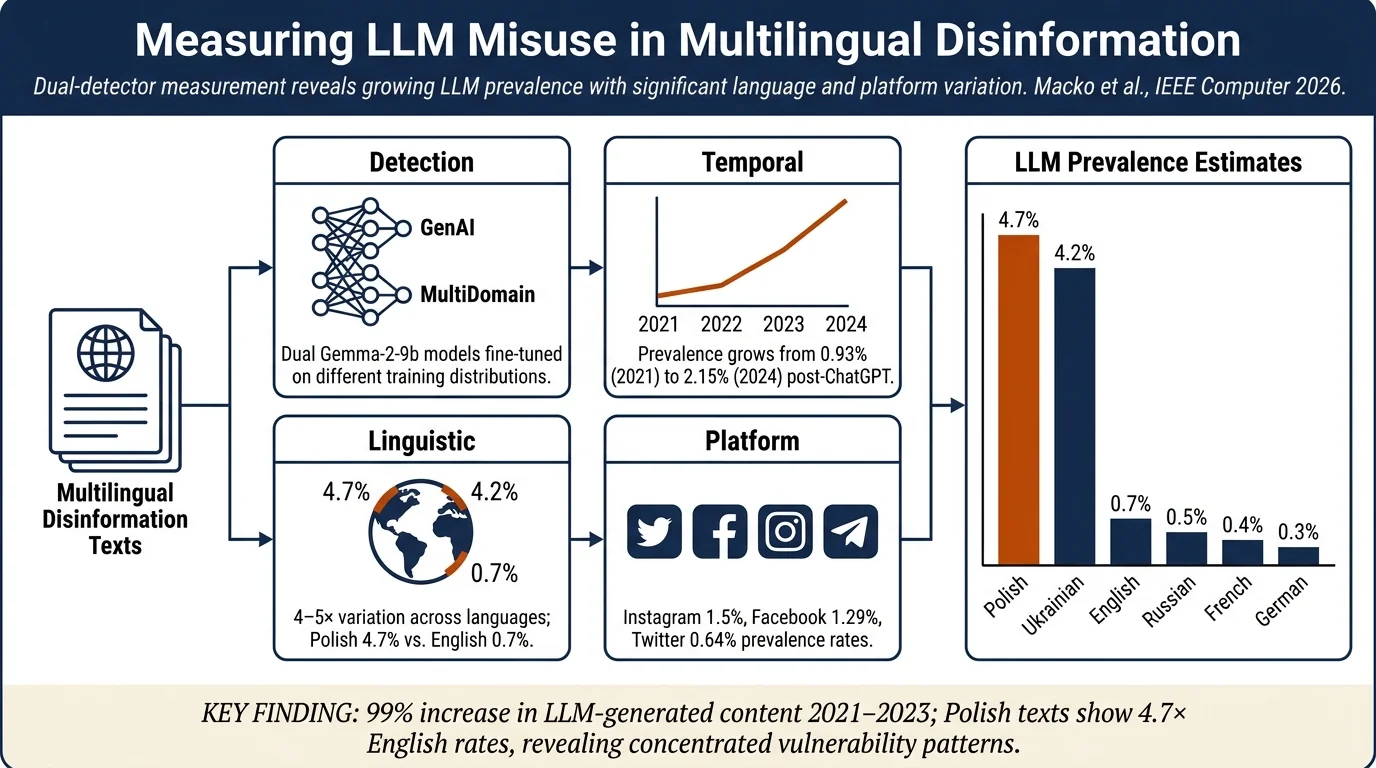
Beyond Speculation: Measuring the Growing Presence of LLM-Generated Texts in Multilingual DisinformationThis empirical study provides the first measurement of LLM-generated content in real-world disinformation datasets. Analyzing the MultiClaim dataset (fact-checked social media posts), the authors document a 99% increase in machine-generated content from 2021 to 2023 (0.93% to 1.85%), correlating with ChatGPT's November 2022 release.
 LLMs & generative AIDatasets & evaluation
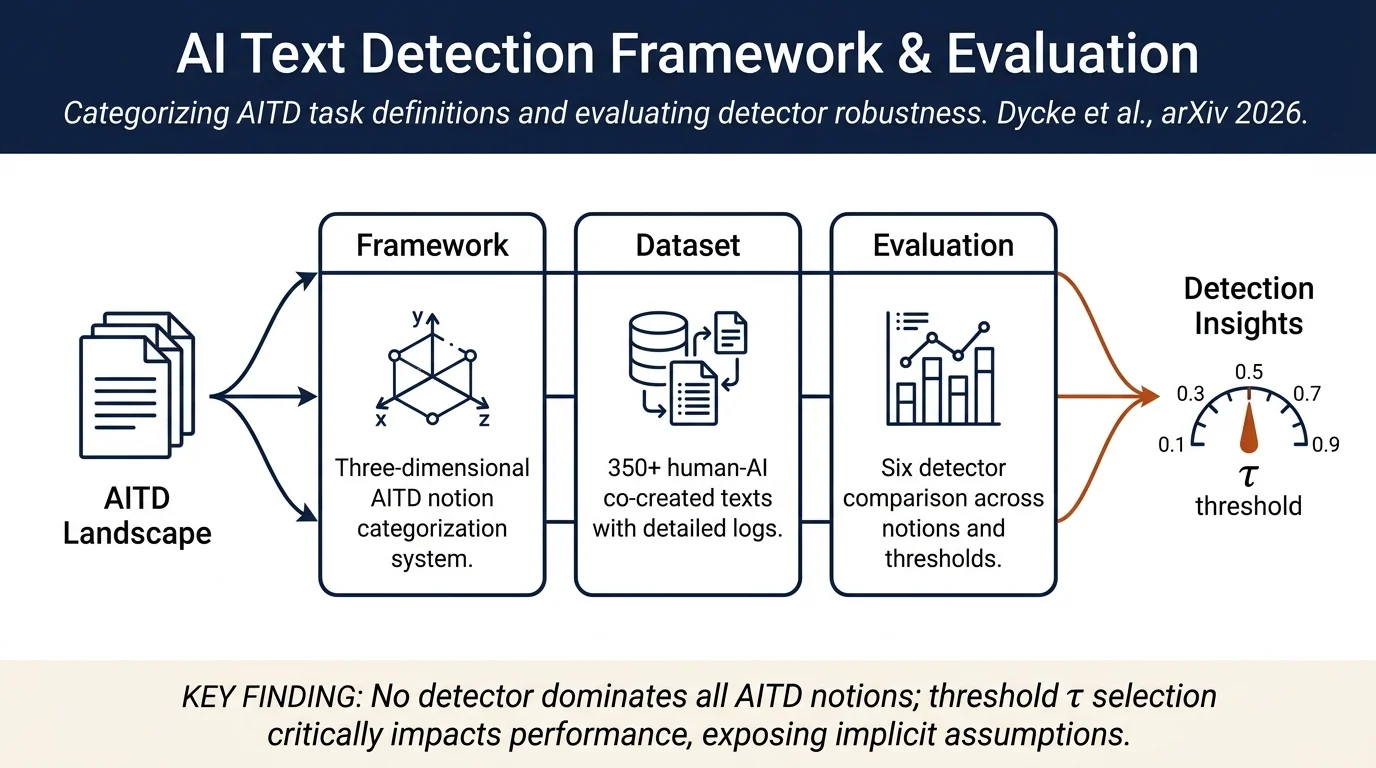
'Your AI Text is not Mine': Redefining and Evaluating AI-generated Text Detection under Realistic AssumptionsThe paper systematically analyzes the fragmented landscape of AI-generated text detection (AITD) task definitions in the literature and proposes a unified framework distinguishing five core notions with implicit assumptions about what constitutes "AI text." The authors introduce AITDNA, a novel dataset of 350+ texts from real human-AI…
 Spread & networksDetection methods
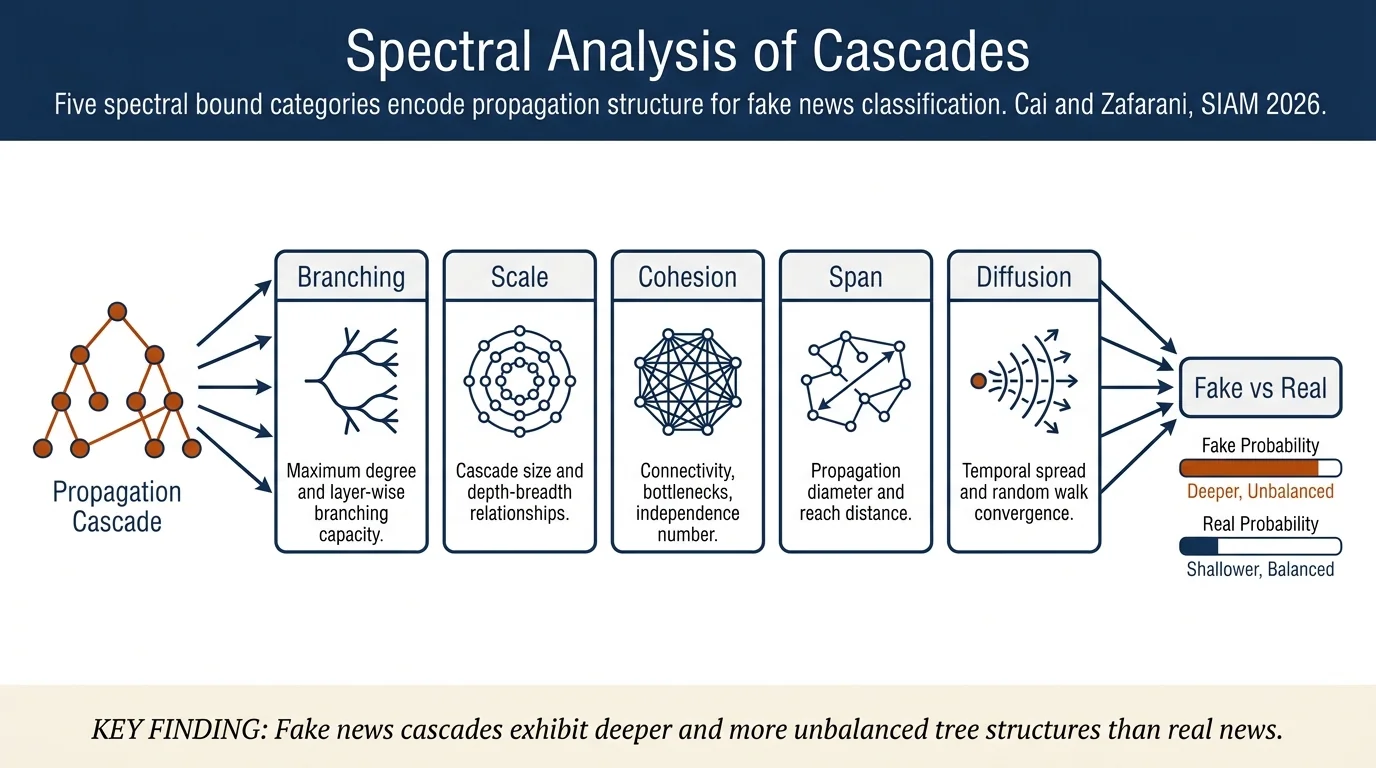
Spectral Analysis of Fake News PropagationThe paper develops a spectral view of fake news propagation by connecting graph spectra with structural properties of propagation trees. The authors derive spectral bounds capturing five key aspects of cascade structure—branching capacity, cascade scale, structural cohesion, propagation span, and diffusion dynamics—and use them as graph…
 Detection methodsLLMs & generative AI
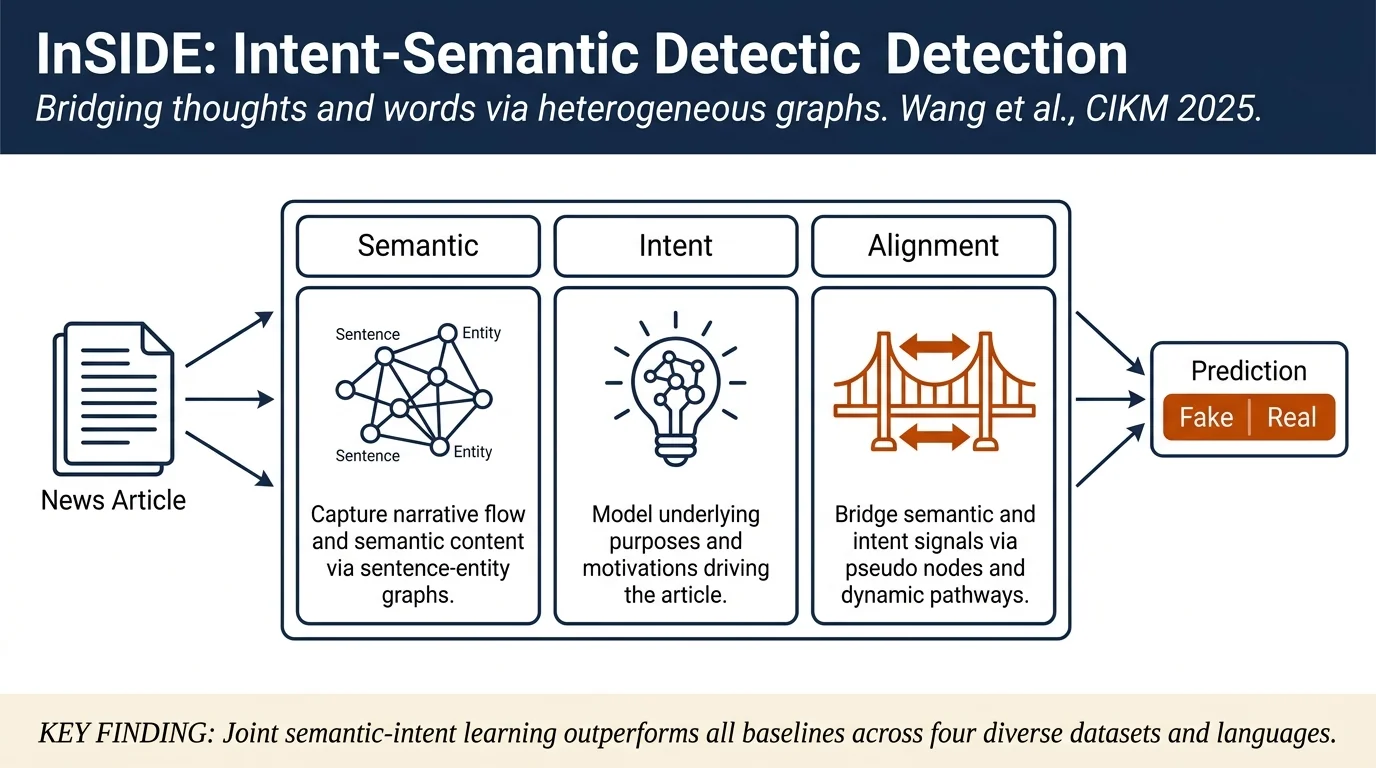
Bridging Thoughts and Words: Graph-Based Intent-Semantic Joint Learning for Fake News DetectionExisting fake news detectors rely on surface-level semantic patterns (emotional language, stylistic cues) and fail when writing styles shift. This paper proposes InSIDE, which combines semantic and intent signals via heterogeneous graphs: intent models the purpose behind an article (e.g., promoting a product), while semantics capture…
 Datasets & evaluationDetection methods
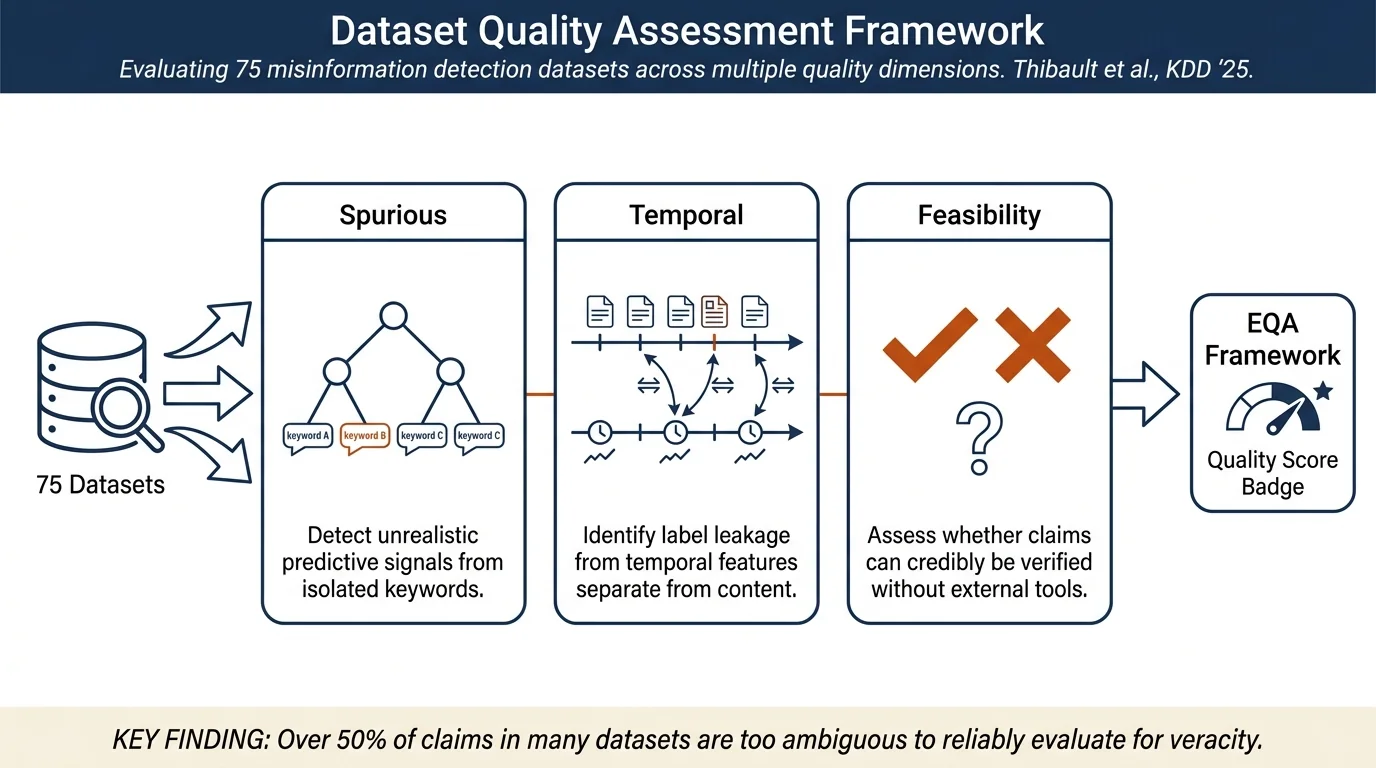
A Guide to Misinformation Detection Data and EvaluationThis work surveys the largest collection of misinformation detection datasets to date (75 datasets from prior literature) and evaluates dataset quality across multiple dimensions. The authors assess whether datasets enable reliable veracity evaluation by analyzing keyword correlations, temporal correlations, and feasibility of claim…
 Deepfakes & multimodalDatasets & evaluation
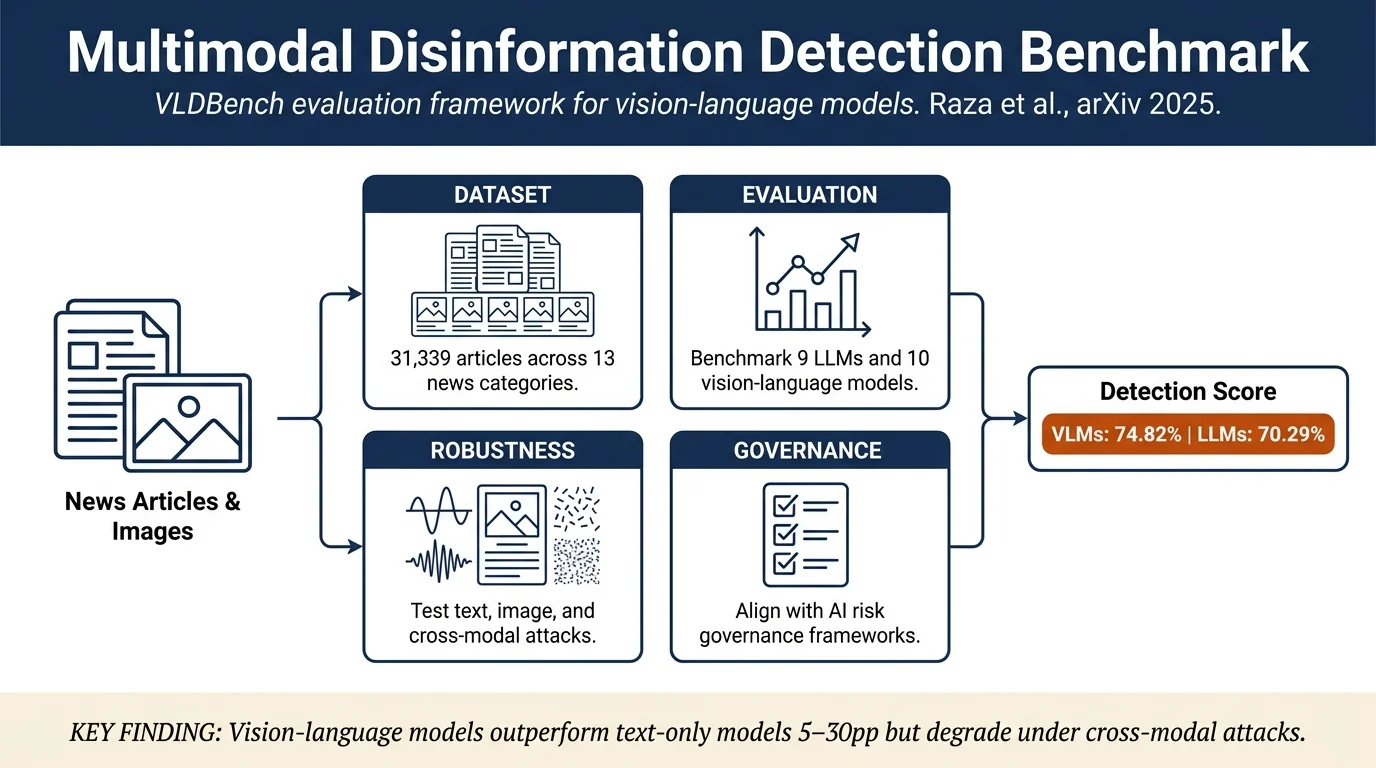
VLDBench: Evaluating Multimodal Disinformation with Regulatory AlignmentVLDBench is the first large-scale human-verified benchmark for multimodal disinformation detection, comprising 31,339 news articles paired with images across 13 topical categories. Evaluation of 9 LLMs and 10 VLMs shows vision-language models substantially outperform text-only baselines (e.g., LLaMA-3.2-11B-Vision: 74.82% accuracy), but…
 Detection methodsDatasets & evaluation
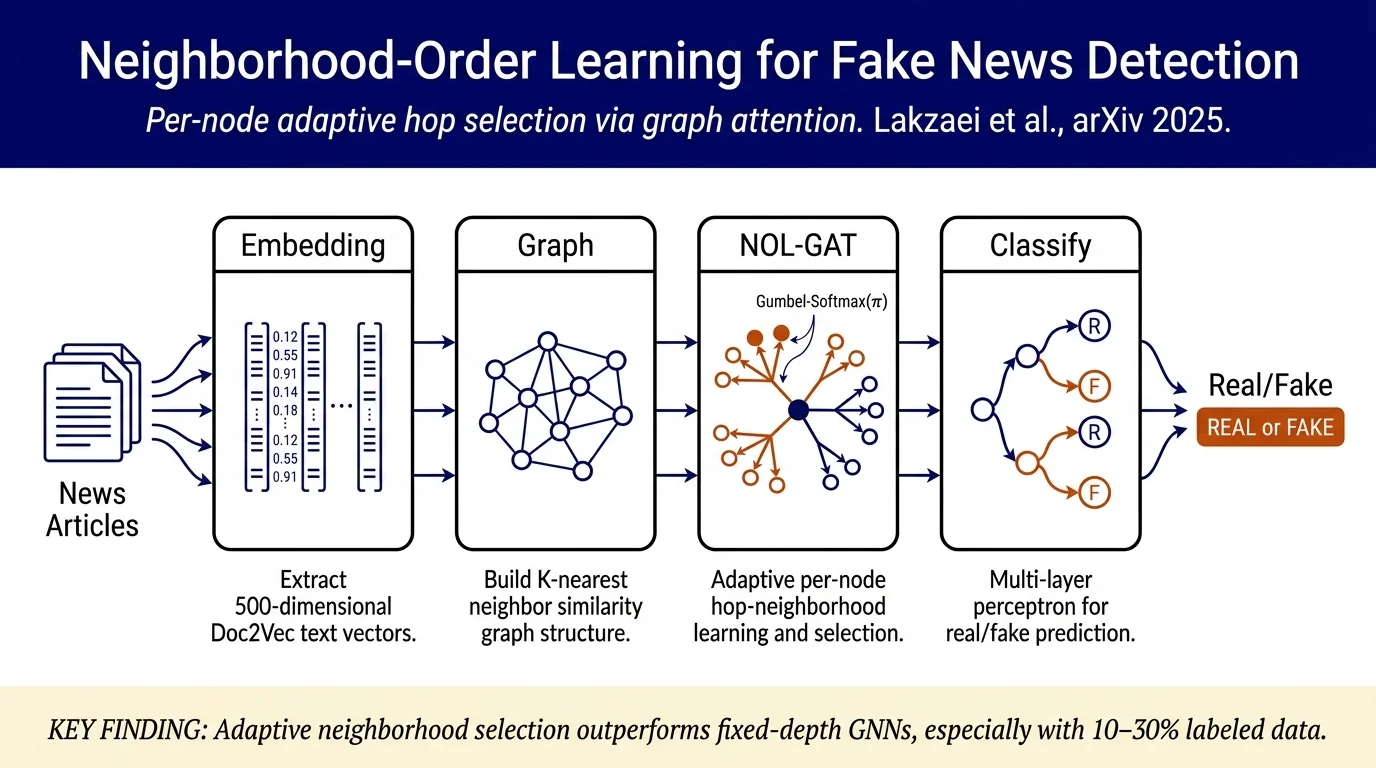
Neighborhood-Order Learning Graph Attention Network for Fake News DetectionProposes NOL-GAT (Neighborhood-Order Learning Graph Attention Network), a GNN architecture that allows each node to adaptively select its optimal hop-neighborhood at each layer, bypassing the fixed L-hop limitation of conventional message-passing GNNs. Evaluated on five fake news datasets, NOL-GAT outperforms baseline GNN methods,…
 Detection methodsDatasets & evaluation
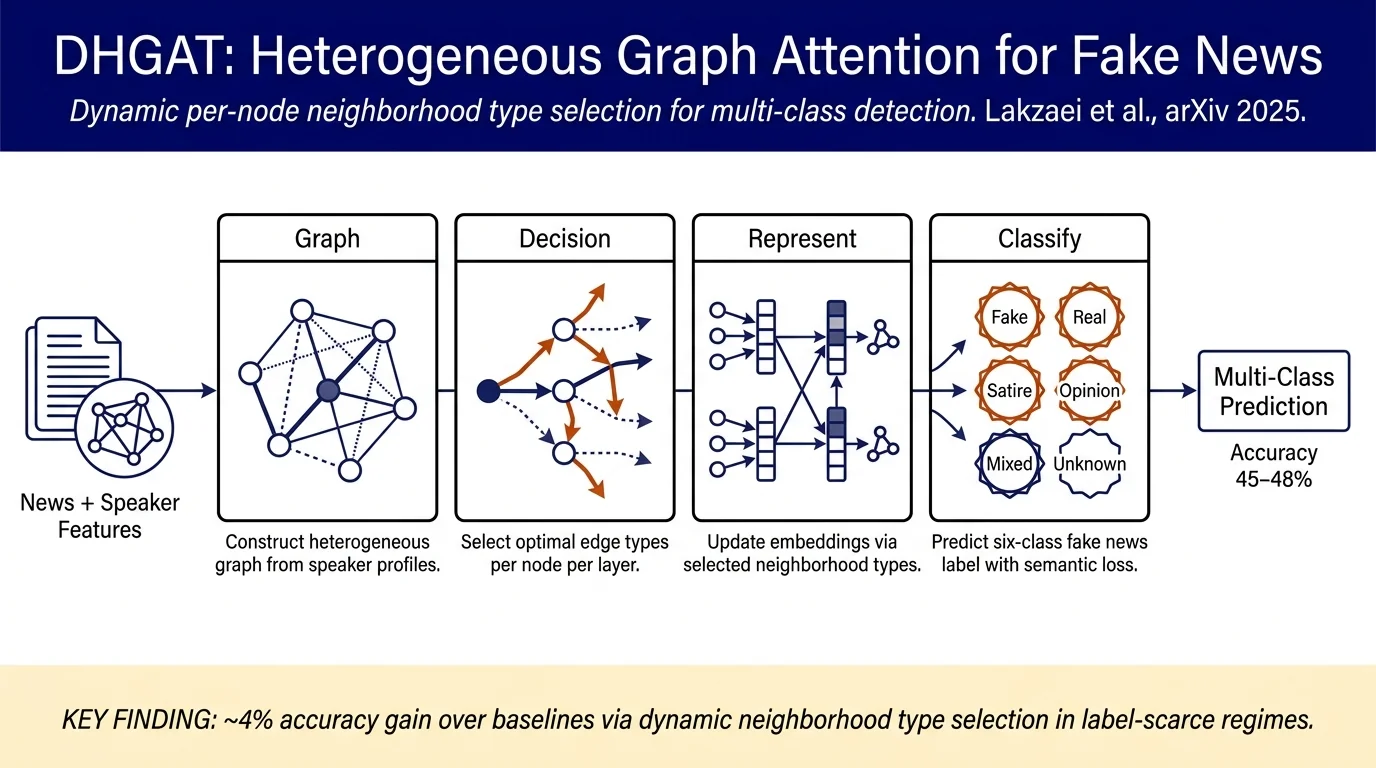
A Decision-Based Heterogeneous Graph Attention Network for Multi-Class Fake News DetectionProposes DHGAT (Decision-based Heterogeneous Graph Attention Network), a semi-supervised method for six-class fake news classification on the LIAR dataset. Unlike standard GNNs that apply uniform neighborhood aggregation, DHGAT models news as heterogeneous graphs with multiple edge types derived from speaker profiles and enables each…
 Detection methodsLLMs & generative AI
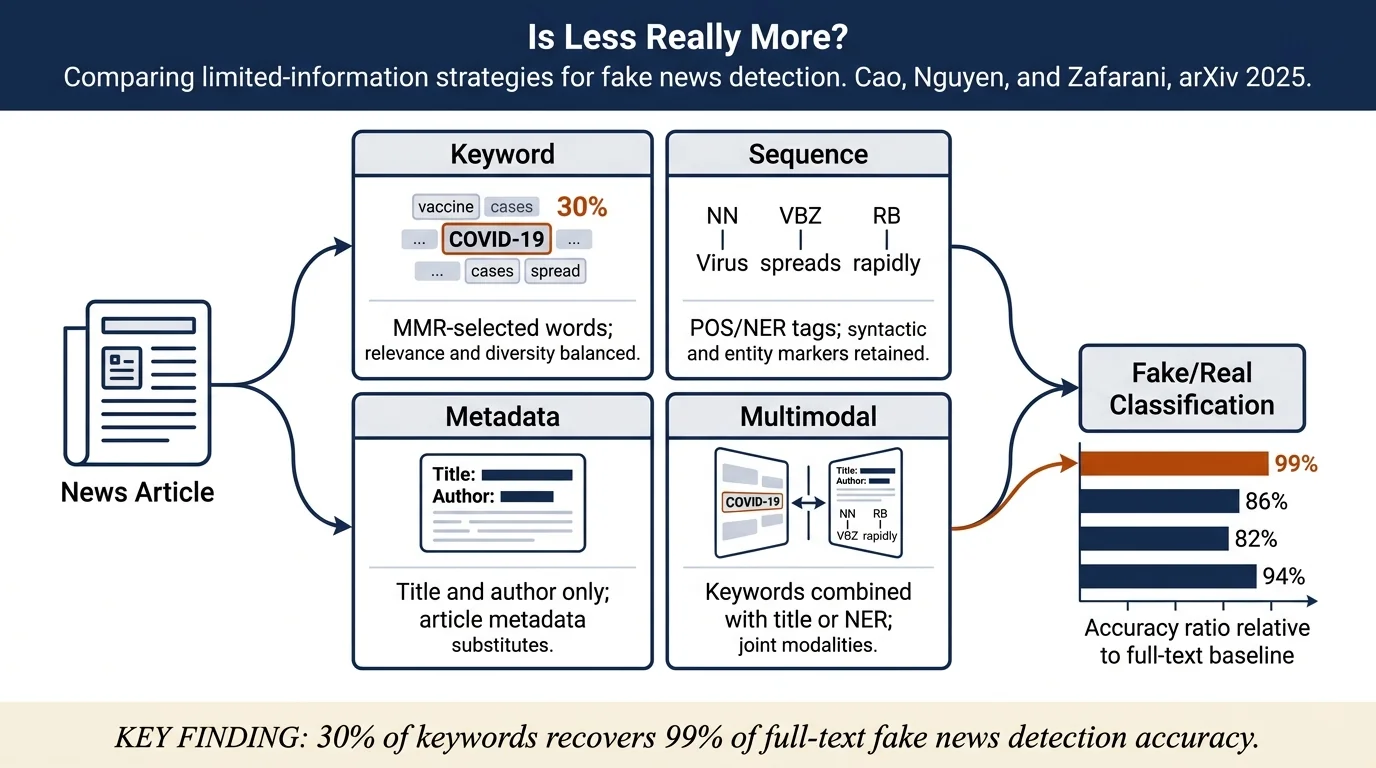
Is Less Really More? Fake News Detection with Limited InformationSLIM (Systematically-selected Limited Information) replaces full news article text with strategically chosen subsets — extracted keywords, POS/NER sequence tags, or textual metadata — to address the computational cost and data-sparsity limitations of full-text fake news detection. Information-theoretic measures (normalized Shannon…
 LLMs & generative AIDatasets & evaluation
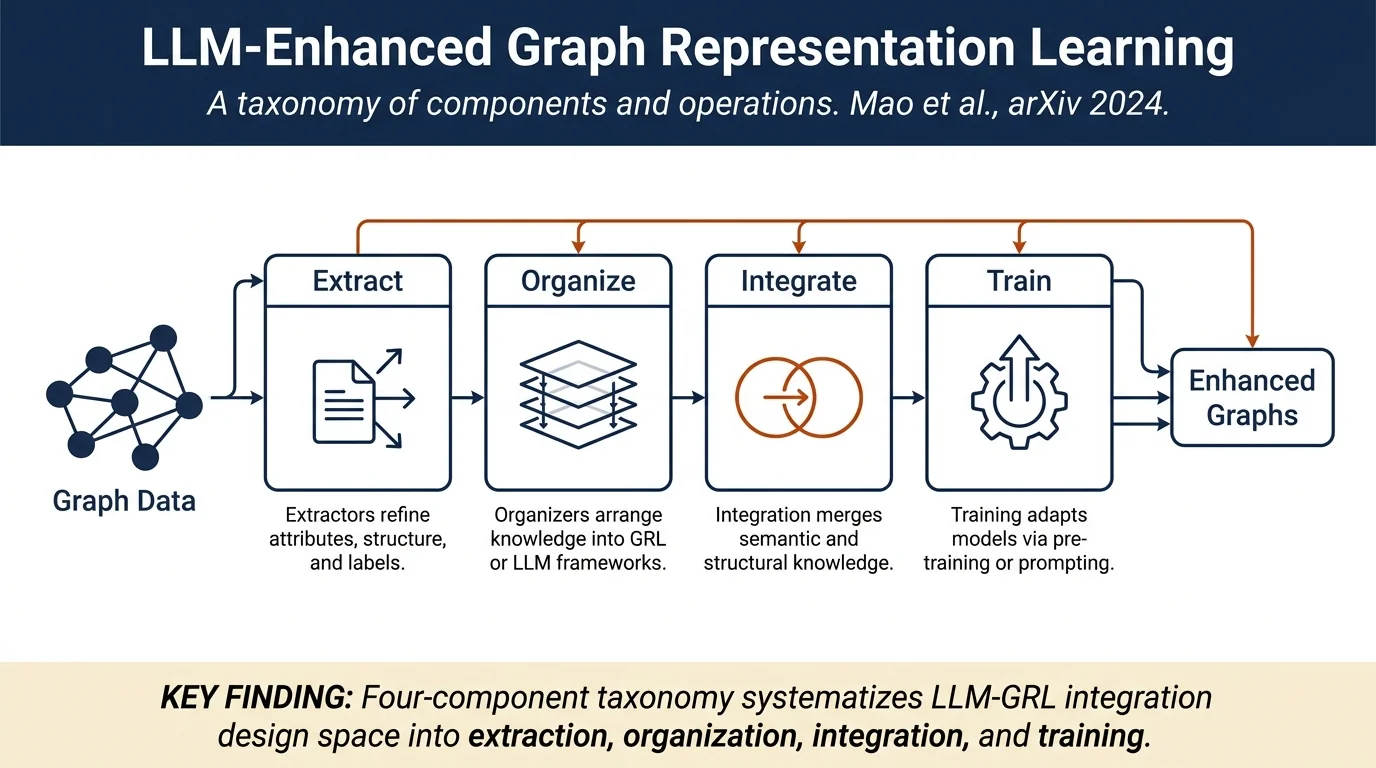
Advancing Graph Representation Learning with Large Language Models: A Comprehensive Survey of TechniquesThis comprehensive survey analyzes the integration of Large Language Models (LLMs) with Graph Representation Learning (GRL), breaking down the design space into two primary components—knowledge extractors and organizers—plus operation techniques for integration and training. The work provides a novel taxonomy for understanding how LLMs…
 Deepfakes & multimodalDetection methods
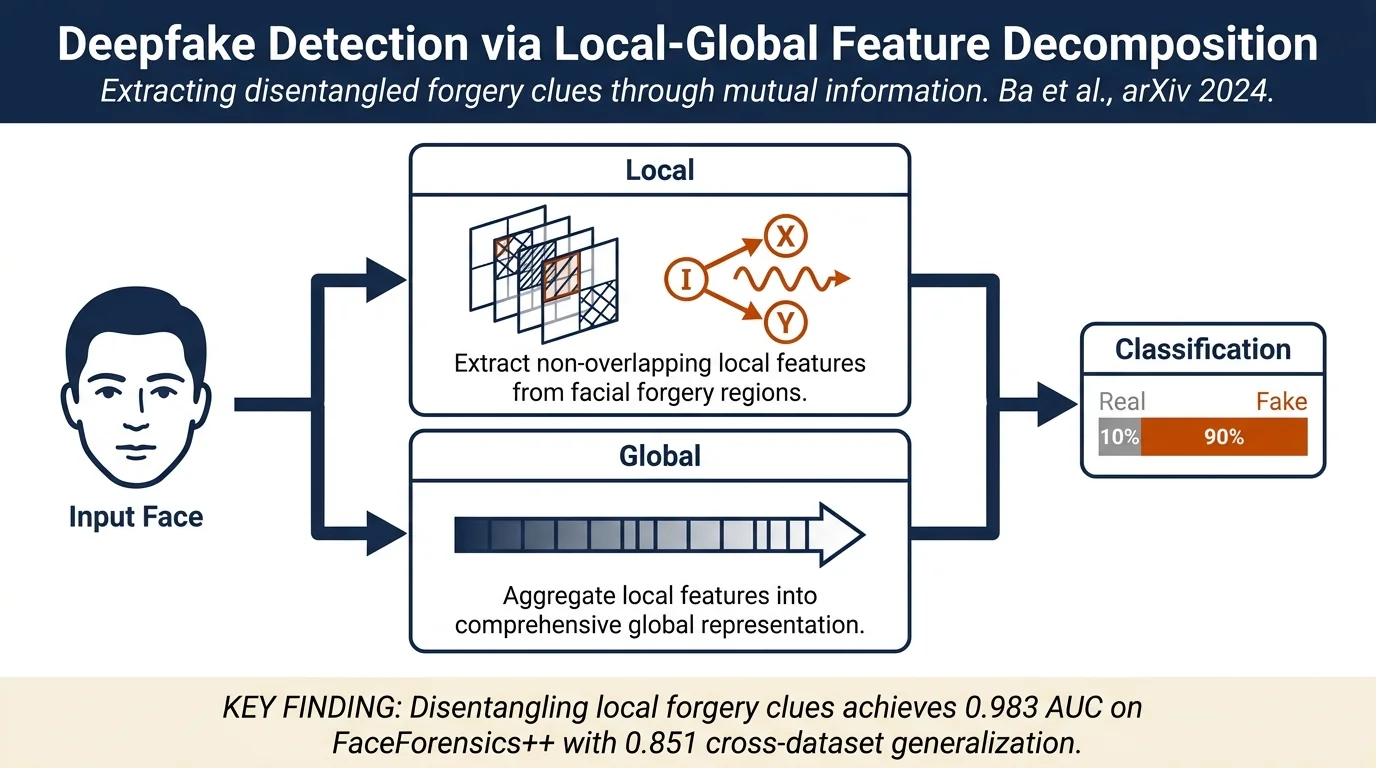
Exposing the Deception: Uncovering More Forgery Clues for Deepfake DetectionThis paper proposes a framework for deepfake detection that extracts both local and global forgery clues by decomposing facial features into disentangled local representations. Using mutual information theory to ensure comprehensive yet non-overlapping feature extraction, the method achieves state-of-the-art results on five benchmark…
 LLMs & generative AIDatasets & evaluation
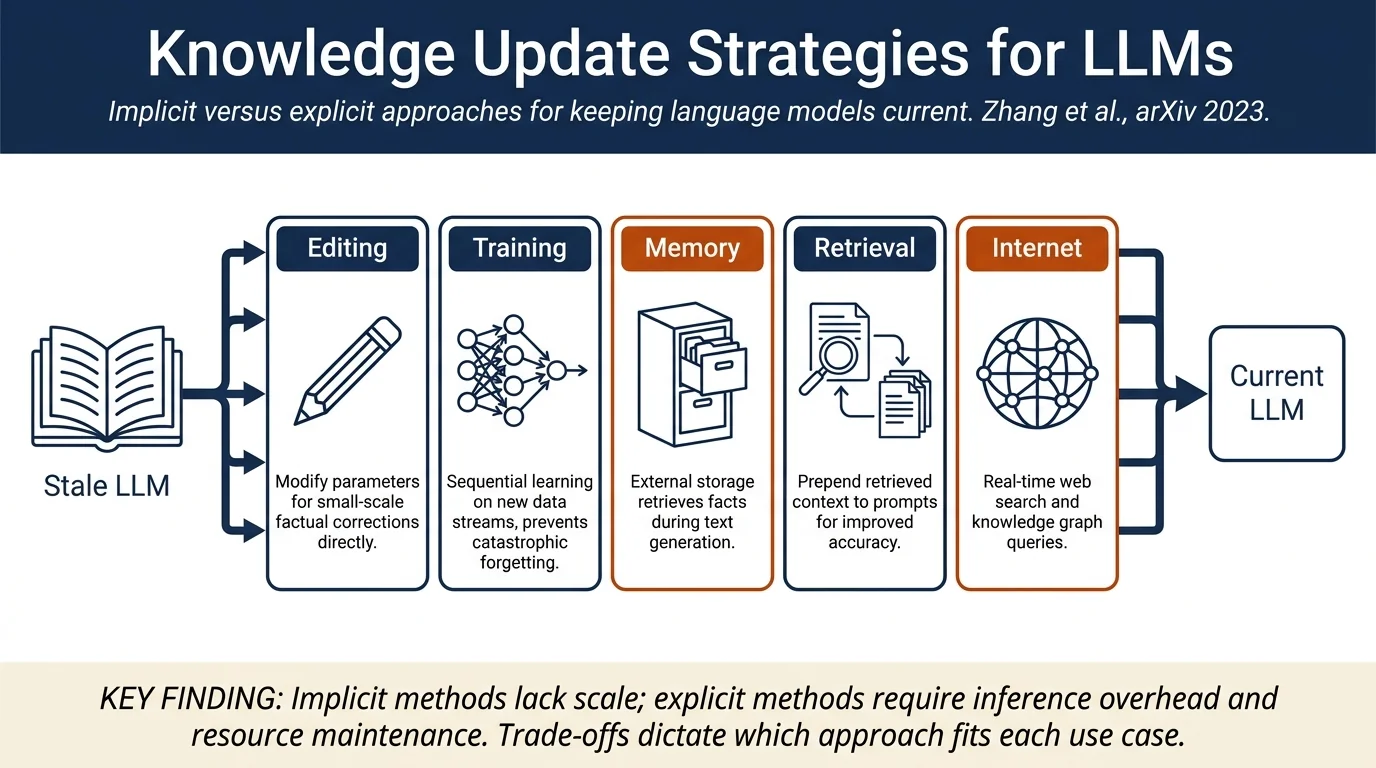
How Do Large Language Models Capture the Ever-changing World Knowledge? A Review of Recent AdvancesThis survey reviews methods for aligning large language models with ever-changing world knowledge without retraining from scratch. The authors systematically categorize approaches as either implicit (modifying LLM parameters directly via knowledge editing or continual learning) or explicit (augmenting LLMs with external resources via…
 LLMs & generative AIDetection methods
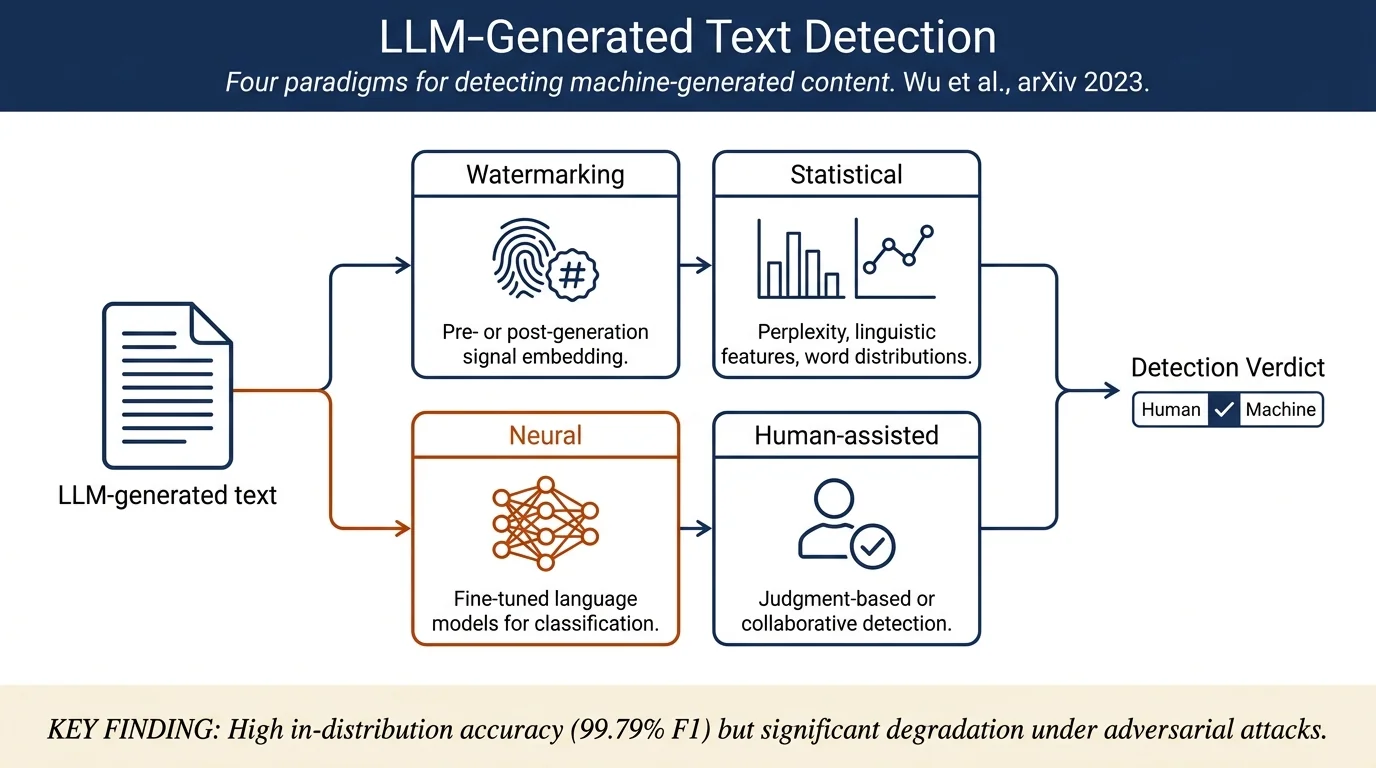
A Survey on LLM-Generated Text Detection: Necessity, Methods, and Future DirectionsAs LLMs become ubiquitous, detecting machine-generated text is critical for mitigating risks of misinformation, academic dishonesty, and misuse. This survey comprehensively reviews detection strategies—watermarking techniques, statistical methods, neural-based detectors, and human-assisted approaches—along with datasets, evaluation…
 LLMs & generative AIFact-checking & verification
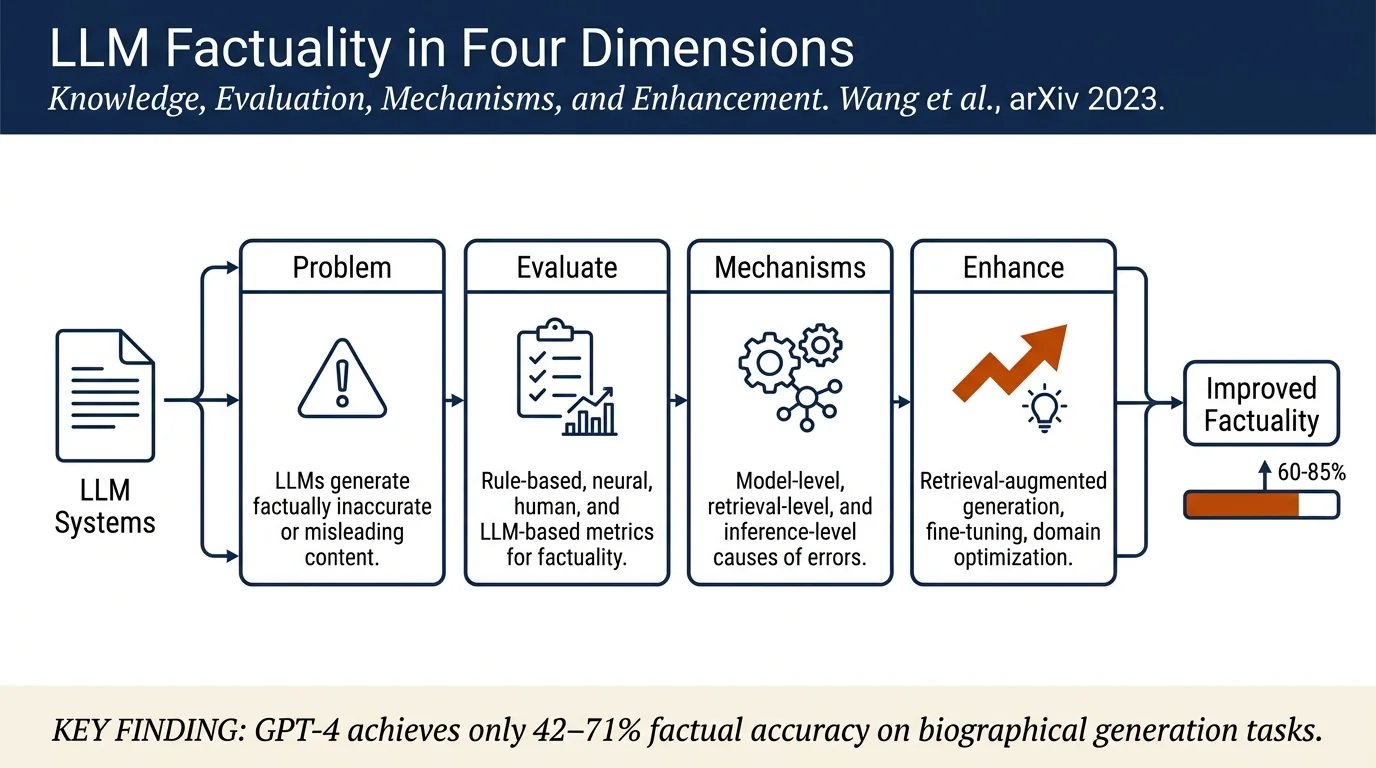
Survey on Factuality in Large Language Models: Knowledge, Retrieval and Domain-SpecificityThis comprehensive survey addresses the critical problem of factuality in large language models, examining how LLMs store and retrieve knowledge, analyzing the mechanisms through which they generate false or misleading content, and reviewing evaluation metrics and enhancement strategies. The paper distinguishes factuality issues from…
 LLMs & generative AIDetection methods
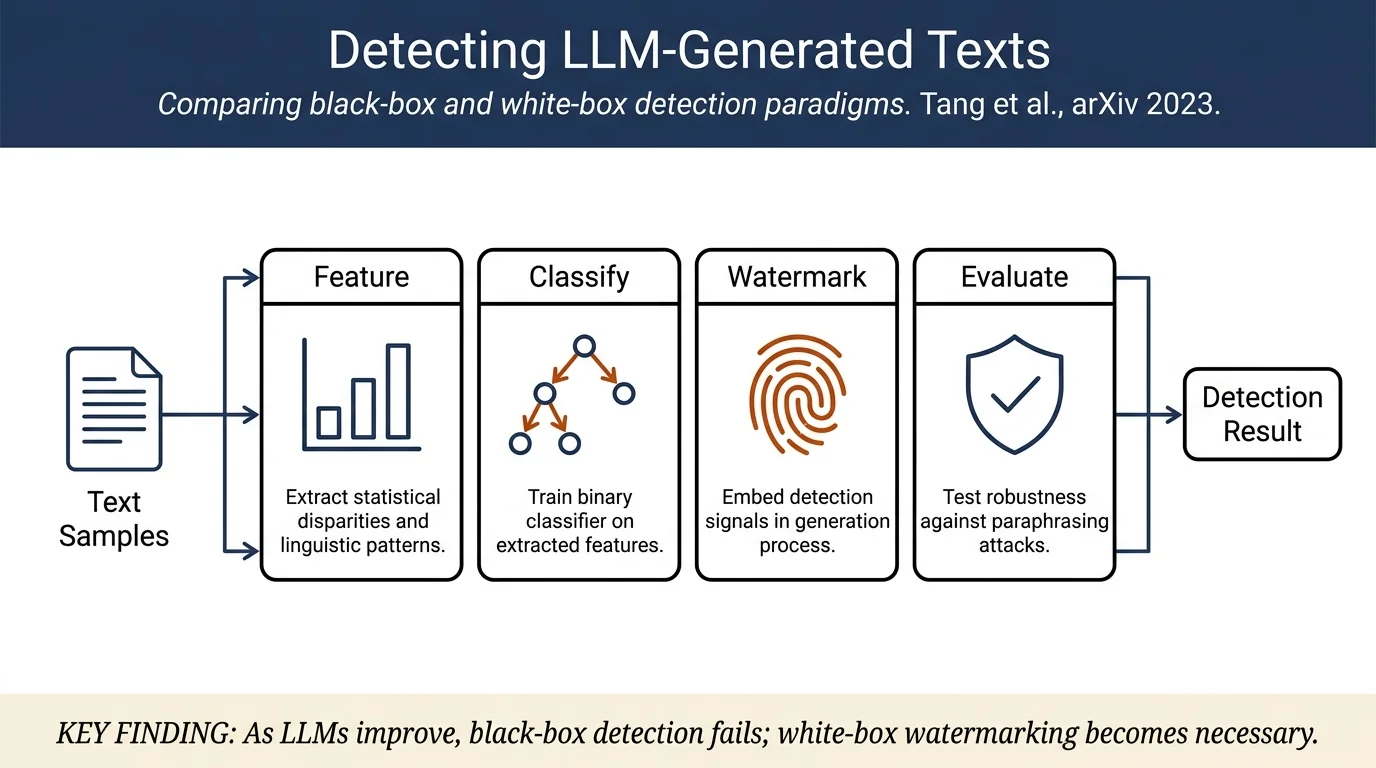
The Science of Detecting LLM-Generated TextsThis survey comprehensively reviews techniques for detecting LLM-generated text, a critical problem given concerns about misinformation, academic dishonesty, and unauthorized use. The authors categorize detection approaches into black-box (API-level access) and white-box (full model access) methods, discuss watermarking strategies,…
 LLMs & generative AIDetection methods
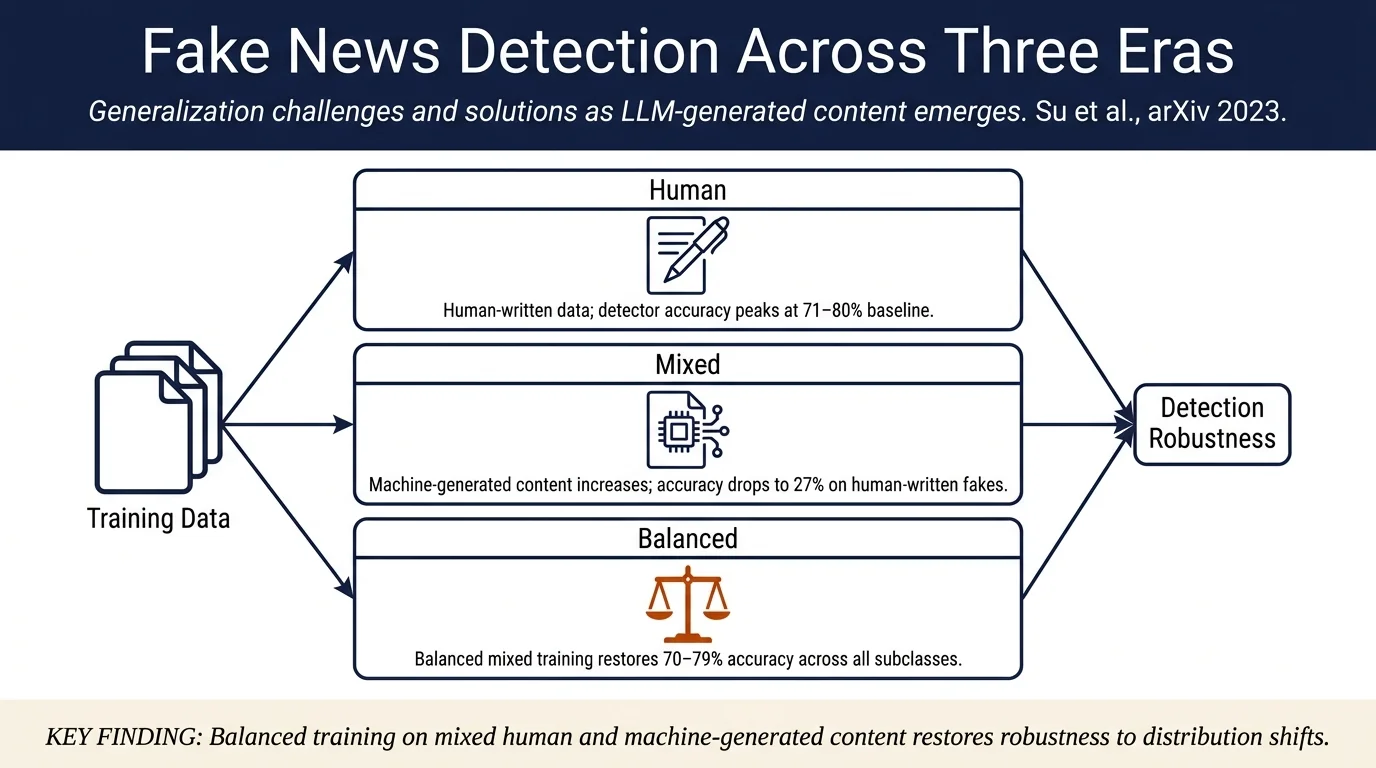
Adapting Fake News Detection to the Era of Large Language ModelsAs large language models proliferate and machine-generated text becomes prevalent, traditional fake news detectors trained exclusively on human-written content are increasingly unreliable. This paper evaluates fake news detectors across three hypothetical eras—human-written dominance, mixed human-machine content, and machine-generated…
 Fact-checking & verificationLLMs & generative AI
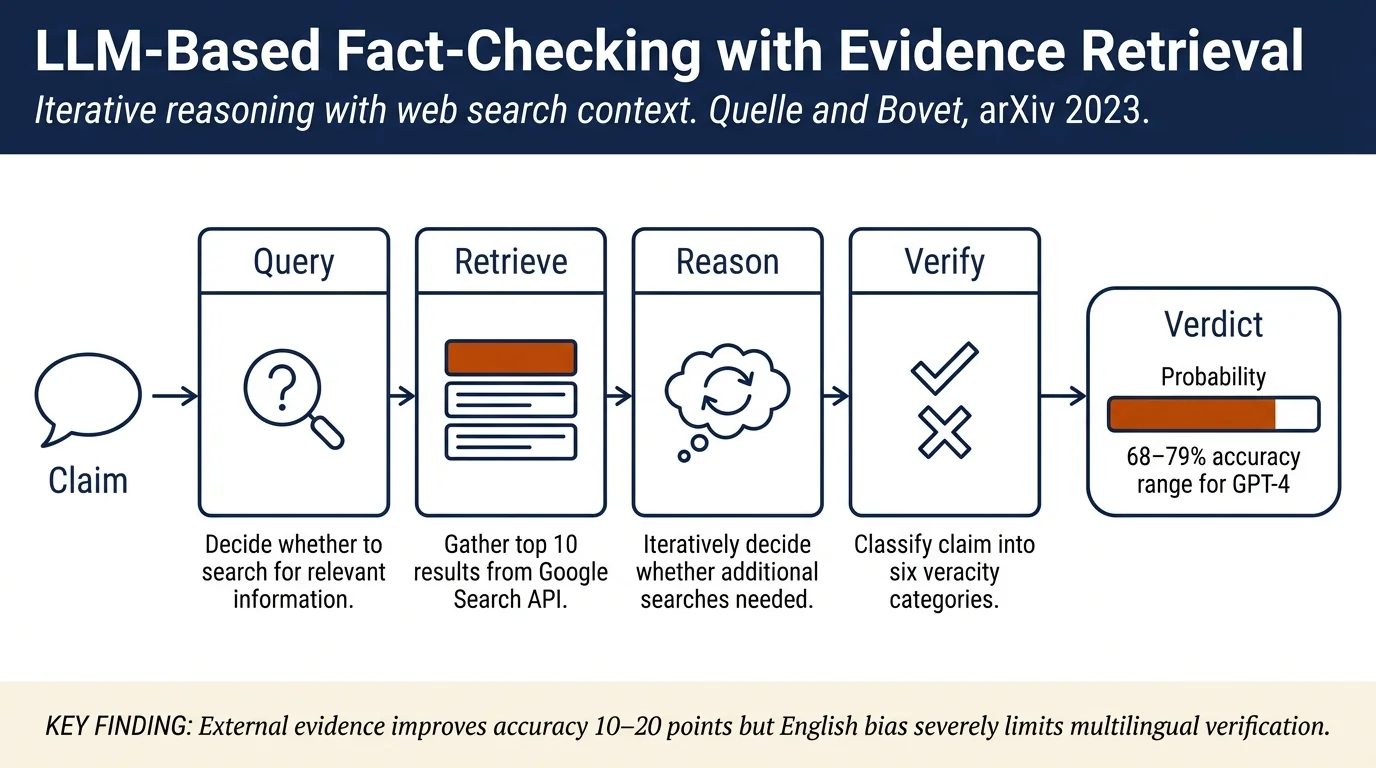
The Perils & Promises of Fact-checking with Large Language ModelsThis paper evaluates GPT-3.5 and GPT-4's ability to fact-check claims across English-only and multilingual datasets, showing GPT-4 substantially outperforms GPT-3.5 but both models show inconsistent accuracy when dealing with ambiguous verdicts. Critically, incorporating contextual information via Google Search significantly improves…
 LLMs & generative AIPlatforms, policy & society
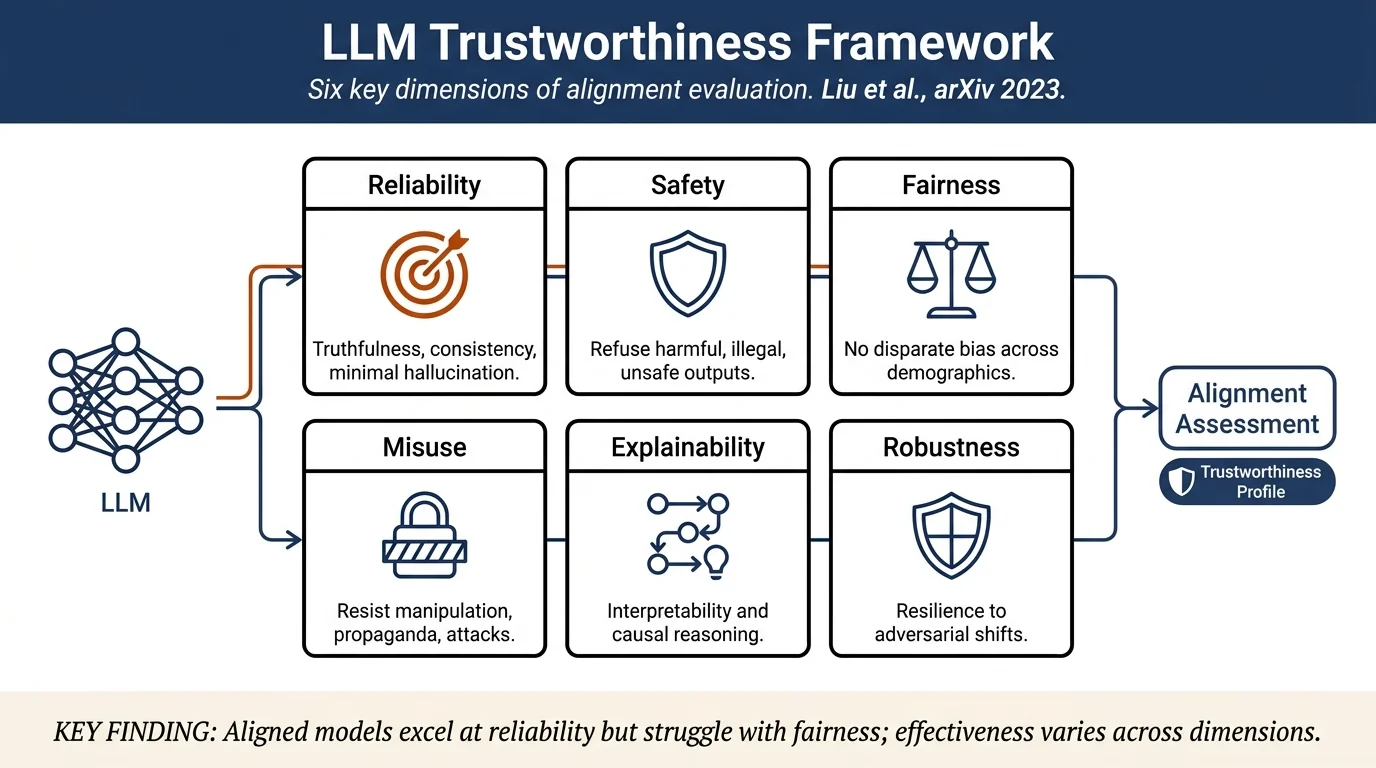
Trustworthy LLMs: A Survey and Guideline for Evaluating Large Language Models' AlignmentThis survey provides a comprehensive framework for evaluating LLM trustworthiness across seven dimensions: reliability, safety, fairness, resistance to misuse, explainability, social norms, and robustness. The authors present a detailed taxonomy with 29 sub-categories, conduct empirical measurements on widely-used LLMs (GPT-4, ChatGPT,…
 LLMs & generative AIDatasets & evaluation
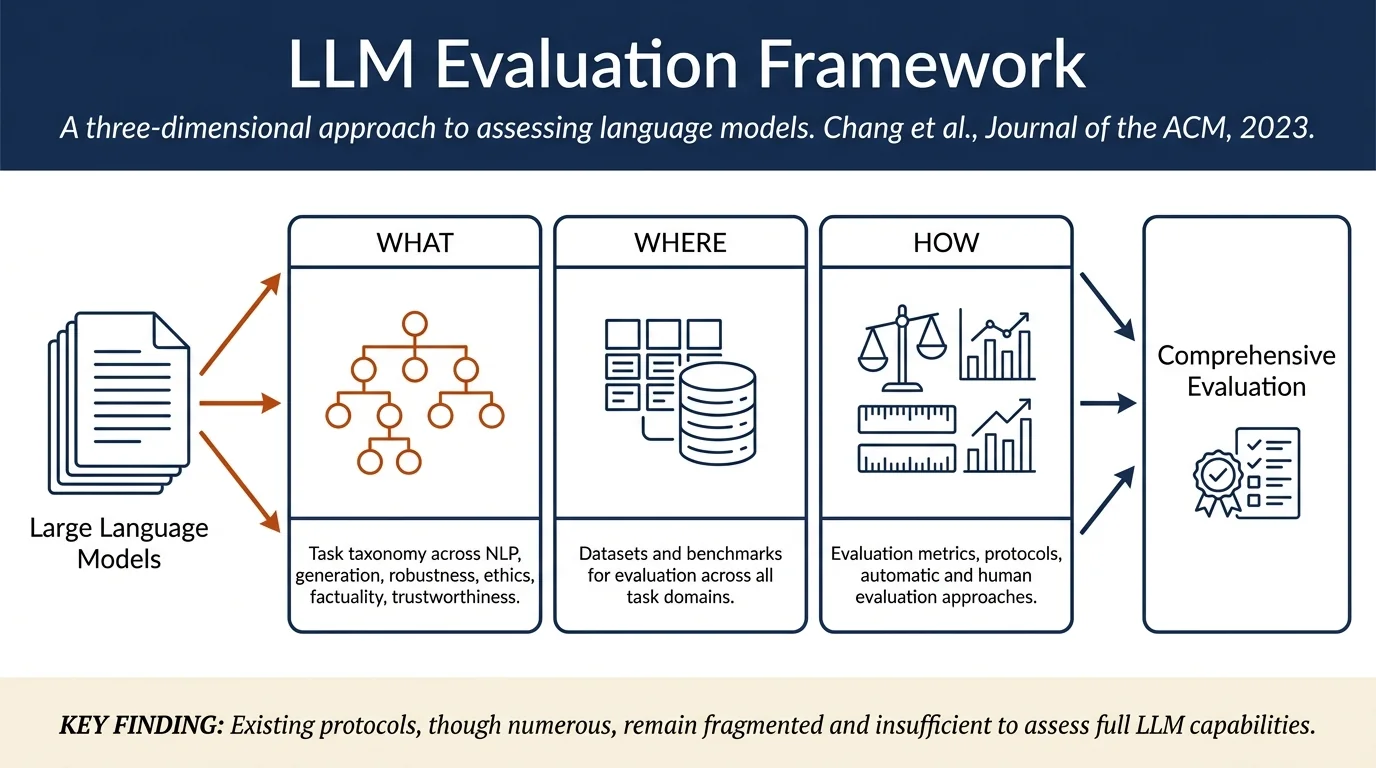
A Survey on Evaluation of Large Language ModelsThis survey provides a comprehensive review of evaluation methodologies for large language models across three dimensions: what to evaluate, where to evaluate, and how to evaluate. The paper encompasses evaluation tasks spanning natural language processing, natural language generation, robustness, ethics, bias detection, trustworthiness,…
 LLMs & generative AIDatasets & evaluation
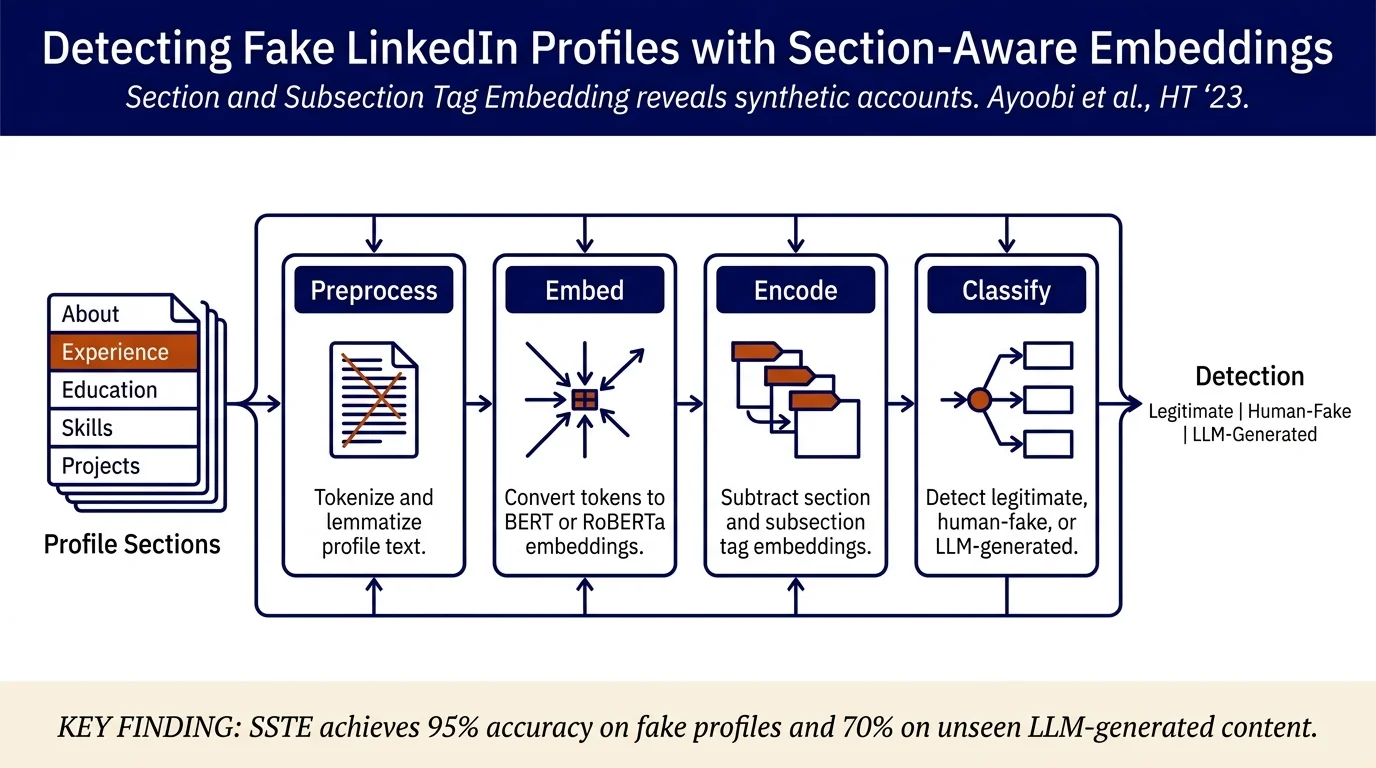
The Looming Threat of Fake and LLM-generated LinkedIn Profiles: Challenges and Opportunities for Detection and PreventionLinkedIn's lack of verification enables fake accounts that harm legitimate users and the platform's integrity. This work introduces a dataset of 3600 profiles (legitimate, manually created fake, and ChatGPT-generated) and proposes SSTE, a method that detects fake profiles immediately after registration using only profile text.
 Detection methodsLLMs & generative AI
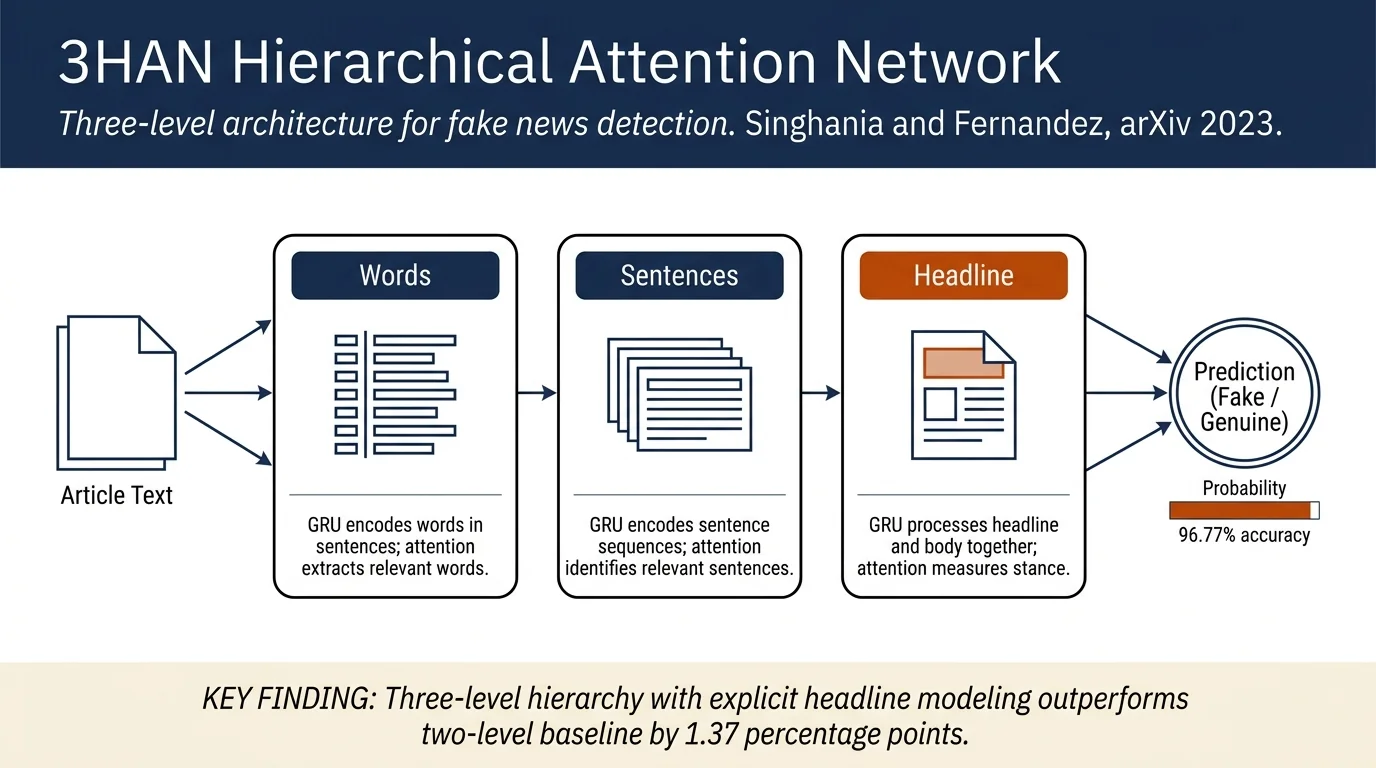
3HAN: A Deep Neural Network for Fake News DetectionProposes 3HAN, a three-level hierarchical attention network for fake news detection that models articles as a hierarchy of words, sentences, and headlines. The model assigns differential importance weights to different parts via attention mechanisms, achieving 96.77% accuracy while providing interpretable attention visualizations showing…
 Detection methodsLLMs & generative AI
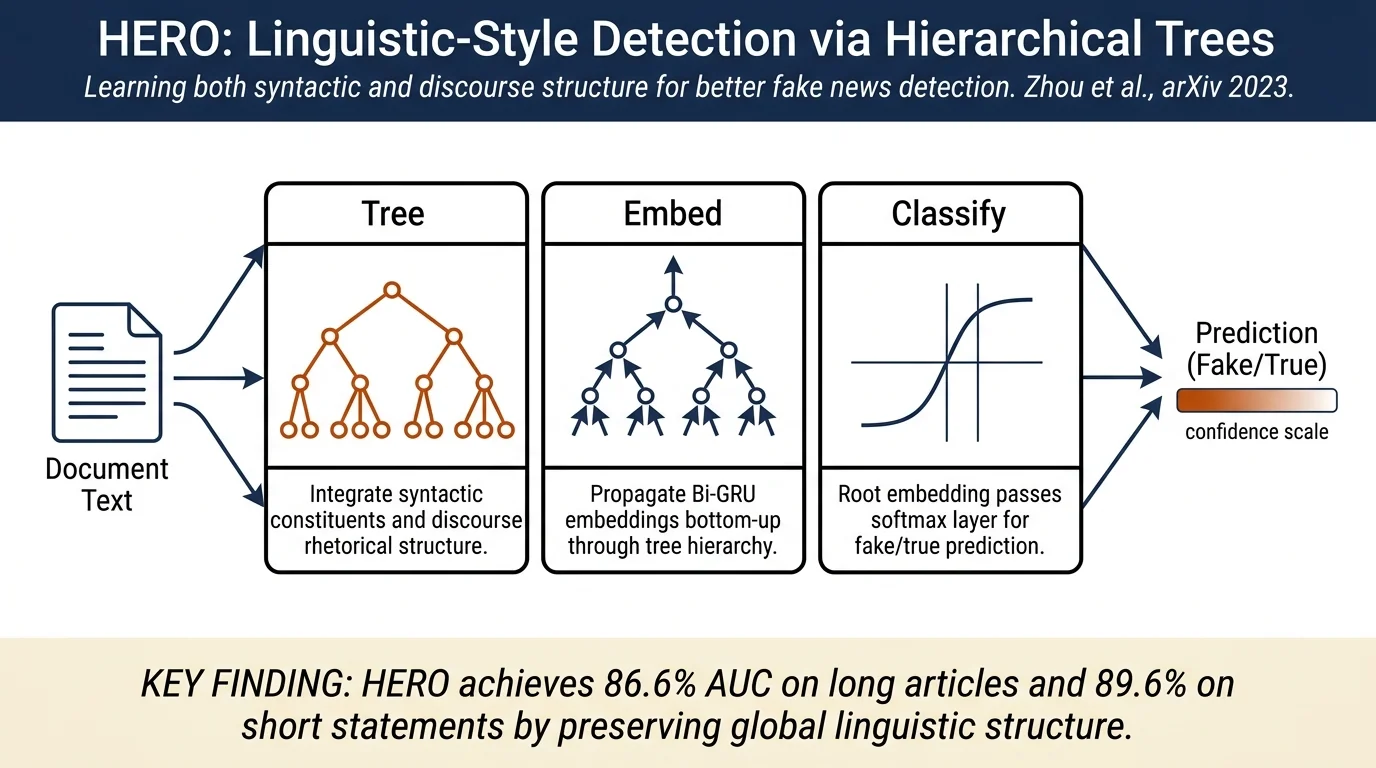
Linguistic-style-aware Neural Networks for Fake News DetectionHERO (Hierarchical Recursive Neural Network) detects fake news by learning the linguistic style encoded in hierarchical linguistic trees — structures that jointly capture syntactic constituency and rhetorical discourse organization from word to document. Unlike prior handcrafted approaches that extract node-level statistics (word…
 Detection methodsDatasets & evaluation
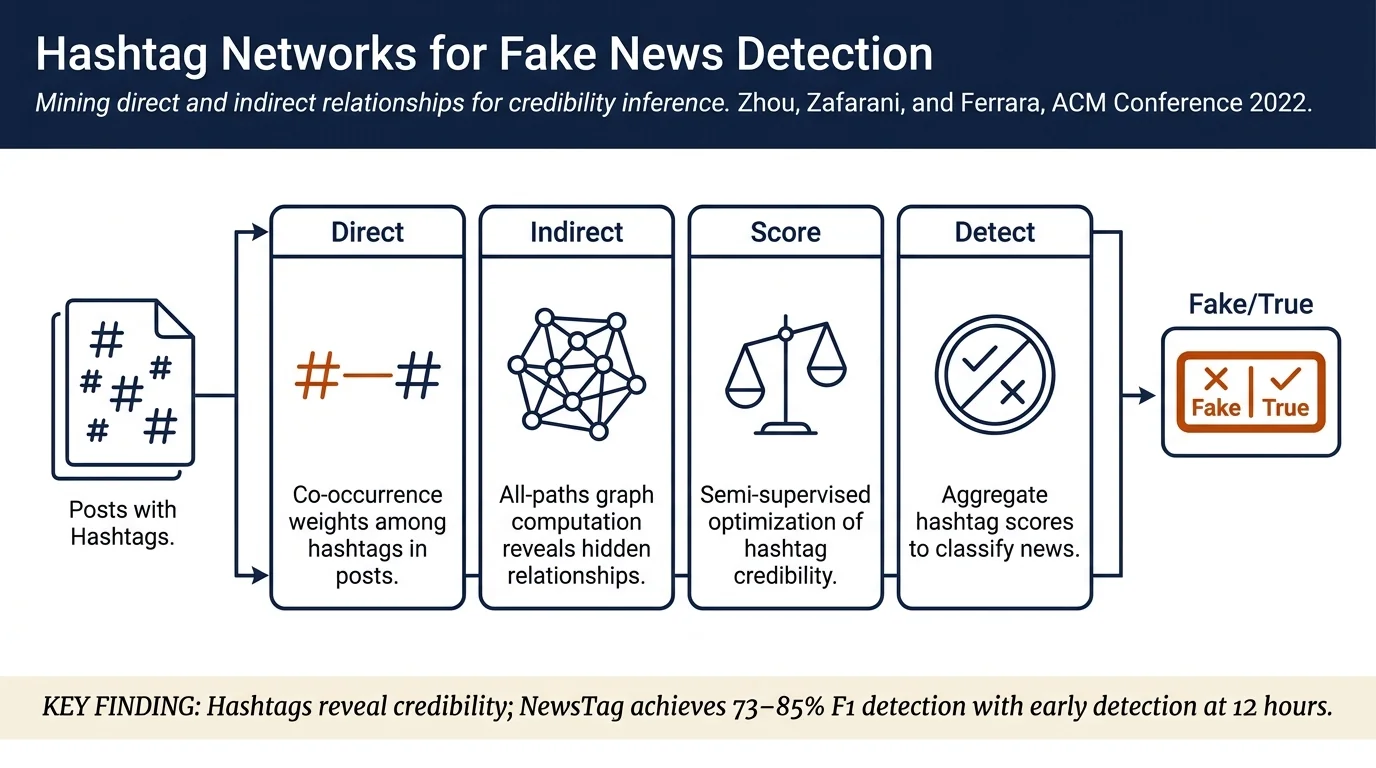
From Fake News to #FakeNews: Mining Direct and Indirect Relationships among Hashtags for Fake News DetectionHashtags reveal news credibility signals during propagation: fake news clusters with hashtags used primarily for misinformation, while true news uses hashtags associated with reliable content. The authors propose NewsTag, a language-independent semi-supervised algorithm that mines both direct co-occurrence and indirect relationships…