Explore everything
Filter by research area, year and venue. Every filter is in the address bar, so you can share a view as a link.
 Detection methodsDatasets & evaluation
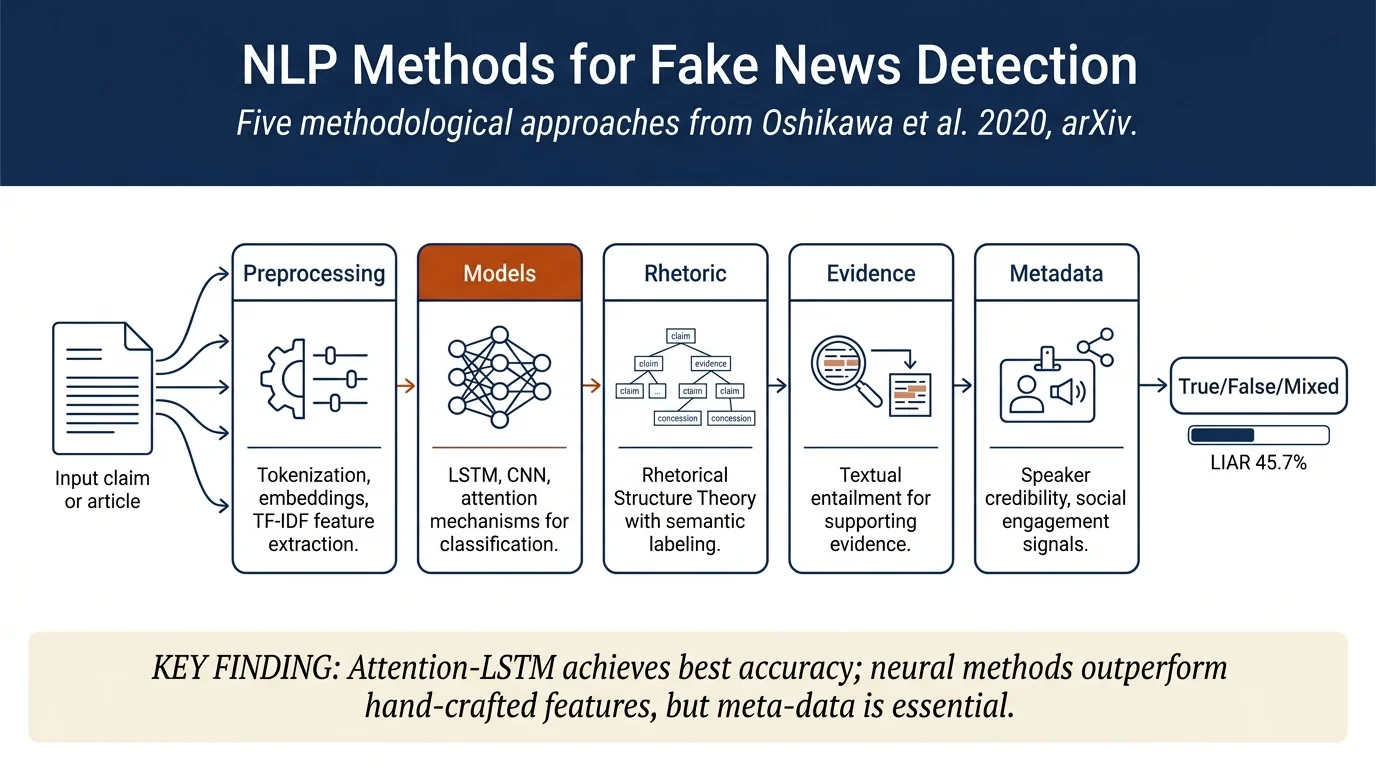
A Survey on Natural Language Processing for Fake News DetectionThis survey comprehensively reviews NLP methods for fake news detection, systematically comparing task formulations (classification vs. regression), nine benchmark datasets (LIAR, FEVER, FakeNewsNet, Twitter/SNS datasets), and five methodological approaches (preprocessing, machine learning models, rhetorical structure, evidence…
 Datasets & evaluationDetection methods
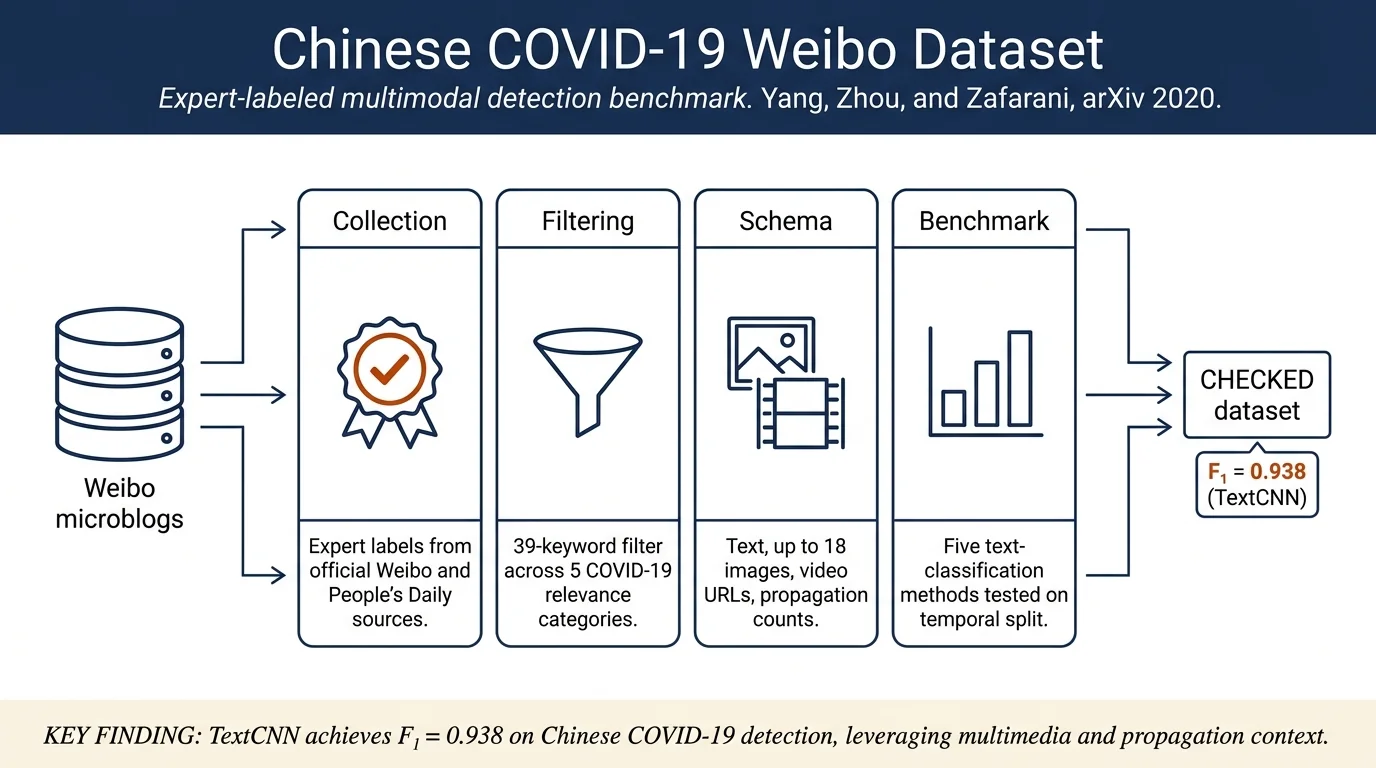
CHECKED: Chinese COVID-19 Fake News DatasetCHECKED is the first Chinese-language, fact-checked COVID-19 social media dataset — 2,104 Weibo microblogs (344 fake, 1,760 real) spanning December 2019 to August 2020, labeled using Weibo's expert-operated Community Management Center for fake posts and People's Daily official account for real posts. Each microblog carries rich…
 Detection methodsLLMs & generative AI
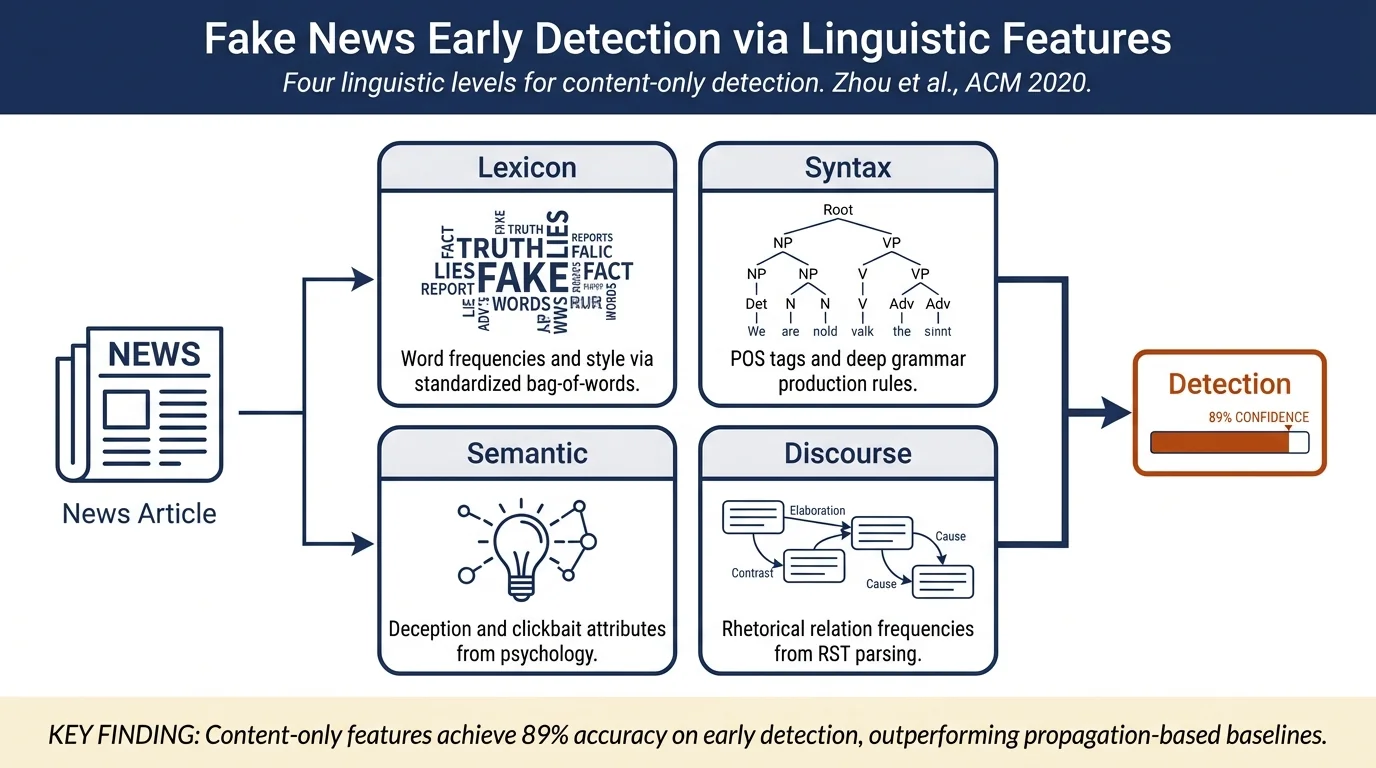
Fake News Early Detection: An Interdisciplinary StudyThis paper proposes a theory-driven, content-only model for fake news detection at publication time — before social-media propagation data exists. News articles are represented at four linguistic levels (lexicon, syntax, semantic, and discourse) using features grounded in social and forensic psychology; classical supervised classifiers…
 Spread & networksDetection methods
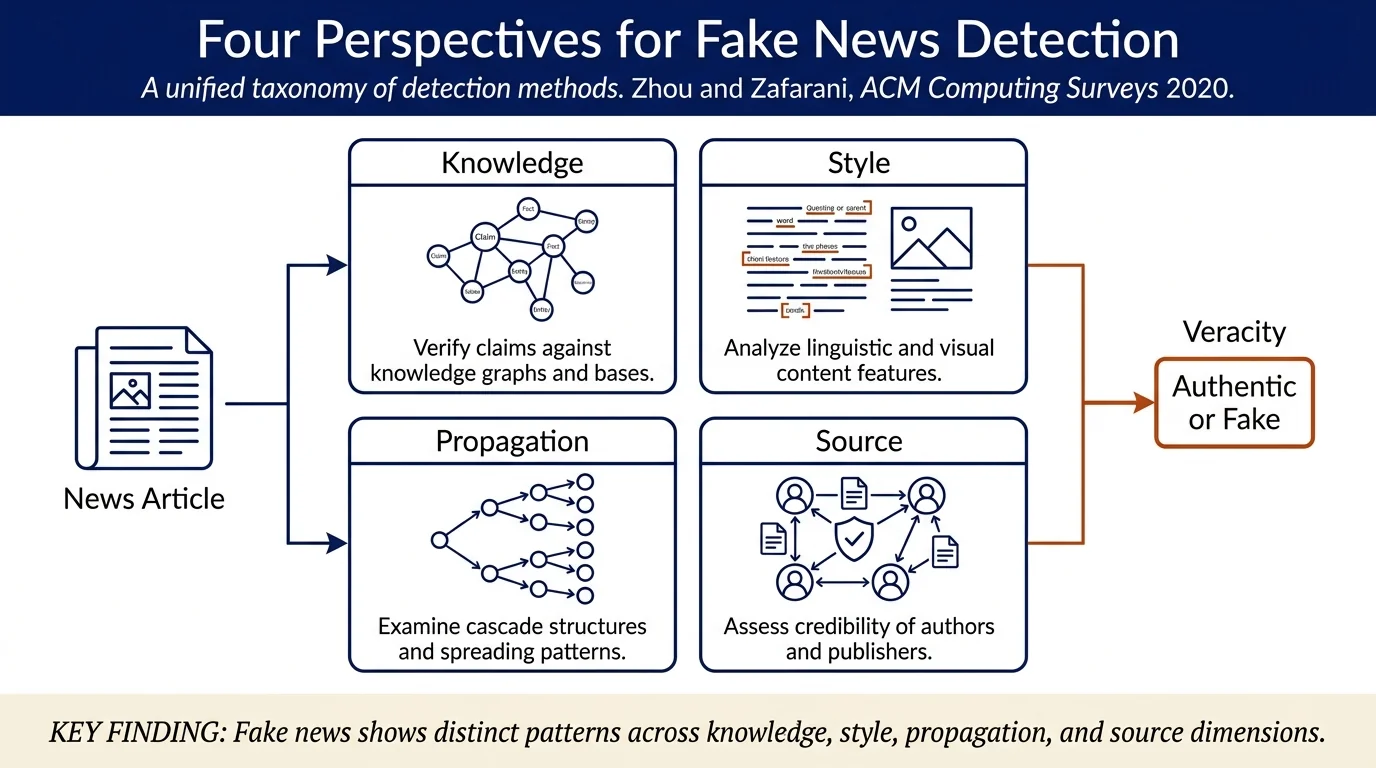
A Survey of Fake News: Fundamental Theories, Detection Methods, and OpportunitiesThis comprehensive survey defines fake news across both broad and narrow framings, systematizes detection methods across four perspectives (knowledge, style, propagation, source), connects detection strategies to interdisciplinary theories from psychology and social sciences, and identifies six open research challenges including early…
 Deepfakes & multimodalDetection methods
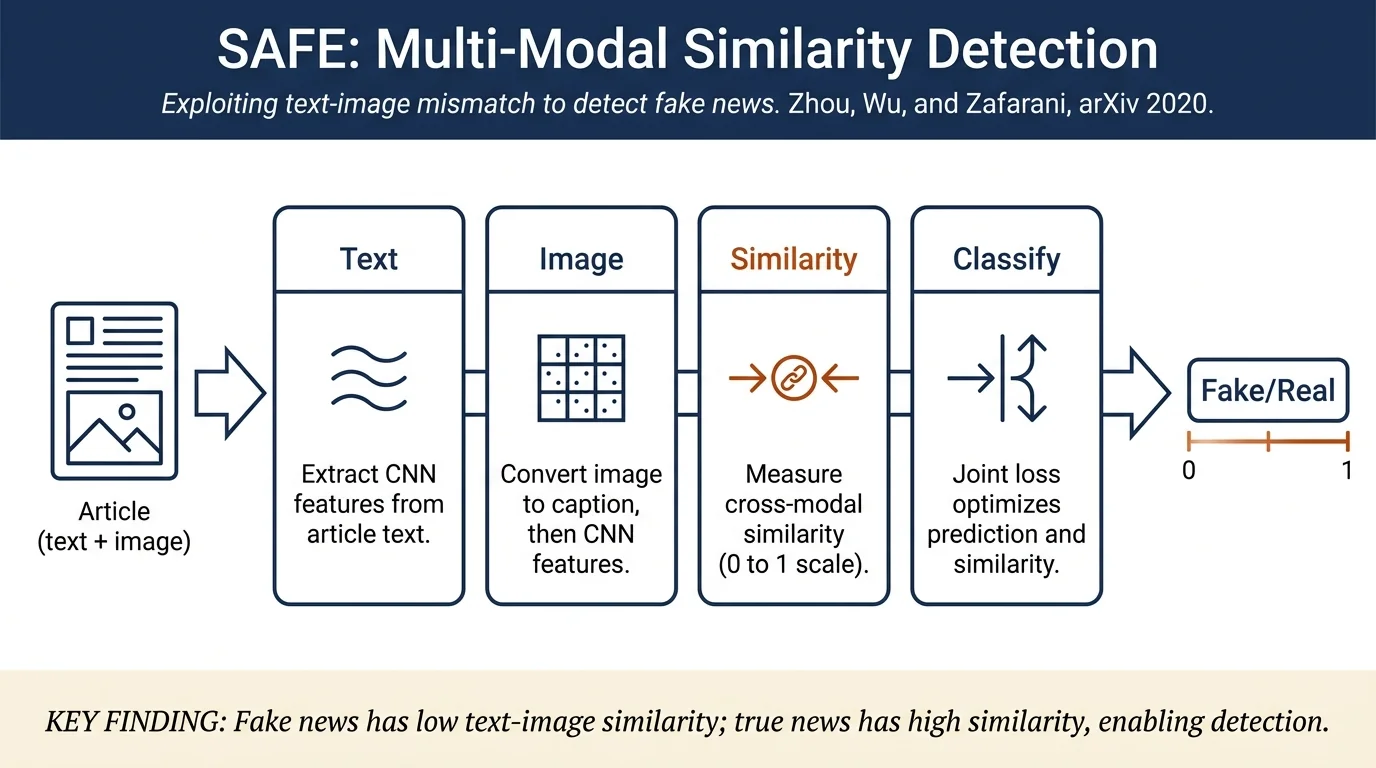
SAFE: Similarity-Aware Multi-Modal Fake News DetectionFake news articles frequently pair misleading textual claims with irrelevant or manipulative images, creating a detectable gap between the two modalities. SAFE addresses this by extracting separate neural representations of a news article's text and images — using the same Text-CNN architecture applied to an image2sentence embedding for…
 Spread & networksDetection methods
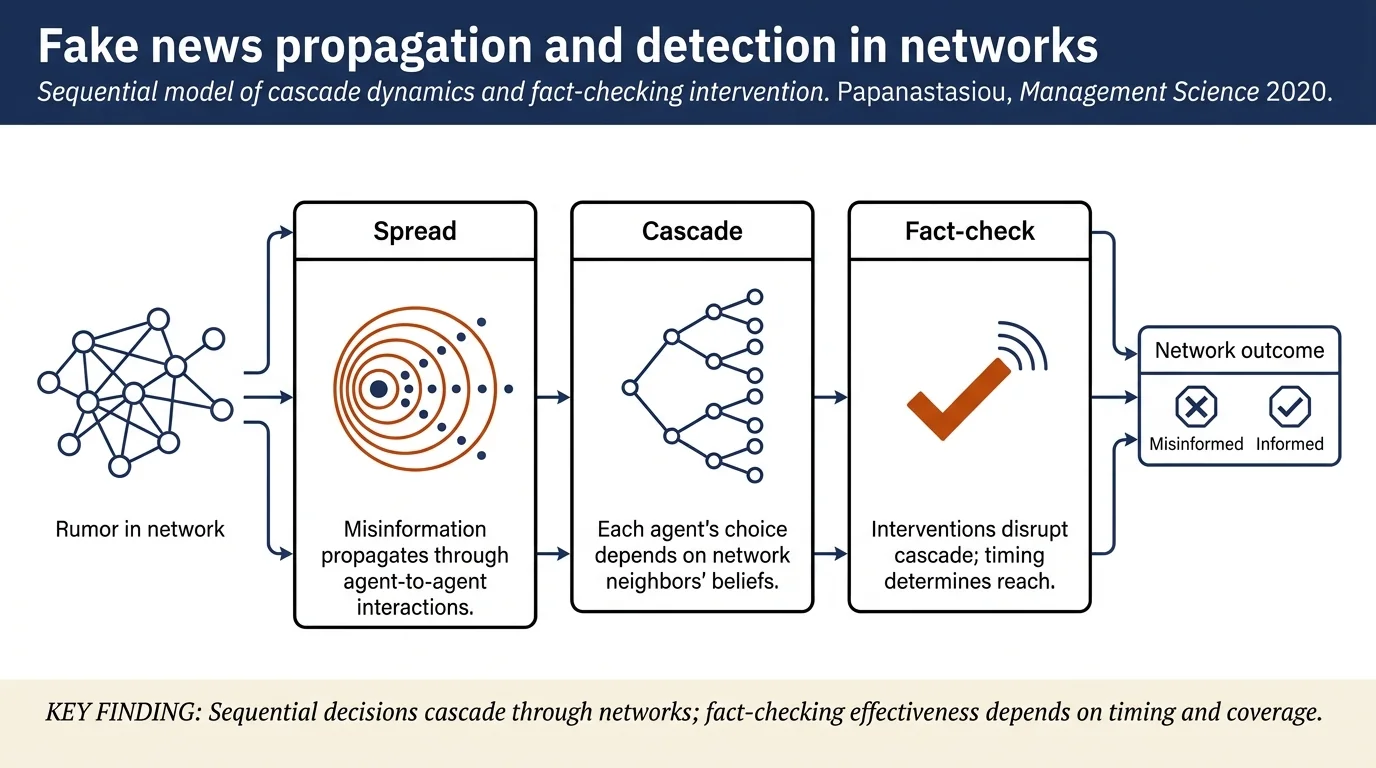
Fake news propagation and detection: A sequential modelFoundational sequential social learning model of misinformation spread and fact-checking. Introduces the framework for analyzing how agents' decisions cascade through a network and how fact-checking affects collective outcomes.
 Deepfakes & multimodalDetection methods
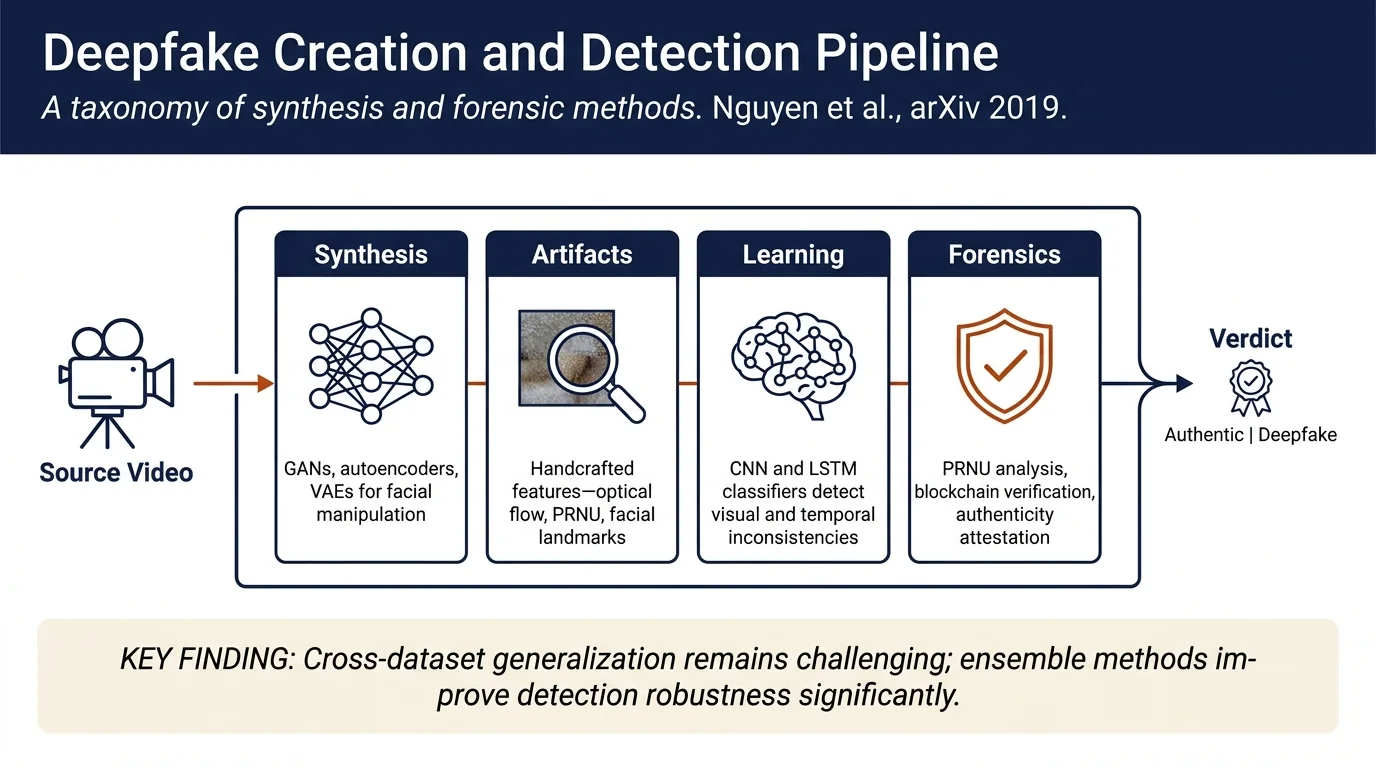
Deep Learning for Deepfakes Creation and Detection: A SurveyComprehensive survey of deep learning methods for creating and detecting deepfakes, covering face-swapping and lip-syncing generation techniques (GANs, autoencoders, encoder-decoder pairs), detection approaches (visual artifacts, temporal features, forensics), and challenges in cross-dataset generalization. The paper discusses…
 Deepfakes & multimodalDetection methods
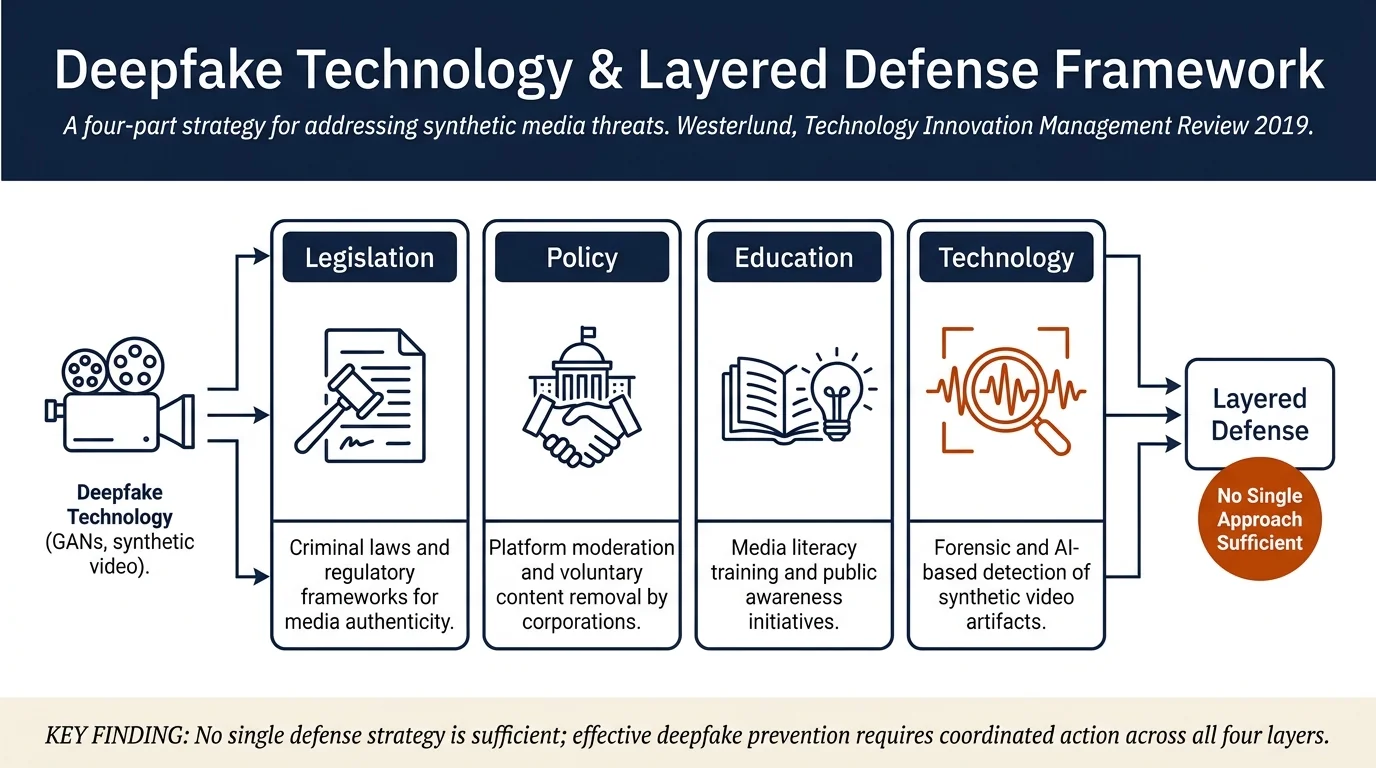
The Emergence of Deepfake Technology: A ReviewThis review analyzes 84 news articles about deepfakes to synthesize understanding of synthetic video technology, its applications, threats, and countermeasures. Deepfakes—hyper-realistic videos created using AI (primarily GANs)—lower the barrier to video forgery and represent a significant threat to trust, elections, and security.
 Detection methodsSpread & networks
Fake News in the 2016 and 2018 Campaigns: Prevalence, Detection, and EffectsNyhan presents empirical findings on fake news consumption in the 2016 and 2018 U.S. campaigns, drawing from survey data with browser tracking to measure actual article visits. While mainstream media reported on fake news as a widespread crisis, his research shows that only ~25% of Americans visited fake news websites, and consumption…
 LLMs & generative AIDetection methods
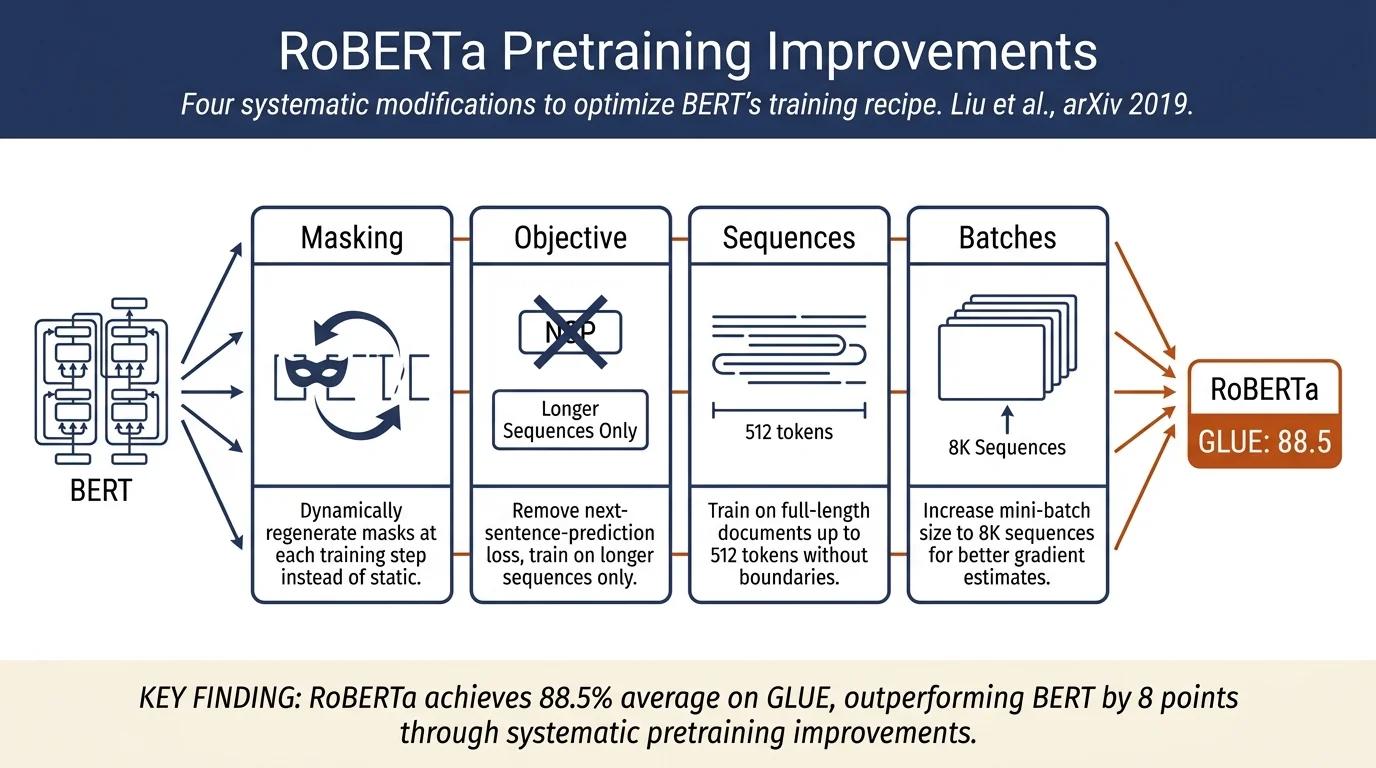
RoBERTa: A Robustly Optimized BERT Pretraining ApproachA replication and improvement study of BERT pretraining showing that BERT was significantly undertrained. RoBERTa introduces four key improvements—training longer with larger batches and more data, removing the next-sentence-prediction objective, training on longer sequences, and dynamically masking tokens—to achieve state-of-the-art…
 Detection methodsLLMs & generative AI
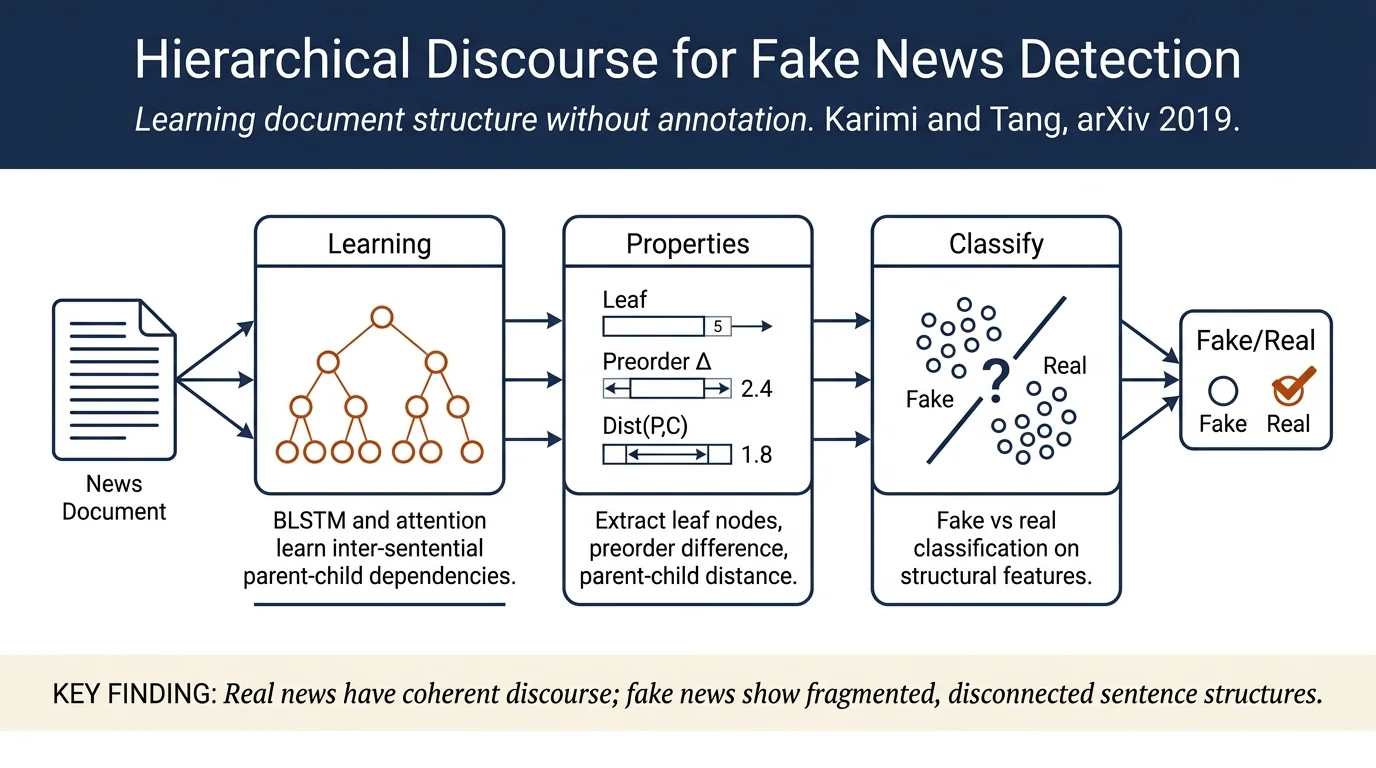
Learning Hierarchical Discourse-level Structure for Fake News DetectionProposes HDSF, a framework that learns hierarchical discourse-level structure (dependency trees of sentences) for fake news detection without annotated corpora. Identifies three structure-related properties that distinguish fake from real news and shows HDSF achieves 82.19% accuracy, outperforming linguistic baselines.
 Datasets & evaluationDetection methods
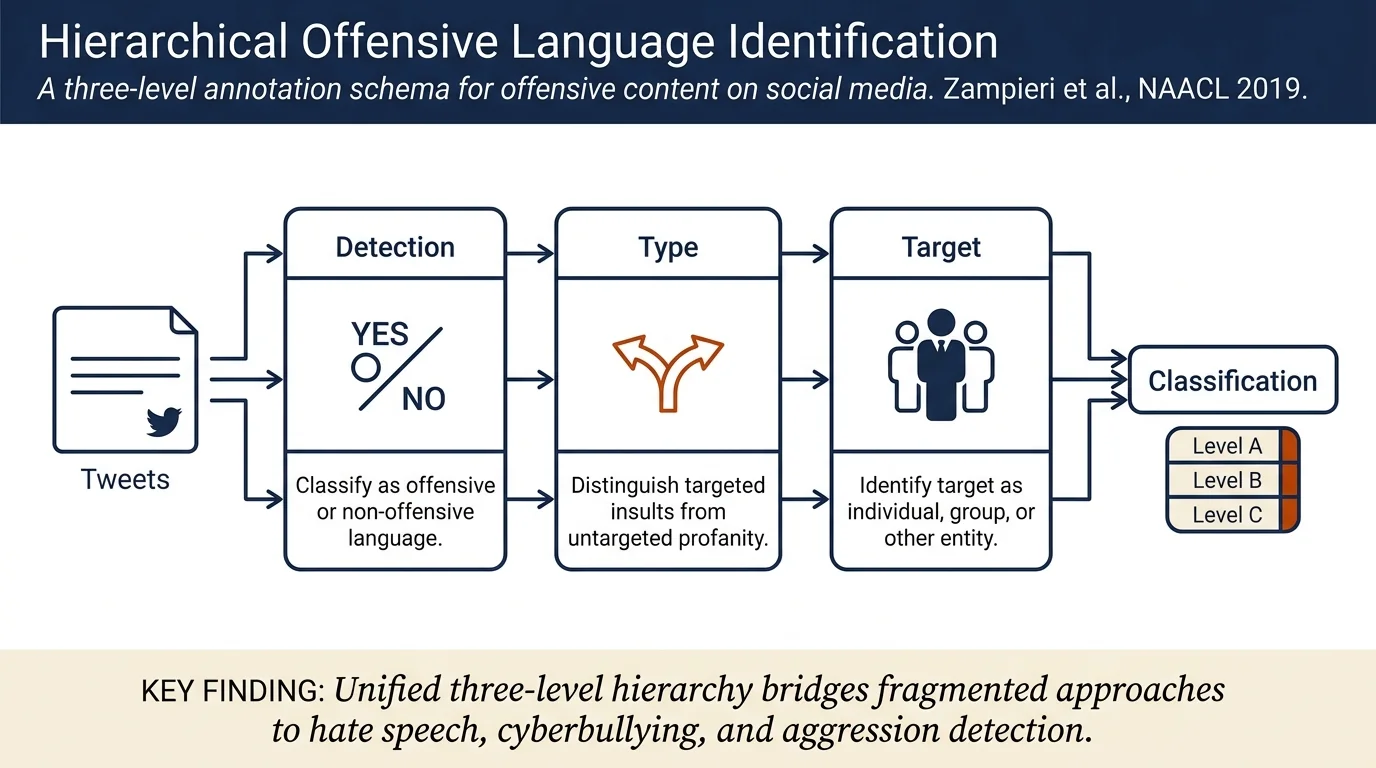
Predicting the Type and Target of Offensive Posts in Social MediaThis paper introduces OLID (Offensive Language Identification Dataset), a large-scale dataset of 14,100 English tweets annotated with a three-level hierarchical schema for detecting offensive content. The hierarchy distinguishes offensive from non-offensive posts (Level A), categorizes offense type as targeted insults or untargeted…
 Detection methodsDatasets & evaluation
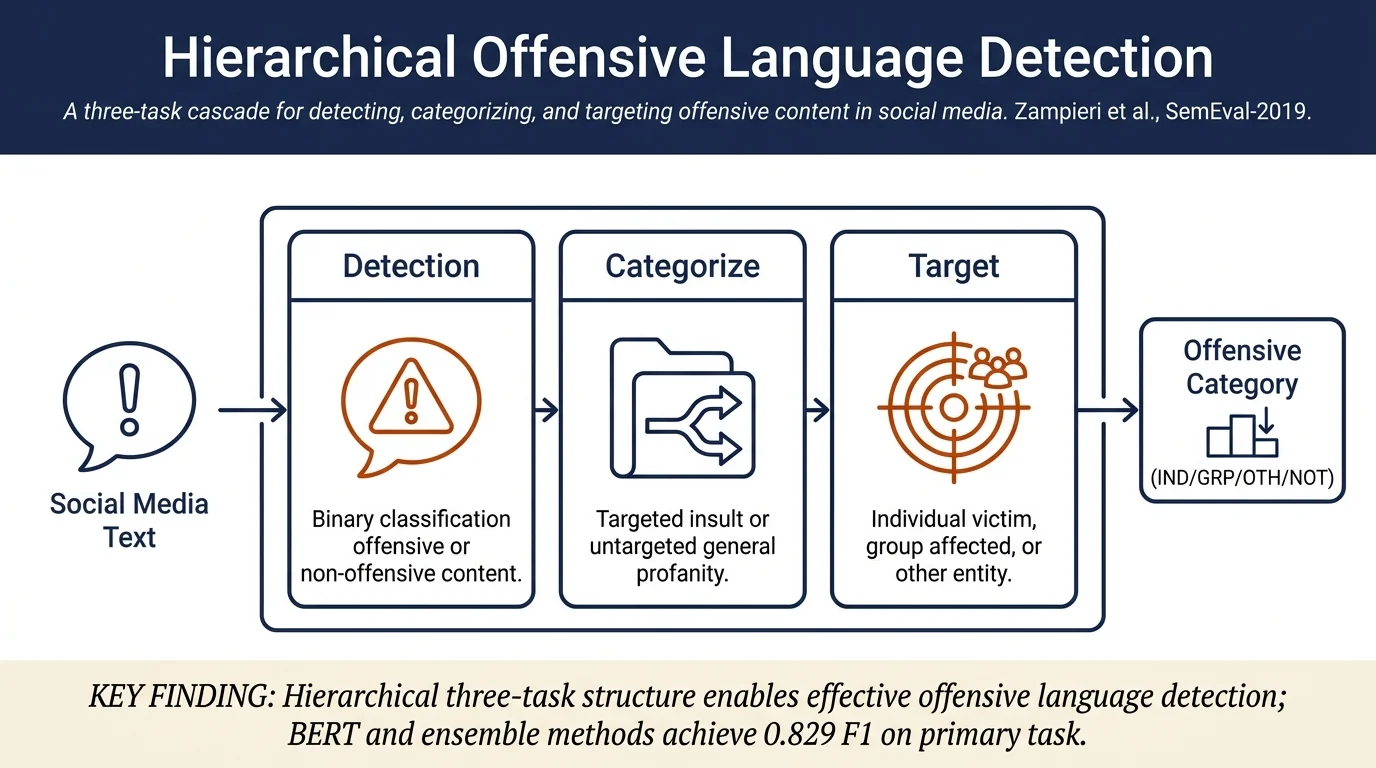
SemEval-2019 Task 6: Identifying and Categorizing Offensive Language in Social MediaSemEval-2019 Task 6 reports on a shared task competition for identifying and categorizing offensive language in social media using the OLID dataset. Approximately 800 teams registered and 115 submitted results across three sub-tasks: offensive language detection (104 teams), offense type categorization (71 teams), and offense target…
 LLMs & generative AIDetection methods
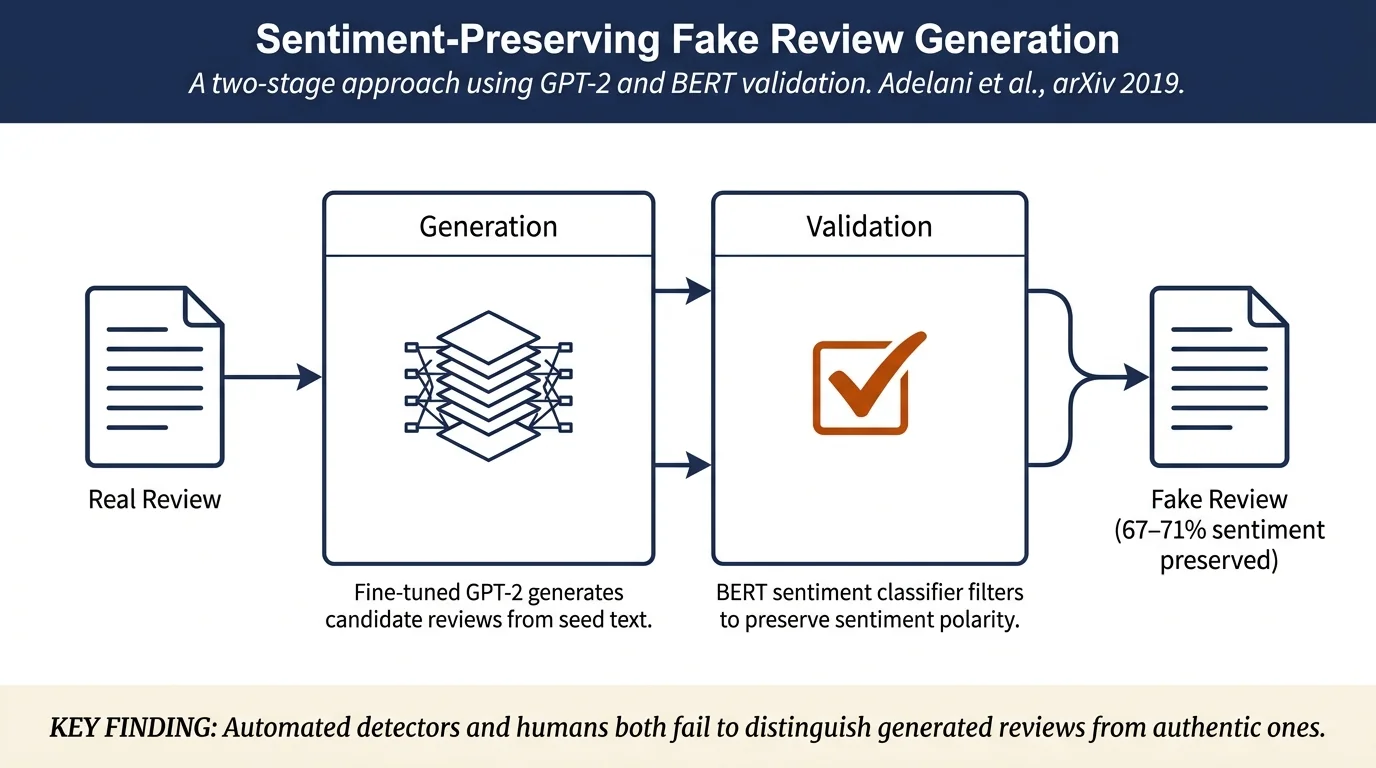
Generating Sentiment-Preserving Fake Online Reviews Using Neural Language Models and Their Human- and Machine-based DetectionThe paper demonstrates a practical attack where low-skilled adversaries can generate high-quality fake product reviews at scale by fine-tuning publicly available GPT-2 models on real review datasets. A two-step approach—generation plus BERT-based validation to preserve sentiment—produces reviews indistinguishable from genuine ones.
 Deepfakes & multimodalDetection methods
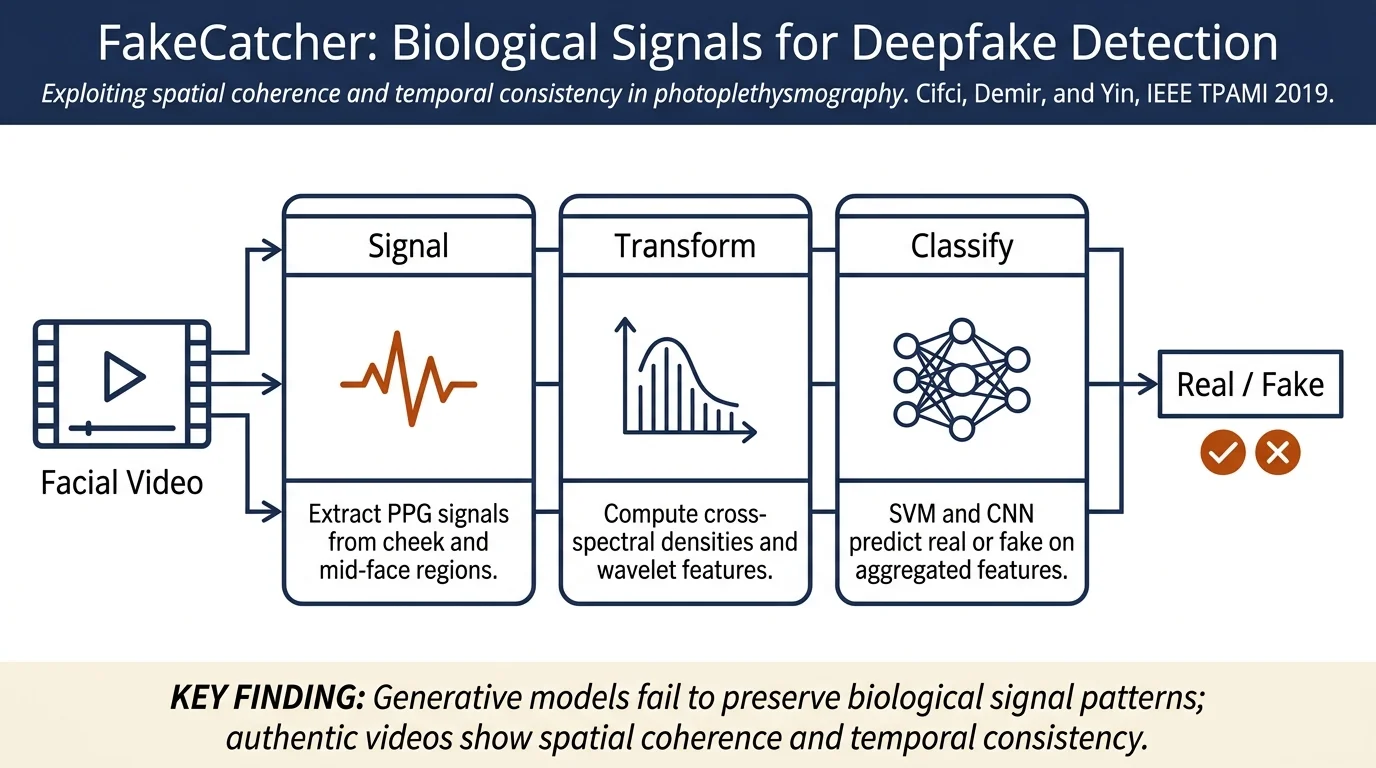
FakeCatcher: Detection of Synthetic Portrait Videos using Biological SignalsFakeCatcher detects deepfakes by analyzing biological signals (photoplethysmography—blood flow patterns) extracted from facial regions. The key insight is that generative models fail to preserve spatial coherence and temporal consistency of these signals in authentic videos, making biological signal analysis a powerful forensic tool…
 Bots & coordinated campaignsDetection methods
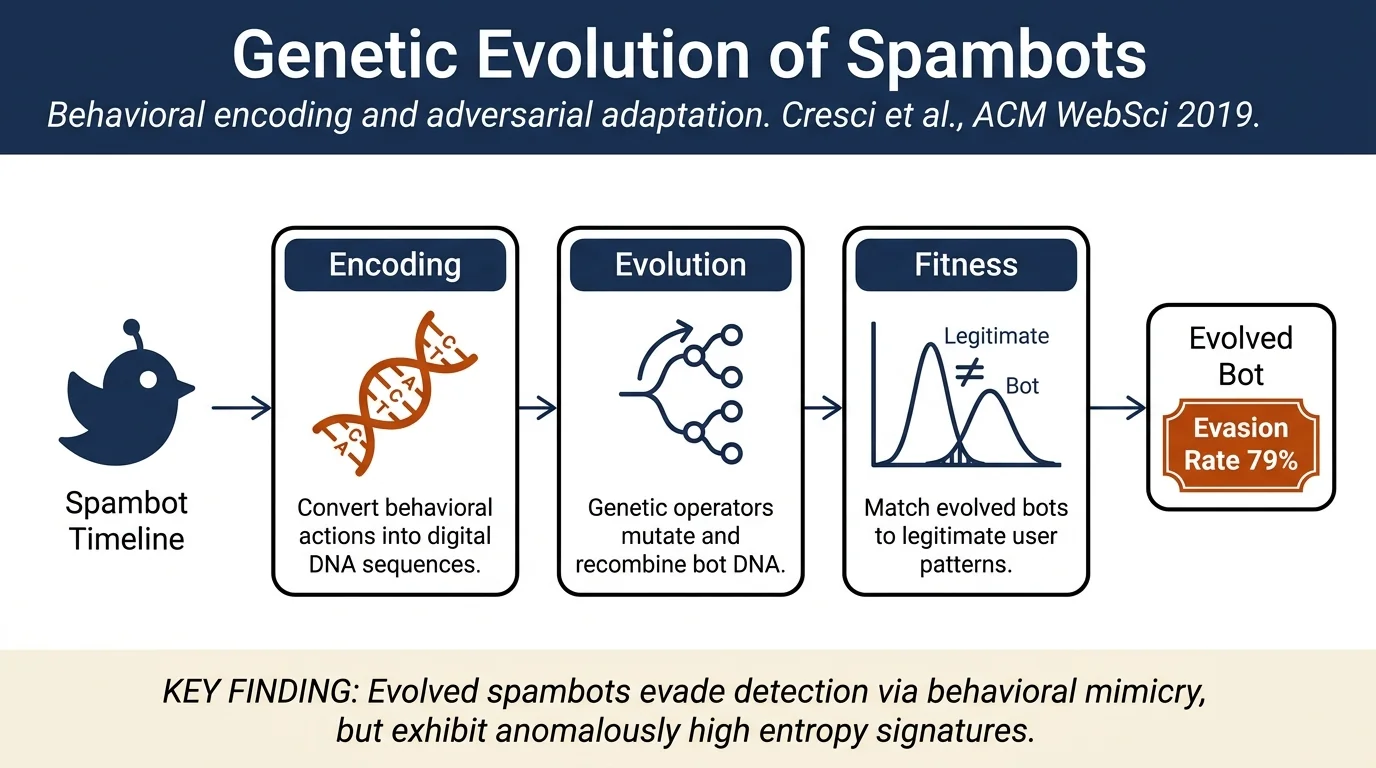
Better Safe Than Sorry: an Adversarial Approach to improve Social Bot DetectionProposes GenBot, a novel genetic algorithm that synthesizes evolved versions of existing spambots by encoding behavioral timelines as "digital DNA" sequences and iteratively evolving them to resemble legitimate user behavior. Tests the evolved bots against three state-of-the-art detection systems and finds they largely evade detection…
 LLMs & generative AIDetection methods
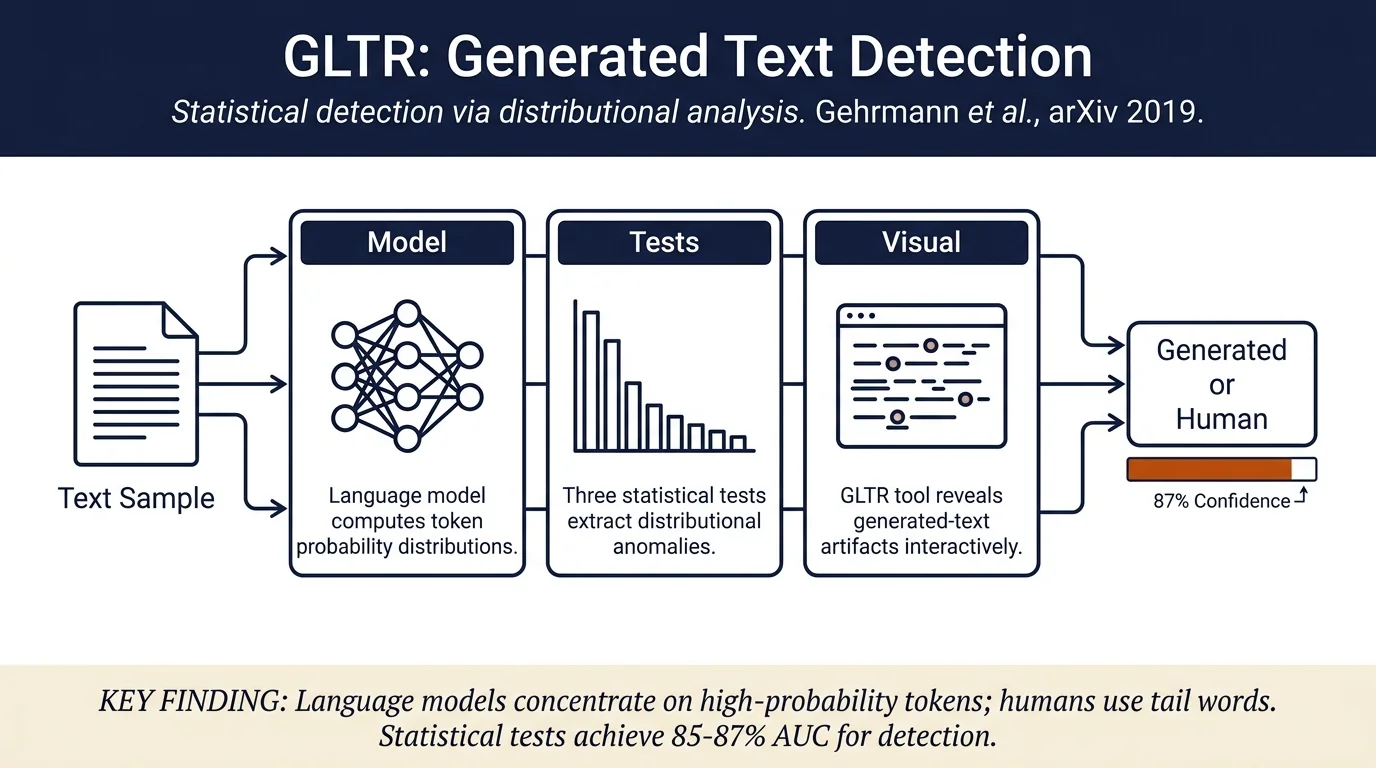
GLTR: Statistical Detection and Visualization of Generated TextGehrmann et al. present GLTR, a visual tool for detecting AI-generated text by analyzing statistical anomalies in language model output. The key insight is that language models sample from the head of the distribution (high-probability words), whereas humans use a wider vocabulary including low-probability choices.
 LLMs & generative AIDetection methods
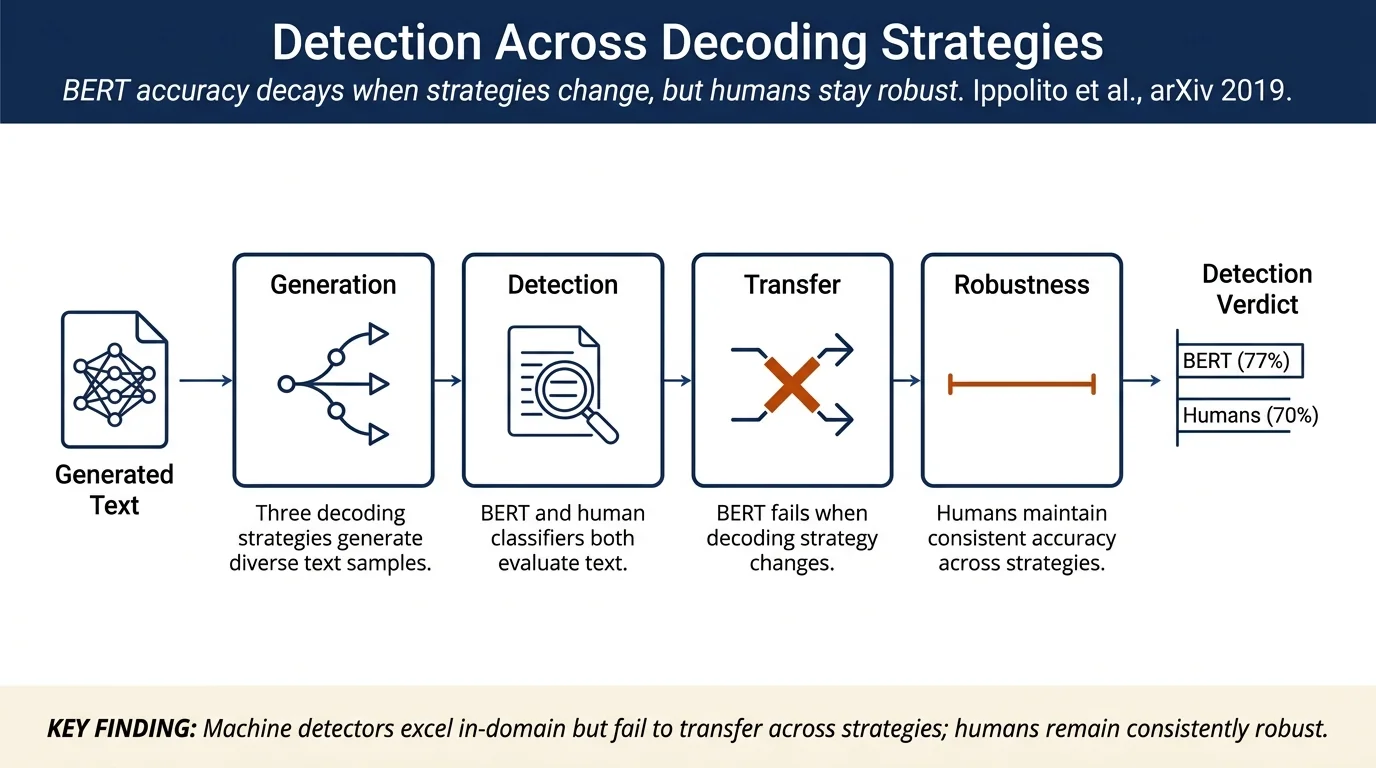
Automatic Detection of Generated Text is Easiest when Humans are FooledIppolito et al. investigate the complementary abilities of humans and machines to detect machine-generated text from GPT-2 under various decoding strategies. They find that fine-tuned BERT detectors outperform humans (achieving 80%+ accuracy on long excerpts versus 71% for expert human raters), but detector performance is highly…
 Detection methodsDatasets & evaluation
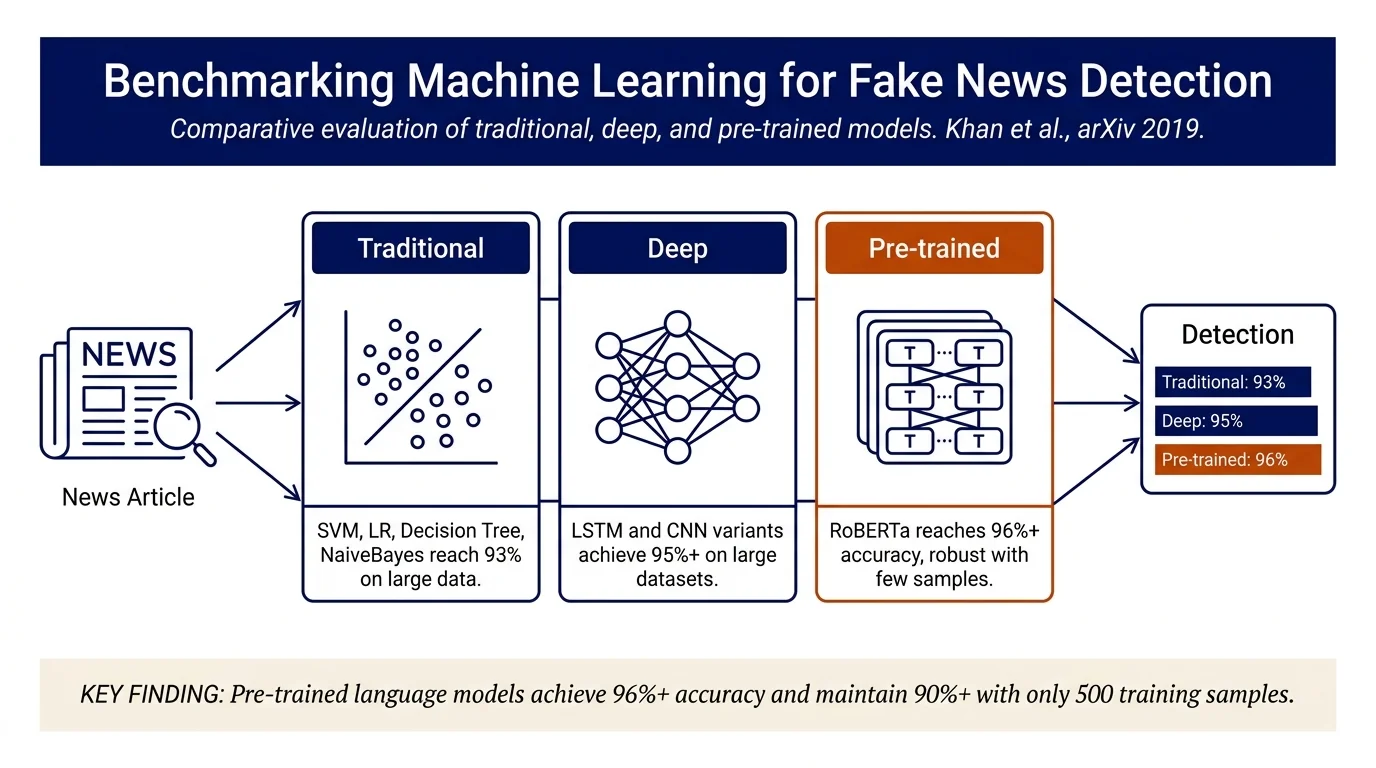
A Benchmark Study of Machine Learning Models for Online Fake News DetectionComprehensive benchmark of 19 machine learning approaches across three fake news datasets (LIAR, Fake or Real News, and an 80k-news combined corpus spanning politics, health, sports, and other topics). Key finding: BERT-based pre-trained models (especially RoBERTa) substantially outperform traditional and deep learning approaches,…
 Detection methodsSpread & networks
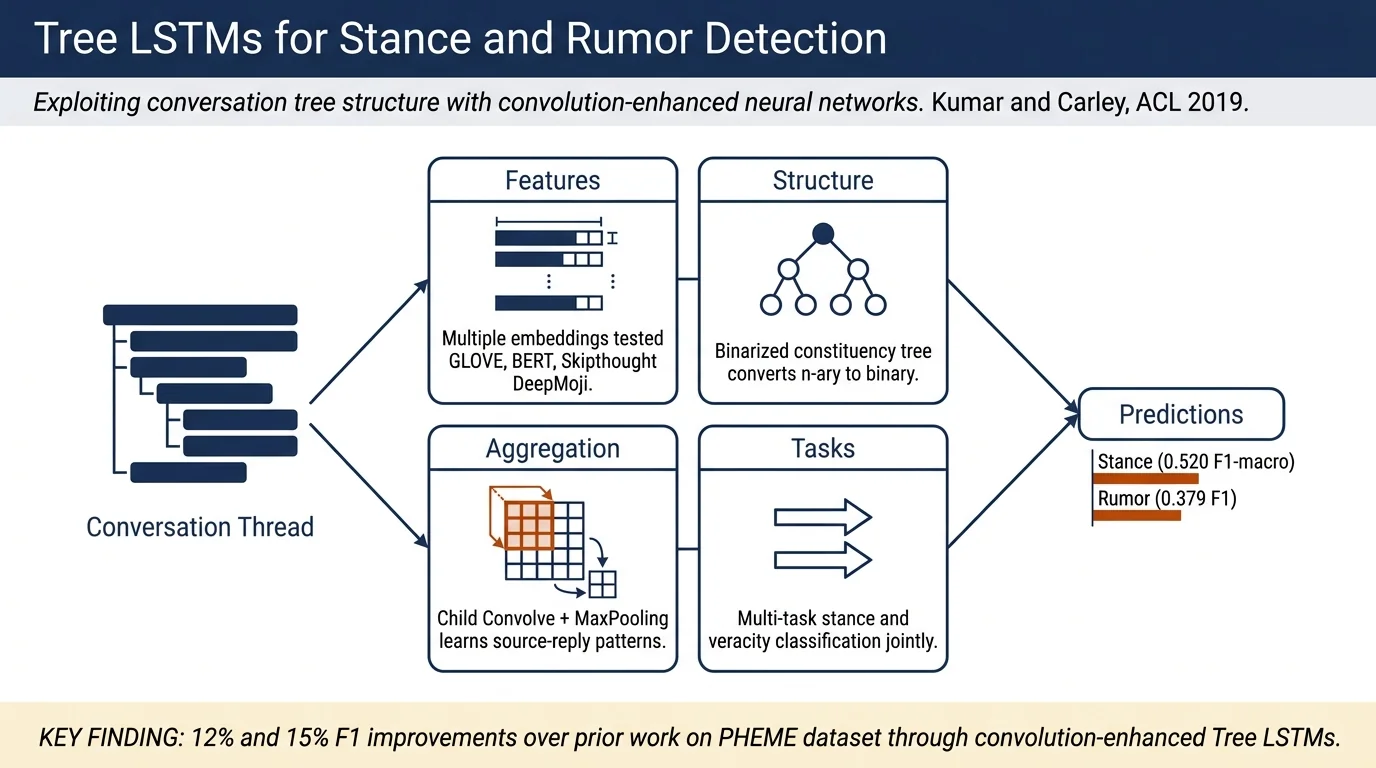
Tree LSTMs with Convolution Units to Predict Stance and Rumor Veracity in Social Media ConversationsProposes Tree LSTM and Binarized Constituency Tree (BCTree) LSTM architectures enhanced with convolution units to classify stance and predict rumor veracity in social media conversation threads. The approach exploits the tree structure inherent in threaded conversations (source post with nested replies) and combines it with convolutional…
 Datasets & evaluationDeepfakes & multimodal
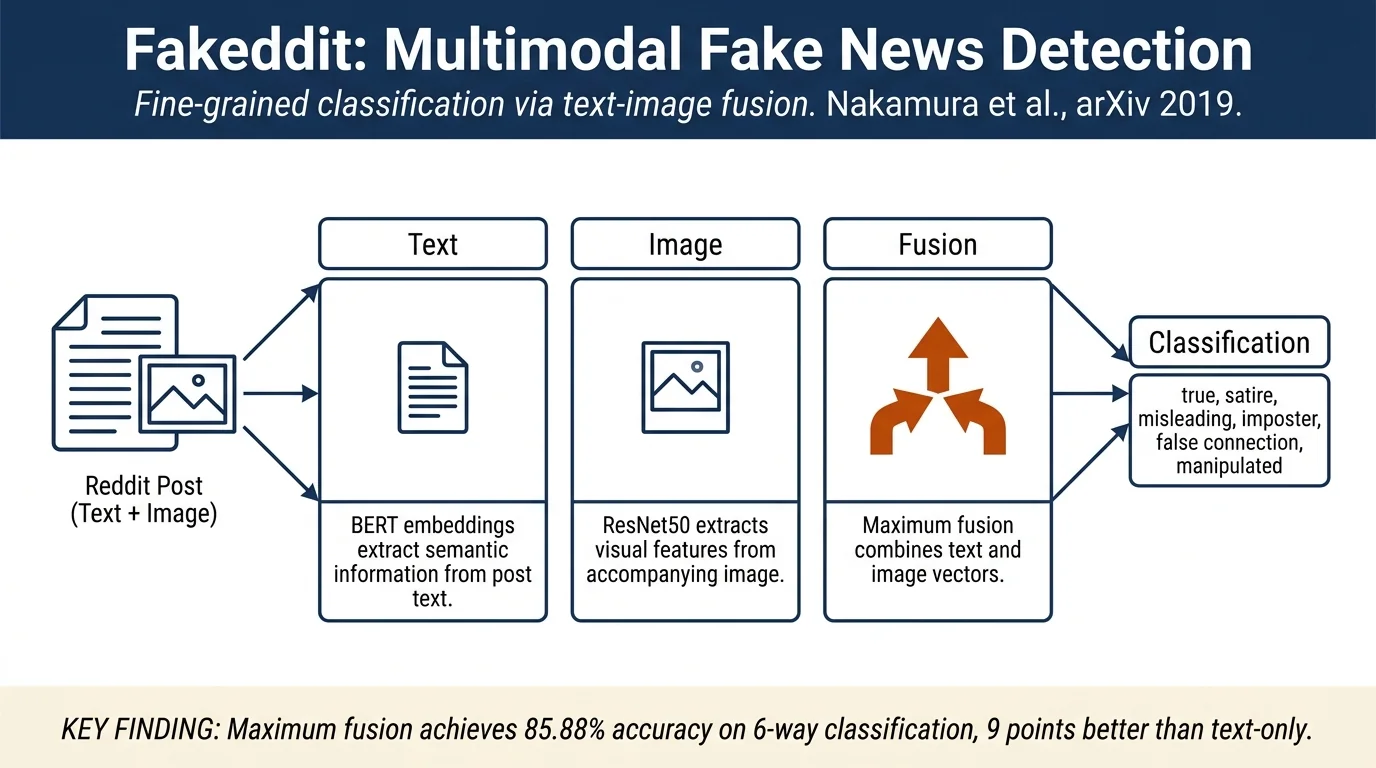
r/Fakeddit: A New Multimodal Benchmark Dataset for Fine-grained Fake News DetectionFakeddit is a large-scale multimodal fake news detection dataset with over 1 million Reddit samples labeled with 2-way, 3-way, and 6-way classification schemes. Multimodal models combining text (BERT) and image (ResNet50) features achieve 86.0% accuracy on 6-way classification, demonstrating the importance of jointly leveraging text and…
 Deepfakes & multimodalDetection methods
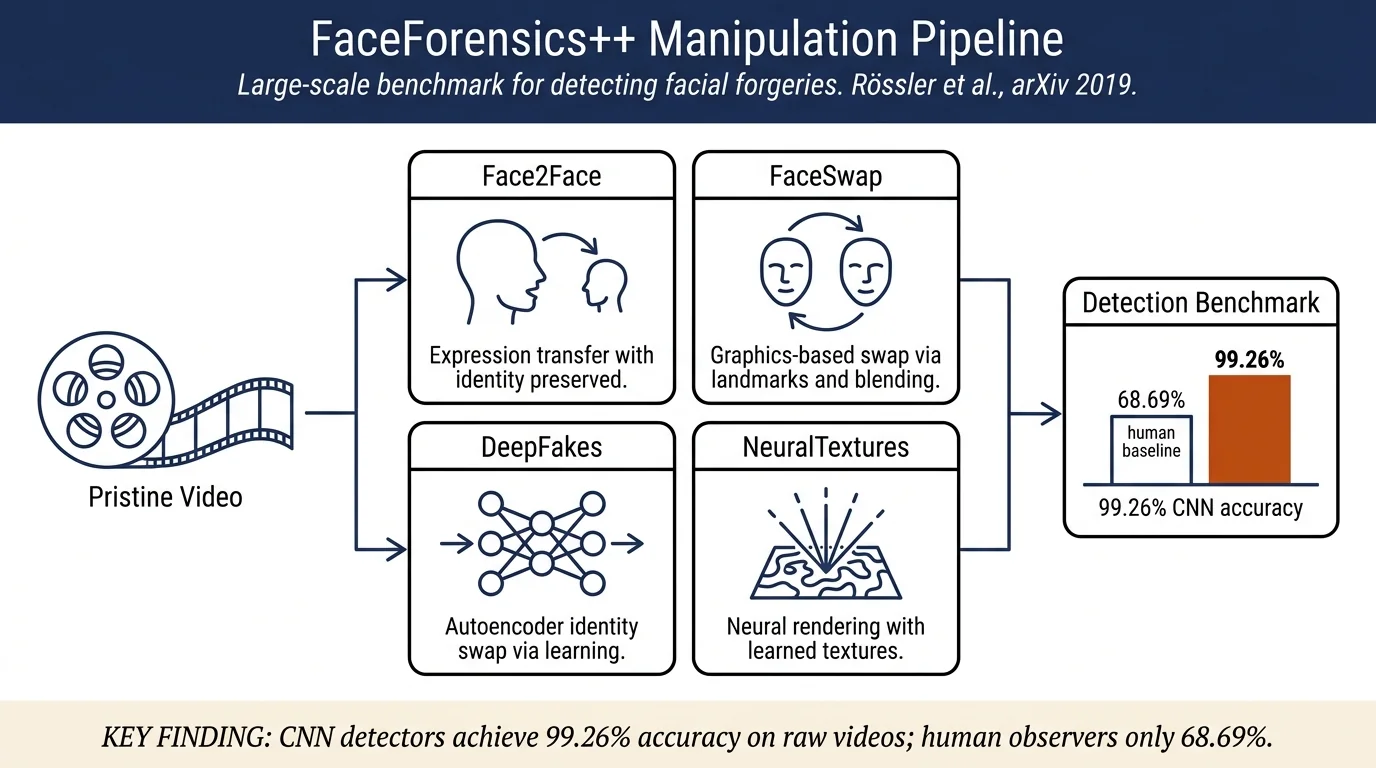
FaceForensics++: Learning to Detect Manipulated Facial ImagesFaceForensics++ introduces a large-scale benchmark (1.8+ million manipulated images from 1,000+ videos) for detecting facial manipulations created with four state-of-the-art methods: Face2Face, FaceSwap, DeepFakes, and NeuralTextures. The paper comprehensively evaluates detection methods from stegananalysis to deep learning,…
 Deepfakes & multimodalDetection methods
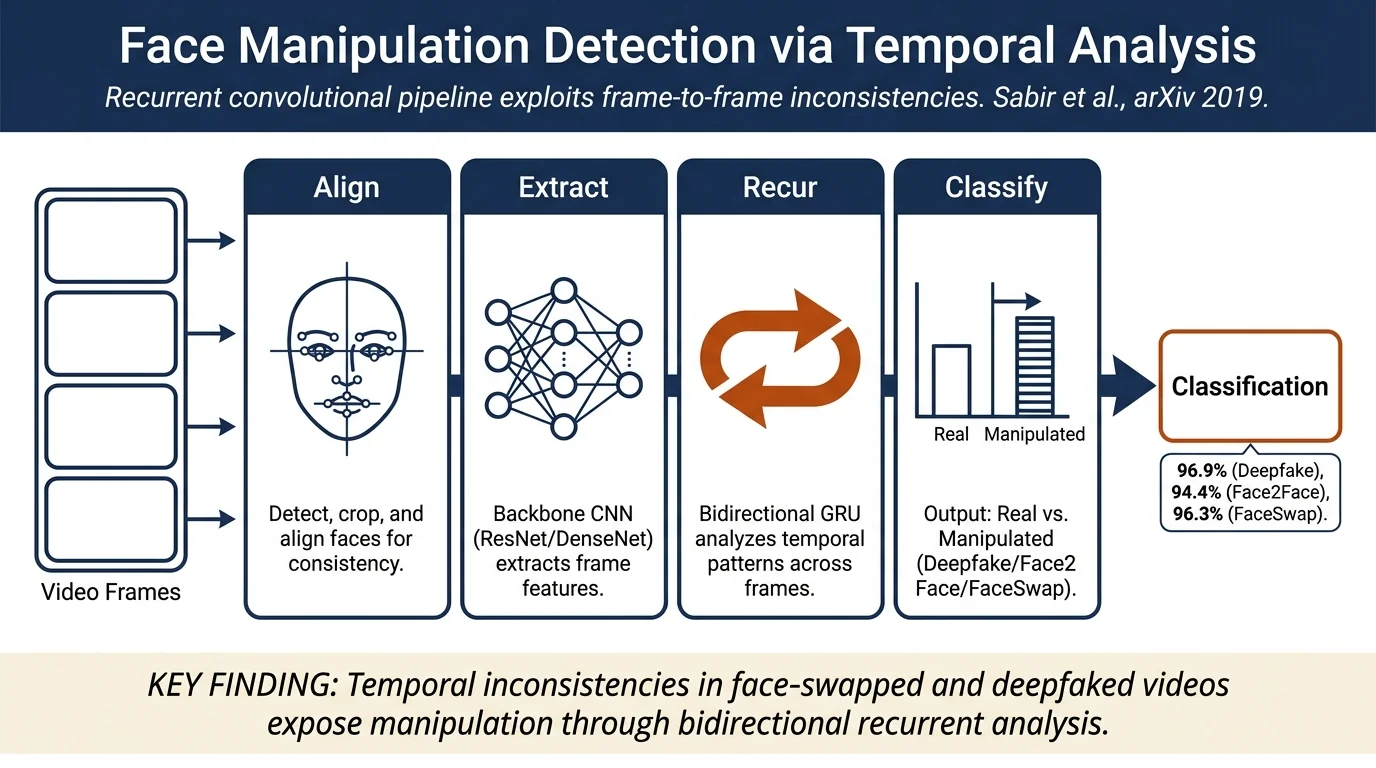
Recurrent Convolutional Strategies for Face Manipulation Detection in VideosThis paper proposes using recurrent convolutional networks to detect face manipulations (Deepfake, Face2Face, FaceSwap) in videos by exploiting temporal discrepancies across frames. Face preprocessing with alignment and bidirectional recurrent networks achieve state-of-the-art on FaceForensics++ with up to 4.55% improvement over prior…
 Detection methodsDatasets & evaluation
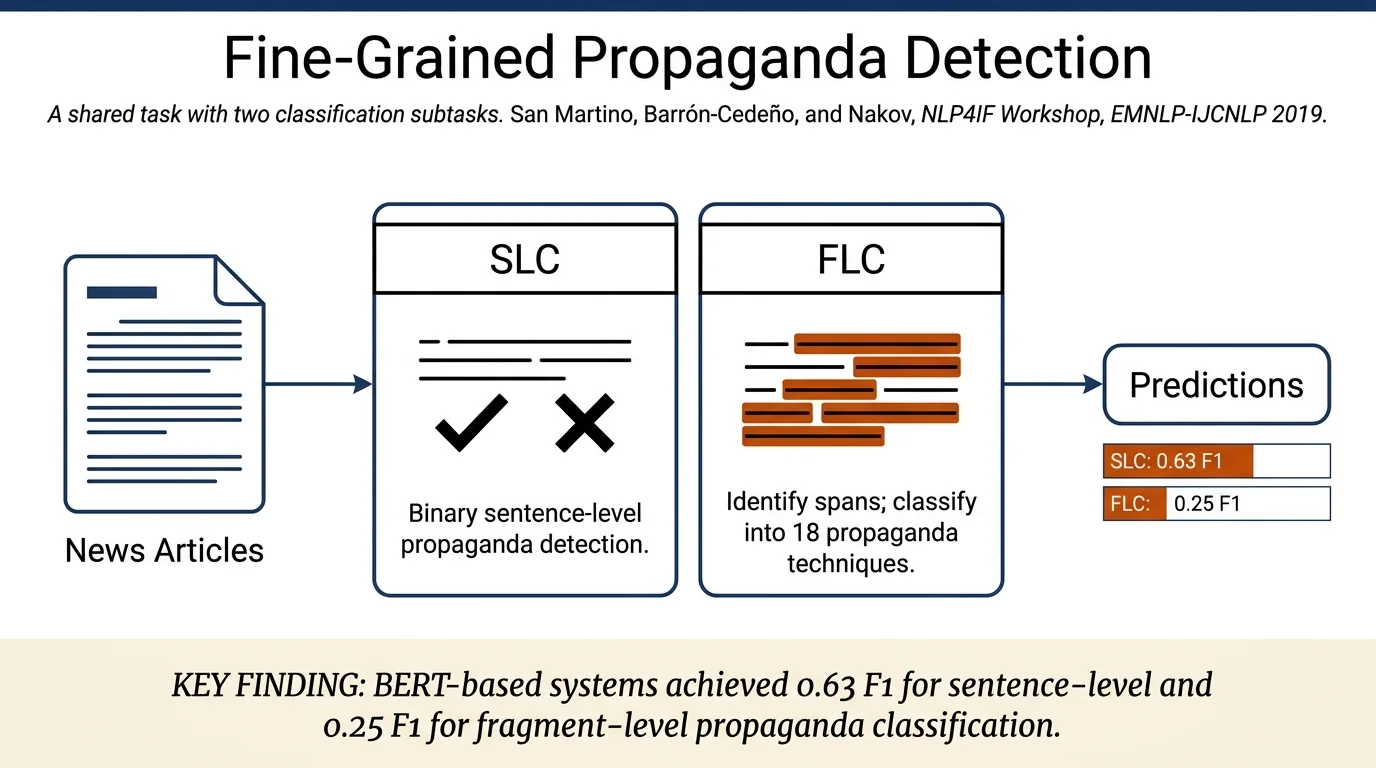
Findings of the NLP4IF-2019 Shared Task on Fine-Grained Propaganda DetectionThis paper reports findings from a shared task on fine-grained propaganda detection in news articles, featuring two subtasks: fragment-level identification and classification into 18 propaganda techniques, and sentence-level binary propaganda detection. The task attracted 90 registered teams with 39 making submissions; winning systems…