Explore papers
Filter by research area, year and venue. Every filter is in the address bar, so you can share a view as a link.
 LLMs & generative AIDetection methods
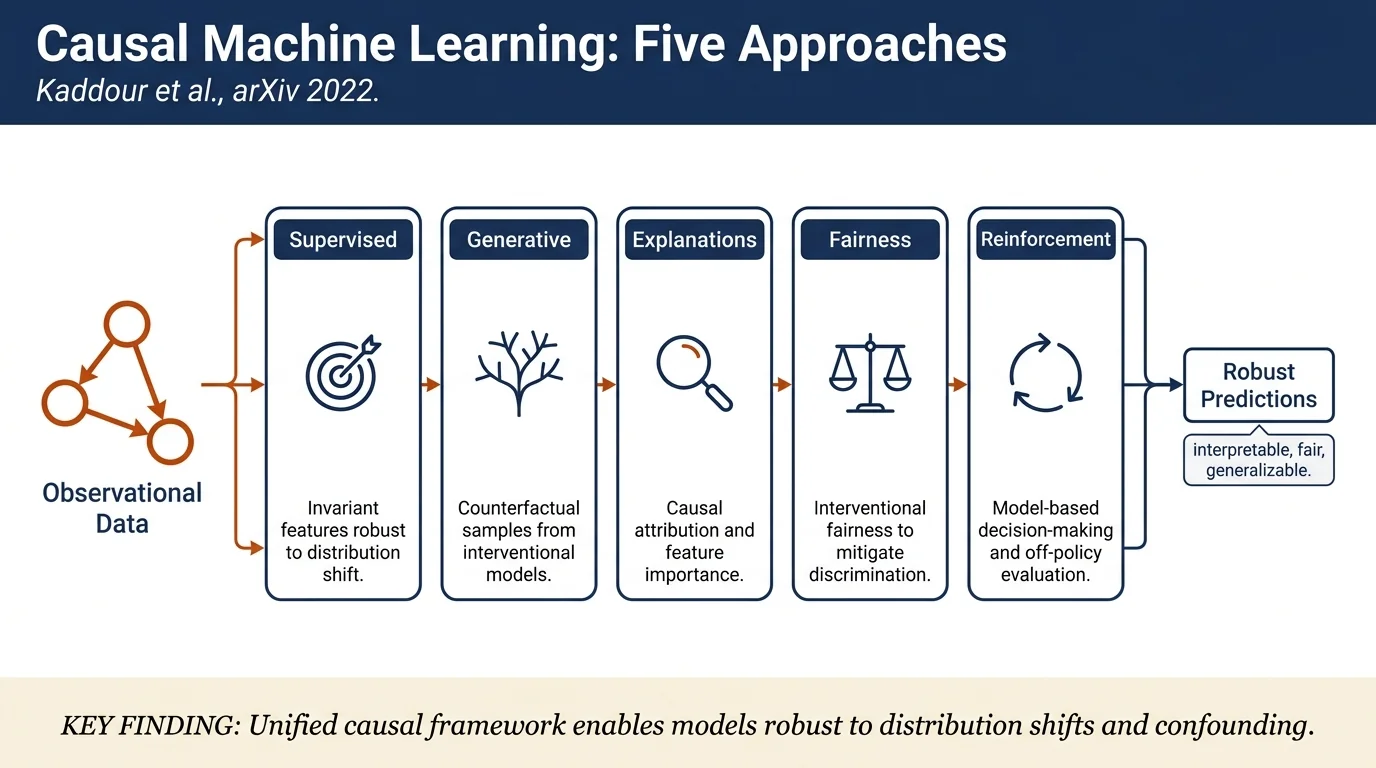
Causal Machine Learning: A Survey and Open ProblemsComprehensive survey of causal machine learning (CausalML), which formalizes data generation as a structural causal model to reason about interventions and counterfactuals. Categorizes 191 pages of CausalML work into five groups—causal supervised learning, causal generative modeling, causal explanations, causal fairness, and causal…
 Platforms, policy & societyDetection methods
A Comprehensive Survey on Trustworthy Recommender SystemsRecommender systems, while beneficial to users, can amplify harmful content, introduce discrimination, and enable adversarial attacks. This survey provides a comprehensive framework for trustworthy recommender systems across six critical dimensions: Safety & Robustness (defense against adversarial attacks), Non-discrimination & Fairness…
 Detection methodsLLMs & generative AI
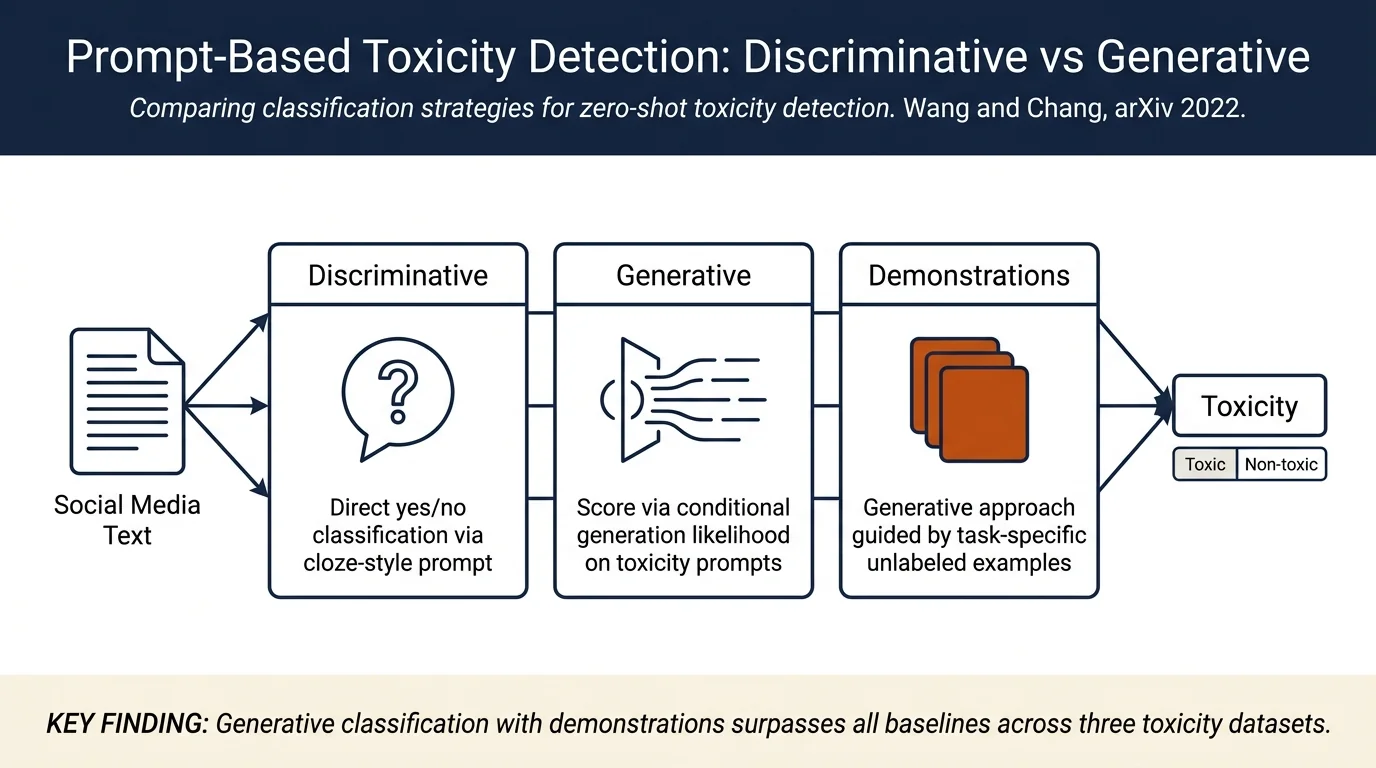
Toxicity Detection with Generative Prompt-based InferenceThis paper proposes a generative variant of zero-shot prompt-based toxicity detection using language models, comparing it against discriminative approaches. By formulating the problem as estimating the probability of generating a test instance conditioned on toxicity-guided prompts, the method achieves better performance than…
 Deepfakes & multimodalDatasets & evaluation
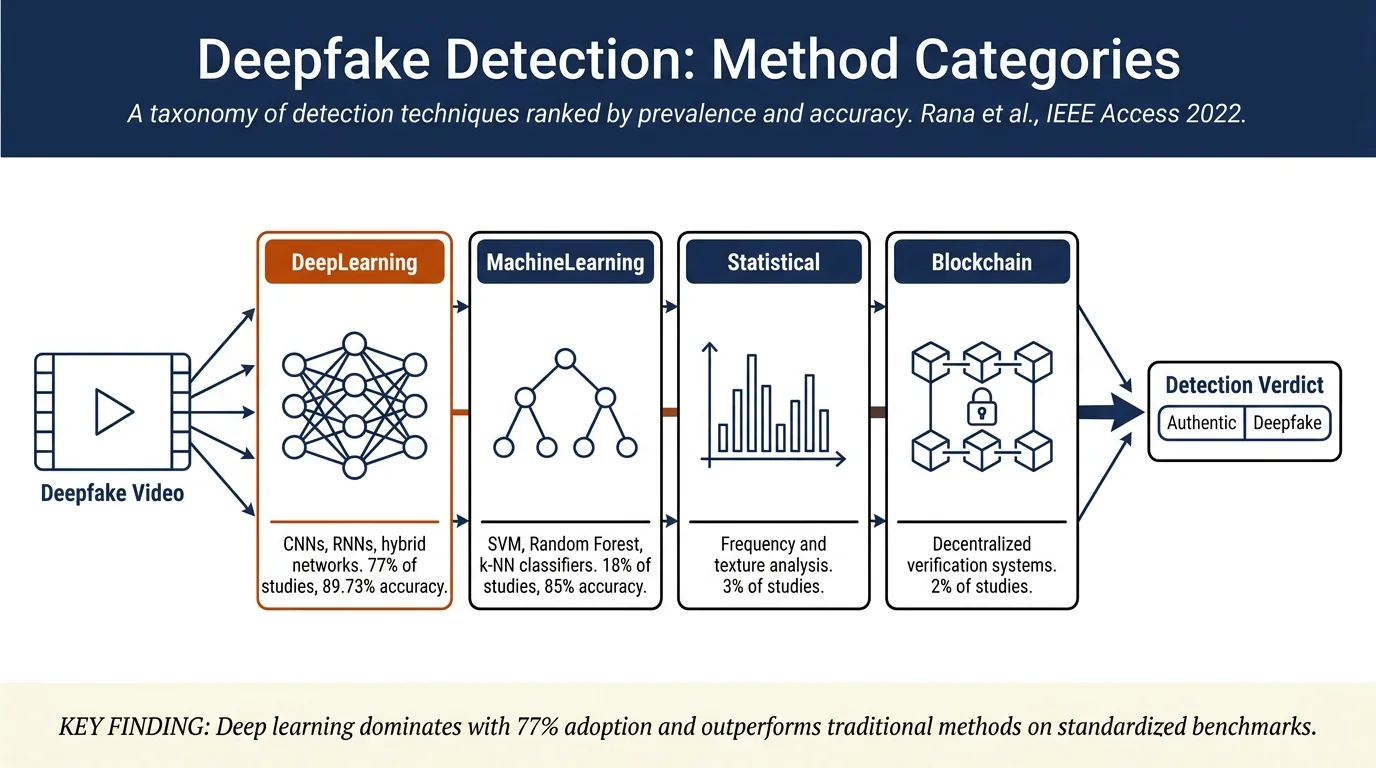
Deepfake Detection: A Systematic Literature ReviewSystematic review of 112 deepfake detection studies (2018–2020) categorizing techniques into deep learning, machine learning, statistical, and blockchain methods. Deep learning approaches (77% of studies, primarily CNNs) significantly outperform non-deep methods, achieving ~89.7% mean accuracy.
 Datasets & evaluationDetection methods
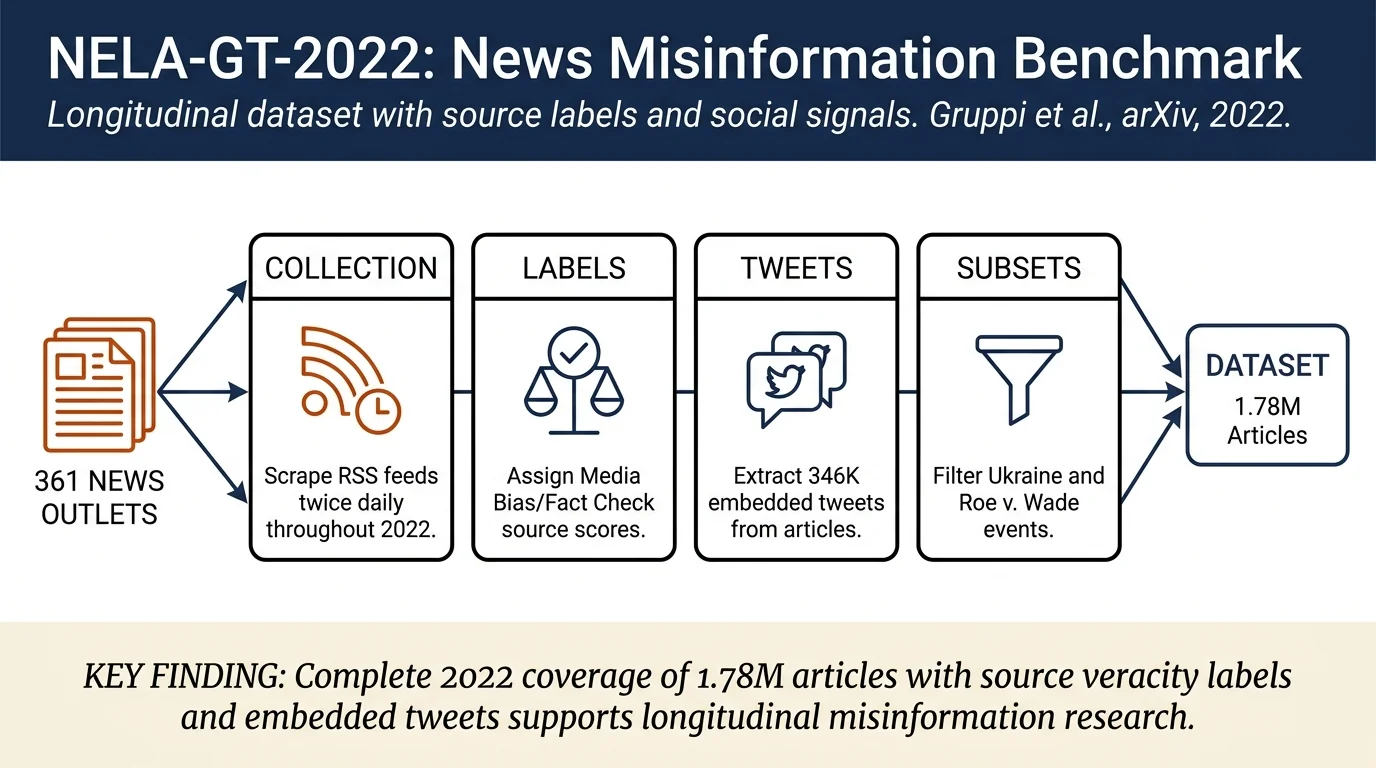
NELA-GT-2022: A Large Multi-Labelled News Dataset for The Study of Misinformation in News ArticlesPresents the fifth NELA-GT dataset release: 1.78 million news articles from 361 outlets spanning all of 2022, with source-level veracity labels from Media Bias/Fact Check and embedded tweet data. Focuses on stabilizing collection infrastructure to achieve near-complete temporal coverage, enabling robust benchmarking of fake news…
 LLMs & generative AIDetection methods
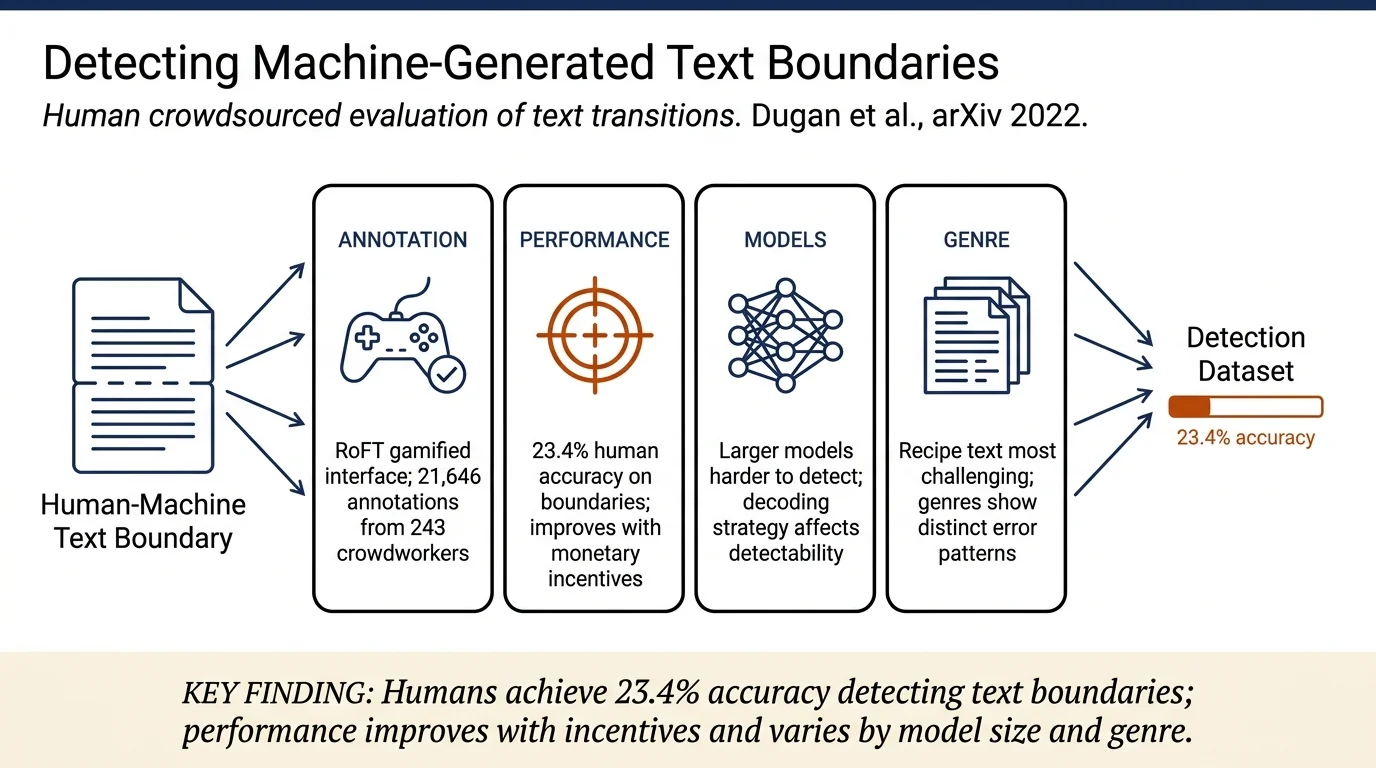
Real or Fake Text?: Investigating Human Ability to Detect Boundaries Between Human-Written and Machine-Generated TextDugan et al. investigate human ability to detect boundaries where text transitions from human-written to machine-generated, a more realistic and challenging task than binary fake/real classification. They introduce the RoFT (Real or Fake Text) game platform for crowdsourced annotation and release a dataset of 21,000+ annotations across…
 Spread & networksPlatforms, policy & society
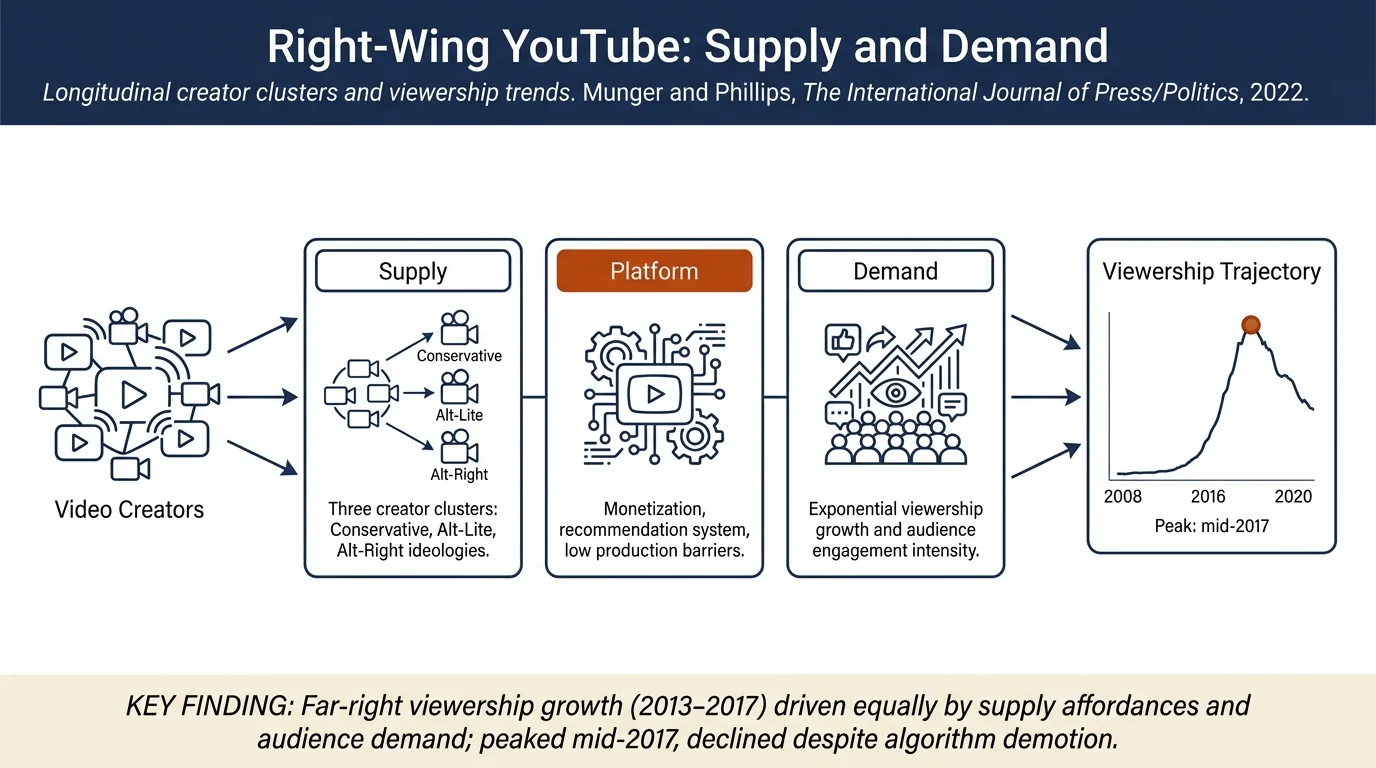
Right-Wing YouTube: A Supply and Demand PerspectiveYouTube has become the dominant platform for right-wing political content in the US, driven by supply-side affordances (low creation barriers, monetization, algorithmic recommendation) and demand-side audience appetite for alternative media. Using longitudinal analysis of creator clusters (Conservative, Alt-Lite, Alt-Right), the authors…
 Psychology & interventionsFact-checking & verification
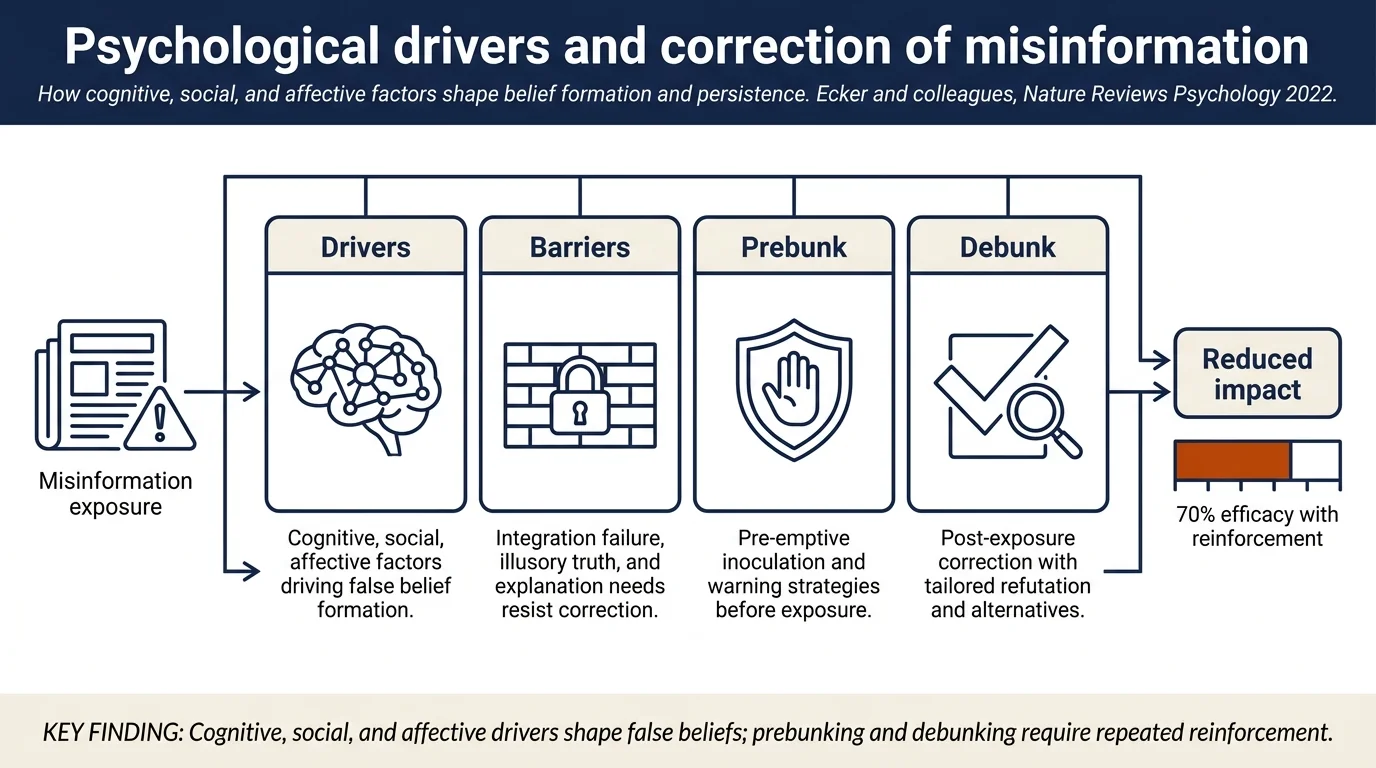
The psychological drivers of misinformation belief and its resistance to correctionThis comprehensive review establishes that misinformation's power lies not in exposure but in how cognitive, social, and affective factors shape belief formation and persist even after correction. False beliefs arise from intuitive thinking, memory failures, emotional content, in-group bias, and source credibility judgments; corrections…
 Psychology & interventionsPlatforms, policy & society
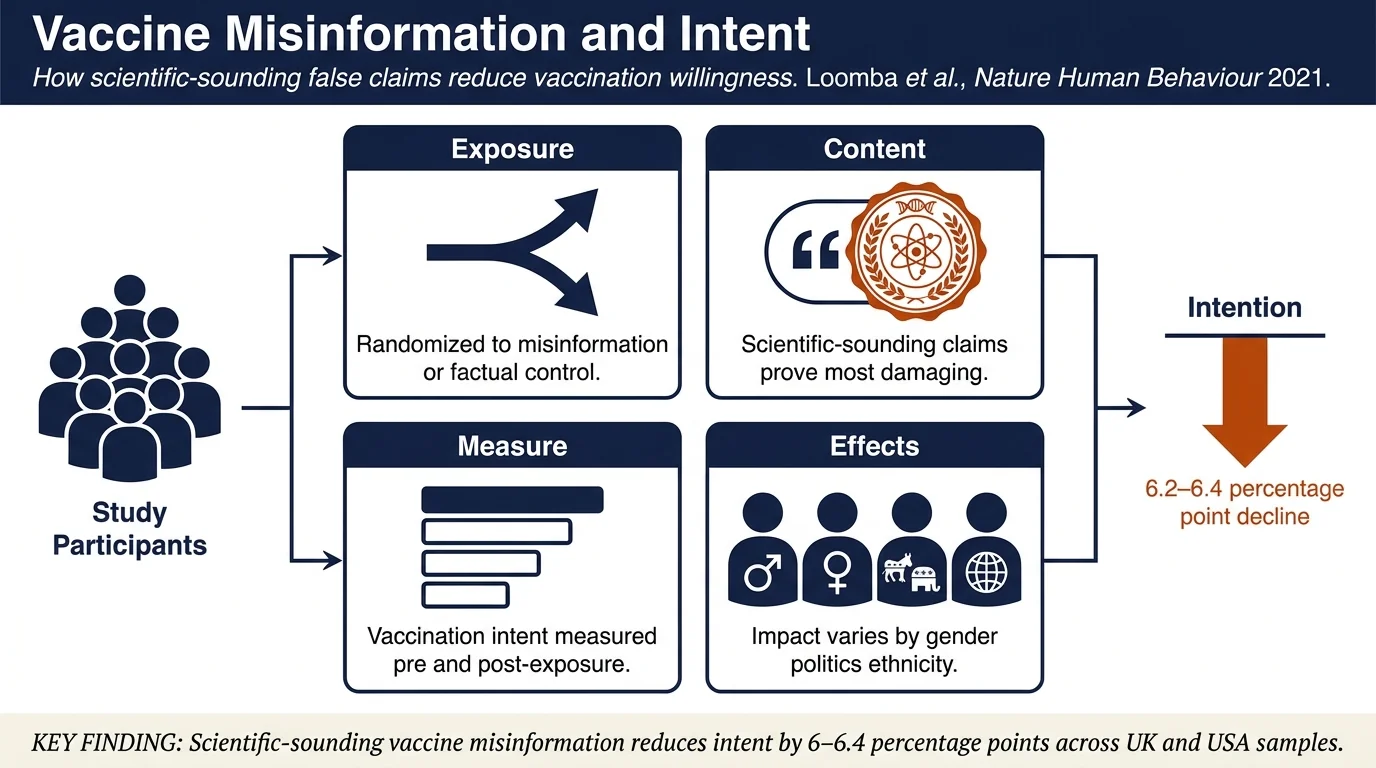
Measuring the impact of COVID-19 vaccine misinformation on vaccination intent in the UK and USARandomized controlled trial on 8,001 respondents (4,000 UK, 4,001 USA) measuring causal impact of exposure to COVID-19 vaccine misinformation. Exposure to misinformation reduced vaccination intent by 6.2 percentage points in the UK and 6.4 in the USA relative to exposure to factual information.
 Fact-checking & verificationDetection methods
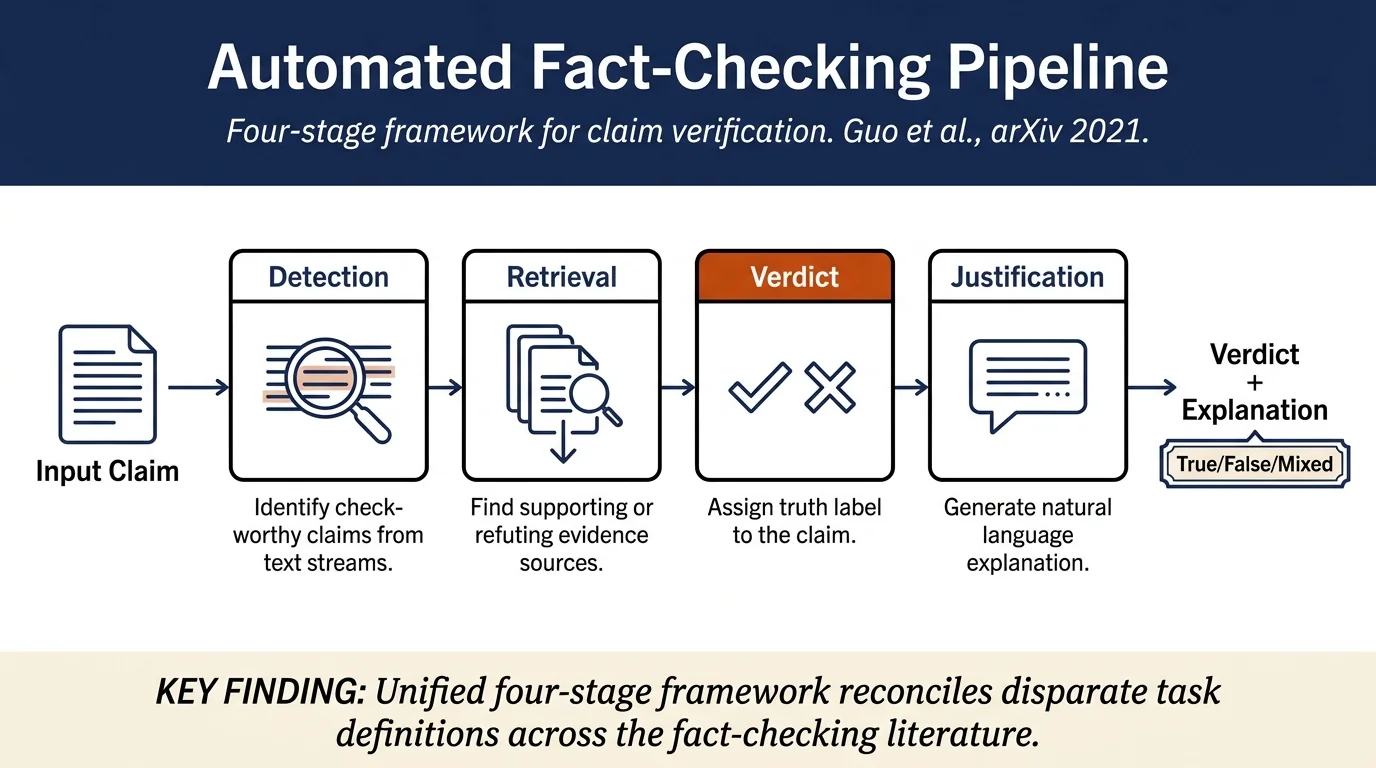
A Survey on Automated Fact-CheckingThis comprehensive survey unifies automated fact-checking research under a four-stage NLP framework: claim detection (identifying check-worthy claims), evidence retrieval (finding supporting/refuting information), verdict prediction (assigning truth labels), and justification production (explaining decisions). The authors review 25+…
 Spread & networksDatasets & evaluation
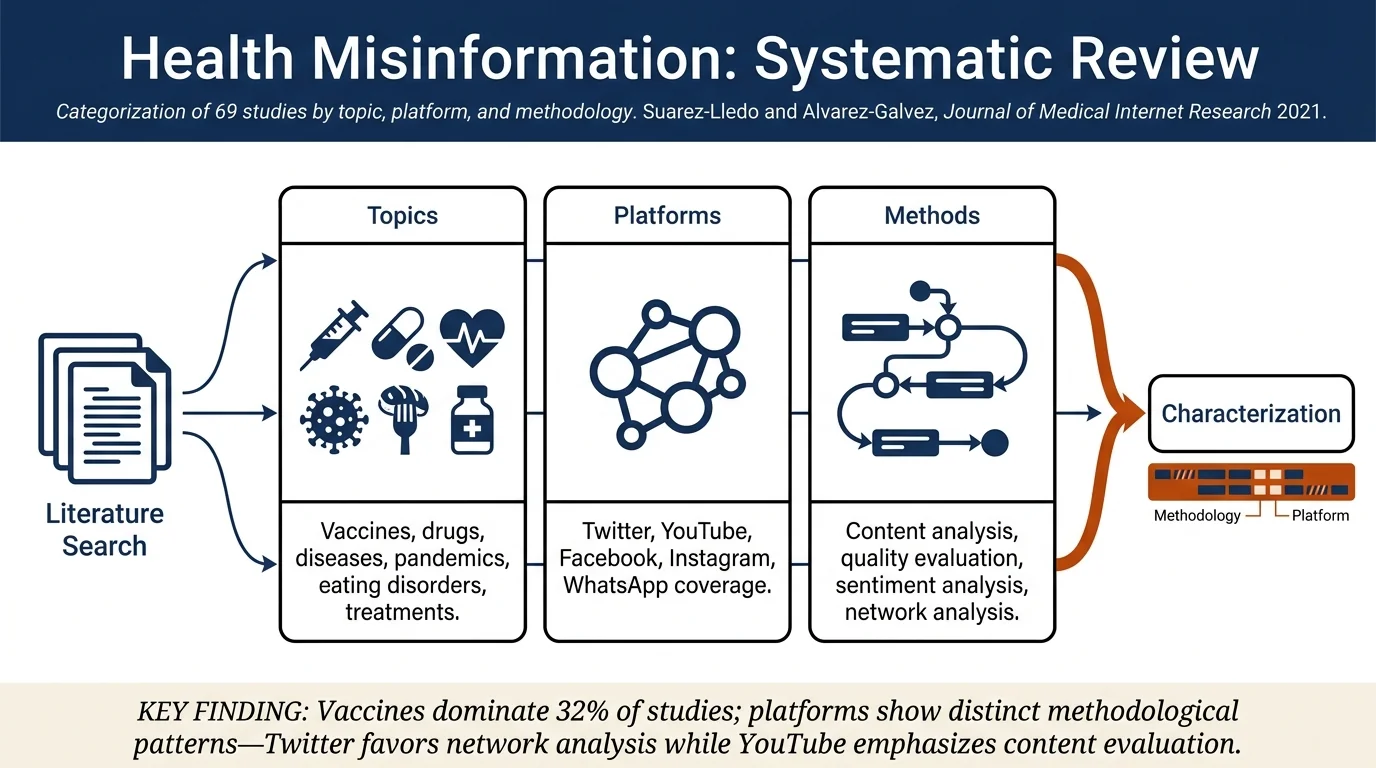
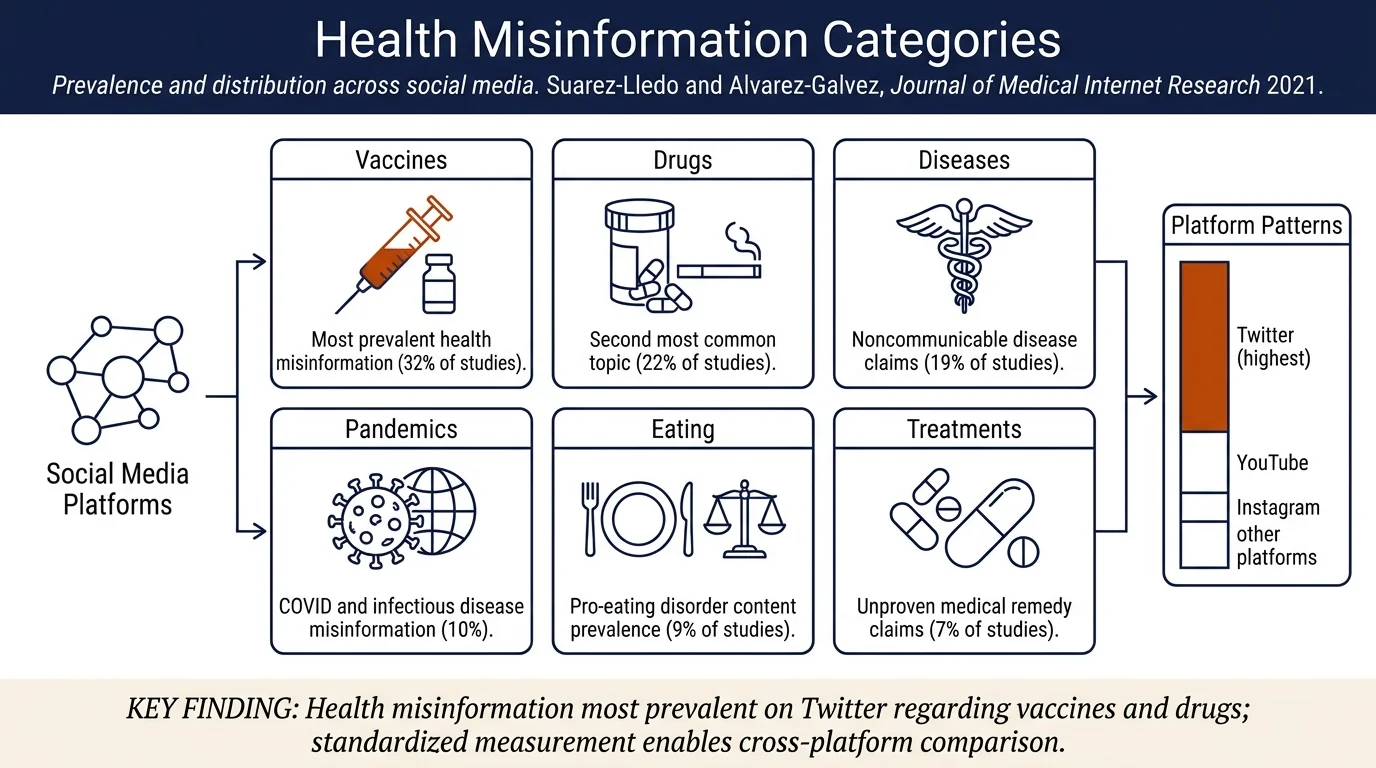
Prevalence of Health Misinformation on Social Media: Systematic ReviewSystematic review of 69 studies examining health misinformation prevalence across social media platforms. Vaccines, drugs, and smoking are the most-studied topics; Twitter is the primary platform for misinformation about smoking and substances, while vaccines are discussed broadly across platforms.
 Psychology & interventionsPlatforms, policy & society
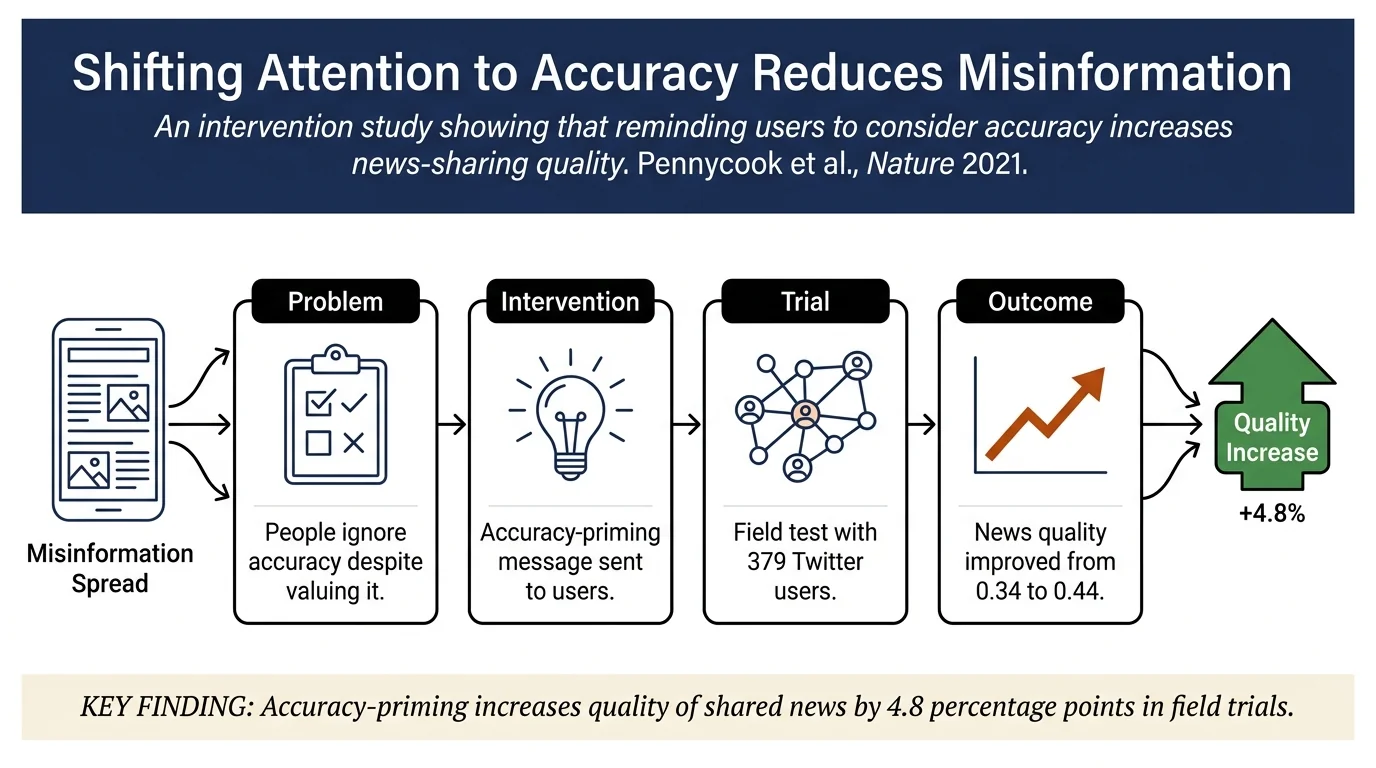
Shifting attention to accuracy can reduce misinformation onlineThe paper shows through six online experiments and a Twitter field trial that simply drawing people's attention to accuracy can substantially reduce their sharing of misinformation. When asked to rate the accuracy of headlines before deciding whether to share them, participants share more accurate content; a Twitter field experiment…
 Detection methodsLLMs & generative AI
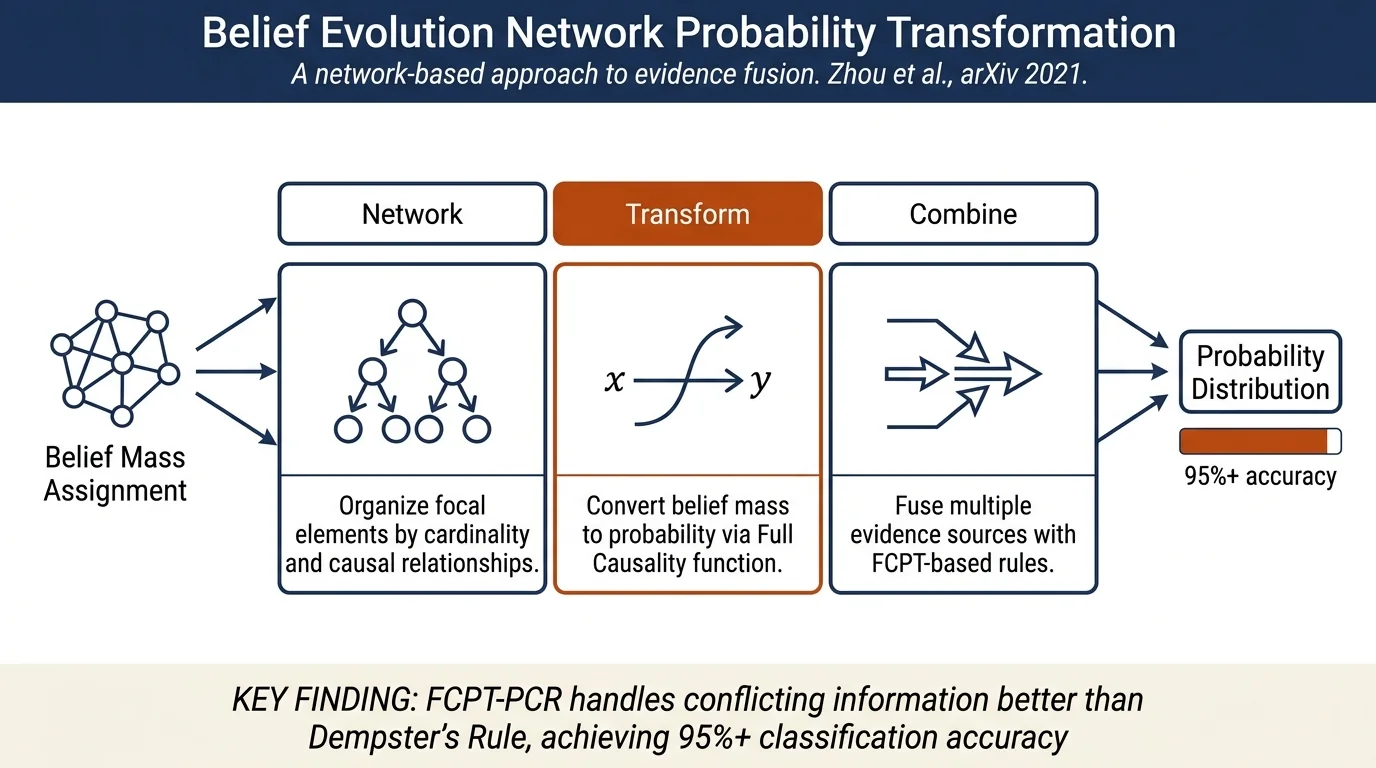
Belief Evolution Network-based Probability Transformation and FusionThis paper introduces a Belief Evolution Network (BEN) to model the evolution of belief functions and proposes a new Full Causality Probability Transformation (FCPT) method for converting belief mass assignments to probability distributions. The authors also propose FCPT-based fusion rules that outperform traditional Dempster's Rule of…
 Deepfakes & multimodalDetection methods
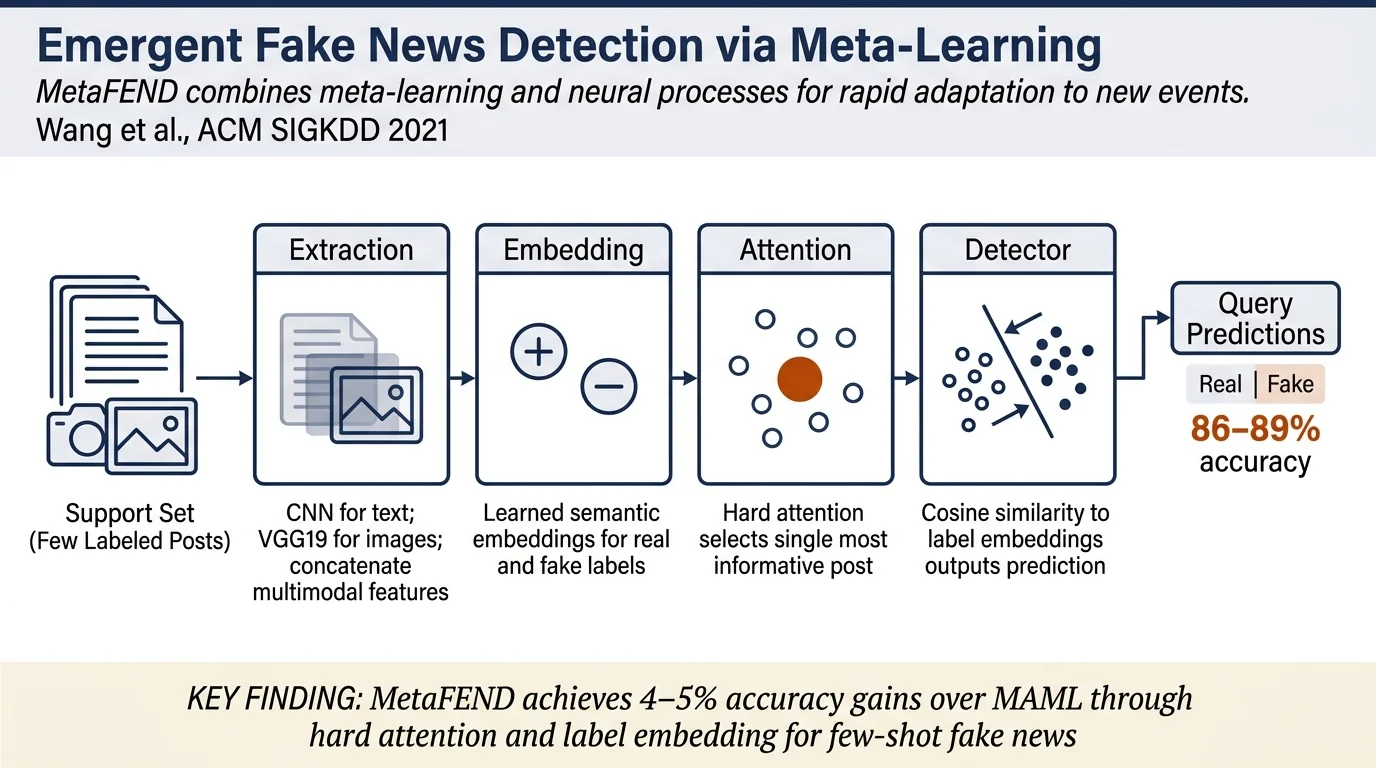
Multimodal Emergent Fake News Detection via Meta Neural Process NetworksExisting fake news detectors trained on labeled data perform poorly on novel, emergent events due to domain shift. The paper proposes MetaFEND, which combines meta-learning and neural processes to leverage a handful of labeled posts from a new event to quickly adapt a detection model.
 Datasets & evaluationDetection methods
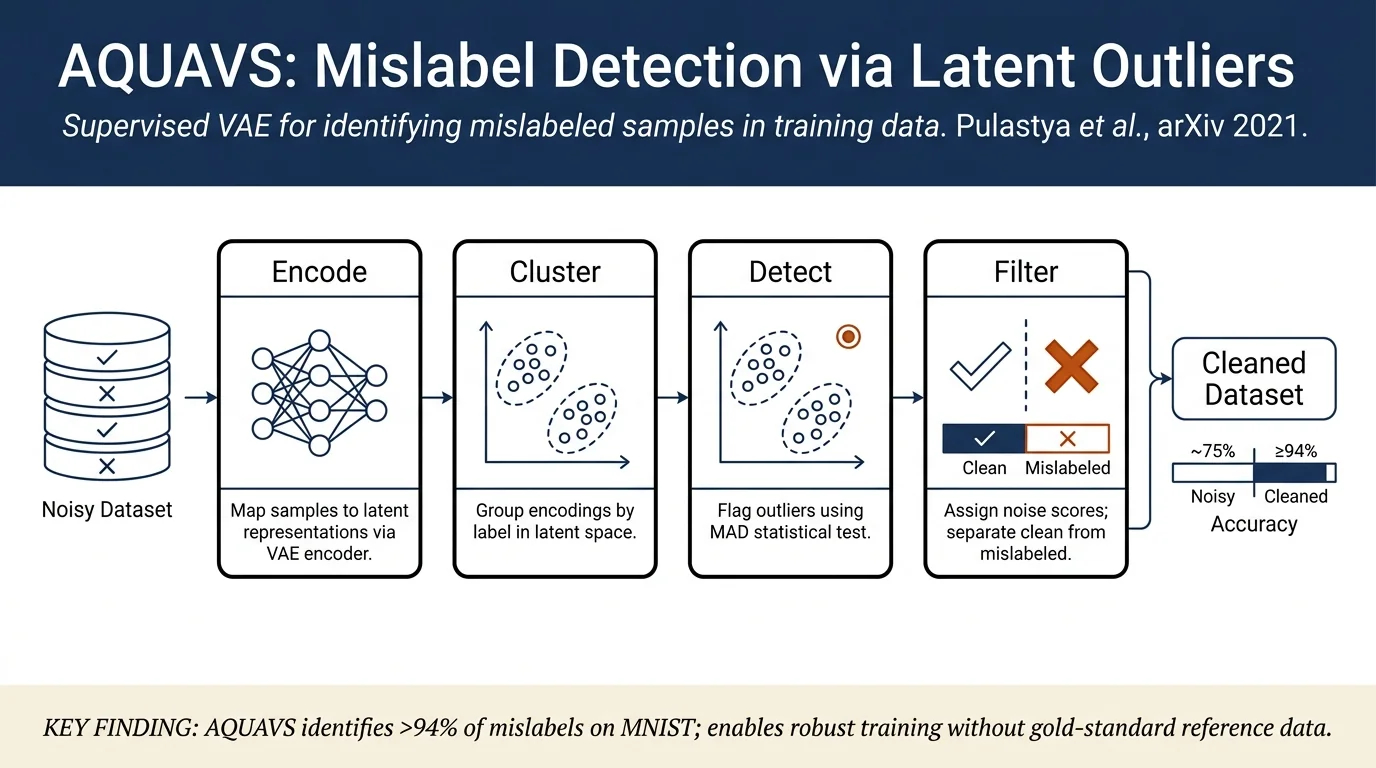
Assessing the Quality of the Datasets by Identifying Mislabeled SamplesDeep learning models with high capacity often memorize label noise, degrading generalization. This paper proposes AQUAVS, a supervised variational autoencoder that identifies mislabeled samples via a "noise score" computed from outliers in latent space representations.
 Detection methodsLLMs & generative AI
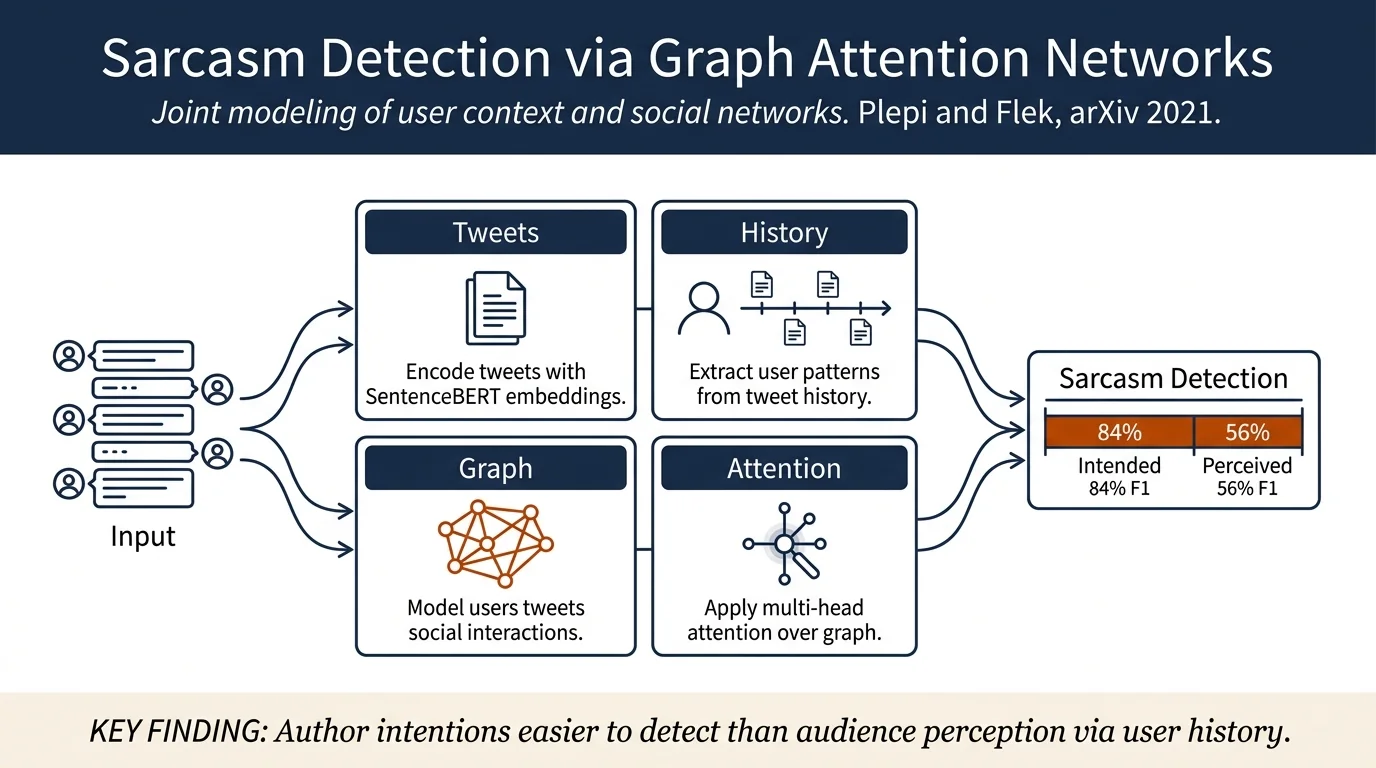
Perceived and Intended Sarcasm Detection with Graph Attention NetworksSarcasm detection requires understanding both the author's intent and the audience's perception. This work proposes a graph attention network (GAT) that jointly models user historical context and conversational social network information on Twitter, achieving state-of-the-art results on the SPIRS dataset and showing that detecting…
 Detection methodsDatasets & evaluation
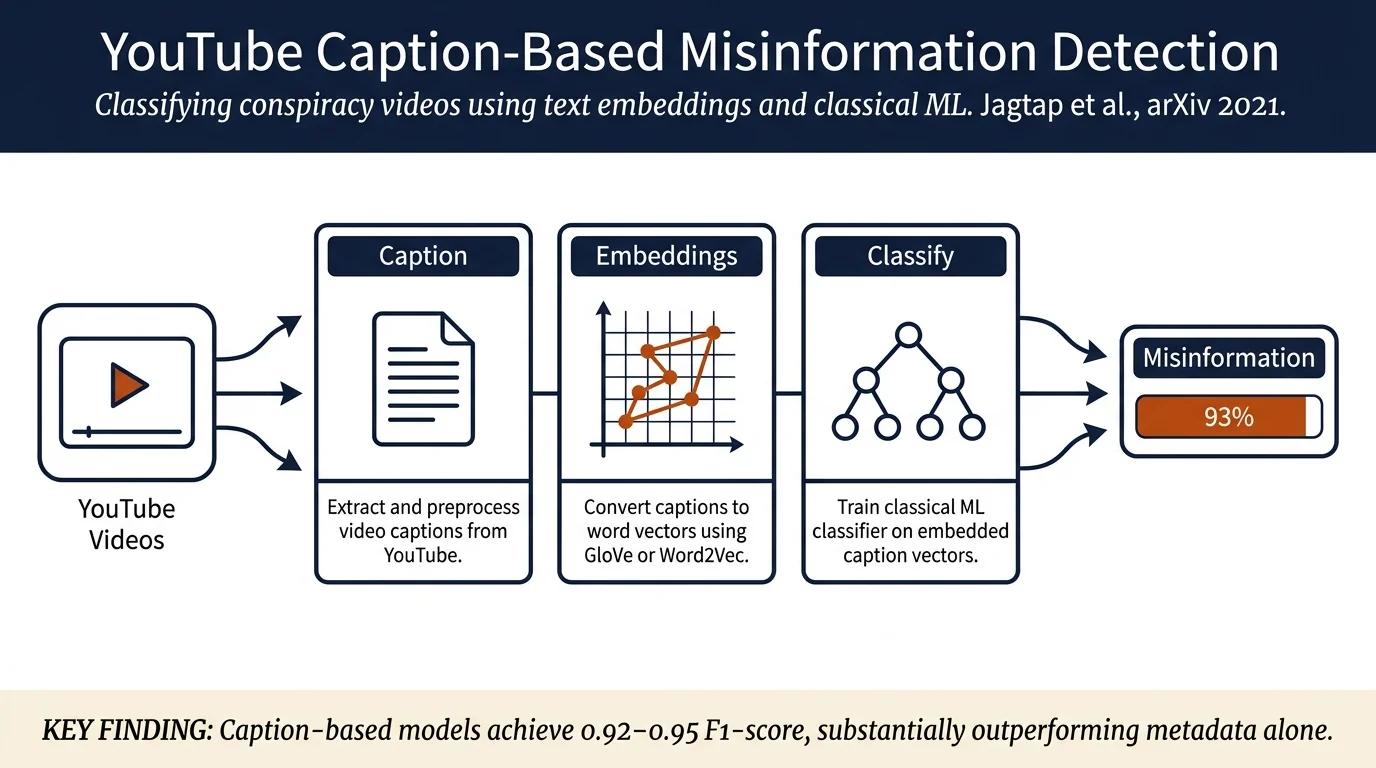
Misinformation Detection on YouTube Using Video CaptionsThis work proposes using video captions as text features for classifying YouTube videos as misinformation, debunking misinformation, or neutral content. Across five conspiracy topics (vaccines, 9/11, chemtrails, moon landing, flat earth), the authors achieve 0.85–0.90 F1-score on three-class classification and 0.92–0.95 F1-score when…
 Detection methodsLLMs & generative AI
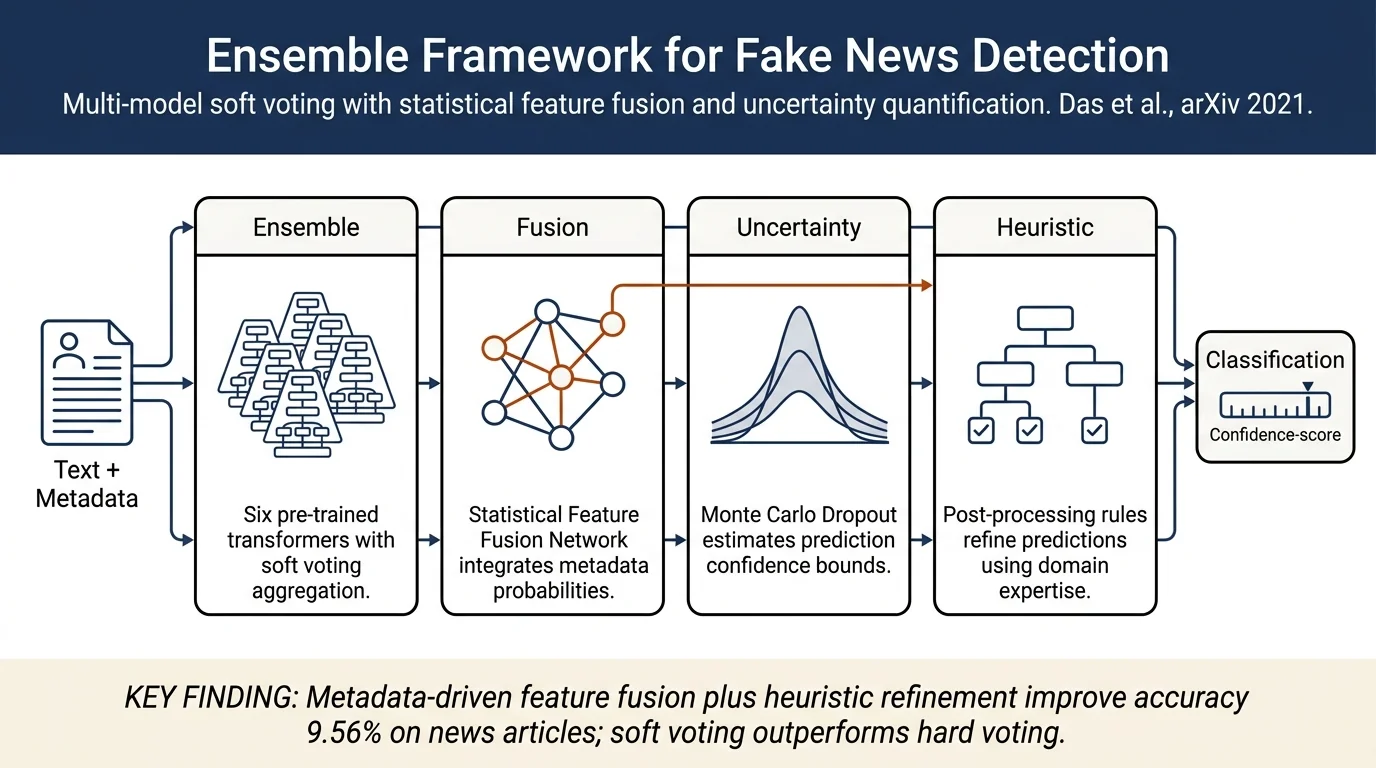
A Heuristic-driven Uncertainty based Ensemble Framework for Fake News Detection in Tweets and News ArticlesAn ensemble-based fake news detection system combining multiple pre-trained language models (BERT, RoBERTa, XLNet, DeBERTa, ERNIE 2.0, ELECTRA) with a Statistical Feature Fusion Network (SFFN) and heuristic post-processing. The framework incorporates Monte Carlo Dropout for uncertainty estimation and leverages metadata features (URL…
 LLMs & generative AIDeepfakes & multimodal
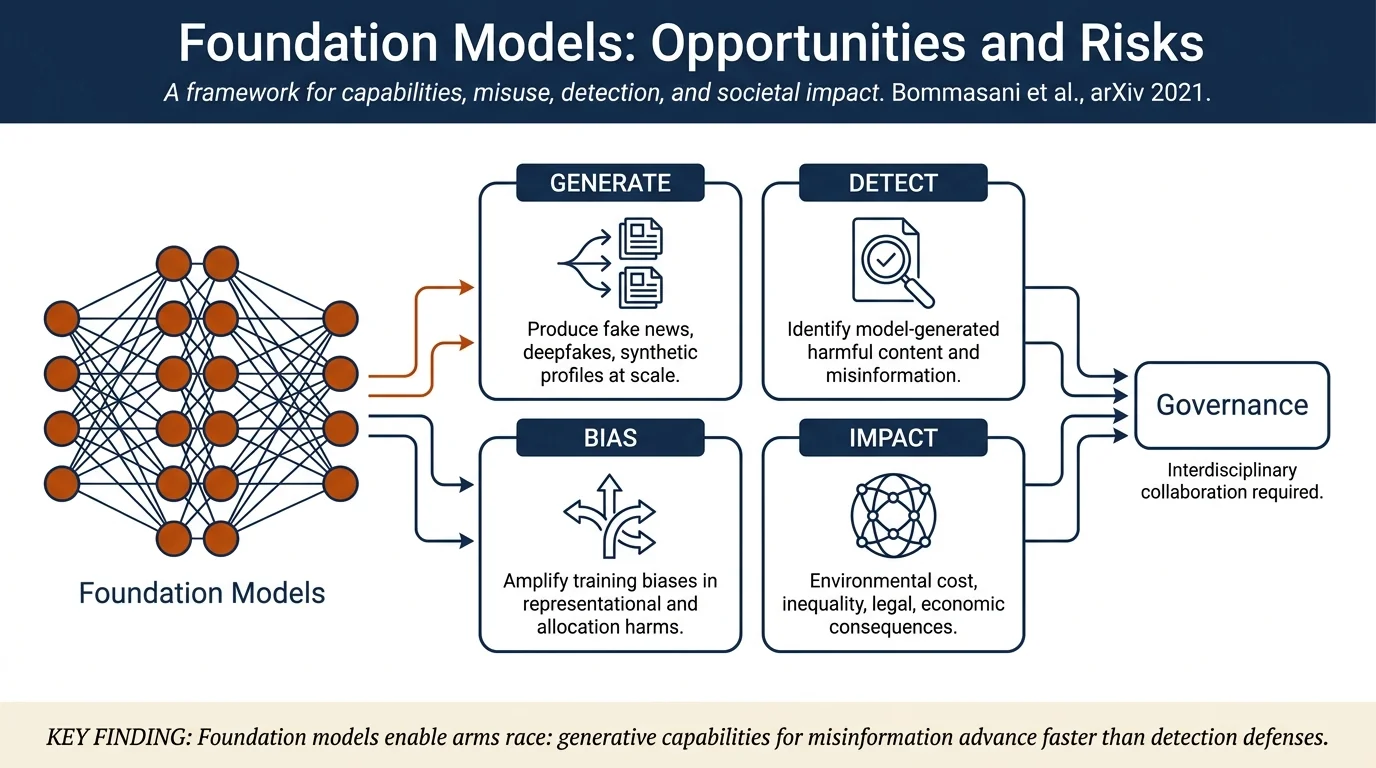
On the Opportunities and Risks of Foundation ModelsA comprehensive 214-page report analyzing foundation models—large neural networks trained on broad data that can be adapted to diverse downstream tasks (BERT, GPT-3, DALL-E). The report maps capabilities across language, vision, and reasoning; applications in healthcare, law, and education; and societal risks including misuse (generating…
 LLMs & generative AI
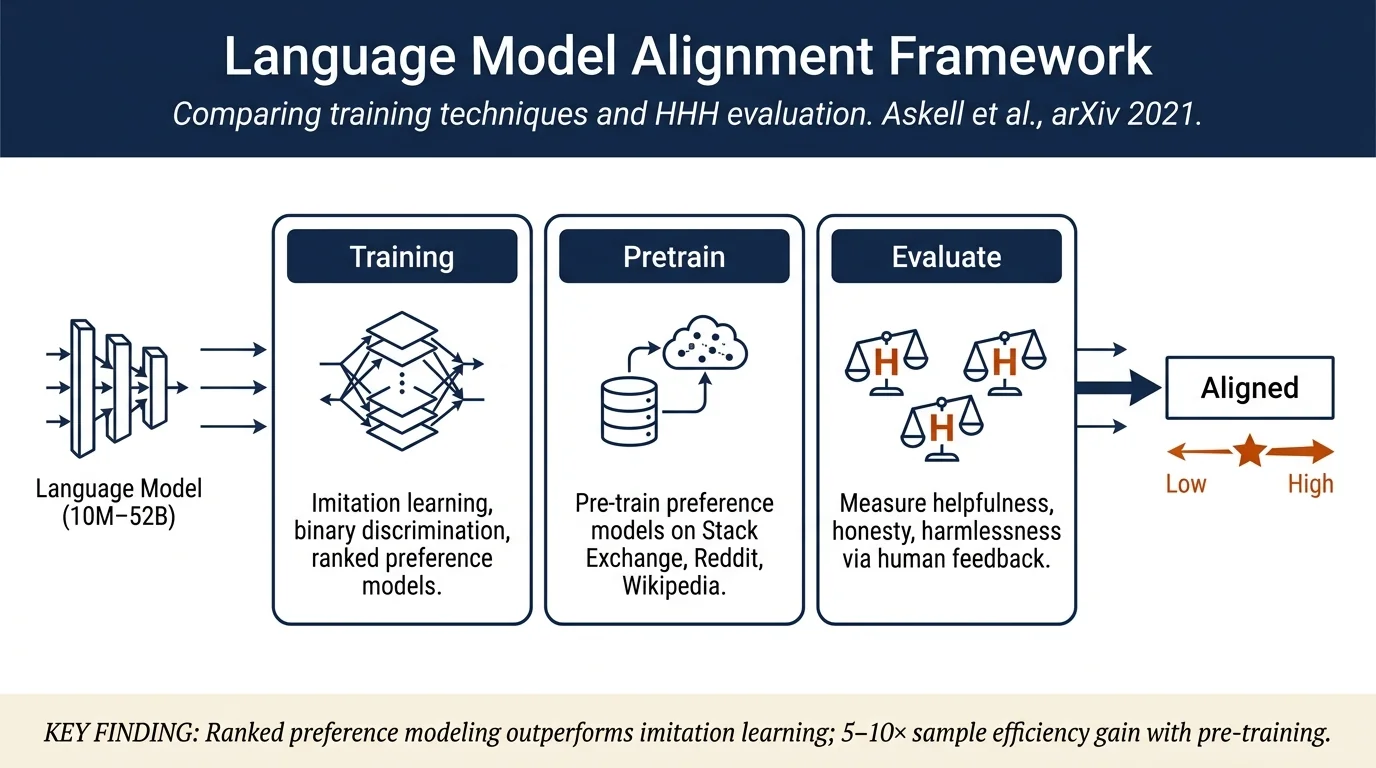
A General Language Assistant as a Laboratory for AlignmentAnthropic builds an interactive evaluation framework for measuring large language model alignment using three criteria: helpfulness, honesty, and harmlessness (HHH). By comparing prompting, imitation learning, binary discrimination, and ranked preference modeling approaches, the authors find that ranked preference models scale better…
 Spread & networksDatasets & evaluation
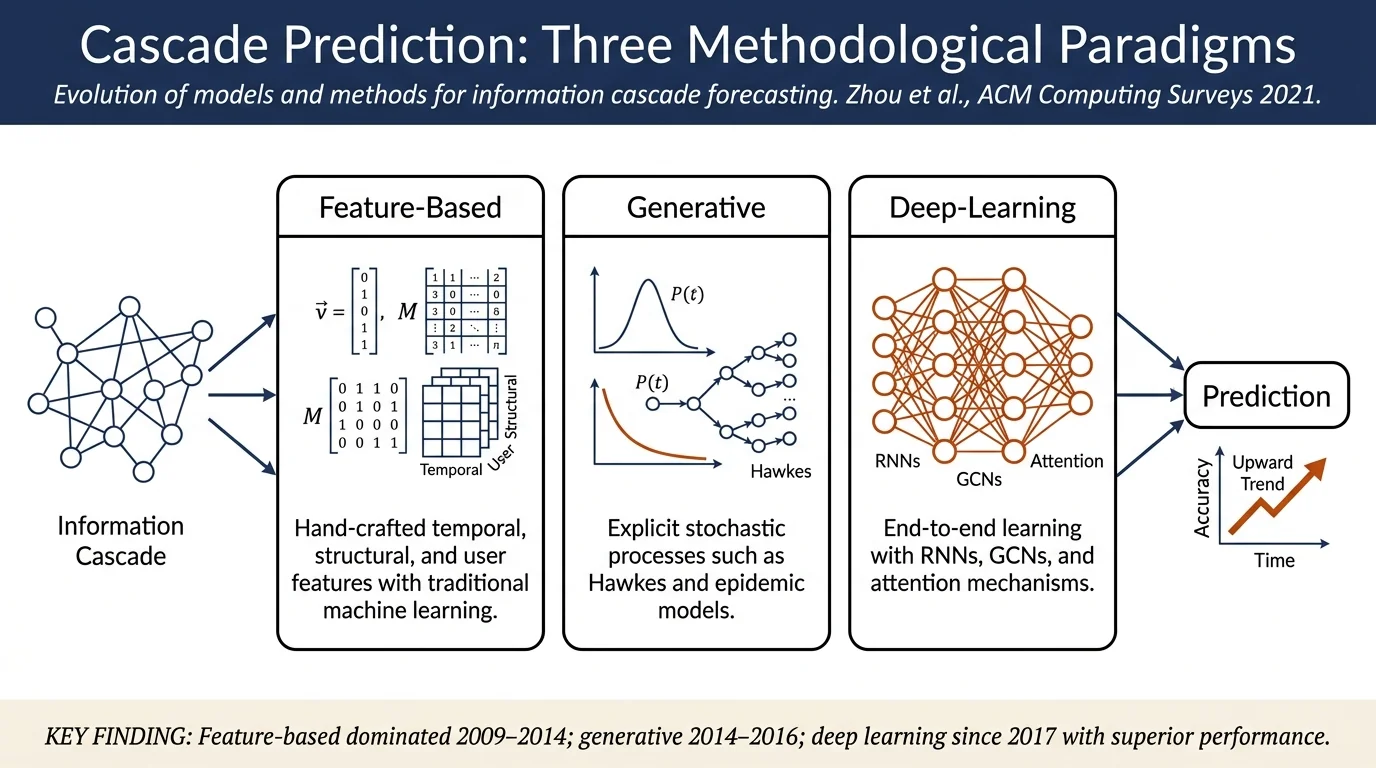
A Survey of Information Cascade Analysis: Models, Predictions, and Recent AdvancesThis comprehensive survey systematizes research on predicting information cascade growth and structure across social networks, covering feature-based models, generative models, and deep learning approaches. It provides a taxonomy of prediction methods across temporal, structural, user/item, and content features; evaluation metrics and…
 Detection methodsLLMs & generative AI
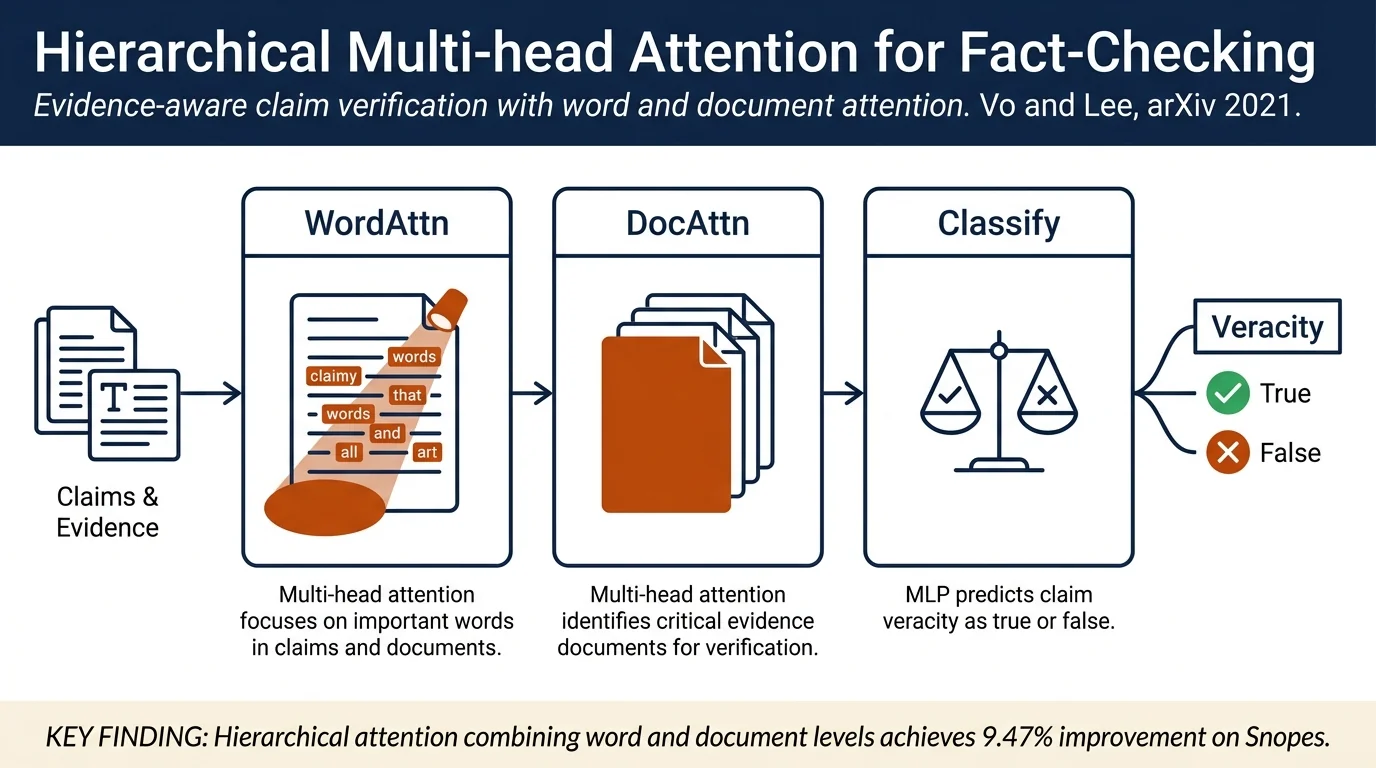
Hierarchical Multi-head Attentive Network for Evidence-aware Fake News DetectionThe paper proposes MAC, a hierarchical multi-head attention network that jointly learns word-level and document-level attention for fact-checking textual claims against evidence from external sources. Multi-head attention mechanisms capture different semantic aspects of claims and evidence documents, enabling the model to focus on…
 Spread & networksPlatforms, policy & society
Prevalence of Health Misinformation on Social Media: Systematic ReviewThis systematic review of 69 studies characterizes health misinformation topics and their prevalence across social media platforms. Health misinformation was most prevalent on Twitter regarding smoking and drugs; vaccines, noncommunicable diseases, and pandemics were also common topics.
 Spread & networksPsychology & interventions
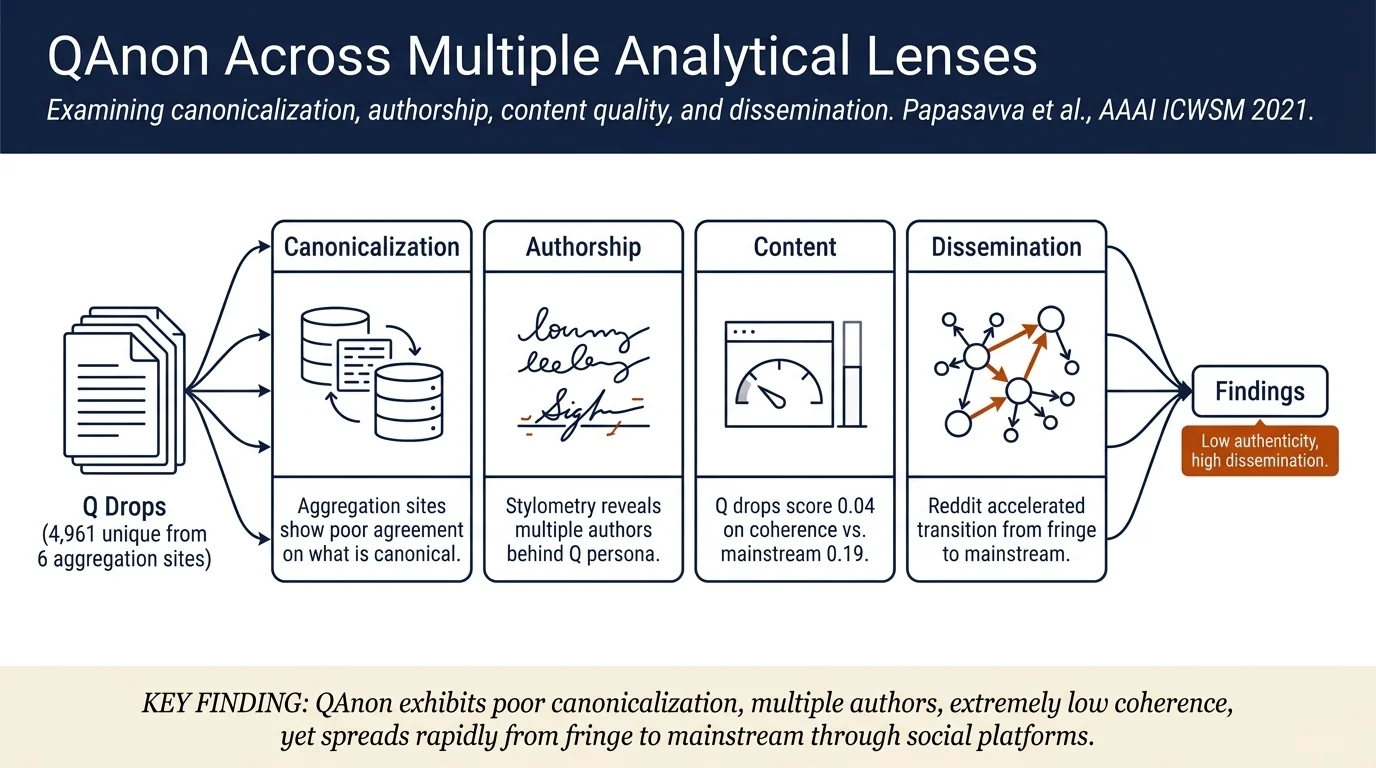
The Gospel According to Q: Understanding the QAnon Conspiracy from the Perspective of Canonical InformationThis paper systematically studies the QAnon conspiracy theory by collecting and analyzing 4,961 unique Q drops from six aggregation sites. The authors find that aggregation sites show poor agreement on what constitutes a canonical Q drop, that Q drops are incoherent and low-quality relative to other social media platforms, and that…