Explore papers
Filter by research area, year and venue. Every filter is in the address bar, so you can share a view as a link.
 Psychology & interventionsPlatforms, policy & society
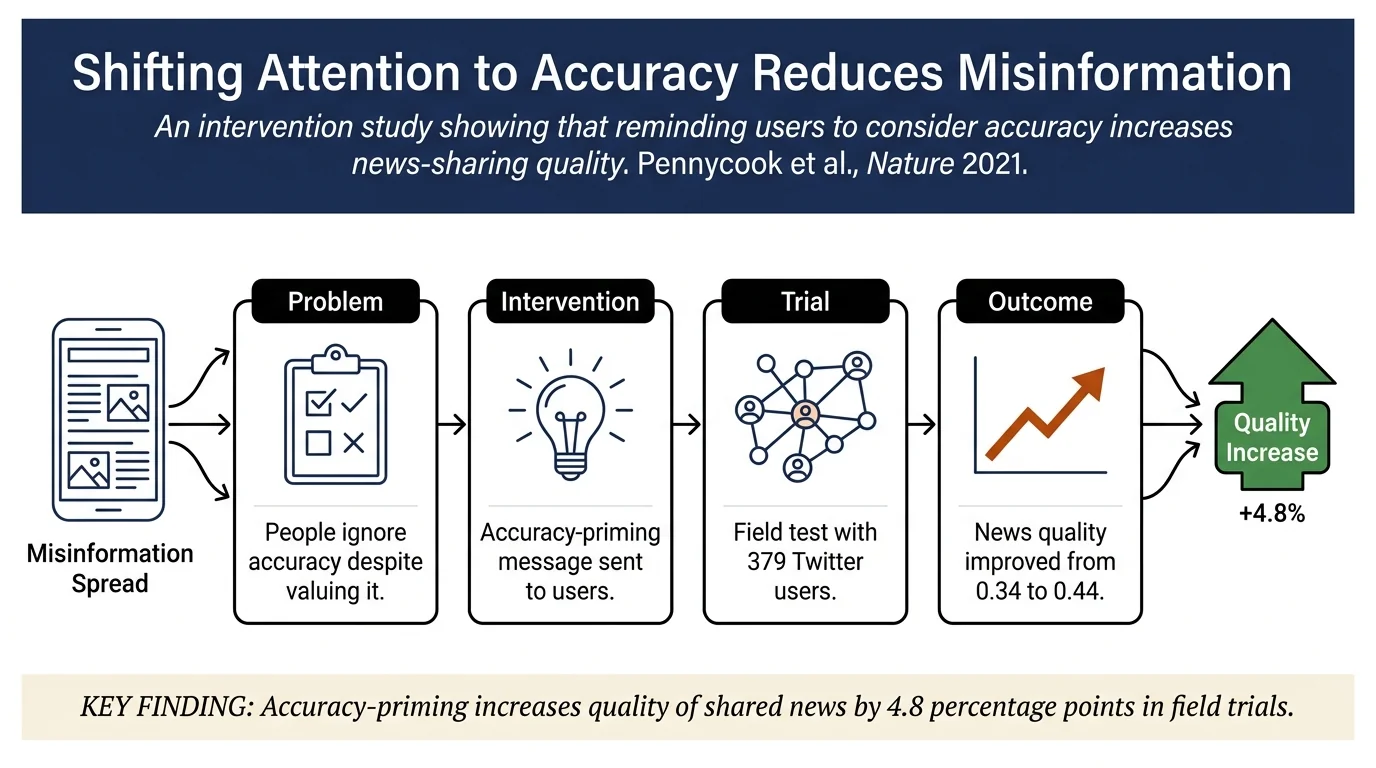
Shifting attention to accuracy can reduce misinformation onlineThe paper shows through six online experiments and a Twitter field trial that simply drawing people's attention to accuracy can substantially reduce their sharing of misinformation. When asked to rate the accuracy of headlines before deciding whether to share them, participants share more accurate content; a Twitter field experiment…
 Detection methodsLLMs & generative AI
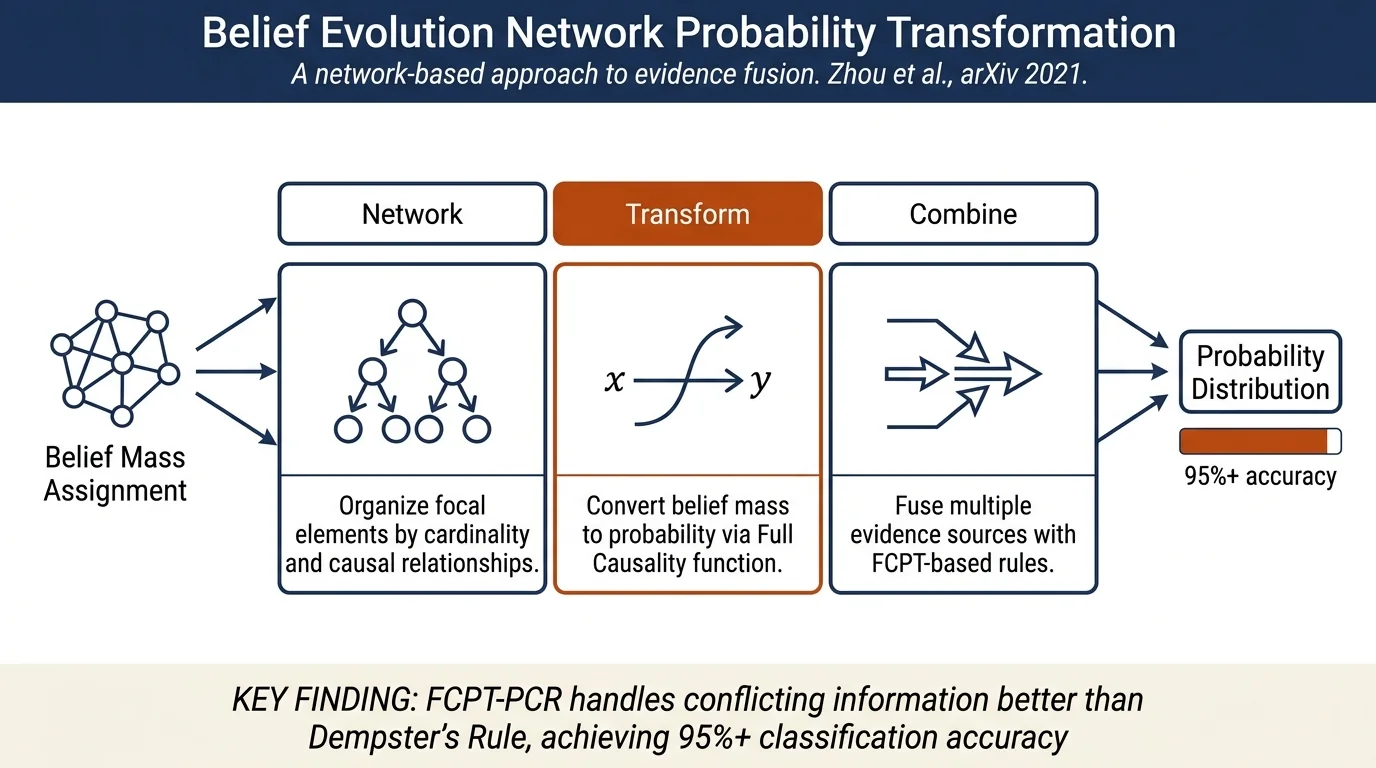
Belief Evolution Network-based Probability Transformation and FusionThis paper introduces a Belief Evolution Network (BEN) to model the evolution of belief functions and proposes a new Full Causality Probability Transformation (FCPT) method for converting belief mass assignments to probability distributions. The authors also propose FCPT-based fusion rules that outperform traditional Dempster's Rule of…
 Deepfakes & multimodalDetection methods
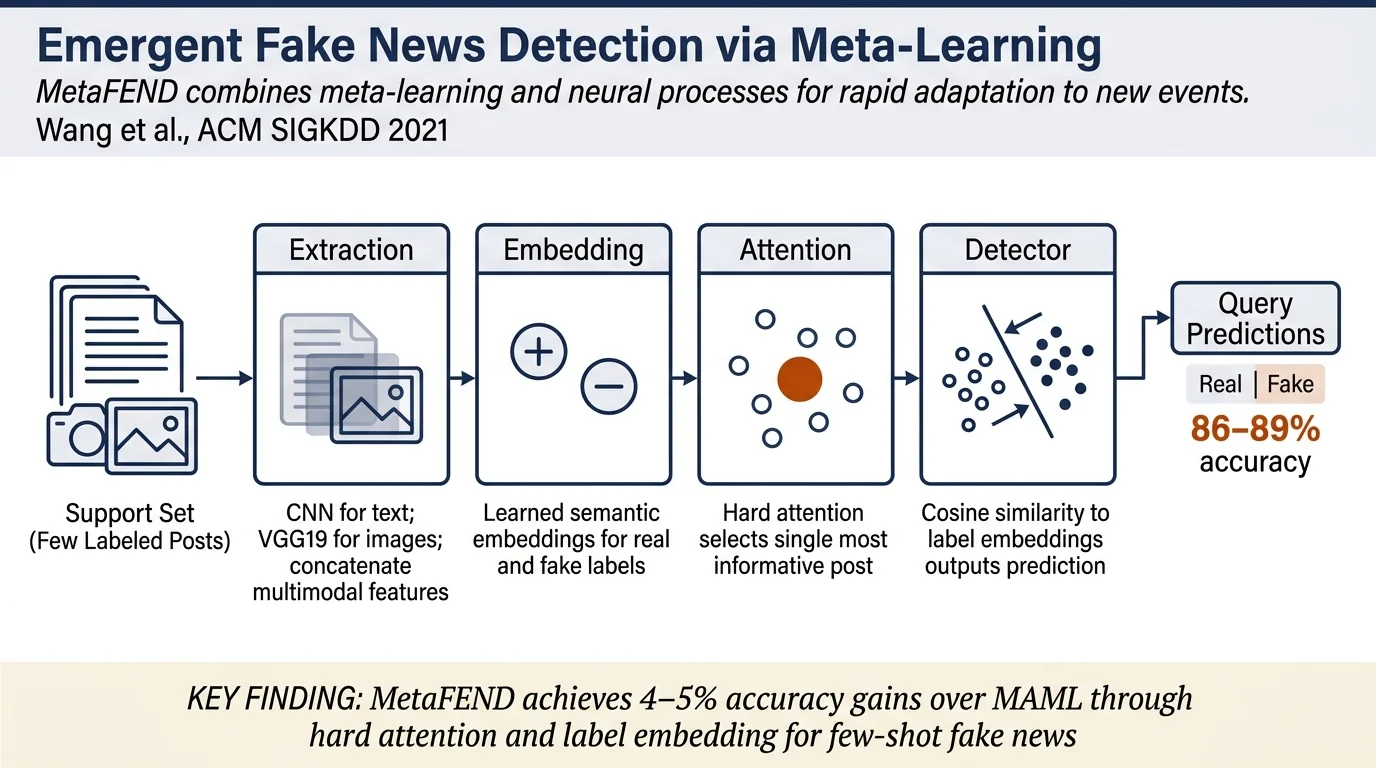
Multimodal Emergent Fake News Detection via Meta Neural Process NetworksExisting fake news detectors trained on labeled data perform poorly on novel, emergent events due to domain shift. The paper proposes MetaFEND, which combines meta-learning and neural processes to leverage a handful of labeled posts from a new event to quickly adapt a detection model.
 Datasets & evaluationDetection methods
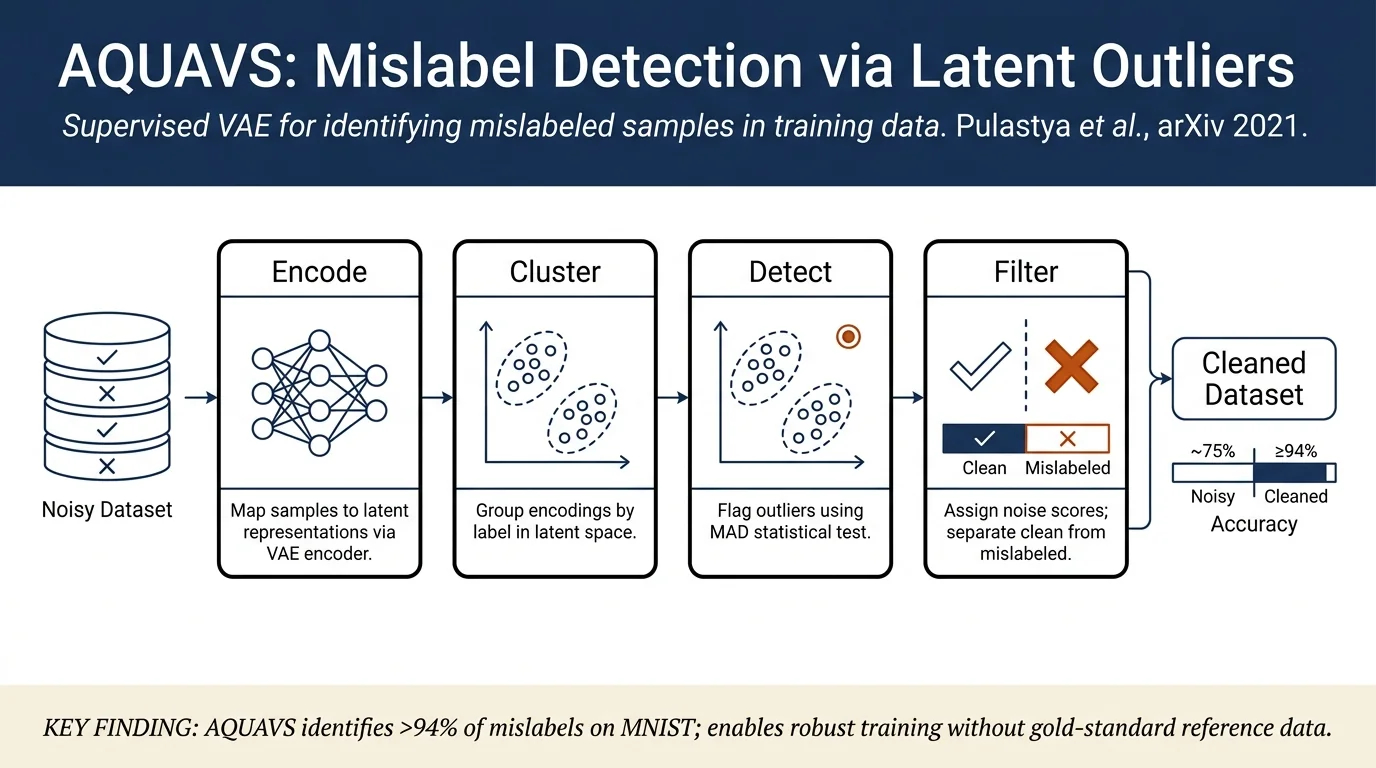
Assessing the Quality of the Datasets by Identifying Mislabeled SamplesDeep learning models with high capacity often memorize label noise, degrading generalization. This paper proposes AQUAVS, a supervised variational autoencoder that identifies mislabeled samples via a "noise score" computed from outliers in latent space representations.
 Detection methodsLLMs & generative AI
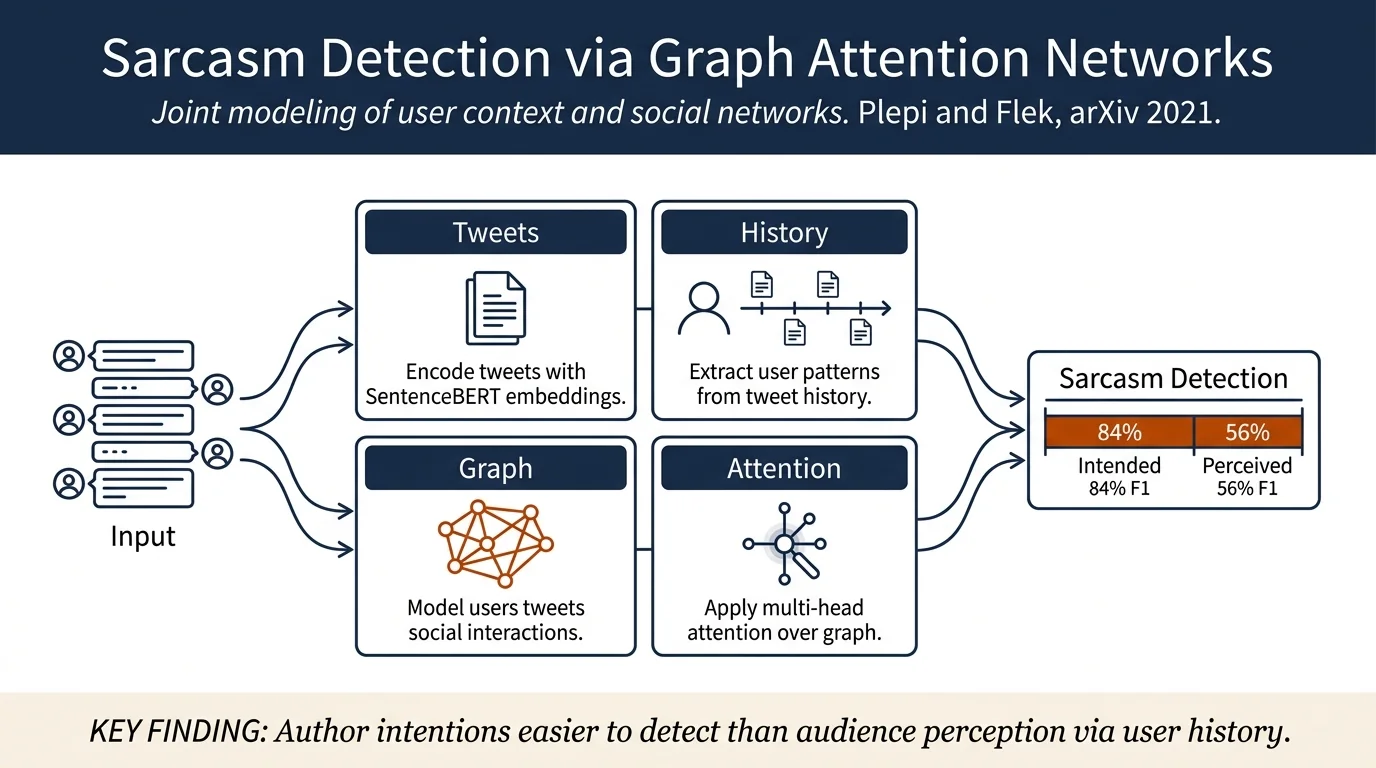
Perceived and Intended Sarcasm Detection with Graph Attention NetworksSarcasm detection requires understanding both the author's intent and the audience's perception. This work proposes a graph attention network (GAT) that jointly models user historical context and conversational social network information on Twitter, achieving state-of-the-art results on the SPIRS dataset and showing that detecting…
 Detection methodsDatasets & evaluation
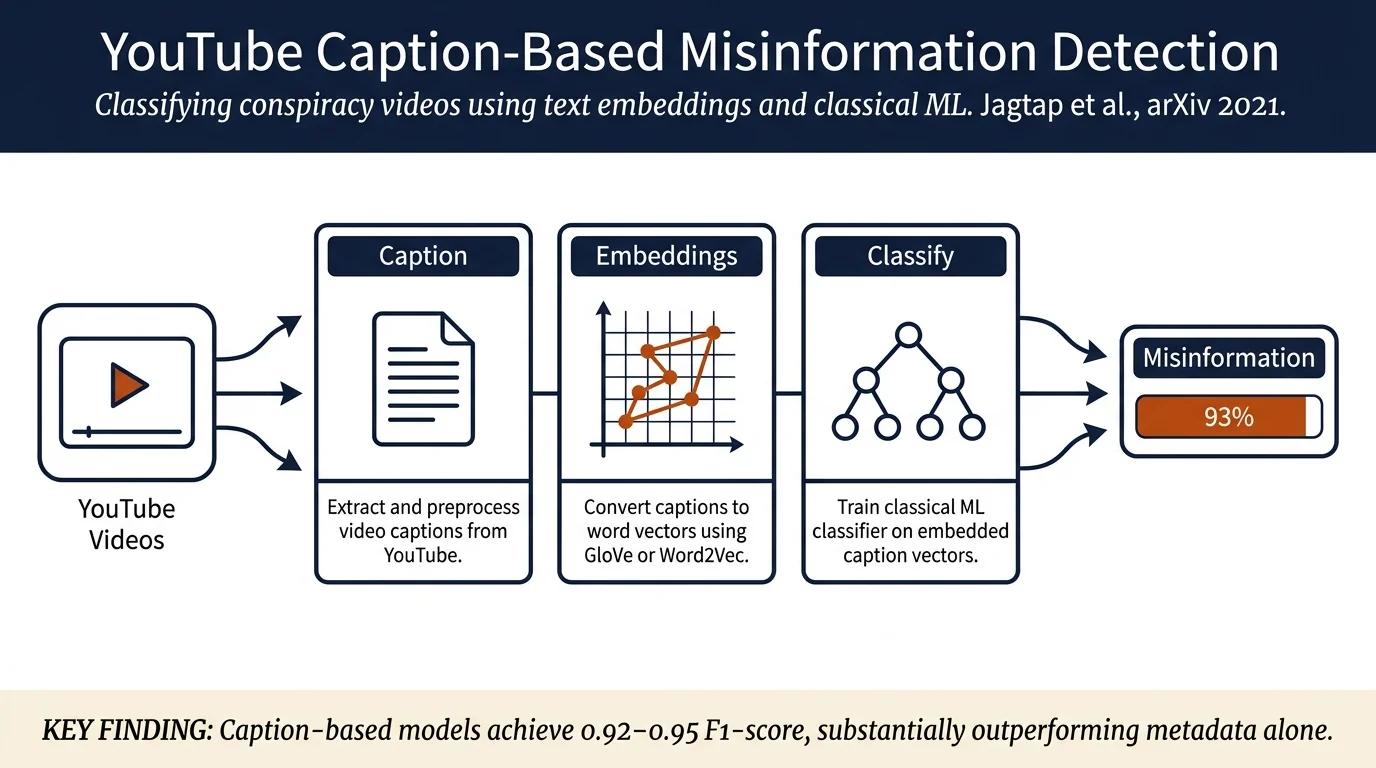
Misinformation Detection on YouTube Using Video CaptionsThis work proposes using video captions as text features for classifying YouTube videos as misinformation, debunking misinformation, or neutral content. Across five conspiracy topics (vaccines, 9/11, chemtrails, moon landing, flat earth), the authors achieve 0.85–0.90 F1-score on three-class classification and 0.92–0.95 F1-score when…
 Detection methodsLLMs & generative AI
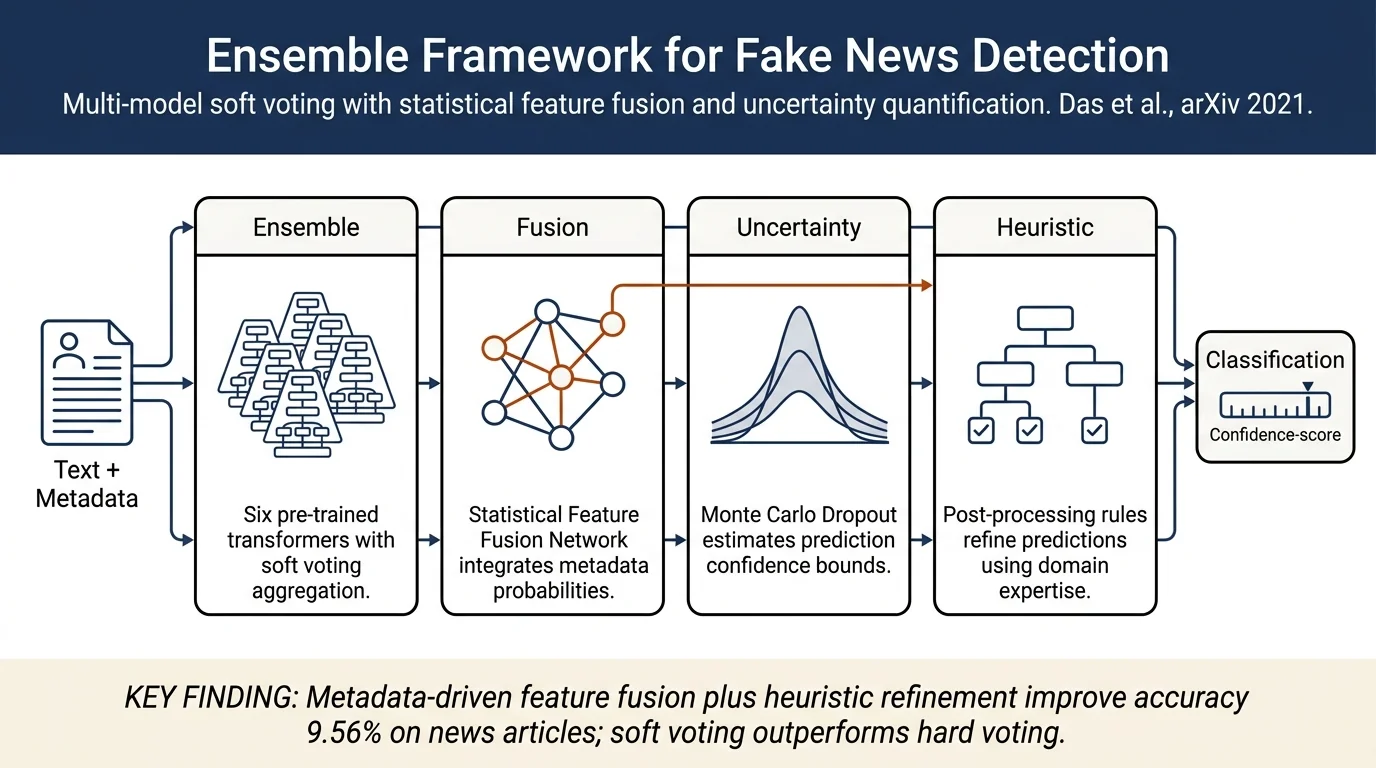
A Heuristic-driven Uncertainty based Ensemble Framework for Fake News Detection in Tweets and News ArticlesAn ensemble-based fake news detection system combining multiple pre-trained language models (BERT, RoBERTa, XLNet, DeBERTa, ERNIE 2.0, ELECTRA) with a Statistical Feature Fusion Network (SFFN) and heuristic post-processing. The framework incorporates Monte Carlo Dropout for uncertainty estimation and leverages metadata features (URL…
 Spread & networksDatasets & evaluation
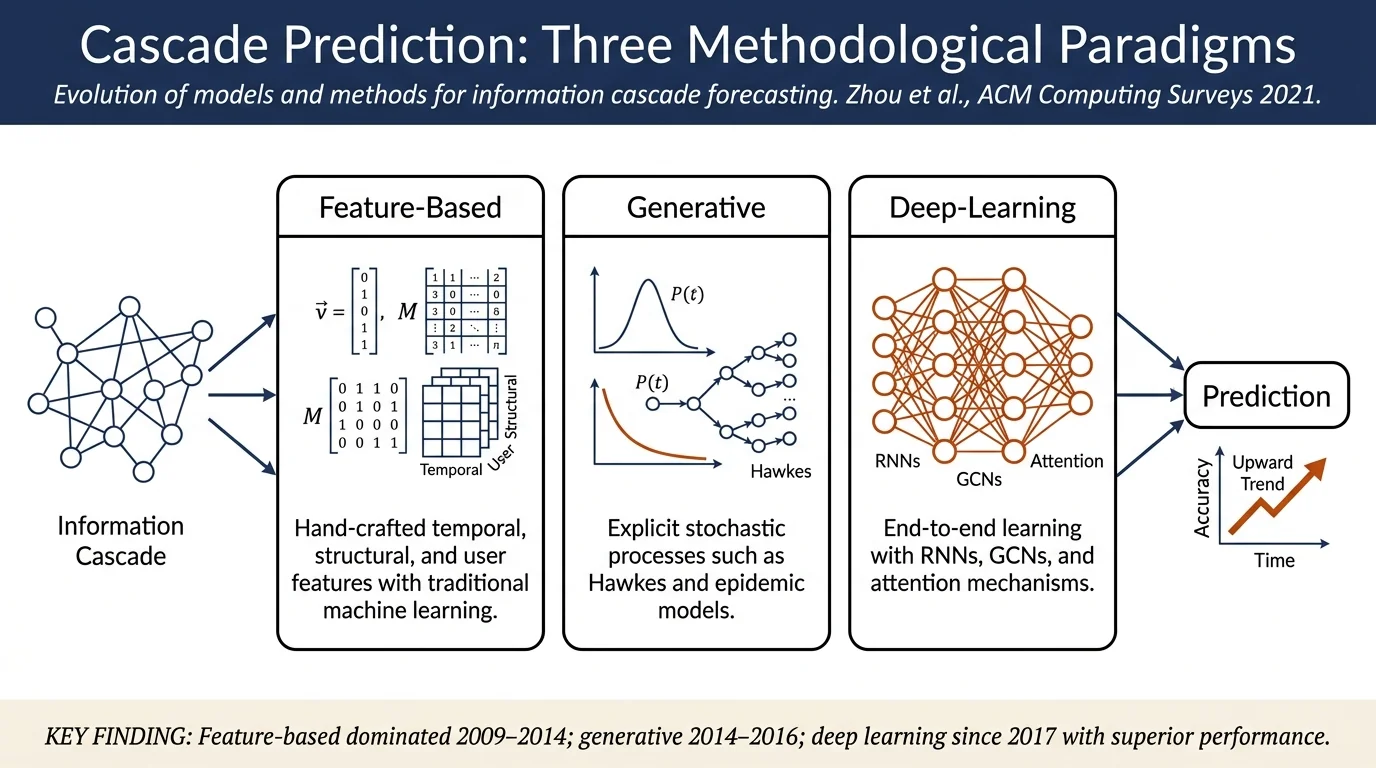
A Survey of Information Cascade Analysis: Models, Predictions, and Recent AdvancesThis comprehensive survey systematizes research on predicting information cascade growth and structure across social networks, covering feature-based models, generative models, and deep learning approaches. It provides a taxonomy of prediction methods across temporal, structural, user/item, and content features; evaluation metrics and…
 Detection methodsLLMs & generative AI
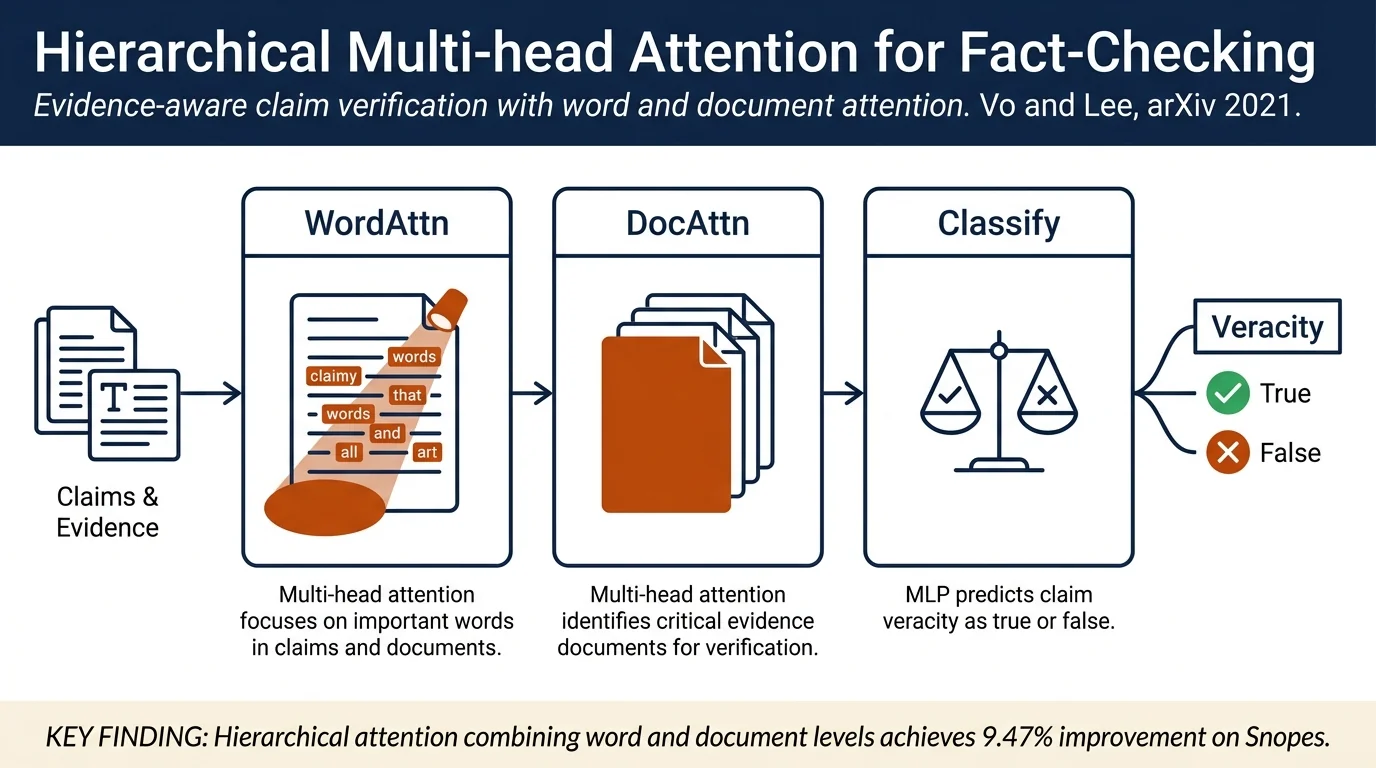
Hierarchical Multi-head Attentive Network for Evidence-aware Fake News DetectionThe paper proposes MAC, a hierarchical multi-head attention network that jointly learns word-level and document-level attention for fact-checking textual claims against evidence from external sources. Multi-head attention mechanisms capture different semantic aspects of claims and evidence documents, enabling the model to focus on…
 Detection methodsDatasets & evaluation
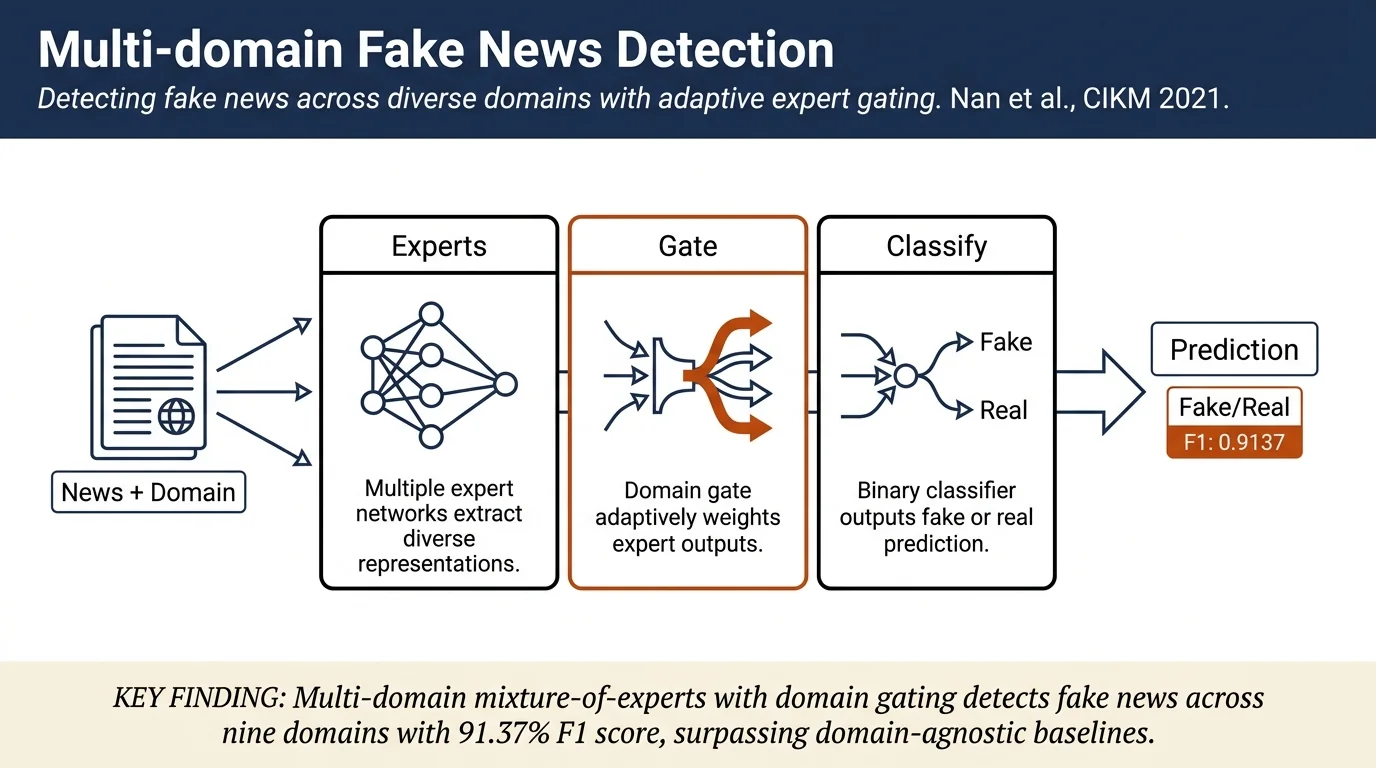
MDFEND: Multi-domain Fake News DetectionMost fake news detection methods focus on single-domain data, which leads to poor performance across different domains due to domain shift (varying word usage and propagation patterns). This paper introduces Weibo21, the first multi-domain fake news dataset from a single platform with 9 domains, and proposes MDFEND, a model using…
 Detection methodsDatasets & evaluation
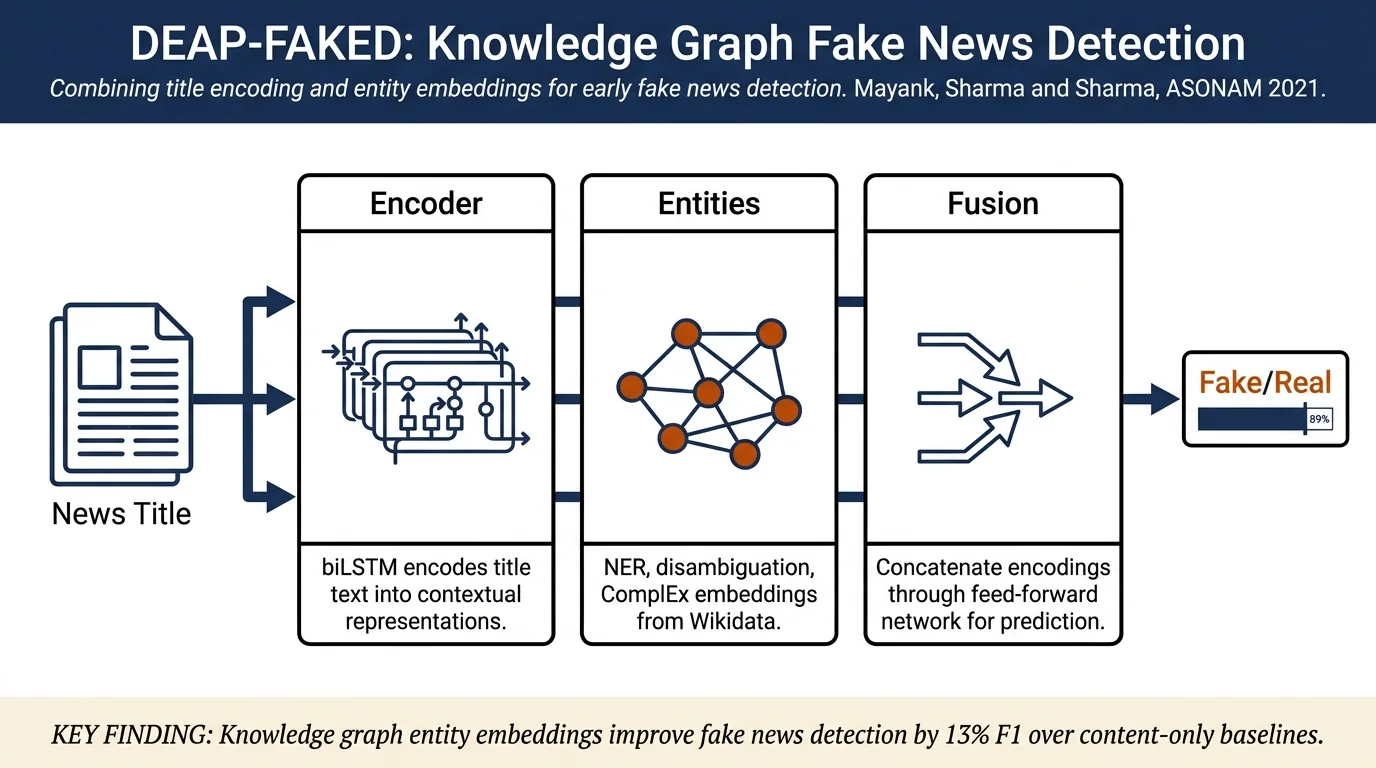
DEAP-FAKED: Knowledge Graph based Approach for Fake News DetectionDEAP-FAKED combines a biLSTM news encoder with knowledge graph embeddings to detect fake news using only article titles. The approach extracts named entities from titles, maps them to Wikidata using named entity disambiguation, and embeds them via ComplEx.
 Detection methodsLLMs & generative AI
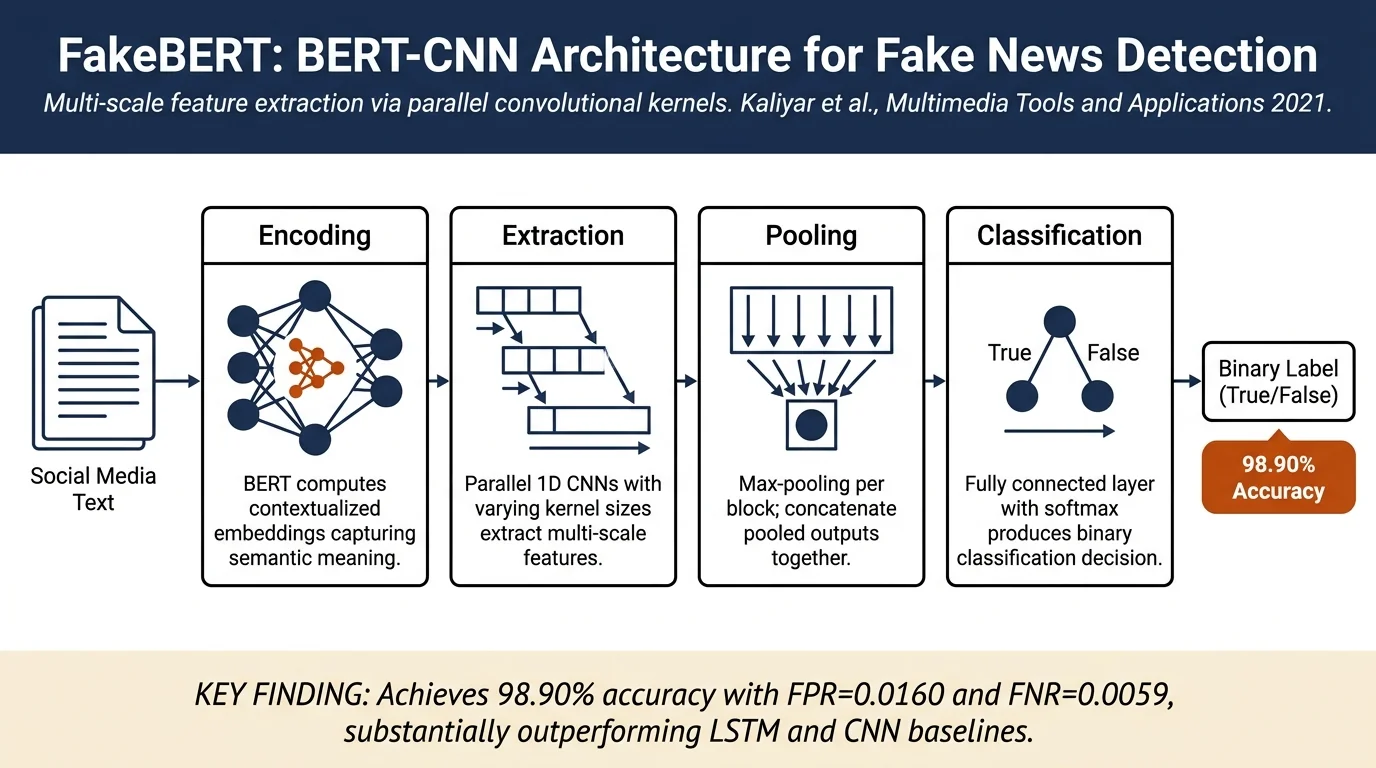
FakeBERT: Fake News Detection in Social Media with a BERT-based Deep Learning ApproachFakeBERT combines BERT (Bidirectional Encoder Representations from Transformers) with parallel 1D convolutional neural networks to detect fake news on social media. The model captures semantic and long-distance dependencies in text, achieving 98.90% accuracy on the real-world fake news dataset and substantially outperforming CNN and LSTM…
 Detection methodsLLMs & generative AI
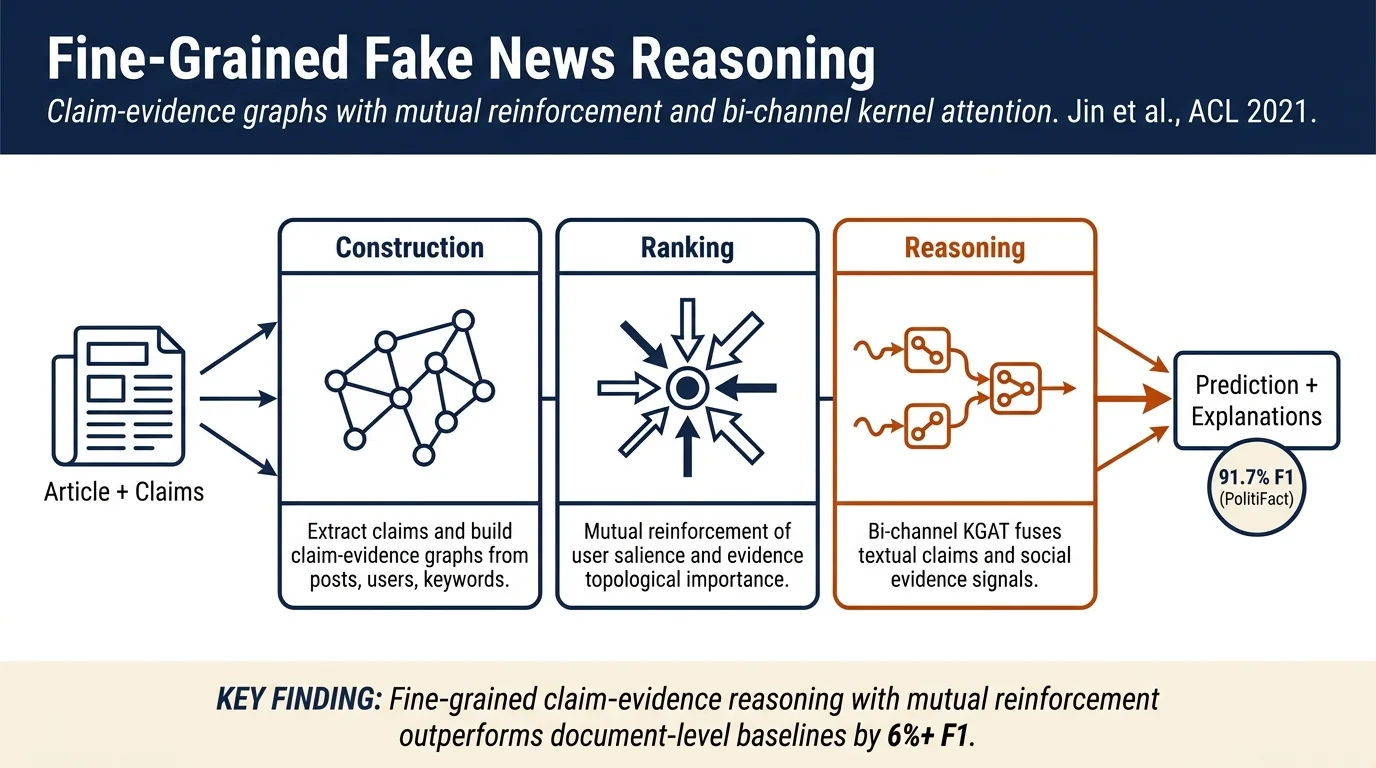
Towards Fine-Grained Reasoning for Fake News DetectionThe paper proposes FinerFact, a framework for fake news detection that models reasoning at the claim-evidence level rather than the document level. It constructs claim-evidence graphs and uses mutual-reinforcement-based ranking to identify salient evidence, then applies a bi-channel kernel graph network to reason over evidence groups.
 Detection methodsLLMs & generative AI
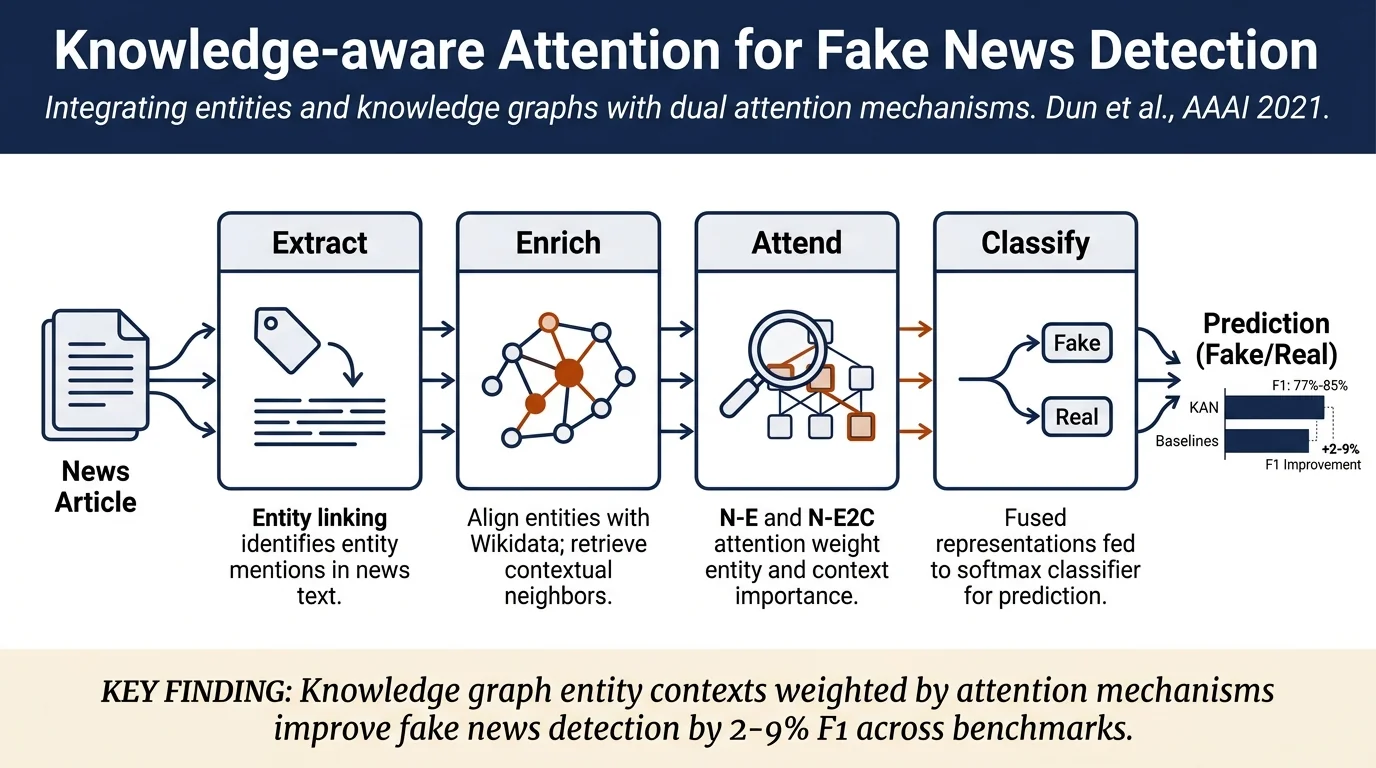
KAN: Knowledge-aware Attention Network for Fake News DetectionMost fake news detection models rely on textual features and social context but ignore knowledge-level relationships among entities in news. This paper proposes KAN, which extracts entity mentions from news, aligns them with knowledge graphs (Wikidata), and uses two attention mechanisms (N-E and N-E2C) to measure entity and…
 Detection methodsDatasets & evaluation
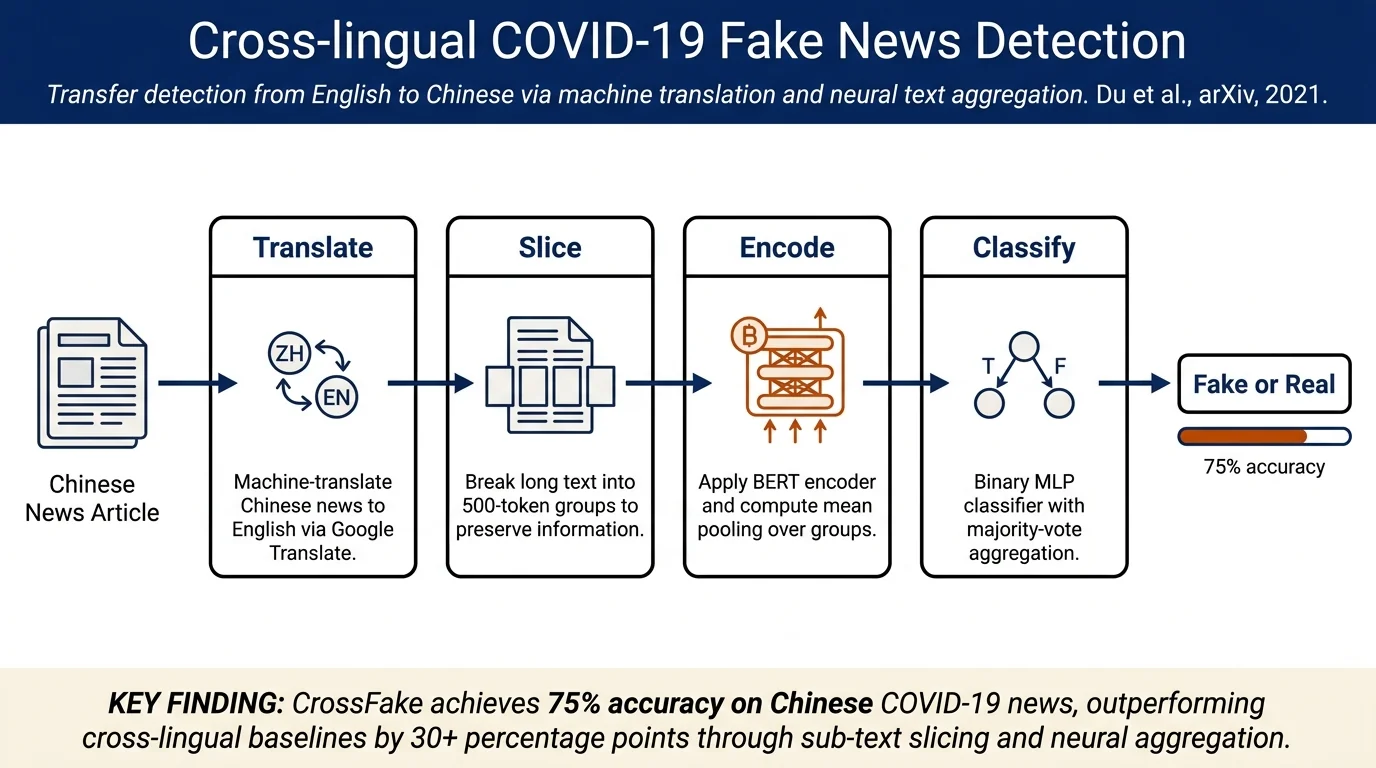
Cross-lingual COVID-19 Fake News DetectionThe paper addresses COVID-19 misinformation in low-resource languages by proposing CrossFake, a cross-lingual fake news detector trained on English COVID-19 news and applied to Chinese news via machine translation. The method slices long news texts into sub-text groups before BERT encoding to preserve fact-related information.
 Detection methodsSpread & networks
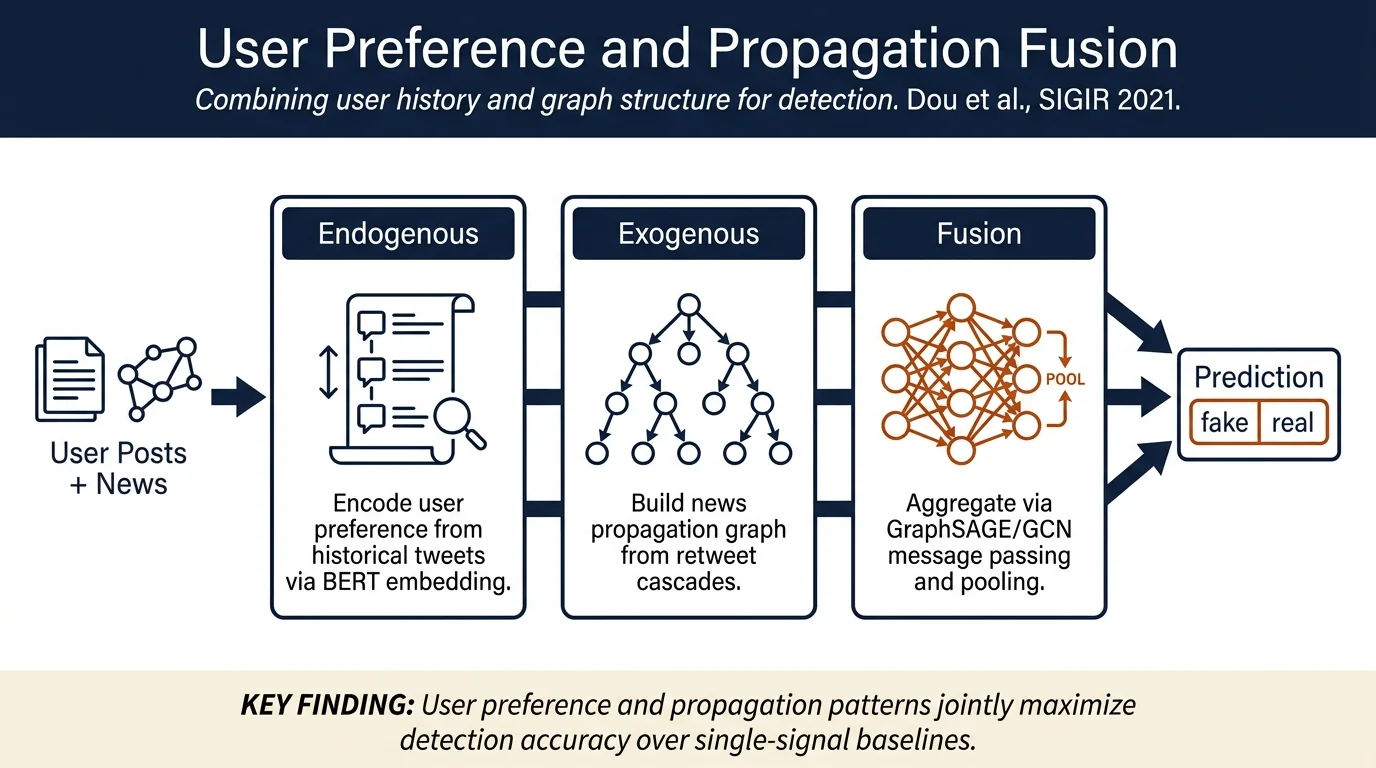
User Preference-aware Fake News DetectionProposes UPFD, which detects fake news by jointly modeling user endogenous preferences (from historical posts) and exogenous context (news propagation graphs) via GNNs. Shows confirmation bias drives news sharing decisions, and historical user behavior provides complementary signals to improve detection over content-only and graph-only…
 Spread & networksDetection methods
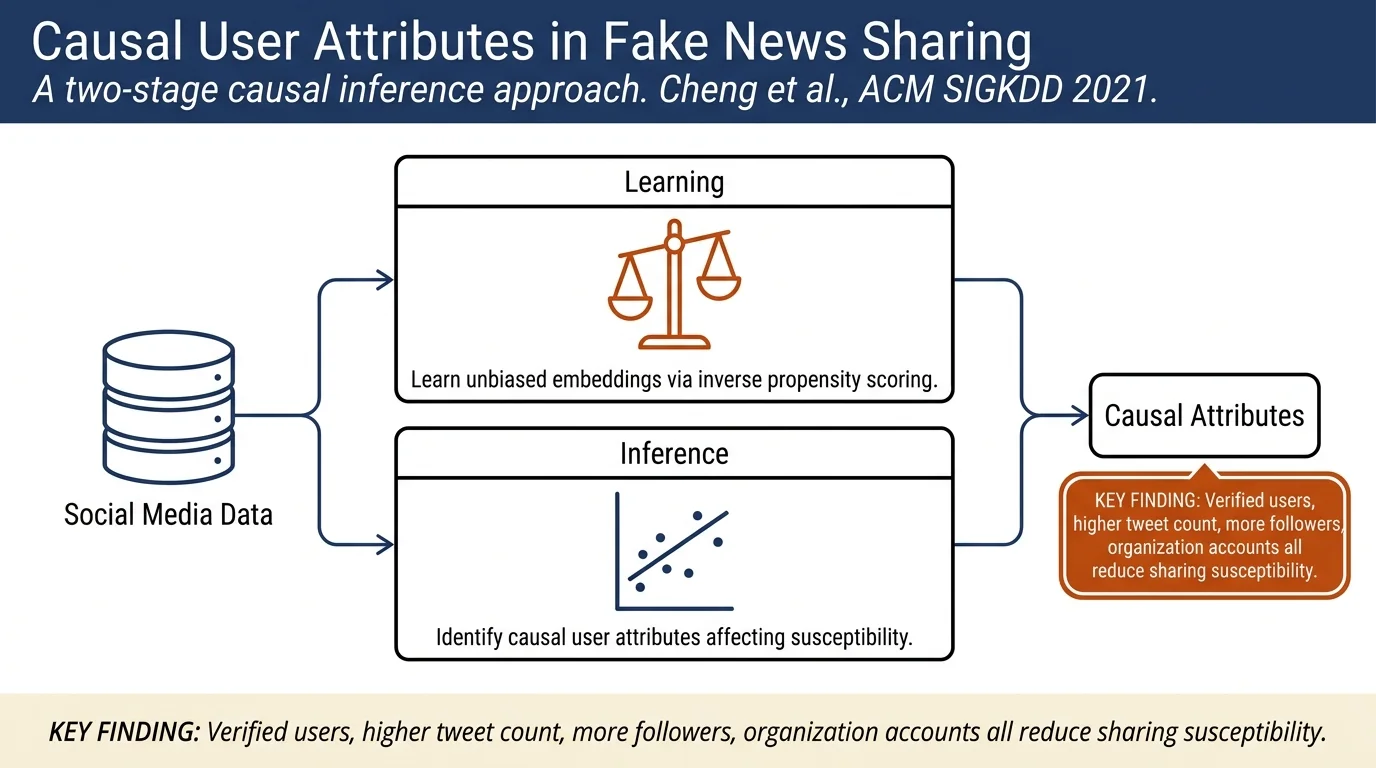
Causal Understanding of Fake News Dissemination on Social MediaThe paper addresses the fundamental causal question: what user attributes cause susceptibility to share fake news? Rather than observing correlations, the authors use inverse propensity scoring (IPS) to learn unbiased embeddings of fake news sharing behavior, treating these embeddings as confounders in a causal model.
 Deepfakes & multimodalDetection methods
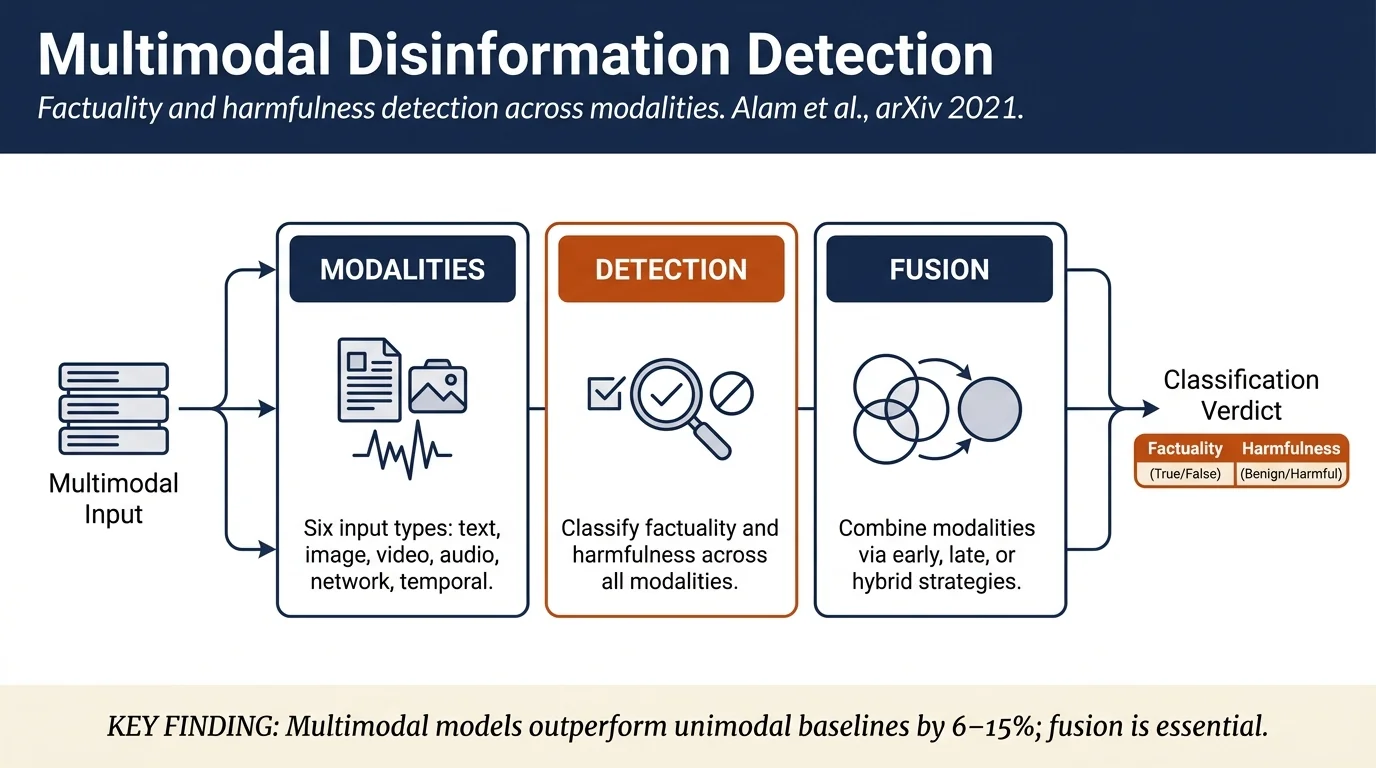
A Survey on Multimodal Disinformation DetectionComprehensive survey of multimodal disinformation detection covering text, images, speech, video, network structure, and temporal information. Distinguishes factuality (whether content is false) from harmfulness (whether false content intends to harm), systematically reviews ~140 papers across different modalities and detection…
 Detection methodsDeepfakes & multimodal
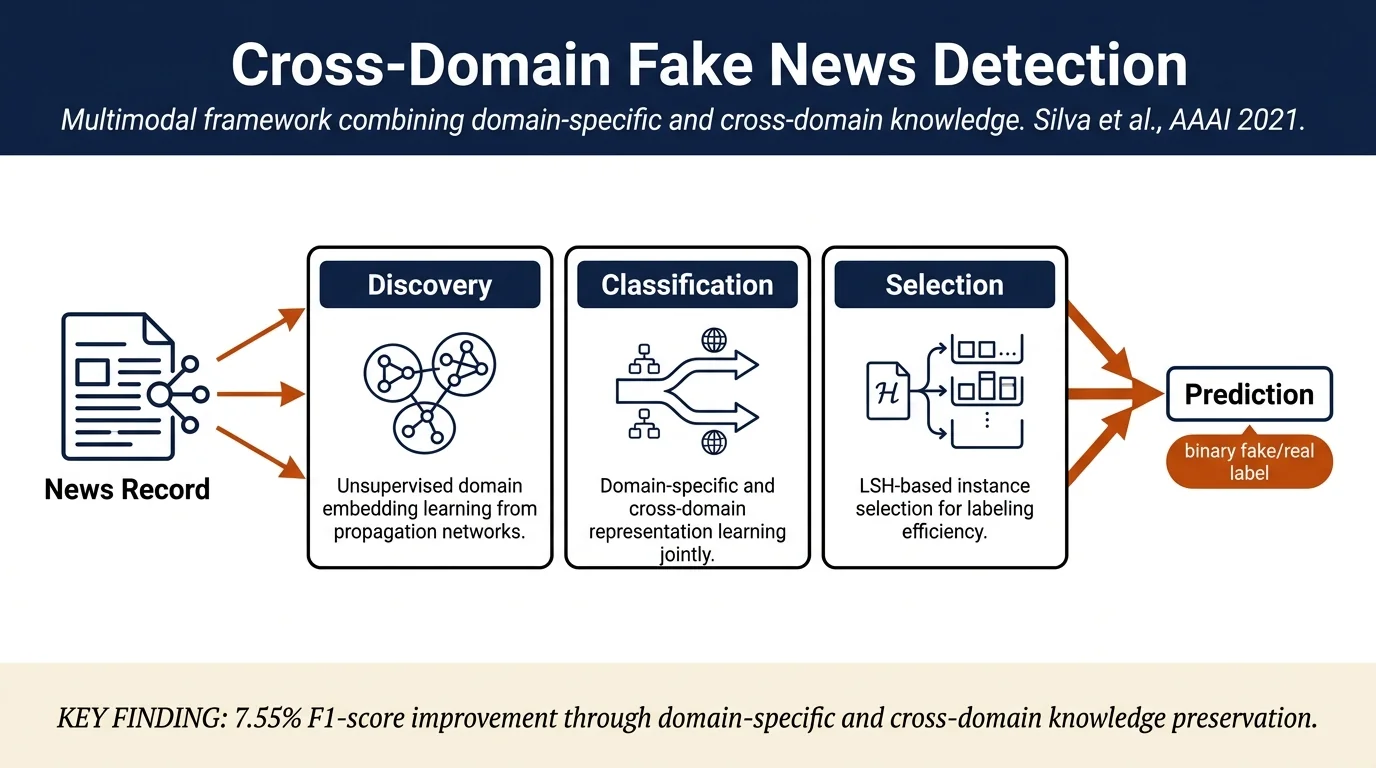
Embracing Domain Differences in Fake News: Cross-domain Fake News Detection using Multimodal DataMost fake news detection models are trained on a single domain (e.g., politics) and fail when tested on others (e.g., entertainment, COVID-19). This paper proposes a multimodal framework that leverages both domain-specific and cross-domain knowledge to detect fake news across different domains.
 Detection methodsDeepfakes & multimodal
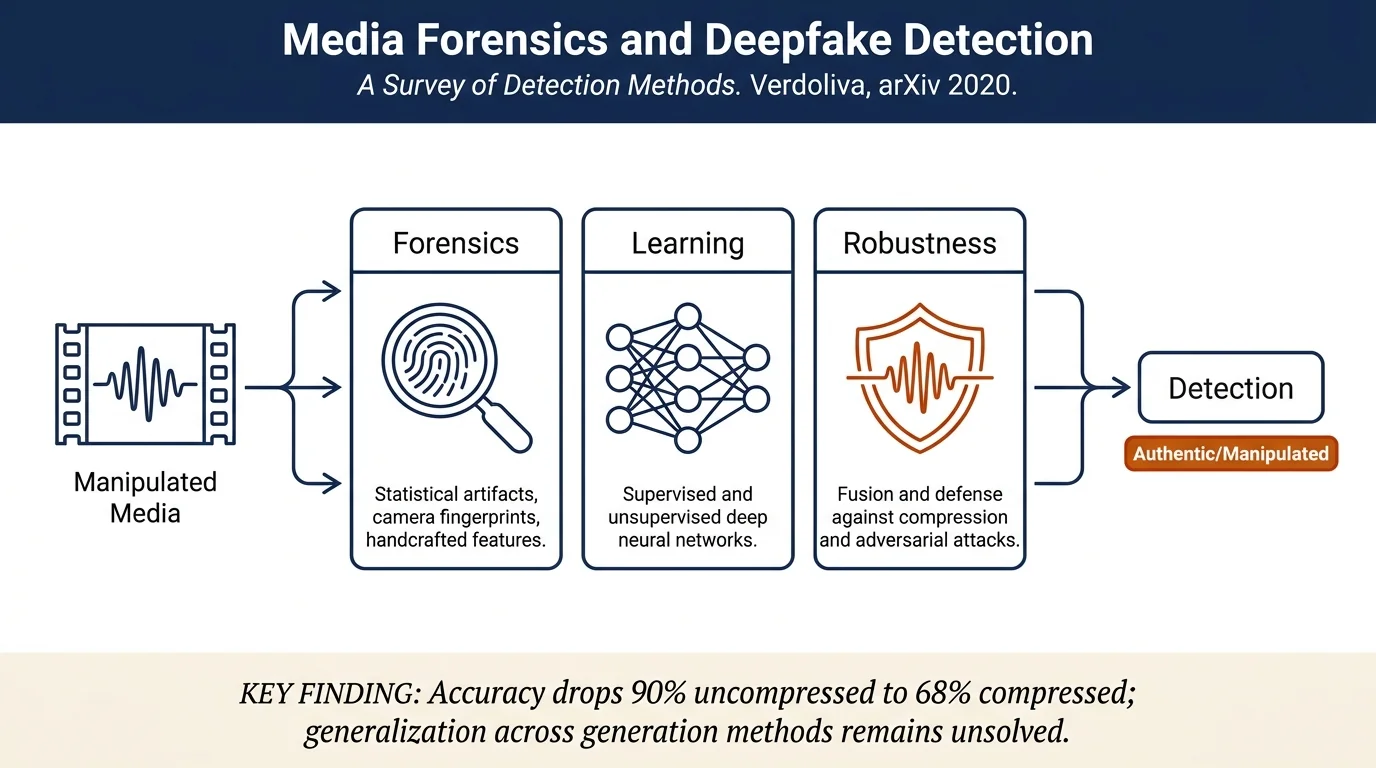
Media Forensics and DeepFakes: an overviewA comprehensive survey of media forensics and deepfake detection methods spanning fifteen years of research. The paper reviews both conventional signal-processing approaches (blind methods, sensor-based, handcrafted features) and deep learning-based detection techniques, covers major datasets and their characteristics, discusses…
Detection methodsLLMs & generative AI
The Limitations of Stylometry for Detecting Machine-Generated Fake NewsWhile stylometry effectively detects impersonation and provenance, it fails to distinguish between legitimate and malicious uses of language models for generating false content. LMs produce stylistically consistent text regardless of veracity, and adding even a single auto-generated sentence within human-written text evades stylometric…
 Detection methodsFact-checking & verification
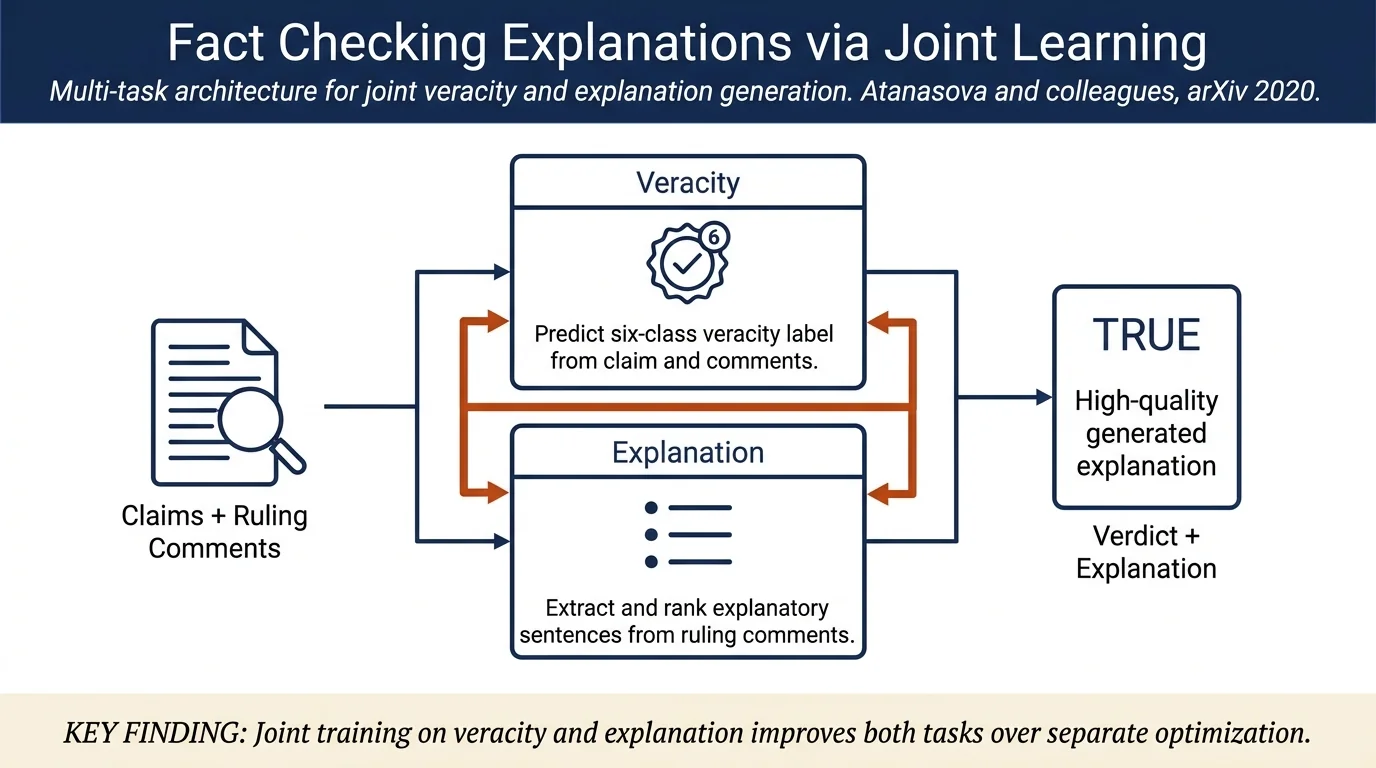
Generating Fact Checking ExplanationsThis paper presents the first study on automatically generating explanations for fact-checking veracity predictions. The authors show that jointly optimizing both veracity classification and explanation generation improves system performance.
 LLMs & generative AIDetection methods
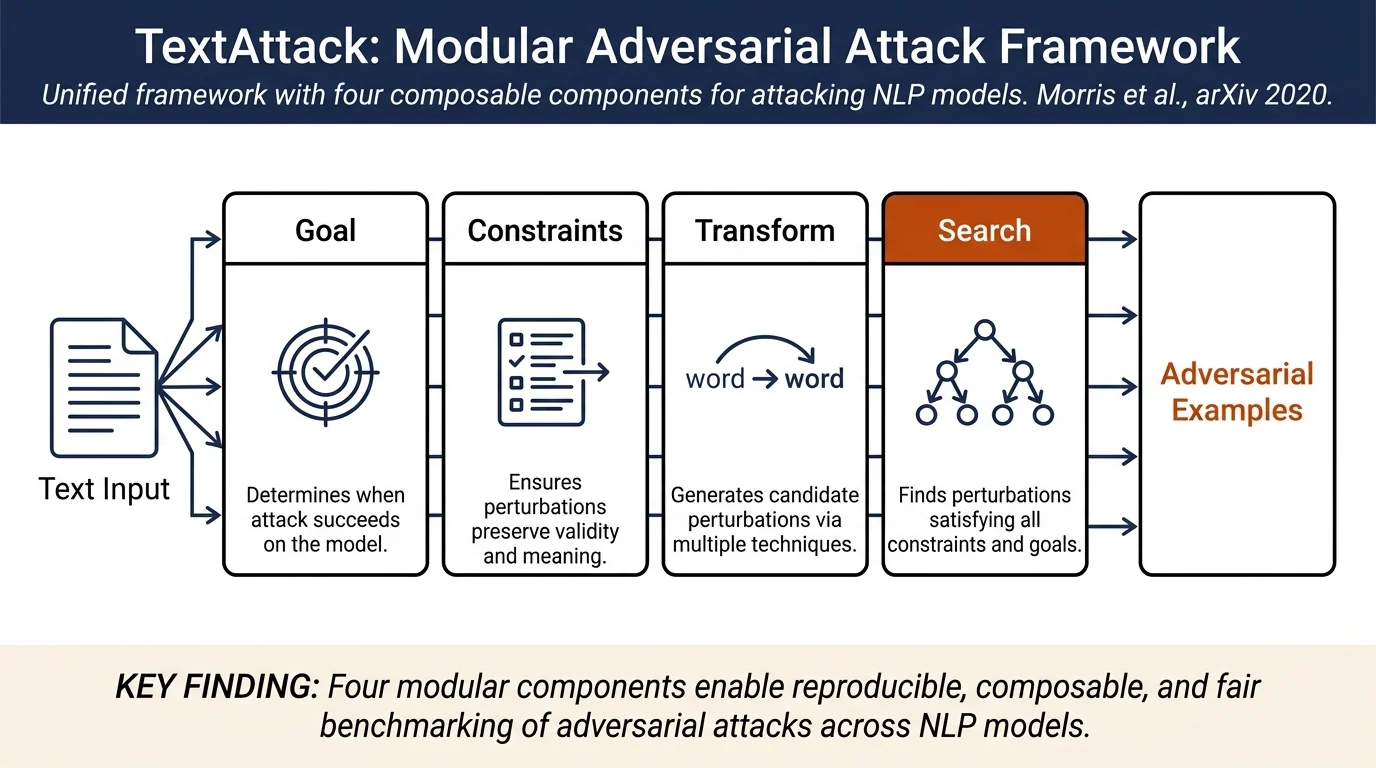
TextAttack: A Framework for Adversarial Attacks, Data Augmentation, and Adversarial Training in NLPIntroduces TextAttack, an open-source Python framework unifying 16 adversarial attacks from the literature into a modular architecture for testing and improving NLP model robustness. The framework decomposes attacks into four reusable components (goal function, constraints, transformation, search method), enables benchmarking attacks on…
 LLMs & generative AIDetection methods
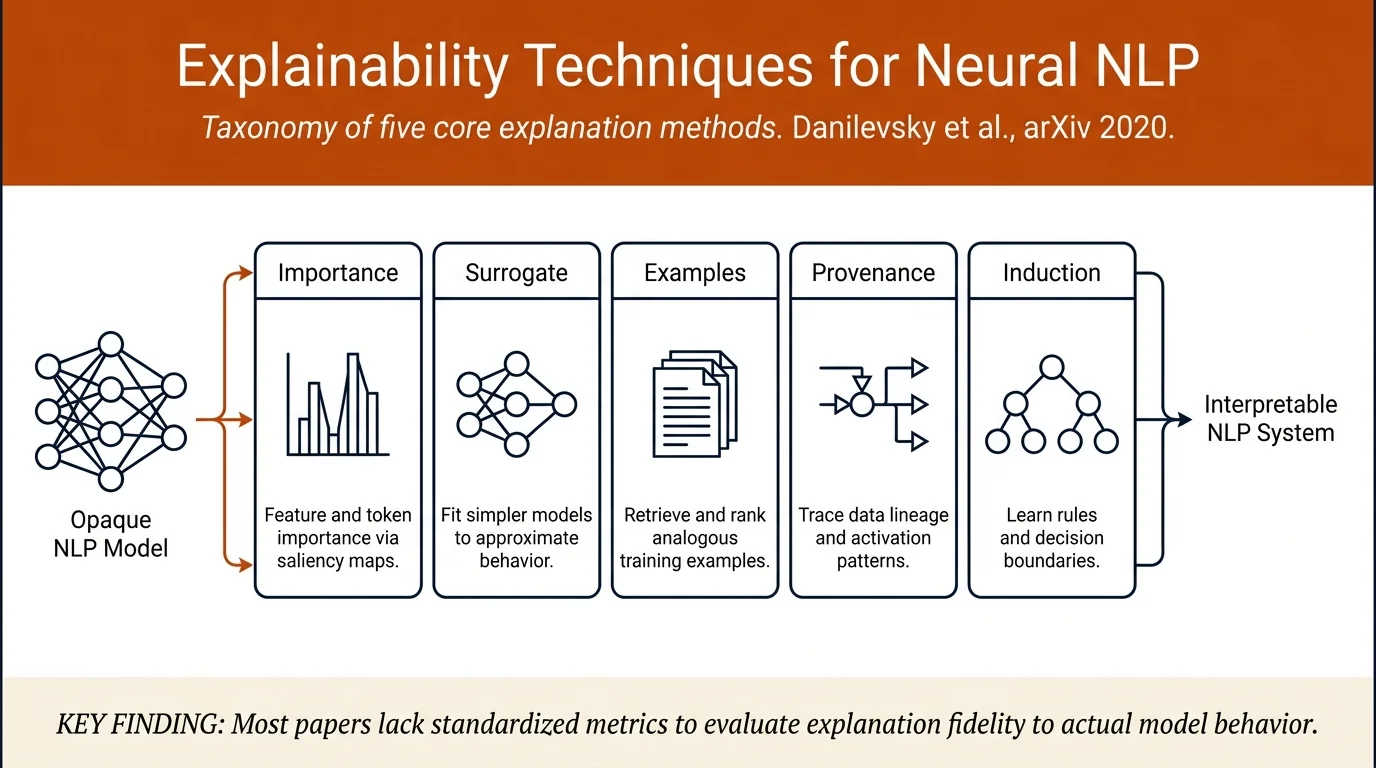
A Survey of the State of Explainable AI for Natural Language ProcessingRecent neural NLP models achieve strong performance but are often opaque. This survey systematically reviews explainable AI (XAI) research in NLP across 50 papers from major conferences (2013–2019), categorizing explanations by scope (local vs. global) and generation (self-explaining vs. post-hoc), detailing five major techniques…