Explore everything
Filter by research area, year and venue. Every filter is in the address bar, so you can share a view as a link.
 Spread & networksBots & coordinated campaigns
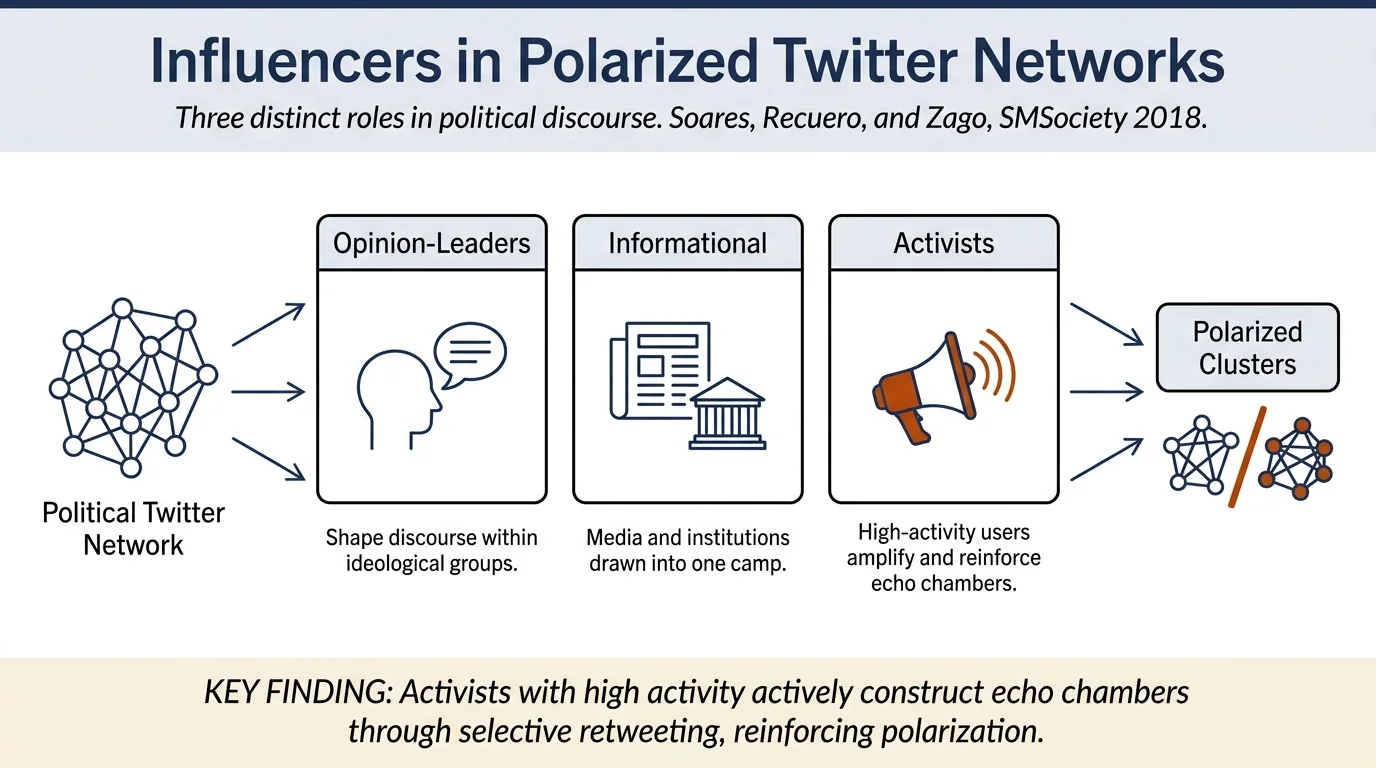
Influencers in Polarized Political Networks on TwitterThis paper identifies three types of influencers in polarized political Twitter conversations during Brazil's 2016 Dilma Rousseff impeachment: "opinion leaders" who shape discourse within ideological groups, "informational influencers" (media/institutions) drawn into one camp, and "activists" who amplify like-minded messages. The…
 Bots & coordinated campaignsSpread & networks
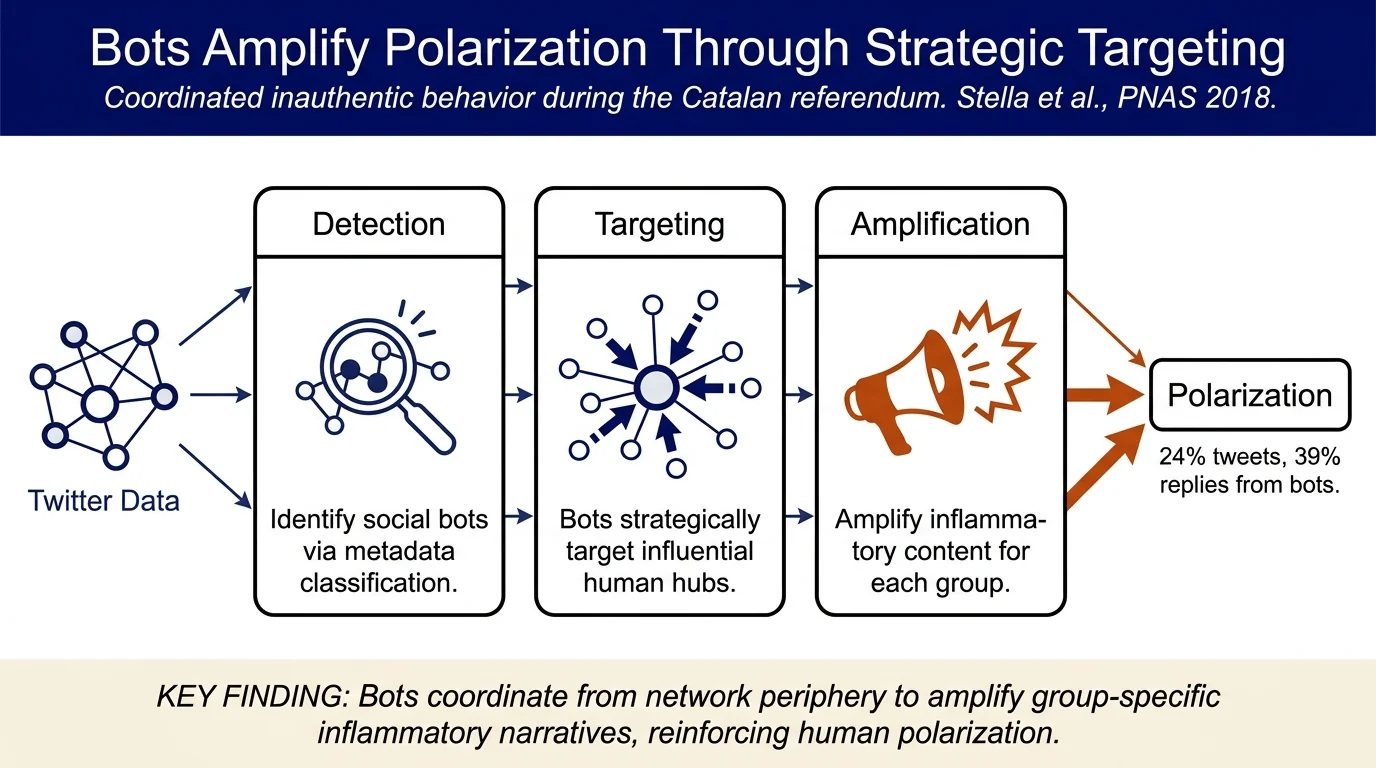
Bots increase exposure to negative and inflammatory content in online social systemsSocial bots during the 2017 Catalan independence referendum strategically targeted influential humans to amplify negative and inflammatory content. Operating from network peripheries, bots coordinated sentiment-driven amplification that exacerbated polarization, with approximately one in three referendum-related tweets generated by bots.
 Psychology & interventionsPlatforms, policy & society
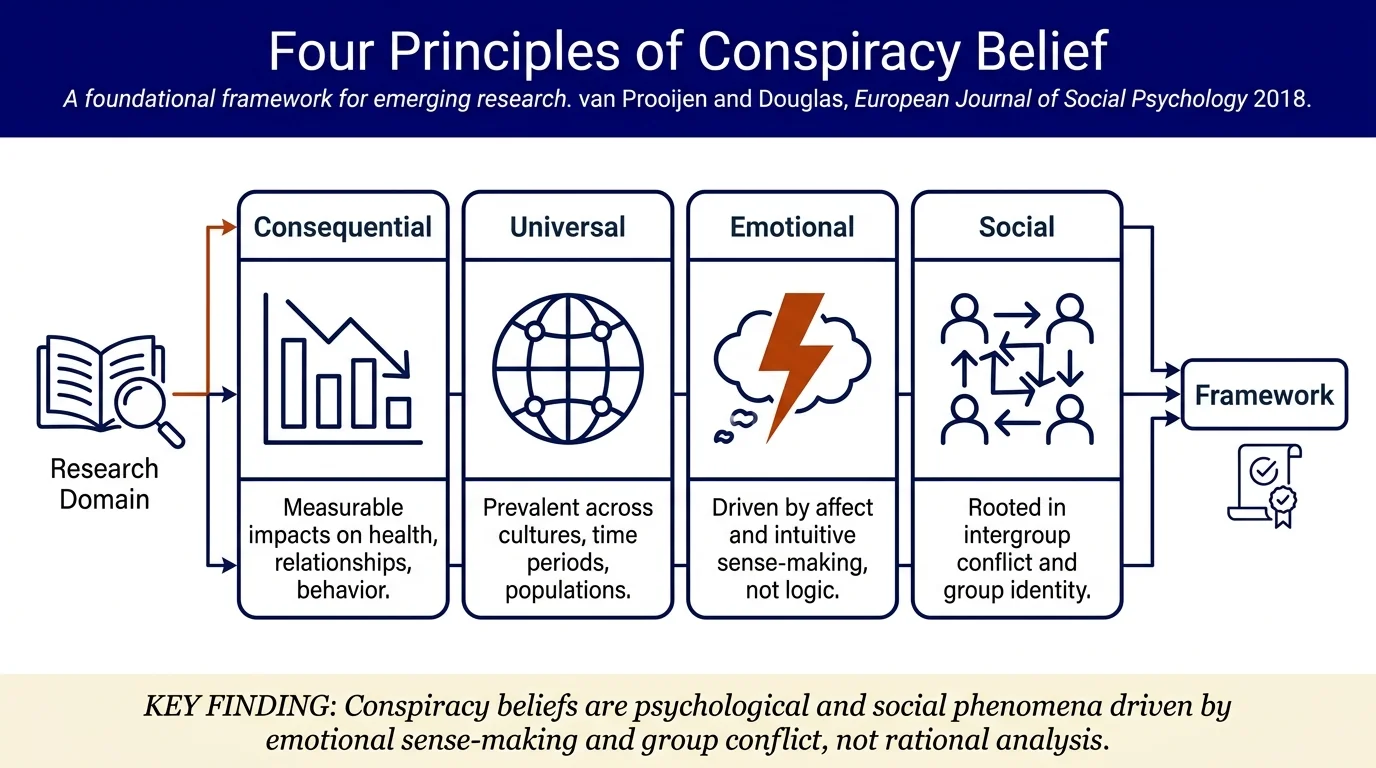
Belief in conspiracy theories: Basic principles of an emerging research domainThis special issue introduction proposes four foundational principles for the emerging scientific study of conspiracy belief: conspiracy beliefs are consequential (with real impacts on health and relationships), universal (across cultures and historical periods), emotional (driven by sense-making rather than logic), and social (rooted in…
 Detection methodsSpread & networks
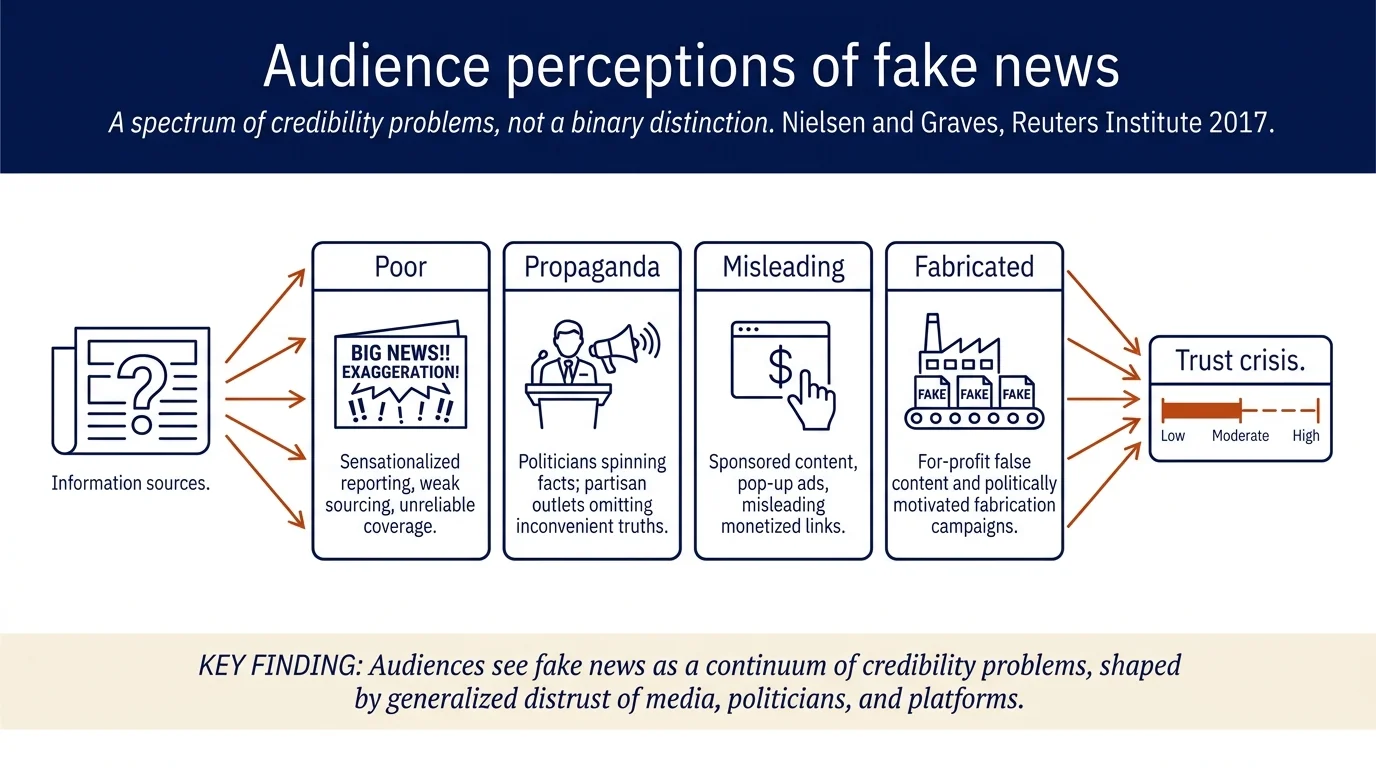
"News you don't believe": Audience perspectives on fake newsUsing focus groups and surveys across the US, UK, Spain, and Finland, Nielsen and Graves find that ordinary people see fake news as a spectrum rather than a binary distinction—encompassing poor journalism, political propaganda, misleading advertising, and fabricated content. Audiences experience the "fake news" problem as one of degree,…
 Fact-checking & verificationPsychology & interventions
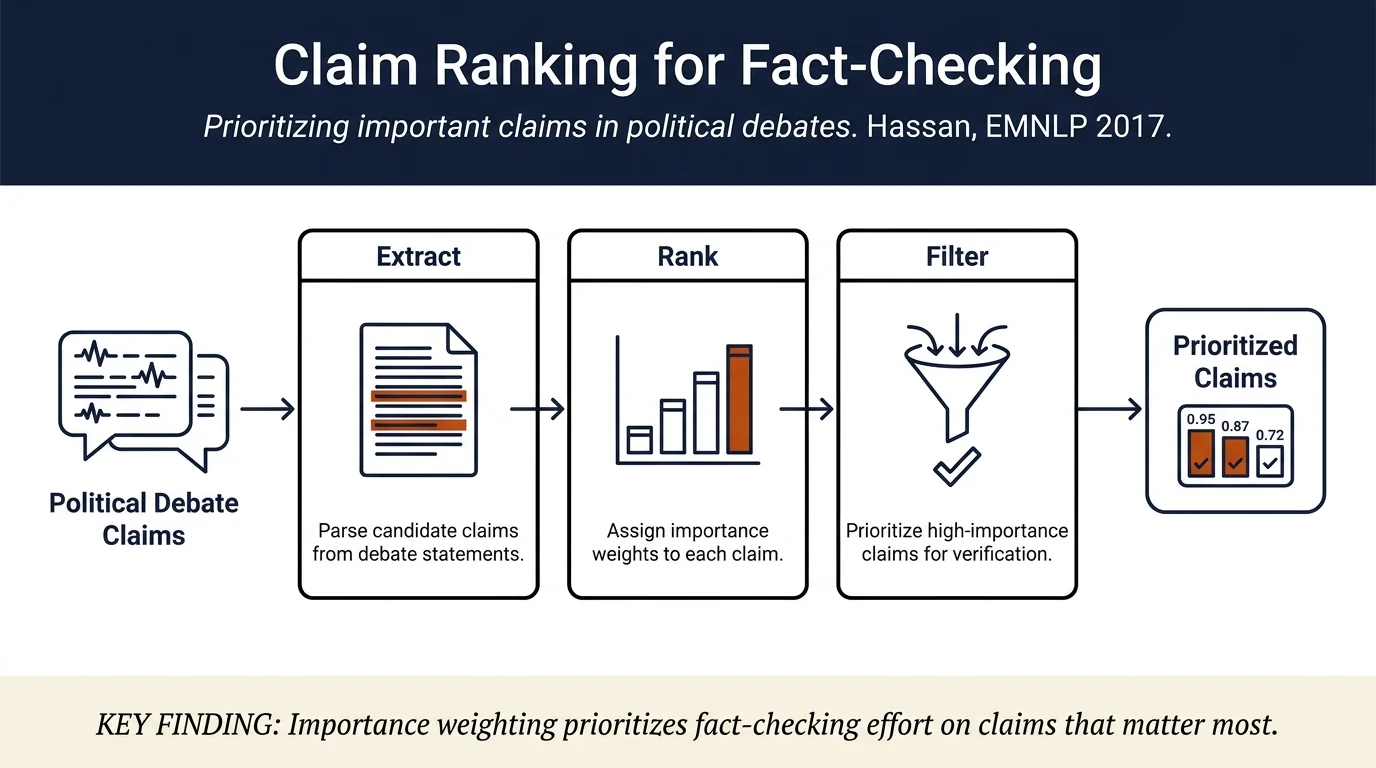
Claim Ranking in Political DebatesEarly work framing check-worthiness as claim ranking; introduces the notion of "importance weighting" for prioritizing claims for fact-checking in political debates. Foundational for understanding which claims warrant verification effort.
 Bots & coordinated campaignsSpread & networks
Social Bots and the Spread of Fake NewsA presentation on how social bots amplify misinformation spread on Twitter and other social platforms. The speaker discusses bot detection techniques (network structure, user behavior, temporal patterns), case studies of coordinated bot campaigns (2010–2016 elections, vaccine debates, Brexit), findings showing bots act as "igniters" in…
 Spread & networksFact-checking & verification
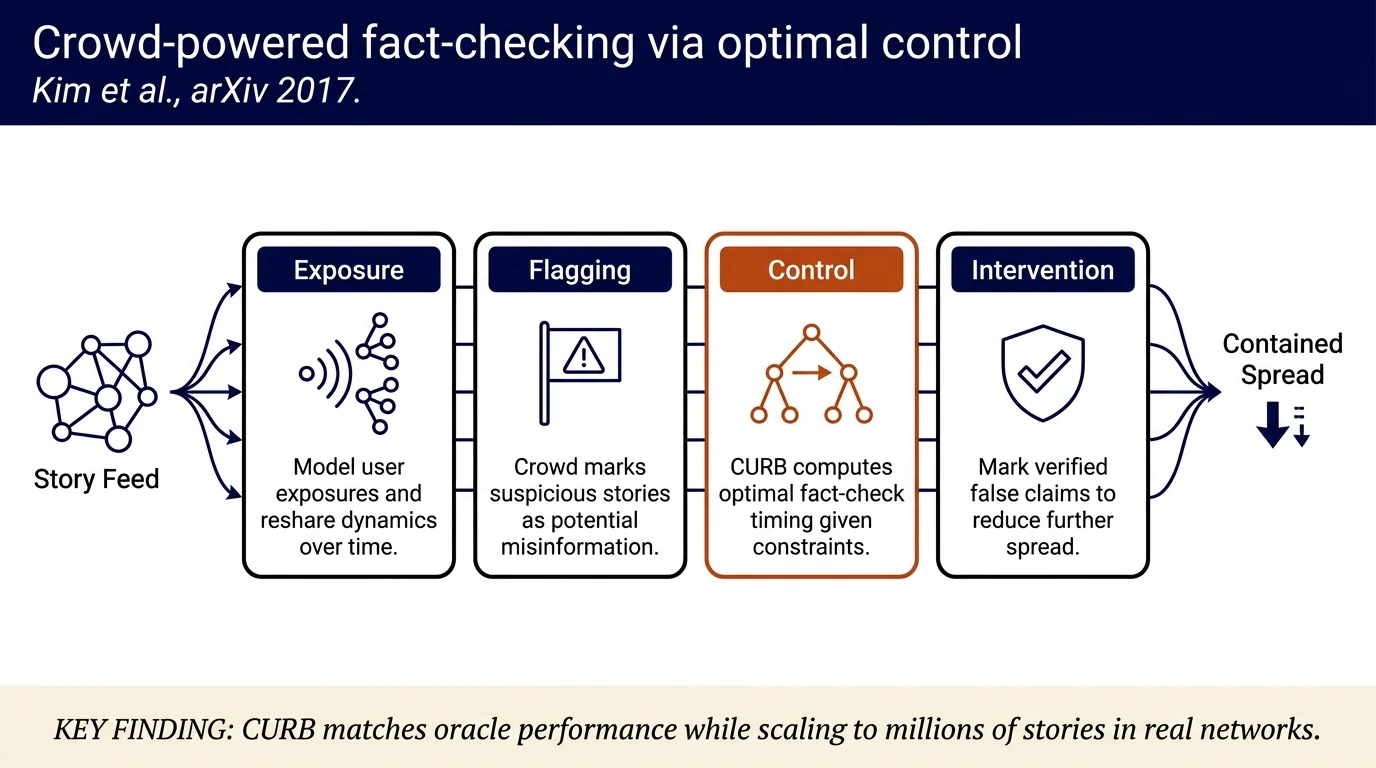
Leveraging the Crowd to Detect and Reduce the Spread of Fake News and MisinformationOnline social networks use crowd-powered flagging to identify misinformation: when users flag a story, enough flags trigger fact-checking, which disputes false claims. This paper formulates the problem of deciding which stories to fact-check and when, subject to limited fact-checking resources, as a stochastic optimal control problem.
 Bots & coordinated campaignsDetection methods
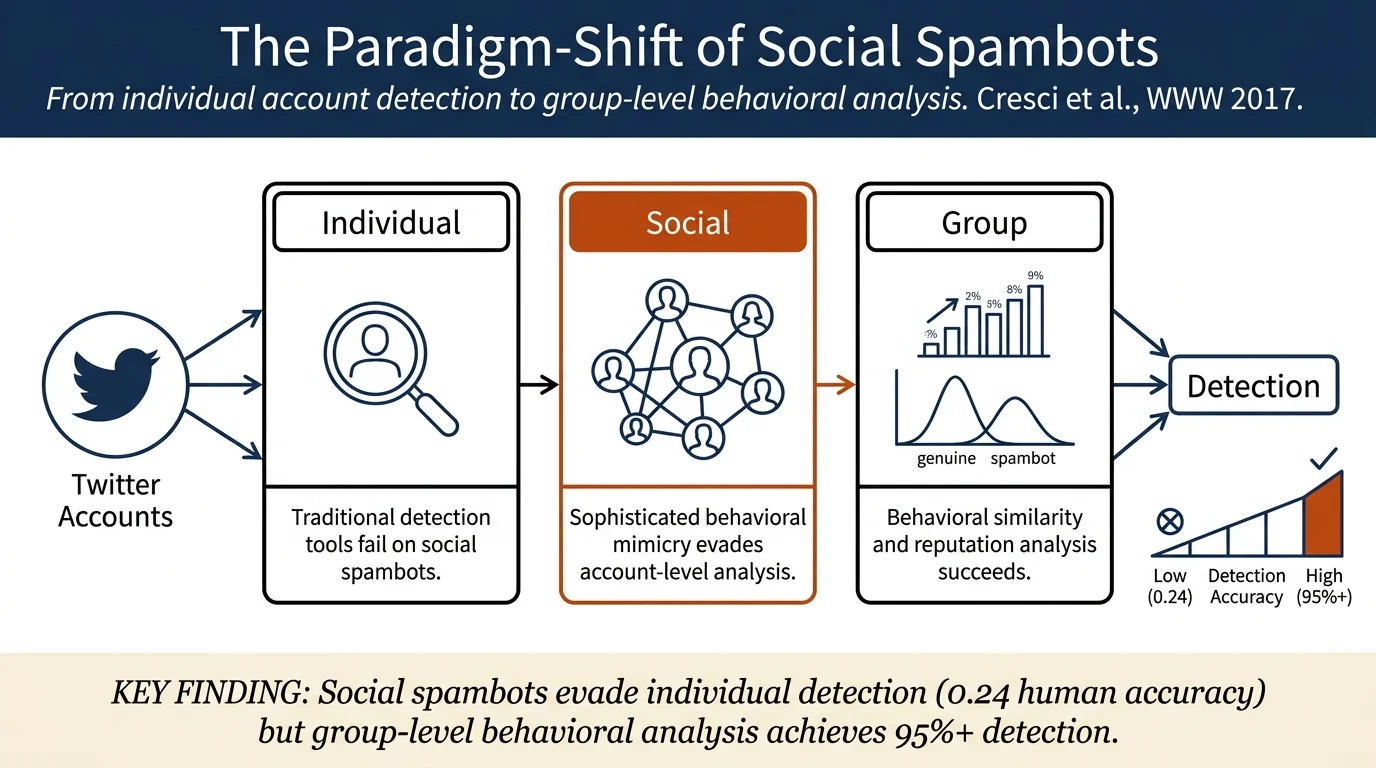
The Paradigm-Shift of Social Spambots: Evidence, Theories, and Tools for the Arms RaceThis paper provides empirical evidence of a paradigm shift in spambot design on Twitter, where new "social spambots" closely mimic genuine user behavior and successfully evade detection. Neither Twitter's automated systems, human annotators, nor established academic detection tools can effectively identify these accounts; however,…
 Spread & networksDatasets & evaluation
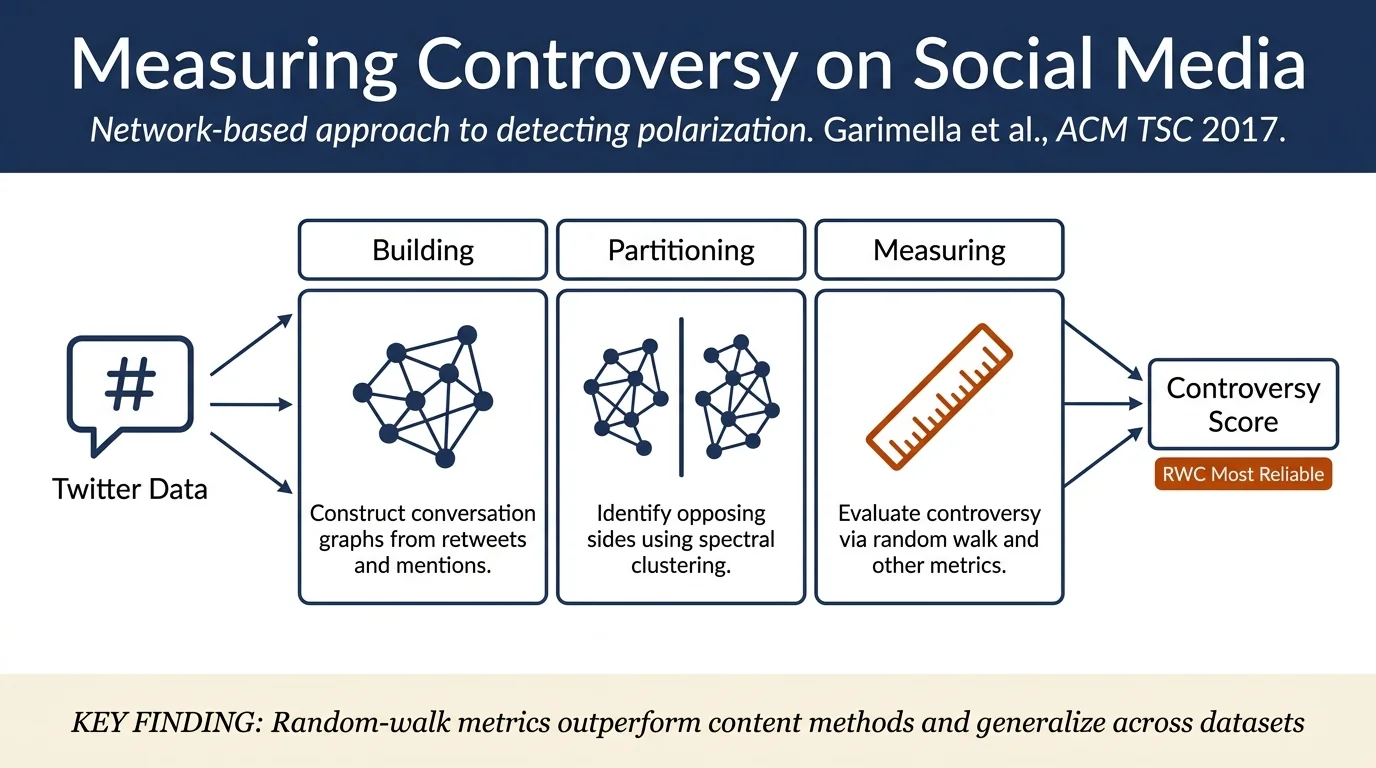
Quantifying Controversy on Social MediaThis work presents a graph-based pipeline to measure controversy in social media discussions. The authors build conversation graphs from Twitter interactions (retweets, follows, mentions), partition them to identify opposing sides, and apply multiple controversy measures—with a random-walk-based metric (RWC) emerging as the most reliable…
 Spread & networksBots & coordinated campaigns
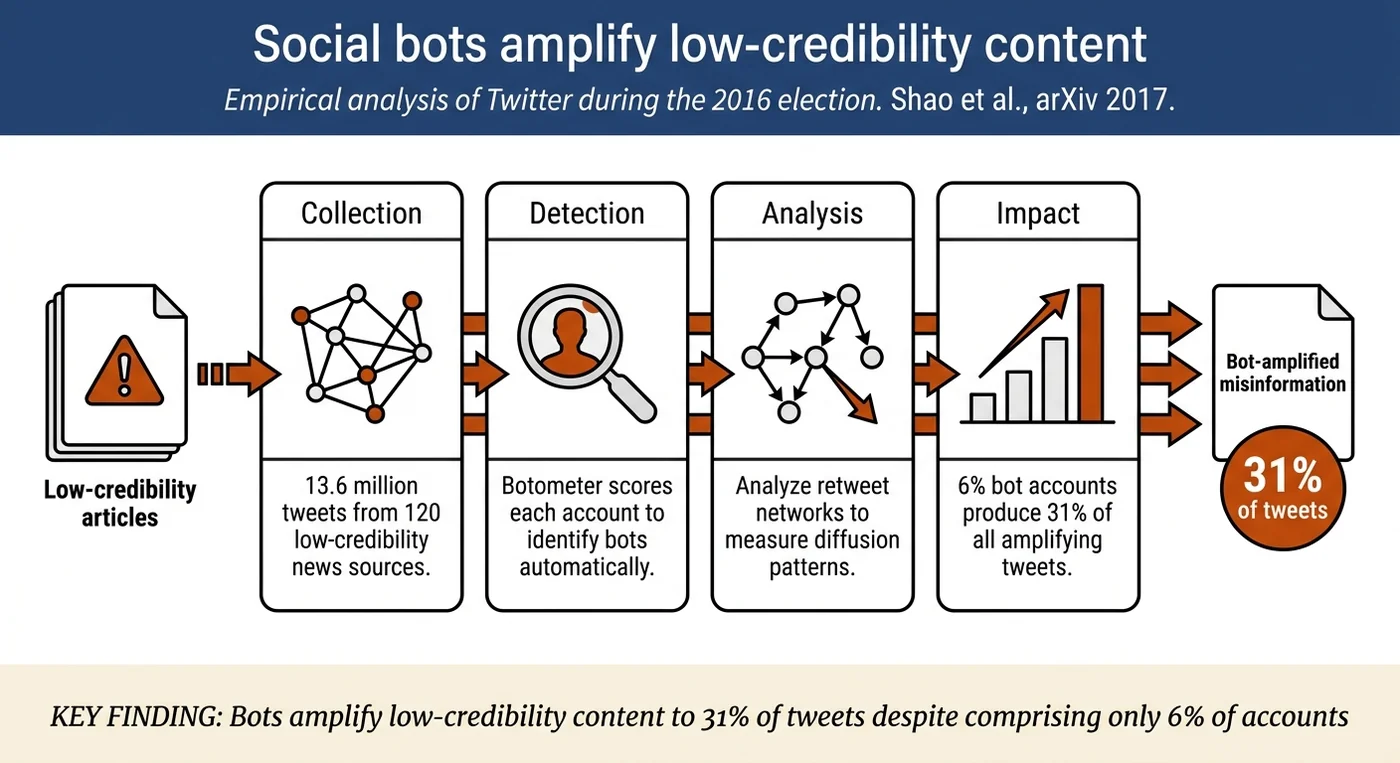
The spread of low-credibility content by social botsEmpirical analysis of 14 million Twitter messages during the 2016 U.S. election finds social bots disproportionately amplify low-credibility content: though bots comprise only 6% of accounts sharing such content, they account for 31% of tweets. Bots employ two strategies—rapid early amplification and targeting of influential users—making…
 Spread & networksPsychology & interventions
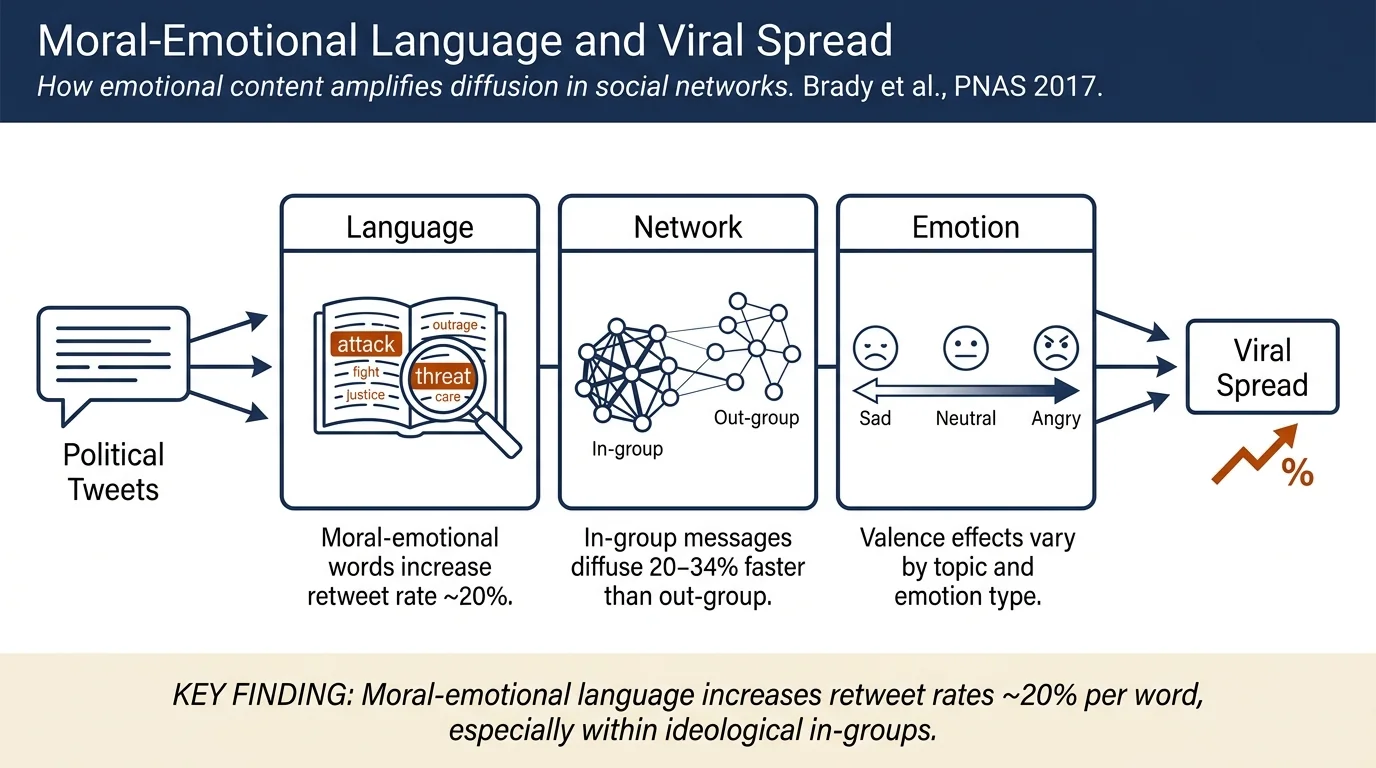
Emotion shapes the diffusion of moralized content in social networksMoral-emotional language (words combining moral and emotional content) increases message diffusion in social networks by ~20% per word. This effect is stronger within political in-groups than out-groups, explaining how moral and political ideas spread within polarized "echo chambers" on platforms like Twitter.
 Spread & networksPsychology & interventions
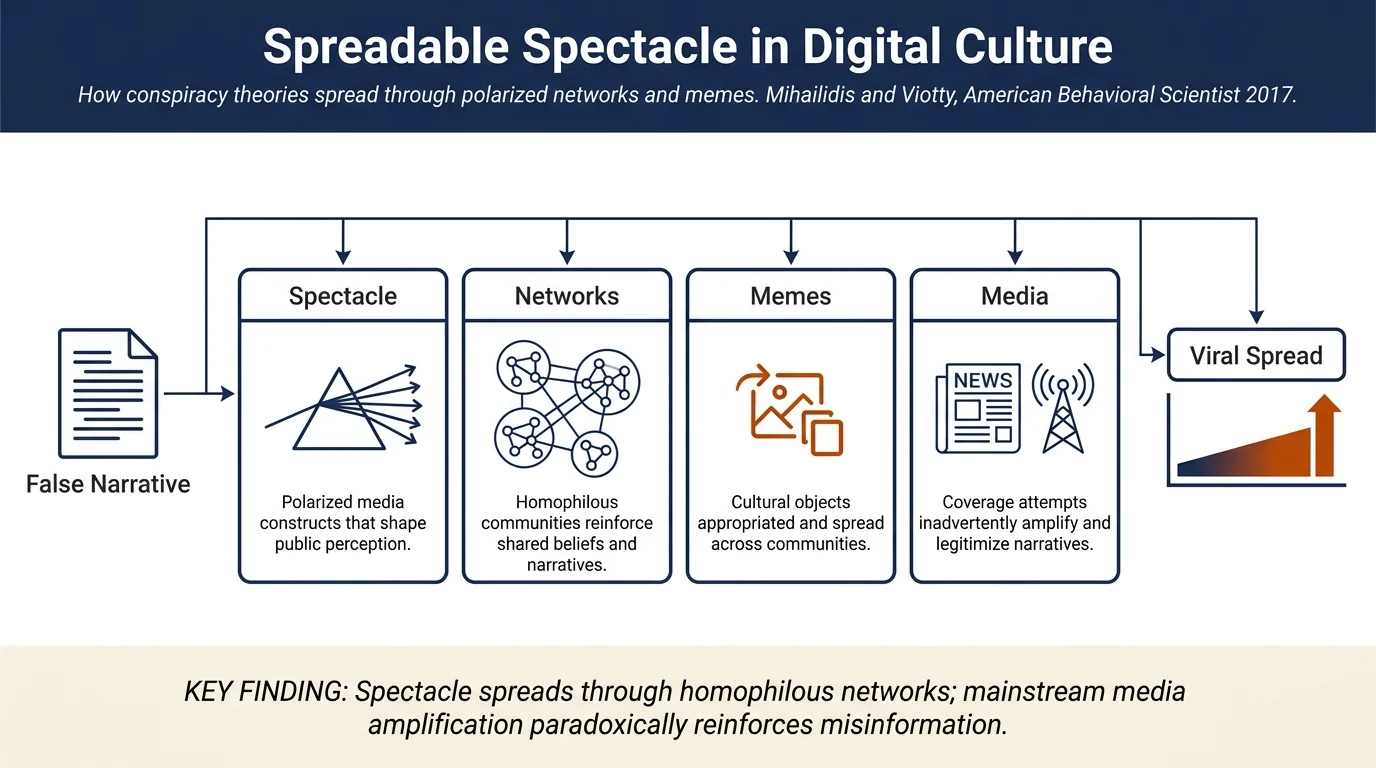
Spreadable Spectacle in Digital Culture: Civic Expression, Fake News, and the Role of Media Literacies in "Post-Fact" SocietyThis paper explores how spectacle—media constructs outside ordinary routine that capitalize on polarization—spreads through digital culture during the 2016 U.S. election. Using the Pizzagate conspiracy theory as a case study, the authors argue that citizen-driven spectacle leverages homophilous networks, memes, and appropriated cultural…
 Bots & coordinated campaignsPlatforms, policy & society
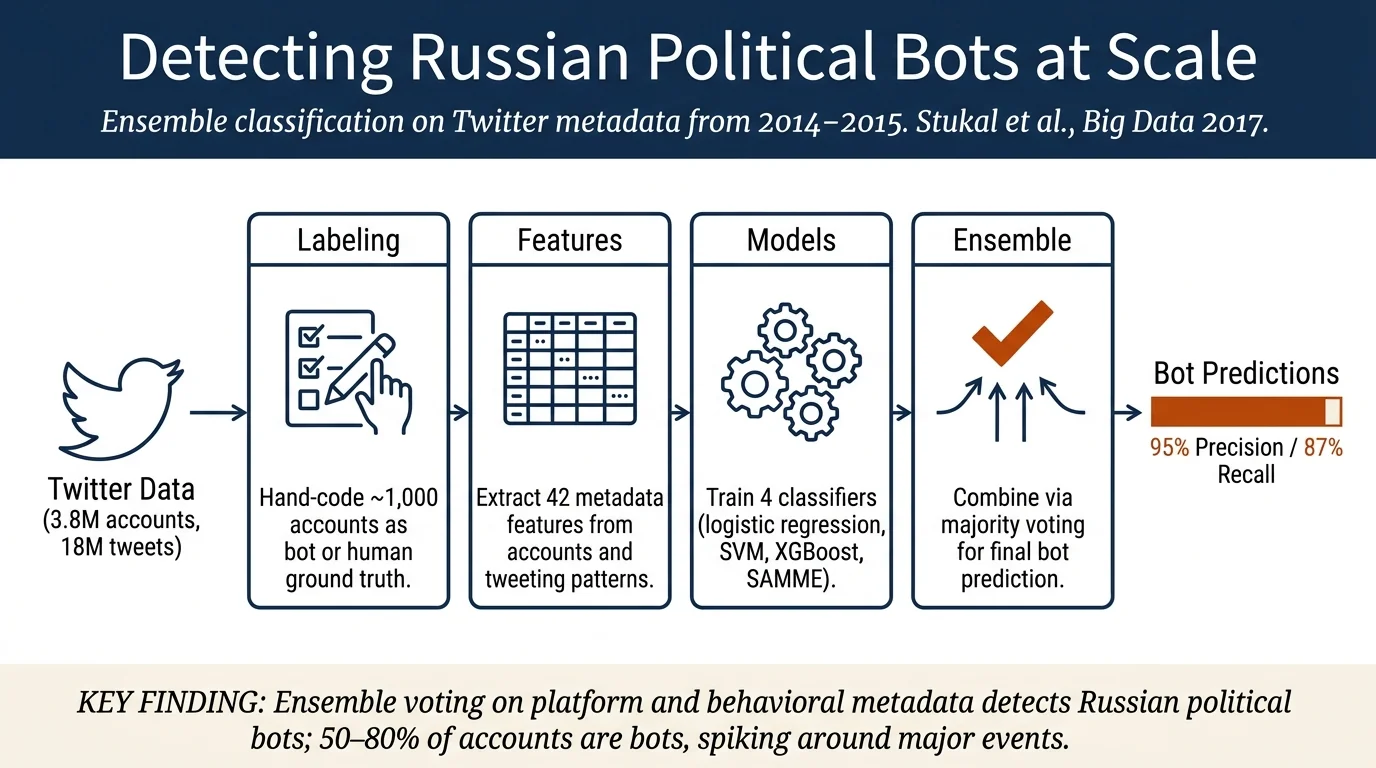
Detecting Bots on Russian Political TwitterAutomated Twitter accounts (bots) represent 50% of activity in Russian political discourse. Using supervised ensemble classifiers on 3.8M accounts and 18M tweets from 2014–2015, the authors achieve 95% precision in detecting bots while maintaining 75% recall.
 Platforms, policy & societyFact-checking & verification
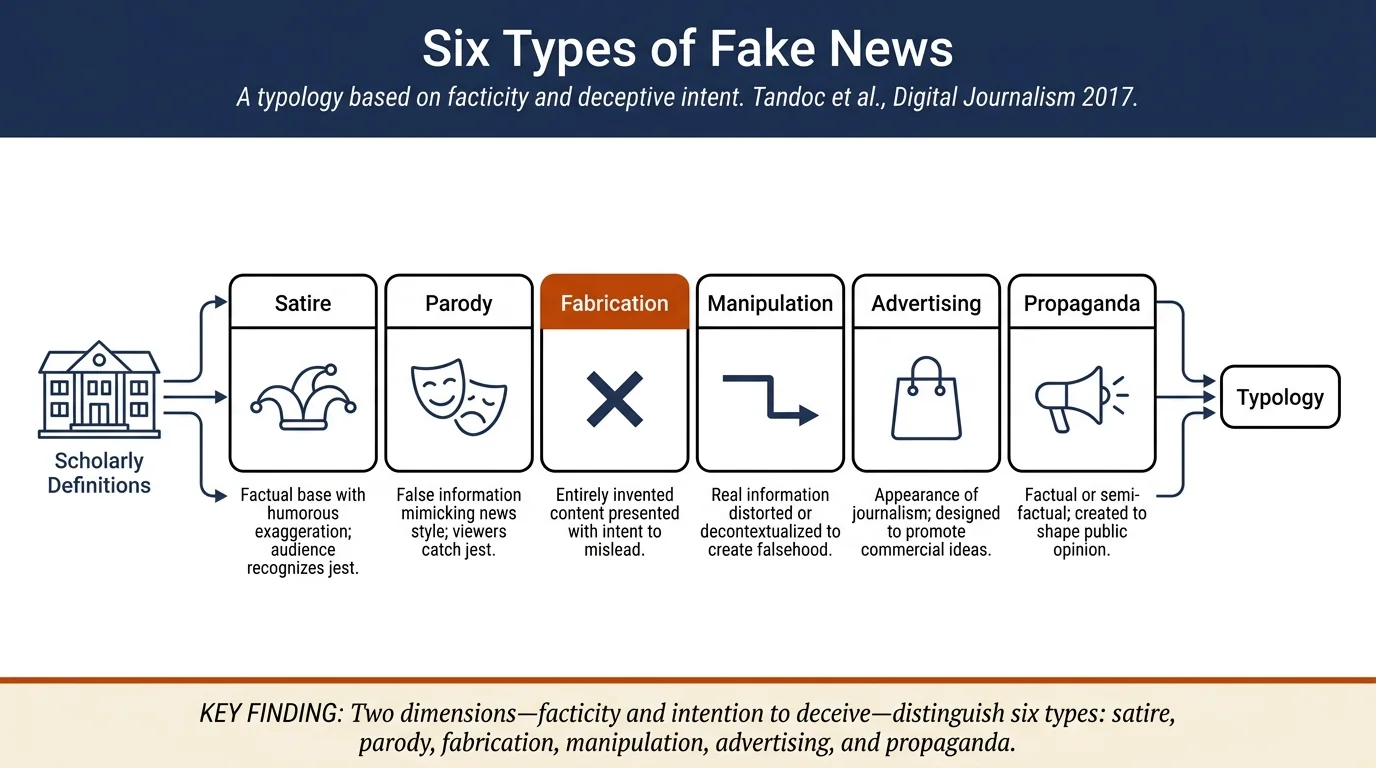
Defining "Fake News": A typology of scholarly definitionsThis paper reviews 34 academic studies (2003–2017) that use the term "fake news" and proposes a unified typology based on two dimensions: level of facticity (reliance on facts) and author's intention to deceive. The typology identifies six distinct types—satire, parody, fabrication, manipulation, advertising, and propaganda—clarifying…
 Psychology & interventionsPlatforms, policy & society
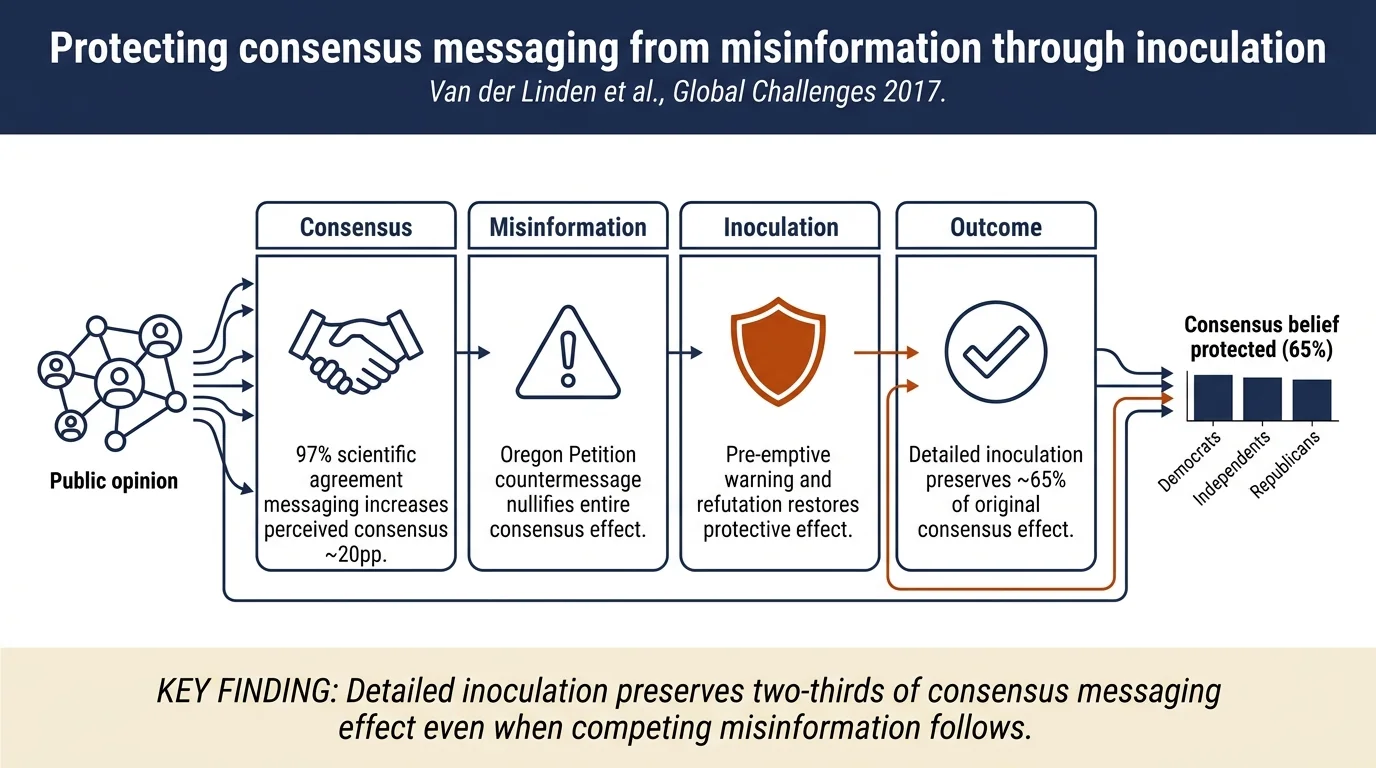
Inoculating the Public against Misinformation about Climate ChangeLarge-scale experiments (N=2,167) demonstrate that misinformation about scientific consensus on climate change nullifies the effect of consensus messaging. Pre-emptive inoculation—warning people about misleading tactics and providing refutations—preserves two-thirds of the consensus effect.
 Spread & networksPlatforms, policy & society
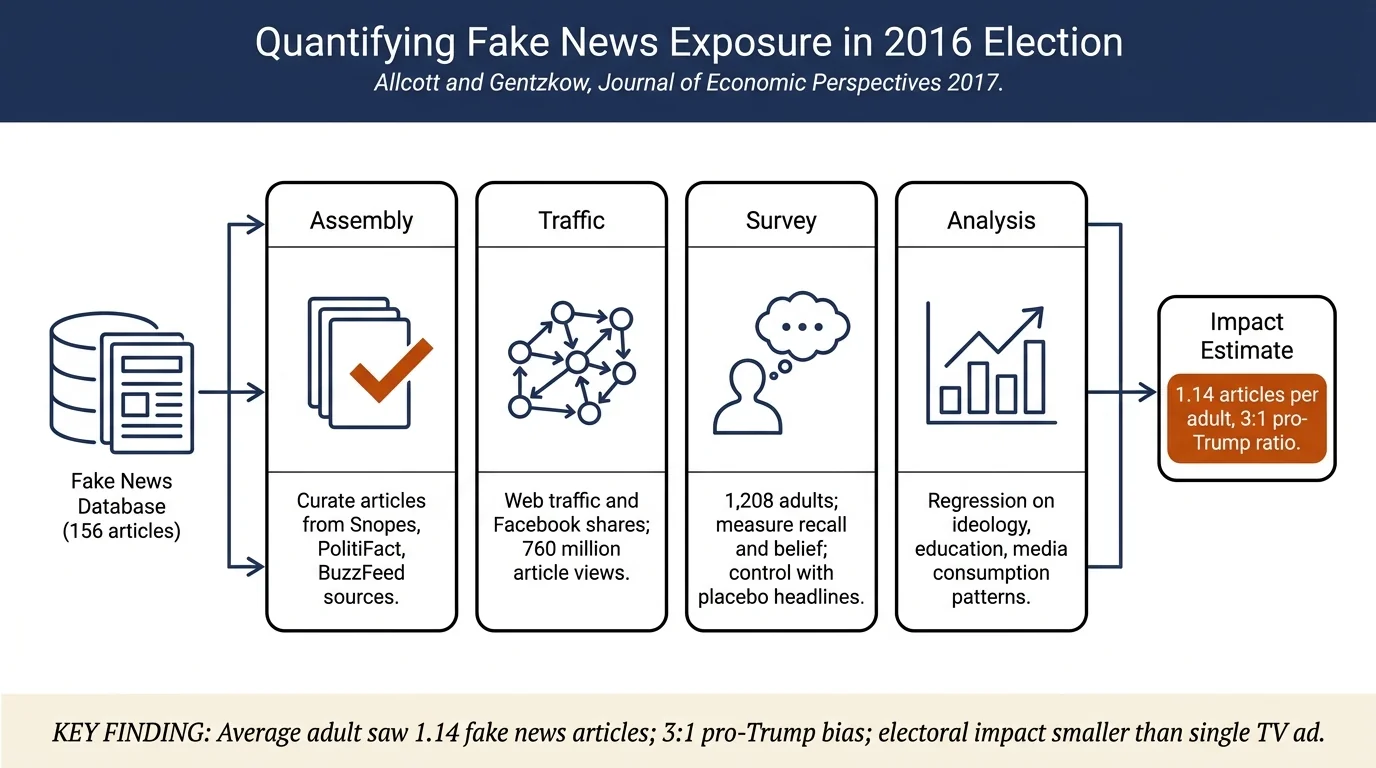
Social Media and Fake News in the 2016 ElectionAllcott and Gentzkov provide the first comprehensive empirical evidence on fake news exposure during the 2016 US election. Drawing on a curated database of 156 fake news articles, web traffic data, and a post-election survey of 1,200 adults, they estimate the average American saw and remembered 1.14 fake news articles during the election…
 Psychology & interventionsPlatforms, policy & society
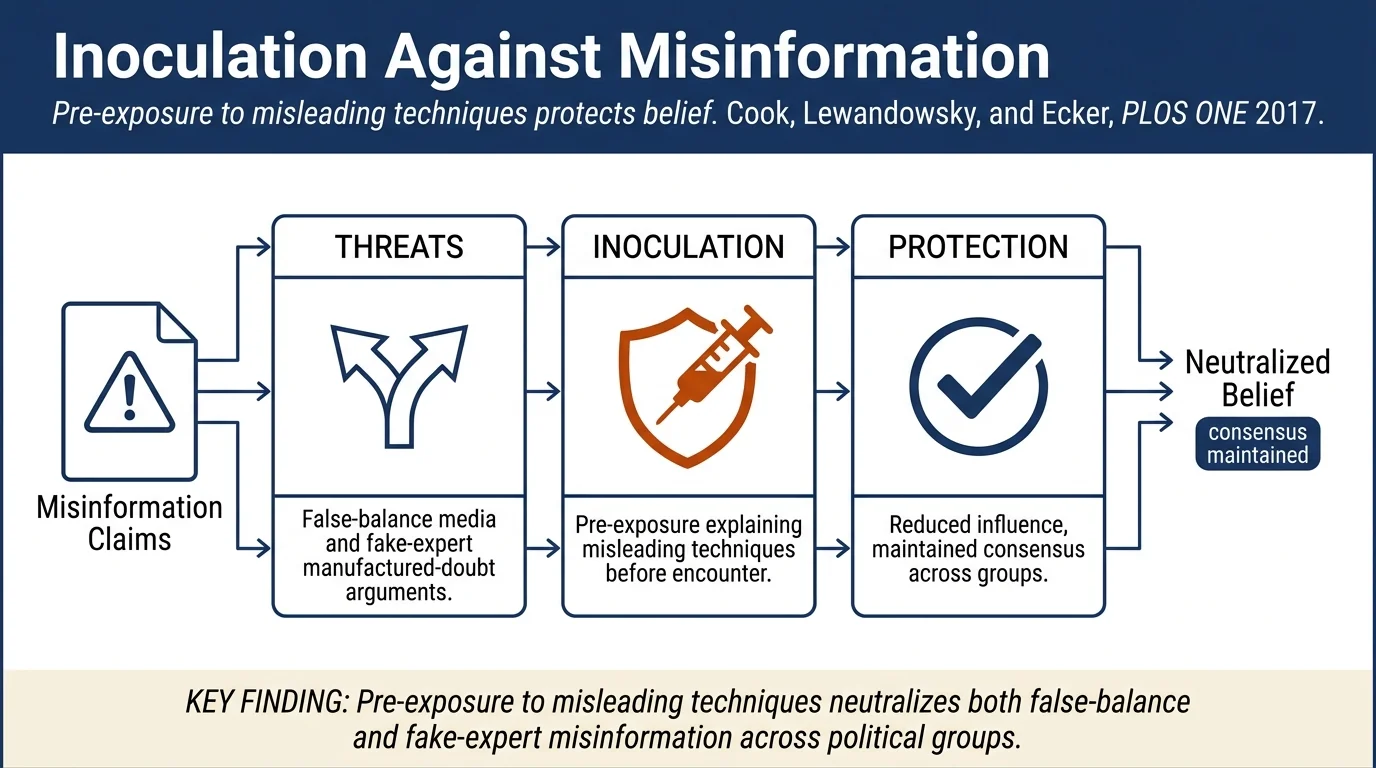
Neutralizing misinformation through inoculation: Exposing misleading argumentation techniques reduces their influencePre-emptively exposing people to flawed arguments before they encounter misinformation (inoculation) reduces that misinformation's influence. Two experiments tested this on climate change: false-balance media coverage (equal weight to consensus vs. contrarian scientists) and fake-expert arguments (using unqualified scientists to…
 Spread & networksPlatforms, policy & society
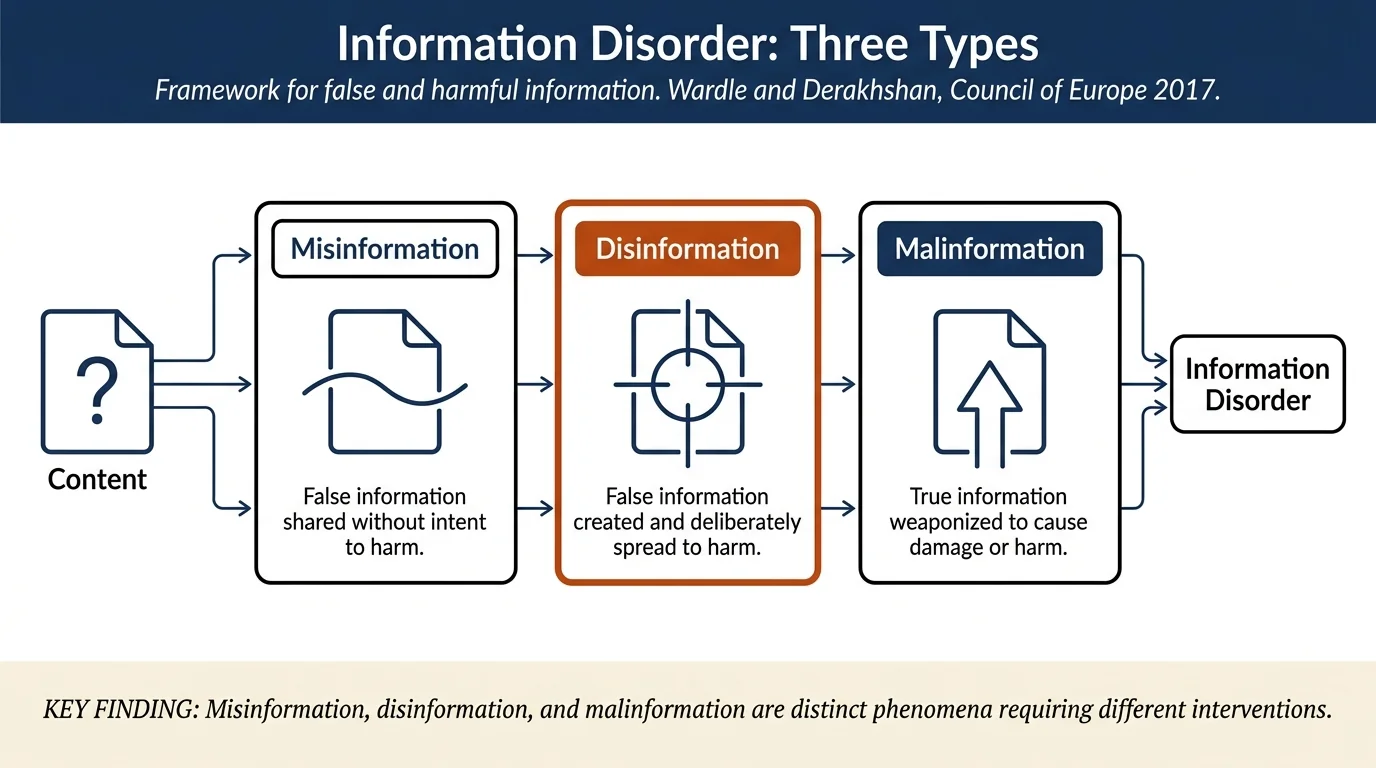
Information Disorder: Toward an Interdisciplinary Framework for Research and Policy MakingThis Council of Europe report introduces a comprehensive framework for understanding "information disorder" via three types (mis-, dis-, mal-information) defined by falseness and intent-to-harm. It examines the agents, messages, and interpreters involved, the creation-production-distribution lifecycle, and proposes 34 recommendations…
 Spread & networksPsychology & interventions
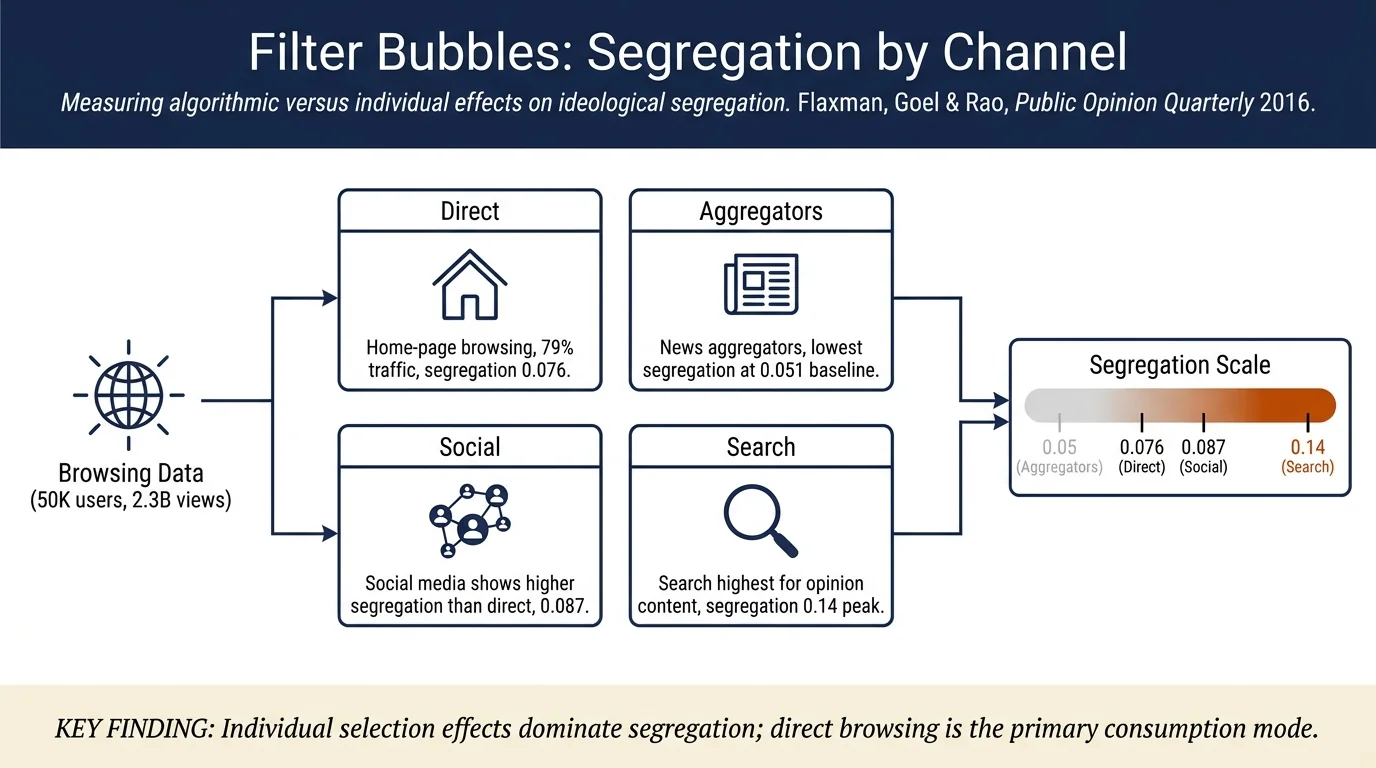
Filter Bubbles, Echo Chambers, and Online News ConsumptionThis paper examines whether technological changes (social media, search engines) increase ideological segregation in online news consumption by analyzing web-browsing data from 50,000 active news readers. They find that while social media and search are associated with higher segregation than direct browsing, the overall effects are…
 Datasets & evaluationFact-checking & verification
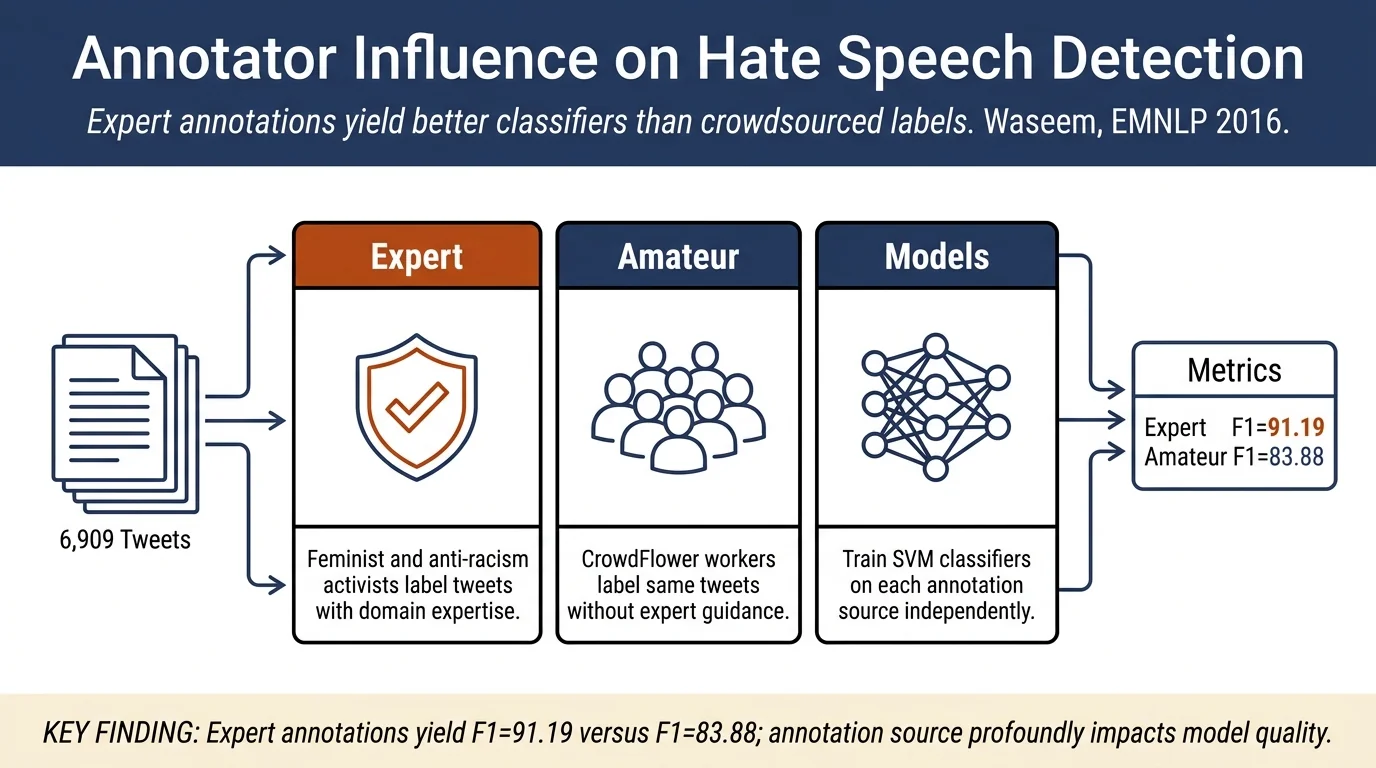
Are You a Racist or Am I Seeing Things? Annotator Influence on Hate Speech Detection on TwitterThis paper compares hate speech detection systems trained on expert annotations (from feminist and anti-racism activists) versus amateur annotations (crowdsourced via CrowdFlower) on 6,909 tweets. Systems trained on expert annotations significantly outperform those trained on amateur data, and amateur annotators systematically label more…
 Bots & coordinated campaignsDatasets & evaluation
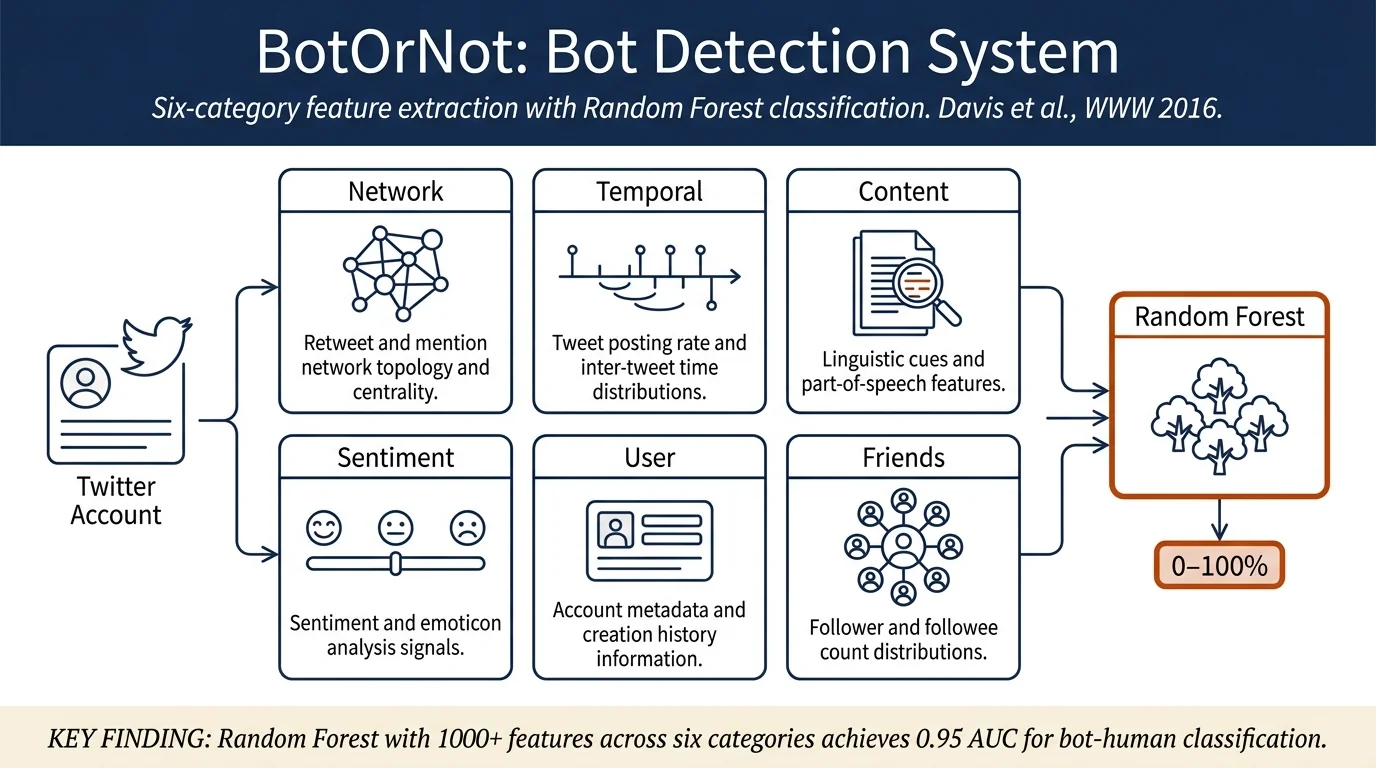
BotOrNot: A System to Evaluate Social BotsBotOrNot is a publicly available service and API that evaluates whether a Twitter account is controlled by a human or automated bot. Using 1,000+ features across six categories (network, user, friends, temporal, content, sentiment), the system applies Random Forest classification to achieve 0.95 AUC on a labeled dataset of 15k bots and…
 Spread & networksPlatforms, policy & society
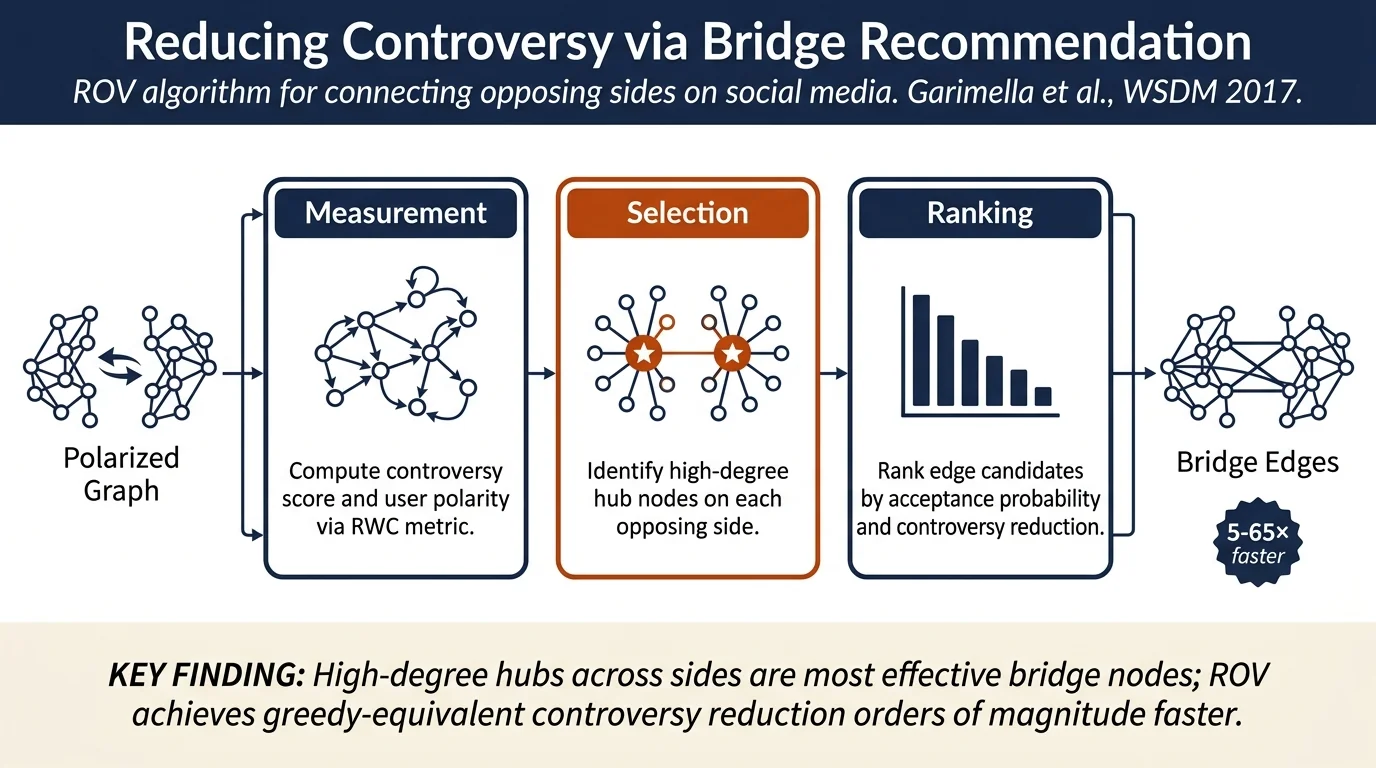
Reducing Controversy by Connecting Opposing ViewsThis paper proposes an algorithmic approach to reduce polarization on social media by recommending social connections (edges) between opposing sides. Using an endorsement graph representation and the random-walk-based controversy metric, the authors formulate the problem as k-edge-addition and develop an efficient algorithm (ROV) that…
 Spread & networksPlatforms, policy & society
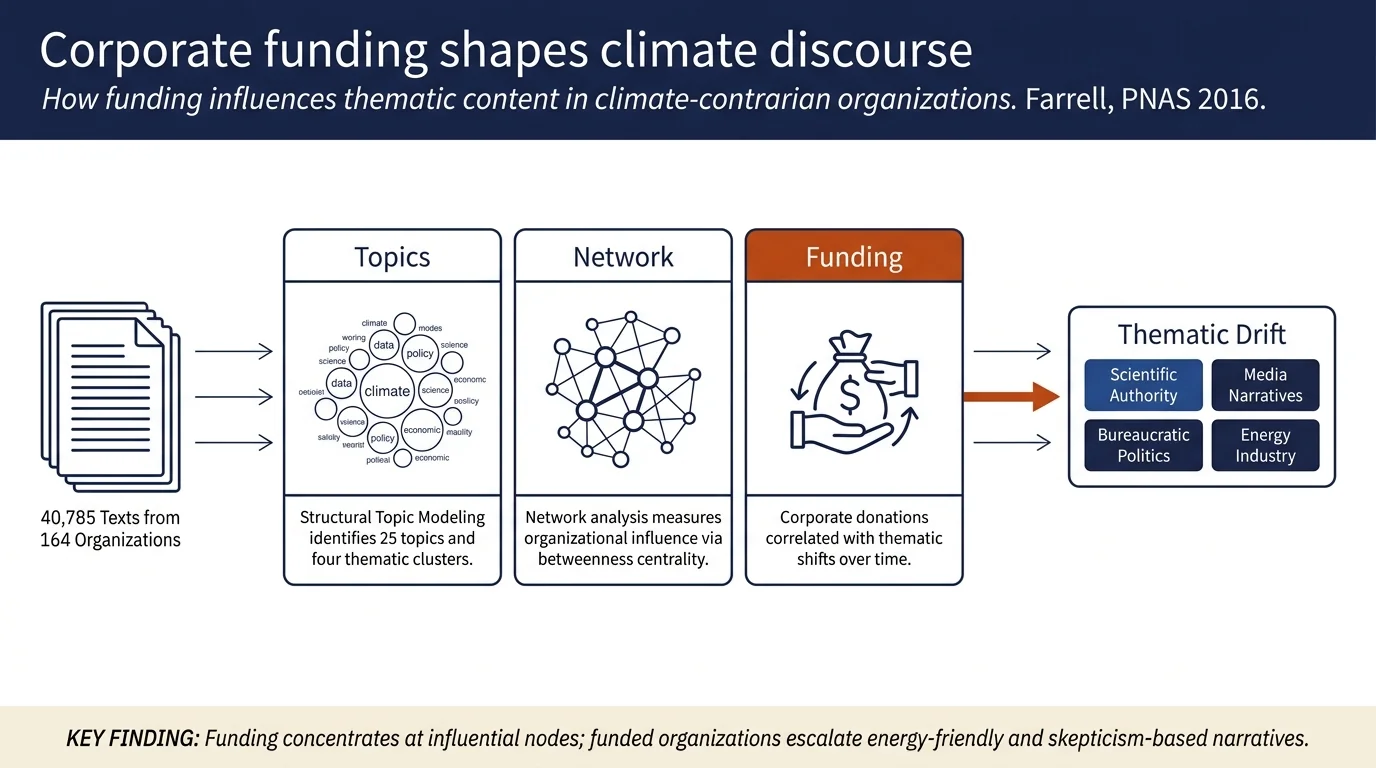
Corporate funding and ideological polarization about climate changeFarrell analyzes 40,785 texts (39+ million words) from 164 climate contrarian organizations between 1993–2013, employing Structural Topic Modeling and social network analysis to demonstrate that corporate funding from entities like ExxonMobil and Koch family foundations directly influences which polarization themes are created and…
 Fact-checking & verificationPlatforms, policy & society
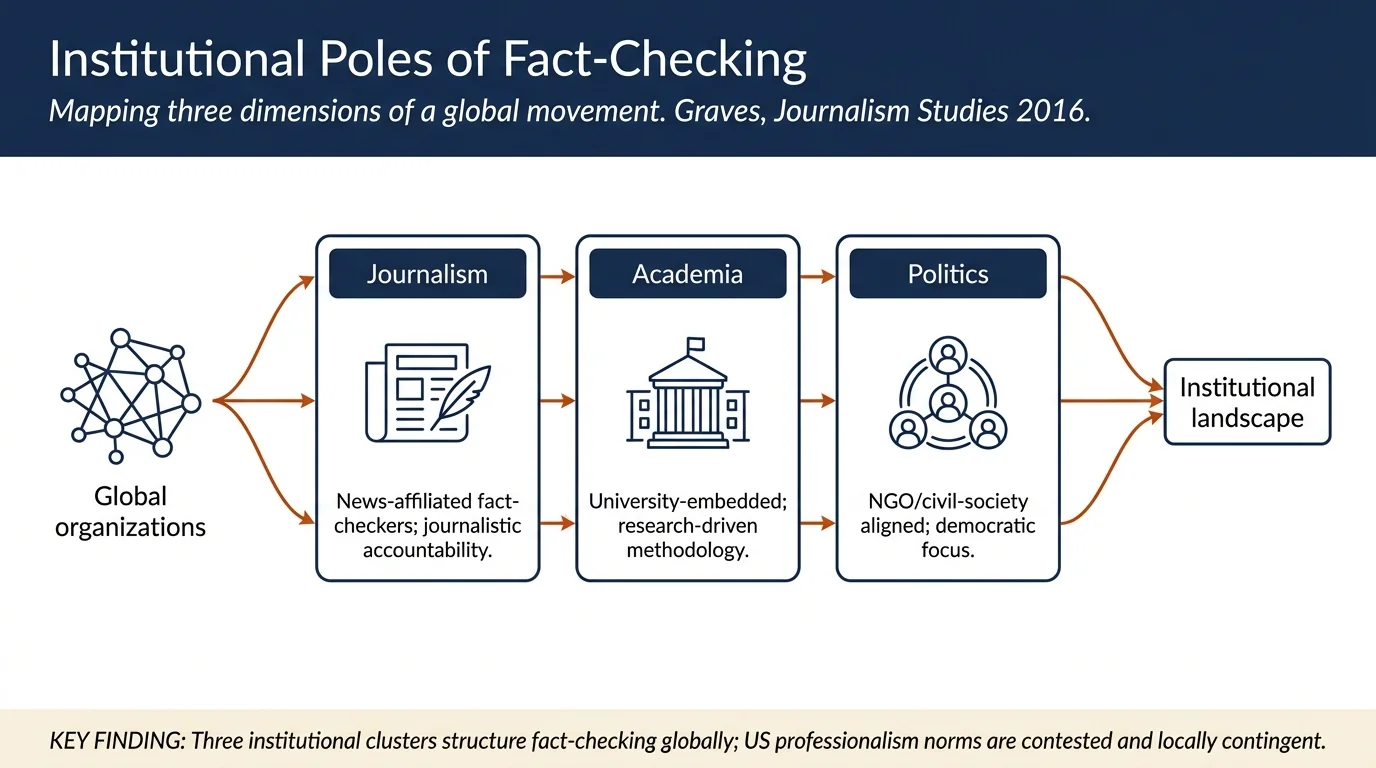
Boundaries Not Drawn: Mapping the institutional roots of the global fact-checking movementGraves maps the institutional landscape of 64+ fact-checking organizations globally across two summits (2014–2015), using ethnographic fieldwork and ternary plots to sort organizations along three axes: journalism, academia, and politics/civil society. The movement has a journalistic core but exhibits striking institutional diversity and…