Explore papers
Filter by research area, year and venue. Every filter is in the address bar, so you can share a view as a link.
 Spread & networksPlatforms, policy & society
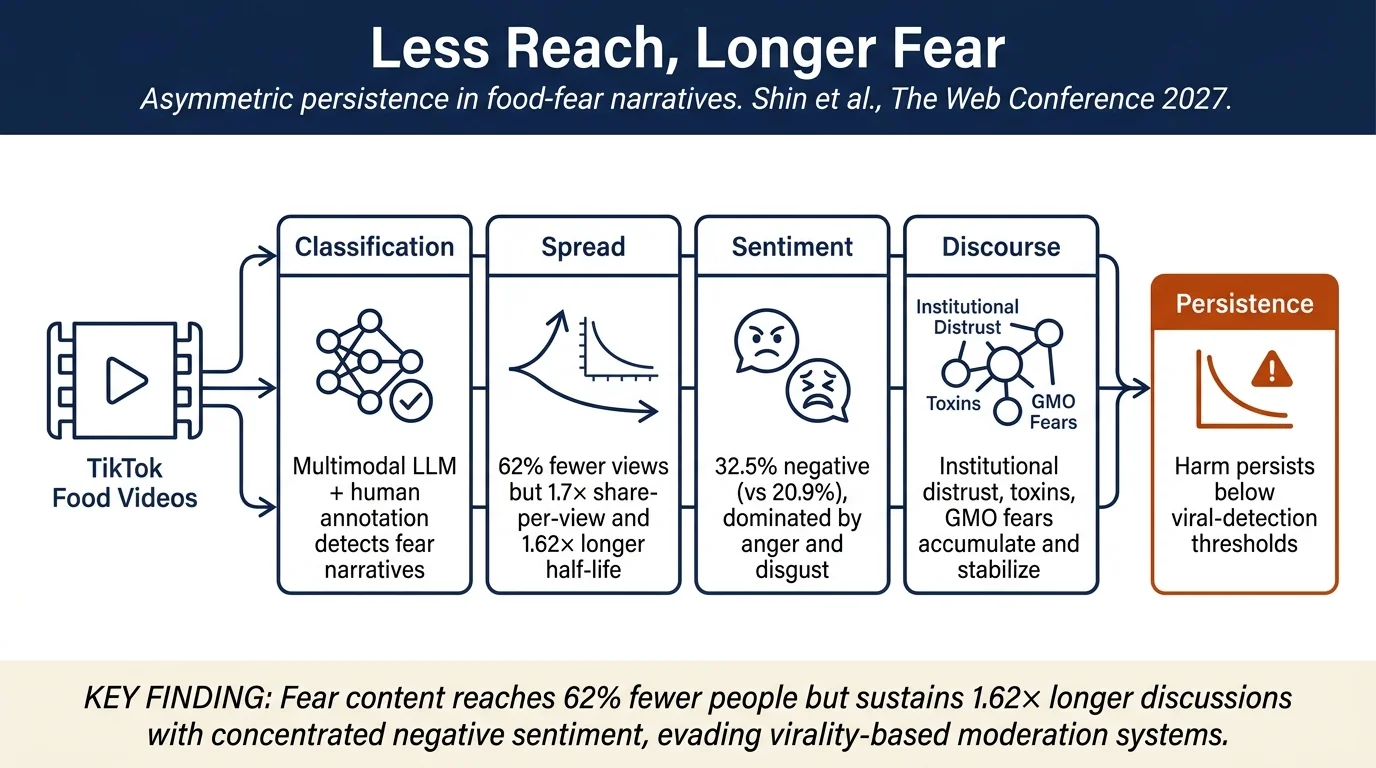
Fear Doesn't Go Viral, It Lingers: Spread, Affect, and Discourse of Food-Fear Content on TikTokFear-based content about food on TikTok reaches fewer people than non-fear nutrition videos but sustains engagement and discussion far longer. Fear videos trigger more negative, angry, and disgusted comments that persist for weeks; their discourse concentrates on distrust of food industry, contamination, and institutional skepticism.
 Detection methodsPlatforms, policy & society
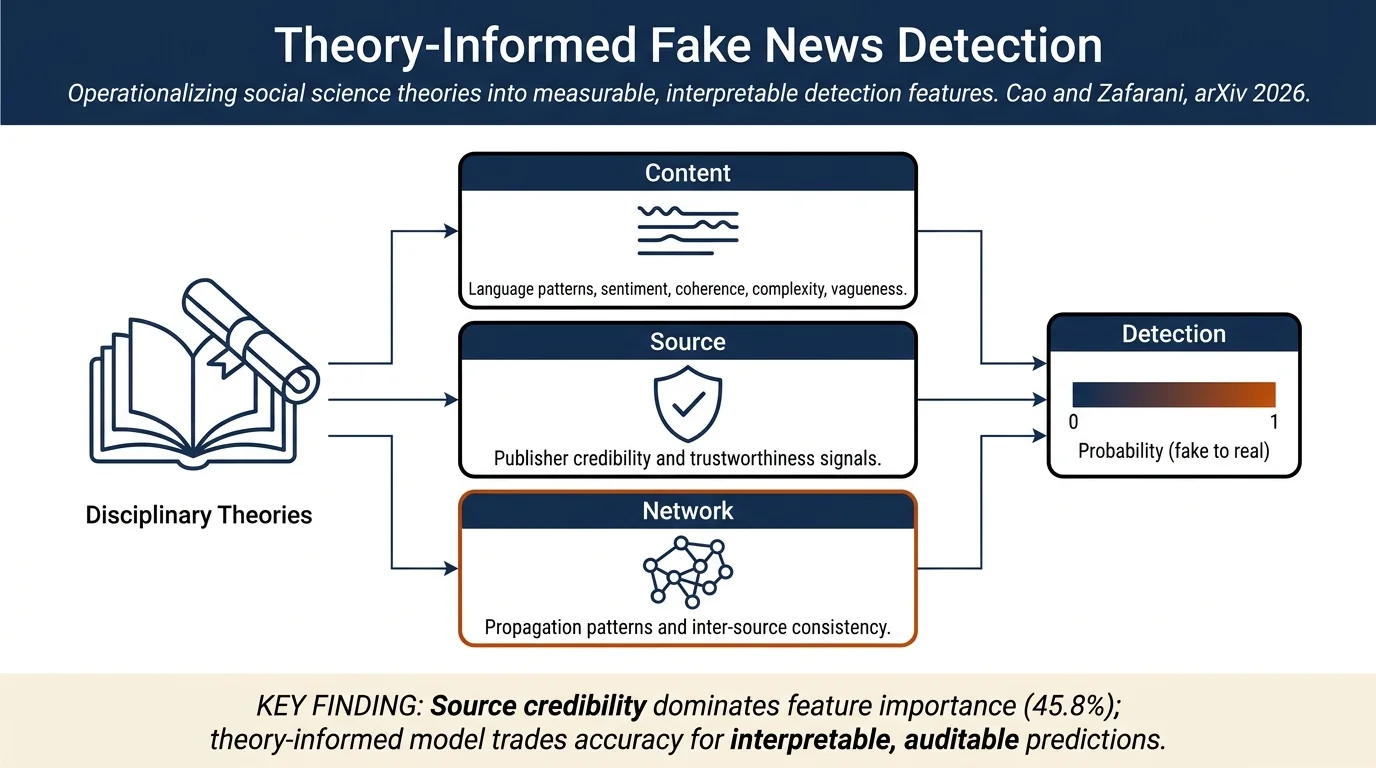
Fake News Theories: Harnessing Disciplinary Insights for Computational Modeling, Detection, and ExplanationThis paper develops a theory-informed computational framework that translates cross-disciplinary social science theories into interpretable, measurable features for fake news detection. The authors systematically review theories from communication, psychology, and economics—organized into content-based, source-related, and network-level…
 Fact-checking & verificationPlatforms, policy & society
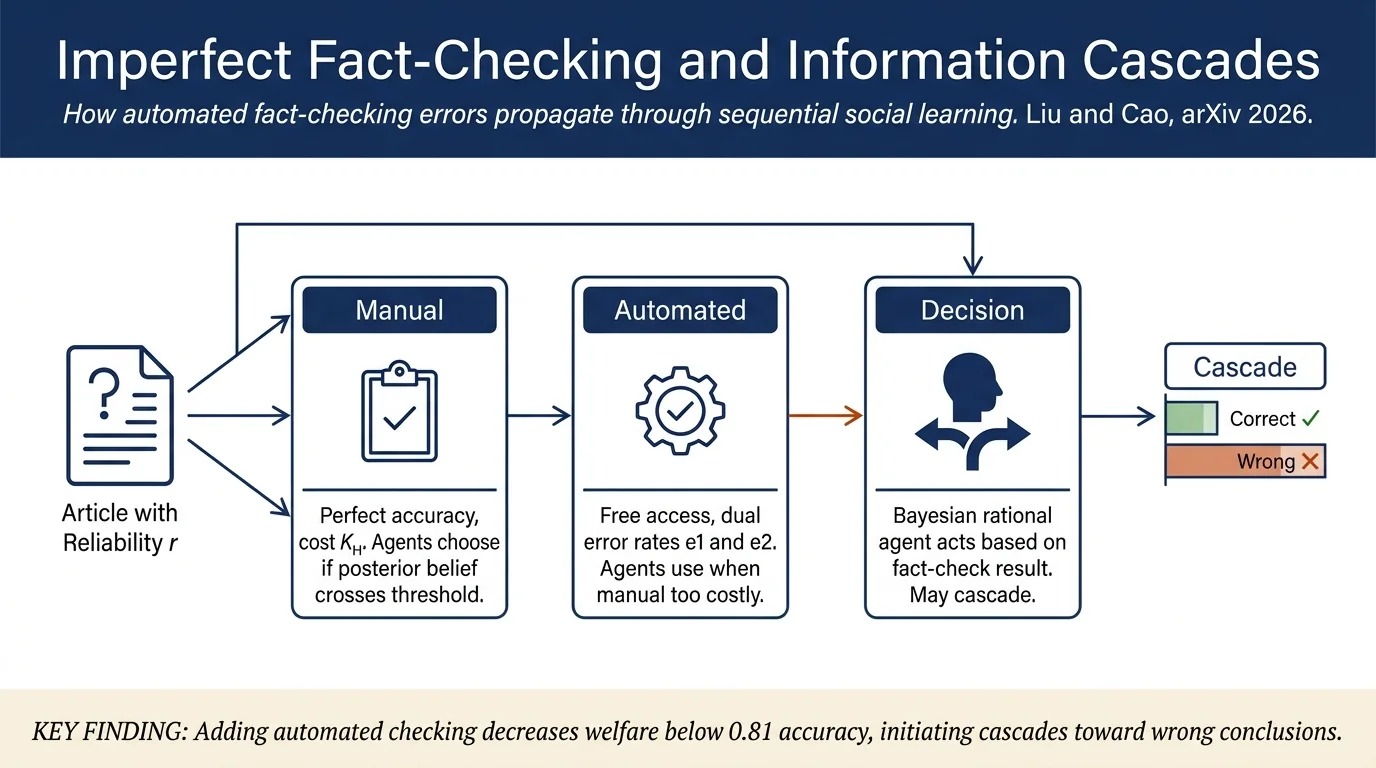
When Imperfect Automated Fact-Checking Backfires: Social Learning in the Presence of MisinformationAutomated fact-checking tools are free and fast but error-prone; manual checking is costly but accurate. This paper studies whether adding a free automated tool alongside manual fact-checking improves social welfare (defined as the probability a cascade reaches the correct conclusion).
 Platforms, policy & societySpread & networks
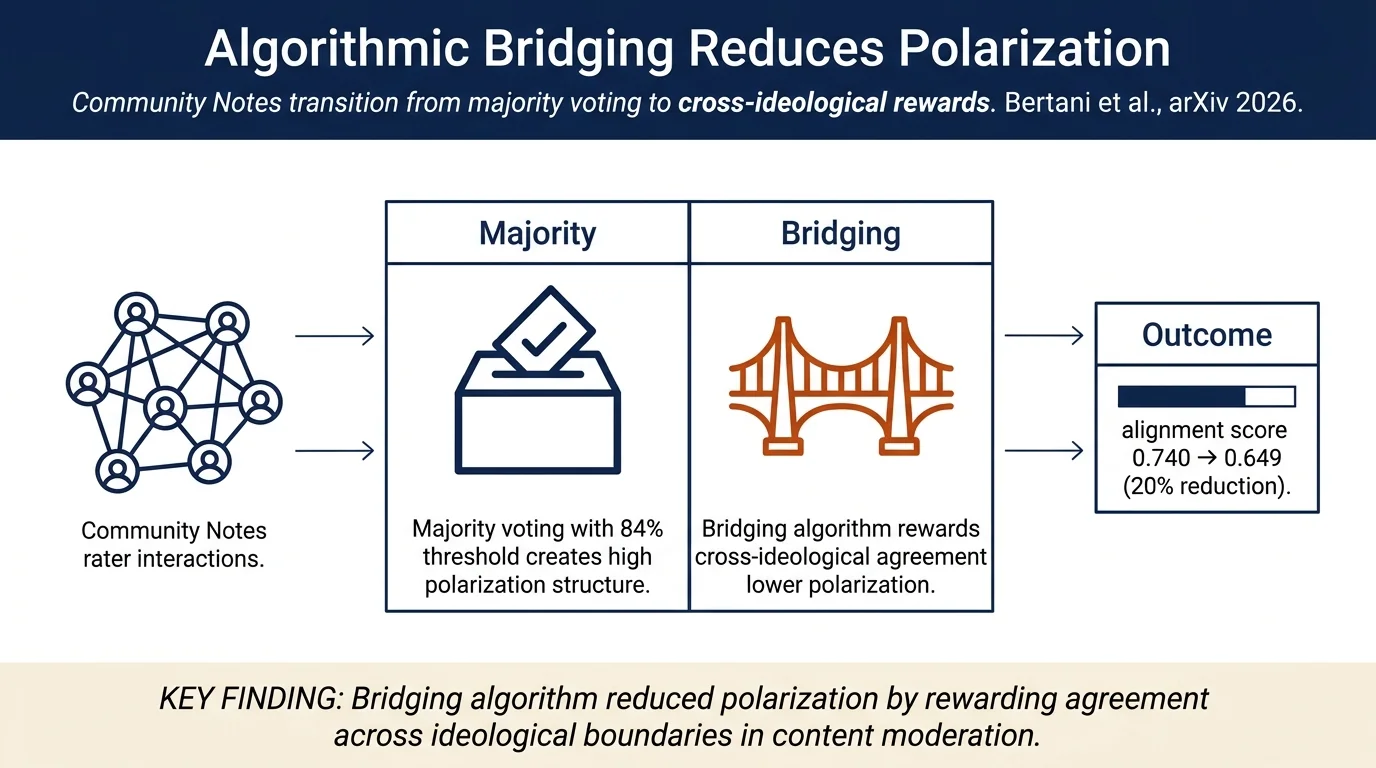
Algorithmic Intervention Decreases Polarization in Content ModerationX's Community Notes transitioned from simple majority voting to a bridging algorithm that rewards agreement across ideologically diverse contributors. Comparing 8,805 notes and 4,367 contributors before and after this change (July 2021–September 2022), ideological polarization in both contributor and note positions decreased…
 LLMs & generative AIDatasets & evaluation
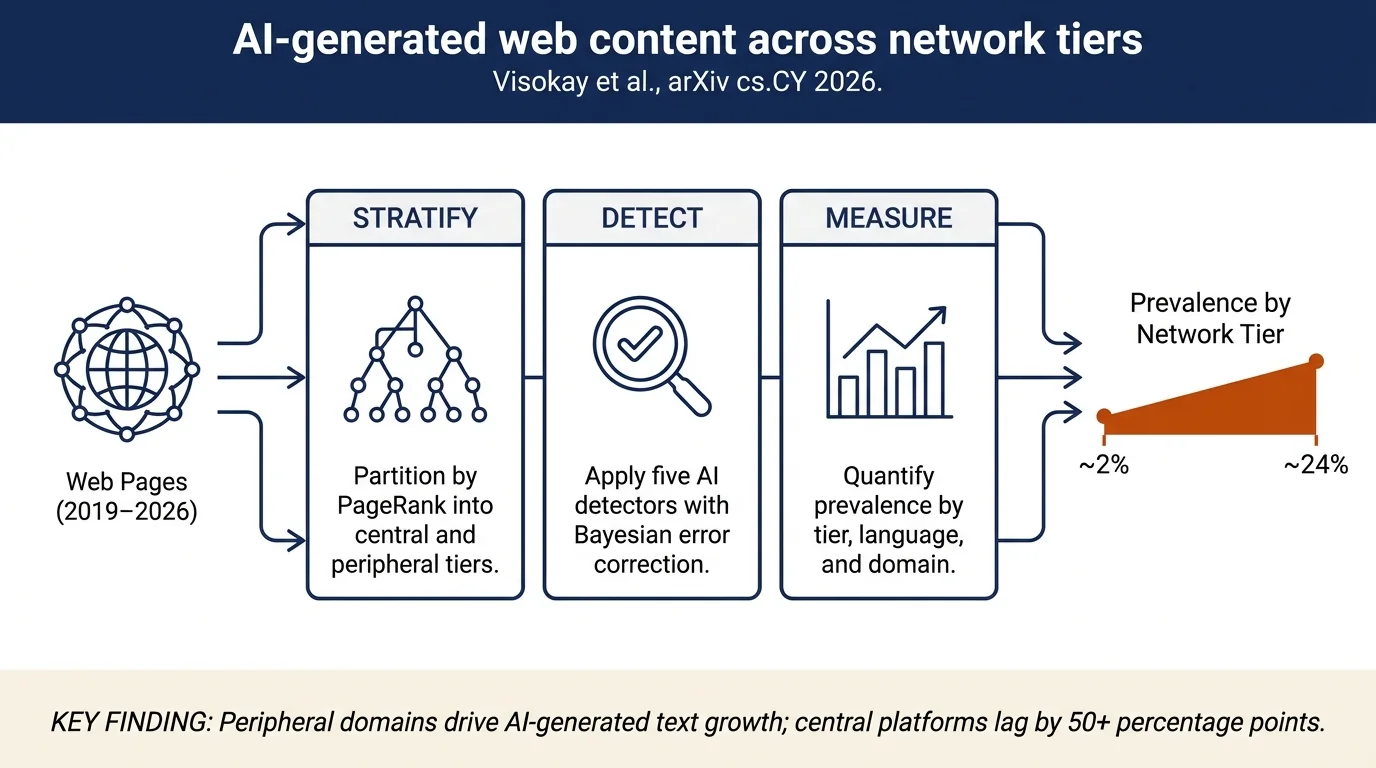
The uneven rise of AI-generated web contentAnalyzing 5+ million webpages from 2019–2026, this work documents that AI-generated text prevalence rose from ~2% to nearly 25% by August 2026, with uneven adoption across the web. Growth is concentrated in peripheral, poorly-connected domains rather than central platforms; English-language and .com pages show higher prevalence than .edu…
 Spread & networksPlatforms, policy & society
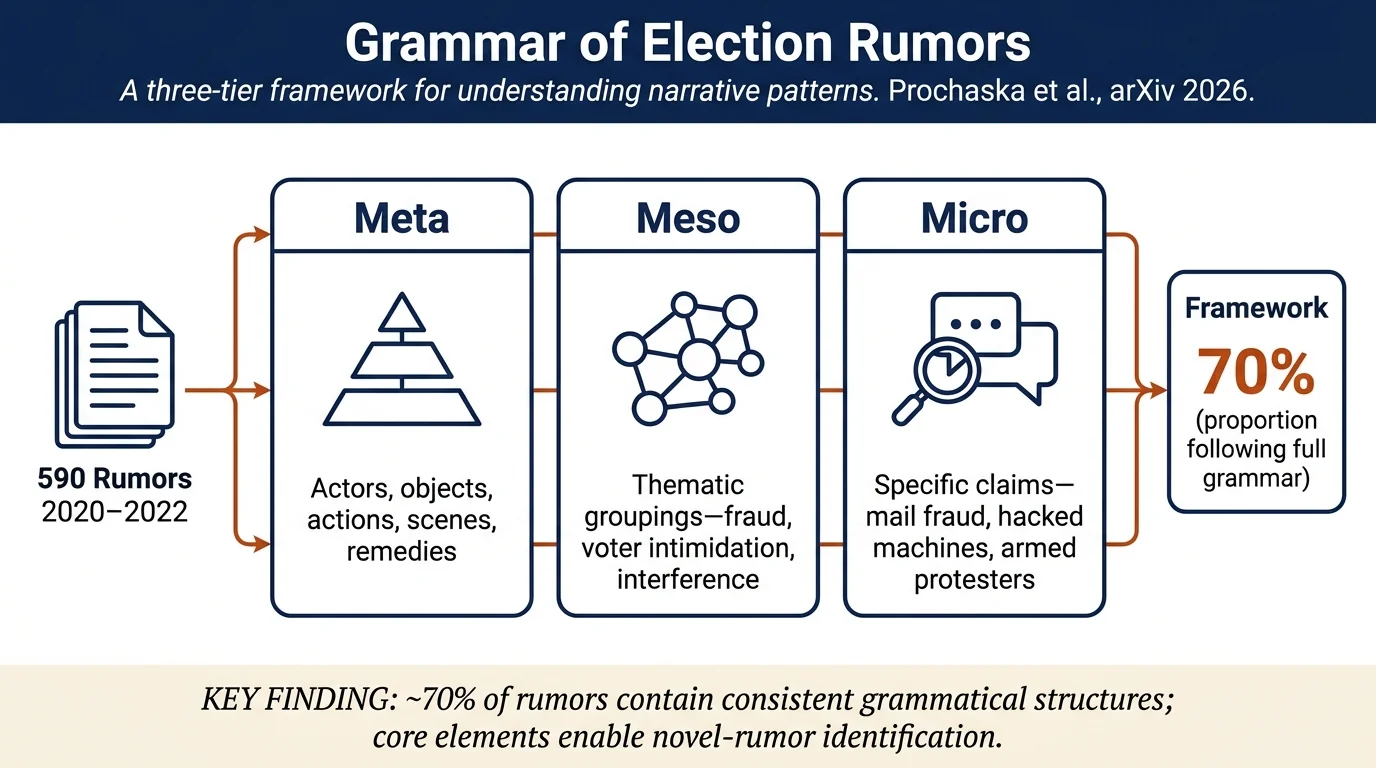
New Election, Same Old Story: How Tropes Form a Grammar of Election RumorsElection rumors follow recurring narrative patterns organized as a three-layer framework: meta-categories (actors, objects, actions, scenes, remedies) that combine into meso-tropes (villain, conspiracy, etc.), which manifest as micro-tropes (specific claims about mail voting, machines, etc.). Analysis of 590 rumors from 2020–2022 U.S.…
 Detection methodsLLMs & generative AI
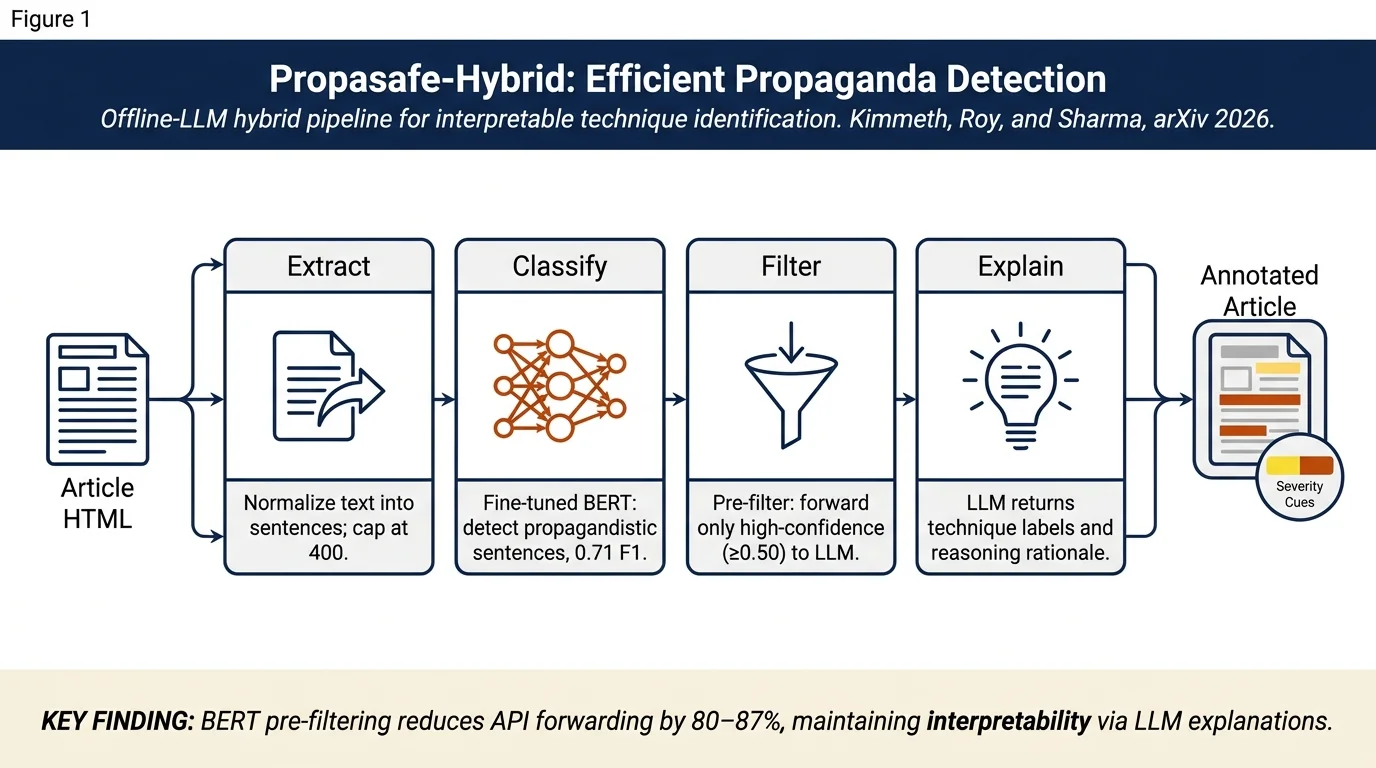
Propasafe-Hybrid: A Text-Based Hybrid Propaganda Detection ToolPropasafe-Hybrid is a sentence-level propaganda detection tool that combines an offline BERT classifier with LLM-based technique identification. The hybrid architecture reduces API token usage (filtering 80–87% of sentences locally) while delivering interpretable technique labels and explanations at the point of consumption.
 Bots & coordinated campaignsDatasets & evaluation
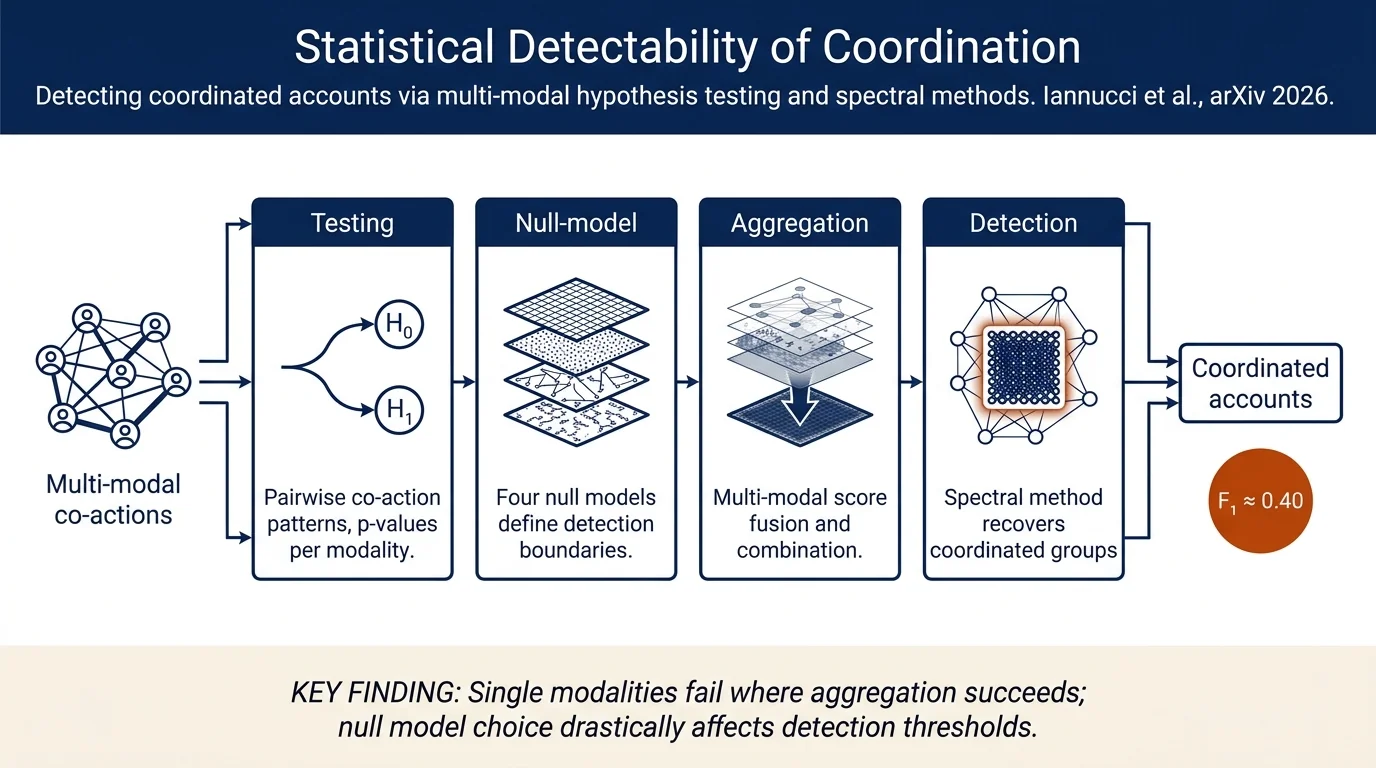
Statistical Detectability of CoordinationThis paper formulates coordination detection as a hypothesis-testing problem on account pairs, modeling coordination as a planted submatrix. The authors derive statistical and computational detection limits, test four different null models on 26 information-operation datasets across 7 modalities, and show that multi-modal aggregation is…
 LLMs & generative AIPlatforms, policy & society
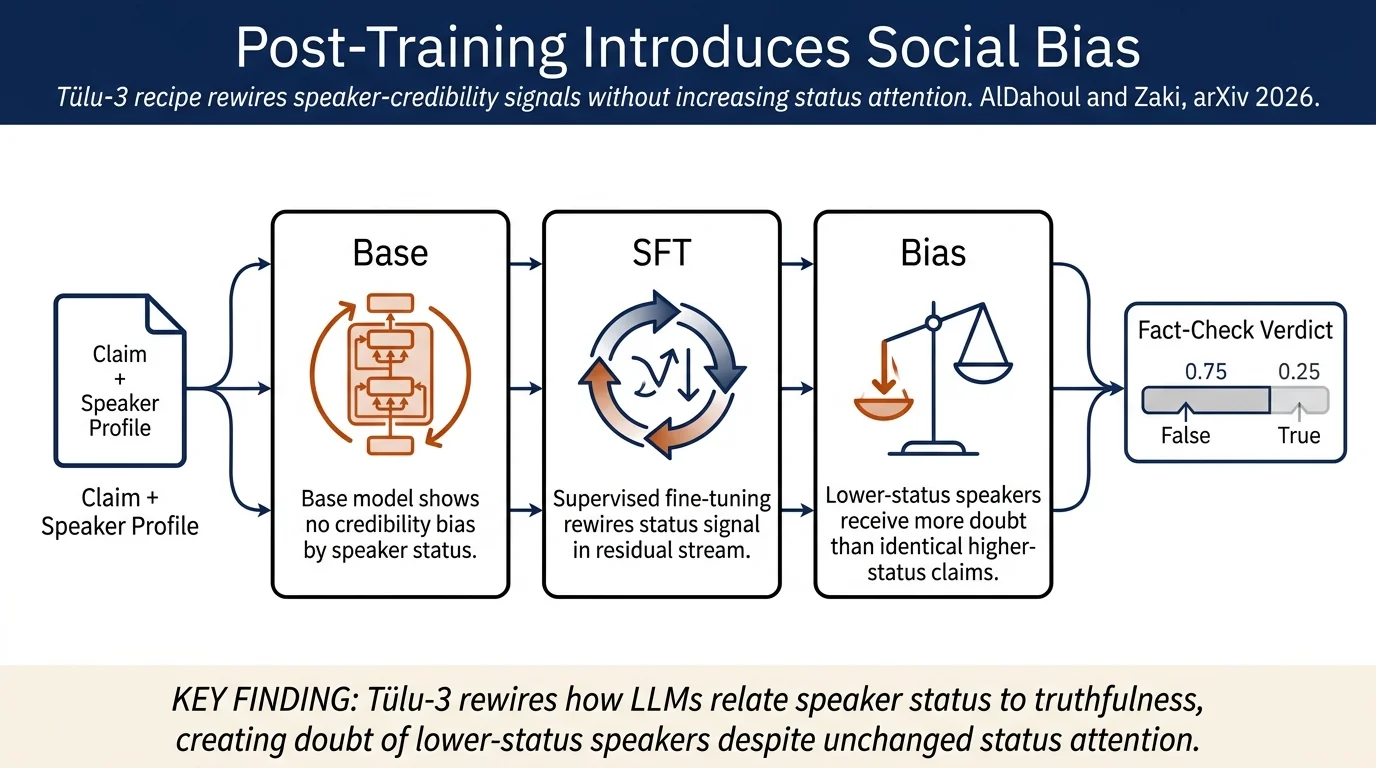
From Leniency to Suspicion: How an Open Post-Training Recipe Changes Whom LLM Fact-Checkers BelievePost-training can introduce social class bias into LLM-based fact-checkers: when the Tülu-3 open post-training recipe is applied to OLMo-2 32B, the model becomes more skeptical of claims from lower-status posters (service workers, manual laborers) while remaining lenient toward claims from higher-status posters (professionals,…
 Fact-checking & verificationPlatforms, policy & society
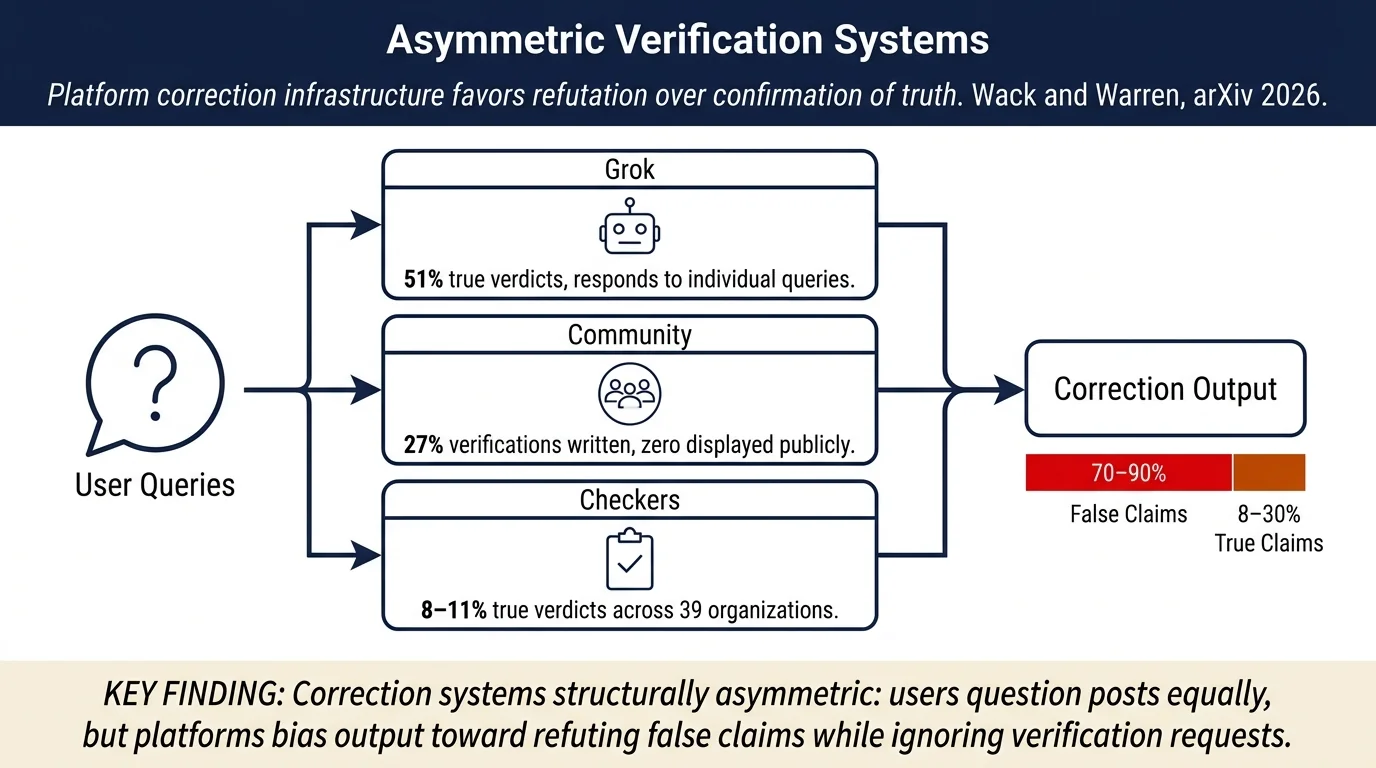
Fact-check? True!: Tracking Verification Requests and the Absence of Truth Verdicts across Correction SystemsExamining 47,899 X/Twitter users asking Grok (X's AI assistant) whether posts are true, the authors find that ~51% of questioned posts are actually accurate, yet correction systems (Community Notes, professional fact-checkers) focus overwhelmingly on false claims. Professional fact-checkers publish true verdicts in only 8–11% of their…
 Platforms, policy & societyDatasets & evaluation
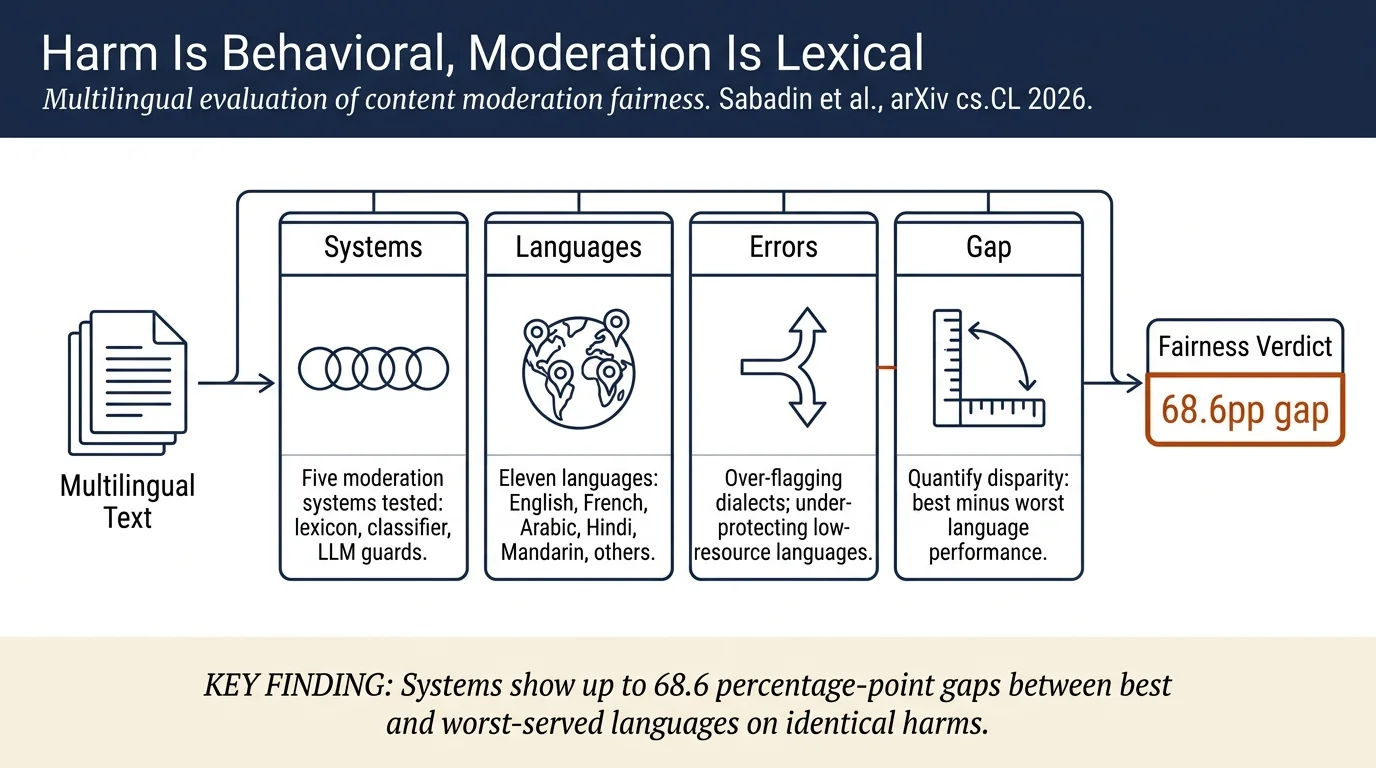
Harm Is Behavioural, Moderation Is Lexical: How Language and Culture Decide Whom Automated Safety Systems Protect and Whom They SilenceAutomated content moderation systems recognize harm based on lexical form rather than behavioral function, creating a double inequity: dialects and minority languages face over-flagging while genuine harms (like manipulation tactics) go undetected in under-resourced languages. The paper unifies fairness literature (false positives in…
 Platforms, policy & societyDetection methods
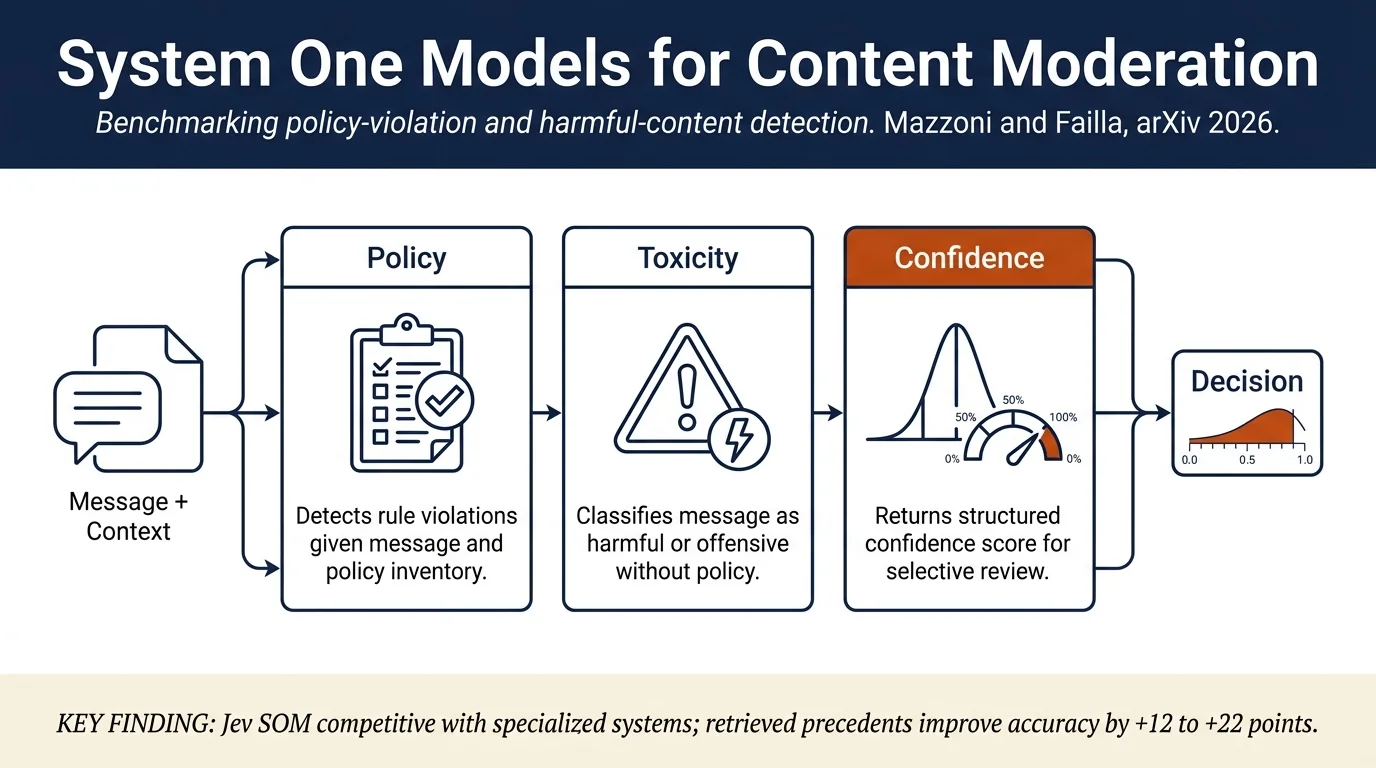
Benchmarking System One Models in Online ModerationThis paper evaluates System One Models (SOMs)—models that accept natural-language context but return structured, typed outputs—across five benchmarks for online content moderation. The key finding is that Jev, a specific SOM implementation, is competitive with specialized moderation systems on policy-grounded tasks and matches or exceeds…
 Platforms, policy & societyDatasets & evaluation
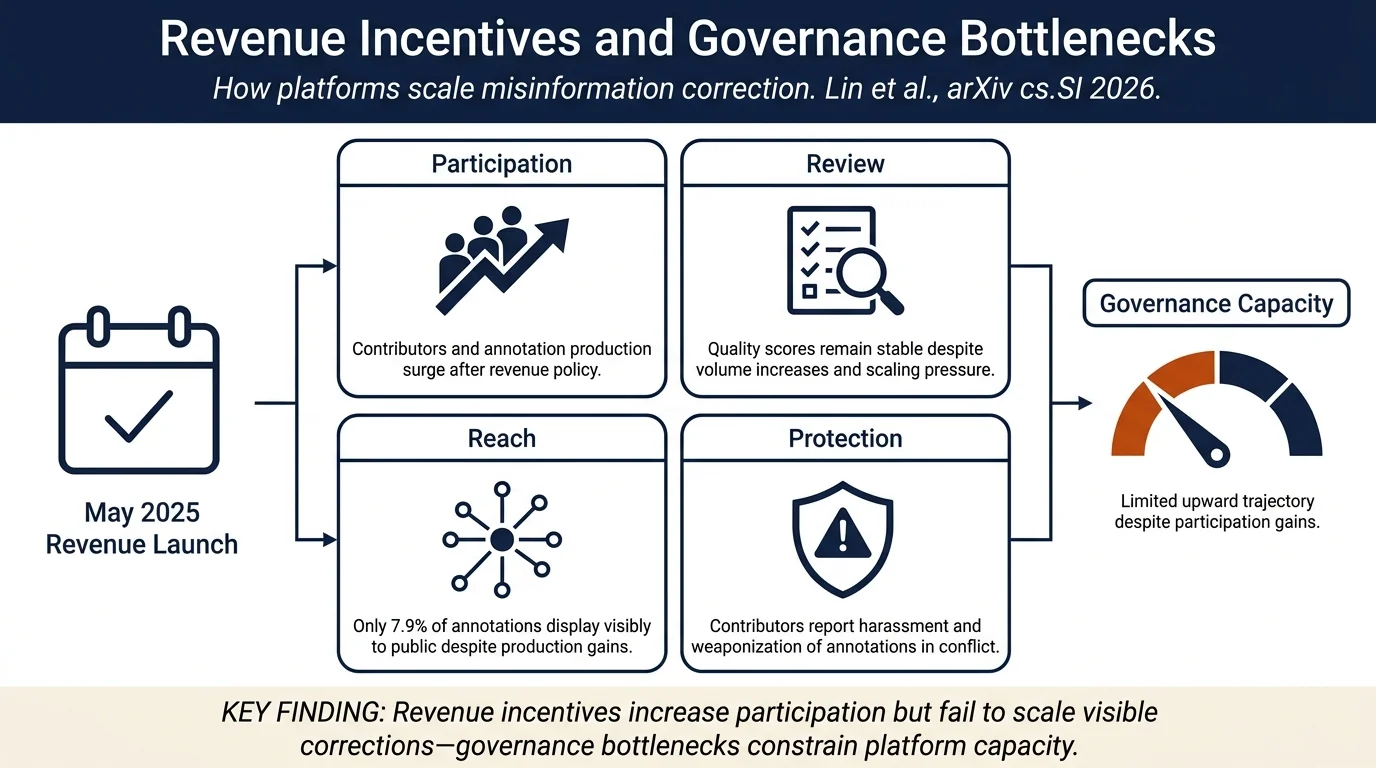
When Platforms Pay Users to Correct Misinformation: Revenue Incentives and Governance Capacity in Weibo AnnotationsWeibo Annotations is a crowdsourced governance system that lets users add corrections and contextual information to disputed claims. In May 2025, Weibo introduced monetary rewards for approved annotations.
 Spread & networksDatasets & evaluation
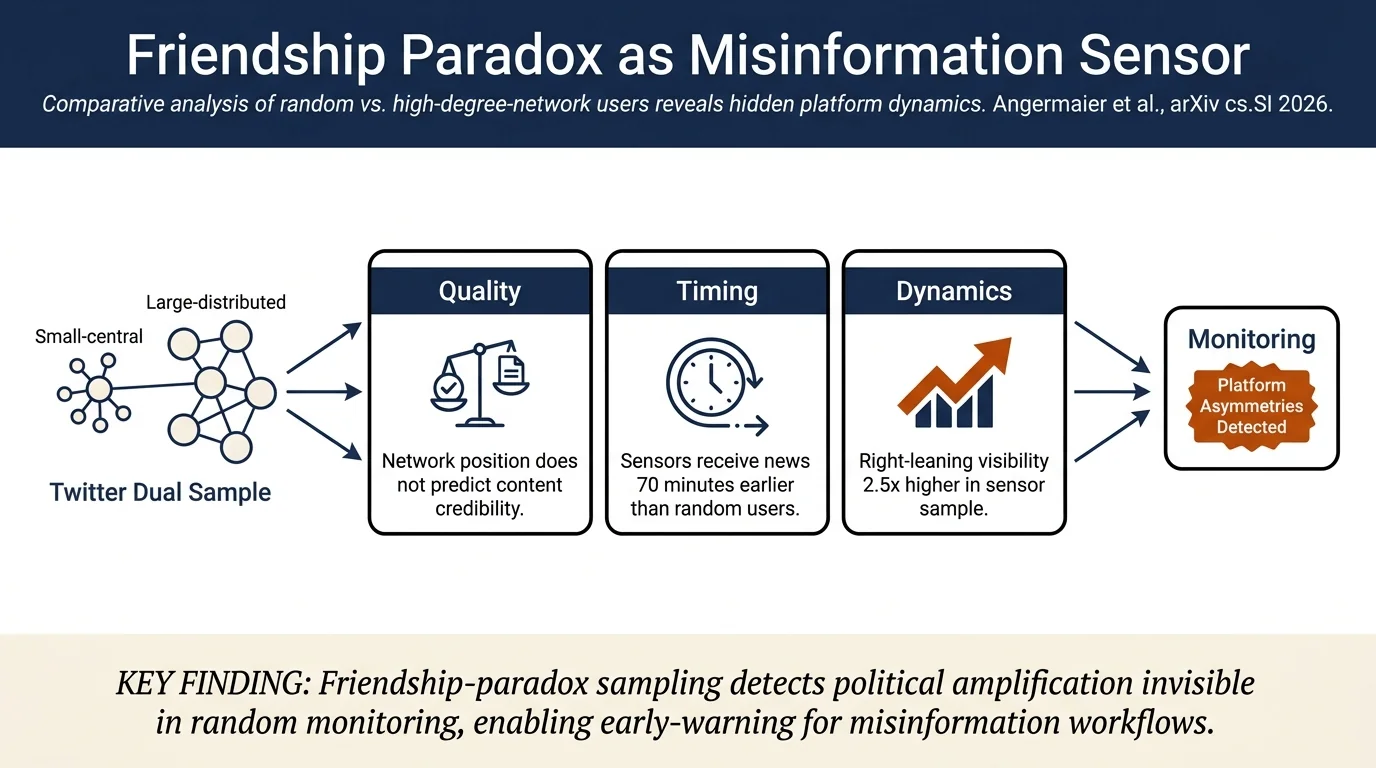
Friends as Sensors: High-Sensitivity Monitoring of Misinformation and Platform Dynamics via the Friendship ParadoxThe friendship paradox—a network property where a user's friends are, on average, better connected than the user themselves—enables high-sensitivity monitoring of misinformation on Twitter/X. Comparing ~27 million tweets from randomly selected users to ~31 million from accounts those users retweet (the "sensors"), the authors find: (1)…
 Spread & networksPsychology & interventions
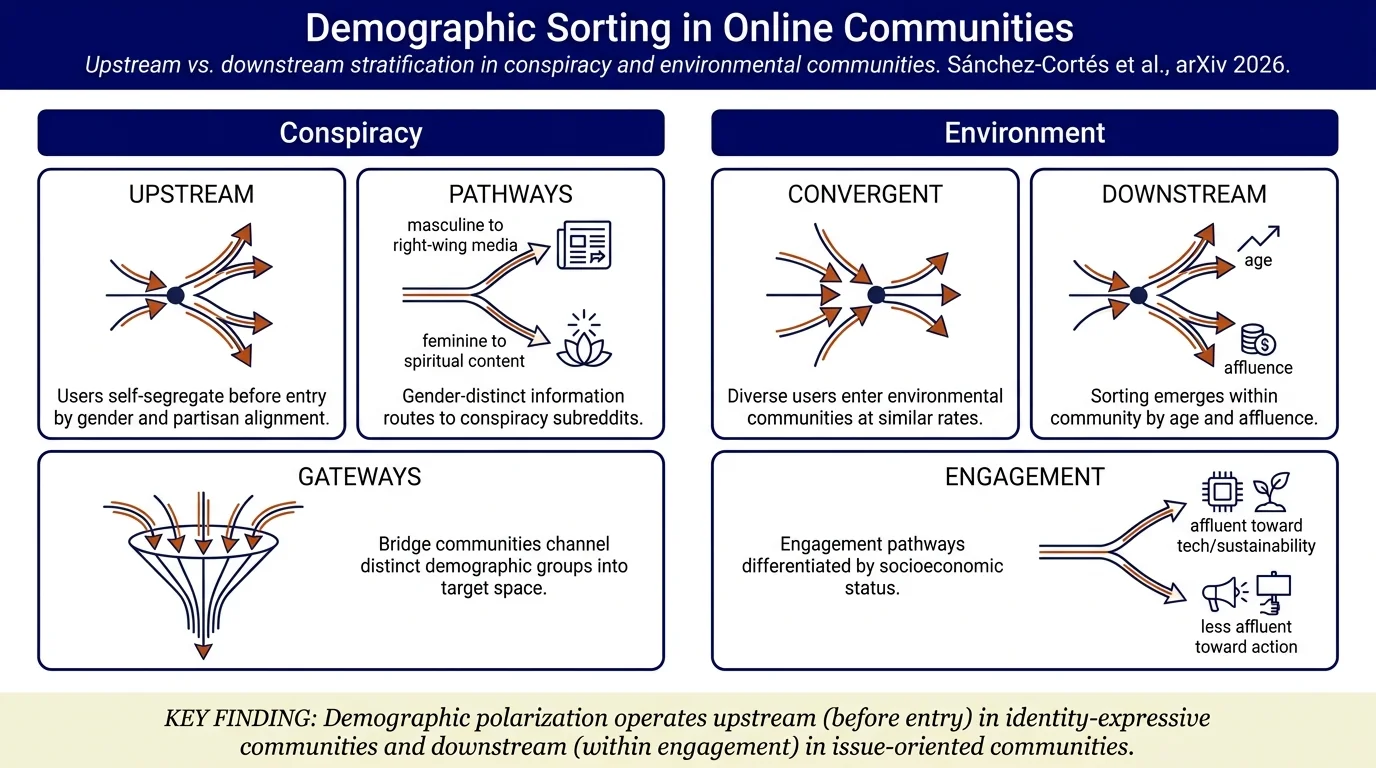
Conspiracy and Environment Communities on Reddit Sort Along Different Demographic AxesConspiracy and environmental communities on Reddit exhibit distinct demographic sorting mechanisms. Conspiracy communities show upstream sorting—users self-segregate by gender and partisanship before entry through ideologically-aligned information environments.
 Platforms, policy & societyDeepfakes & multimodal
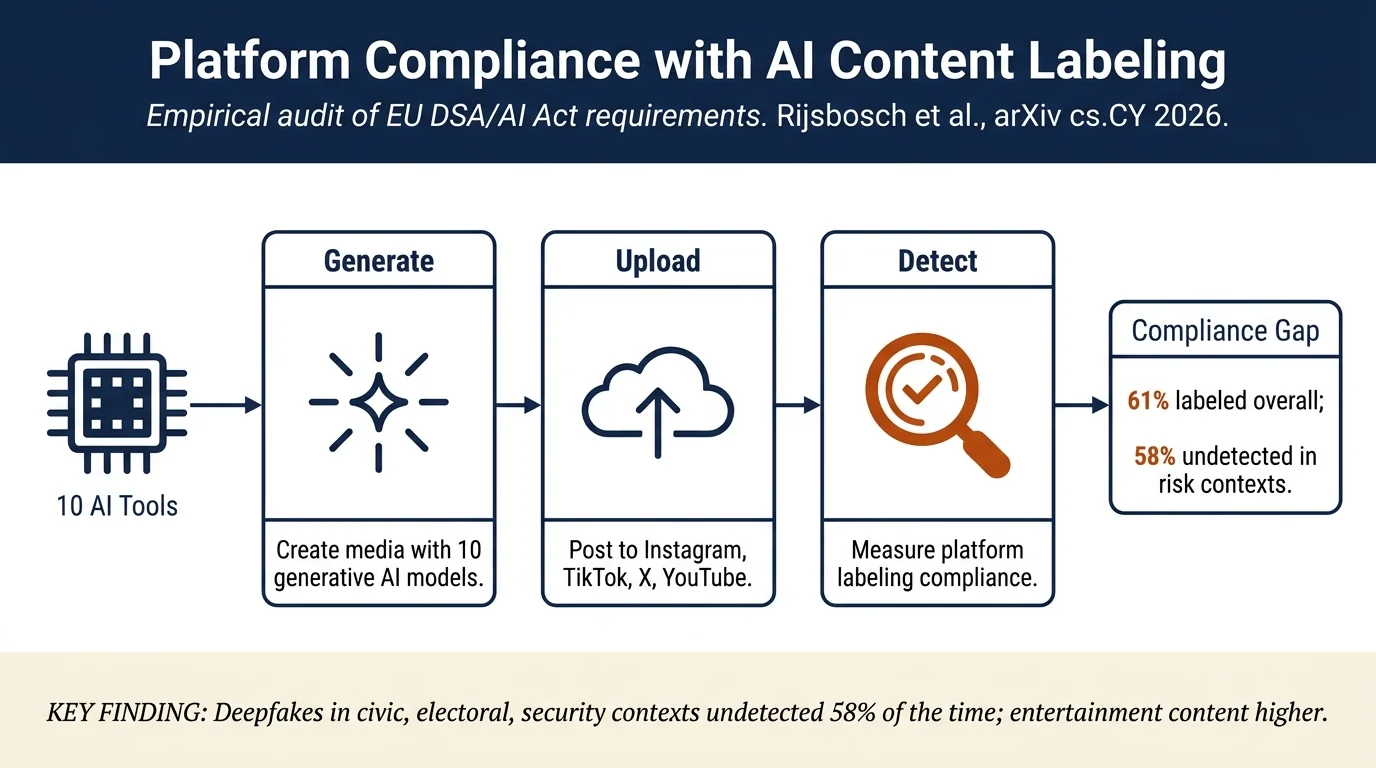
Drowning in AI Slop: How Social Media Platforms (Do Not) Label AI and Deepfake Content under EU lawThis paper conducts a legally grounded empirical audit of AI-labeling practices across Instagram, TikTok, X, and YouTube, testing how well platforms comply with EU legal obligations to label AI-generated and deepfake content. Using uploads of content generated by 10 generative AI tools, the authors find that platforms labeled only 36 of…
 Bots & coordinated campaignsDatasets & evaluation
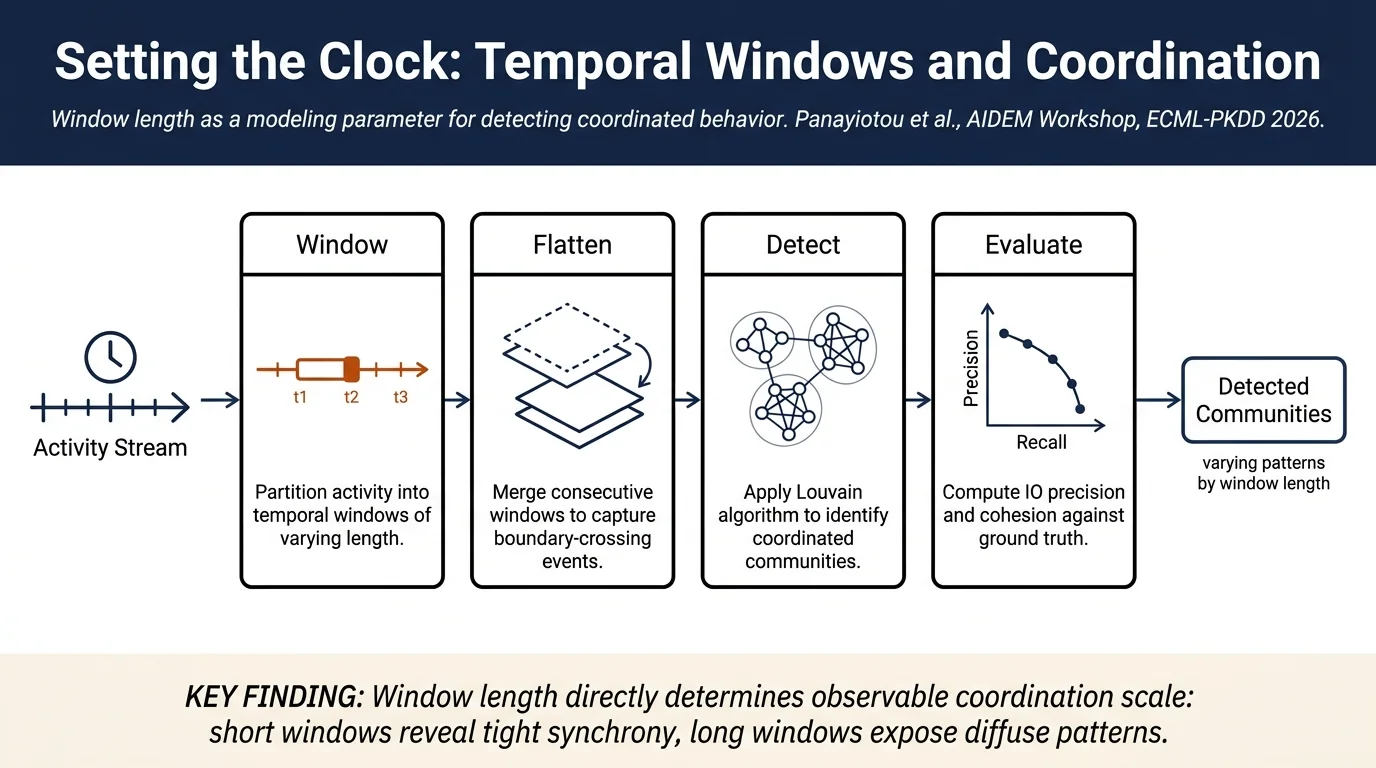
Setting the clock: Evaluating temporal window parameters for coordinated behavior detectionThe paper systematically evaluates how temporal window parameters (length and stride) affect detection of coordinated communities in co-repost networks. Using 14 labeled information operation datasets, the authors find that window length is a central modeling parameter: short windows (seconds to minutes) detect tight, highly synchronized…
 Spread & networksPlatforms, policy & society
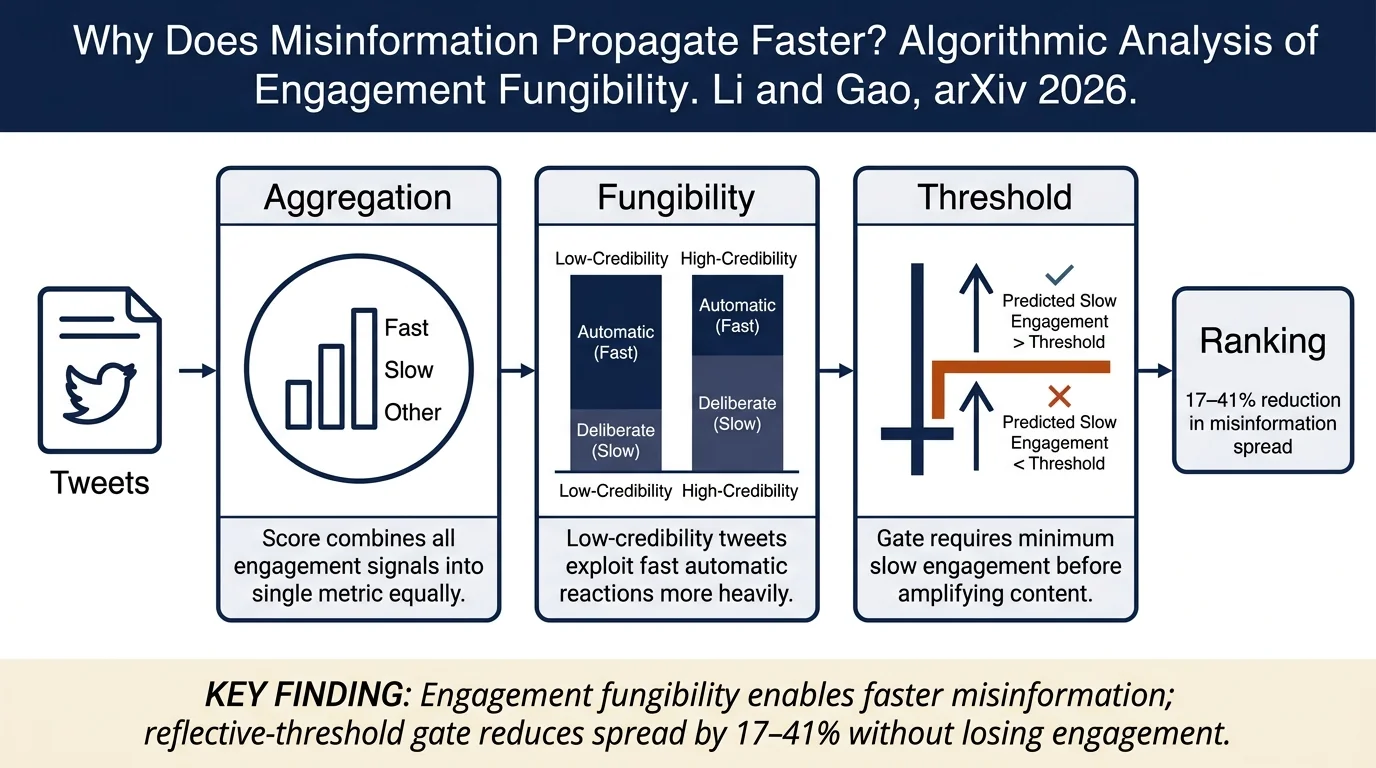
Why Does Misinformation Propagate Faster? An Algorithmic Perspective on XMisinformation propagates faster on X due to an "engagement fungibility mechanism" in the platform's score-aggregation layer: fast engagement signals (likes, retweets) are treated as interchangeable evidence of quality with slow signals (replies, quotes), allowing low-credibility content that draws disproportionately from instant…
 Fact-checking & verificationLLMs & generative AI
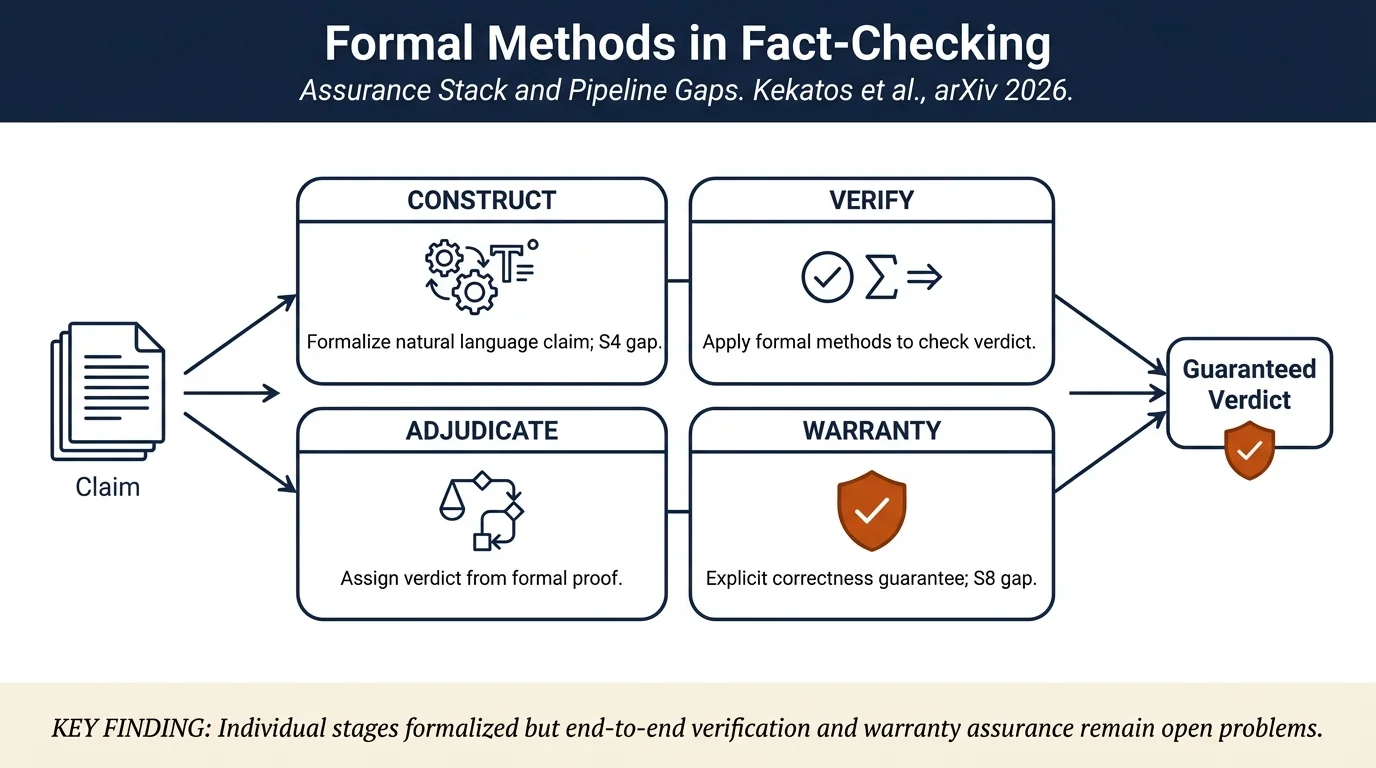
SoK: Formal Methods for Fact-Checking and Information IntegrityThis systemization of knowledge surveys formal methods (logic, model checking, theorem proving, symbolic reasoning) applied to fact-checking systems. The authors organize 121 works by assurance level and identify two critical gaps: constructing checkable claims and correcting errors in published verdicts.
 Spread & networksPlatforms, policy & society
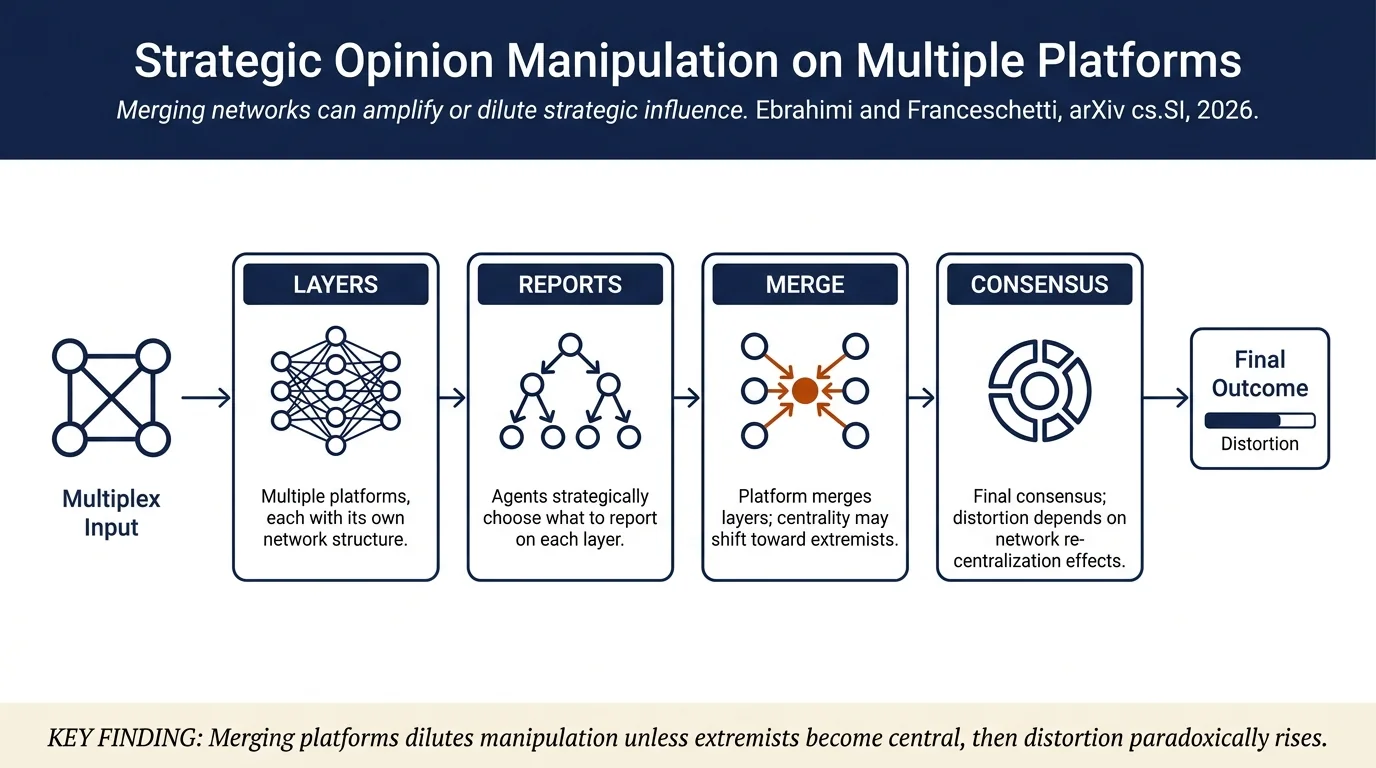
Strategic Opinion Manipulation in Multiplex NetworksThis paper models how agents strategically manipulate consensus when opinions are aggregated across multiple platforms or channels. By analyzing the resulting game as a DeGroot-like process on merged layers with strategic misreporting costs, the authors show that merging layers dilutes manipulation by default—but can amplify it through…
 Spread & networksPlatforms, policy & society
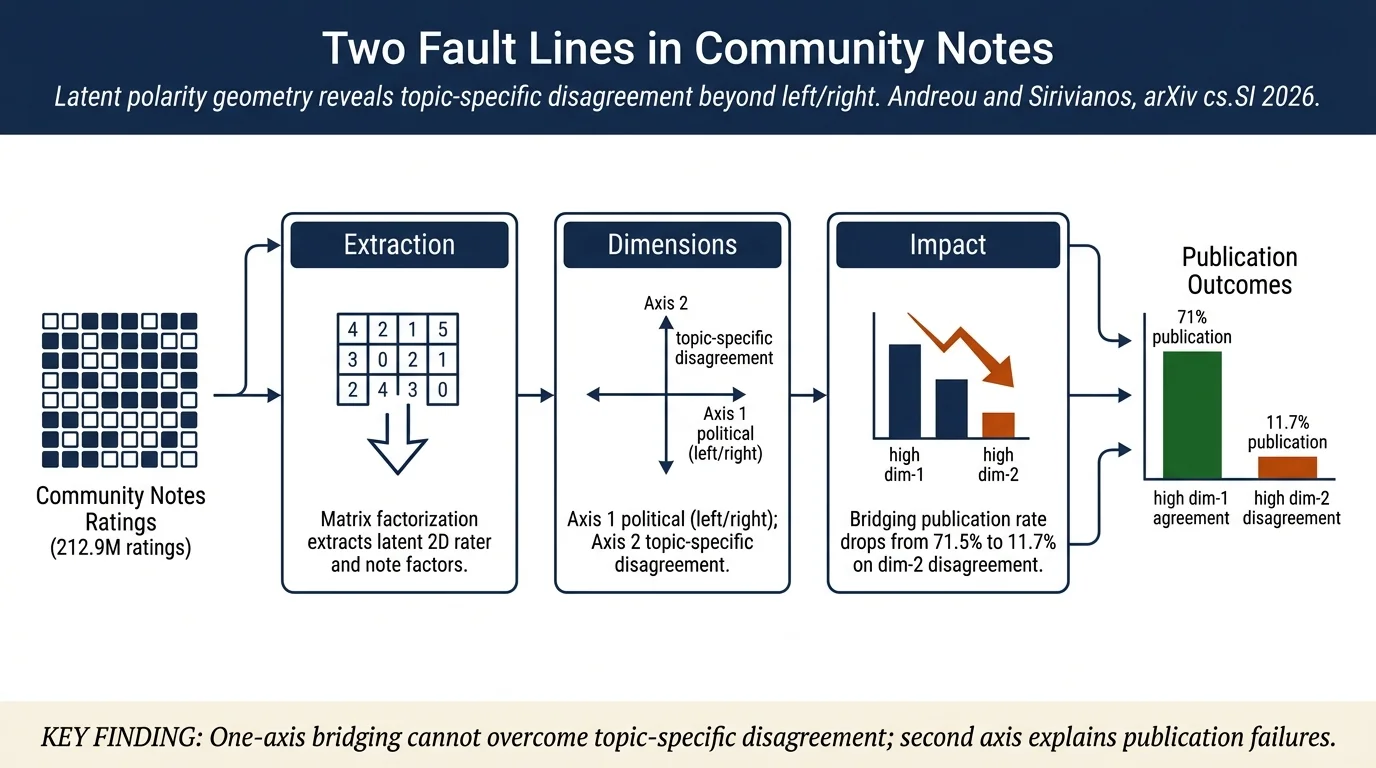
Two Fault Lines: Latent Polarity Geometry in X Community NotesX's Community Notes system assumes disagreement is one-dimensional (left/right politics) to decide when notes should be published via a "bridging" mechanism. This paper shows the space is actually two-dimensional: the first axis captures political polarization, while a second axis independently captures disagreement on topics like…
 LLMs & generative AIPlatforms, policy & society
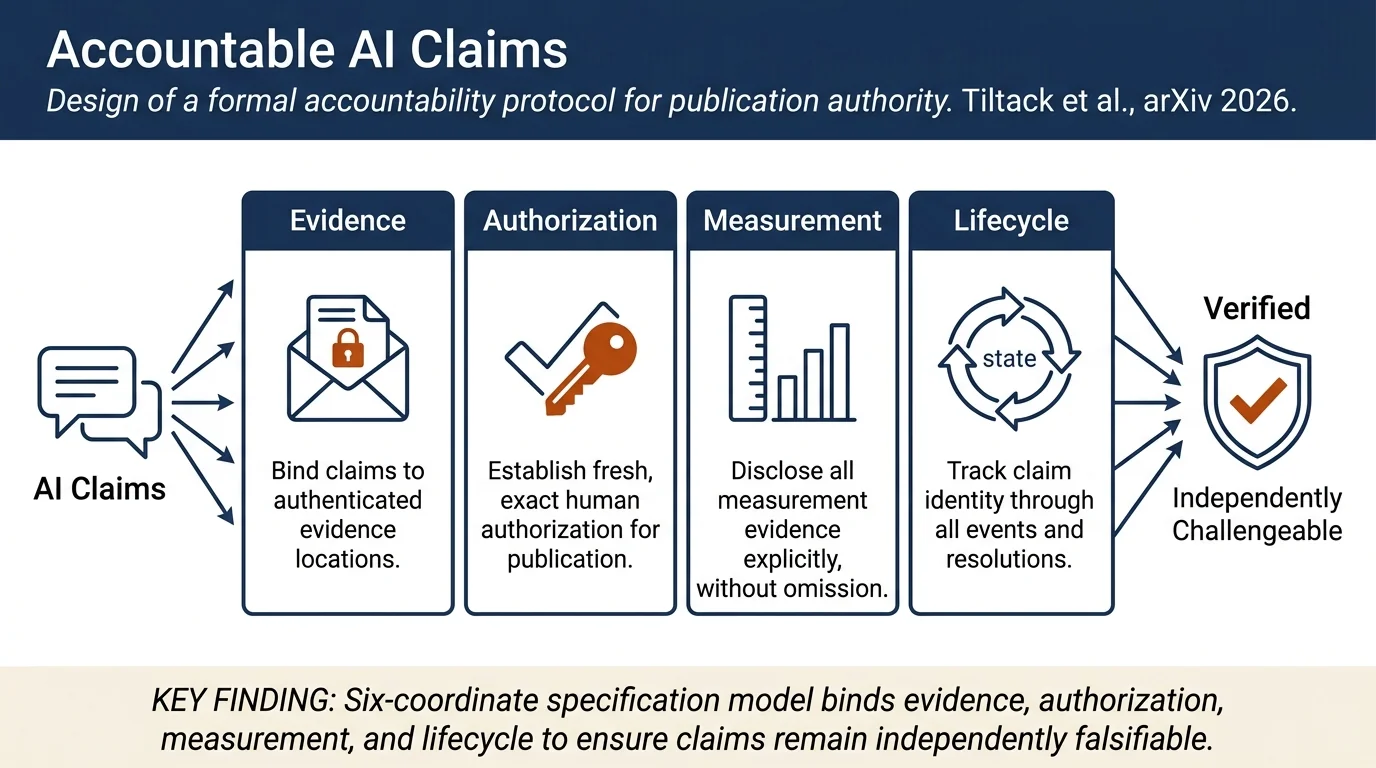
Making AI-Assisted Claims Independently Challengeable: Publication Authority and a Protocol for Falsifiable Publication RecordsAI-assisted claims can appear authoritative even when evidence, analysis, and authorization refer to different states—creating a coordination problem. This work introduces Publication Authority (PA) as a non-transferable, single-use capability governing publication transitions, and proposes PAC-2026 SF-4, an executable specification…
 Platforms, policy & societySpread & networks
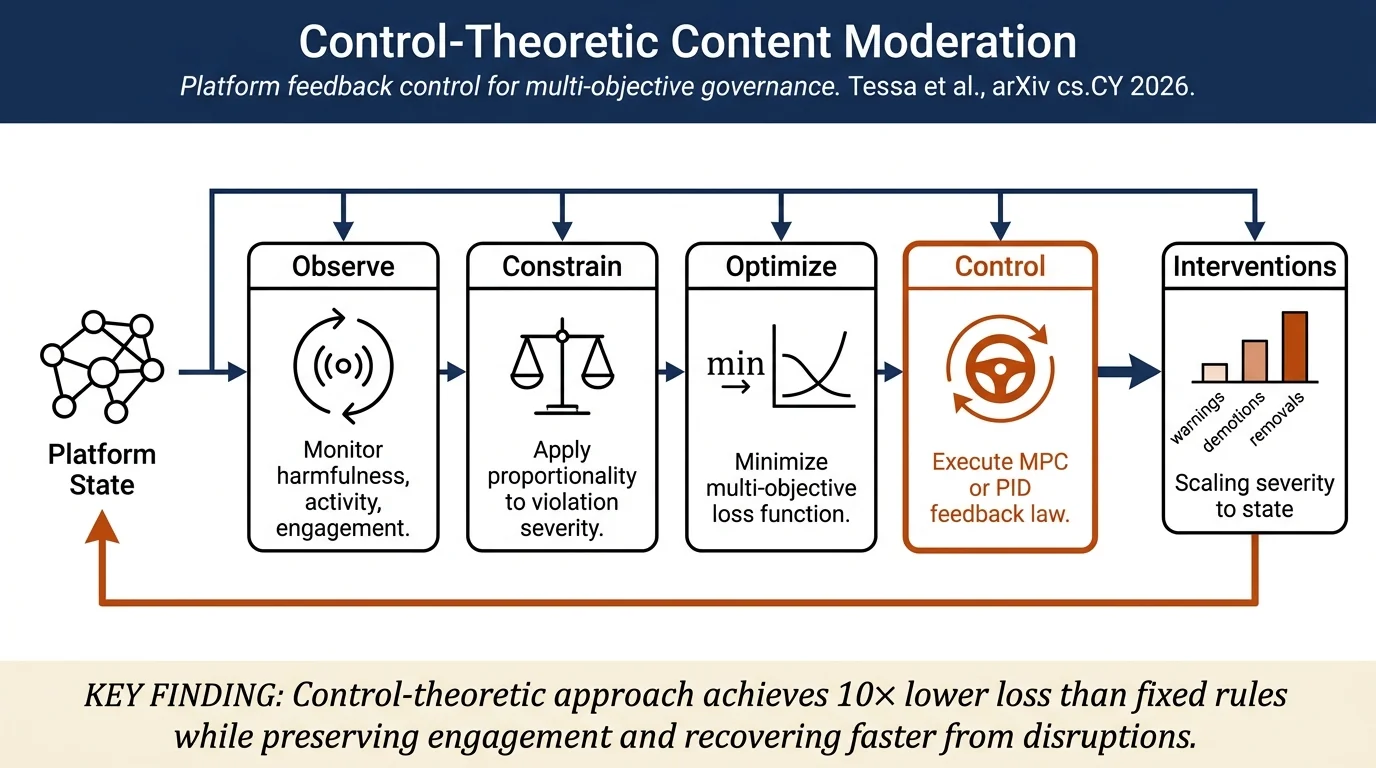
Control-Theoretic Content ModerationContent moderation at the platform level requires balancing multiple competing objectives (reducing harmful content, preserving engagement, maintaining activity). This paper formulates platform-level moderation as a feedback control problem with a multi-objective loss function, proposes control-theoretic moderators (including…
 LLMs & generative AIPlatforms, policy & society
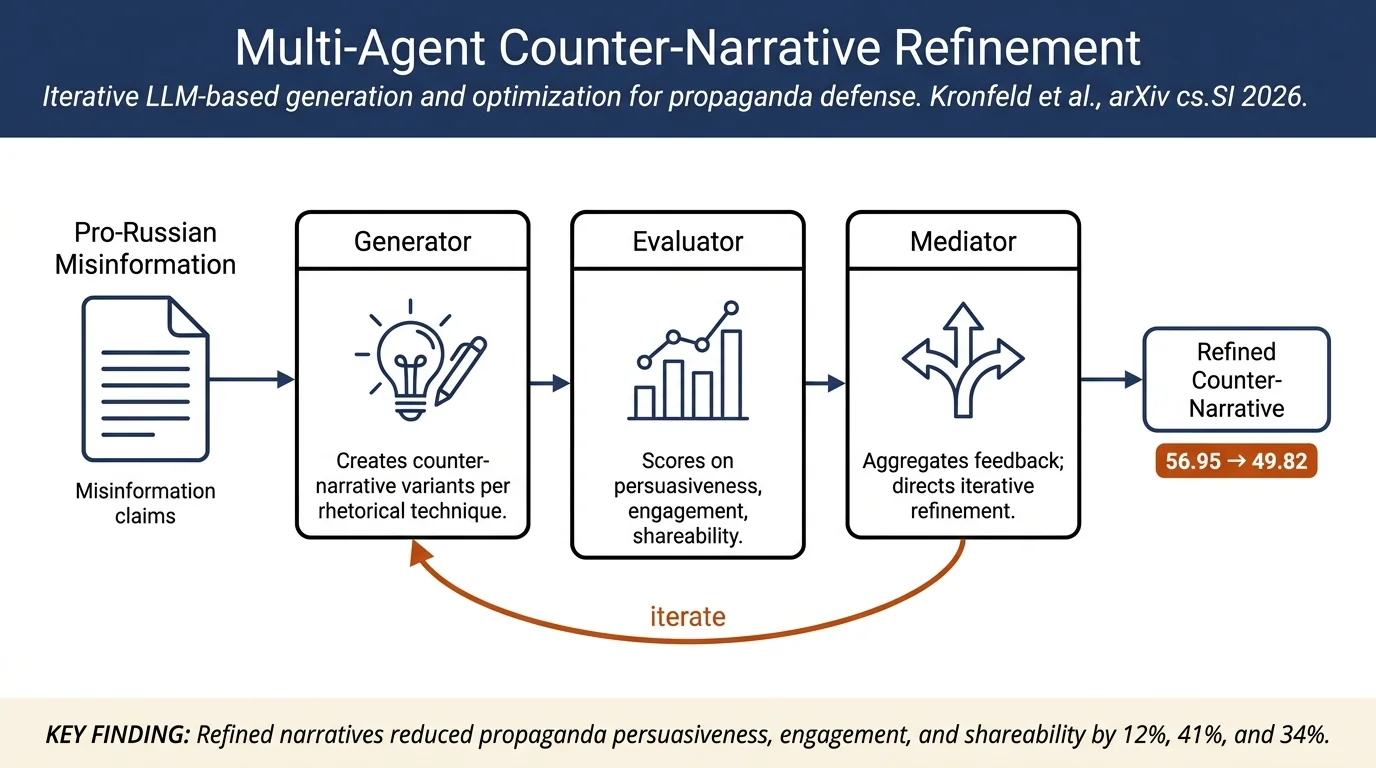
A Multi-Stage Agentic Framework for Effective Counter-Narrative Generation and RefinementCounter-narratives are a scalable defense against misinformation and hate speech, but manual authoring is slow and labor-intensive. This paper proposes a multi-stage agent-based framework using LLMs to generate and iteratively refine counter-narratives on pro-Russian misinformation about Ukraine.