Explore papers
Filter by research area, year and venue. Every filter is in the address bar, so you can share a view as a link.
 LLMs & generative AIFact-checking & verification
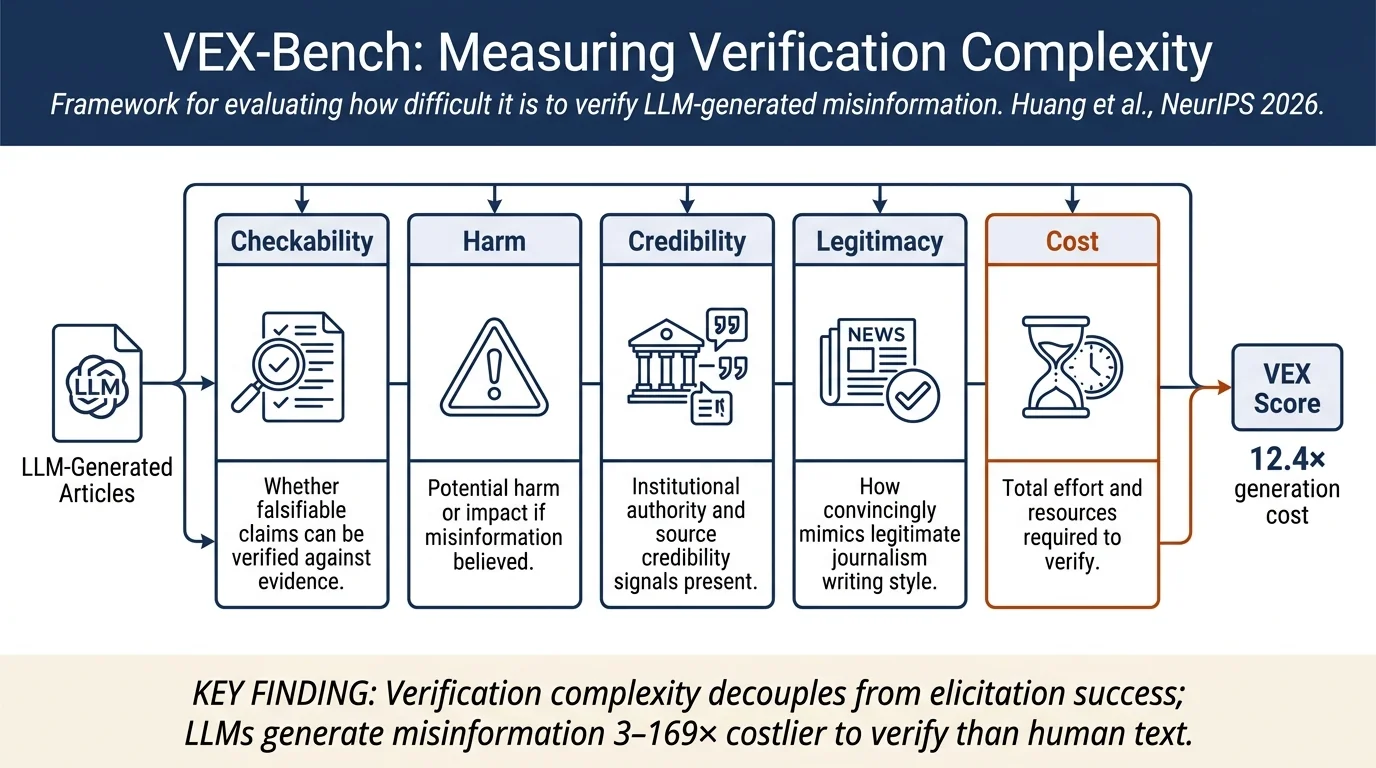
VEX-Bench: Benchmarking Verification Complexity of LLM-Generated MisinformationThis paper introduces VEX-Bench, a unified benchmark for evaluating how difficult it is to verify LLM-generated misinformation. The benchmark measures verification complexity across five dimensions: checkability (whether claims can be checked), harm significance, source credibility signals, impostor legitimacy, and verification cost.
 Datasets & evaluationDetection methods
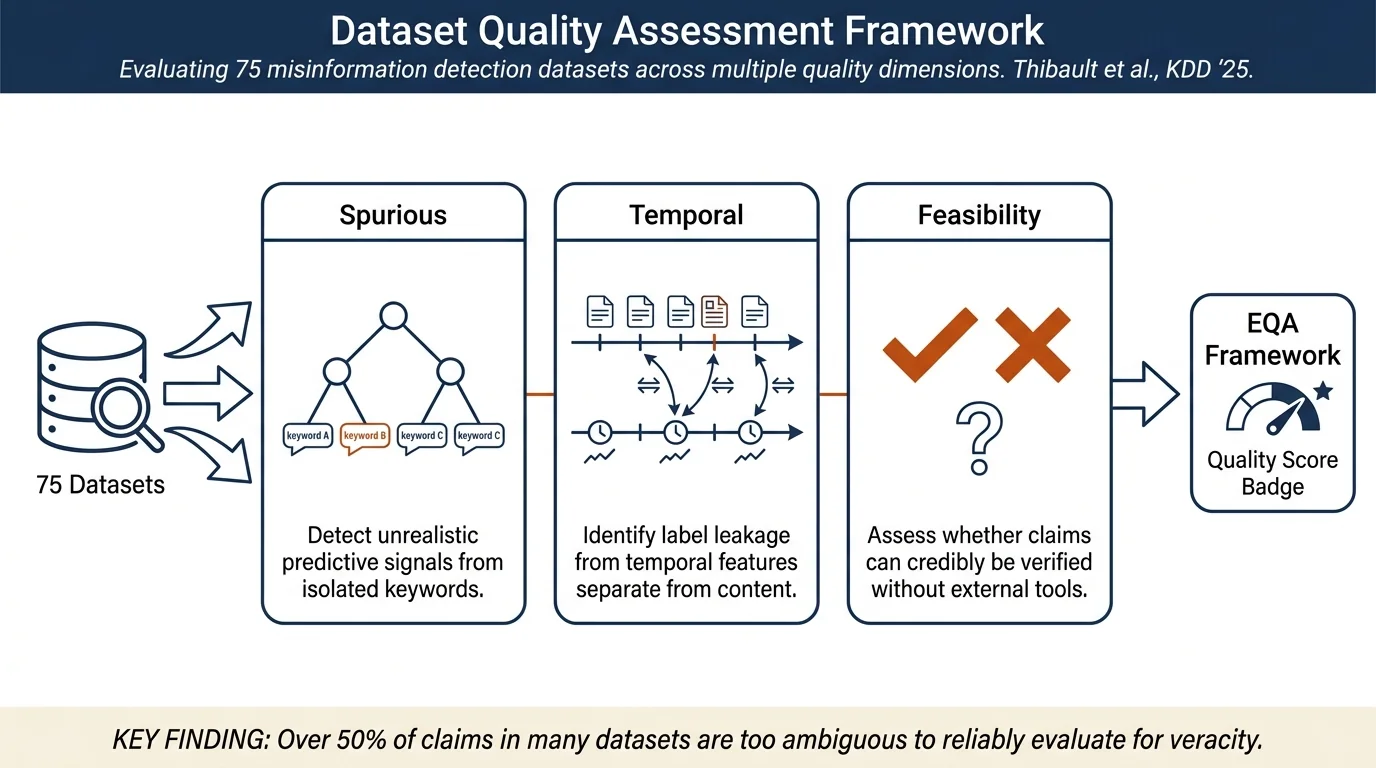
A Guide to Misinformation Detection Data and EvaluationThis work surveys the largest collection of misinformation detection datasets to date (75 datasets from prior literature) and evaluates dataset quality across multiple dimensions. The authors assess whether datasets enable reliable veracity evaluation by analyzing keyword correlations, temporal correlations, and feasibility of claim…
 Psychology & interventionsFact-checking & verification
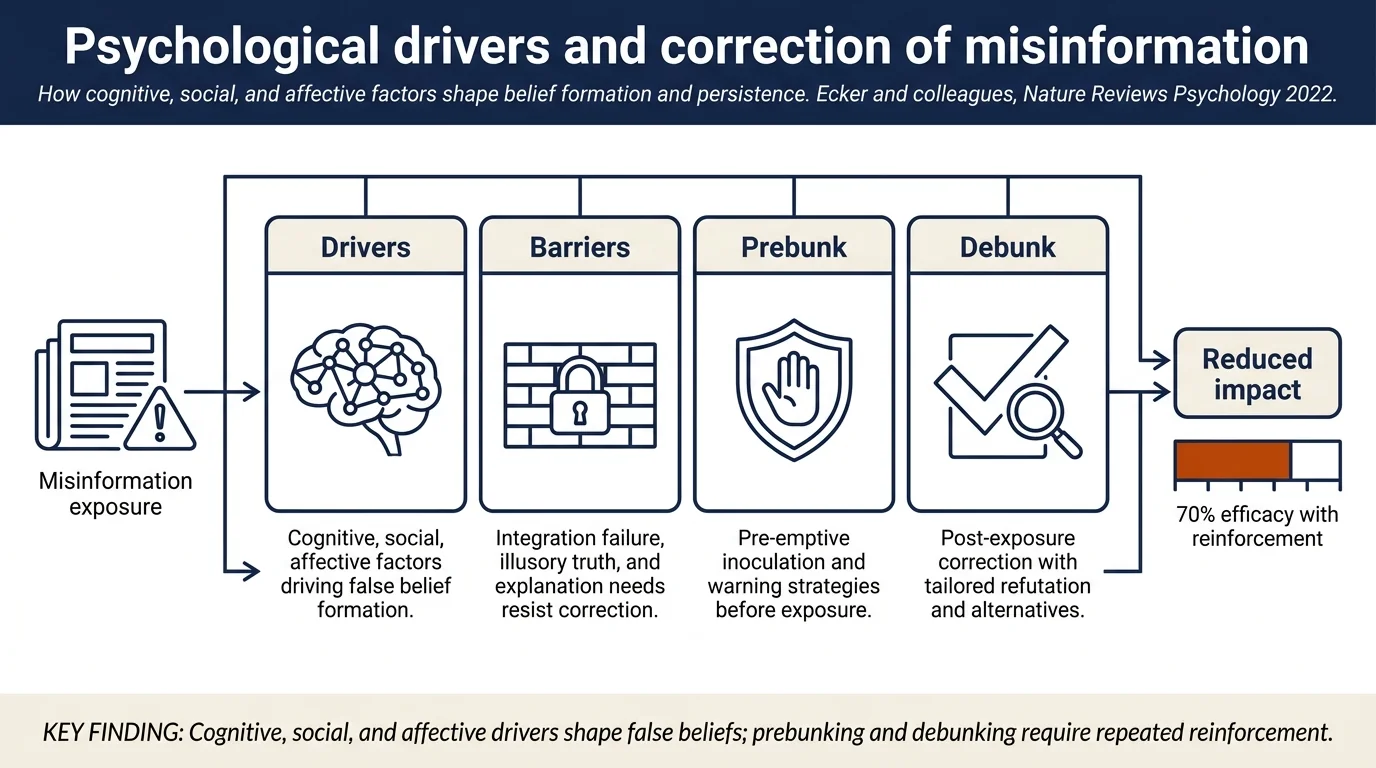
The psychological drivers of misinformation belief and its resistance to correctionThis comprehensive review establishes that misinformation's power lies not in exposure but in how cognitive, social, and affective factors shape belief formation and persist even after correction. False beliefs arise from intuitive thinking, memory failures, emotional content, in-group bias, and source credibility judgments; corrections…
 Psychology & interventionsPlatforms, policy & society
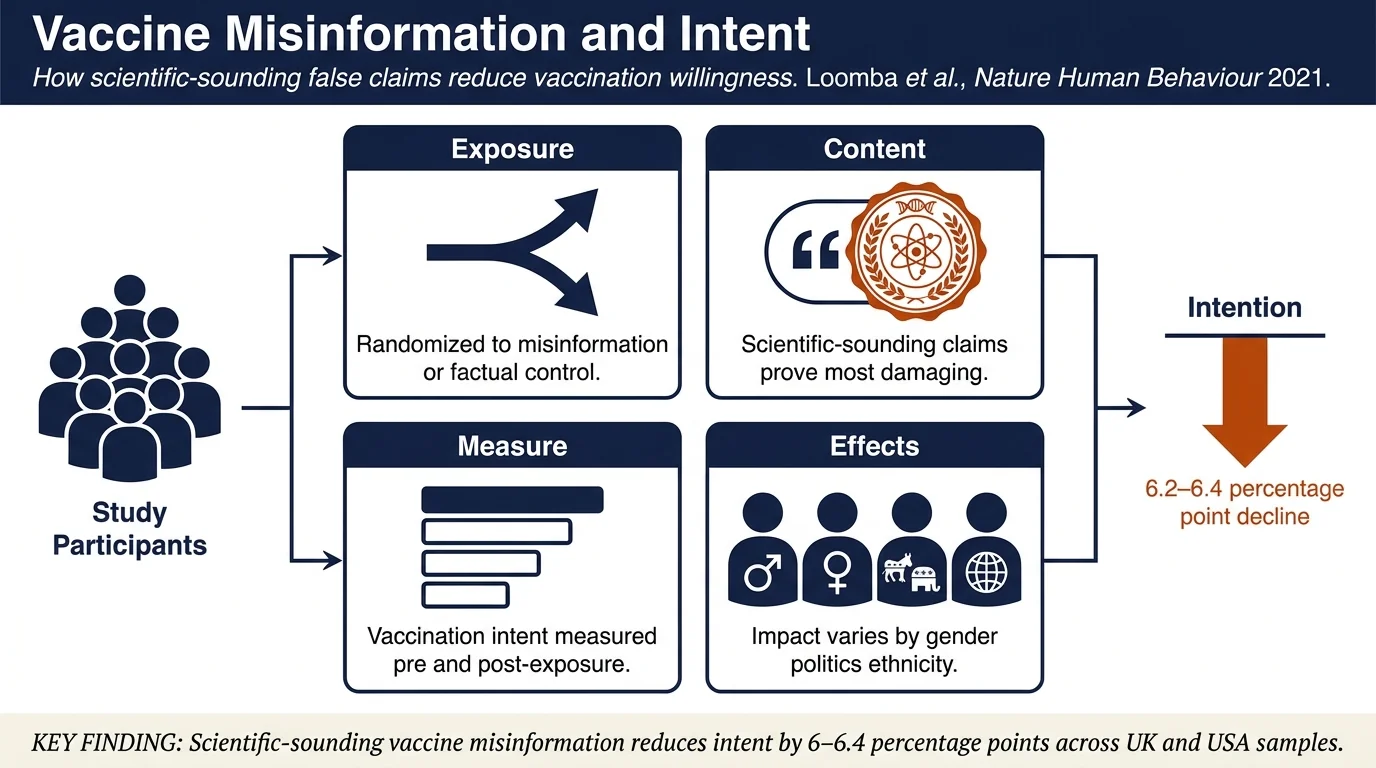
Measuring the impact of COVID-19 vaccine misinformation on vaccination intent in the UK and USARandomized controlled trial on 8,001 respondents (4,000 UK, 4,001 USA) measuring causal impact of exposure to COVID-19 vaccine misinformation. Exposure to misinformation reduced vaccination intent by 6.2 percentage points in the UK and 6.4 in the USA relative to exposure to factual information.
 Spread & networksDatasets & evaluation
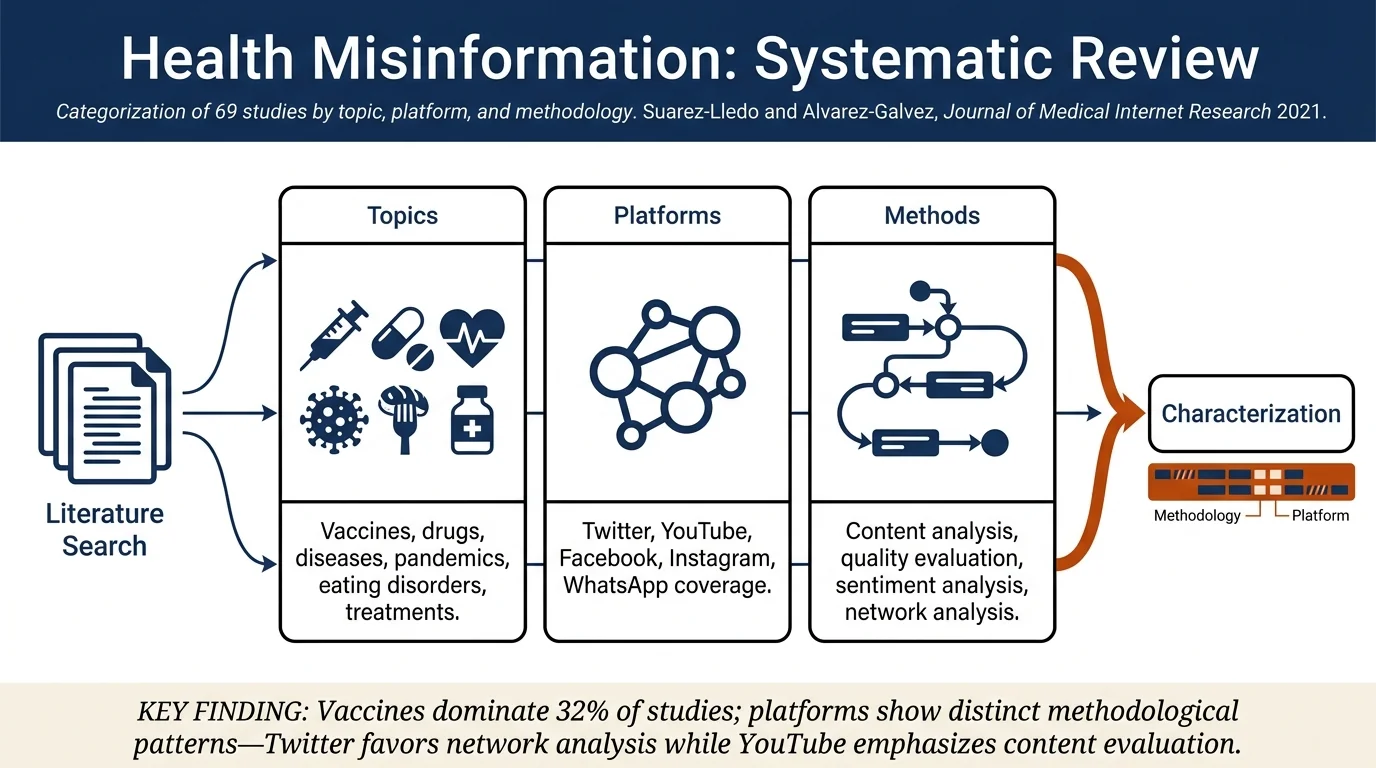
Prevalence of Health Misinformation on Social Media: Systematic ReviewSystematic review of 69 studies examining health misinformation prevalence across social media platforms. Vaccines, drugs, and smoking are the most-studied topics; Twitter is the primary platform for misinformation about smoking and substances, while vaccines are discussed broadly across platforms.
 Spread & networksPlatforms, policy & society
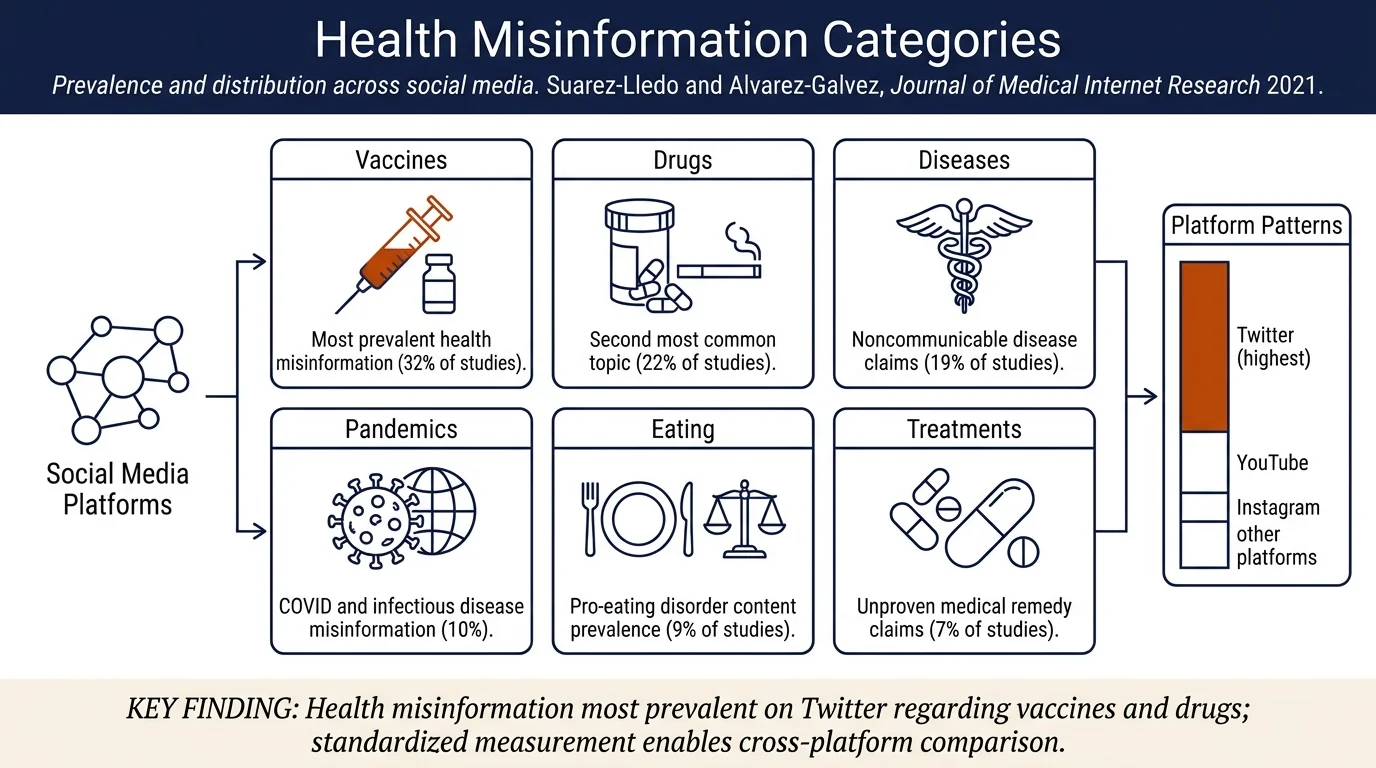
Prevalence of Health Misinformation on Social Media: Systematic ReviewThis systematic review of 69 studies characterizes health misinformation topics and their prevalence across social media platforms. Health misinformation was most prevalent on Twitter regarding smoking and drugs; vaccines, noncommunicable diseases, and pandemics were also common topics.
 Detection methodsLLMs & generative AI
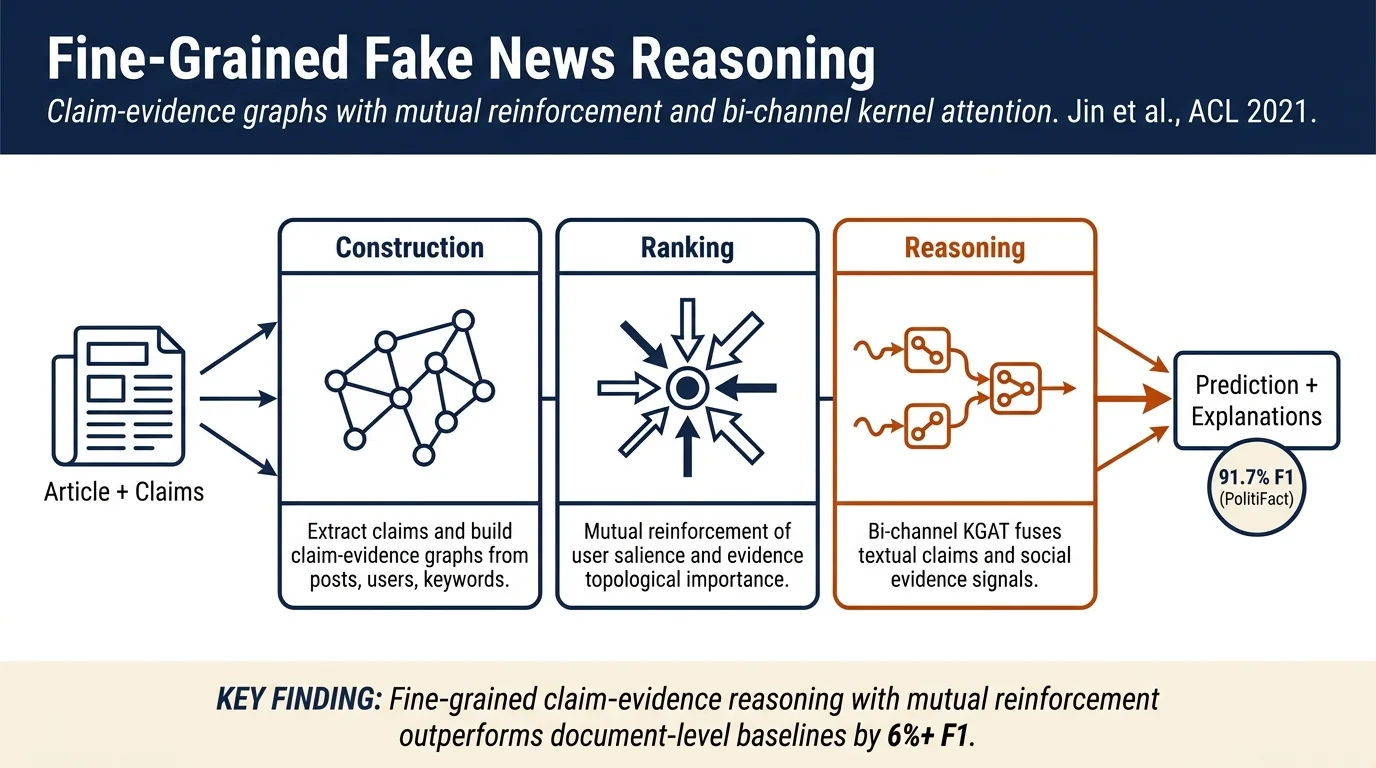
Towards Fine-Grained Reasoning for Fake News DetectionThe paper proposes FinerFact, a framework for fake news detection that models reasoning at the claim-evidence level rather than the document level. It constructs claim-evidence graphs and uses mutual-reinforcement-based ranking to identify salient evidence, then applies a bi-channel kernel graph network to reason over evidence groups.
 Psychology & interventionsPlatforms, policy & society
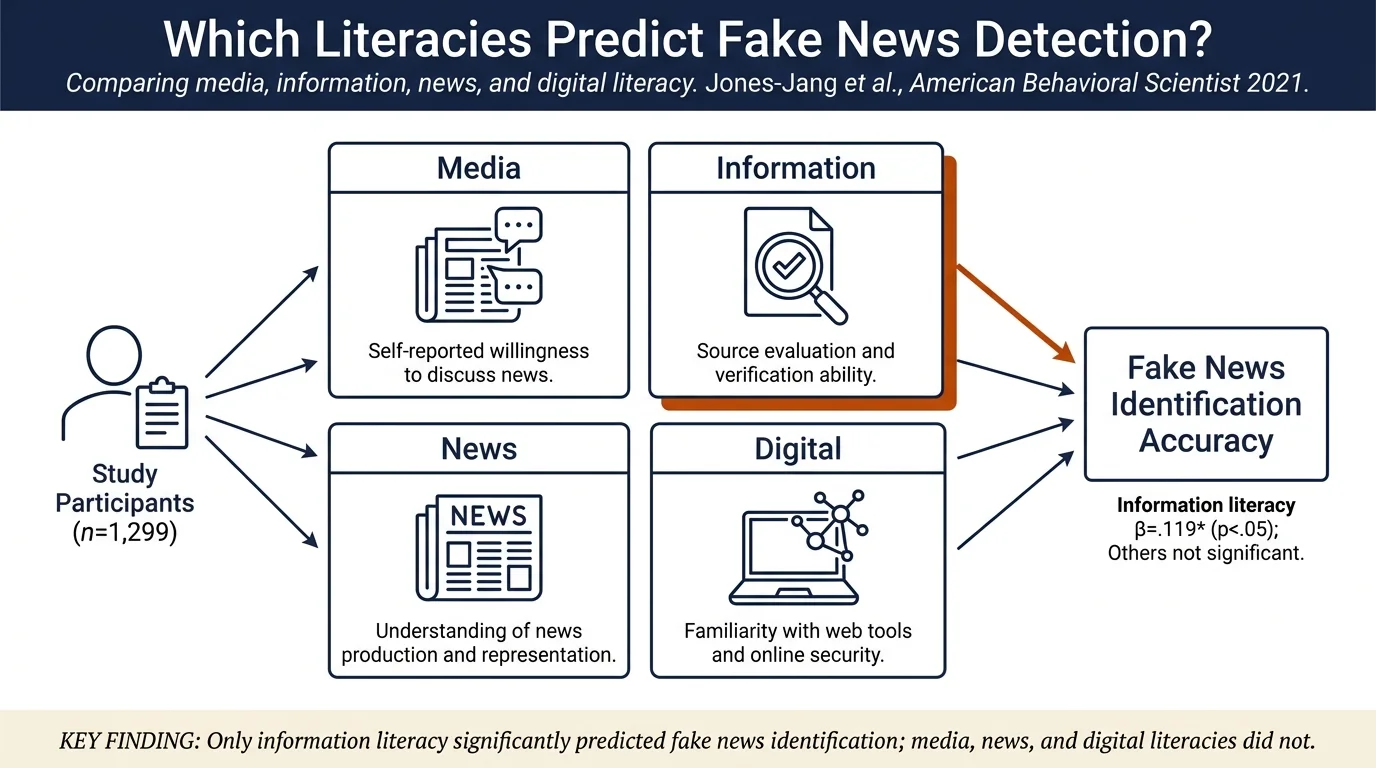
Does Media Literacy Help Identification of Fake News? Information Literacy Helps, but Other Literacies Don'tA survey of 1,299 U.S. citizens tests whether four types of media literacy—media, information, news, and digital—predict ability to identify fake news. Only information literacy (the ability to search and evaluate verified sources) significantly improves fake news identification; media, news, and digital literacies showed no significant…
 Spread & networksPlatforms, policy & society
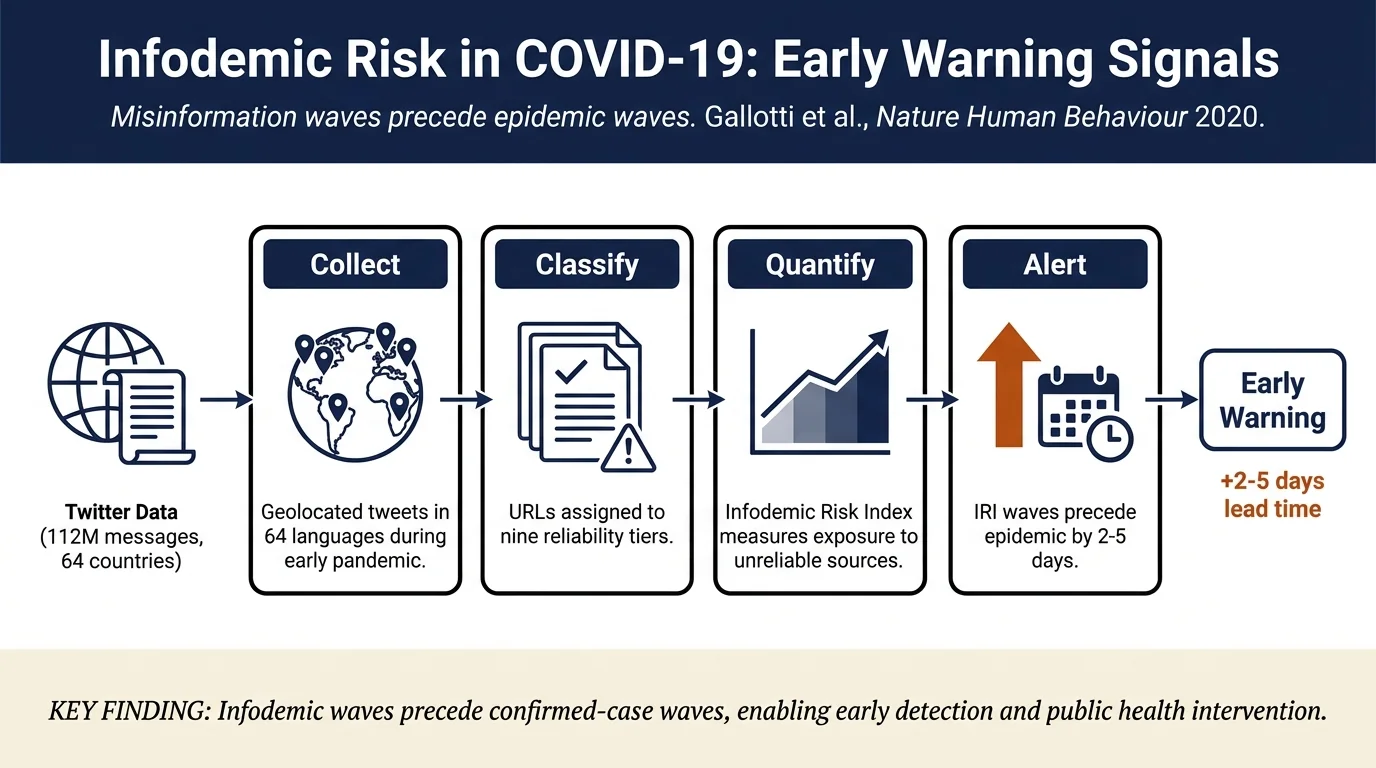
Assessing the risks of 'infodemics' in response to COVID-19 epidemicsAnalysis of 112+ million geolocated Twitter messages about COVID-19 (January–March 2020) across 64 languages and countries. Develops an infodemic risk index (IRI) measuring exposure to unreliable news; demonstrates that waves of unreliable information precede pandemic waves, providing early-warning signals for policy intervention.
 Fact-checking & verificationPlatforms, policy & society
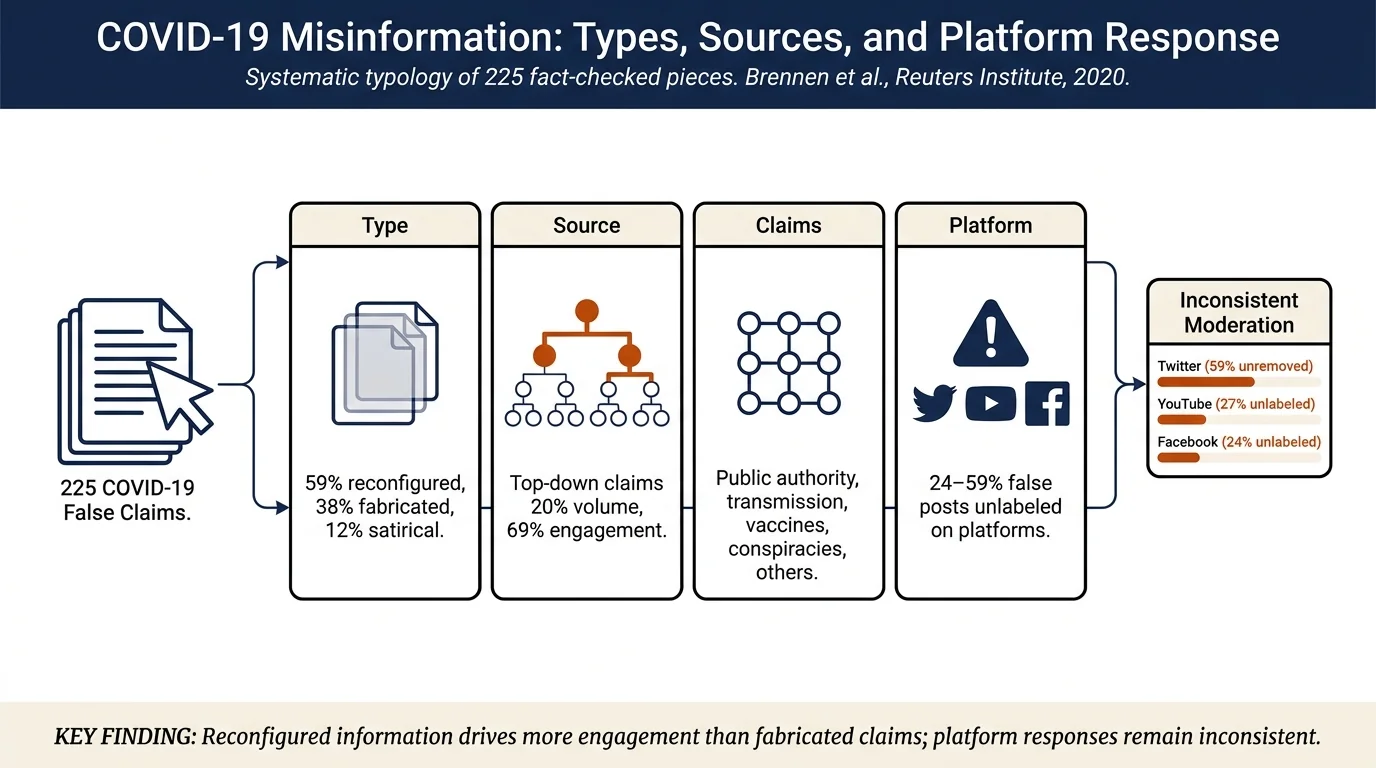
Types, Sources, and Claims of COVID-19 MisinformationSystematic analysis of 225 fact-checked COVID-19 misinformation pieces reveals that most false content reconfigures existing information (59%) rather than fabricating entirely new claims. Public authorities are cited in 39% of misinformation, yet top-down claims from politicians and celebrities account for only 20% of volume but drive…
 Psychology & interventionsPlatforms, policy & society
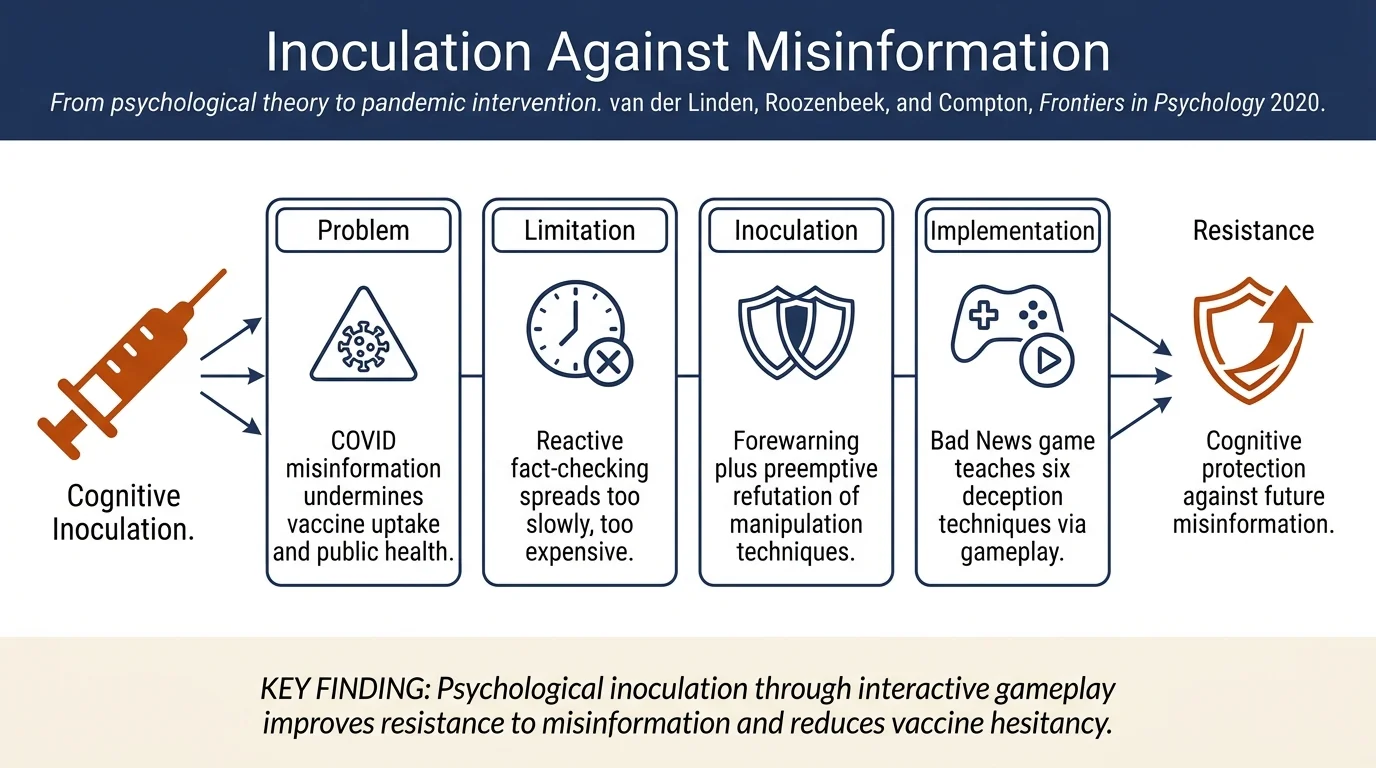
Inoculating Against Fake News About COVID-19COVID-19 misinformation has proliferated rapidly on social media, undermining public health responses and vaccination uptake. Rather than relying on post-hoc fact-checking (which spreads slower than misinformation), the authors propose psychological inoculation—exposing people to weakened doses of misinformation techniques beforehand to…
 Datasets & evaluationDetection methods
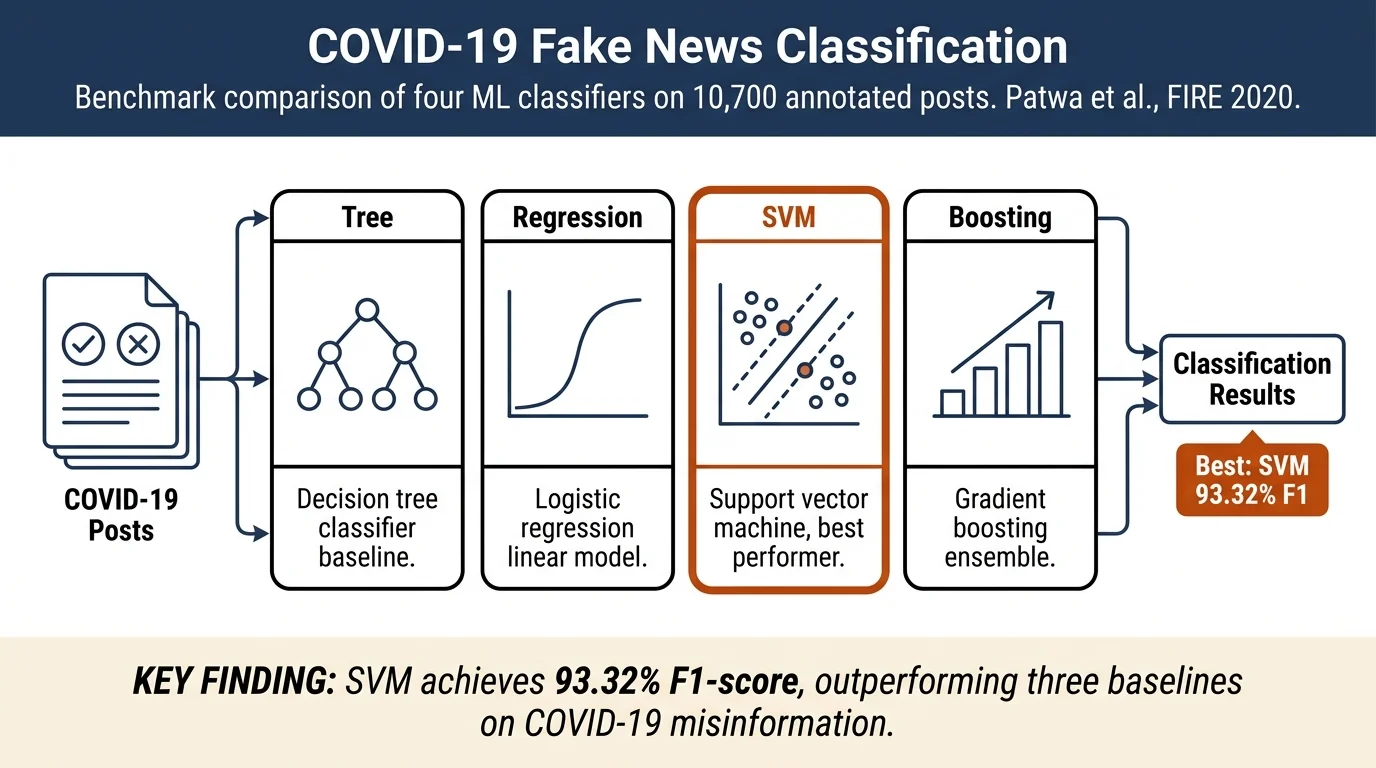
Fighting an Infodemic: COVID-19 Fake News DatasetThe authors present a manually annotated dataset of 10,700 COVID-19 related posts and articles (52% real, 48% fake) collected from social media and fact-checking websites. They benchmark four machine learning baselines (Decision Tree, Logistic Regression, SVM, Gradient Boost), achieving 93.32% F1-score with SVM, and release both the…
 Deepfakes & multimodalFact-checking & verification
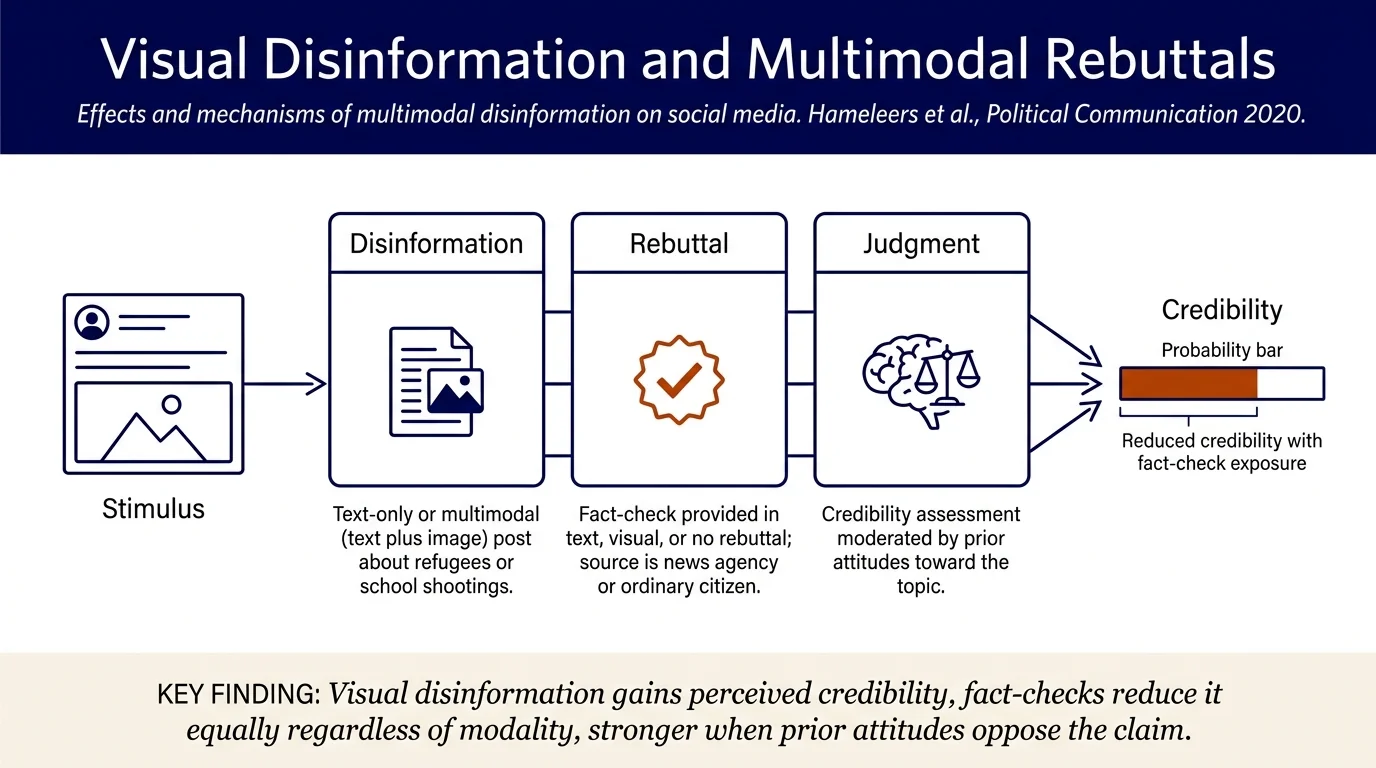
A Picture Paints a Thousand Lies? The Effects and Mechanisms of Multimodal Disinformation and Rebuttals Disseminated via Social MediaMultimodal disinformation (paired text and images) is perceived as more credible than text-only misinformation, but fact-checkers can overcome this effect. Importantly, the modality of fact-checks (visual or textual) matters less than their presence; fact-checks are more persuasive for people whose prior attitudes already oppose the…
 Platforms, policy & societySpread & networks
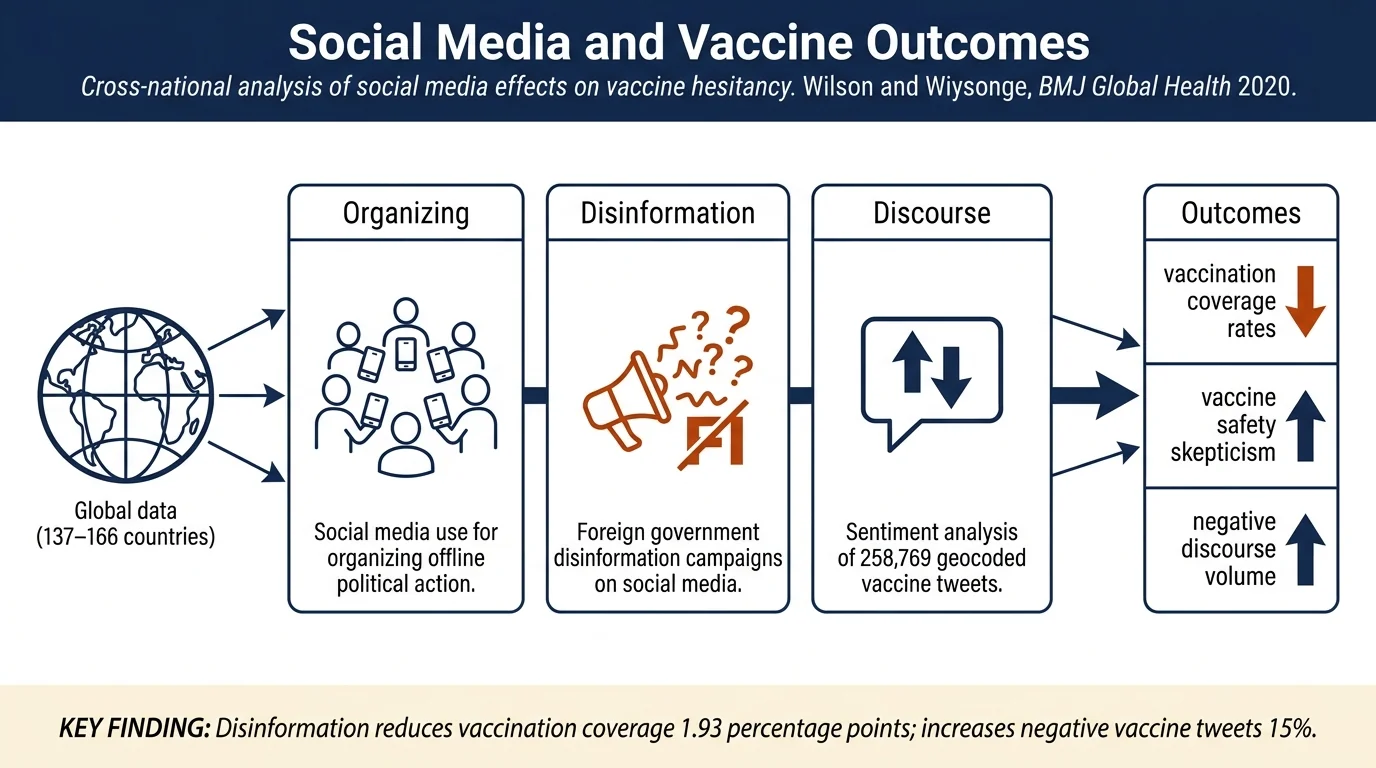
Social media and vaccine hesitancyLarge-scale cross-national analysis finds that social media use to organize offline action predicts public vaccine safety skepticism, while foreign disinformation campaigns significantly reduce vaccination coverage year-over-year. A one-point increase on the five-point disinformation scale correlates with a two-percentage-point drop in…
 Fact-checking & verificationPsychology & interventions
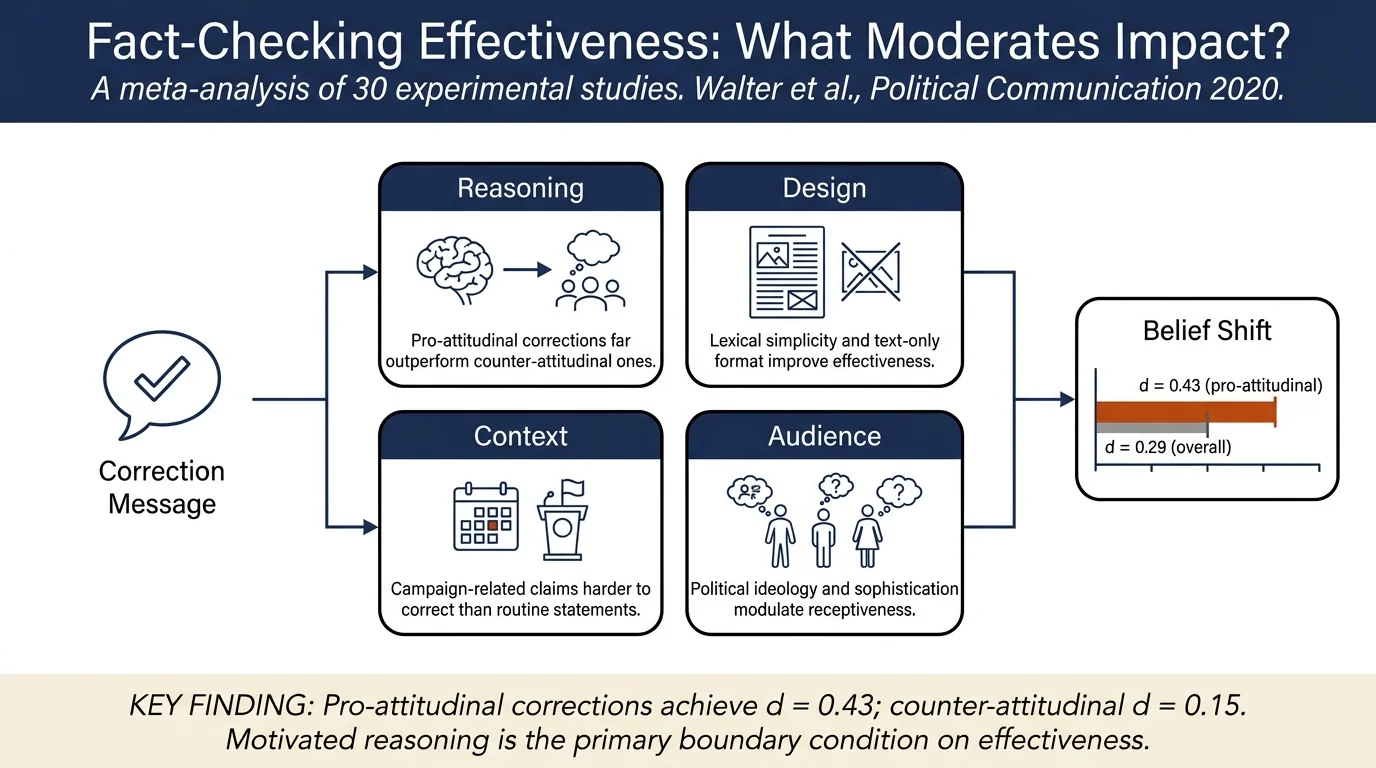
Fact-Checking: A Meta-Analysis of What Works and for WhomMeta-analysis of 30 studies on fact-checking effectiveness finds modest but significant positive effects (d = 0.29) on belief correction. However, effects are substantially moderated by motivated reasoning, political ideology, message design, and context: pro-attitudinal fact-checking works better than counter-attitudinal corrections,…
 Spread & networksPlatforms, policy & society
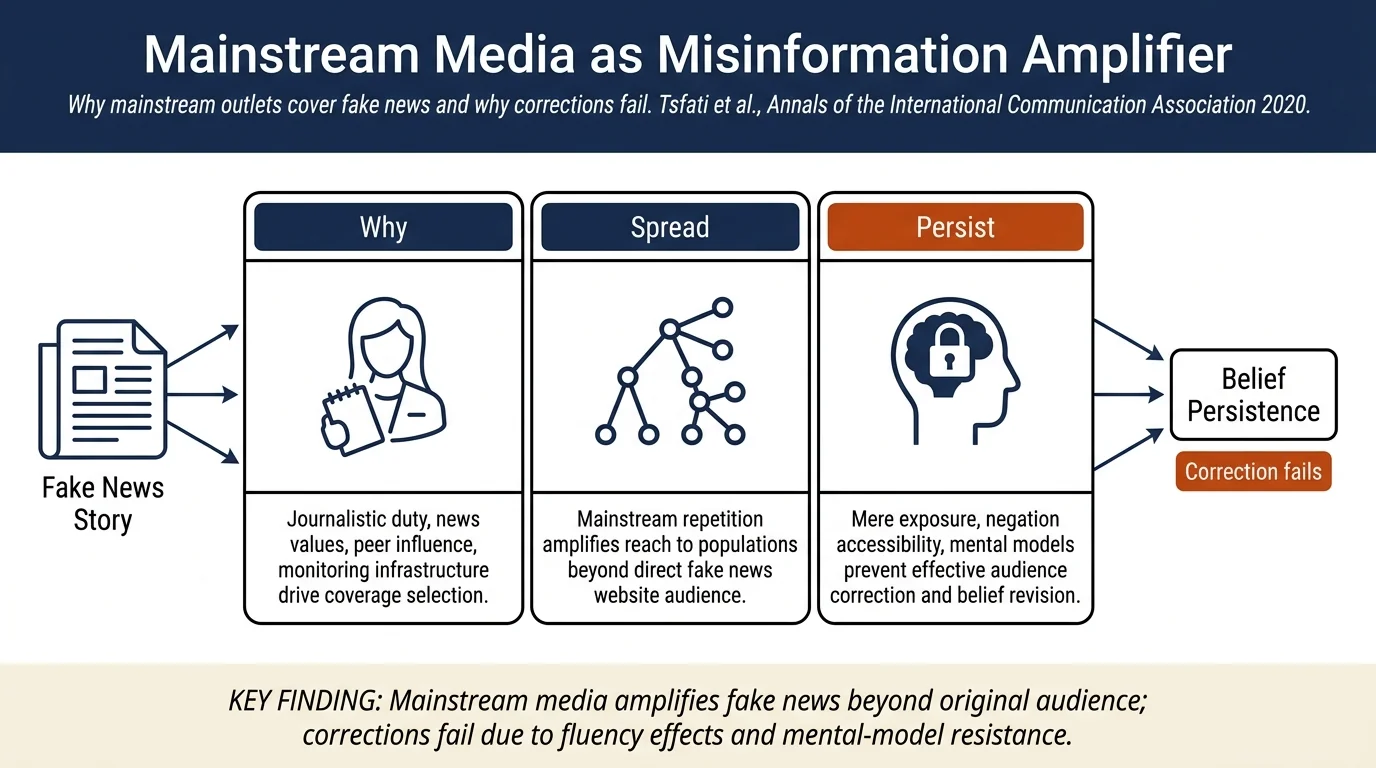
Causes and consequences of mainstream media dissemination of fake news: literature review and synthesisWhile fake news websites have limited direct reach, mainstream media coverage is probably how most people encounter fake news stories. This synthesis identifies why mainstream outlets cover falsehoods (journalists' professional duties, news values, peer psychology, technical infrastructure) and explores how mainstream coverage amplifies…
 Psychology & interventionsPlatforms, policy & society
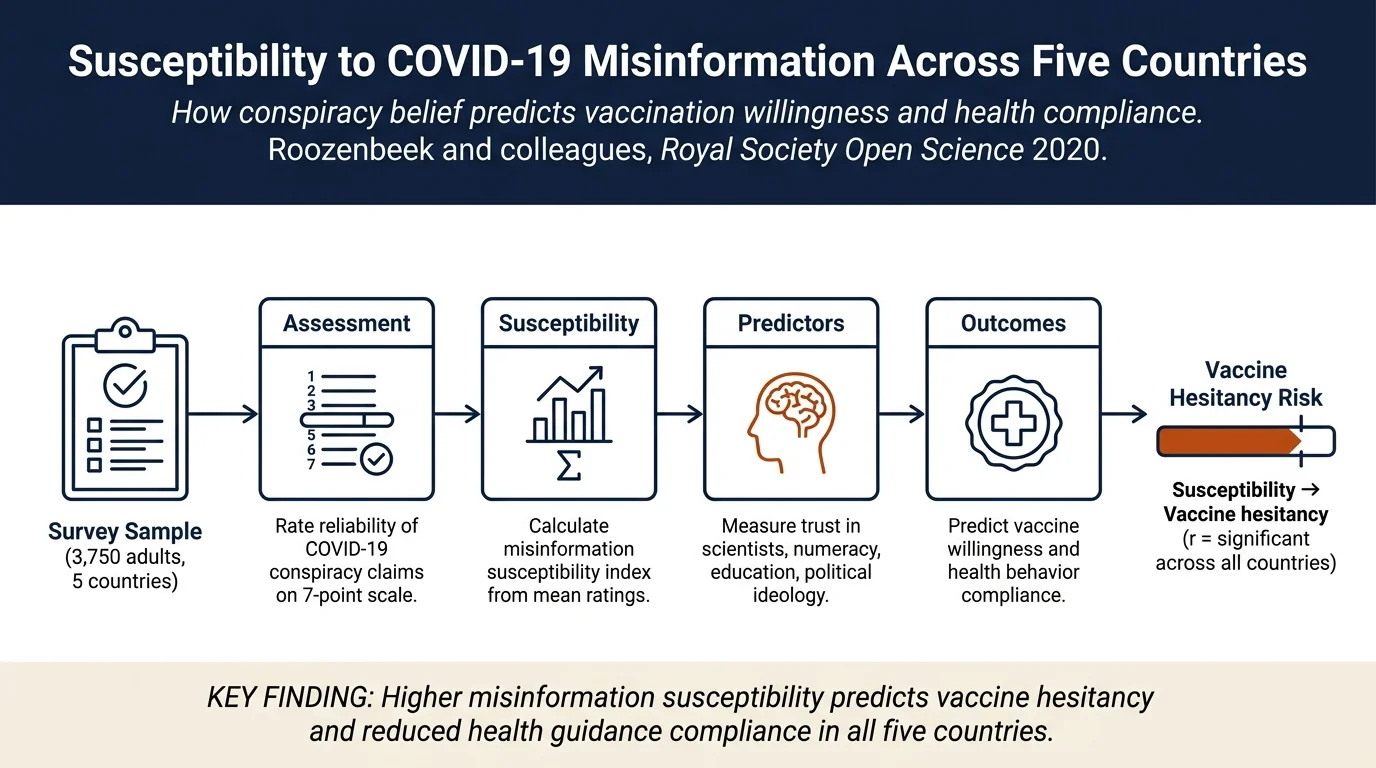
Susceptibility to misinformation about COVID-19 around the worldAn international survey of 3,750 adults across five countries (UK, Ireland, USA, Spain, Mexico) measured susceptibility to COVID-19 misinformation and examined how it predicts public health behaviors. While majorities in each country did not find COVID-19 misinformation credible, higher susceptibility to misinformation was strongly…
 Psychology & interventionsPlatforms, policy & society
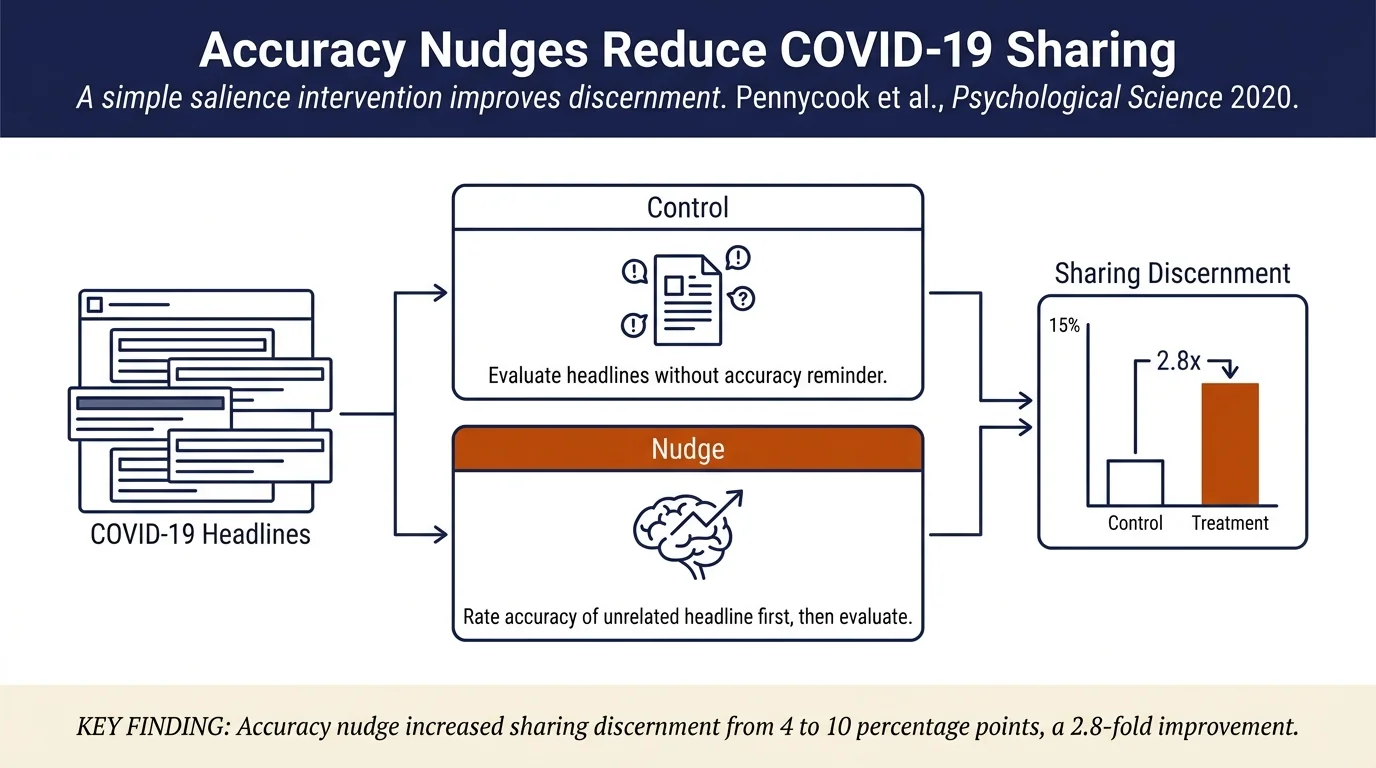
Fighting COVID-19 Misinformation on Social Media: Experimental Evidence for a Scalable Accuracy-Nudge InterventionTwo pre-registered experiments with 1,700+ U.S. adults show that a simple accuracy nudge — asking people to rate the accuracy of an unrelated headline before the main task — nearly tripled their ability to discriminate true from false COVID-19 headlines when deciding what to share on social media. The intervention is scalable, requires…
 Fact-checking & verificationPlatforms, policy & society
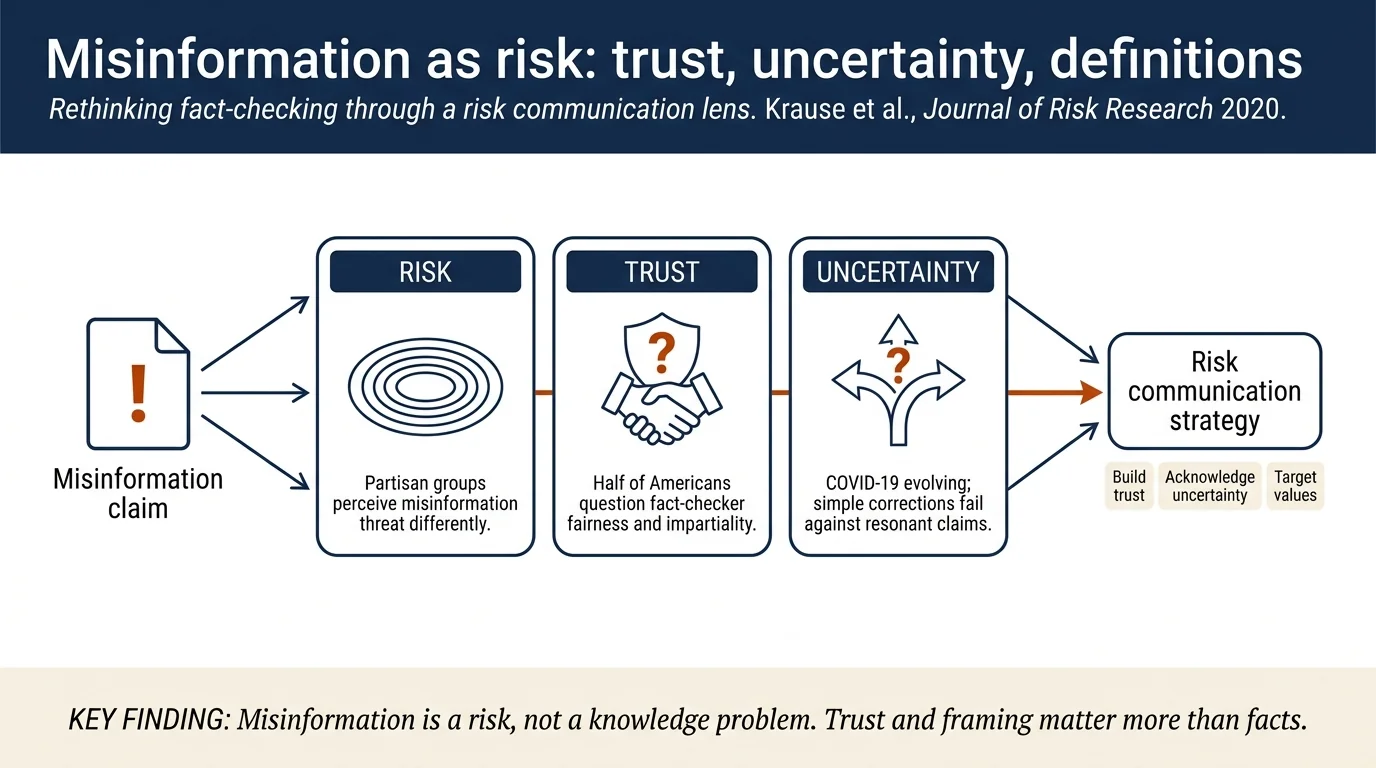
Fact-checking as risk communication: the multi-layered risk of misinformation in times of COVID-19COVID-19 misinformation should be viewed as a risk in its own right, not just a communication failure. Fact-checking efforts face three key challenges: defining misinformation differently across political subgroups, earning trust in an environment of low press credibility, and communicating amid genuine uncertainty.
 Psychology & interventionsPlatforms, policy & society
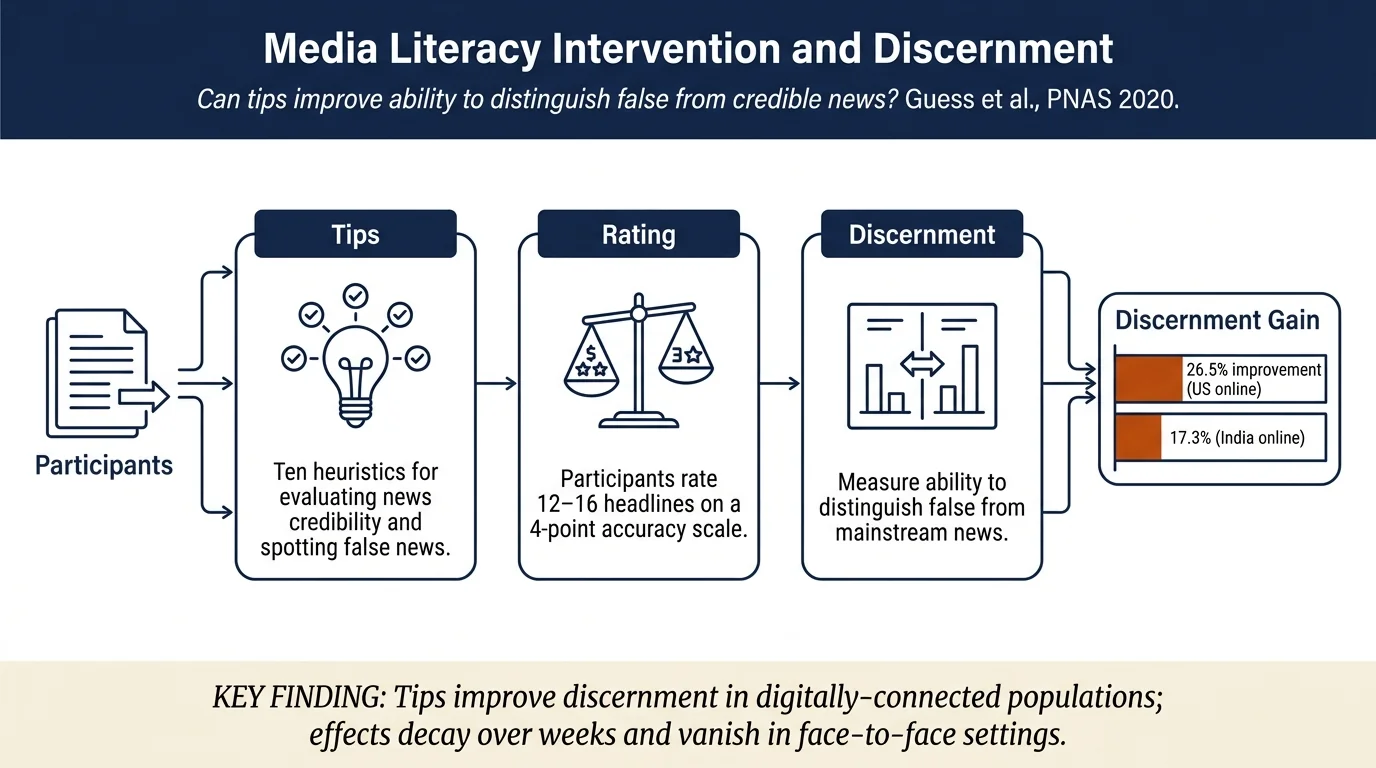
A digital media literacy intervention increases discernment between mainstream and false news in the United States and IndiaA randomized experiment tests Facebook's "Tips to Spot False News" intervention in the US and India, finding it increases discernment between mainstream and false news (26.5% in US, 17.3% in India online). The intervention reduces belief in false headlines more than it reduces belief in mainstream ones.
 Spread & networksPlatforms, policy & society
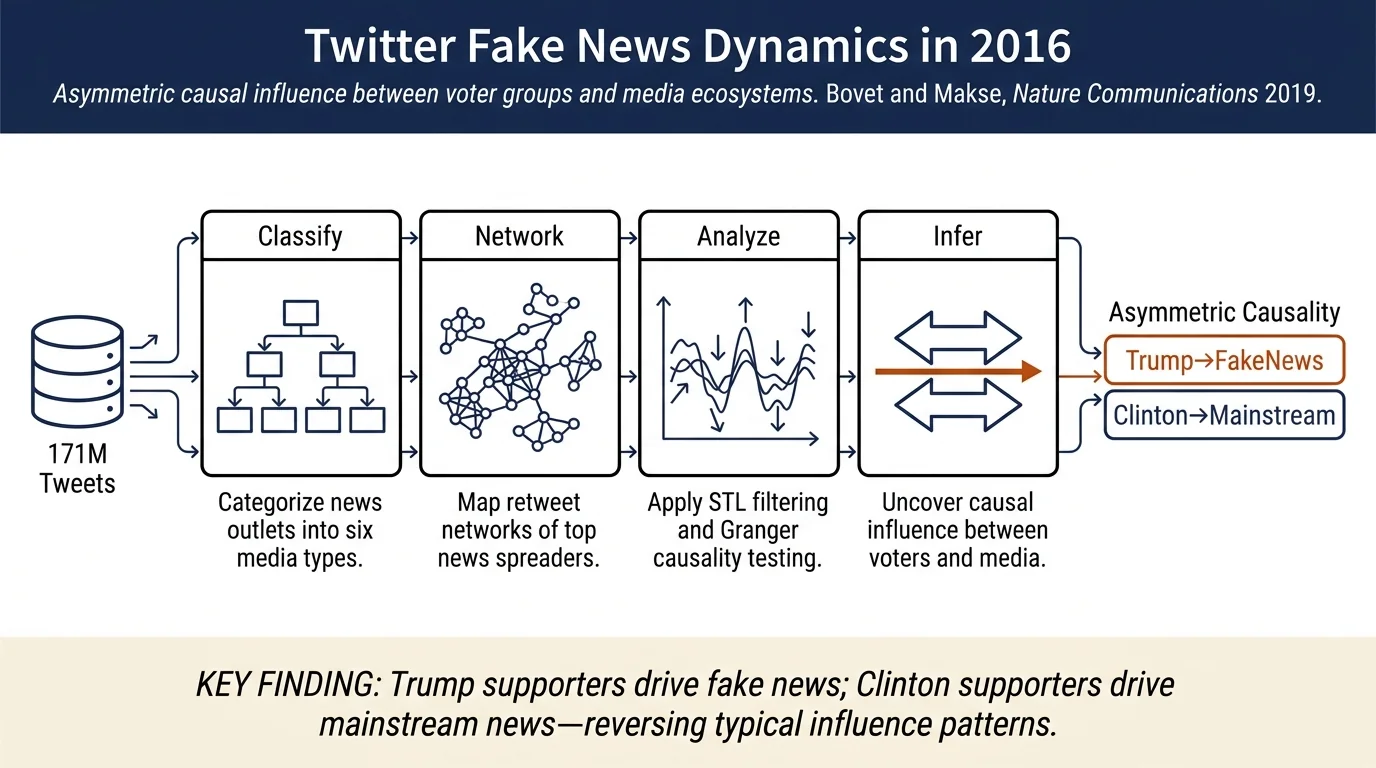
Influence of fake news in Twitter during the 2016 US presidential electionUsing 171 million tweets from the five months preceding the 2016 U.S. election, this study found that 25% of news-sharing tweets contained fake or extremely biased content. Network analysis revealed distinct clusters of fake, biased, and mainstream news spreaders.
 Spread & networksDatasets & evaluation
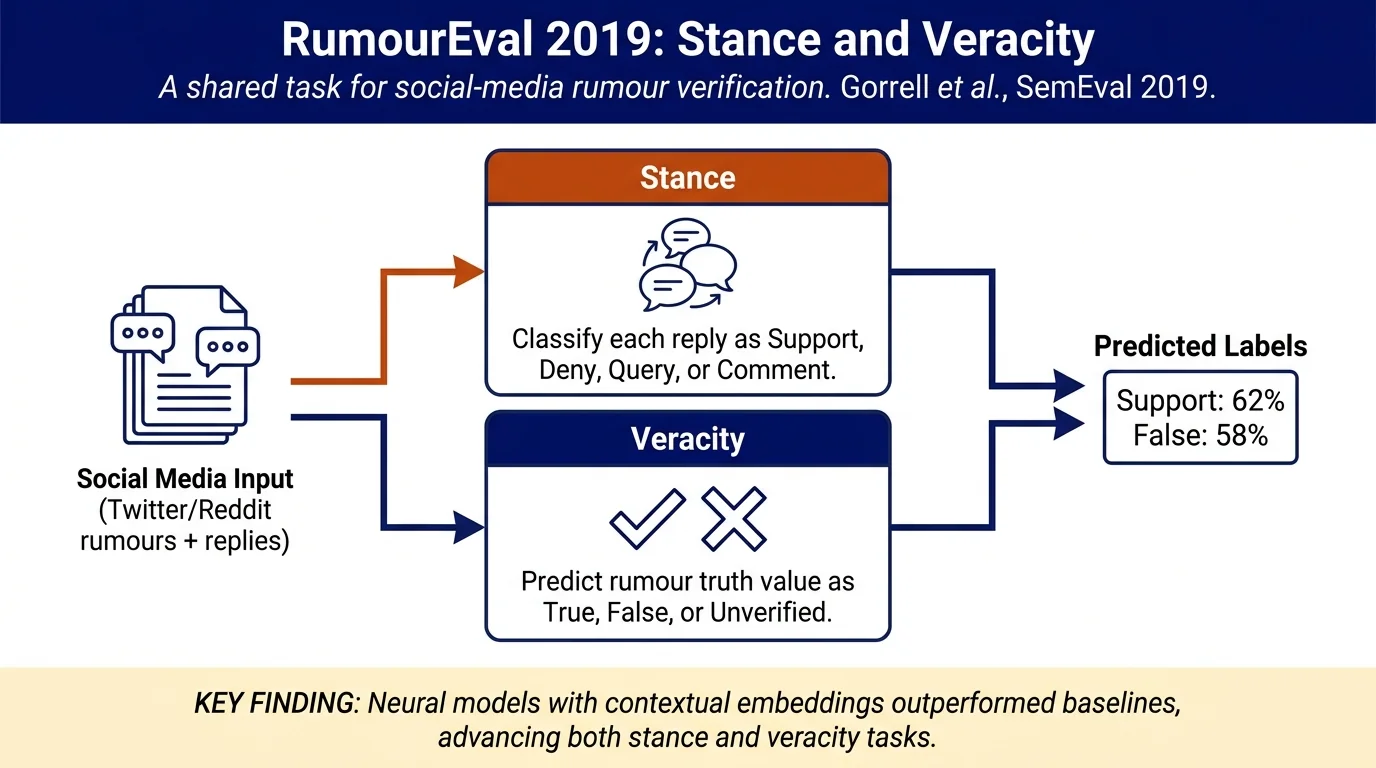
RumourEval 2019: Determining Rumour Veracity and Support for RumoursRumourEval 2019 is a shared task for rumour stance detection and veracity prediction on social media. Extending the 2017 edition, it introduces Reddit data alongside Twitter, provides datasets annotated for SDQC stance (Support/Deny/Query/Comment) and three-way veracity labels, and received 22 system submissions showing that modern…
 Fact-checking & verificationPlatforms, policy & society
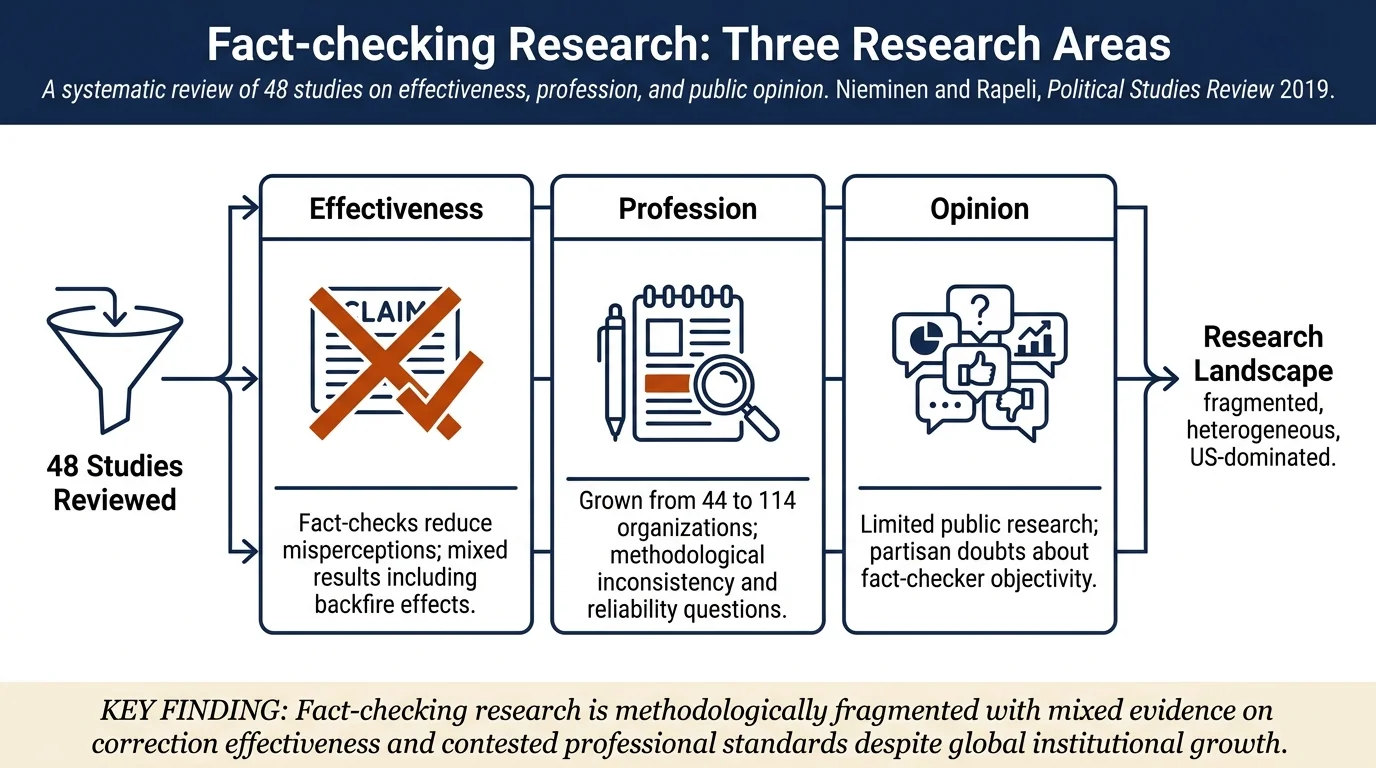
Fighting Misperceptions and Doubting Journalists' Objectivity: A Review of Fact-checking LiteratureComprehensive literature review of 48 studies on political fact-checking, organized into three research areas: (1) fact-checking effectiveness for correcting misperceptions (mixed results, including backfire effects); (2) fact-checking as a profession (contested methods and reliability); (3) public opinion about fact-checking (mostly…
 Psychology & interventionsSpread & networks
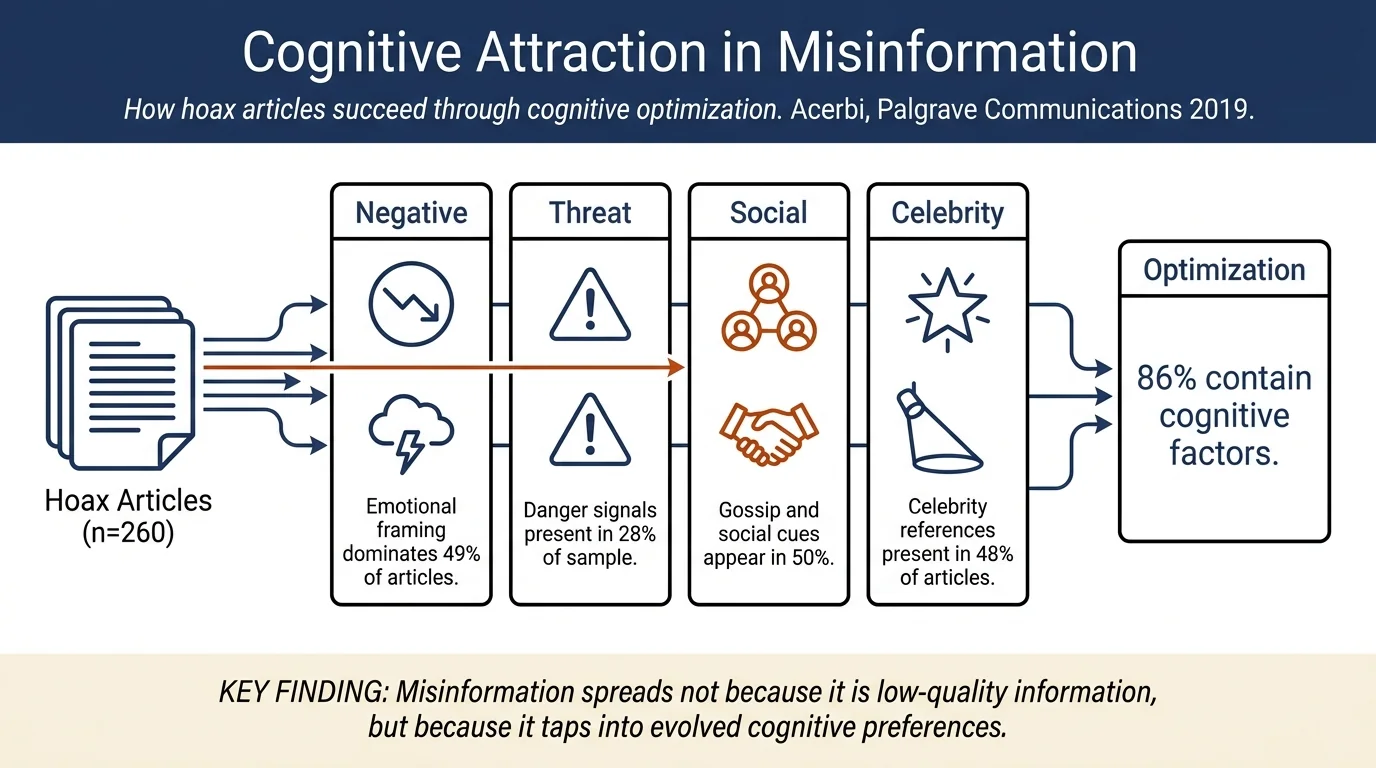
Cognitive attraction and online misinformationMisinformation spreads not because it is low-quality information constrained by digital media inefficiencies, but because it taps into general evolved cognitive preferences. A content analysis of 260 articles from 26 hoax websites shows that 86% contain at least one cognitive-appeal feature: negative framing (49%), threat descriptions…