Explore everything
Filter by research area, year and venue. Every filter is in the address bar, so you can share a view as a link.
 Datasets & evaluationSpread & networks
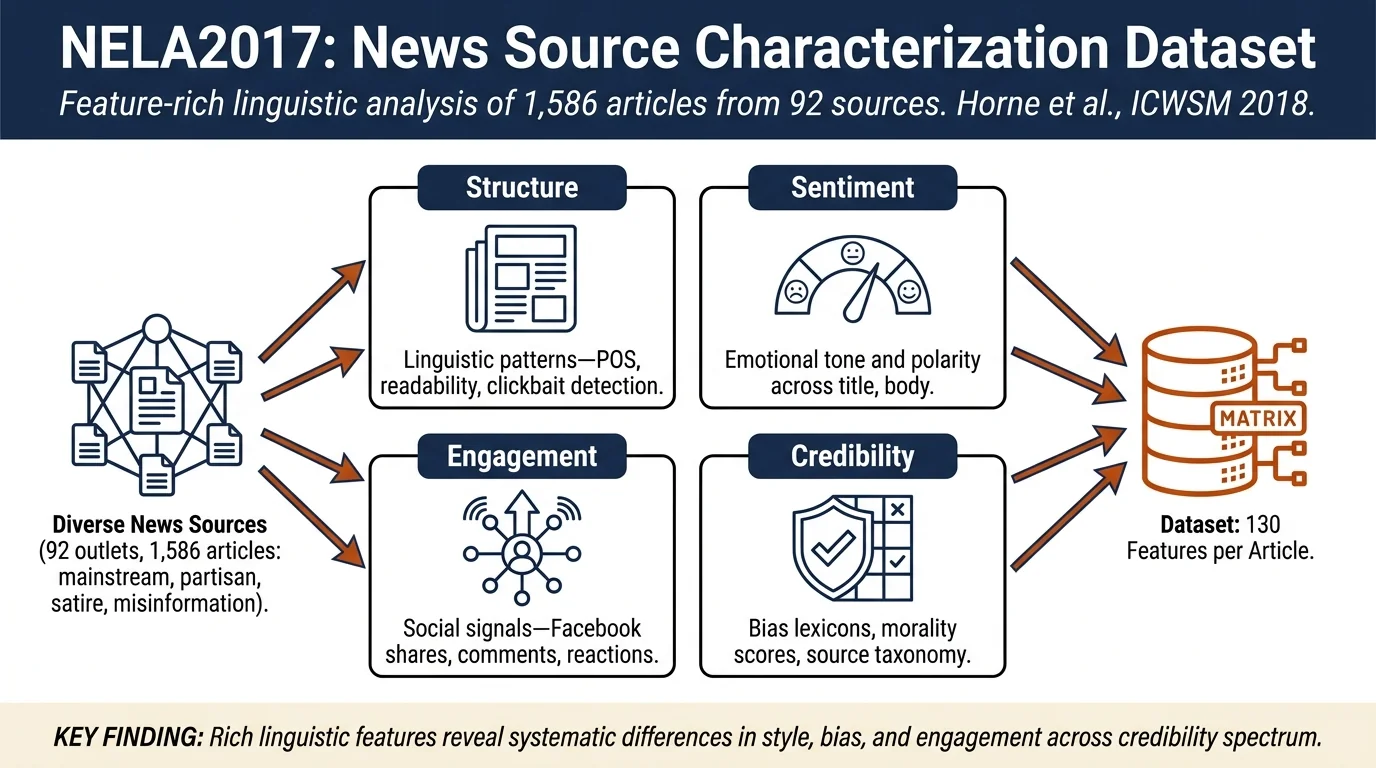
Sampling the News Producers: A Large News and Feature Data Set for the Study of the Complex Media LandscapeIntroduces NELA2017, a dataset of 1,586 news articles from 92 diverse news sources over 7 months (April–October 2017), including mainstream outlets, hyper-partisan sources, satire, and deliberately false news sites. Computes 130 content-based linguistic and engagement features on each article, enabling large-scale comparative analysis of…
 Detection methodsFact-checking & verification
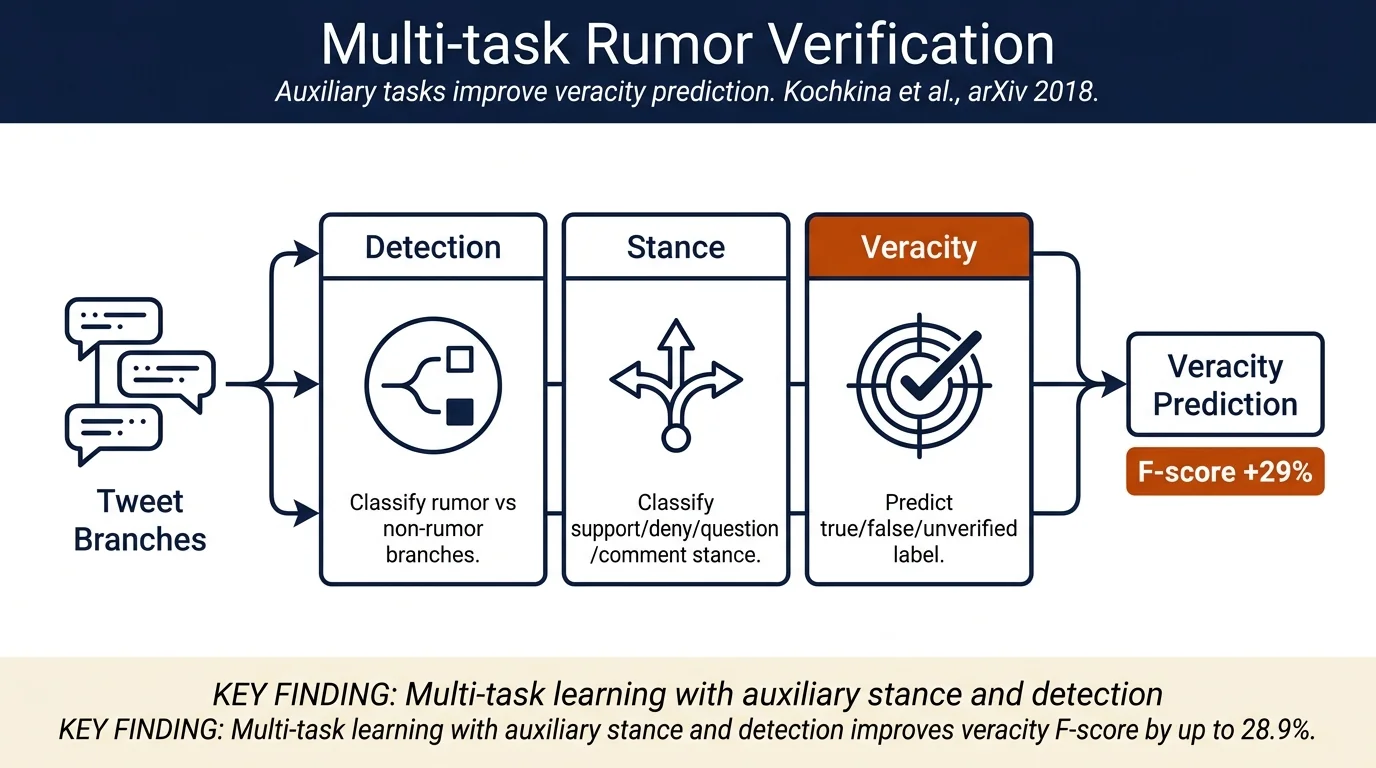
All-in-one: Multi-task Learning for Rumour VerificationThis paper proposes a multi-task learning framework for rumor verification that jointly trains veracity classification (the main task) with auxiliary tasks—rumor detection and stance classification. The approach outperforms single-task baselines on both RumourEval and PHEME datasets, demonstrating that sharing representations across…
 Fact-checking & verificationDetection methods
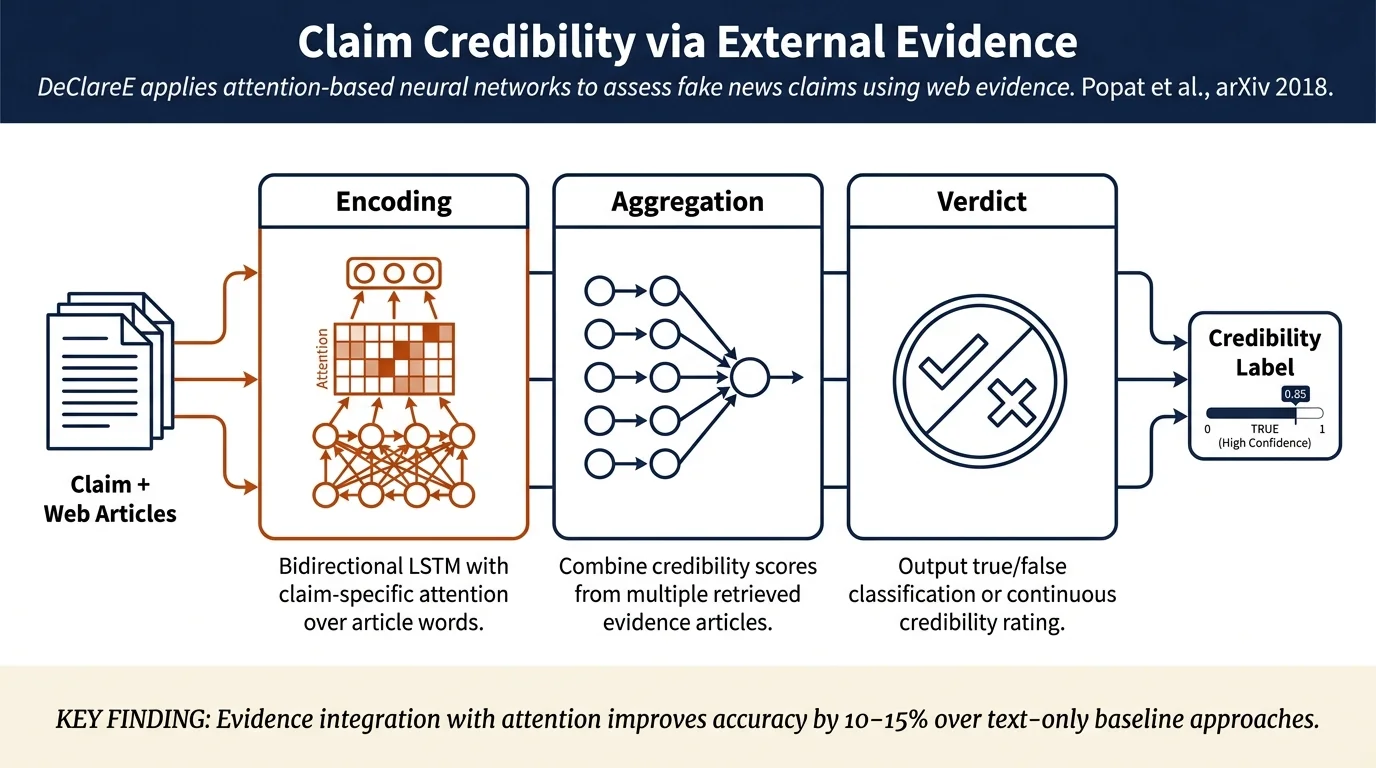
DeClareE: Debunking Fake News and False Claims using Evidence-Aware Deep LearningDeClareE is an end-to-end neural network for evidence-aware credibility assessment of arbitrary natural-language claims. The model combines claim and evidence article representations using bidirectional LSTMs with claim-specific attention, automatically discovering which web articles support or refute a claim without hand-crafted…
 Fact-checking & verificationDatasets & evaluation
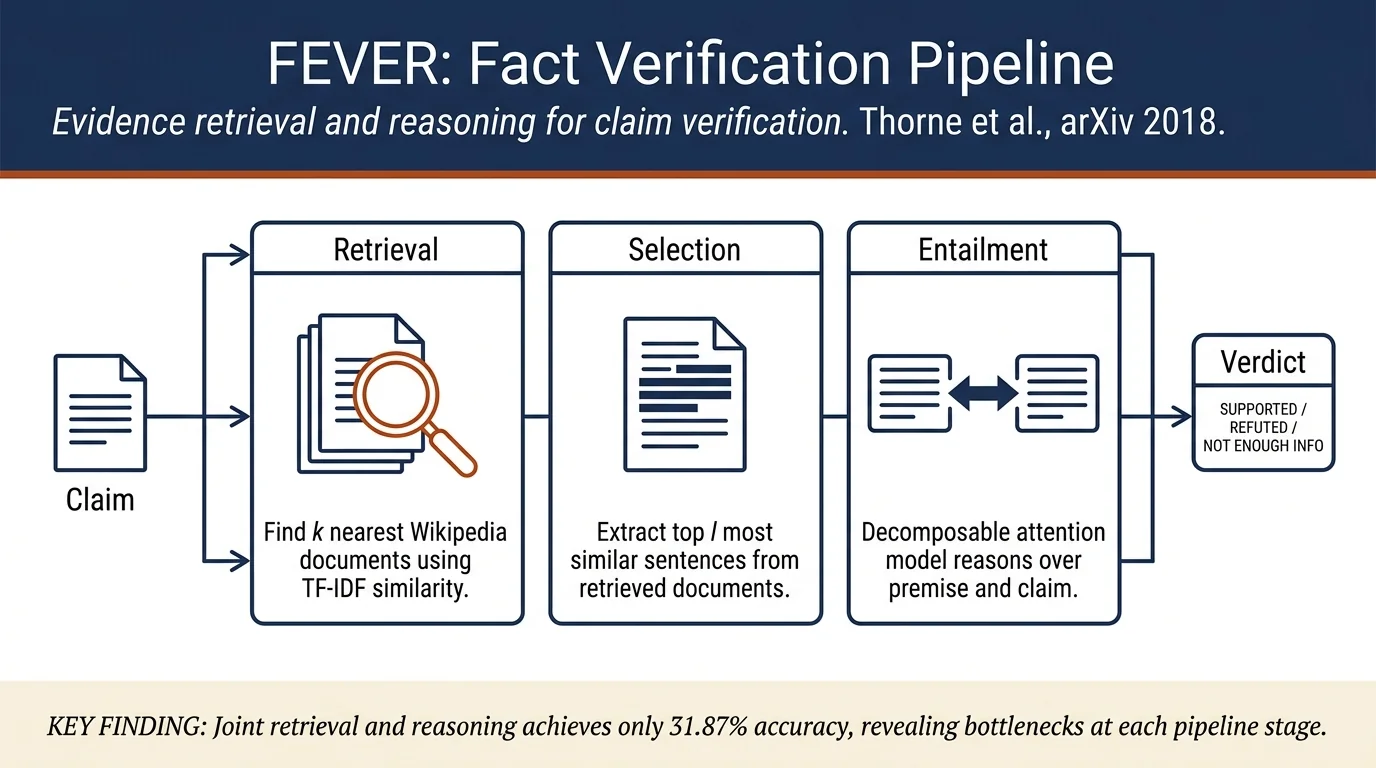
FEVER: A Large-Scale Dataset for Fact Extraction and VERificationThis paper introduces FEVER, a large-scale dataset of 185,445 human-verified claims with Wikipedia evidence for training fact verification systems. Claims are generated from Wikipedia and labeled as SUPPORTED, REFUTED, or NOT ENOUGH INFO; the paper presents a three-stage baseline pipeline (document retrieval, sentence selection, textual…
 Fact-checking & verificationDatasets & evaluation
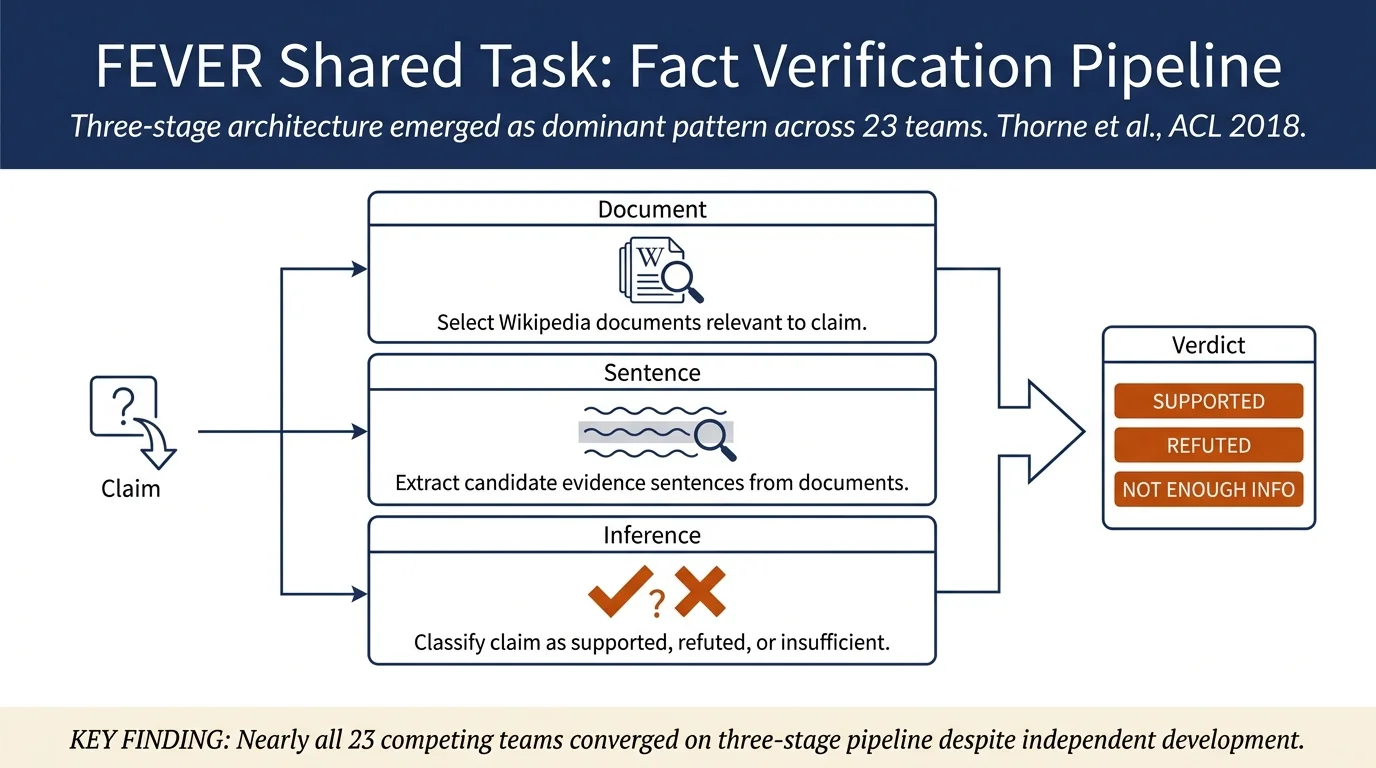
The Fact Extraction and VERification (FEVER) Shared TaskThis paper presents results of the first FEVER shared task competition, which challenged 23 teams to classify whether human-written factoid claims could be SUPPORTED or REFUTED using evidence retrieved from Wikipedia. The best system achieved 64.21% FEVER score, demonstrating the difficulty of joint evidence retrieval and natural…
 Detection methodsDatasets & evaluation
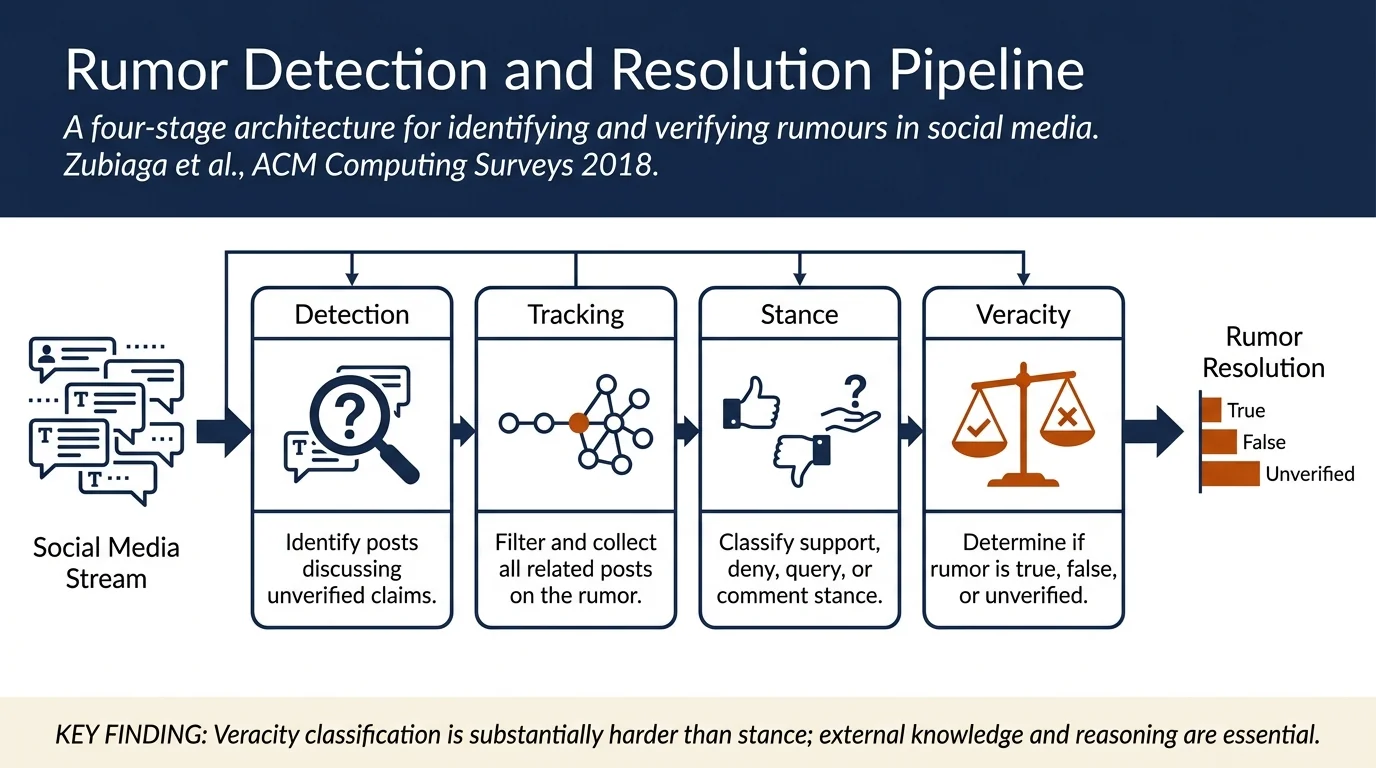
Detection and Resolution of Rumours in Social Media: A SurveyComprehensive survey of rumour detection and resolution in social media covering the entire pipeline: rumour definition and characterization, data collection strategies, annotation schemes, detection approaches for both emerging and long-standing rumours, tracking of rumour propagation, stance classification (support/deny/query/comment),…
 Platforms, policy & societyFact-checking & verification
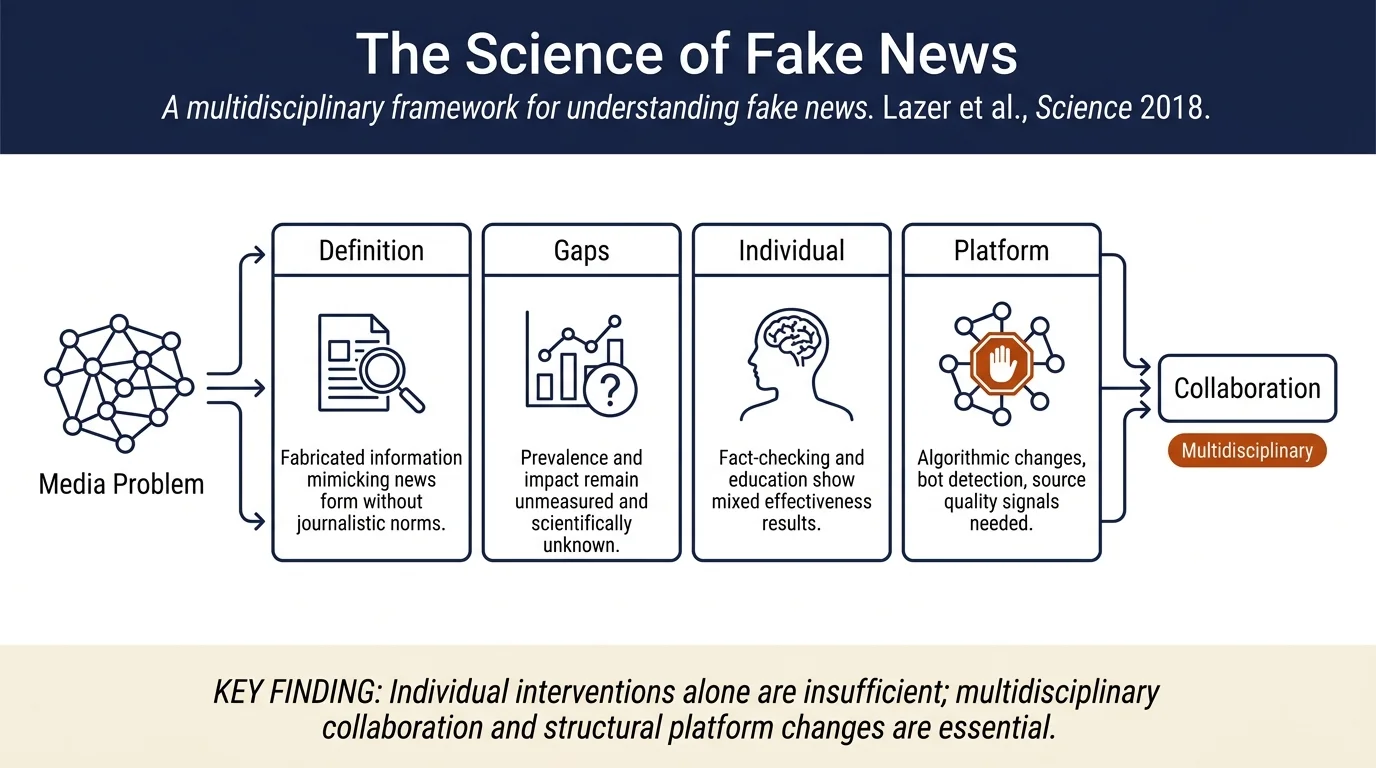
The Science of Fake NewsThis multidisciplinary review establishes a scientific framework for studying fake news, defining it as fabricated information that mimics news media form but lacks editorial norms. The paper identifies two mitigation strategies—empowering individuals through fact-checking and education, and structural platform interventions—while…
 Fact-checking & verificationPsychology & interventions
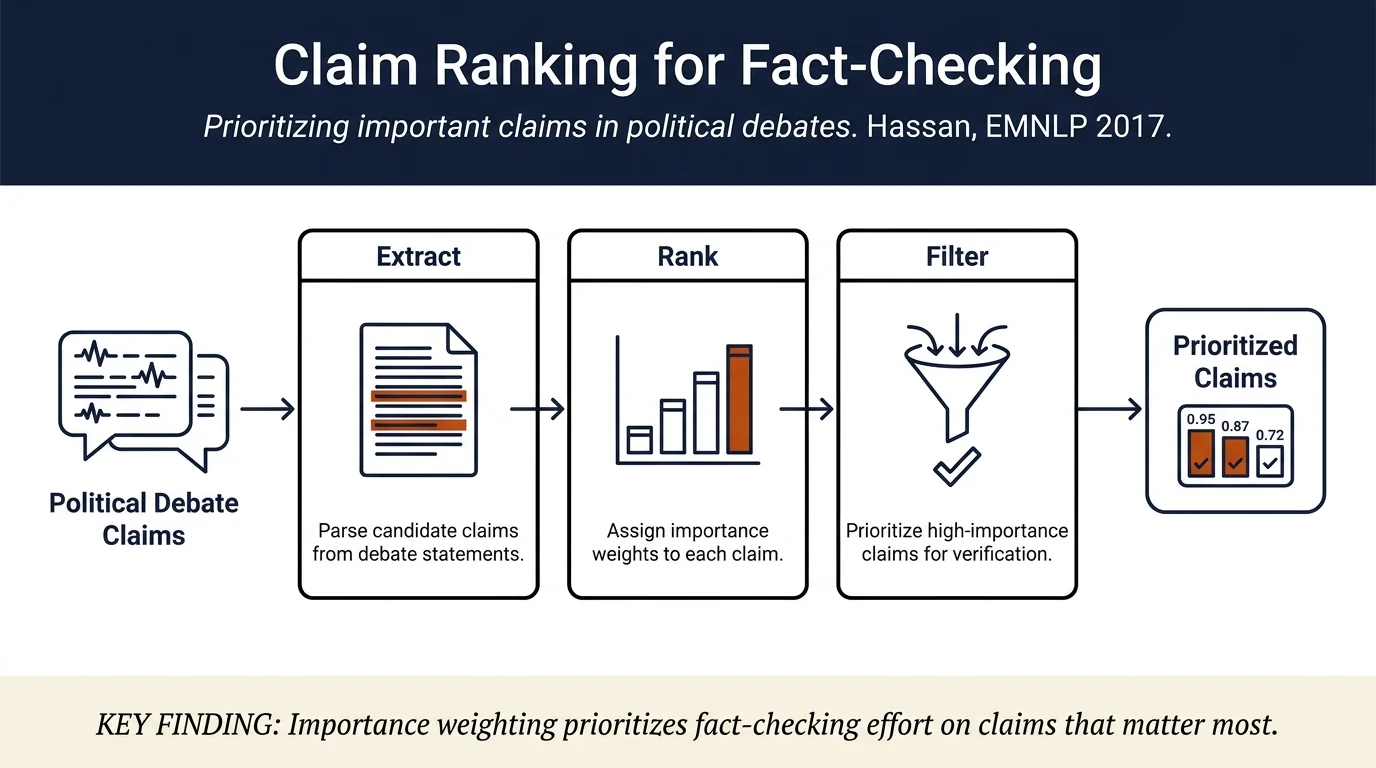
Claim Ranking in Political DebatesEarly work framing check-worthiness as claim ranking; introduces the notion of "importance weighting" for prioritizing claims for fact-checking in political debates. Foundational for understanding which claims warrant verification effort.
Fact-checking & verificationDatasets & evaluation
ClaimBuster: The first end-to-end fact-checking systemFoundational work introducing ClaimBuster, an end-to-end automated fact-checking system. Introduces a dataset of 23,533 human-annotated U.S. debate statements with check-worthiness labels, establishing baselines for automated claim check-worthiness detection and ranking.
 Spread & networksFact-checking & verification
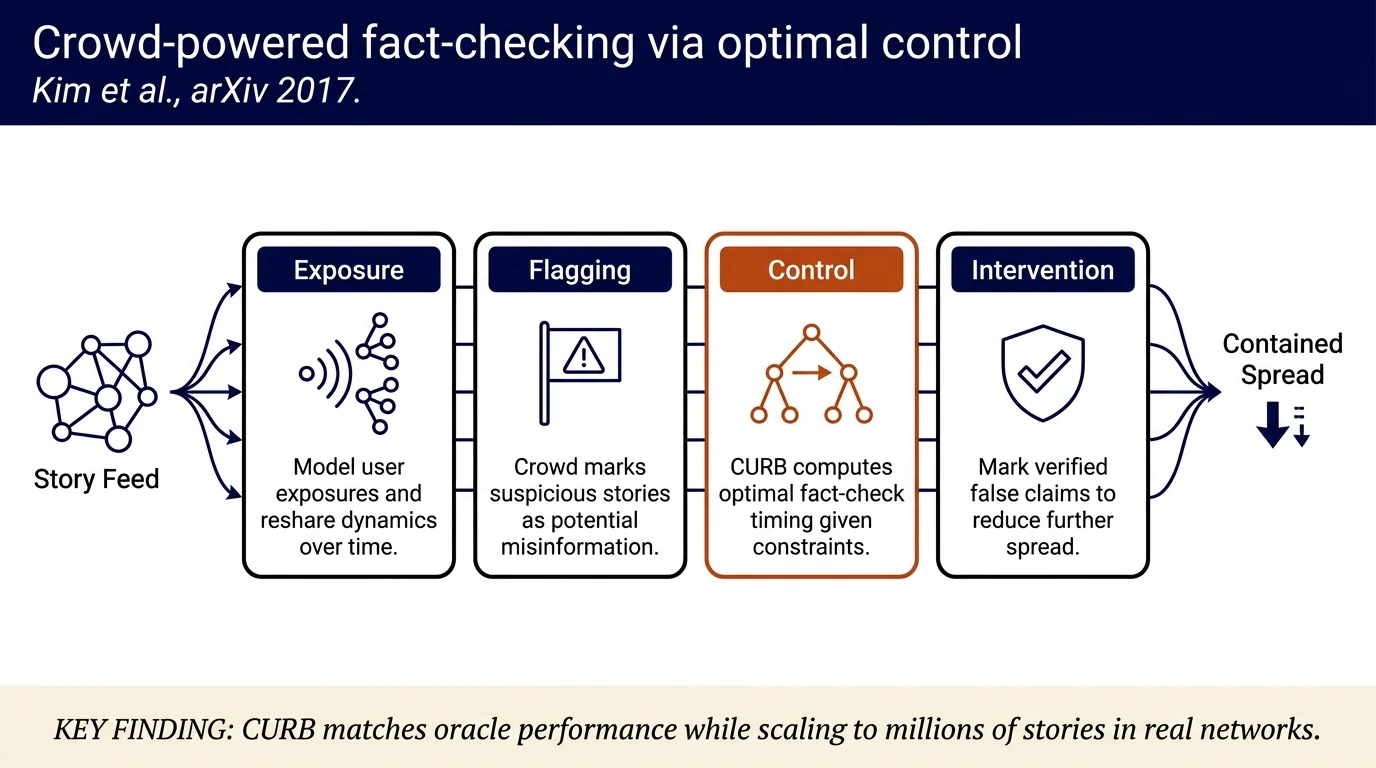
Leveraging the Crowd to Detect and Reduce the Spread of Fake News and MisinformationOnline social networks use crowd-powered flagging to identify misinformation: when users flag a story, enough flags trigger fact-checking, which disputes false claims. This paper formulates the problem of deciding which stories to fact-check and when, subject to limited fact-checking resources, as a stochastic optimal control problem.
 Fact-checking & verificationDatasets & evaluation
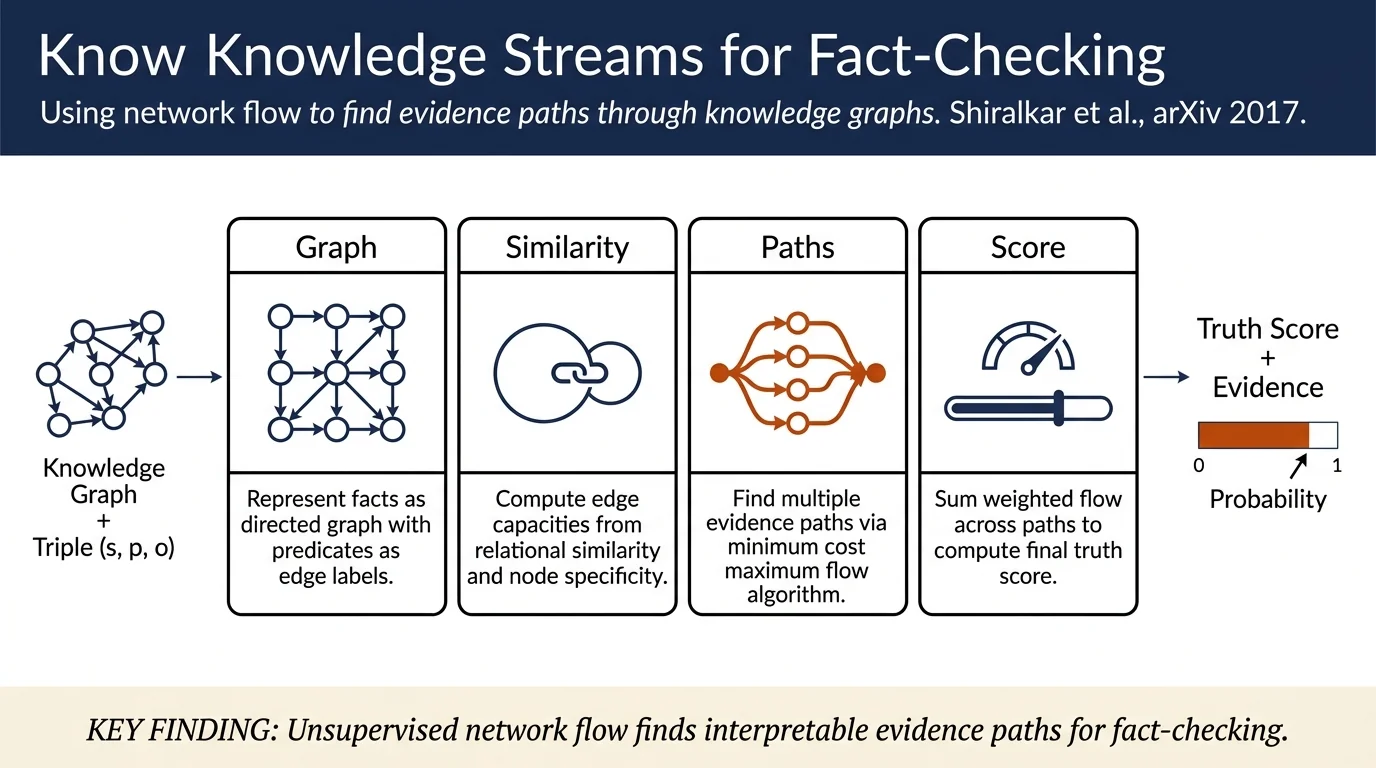
Finding Streams in Knowledge Graphs to Support Fact CheckingKnowledge Stream (KS) is an unsupervised network-flow approach for computational fact-checking that treats a knowledge graph as a flow network. For a triple (subject, predicate, object), KS finds multiple paths connecting subject to object and uses edge capacities (based on relational similarity and node specificity) to compute a truth…
 Datasets & evaluationFact-checking & verification
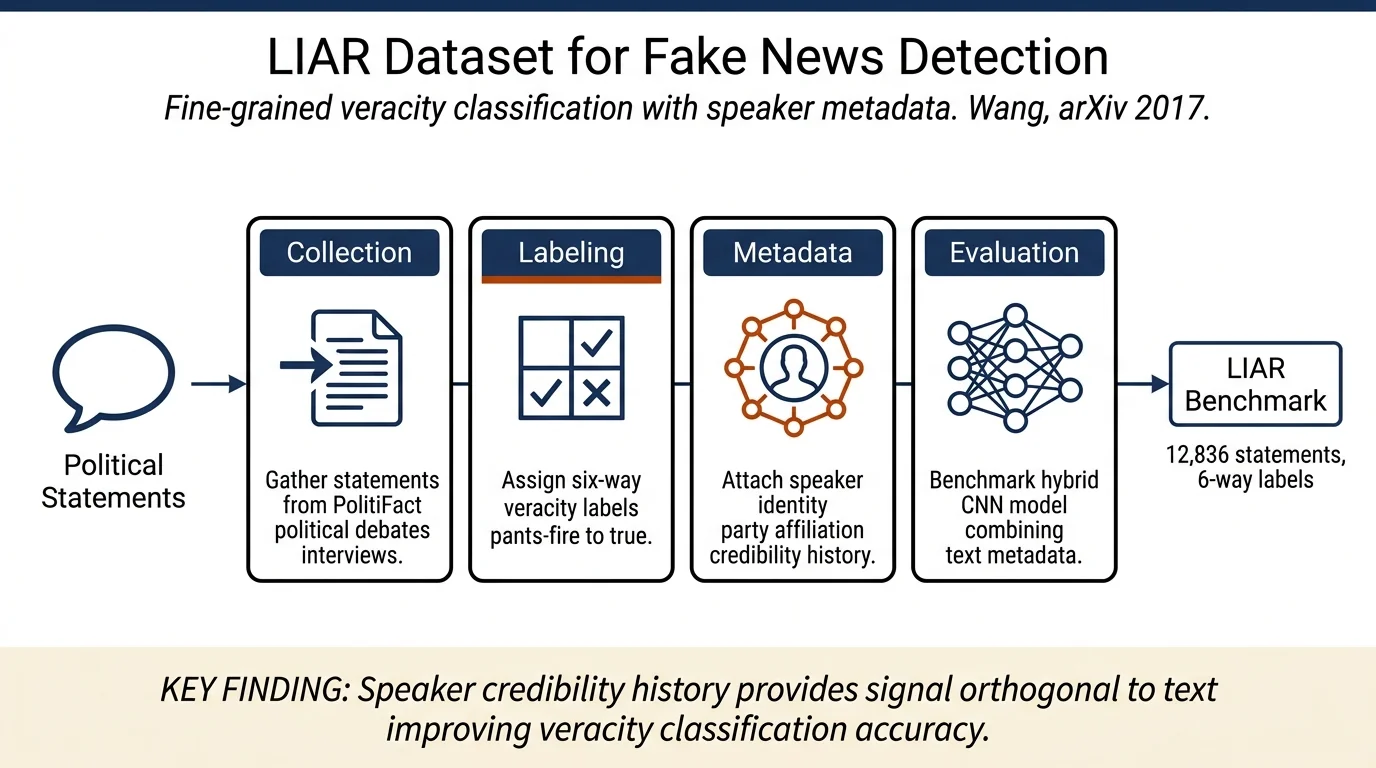
Liar, Liar Pants on Fire: A New Benchmark Dataset for Fake News DetectionThis paper introduces LIAR, a benchmark dataset of 12,836 manually labeled short statements from POLITIFACT.COM spanning 2007–2016, addressing the critical lack of labeled data for fake news detection. Each statement is annotated with fine-grained veracity labels (pants-fire, false, barely-true, half-true, mostly-true, true) and rich…
 Spread & networksDatasets & evaluation
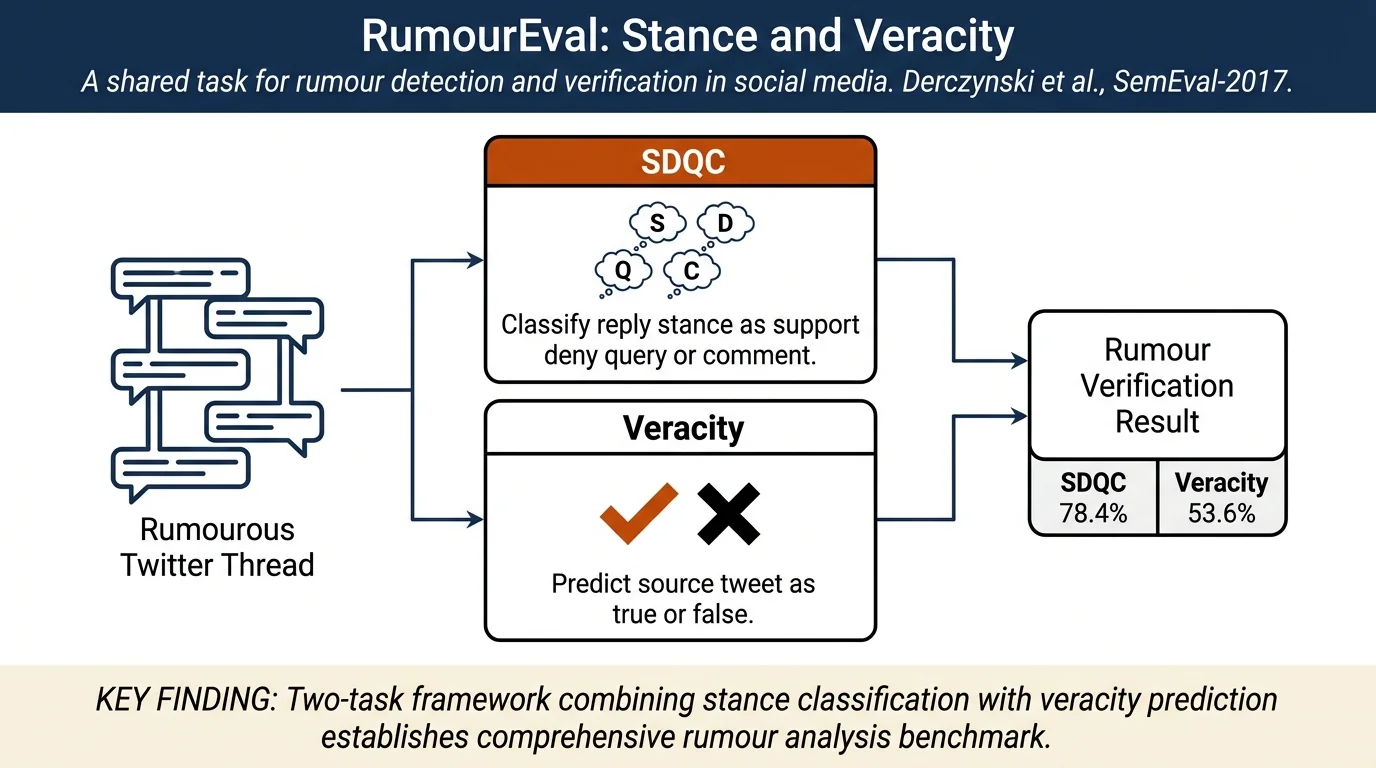
SemEval-2017 Task 8: RumourEval: Determining rumour veracity and support for rumoursRumourEval is a shared task benchmark for detecting and verifying rumours in social media. It introduces two subtasks: (a) stance classification (SDQC: Support/Deny/Query/Comment) of replies to rumourous claims, and (b) veracity prediction (true/false) of source tweets.
 Detection methodsFact-checking & verification
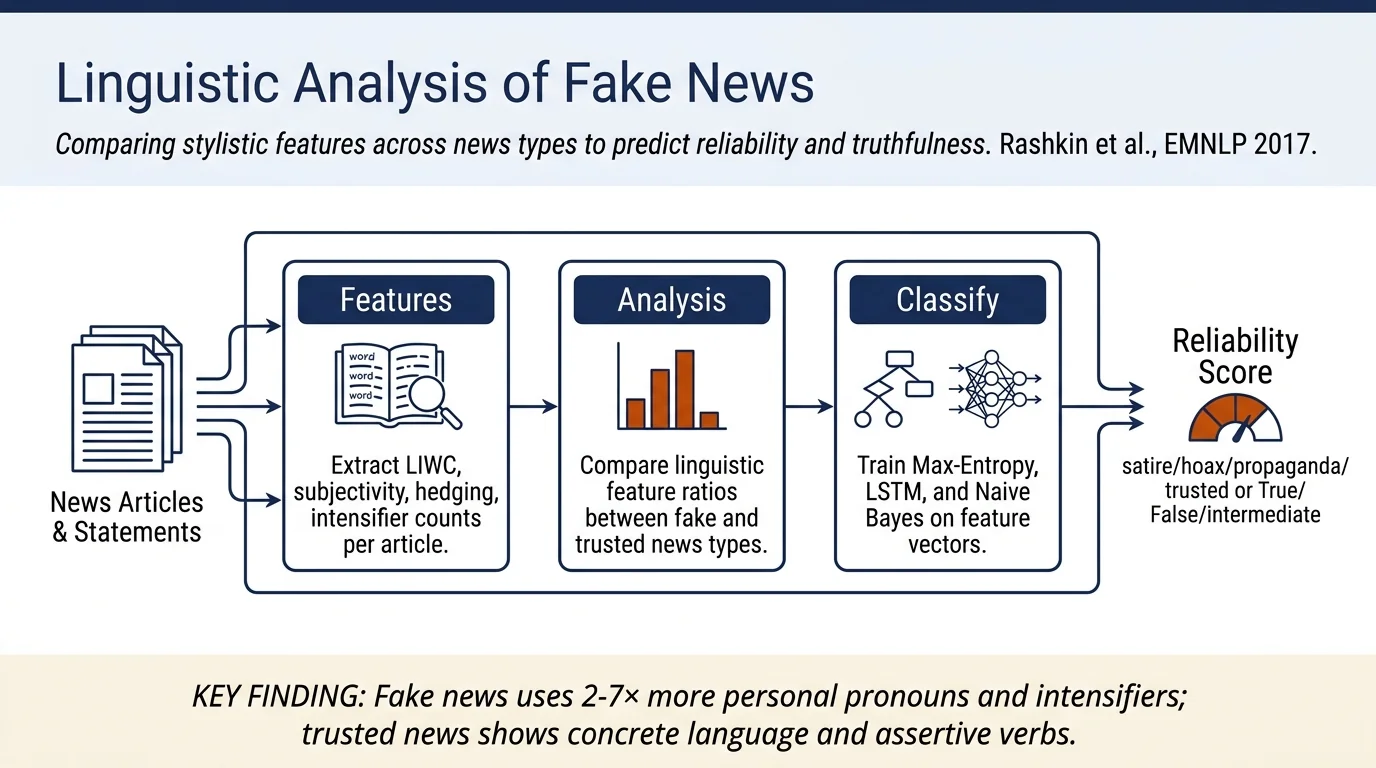
Truth of Varying Shades: Analyzing Language in Fake News and Political Fact-CheckingThis paper performs a linguistic analysis of fake news across four categories—satire, hoaxes, propaganda, and trusted news—using lexical features (LIWC, subjectivity, hedging, intensifiers). Experiments show that fake news articles use more first-person pronouns, exaggerative language (superlatives, modal adverbs), and hedging, while…
 Platforms, policy & societyFact-checking & verification
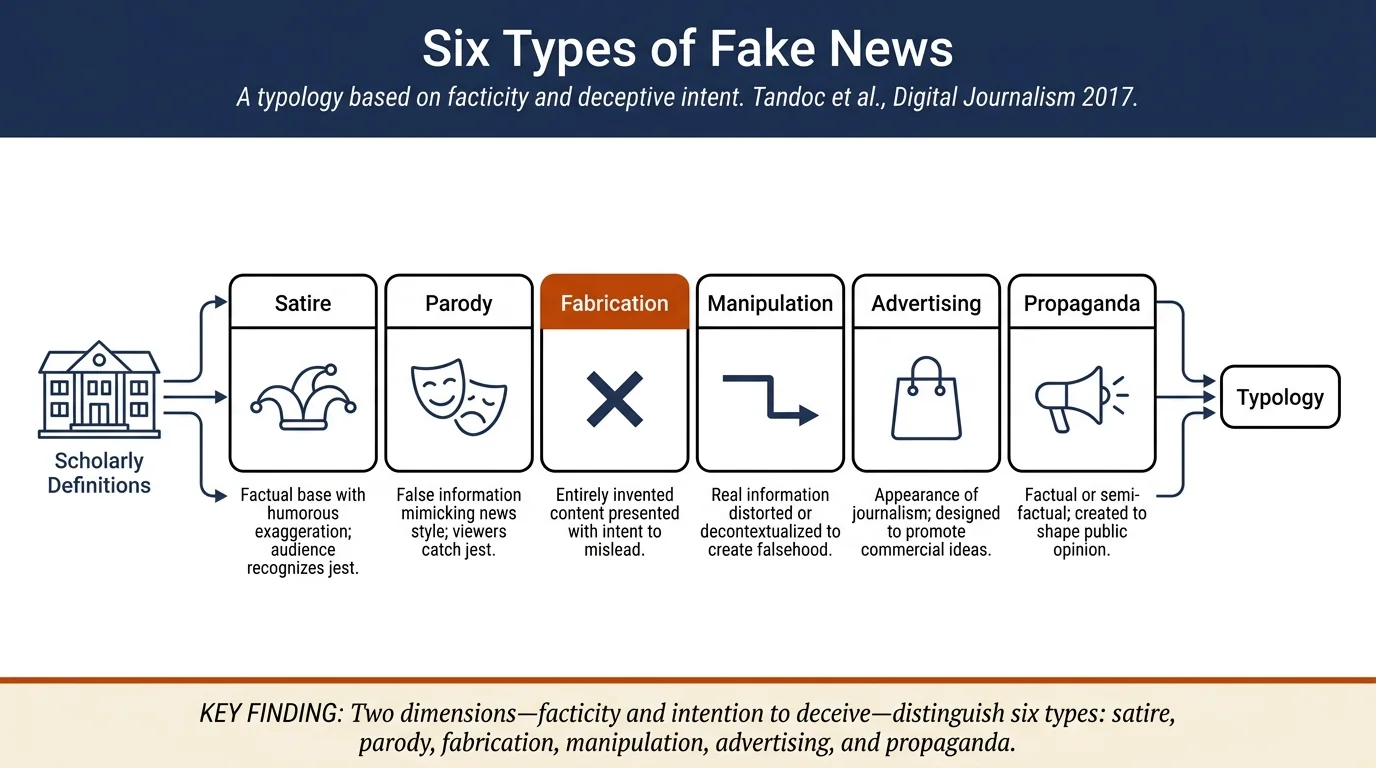
Defining "Fake News": A typology of scholarly definitionsThis paper reviews 34 academic studies (2003–2017) that use the term "fake news" and proposes a unified typology based on two dimensions: level of facticity (reliance on facts) and author's intention to deceive. The typology identifies six distinct types—satire, parody, fabrication, manipulation, advertising, and propaganda—clarifying…
 Psychology & interventionsPlatforms, policy & society
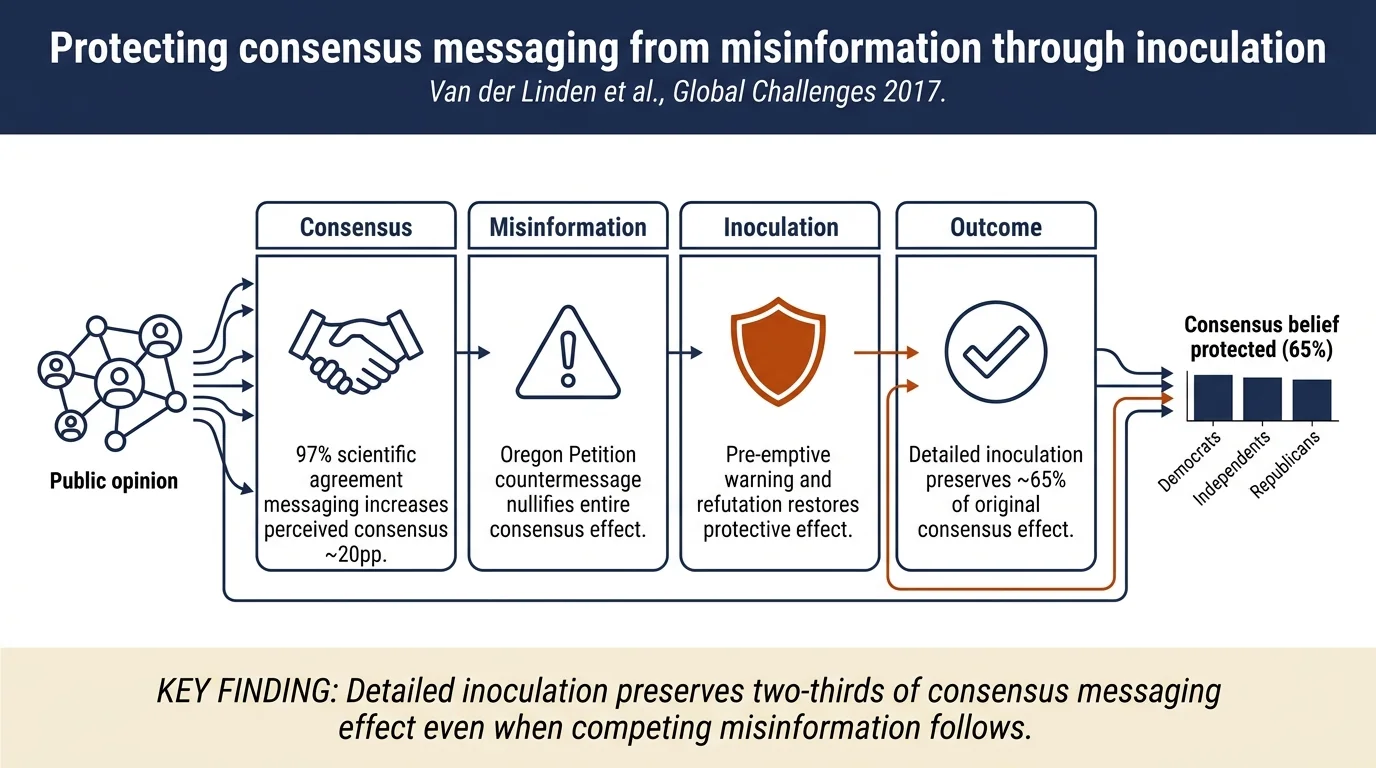
Inoculating the Public against Misinformation about Climate ChangeLarge-scale experiments (N=2,167) demonstrate that misinformation about scientific consensus on climate change nullifies the effect of consensus messaging. Pre-emptive inoculation—warning people about misleading tactics and providing refutations—preserves two-thirds of the consensus effect.
 Psychology & interventionsPlatforms, policy & society
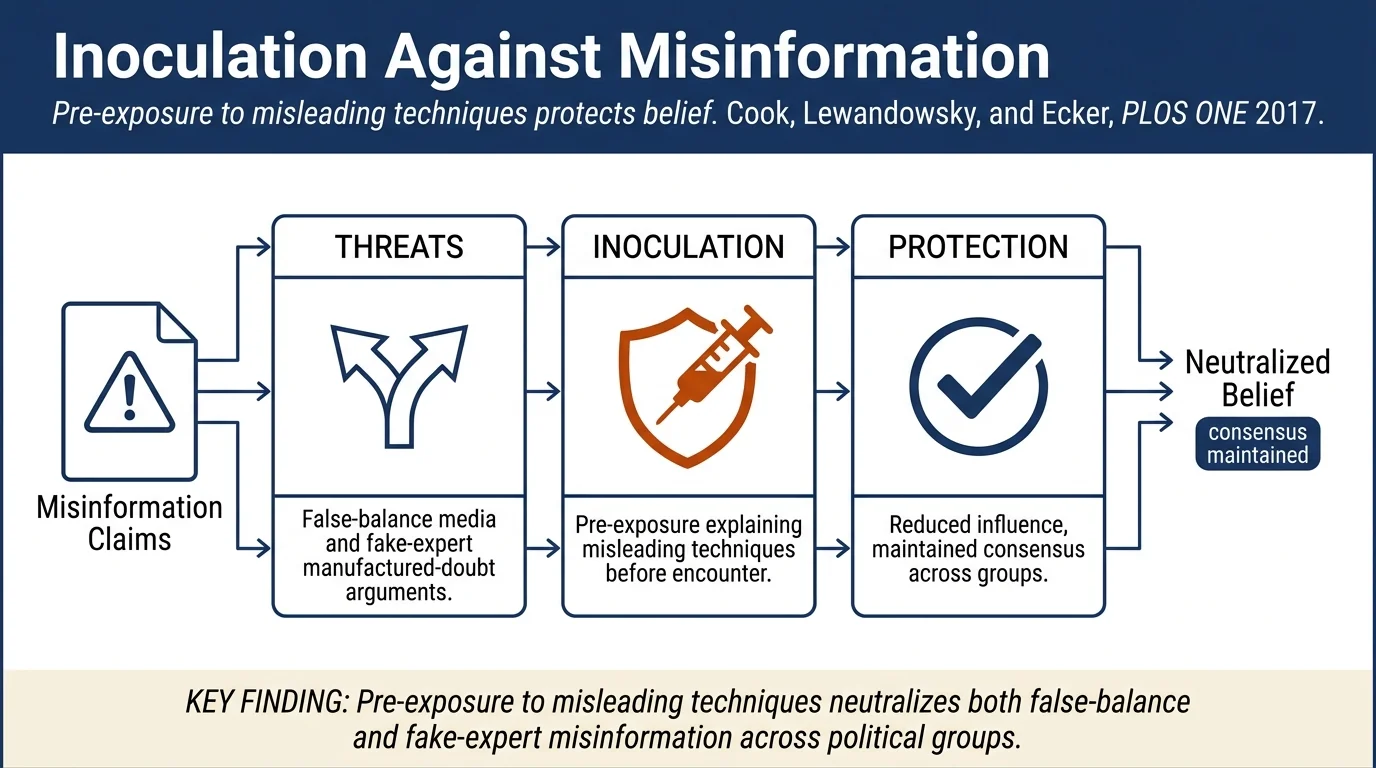
Neutralizing misinformation through inoculation: Exposing misleading argumentation techniques reduces their influencePre-emptively exposing people to flawed arguments before they encounter misinformation (inoculation) reduces that misinformation's influence. Two experiments tested this on climate change: false-balance media coverage (equal weight to consensus vs. contrarian scientists) and fake-expert arguments (using unqualified scientists to…
 Datasets & evaluationFact-checking & verification
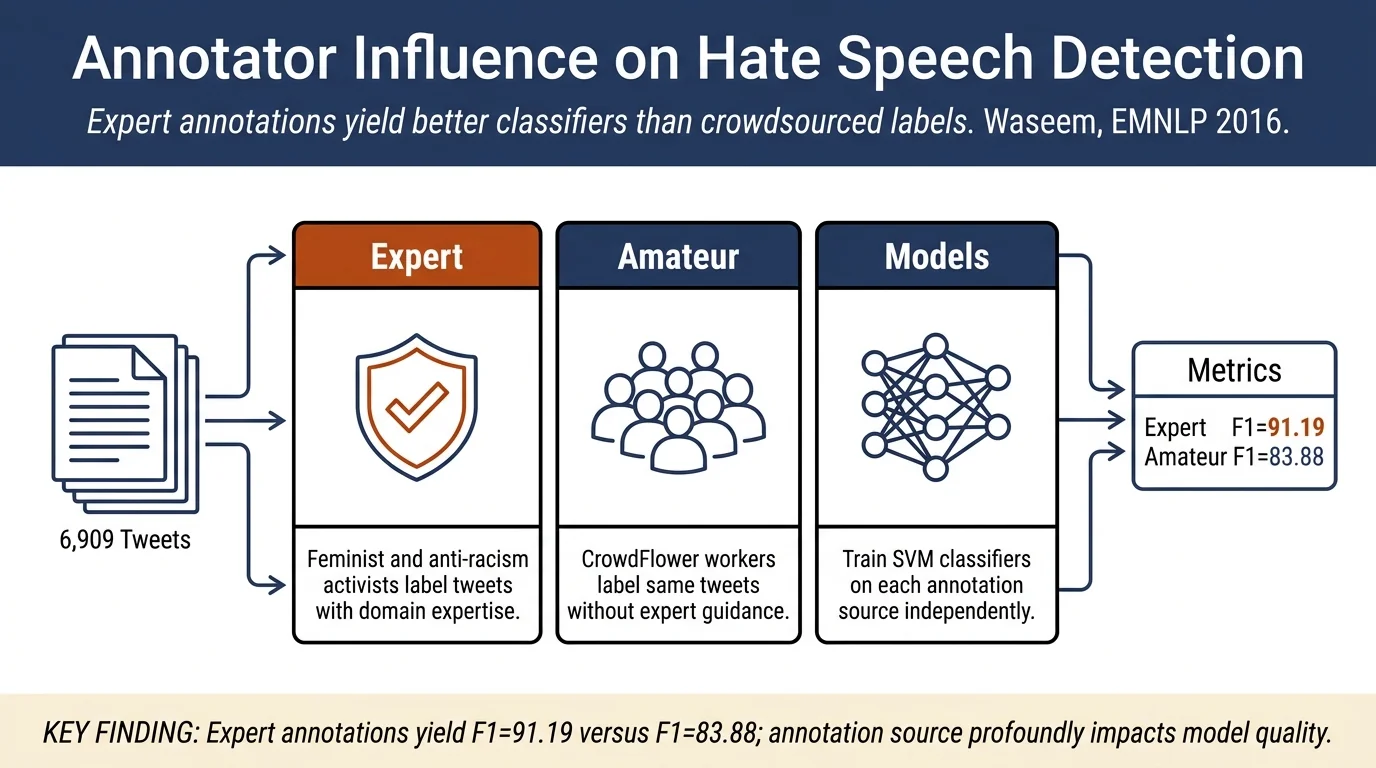
Are You a Racist or Am I Seeing Things? Annotator Influence on Hate Speech Detection on TwitterThis paper compares hate speech detection systems trained on expert annotations (from feminist and anti-racism activists) versus amateur annotations (crowdsourced via CrowdFlower) on 6,909 tweets. Systems trained on expert annotations significantly outperform those trained on amateur data, and amateur annotators systematically label more…
 Fact-checking & verificationPlatforms, policy & society
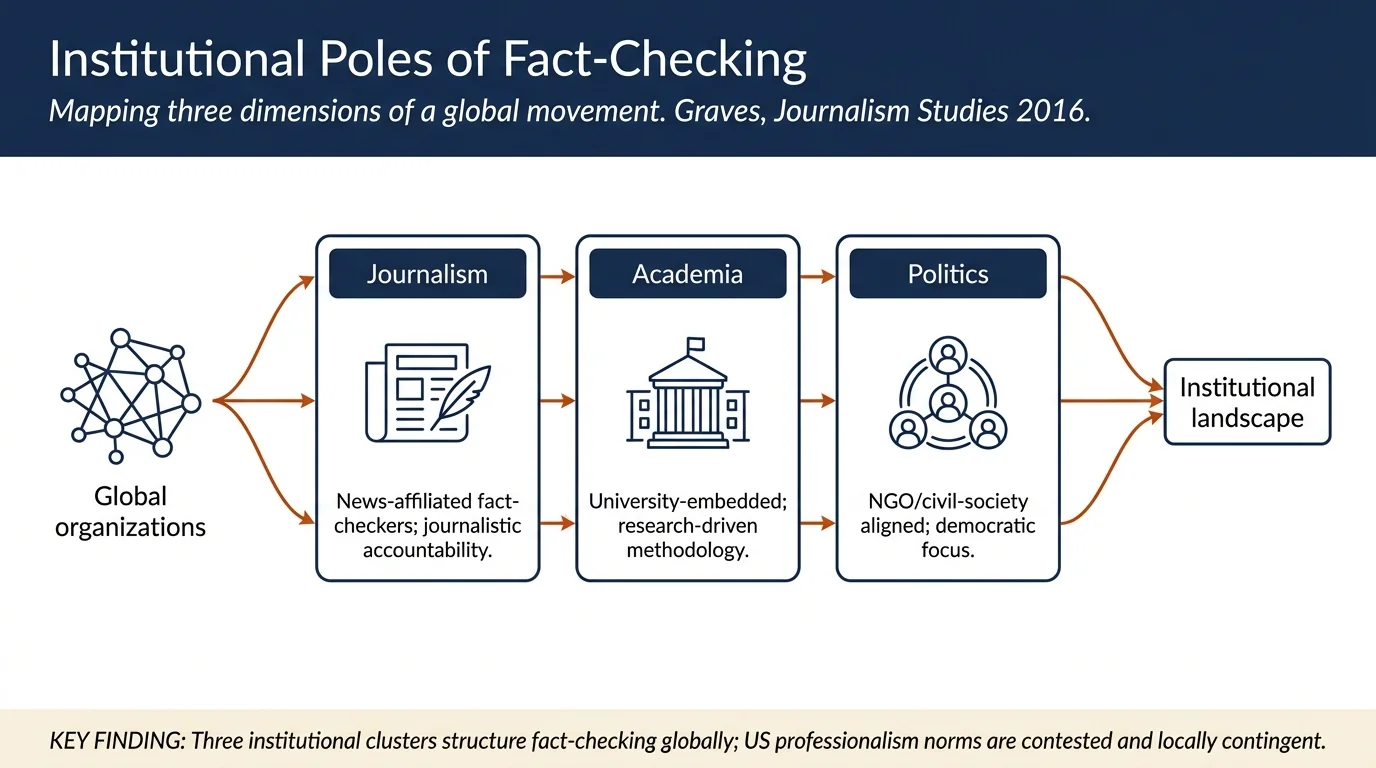
Boundaries Not Drawn: Mapping the institutional roots of the global fact-checking movementGraves maps the institutional landscape of 64+ fact-checking organizations globally across two summits (2014–2015), using ethnographic fieldwork and ternary plots to sort organizations along three axes: journalism, academia, and politics/civil society. The movement has a journalistic core but exhibits striking institutional diversity and…
 Fact-checking & verificationDatasets & evaluation
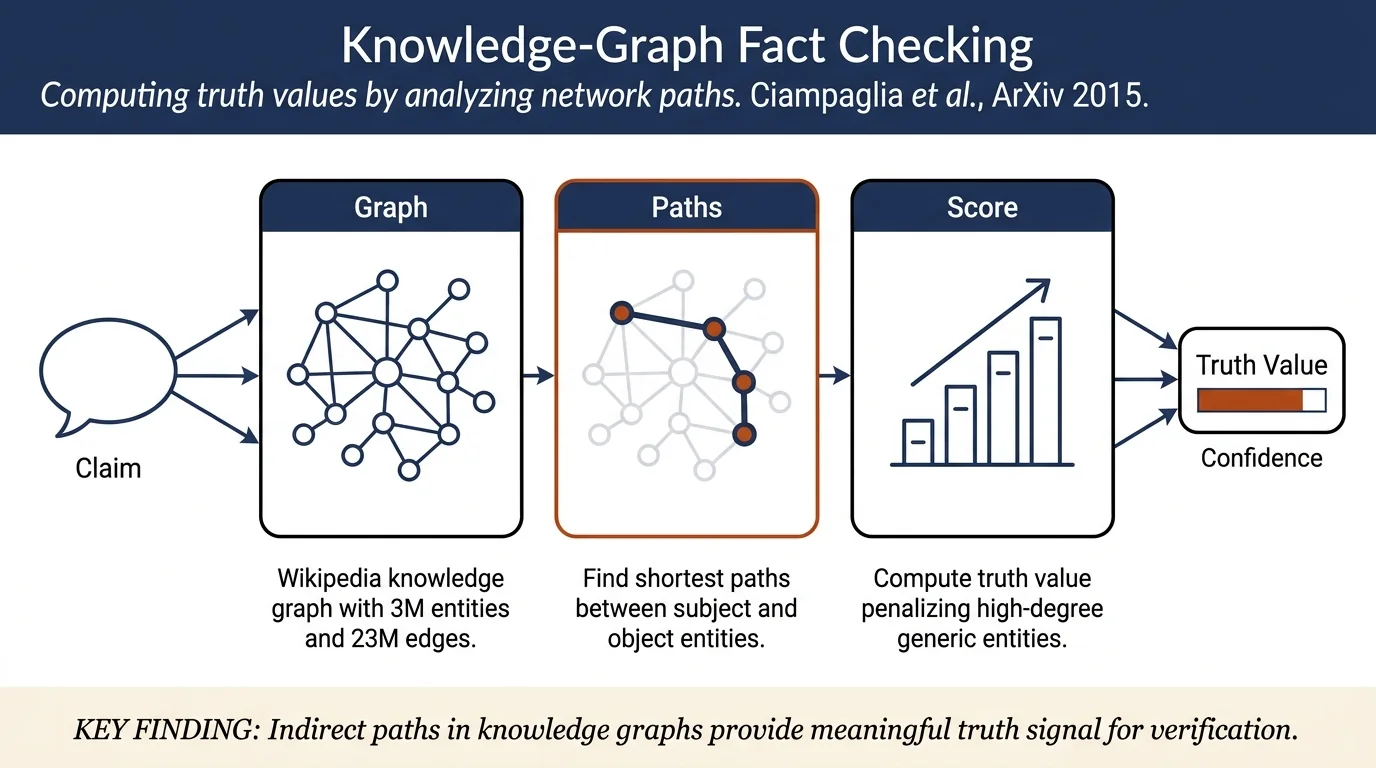
Computational fact checking from knowledge networksThis paper proposes a computational approach to fact checking by framing it as a network problem on knowledge graphs. The method finds the shortest path between entities in Wikipedia's knowledge graph using semantic proximity metrics that account for entity generality.
 Platforms, policy & societyPsychology & interventions
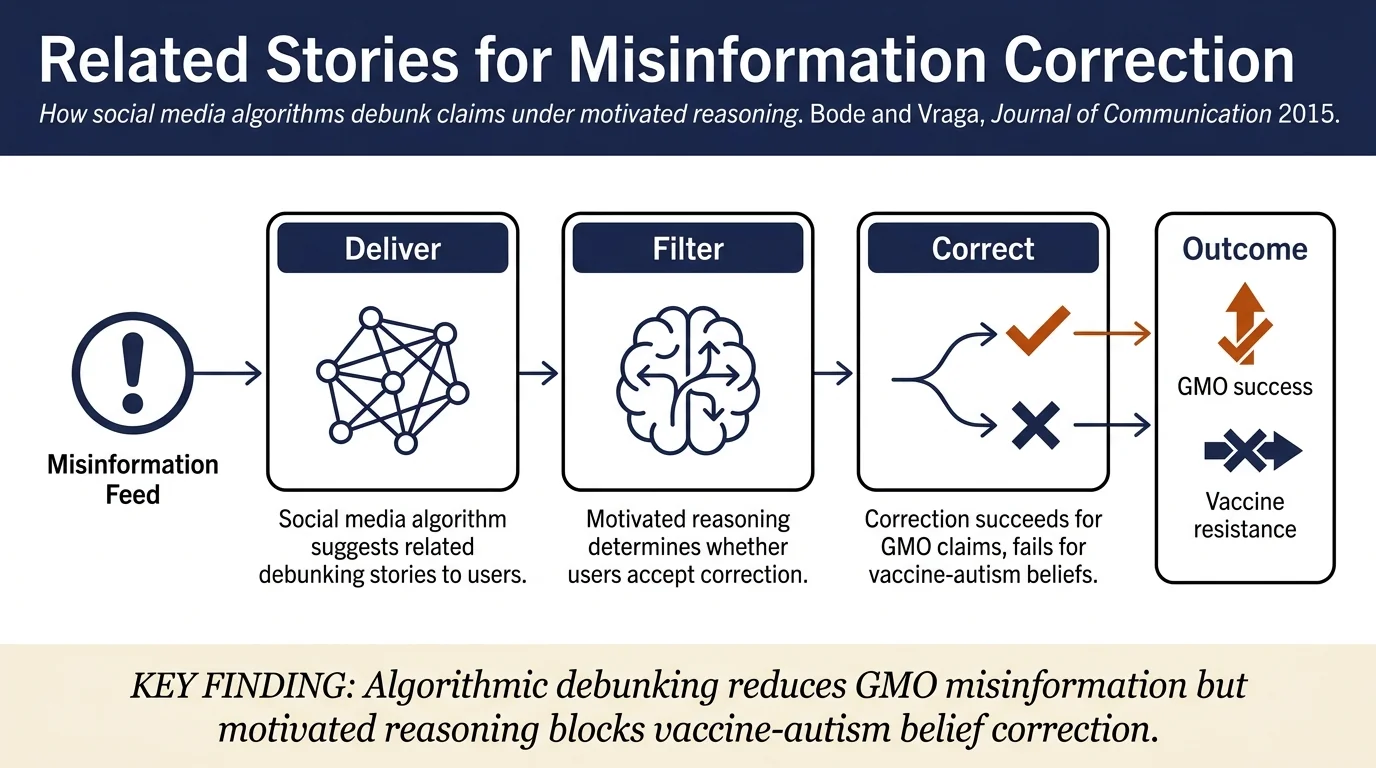
In Related News, That Was Wrong: The Correction of Misinformation Through Related Stories Functionality in Social MediaThis study tests whether Facebook's "related stories" feature can correct misinformation by exposing users to debunking information. Two experiments (students and Mechanical Turk workers) examined vaccine-autism and GMO-illness misperceptions.
 Detection methodsFact-checking & verification
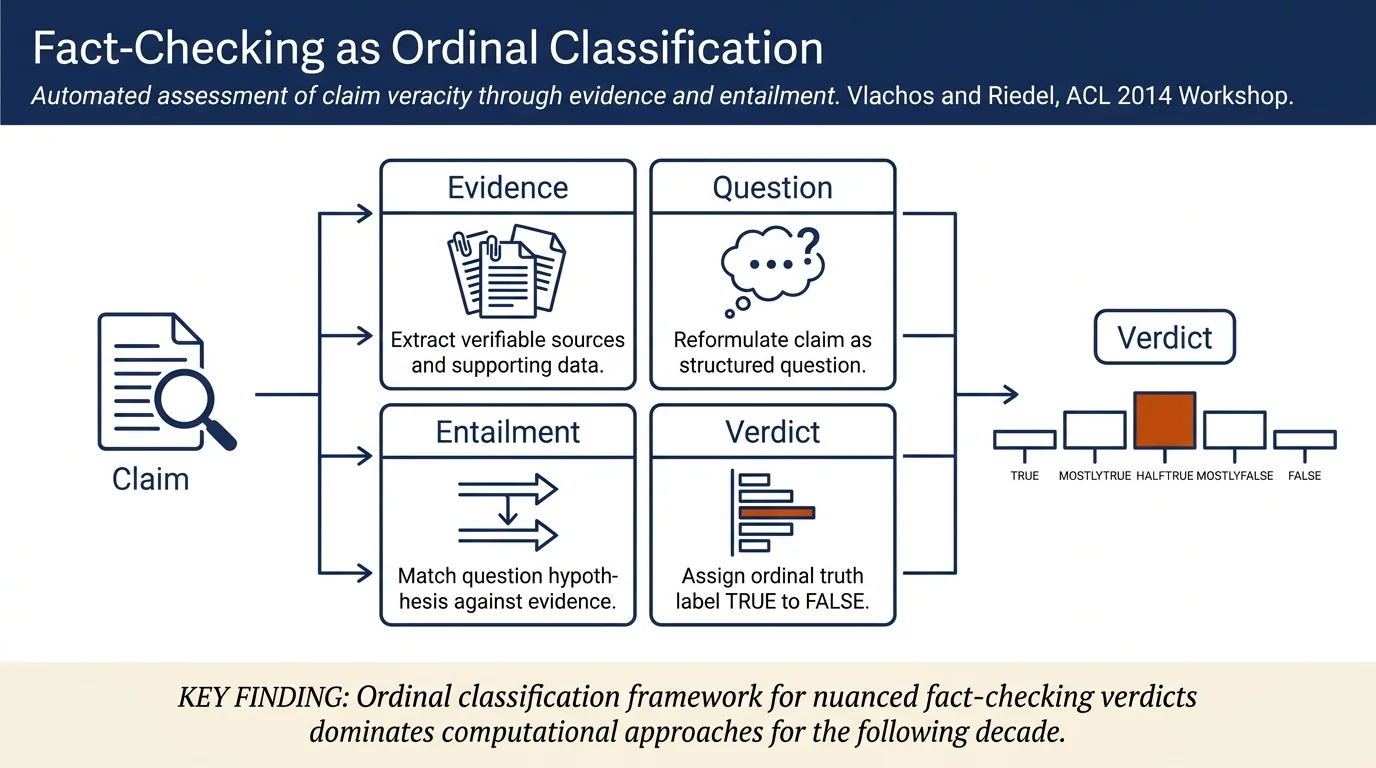
Fact Checking: Task definition and dataset constructionThis paper introduces fact-checking as a formal computational task: assessing the truthfulness of political claims as an ordinal classification problem with five labels (TRUE, MOSTLYTRUE, HALFTRUE, MOSTLYFALSE, FALSE). The authors construct a dataset of 106 objectively-verifiable fact-checked statements from PolitiFact and Channel 4 (out…
 Spread & networksDatasets & evaluation
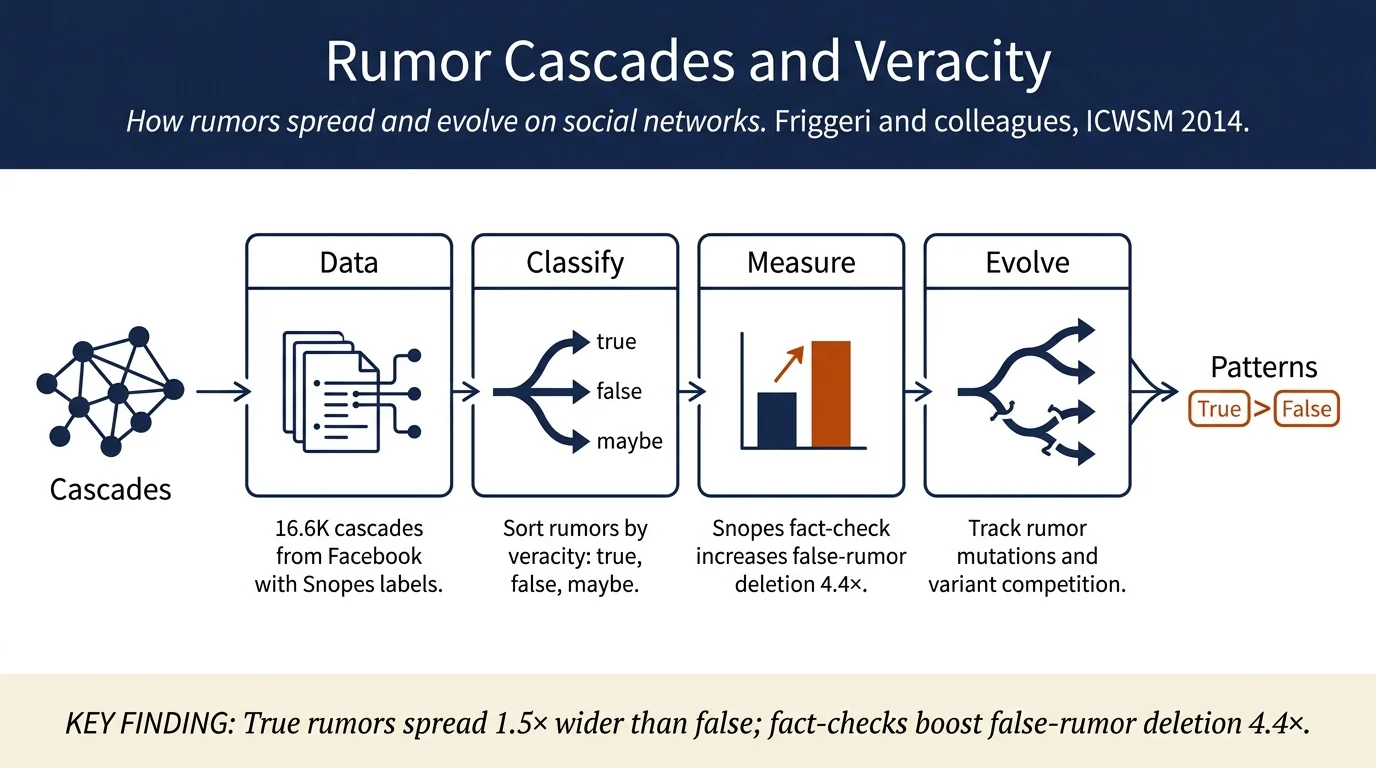
Rumor CascadesFriggeri et al. tracked thousands of rumors on Facebook using Snopes.com as ground truth, finding that rumor cascades run deeper in the social network than typical content. True rumors spread more virally than false ones despite false rumors being more frequently uploaded; Snopes fact-checks increase deletion likelihood for false rumors…
 Fact-checking & verificationPsychology & interventions
How to separate fact and fiction onlineMarkham Nolan, editor of Storyful, explains how journalists use open-source intelligence tools to verify content in the age of information overload. Through real-world case studies—including fake Hurricane Sandy photos and identifying locations in Syrian conflict videos—he demonstrates that truth-seeking requires human judgment combined…