Explore everything
Filter by research area, year and venue. Every filter is in the address bar, so you can share a view as a link.
 Detection methodsFact-checking & verification
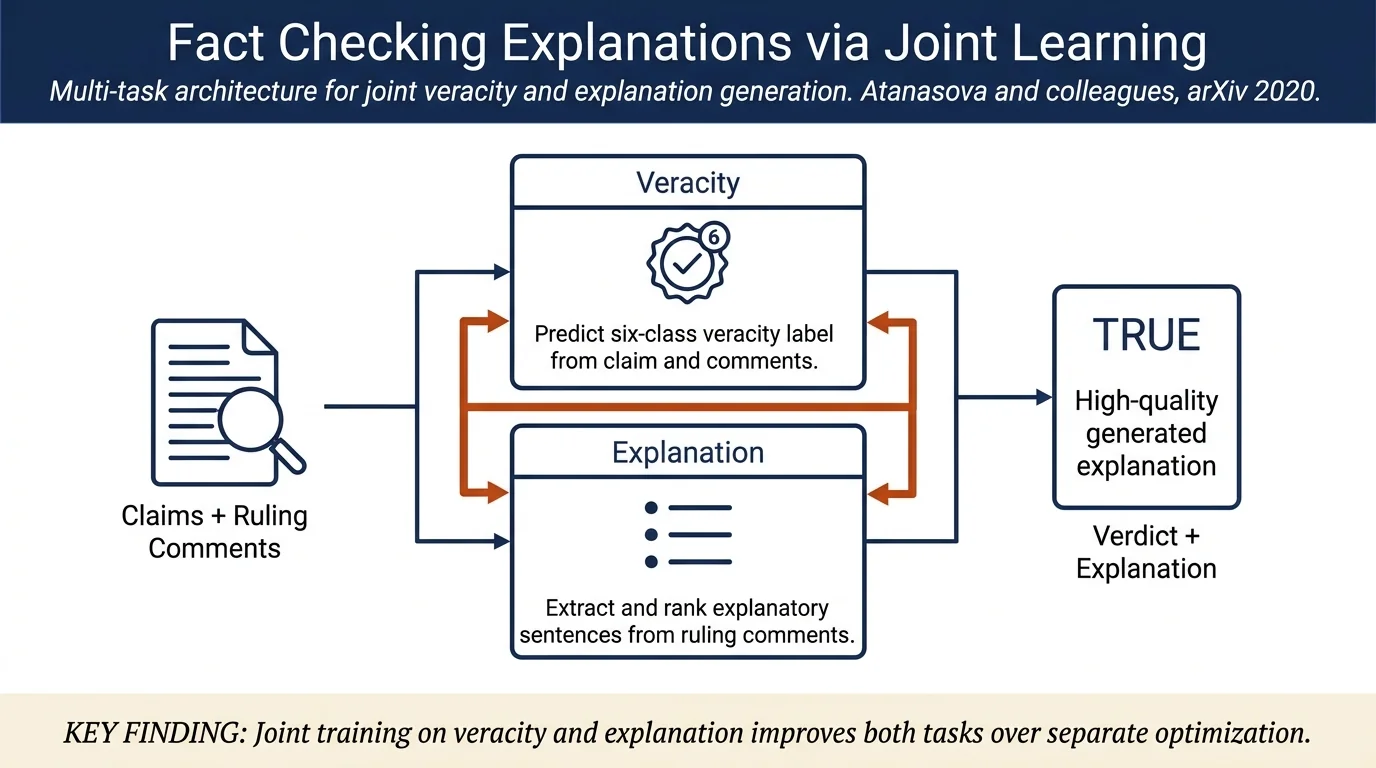
Generating Fact Checking ExplanationsThis paper presents the first study on automatically generating explanations for fact-checking veracity predictions. The authors show that jointly optimizing both veracity classification and explanation generation improves system performance.
Detection methodsLLMs & generative AI
The Limitations of Stylometry for Detecting Machine-Generated Fake NewsWhile stylometry effectively detects impersonation and provenance, it fails to distinguish between legitimate and malicious uses of language models for generating false content. LMs produce stylistically consistent text regardless of veracity, and adding even a single auto-generated sentence within human-written text evades stylometric…
 Detection methodsDeepfakes & multimodal
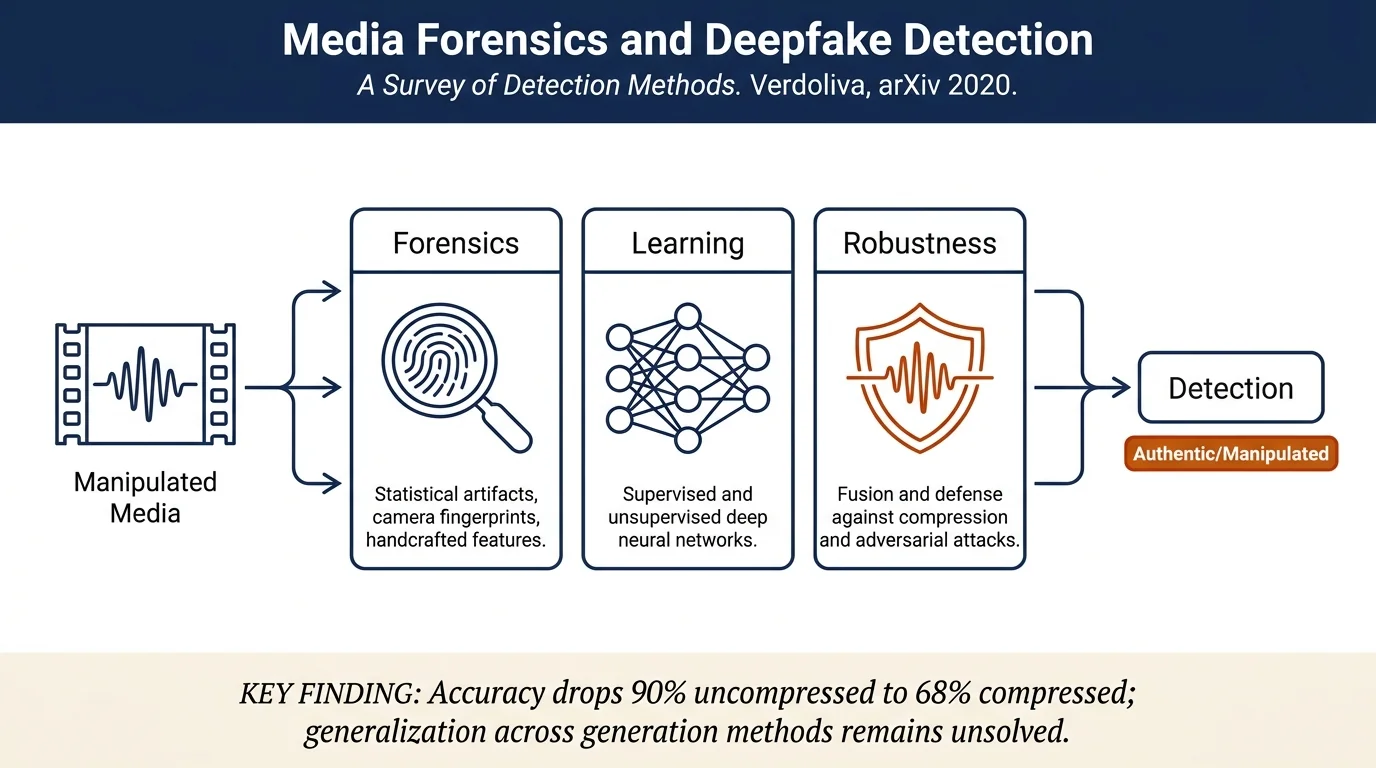
Media Forensics and DeepFakes: an overviewA comprehensive survey of media forensics and deepfake detection methods spanning fifteen years of research. The paper reviews both conventional signal-processing approaches (blind methods, sensor-based, handcrafted features) and deep learning-based detection techniques, covers major datasets and their characteristics, discusses…
 Spread & networksPlatforms, policy & society
The Hype MachineA book talk by MIT's Sinan Aral on "The Hype Machine," which explores how social media simultaneously disrupts elections, the economy, and public health while offering tremendous potential for good. The presentation synthesizes 20 years of research on social media diffusion, arguing that misinformation spreads faster than truth because…
 Psychology & interventionsDetection methods
The Continued Influence of MisinformationUllrich Ecker presents research on the continued influence effect—the phenomenon that misinformation continues to shape people's reasoning and memory even after they receive corrections and understand them. He examines four social factors that shape this effect: source credibility (trustworthiness matters more than expertise),…
 LLMs & generative AIDetection methods
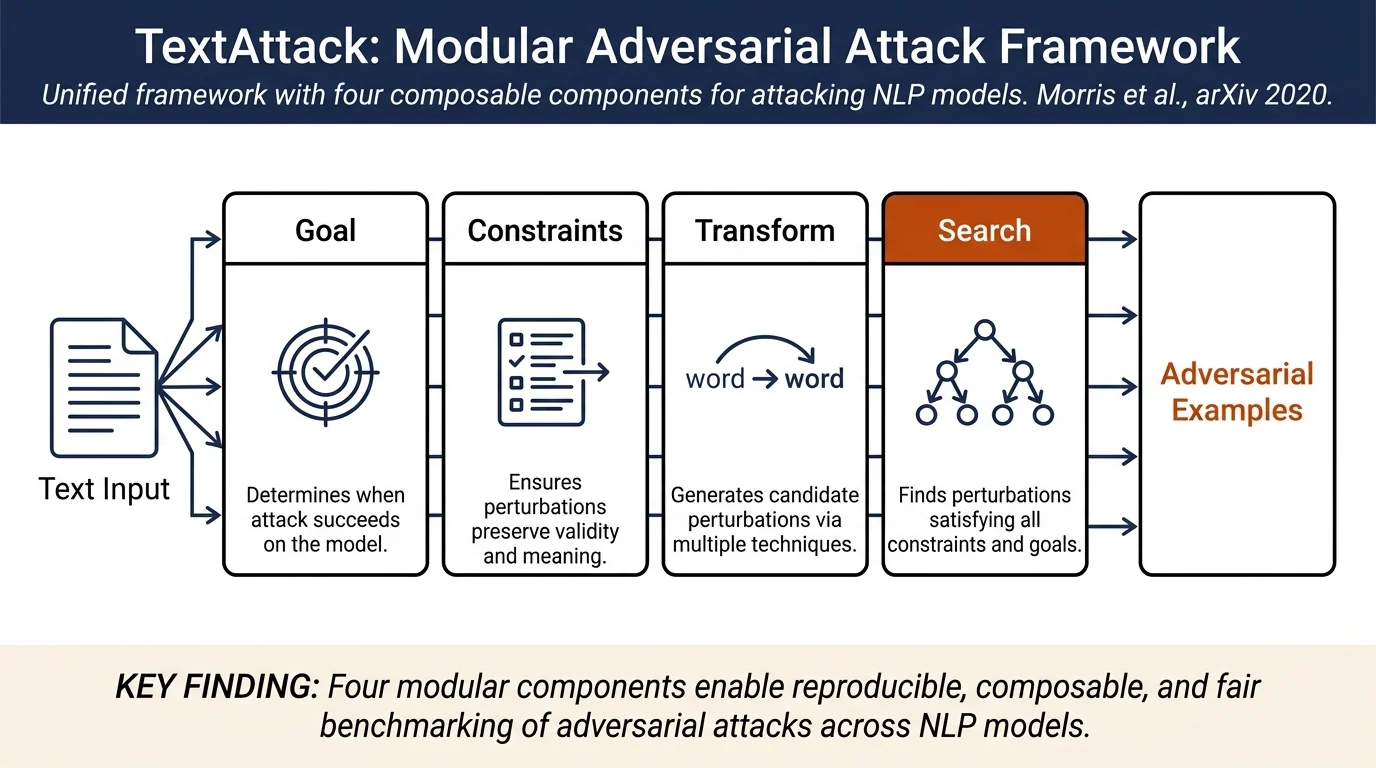
TextAttack: A Framework for Adversarial Attacks, Data Augmentation, and Adversarial Training in NLPIntroduces TextAttack, an open-source Python framework unifying 16 adversarial attacks from the literature into a modular architecture for testing and improving NLP model robustness. The framework decomposes attacks into four reusable components (goal function, constraints, transformation, search method), enables benchmarking attacks on…
 LLMs & generative AIDetection methods
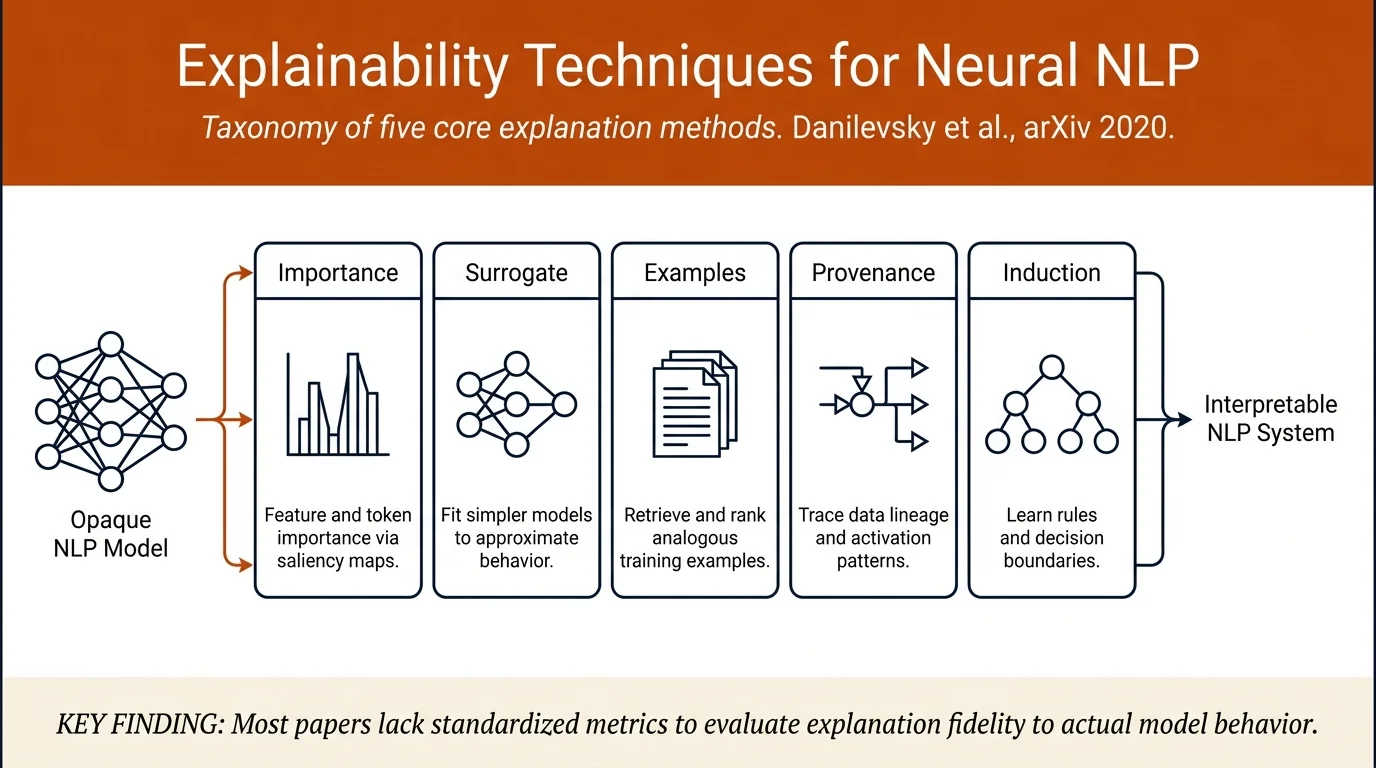
A Survey of the State of Explainable AI for Natural Language ProcessingRecent neural NLP models achieve strong performance but are often opaque. This survey systematically reviews explainable AI (XAI) research in NLP across 50 papers from major conferences (2013–2019), categorizing explanations by scope (local vs. global) and generation (self-explaining vs. post-hoc), detailing five major techniques…
 LLMs & generative AIPlatforms, policy & society
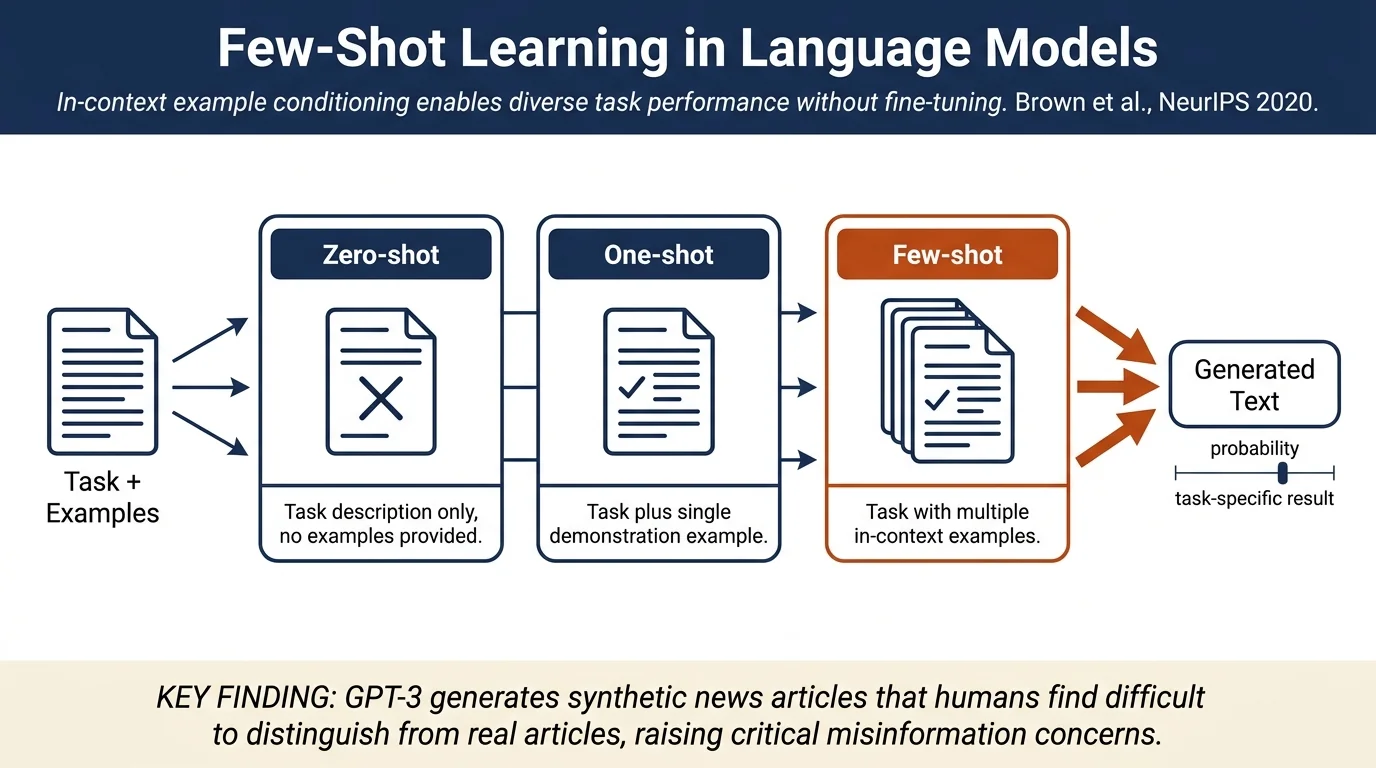
Language Models are Few-Shot LearnersThis landmark paper introduces GPT-3, a 175-billion-parameter autoregressive language model, and demonstrates that it achieves strong performance on diverse NLP tasks through in-context few-shot learning without any task-specific fine-tuning. The model exhibits remarkable scaling properties where larger models dramatically improve…
 Detection methodsLLMs & generative AI
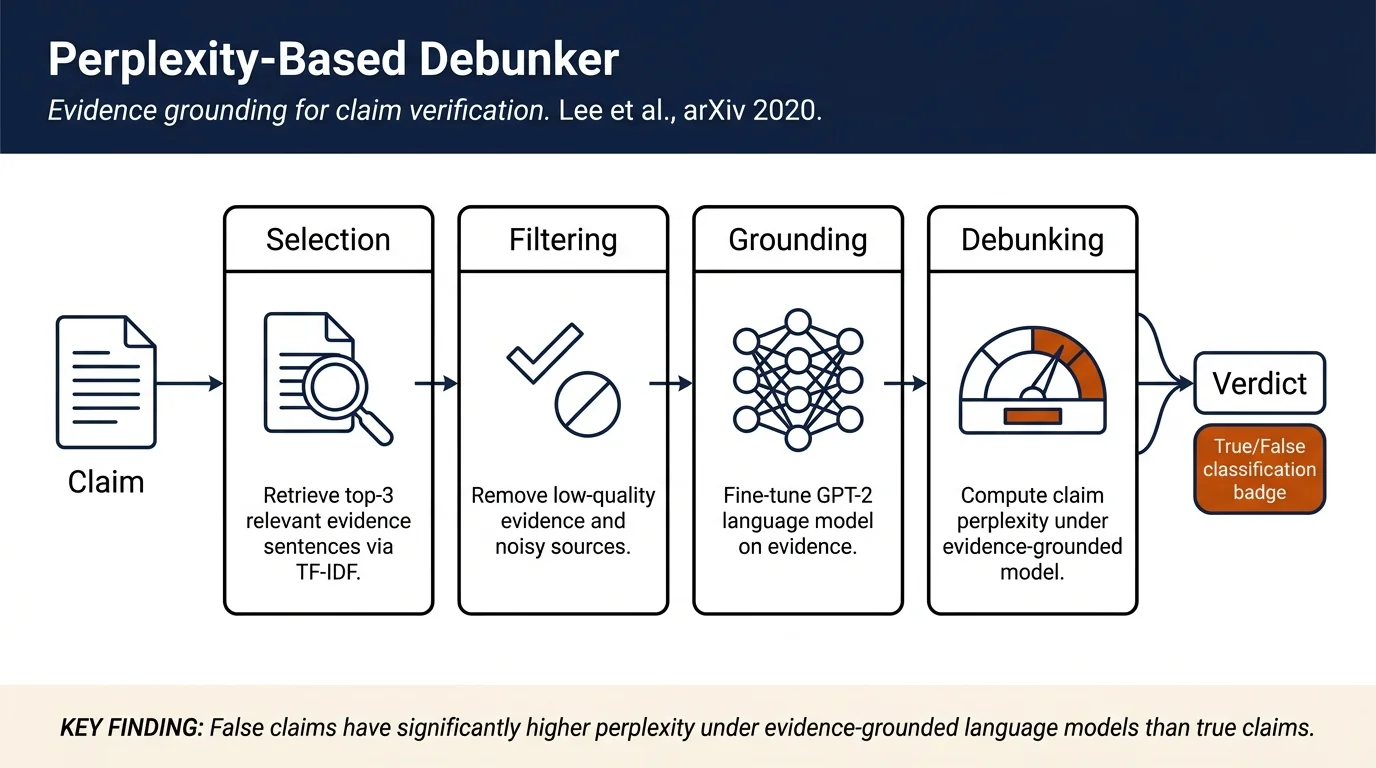
Misinformation Has High PerplexityFalse claims have measurably higher perplexity when scored by a language model primed with truthful evidence, while true claims have lower perplexity. The authors exploit this observation to build an unsupervised debunker that achieves 75% accuracy on scientific COVID-19 claims with minimal labeled data, releasing two new annotated test…
 Deepfakes & multimodalDetection methods
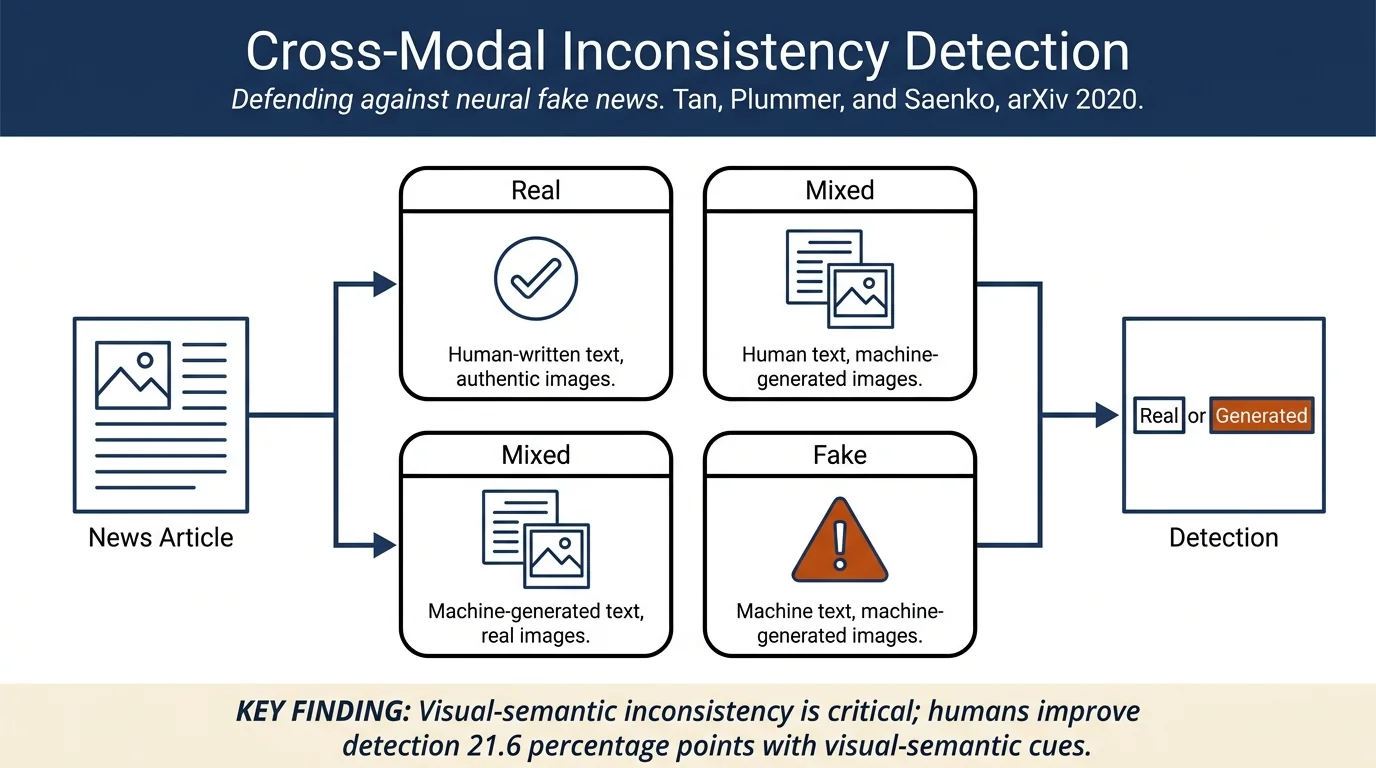
Detecting Cross-Modal Inconsistency to Defend Against Neural Fake NewsMachine-generated news articles with images and captions exploit visual-semantic inconsistencies that humans struggle to detect. This paper introduces DIDAN, a named entity-based approach to identify cross-modal semantic mismatches, and the NeuralNews dataset of 128K articles to benchmark multimodal fake news detection.
 Spread & networksDetection methods
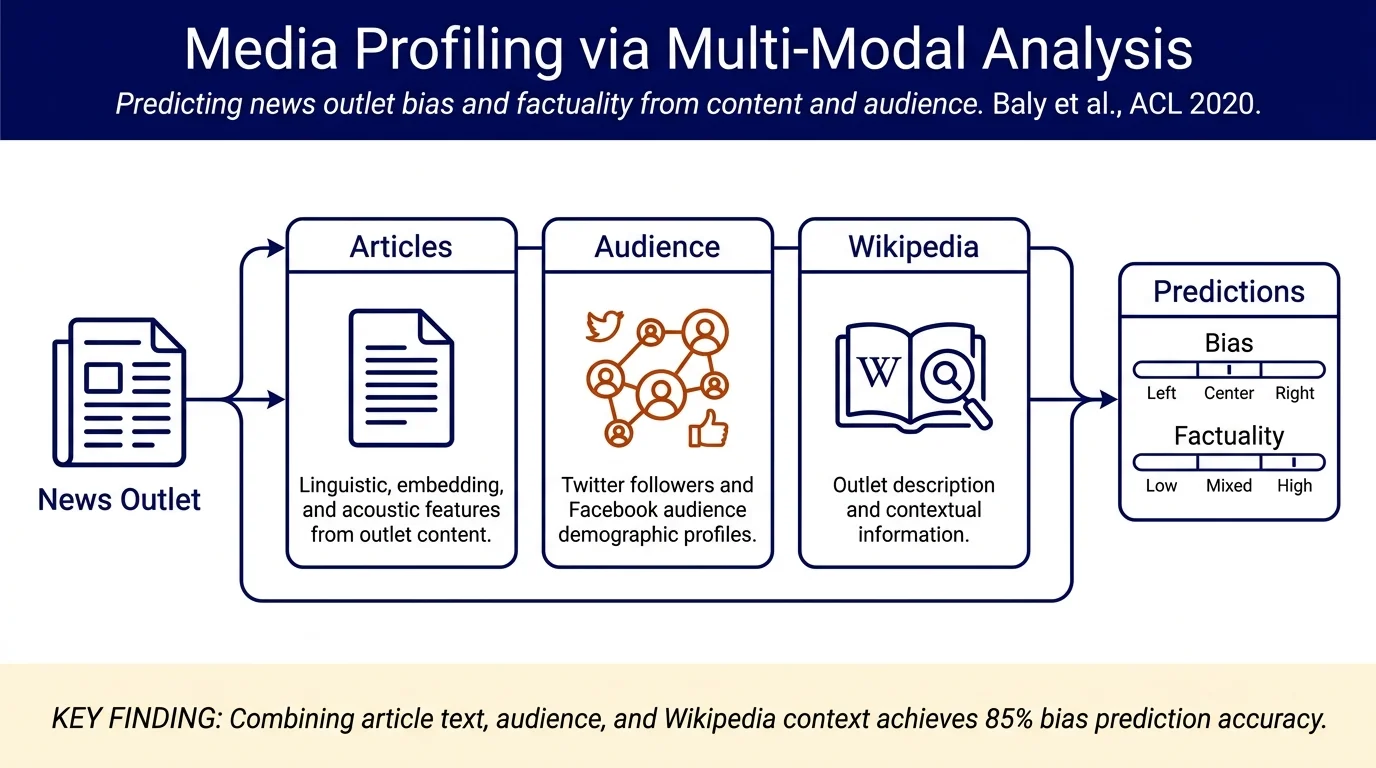
What Was Written vs. Who Read It: News Media Profiling Using Text Analysis and Social Media ContextThis paper predicts the political bias (left/center/right) and factuality (low/mixed/high) of news outlets by analyzing what articles they publish, who follows them on social media, and what Wikipedia says about them. The system achieves 85% accuracy on bias prediction by combining article text, YouTube video features, Twitter audience…
 Spread & networksDetection methods
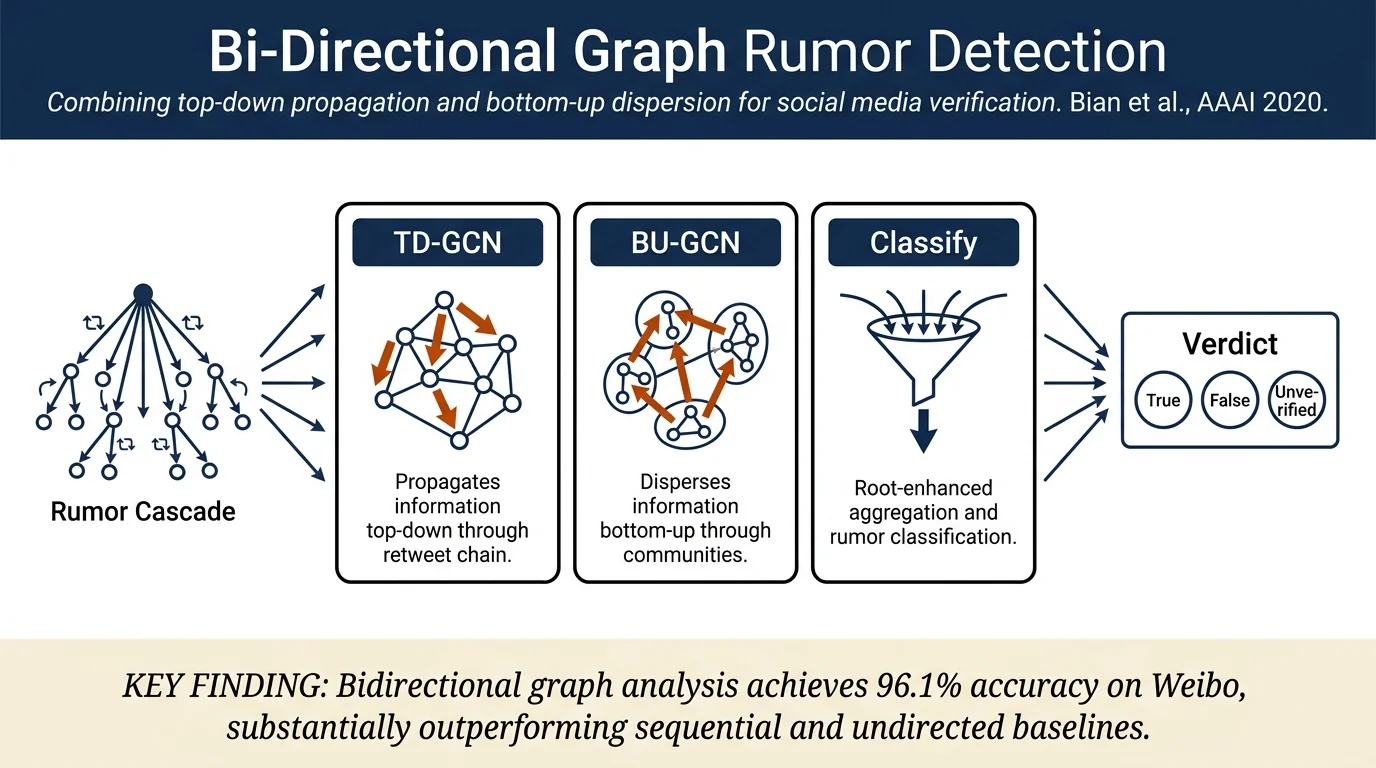
Rumor Detection on Social Media with Bi-Directional Graph Convolutional NetworksProposes Bi-GCN, a graph convolutional network approach for rumor detection that models both top-down propagation patterns (how rumors spread from source) and bottom-up dispersion patterns (how rumors diffuse within communities). By capturing both directional characteristics jointly and incorporating source post features at each layer,…
 Deepfakes & multimodalDatasets & evaluation
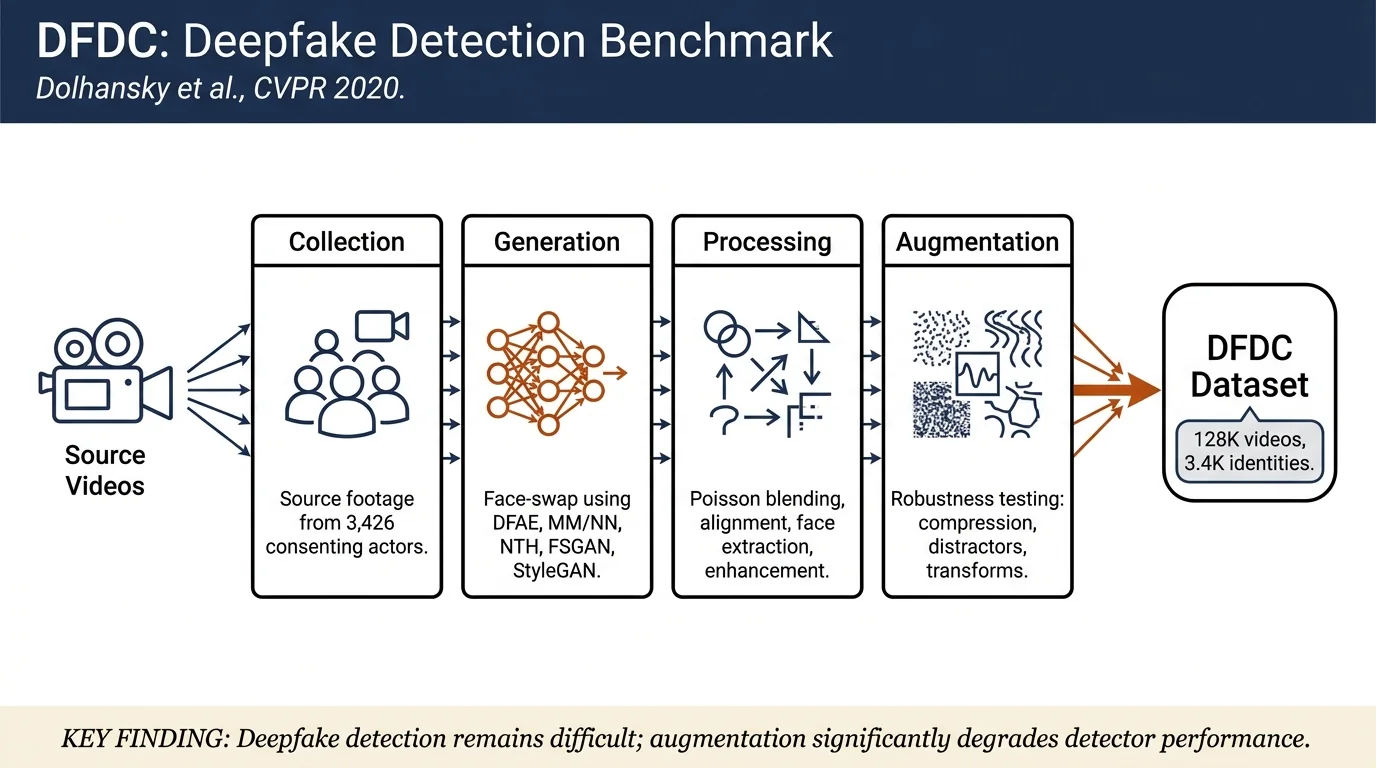
The DeepFake Detection Challenge (DFDC) DatasetThis paper introduces the DFDC Dataset, the largest publicly available deepfake detection benchmark at the time with 128,154 videos from 3,426 consented actors and 100,000 face-swapped clips. The dataset addresses ethical and methodological limitations of prior deepfake benchmarks by requiring explicit participant consent, including…
 Deepfakes & multimodalDatasets & evaluation
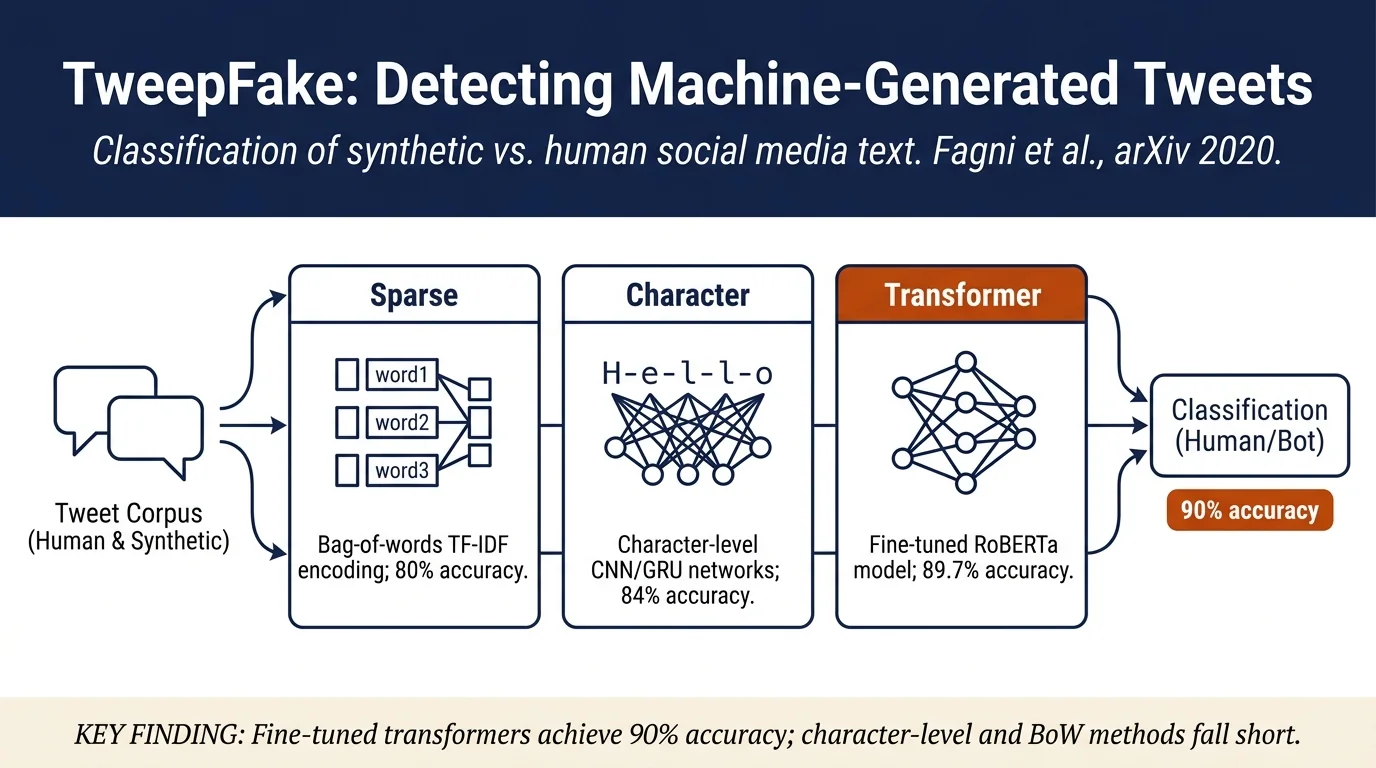
TweepFake: about detecting deepfake tweetsFirst publicly available dataset of real human-written and machine-generated tweets (TweepFake: 25,572 tweets, half human, half bot-generated from GPT-2, RNN, LSTM, Markov Chains, etc.). Benchmarks 13 detection methods and finds that transformer-based models fine-tuned on this task (RoBERTa) achieve ~90% accuracy, while BoW approaches…
 Datasets & evaluationDetection methods
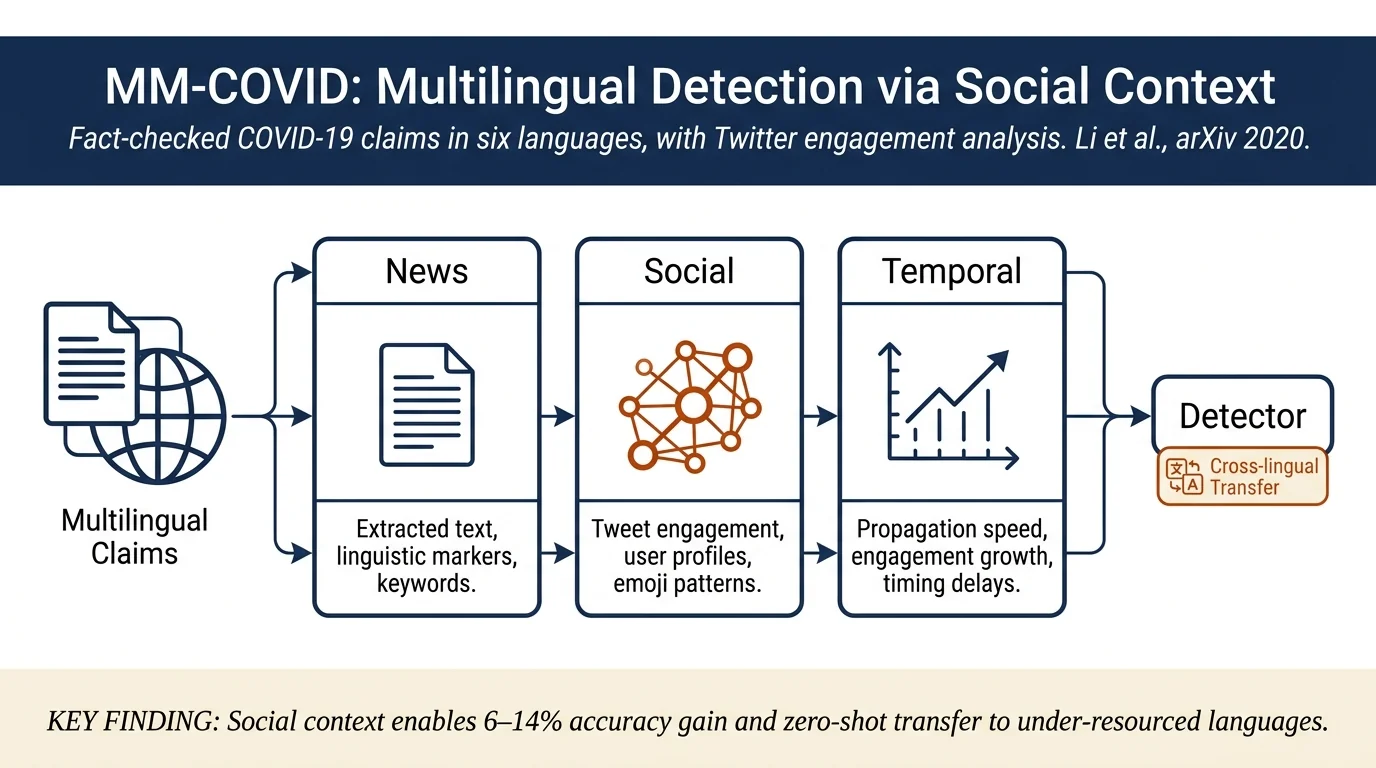
MM-COVID: A Multilingual and Multimodal Data Repository for Combating COVID-19 DisinformationThe paper introduces MM-COVID, a multilingual and multimodal dataset of COVID-19 fake news and social engagements in six languages (English, Spanish, Portuguese, Hindi, French, Italian). The dataset includes 3,981 fake news pieces with 7,192 tweets, fact-checking metadata, user profiles, and temporal propagation information.
 Deepfakes & multimodalDetection methods
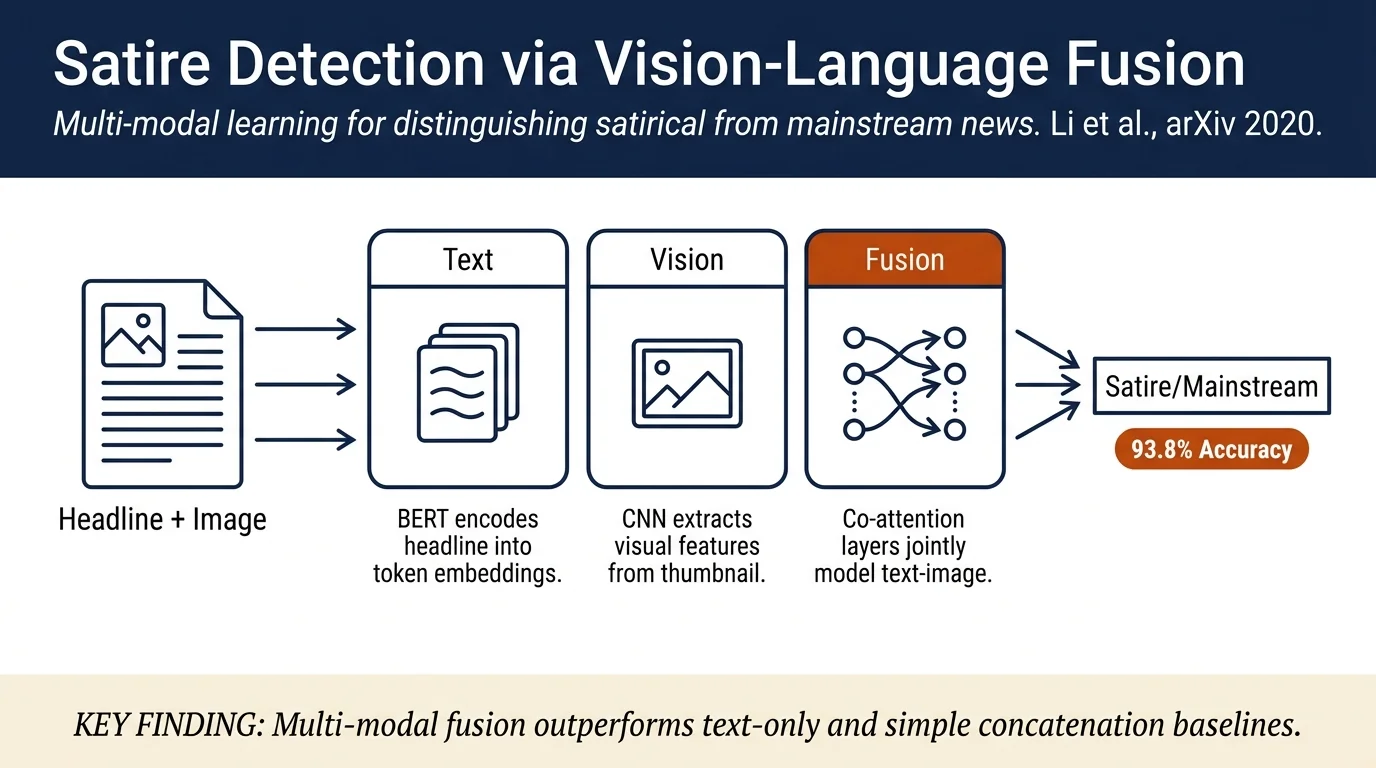
A Multi-Modal Method for Satire Detection using Textual and Visual CuesSatirical news articles are often misinterpreted as legitimate news. This work proposes a multi-modal approach using ViLBERT to detect satire by jointly analyzing headline text and thumbnail images, achieving 93.8% accuracy on a new dataset of 10,000 articles (4000 satirical, 6000 mainstream).
 Detection methodsDatasets & evaluation
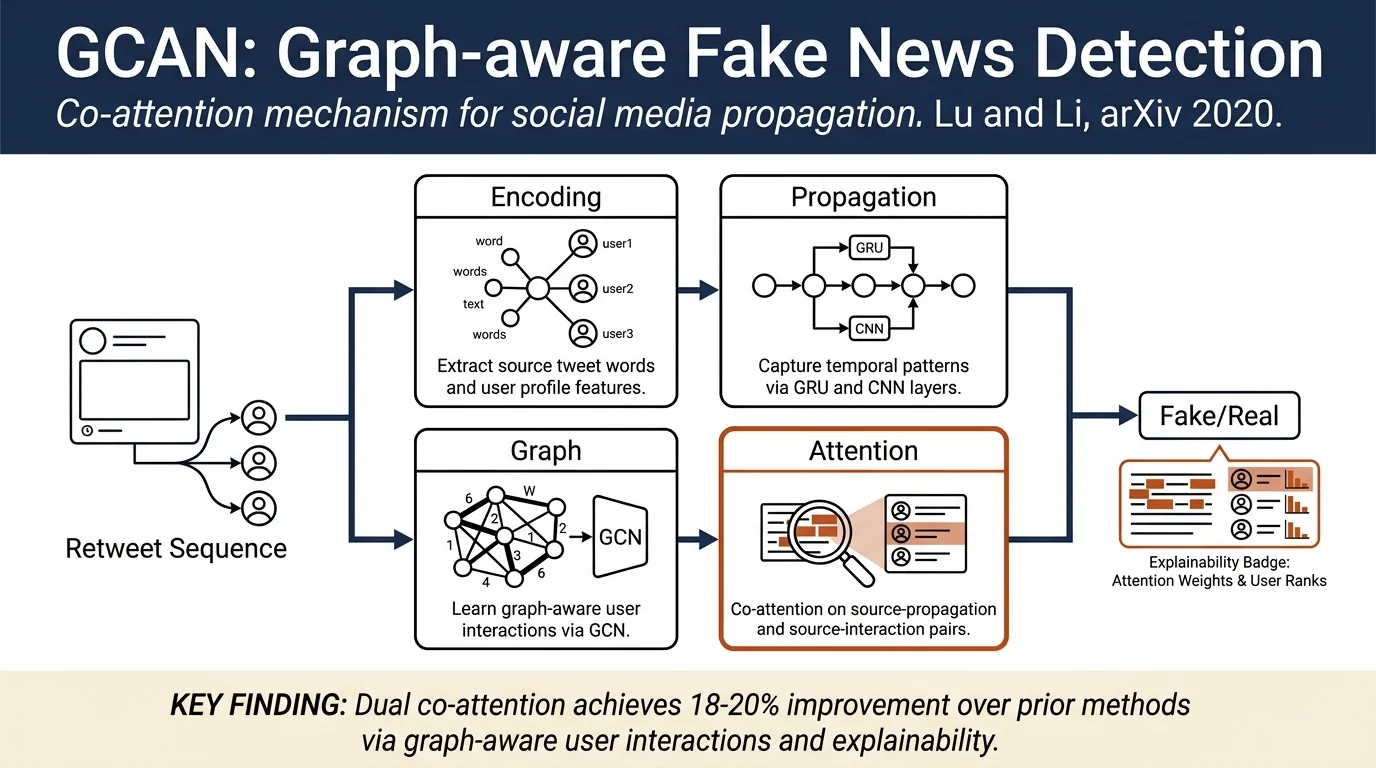
GCAN: Graph-aware Co-Attention Networks for Explainable Fake News Detection on Social MediaGCAN tackles fake news detection on Twitter with only source tweets and retweet sequences—no user comments or network structure required. The model combines graph convolution networks to capture user interactions with a dual co-attention mechanism to highlight suspicious retweeters and words.
 Deepfakes & multimodalDetection methods
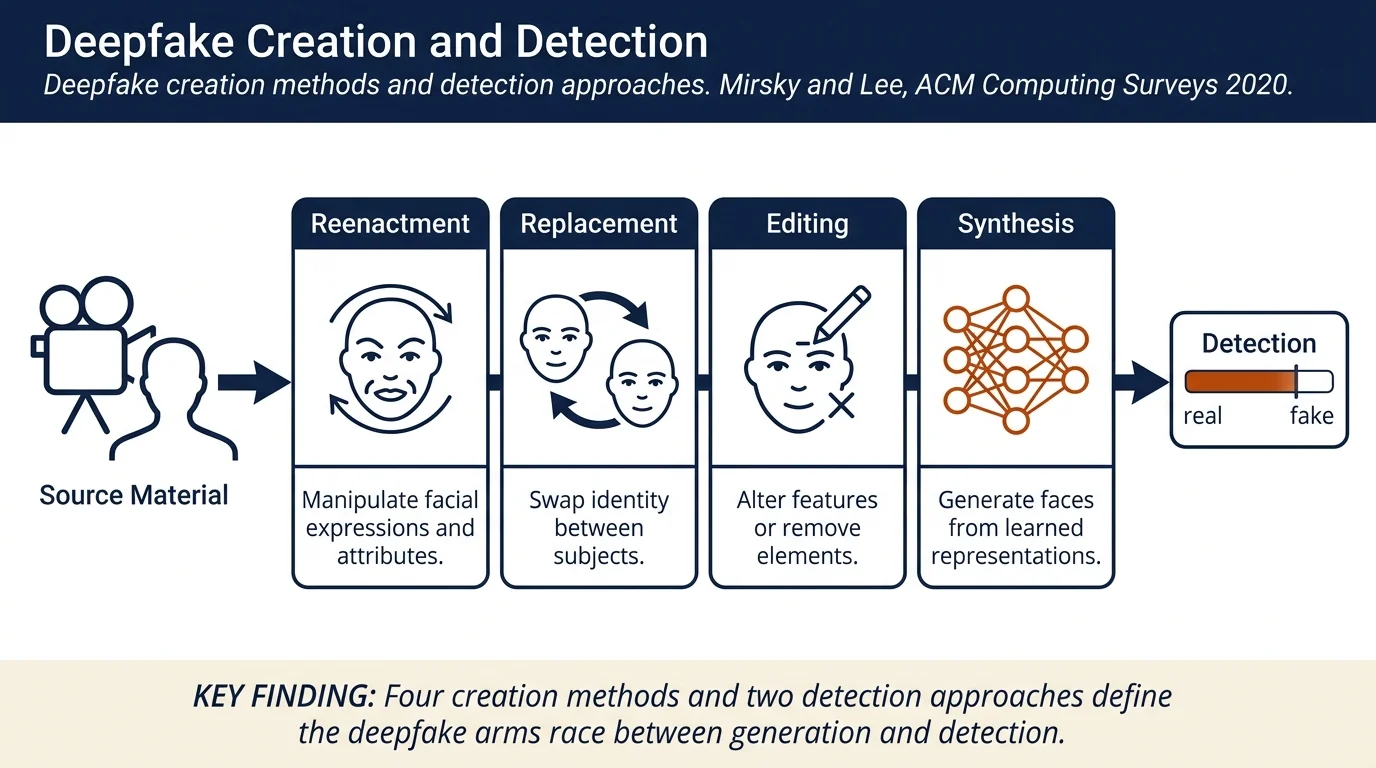
The Creation and Detection of Deepfakes: A SurveyComprehensive 38-page survey covering both creation and detection of deepfakes. Systematically reviews generative neural network architectures (GANs, autoencoders, CNNs, RNNs), technical approaches to reenactment, replacement, editing, and synthesis.
 Datasets & evaluationDetection methods
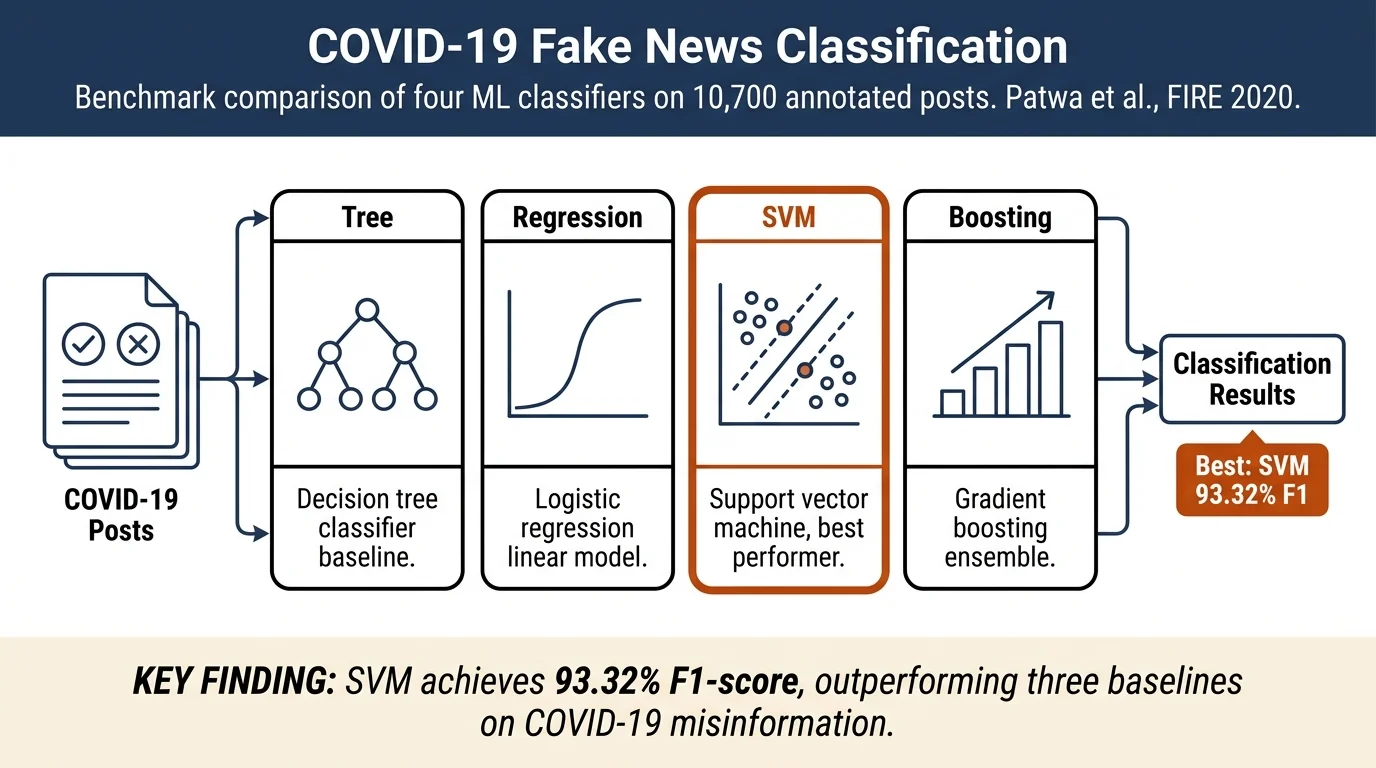
Fighting an Infodemic: COVID-19 Fake News DatasetThe authors present a manually annotated dataset of 10,700 COVID-19 related posts and articles (52% real, 48% fake) collected from social media and fact-checking websites. They benchmark four machine learning baselines (Decision Tree, Logistic Regression, SVM, Gradient Boost), achieving 93.32% F1-score with SVM, and release both the…
 Detection methodsSpread & networks
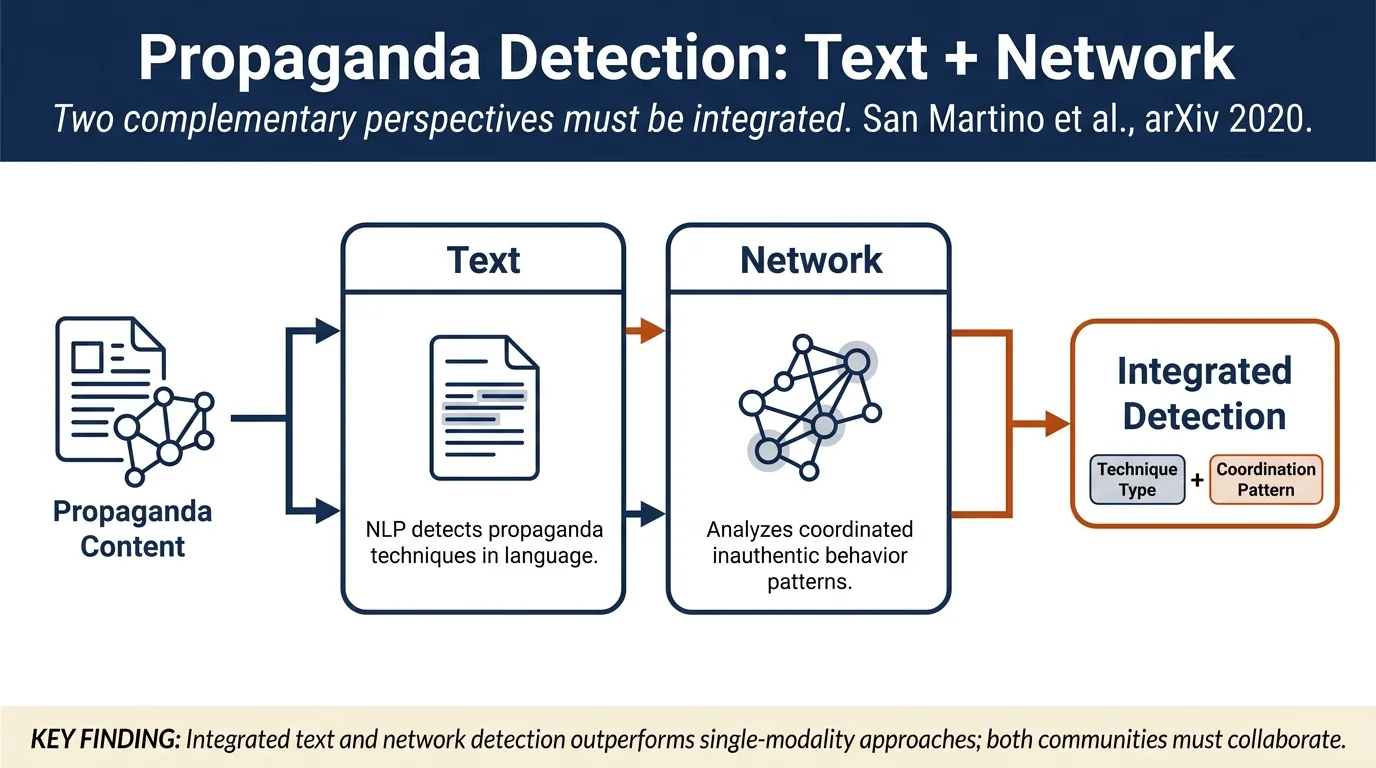
A Survey on Computational Propaganda DetectionThis survey comprehensively reviews computational propaganda detection from two complementary perspectives: text analysis (NLP) and network analysis. The authors argue that propaganda differs from misinformation/disinformation by focusing on persuasion techniques (emotional appeals, logical fallacies) rather than falsity.
 Bots & coordinated campaignsDetection methods
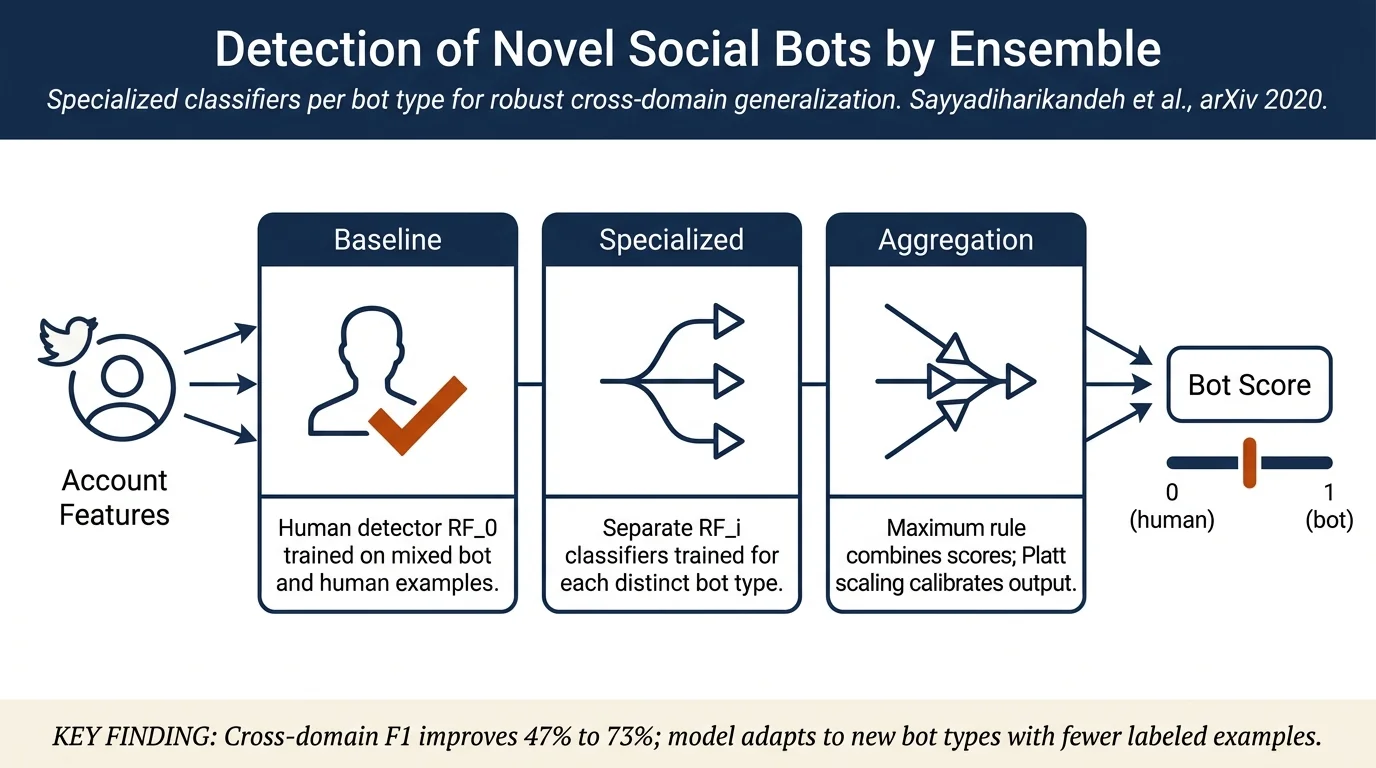
Detection of Novel Social Bots by Ensembles of Specialized ClassifiersDifferent types of social bots exhibit heterogeneous behavioral features; training a single classifier on all bots fails to generalize to novel bot types. The authors propose ESC (Ensemble of Specialized Classifiers), which trains separate classifiers for each bot class and combines their decisions via a maximum rule, achieving a 56%…
 Detection methodsSpread & networks
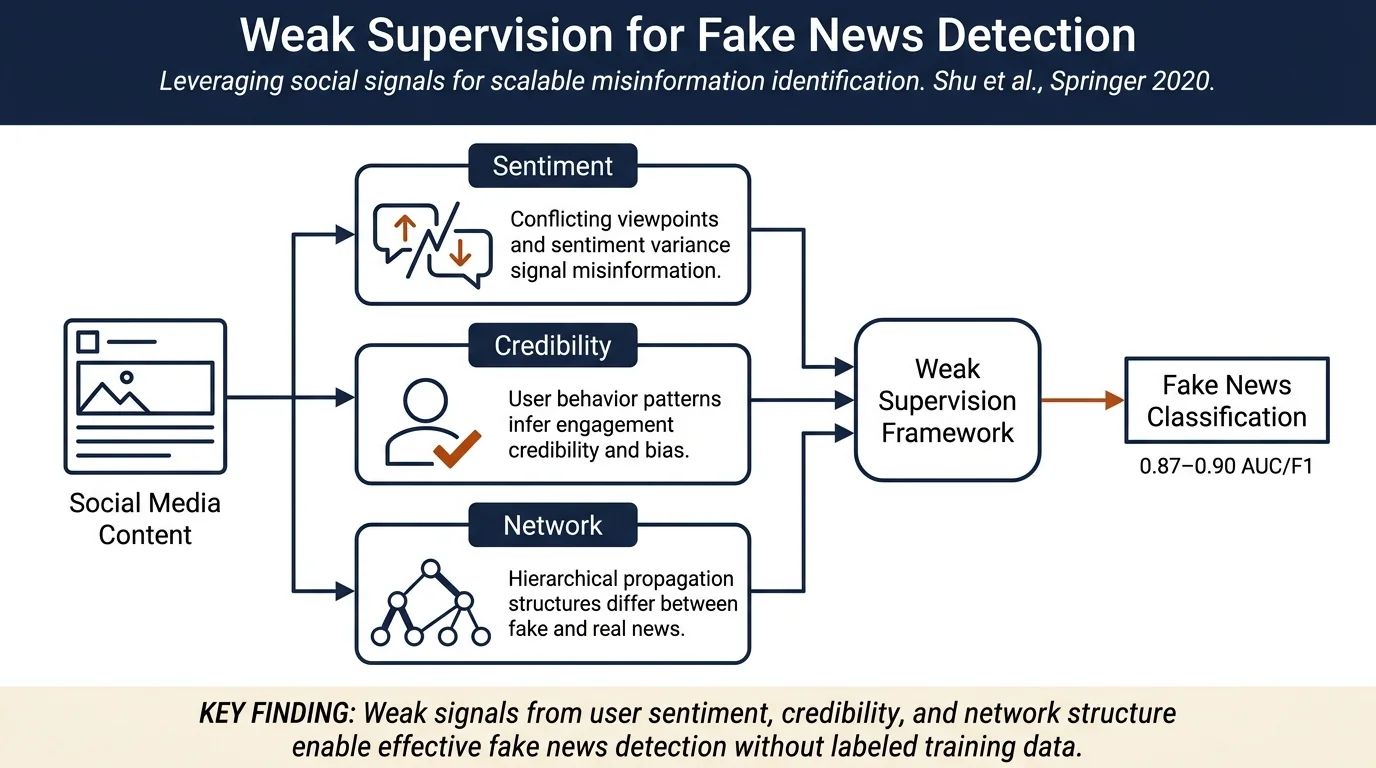
Mining Disinformation and Fake News: Concepts, Methods, and Recent AdvancementsThis comprehensive tutorial surveys the landscape of fake news and disinformation research across three dimensions: understanding user engagement in information disorder, techniques for detecting and mitigating false content, and emerging challenges like fake news literacy and neural generation. The authors emphasize weak social…
 Deepfakes & multimodalDetection methods
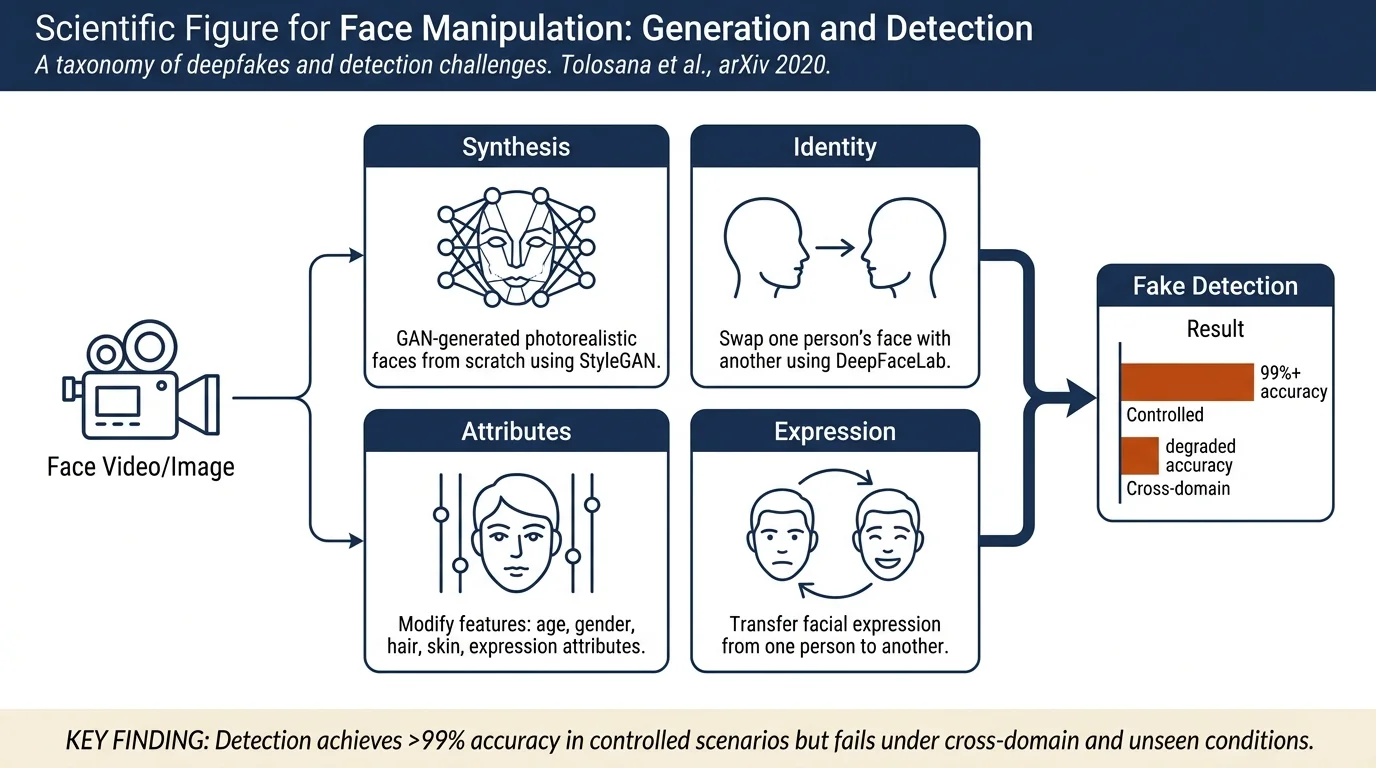
DeepFakes and Beyond: A Survey of Face Manipulation and Fake DetectionThis comprehensive survey reviews face manipulation techniques and detection methods in the era of deep learning. It categorizes facial manipulations into four types—entire face synthesis, identity swap, attribute manipulation, and expression swap—and surveys both generation and detection approaches across public datasets and benchmarks.
 Fact-checking & verificationDetection methods
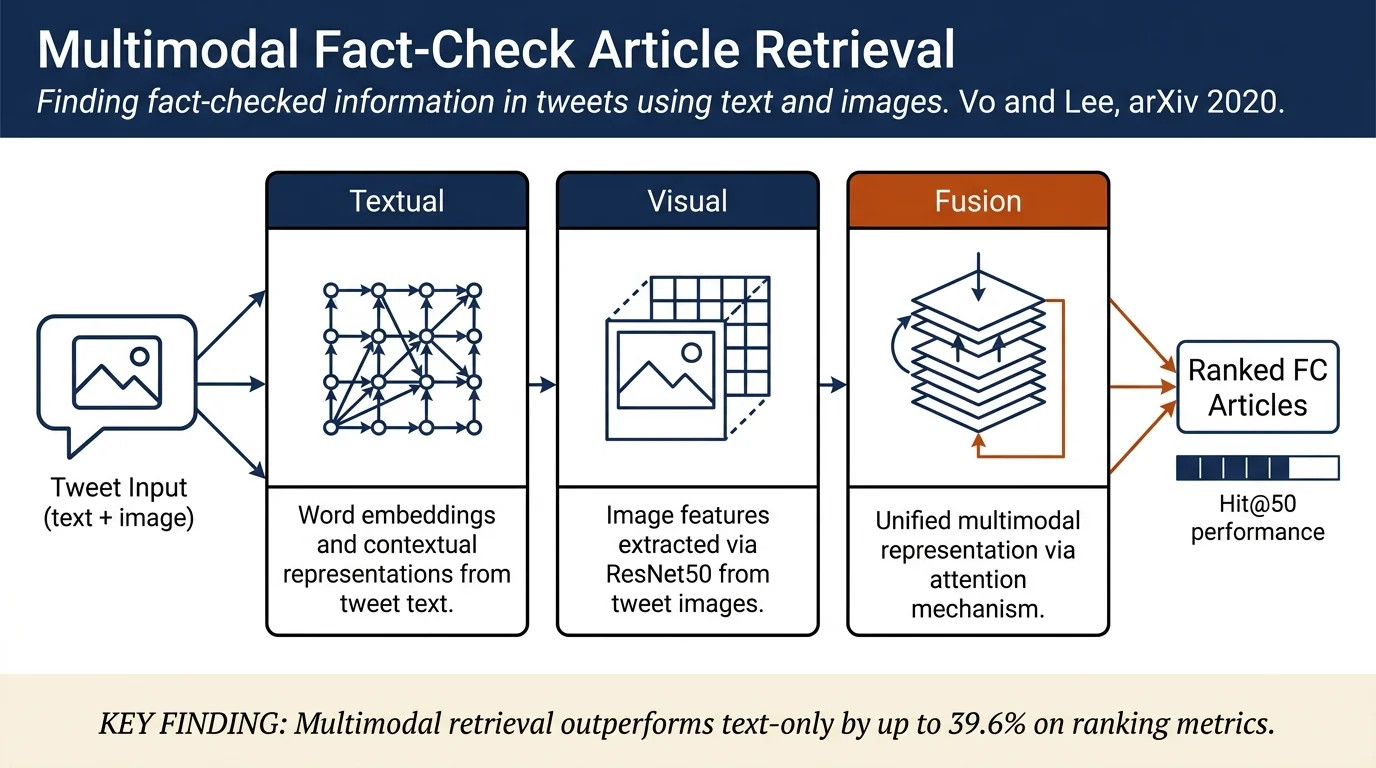
Where Are the Facts? Searching for Fact-checked Information to Alleviate the Spread of Fake NewsProposes a framework to automatically find fact-checking articles that address claims in original tweets. Uses a multimodal attention network (MAN) combining textual and visual content from tweets with fact-checking article text to rank candidate fact-checks; demonstrates that multimodal retrieval substantially outperforms text-only…