Explore everything
Filter by research area, year and venue. Every filter is in the address bar, so you can share a view as a link.
 Deepfakes & multimodalDetection methods
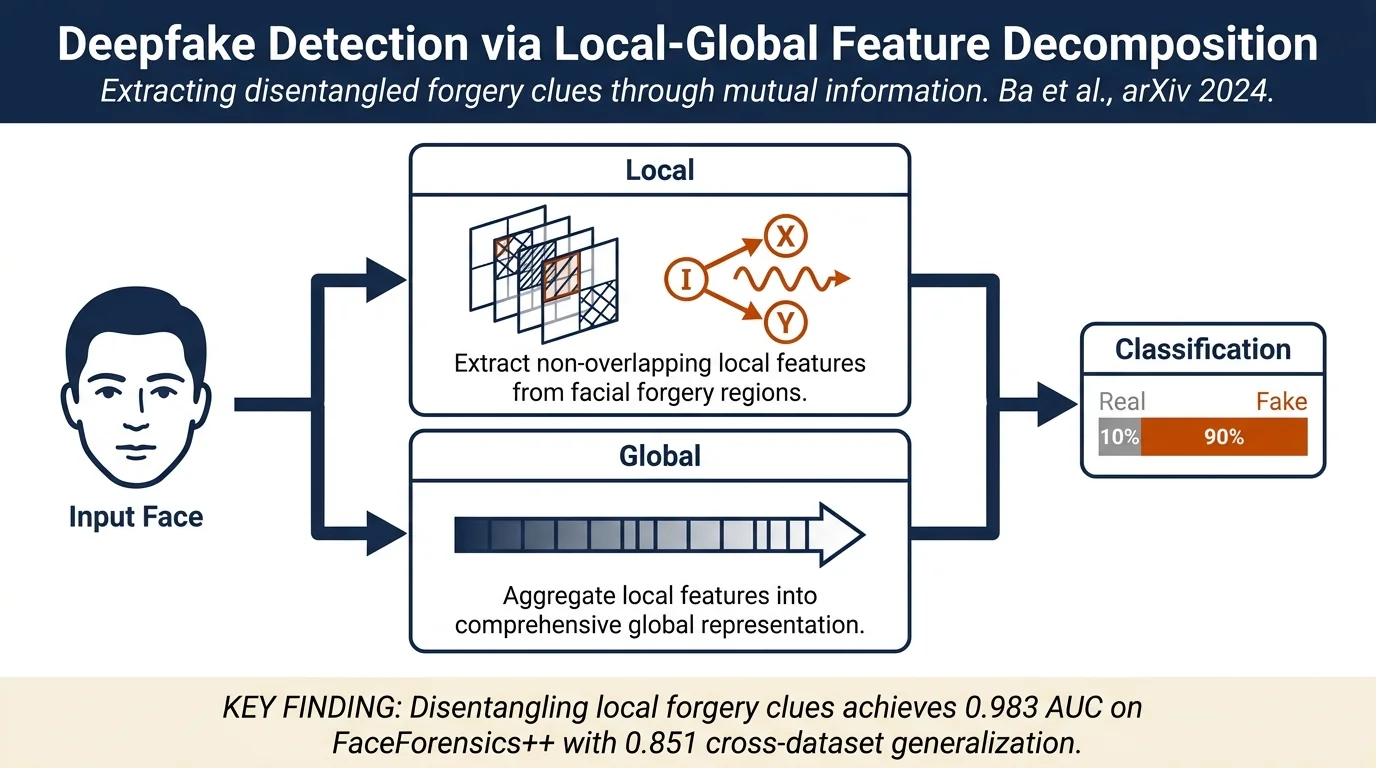
Exposing the Deception: Uncovering More Forgery Clues for Deepfake DetectionThis paper proposes a framework for deepfake detection that extracts both local and global forgery clues by decomposing facial features into disentangled local representations. Using mutual information theory to ensure comprehensive yet non-overlapping feature extraction, the method achieves state-of-the-art results on five benchmark…
 LLMs & generative AIDeepfakes & multimodal
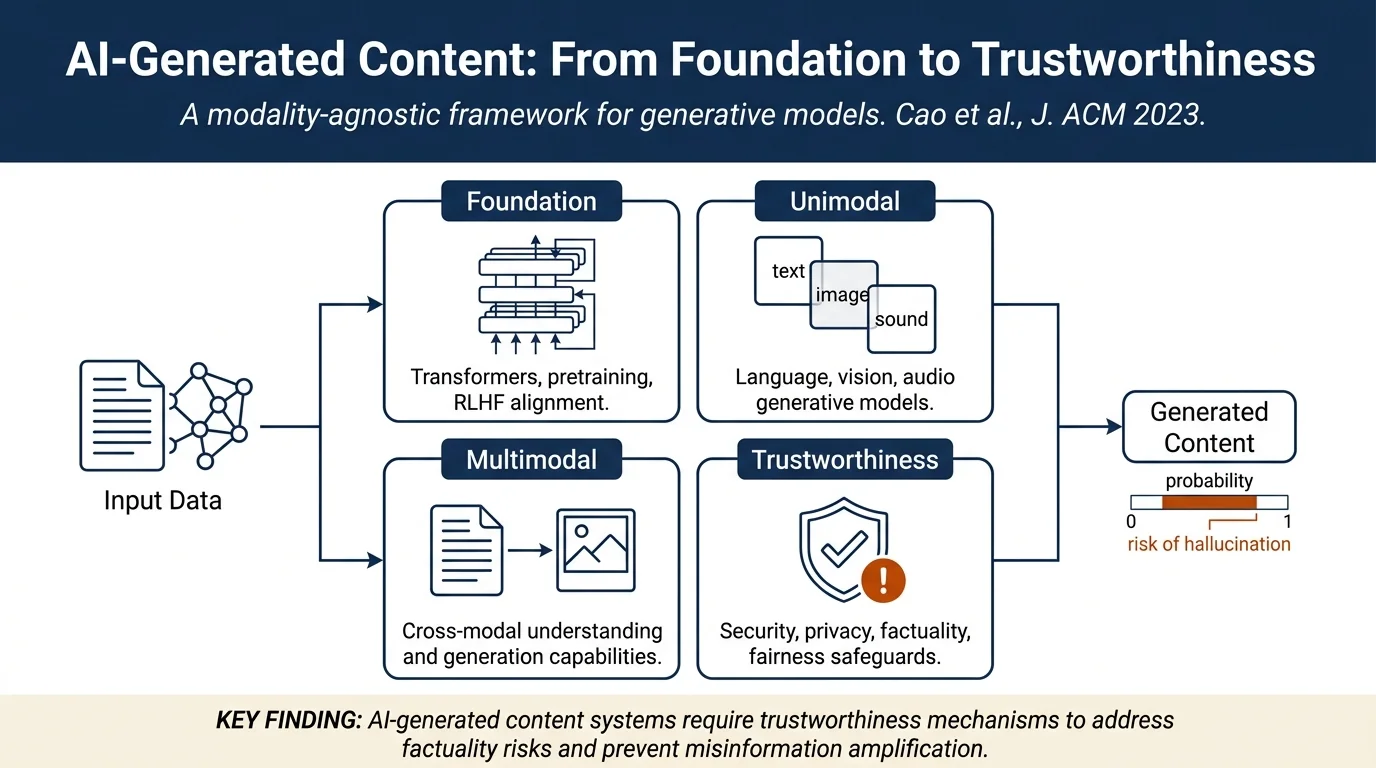
A Comprehensive Survey of AI-Generated Content (AIGC): A History of Generative AI from GAN to ChatGPTThis is the first comprehensive survey of AI-Generated Content (AIGC) covering the history, techniques, and applications of generative models from GANs through ChatGPT. It addresses both the impressive capabilities of these models (text, image, audio, video generation) and critical concerns including factuality, security, privacy, and…
 LLMs & generative AIDeepfakes & multimodal
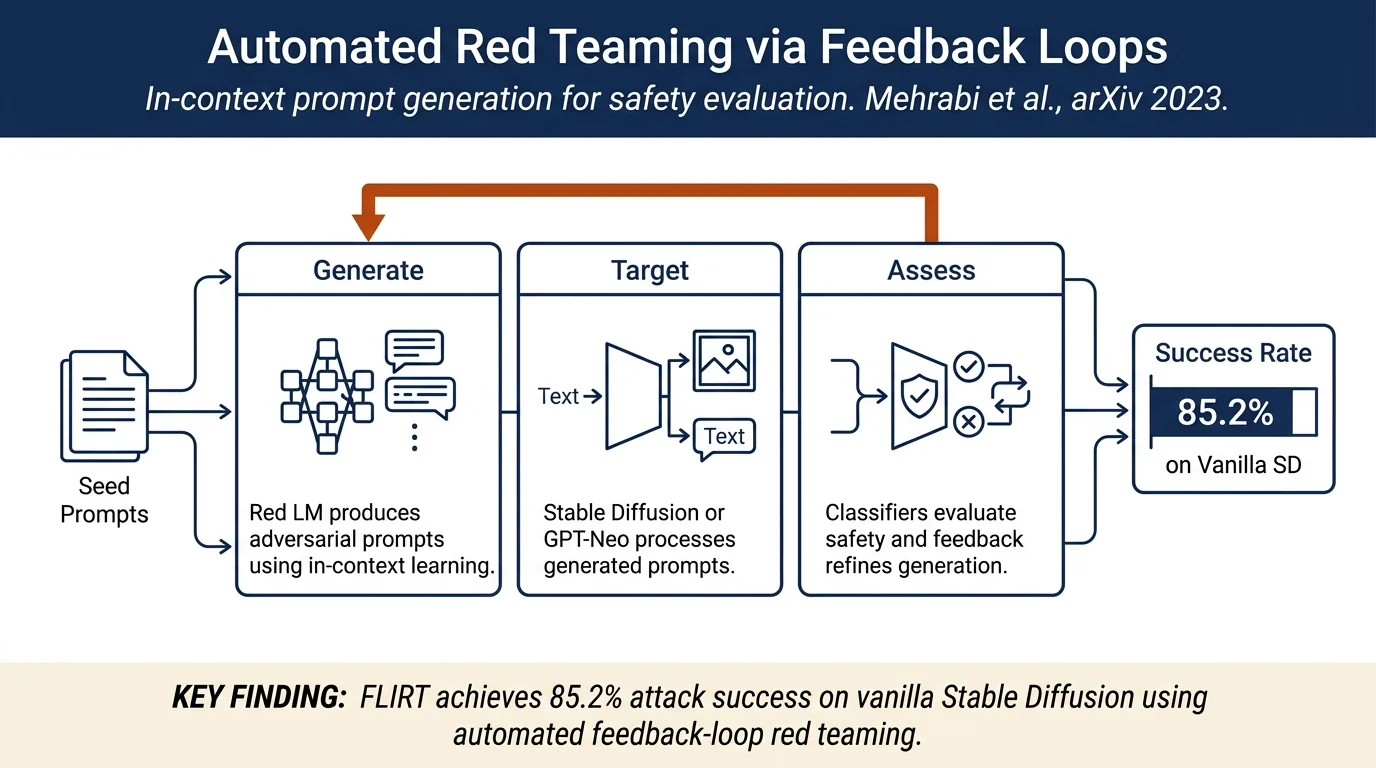
FLIRT: Feedback Loop In-context Red TeamingFLIRT automates red teaming of generative models by using in-context learning to generate adversarial prompts in a feedback loop: a red language model generates candidate prompts, they are evaluated against a target model (e.g., text-to-image or text-to-text), safety classifiers assess the outputs, and results feed back to refine future…
 Deepfakes & multimodalDatasets & evaluation
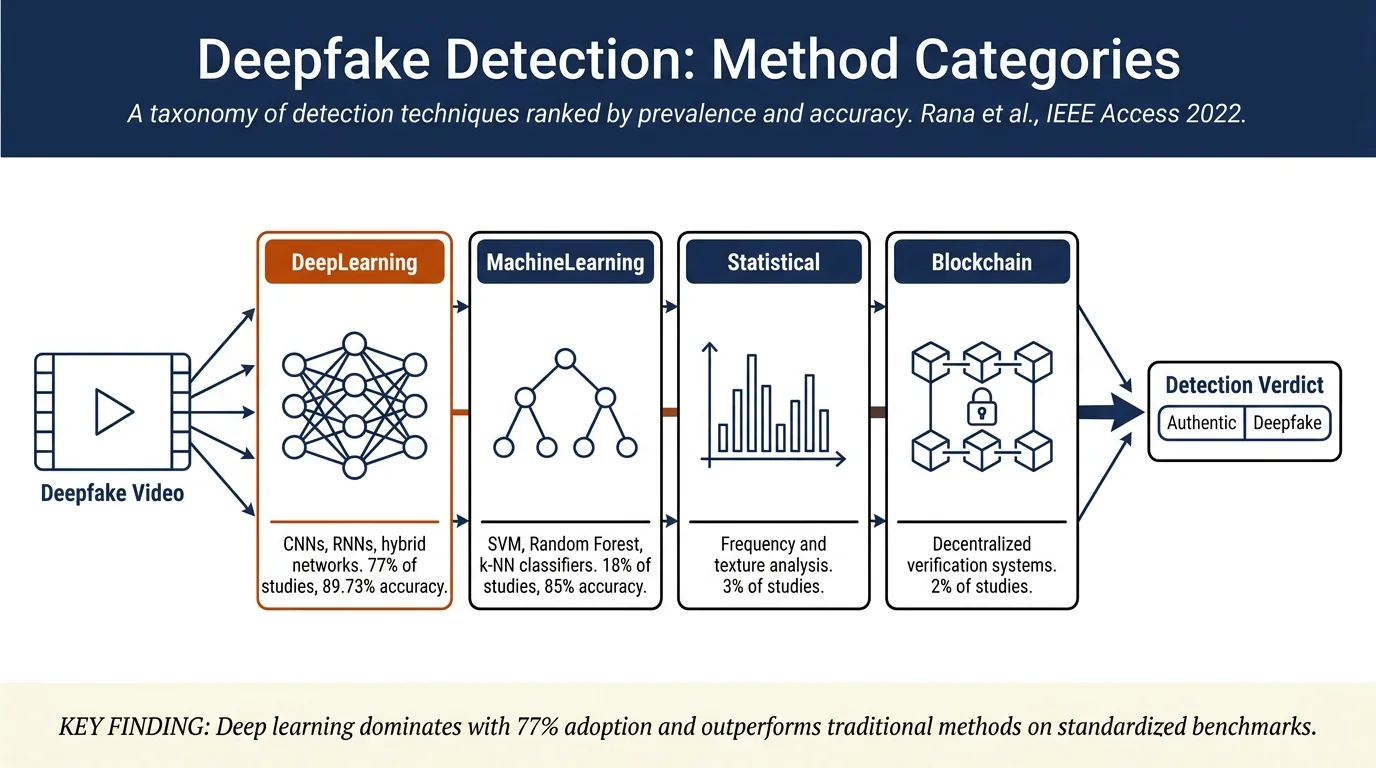
Deepfake Detection: A Systematic Literature ReviewSystematic review of 112 deepfake detection studies (2018–2020) categorizing techniques into deep learning, machine learning, statistical, and blockchain methods. Deep learning approaches (77% of studies, primarily CNNs) significantly outperform non-deep methods, achieving ~89.7% mean accuracy.
 LLMs & generative AIDeepfakes & multimodal
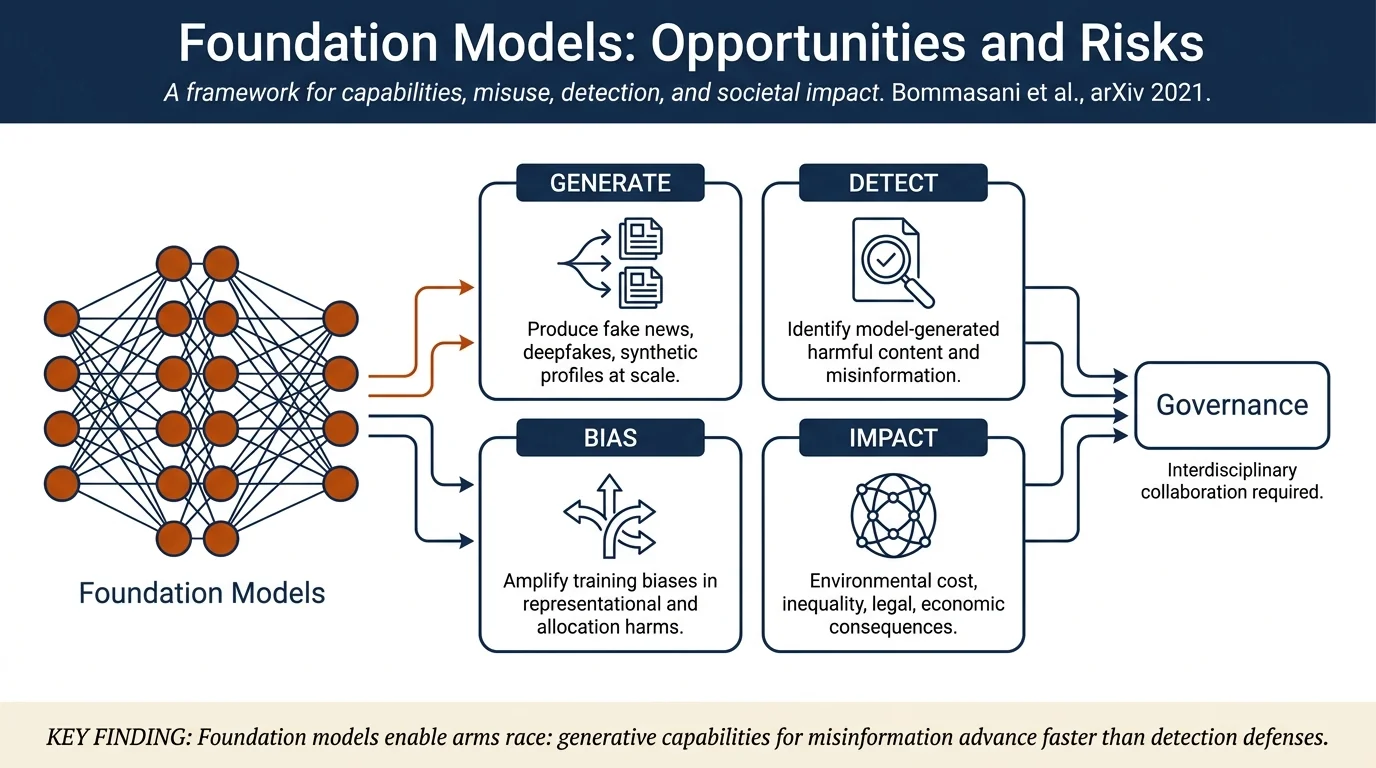
On the Opportunities and Risks of Foundation ModelsA comprehensive 214-page report analyzing foundation models—large neural networks trained on broad data that can be adapted to diverse downstream tasks (BERT, GPT-3, DALL-E). The report maps capabilities across language, vision, and reasoning; applications in healthcare, law, and education; and societal risks including misuse (generating…
 Deepfakes & multimodalDetection methods
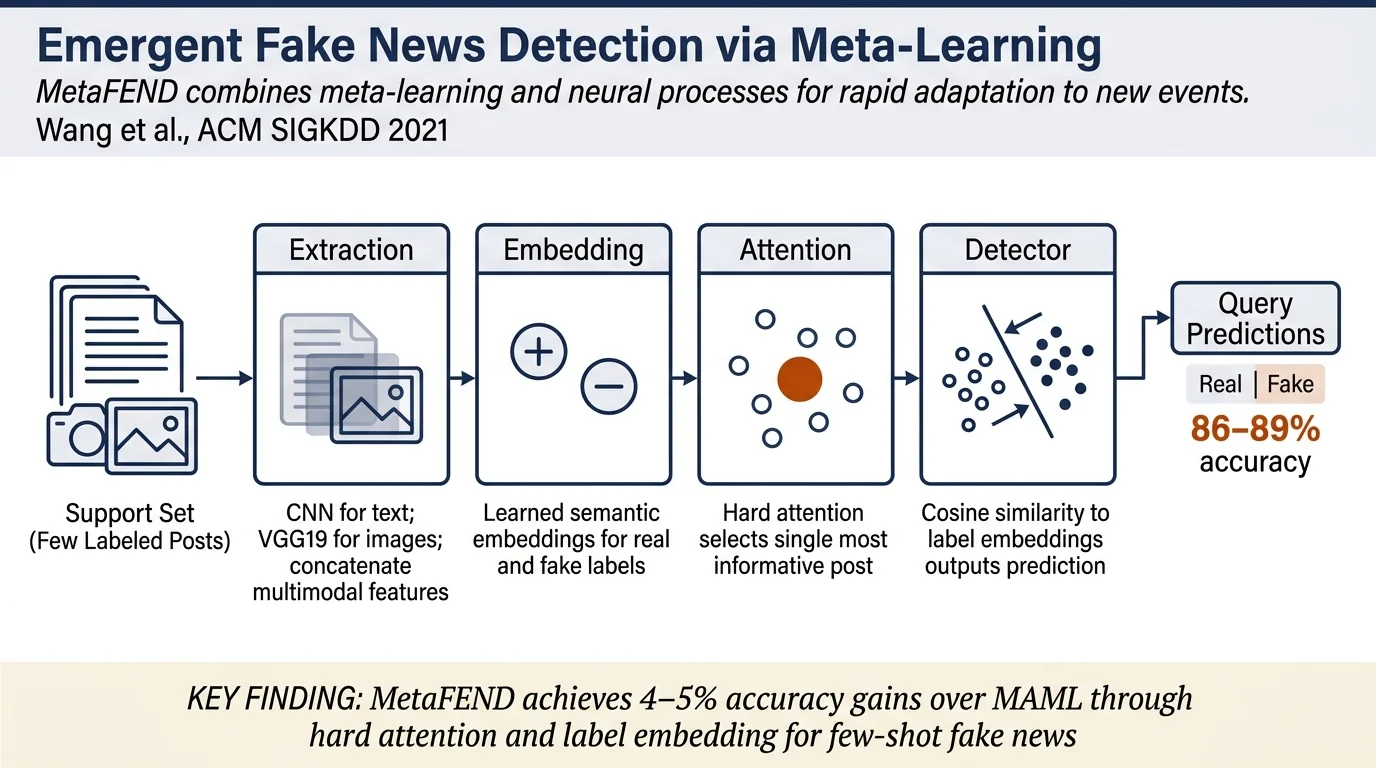
Multimodal Emergent Fake News Detection via Meta Neural Process NetworksExisting fake news detectors trained on labeled data perform poorly on novel, emergent events due to domain shift. The paper proposes MetaFEND, which combines meta-learning and neural processes to leverage a handful of labeled posts from a new event to quickly adapt a detection model.
 Deepfakes & multimodalDetection methods
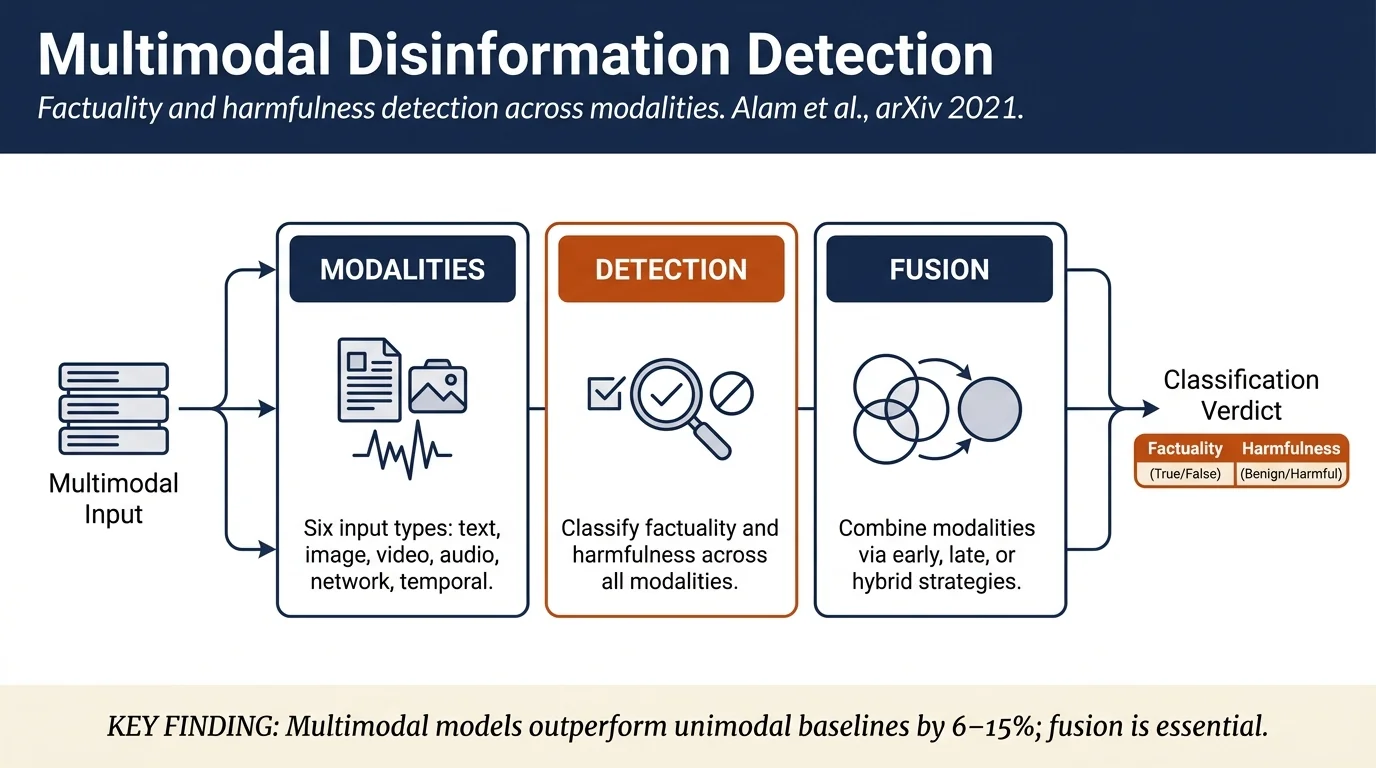
A Survey on Multimodal Disinformation DetectionComprehensive survey of multimodal disinformation detection covering text, images, speech, video, network structure, and temporal information. Distinguishes factuality (whether content is false) from harmfulness (whether false content intends to harm), systematically reviews ~140 papers across different modalities and detection…
 Detection methodsDeepfakes & multimodal
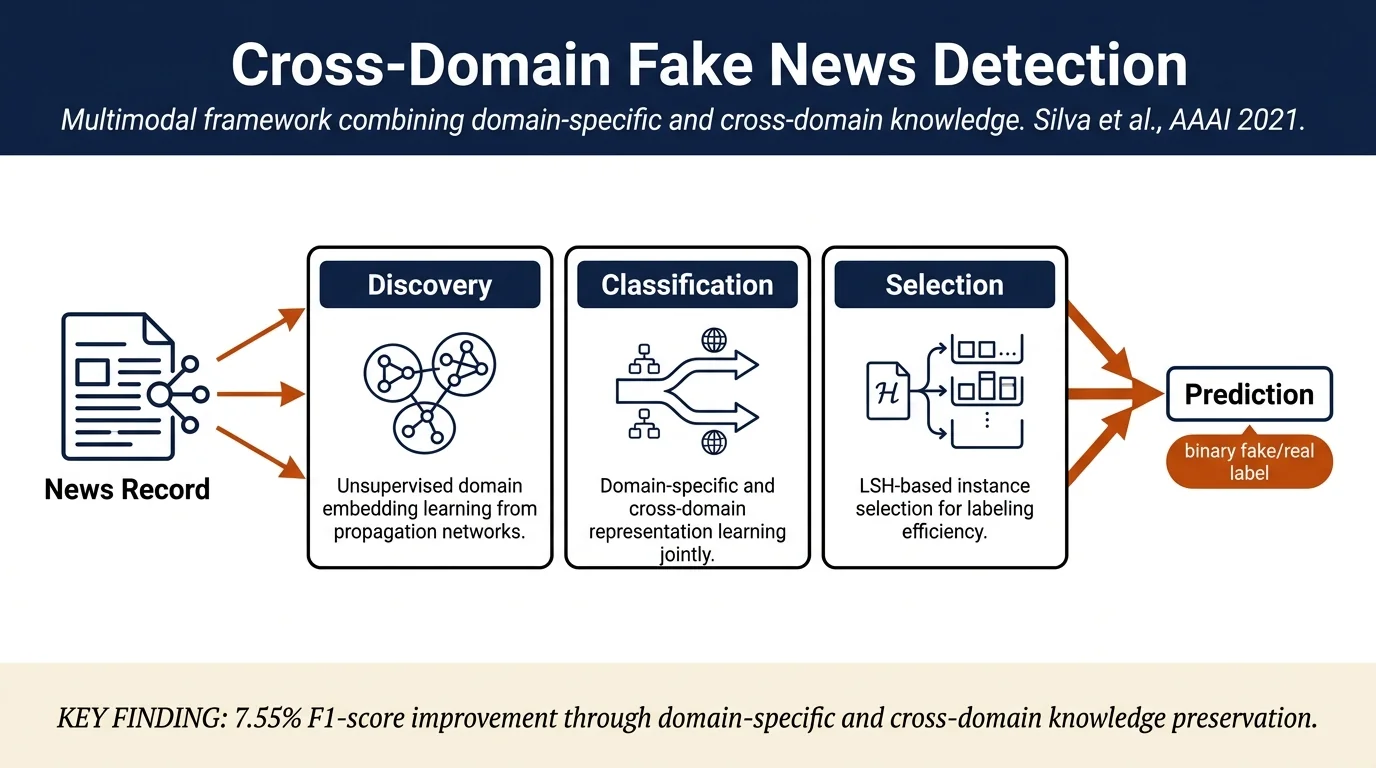
Embracing Domain Differences in Fake News: Cross-domain Fake News Detection using Multimodal DataMost fake news detection models are trained on a single domain (e.g., politics) and fail when tested on others (e.g., entertainment, COVID-19). This paper proposes a multimodal framework that leverages both domain-specific and cross-domain knowledge to detect fake news across different domains.
 Detection methodsDeepfakes & multimodal
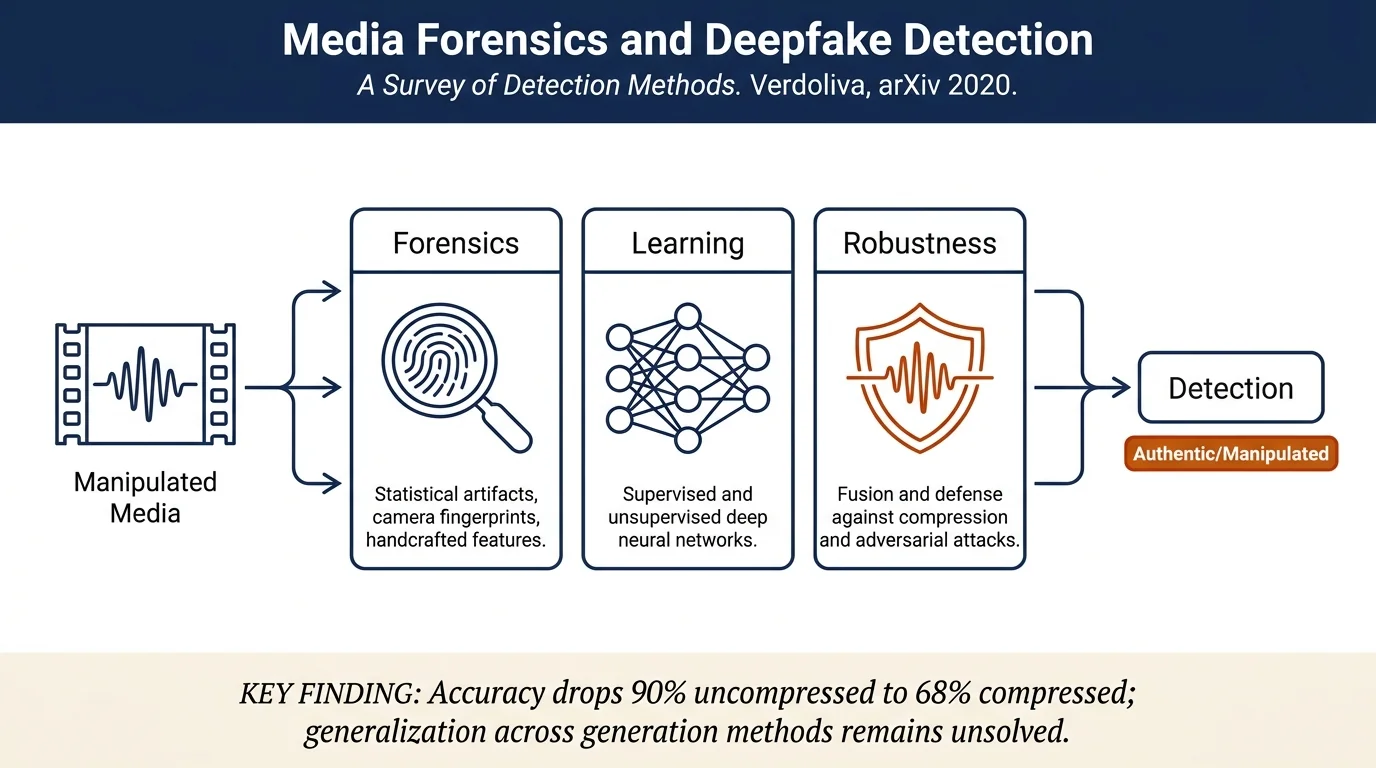
Media Forensics and DeepFakes: an overviewA comprehensive survey of media forensics and deepfake detection methods spanning fifteen years of research. The paper reviews both conventional signal-processing approaches (blind methods, sensor-based, handcrafted features) and deep learning-based detection techniques, covers major datasets and their characteristics, discusses…
 Deepfakes & multimodalDetection methods
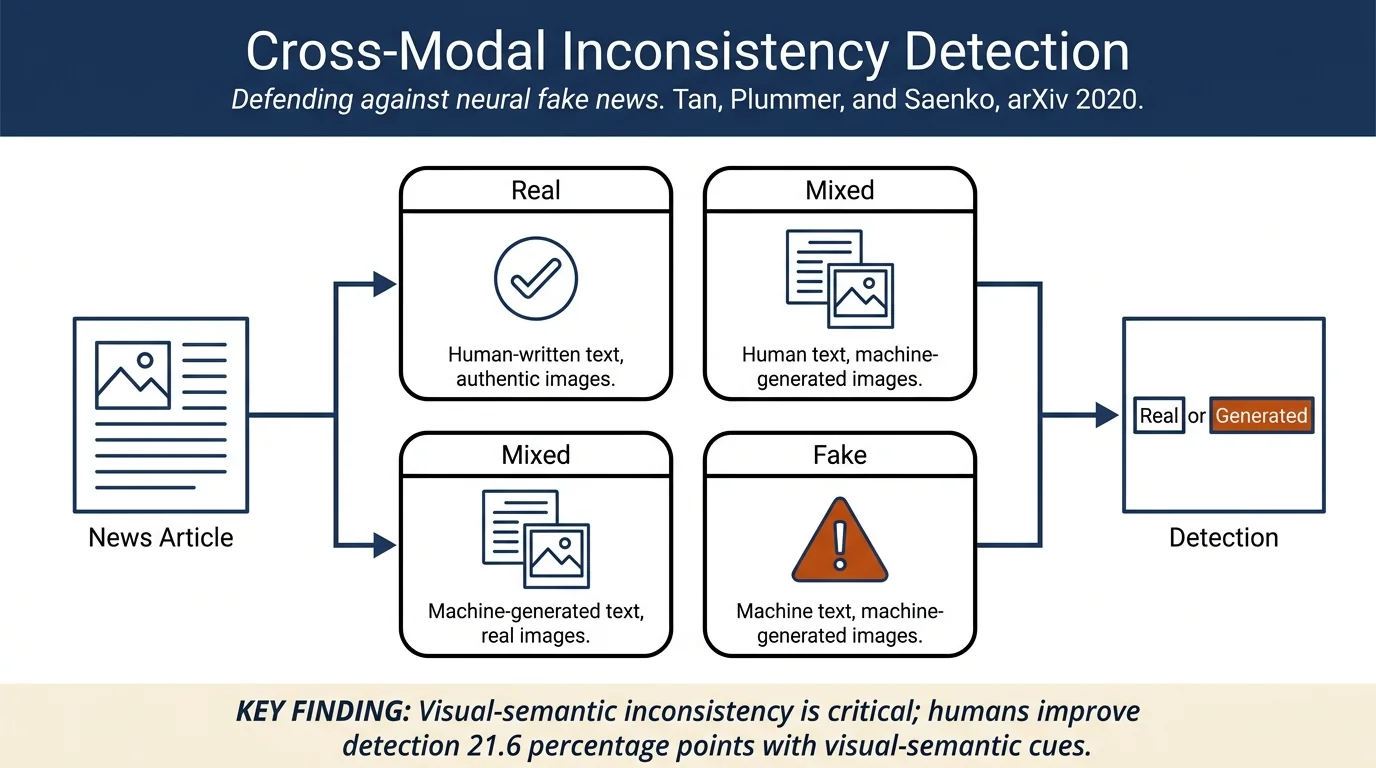
Detecting Cross-Modal Inconsistency to Defend Against Neural Fake NewsMachine-generated news articles with images and captions exploit visual-semantic inconsistencies that humans struggle to detect. This paper introduces DIDAN, a named entity-based approach to identify cross-modal semantic mismatches, and the NeuralNews dataset of 128K articles to benchmark multimodal fake news detection.
 Deepfakes & multimodalDatasets & evaluation
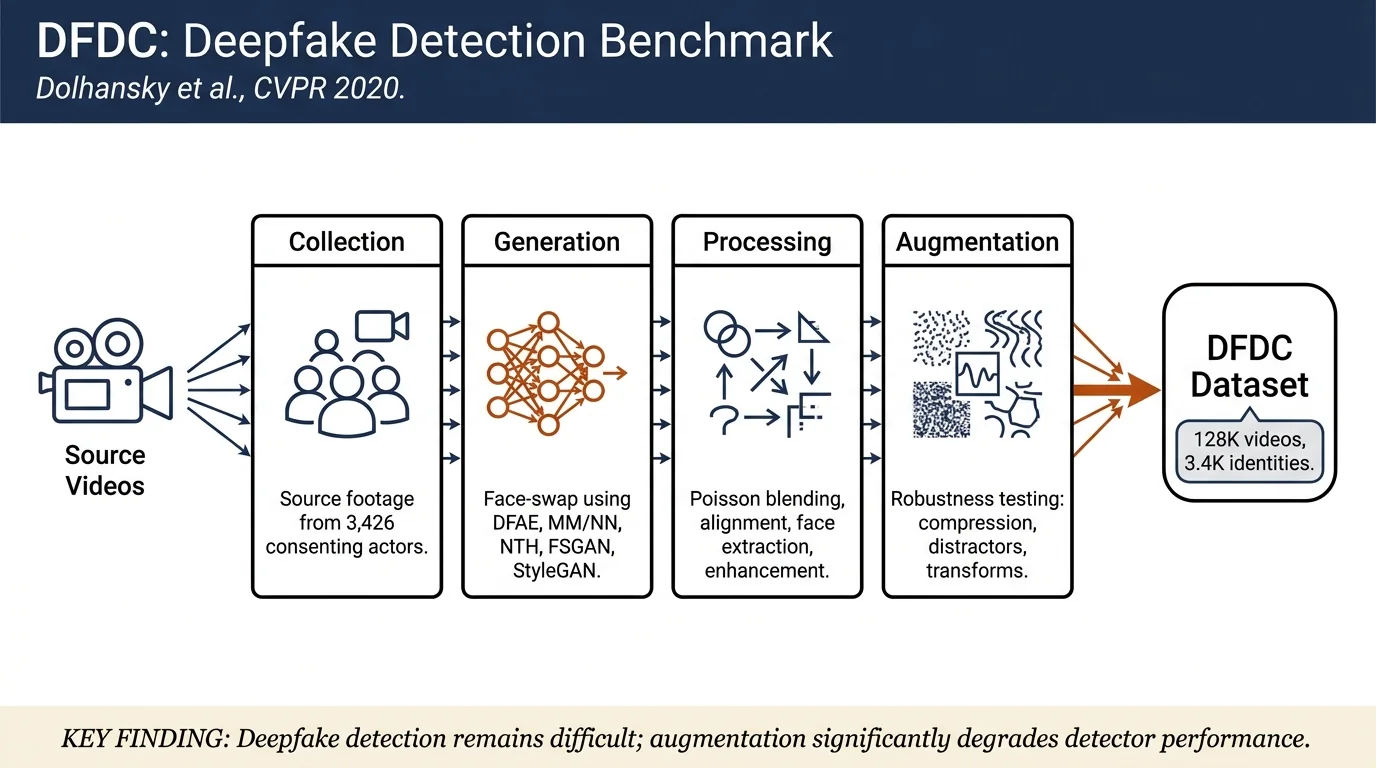
The DeepFake Detection Challenge (DFDC) DatasetThis paper introduces the DFDC Dataset, the largest publicly available deepfake detection benchmark at the time with 128,154 videos from 3,426 consented actors and 100,000 face-swapped clips. The dataset addresses ethical and methodological limitations of prior deepfake benchmarks by requiring explicit participant consent, including…
 Deepfakes & multimodalDatasets & evaluation
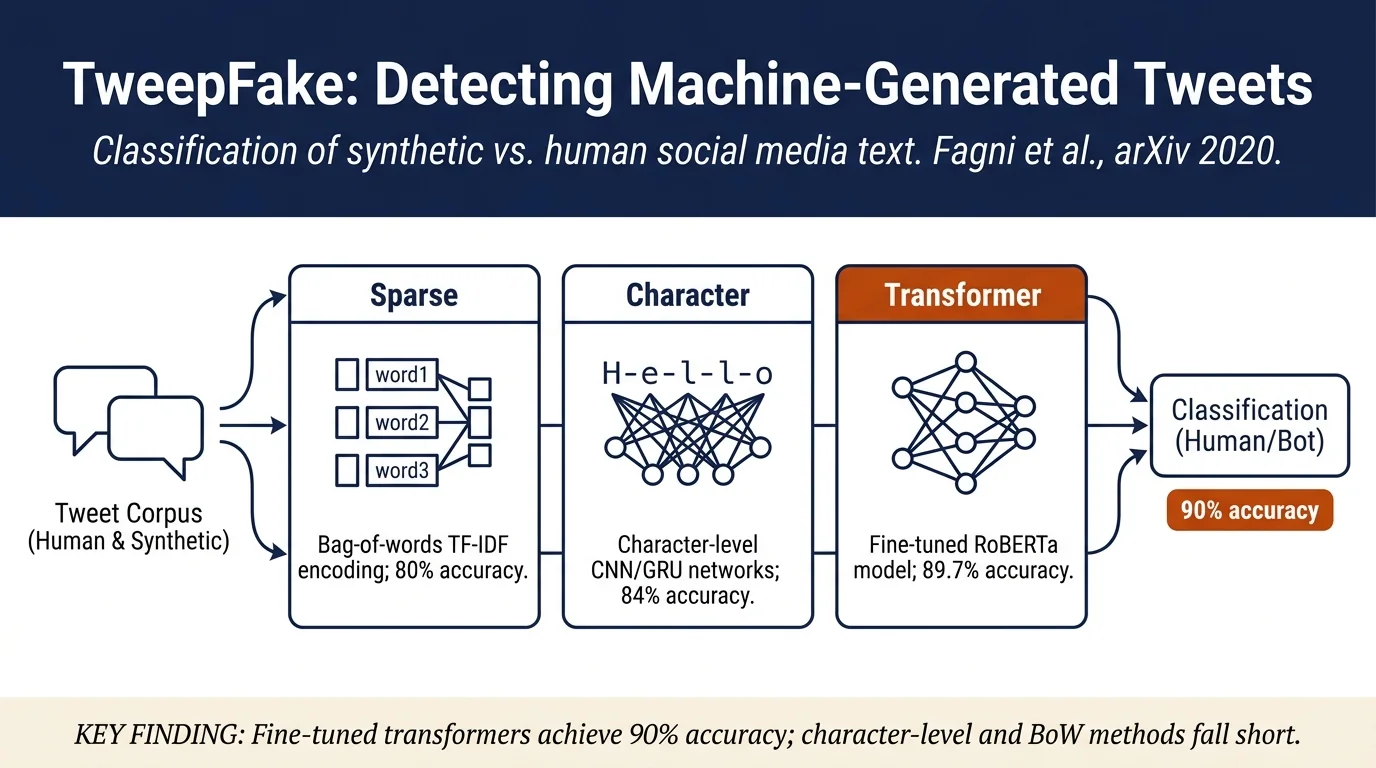
TweepFake: about detecting deepfake tweetsFirst publicly available dataset of real human-written and machine-generated tweets (TweepFake: 25,572 tweets, half human, half bot-generated from GPT-2, RNN, LSTM, Markov Chains, etc.). Benchmarks 13 detection methods and finds that transformer-based models fine-tuned on this task (RoBERTa) achieve ~90% accuracy, while BoW approaches…
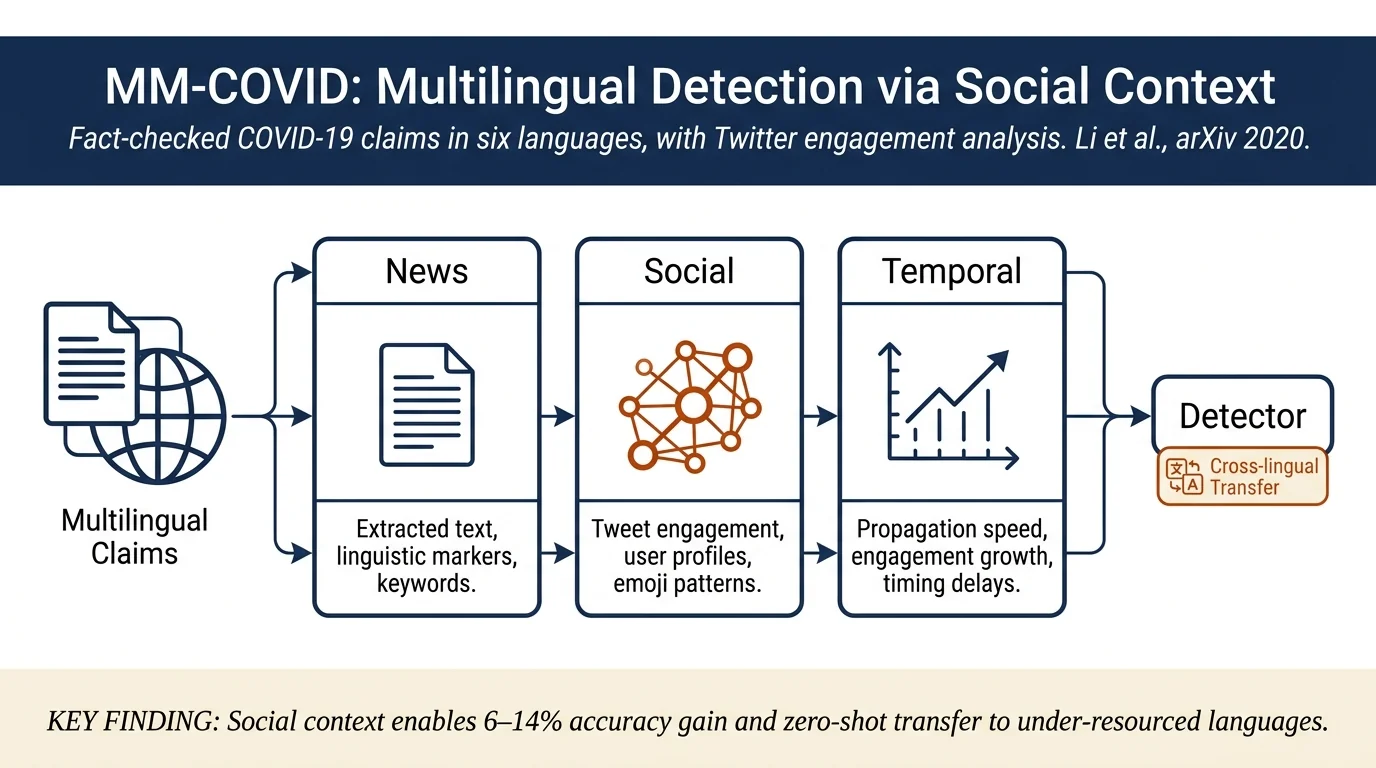 Datasets & evaluationDetection methods
MM-COVID: A Multilingual and Multimodal Data Repository for Combating COVID-19 DisinformationThe paper introduces MM-COVID, a multilingual and multimodal dataset of COVID-19 fake news and social engagements in six languages (English, Spanish, Portuguese, Hindi, French, Italian). The dataset includes 3,981 fake news pieces with 7,192 tweets, fact-checking metadata, user profiles, and temporal propagation information.
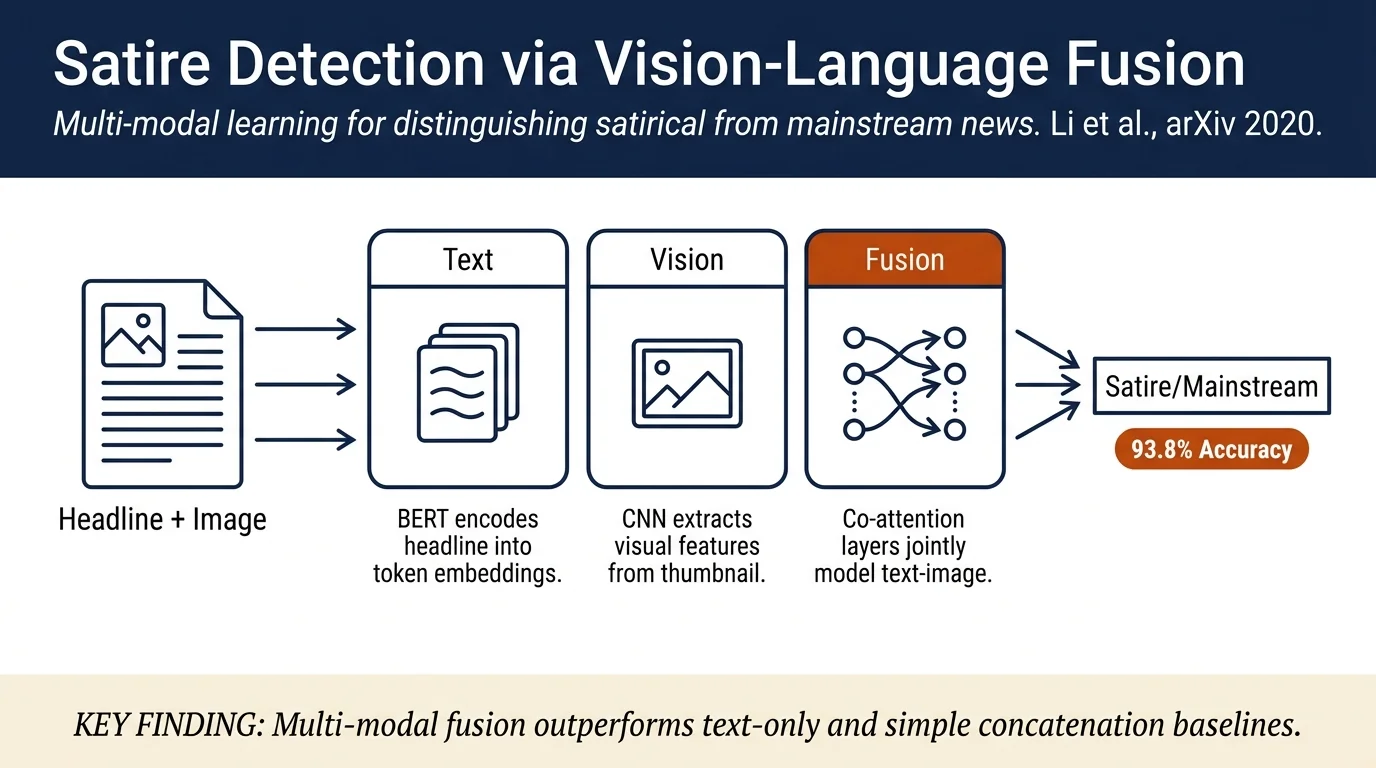 Deepfakes & multimodalDetection methods
A Multi-Modal Method for Satire Detection using Textual and Visual CuesSatirical news articles are often misinterpreted as legitimate news. This work proposes a multi-modal approach using ViLBERT to detect satire by jointly analyzing headline text and thumbnail images, achieving 93.8% accuracy on a new dataset of 10,000 articles (4000 satirical, 6000 mainstream).
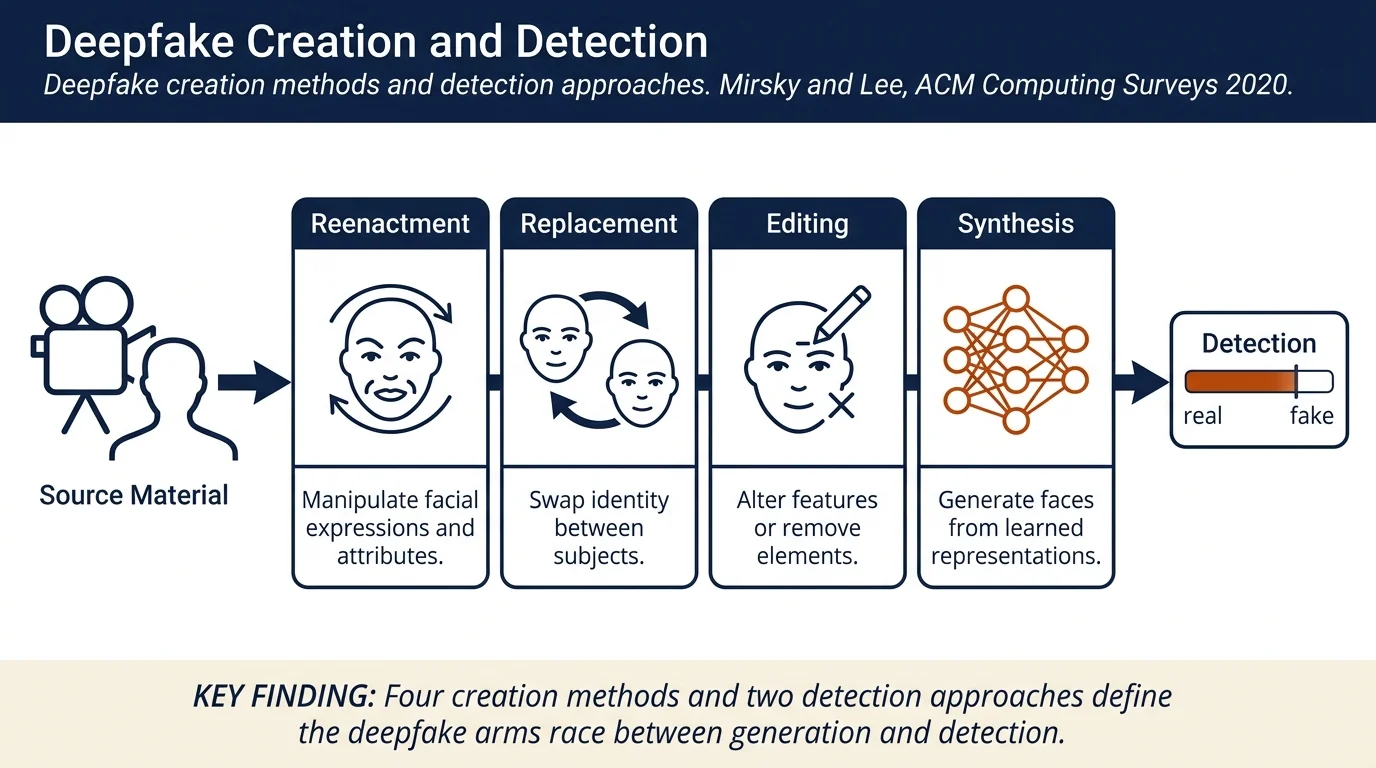 Deepfakes & multimodalDetection methods
The Creation and Detection of Deepfakes: A SurveyComprehensive 38-page survey covering both creation and detection of deepfakes. Systematically reviews generative neural network architectures (GANs, autoencoders, CNNs, RNNs), technical approaches to reenactment, replacement, editing, and synthesis.
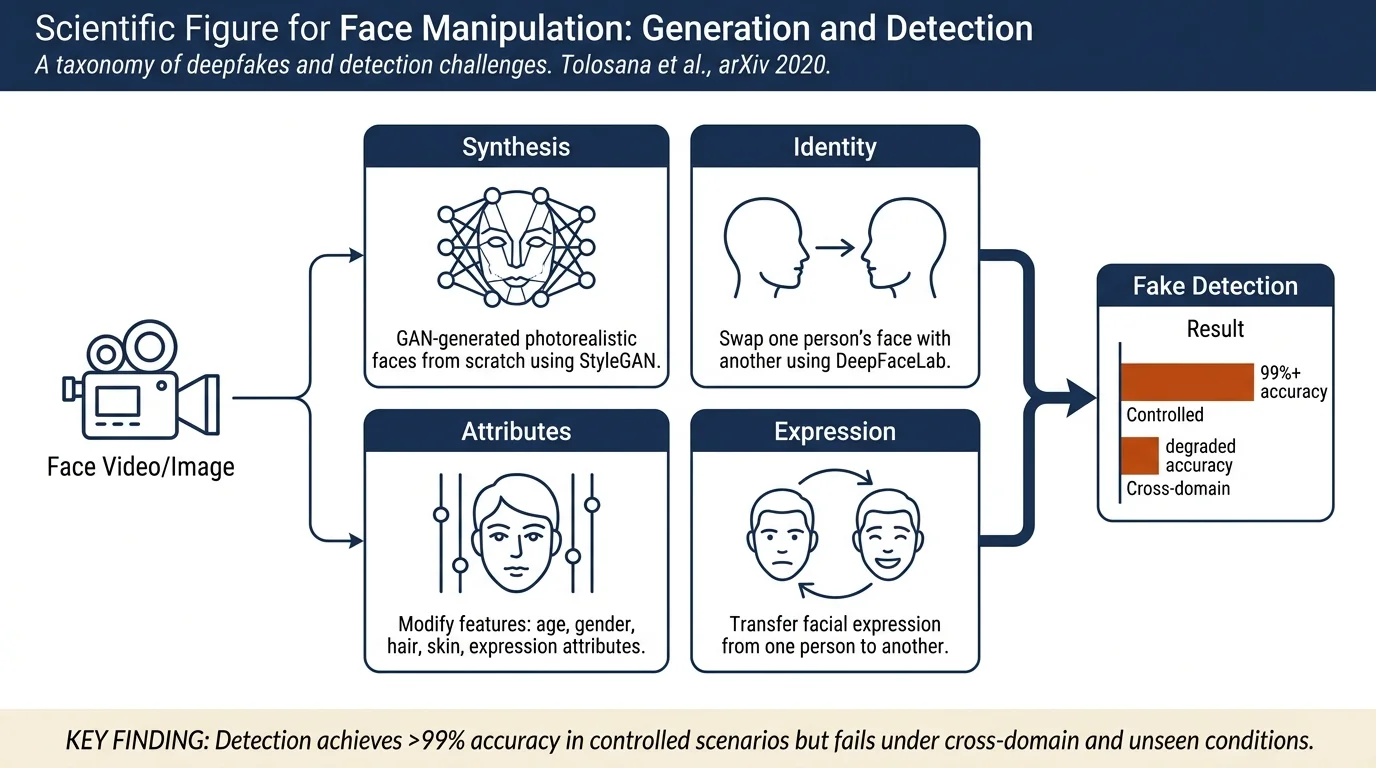 Deepfakes & multimodalDetection methods
DeepFakes and Beyond: A Survey of Face Manipulation and Fake DetectionThis comprehensive survey reviews face manipulation techniques and detection methods in the era of deep learning. It categorizes facial manipulations into four types—entire face synthesis, identity swap, attribute manipulation, and expression swap—and surveys both generation and detection approaches across public datasets and benchmarks.
 Deepfakes & multimodalFact-checking & verification
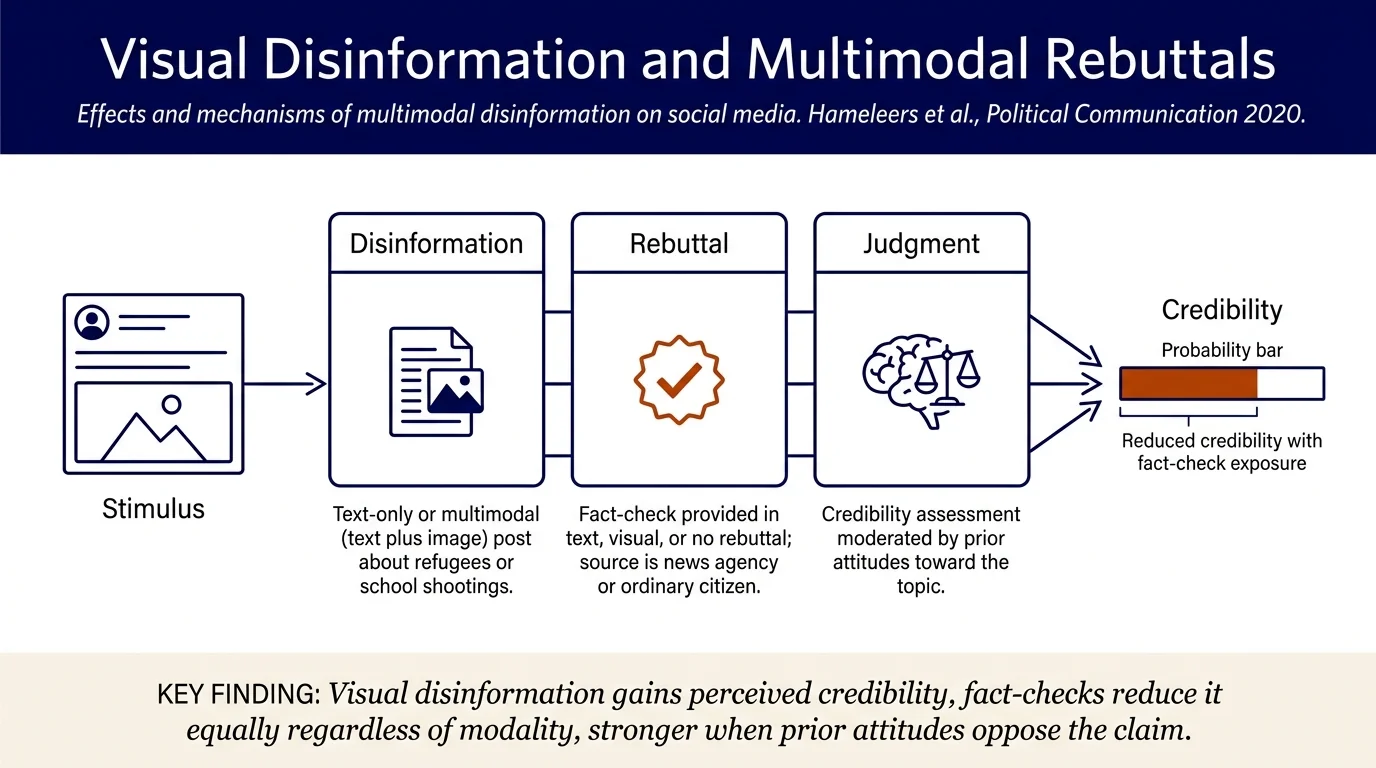
A Picture Paints a Thousand Lies? The Effects and Mechanisms of Multimodal Disinformation and Rebuttals Disseminated via Social MediaMultimodal disinformation (paired text and images) is perceived as more credible than text-only misinformation, but fact-checkers can overcome this effect. Importantly, the modality of fact-checks (visual or textual) matters less than their presence; fact-checks are more persuasive for people whose prior attitudes already oppose the…
 Deepfakes & multimodalPlatforms, policy & society
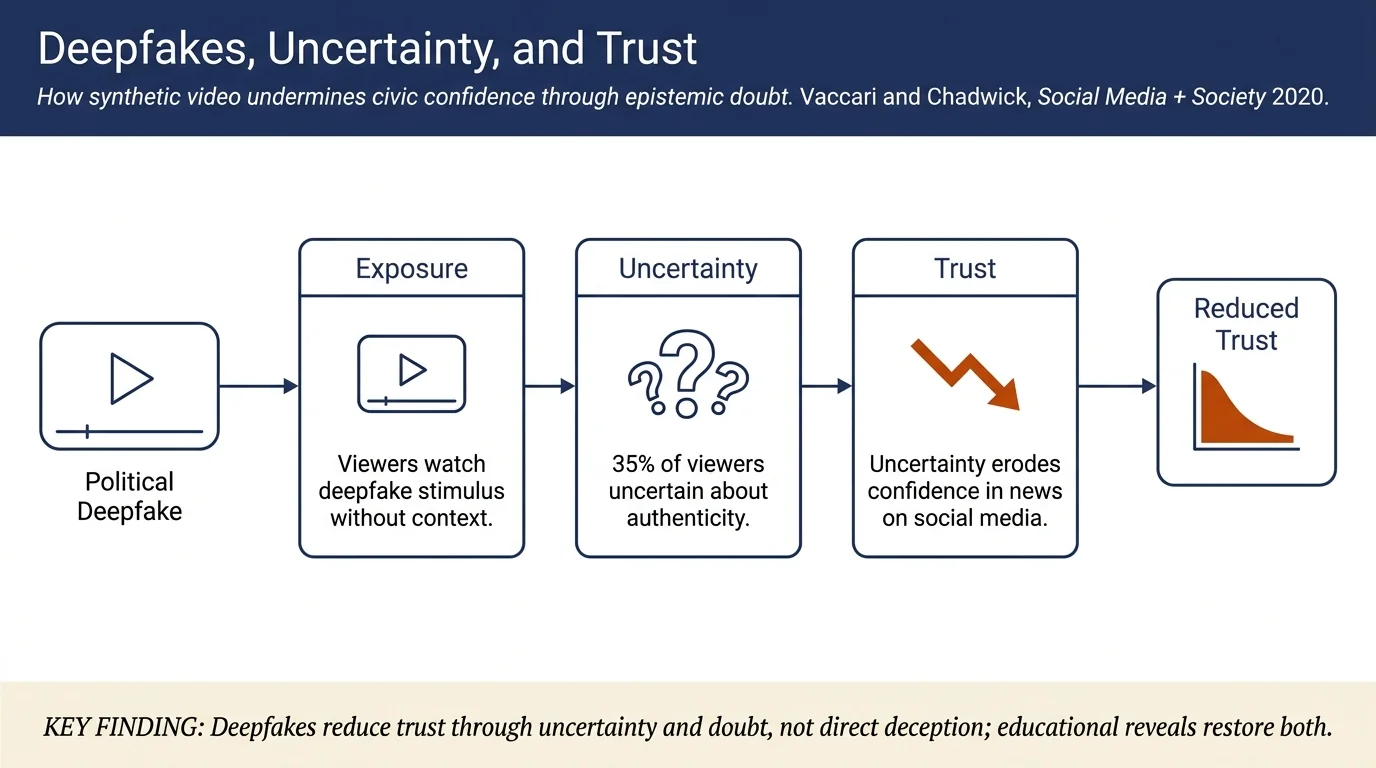
Deepfakes and Disinformation: Exploring the Impact of Synthetic Political Video on Deception, Uncertainty, and Trust in NewsExperimental study (N=2,005 UK respondents) testing how political deepfakes affect deception and trust in news. Deepfakes increased uncertainty about content, and that uncertainty mediated reduced trust in news on social media.
 Datasets & evaluationDeepfakes & multimodal
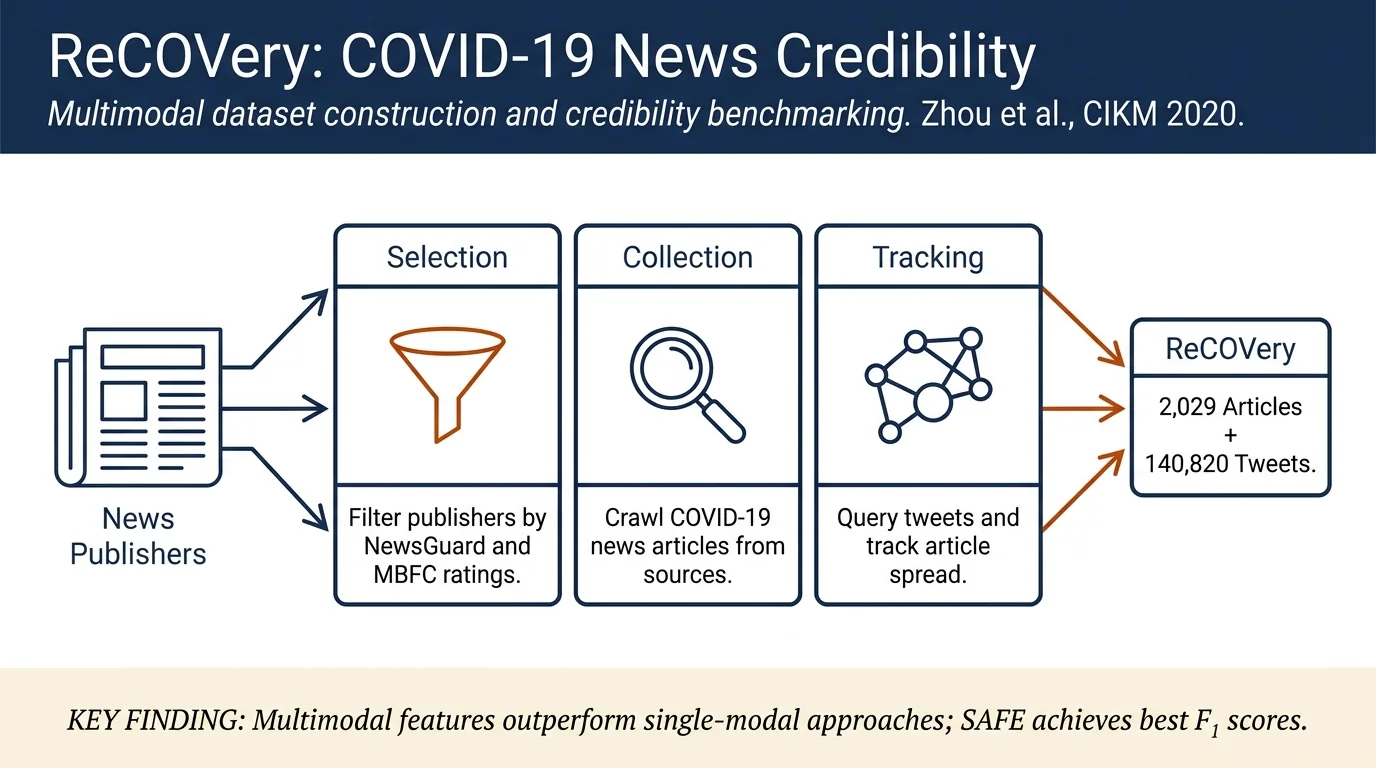
ReCOVery: A Multimodal Repository for COVID-19 News Credibility ResearchThe COVID-19 pandemic triggered a parallel "infodemic" of low-credibility news; this paper constructs ReCOVery, a multimodal repository of 2,029 COVID-19 news articles with binary credibility labels inherited from their publisher's NewsGuard/MBFC ratings, paired with 140,820 tweets tracking social spread. The key design trade-off is…
 Deepfakes & multimodalDetection methods
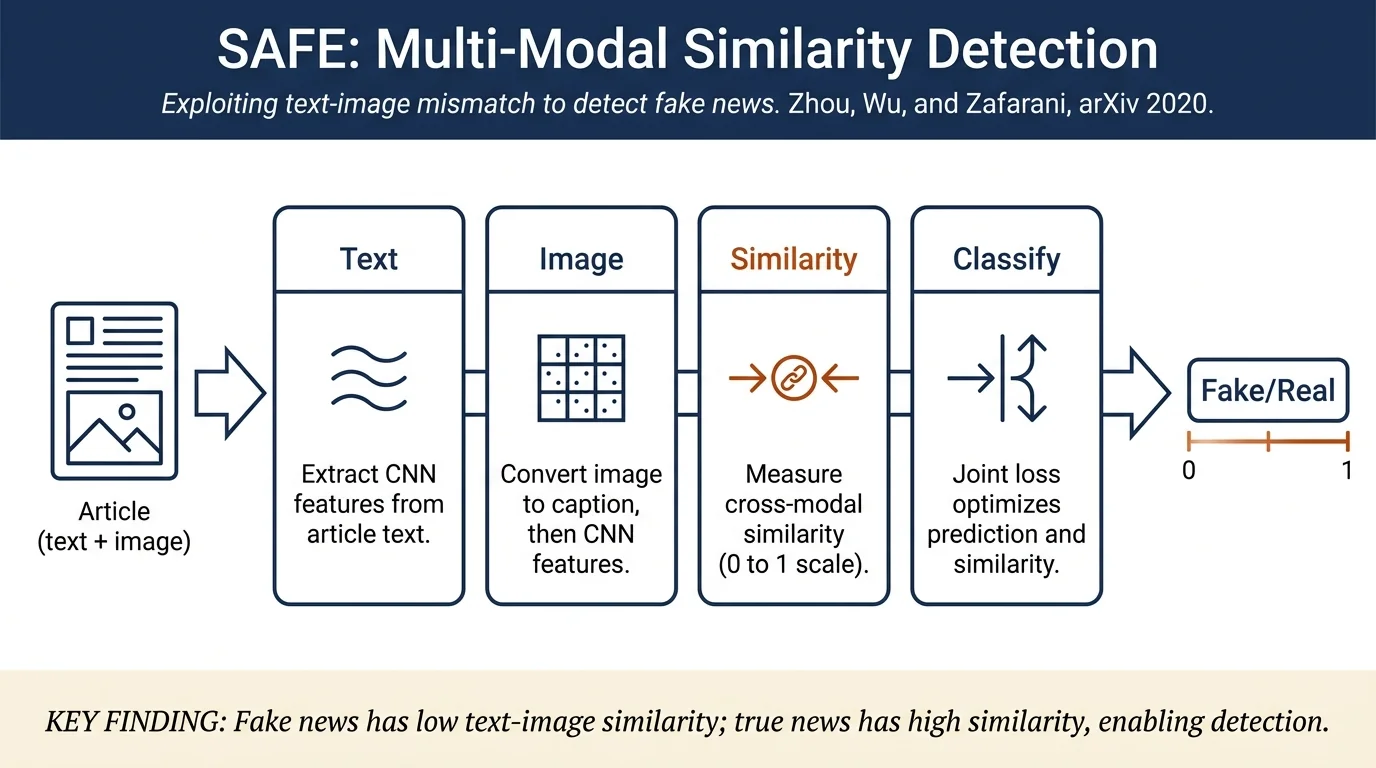
SAFE: Similarity-Aware Multi-Modal Fake News DetectionFake news articles frequently pair misleading textual claims with irrelevant or manipulative images, creating a detectable gap between the two modalities. SAFE addresses this by extracting separate neural representations of a news article's text and images — using the same Text-CNN architecture applied to an image2sentence embedding for…
 Deepfakes & multimodalDetection methods
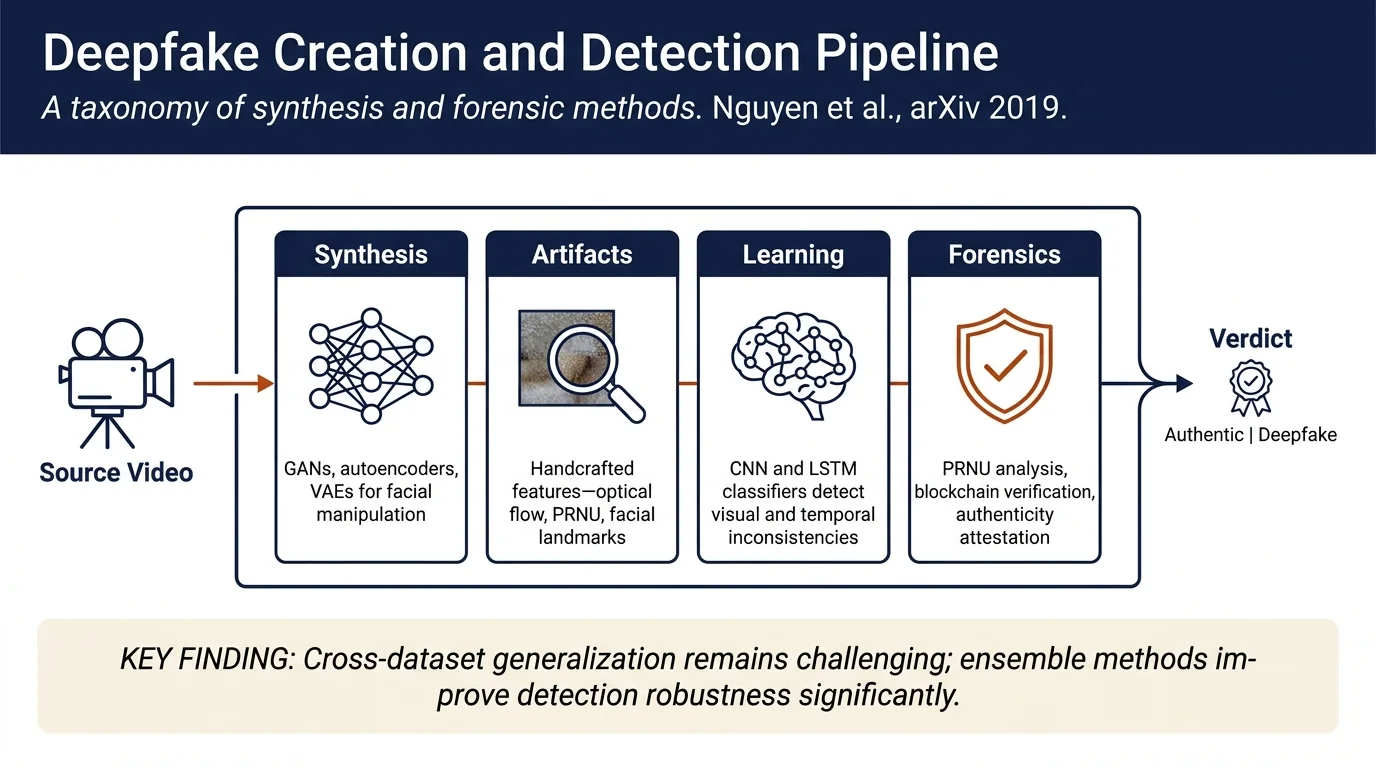
Deep Learning for Deepfakes Creation and Detection: A SurveyComprehensive survey of deep learning methods for creating and detecting deepfakes, covering face-swapping and lip-syncing generation techniques (GANs, autoencoders, encoder-decoder pairs), detection approaches (visual artifacts, temporal features, forensics), and challenges in cross-dataset generalization. The paper discusses…
 Deepfakes & multimodalDetection methods
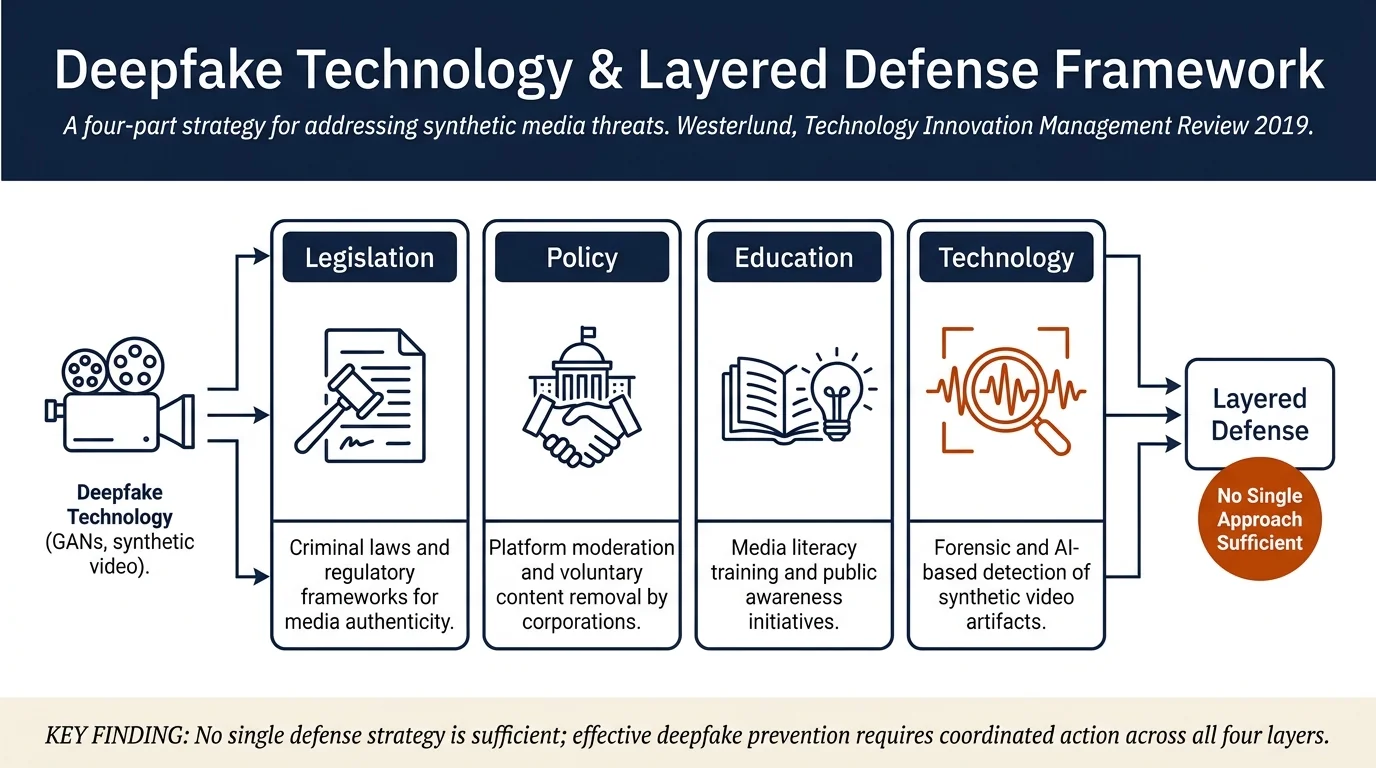
The Emergence of Deepfake Technology: A ReviewThis review analyzes 84 news articles about deepfakes to synthesize understanding of synthetic video technology, its applications, threats, and countermeasures. Deepfakes—hyper-realistic videos created using AI (primarily GANs)—lower the barrier to video forgery and represent a significant threat to trust, elections, and security.
 Deepfakes & multimodalPlatforms, policy & society
How deepfakes undermine truth and threaten democracyDeepfakes use machine-learning technology to create fabricated audio and video of people doing or saying things they never did. Law professor Danielle Citron explores the dual threats: individual harm (non-consensual sexual deepfakes targeting women, especially minorities and journalists) and societal damage (eroding trust in…
 Deepfakes & multimodalDetection methods
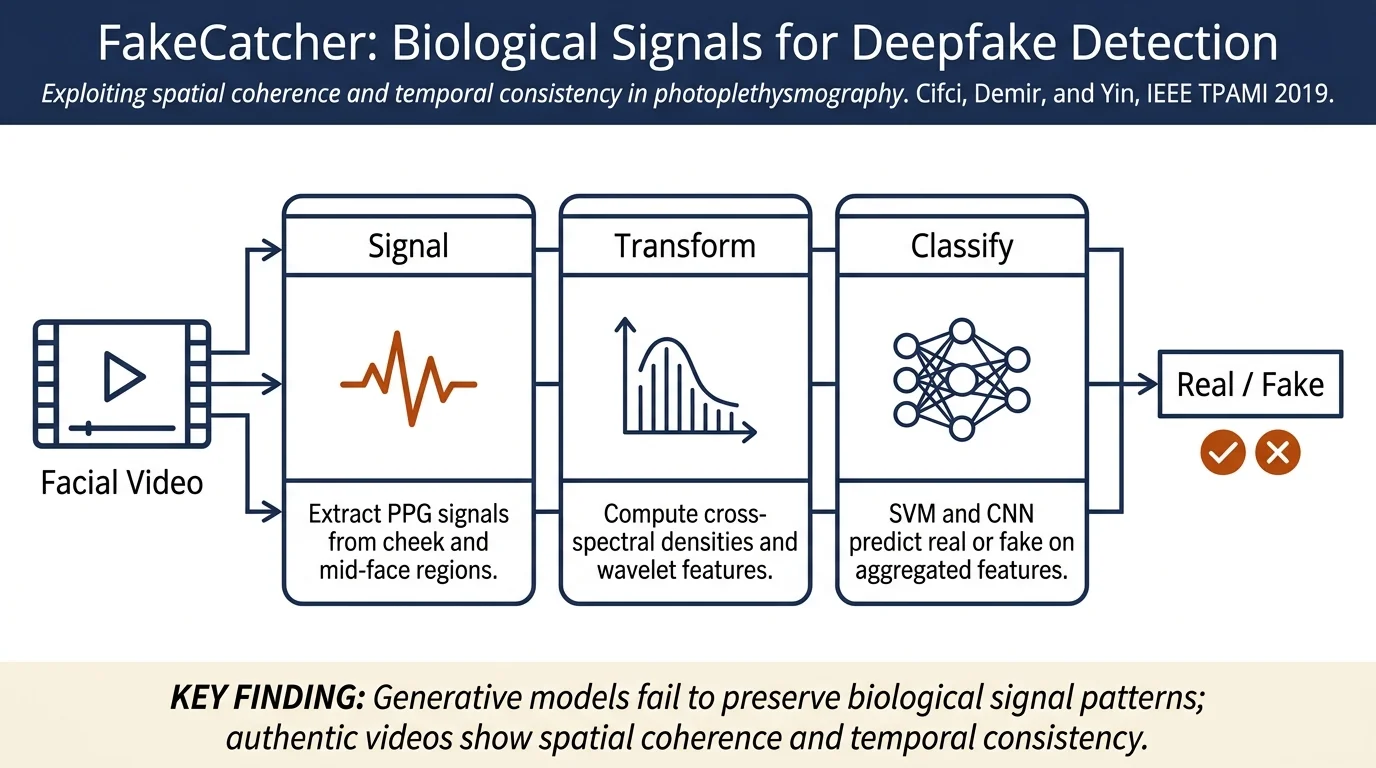
FakeCatcher: Detection of Synthetic Portrait Videos using Biological SignalsFakeCatcher detects deepfakes by analyzing biological signals (photoplethysmography—blood flow patterns) extracted from facial regions. The key insight is that generative models fail to preserve spatial coherence and temporal consistency of these signals in authentic videos, making biological signal analysis a powerful forensic tool…