Information evaluation refers to the cognitive processes by which individuals assess the quality, accuracy, and trustworthiness of information they encounter, particularly in online environments where gatekeeping and editorial verification are absent or reduced. Evaluation involves multiple dimensions: credibility of the source, consistency with prior beliefs, corroboration by multiple sources, internal consistency of the message, and perceived expertise or authority.
Key characteristics
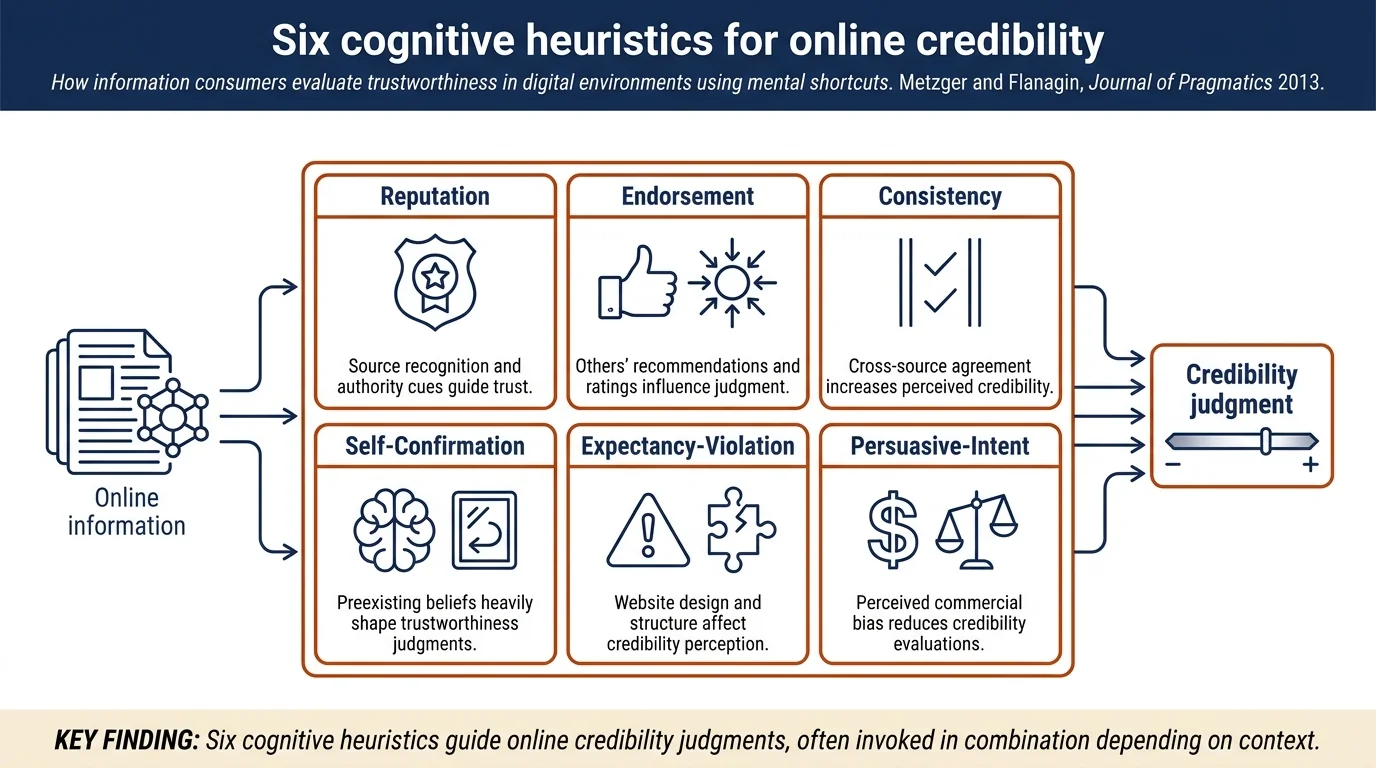
Heuristic-driven rather than systematic: Research shows that most internet users do not spend significant time critically evaluating online information. Instead, they rely on quick cognitive heuristics—reputation cues, endorsements from trusted others, consistency with existing beliefs, and perceived authoritativeness—to form judgments.
Domain-dependent: The importance of information evaluation varies by subject matter. Health information carries higher stakes for trust violations, leading users to be more skeptical of unfamiliar sources in that domain. Product information often benefits from aggregated social signals (ratings, reviews). News credibility depends partly on institutional affiliation and journalistic standards.
Influenced by individual differences: Self-efficacy (perceived ability to evaluate information), education level, prior knowledge, and digital literacy all predict the depth and sophistication of evaluation strategies. Users with higher self-efficacy in online environments tend to use social sources for verification more frequently, though not necessarily more accurately.
Social component: In social media environments, evaluation is not solitary. Users consult others' opinions, observe patterns of sharing and trust, and use social signals (likes, comments, shares) as heuristic cues for credibility. This social element can both improve (collective wisdom) and degrade (groupthink, misinformation amplification) judgment quality.
Key papers
- Trusting the Internet: New Approaches to Credibility Tools — Argues that information evaluation must shift from evaluating authority (trusting institutions) to evaluating reliability (synthesizing multiple sources and testing for consistency); shows how Internet architecture at multiple layers (infrastructure, applications, services) shapes what information is visible and credible; proposes that transparency, open systems, and participatory conversations enable better evaluation
- Digital Media, Youth, and Credibility — Comprehensive volume on how people (particularly young people) evaluate information in digital environments; covers cognitive foundations, empirical patterns of evaluation behavior, technology design effects, and educational approaches
- Harris (2008) — Challenges to Teaching Credibility Assessment in Contemporary Schooling — Chapter 8 of the foundational volume; analyzes barriers to teaching information evaluation skills in schools; identifies how satisficing heuristics and Web complexity complicate evaluation strategies in youth; proposes pedagogical approaches that build on existing information-seeking behavior
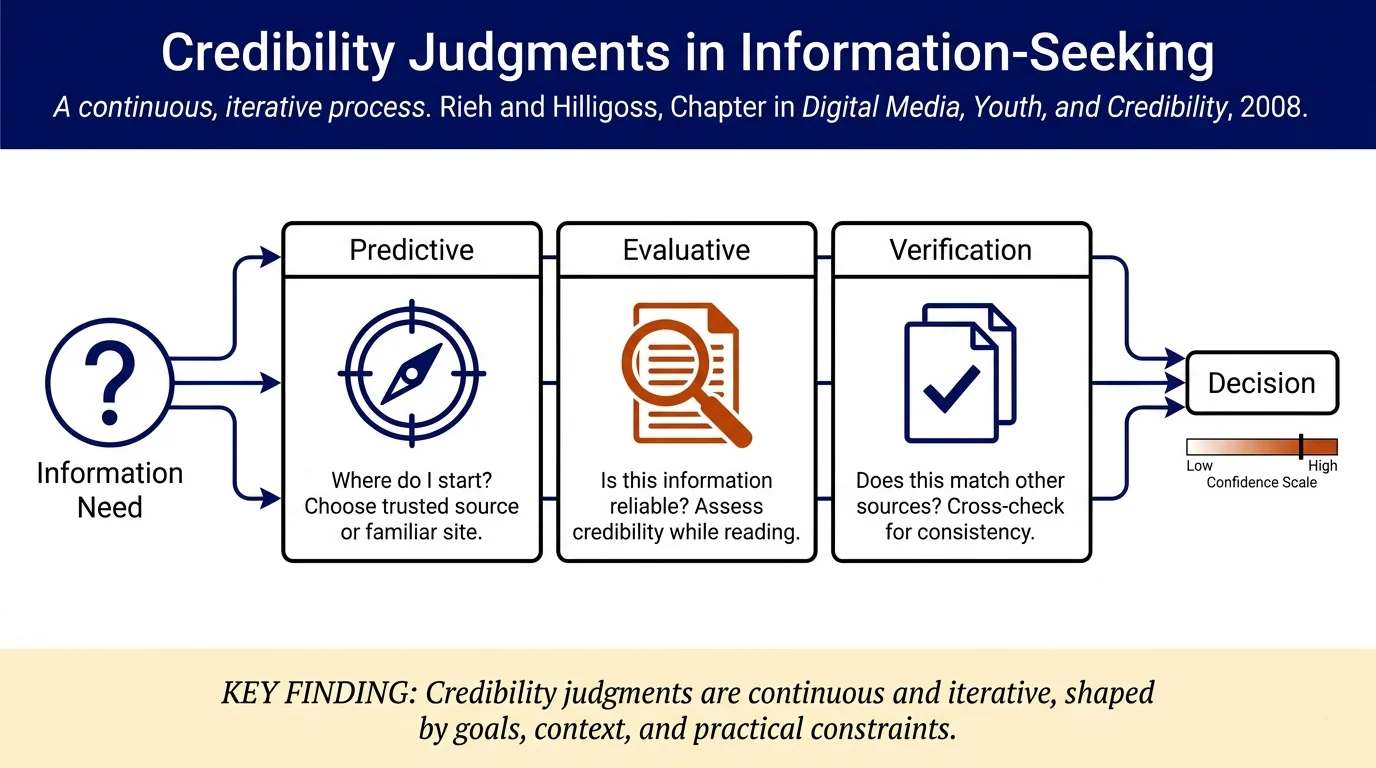
- Rieh & Hilligoss (2008) — College Students' Credibility Judgments in the Information-Seeking Process — Empirical study showing credibility evaluation is embedded within information-seeking episodes; identifies three judgment types (predictive before searching, evaluative while reading, verification when encountering contradictions); demonstrates evaluation strategies vary by stakes and context
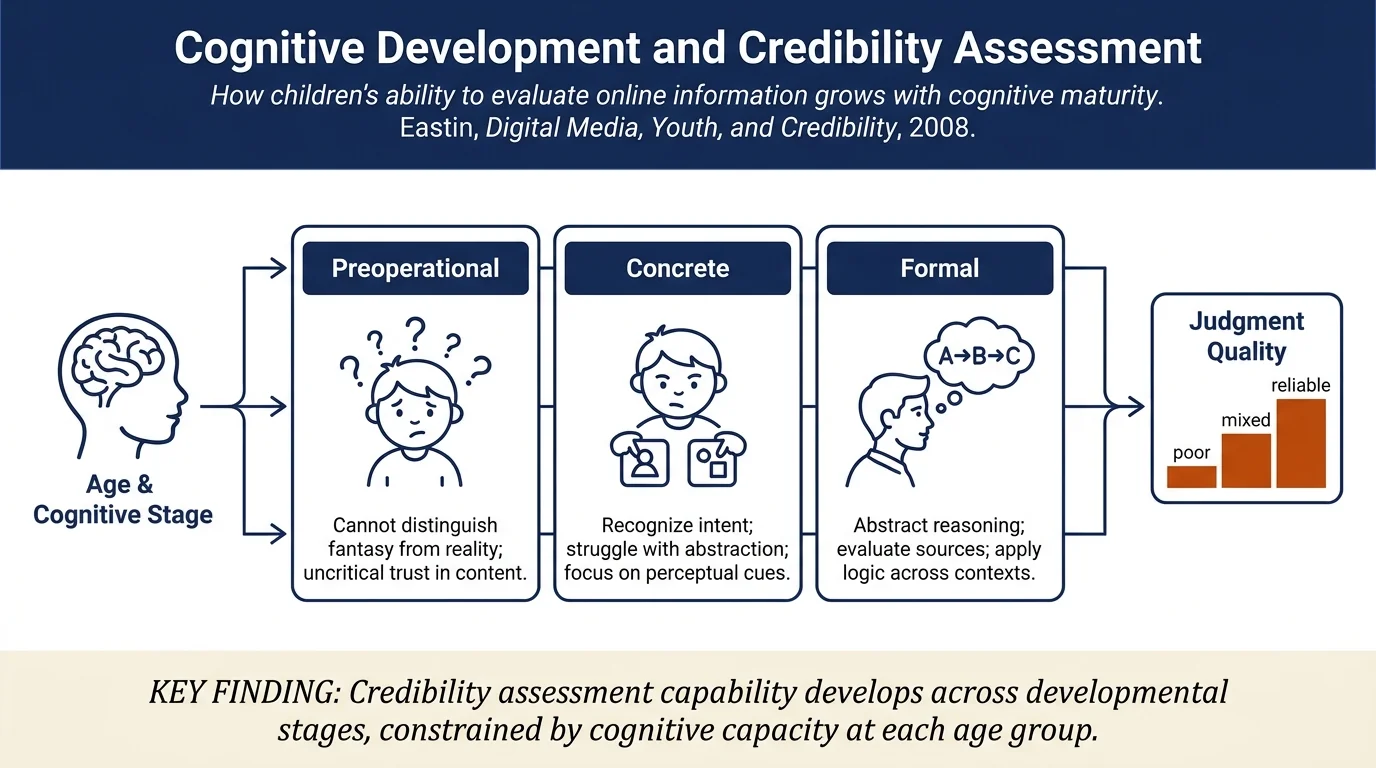
- Eastin (2008) — Toward a Cognitive Developmental Approach to Youth Perceptions of Credibility — Applies Piaget's cognitive development theory to explain how information evaluation strategies evolve across childhood and adolescence; demonstrates that preoperational children (2–7) cannot distinguish fantasy from reality; concrete-operational children (7–11) organize information logically but struggle with abstraction and multiple cues; formal-operational adolescents (11+) can apply abstract logical principles to evaluation tasks; proposes Limited Capacity Model explaining age-based differences in working memory and attention
- Flanagin & Metzger (2008) — Foundational chapter on how digital media have transformed information evaluation for youth; defines credibility dimensions and traces how digital media complicate assessment through information abundance, source ambiguity, and lack of gatekeepers; identifies unique youth vulnerabilities due to limited experience, cognitive development, and special risk contexts
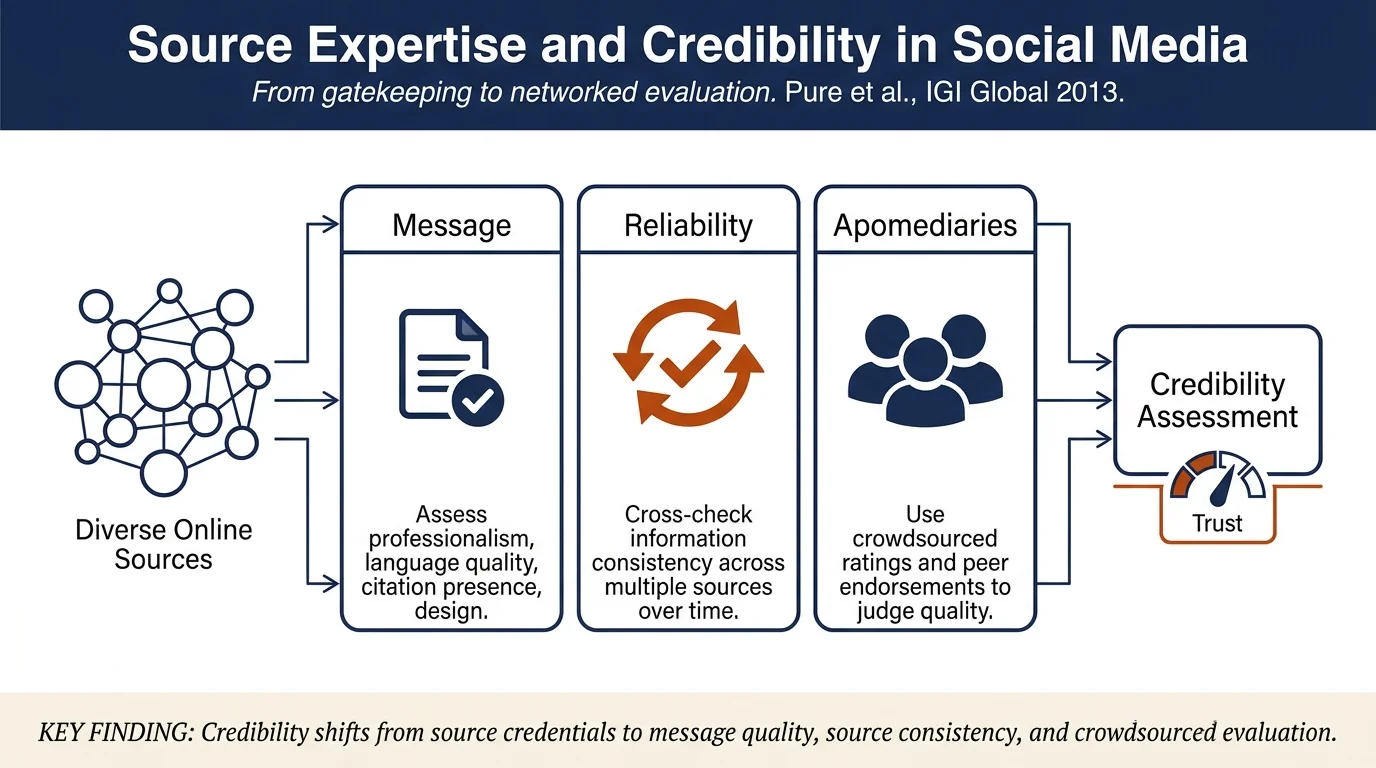
- Pure, Metzger, Markov, Flanagin, Mangus & Hartsell (2013) — Foundational chapter reconceptualizing how people evaluate expertise and credibility in social media; identifies message cues, reliability consistency, and apomediaries (non-expert intermediaries) as key evaluation mechanisms; explains why traditional source-authority heuristics fail when gatekeeping disappears.
- Flanagin & Metzger (2013) — Empirical study (N=1,207) on how people evaluate information from different sources; demonstrates that volume serves as a signal of credibility for user-generated information, and that receiver characteristics (frequency of social media participation) moderate information evaluation strategies.
- Hocevar, Flanagin & Metzger (2014) — Shows that social media self-efficacy predicts trustworthiness perceptions and use of social sources for information evaluation; domain moderation effect indicates greater skepticism toward health/news information even among self-efficacious users.
- Metzger & Flanagin (2015) — Handbook synthesis of psychological research on how people evaluate credibility using site features, message cues, author credentials, and receiver characteristics.
- Metzger & Flanagin (2013) — Catalogs cognitive heuristics (reputation, endorsement, consistency, self-confirmation) used in online credibility evaluation.
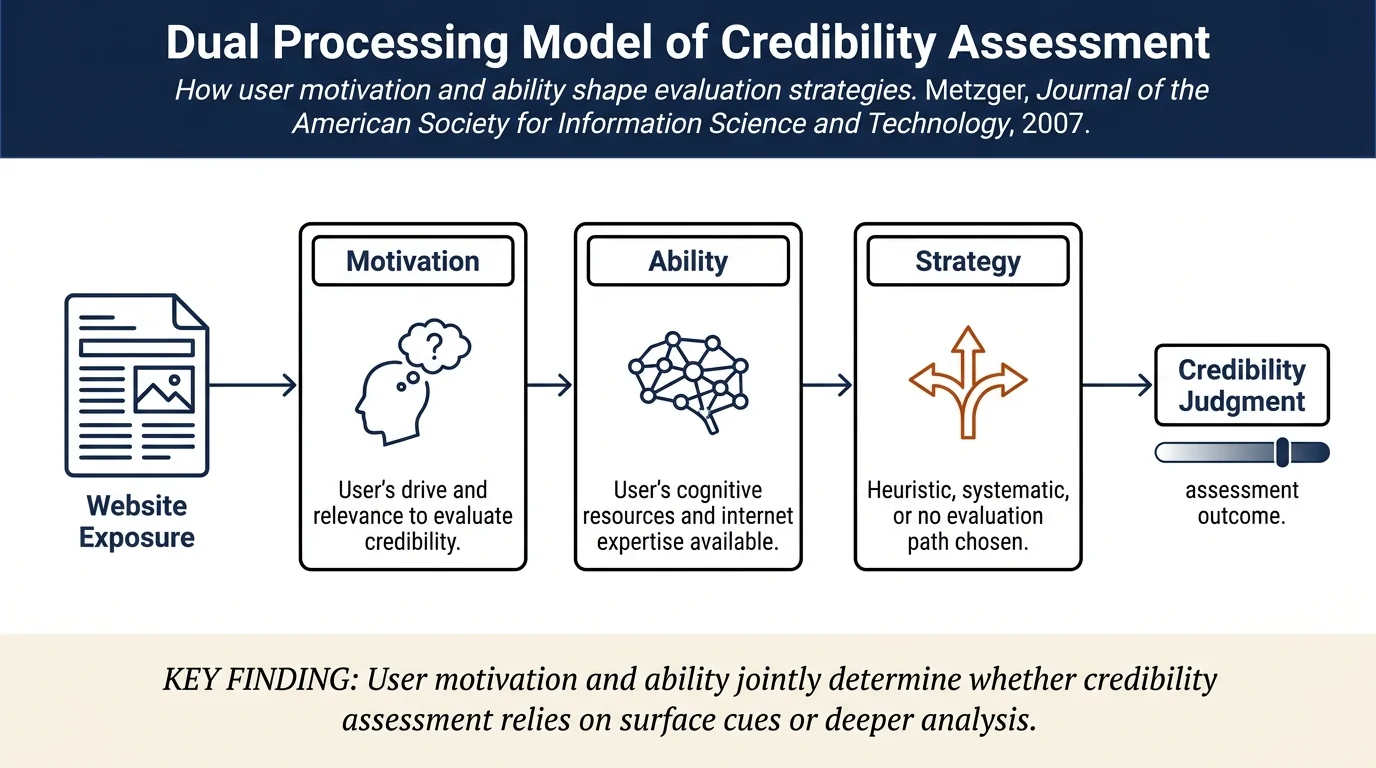
- Metzger (2007) — Proposes dual processing model: motivation and ability determine whether users employ heuristic vs. systematic credibility assessment.
Related topics
- Credibility assessment for fake news detection — specific focus on source and content credibility signals
- Source Credibility — author and organizational trustworthiness
- Online trust — trust formation and maintenance in digital contexts
- Social media and misinformation — platform affordances that influence evaluation behavior
Open questions
- How do algorithmic recommendations change the information evaluation task when users never choose what to evaluate?
- What role does emotional arousal (surprise, outrage) play in impairing evaluation accuracy?
- How can platform design support critical evaluation rather than undermine it?
- Do general-purpose evaluation strategies transfer across domains, or is domain knowledge essential?
Papers on this topic
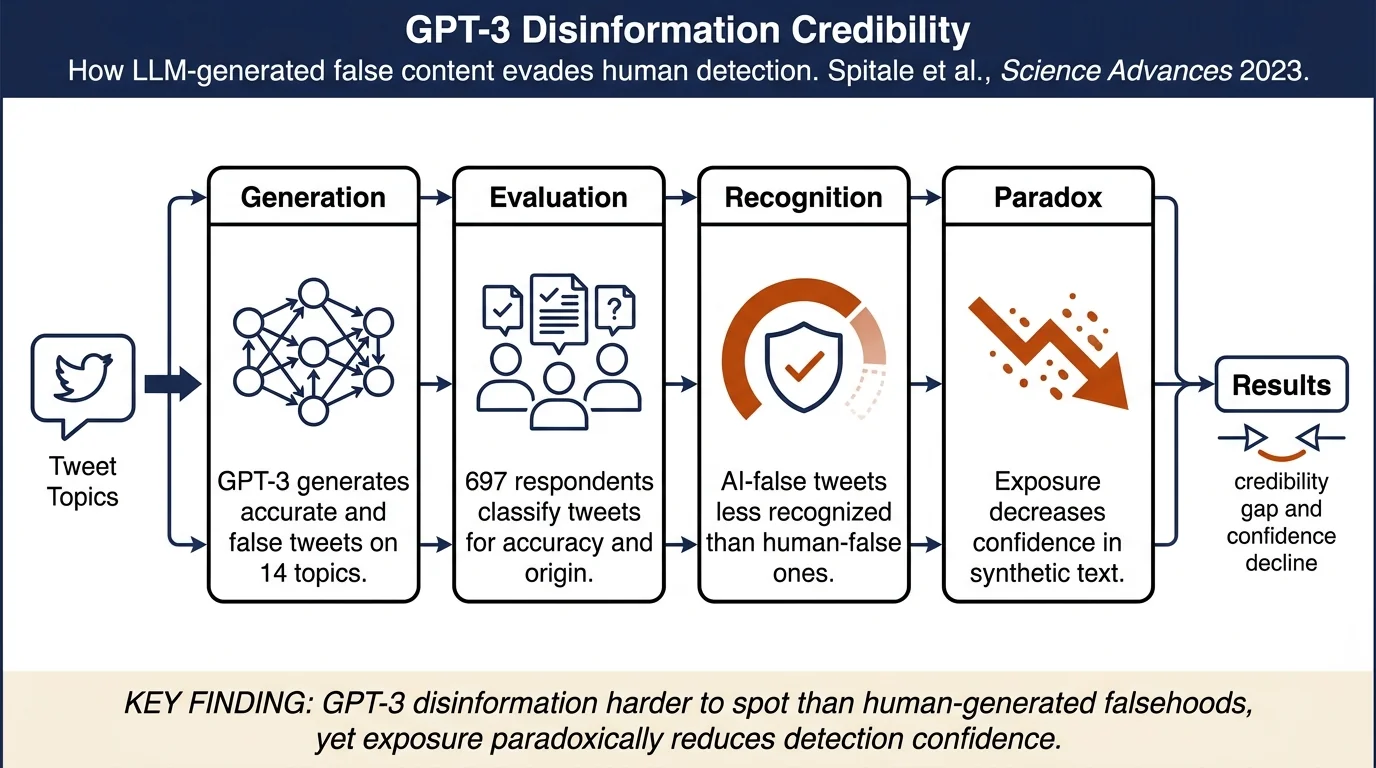 LLMs & generative AIDetection methods
AI model GPT-3 (dis)informs us better than humans
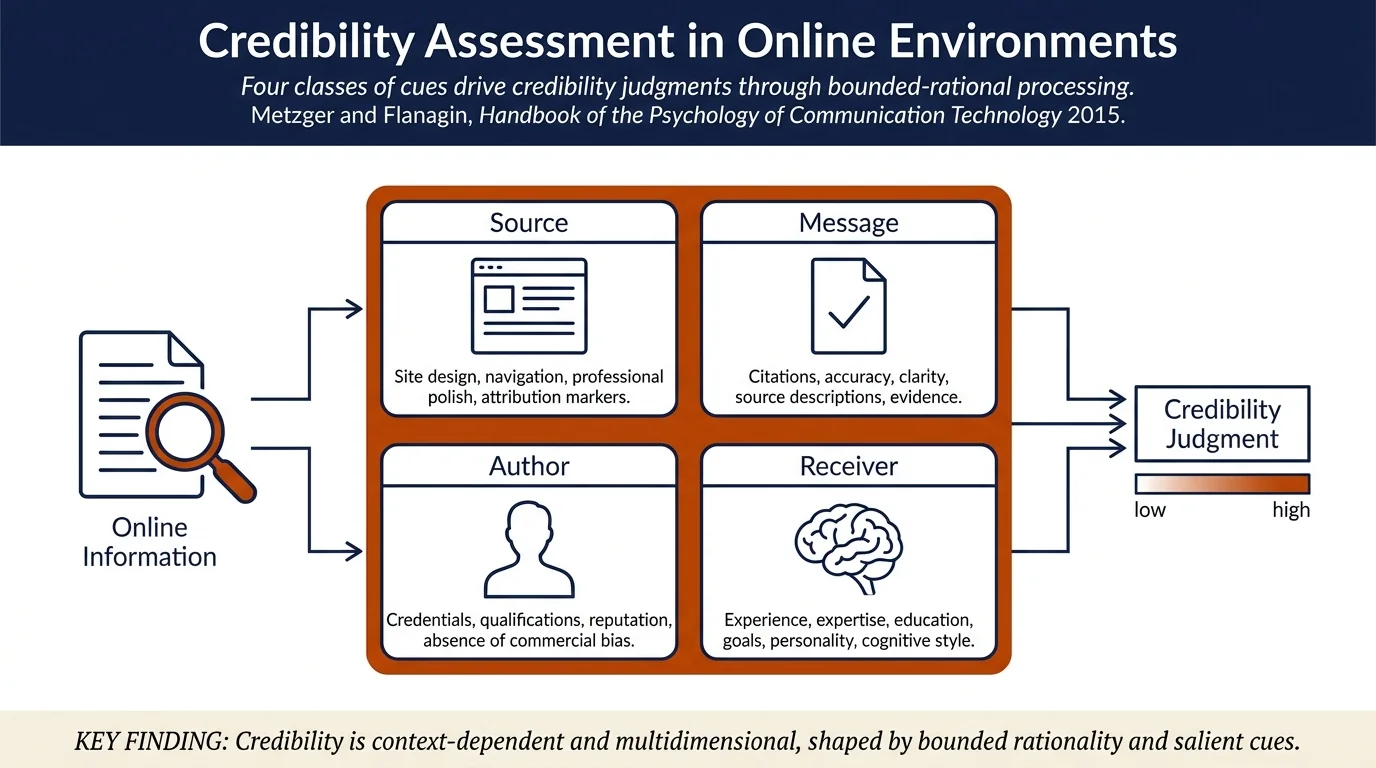 Detection methodsPsychology & interventions
Psychological Approaches to Credibility Assessment Online
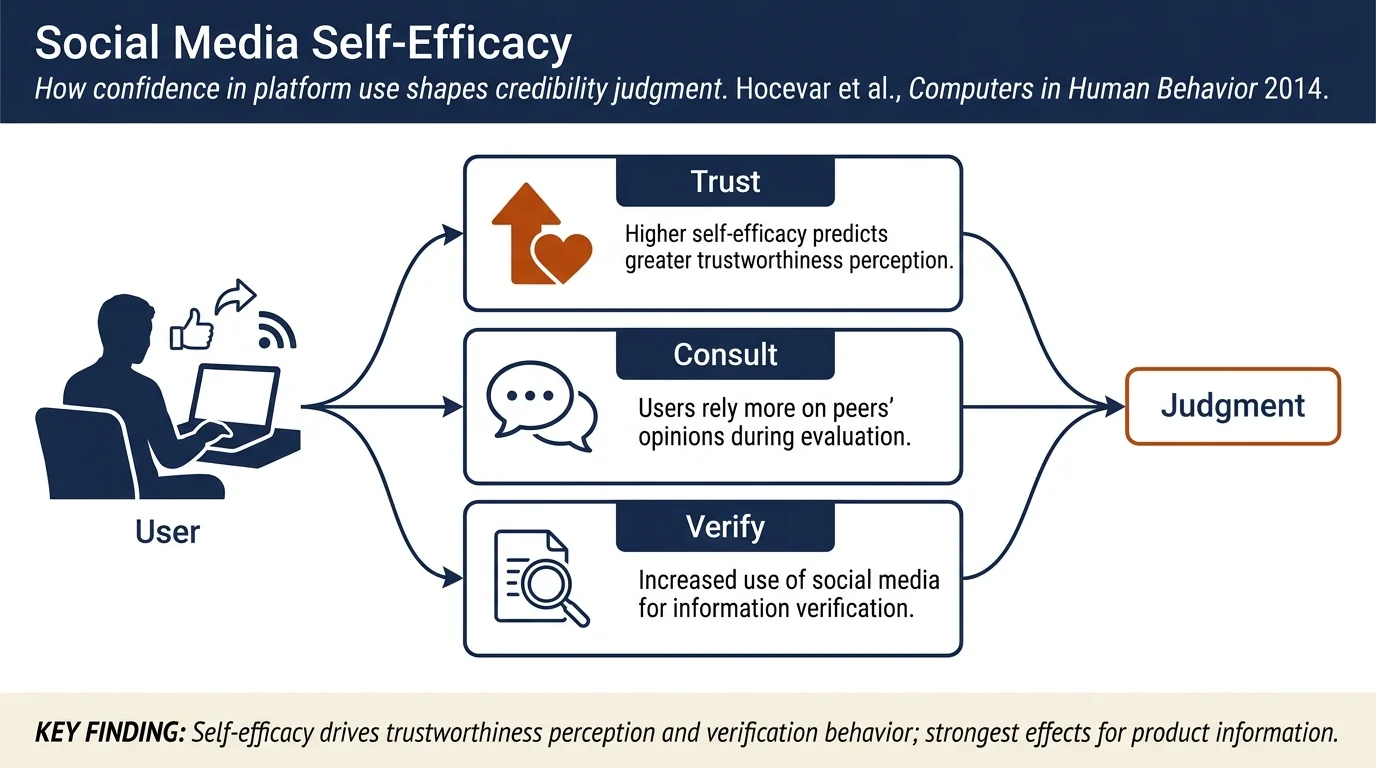 Detection methods
Social media self-efficacy and information evaluation online
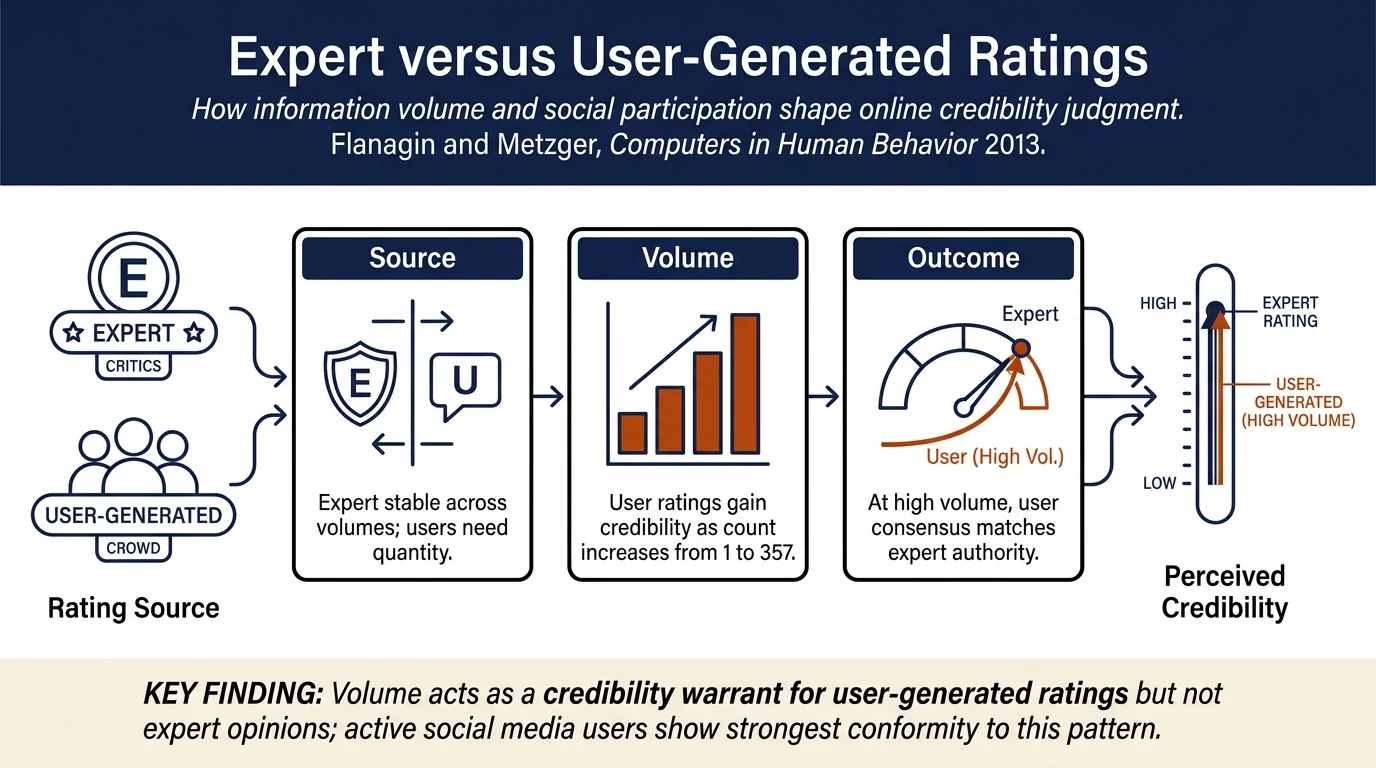 Detection methods
Trusting expert- versus user-generated ratings online: The role of information volume, valence, and consumer characteristics
 Detection methodsPsychology & interventions
Credibility and trust of information in online environments: The use of cognitive heuristics
 Detection methodsPlatforms, policy & society
Understanding and Evaluating Source Expertise in an Evolving Media Environment
 Detection methodsPsychology & interventions
Toward a Cognitive Developmental Approach to Youth Perceptions of Credibility
 Detection methodsPsychology & interventions
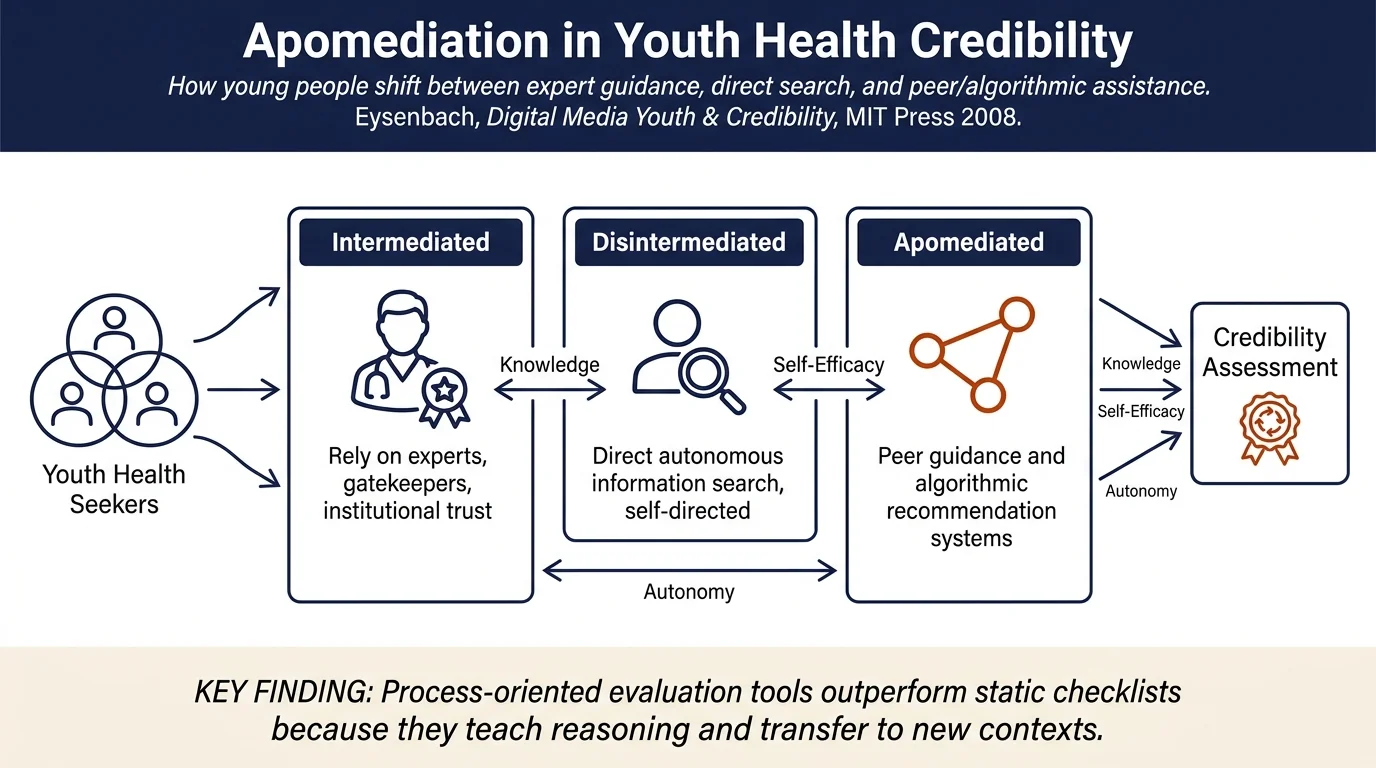
Credibility of Health Information and Digital Media: New Perspectives and Implications for Youth
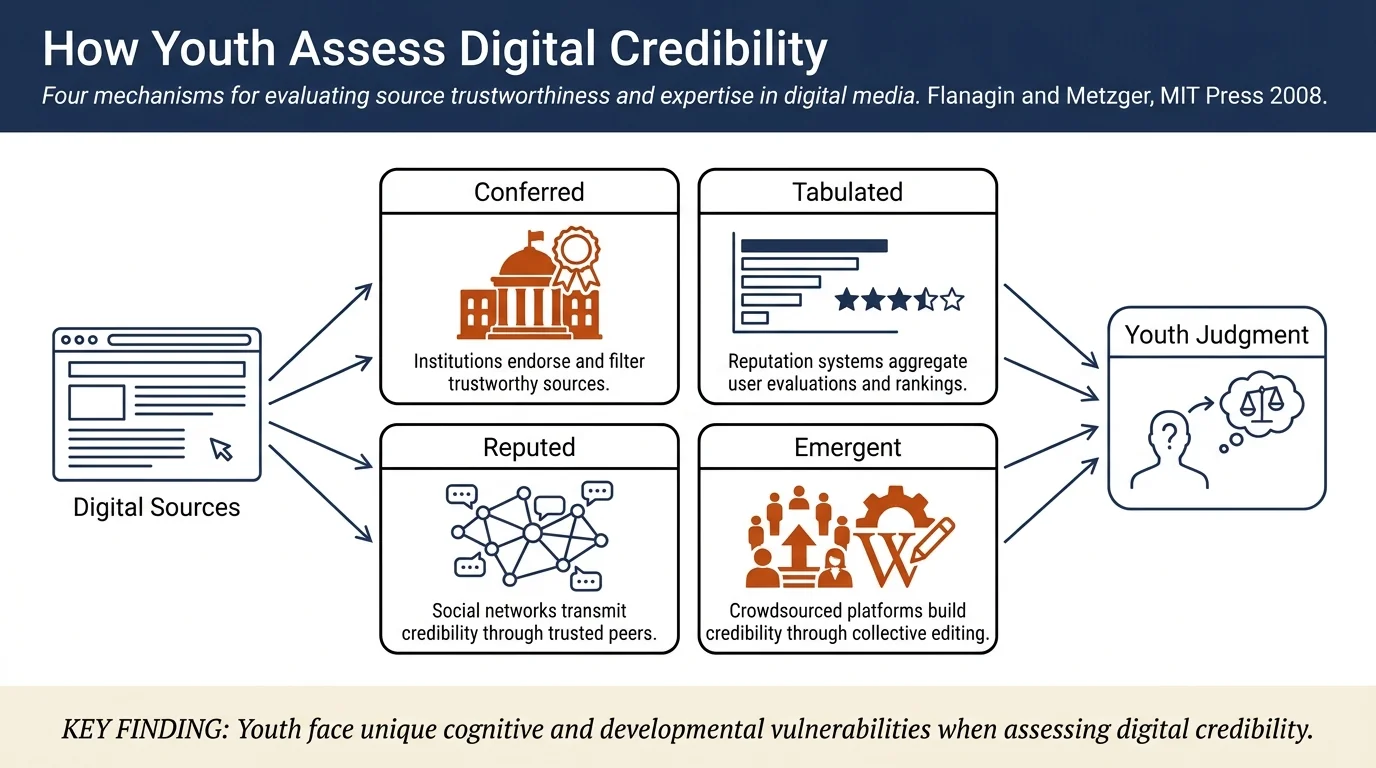 Detection methodsPsychology & interventions
Digital Media and Youth: Unparalleled Opportunity and Unprecedented Responsibility
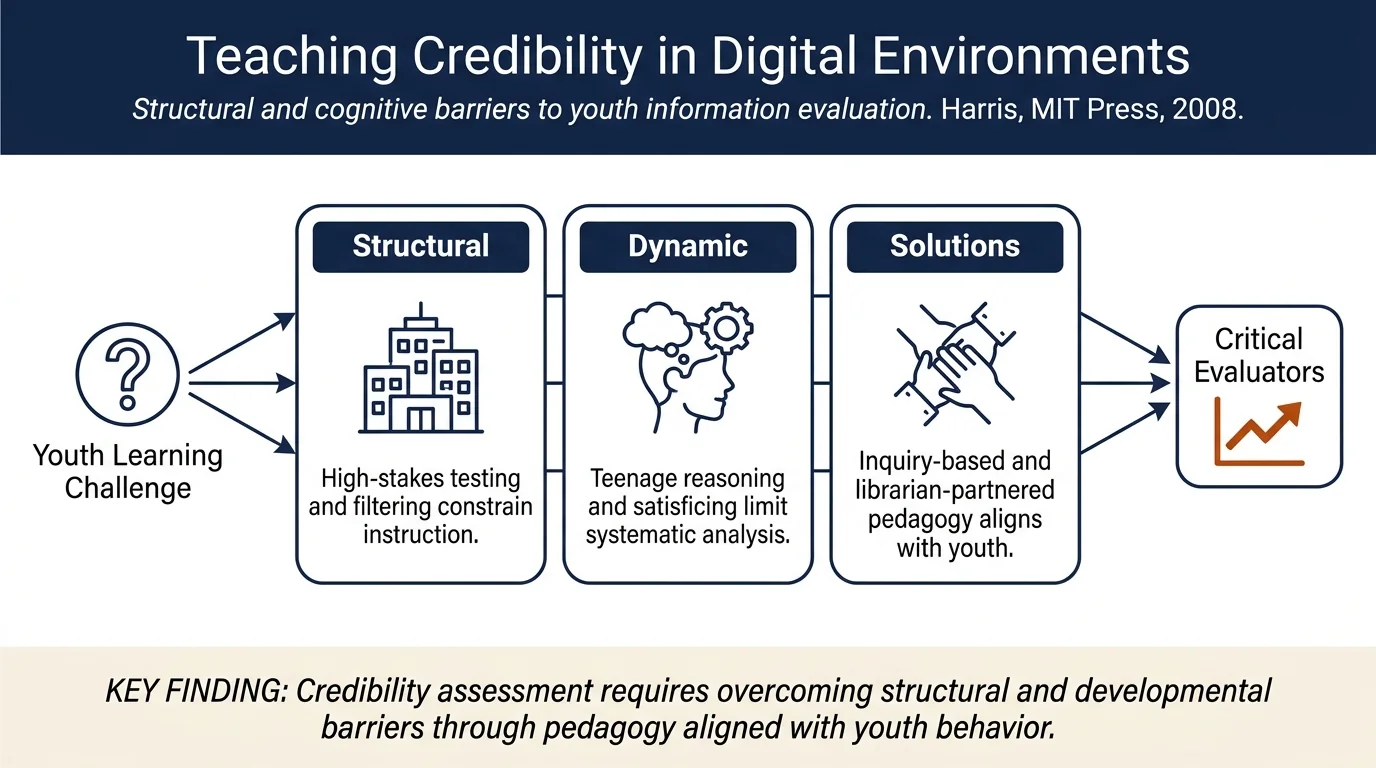 Psychology & interventionsDetection methods
Challenges to Teaching Credibility Assessment in Contemporary Schooling
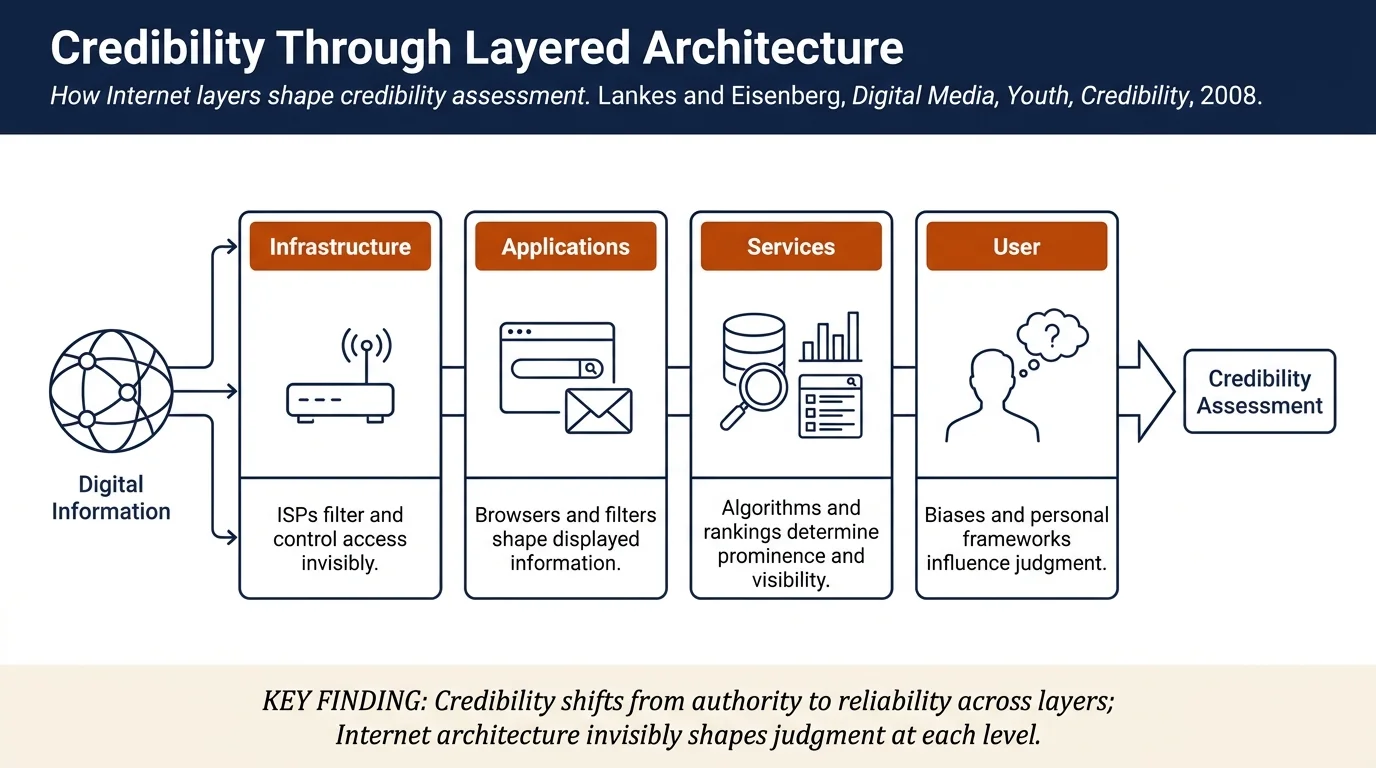 Detection methodsPsychology & interventions
Trusting the Internet: New Approaches to Credibility Tools
 Detection methodsPsychology & interventions
Digital Media, Youth, and Credibility
Detection methodsPsychology & interventions
Introduction
 Detection methodsPsychology & interventions
College Students' Credibility Judgments in the Information-Seeking Process
 Platforms, policy & societyPsychology & interventions
Credibility, Politics, and Public Policy
 Detection methods
Making Sense of Credibility on the Web: Models for Evaluating Online Information and Recommendations for Future Research