Explore papers
Filter by research area, year and venue. Every filter is in the address bar, so you can share a view as a link.
 Spread & networksPlatforms, policy & society
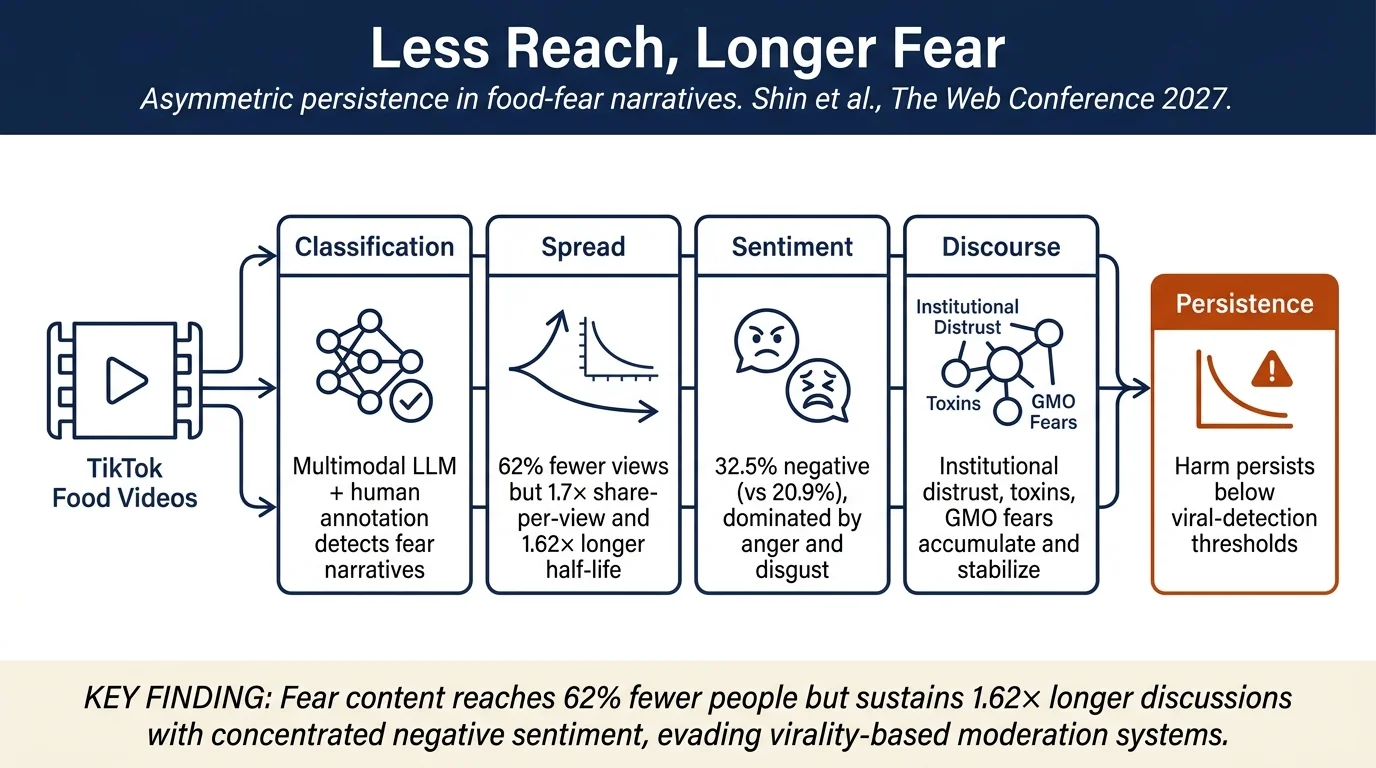
Fear Doesn't Go Viral, It Lingers: Spread, Affect, and Discourse of Food-Fear Content on TikTokFear-based content about food on TikTok reaches fewer people than non-fear nutrition videos but sustains engagement and discussion far longer. Fear videos trigger more negative, angry, and disgusted comments that persist for weeks; their discourse concentrates on distrust of food industry, contamination, and institutional skepticism.
 Bots & coordinated campaignsDatasets & evaluation
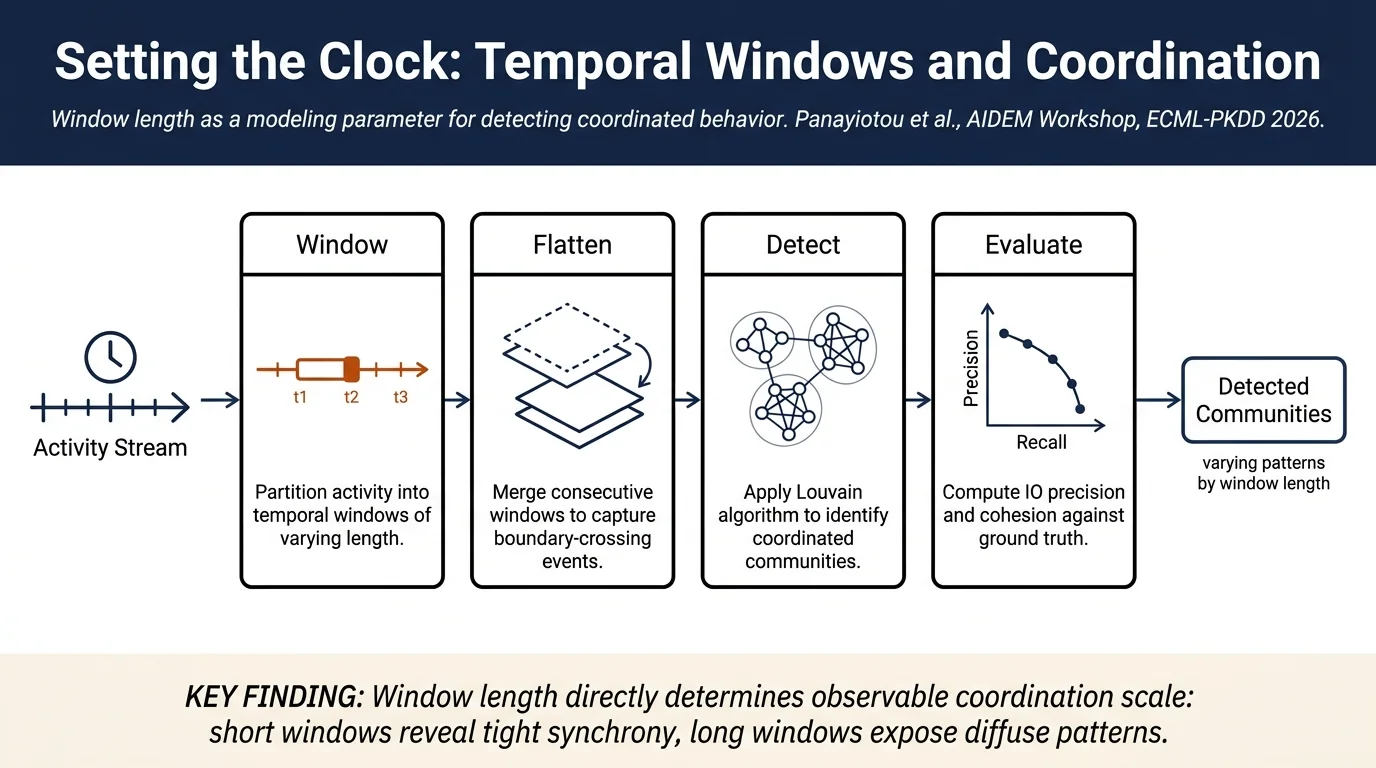
Setting the clock: Evaluating temporal window parameters for coordinated behavior detectionThe paper systematically evaluates how temporal window parameters (length and stride) affect detection of coordinated communities in co-repost networks. Using 14 labeled information operation datasets, the authors find that window length is a central modeling parameter: short windows (seconds to minutes) detect tight, highly synchronized…
 LLMs & generative AIDatasets & evaluation
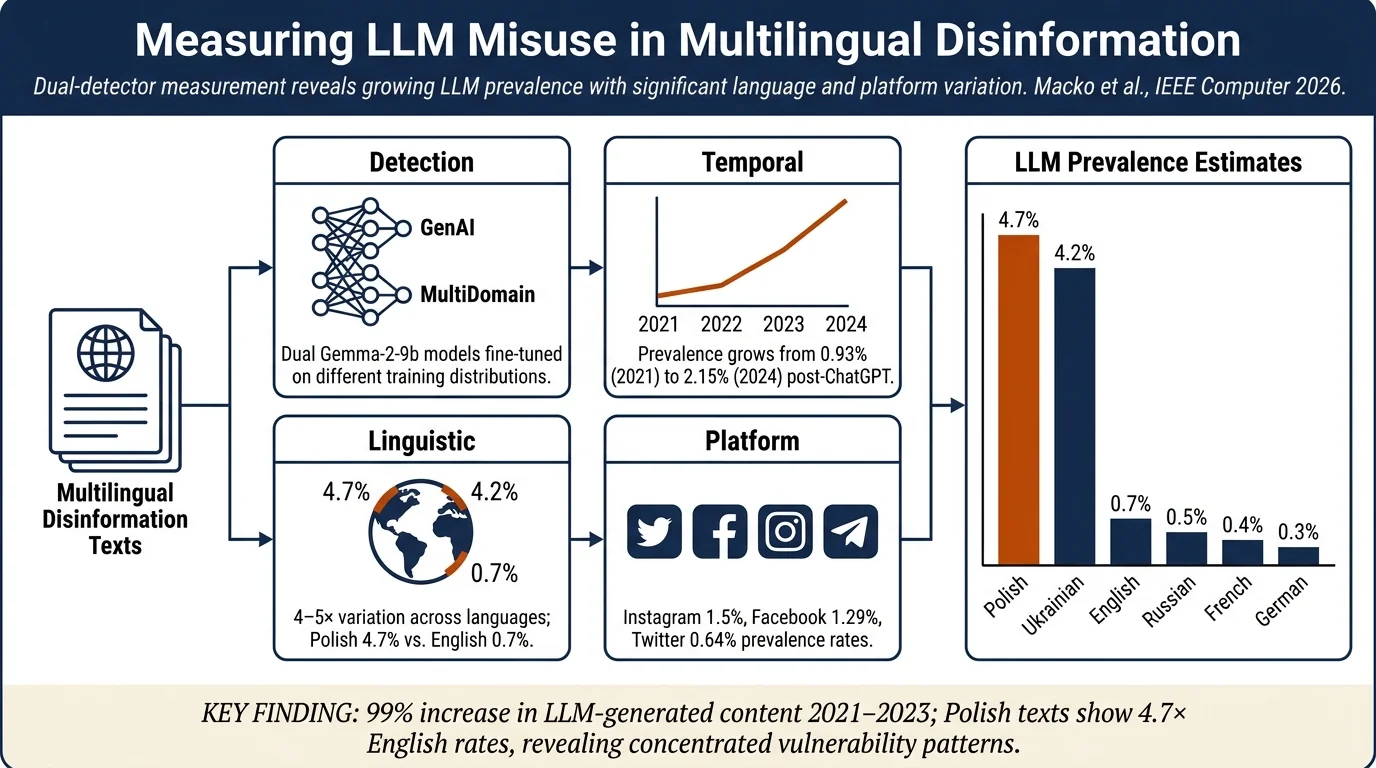
Beyond Speculation: Measuring the Growing Presence of LLM-Generated Texts in Multilingual DisinformationThis empirical study provides the first measurement of LLM-generated content in real-world disinformation datasets. Analyzing the MultiClaim dataset (fact-checked social media posts), the authors document a 99% increase in machine-generated content from 2021 to 2023 (0.93% to 1.85%), correlating with ChatGPT's November 2022 release.
 LLMs & generative AIDetection methods
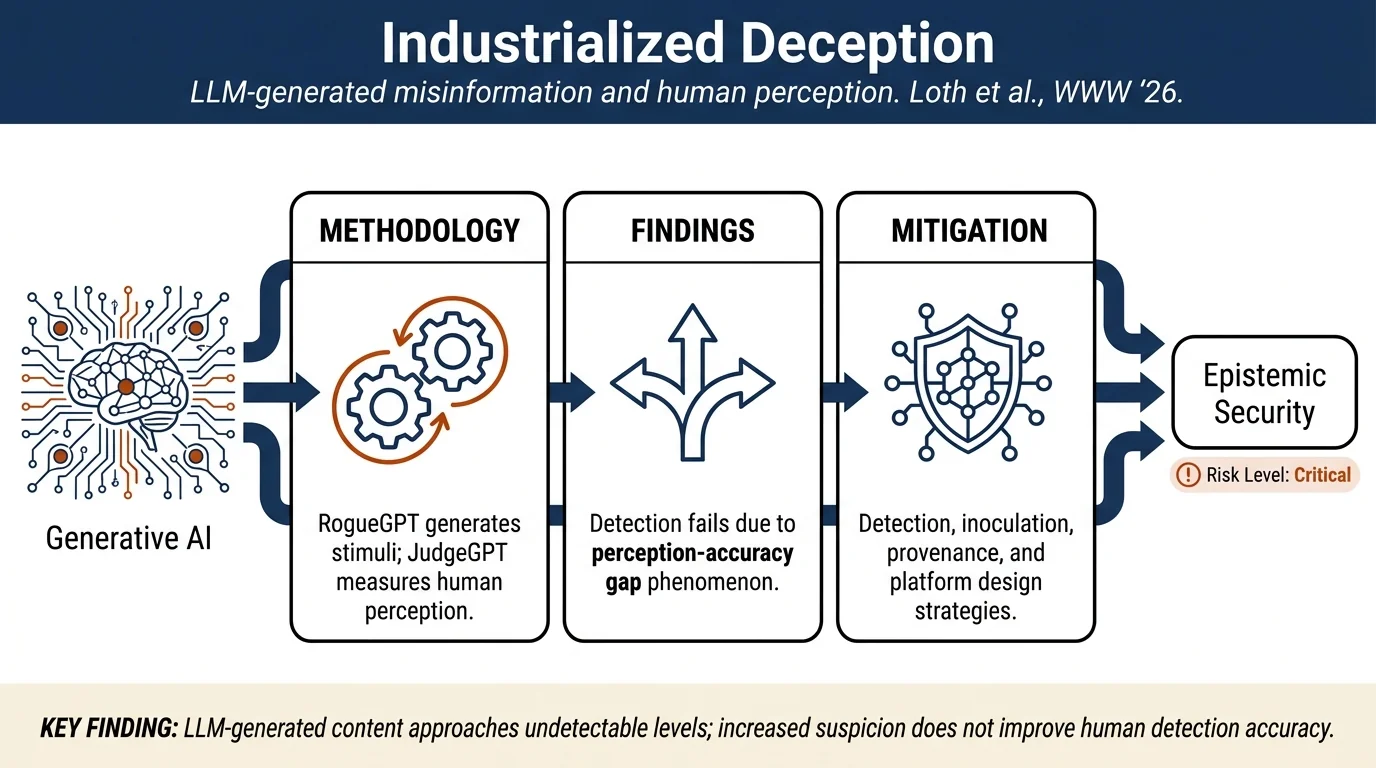
Industrialized Deception: The Collateral Effects of LLM-Generated Misinformation on Digital EcosystemsThis paper updates the state of generative AI and misinformation research since 2024, documenting the shift toward industrialized deception through improved LLMs and multimodal systems. The authors present two methodological tools—JudgeGPT (for measuring human perception of AI-generated content) and RogueGPT (for controlled stimulus…
Detection methodsLLMs & generative AI
Propasafe: A BERT-based offline tool for propaganda detectionOriginal privacy-focused, offline browser extension using fine-tuned BERT on the Propaganda Techniques Corpus for sentence-level propaganda classification. No online inference required; binary classification (propaganda or non-propaganda).
 LLMs & generative AIDetection methods
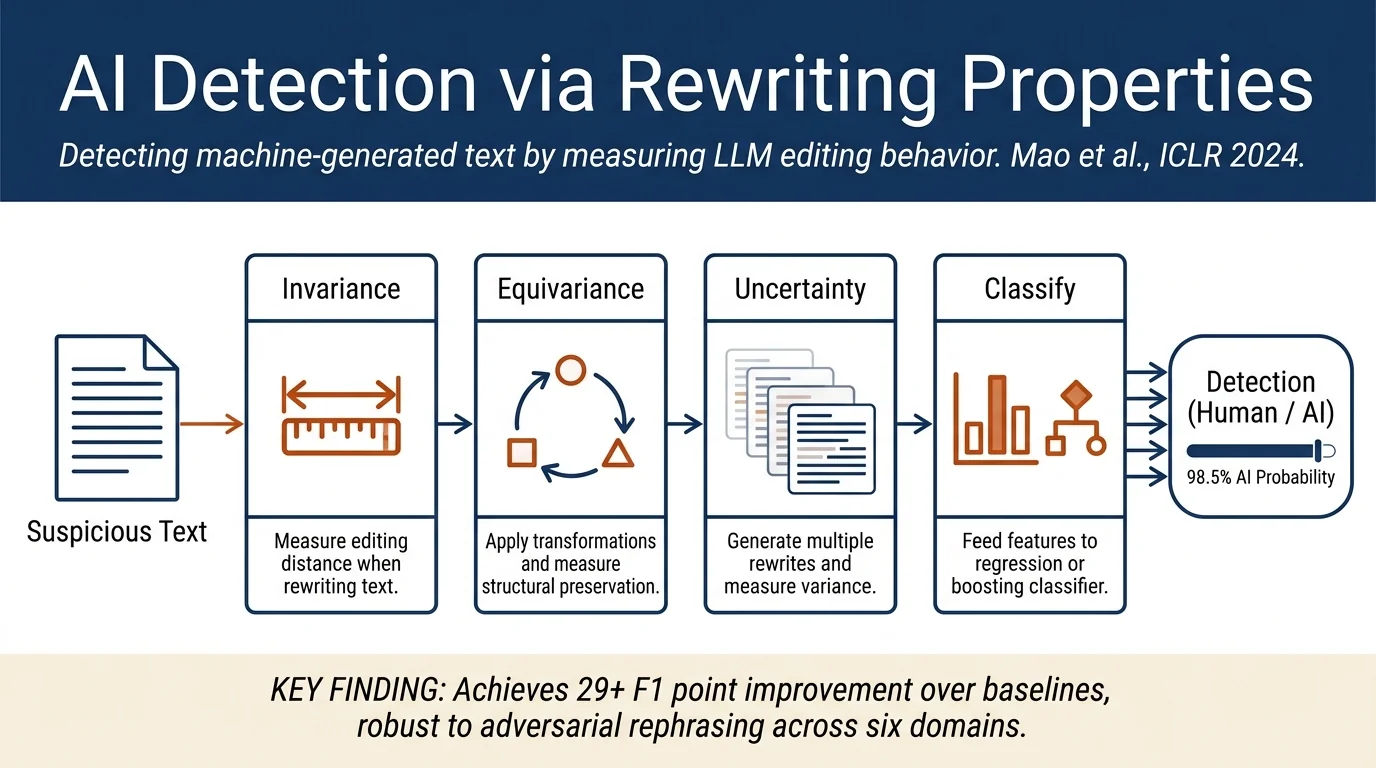
RAIDAR: Generative AI Detection via RewritingThis paper introduces Raidar, a method to detect machine-generated text by measuring how much LLMs modify text when asked to rewrite it. The key observation is that LLMs tend to preserve AI-generated text and modify human-written text more when rewriting.
 LLMs & generative AIDetection methods
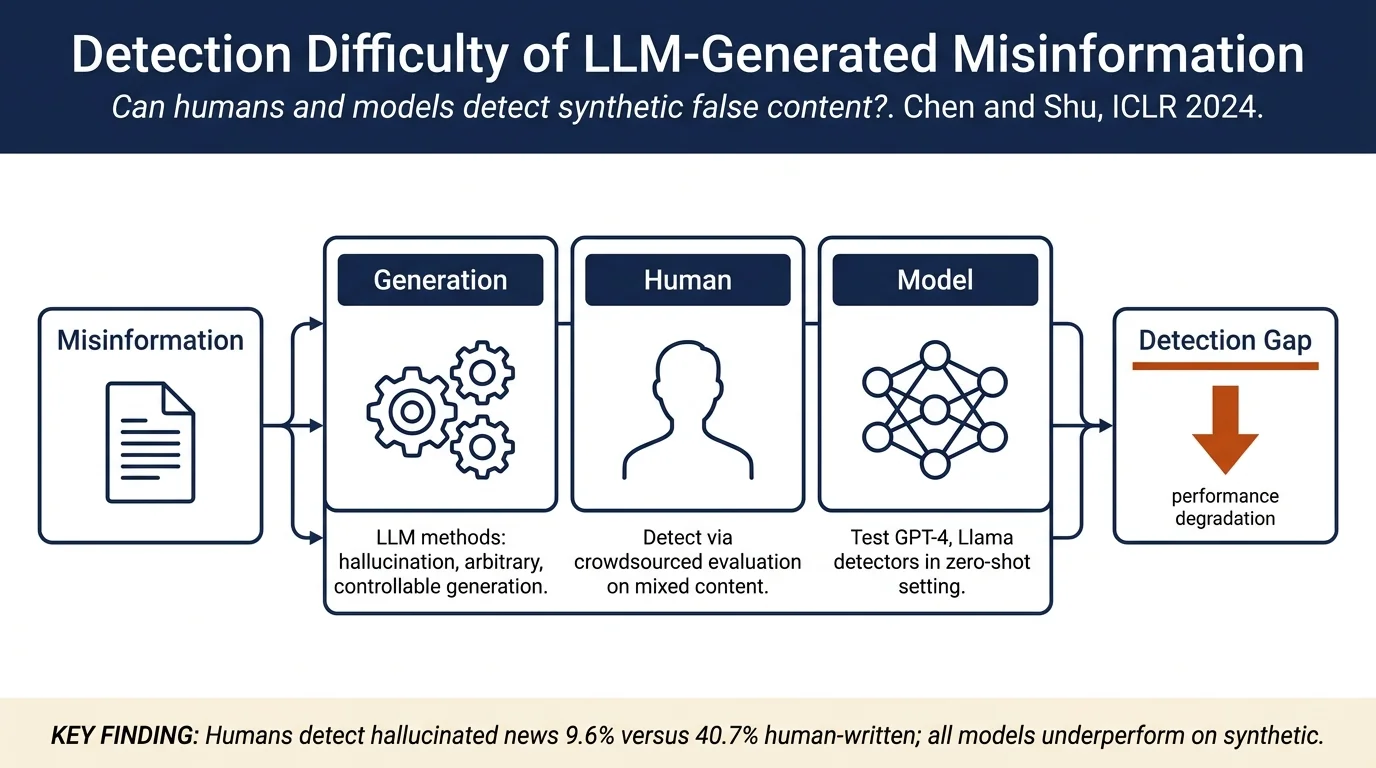
Can LLM-Generated Misinformation Be Detected?LLM-generated misinformation (from ChatGPT, Llama, Vicuna) is detectably harder for both humans and automated detectors to identify than human-written misinformation with identical semantics. The paper builds a taxonomy of LLM-generated misinformation across types, domains, and generation methods, then empirically demonstrates that…
 Spread & networksPlatforms, policy & society
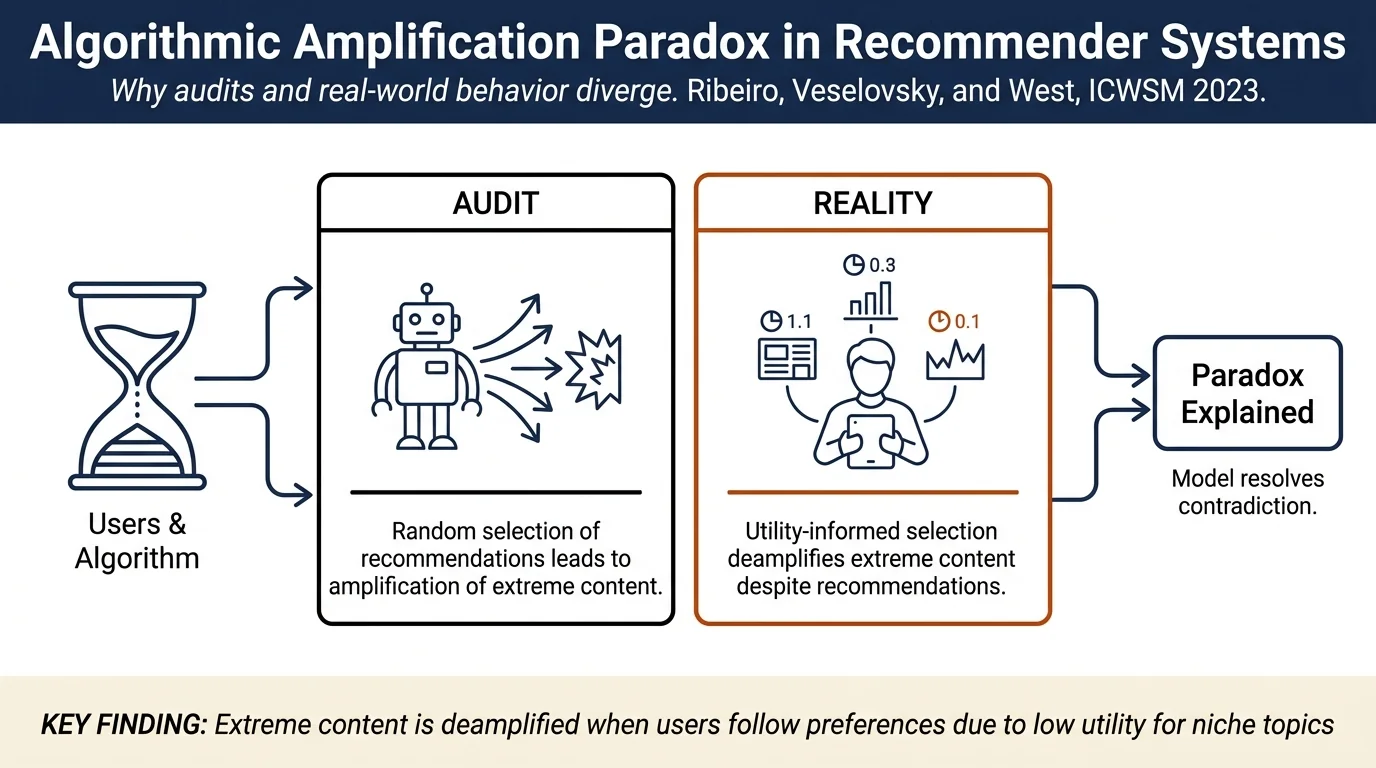
The Amplification Paradox in Recommender SystemsAlgorithmic audits find that blindly following YouTube recommendations leads to extreme content, yet real user logs show recommendations don't drive extreme content consumption. Using an agent-based model with realistic user preferences, the authors show this paradox arises because users rarely consume niche content even when recommended…
 Platforms, policy & societyLLMs & generative AI
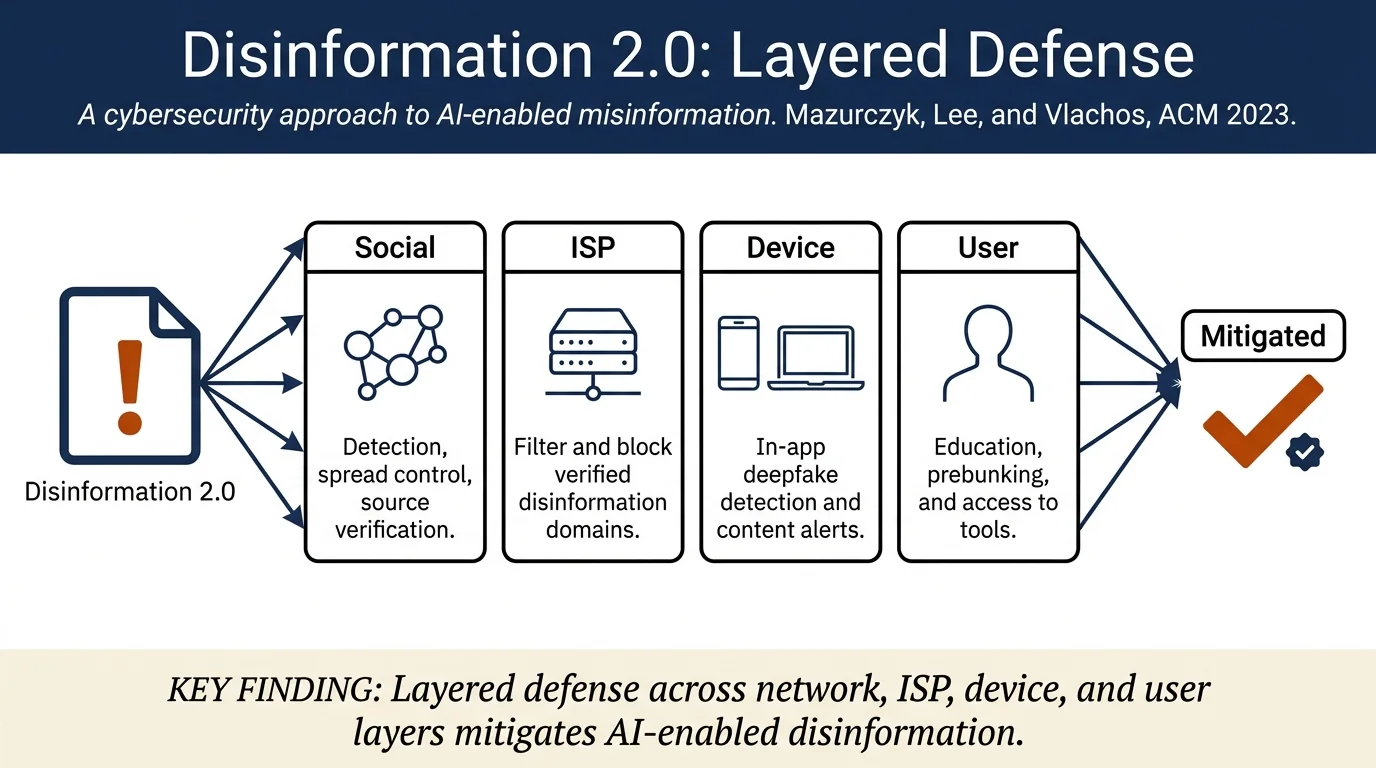
Disinformation 2.0 in the Age of AI: A Cybersecurity PerspectiveDisinformation should be treated as a cybersecurity threat, particularly as AI advances enable its creation and dissemination at unprecedented scale. The paper introduces "disinformation 2.0"—where generative AI, perturbation techniques, detection evasion, and optimized spread strategies make false content more persuasive and harder to…
 LLMs & generative AIDetection methods
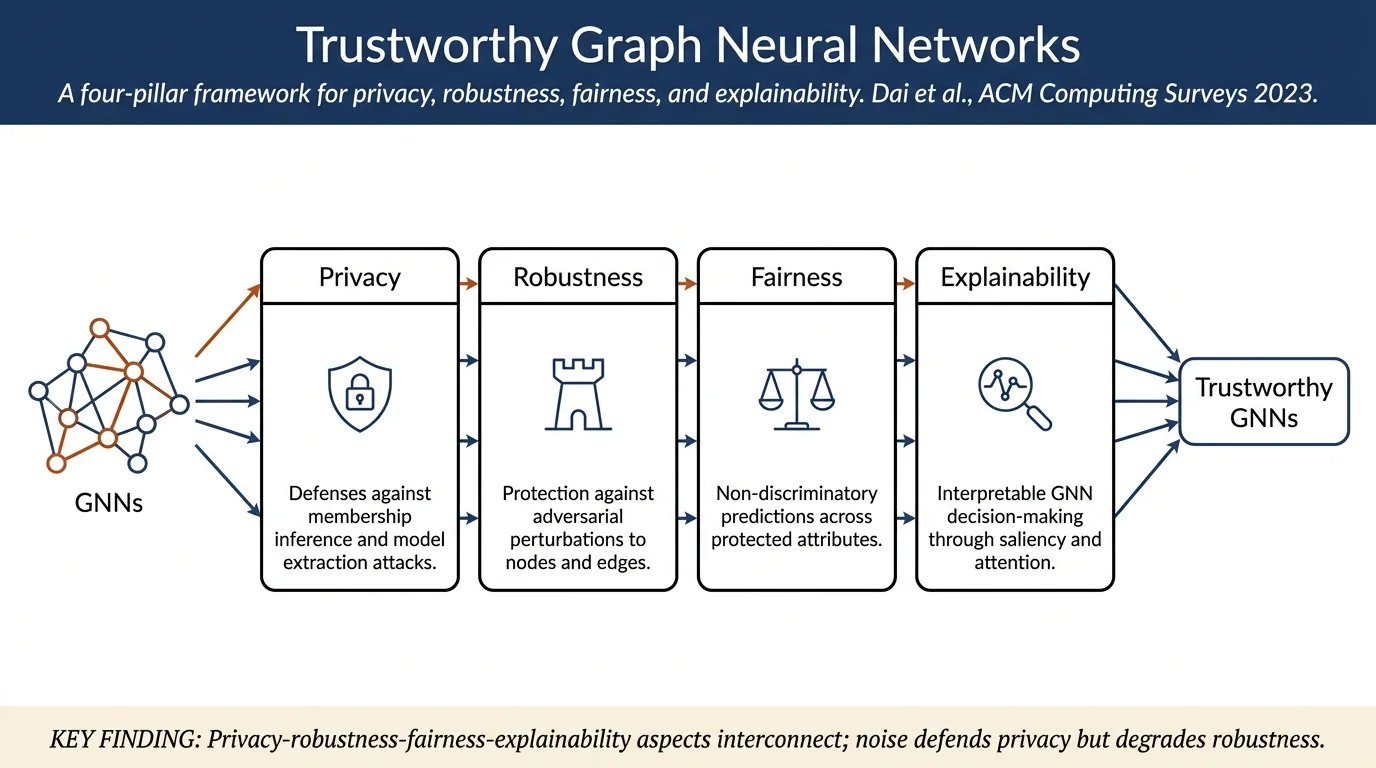
A Comprehensive Survey on Trustworthy Graph Neural Networks: Privacy, Robustness, Fairness, and ExplainabilityA comprehensive survey of trustworthy Graph Neural Networks covering four critical dimensions: privacy attacks and defenses against membership/property inference and model extraction; robustness against adversarial perturbations; fairness mechanisms to prevent discrimination in graph-based predictions; and explainability methods to…
 LLMs & generative AIDatasets & evaluation
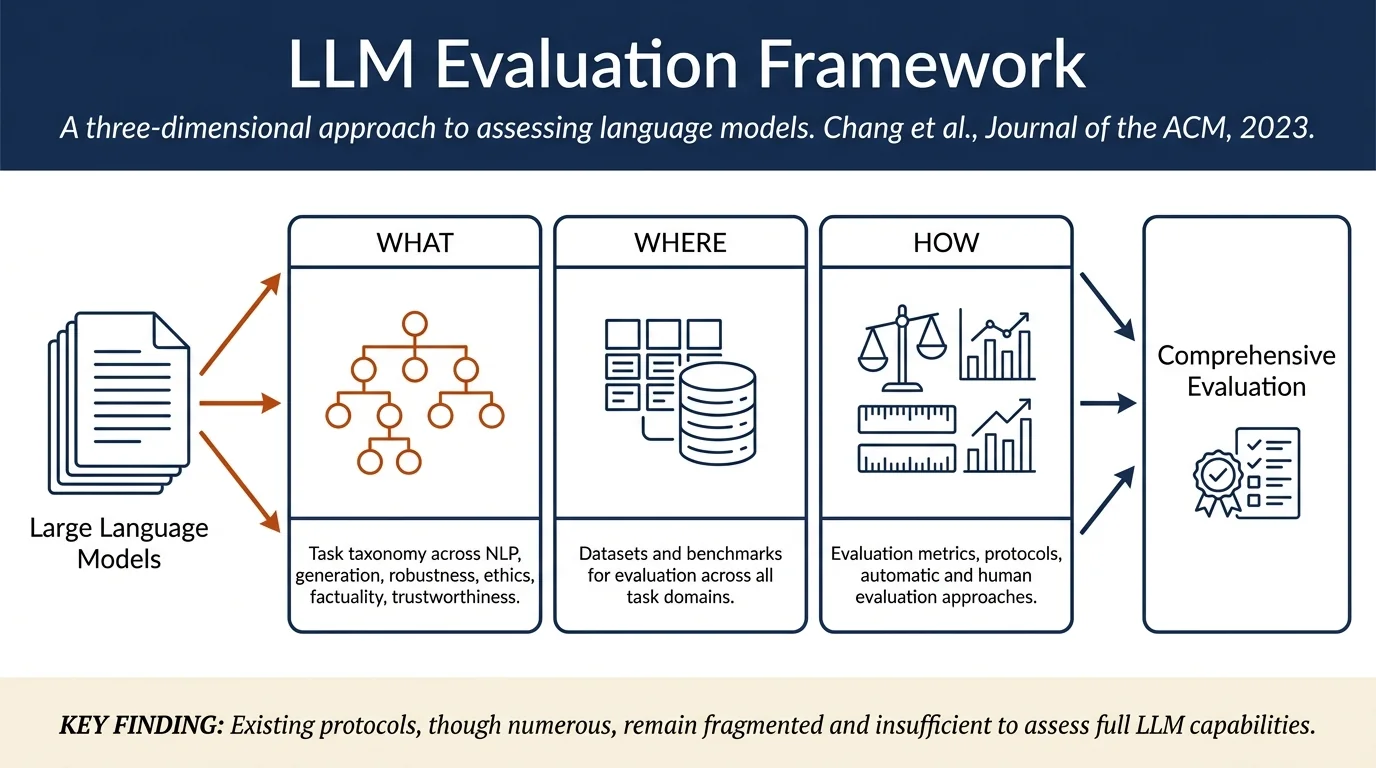
A Survey on Evaluation of Large Language ModelsThis survey provides a comprehensive review of evaluation methodologies for large language models across three dimensions: what to evaluate, where to evaluate, and how to evaluate. The paper encompasses evaluation tasks spanning natural language processing, natural language generation, robustness, ethics, bias detection, trustworthiness,…
 LLMs & generative AIDeepfakes & multimodal
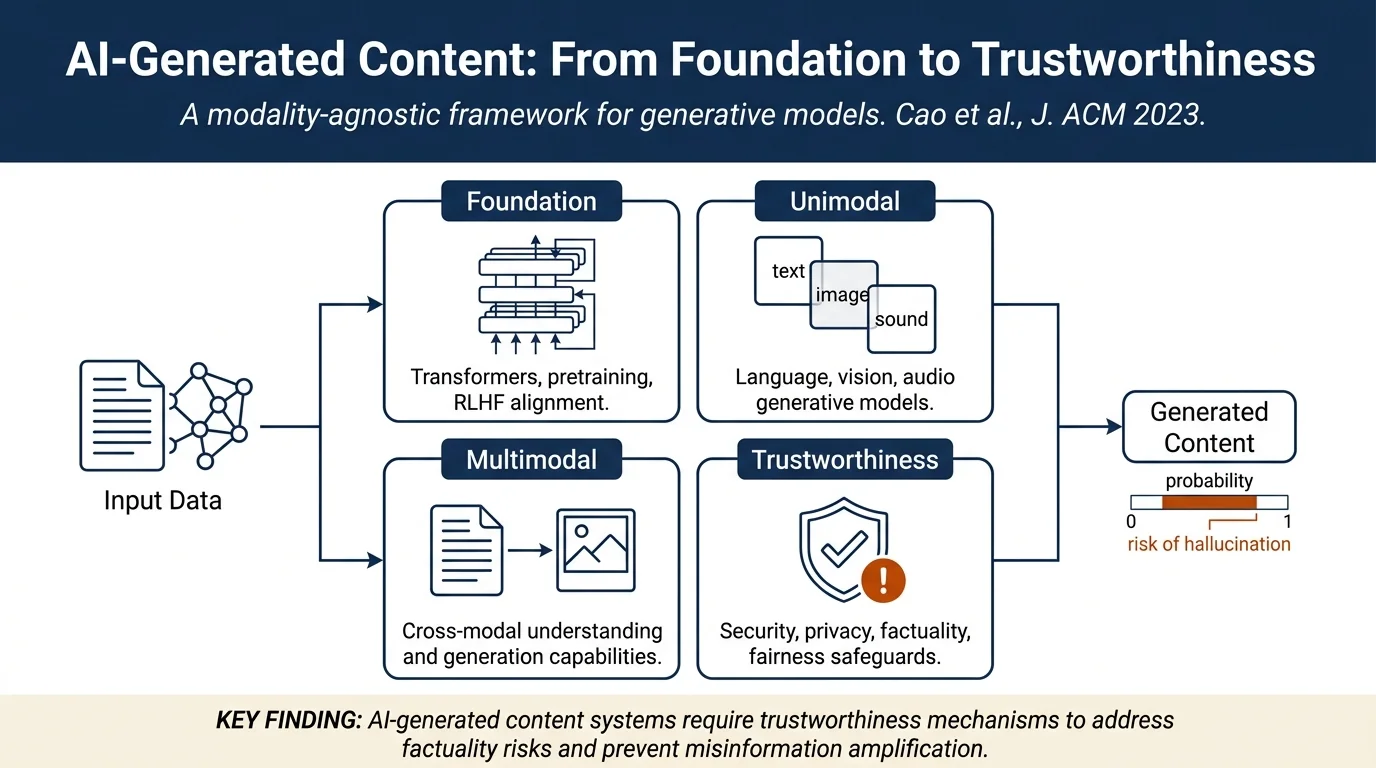
A Comprehensive Survey of AI-Generated Content (AIGC): A History of Generative AI from GAN to ChatGPTThis is the first comprehensive survey of AI-Generated Content (AIGC) covering the history, techniques, and applications of generative models from GANs through ChatGPT. It addresses both the impressive capabilities of these models (text, image, audio, video generation) and critical concerns including factuality, security, privacy, and…
 Spread & networksDetection methods
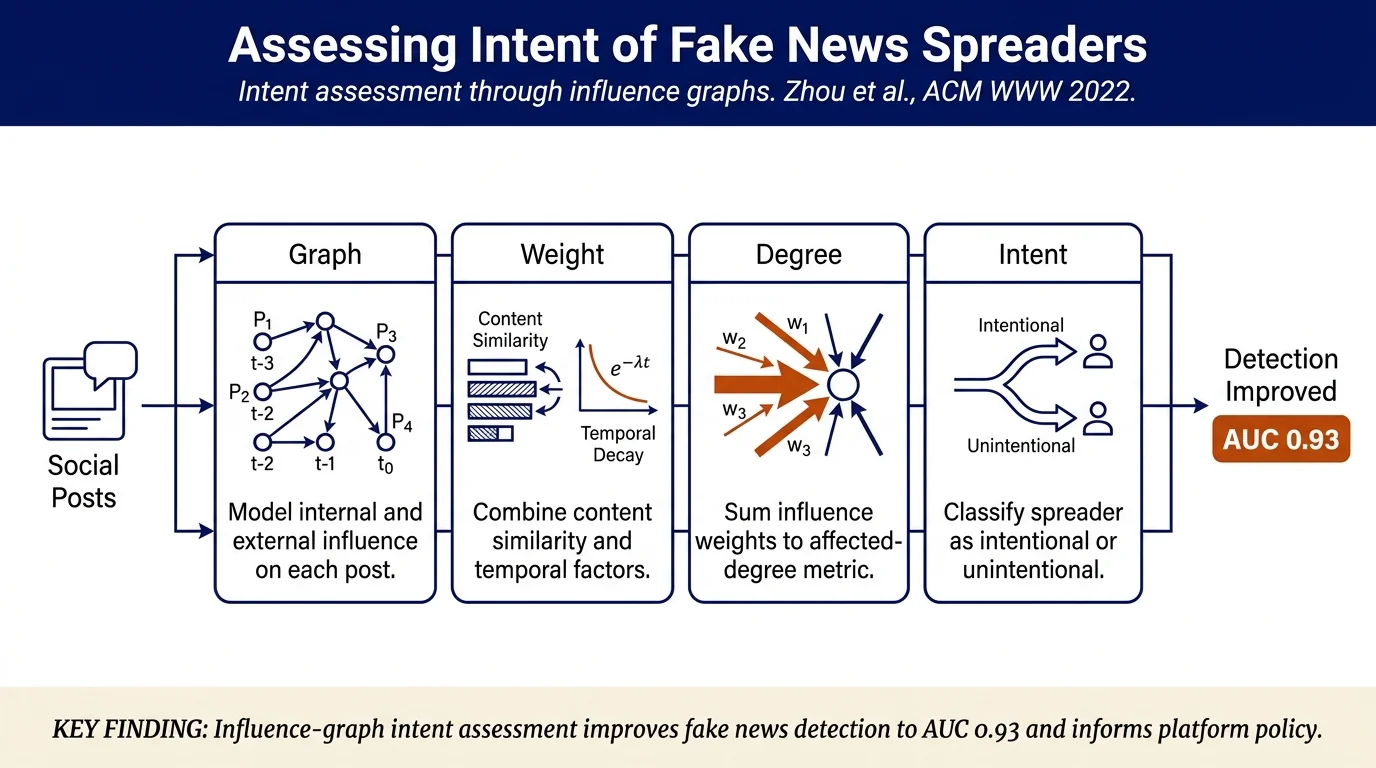
"This is Fake! Shared it by Mistake": Assessing the Intent of Fake News SpreadersThis work is the first to systematically assess whether individuals spread fake news intentionally or unintentionally. The authors propose an influence graph that captures psychological (internal) and social (external) factors driving unintentional spreading, validate it on two datasets with manually-annotated spreader intent, and…
 LLMs & generative AIDetection methods
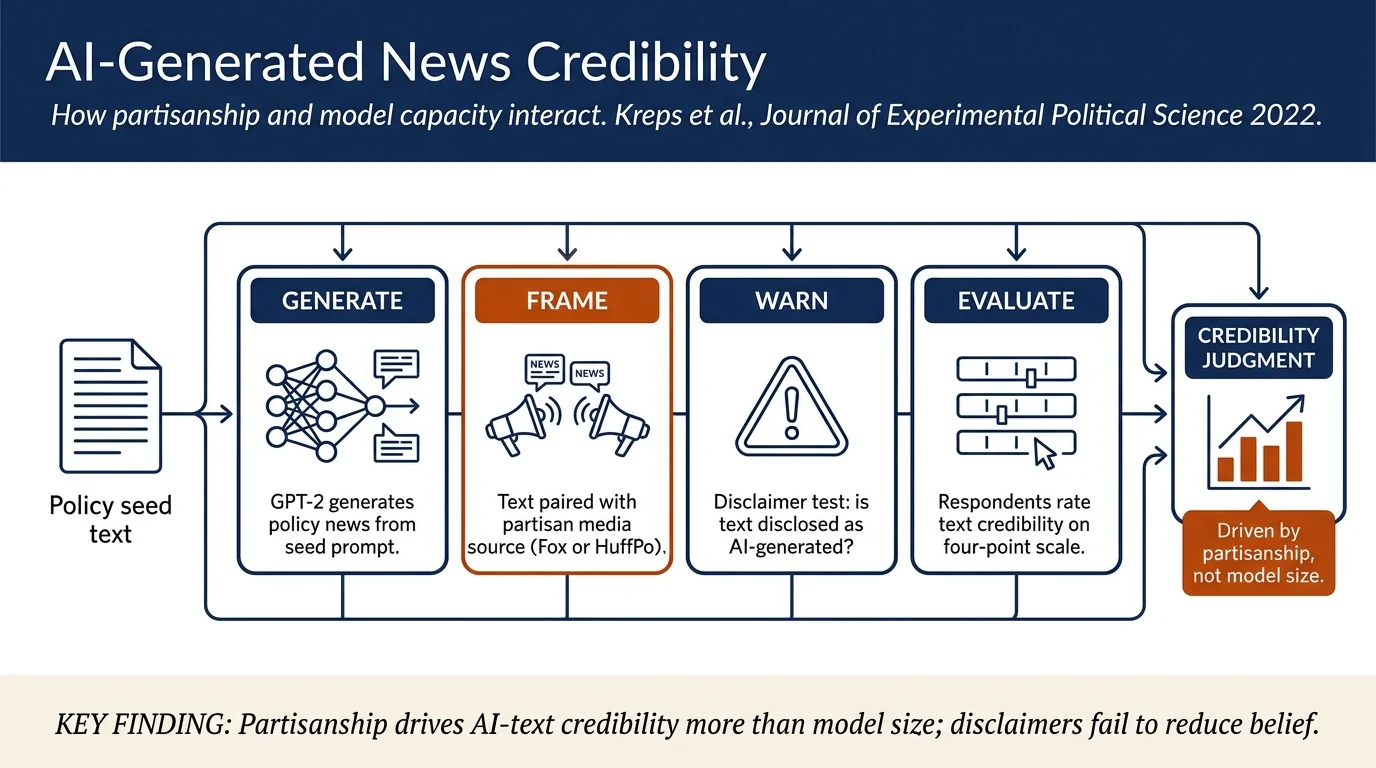
All the News That's Fit to Fabricate: AI-Generated Text as a Tool of Media MisinformationThree experiments investigate whether AI-generated news text can be credible and influence public opinion. The authors find that GPT-2 models (355M to 1.5B parameters) generate text nearly indistinguishable from human-written baseline news, particularly when politically congruent stories are paired with partisan audiences.
 Platforms, policy & societyDetection methods
A Comprehensive Survey on Trustworthy Recommender SystemsRecommender systems, while beneficial to users, can amplify harmful content, introduce discrimination, and enable adversarial attacks. This survey provides a comprehensive framework for trustworthy recommender systems across six critical dimensions: Safety & Robustness (defense against adversarial attacks), Non-discrimination & Fairness…
 Spread & networksPlatforms, policy & society
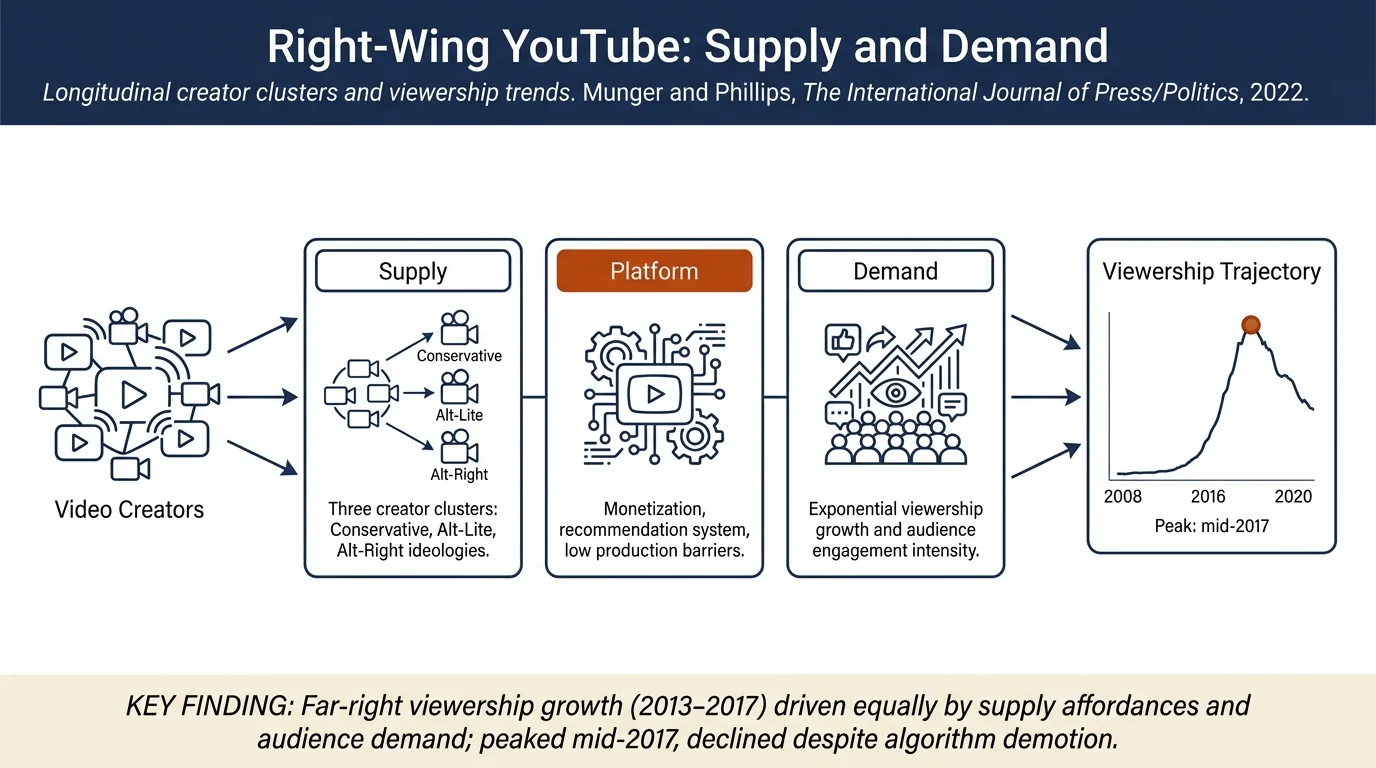
Right-Wing YouTube: A Supply and Demand PerspectiveYouTube has become the dominant platform for right-wing political content in the US, driven by supply-side affordances (low creation barriers, monetization, algorithmic recommendation) and demand-side audience appetite for alternative media. Using longitudinal analysis of creator clusters (Conservative, Alt-Lite, Alt-Right), the authors…
 Psychology & interventionsFact-checking & verification
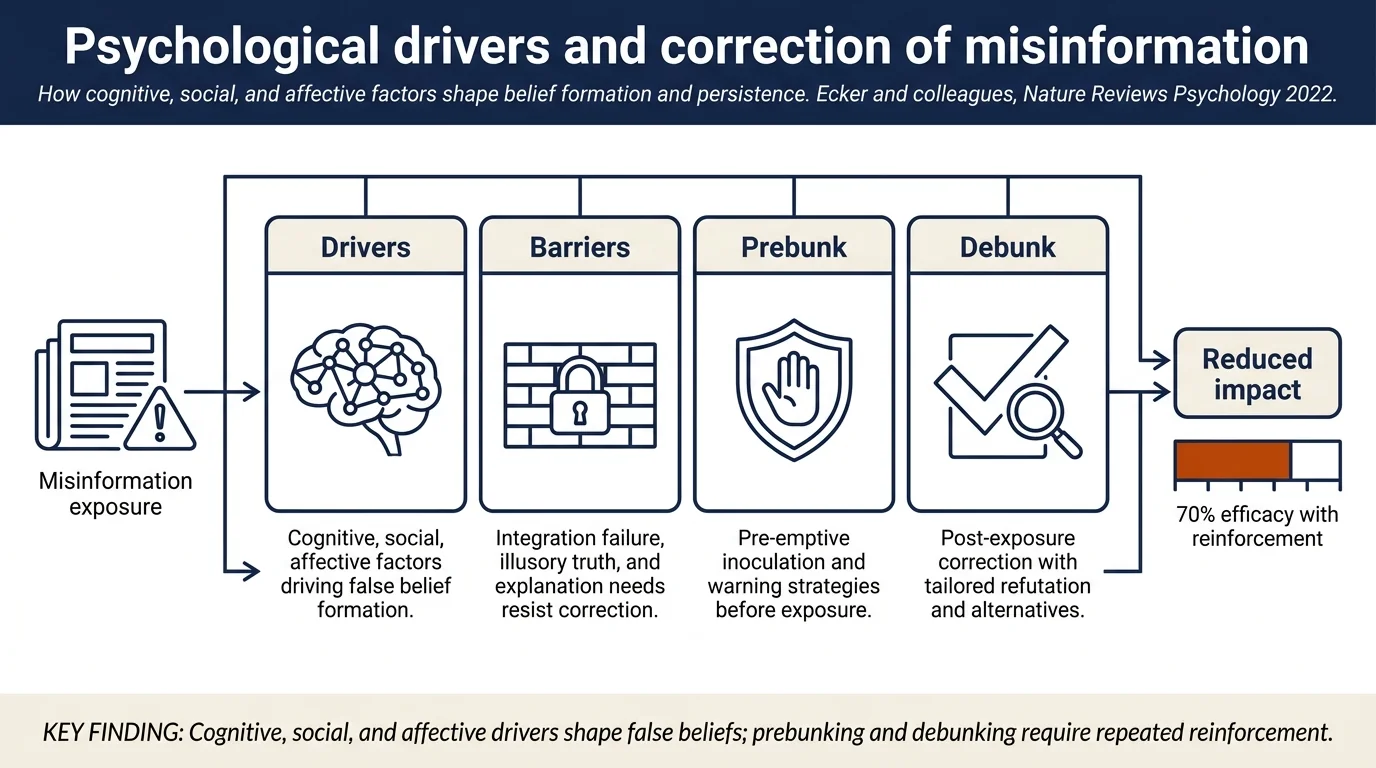
The psychological drivers of misinformation belief and its resistance to correctionThis comprehensive review establishes that misinformation's power lies not in exposure but in how cognitive, social, and affective factors shape belief formation and persist even after correction. False beliefs arise from intuitive thinking, memory failures, emotional content, in-group bias, and source credibility judgments; corrections…
 Psychology & interventionsPlatforms, policy & society
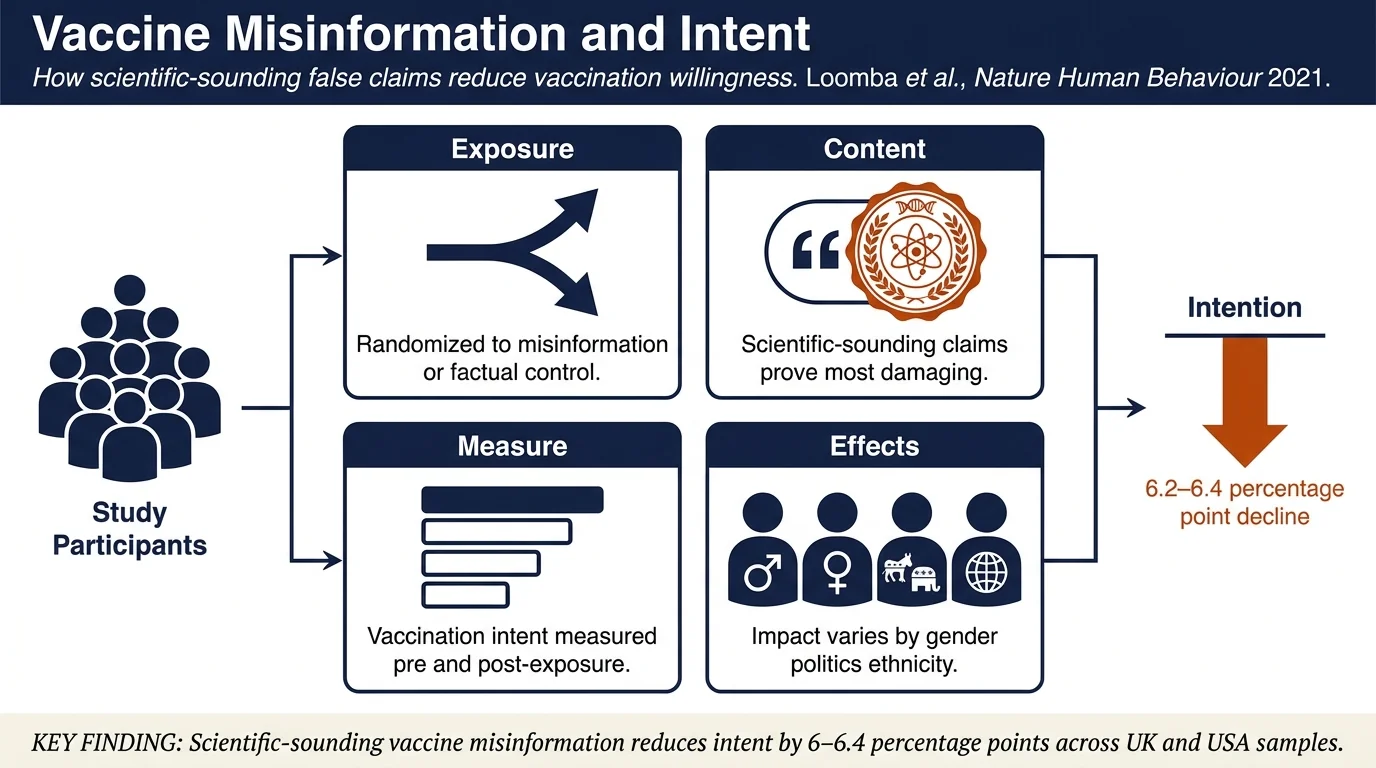
Measuring the impact of COVID-19 vaccine misinformation on vaccination intent in the UK and USARandomized controlled trial on 8,001 respondents (4,000 UK, 4,001 USA) measuring causal impact of exposure to COVID-19 vaccine misinformation. Exposure to misinformation reduced vaccination intent by 6.2 percentage points in the UK and 6.4 in the USA relative to exposure to factual information.
 Psychology & interventionsPlatforms, policy & society
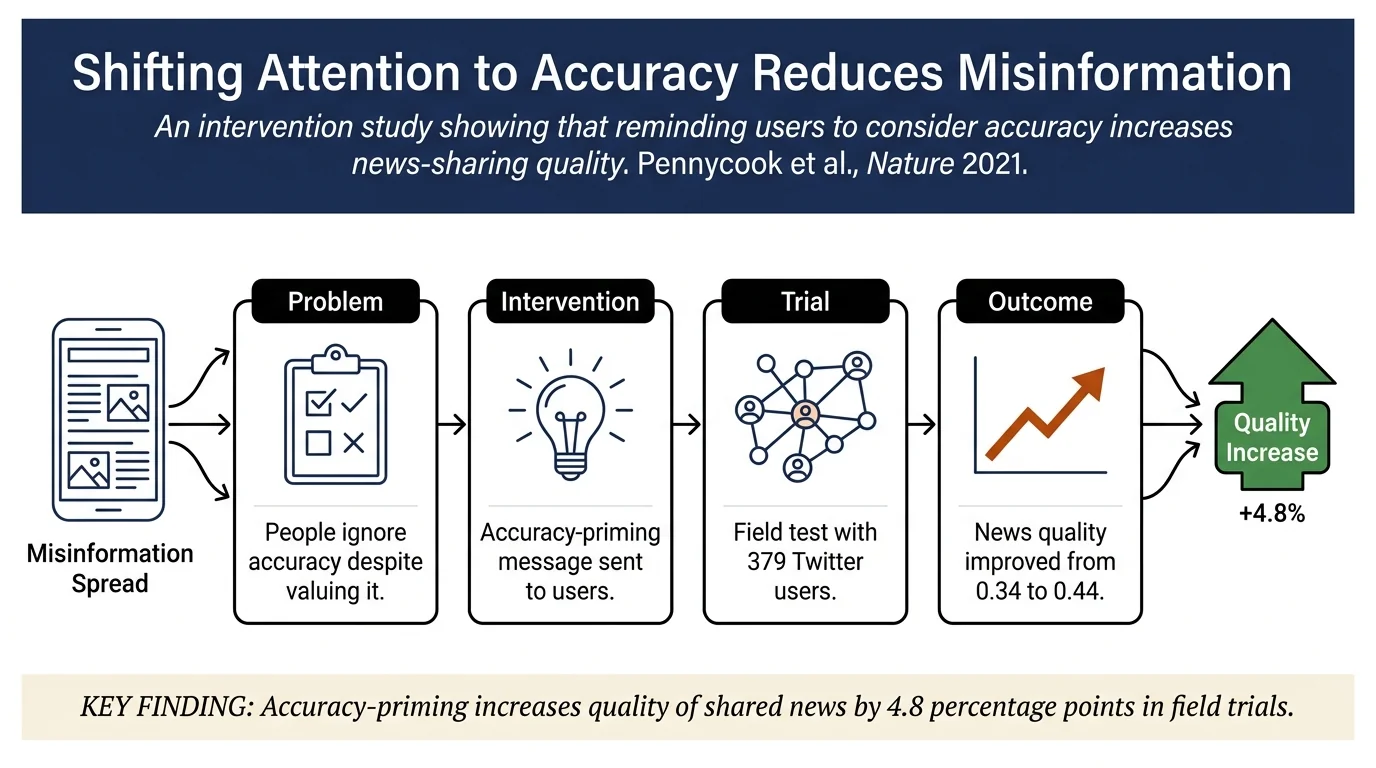
Shifting attention to accuracy can reduce misinformation onlineThe paper shows through six online experiments and a Twitter field trial that simply drawing people's attention to accuracy can substantially reduce their sharing of misinformation. When asked to rate the accuracy of headlines before deciding whether to share them, participants share more accurate content; a Twitter field experiment…
 Spread & networksPlatforms, policy & society
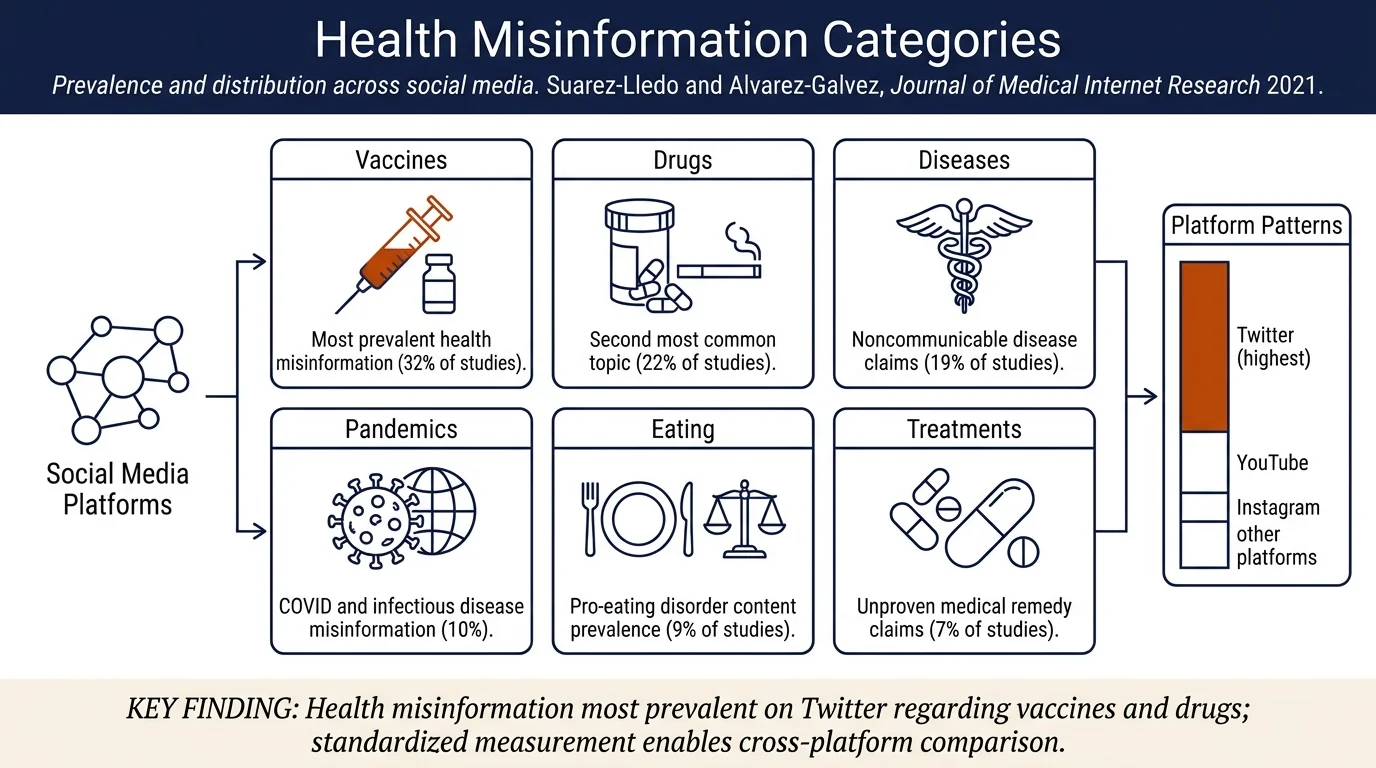
Prevalence of Health Misinformation on Social Media: Systematic ReviewThis systematic review of 69 studies characterizes health misinformation topics and their prevalence across social media platforms. Health misinformation was most prevalent on Twitter regarding smoking and drugs; vaccines, noncommunicable diseases, and pandemics were also common topics.
 Spread & networksPsychology & interventions
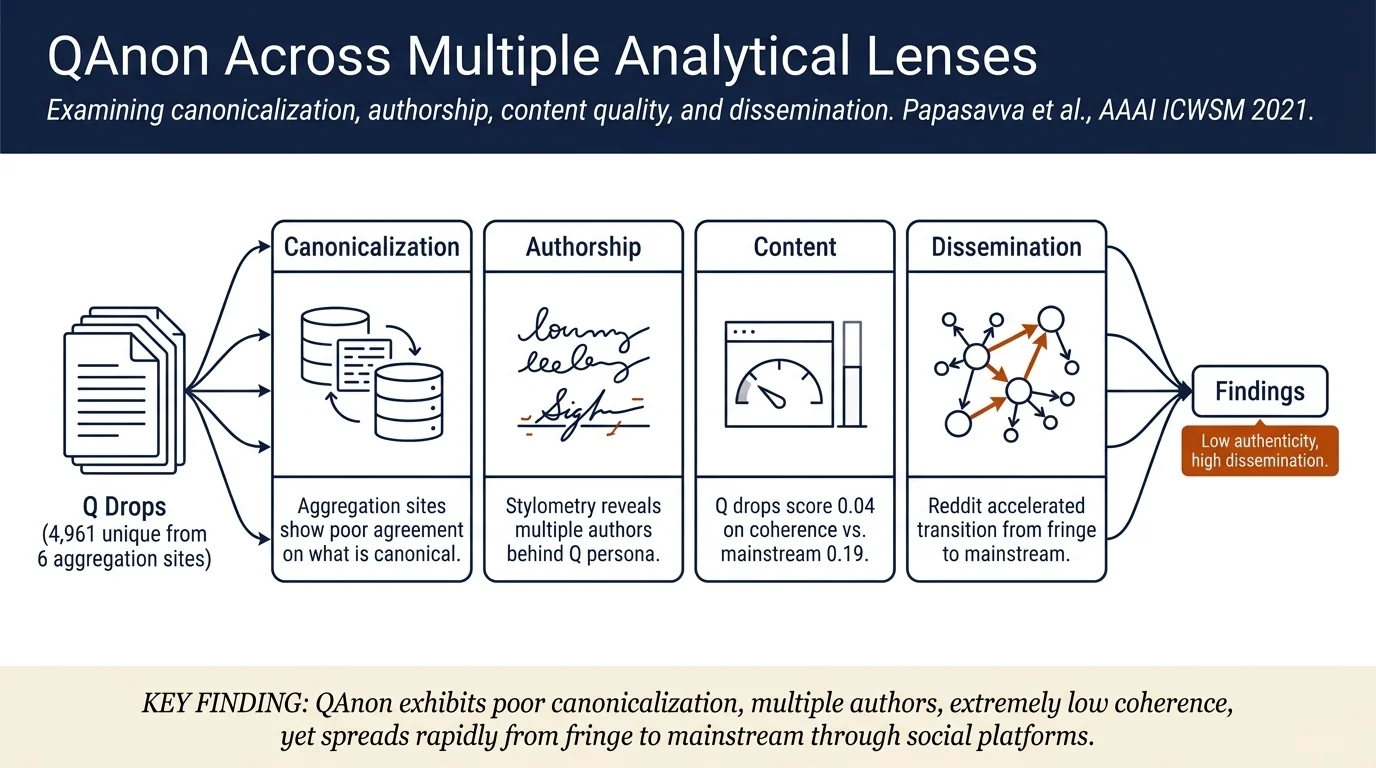
The Gospel According to Q: Understanding the QAnon Conspiracy from the Perspective of Canonical InformationThis paper systematically studies the QAnon conspiracy theory by collecting and analyzing 4,961 unique Q drops from six aggregation sites. The authors find that aggregation sites show poor agreement on what constitutes a canonical Q drop, that Q drops are incoherent and low-quality relative to other social media platforms, and that…
 Platforms, policy & societyBots & coordinated campaigns
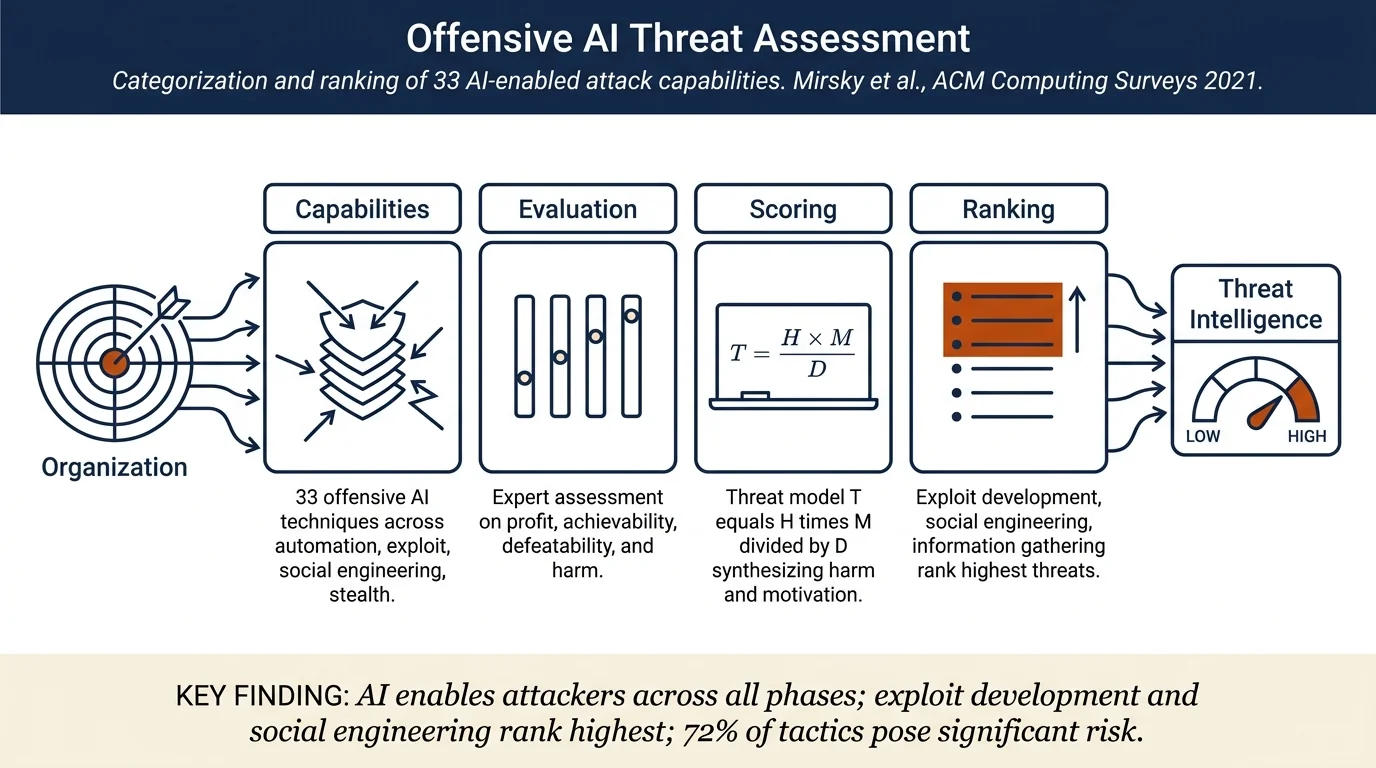
The Threat of Offensive AI to OrganizationsA comprehensive survey identifying 33 offensive AI capabilities that adversaries can use to attack organizations, organized into seven categories: automation, campaign resilience, credential theft, exploit development, information gathering, social engineering, and stealth. Through a user study with 22 experts from academia and industry,…
 Spread & networksDetection methods
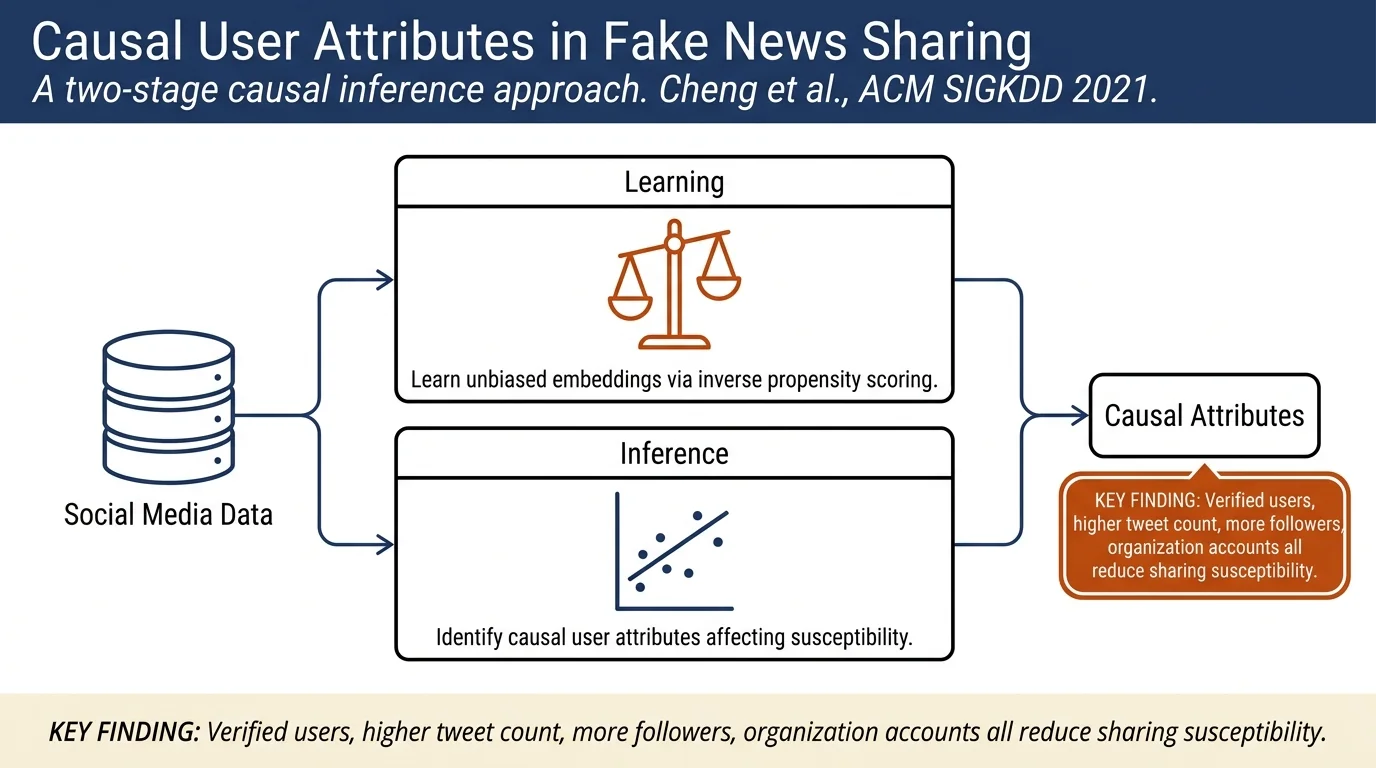
Causal Understanding of Fake News Dissemination on Social MediaThe paper addresses the fundamental causal question: what user attributes cause susceptibility to share fake news? Rather than observing correlations, the authors use inverse propensity scoring (IPS) to learn unbiased embeddings of fake news sharing behavior, treating these embeddings as confounders in a causal model.
 Psychology & interventionsSpread & networks
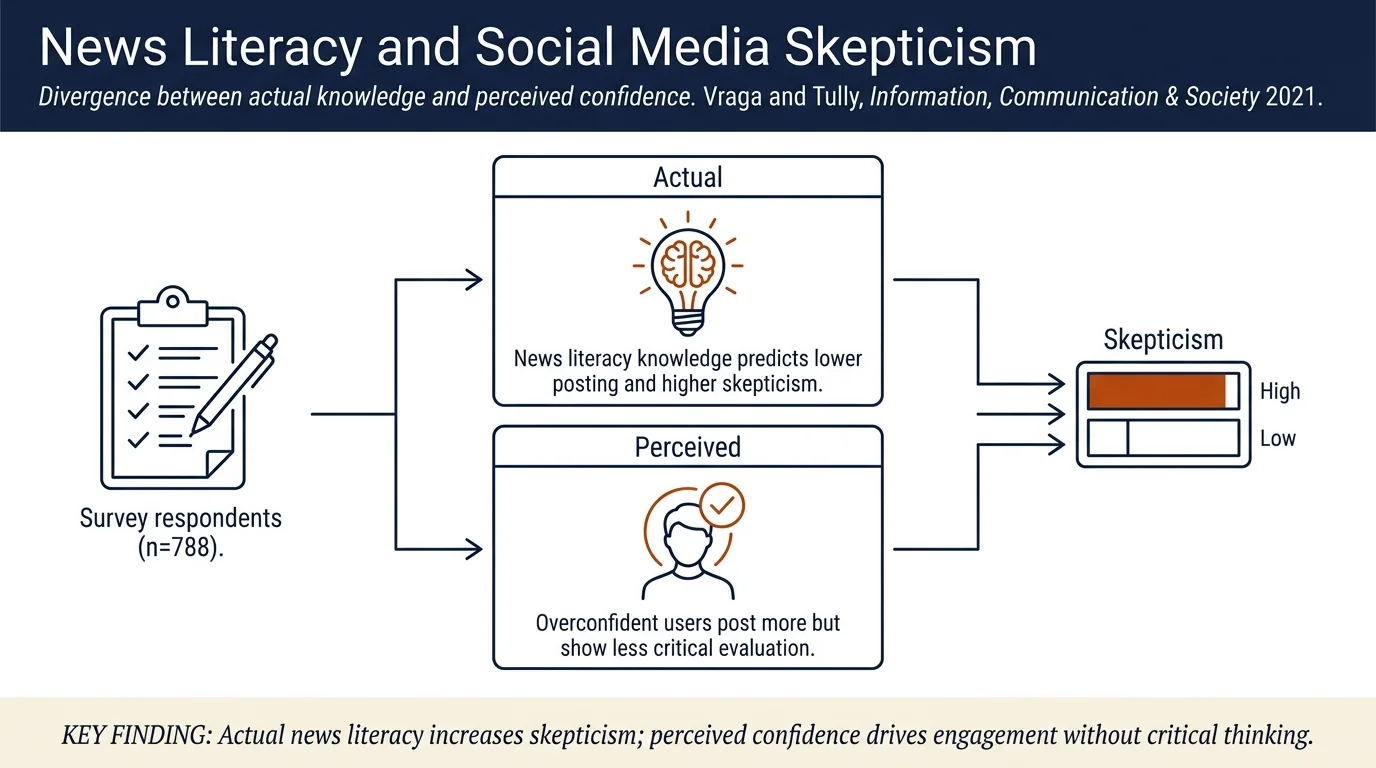
News literacy, social media behaviors, and skepticism toward information on social mediaA national survey of 788 Americans examines how news literacy relates to what people see and share on social media, and whether it predicts skepticism toward information shared in these spaces. The key finding: people with higher news literacy see and post less political content on social media, but when they do engage, they're…