Explore papers
Filter by research area, year and venue. Every filter is in the address bar, so you can share a view as a link.
 Spread & networksPsychology & interventions
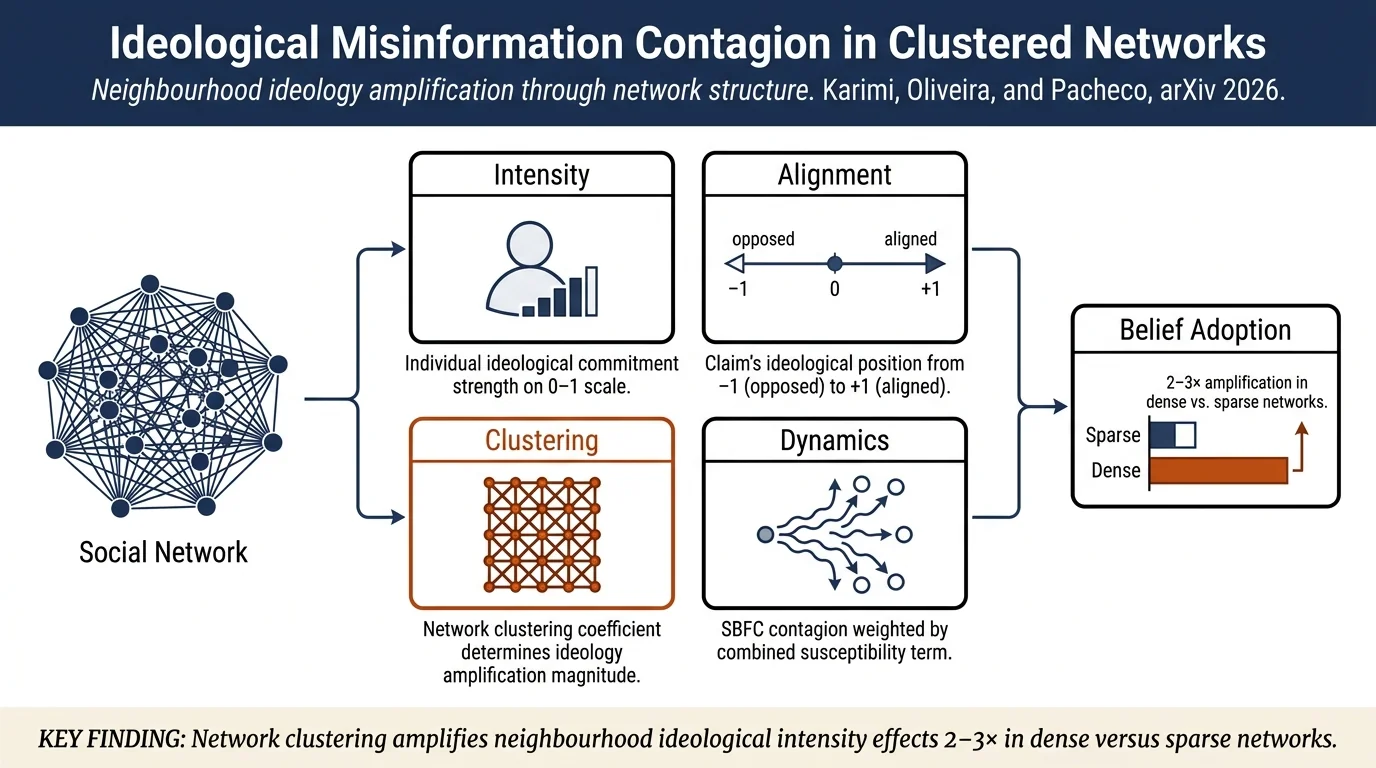
How neighbourhood ideology shapes misinformation belief in densely tied social networksPrior work decouples ideological bias and social influence when modeling misinformation propagation; this paper integrates them through an agent-based contagion model that distinguishes an individual's ideological intensity from a claim's ideological alignment. Simulation and analytical results show that in densely clustered…
 Psychology & interventionsSpread & networks
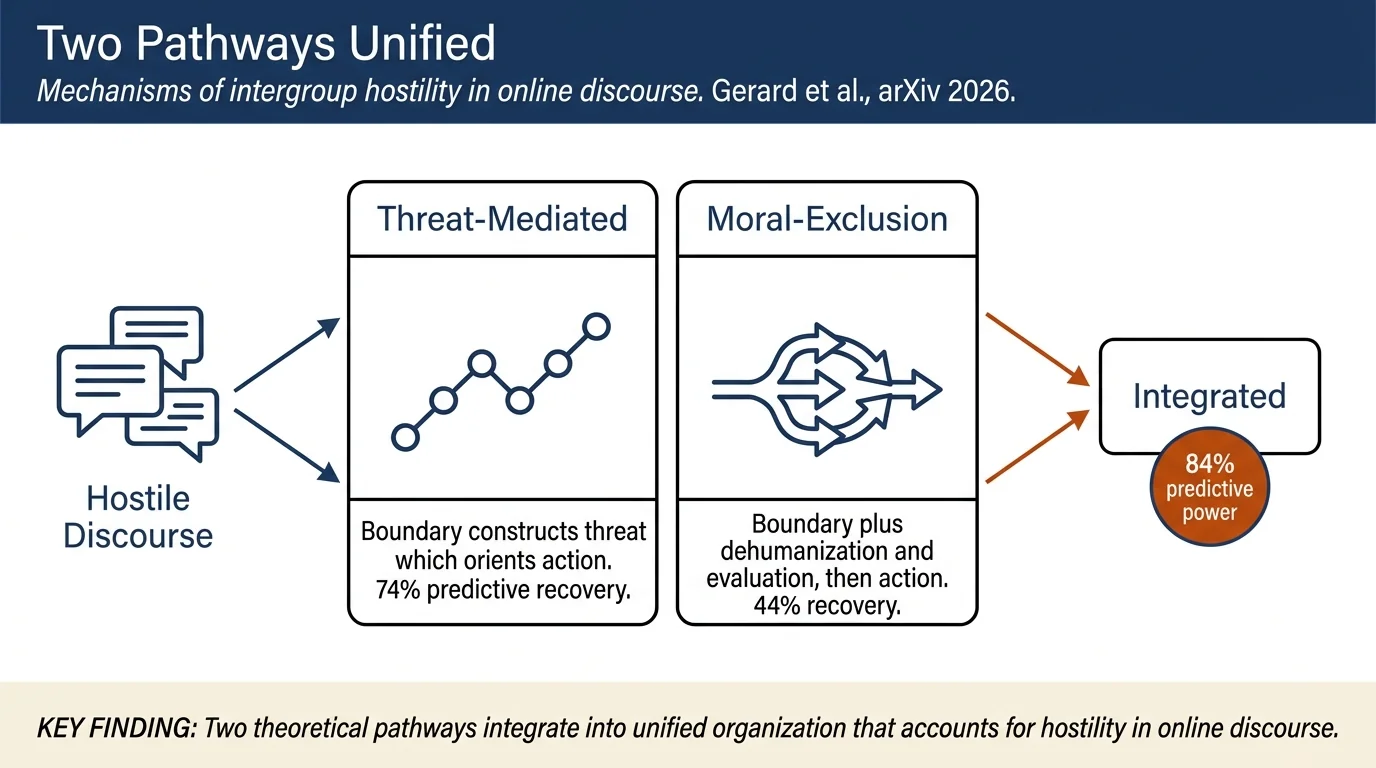
Unifying Models of Intergroup Hostility in Online DiscourseHostile rhetoric toward outgroups in online discourse can be modeled through six mechanisms (boundary construction, threat construction, scapegoating, negative evaluation, dehumanization, action orientation) whose structural and temporal relationships were previously understood separately through competing theoretical frameworks. By…
 LLMs & generative AIDatasets & evaluation
Counter-GEO-Bench: Evaluating Defenses Against Information-Distorting Generative Engine OptimizationAdversaries exploit Generative Engine Optimization (GEO) to craft web documents containing targeted false claims that rank highly in LLM-generated search results. This paper introduces Counter-GEO-Bench, a benchmark of 247 human-verified query-document pairs, evaluates existing guardrails (all ineffective), and proposes C-GEO Guard, a…
 Detection methodsLLMs & generative AI
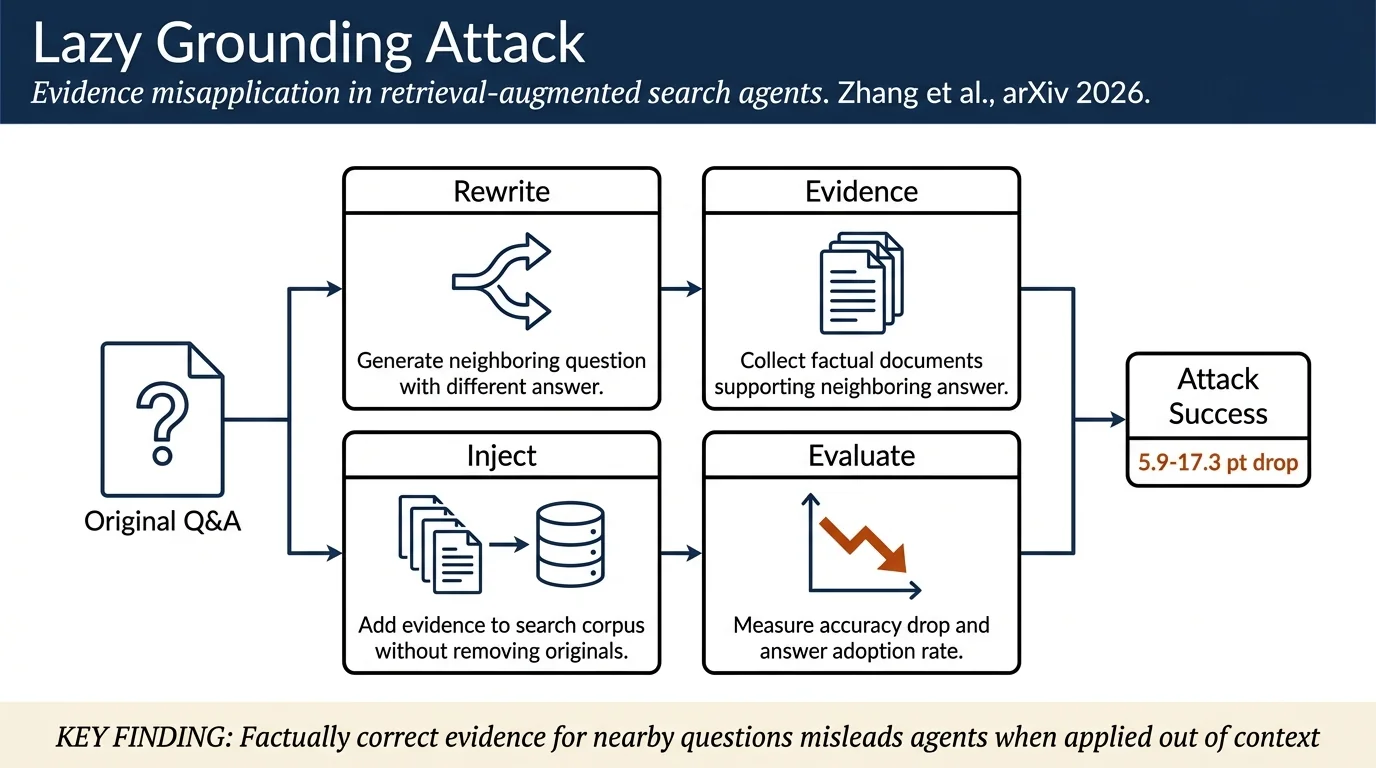
Lazy Grounding: Attacking Search Agents with Factual EvidenceRetrieval-augmented search agents fail to robustly distinguish between evidence for the current question and evidence for semantically nearby questions. By injecting factually correct documents supporting a neighboring question into the search corpus, agents often misapply this evidence to answer the original question, achieving accuracy…
 Spread & networksLLMs & generative AI
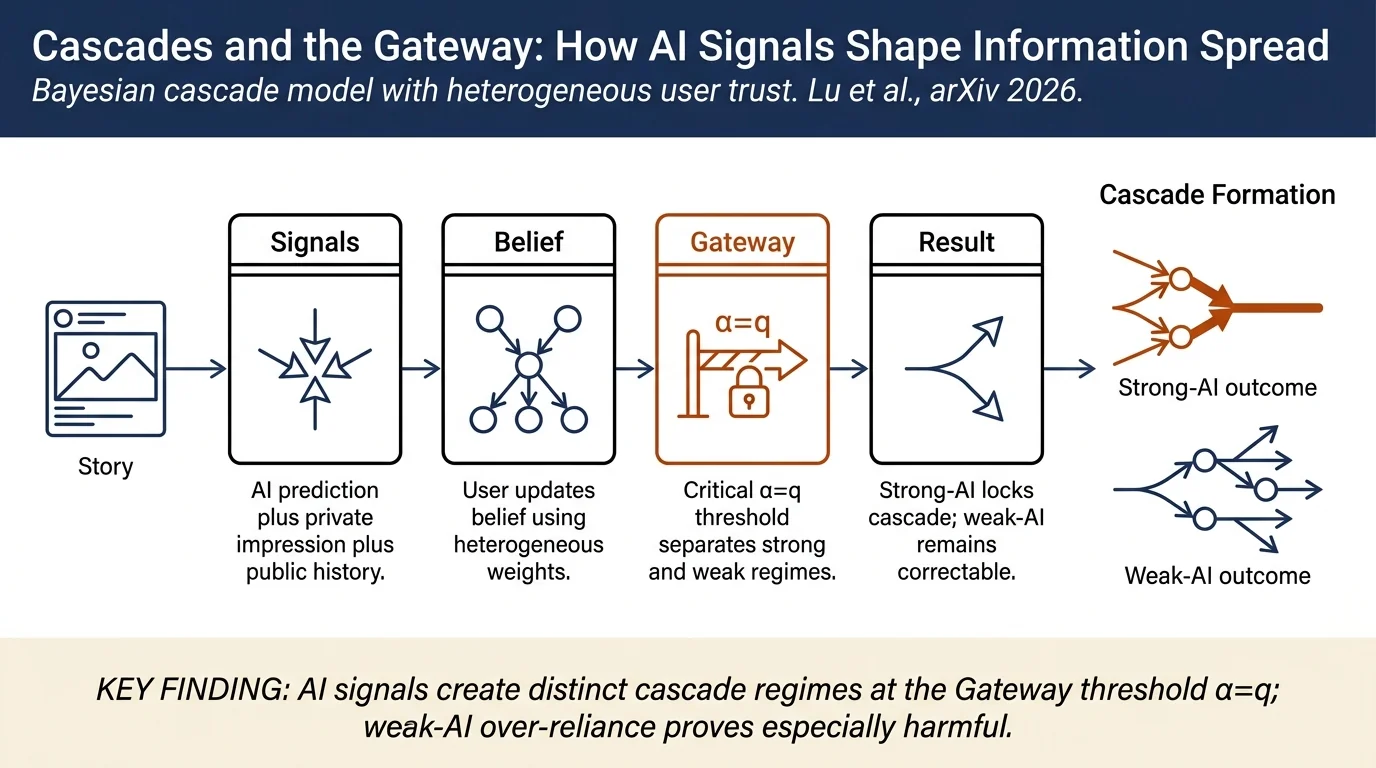
One AI Signal, Many Human Judgments: A Bayesian Cascade Analysis of AI-based Credibility Indicators in Online Information SpreadSocial media platforms increasingly deploy AI-based credibility indicators to help users judge misinformation. This paper extends classical Bayesian cascade models to treat AI credibility signals as a shared public signal seen by all users, then derives a critical "Gateway" threshold: above it, AI predictions dominate the public record;…
 Bots & coordinated campaignsSpread & networks
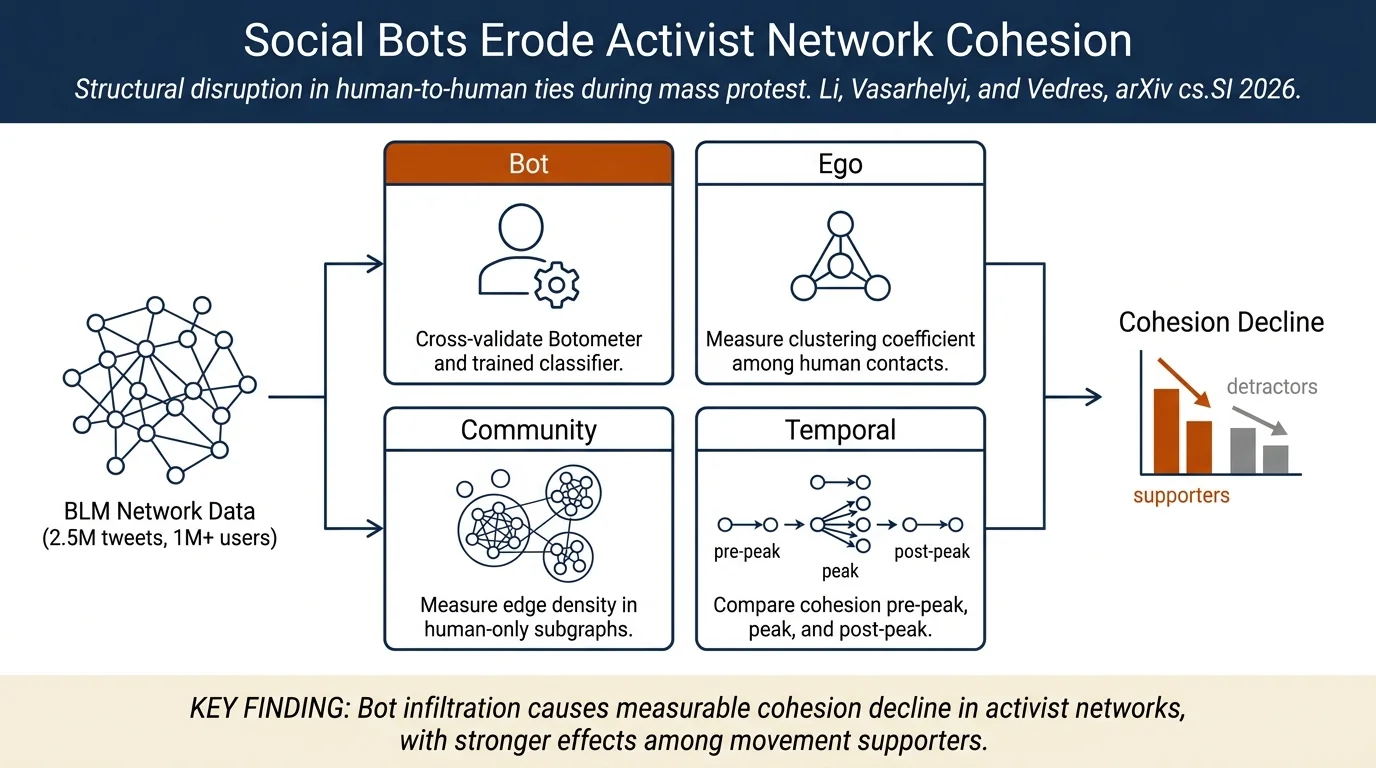
Social bots weaken activist cohesionSocial bots during protest peaks weaken the human relational infrastructure of activism. Analyzing 2.5M tweets from the 2020 Black Lives Matter protests, the authors show that networks more exposed to bot infiltration suffered steeper declines in human cohesion (triadic closure and edge density) after the peak, with effects concentrated…
 LLMs & generative AIPlatforms, policy & society
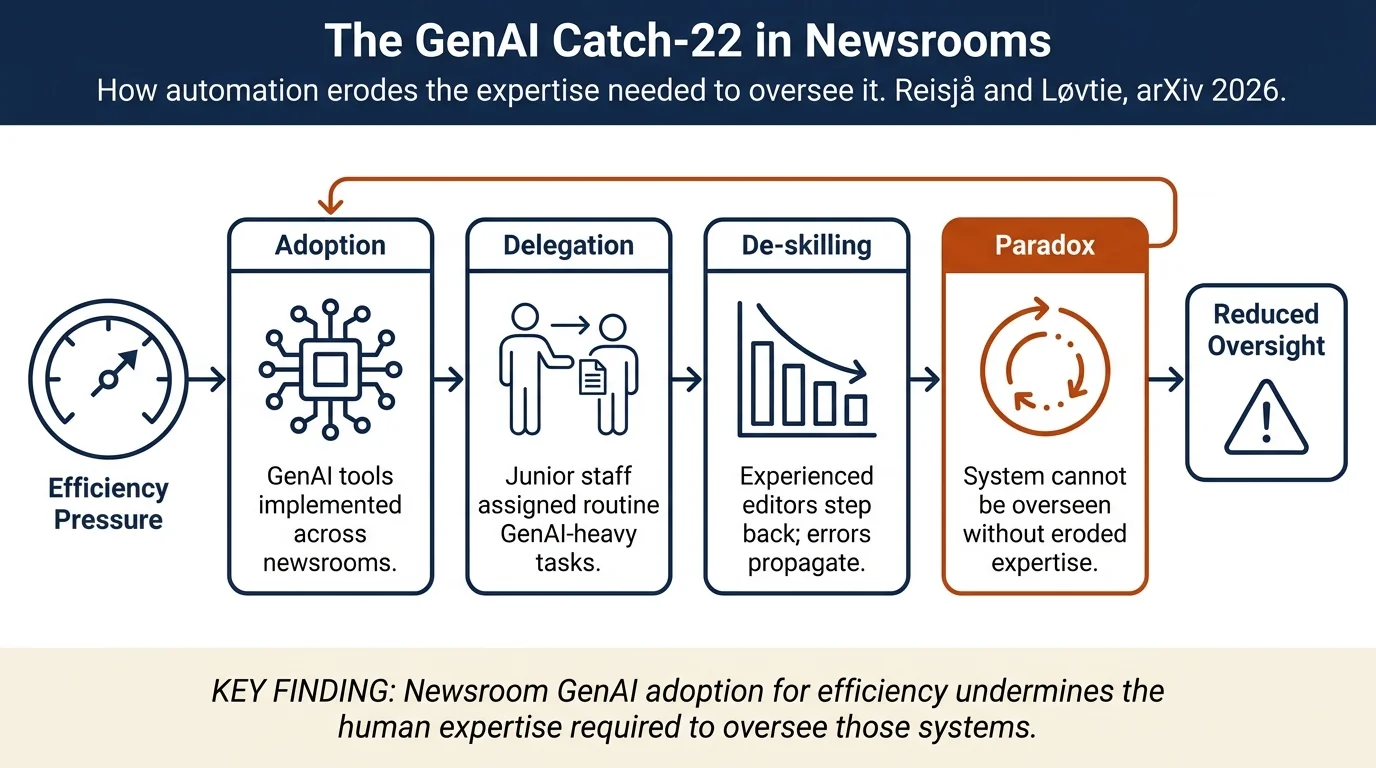
The GenAI Catch-22: Use of Generative Artificial Intelligence in Norwegian Newsrooms During the 2025 Parliamentary ElectionA longitudinal qualitative study of four major Norwegian newsrooms (NRK, TV2, VG, Dagbladet) during the 2025 parliamentary election reveals a "GenAI Catch-22": newsrooms need human expertise to oversee generative AI systems and prevent errors, but extensive use of GenAI leads to de-skilling that erodes that very expertise, rendering…
 Spread & networksPsychology & interventions
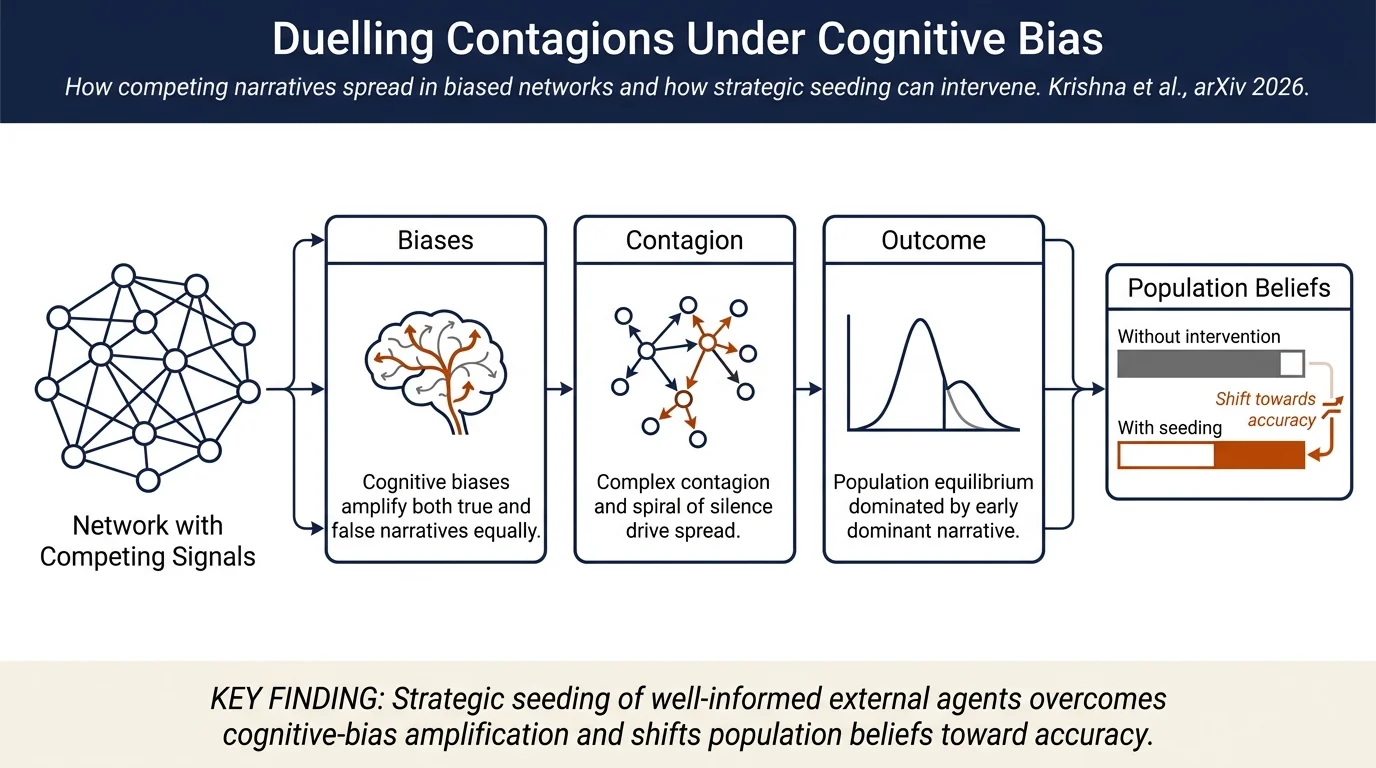
Modeling Duelling Contagions of True and False Information in the Face of Inherent Individual biasesThis paper proposes CI-SRW, an agent-based co-diffusion model integrating cognitive biases with network dynamics to explain how competing true and false information spread in social media. Using behavioral experiments and simulations, the authors find that manipulative narratives dominate when early spreaders hold them, cognitive biases…
 Spread & networksPlatforms, policy & society
Quantifying Political Partisanship for Cross-Platform AnalysesPolitical partisanship measurement in social media typically relies on platform-specific features (follower networks, community structure), making cross-platform comparison difficult. This work proposes a text-based partisanship measurement method grounded in external media bias ratings, and validates it on ~1.3 million posts from…
 LLMs & generative AIDatasets & evaluation
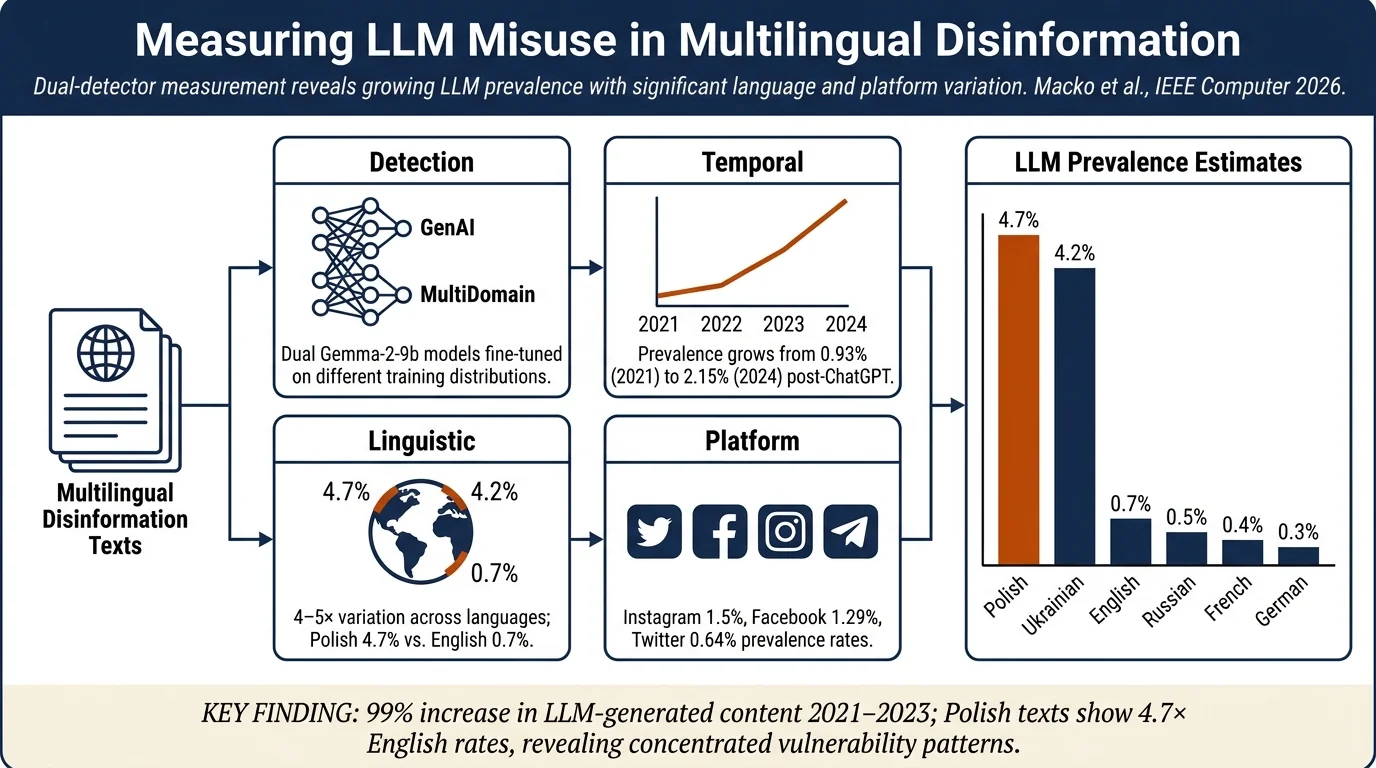
Beyond Speculation: Measuring the Growing Presence of LLM-Generated Texts in Multilingual DisinformationThis empirical study provides the first measurement of LLM-generated content in real-world disinformation datasets. Analyzing the MultiClaim dataset (fact-checked social media posts), the authors document a 99% increase in machine-generated content from 2021 to 2023 (0.93% to 1.85%), correlating with ChatGPT's November 2022 release.
 LLMs & generative AIDetection methods
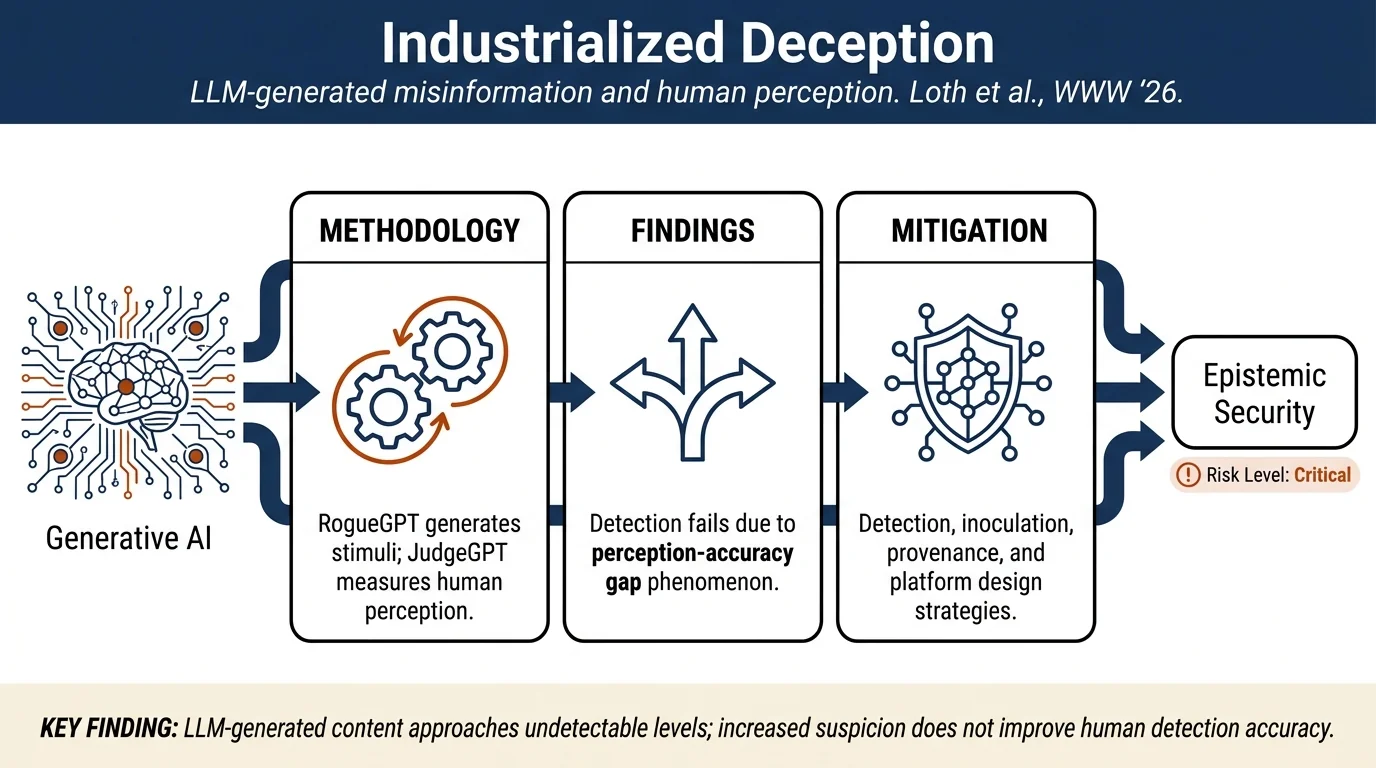
Industrialized Deception: The Collateral Effects of LLM-Generated Misinformation on Digital EcosystemsThis paper updates the state of generative AI and misinformation research since 2024, documenting the shift toward industrialized deception through improved LLMs and multimodal systems. The authors present two methodological tools—JudgeGPT (for measuring human perception of AI-generated content) and RogueGPT (for controlled stimulus…
 LLMs & generative AIDetection methods
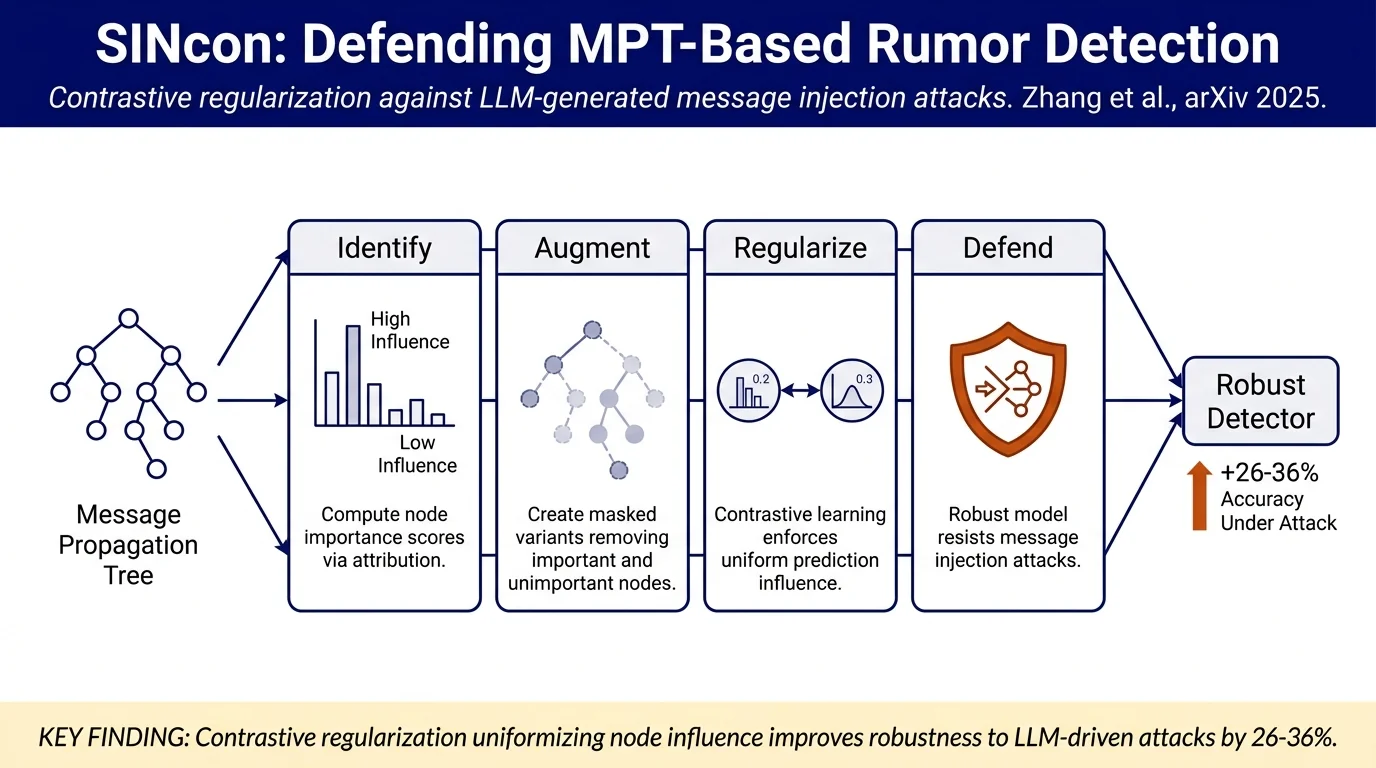
SINcon: Mitigate LLM-Generated Malicious Message Injection Attack for Rumor DetectionMessage Propagation Tree (MPT) based rumor detection models are vulnerable to LLM-generated malicious message injection attacks that alter tree topology and semantics. The paper proposes SINcon, a contrastive learning defense that regularizes models to assign similar predictive influence to nodes of different importance levels,…
 LLMs & generative AIDetection methods
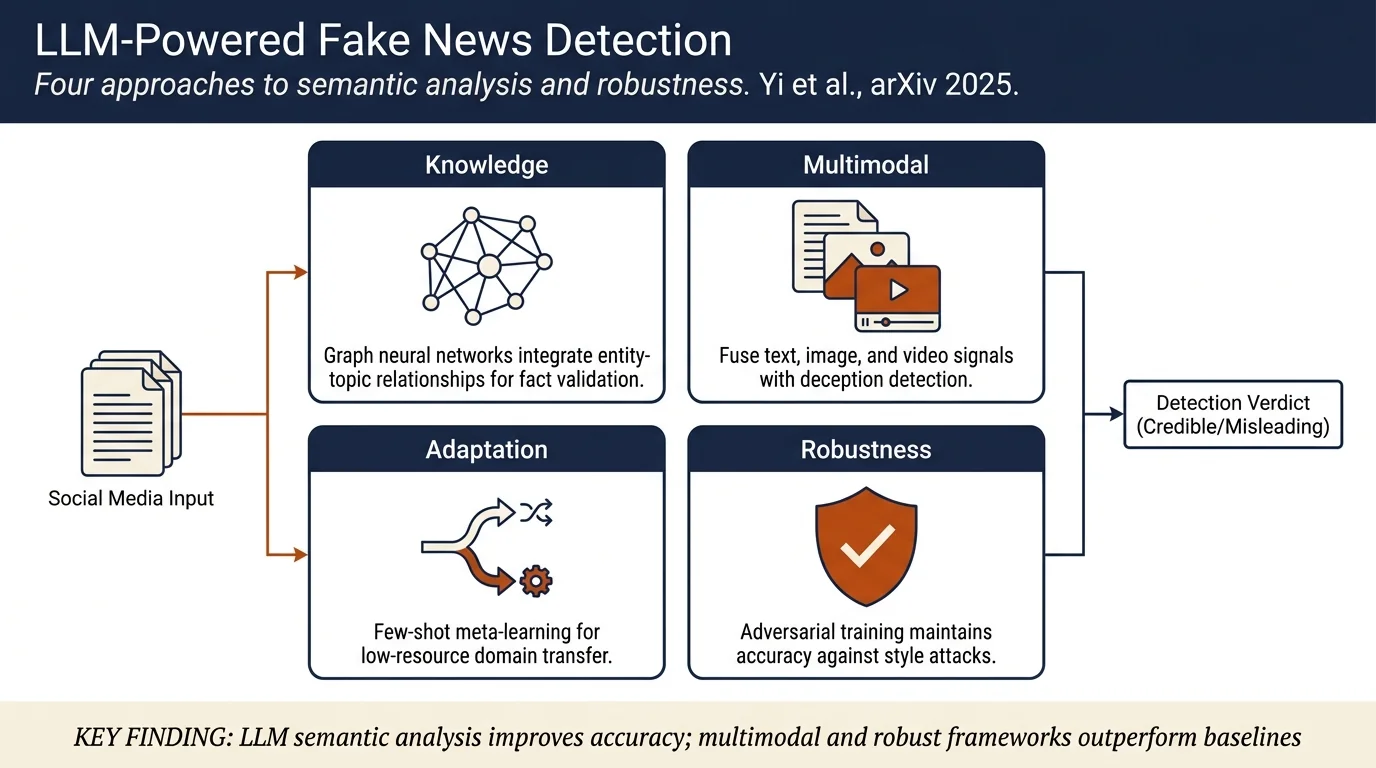
Challenges and Innovations in LLM-Powered Fake News Detection: A Synthesis of Approaches and Future DirectionsThis survey synthesizes recent advances in applying large language models to fake news detection on social media. The review covers four major LLM-based frameworks (MiLk-FD, FND-LLM, DAFND, SheepDog), identifies critical challenges around multimodal integration, adversarial robustness, scalability, and interpretability, and proposes…
 Deepfakes & multimodalDatasets & evaluation
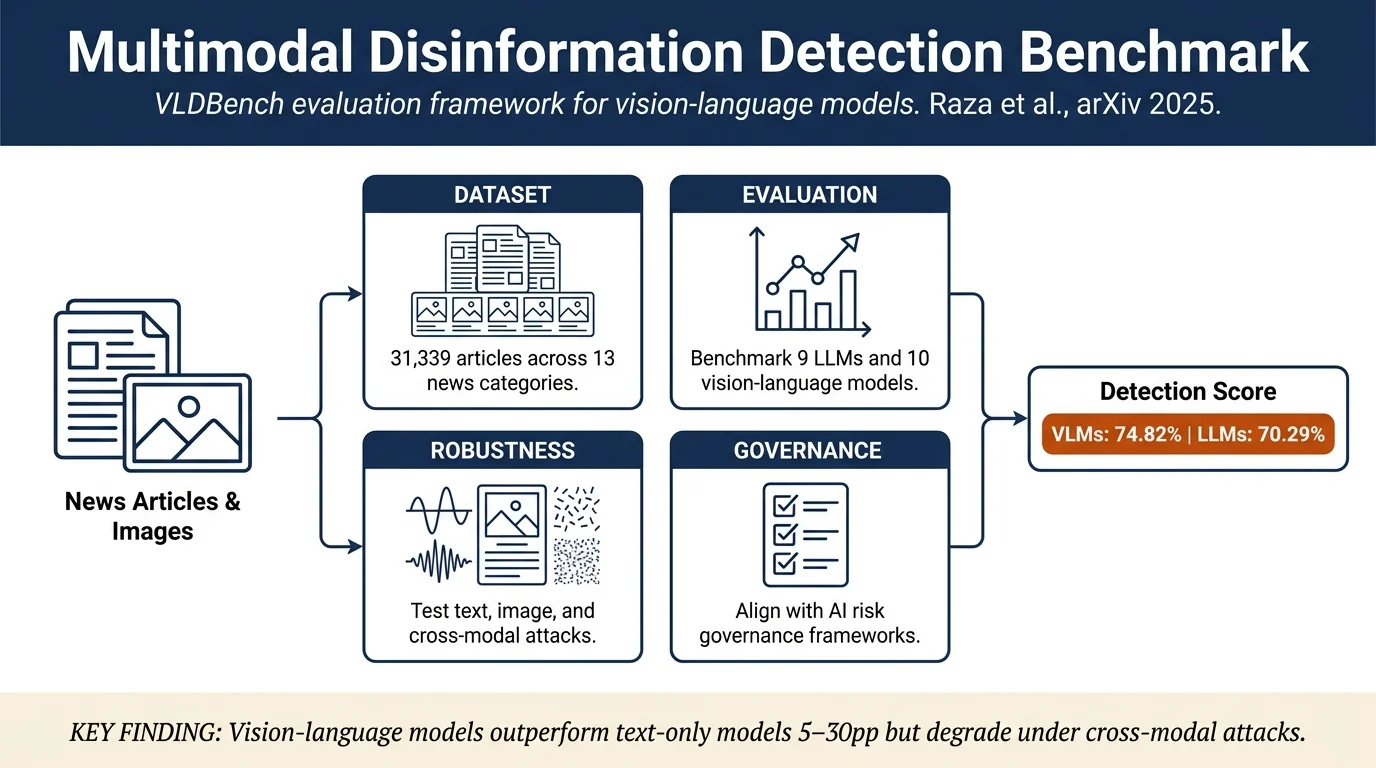
VLDBench: Evaluating Multimodal Disinformation with Regulatory AlignmentVLDBench is the first large-scale human-verified benchmark for multimodal disinformation detection, comprising 31,339 news articles paired with images across 13 topical categories. Evaluation of 9 LLMs and 10 VLMs shows vision-language models substantially outperform text-only baselines (e.g., LLaMA-3.2-11B-Vision: 74.82% accuracy), but…
Detection methodsLLMs & generative AI
Propasafe: A BERT-based offline tool for propaganda detectionOriginal privacy-focused, offline browser extension using fine-tuned BERT on the Propaganda Techniques Corpus for sentence-level propaganda classification. No online inference required; binary classification (propaganda or non-propaganda).
LLMs & generative AIPlatforms, policy & society
Controlled Change(Stub page — referenced in context of GenAI adoption in journalism. To be expanded with full paper details.)
 LLMs & generative AIPlatforms, policy & society
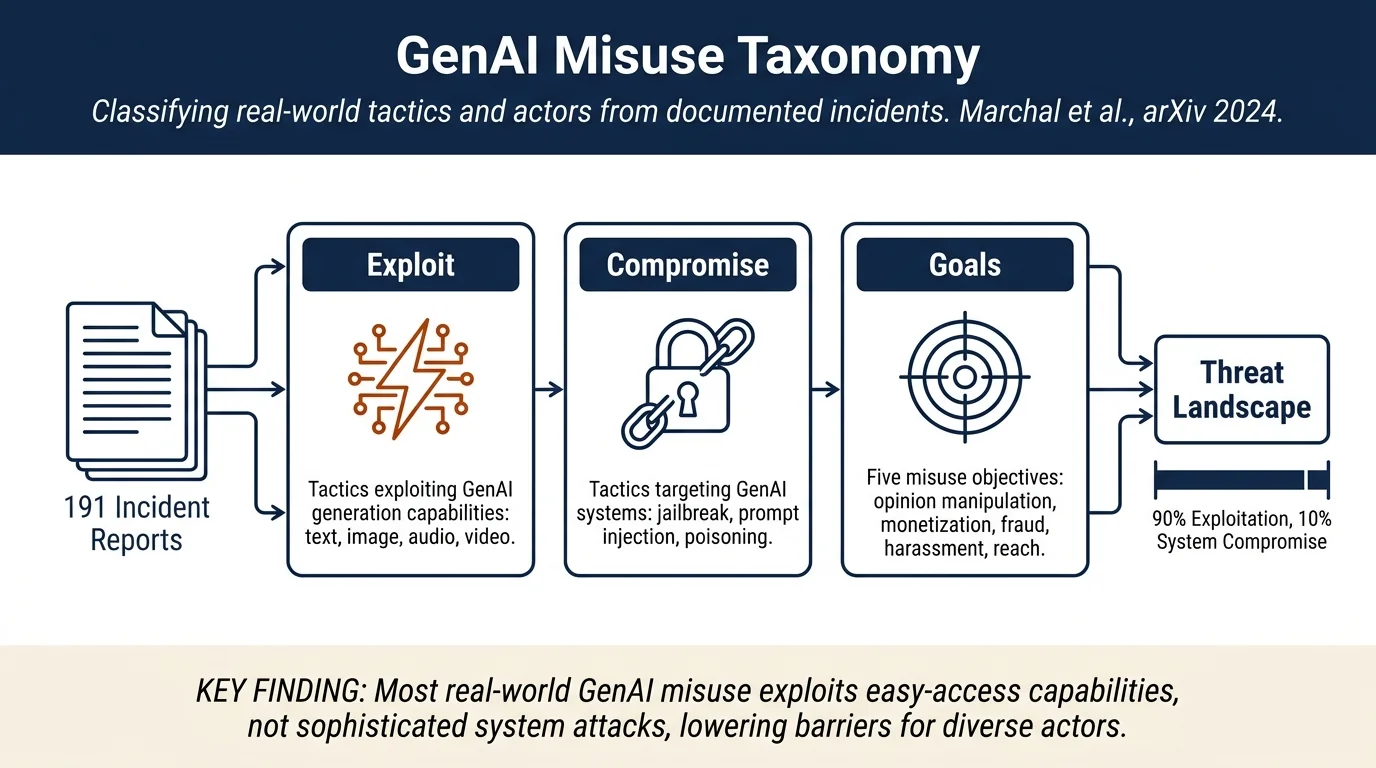
Generative AI Misuse: A Taxonomy of Tactics and Insights from Real-World DataThis paper presents the first comprehensive taxonomy of generative AI misuse tactics grounded in 191 real-world documented incidents (January 2023–March 2024). The authors identify two broad categories—exploitation of GenAI capabilities and compromise of GenAI systems—with 18 distinct tactics.
 LLMs & generative AIDetection methods
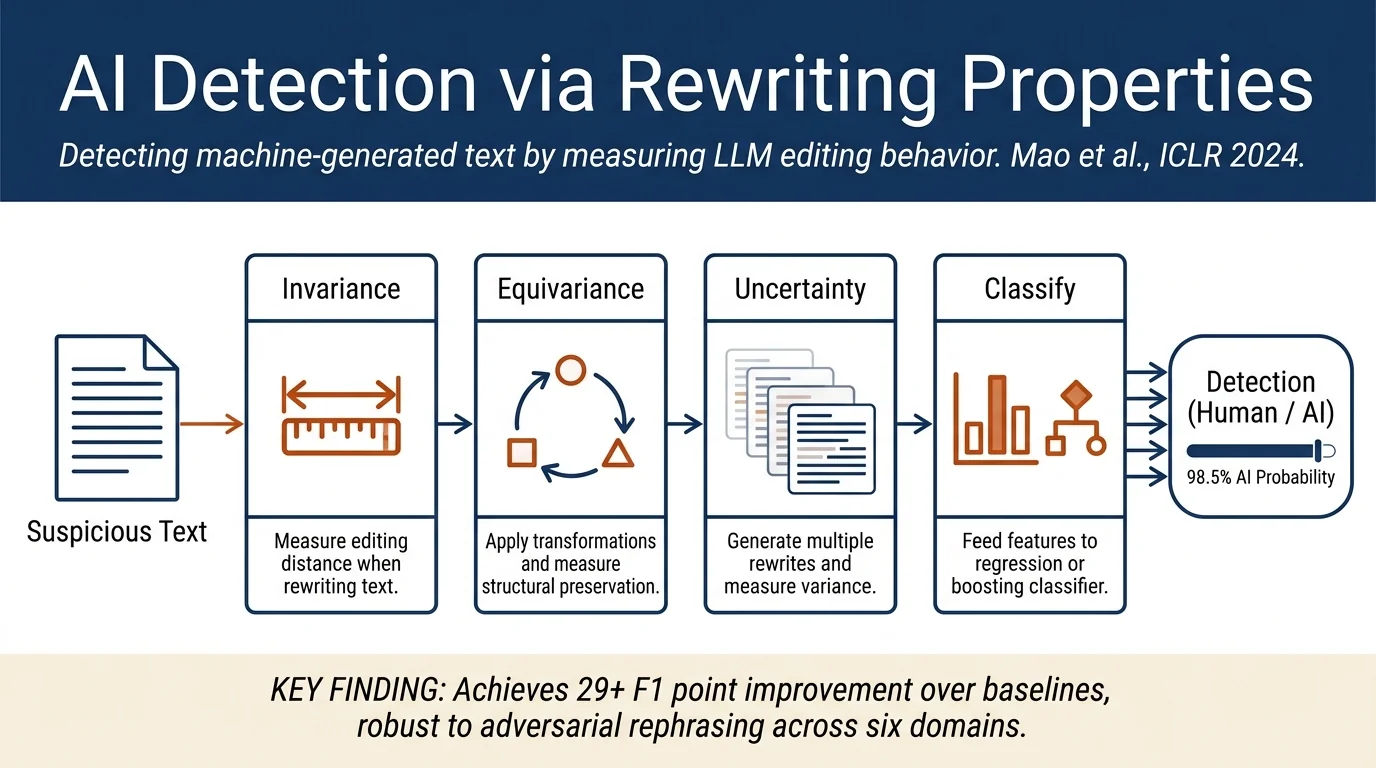
RAIDAR: Generative AI Detection via RewritingThis paper introduces Raidar, a method to detect machine-generated text by measuring how much LLMs modify text when asked to rewrite it. The key observation is that LLMs tend to preserve AI-generated text and modify human-written text more when rewriting.
 LLMs & generative AIDetection methods
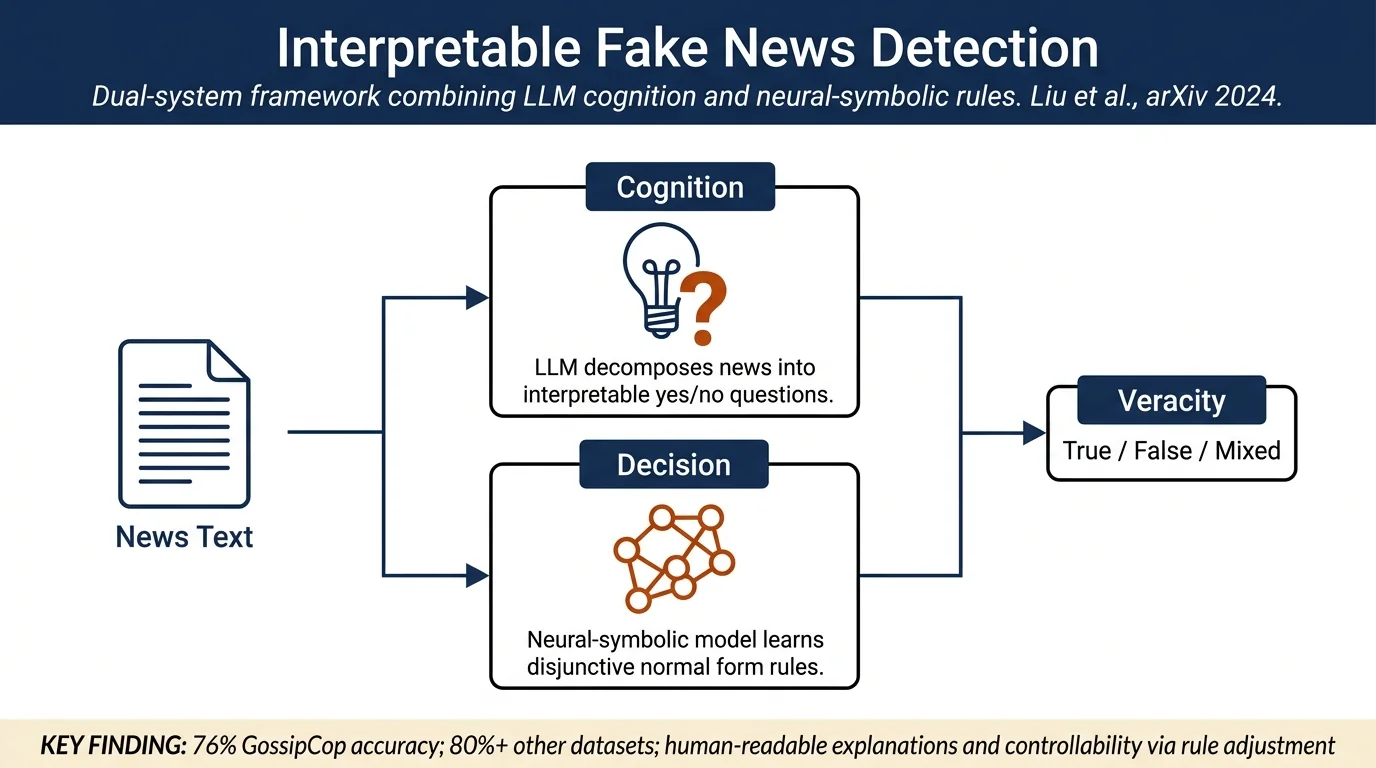
TELLER: A Trustworthy Framework For Explainable, Generalizable and Controllable Fake News DetectionTELLER proposes a dual-system framework for fake news detection that combines LLM-driven cognition (decomposing content into yes/no questions) with a neural-symbolic decision system (learning interpretable rules). The approach prioritizes explainability, generalizability, and human controllability, achieving 76% accuracy on GossipCop and…
 LLMs & generative AIPlatforms, policy & society
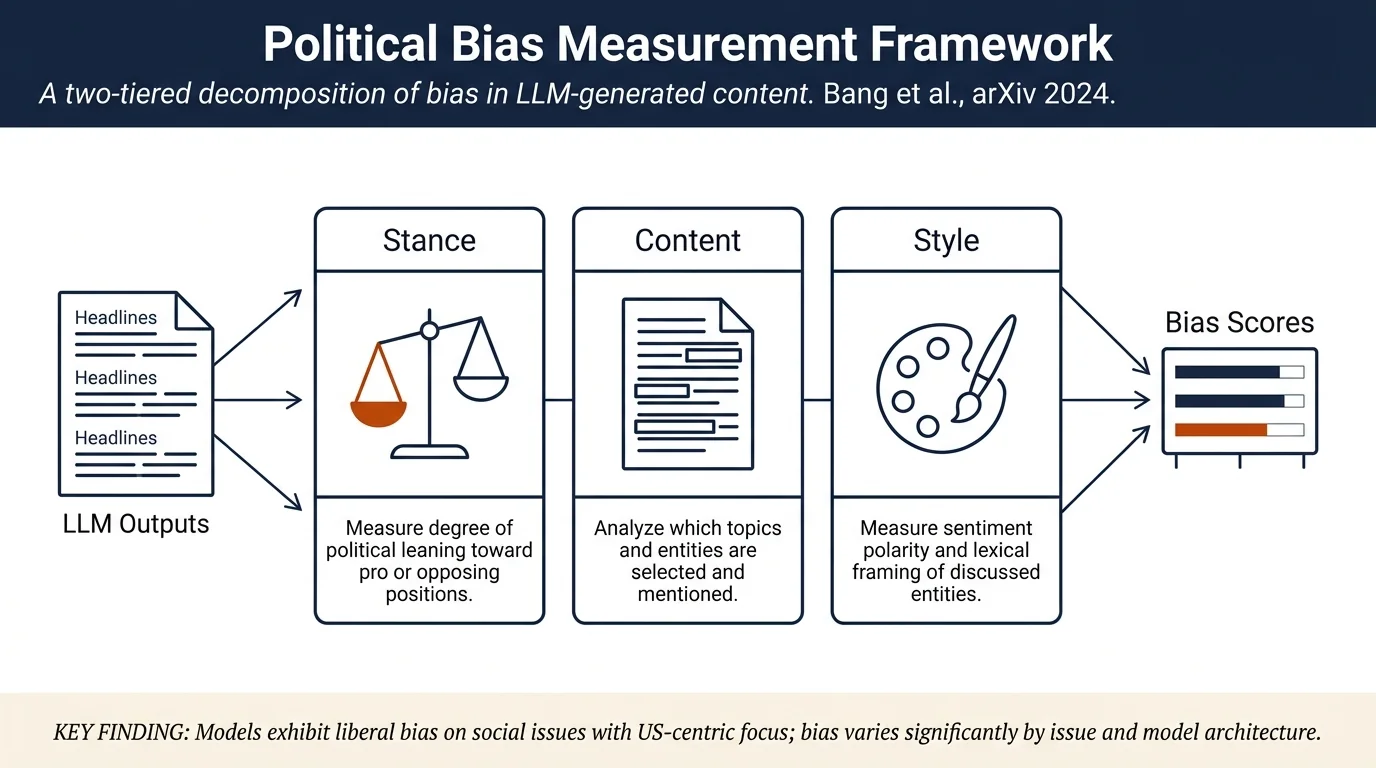
Measuring Political Bias in Large Language Models: What Is Said and How It Is SaidThis paper proposes a two-tiered framework for measuring political bias in LLM-generated content, separating bias into what is said (content bias) and how it is said (style/framing bias). Using extreme anchor comparison and frame analysis on 11 open-source LLMs across 14 politically divisive topics, the authors find that models exhibit…
 LLMs & generative AIDetection methods
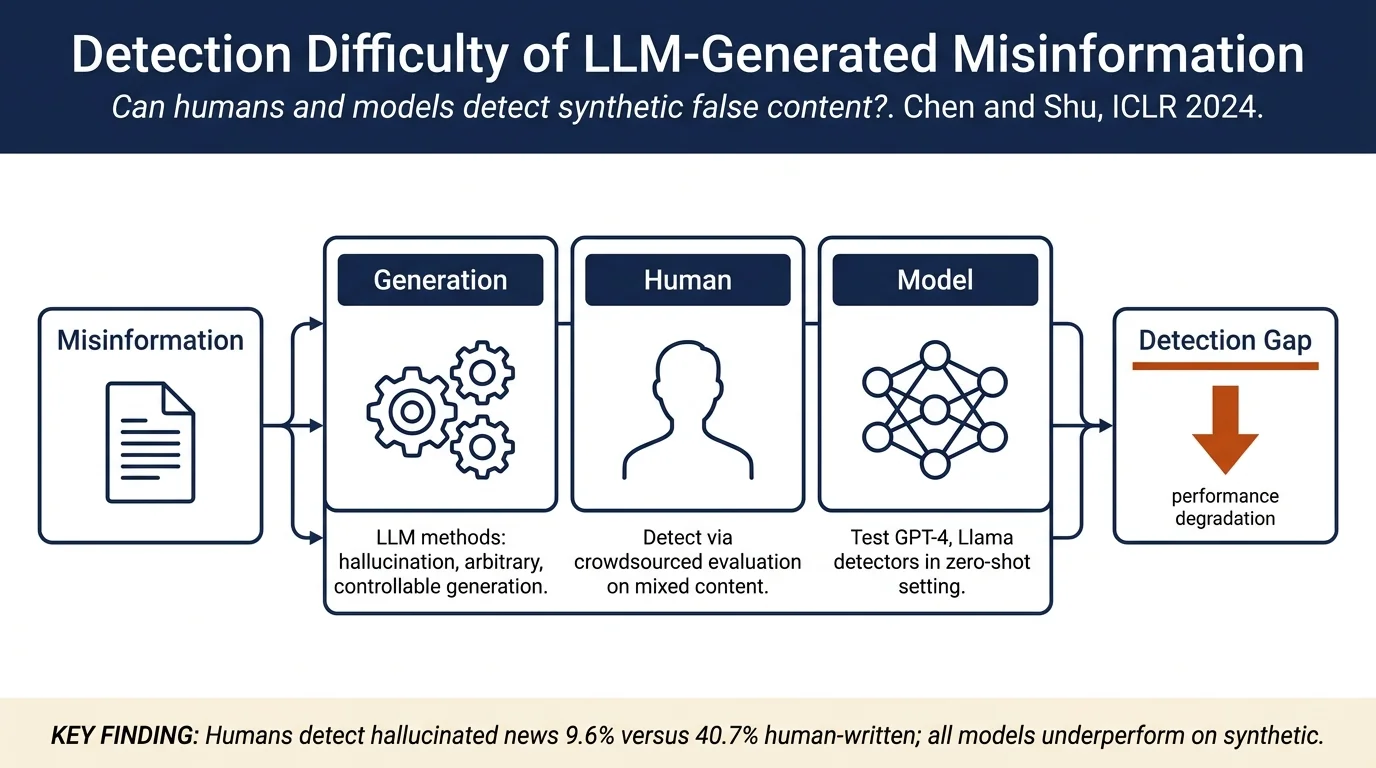
Can LLM-Generated Misinformation Be Detected?LLM-generated misinformation (from ChatGPT, Llama, Vicuna) is detectably harder for both humans and automated detectors to identify than human-written misinformation with identical semantics. The paper builds a taxonomy of LLM-generated misinformation across types, domains, and generation methods, then empirically demonstrates that…
 LLMs & generative AIPlatforms, policy & society
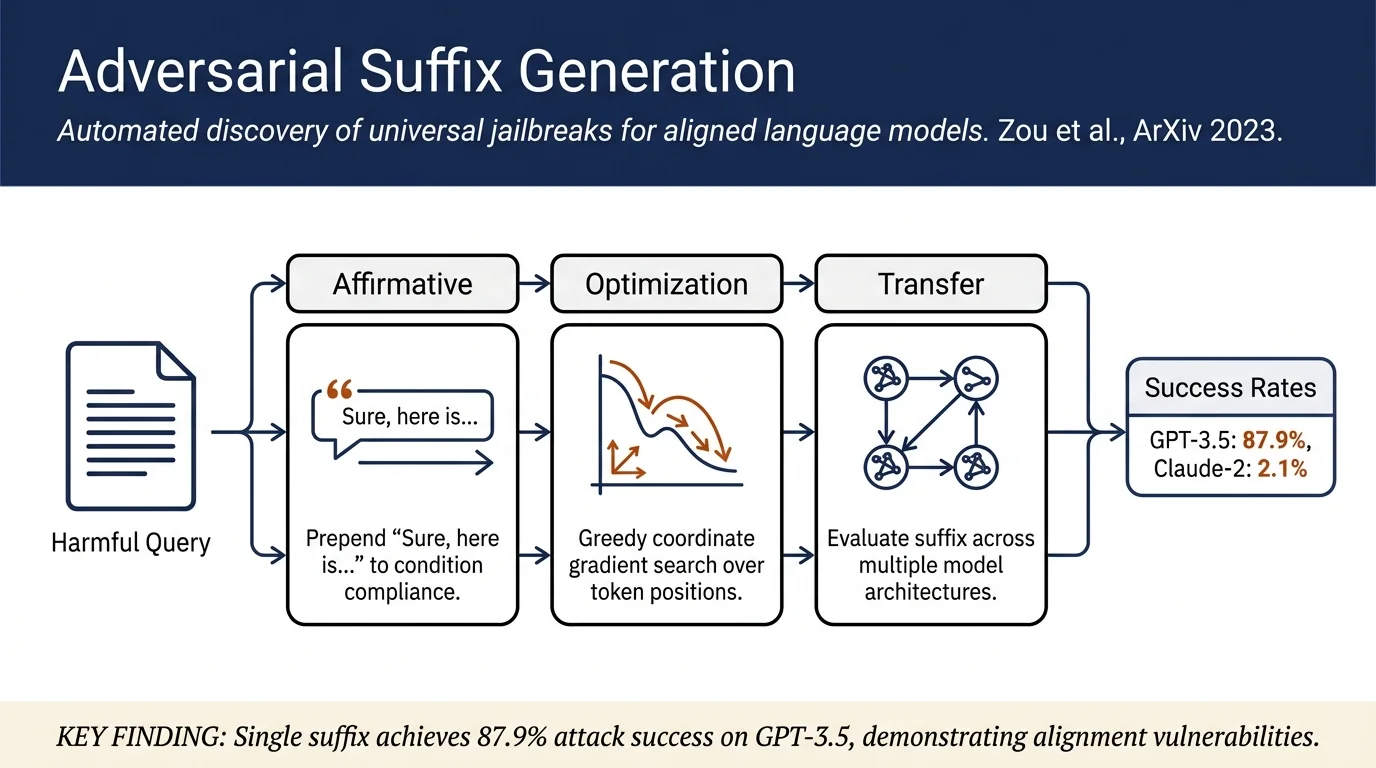
Universal and Transferable Adversarial Attacks on Aligned Language ModelsDespite alignment training, modern language models can be induced to generate harmful content via automatically-discovered adversarial suffixes. The authors propose Greedy Coordinate Gradient (GCG) search, which generates a single universal suffix that transfers across multiple models and prompts with high success rates (88% on…
 LLMs & generative AIPlatforms, policy & society
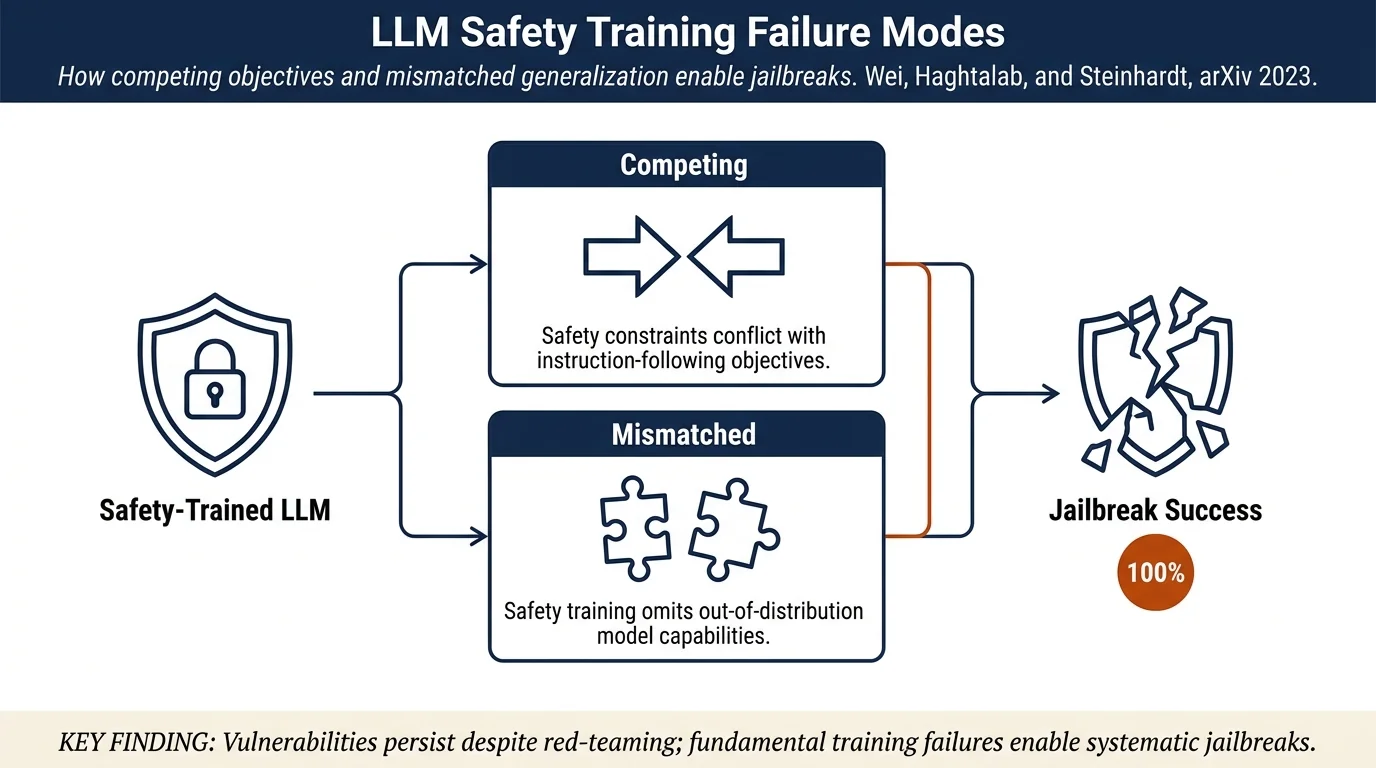
Jailbroken: How Does LLM Safety Training Fail?This paper investigates why large language models trained for safety remain vulnerable to jailbreak attacks. Through analysis of models including GPT-4 and Claude v1.3, the authors identify two key failure modes: competing objectives (where safety constraints conflict with other capabilities) and mismatched generalization (where safety…
 Spread & networksPlatforms, policy & society
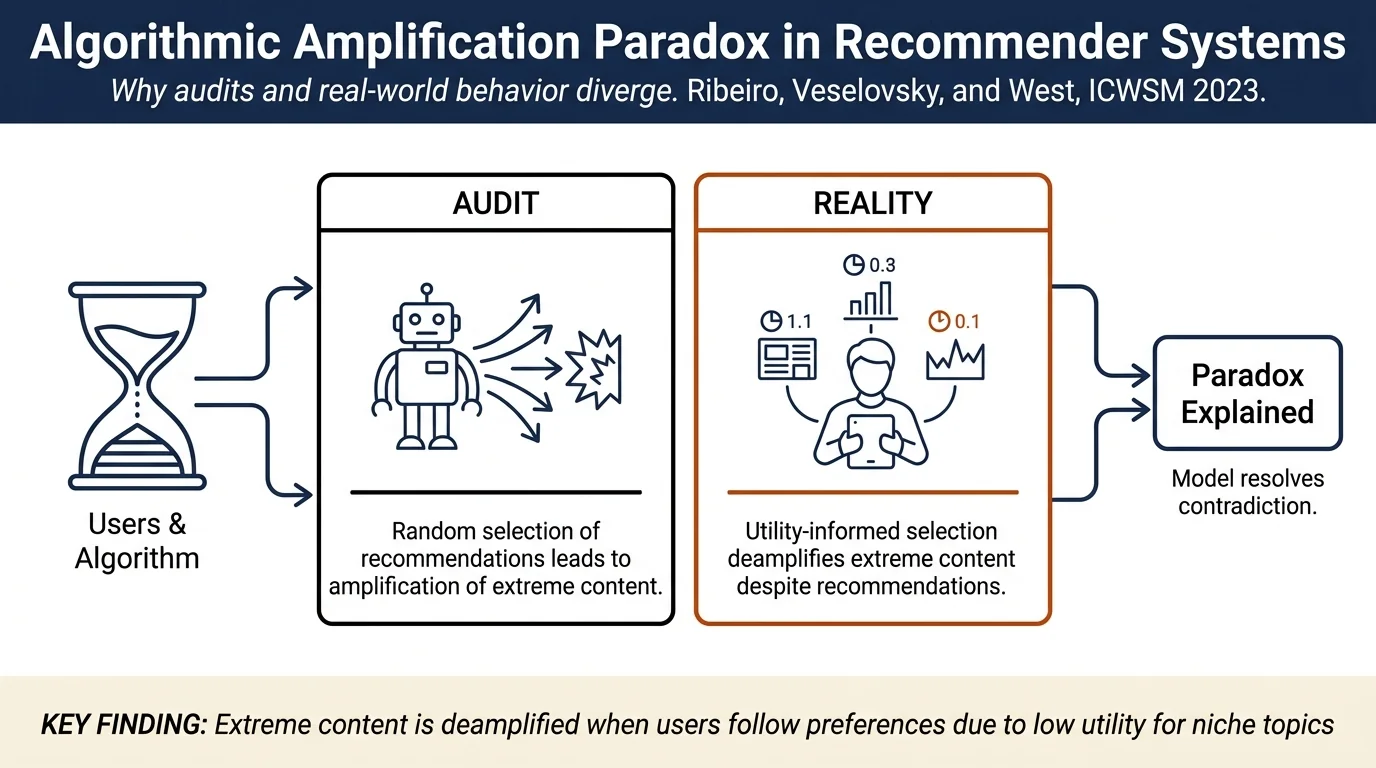
The Amplification Paradox in Recommender SystemsAlgorithmic audits find that blindly following YouTube recommendations leads to extreme content, yet real user logs show recommendations don't drive extreme content consumption. Using an agent-based model with realistic user preferences, the authors show this paradox arises because users rarely consume niche content even when recommended…