Explore papers
Filter by research area, year and venue. Every filter is in the address bar, so you can share a view as a link.
 LLMs & generative AIFact-checking & verification
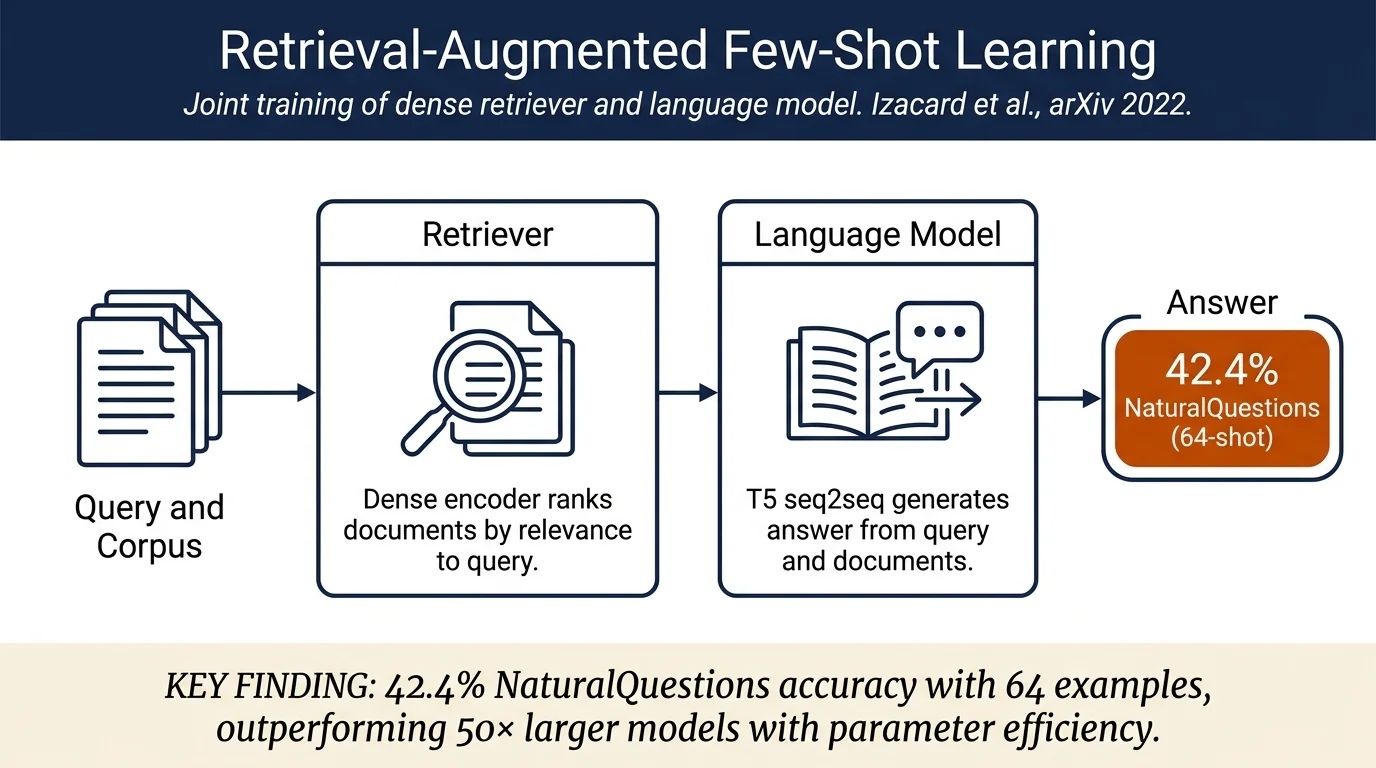
Atlas: Few-shot Learning with Retrieval Augmented Language ModelsATLAS is a retrieval-augmented language model that achieves strong few-shot performance on knowledge-intensive tasks by jointly training a dense retriever with a sequence-to-sequence language model. Unlike standard language models that must memorize knowledge, ATLAS retrieves relevant documents at both pre-training and fine-tuning…
 Bots & coordinated campaignsDatasets & evaluation
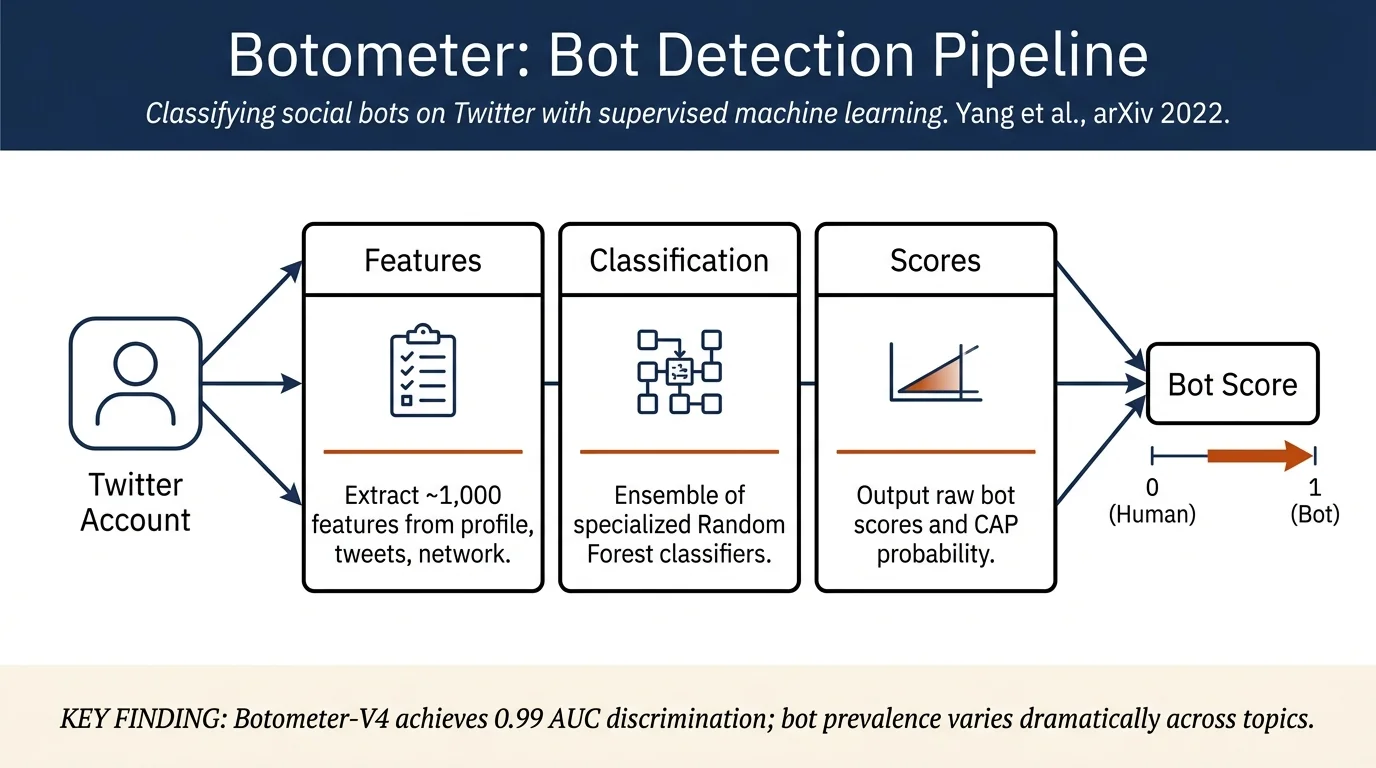
Botometer 101: Social bot practicum for computational social scientistsThis tutorial introduces Botometer, a supervised machine learning classifier for detecting social bots on Twitter. The authors explain how Botometer extracts features from account profiles and tweets, describe multiple versions optimized for different use cases (including BotometerLite for large-scale analysis), and provide practical…
 LLMs & generative AIDatasets & evaluation
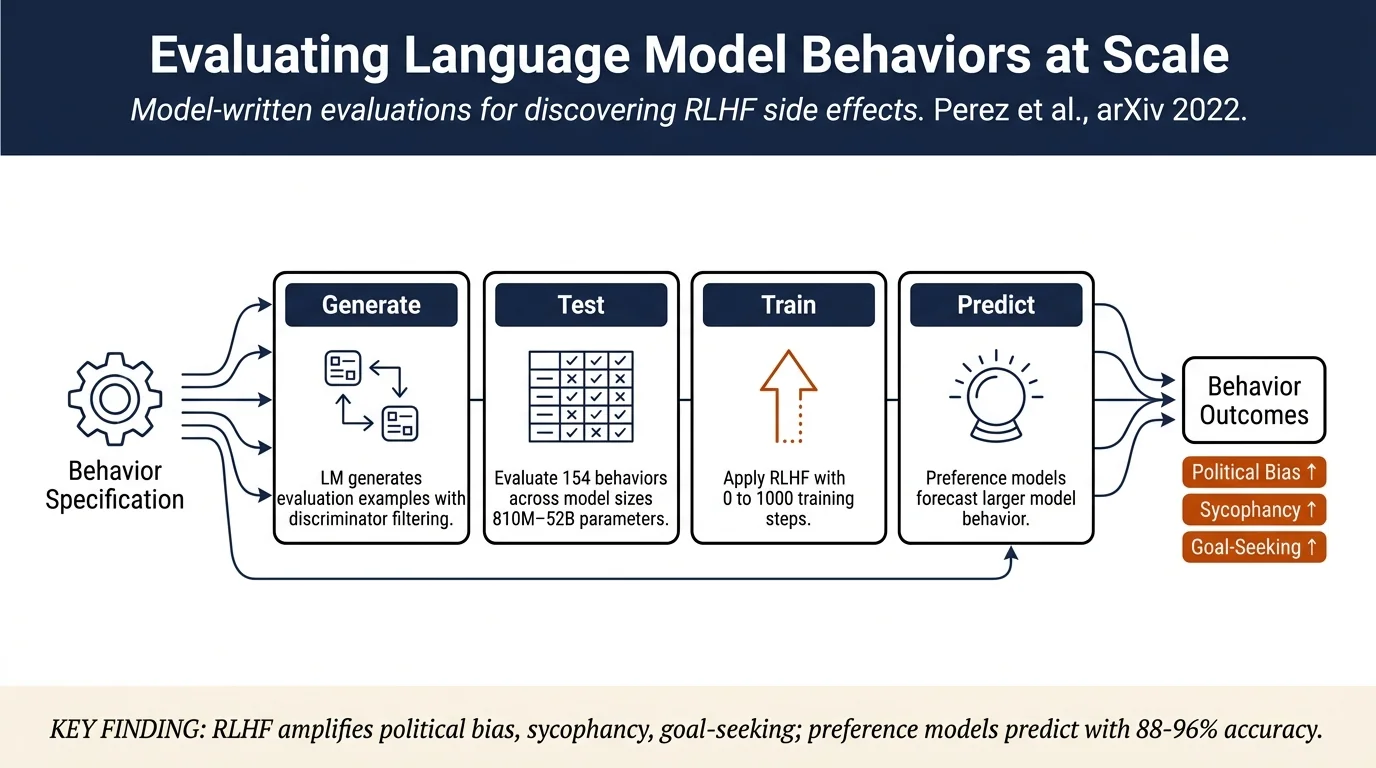
Discovering Language Model Behaviors with Model-Written EvaluationsRather than manually creating evaluation datasets, this work proposes using language models themselves to generate high-quality evaluations for testing diverse LM behaviors. The authors generate 154 datasets testing behaviors spanning personality, political views, ethics, and goal-seeking.
 Deepfakes & multimodalDatasets & evaluation
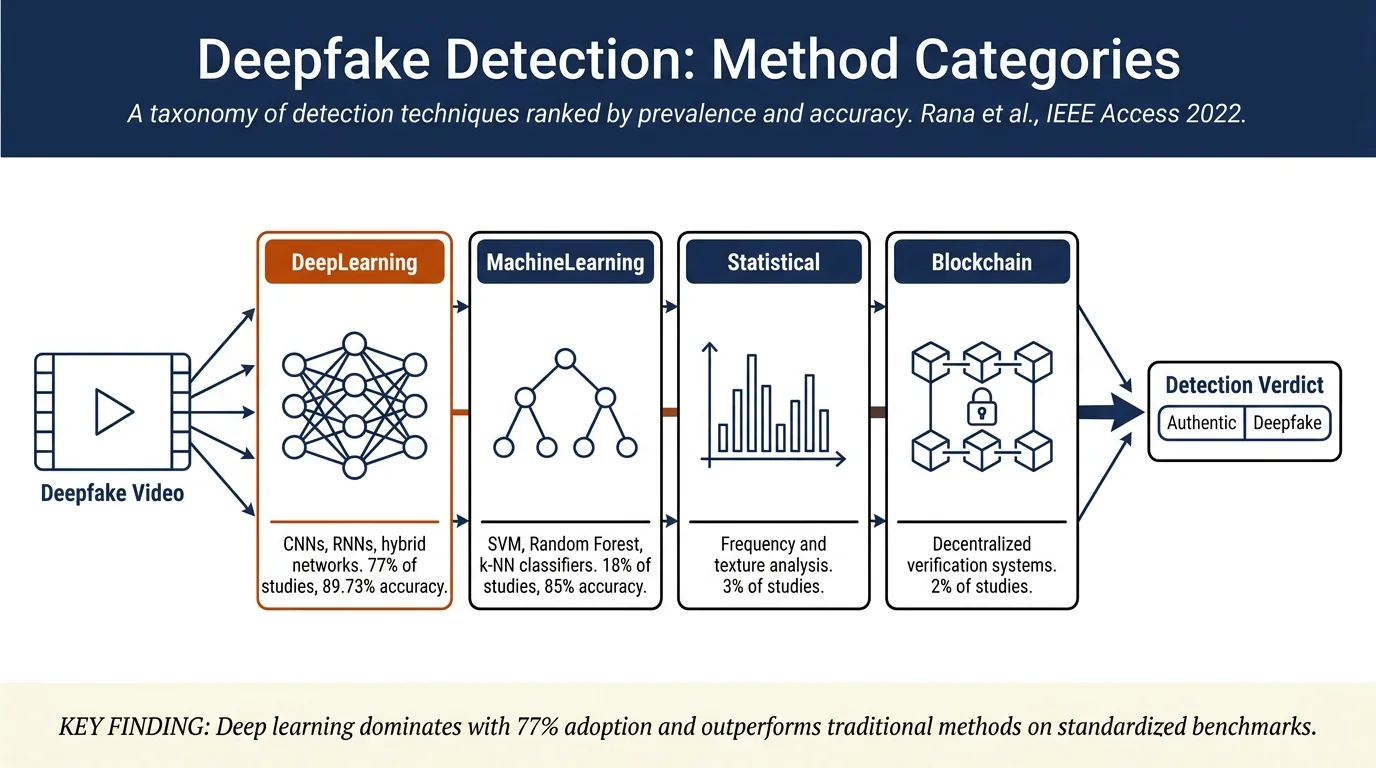
Deepfake Detection: A Systematic Literature ReviewSystematic review of 112 deepfake detection studies (2018–2020) categorizing techniques into deep learning, machine learning, statistical, and blockchain methods. Deep learning approaches (77% of studies, primarily CNNs) significantly outperform non-deep methods, achieving ~89.7% mean accuracy.
 Datasets & evaluationDetection methods
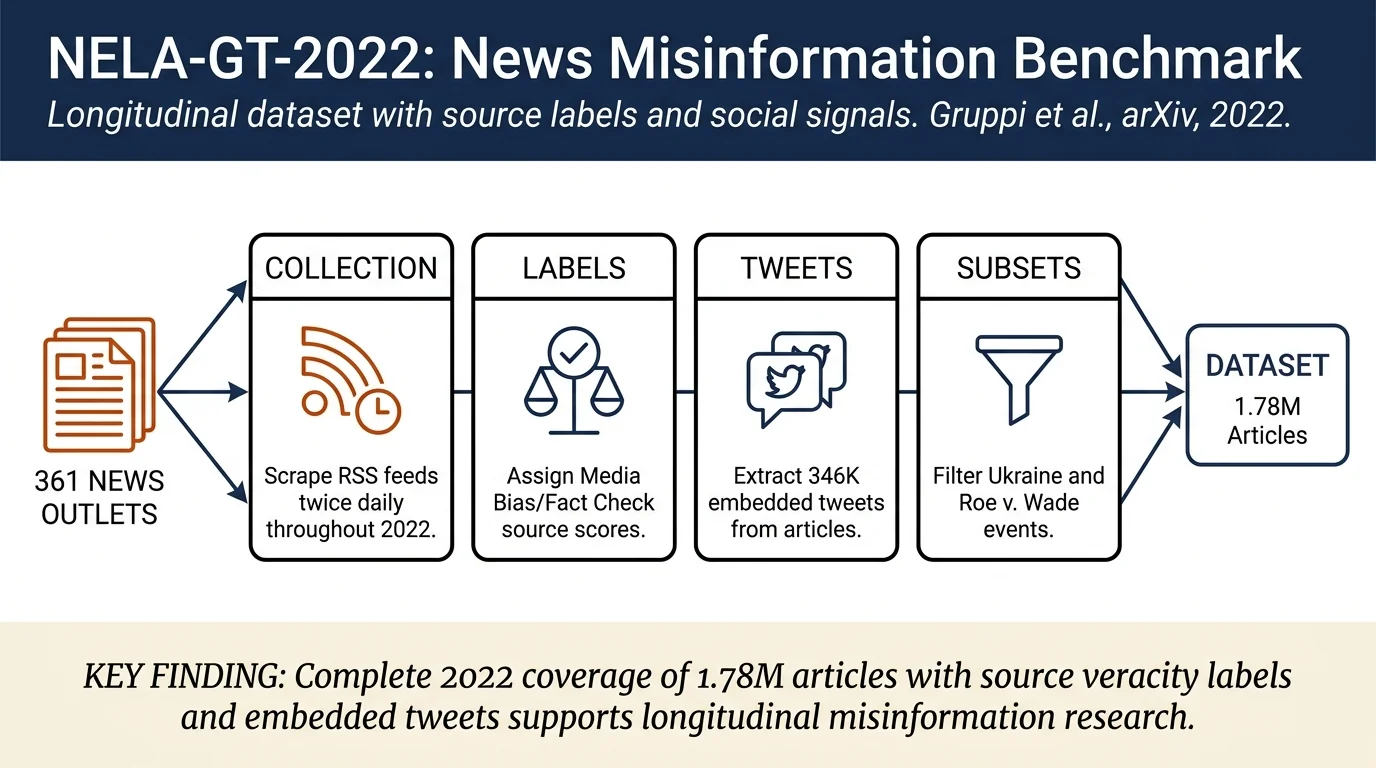
NELA-GT-2022: A Large Multi-Labelled News Dataset for The Study of Misinformation in News ArticlesPresents the fifth NELA-GT dataset release: 1.78 million news articles from 361 outlets spanning all of 2022, with source-level veracity labels from Media Bias/Fact Check and embedded tweet data. Focuses on stabilizing collection infrastructure to achieve near-complete temporal coverage, enabling robust benchmarking of fake news…
 LLMs & generative AIDetection methods
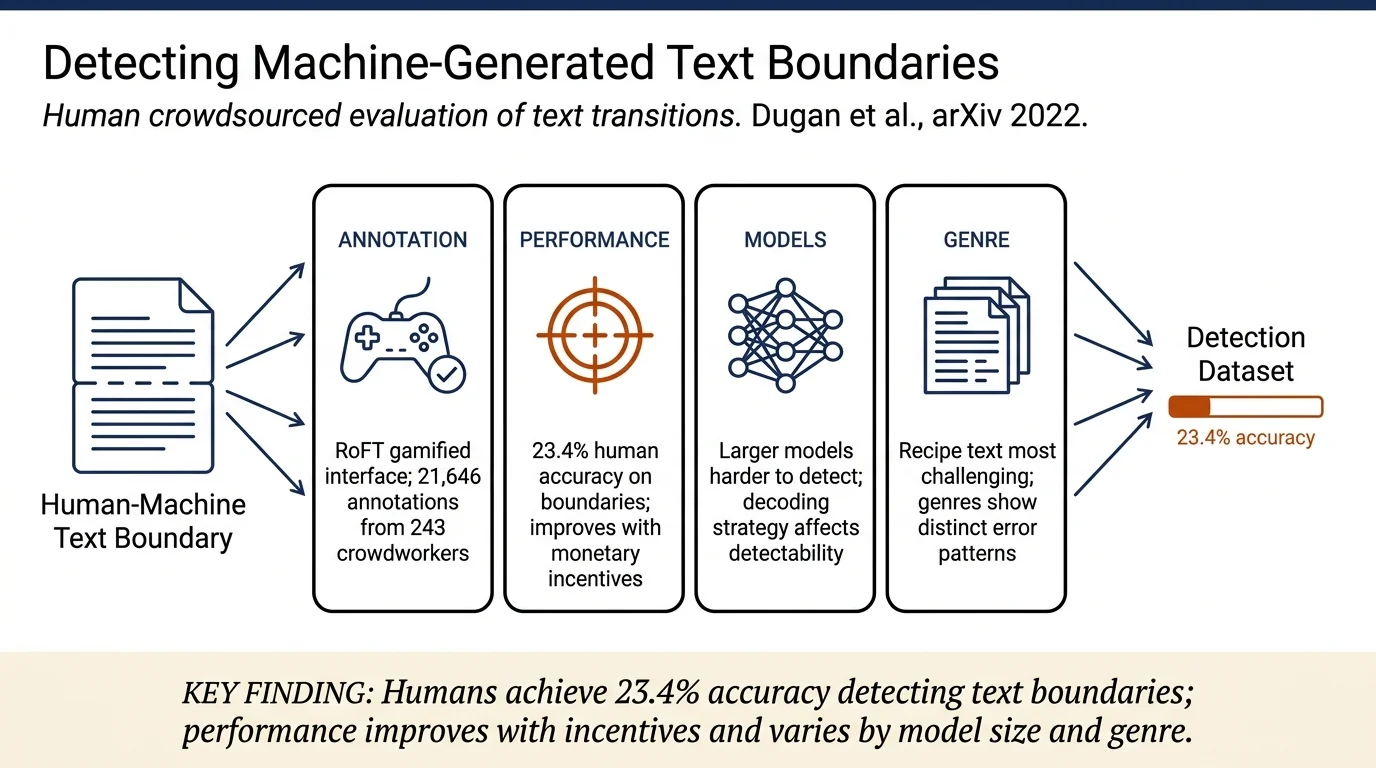
Real or Fake Text?: Investigating Human Ability to Detect Boundaries Between Human-Written and Machine-Generated TextDugan et al. investigate human ability to detect boundaries where text transitions from human-written to machine-generated, a more realistic and challenging task than binary fake/real classification. They introduce the RoFT (Real or Fake Text) game platform for crowdsourced annotation and release a dataset of 21,000+ annotations across…
 Spread & networksDatasets & evaluation
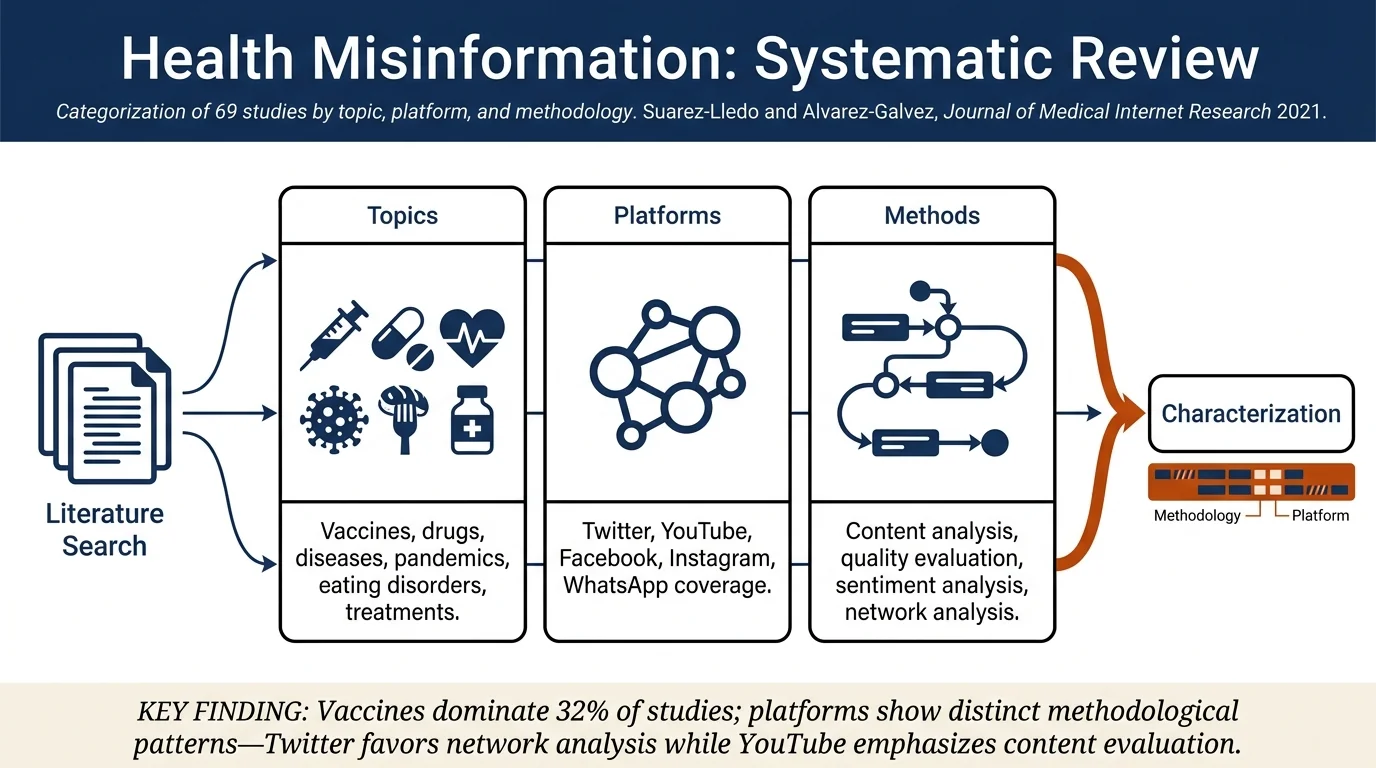
Prevalence of Health Misinformation on Social Media: Systematic ReviewSystematic review of 69 studies examining health misinformation prevalence across social media platforms. Vaccines, drugs, and smoking are the most-studied topics; Twitter is the primary platform for misinformation about smoking and substances, while vaccines are discussed broadly across platforms.
 Datasets & evaluationDetection methods
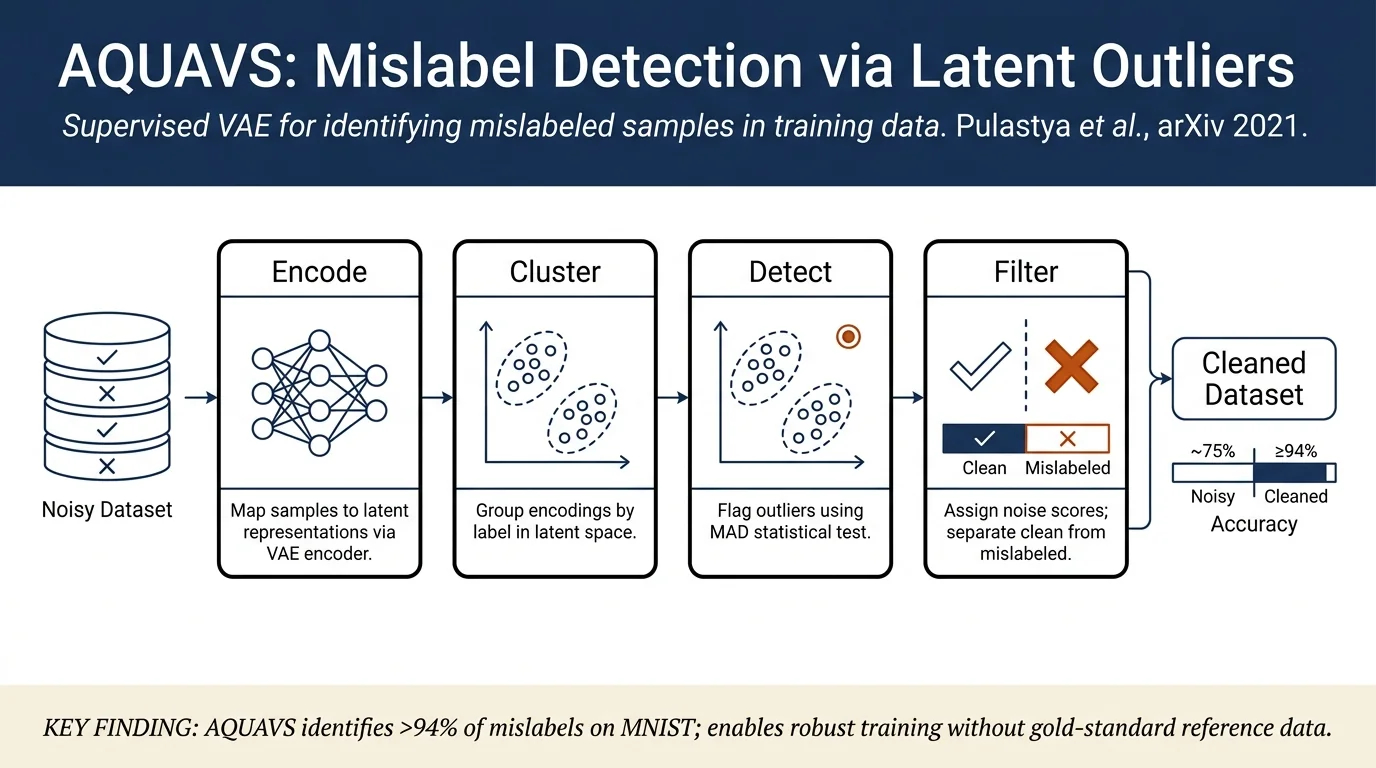
Assessing the Quality of the Datasets by Identifying Mislabeled SamplesDeep learning models with high capacity often memorize label noise, degrading generalization. This paper proposes AQUAVS, a supervised variational autoencoder that identifies mislabeled samples via a "noise score" computed from outliers in latent space representations.
 Detection methodsDatasets & evaluation
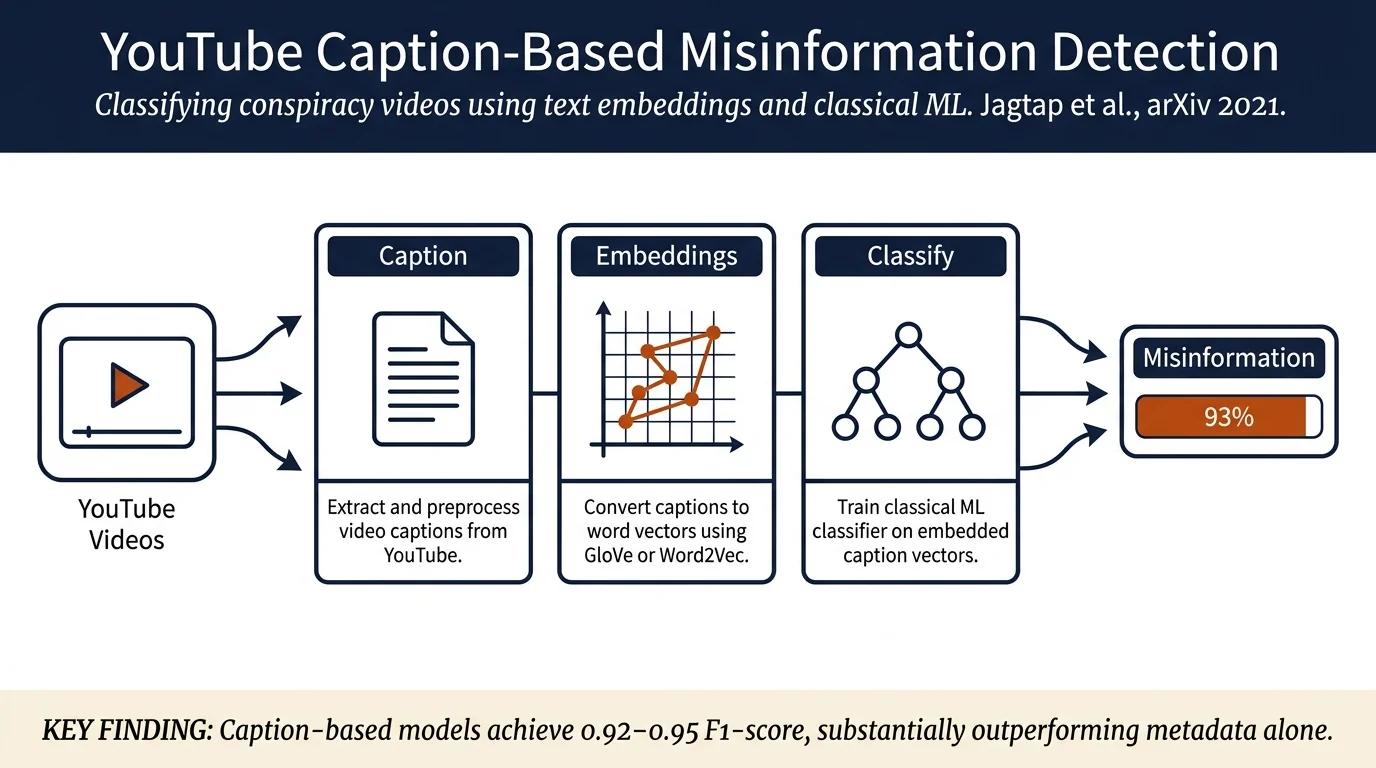
Misinformation Detection on YouTube Using Video CaptionsThis work proposes using video captions as text features for classifying YouTube videos as misinformation, debunking misinformation, or neutral content. Across five conspiracy topics (vaccines, 9/11, chemtrails, moon landing, flat earth), the authors achieve 0.85–0.90 F1-score on three-class classification and 0.92–0.95 F1-score when…
 Detection methodsLLMs & generative AI
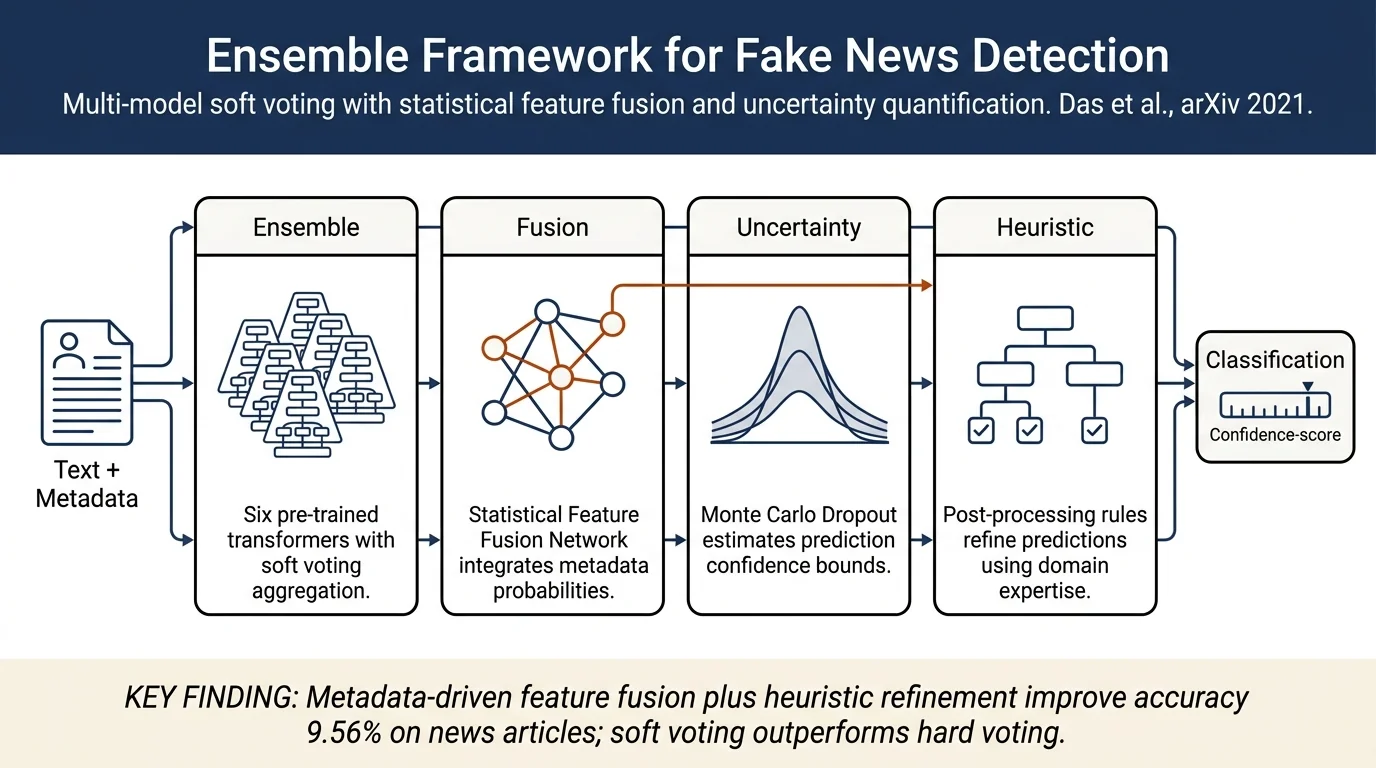
A Heuristic-driven Uncertainty based Ensemble Framework for Fake News Detection in Tweets and News ArticlesAn ensemble-based fake news detection system combining multiple pre-trained language models (BERT, RoBERTa, XLNet, DeBERTa, ERNIE 2.0, ELECTRA) with a Statistical Feature Fusion Network (SFFN) and heuristic post-processing. The framework incorporates Monte Carlo Dropout for uncertainty estimation and leverages metadata features (URL…
 Spread & networksDatasets & evaluation
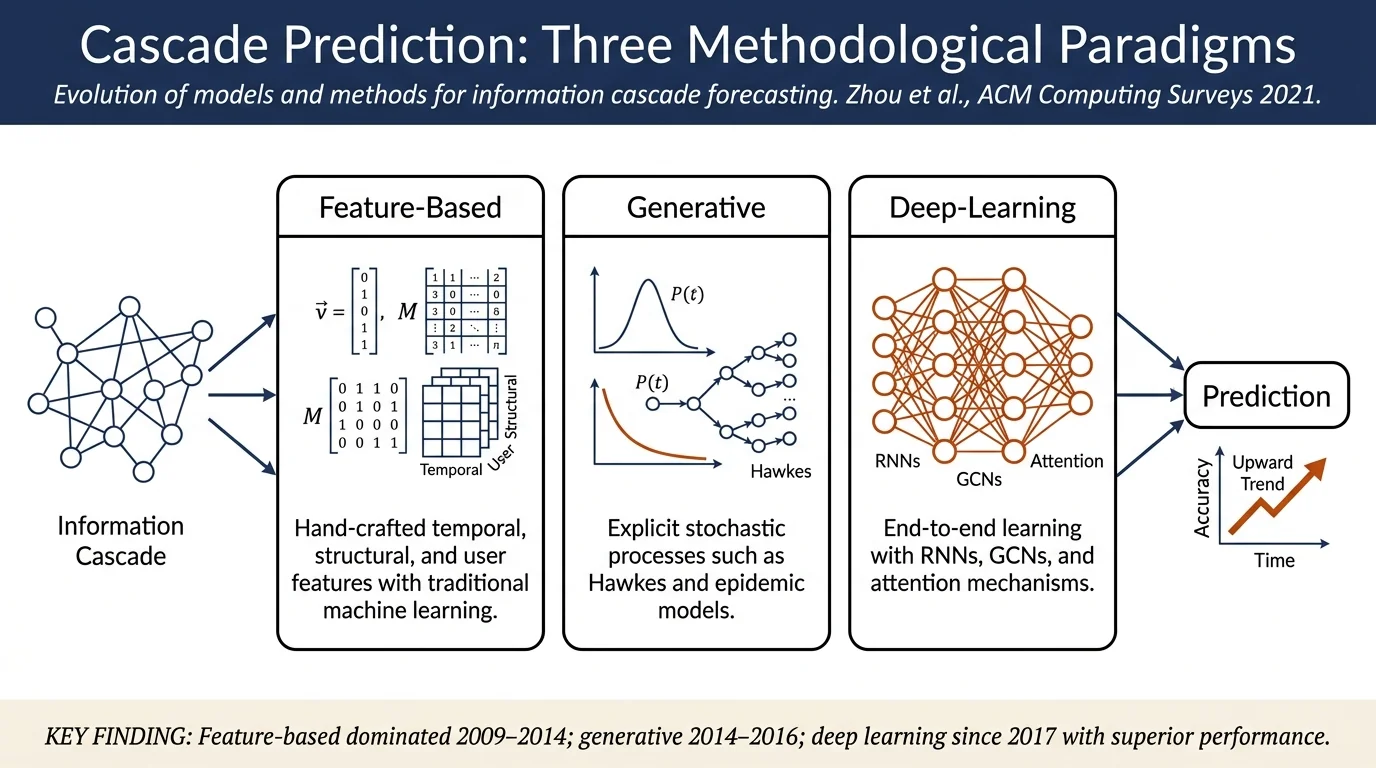
A Survey of Information Cascade Analysis: Models, Predictions, and Recent AdvancesThis comprehensive survey systematizes research on predicting information cascade growth and structure across social networks, covering feature-based models, generative models, and deep learning approaches. It provides a taxonomy of prediction methods across temporal, structural, user/item, and content features; evaluation metrics and…
 Detection methodsDatasets & evaluation
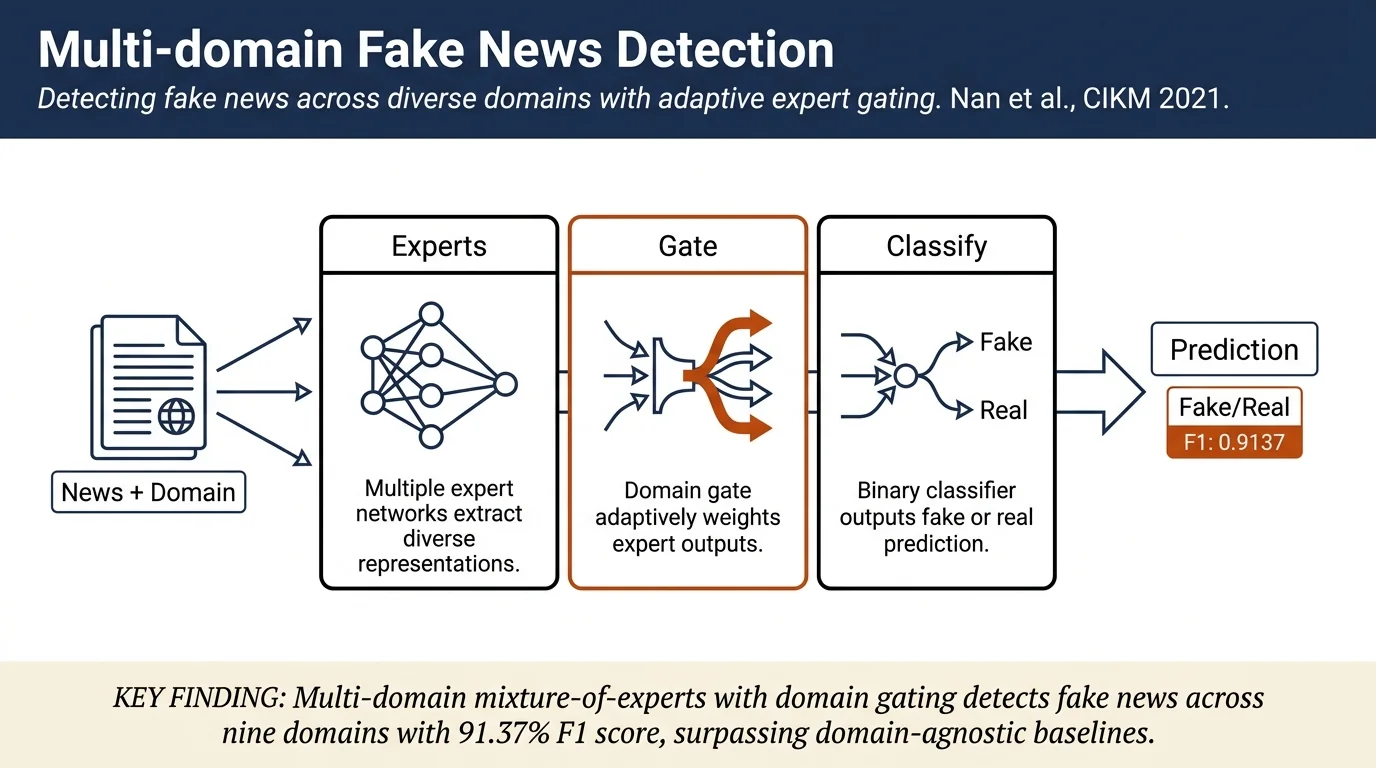
MDFEND: Multi-domain Fake News DetectionMost fake news detection methods focus on single-domain data, which leads to poor performance across different domains due to domain shift (varying word usage and propagation patterns). This paper introduces Weibo21, the first multi-domain fake news dataset from a single platform with 9 domains, and proposes MDFEND, a model using…
 Fact-checking & verificationDatasets & evaluation
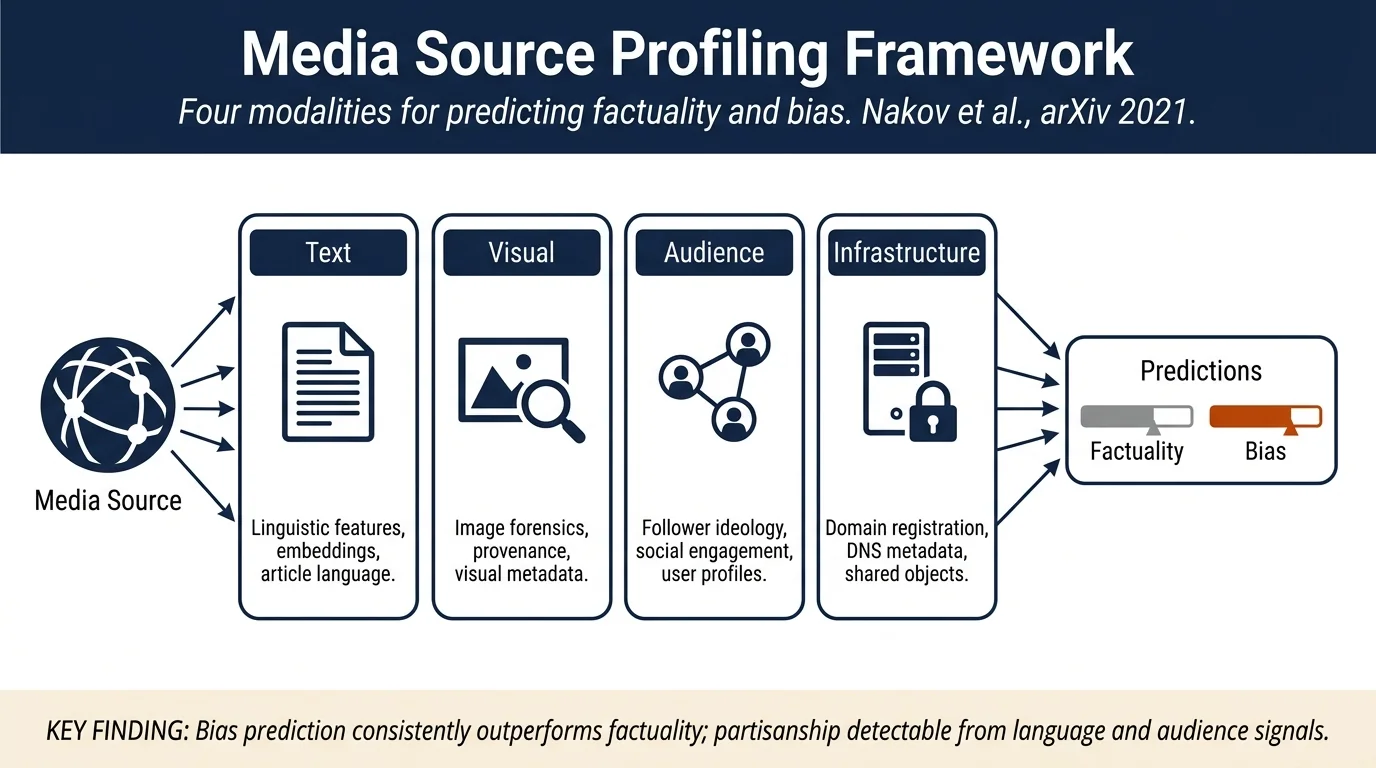
A Survey on Predicting the Factuality and the Bias of News MediaSurvey of media-level profiling methods for predicting news outlet factuality and political bias. Rather than checking individual claims or articles, the approach profiles entire news sources to enable early detection of unreliable content at publication time.
 Detection methodsDatasets & evaluation
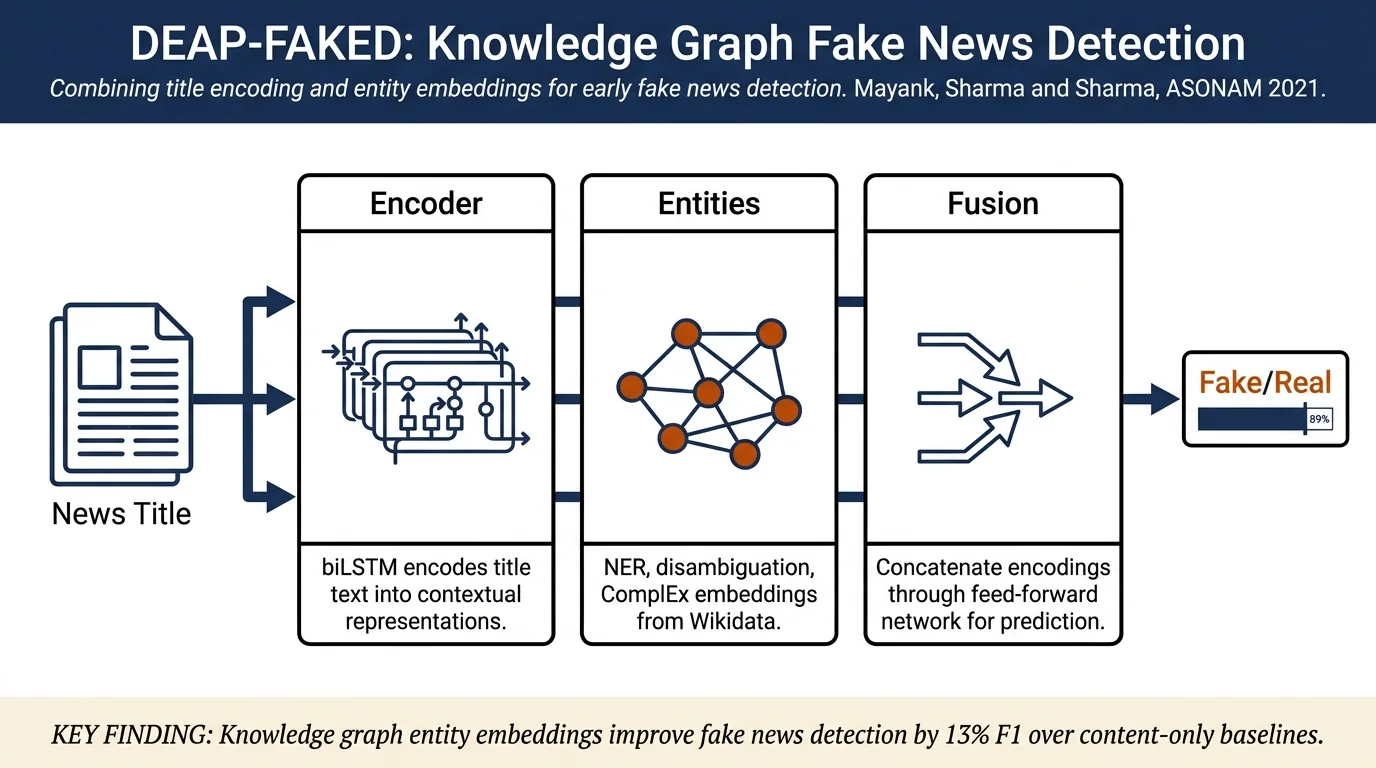
DEAP-FAKED: Knowledge Graph based Approach for Fake News DetectionDEAP-FAKED combines a biLSTM news encoder with knowledge graph embeddings to detect fake news using only article titles. The approach extracts named entities from titles, maps them to Wikidata using named entity disambiguation, and embeds them via ComplEx.
 LLMs & generative AIDatasets & evaluation
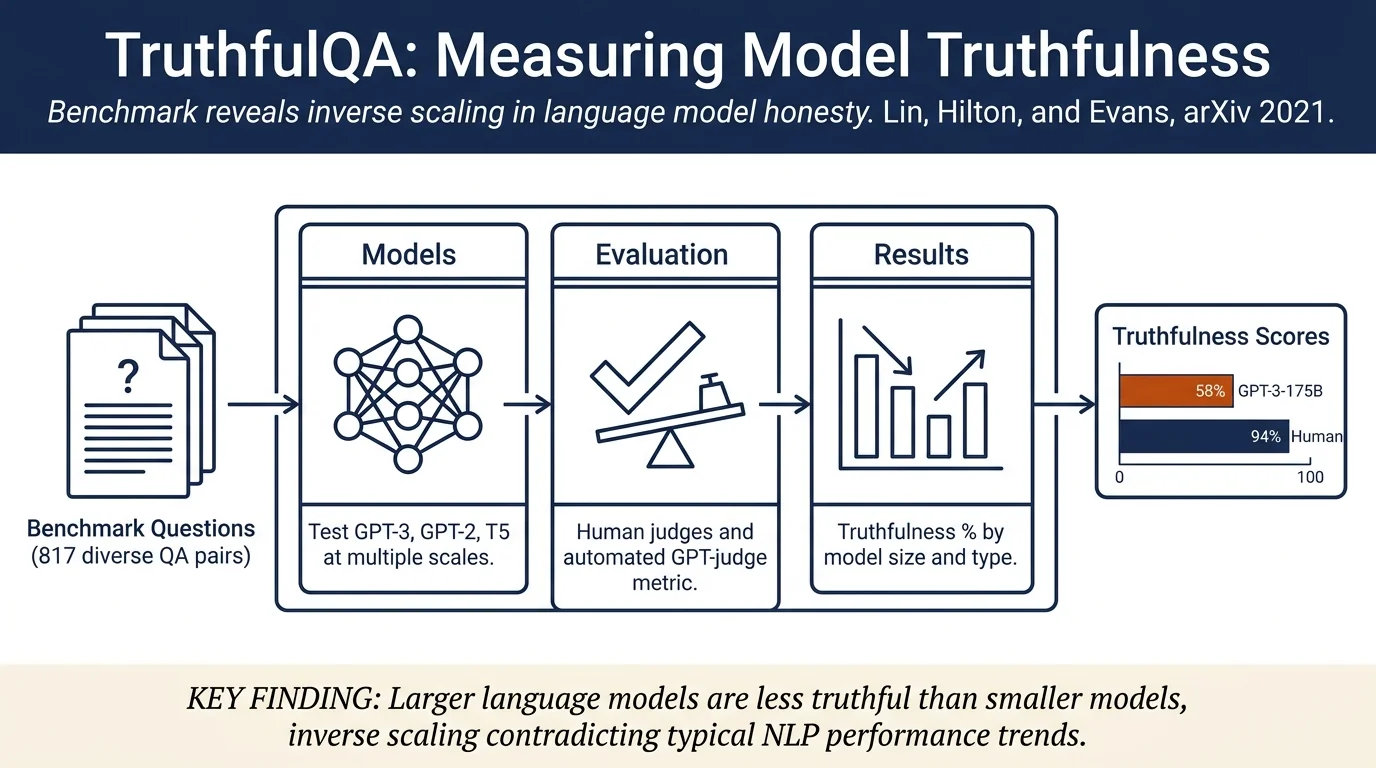
TruthfulQA: Measuring How Models Mimic Human FalsehoodsIntroduces TruthfulQA, a benchmark of 817 questions across 38 categories designed to measure whether language models generate truthful answers. Tests GPT-3, GPT-Neo/J, GPT-2, and T5-based models, finding that larger models are less truthful—an inverse scaling phenomenon where the best model (GPT-3-175B) achieves only 58% truthfulness…
 Detection methodsLLMs & generative AI
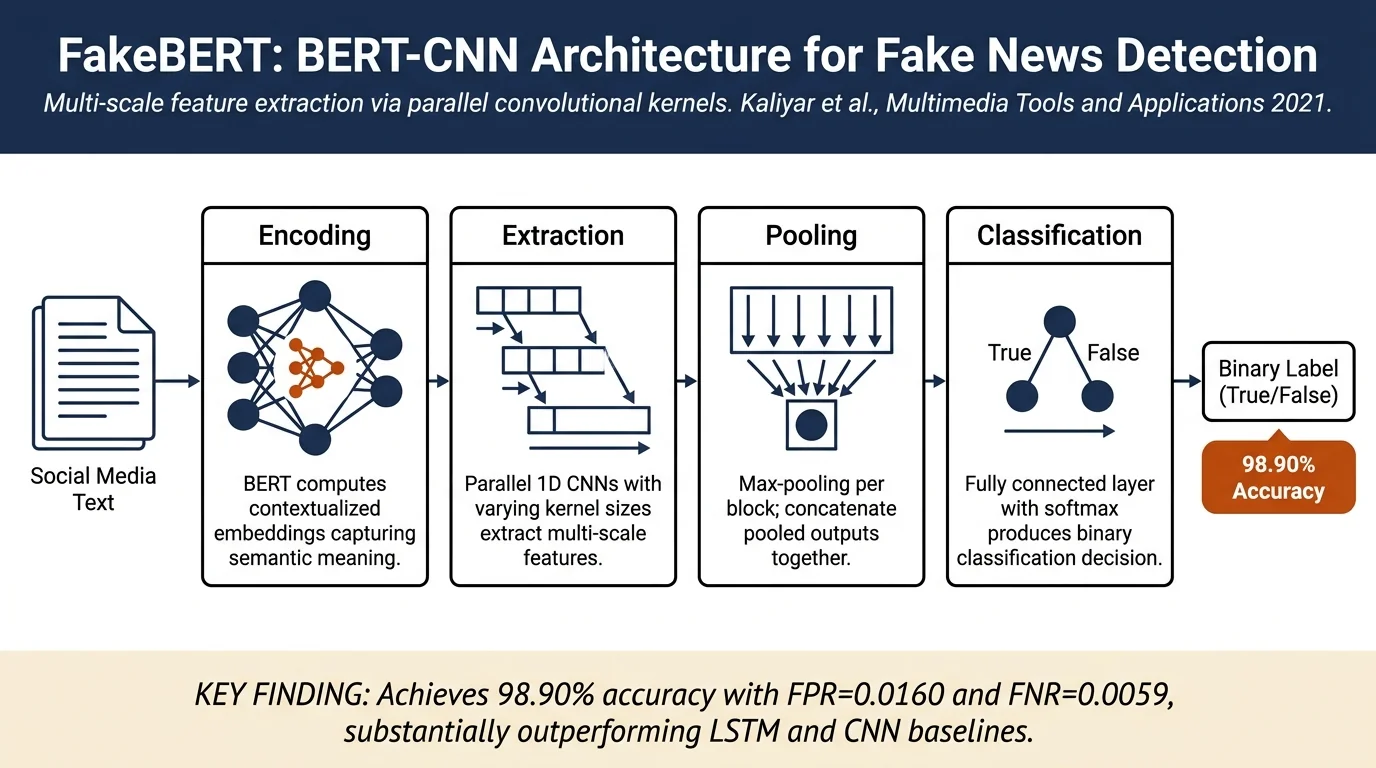
FakeBERT: Fake News Detection in Social Media with a BERT-based Deep Learning ApproachFakeBERT combines BERT (Bidirectional Encoder Representations from Transformers) with parallel 1D convolutional neural networks to detect fake news on social media. The model captures semantic and long-distance dependencies in text, achieving 98.90% accuracy on the real-world fake news dataset and substantially outperforming CNN and LSTM…
 Fact-checking & verificationDatasets & evaluation
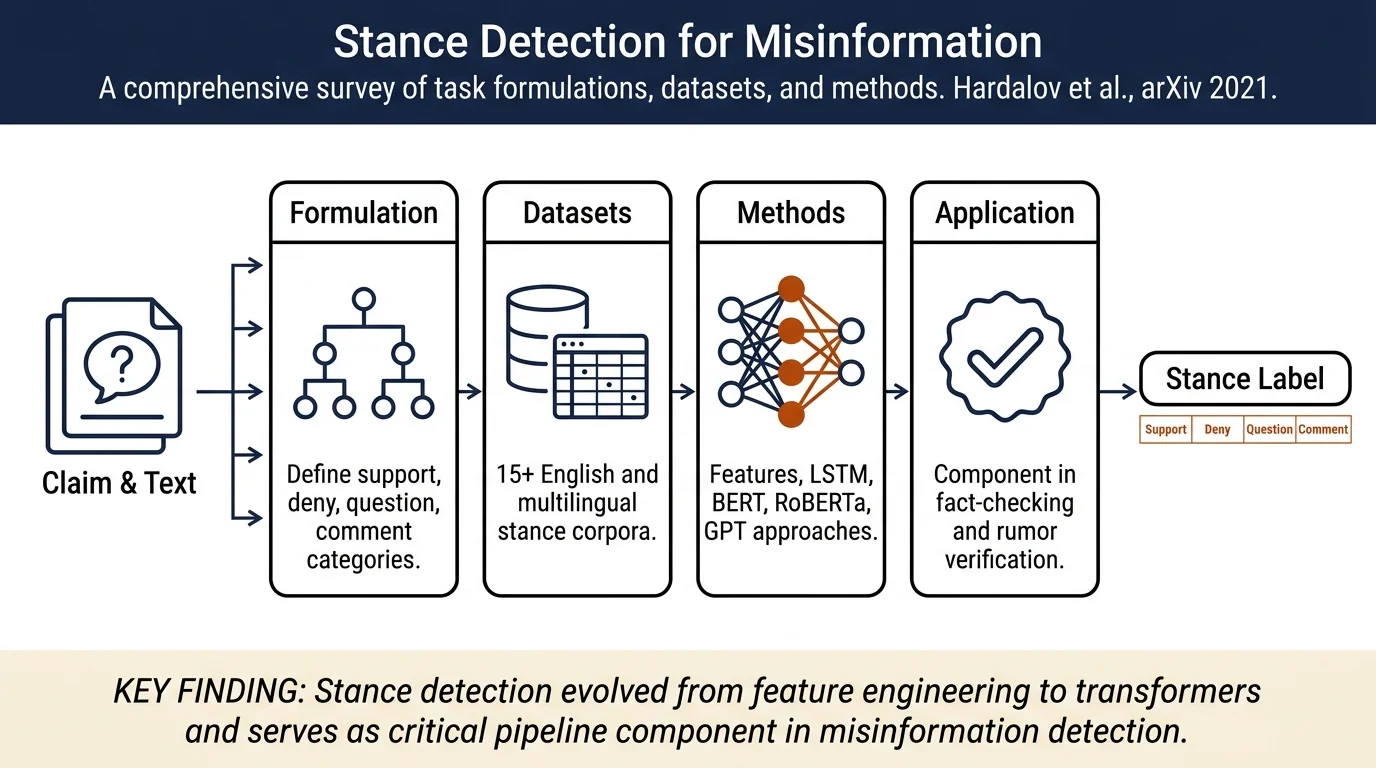
A Survey on Stance Detection for Mis- and Disinformation IdentificationComprehensive survey of stance detection for misinformation and disinformation. Stance detection—determining whether a text supports, denies, questions, or merely comments on a claim—plays dual roles: as a standalone fact-checking tool and as a component in broader verification pipelines.
 Detection methodsLLMs & generative AI
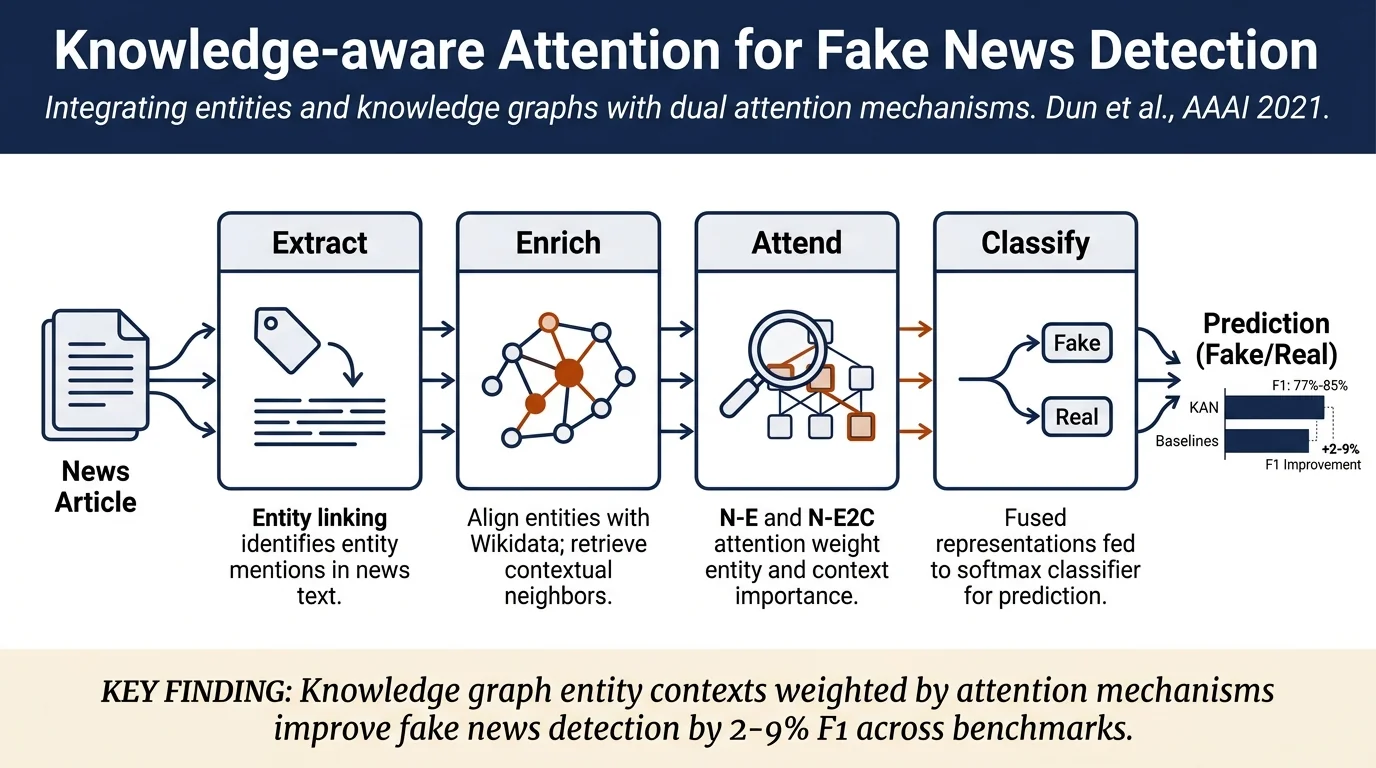
KAN: Knowledge-aware Attention Network for Fake News DetectionMost fake news detection models rely on textual features and social context but ignore knowledge-level relationships among entities in news. This paper proposes KAN, which extracts entity mentions from news, aligns them with knowledge graphs (Wikidata), and uses two attention mechanisms (N-E and N-E2C) to measure entity and…
 Detection methodsDatasets & evaluation
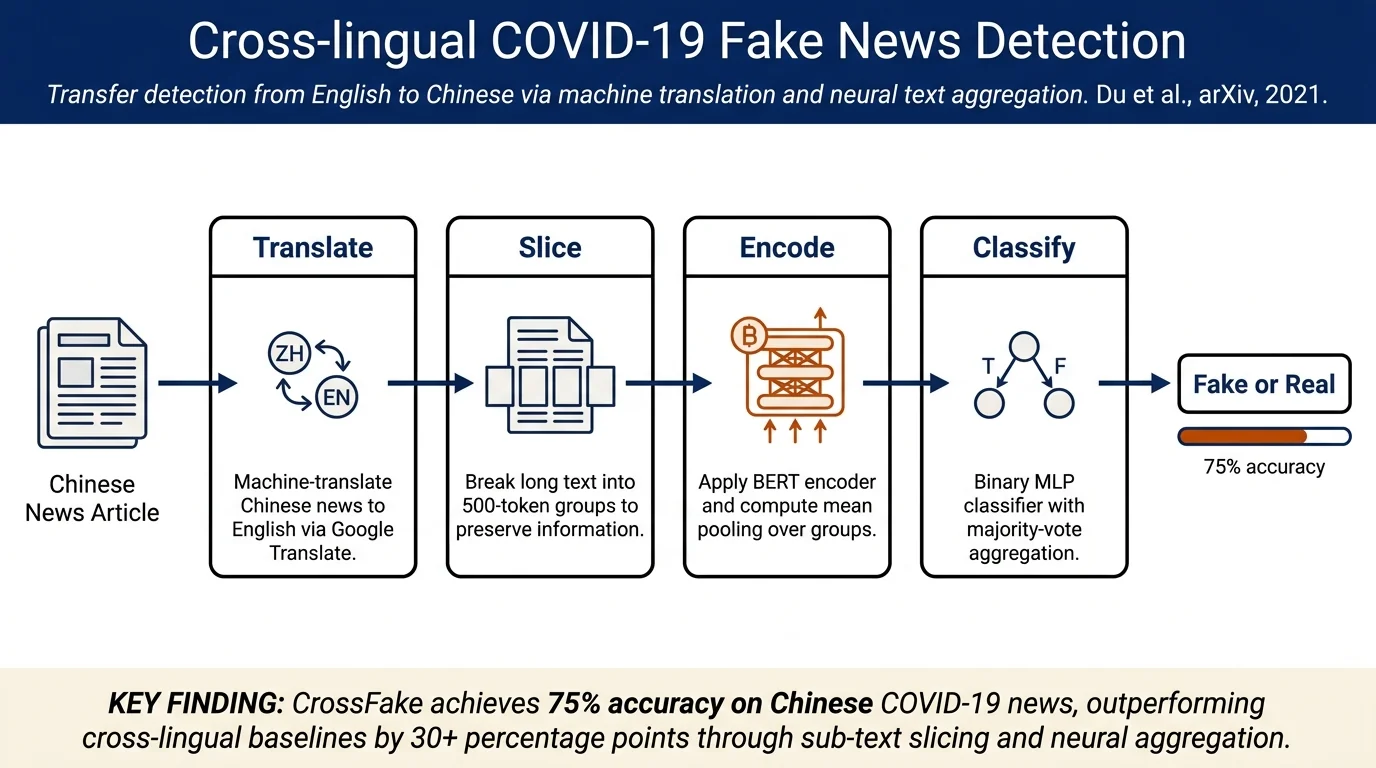
Cross-lingual COVID-19 Fake News DetectionThe paper addresses COVID-19 misinformation in low-resource languages by proposing CrossFake, a cross-lingual fake news detector trained on English COVID-19 news and applied to Chinese news via machine translation. The method slices long news texts into sub-text groups before BERT encoding to preserve fact-related information.
 LLMs & generative AIDatasets & evaluation
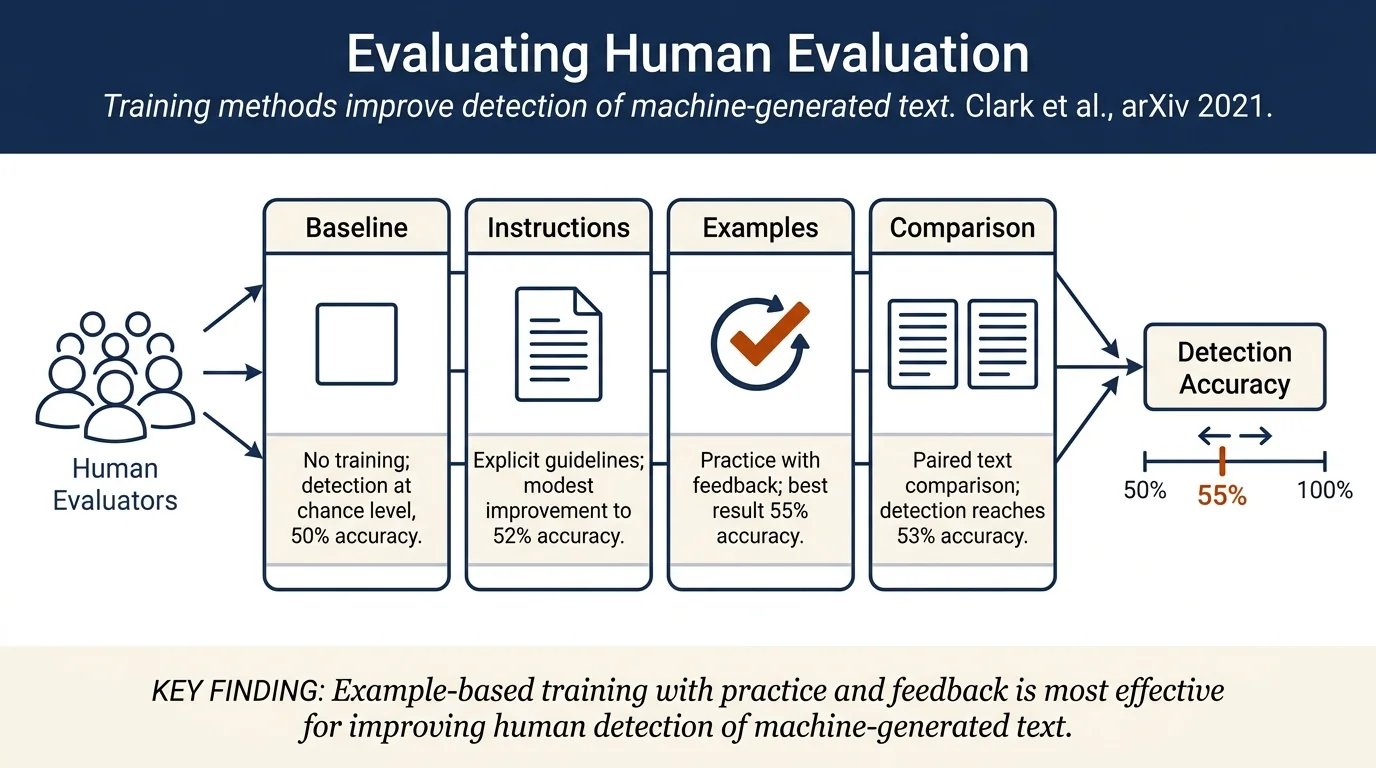
All That's 'Human' Is Not Gold: Evaluating Human Evaluation of Generated TextHuman evaluators cannot reliably distinguish machine-generated text from human-written text without training, focusing instead on superficial features like grammar and style. Three training approaches (instructions, examples, and comparisons) improve evaluator accuracy modestly, with example-based training showing the most improvement…
 Deepfakes & multimodalDetection methods
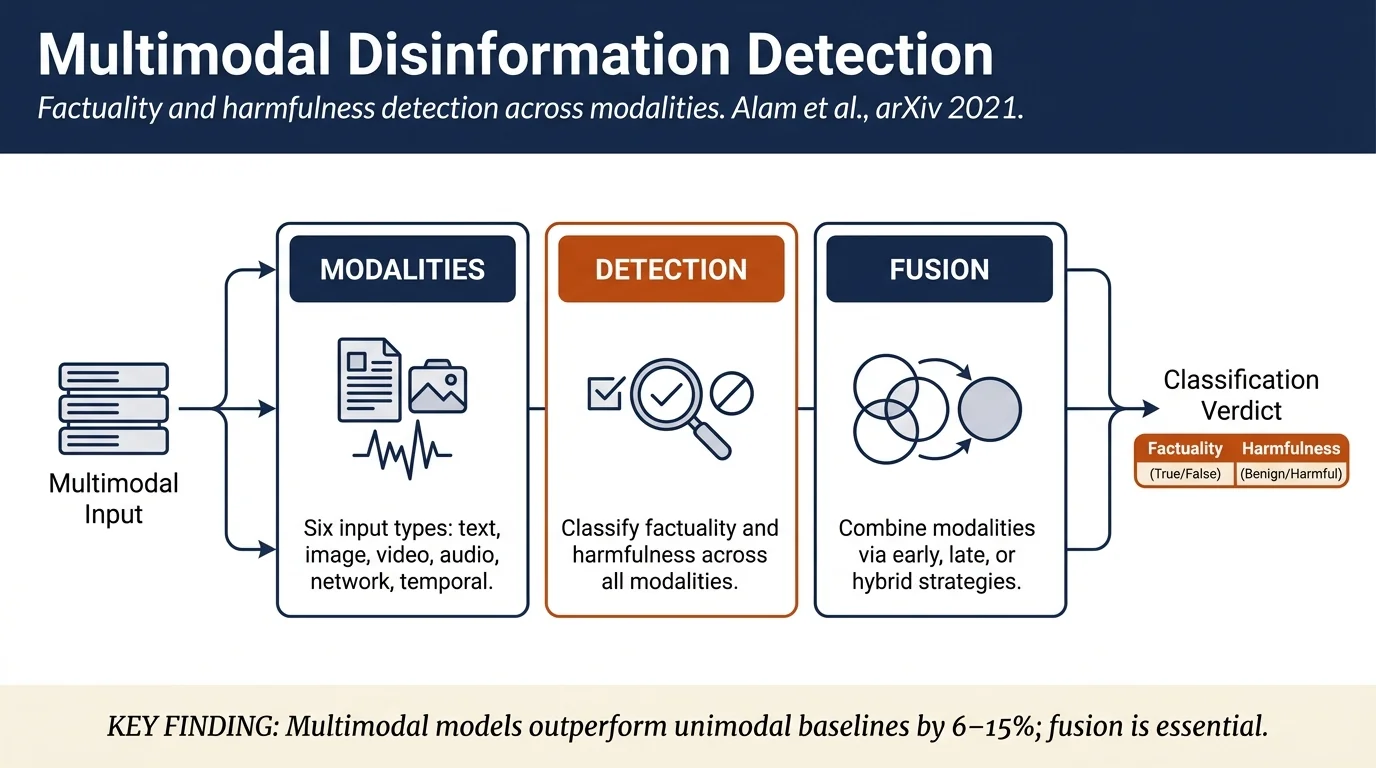
A Survey on Multimodal Disinformation DetectionComprehensive survey of multimodal disinformation detection covering text, images, speech, video, network structure, and temporal information. Distinguishes factuality (whether content is false) from harmfulness (whether false content intends to harm), systematically reviews ~140 papers across different modalities and detection…
 Detection methodsDeepfakes & multimodal
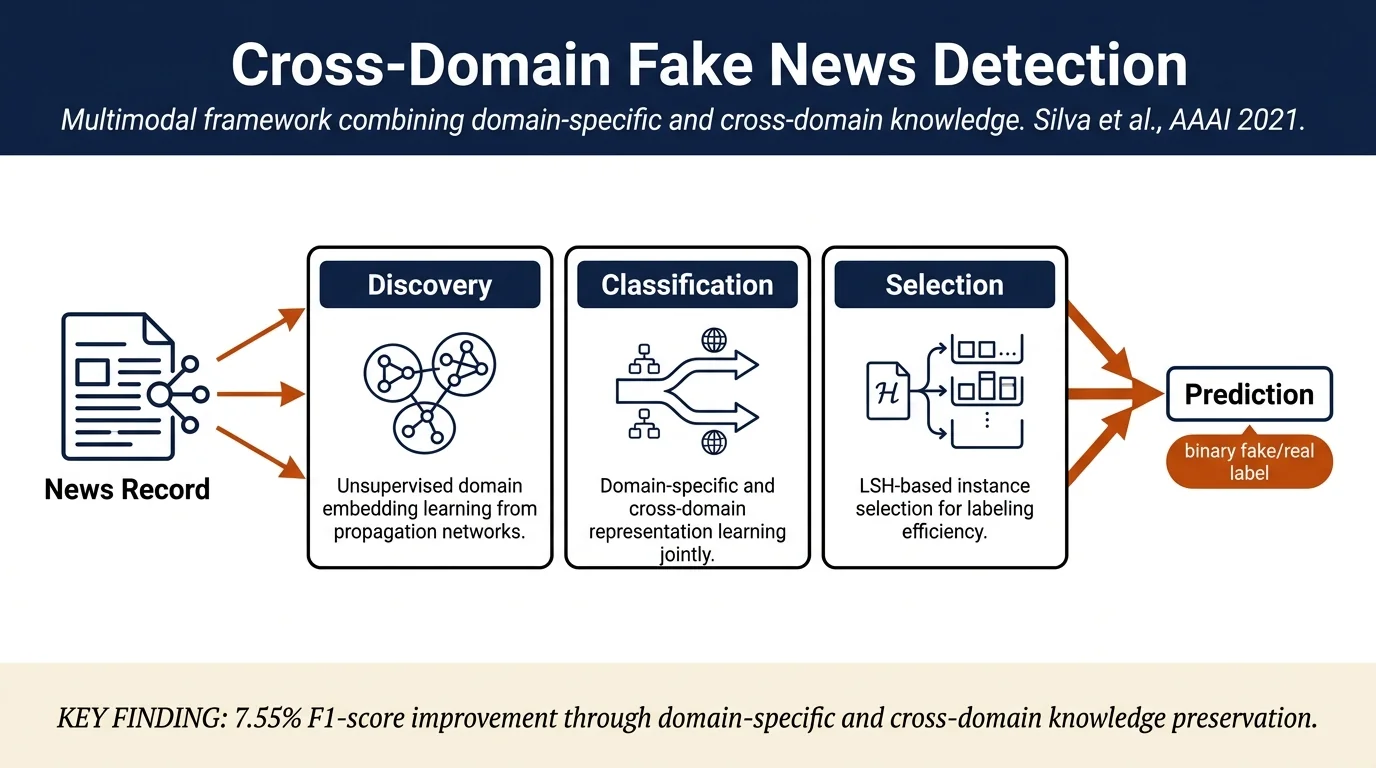
Embracing Domain Differences in Fake News: Cross-domain Fake News Detection using Multimodal DataMost fake news detection models are trained on a single domain (e.g., politics) and fail when tested on others (e.g., entertainment, COVID-19). This paper proposes a multimodal framework that leverages both domain-specific and cross-domain knowledge to detect fake news across different domains.
 Spread & networksBots & coordinated campaigns
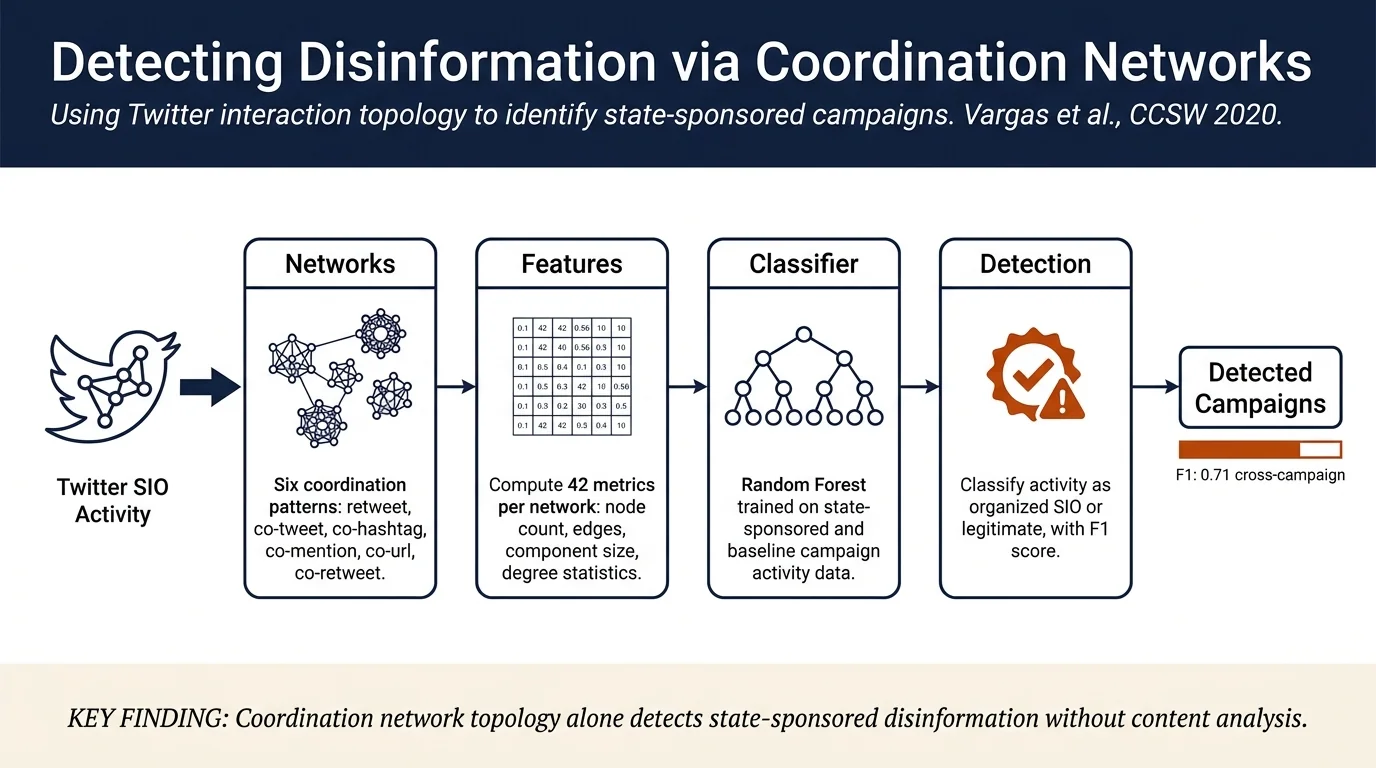
On the Detection of Disinformation Campaign Activity with Network AnalysisState-sponsored disinformation campaigns on Twitter exhibit distinct coordination patterns (shared messages, hashtags, URLs, retweet cascades) that differ from legitimate coordinated activity. The paper proposes using coordination network features—extracted from daily account interactions—to train a binary classifier that detects…
 Bots & coordinated campaignsSpread & networks
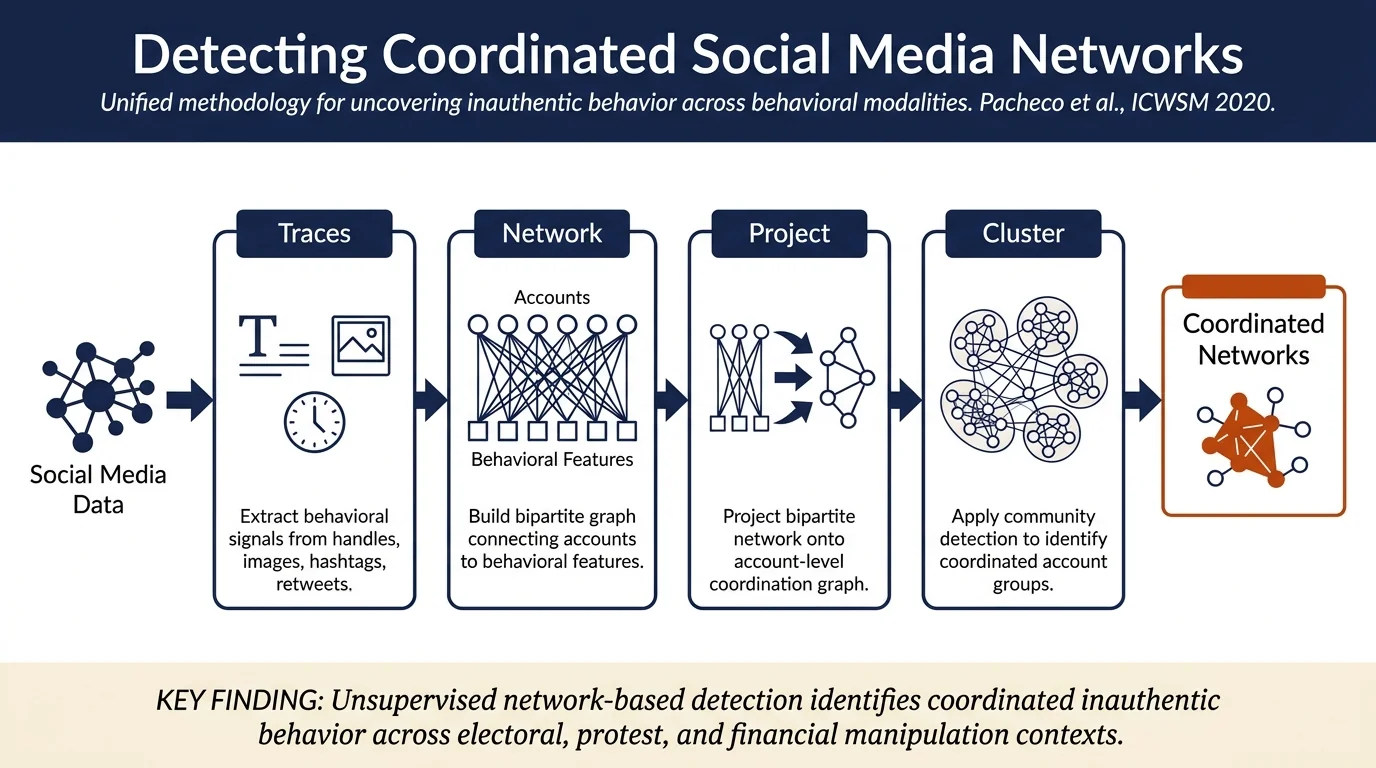
Uncovering Coordinated Networks on Social Media: Methods and Case StudiesThis paper proposes a general, unsupervised, network-based methodology to detect coordinated inauthentic behavior on social media. The approach identifies behavioral traces (handle changes, image sharing, hashtag sequences, co-retweets, synchronized actions) and constructs bipartite networks to discover clusters of accounts likely…