Explore everything
Filter by research area, year and venue. Every filter is in the address bar, so you can share a view as a link.
 Detection methodsDatasets & evaluation
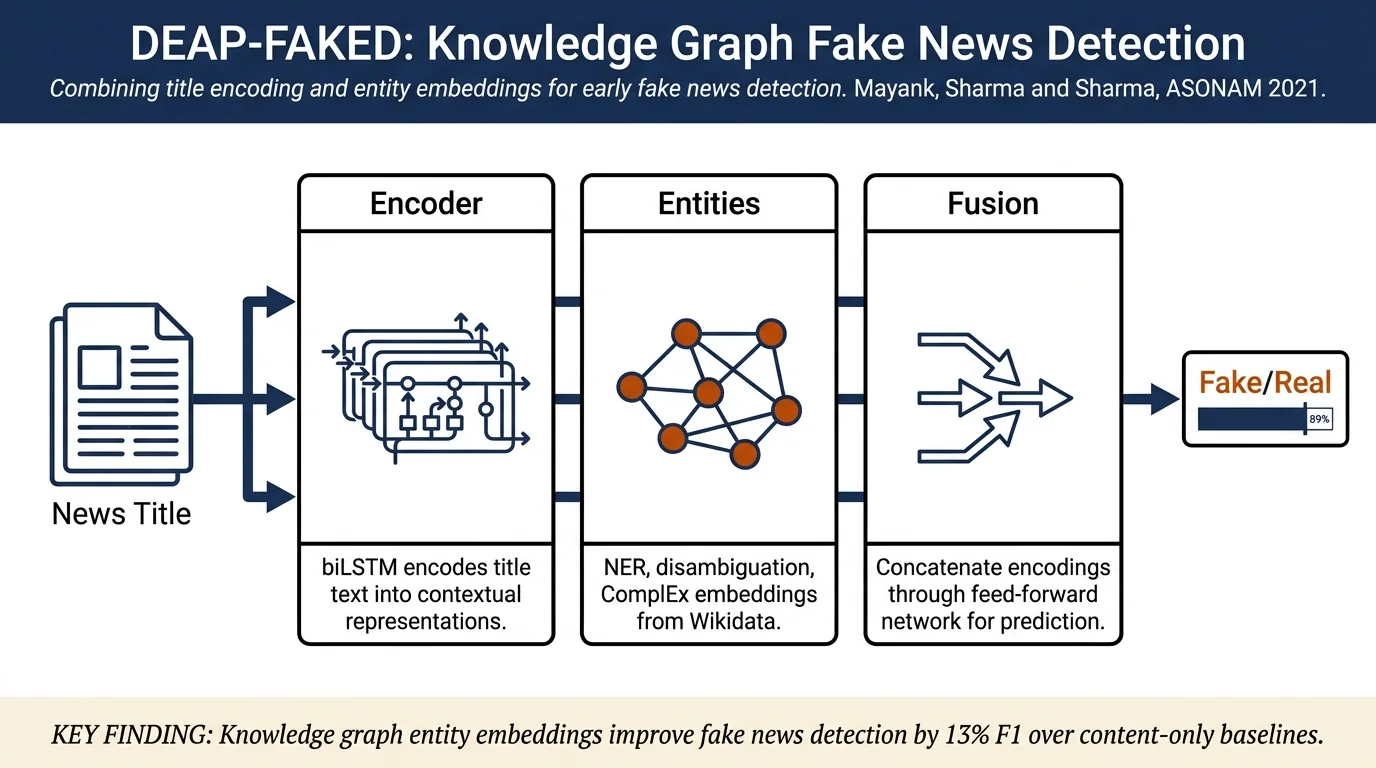
DEAP-FAKED: Knowledge Graph based Approach for Fake News DetectionDEAP-FAKED combines a biLSTM news encoder with knowledge graph embeddings to detect fake news using only article titles. The approach extracts named entities from titles, maps them to Wikidata using named entity disambiguation, and embeds them via ComplEx.
 Platforms, policy & societyBots & coordinated campaigns
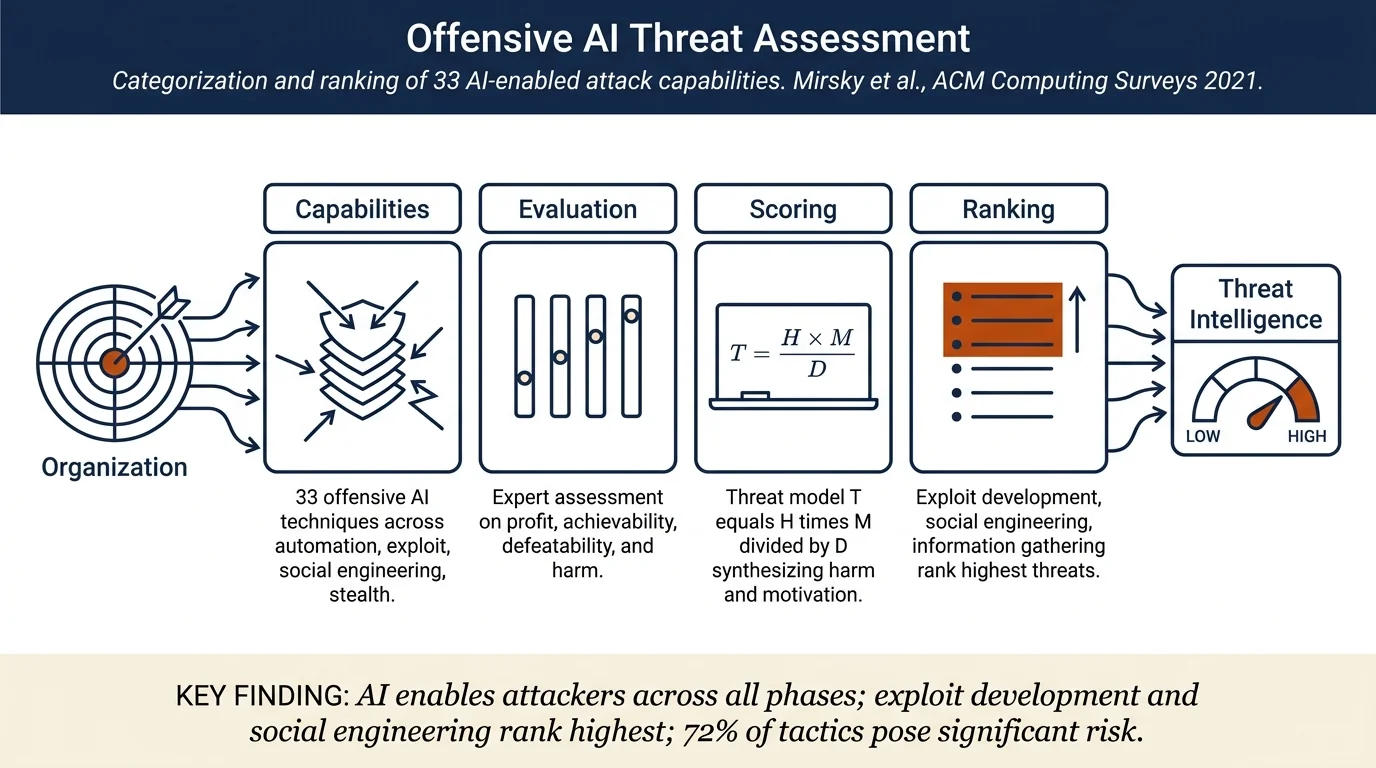
The Threat of Offensive AI to OrganizationsA comprehensive survey identifying 33 offensive AI capabilities that adversaries can use to attack organizations, organized into seven categories: automation, campaign resilience, credential theft, exploit development, information gathering, social engineering, and stealth. Through a user study with 22 experts from academia and industry,…
 Detection methodsDatasets & evaluation
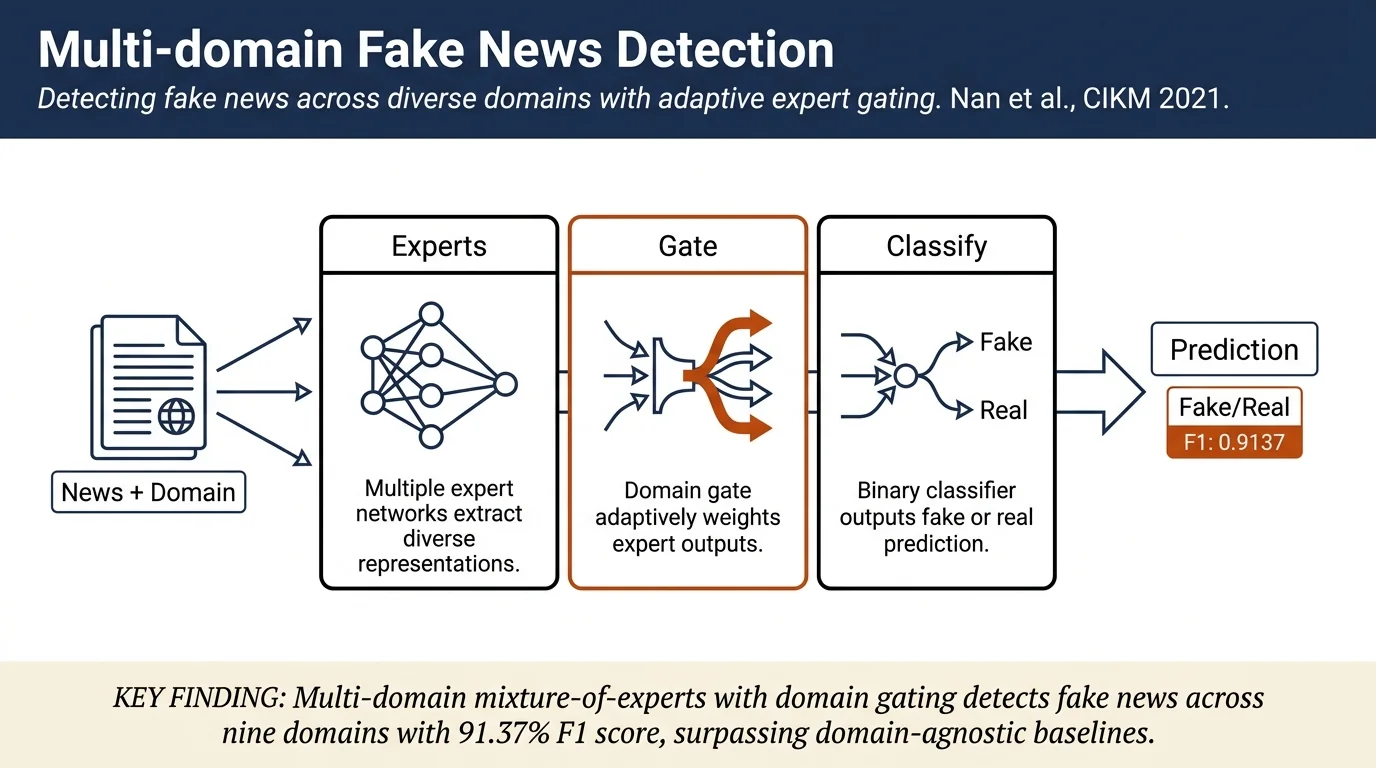
MDFEND: Multi-domain Fake News DetectionMost fake news detection methods focus on single-domain data, which leads to poor performance across different domains due to domain shift (varying word usage and propagation patterns). This paper introduces Weibo21, the first multi-domain fake news dataset from a single platform with 9 domains, and proposes MDFEND, a model using…
 Spread & networksPsychology & interventions
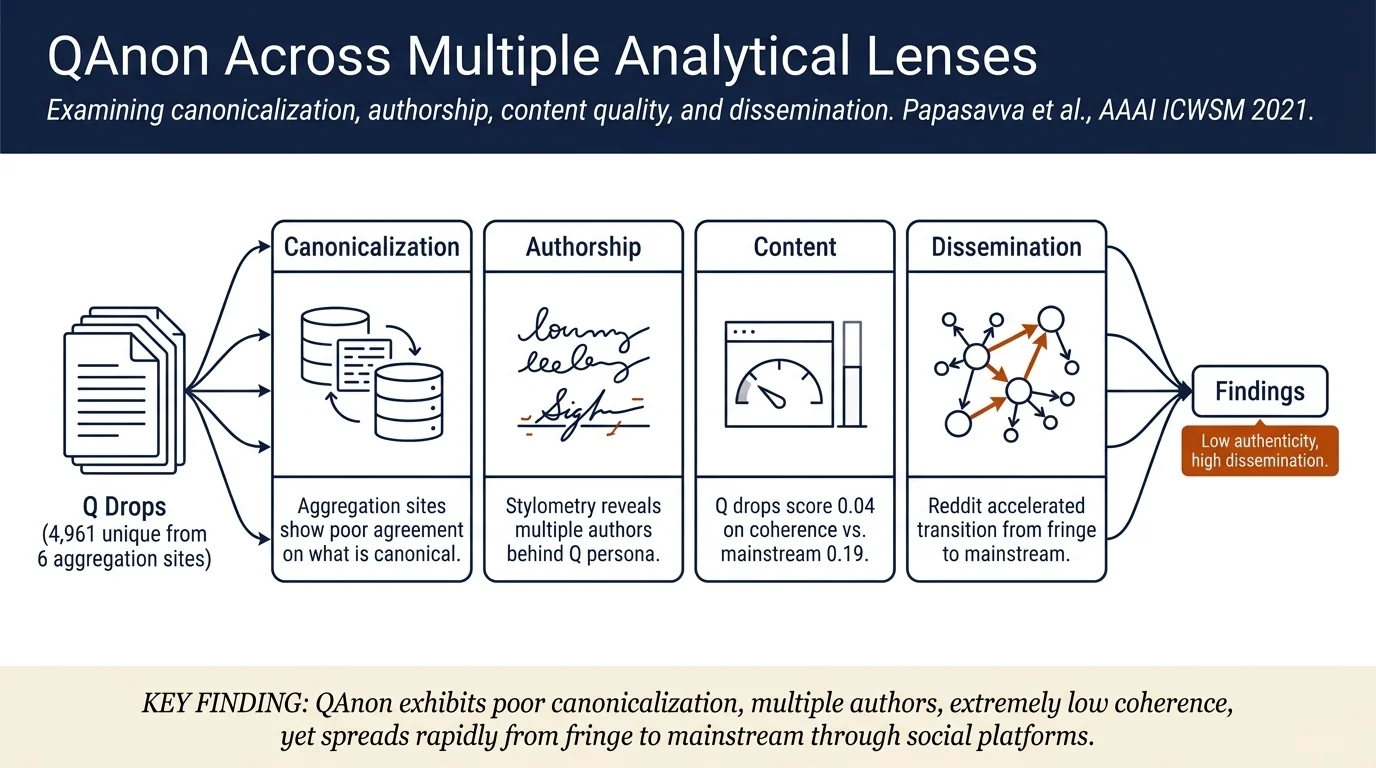
The Gospel According to Q: Understanding the QAnon Conspiracy from the Perspective of Canonical InformationThis paper systematically studies the QAnon conspiracy theory by collecting and analyzing 4,961 unique Q drops from six aggregation sites. The authors find that aggregation sites show poor agreement on what constitutes a canonical Q drop, that Q drops are incoherent and low-quality relative to other social media platforms, and that…
 Spread & networksPlatforms, policy & society
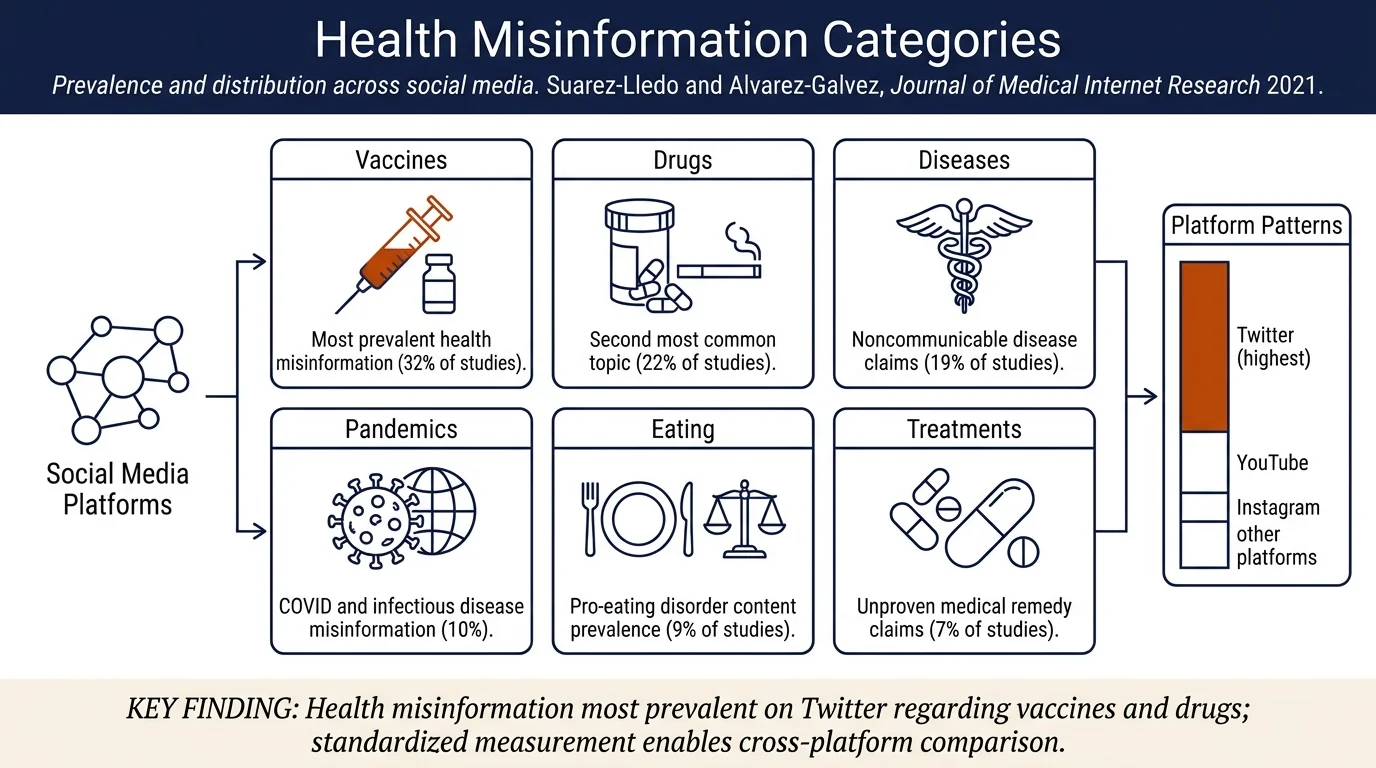
Prevalence of Health Misinformation on Social Media: Systematic ReviewThis systematic review of 69 studies characterizes health misinformation topics and their prevalence across social media platforms. Health misinformation was most prevalent on Twitter regarding smoking and drugs; vaccines, noncommunicable diseases, and pandemics were also common topics.
 Spread & networksDatasets & evaluation
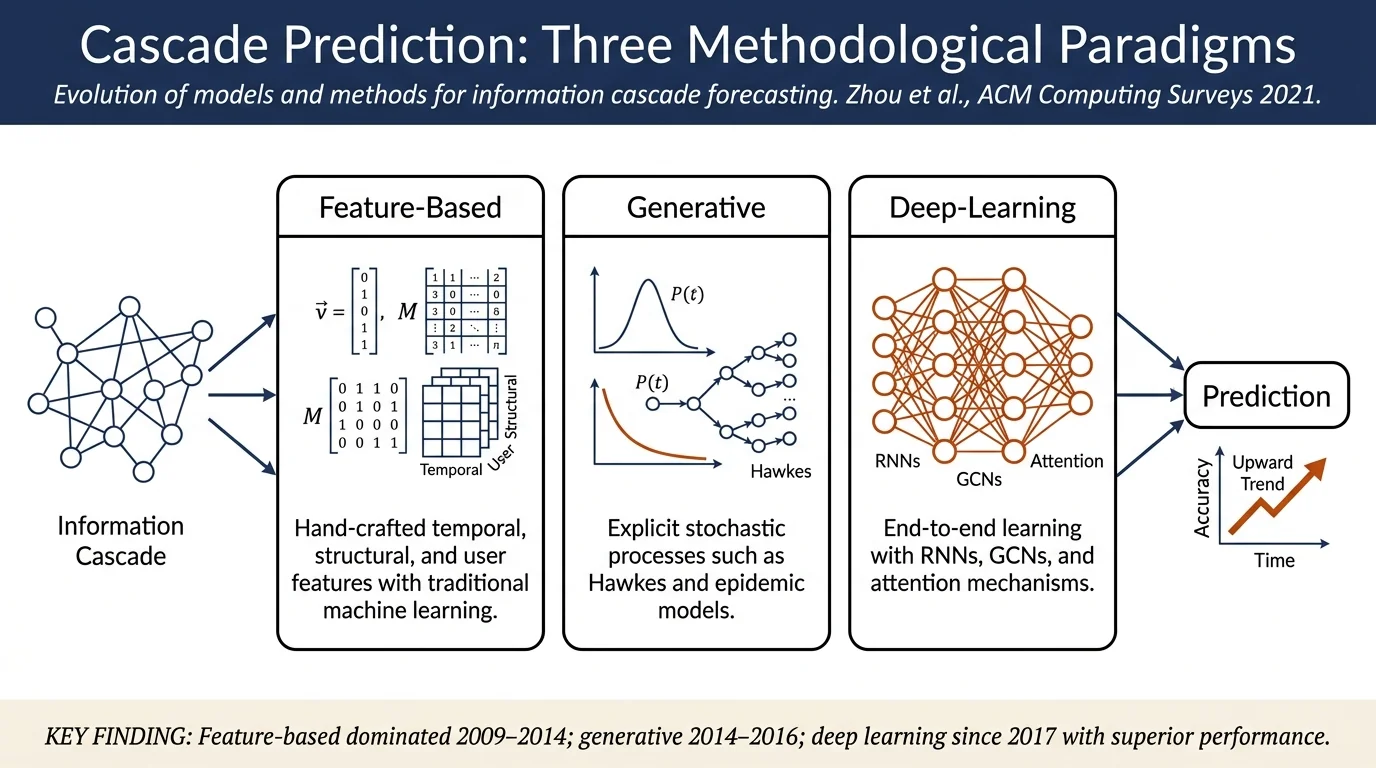
A Survey of Information Cascade Analysis: Models, Predictions, and Recent AdvancesThis comprehensive survey systematizes research on predicting information cascade growth and structure across social networks, covering feature-based models, generative models, and deep learning approaches. It provides a taxonomy of prediction methods across temporal, structural, user/item, and content features; evaluation metrics and…
 Detection methodsDeepfakes & multimodal
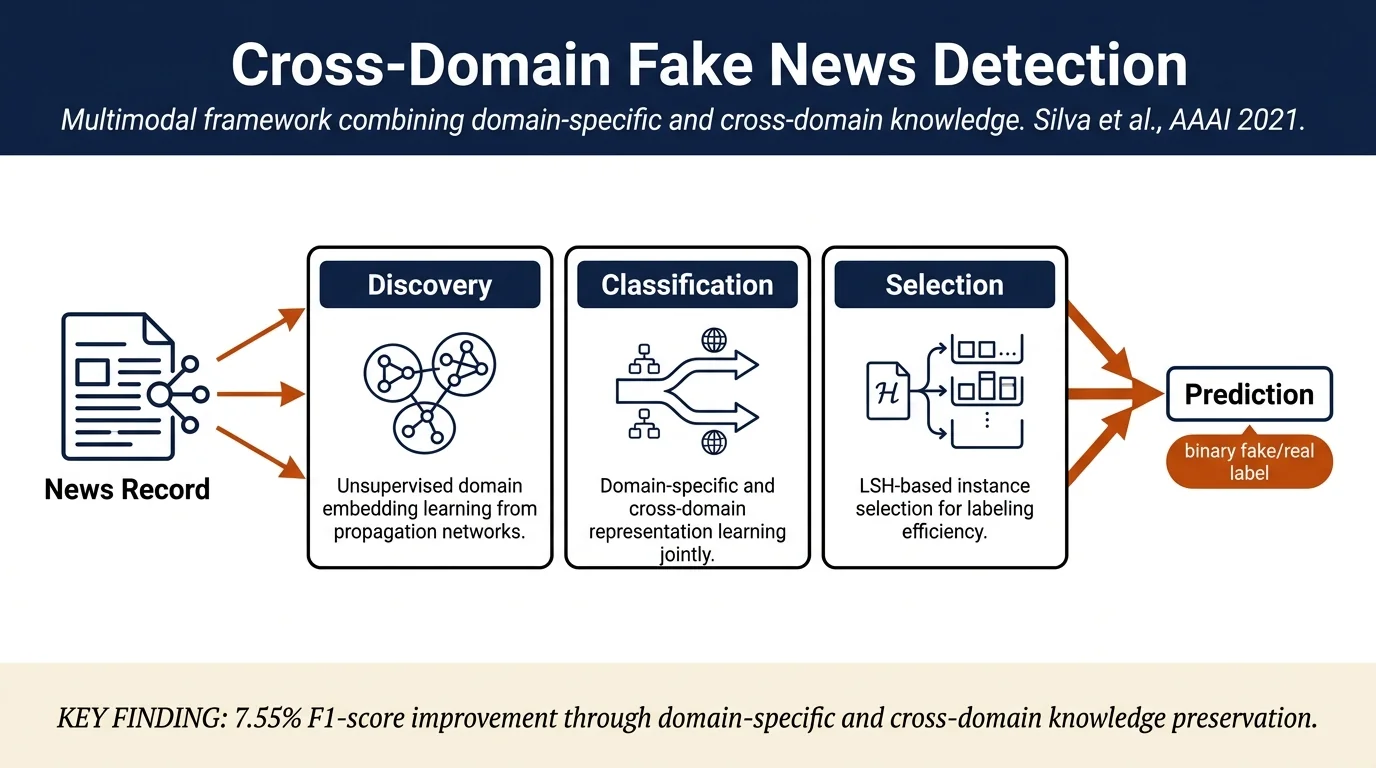
Embracing Domain Differences in Fake News: Cross-domain Fake News Detection using Multimodal DataMost fake news detection models are trained on a single domain (e.g., politics) and fail when tested on others (e.g., entertainment, COVID-19). This paper proposes a multimodal framework that leverages both domain-specific and cross-domain knowledge to detect fake news across different domains.
 Spread & networksPlatforms, policy & society
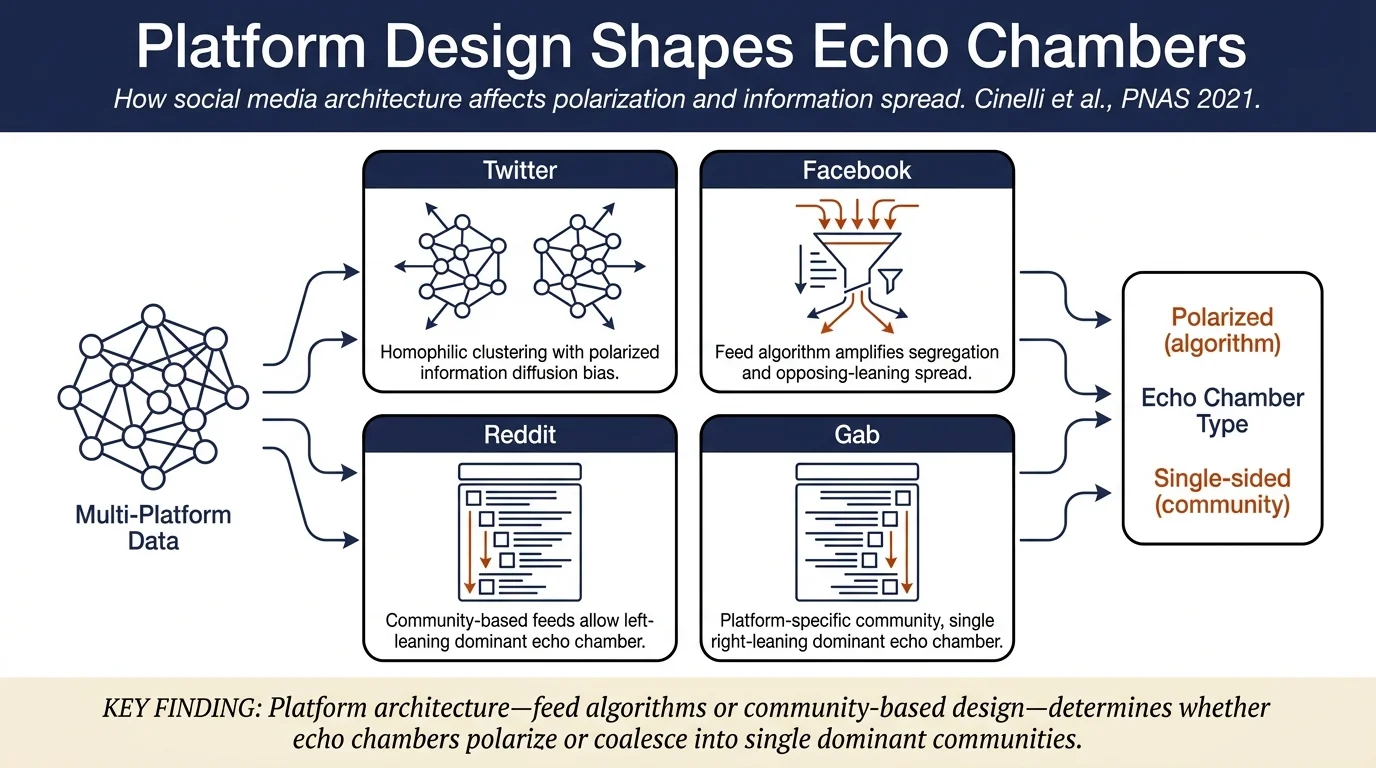
The echo chamber effect on social mediaComparative analysis of 100+ million posts across Twitter, Facebook, Reddit, and Gab on controversial topics shows echo chambers operate differently by platform: Facebook and Twitter exhibit strong homophilic clustering and polarized information diffusion, while Reddit and Gab show single-sided communities without the biased diffusion…
 Spread & networksPlatforms, policy & society
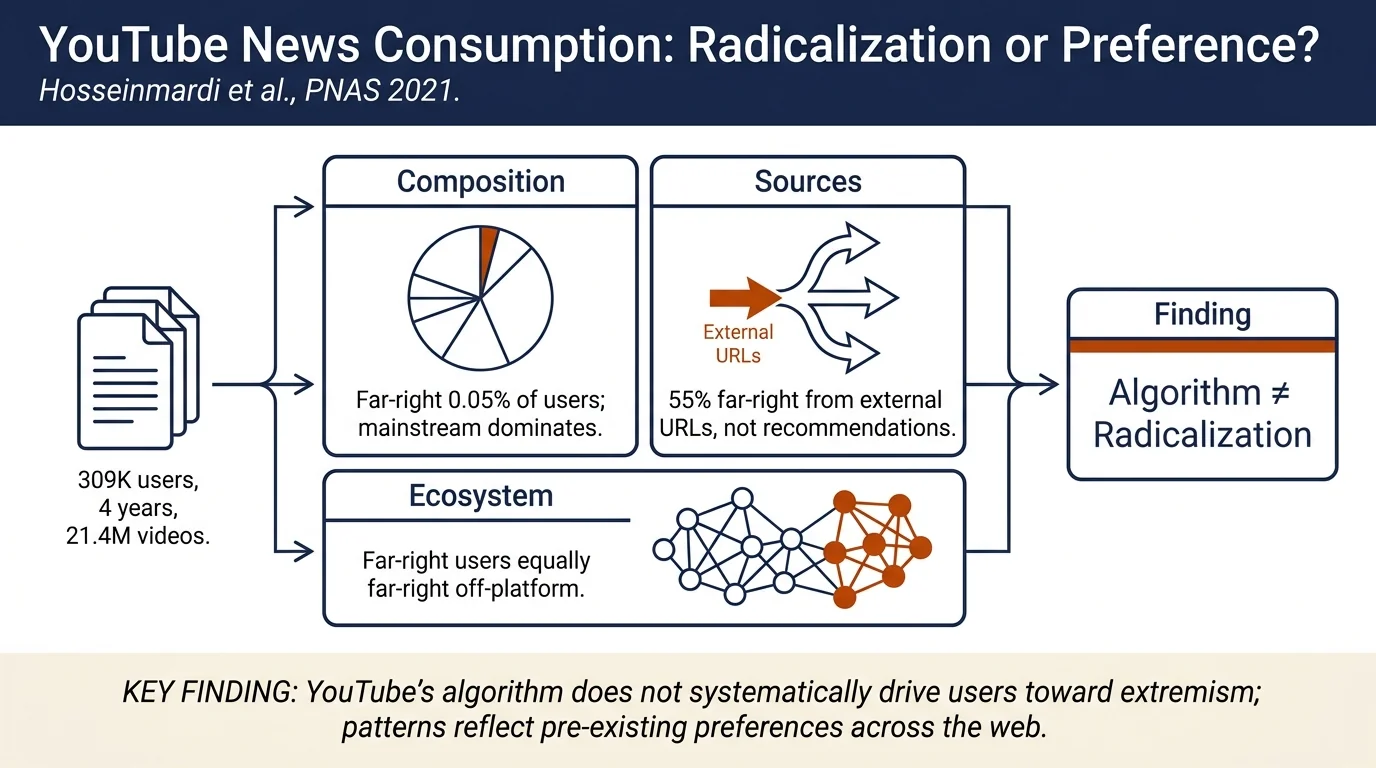
Examining the consumption of radical content on YouTubeLarge-scale study of 309,813 U.S. users' YouTube and web browsing from 2016–2019 finds that news consumption on YouTube is dominated by mainstream, centrist sources. While far-right content exists and engages users intensely, it remains a small and stable share.
 Psychology & interventionsPlatforms, policy & society
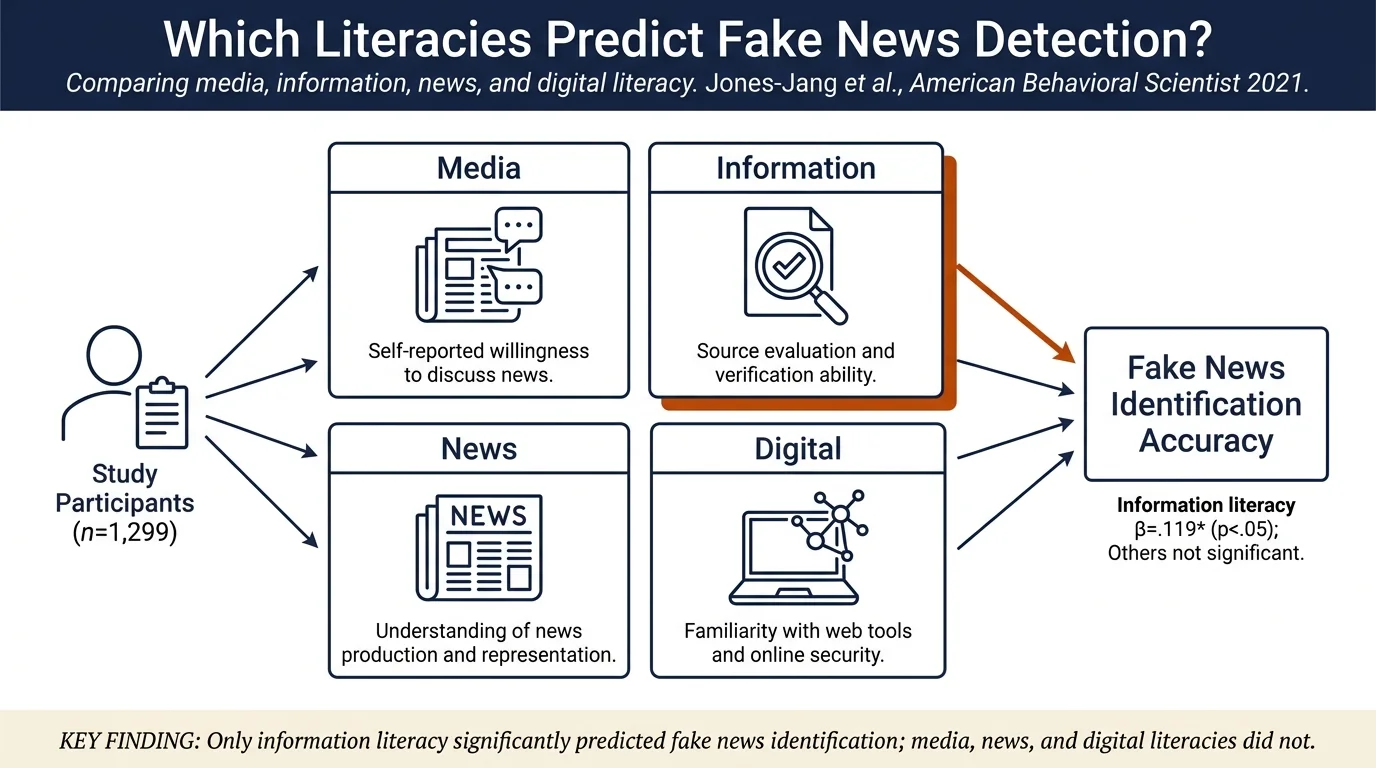
Does Media Literacy Help Identification of Fake News? Information Literacy Helps, but Other Literacies Don'tA survey of 1,299 U.S. citizens tests whether four types of media literacy—media, information, news, and digital—predict ability to identify fake news. Only information literacy (the ability to search and evaluate verified sources) significantly improves fake news identification; media, news, and digital literacies showed no significant…
 Psychology & interventionsSpread & networks
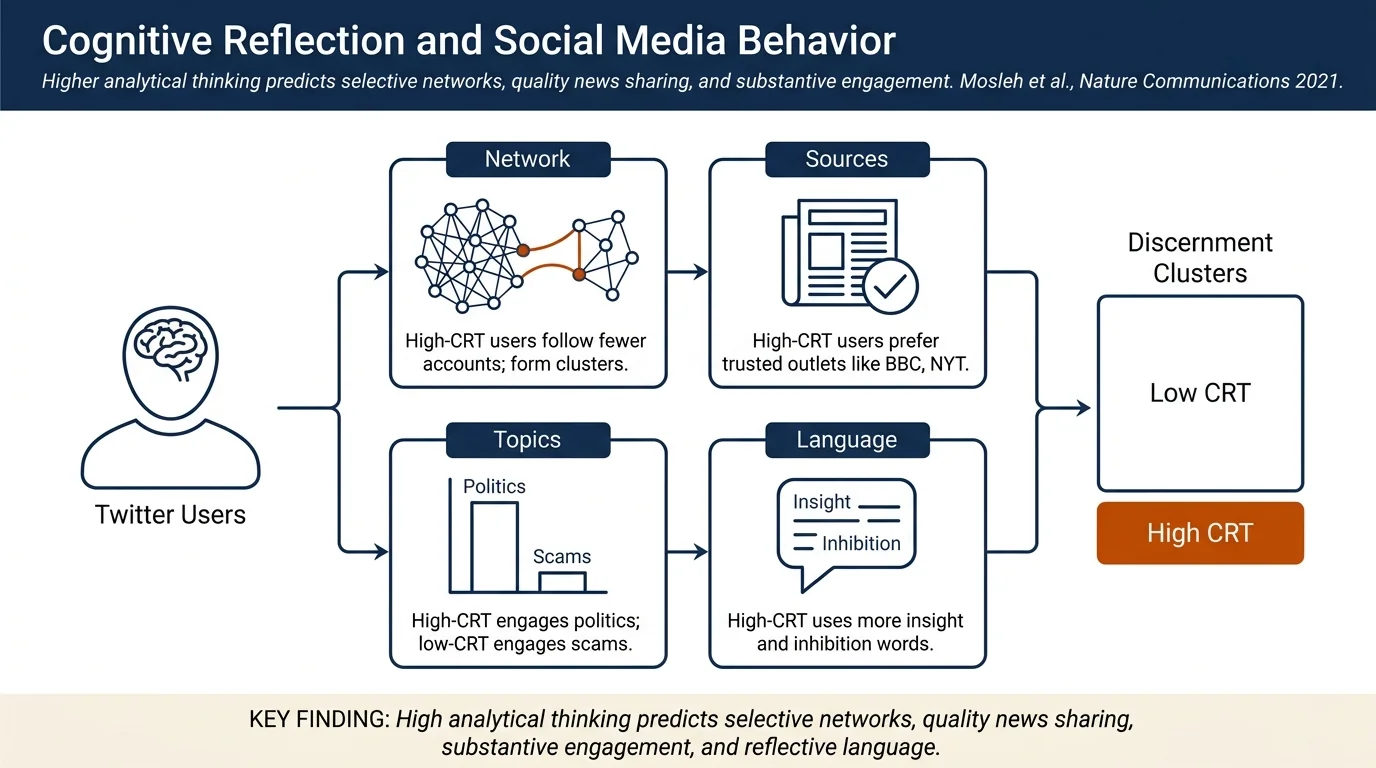
Cognitive reflection correlates with behavior on TwitterHigh scorers on the Cognitive Reflection Test (CRT)—a measure of analytical thinking—are more discerning social media users: they follow fewer accounts, share news from more reliable sources, and engage more with substantive topics like politics. The study identifies "cognitive echo chambers" where low-CRT users preferentially follow…
 Spread & networksPsychology & interventions
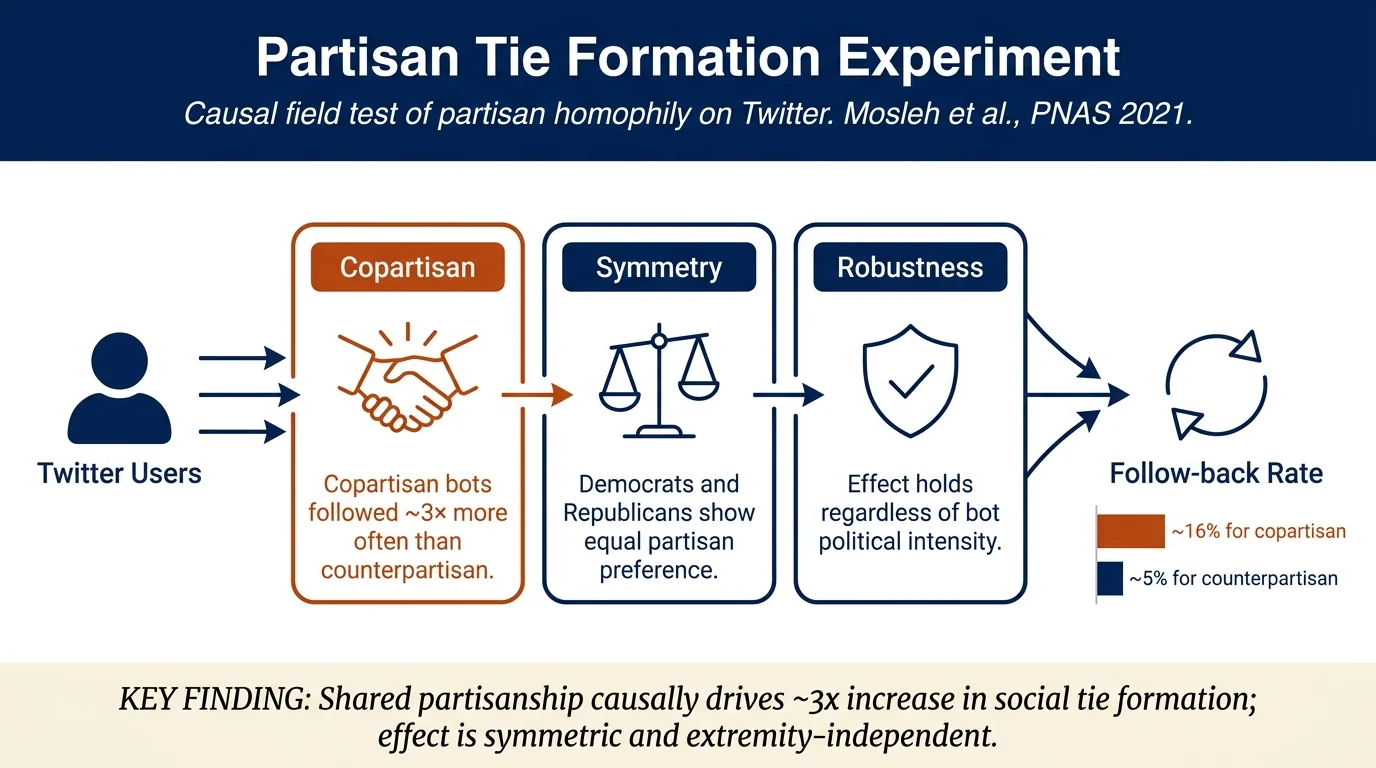
Shared partisanship dramatically increases social tie formation in a Twitter field experimentA Twitter field experiment with bot accounts reveals that shared partisanship causally drives social tie formation: users were nearly three times more likely to reciprocally follow accounts matching their political party, regardless of the account's partisan intensity. Critically, this preference was symmetric—Democrats and Republicans…
 Psychology & interventionsSpread & networks
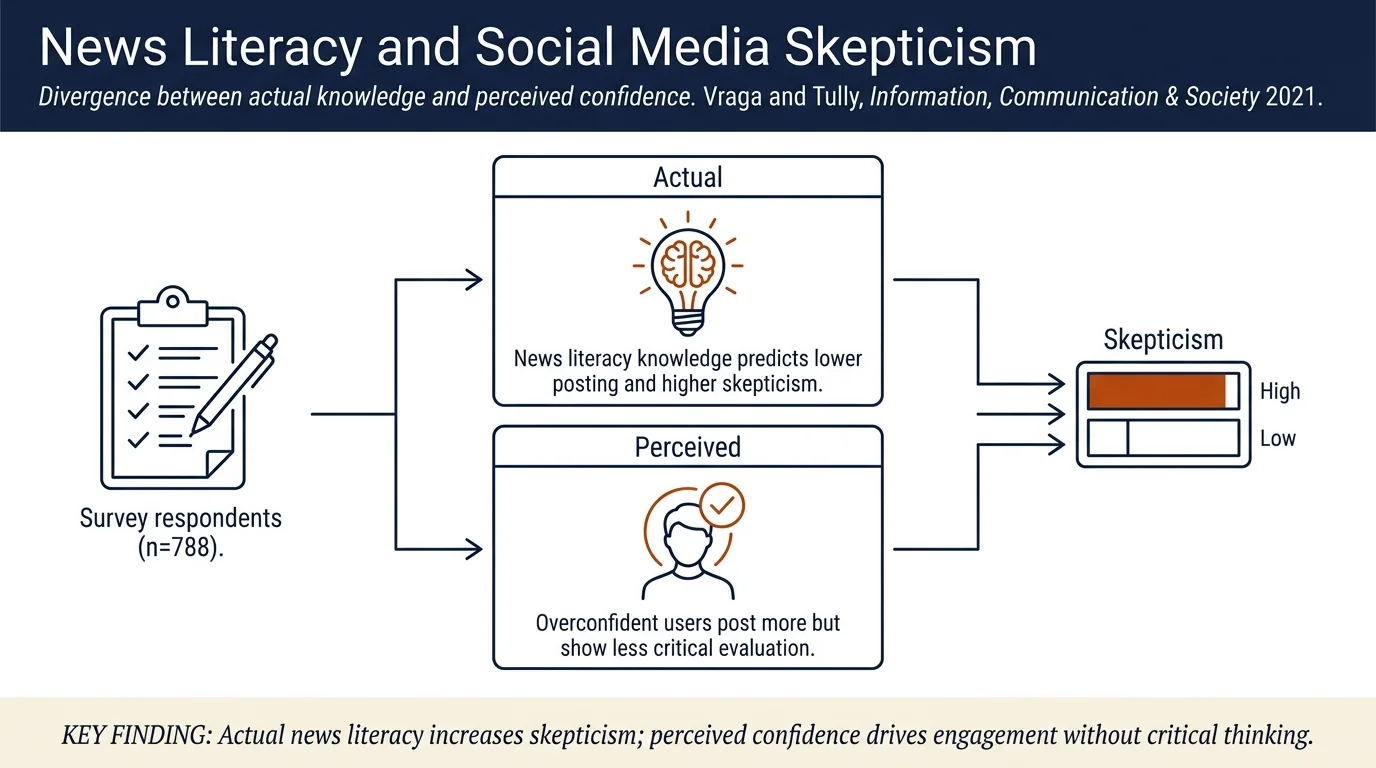
News literacy, social media behaviors, and skepticism toward information on social mediaA national survey of 788 Americans examines how news literacy relates to what people see and share on social media, and whether it predicts skepticism toward information shared in these spaces. The key finding: people with higher news literacy see and post less political content on social media, but when they do engage, they're…
 Fact-checking & verificationPlatforms, policy & society
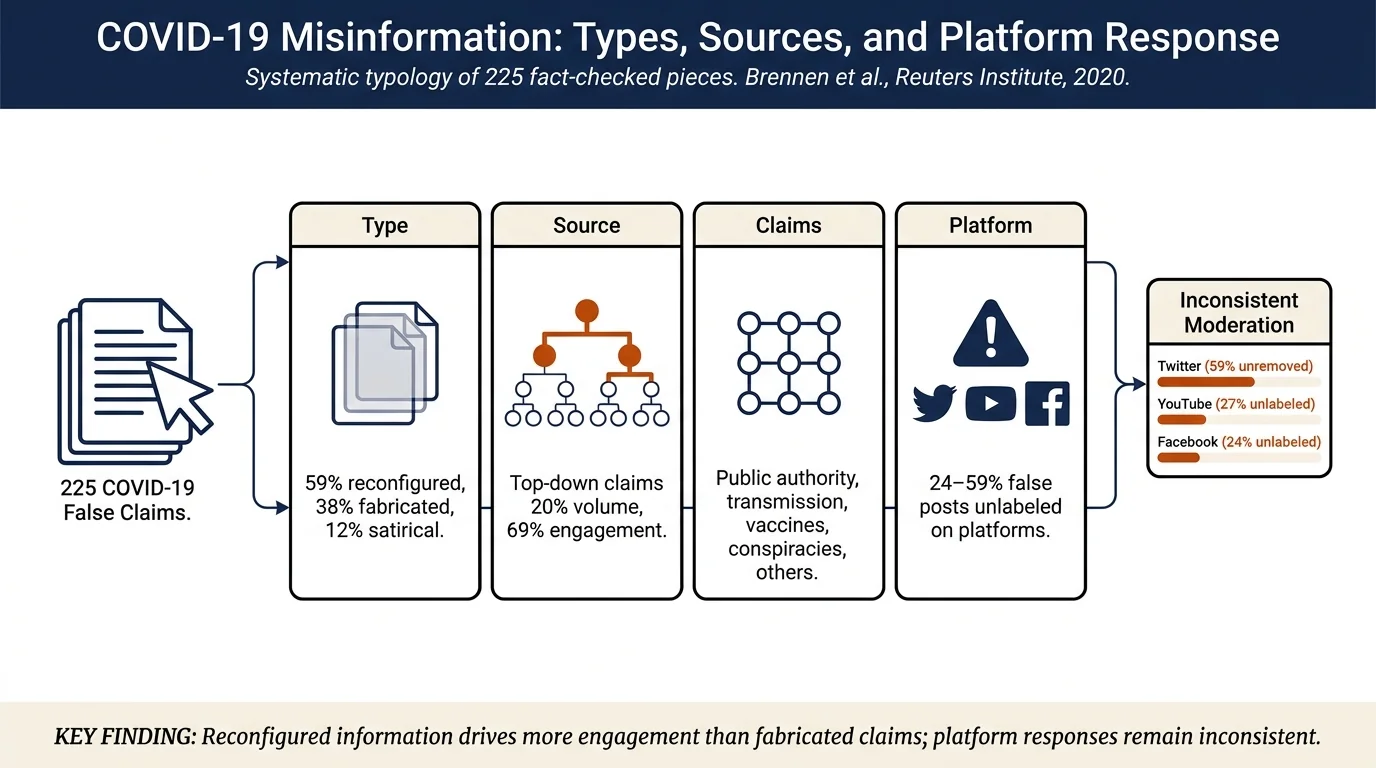
Types, Sources, and Claims of COVID-19 MisinformationSystematic analysis of 225 fact-checked COVID-19 misinformation pieces reveals that most false content reconfigures existing information (59%) rather than fabricating entirely new claims. Public authorities are cited in 39% of misinformation, yet top-down claims from politicians and celebrities account for only 20% of volume but drive…
 Spread & networksPlatforms, policy & society
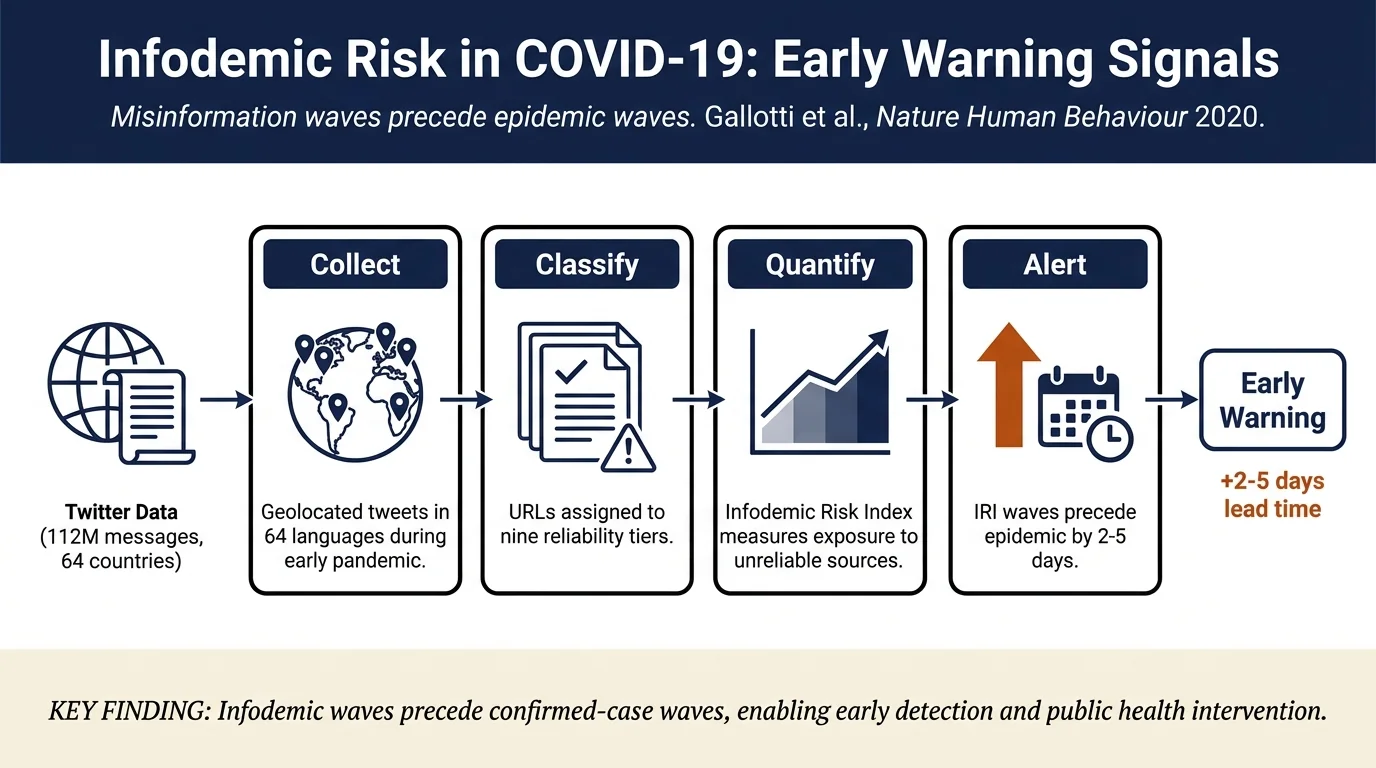
Assessing the risks of 'infodemics' in response to COVID-19 epidemicsAnalysis of 112+ million geolocated Twitter messages about COVID-19 (January–March 2020) across 64 languages and countries. Develops an infodemic risk index (IRI) measuring exposure to unreliable news; demonstrates that waves of unreliable information precede pandemic waves, providing early-warning signals for policy intervention.
 Spread & networksPlatforms, policy & society
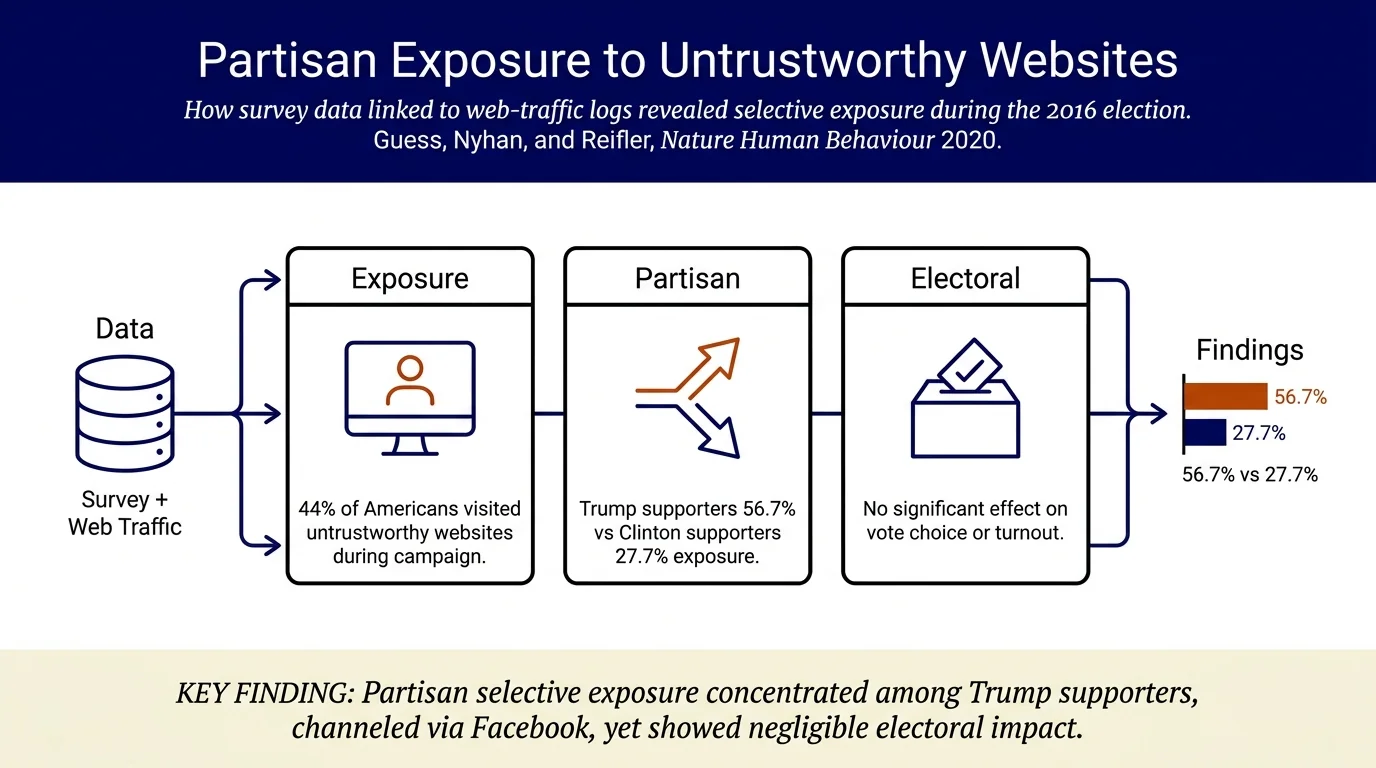
Exposure to untrustworthy websites in the 2016 US electionUsing combined survey and web-traffic data from the 2016 US presidential election, Guess et al. found that while 44.3% of Americans aged 18+ visited an untrustworthy website during the campaign, actual exposure was highly concentrated among Trump supporters (56.7% of Trump supporters vs. 27.7% of Clinton supporters). Facebook played a…
 Bots & coordinated campaignsSpread & networks
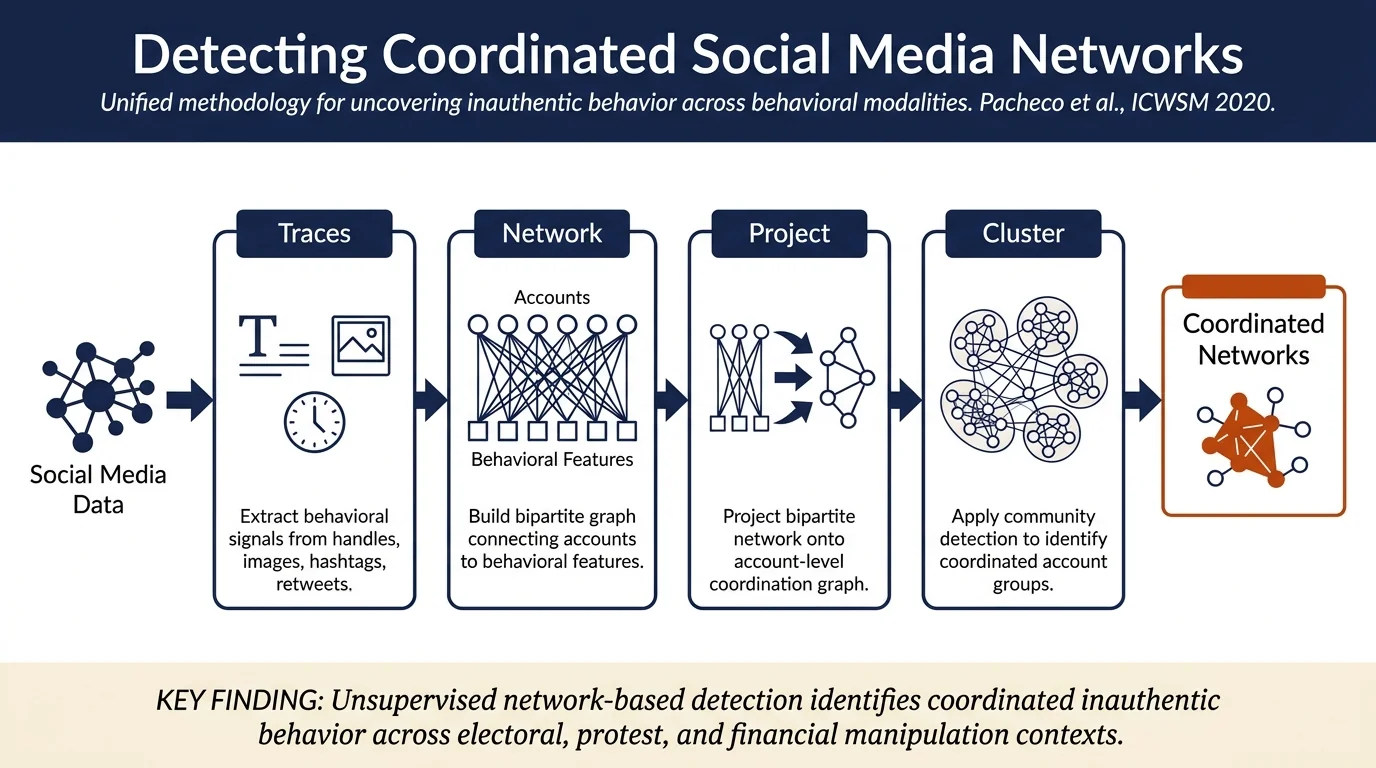
Uncovering Coordinated Networks on Social Media: Methods and Case StudiesThis paper proposes a general, unsupervised, network-based methodology to detect coordinated inauthentic behavior on social media. The approach identifies behavioral traces (handle changes, image sharing, hashtag sequences, co-retweets, synchronized actions) and constructs bipartite networks to discover clusters of accounts likely…
Detection methodsLLMs & generative AI
The Limitations of Stylometry for Detecting Machine-Generated Fake NewsWhile stylometry effectively detects impersonation and provenance, it fails to distinguish between legitimate and malicious uses of language models for generating false content. LMs produce stylistically consistent text regardless of veracity, and adding even a single auto-generated sentence within human-written text evades stylometric…
 Spread & networksBots & coordinated campaigns
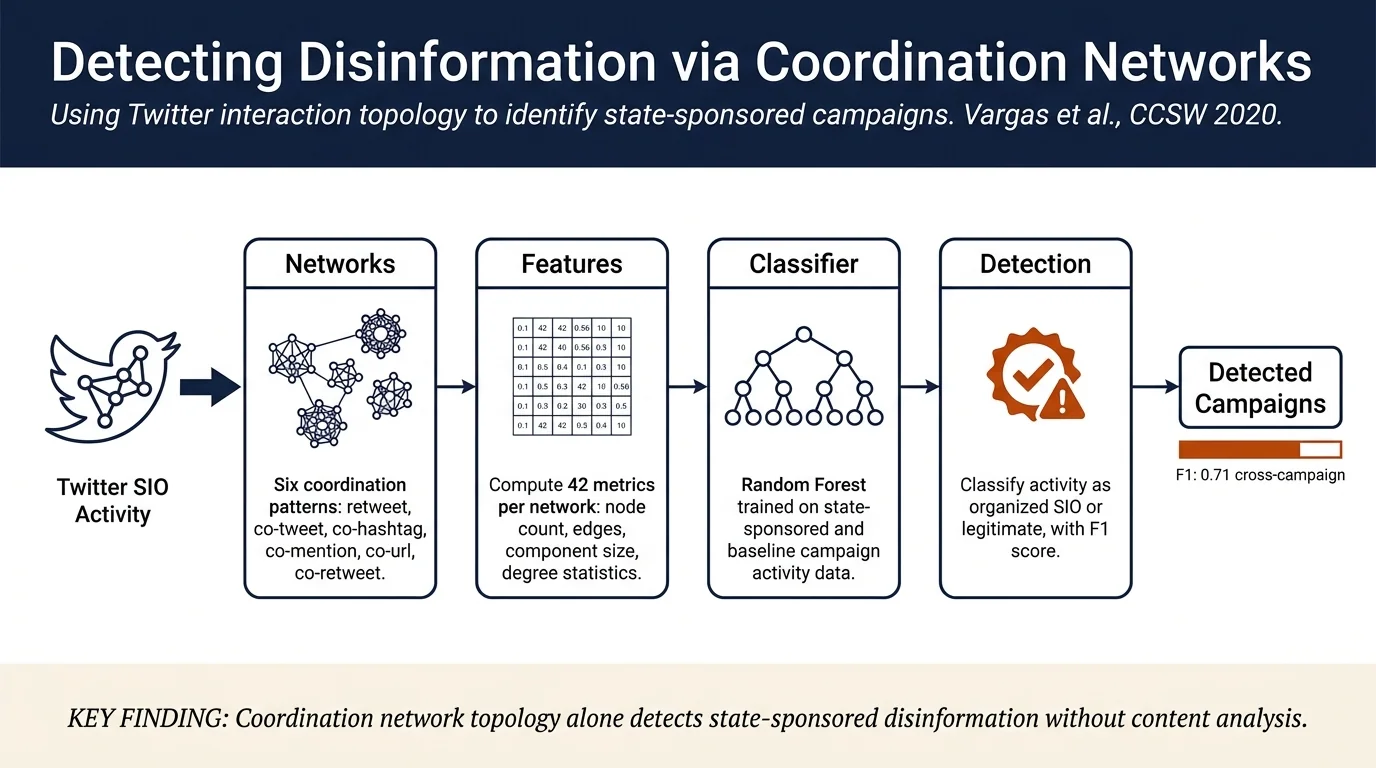
On the Detection of Disinformation Campaign Activity with Network AnalysisState-sponsored disinformation campaigns on Twitter exhibit distinct coordination patterns (shared messages, hashtags, URLs, retweet cascades) that differ from legitimate coordinated activity. The paper proposes using coordination network features—extracted from daily account interactions—to train a binary classifier that detects…
 Spread & networksPlatforms, policy & society
Mis- and Disinformation During Crisis EventsKate Starbird, associate professor at UW's HCDE and co-founder of the Center for an Informed Public, discusses how misinformation and disinformation spread during crisis events, with case studies from the COVID-19 pandemic and 2020 election. She distinguishes between harmful misinformation (false but well-intentioned), disinformation…
 LLMs & generative AIPlatforms, policy & society
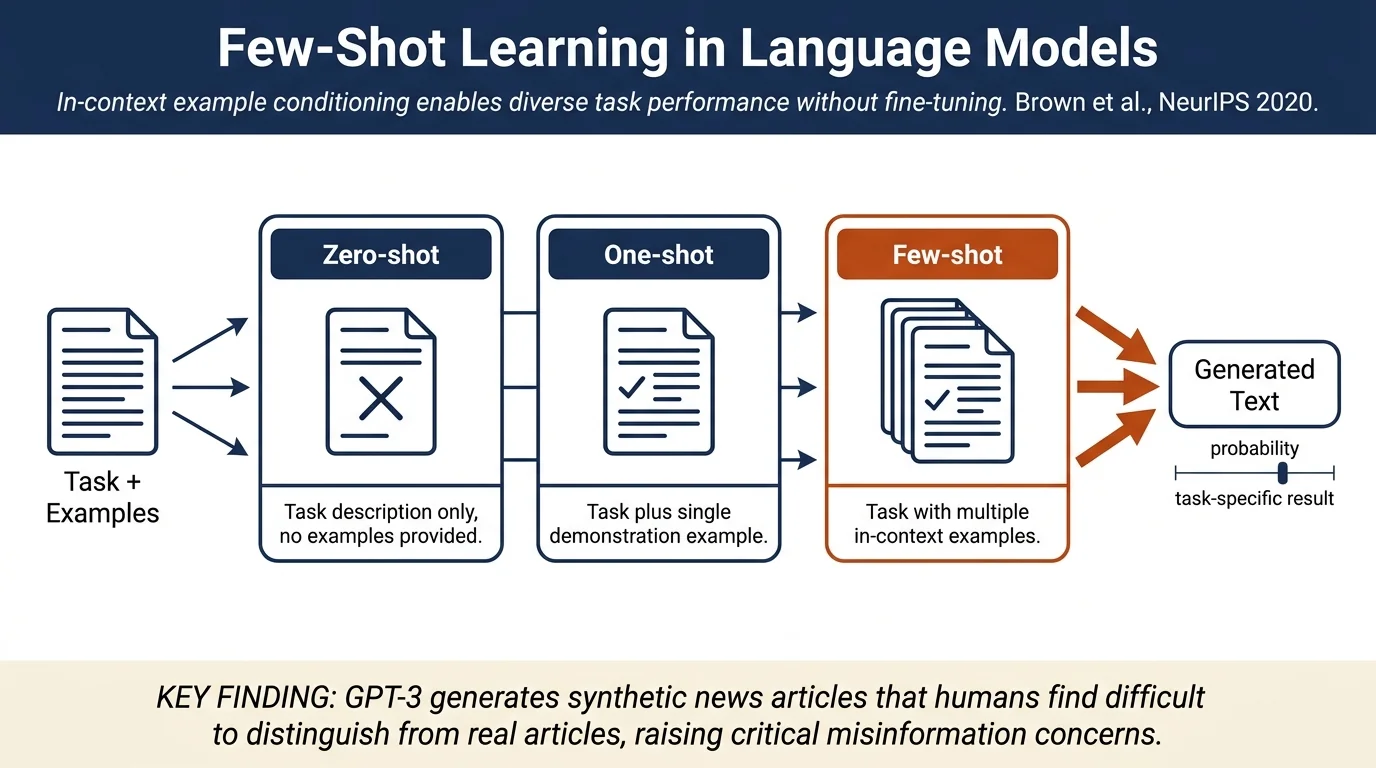
Language Models are Few-Shot LearnersThis landmark paper introduces GPT-3, a 175-billion-parameter autoregressive language model, and demonstrates that it achieves strong performance on diverse NLP tasks through in-context few-shot learning without any task-specific fine-tuning. The model exhibits remarkable scaling properties where larger models dramatically improve…
 Spread & networksDetection methods
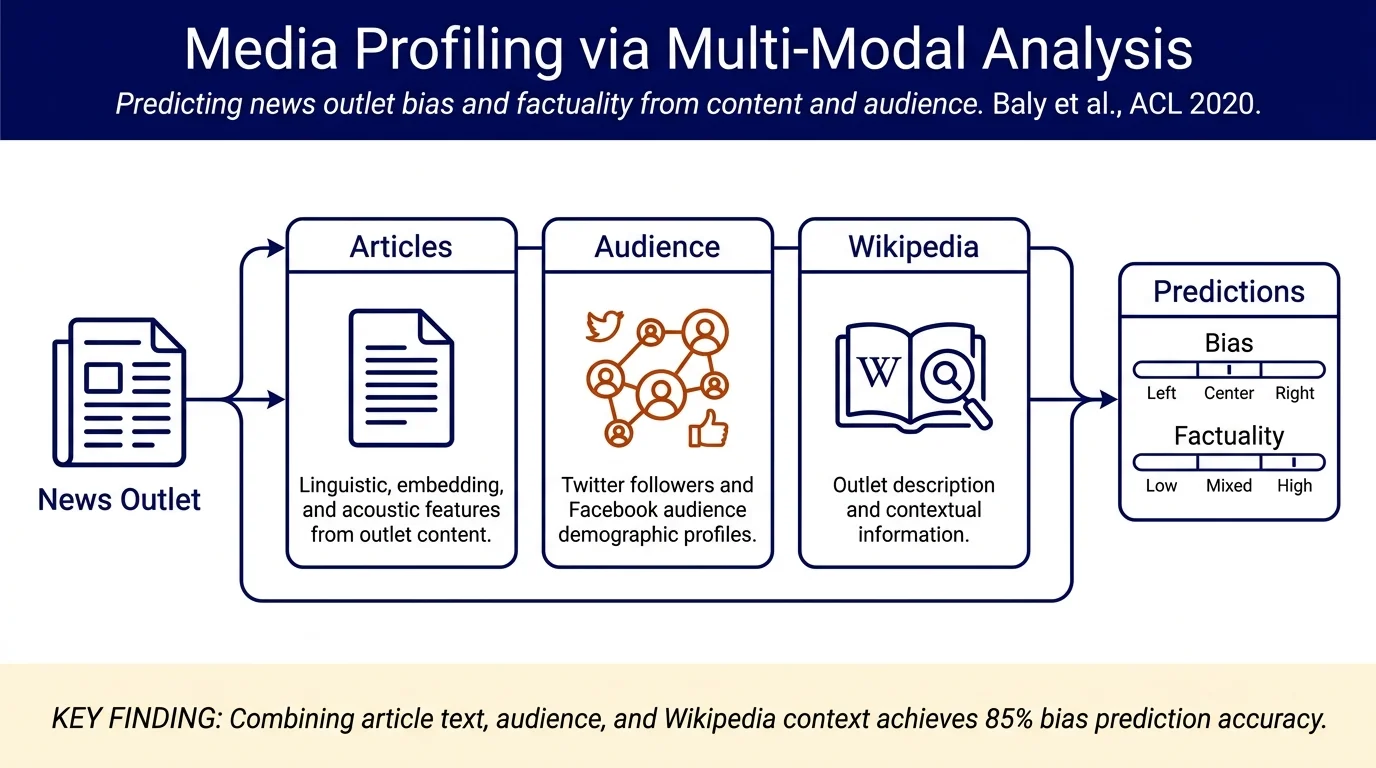
What Was Written vs. Who Read It: News Media Profiling Using Text Analysis and Social Media ContextThis paper predicts the political bias (left/center/right) and factuality (low/mixed/high) of news outlets by analyzing what articles they publish, who follows them on social media, and what Wikipedia says about them. The system achieves 85% accuracy on bias prediction by combining article text, YouTube video features, Twitter audience…
 Spread & networksDetection methods
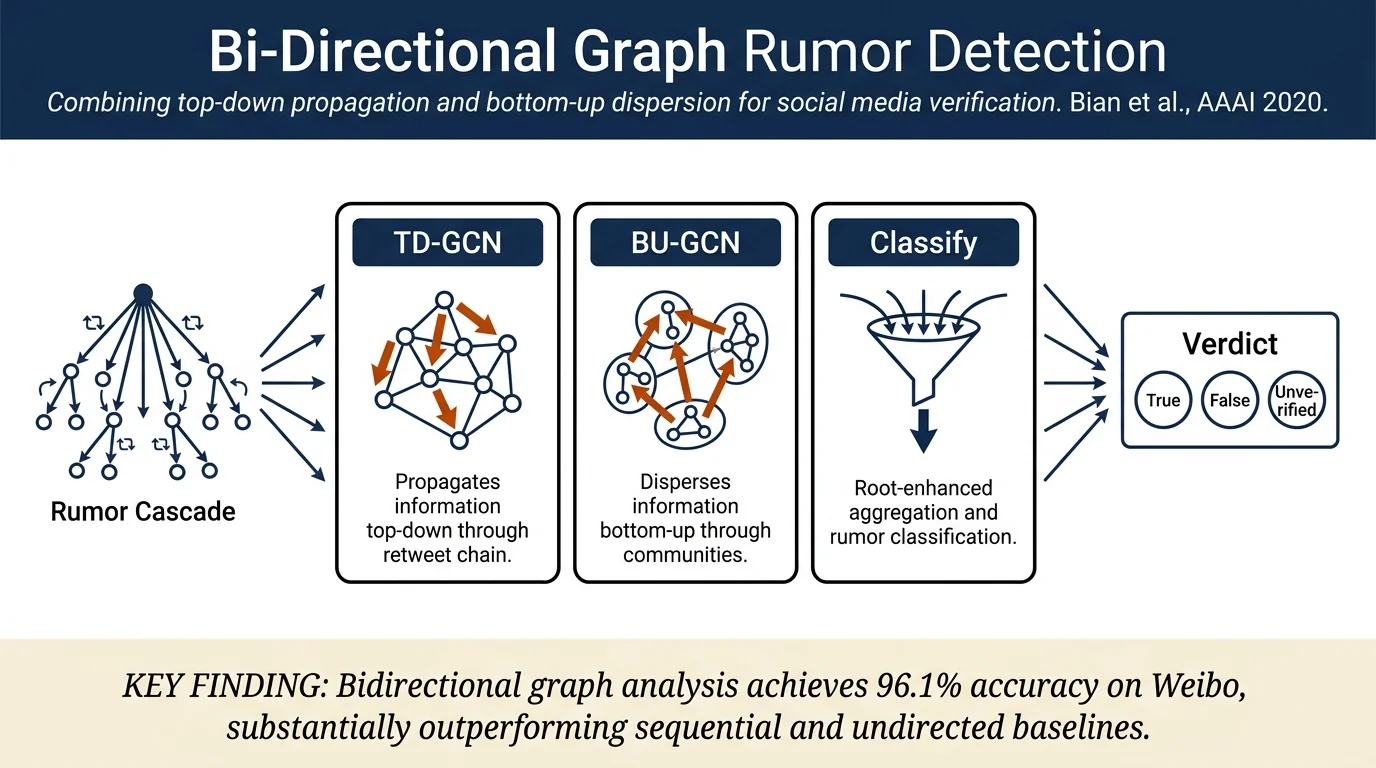
Rumor Detection on Social Media with Bi-Directional Graph Convolutional NetworksProposes Bi-GCN, a graph convolutional network approach for rumor detection that models both top-down propagation patterns (how rumors spread from source) and bottom-up dispersion patterns (how rumors diffuse within communities). By capturing both directional characteristics jointly and incorporating source post features at each layer,…
 Bots & coordinated campaignsDatasets & evaluation
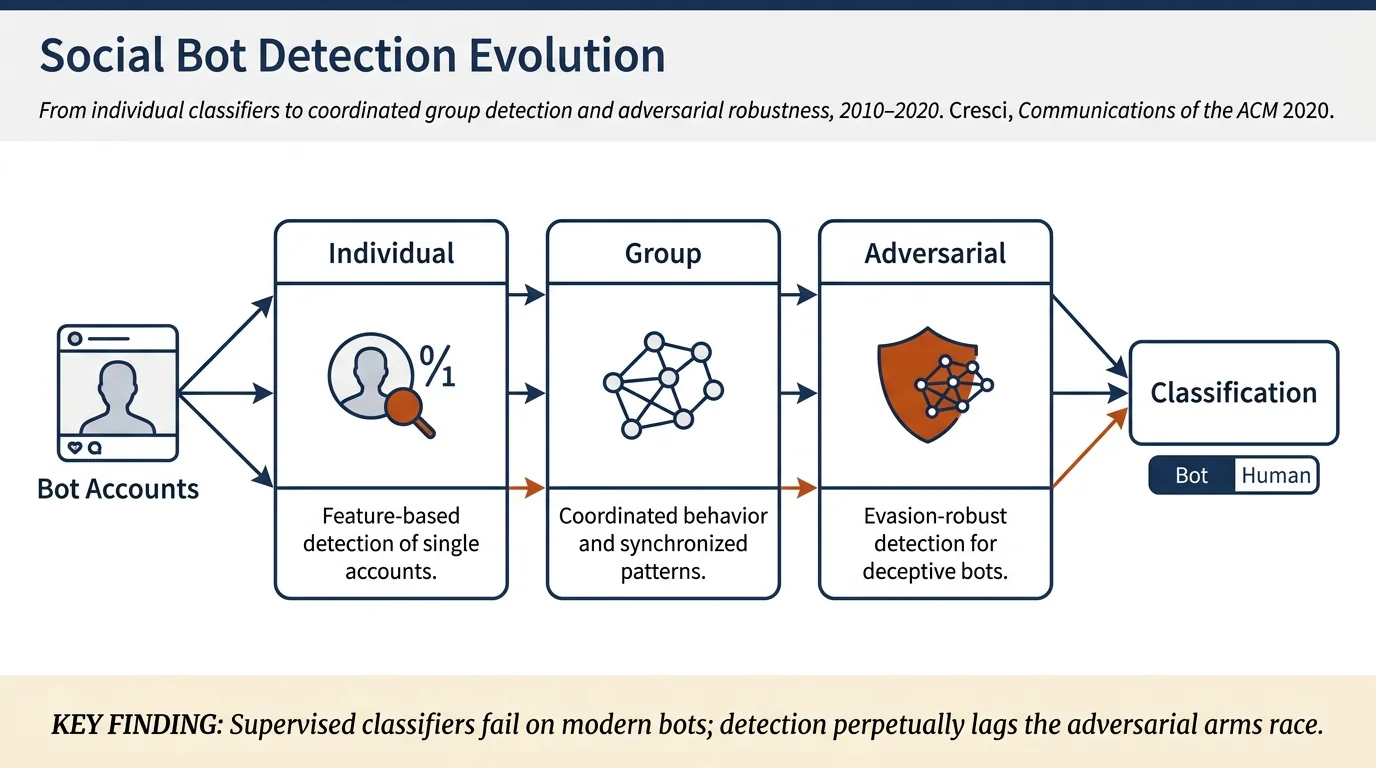
A Decade of Social Bot DetectionA comprehensive review of social bot detection research from 2010 to 2020, documenting the evolution from supervised individual-account detection to group-level approaches targeting coordinated inauthentic behavior. The paper traces the escalating "arms race" between bot developers and detection researchers, illustrates bots' documented…