Explore everything
Filter by research area, year and venue. Every filter is in the address bar, so you can share a view as a link.
 LLMs & generative AIDetection methods
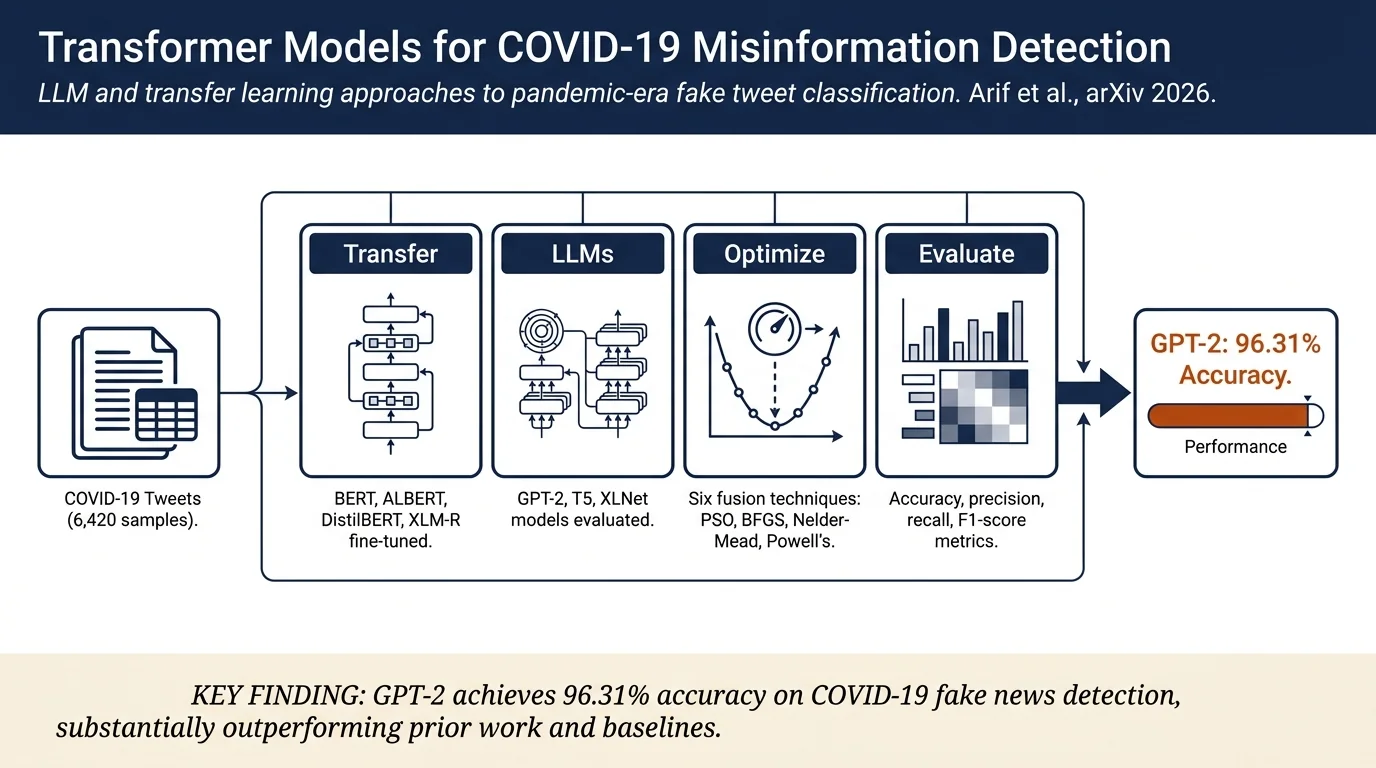
A Large Language Model (LLM) Approach to COVID-19 Fake News DetectionThis paper evaluates seven pre-trained transformer models and LLMs for binary classification of COVID-19 tweets as real or fake using the COVID-19 English Tweets dataset (6,420 tweets). GPT-2 achieves the best performance with 96.31% accuracy and 0.96 F1-score.
 Psychology & interventionsFact-checking & verification
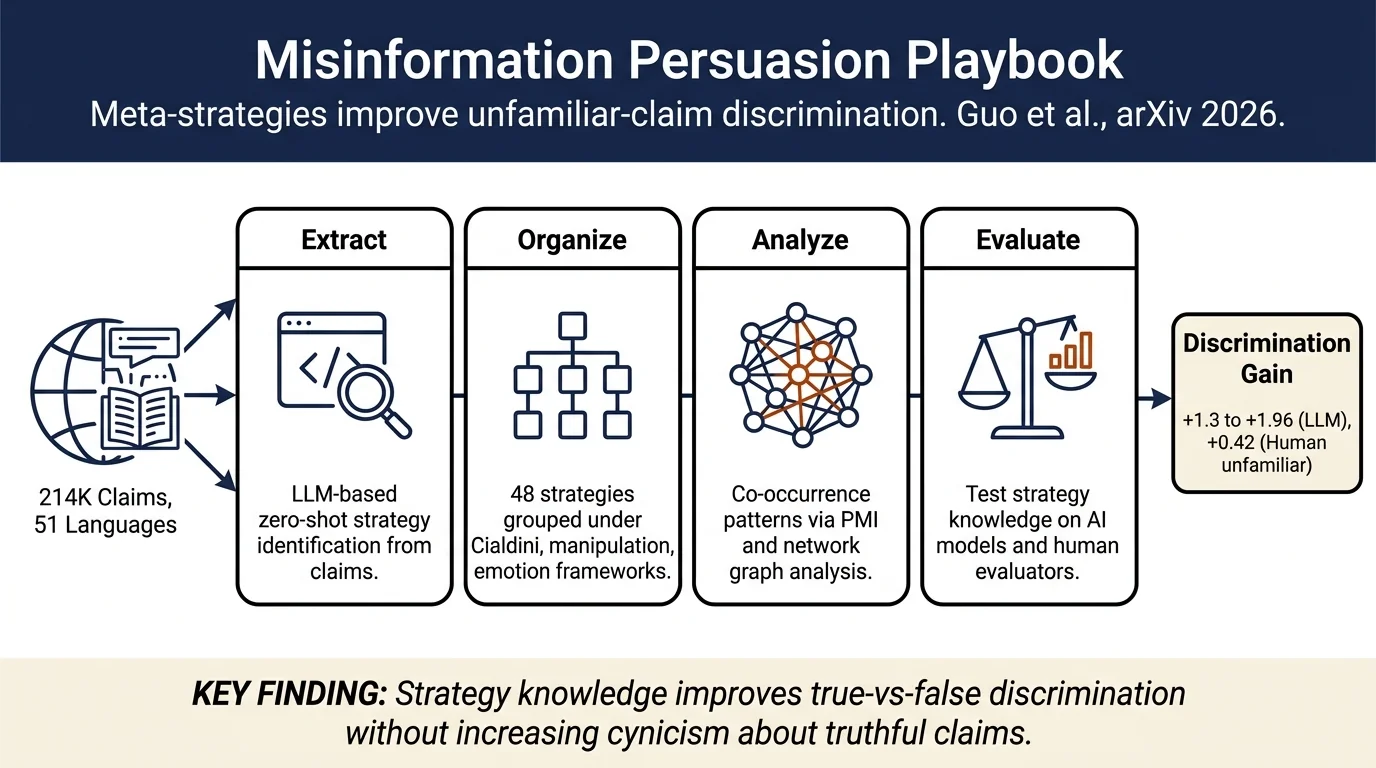
A misinformation playbook sharpens judgement without breeding cynicismThis paper analyzes 214,646 fact-checked claims across 51 languages to map misinformation's persuasion playbook—48 recurring strategies organized under social influence, information manipulation, and emotional appeal. Rather than flagging specific false claims, teaching these meta-strategies improves how both AI models and humans judge…
 Platforms, policy & societyDatasets & evaluation
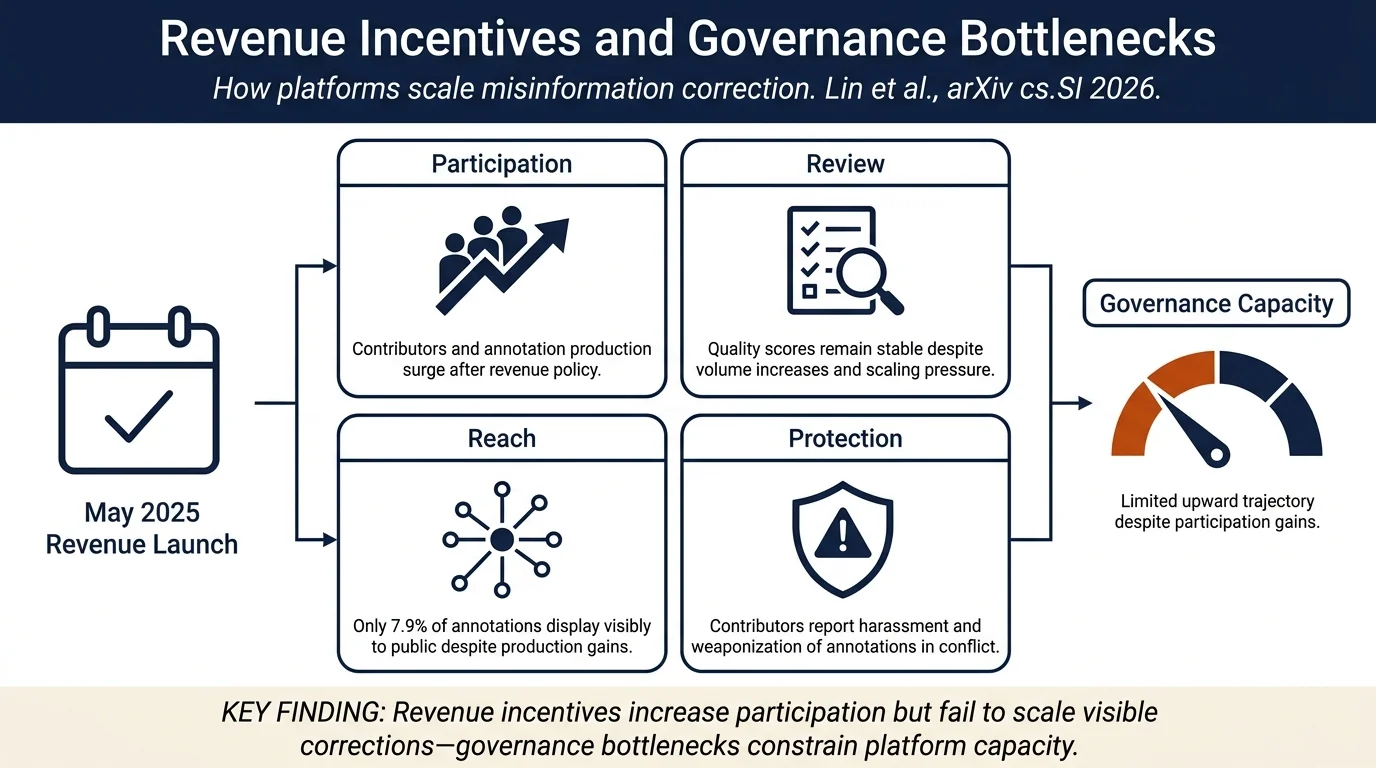
When Platforms Pay Users to Correct Misinformation: Revenue Incentives and Governance Capacity in Weibo AnnotationsWeibo Annotations is a crowdsourced governance system that lets users add corrections and contextual information to disputed claims. In May 2025, Weibo introduced monetary rewards for approved annotations.
 Platforms, policy & societyDetection methods
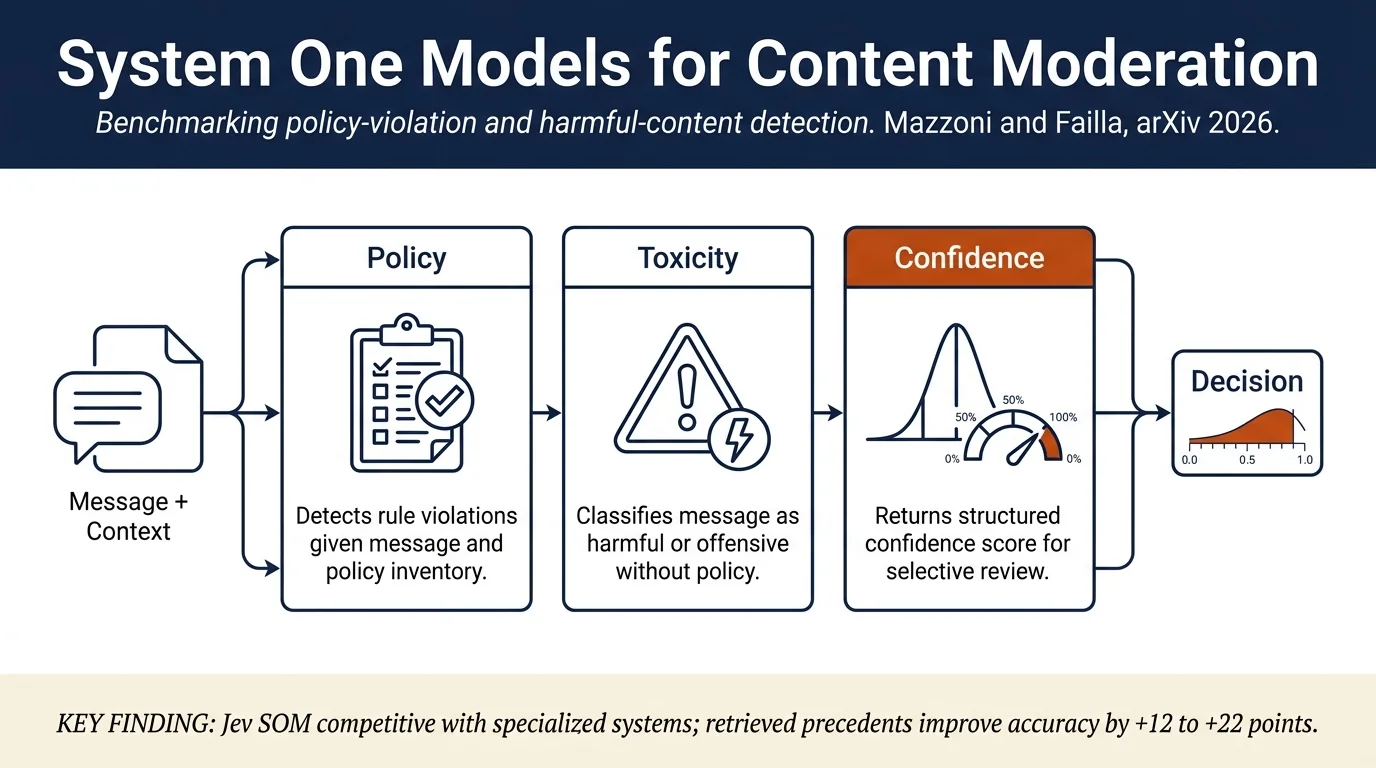
Benchmarking System One Models in Online ModerationThis paper evaluates System One Models (SOMs)—models that accept natural-language context but return structured, typed outputs—across five benchmarks for online content moderation. The key finding is that Jev, a specific SOM implementation, is competitive with specialized moderation systems on policy-grounded tasks and matches or exceeds…
 Detection methodsDatasets & evaluation
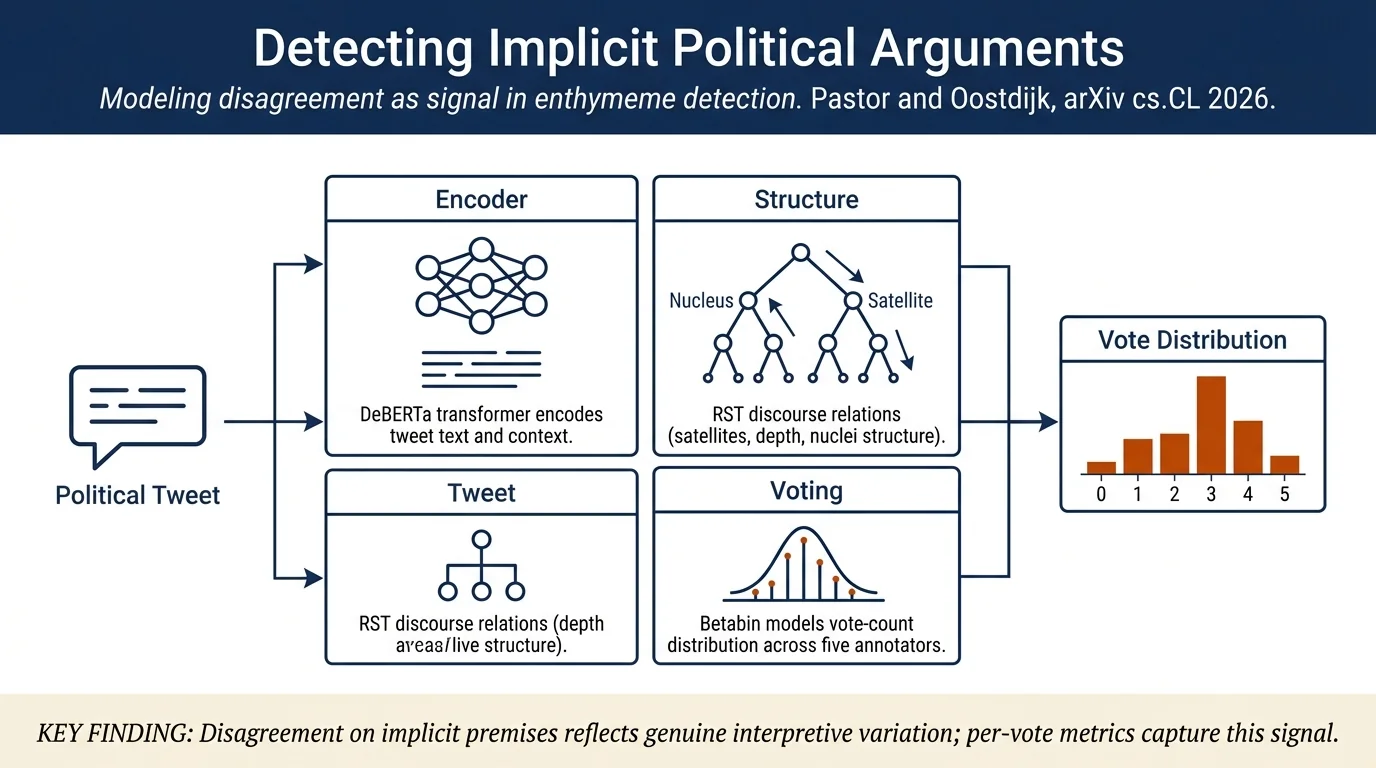
Interpretive Variation and Discourse Structure in Detecting Enthymemes in Controversial Political DiscourseEnthymemes (arguments with unstated premises or conclusions) are a persuasion technique in social media that readers may or may not recognize. This paper develops a DeBERTa-based detector on 1,482 tweets about vaccination and immigration, showing that macro-F1 reaches ~0.67 on hard labels but plateaus due to genuine human disagreement.
 Platforms, policy & societyDatasets & evaluation
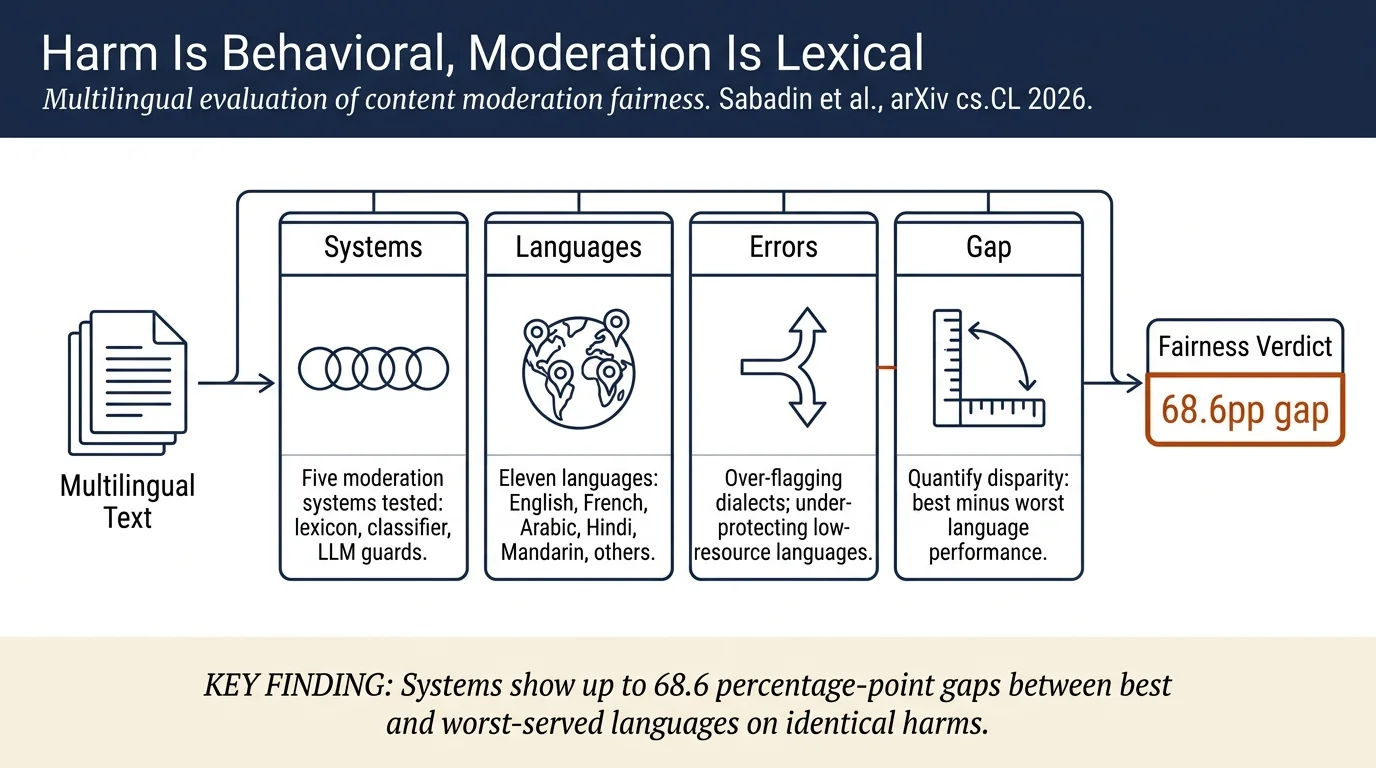
Harm Is Behavioural, Moderation Is Lexical: How Language and Culture Decide Whom Automated Safety Systems Protect and Whom They SilenceAutomated content moderation systems recognize harm based on lexical form rather than behavioral function, creating a double inequity: dialects and minority languages face over-flagging while genuine harms (like manipulation tactics) go undetected in under-resourced languages. The paper unifies fairness literature (false positives in…
 Fact-checking & verificationPlatforms, policy & society
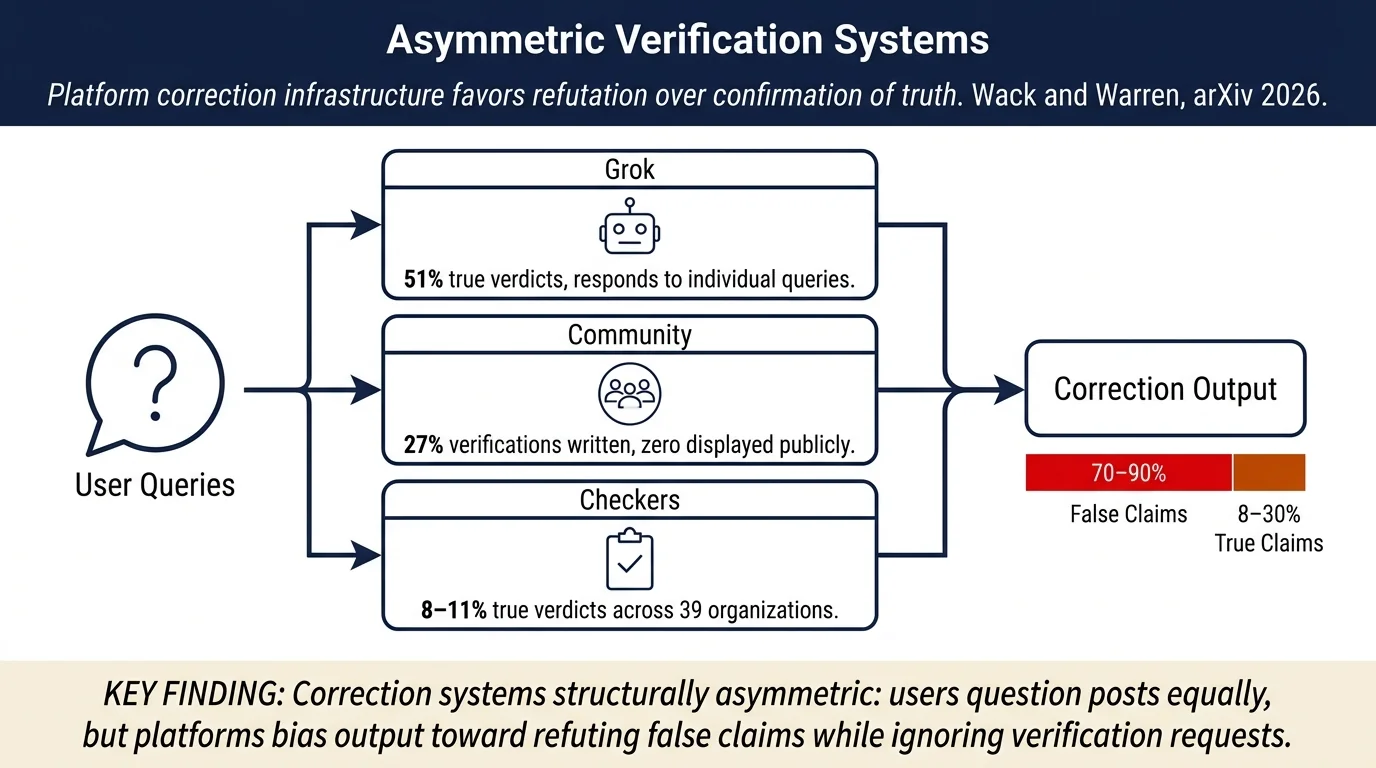
Fact-check? True!: Tracking Verification Requests and the Absence of Truth Verdicts across Correction SystemsExamining 47,899 X/Twitter users asking Grok (X's AI assistant) whether posts are true, the authors find that ~51% of questioned posts are actually accurate, yet correction systems (Community Notes, professional fact-checkers) focus overwhelmingly on false claims. Professional fact-checkers publish true verdicts in only 8–11% of their…
 LLMs & generative AIFact-checking & verification
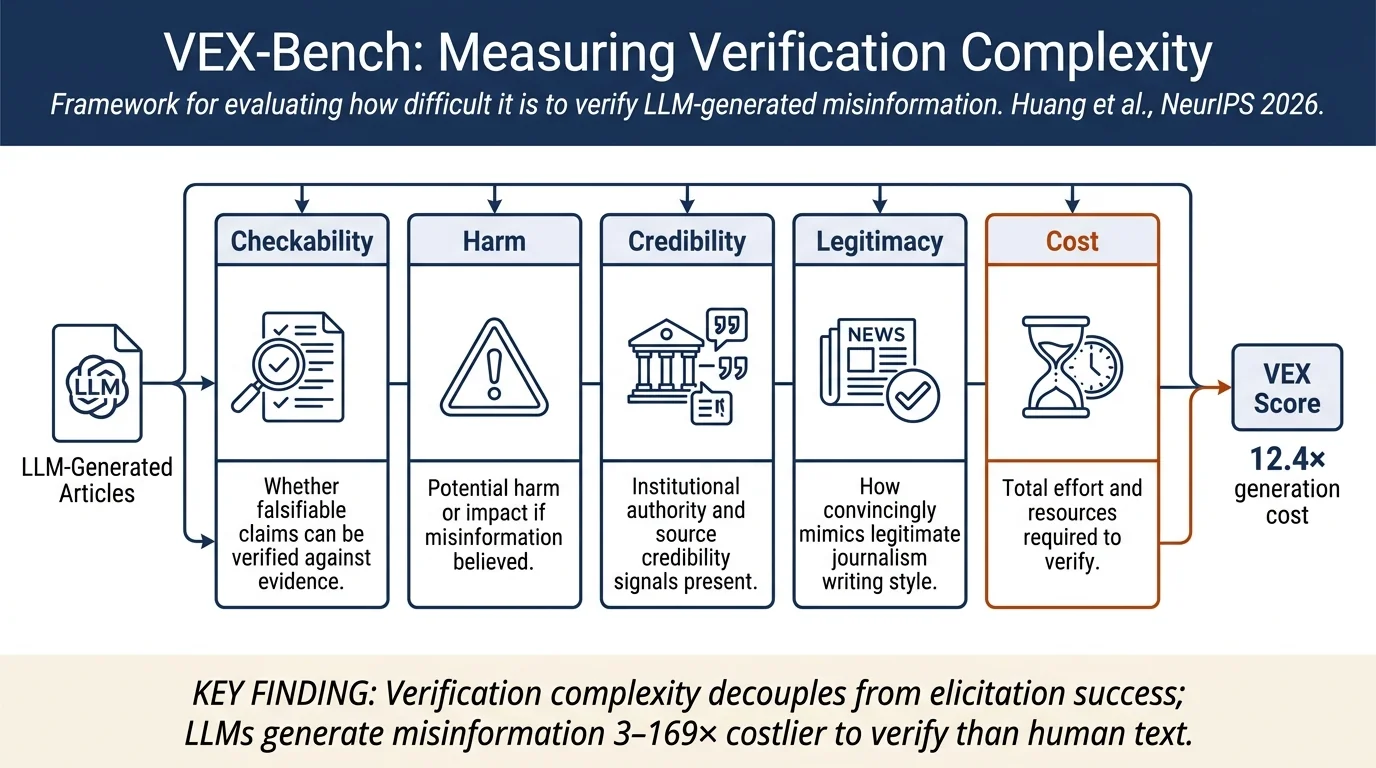
VEX-Bench: Benchmarking Verification Complexity of LLM-Generated MisinformationThis paper introduces VEX-Bench, a unified benchmark for evaluating how difficult it is to verify LLM-generated misinformation. The benchmark measures verification complexity across five dimensions: checkability (whether claims can be checked), harm significance, source credibility signals, impostor legitimacy, and verification cost.
 Platforms, policy & societyDeepfakes & multimodal
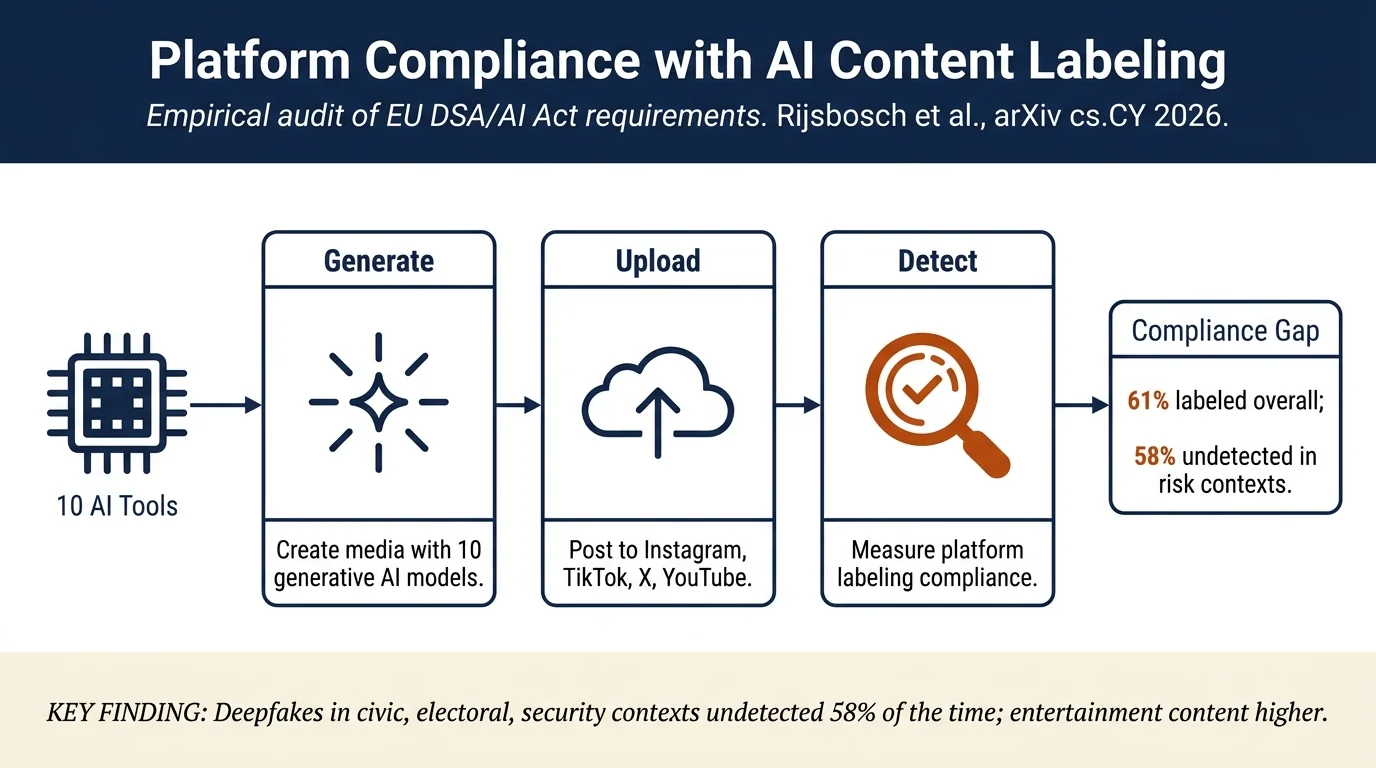
Drowning in AI Slop: How Social Media Platforms (Do Not) Label AI and Deepfake Content under EU lawThis paper conducts a legally grounded empirical audit of AI-labeling practices across Instagram, TikTok, X, and YouTube, testing how well platforms comply with EU legal obligations to label AI-generated and deepfake content. Using uploads of content generated by 10 generative AI tools, the authors find that platforms labeled only 36 of…
 Spread & networksPsychology & interventions
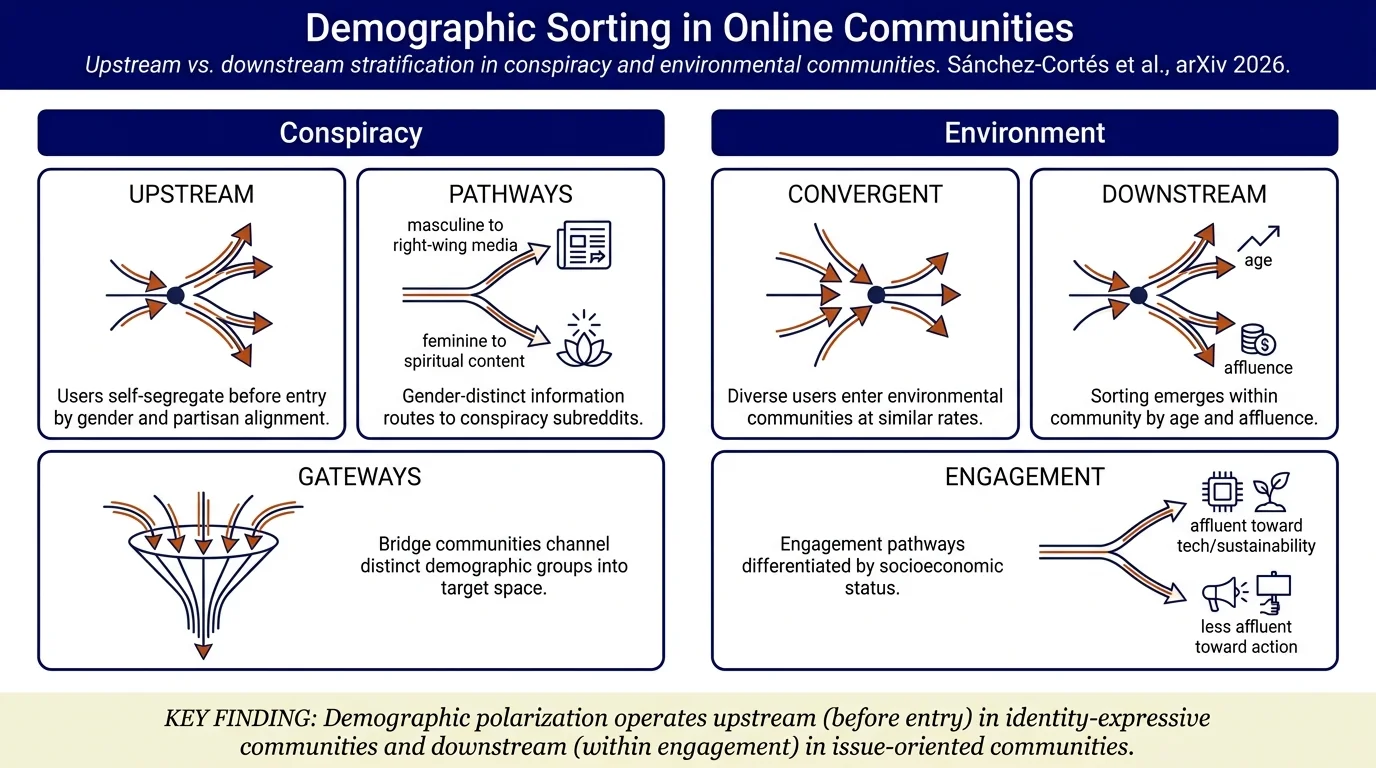
Conspiracy and Environment Communities on Reddit Sort Along Different Demographic AxesConspiracy and environmental communities on Reddit exhibit distinct demographic sorting mechanisms. Conspiracy communities show upstream sorting—users self-segregate by gender and partisanship before entry through ideologically-aligned information environments.
 Bots & coordinated campaignsSpread & networks
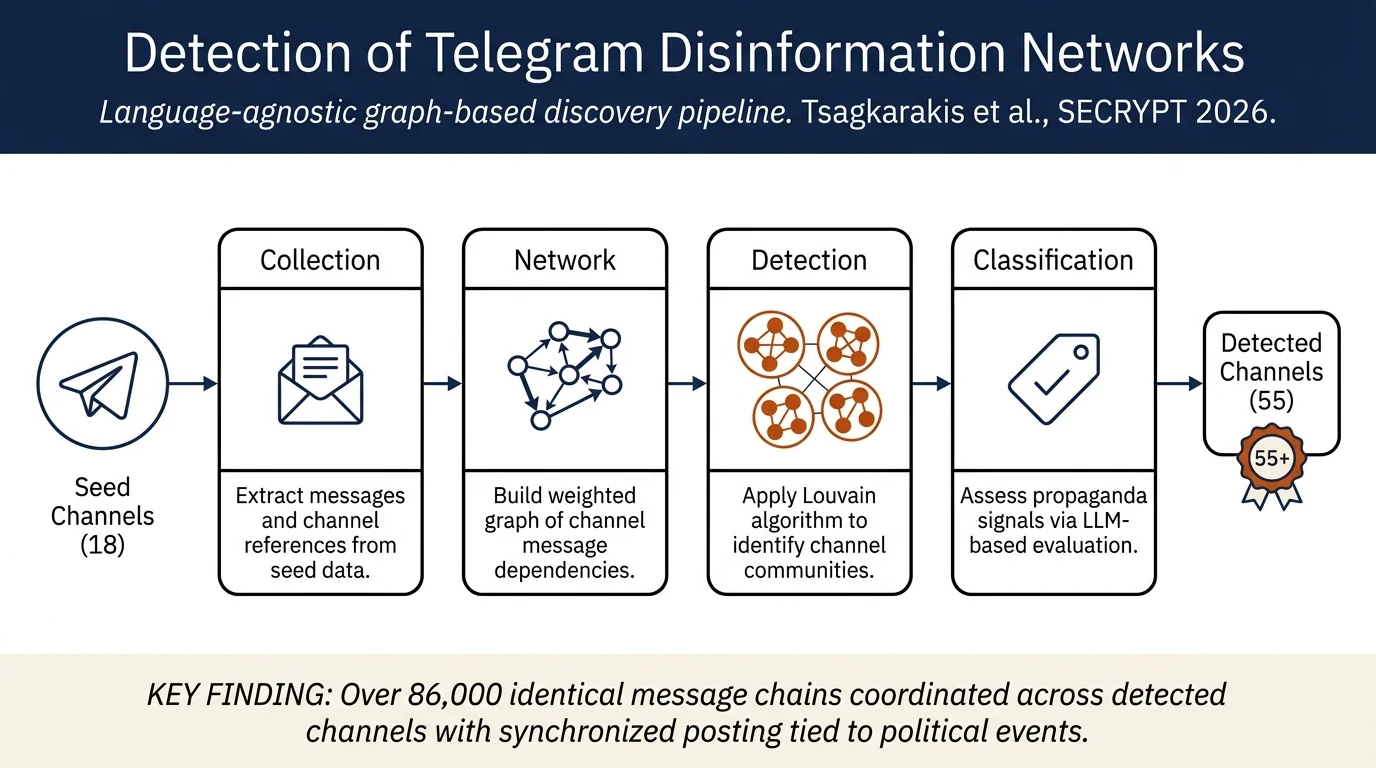
Birds of a Feather Flock Together: Network-Based Detection of Coordinated Disinformation Campaigns on TelegramA graph-based methodology discovers coordinated disinformation campaigns on Telegram by analyzing message-sharing patterns rather than content, requiring only structural relationships. The authors identified 55 disinformation channels and over 86,000 identical message chains spanning multiple channels, revealing a highly synchronized…
 Spread & networksPlatforms, policy & society
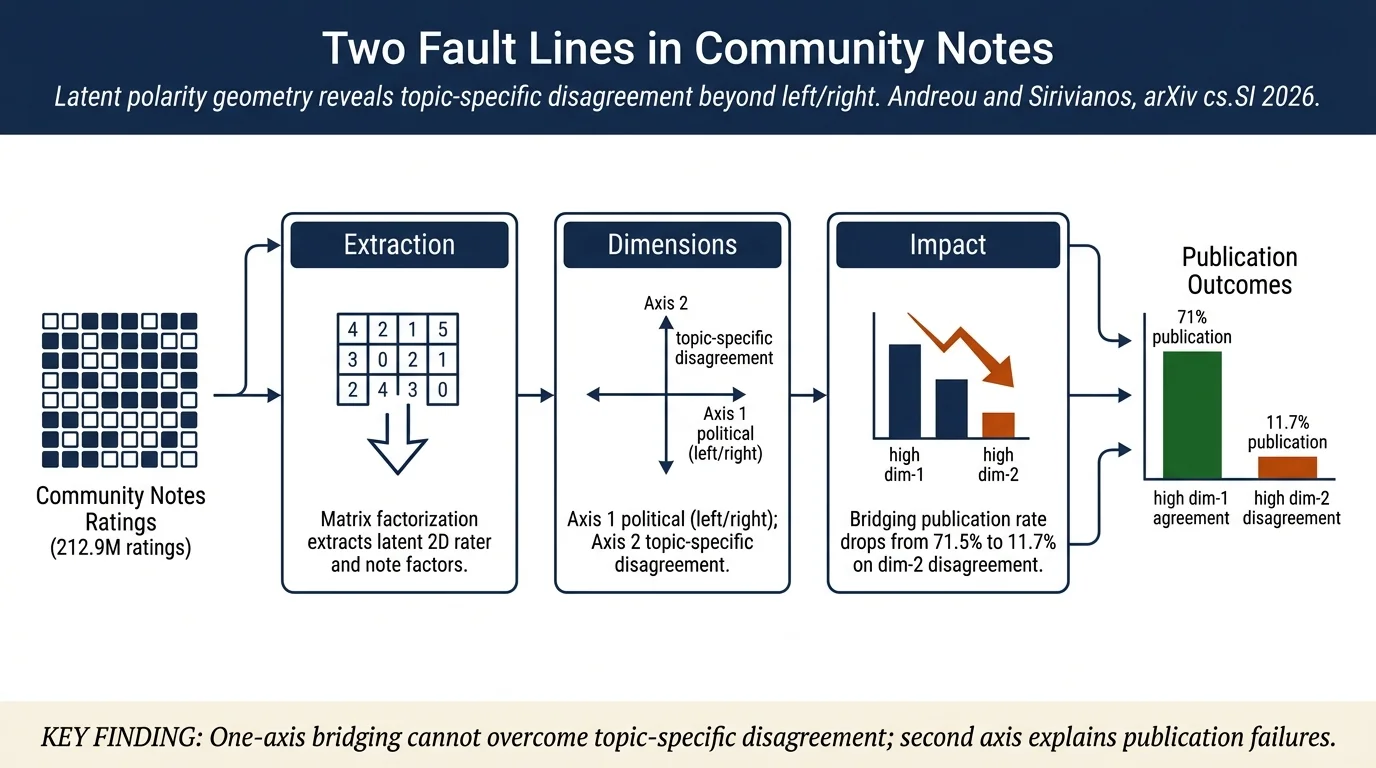
Two Fault Lines: Latent Polarity Geometry in X Community NotesX's Community Notes system assumes disagreement is one-dimensional (left/right politics) to decide when notes should be published via a "bridging" mechanism. This paper shows the space is actually two-dimensional: the first axis captures political polarization, while a second axis independently captures disagreement on topics like…
 Spread & networksPlatforms, policy & society
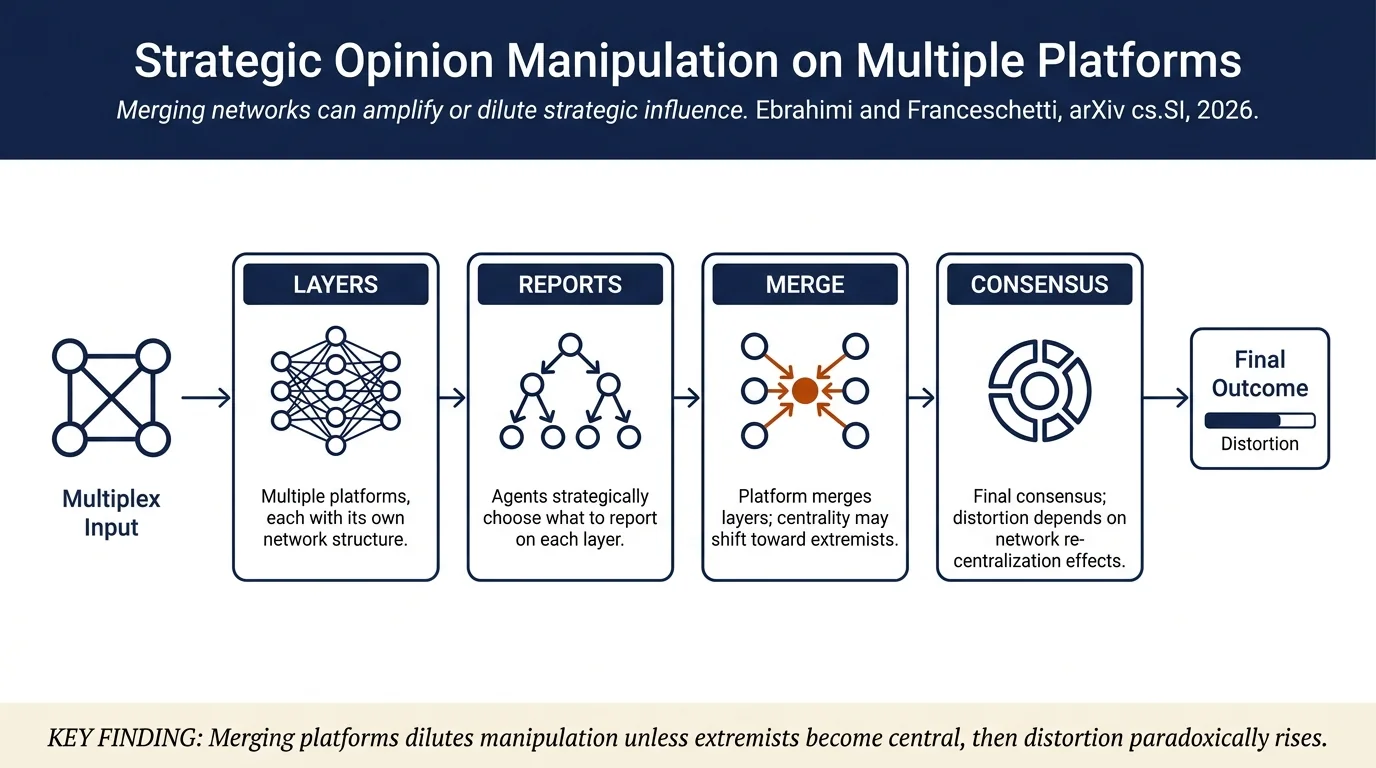
Strategic Opinion Manipulation in Multiplex NetworksThis paper models how agents strategically manipulate consensus when opinions are aggregated across multiple platforms or channels. By analyzing the resulting game as a DeGroot-like process on merged layers with strategic misreporting costs, the authors show that merging layers dilutes manipulation by default—but can amplify it through…
 Deepfakes & multimodalDatasets & evaluation
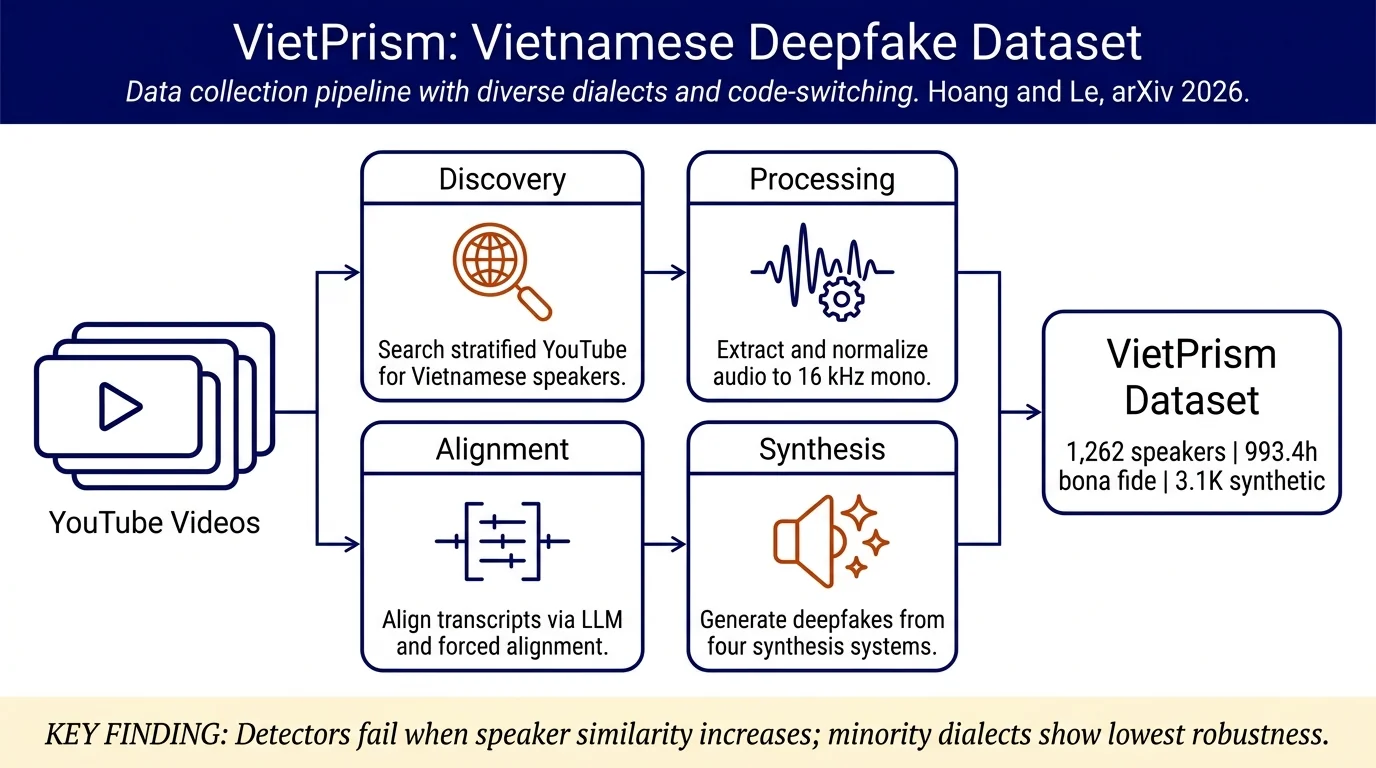
VietPrism: A Large-Scale Vietnamese Speech and Deepfake Corpus with Diverse Dialects and Code-SwitchingVIETPRISM is a large-scale Vietnamese speech dataset combining 993.4 hours of bona fide utterances from 1,262 speakers with 3.1K hours of synthetically generated speech from four deepfake systems. The dataset uniquely provides transcripts, dialect annotations, speaker identities, and natural Vietnamese–English code-switching coverage.
 Fact-checking & verificationLLMs & generative AI
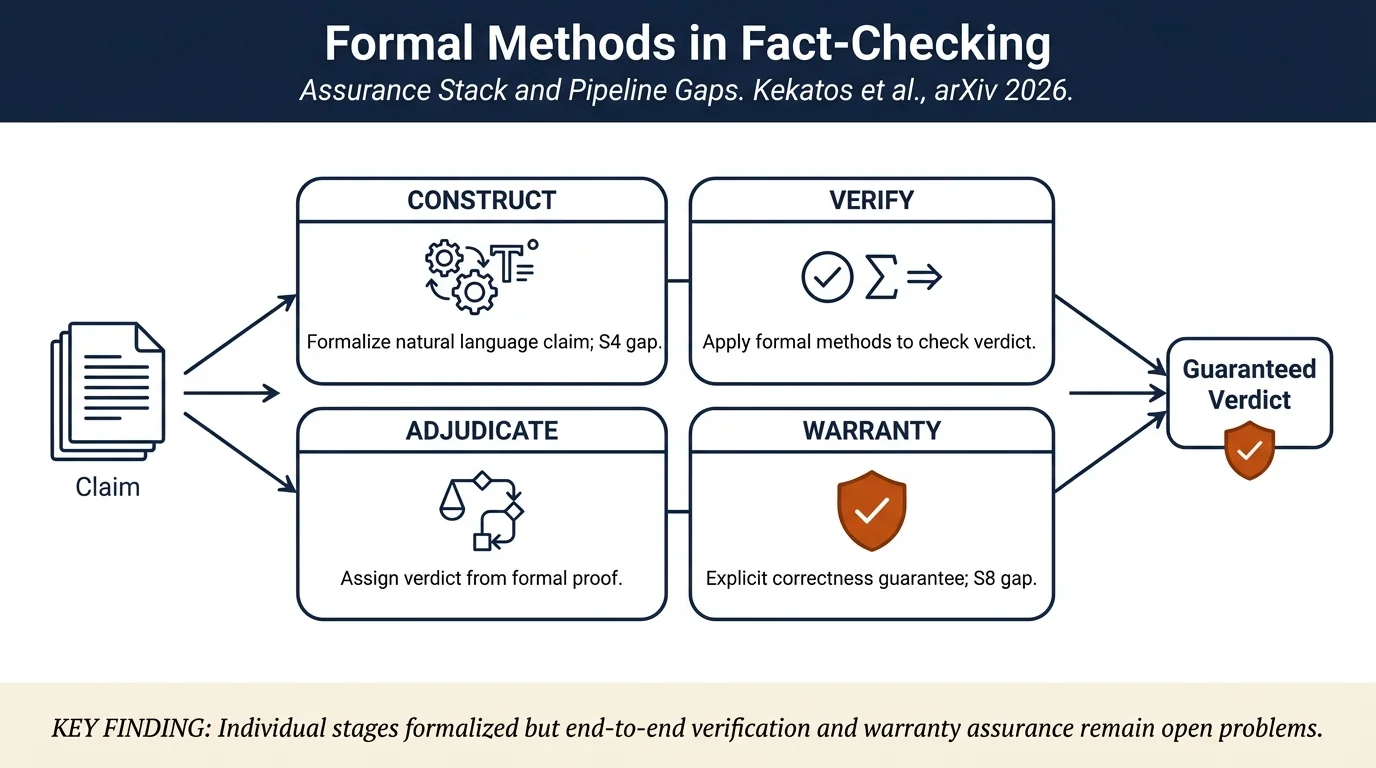
SoK: Formal Methods for Fact-Checking and Information IntegrityThis systemization of knowledge surveys formal methods (logic, model checking, theorem proving, symbolic reasoning) applied to fact-checking systems. The authors organize 121 works by assurance level and identify two critical gaps: constructing checkable claims and correcting errors in published verdicts.
 Spread & networksPlatforms, policy & society
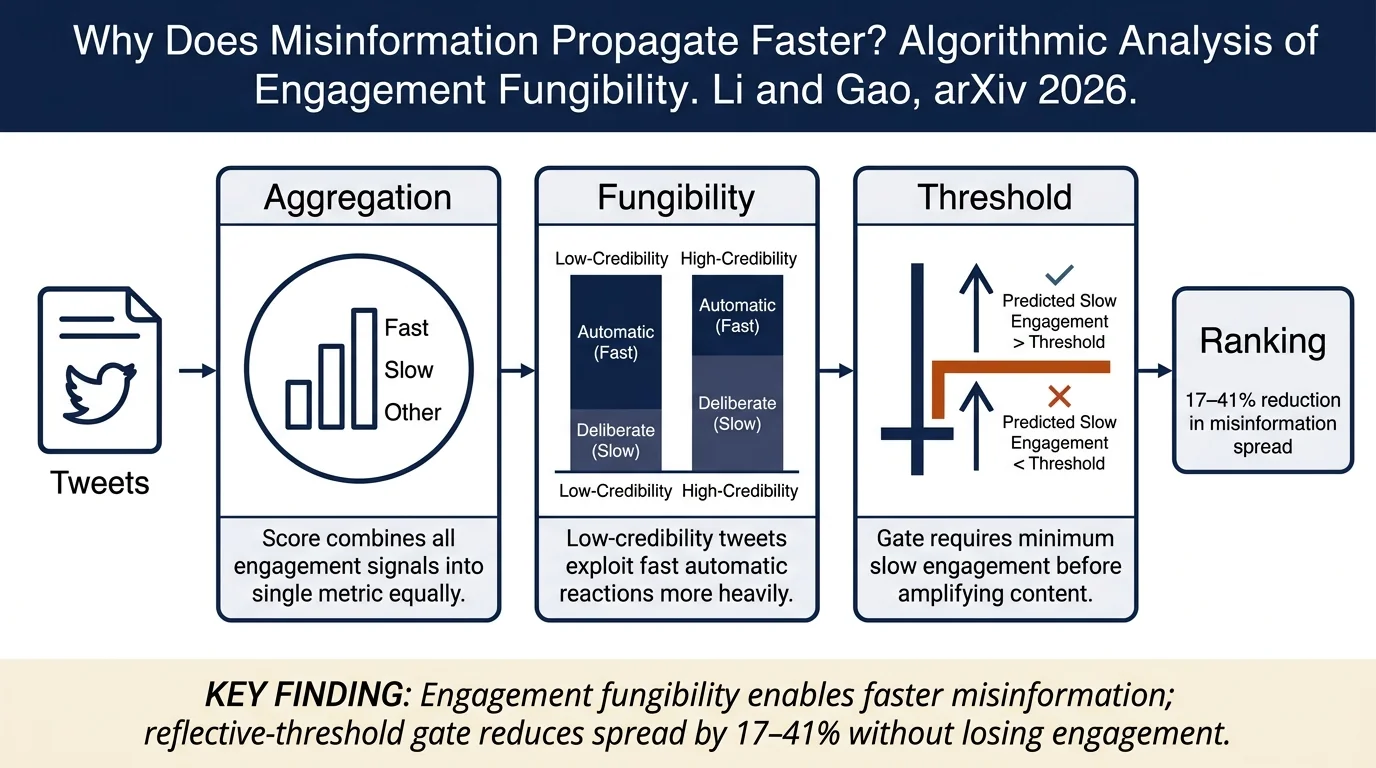
Why Does Misinformation Propagate Faster? An Algorithmic Perspective on XMisinformation propagates faster on X due to an "engagement fungibility mechanism" in the platform's score-aggregation layer: fast engagement signals (likes, retweets) are treated as interchangeable evidence of quality with slow signals (replies, quotes), allowing low-credibility content that draws disproportionately from instant…
 Fact-checking & verificationLLMs & generative AI
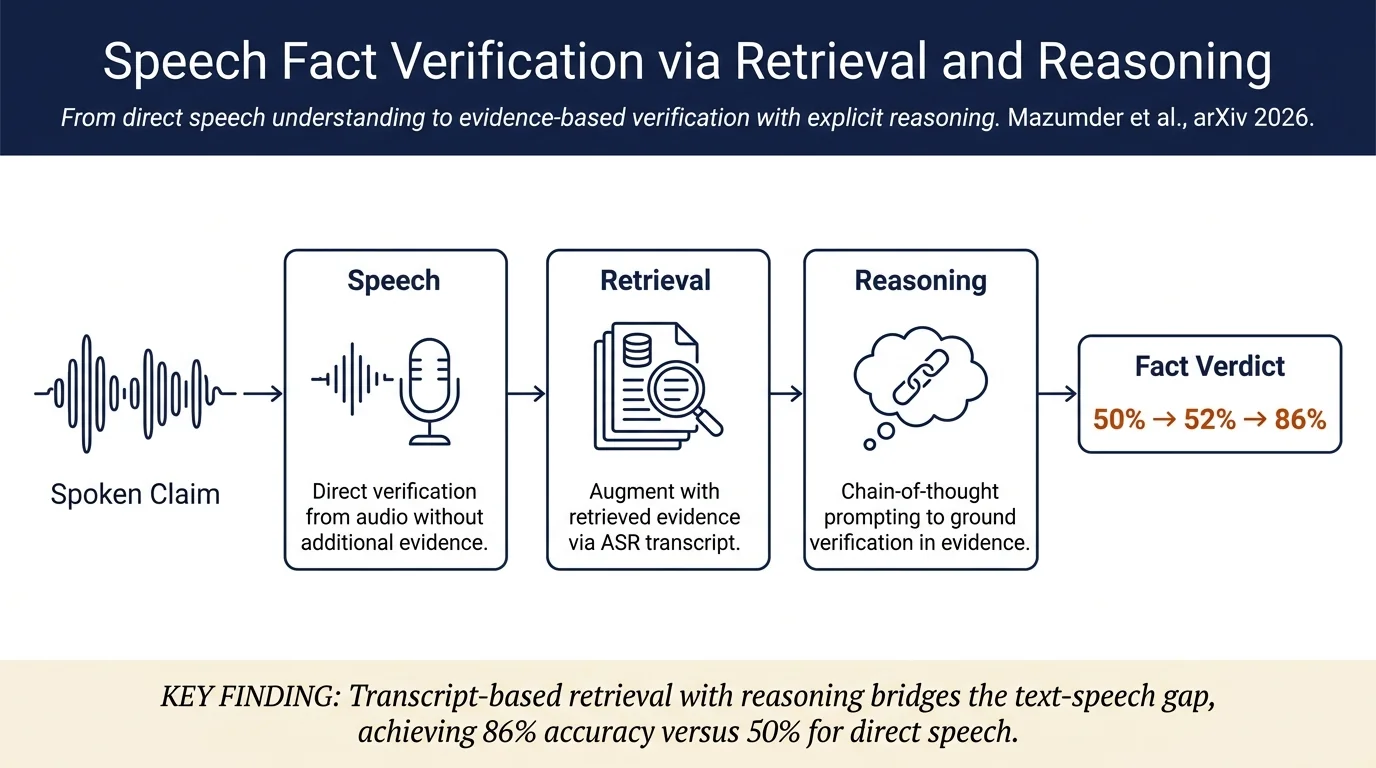
To Trust or Not to Trust: Retrieval-Augmented Fact Checking in SpeechLarge Audio Language Models (LALMs) exhibit a significant text-speech modality gap: they verify written claims reliably but fail on spoken ones, even from the same model. The paper introduces VeriSpeak, a benchmark of 3,879 spoken claims with temporal, geographical, and relational facts, and demonstrates that retrieval-augmented LALMs…
 Bots & coordinated campaignsDatasets & evaluation
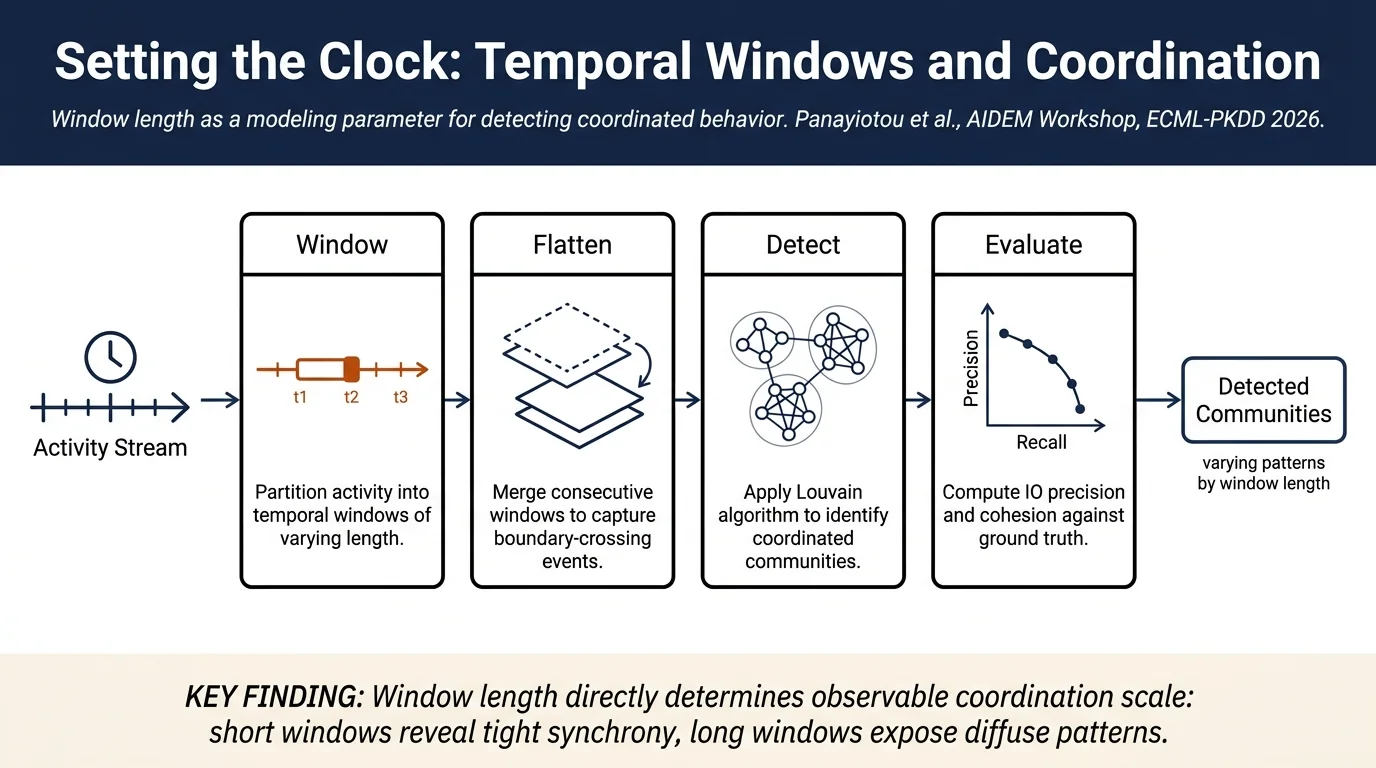
Setting the clock: Evaluating temporal window parameters for coordinated behavior detectionThe paper systematically evaluates how temporal window parameters (length and stride) affect detection of coordinated communities in co-repost networks. Using 14 labeled information operation datasets, the authors find that window length is a central modeling parameter: short windows (seconds to minutes) detect tight, highly synchronized…
 LLMs & generative AIPsychology & interventions
AI-Enabled Human Memory Manipulation: Misleading AI-Generated Summaries Distort Human MemoryLarge language models frequently generate erroneous summaries of videos, including critical omissions and hallucinated details. In a human-subjects experiment, participants who read AI-generated summaries containing misleading information were significantly less likely to accurately recall the original event—demonstrating that AI…
 Psychology & interventionsSpread & networks
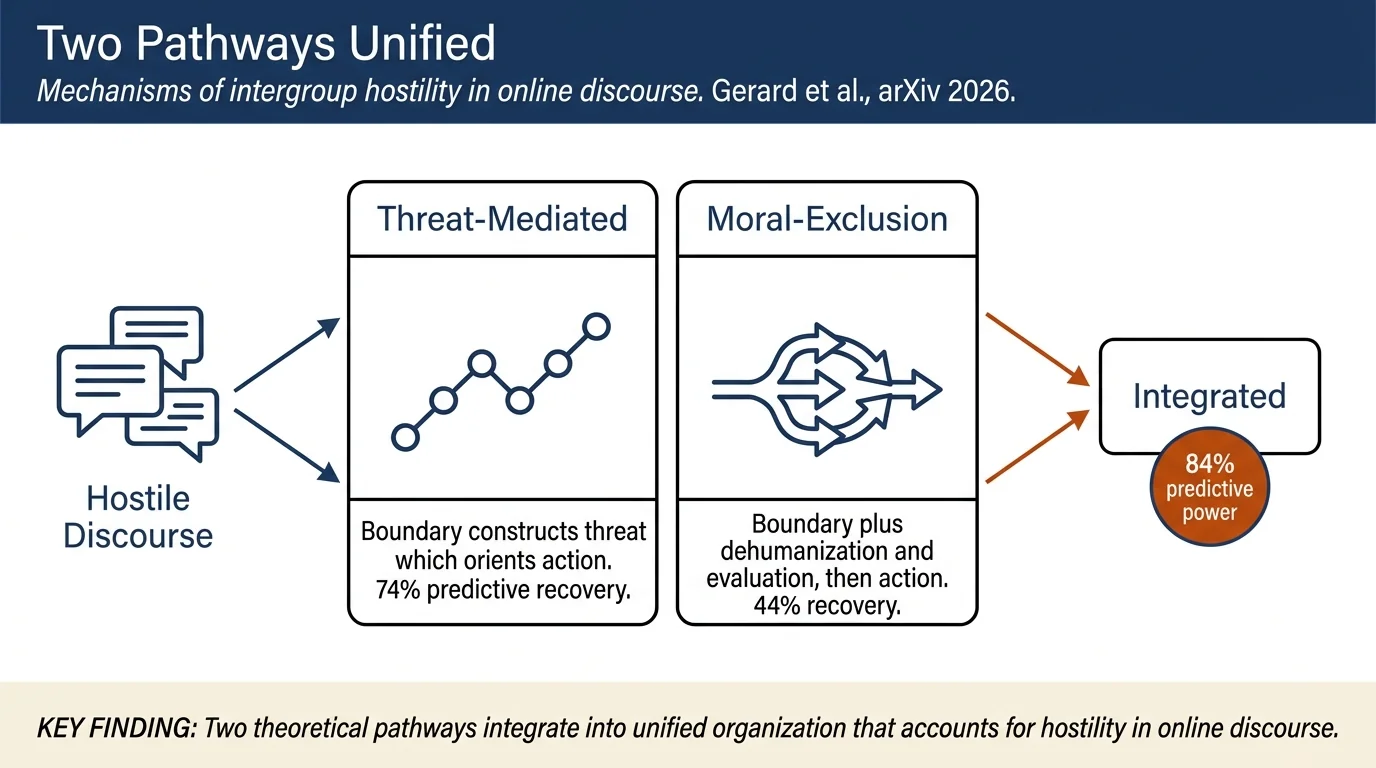
Unifying Models of Intergroup Hostility in Online DiscourseHostile rhetoric toward outgroups in online discourse can be modeled through six mechanisms (boundary construction, threat construction, scapegoating, negative evaluation, dehumanization, action orientation) whose structural and temporal relationships were previously understood separately through competing theoretical frameworks. By…
 Spread & networksPsychology & interventions
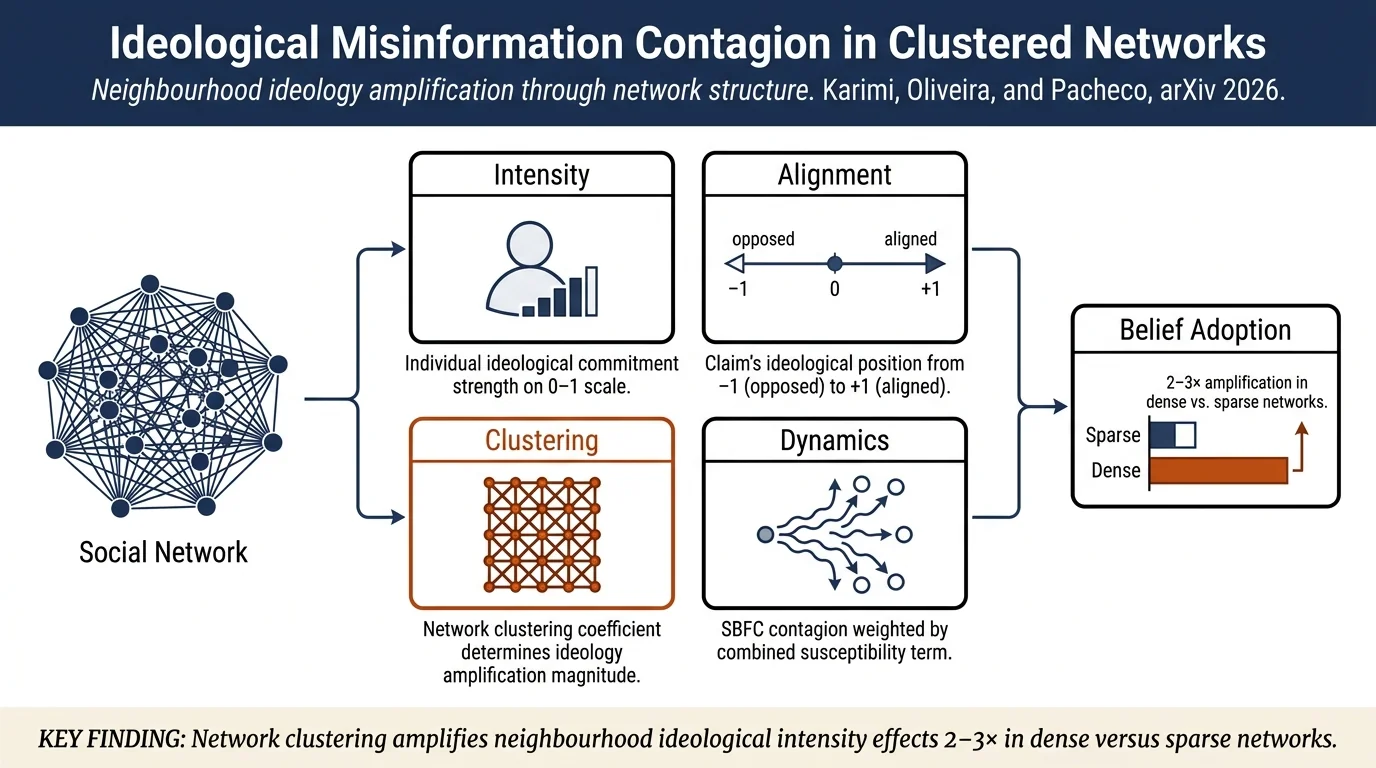
How neighbourhood ideology shapes misinformation belief in densely tied social networksPrior work decouples ideological bias and social influence when modeling misinformation propagation; this paper integrates them through an agent-based contagion model that distinguishes an individual's ideological intensity from a claim's ideological alignment. Simulation and analytical results show that in densely clustered…
 LLMs & generative AIPlatforms, policy & society
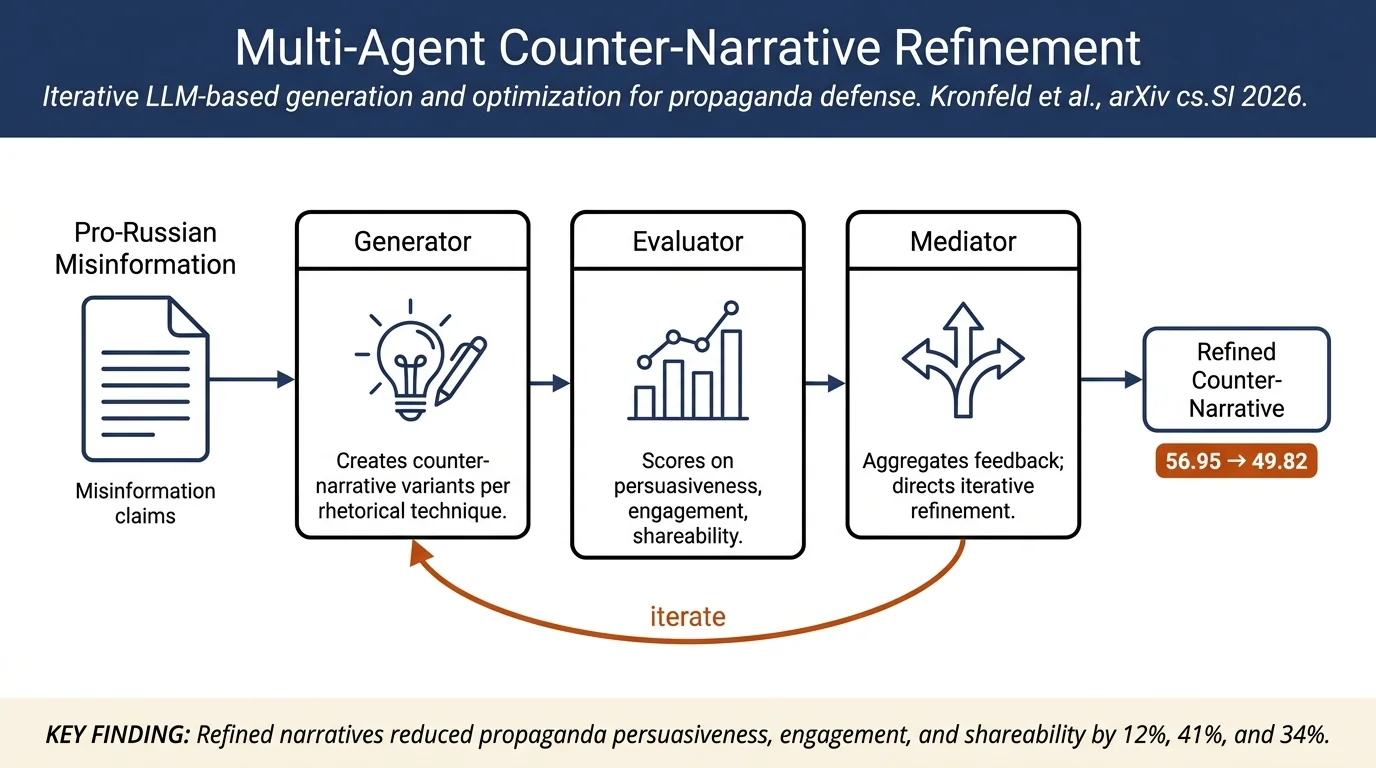
A Multi-Stage Agentic Framework for Effective Counter-Narrative Generation and RefinementCounter-narratives are a scalable defense against misinformation and hate speech, but manual authoring is slow and labor-intensive. This paper proposes a multi-stage agent-based framework using LLMs to generate and iteratively refine counter-narratives on pro-Russian misinformation about Ukraine.
 Platforms, policy & societySpread & networks
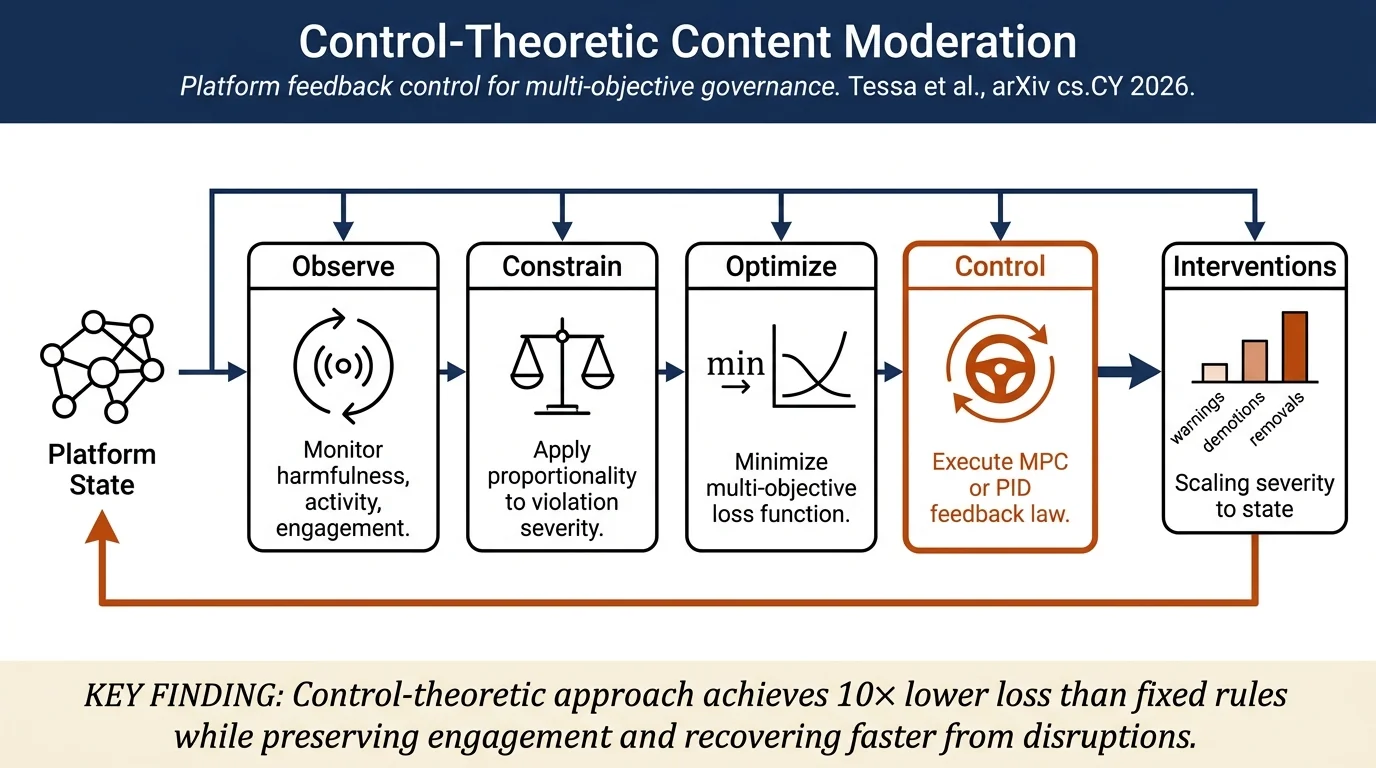
Control-Theoretic Content ModerationContent moderation at the platform level requires balancing multiple competing objectives (reducing harmful content, preserving engagement, maintaining activity). This paper formulates platform-level moderation as a feedback control problem with a multi-objective loss function, proposes control-theoretic moderators (including…
 LLMs & generative AIPlatforms, policy & society
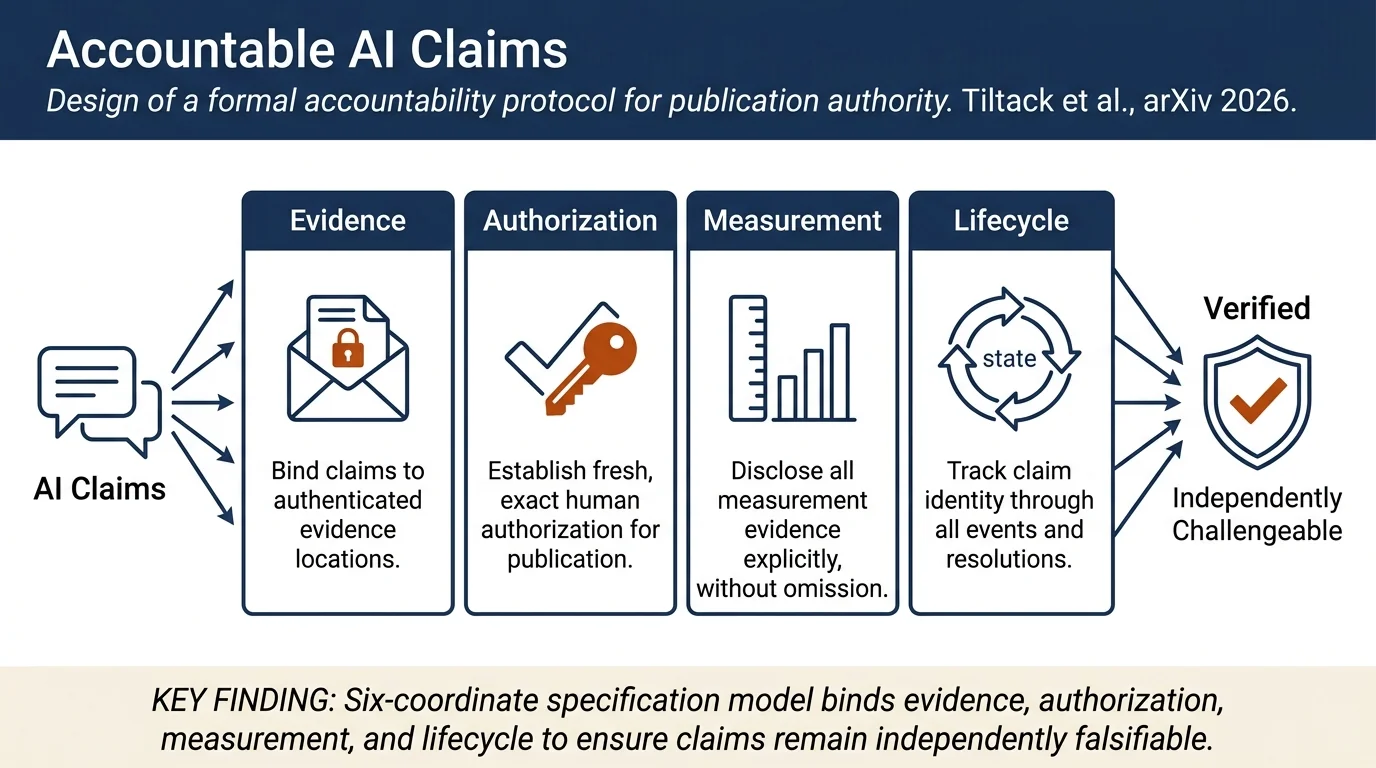
Making AI-Assisted Claims Independently Challengeable: Publication Authority and a Protocol for Falsifiable Publication RecordsAI-assisted claims can appear authoritative even when evidence, analysis, and authorization refer to different states—creating a coordination problem. This work introduces Publication Authority (PA) as a non-transferable, single-use capability governing publication transitions, and proposes PAC-2026 SF-4, an executable specification…