Explore papers
Filter by research area, year and venue. Every filter is in the address bar, so you can share a view as a link.
 Detection methodsDeepfakes & multimodal
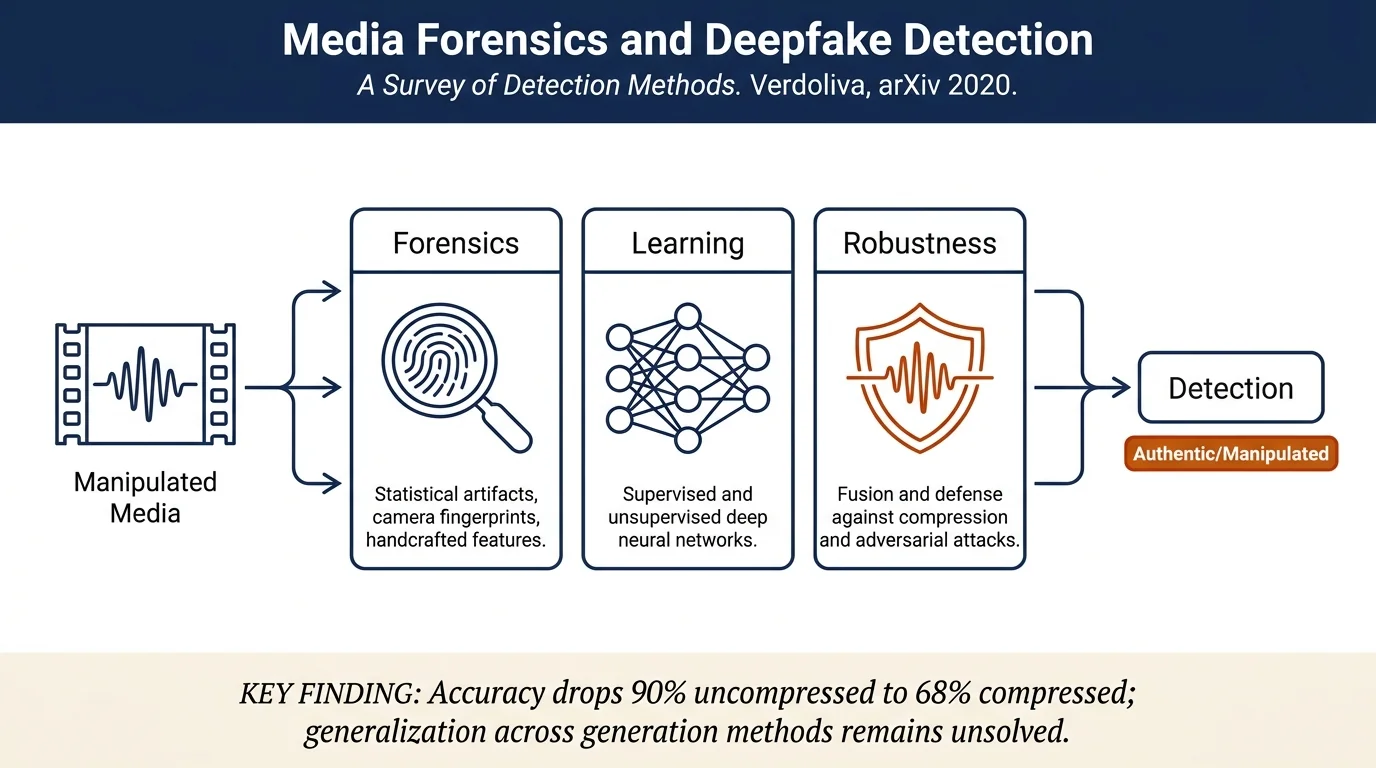
Media Forensics and DeepFakes: an overviewA comprehensive survey of media forensics and deepfake detection methods spanning fifteen years of research. The paper reviews both conventional signal-processing approaches (blind methods, sensor-based, handcrafted features) and deep learning-based detection techniques, covers major datasets and their characteristics, discusses…
 Spread & networksBots & coordinated campaigns
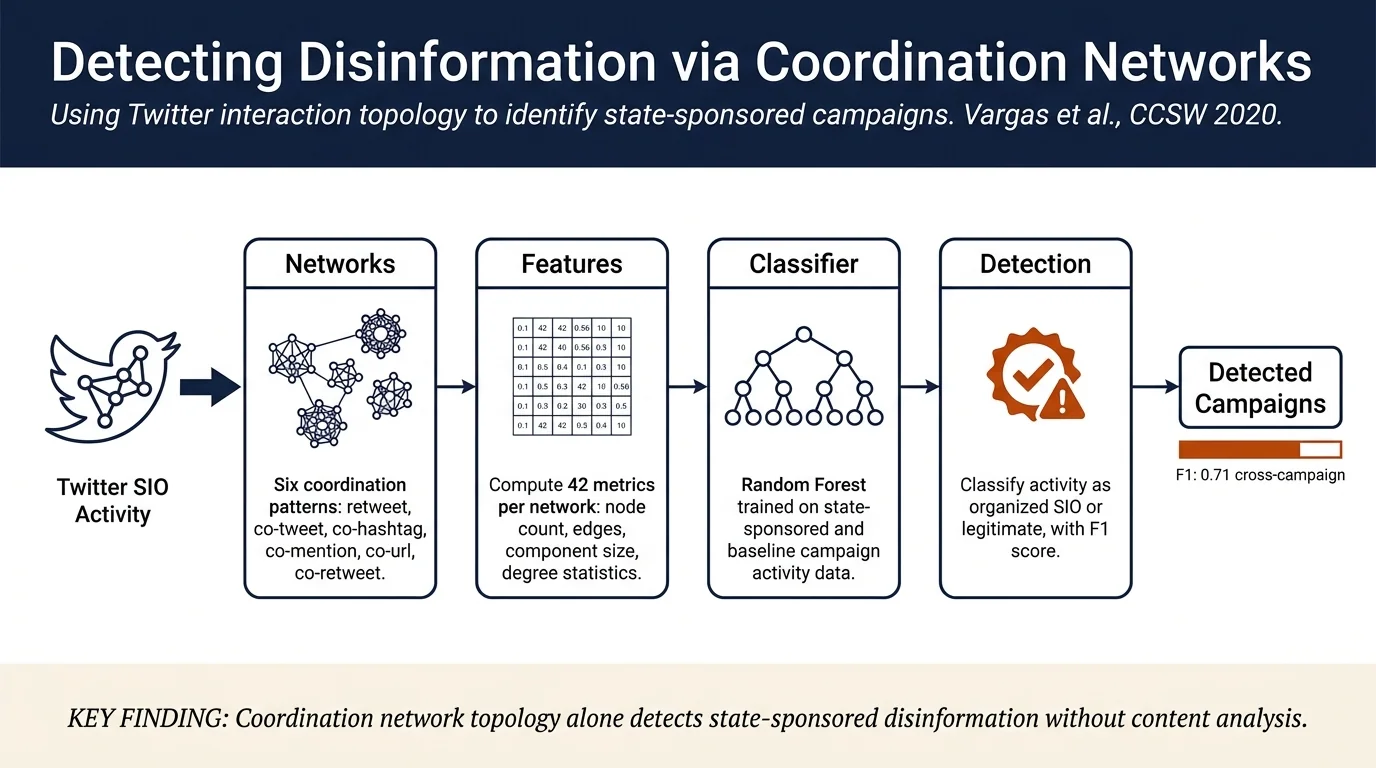
On the Detection of Disinformation Campaign Activity with Network AnalysisState-sponsored disinformation campaigns on Twitter exhibit distinct coordination patterns (shared messages, hashtags, URLs, retweet cascades) that differ from legitimate coordinated activity. The paper proposes using coordination network features—extracted from daily account interactions—to train a binary classifier that detects…
 Spread & networksPlatforms, policy & society
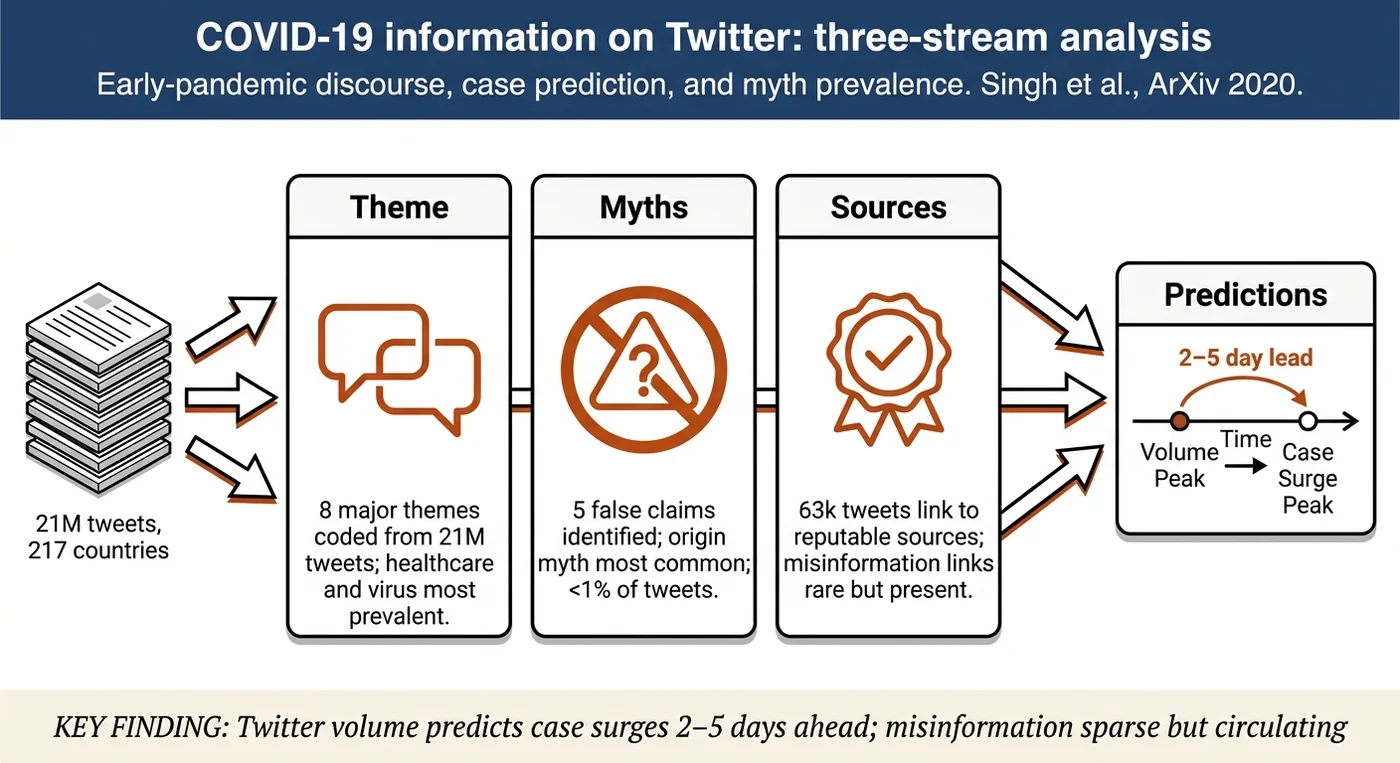
A first look at COVID-19 information and misinformation sharing on TwitterEarly-pandemic analysis of 21 million COVID-19 tweets showing Twitter conversations predict case increases by 2–5 days; identifies five prevalent myths (origin, flu comparison, heat, home remedies, vaccine) accounting for ~0.6% of tweets; finds most shared URLs point to reputable sources (CDC, WHO) rather than misinformation sites,…
Detection methodsLLMs & generative AI
The Limitations of Stylometry for Detecting Machine-Generated Fake NewsWhile stylometry effectively detects impersonation and provenance, it fails to distinguish between legitimate and malicious uses of language models for generating false content. LMs produce stylistically consistent text regardless of veracity, and adding even a single auto-generated sentence within human-written text evades stylometric…
 Bots & coordinated campaignsSpread & networks
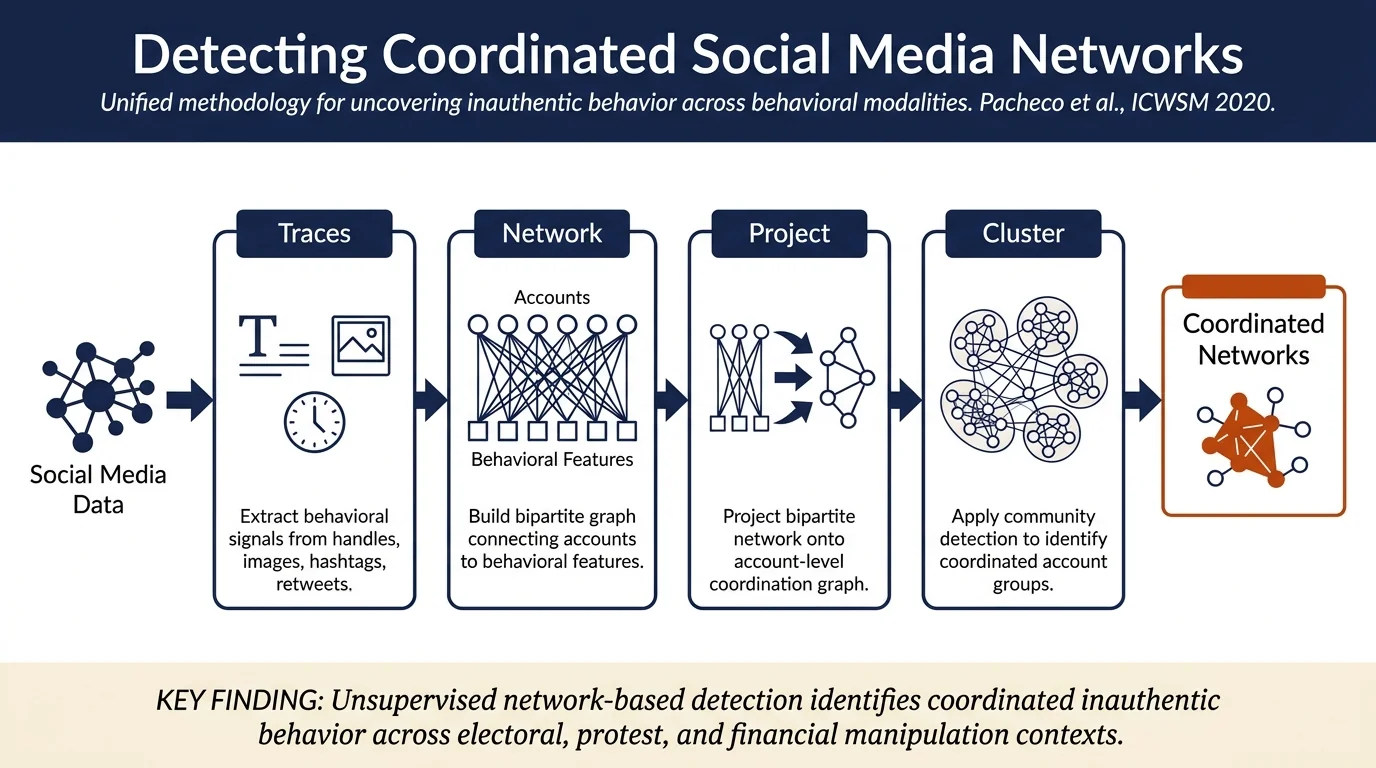
Uncovering Coordinated Networks on Social Media: Methods and Case StudiesThis paper proposes a general, unsupervised, network-based methodology to detect coordinated inauthentic behavior on social media. The approach identifies behavioral traces (handle changes, image sharing, hashtag sequences, co-retweets, synchronized actions) and constructs bipartite networks to discover clusters of accounts likely…
 Spread & networksPlatforms, policy & society
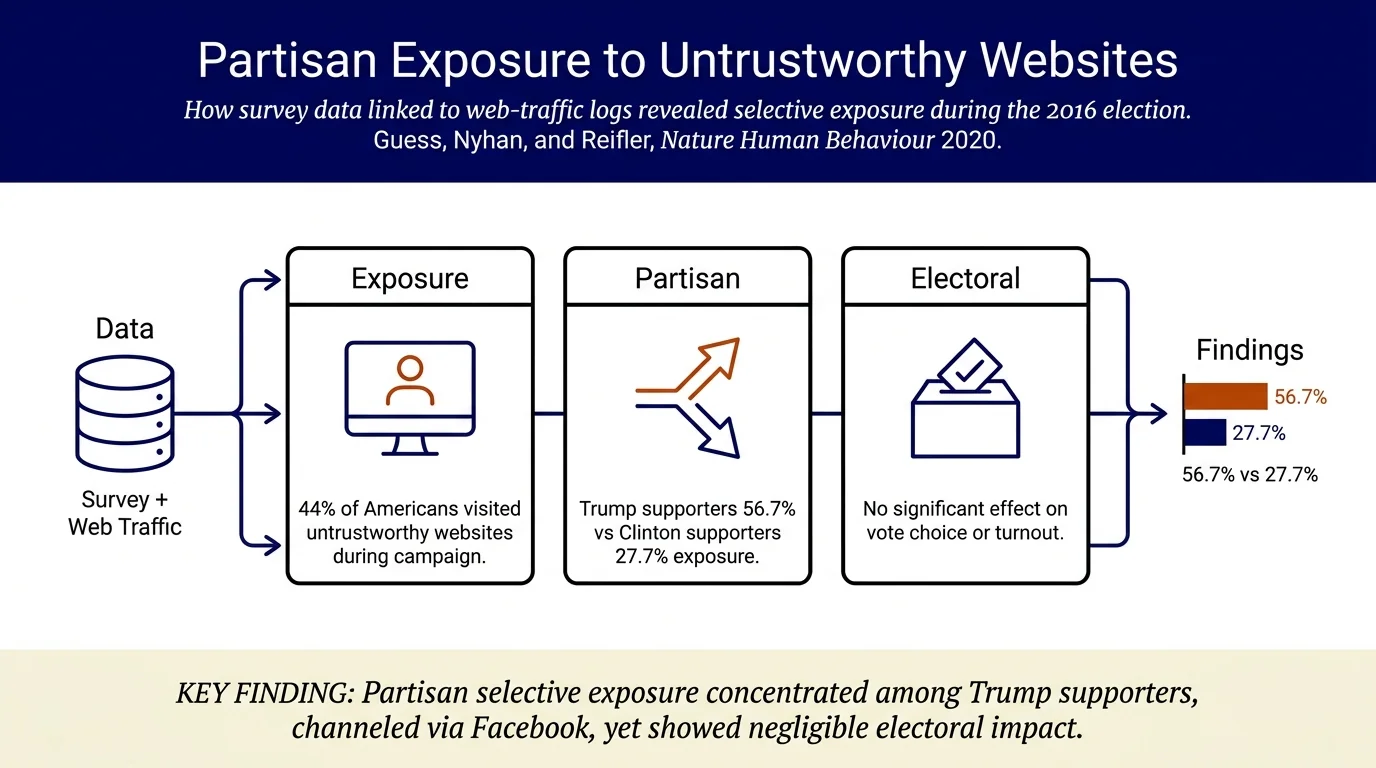
Exposure to untrustworthy websites in the 2016 US electionUsing combined survey and web-traffic data from the 2016 US presidential election, Guess et al. found that while 44.3% of Americans aged 18+ visited an untrustworthy website during the campaign, actual exposure was highly concentrated among Trump supporters (56.7% of Trump supporters vs. 27.7% of Clinton supporters). Facebook played a…
 Spread & networksPlatforms, policy & society
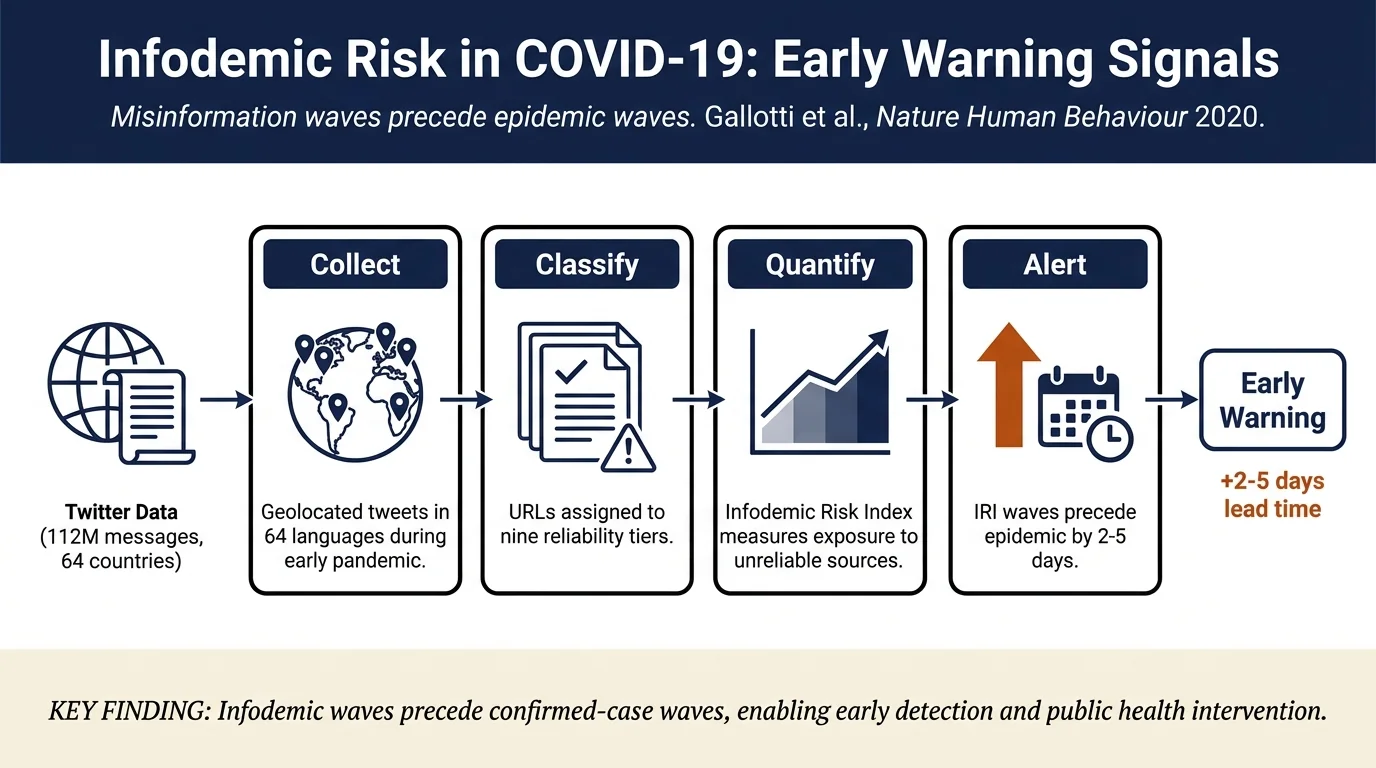
Assessing the risks of 'infodemics' in response to COVID-19 epidemicsAnalysis of 112+ million geolocated Twitter messages about COVID-19 (January–March 2020) across 64 languages and countries. Develops an infodemic risk index (IRI) measuring exposure to unreliable news; demonstrates that waves of unreliable information precede pandemic waves, providing early-warning signals for policy intervention.
 Fact-checking & verificationPlatforms, policy & society
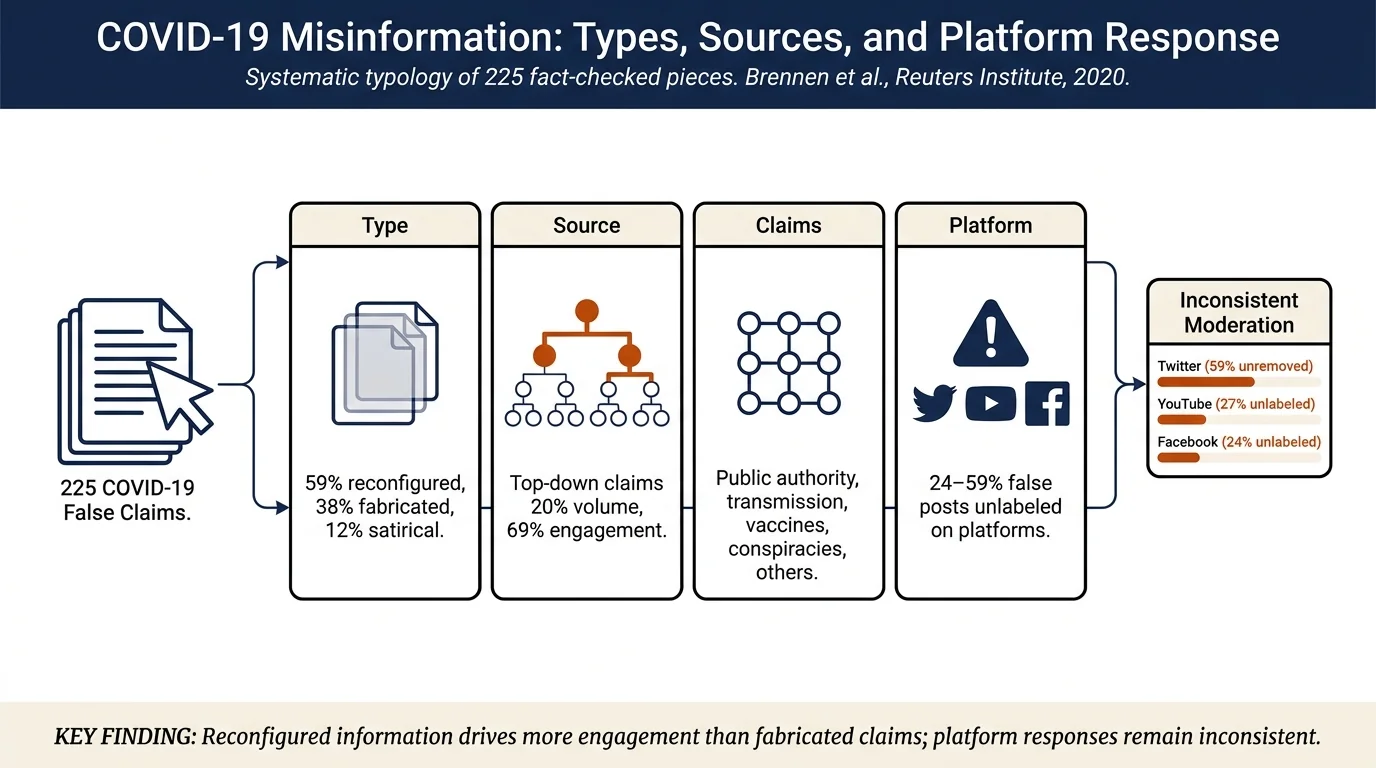
Types, Sources, and Claims of COVID-19 MisinformationSystematic analysis of 225 fact-checked COVID-19 misinformation pieces reveals that most false content reconfigures existing information (59%) rather than fabricating entirely new claims. Public authorities are cited in 39% of misinformation, yet top-down claims from politicians and celebrities account for only 20% of volume but drive…
 Detection methodsFact-checking & verification
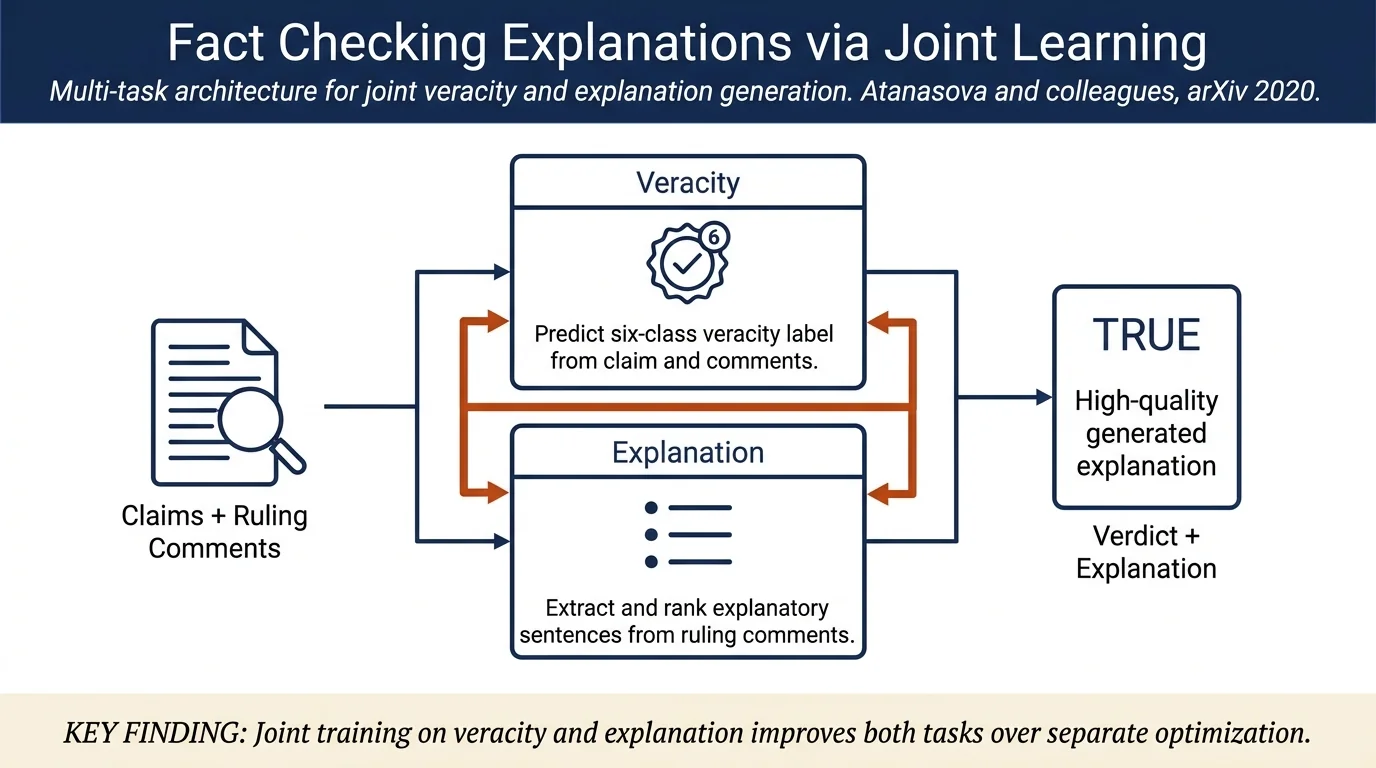
Generating Fact Checking ExplanationsThis paper presents the first study on automatically generating explanations for fact-checking veracity predictions. The authors show that jointly optimizing both veracity classification and explanation generation improves system performance.
 LLMs & generative AIDetection methods
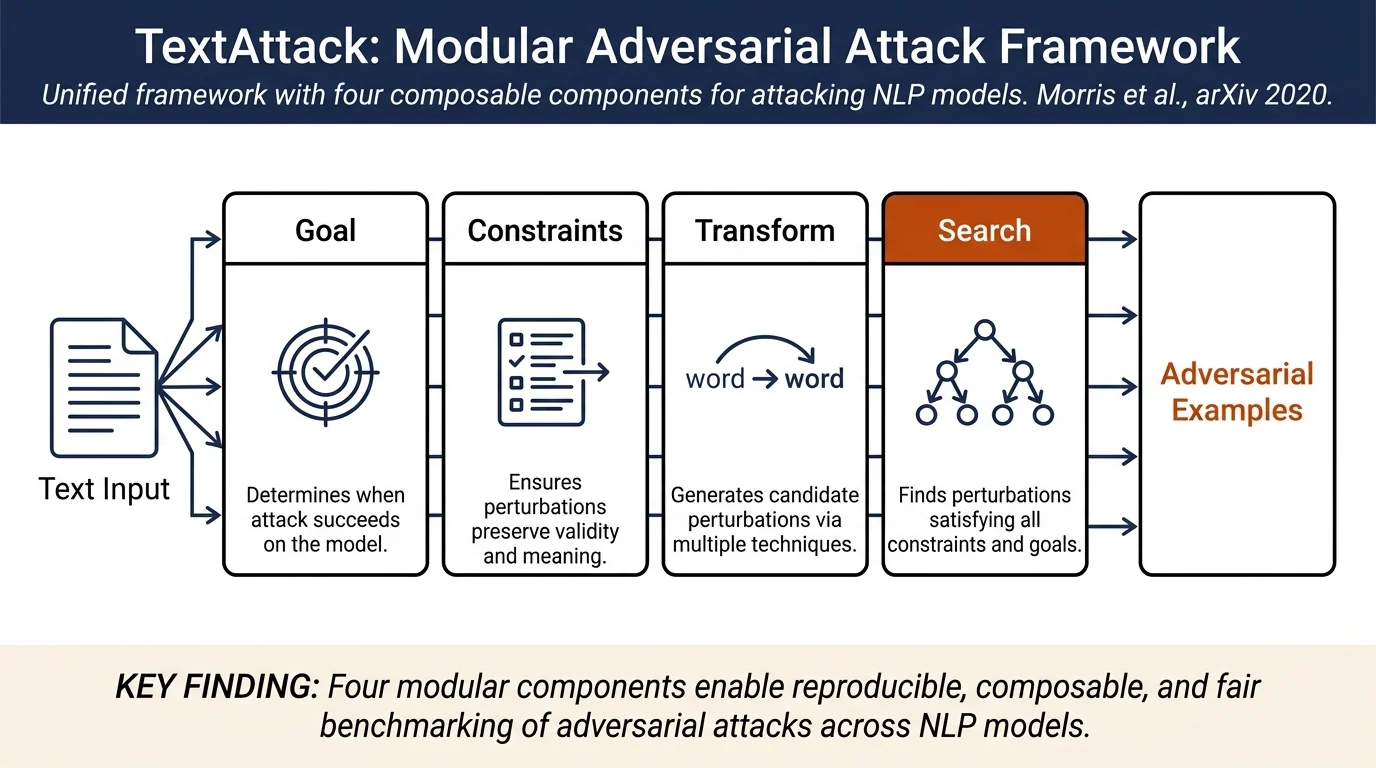
TextAttack: A Framework for Adversarial Attacks, Data Augmentation, and Adversarial Training in NLPIntroduces TextAttack, an open-source Python framework unifying 16 adversarial attacks from the literature into a modular architecture for testing and improving NLP model robustness. The framework decomposes attacks into four reusable components (goal function, constraints, transformation, search method), enables benchmarking attacks on…
 LLMs & generative AIDetection methods
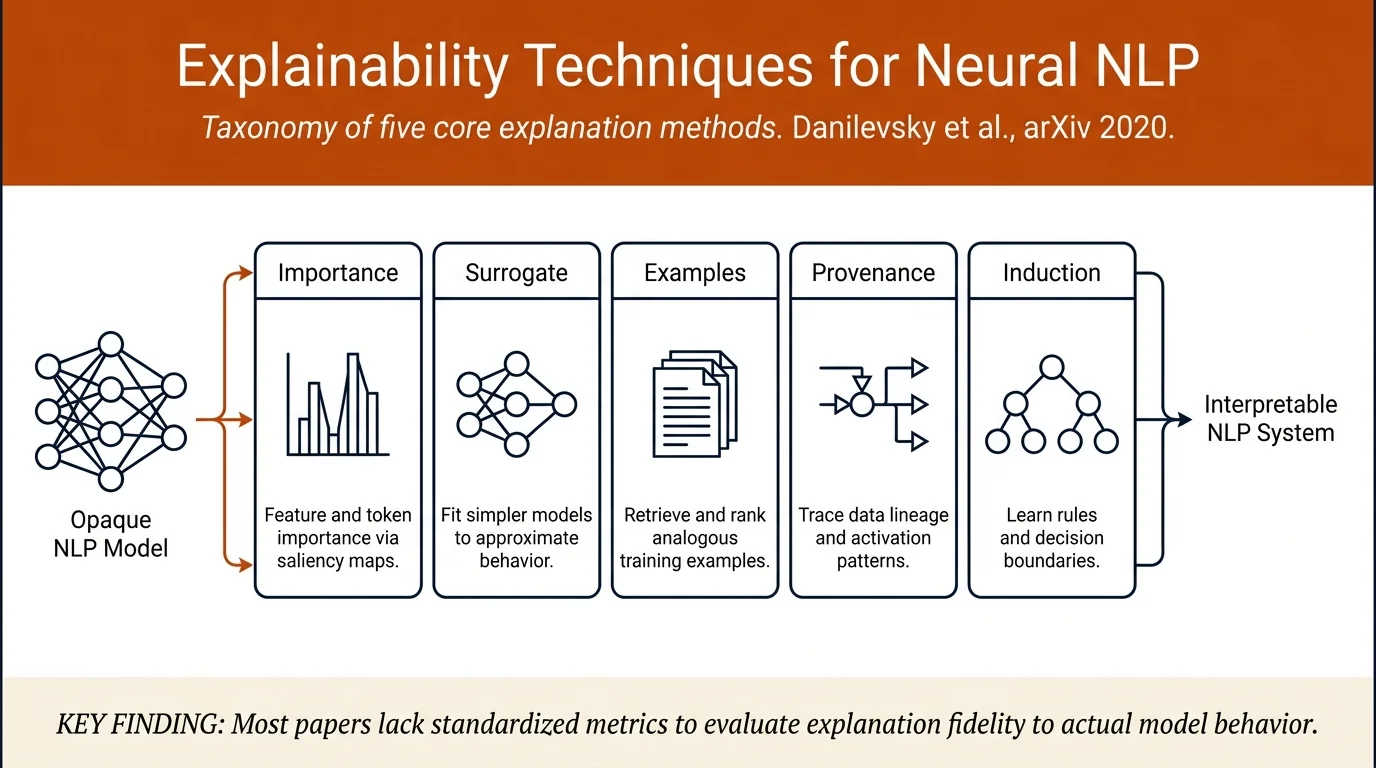
A Survey of the State of Explainable AI for Natural Language ProcessingRecent neural NLP models achieve strong performance but are often opaque. This survey systematically reviews explainable AI (XAI) research in NLP across 50 papers from major conferences (2013–2019), categorizing explanations by scope (local vs. global) and generation (self-explaining vs. post-hoc), detailing five major techniques…
 Datasets & evaluationSpread & networks
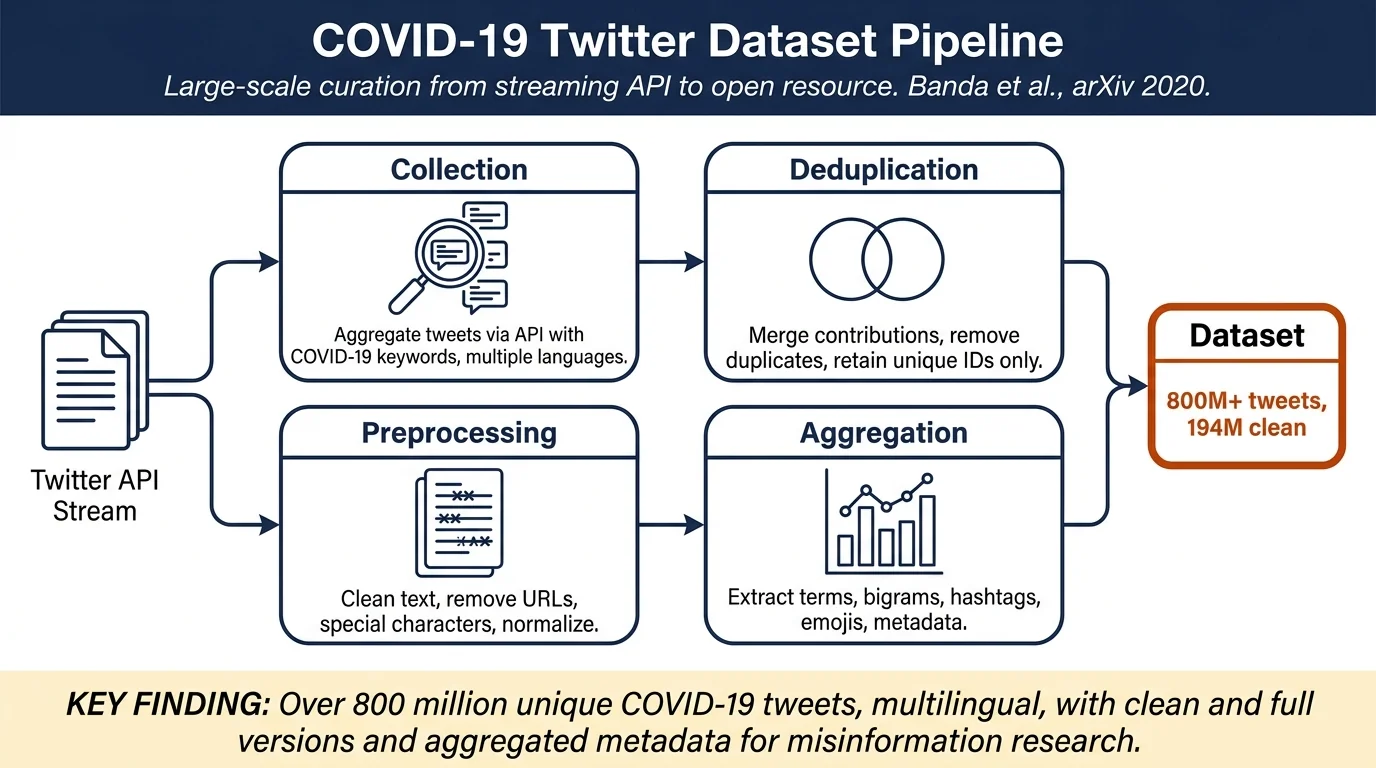
A large-scale COVID-19 Twitter chatter dataset for open scientific research - an international collaborationBanda et al. release a massive curated corpus of 800+ million COVID-19–related tweets collected from January through November 2020, with deduplication and language diversity. The dataset adheres to FAIR principles and provides both raw tweets and metadata (terms, bigrams, trigrams, hashtags, emojis, mentions) to support research on…
 Deepfakes & multimodalDetection methods
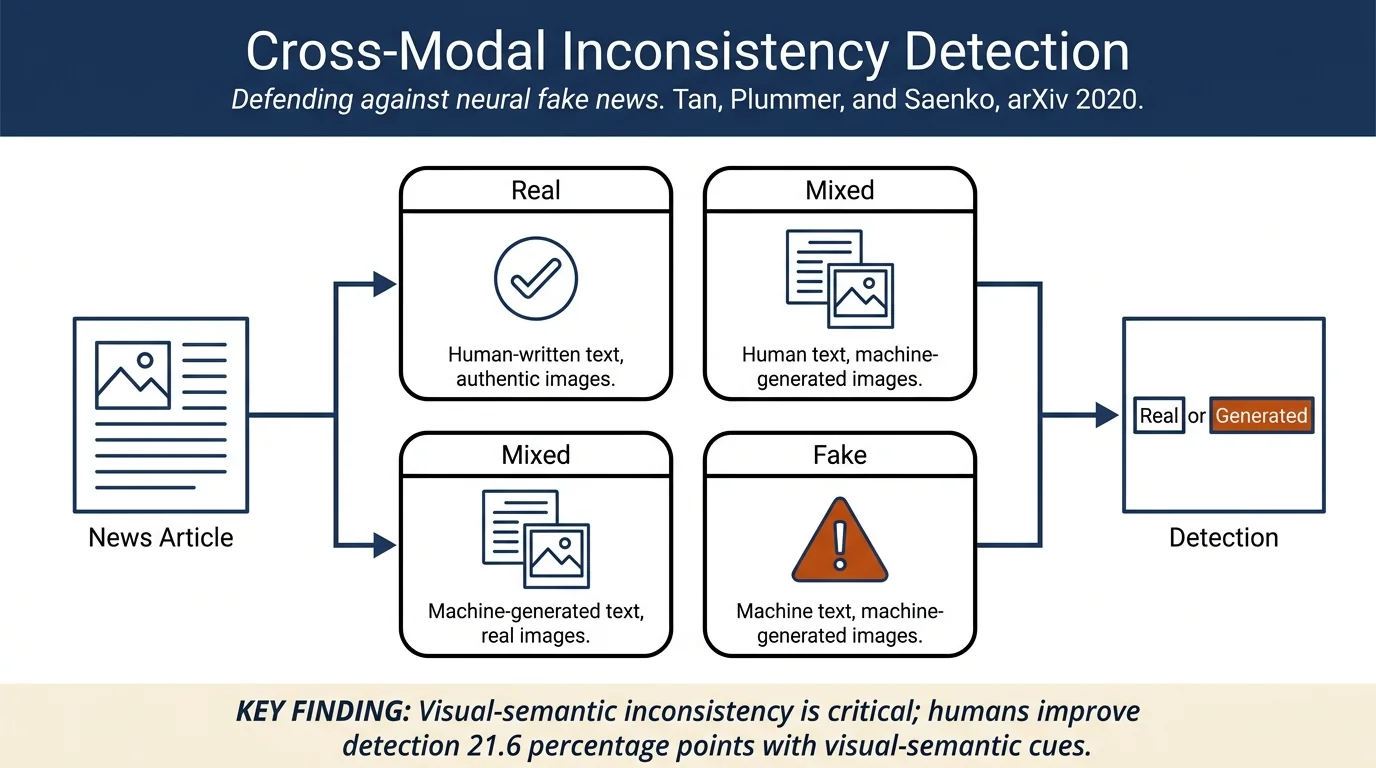
Detecting Cross-Modal Inconsistency to Defend Against Neural Fake NewsMachine-generated news articles with images and captions exploit visual-semantic inconsistencies that humans struggle to detect. This paper introduces DIDAN, a named entity-based approach to identify cross-modal semantic mismatches, and the NeuralNews dataset of 128K articles to benchmark multimodal fake news detection.
 Detection methodsLLMs & generative AI
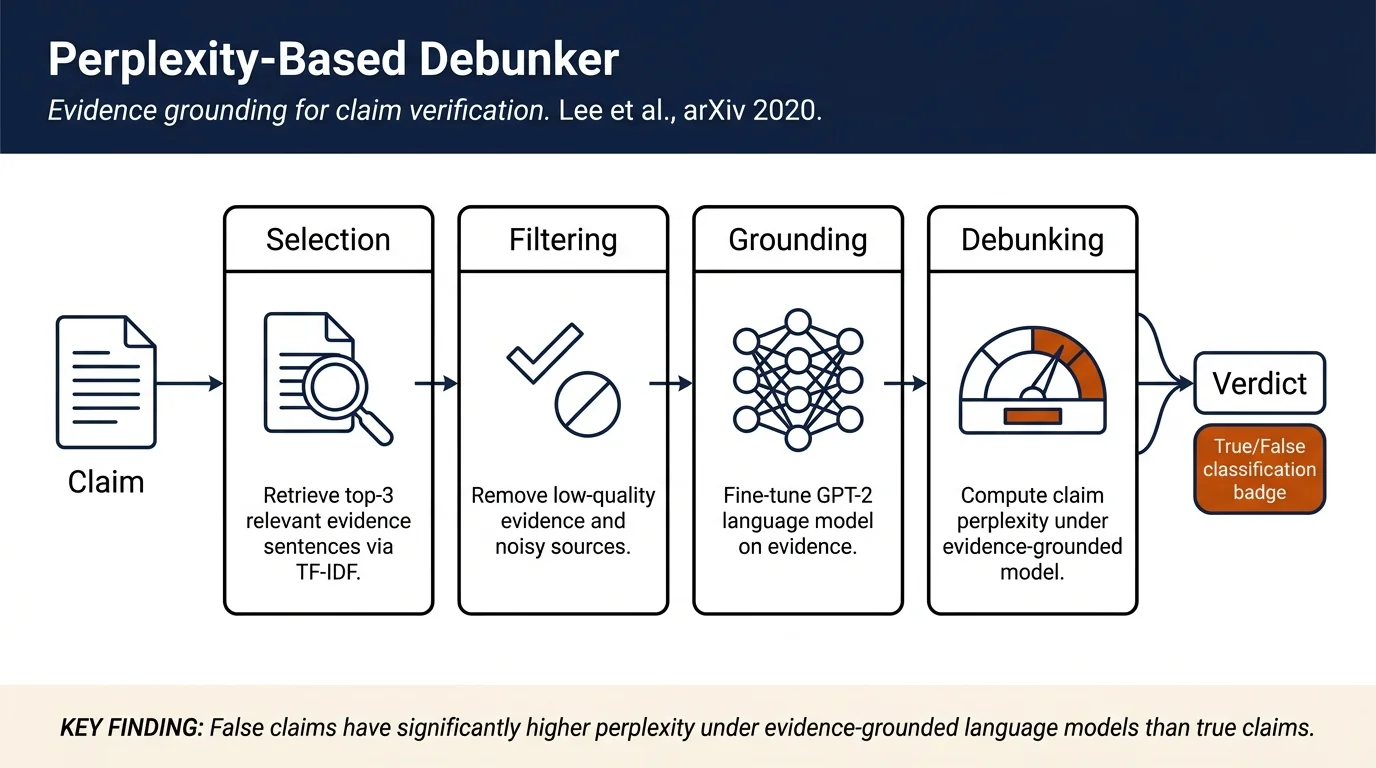
Misinformation Has High PerplexityFalse claims have measurably higher perplexity when scored by a language model primed with truthful evidence, while true claims have lower perplexity. The authors exploit this observation to build an unsupervised debunker that achieves 75% accuracy on scientific COVID-19 claims with minimal labeled data, releasing two new annotated test…
 LLMs & generative AIPlatforms, policy & society
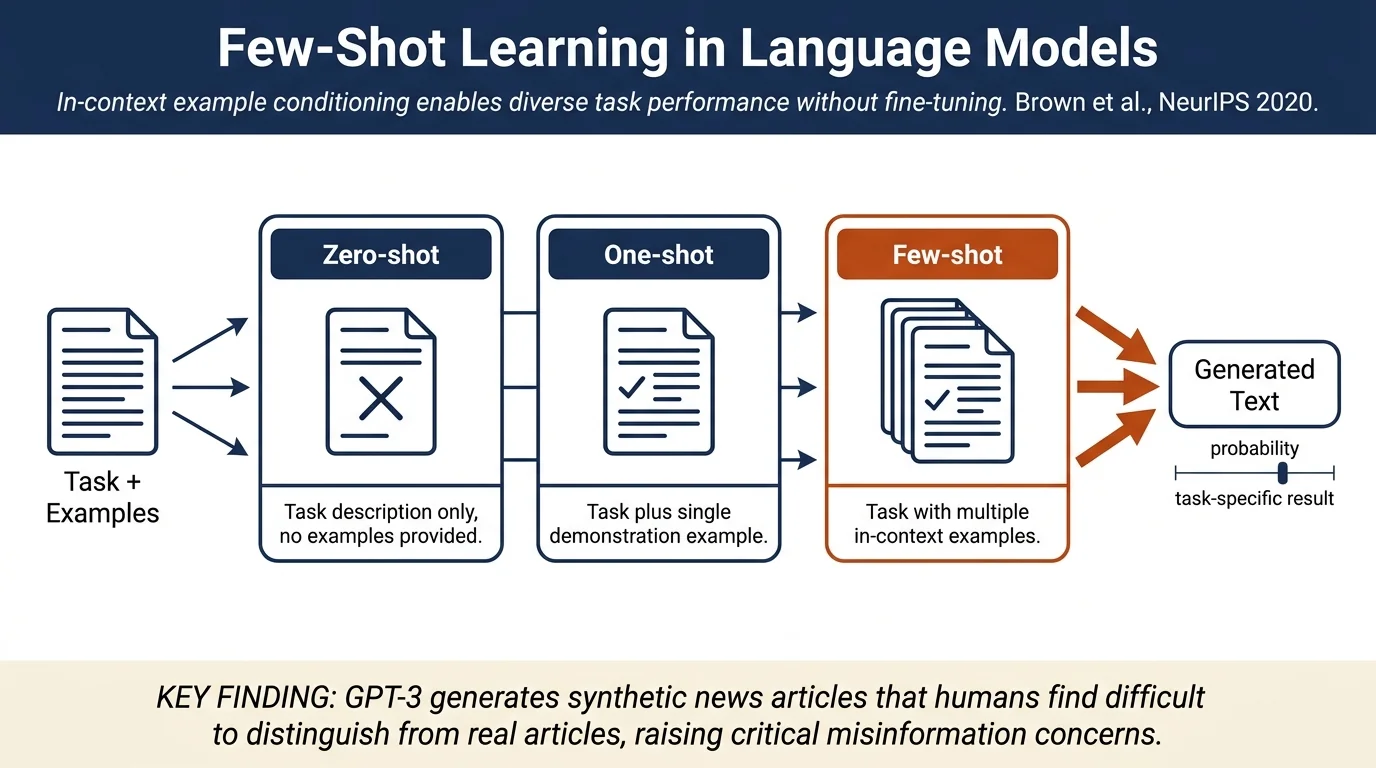
Language Models are Few-Shot LearnersThis landmark paper introduces GPT-3, a 175-billion-parameter autoregressive language model, and demonstrates that it achieves strong performance on diverse NLP tasks through in-context few-shot learning without any task-specific fine-tuning. The model exhibits remarkable scaling properties where larger models dramatically improve…
 Fact-checking & verificationDetection methods
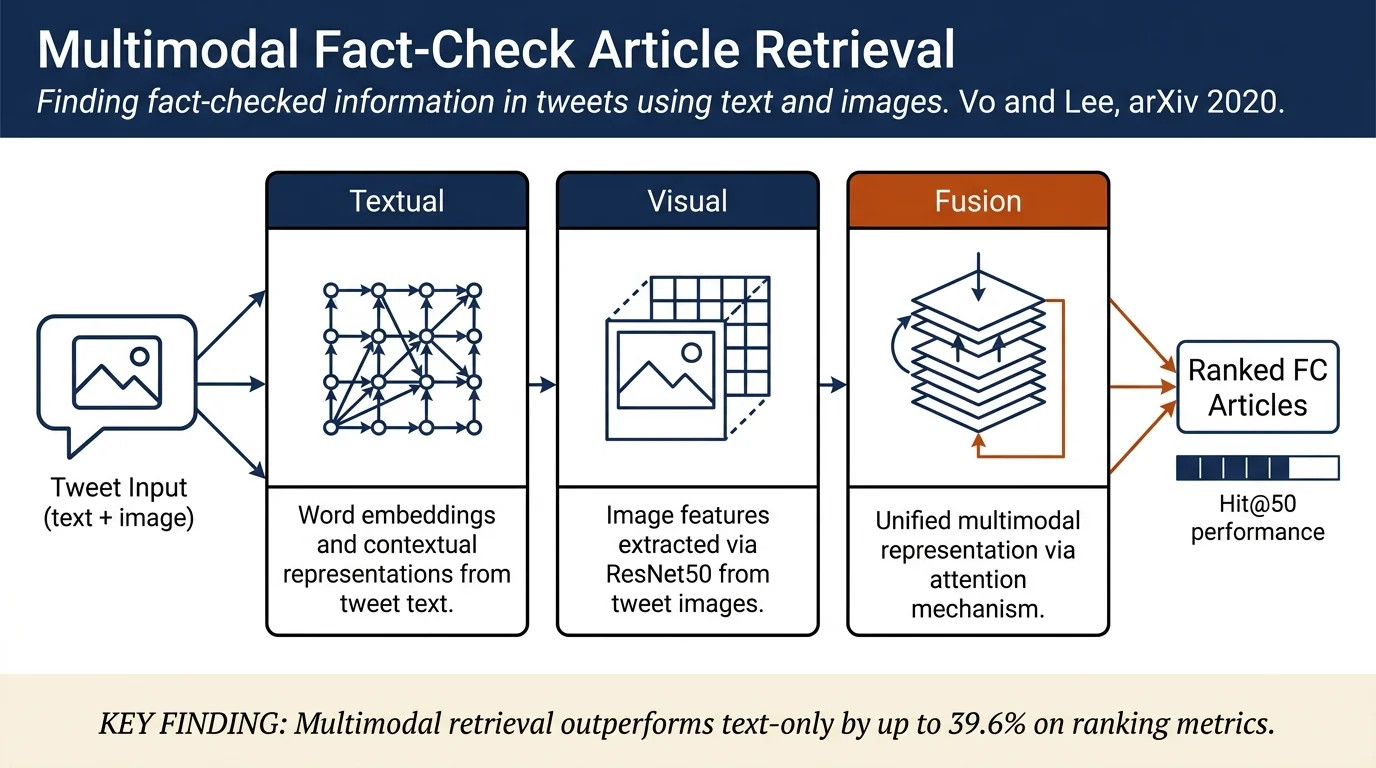
Where Are the Facts? Searching for Fact-checked Information to Alleviate the Spread of Fake NewsProposes a framework to automatically find fact-checking articles that address claims in original tweets. Uses a multimodal attention network (MAN) combining textual and visual content from tweets with fact-checking article text to rank candidate fact-checks; demonstrates that multimodal retrieval substantially outperforms text-only…
 Psychology & interventionsPlatforms, policy & society
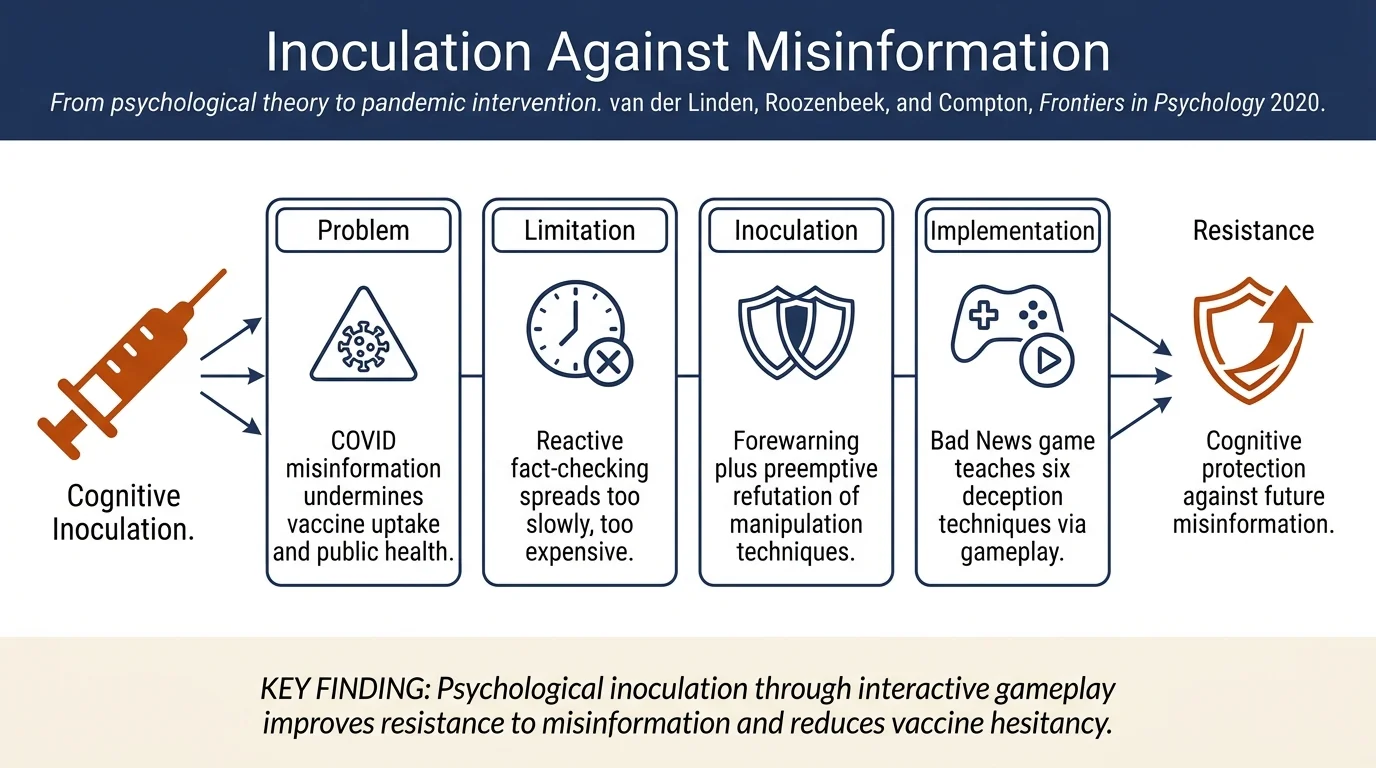
Inoculating Against Fake News About COVID-19COVID-19 misinformation has proliferated rapidly on social media, undermining public health responses and vaccination uptake. Rather than relying on post-hoc fact-checking (which spreads slower than misinformation), the authors propose psychological inoculation—exposing people to weakened doses of misinformation techniques beforehand to…
 Deepfakes & multimodalDetection methods
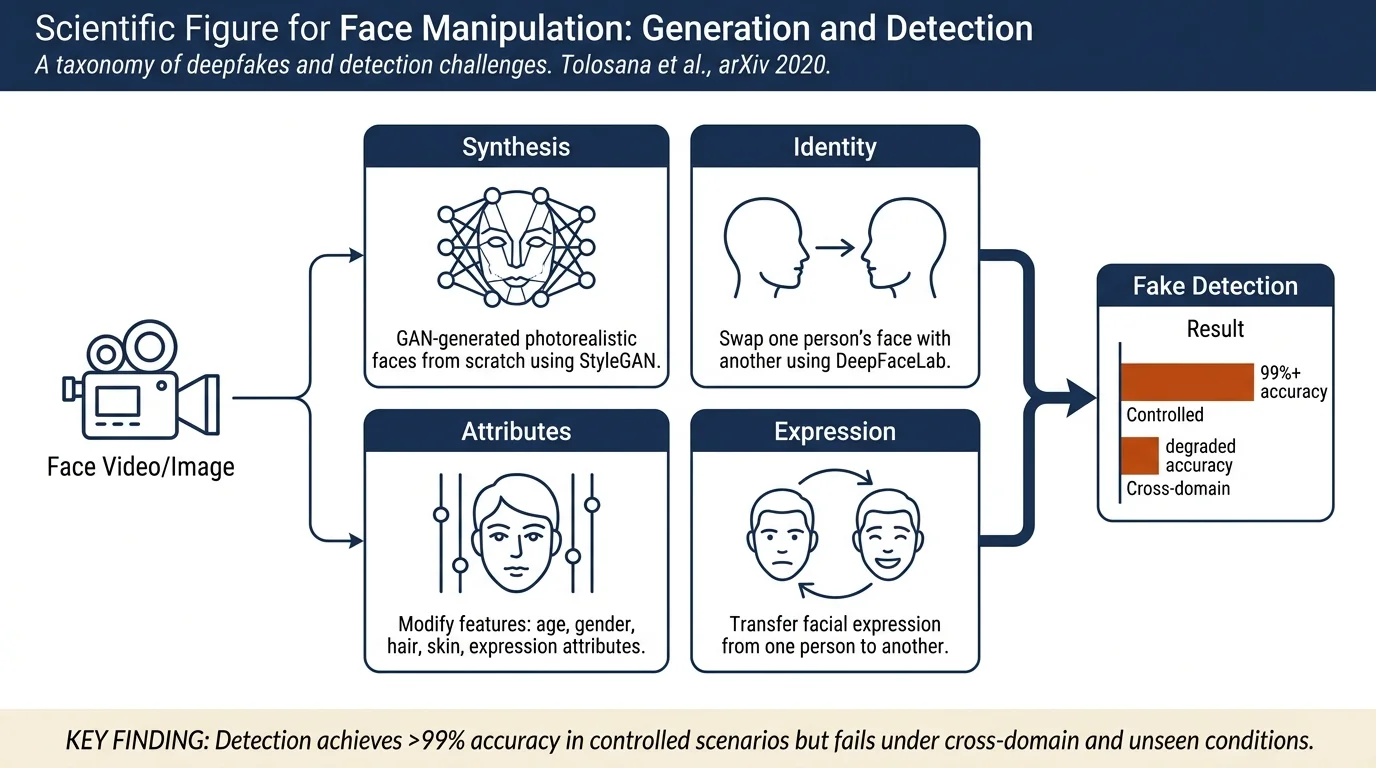
DeepFakes and Beyond: A Survey of Face Manipulation and Fake DetectionThis comprehensive survey reviews face manipulation techniques and detection methods in the era of deep learning. It categorizes facial manipulations into four types—entire face synthesis, identity swap, attribute manipulation, and expression swap—and surveys both generation and detection approaches across public datasets and benchmarks.
 Detection methodsSpread & networks
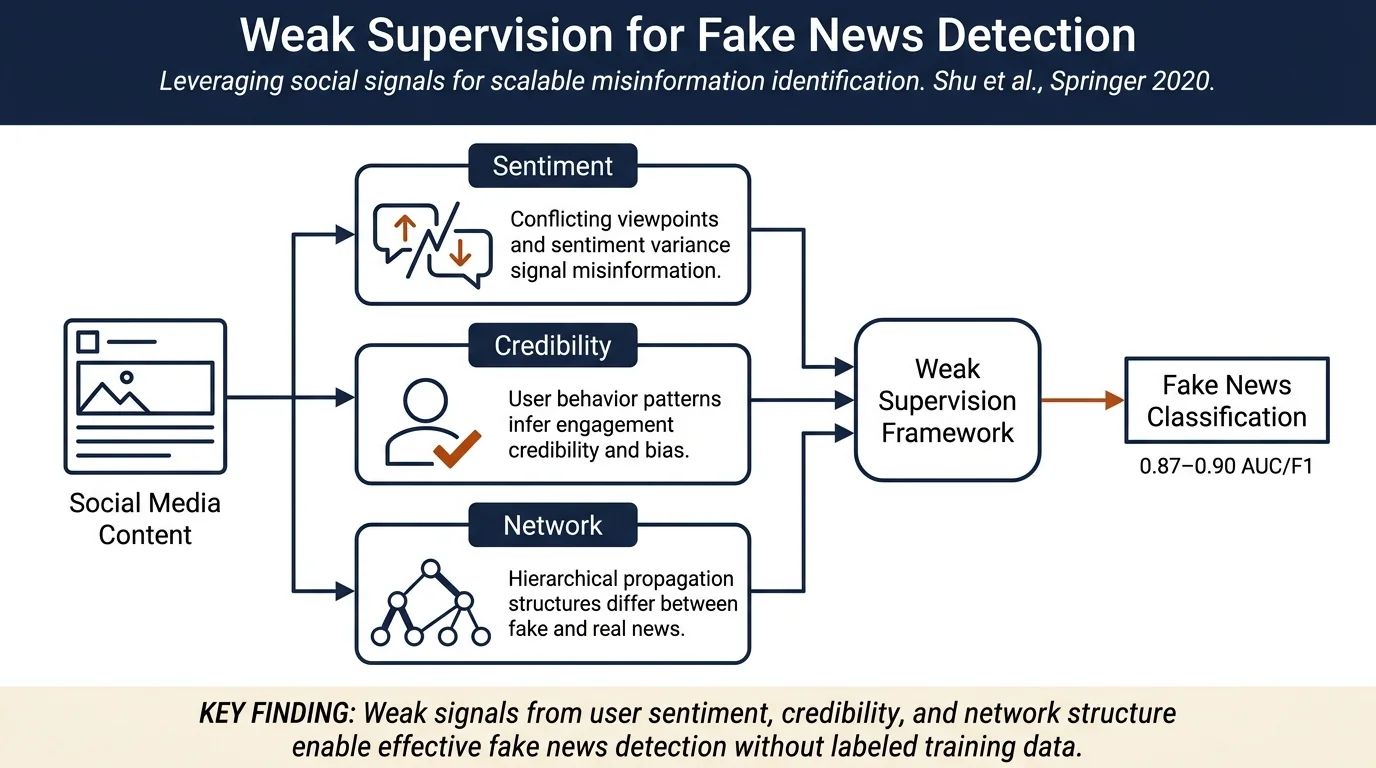
Mining Disinformation and Fake News: Concepts, Methods, and Recent AdvancementsThis comprehensive tutorial surveys the landscape of fake news and disinformation research across three dimensions: understanding user engagement in information disorder, techniques for detecting and mitigating false content, and emerging challenges like fake news literacy and neural generation. The authors emphasize weak social…
 Bots & coordinated campaignsDetection methods
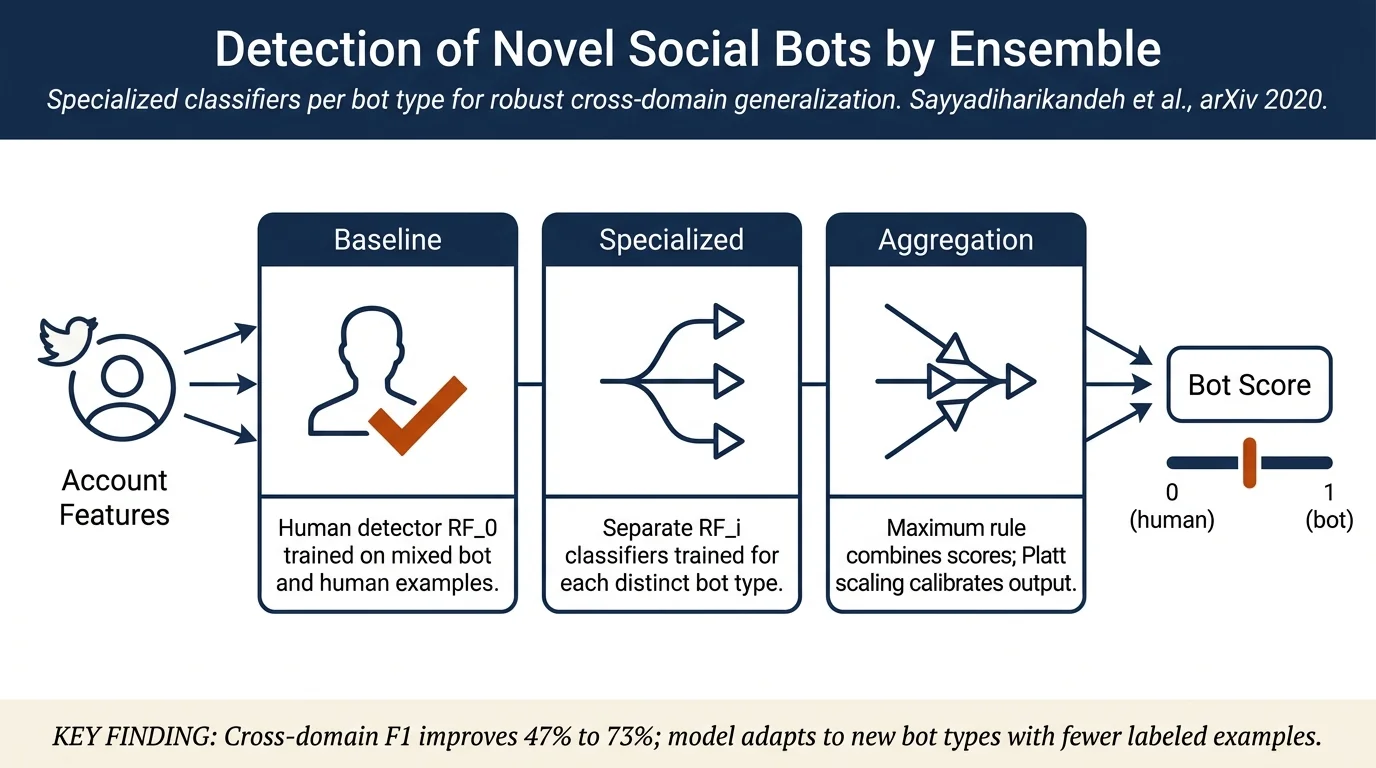
Detection of Novel Social Bots by Ensembles of Specialized ClassifiersDifferent types of social bots exhibit heterogeneous behavioral features; training a single classifier on all bots fails to generalize to novel bot types. The authors propose ESC (Ensemble of Specialized Classifiers), which trains separate classifiers for each bot class and combines their decisions via a maximum rule, achieving a 56%…
 Detection methodsSpread & networks
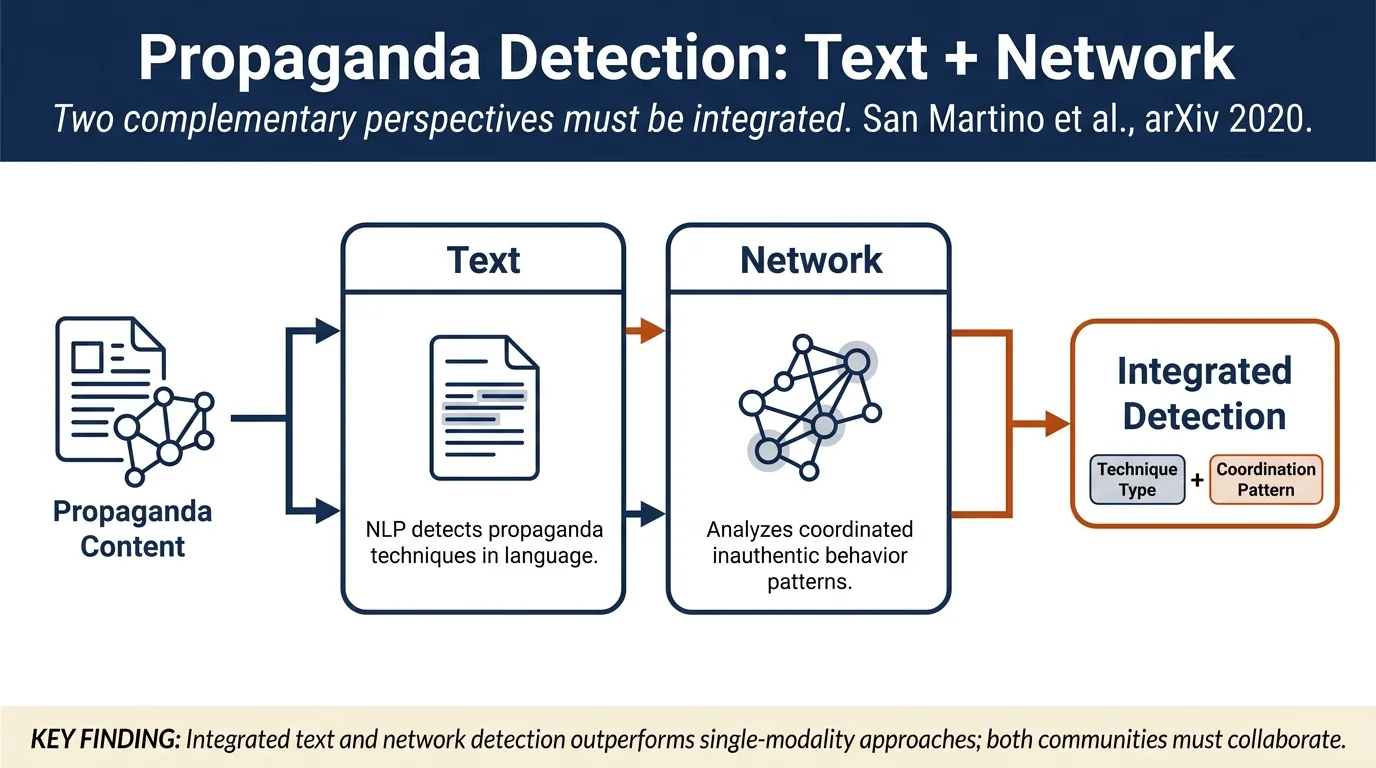
A Survey on Computational Propaganda DetectionThis survey comprehensively reviews computational propaganda detection from two complementary perspectives: text analysis (NLP) and network analysis. The authors argue that propaganda differs from misinformation/disinformation by focusing on persuasion techniques (emotional appeals, logical fallacies) rather than falsity.
 Datasets & evaluationDetection methods
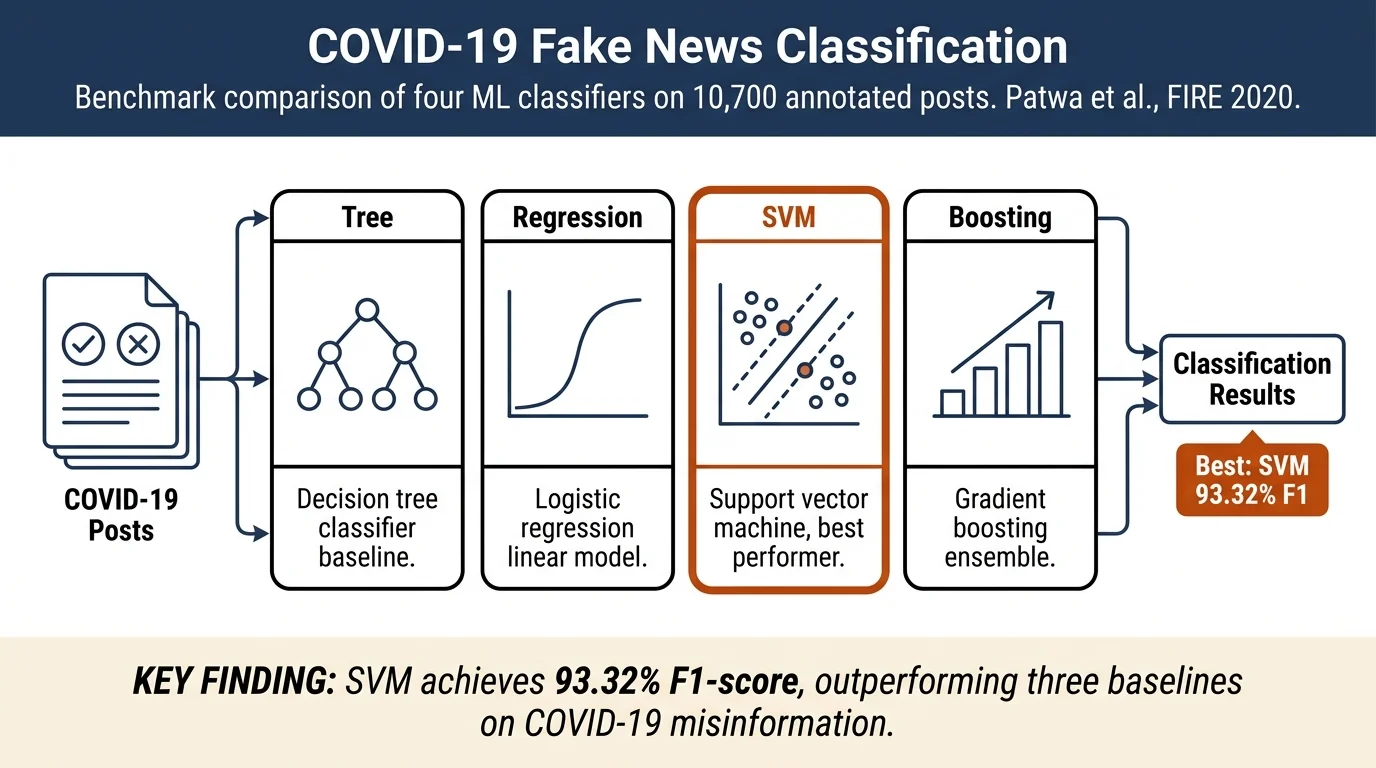
Fighting an Infodemic: COVID-19 Fake News DatasetThe authors present a manually annotated dataset of 10,700 COVID-19 related posts and articles (52% real, 48% fake) collected from social media and fact-checking websites. They benchmark four machine learning baselines (Decision Tree, Logistic Regression, SVM, Gradient Boost), achieving 93.32% F1-score with SVM, and release both the…
 Deepfakes & multimodalDetection methods
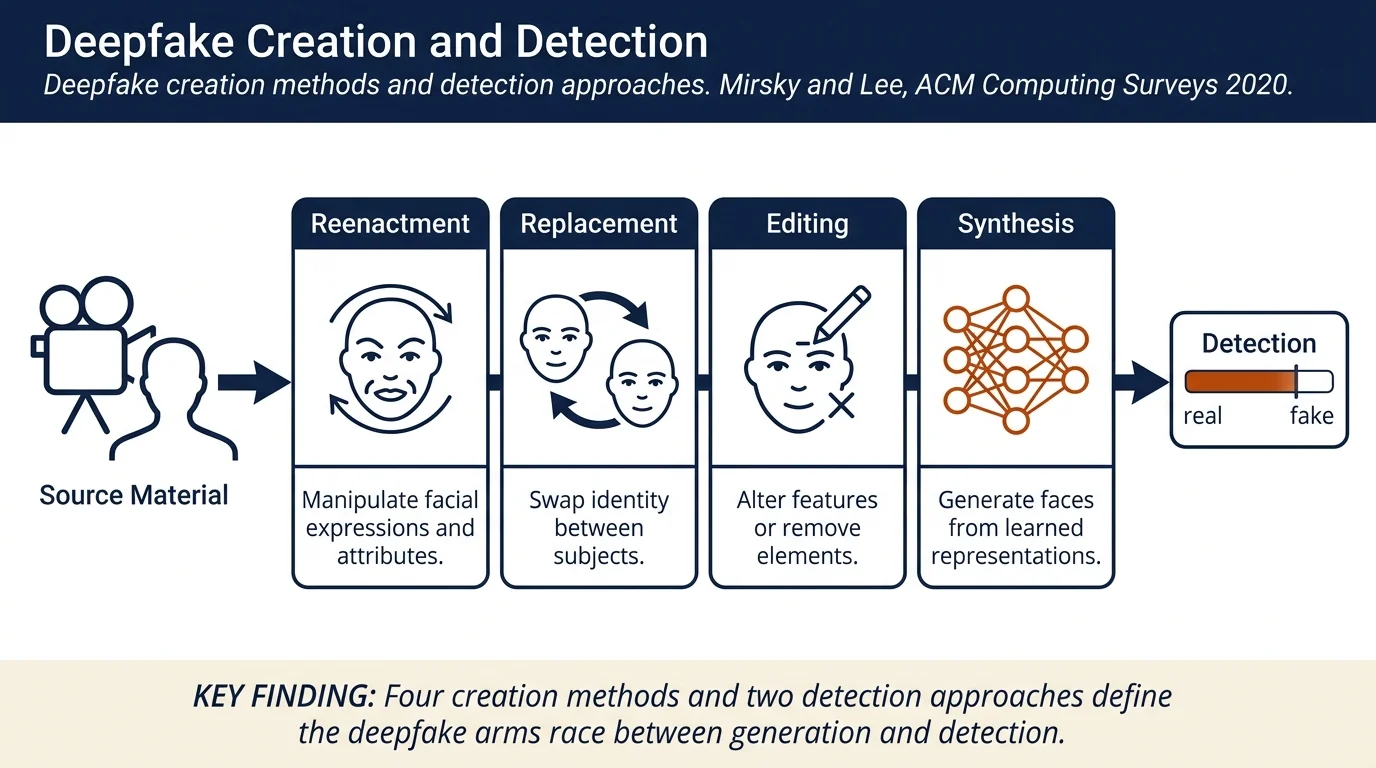
The Creation and Detection of Deepfakes: A SurveyComprehensive 38-page survey covering both creation and detection of deepfakes. Systematically reviews generative neural network architectures (GANs, autoencoders, CNNs, RNNs), technical approaches to reenactment, replacement, editing, and synthesis.
 Datasets & evaluationSpread & networks
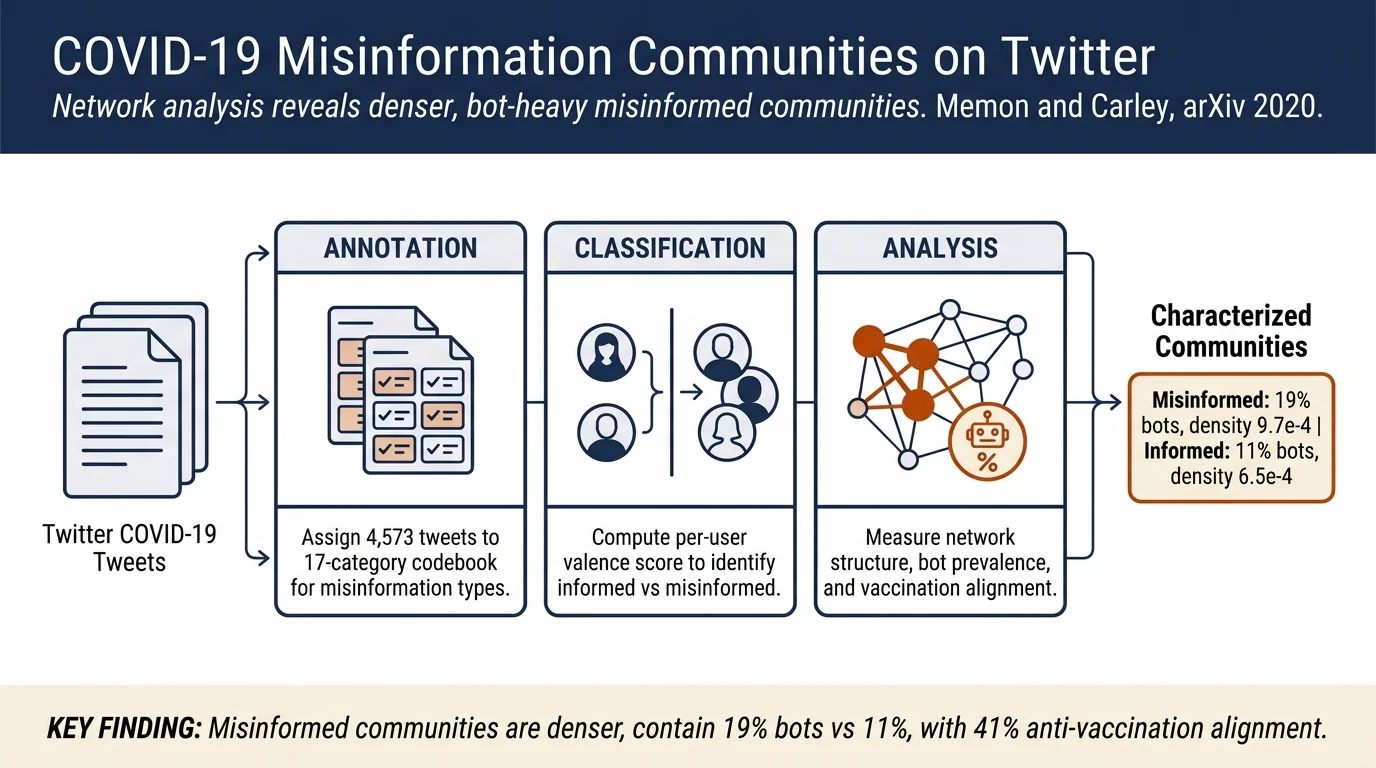
Characterizing COVID-19 Misinformation Communities Using a Novel Twitter DatasetThis paper presents CMU-MisCOV19, a manually annotated Twitter dataset of 4,573 COVID-19 tweets across 17 categories, and characterizes misinformed versus informed online communities. Key findings: misinformed communities are significantly denser (higher network density), contain more bots (19% vs 11%), and demonstrate higher…