Explore papers
Filter by research area, year and venue. Every filter is in the address bar, so you can share a view as a link.
 Platforms, policy & societyFact-checking & verification
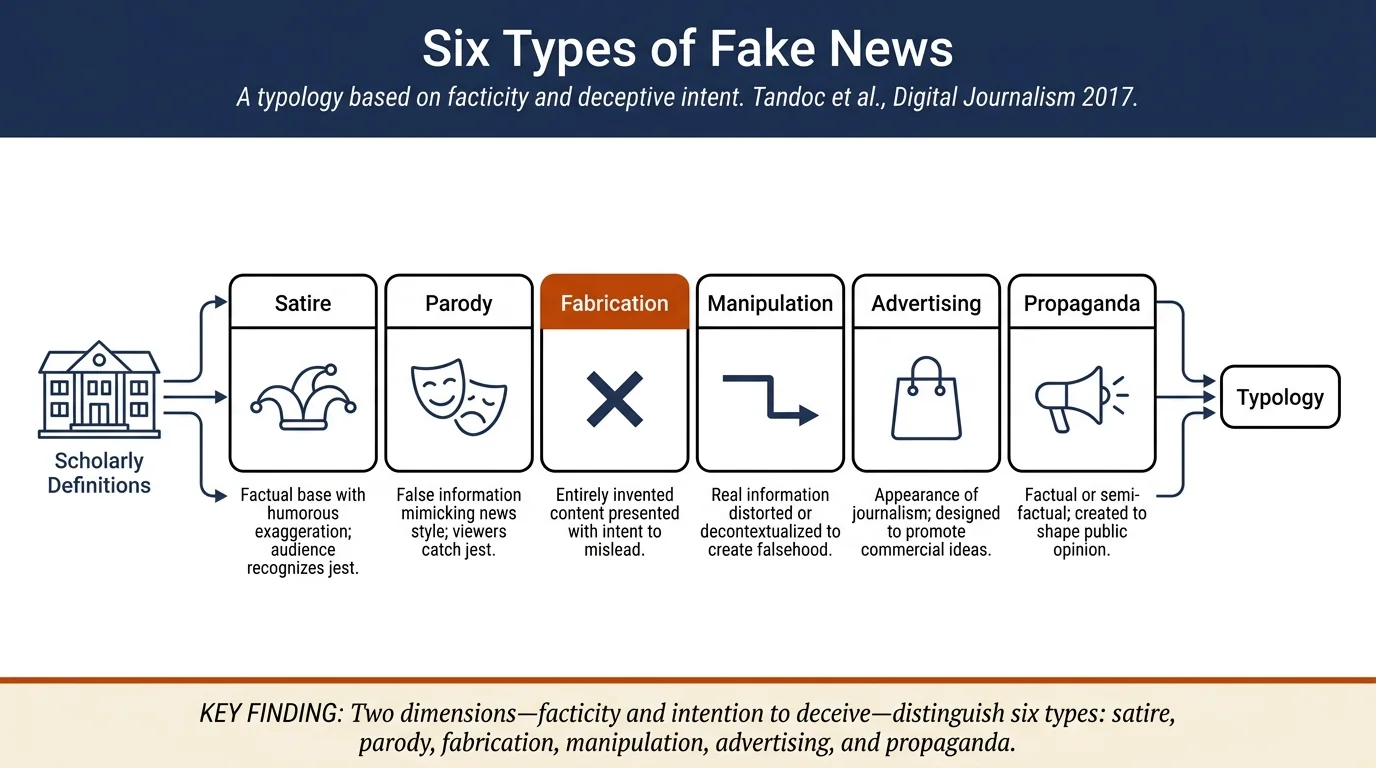
Defining "Fake News": A typology of scholarly definitionsThis paper reviews 34 academic studies (2003–2017) that use the term "fake news" and proposes a unified typology based on two dimensions: level of facticity (reliance on facts) and author's intention to deceive. The typology identifies six distinct types—satire, parody, fabrication, manipulation, advertising, and propaganda—clarifying…
 Spread & networksPsychology & interventions
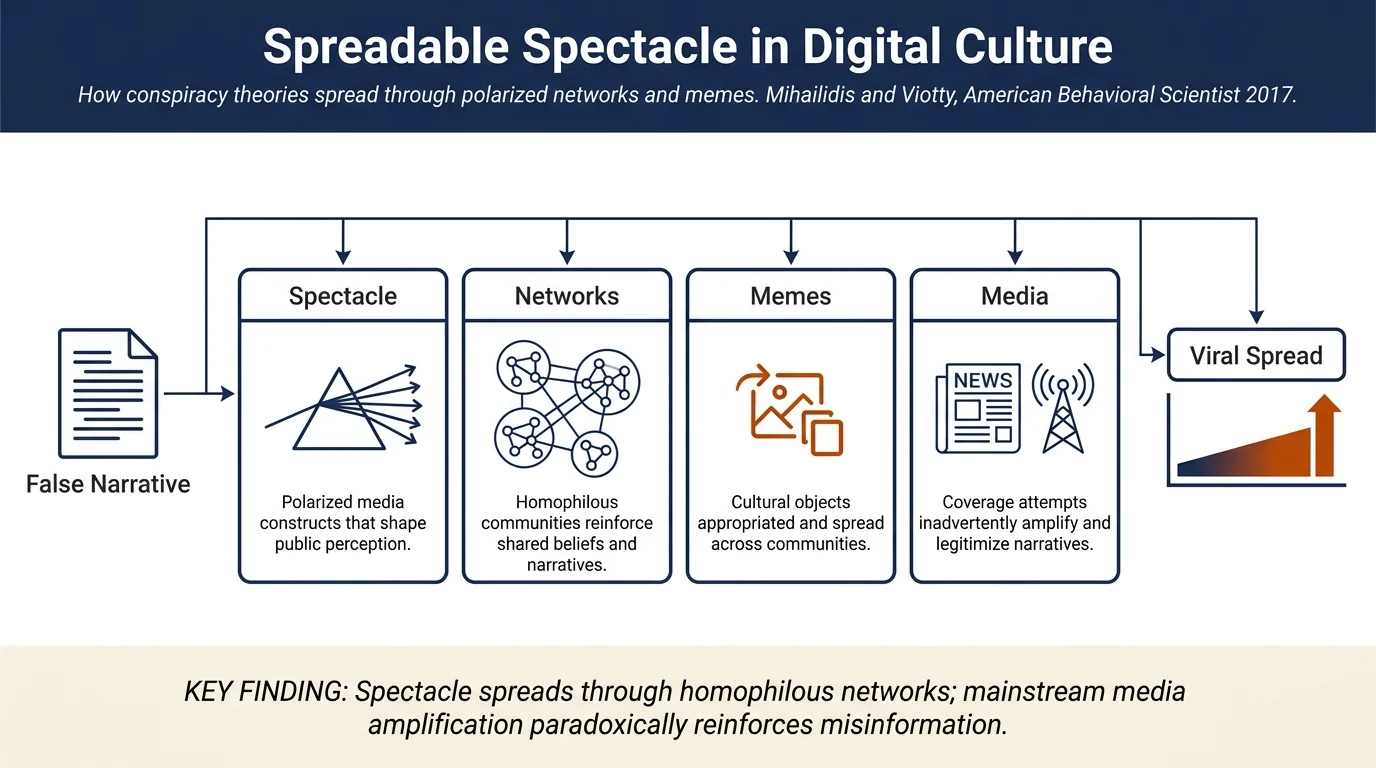
Spreadable Spectacle in Digital Culture: Civic Expression, Fake News, and the Role of Media Literacies in "Post-Fact" SocietyThis paper explores how spectacle—media constructs outside ordinary routine that capitalize on polarization—spreads through digital culture during the 2016 U.S. election. Using the Pizzagate conspiracy theory as a case study, the authors argue that citizen-driven spectacle leverages homophilous networks, memes, and appropriated cultural…
 Psychology & interventions
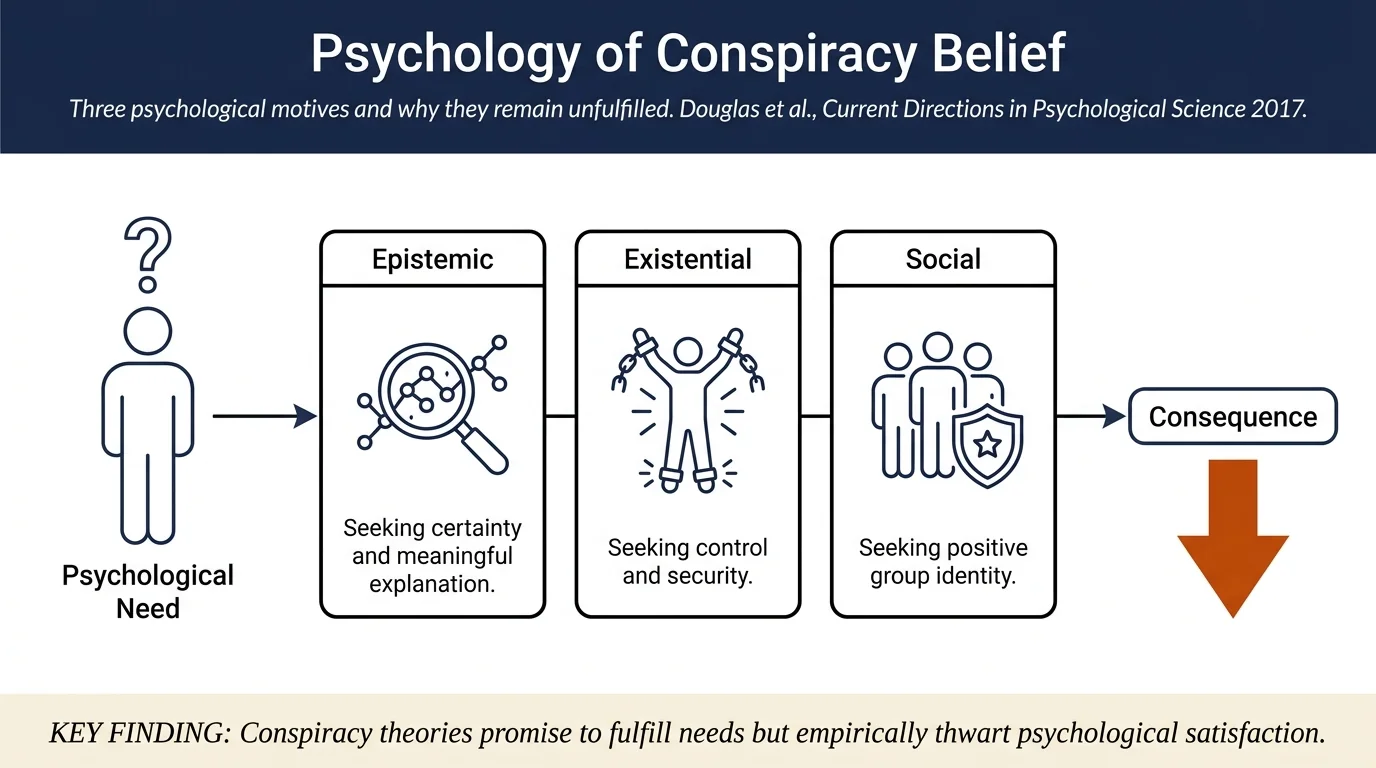
The Psychology of Conspiracy TheoriesPeople are drawn to conspiracy theories via three distinct psychological motives: epistemic (seeking understanding and certainty), existential (seeking control and security), and social (maintaining positive self and group image). However, experimental evidence suggests conspiracy theories ultimately frustrate rather than satisfy these…
 Spread & networksPsychology & interventions
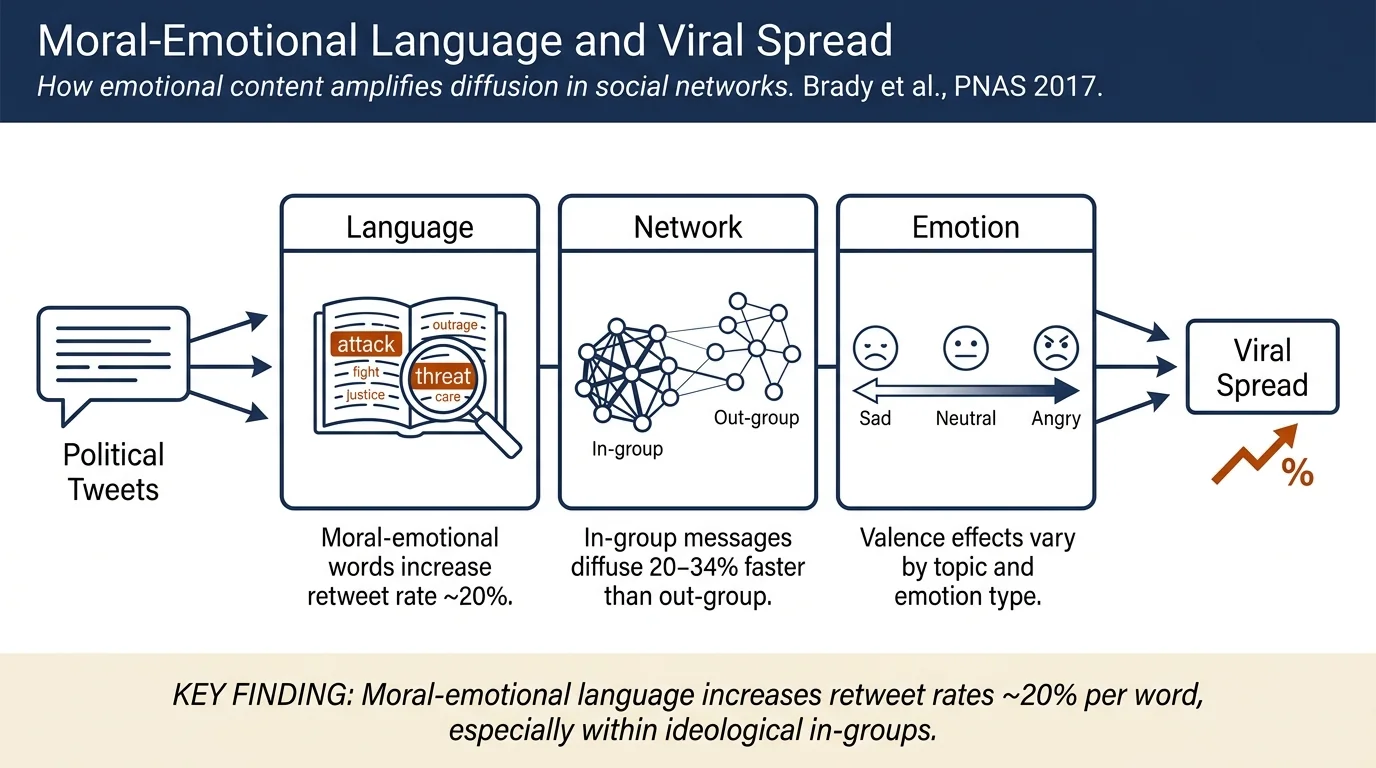
Emotion shapes the diffusion of moralized content in social networksMoral-emotional language (words combining moral and emotional content) increases message diffusion in social networks by ~20% per word. This effect is stronger within political in-groups than out-groups, explaining how moral and political ideas spread within polarized "echo chambers" on platforms like Twitter.
 Spread & networksPlatforms, policy & society
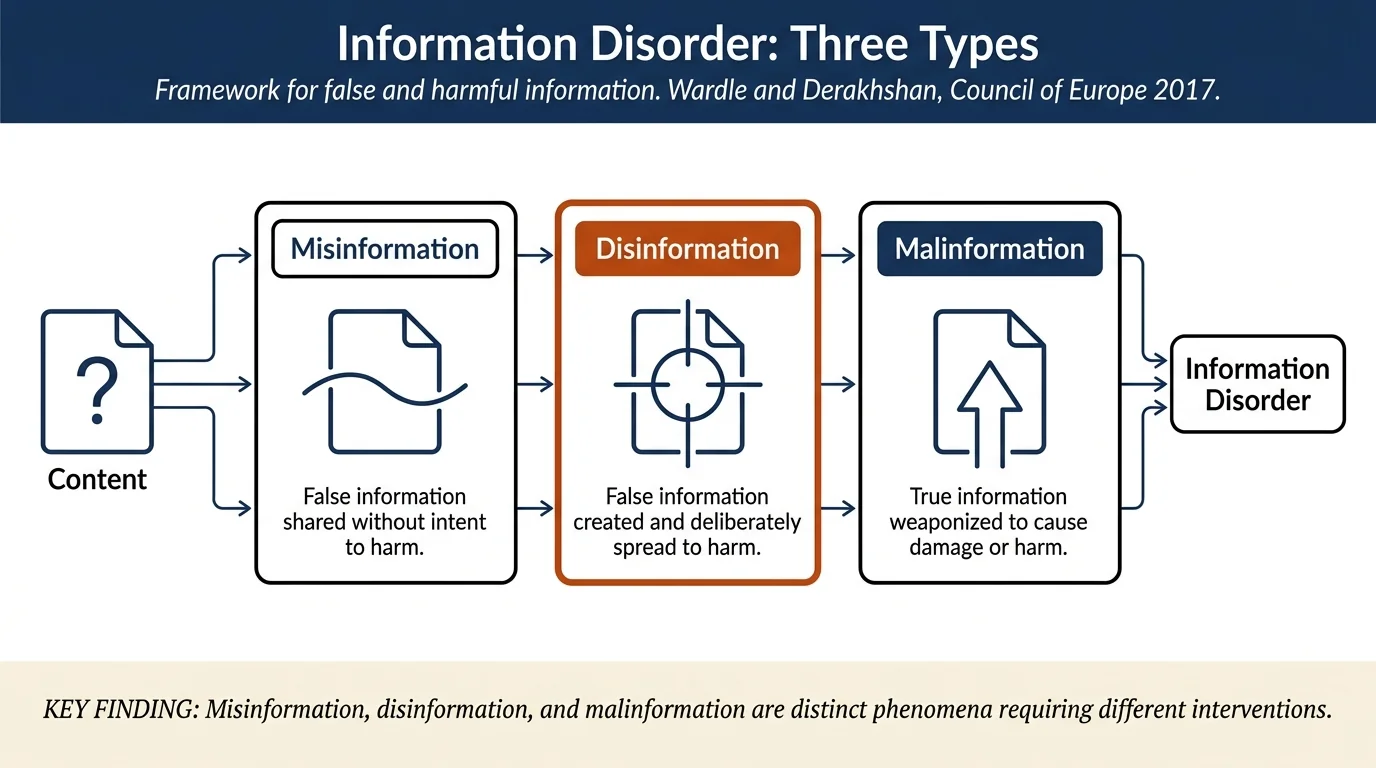
Information Disorder: Toward an Interdisciplinary Framework for Research and Policy MakingThis Council of Europe report introduces a comprehensive framework for understanding "information disorder" via three types (mis-, dis-, mal-information) defined by falseness and intent-to-harm. It examines the agents, messages, and interpreters involved, the creation-production-distribution lifecycle, and proposes 34 recommendations…
 Spread & networksBots & coordinated campaigns
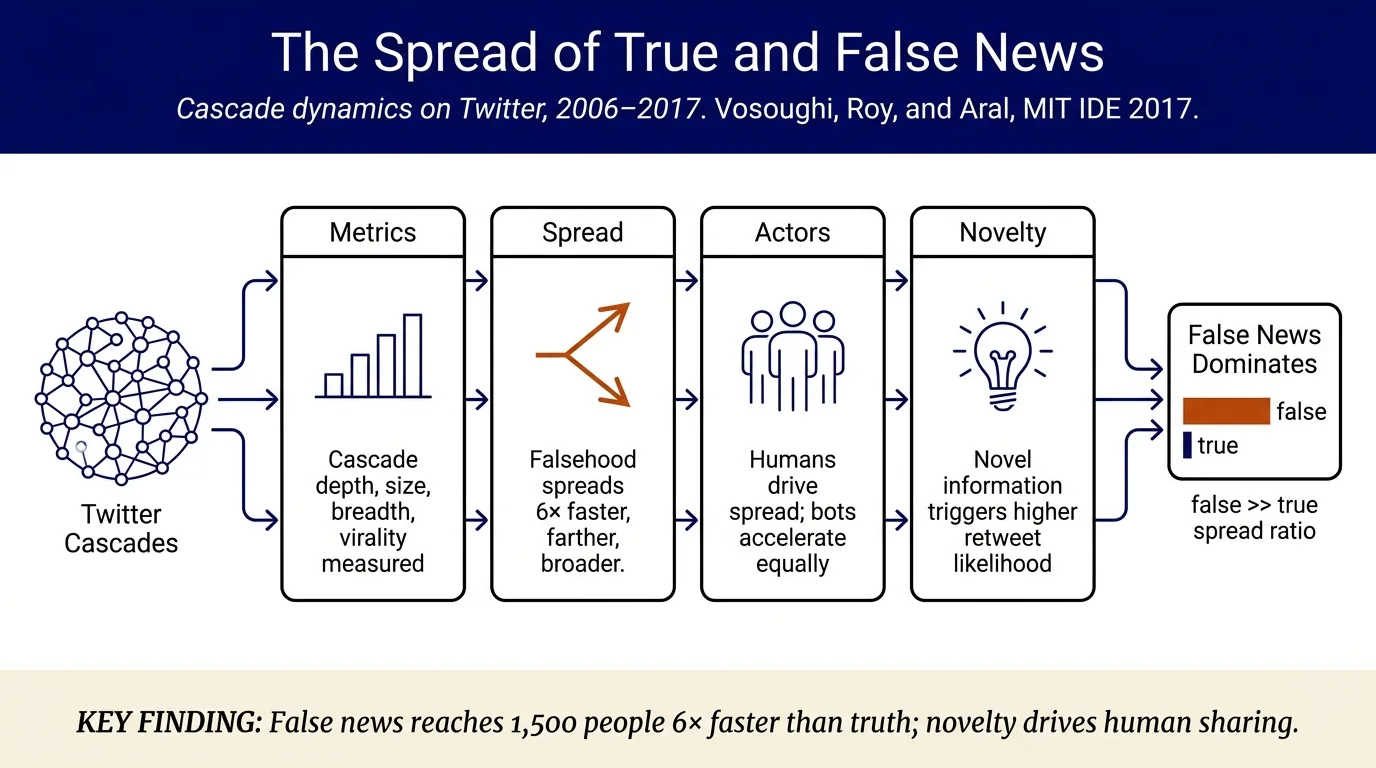
The Spread of True and False News OnlineAnalyzes 126,000 verified true and false news cascades from Twitter (2006–2017) covering 3 million users and 4.5 million shares. False news diffuses significantly farther, faster, deeper, and more broadly than truth across all categories, with false political news spreading fastest.
 Psychology & interventionsPlatforms, policy & society
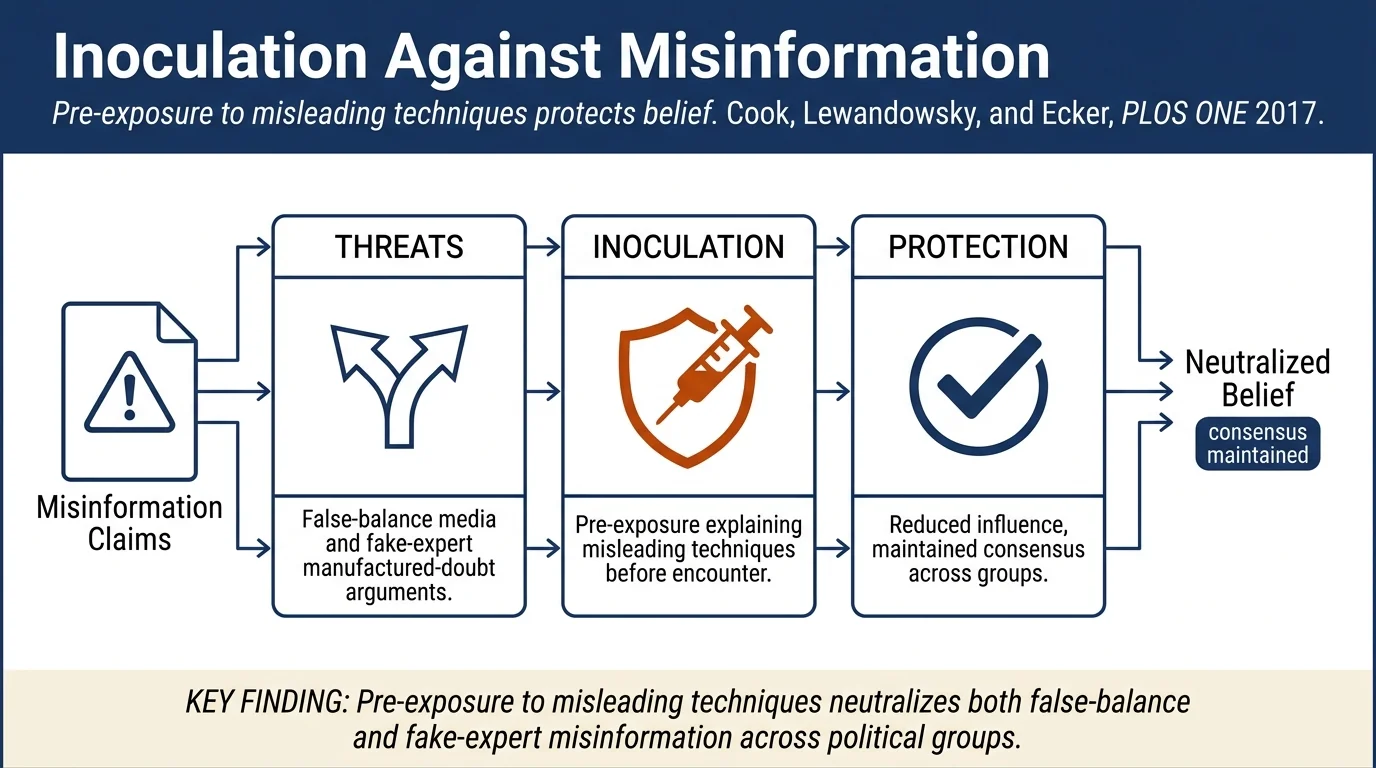
Neutralizing misinformation through inoculation: Exposing misleading argumentation techniques reduces their influencePre-emptively exposing people to flawed arguments before they encounter misinformation (inoculation) reduces that misinformation's influence. Two experiments tested this on climate change: false-balance media coverage (equal weight to consensus vs. contrarian scientists) and fake-expert arguments (using unqualified scientists to…
 Spread & networksPlatforms, policy & society
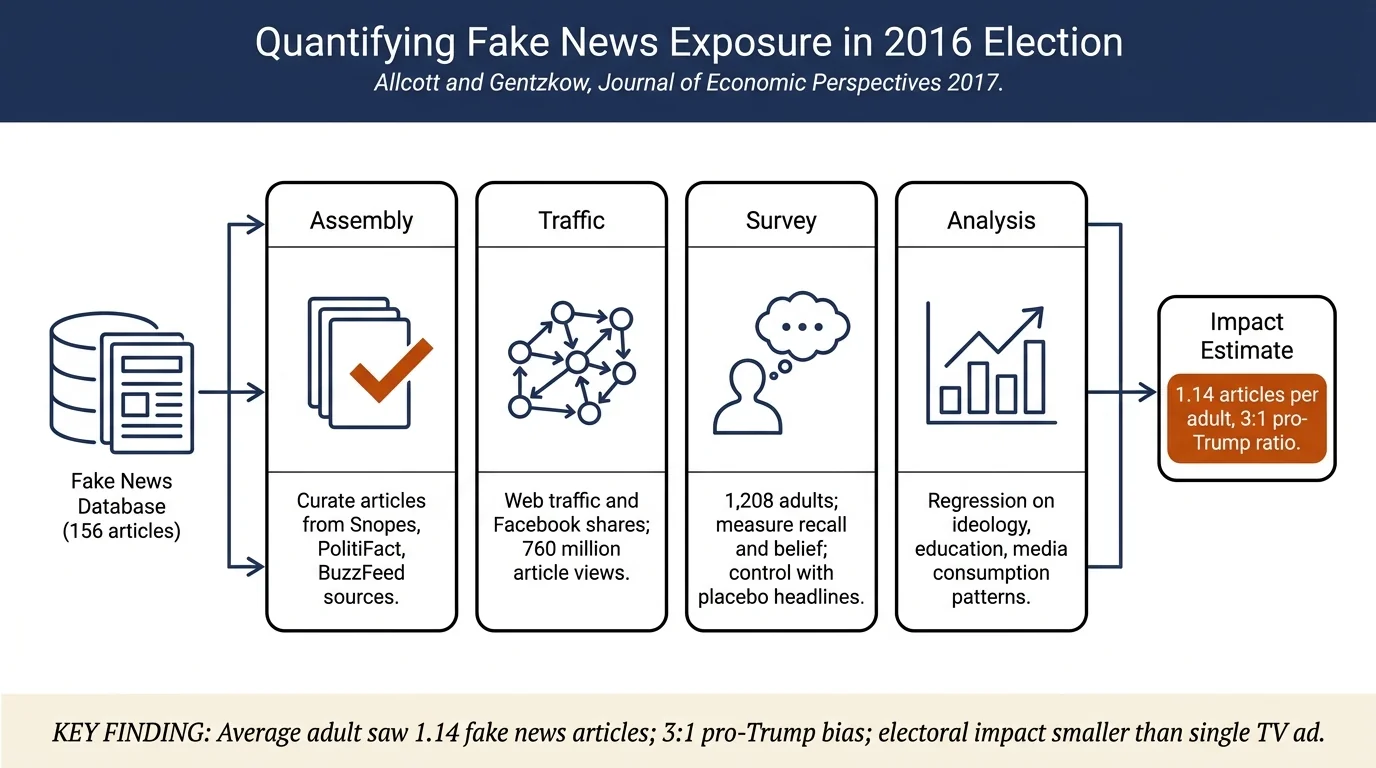
Social Media and Fake News in the 2016 ElectionAllcott and Gentzkov provide the first comprehensive empirical evidence on fake news exposure during the 2016 US election. Drawing on a curated database of 156 fake news articles, web traffic data, and a post-election survey of 1,200 adults, they estimate the average American saw and remembered 1.14 fake news articles during the election…
 Spread & networksPsychology & interventions
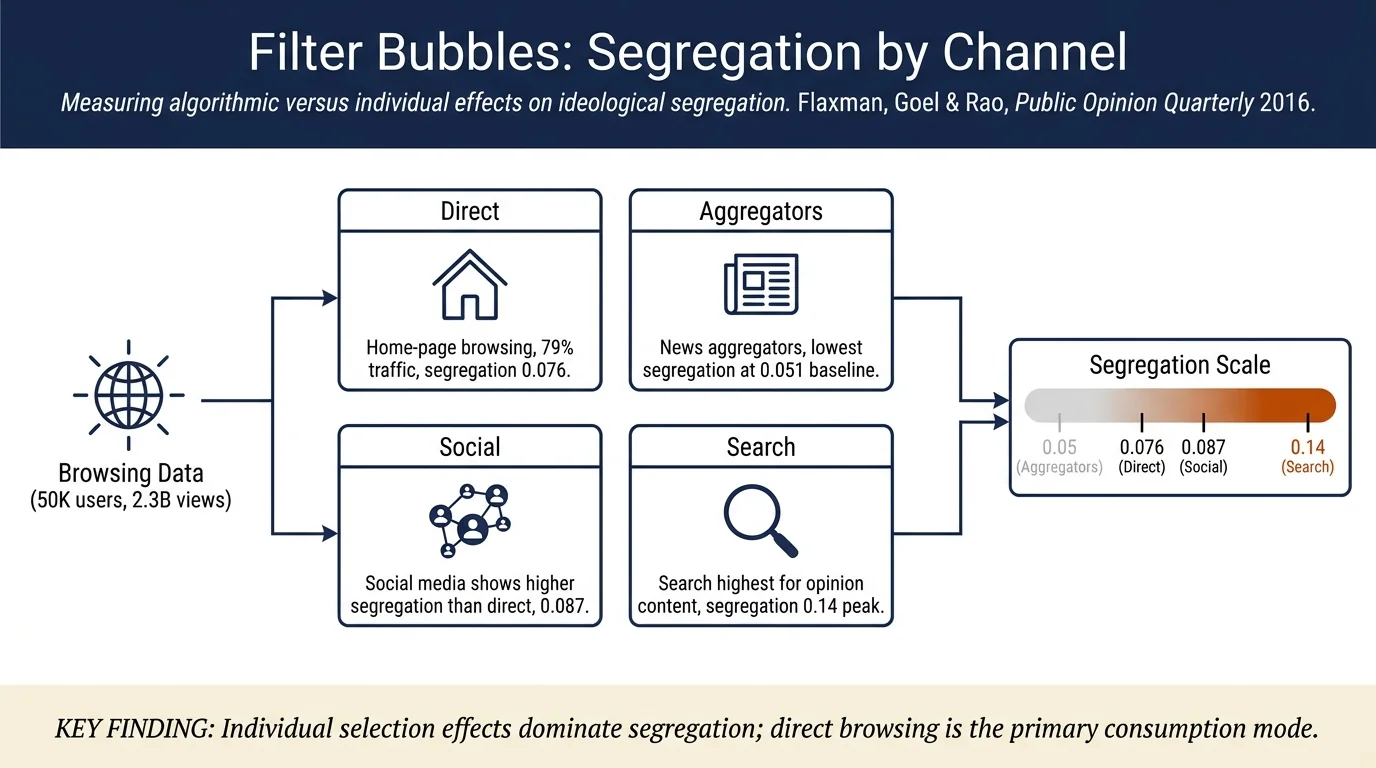
Filter Bubbles, Echo Chambers, and Online News ConsumptionThis paper examines whether technological changes (social media, search engines) increase ideological segregation in online news consumption by analyzing web-browsing data from 50,000 active news readers. They find that while social media and search are associated with higher segregation than direct browsing, the overall effects are…
 Fact-checking & verificationPlatforms, policy & society
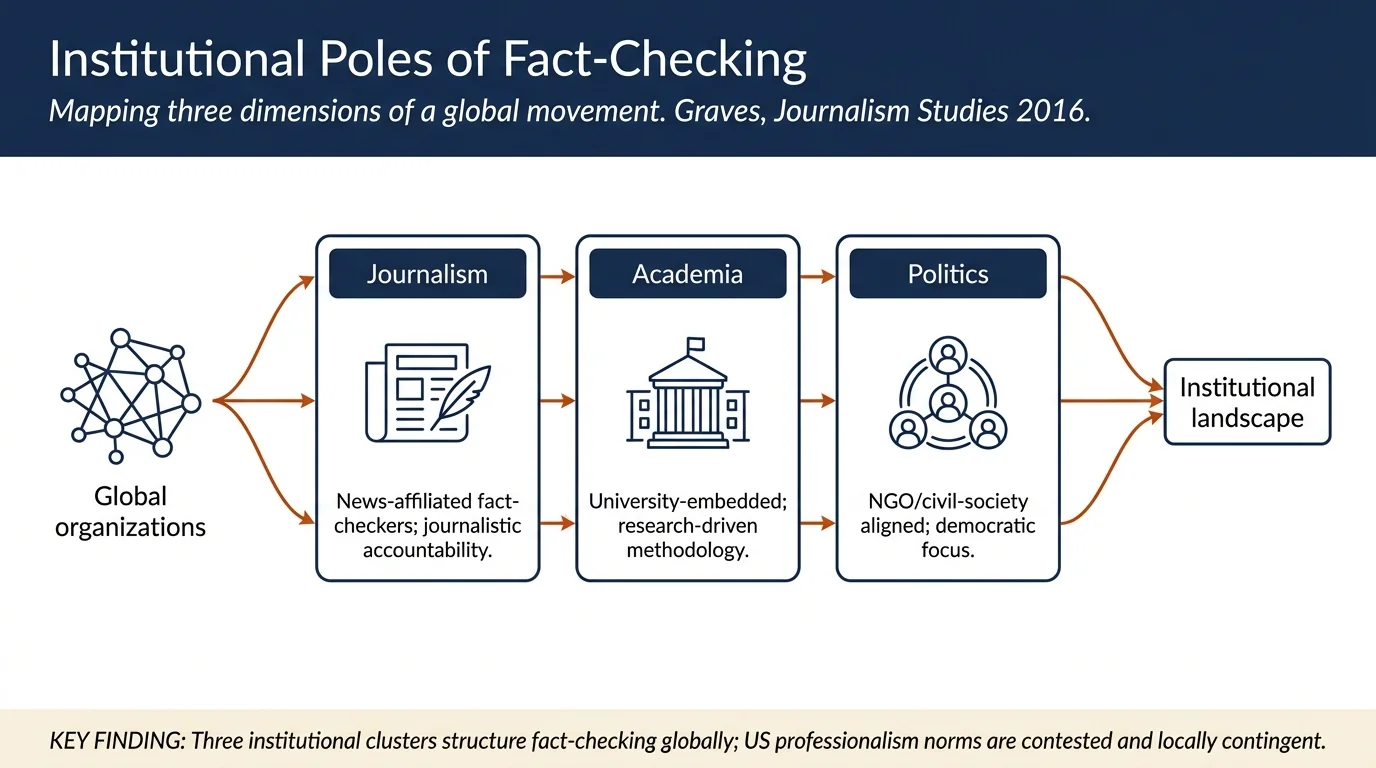
Boundaries Not Drawn: Mapping the institutional roots of the global fact-checking movementGraves maps the institutional landscape of 64+ fact-checking organizations globally across two summits (2014–2015), using ethnographic fieldwork and ternary plots to sort organizations along three axes: journalism, academia, and politics/civil society. The movement has a journalistic core but exhibits striking institutional diversity and…
 Spread & networksPlatforms, policy & society
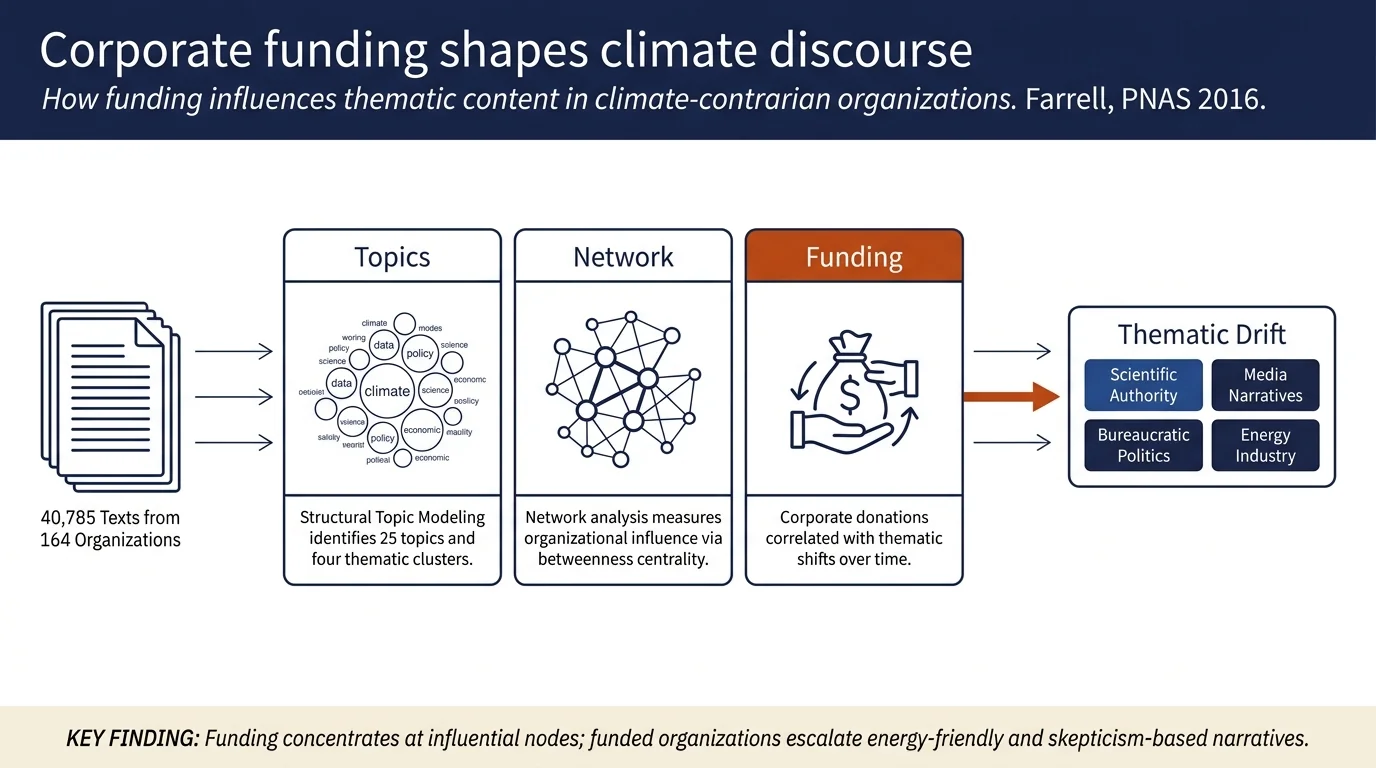
Corporate funding and ideological polarization about climate changeFarrell analyzes 40,785 texts (39+ million words) from 164 climate contrarian organizations between 1993–2013, employing Structural Topic Modeling and social network analysis to demonstrate that corporate funding from entities like ExxonMobil and Koch family foundations directly influences which polarization themes are created and…
 Platforms, policy & societyPsychology & interventions
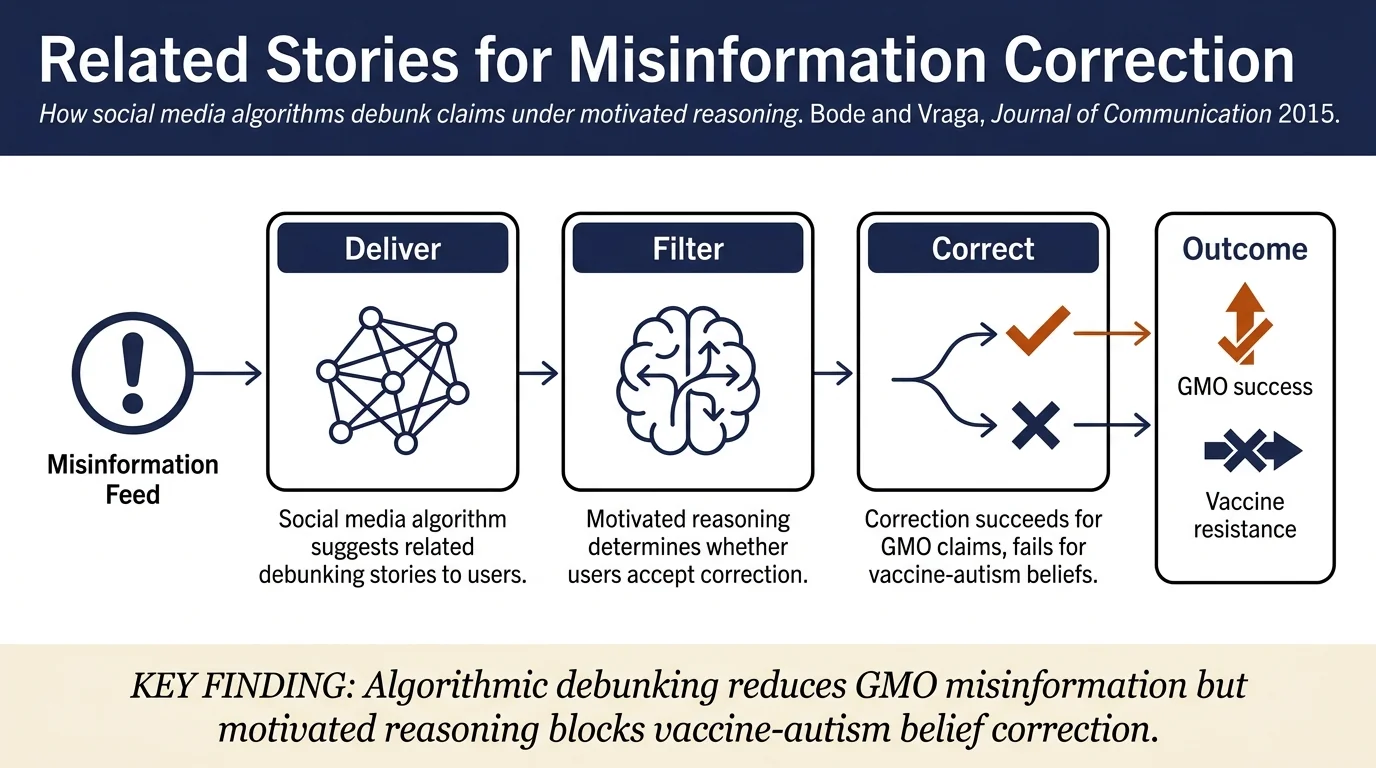
In Related News, That Was Wrong: The Correction of Misinformation Through Related Stories Functionality in Social MediaThis study tests whether Facebook's "related stories" feature can correct misinformation by exposing users to debunking information. Two experiments (students and Mechanical Turk workers) examined vaccine-autism and GMO-illness misperceptions.
 Psychology & interventionsFact-checking & verification
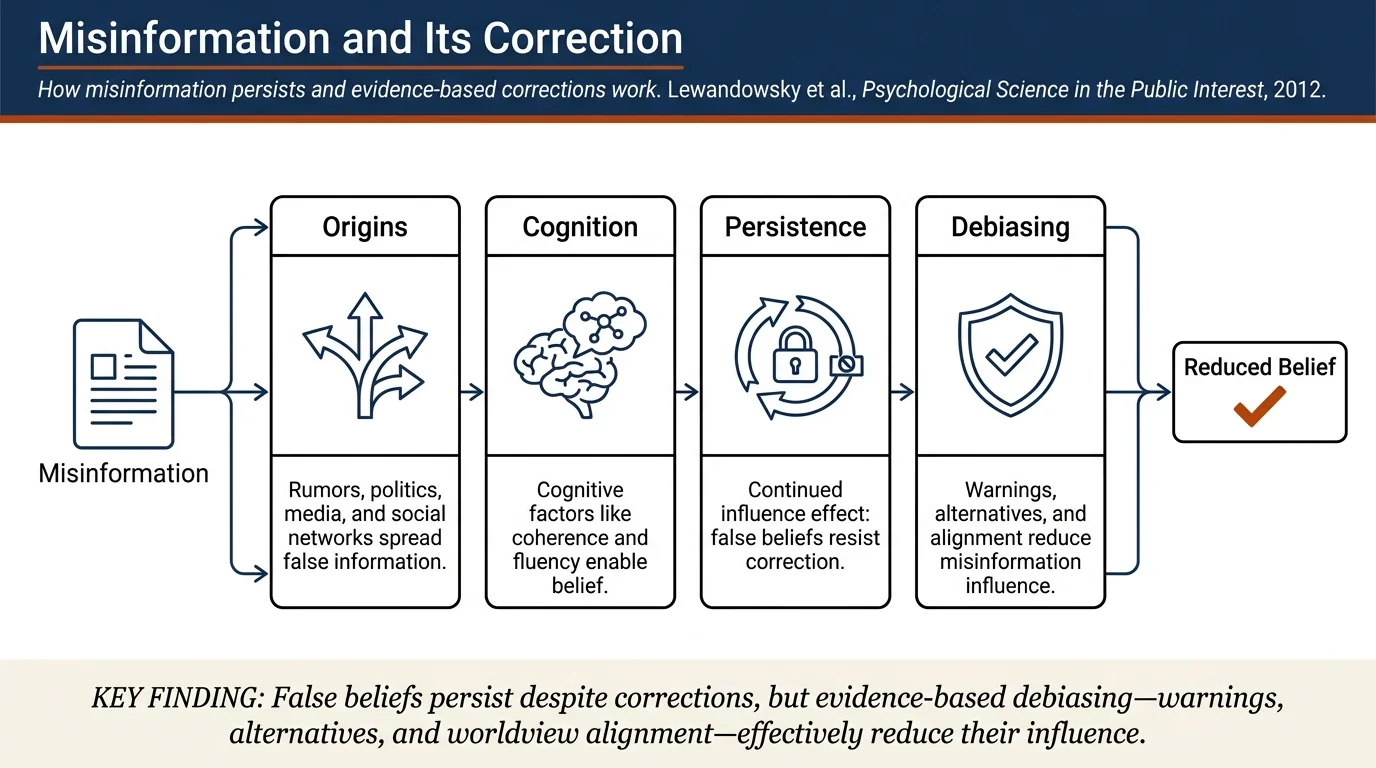
Misinformation and Its Correction: Continued Influence and Successful DebiasingThis comprehensive review synthesizes literature on why false beliefs persist despite corrections, examining cognitive mechanisms (coherence, credibility, source confusion, fluency) that render misinformation resistant to change. The authors propose evidence-based debiasing strategies—warnings, alternative explanations, repeated…
Spread & networksPsychology & interventions
A Theory of Fads, Fashion, Custom, and Cultural Change as Informational CascadesFoundational theoretical framework explaining how fads, fashions, and beliefs spread through sequential information cascades: when individuals use others' actions to infer information while ignoring their own private signals, widespread adoption of incorrect beliefs and practices can occur.