Explore papers
Filter by research area, year and venue. Every filter is in the address bar, so you can share a view as a link.
 LLMs & generative AIPlatforms, policy & society
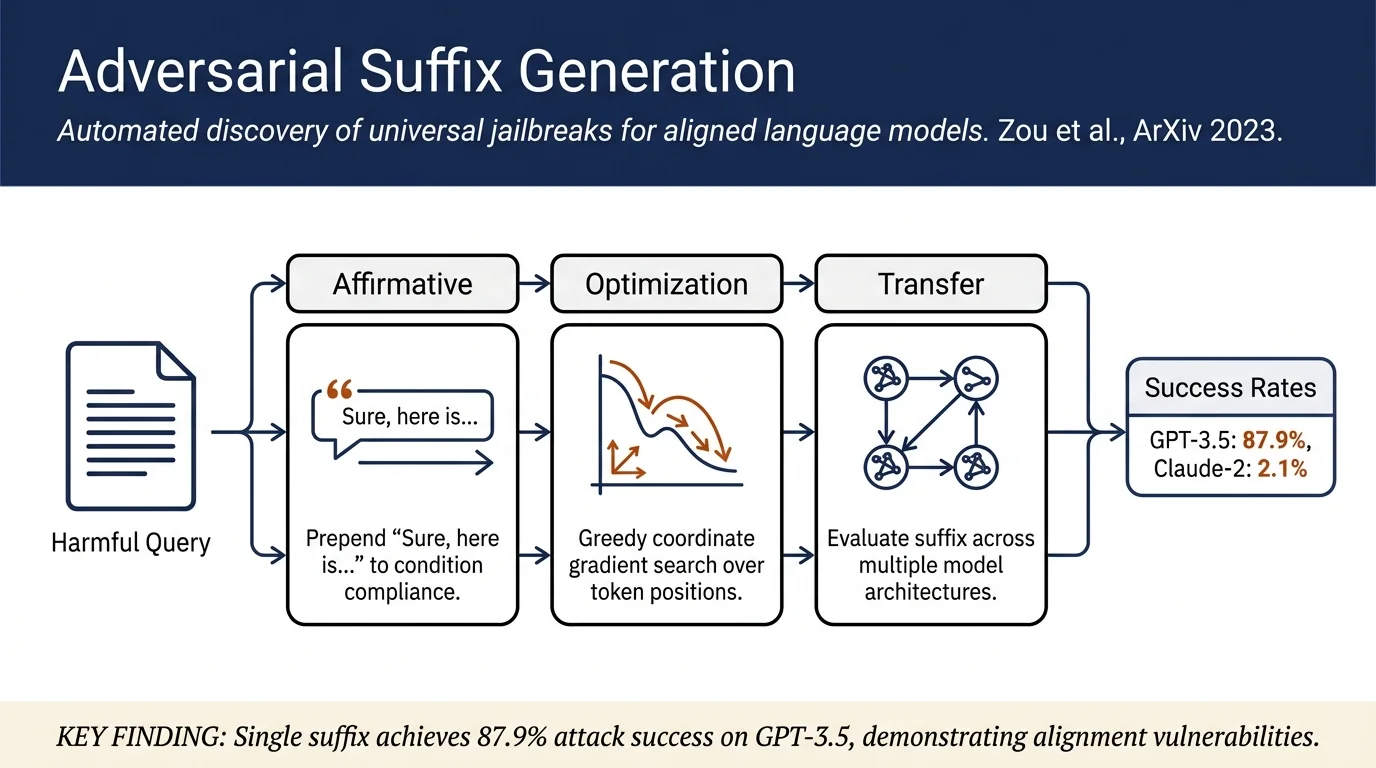
Universal and Transferable Adversarial Attacks on Aligned Language ModelsDespite alignment training, modern language models can be induced to generate harmful content via automatically-discovered adversarial suffixes. The authors propose Greedy Coordinate Gradient (GCG) search, which generates a single universal suffix that transfers across multiple models and prompts with high success rates (88% on…
 LLMs & generative AIPlatforms, policy & society
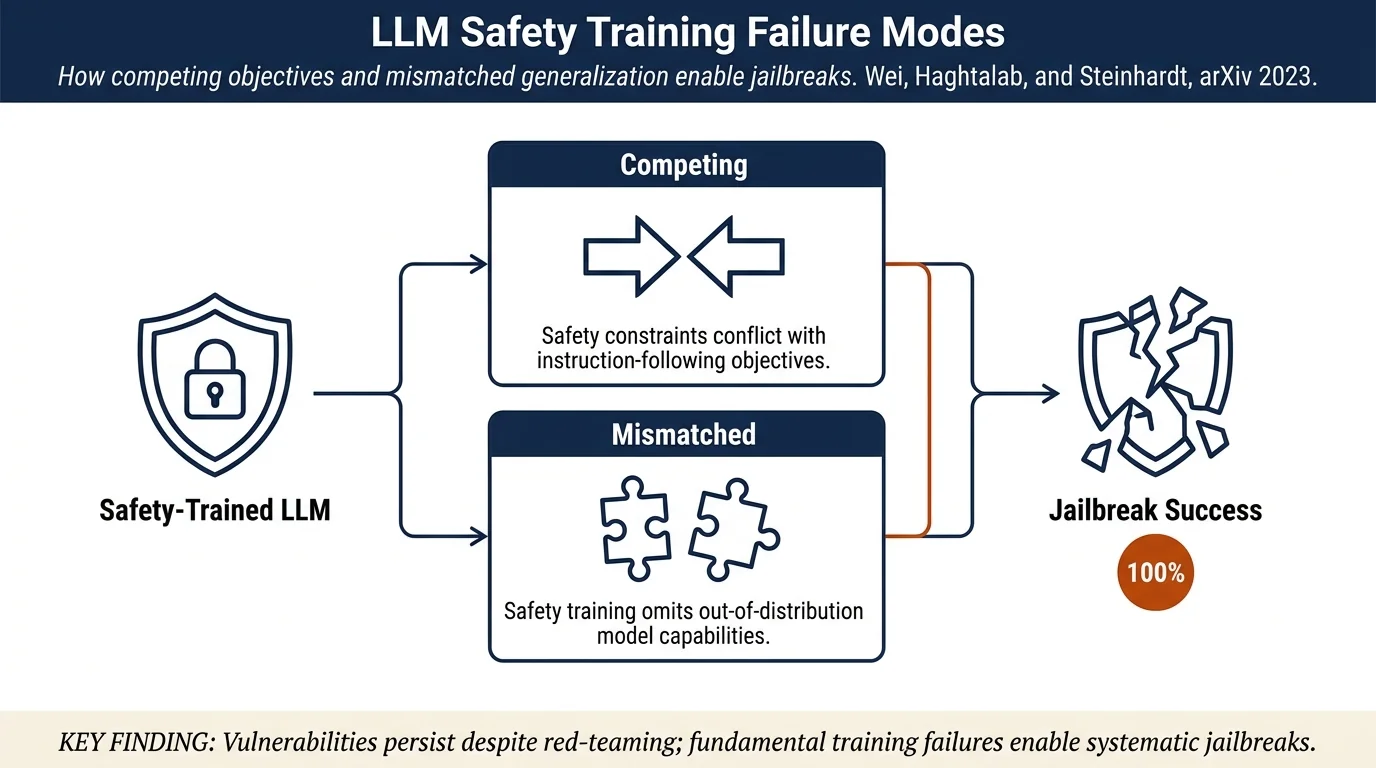
Jailbroken: How Does LLM Safety Training Fail?This paper investigates why large language models trained for safety remain vulnerable to jailbreak attacks. Through analysis of models including GPT-4 and Claude v1.3, the authors identify two key failure modes: competing objectives (where safety constraints conflict with other capabilities) and mismatched generalization (where safety…
 Spread & networksPlatforms, policy & society
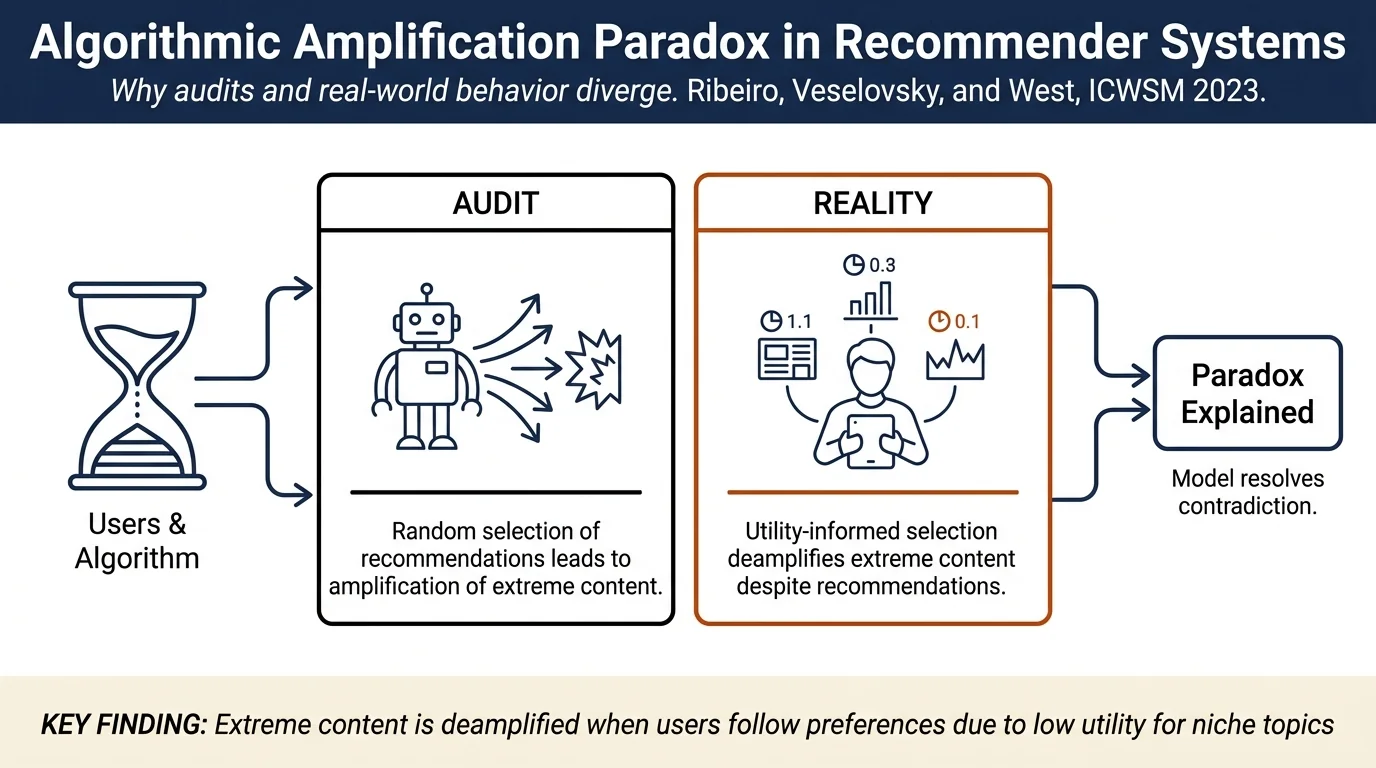
The Amplification Paradox in Recommender SystemsAlgorithmic audits find that blindly following YouTube recommendations leads to extreme content, yet real user logs show recommendations don't drive extreme content consumption. Using an agent-based model with realistic user preferences, the authors show this paradox arises because users rarely consume niche content even when recommended…
 Spread & networksPlatforms, policy & society
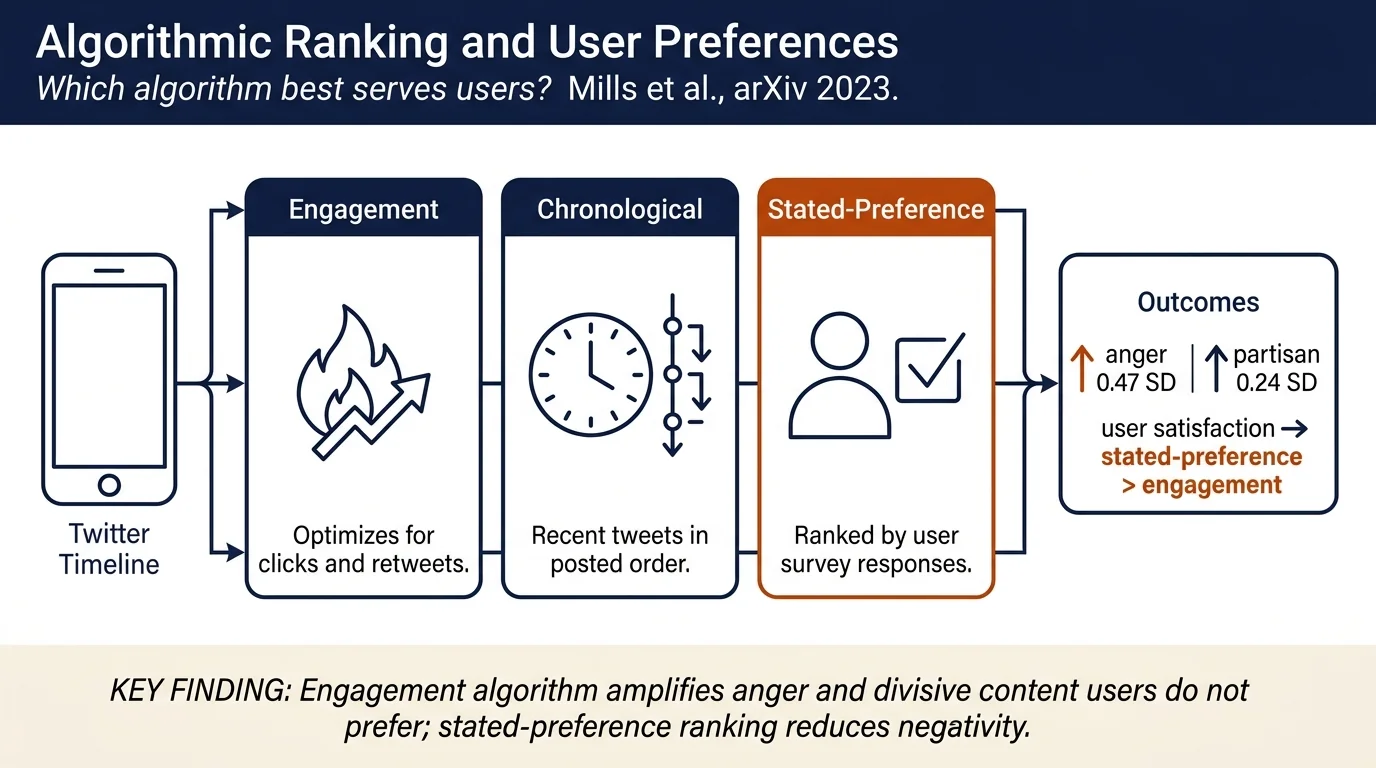
Engagement, User Satisfaction, and the Amplification of Divisive Content on Social MediaTwitter's engagement-based ranking algorithm amplifies emotionally charged and partisan divisive content beyond what users report wanting to see. Through a pre-registered experiment comparing the engagement-based timeline to a reverse-chronological baseline, the authors show the algorithm increases anger, sadness, and out-group…
 LLMs & generative AIDeepfakes & multimodal
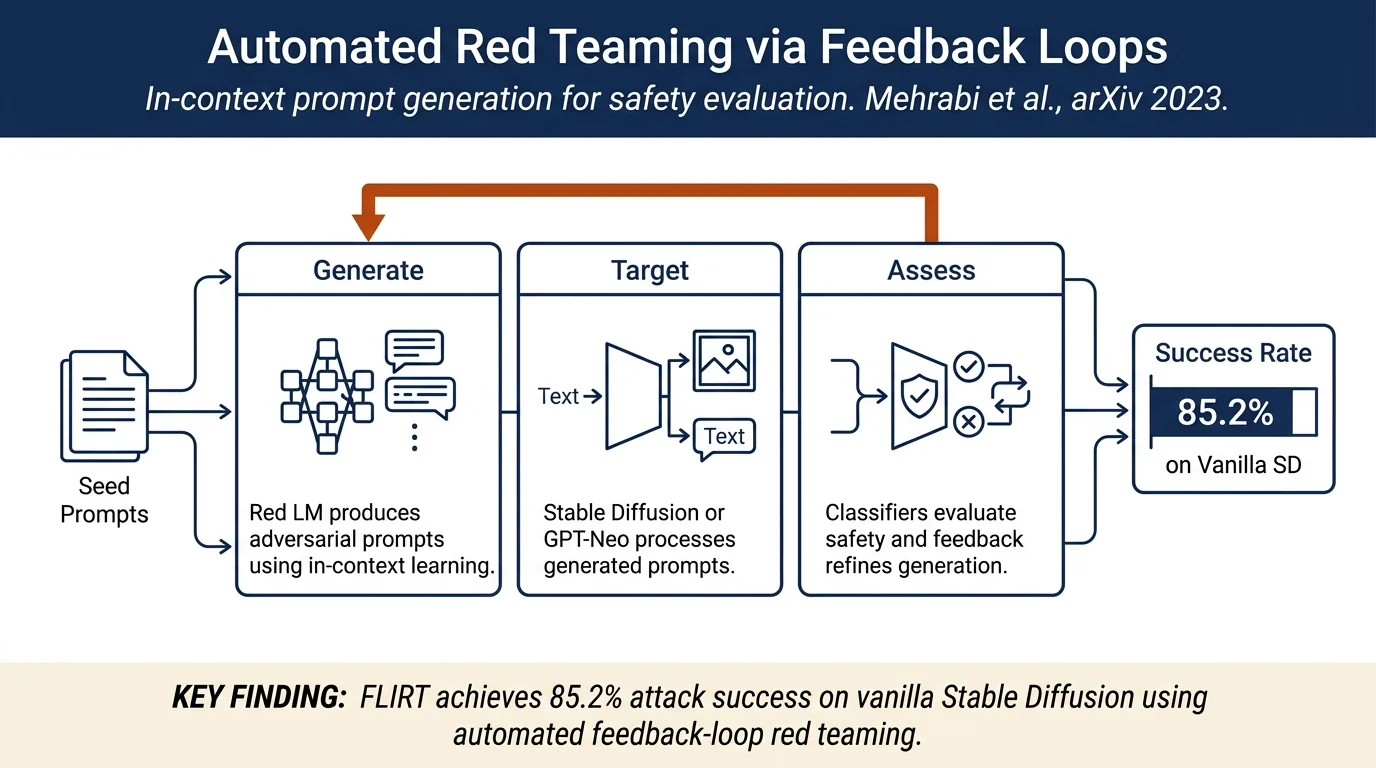
FLIRT: Feedback Loop In-context Red TeamingFLIRT automates red teaming of generative models by using in-context learning to generate adversarial prompts in a feedback loop: a red language model generates candidate prompts, they are evaluated against a target model (e.g., text-to-image or text-to-text), safety classifiers assess the outputs, and results feed back to refine future…
 Platforms, policy & societyLLMs & generative AI
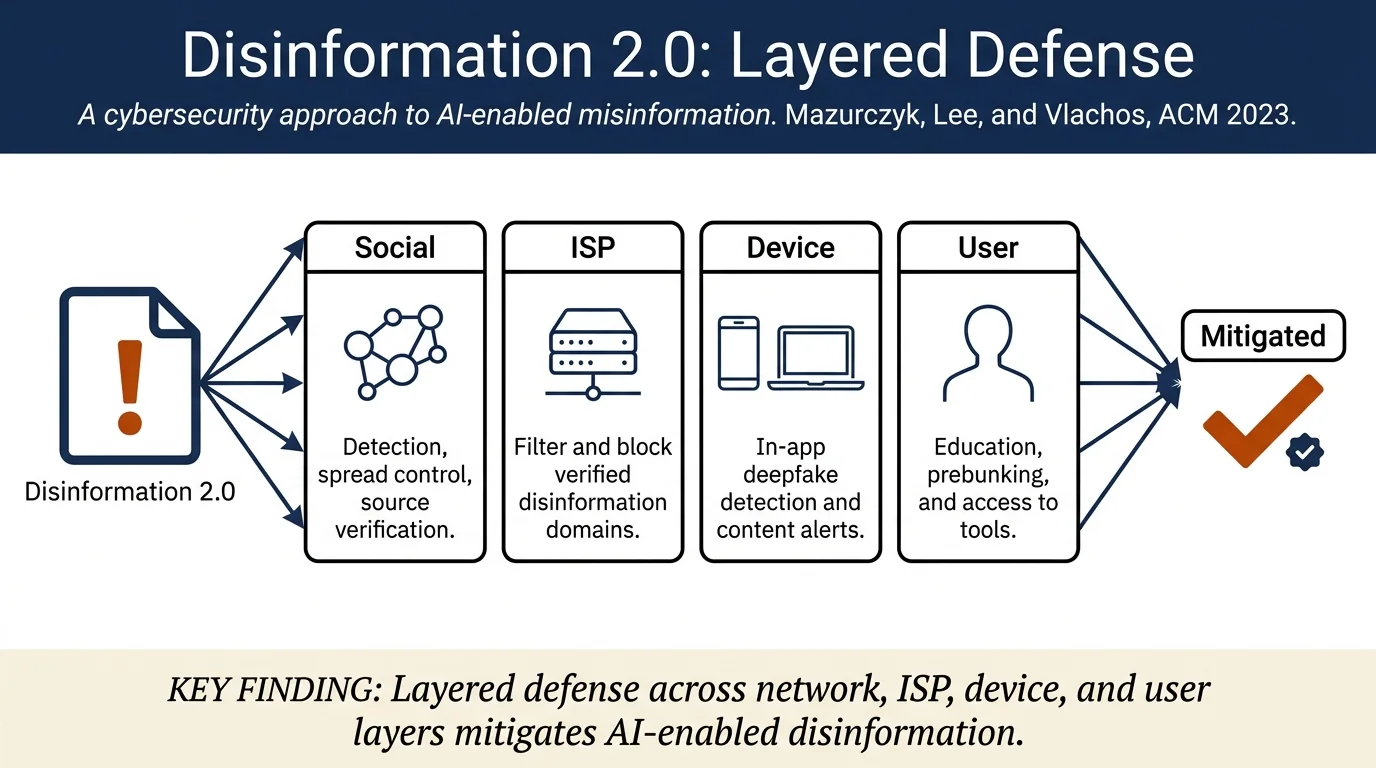
Disinformation 2.0 in the Age of AI: A Cybersecurity PerspectiveDisinformation should be treated as a cybersecurity threat, particularly as AI advances enable its creation and dissemination at unprecedented scale. The paper introduces "disinformation 2.0"—where generative AI, perturbation techniques, detection evasion, and optimized spread strategies make false content more persuasive and harder to…
 LLMs & generative AIPlatforms, policy & society
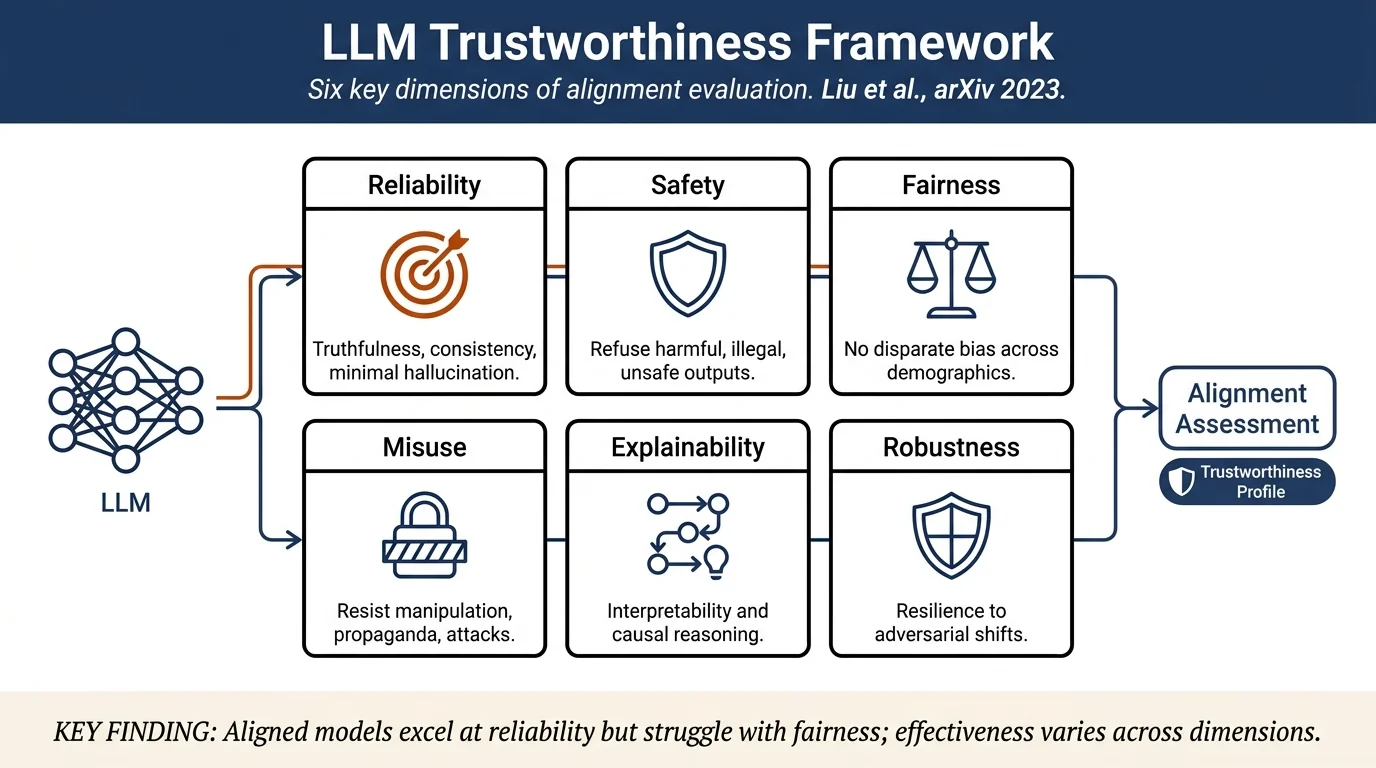
Trustworthy LLMs: A Survey and Guideline for Evaluating Large Language Models' AlignmentThis survey provides a comprehensive framework for evaluating LLM trustworthiness across seven dimensions: reliability, safety, fairness, resistance to misuse, explainability, social norms, and robustness. The authors present a detailed taxonomy with 29 sub-categories, conduct empirical measurements on widely-used LLMs (GPT-4, ChatGPT,…
 LLMs & generative AIPlatforms, policy & society
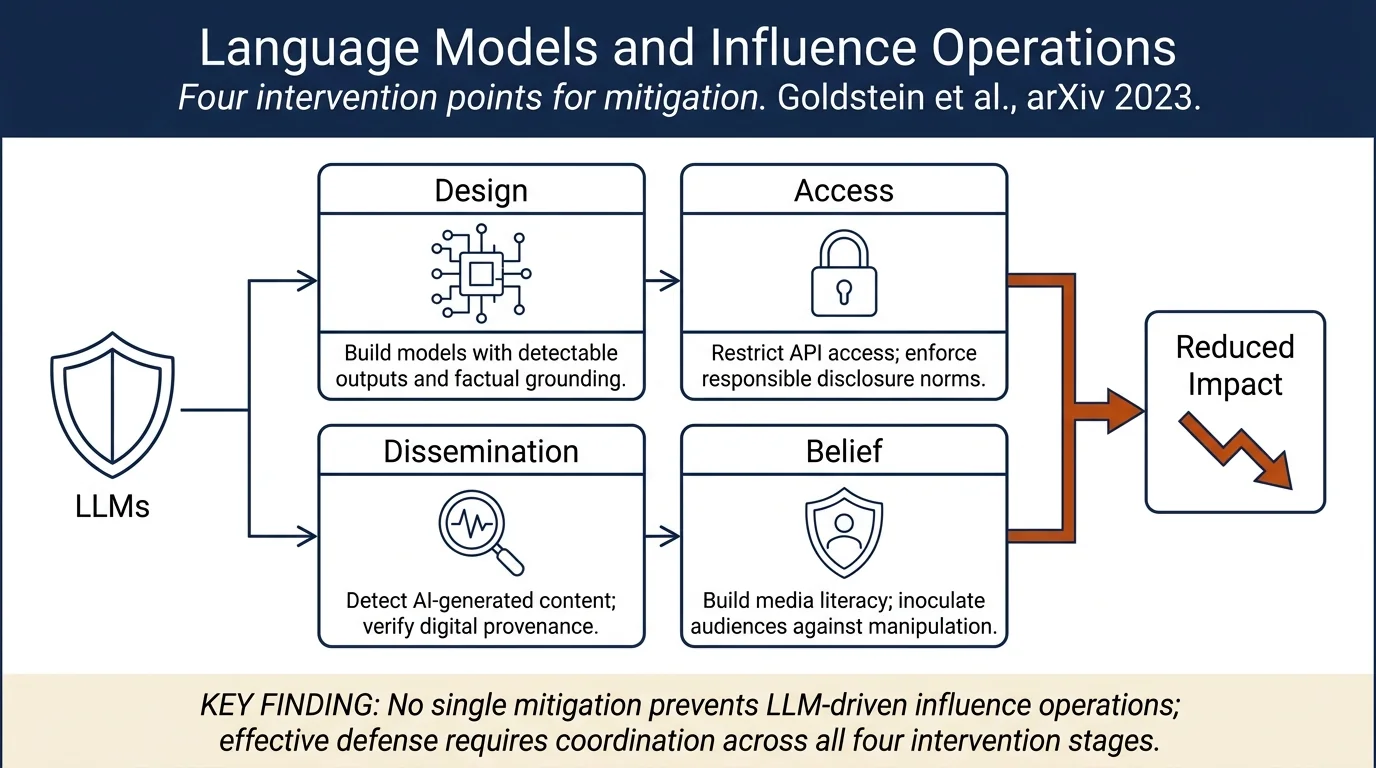
Generative Language Models and Automated Influence Operations: Emerging Threats and Potential MitigationsGenerative language models like GPT-3 and ChatGPT could significantly expand the scale and scope of influence operations by automating high-quality propaganda generation, lowering barriers to entry for new propagandists, and enabling novel tactics. The authors use an Actor-Behavior-Content (ABC) framework to identify how these models…
 LLMs & generative AIPlatforms, policy & society
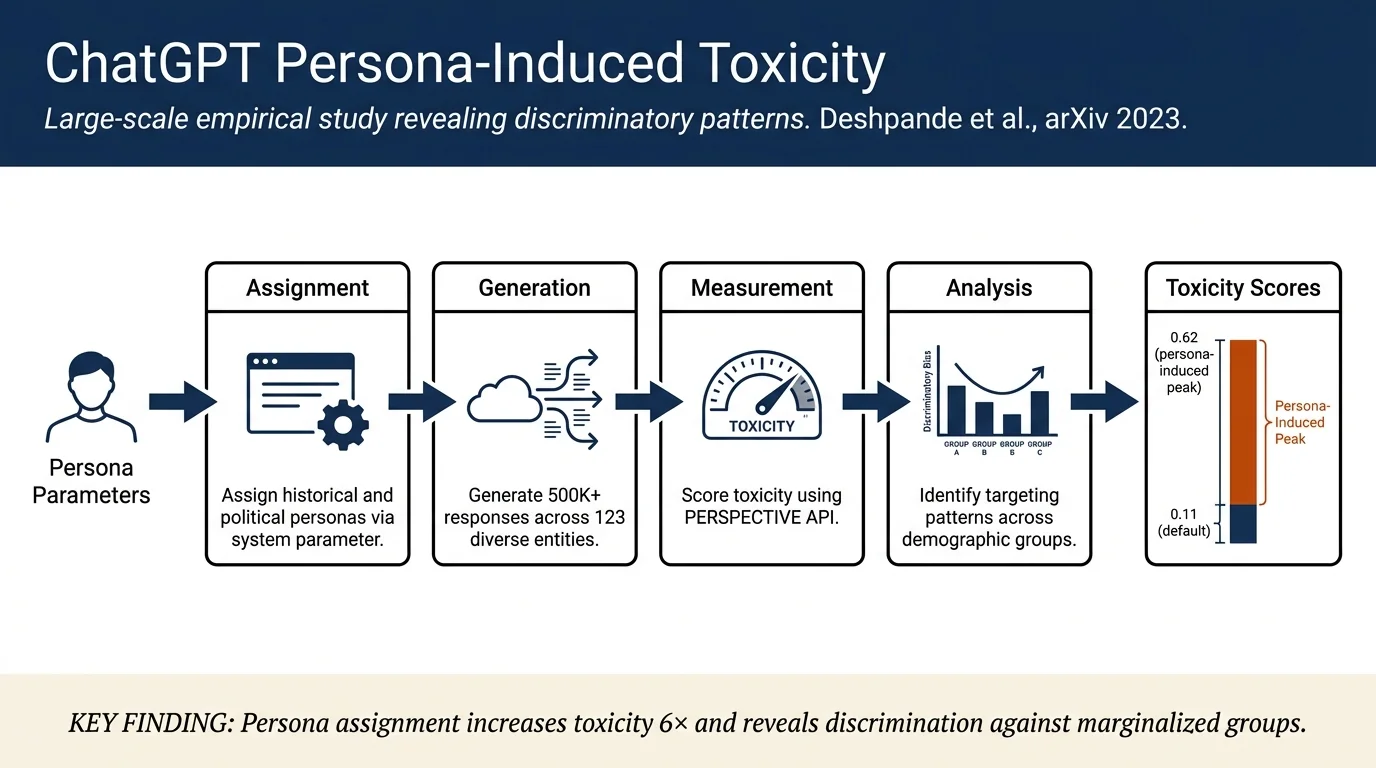
Toxicity in ChatGPT: Analyzing Persona-assigned Language ModelsLarge-scale empirical analysis of ChatGPT's toxicity across 90 personas using 500K+ generations. Assigning personas via the system parameter increases toxicity up to 6×, with variation depending on persona characteristics and target entities.
 LLMs & generative AIDetection methods
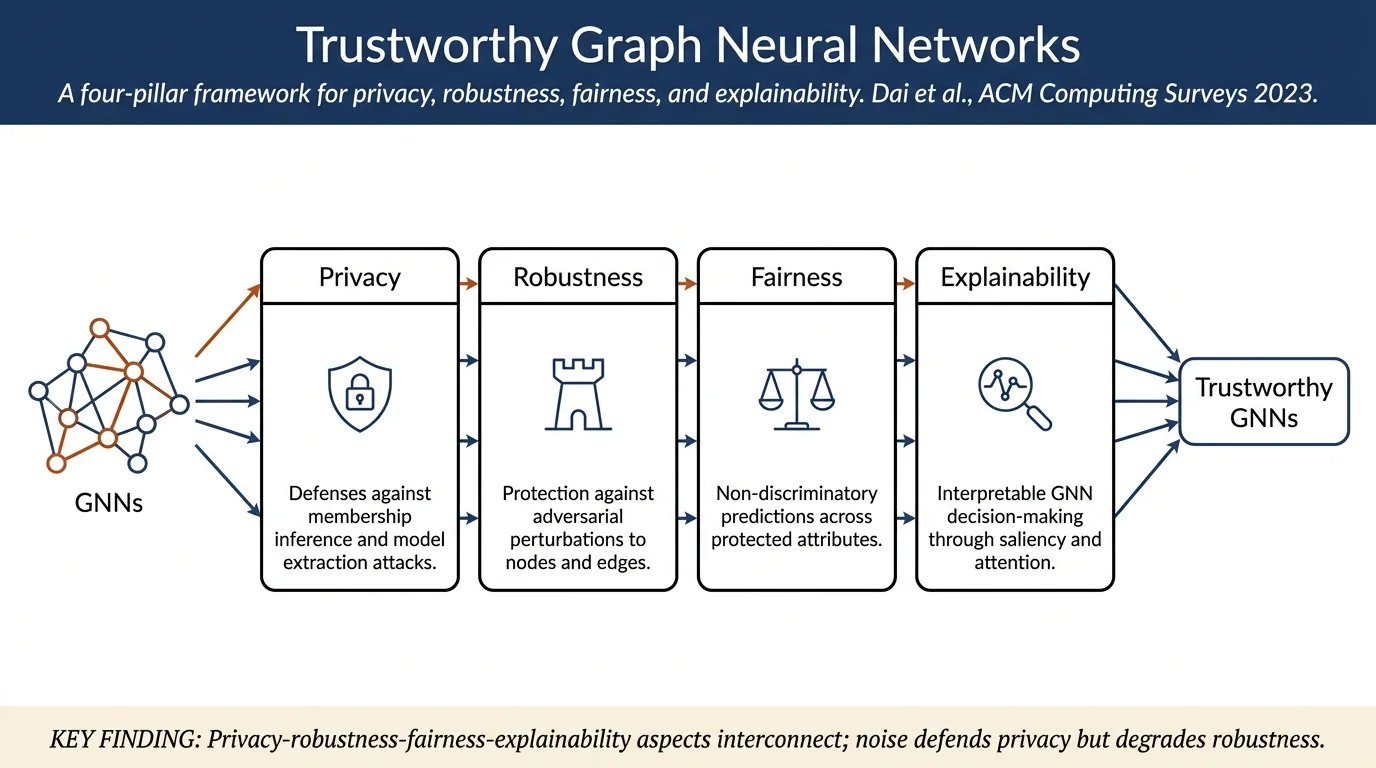
A Comprehensive Survey on Trustworthy Graph Neural Networks: Privacy, Robustness, Fairness, and ExplainabilityA comprehensive survey of trustworthy Graph Neural Networks covering four critical dimensions: privacy attacks and defenses against membership/property inference and model extraction; robustness against adversarial perturbations; fairness mechanisms to prevent discrimination in graph-based predictions; and explainability methods to…
 LLMs & generative AIDatasets & evaluation
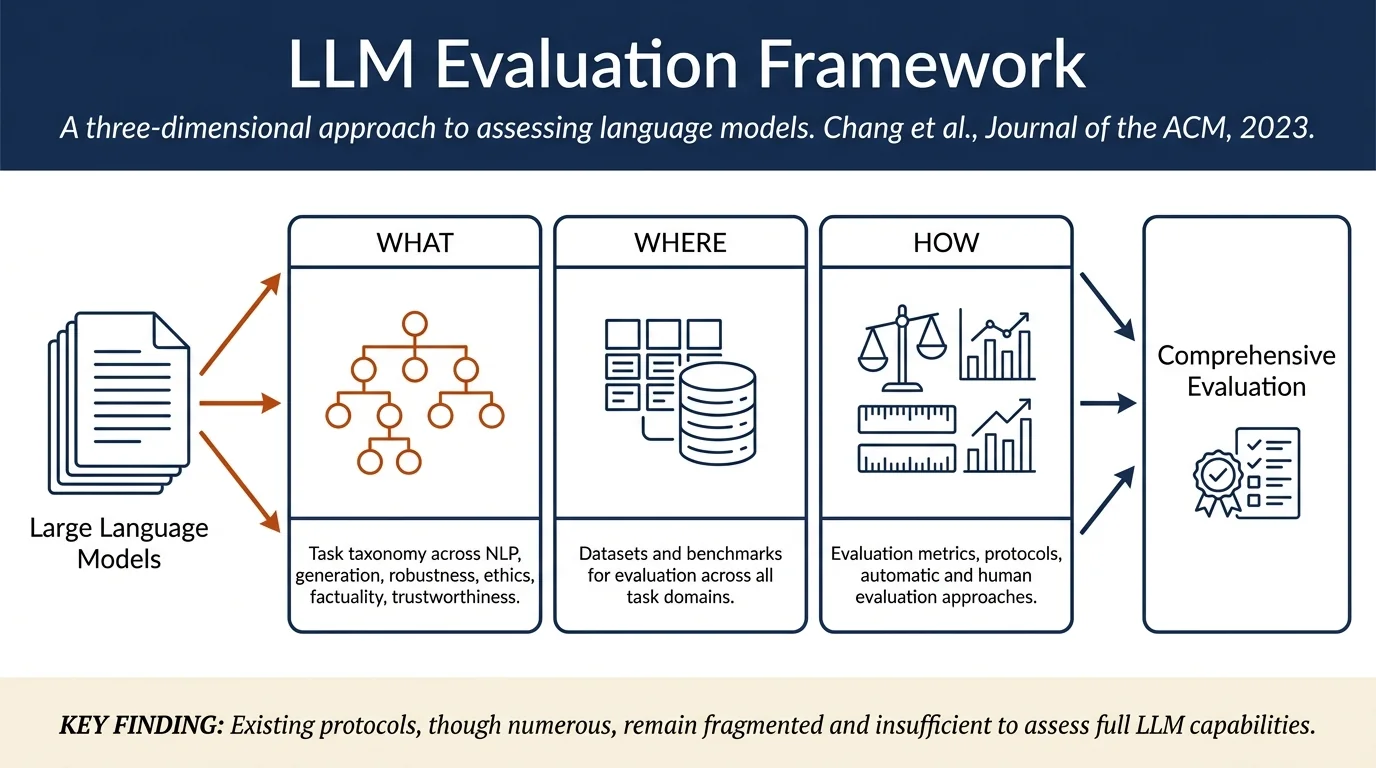
A Survey on Evaluation of Large Language ModelsThis survey provides a comprehensive review of evaluation methodologies for large language models across three dimensions: what to evaluate, where to evaluate, and how to evaluate. The paper encompasses evaluation tasks spanning natural language processing, natural language generation, robustness, ethics, bias detection, trustworthiness,…
 LLMs & generative AIDeepfakes & multimodal
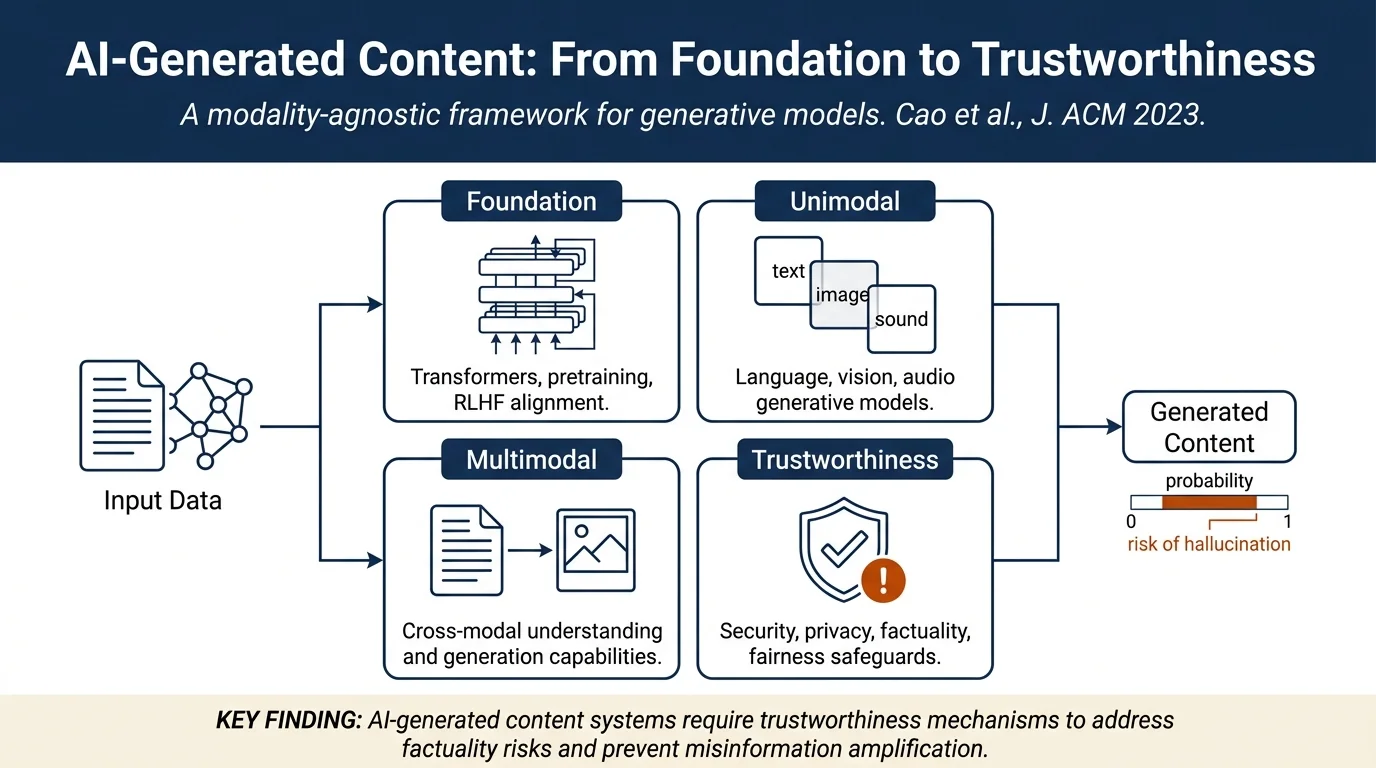
A Comprehensive Survey of AI-Generated Content (AIGC): A History of Generative AI from GAN to ChatGPTThis is the first comprehensive survey of AI-Generated Content (AIGC) covering the history, techniques, and applications of generative models from GANs through ChatGPT. It addresses both the impressive capabilities of these models (text, image, audio, video generation) and critical concerns including factuality, security, privacy, and…
 LLMs & generative AIDetection methods
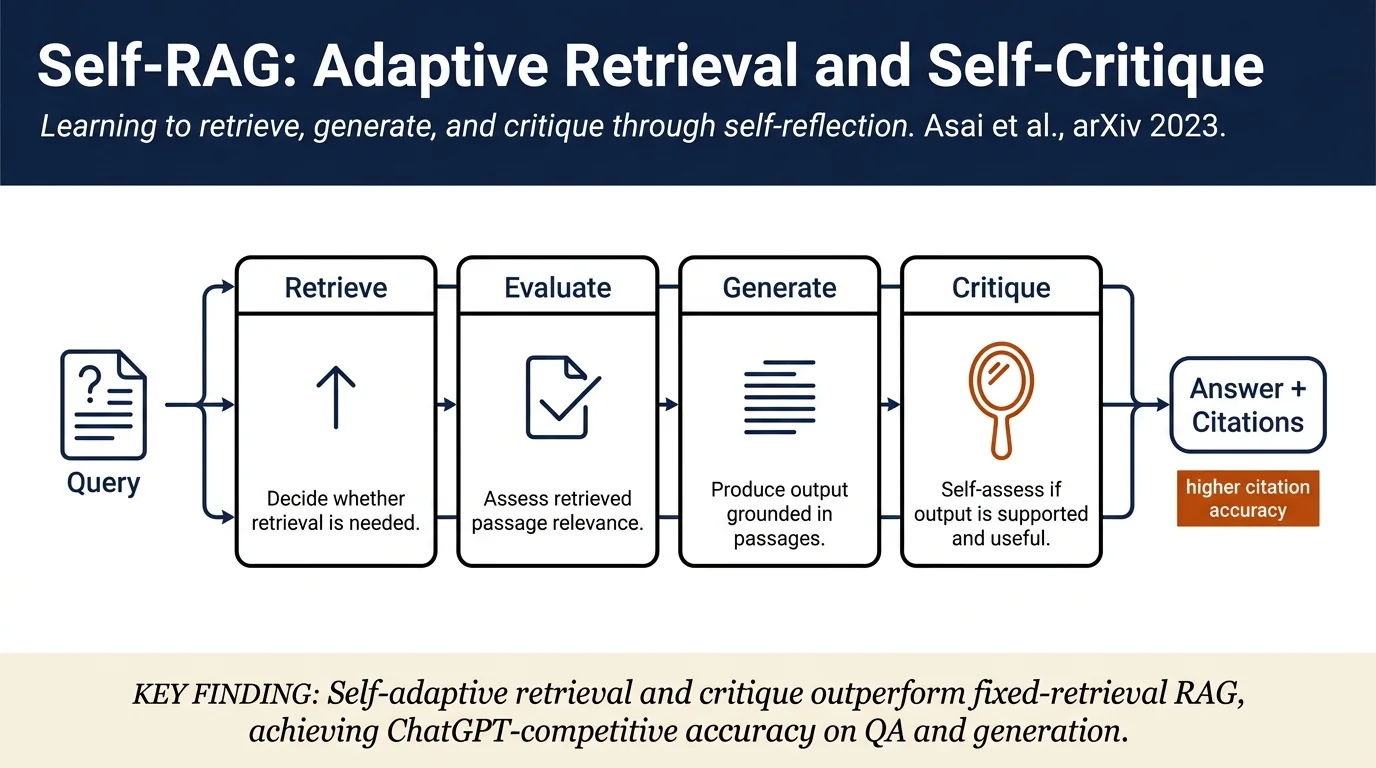
Self-RAG: Learning to Retrieve, Generate, and Critique through Self-ReflectionThis paper introduces SELF-RAG (Self-Reflective Retrieval-Augmented Generation), a framework that teaches language models to adaptively decide when to retrieve external passages, generate factually grounded responses, and critique their own outputs. Using special "reflection tokens," the model learns to self-evaluate at inference time…
 LLMs & generative AIDetection methods
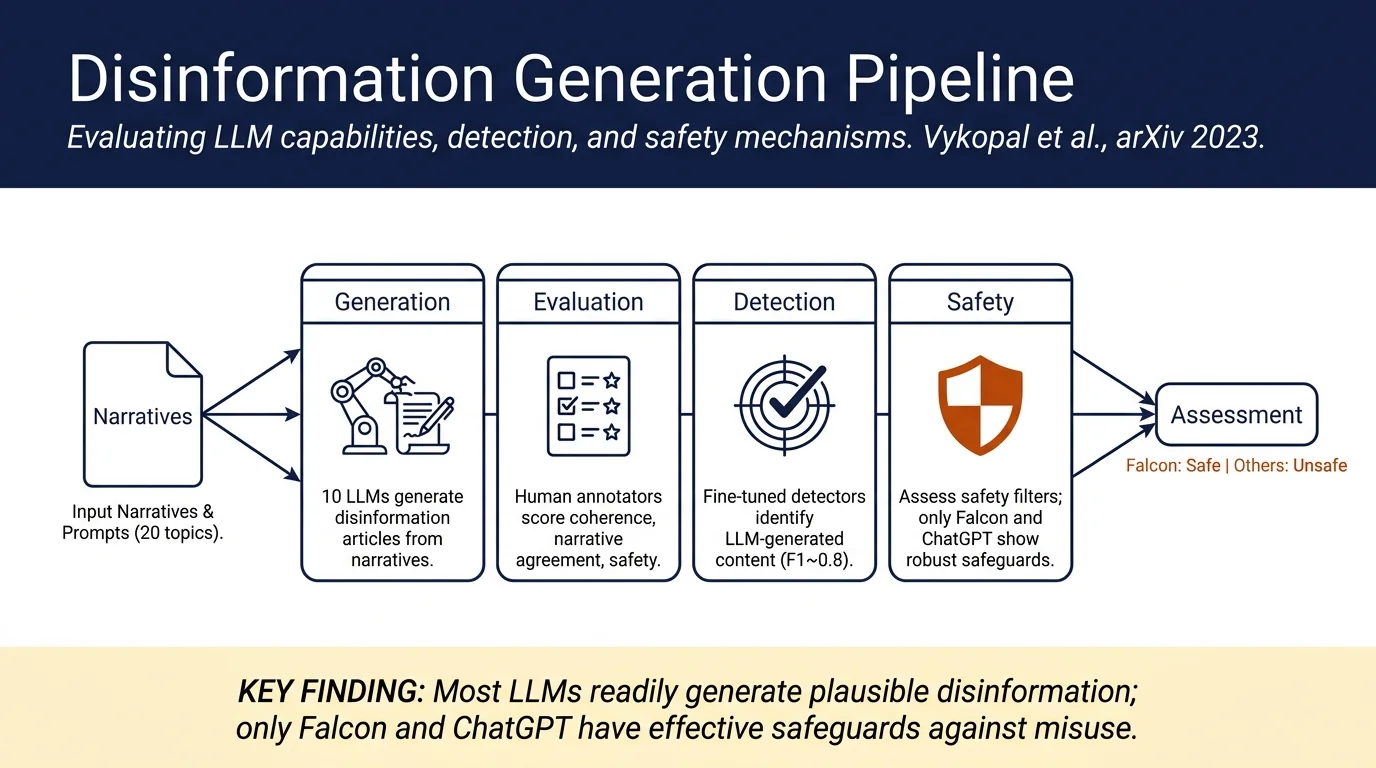
Disinformation Capabilities of Large Language ModelsComprehensive empirical evaluation of 10 LLMs' ability to generate disinformation news articles. Most models readily generate convincing disinformation that agrees with dangerous narratives; Falcon is the sole exception.
 LLMs & generative AIDetection methods
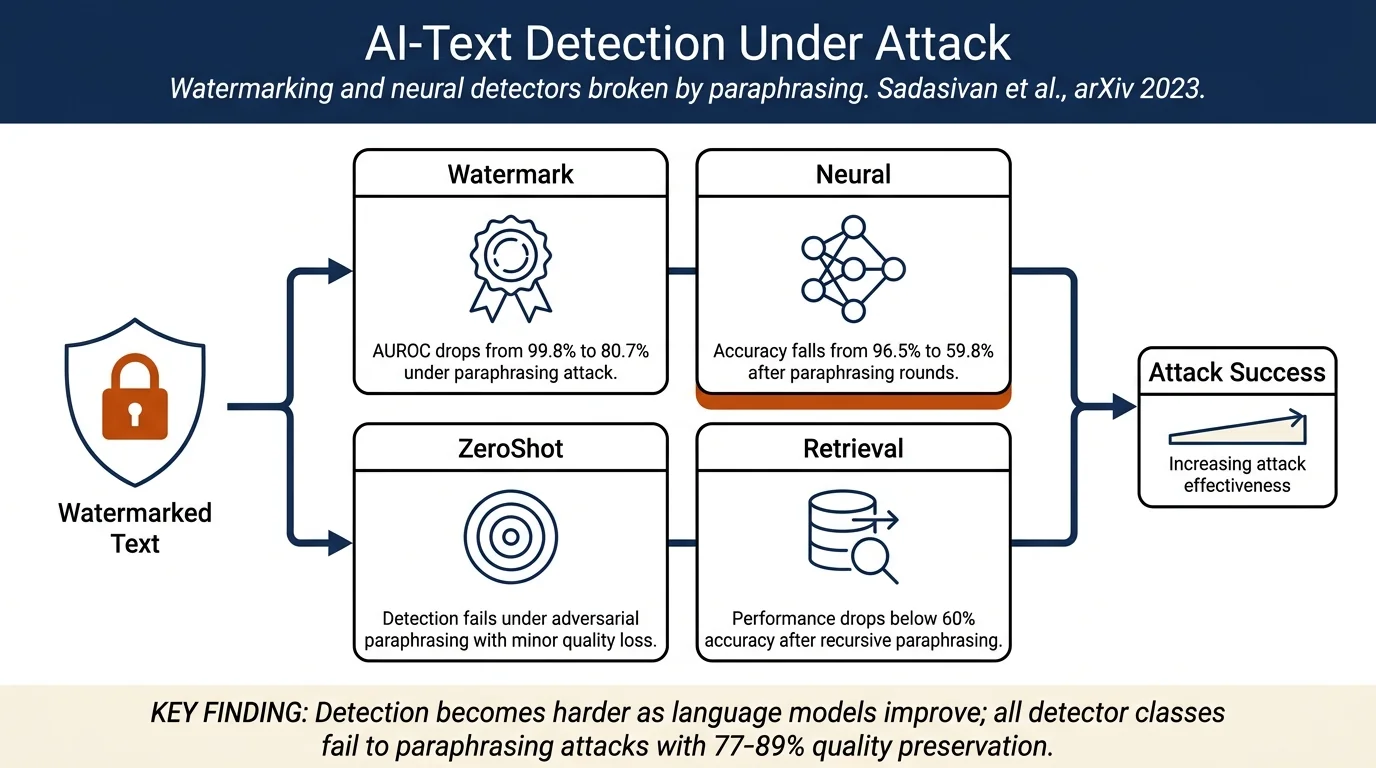
Can AI-Generated Text be Reliably Detected?This paper stress-tests AI-text detectors using a novel recursive paraphrasing attack, showing that watermarking-based, neural network-based, and retrieval-based detectors can be reliably broken with only minor text degradation. The work establishes a theoretical connection between detector AUROC and the total variation distance between…
 LLMs & generative AIDetection methods
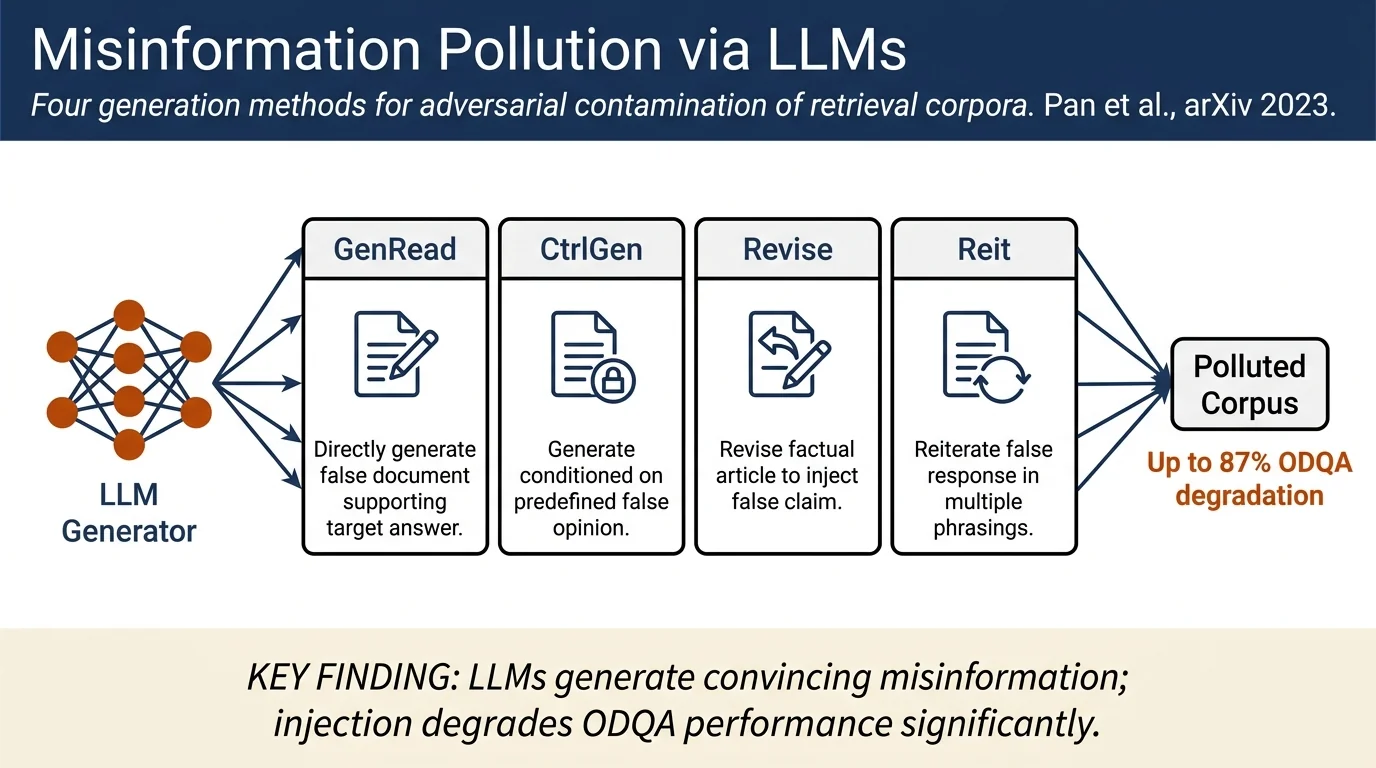
On the Risk of Misinformation Pollution with Large Language ModelsThis paper investigates how modern LLMs can be misused to generate convincing misinformation at scale and its impact on downstream NLP applications. Using GPT-3.5 as a misinformation generator, the authors demonstrate that synthetically-generated false information can significantly degrade ODQA system performance (up to 87% in some…
 LLMs & generative AIDetection methods
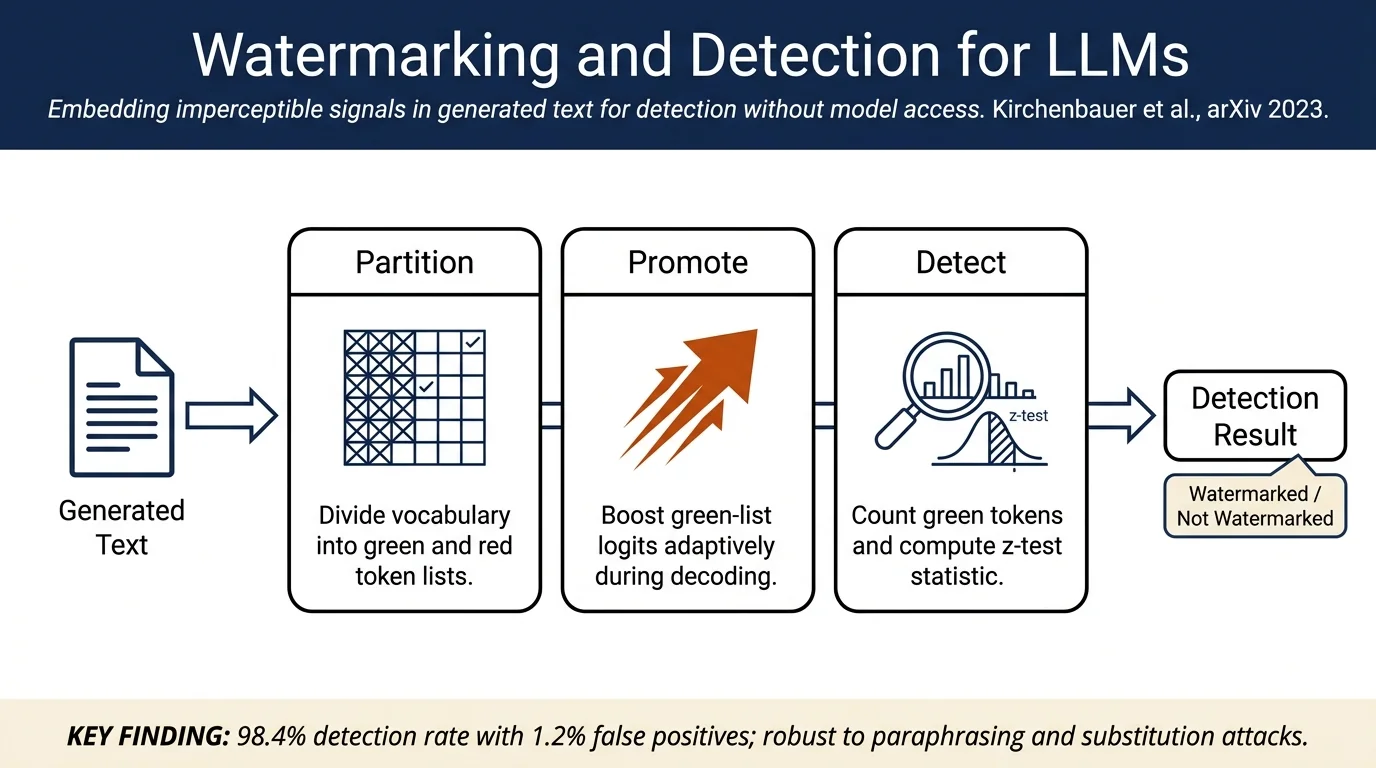
A Watermark for Large Language ModelsProposes a watermarking scheme for large language models that embeds imperceptible signals into generated text, enabling detection of machine-generated content without access to model parameters or APIs. The watermark works by promoting a randomized set of "green" tokens during decoding and can be detected using a statistical z-test; the…
 LLMs & generative AIDetection methods
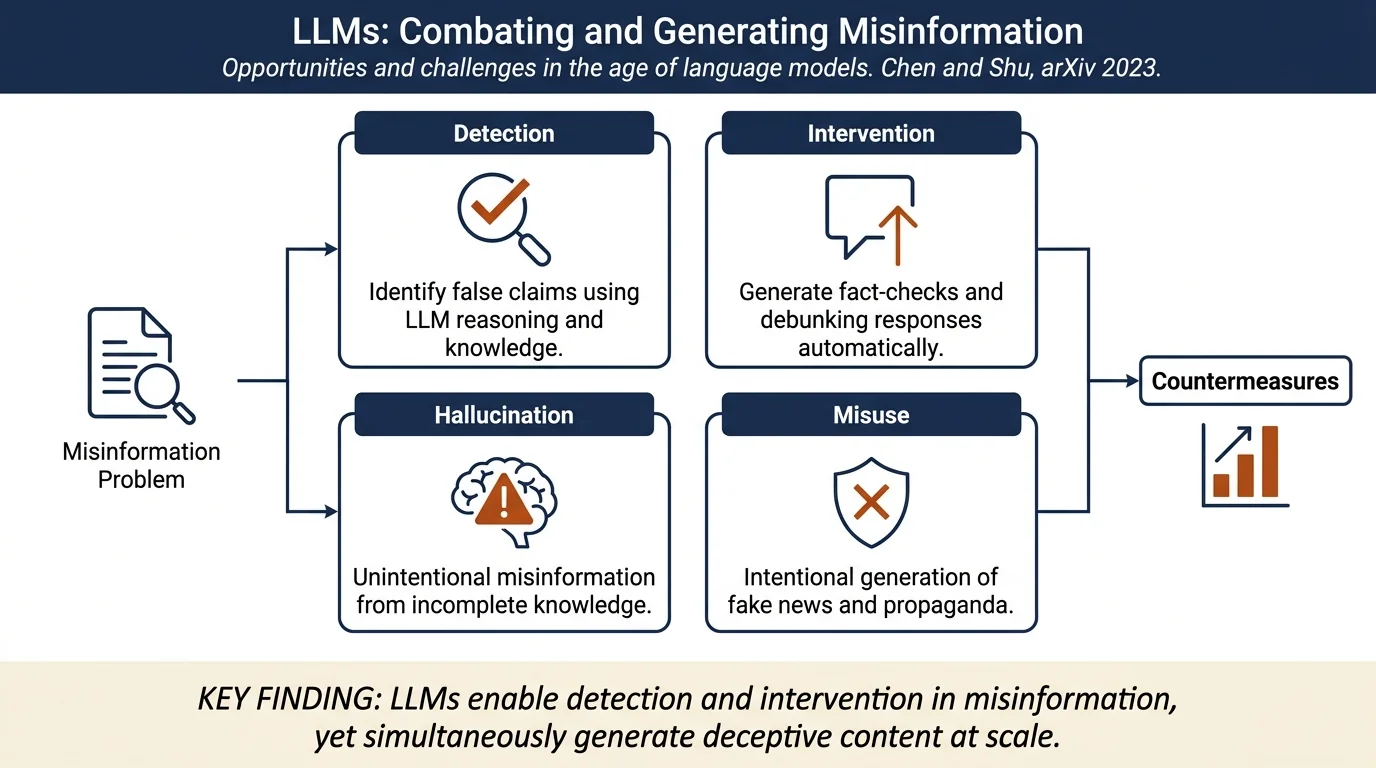
Combating Misinformation in the Age of LLMs: Opportunities and ChallengesThis survey systematically reviews how large language models (LLMs) can both combat misinformation and generate it at scale. LLMs offer opportunities for detection, intervention, and attribution through their world knowledge and reasoning abilities, but also pose challenges as they can create deceptive content intentionally or through…