Explore papers
Filter by research area, year and venue. Every filter is in the address bar, so you can share a view as a link.
 Spread & networksPlatforms, policy & society
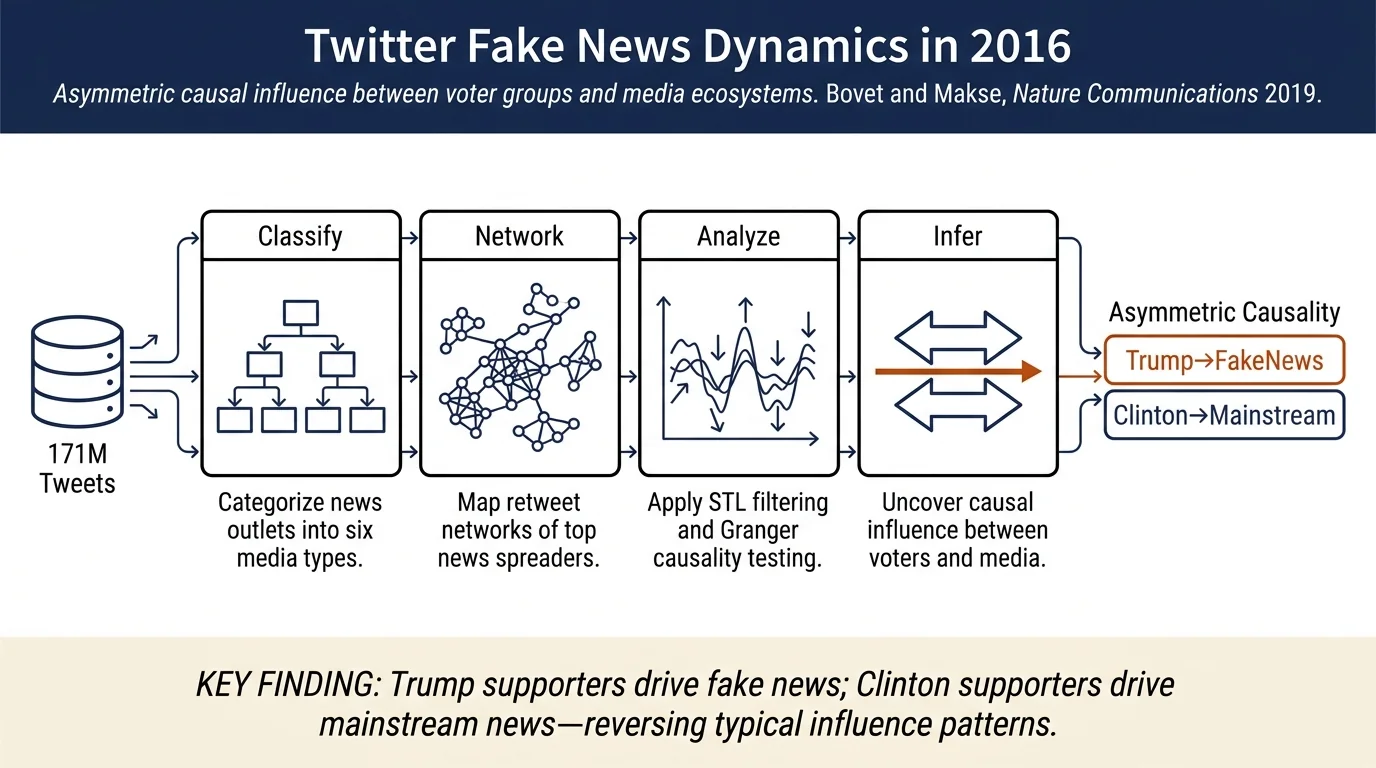
Influence of fake news in Twitter during the 2016 US presidential electionUsing 171 million tweets from the five months preceding the 2016 U.S. election, this study found that 25% of news-sharing tweets contained fake or extremely biased content. Network analysis revealed distinct clusters of fake, biased, and mainstream news spreaders.
 Platforms, policy & society
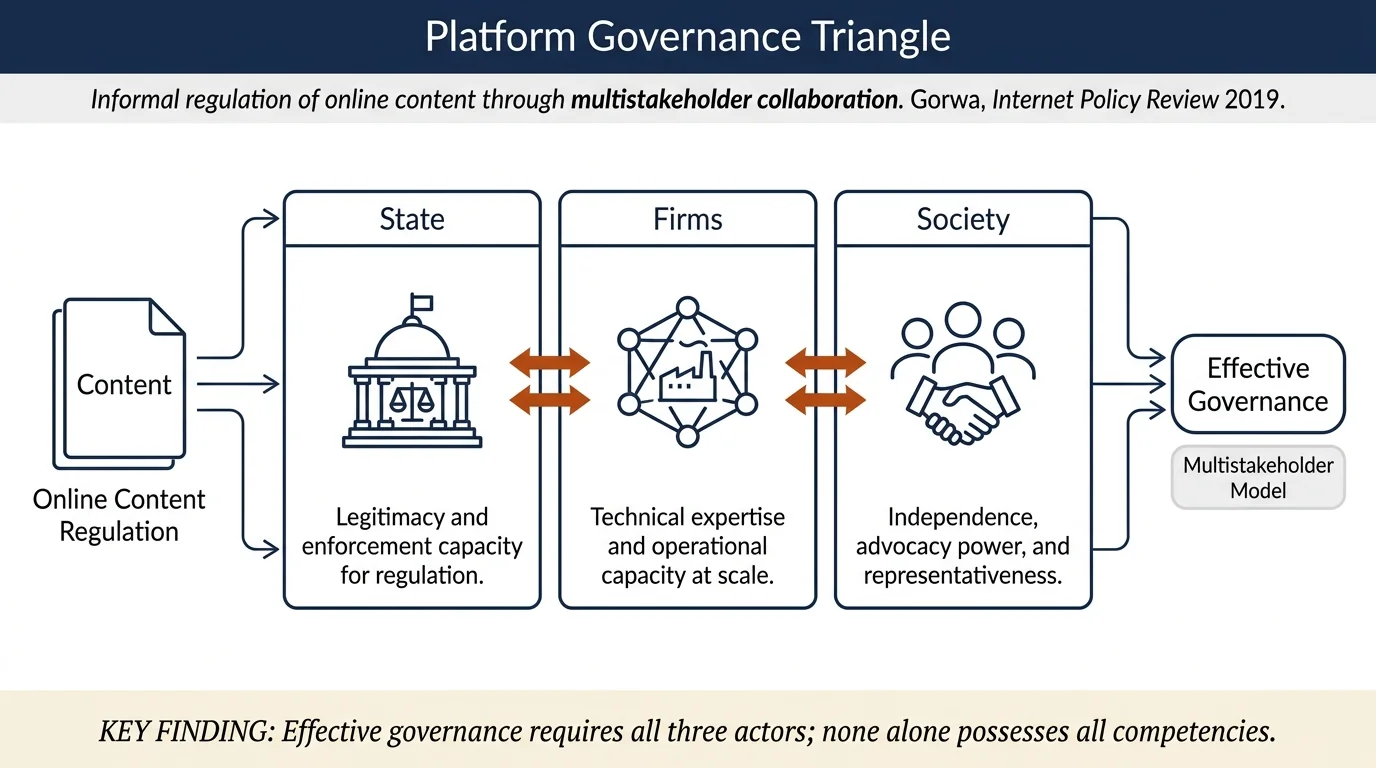
The platform governance triangle: conceptualising the informal regulation of online contentThis paper applies Abbott and Snidal's "governance triangle" framework to analyze how state actors, technology firms, and civil society organizations informally regulate online content through voluntary standards, codes of conduct, and multistakeholder initiatives. The analysis maps the European platform governance landscape, showing how…
 Datasets & evaluationDetection methods
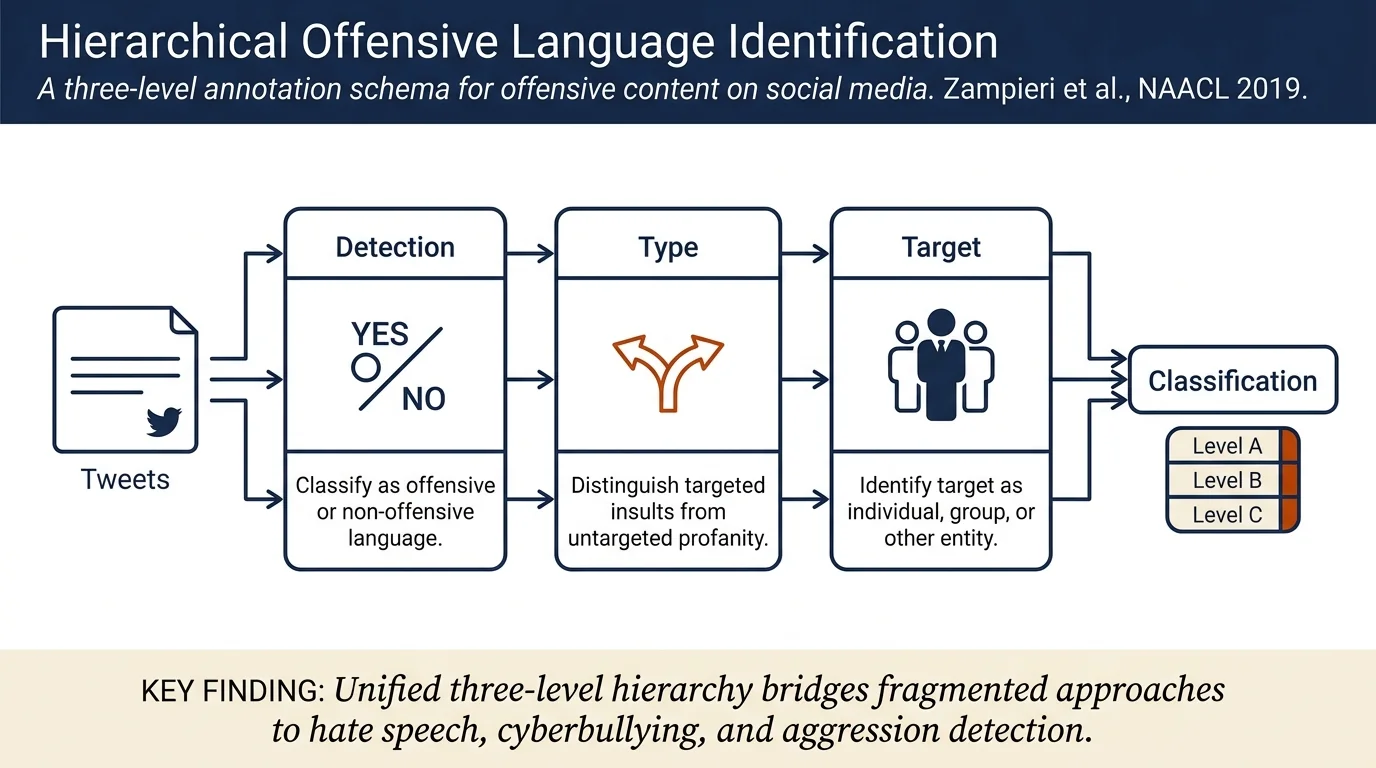
Predicting the Type and Target of Offensive Posts in Social MediaThis paper introduces OLID (Offensive Language Identification Dataset), a large-scale dataset of 14,100 English tweets annotated with a three-level hierarchical schema for detecting offensive content. The hierarchy distinguishes offensive from non-offensive posts (Level A), categorizes offense type as targeted insults or untargeted…
 Spread & networksPlatforms, policy & society
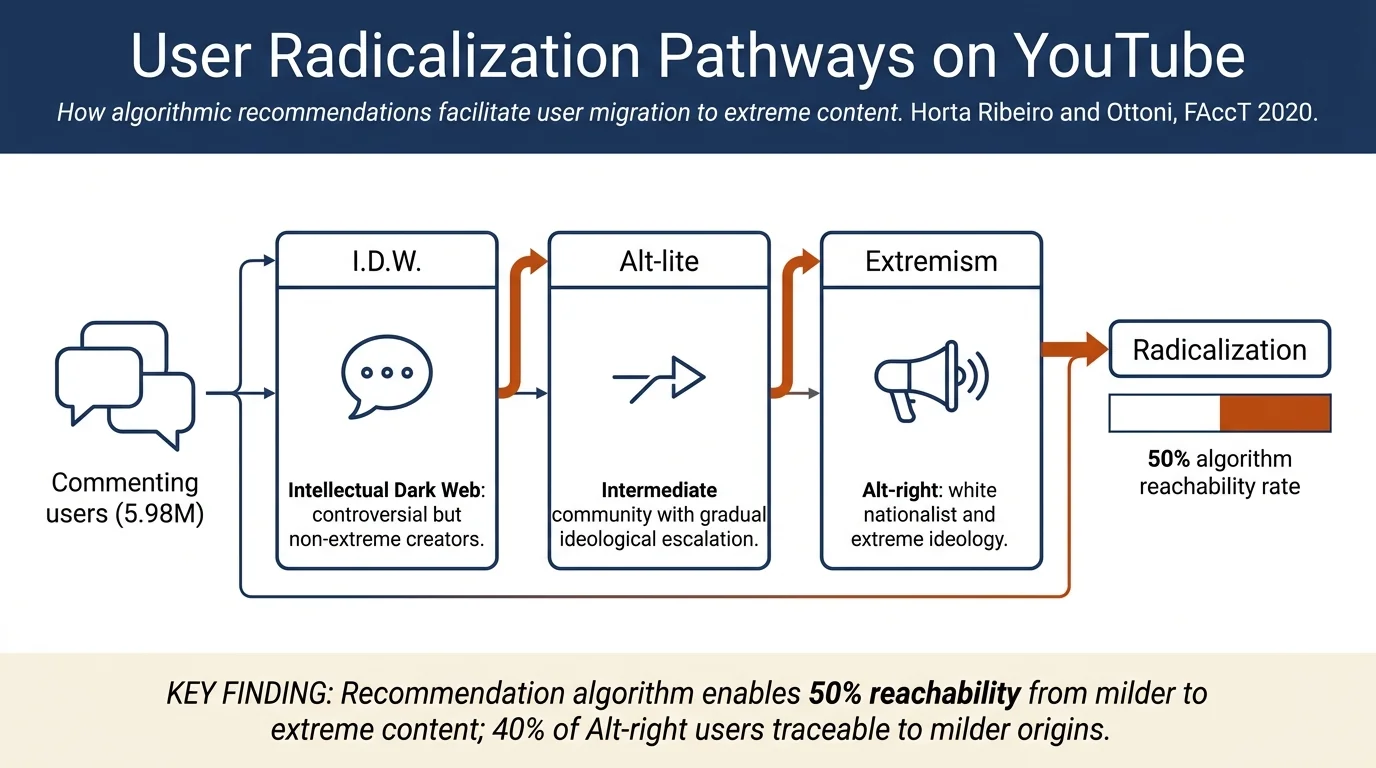
Auditing Radicalization Pathways on YouTubeFirst large-scale quantitative audit of user radicalization on YouTube. The authors tracked 349 channels across three ideological communities (Intellectual Dark Web, Alt-lite, Alt-right) and found strong evidence that users systematically migrate toward more extreme content.
 Bots & coordinated campaignsDeepfakes & multimodal
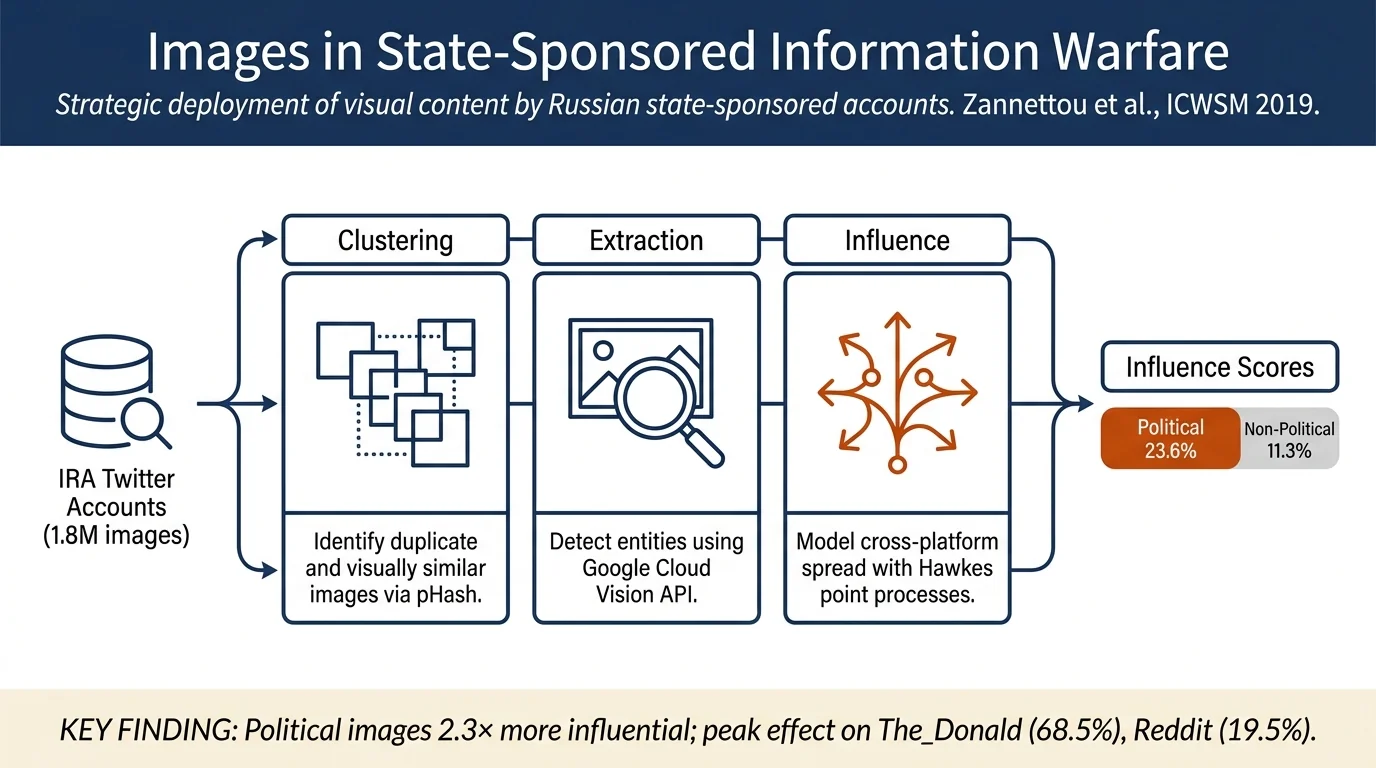
Characterizing the Use of Images in State-Sponsored Information Warfare Operations by Russian Trolls on TwitterLarge-scale analysis of 1.8M images posted by ~3.6K Russian state-sponsored Twitter accounts (IRA-controlled). Russian trolls strategically deployed images and memes to maximize political influence, with political imagery 2+ times more effective than general content.
 Bots & coordinated campaignsDatasets & evaluation
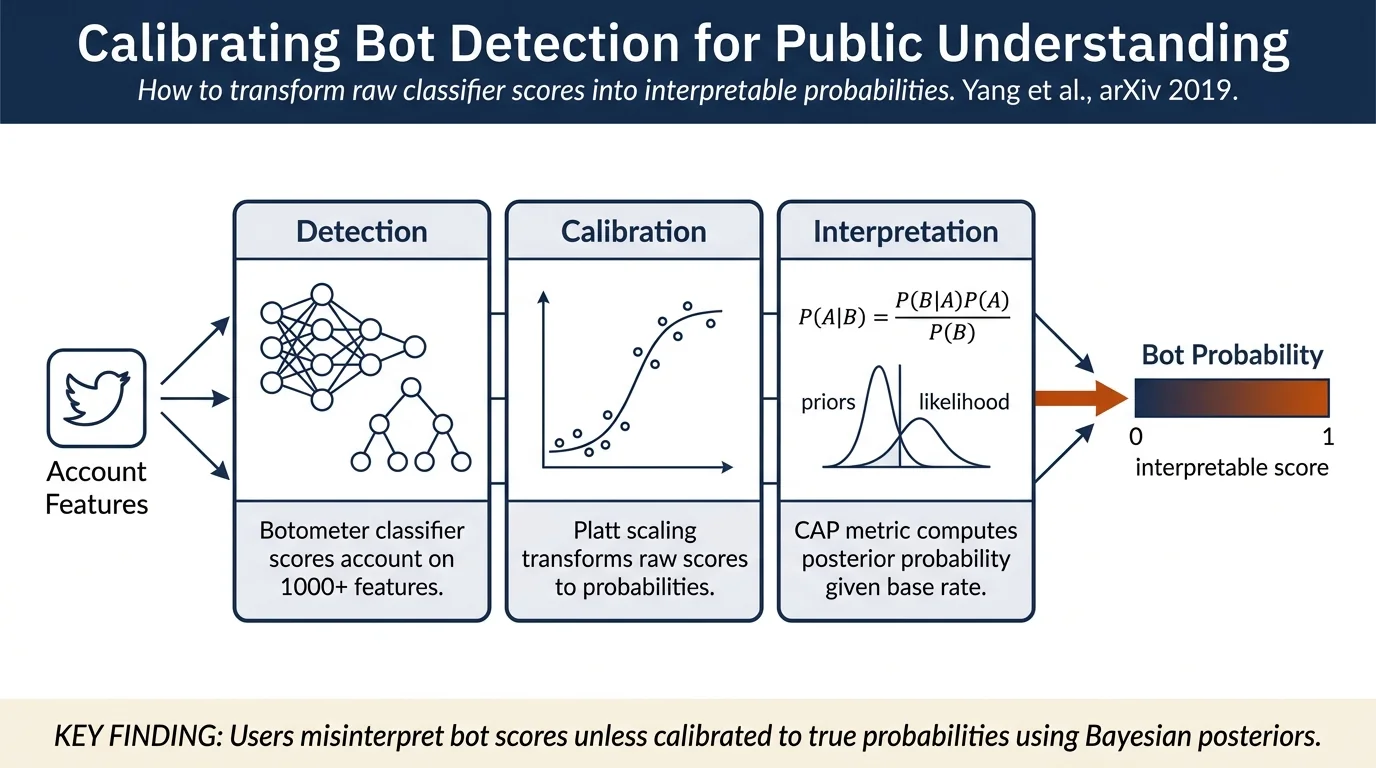
Arming the public with artificial intelligence to counter social botsThis paper reviews social bot types, their impact on online discourse, and detection methods, then presents Botometer as a case study in how detection tools are used and interpreted by the public. The authors conducted a user experience survey (731 participants) revealing that while users find the tool useful, they struggle with…
 LLMs & generative AIDetection methods
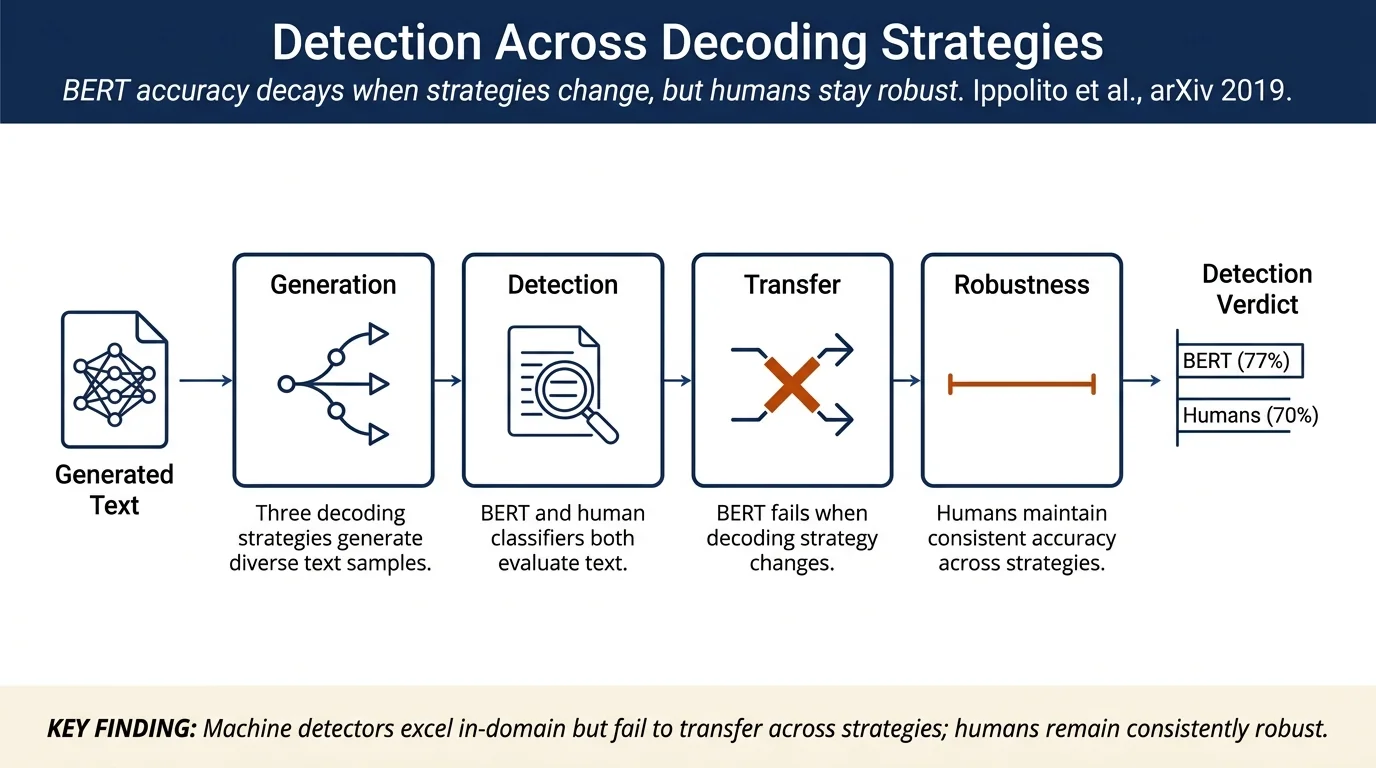
Automatic Detection of Generated Text is Easiest when Humans are FooledIppolito et al. investigate the complementary abilities of humans and machines to detect machine-generated text from GPT-2 under various decoding strategies. They find that fine-tuned BERT detectors outperform humans (achieving 80%+ accuracy on long excerpts versus 71% for expert human raters), but detector performance is highly…
 LLMs & generative AIDetection methods
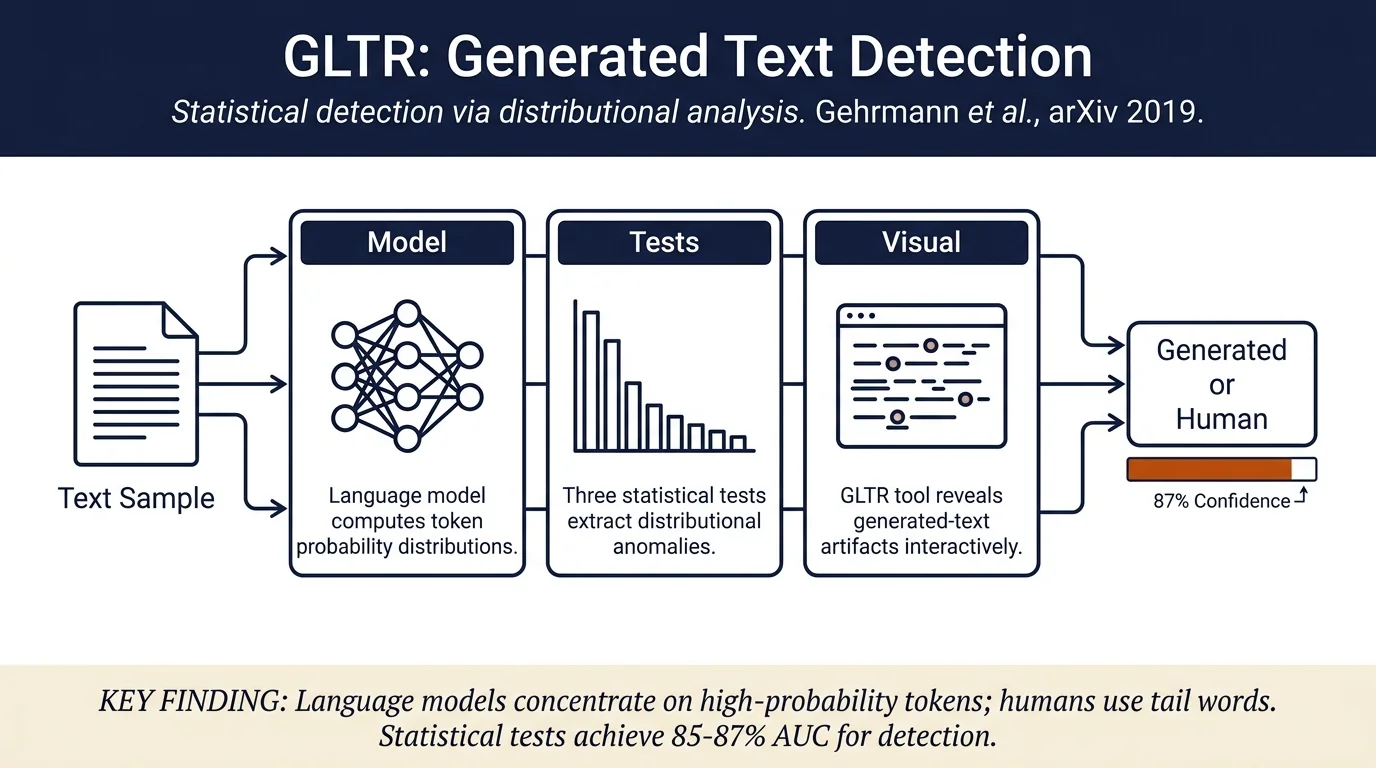
GLTR: Statistical Detection and Visualization of Generated TextGehrmann et al. present GLTR, a visual tool for detecting AI-generated text by analyzing statistical anomalies in language model output. The key insight is that language models sample from the head of the distribution (high-probability words), whereas humans use a wider vocabulary including low-probability choices.
 Bots & coordinated campaignsDetection methods
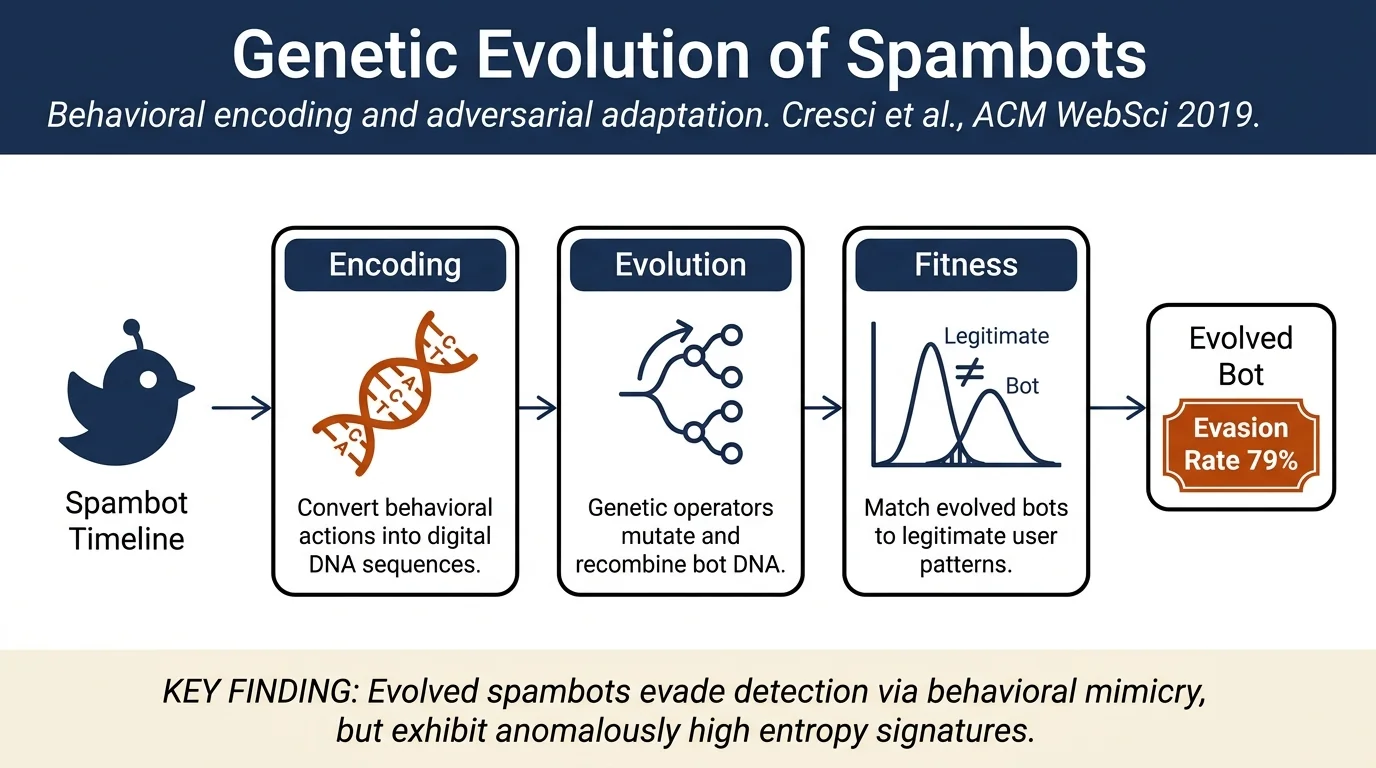
Better Safe Than Sorry: an Adversarial Approach to improve Social Bot DetectionProposes GenBot, a novel genetic algorithm that synthesizes evolved versions of existing spambots by encoding behavioral timelines as "digital DNA" sequences and iteratively evolving them to resemble legitimate user behavior. Tests the evolved bots against three state-of-the-art detection systems and finds they largely evade detection…
 Fact-checking & verificationPlatforms, policy & society
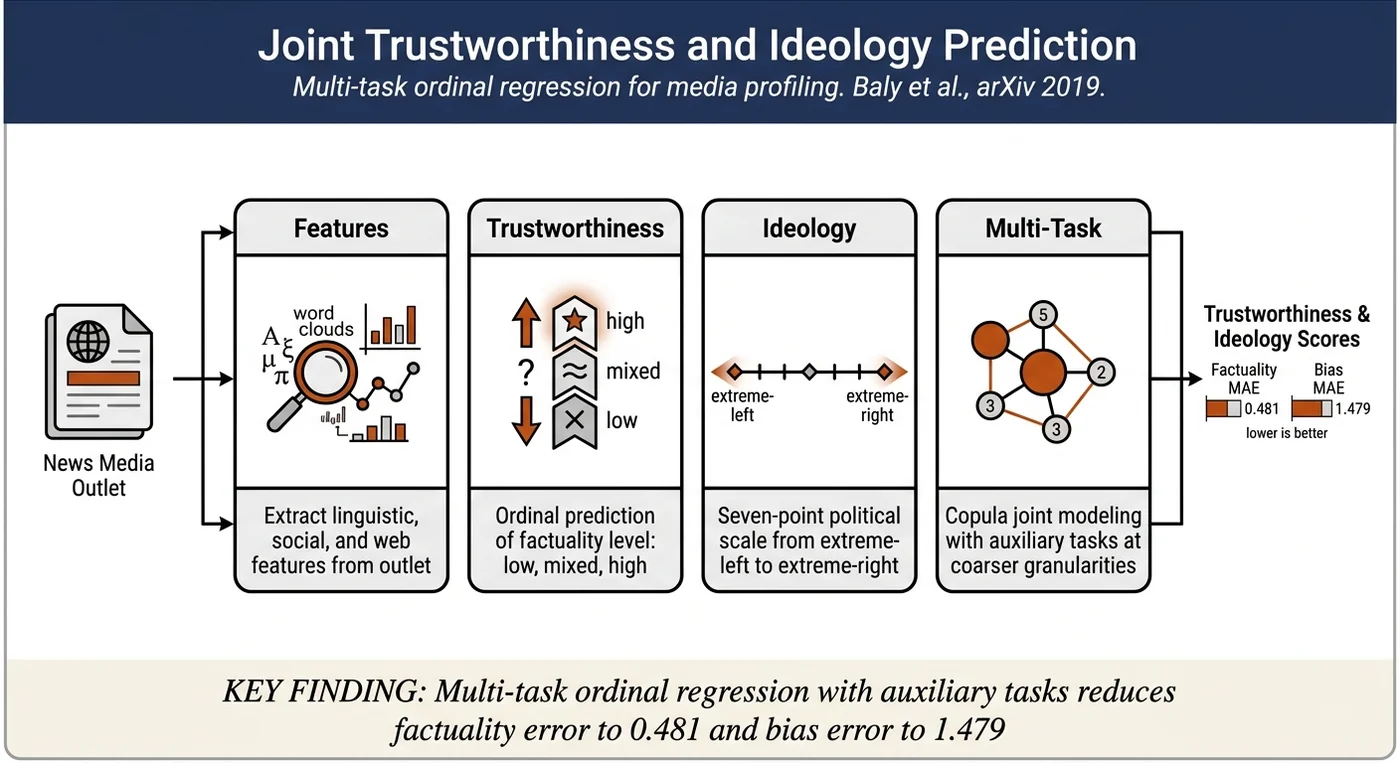
Multi-Task Ordinal Regression for Jointly Predicting the Trustworthiness and the Leading Political Ideology of News MediaRather than predicting media bias and trustworthiness separately, this paper jointly models both as ordinal regression tasks using Copula Ordinal Regression. The intuition is that hyper-partisan outlets tend to be less trustworthy, while centrist outlets are more factual.
 Detection methodsDatasets & evaluation
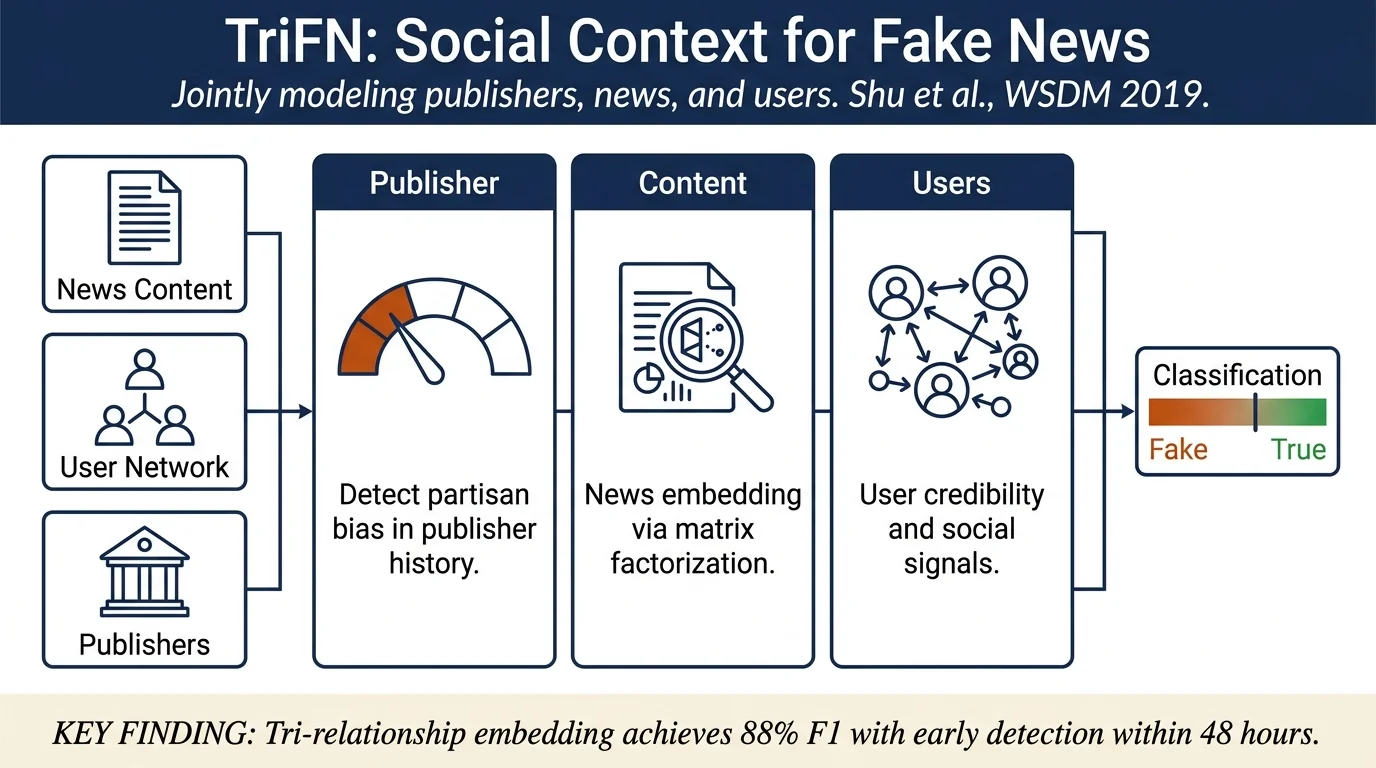
Beyond News Contents: The Role of Social Context for Fake News DetectionContent-only detection is insufficient because fake news is crafted to mimic real news. This paper argues that the tri-relationship among publishers, news pieces, and users forms rich social context for detection: partisan-biased publishers more likely publish fake news, and low-credibility users more likely share it.
 Spread & networksPlatforms, policy & society
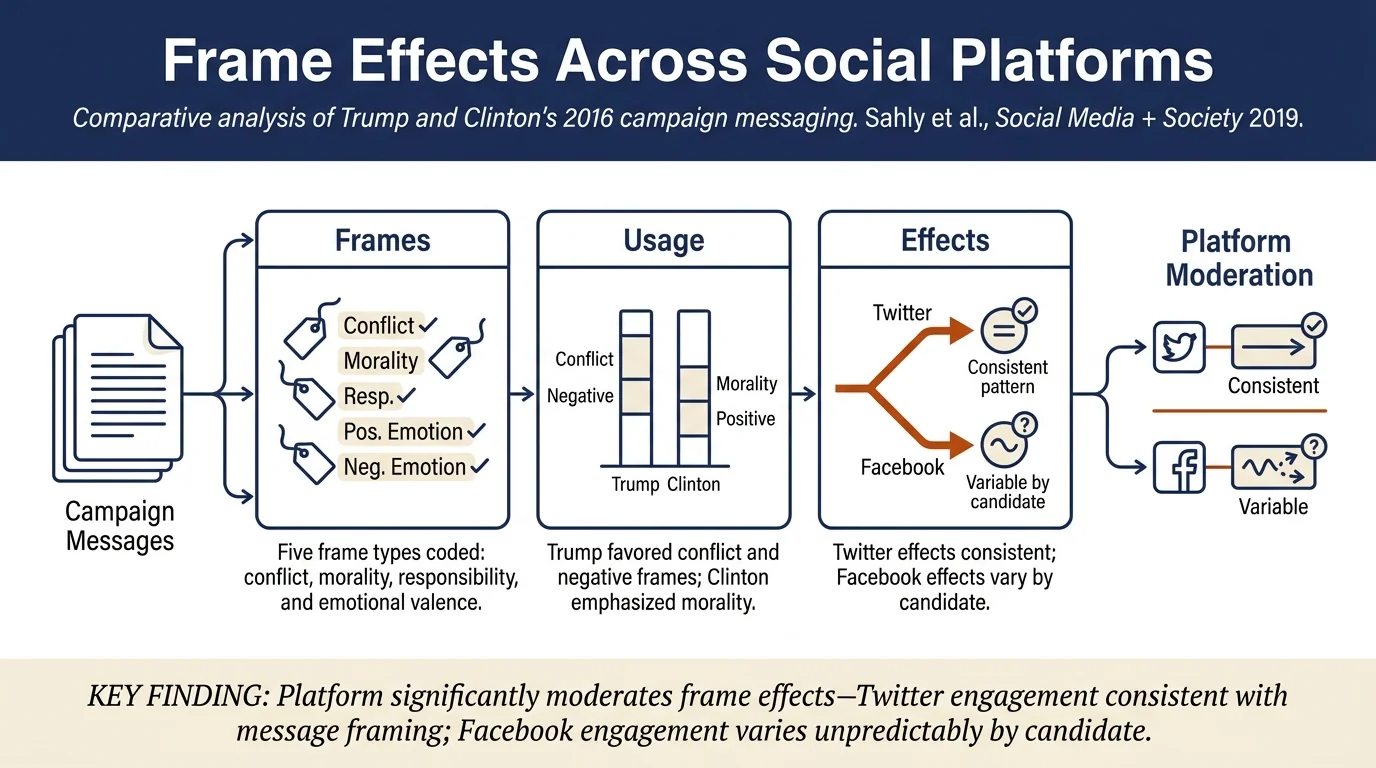
Social Media for Political Campaigns: An Examination of Trump's and Clinton's Frame Building and Its Effect on Audience EngagementThis study analyzes how Trump and Clinton's 2016 campaigns framed messages on Twitter and Facebook, and how frame type affected audience engagement. Trump relied on conflict and negative emotional frames, while Clinton used morality and positive emotional frames.
 Fact-checking & verificationPlatforms, policy & society
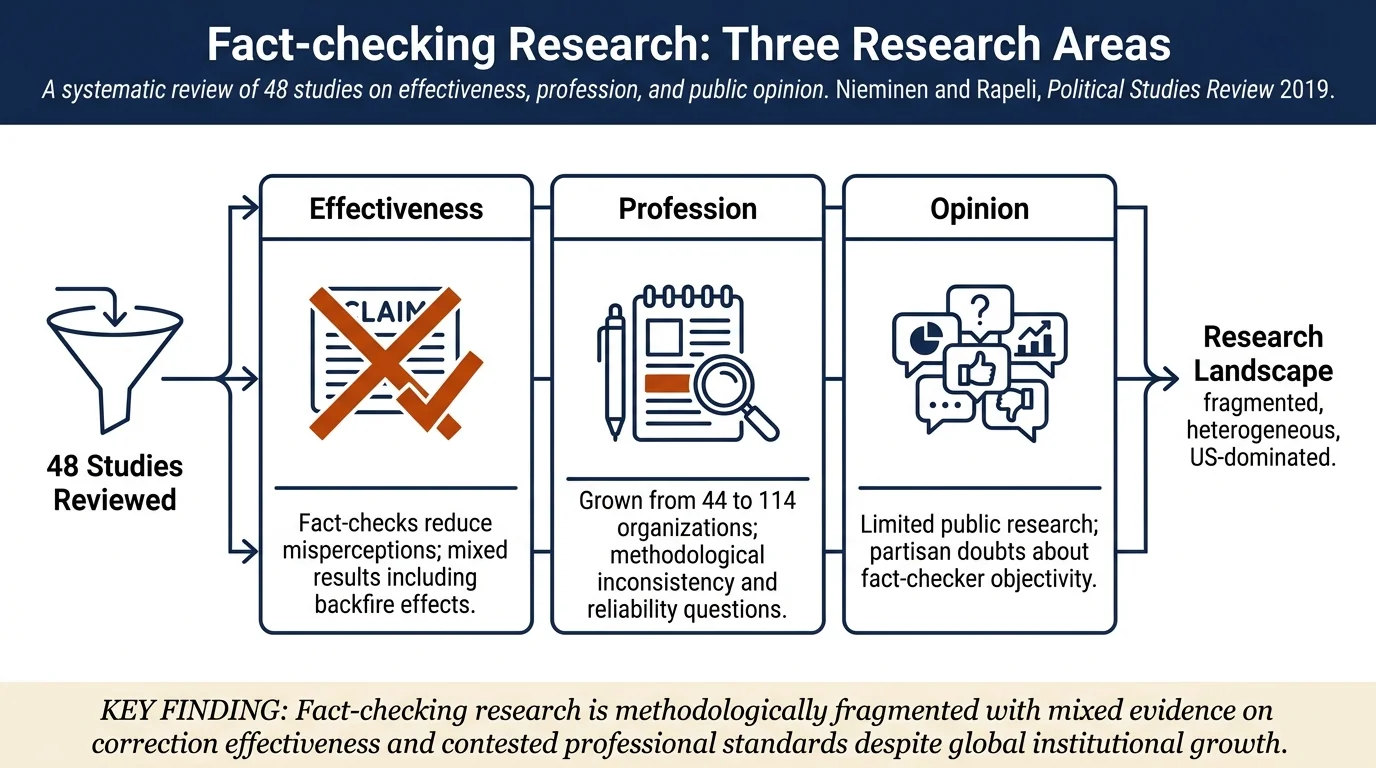
Fighting Misperceptions and Doubting Journalists' Objectivity: A Review of Fact-checking LiteratureComprehensive literature review of 48 studies on political fact-checking, organized into three research areas: (1) fact-checking effectiveness for correcting misperceptions (mixed results, including backfire effects); (2) fact-checking as a profession (contested methods and reliability); (3) public opinion about fact-checking (mostly…
 Spread & networksBots & coordinated campaigns
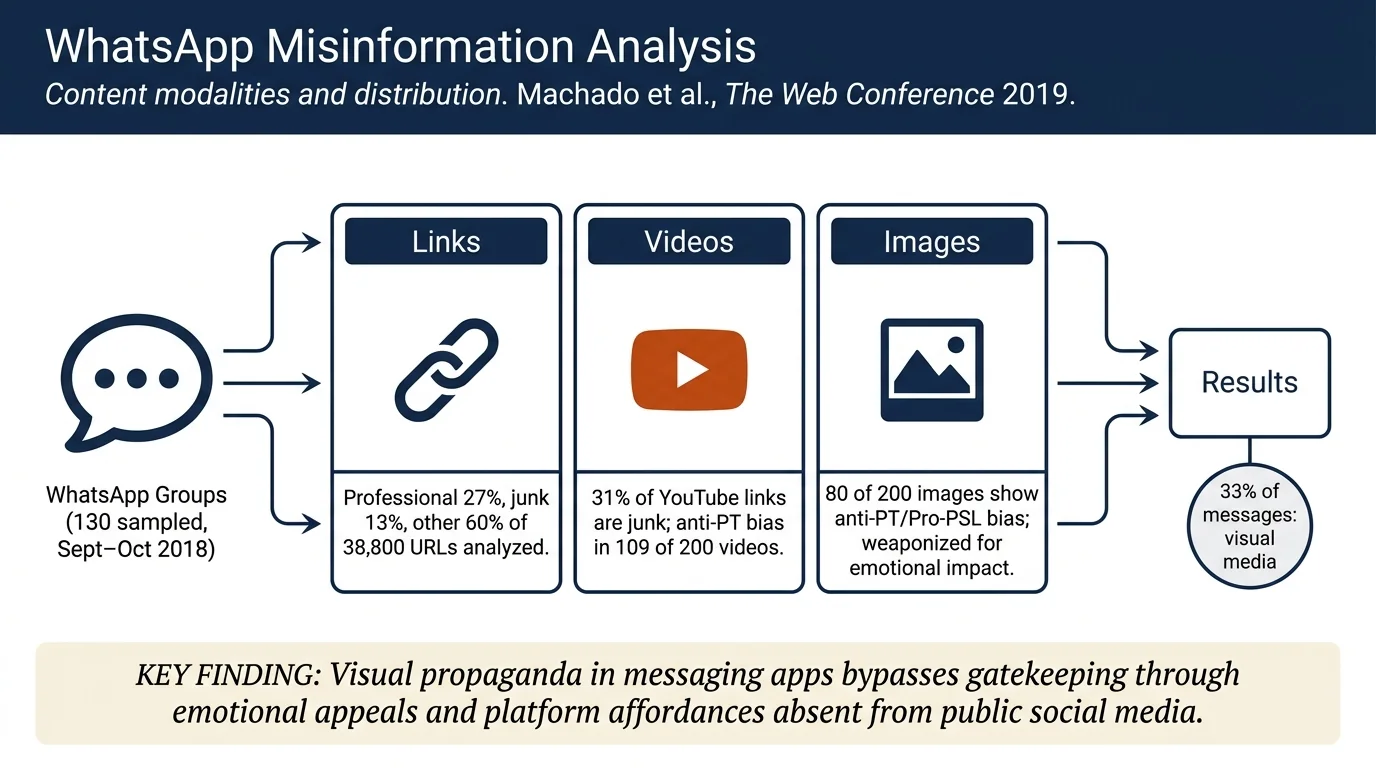
A Study of Misinformation in WhatsApp groups with a focus on the Brazilian Presidential ElectionsStudy of 130 public WhatsApp groups during the 2018 Brazilian presidential election found that 13.1% of shared links pointed to junk news sources, with 40% of links directing to YouTube—a platform used strategically to bypass platform moderation. Videos and images dominated message content (33% of all messages) and were heavily…
 Bots & coordinated campaignsPlatforms, policy & society
Coordinating a Multi-Platform Disinformation Campaign: Internet Research Agency Activity on Three U.S. Social Media Platforms, 2015 to 2017This paper analyzes Russian Internet Research Agency activity across Facebook, Twitter, and Reddit from 2015–2017 using vector autoregression models on 3,126 Facebook ads, 1.9M tweets, and 12,603 Reddit posts. Key finding: Reddit activity influenced subsequent Twitter activity (a "trial balloon" effect), but the IRA's Twitter engagement…
 Spread & networksPsychology & interventions
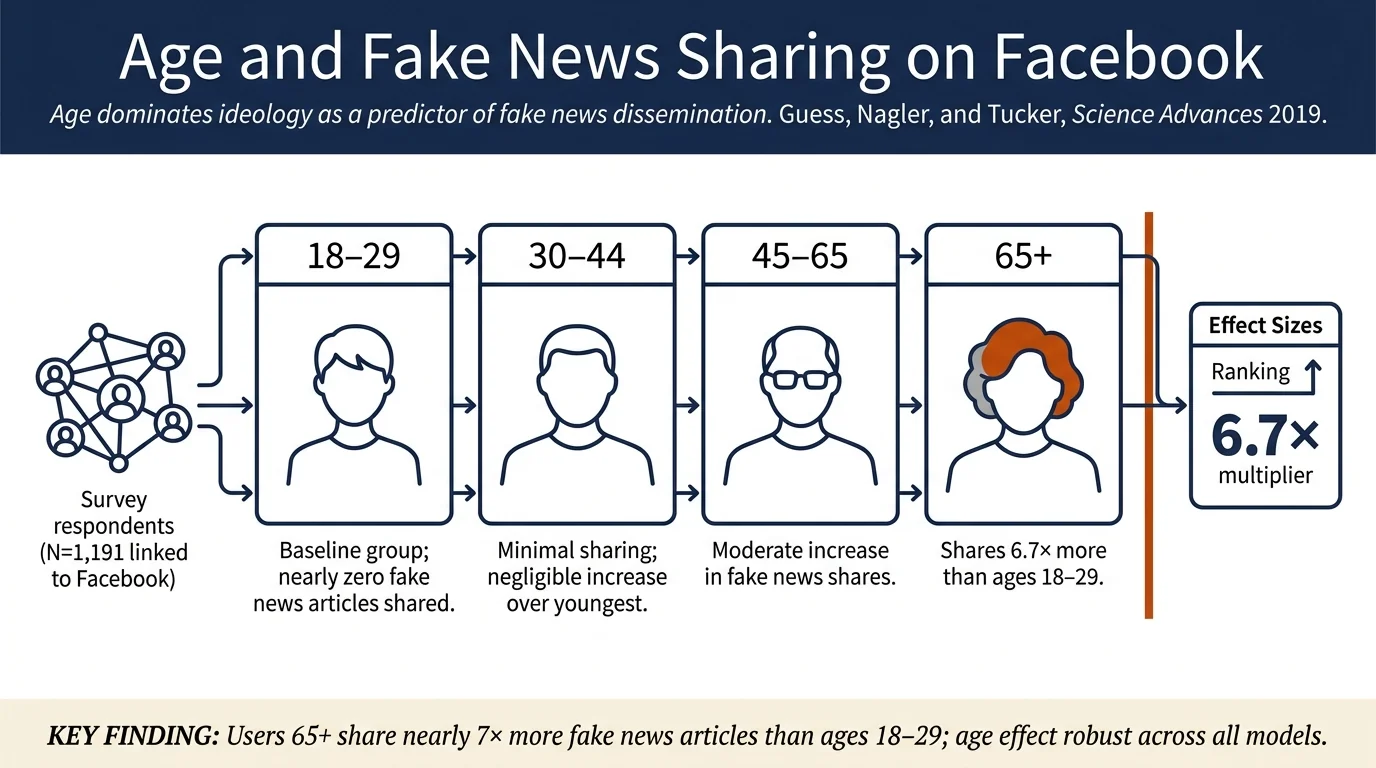
Less than you think: Prevalence and predictors of fake news dissemination on FacebookFake news dissemination on Facebook during the 2016 election was a rare behavior (8.5% of users shared at least one article), with clear demographic stratification: conservatives shared more articles from fake news domains (pro-Trump), but the strongest and most robust predictor was age—users over 65 shared nearly seven times as many…
 Spread & networksPlatforms, policy & society
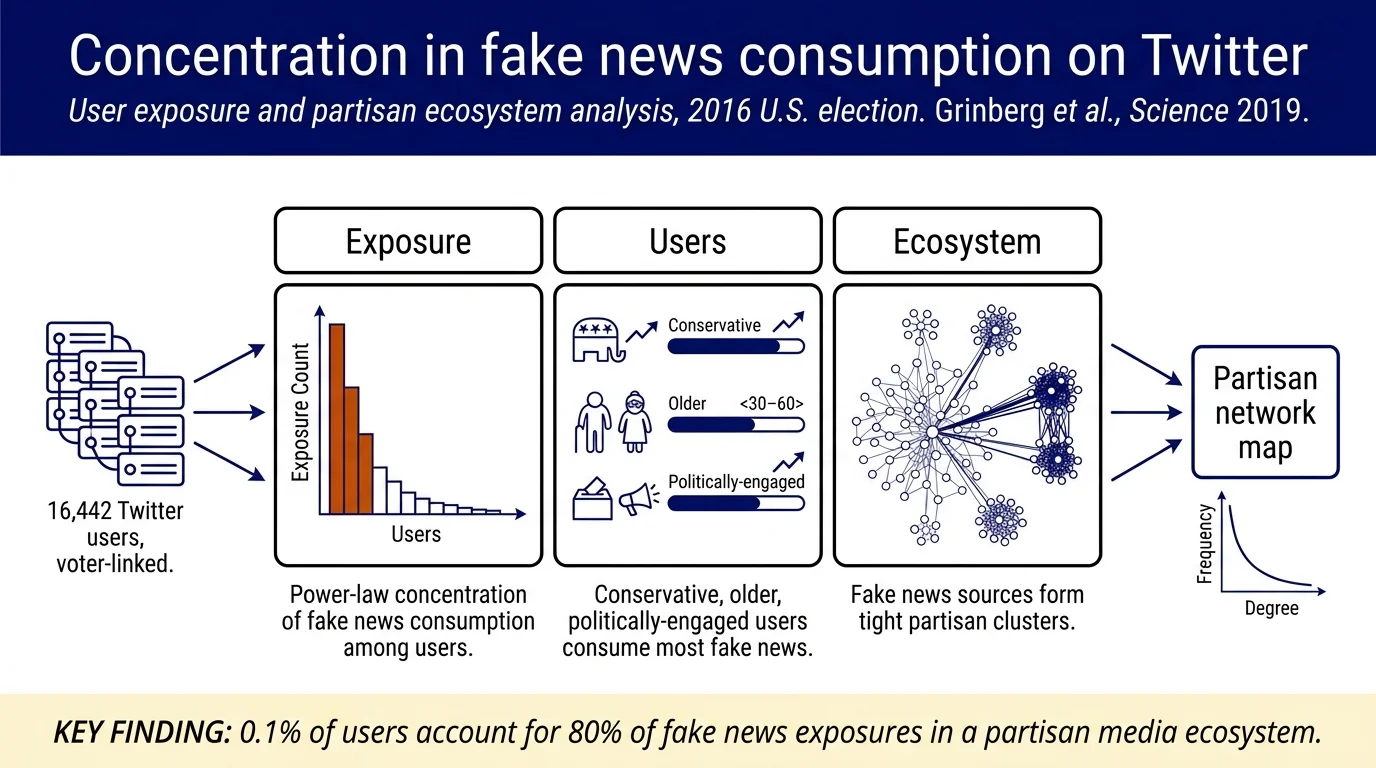
Fake news on Twitter during the 2016 U.S. presidential electionFake news consumption on Twitter during the 2016 election was extremely concentrated: only 1% of users saw 80% of exposures, and 0.1% shared 80% of fake news. Conservative-leaning, older, highly politically engaged users drove most consumption.
 Spread & networksPlatforms, policy & society
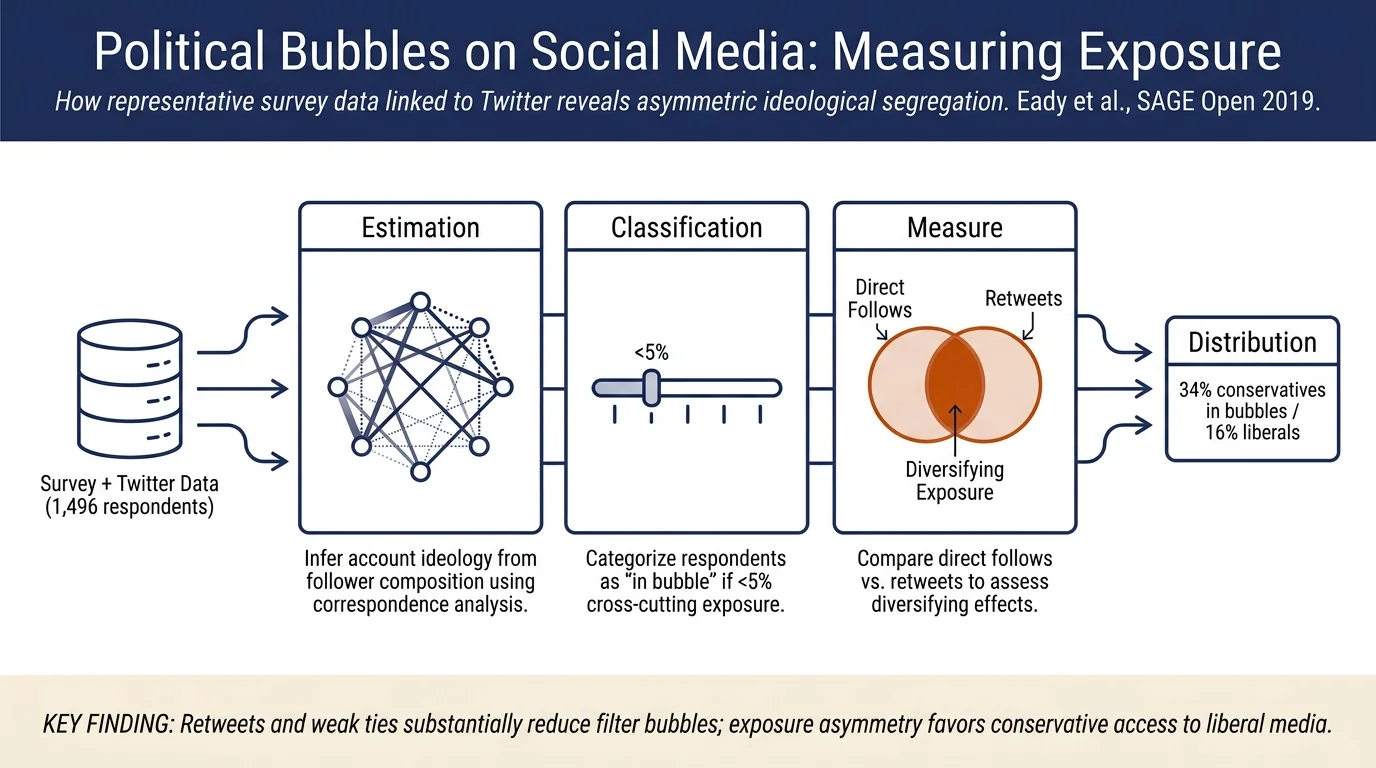
How Many People Live in Political Bubbles on Social Media? Evidence From Linked Survey and Twitter DataEady et al. link survey data from 1,496 Americans to Twitter data from 642,345 accounts and ~1.2 billion tweets to measure political polarization in media consumption. Rather than finding evidence of extreme "filter bubbles" where most people consume ideologically homogeneous content, they find substantial overlap in the accounts…
 Psychology & interventionsPlatforms, policy & society
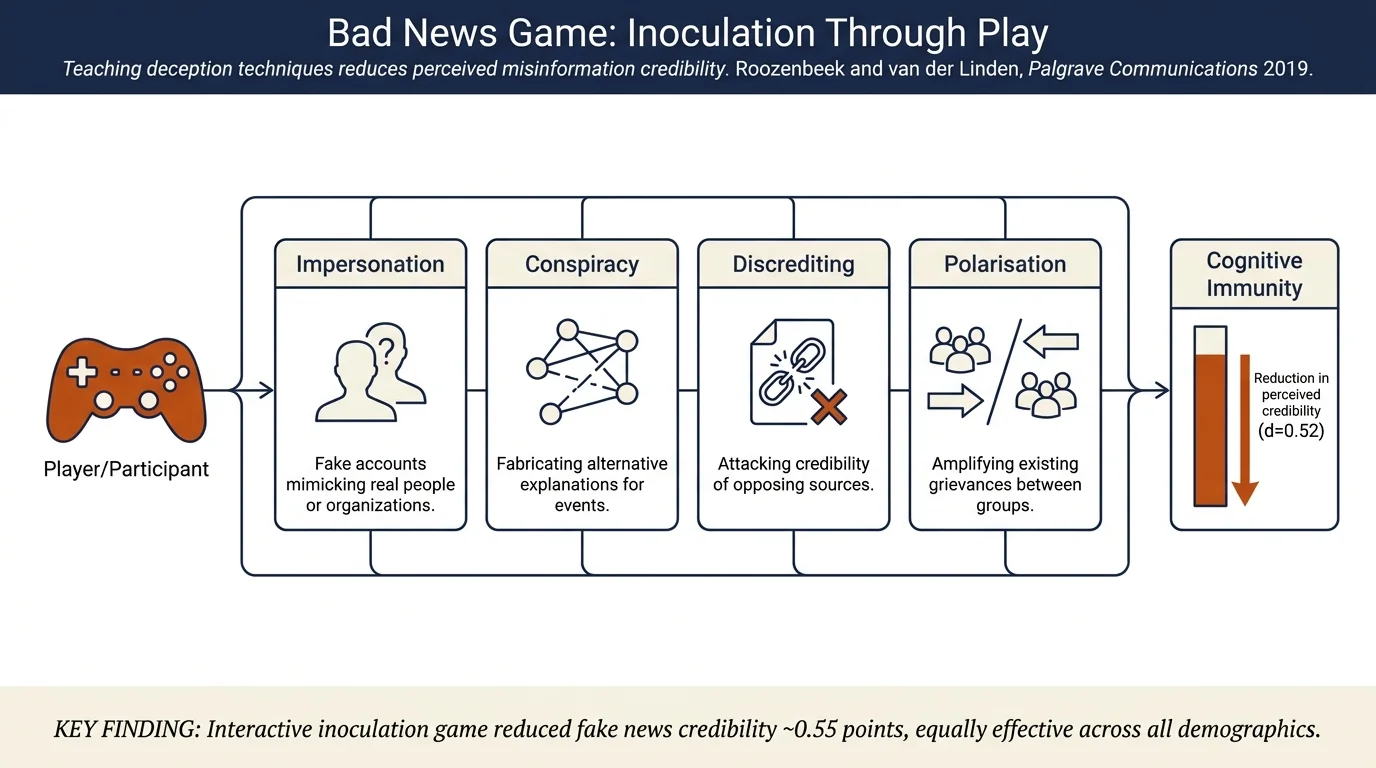
Fake news game confers psychological resistance against online misinformationThis large-scale empirical study demonstrates that a free ~15-minute online browser game teaching six common misinformation production techniques (polarisation, emotional manipulation, conspiracy theories, trolling, discrediting opponents, impersonation) significantly reduces perceived reliability of misinformation across N=15,000…