Explore papers
Filter by research area, year and venue. Every filter is in the address bar, so you can share a view as a link.
 Deepfakes & multimodalDetection methods
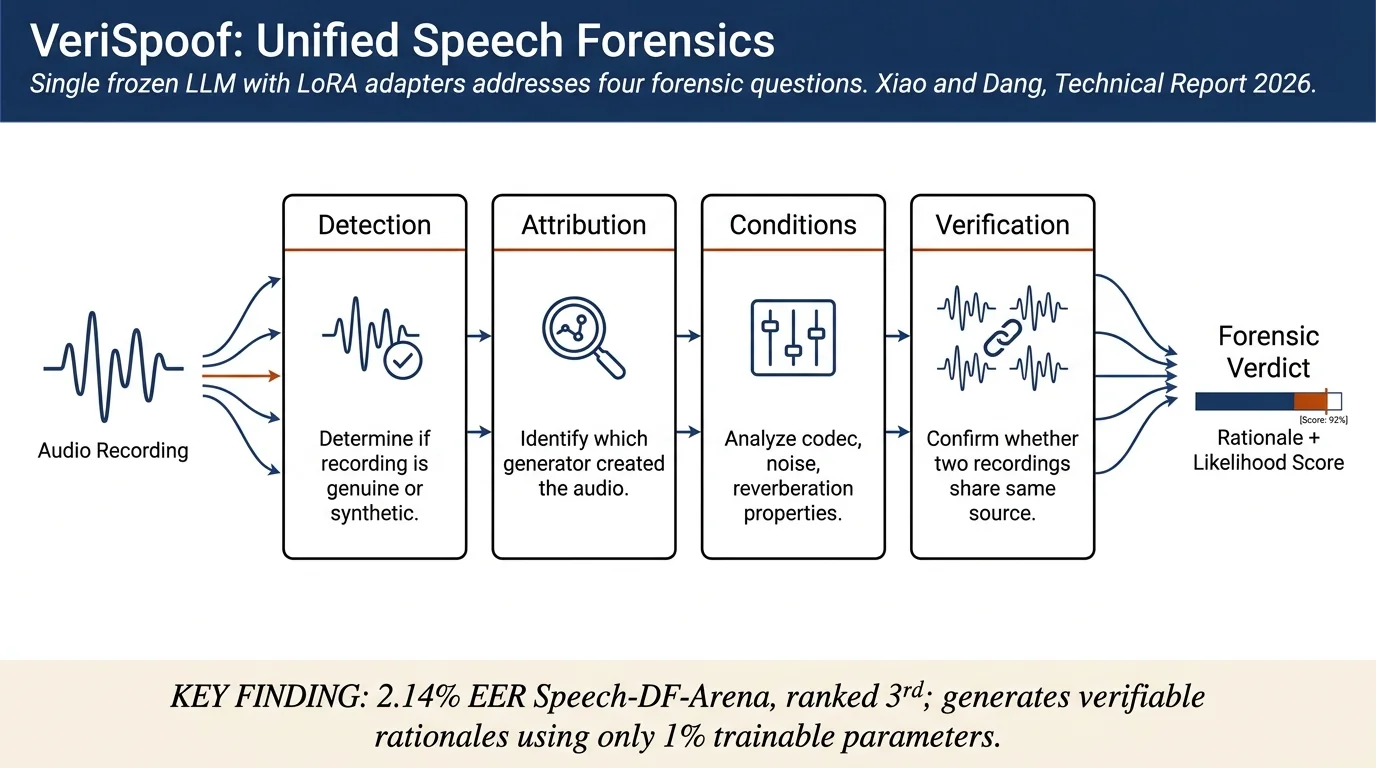
VeriSpoof: Beyond Real or Fake with One Audio LLMVeriSpoof is an audio language model system that unifies multiple forensic tasks in a single neural framework: detecting whether a speech recording is synthetic, identifying which generator produced it, analyzing recording conditions, and verifying whether two recordings share a source. The system achieves state-of-the-art results on…
 LLMs & generative AIFact-checking & verification
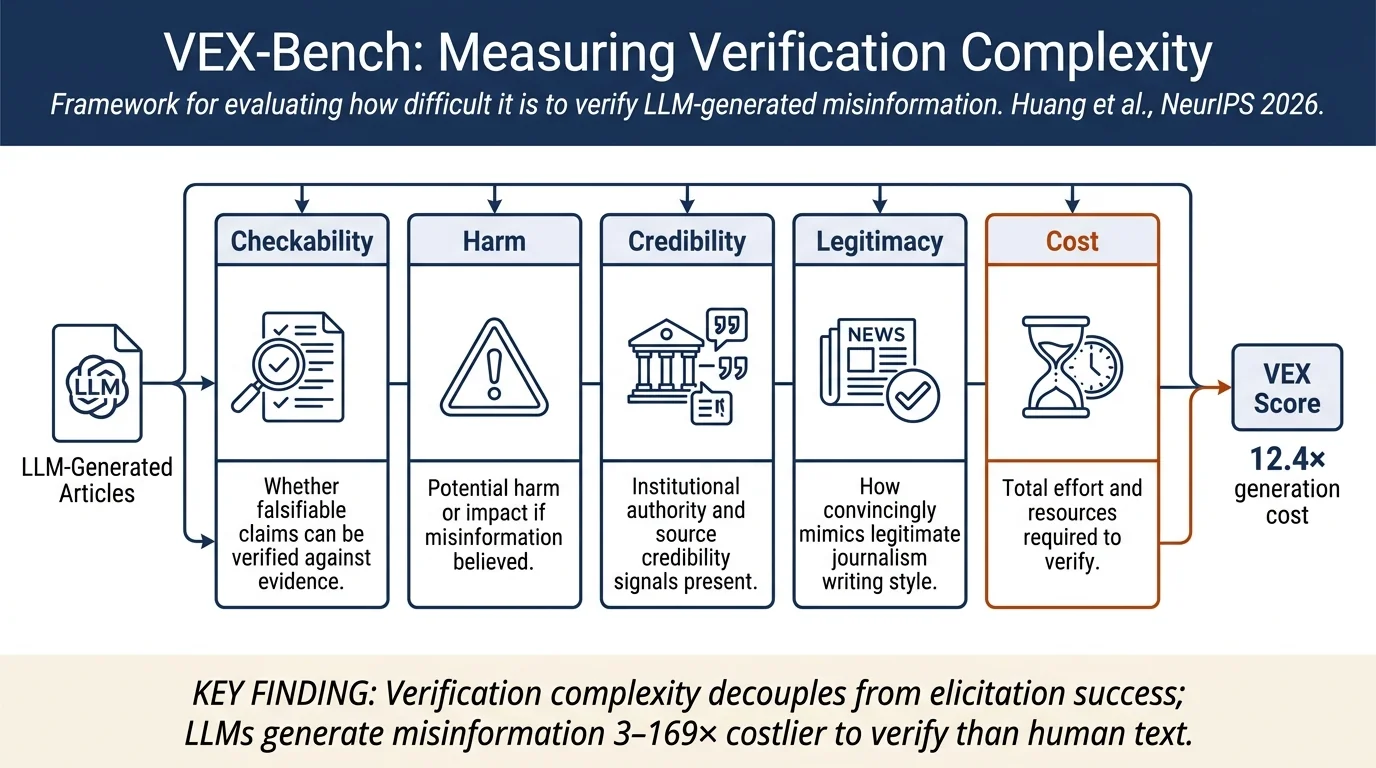
VEX-Bench: Benchmarking Verification Complexity of LLM-Generated MisinformationThis paper introduces VEX-Bench, a unified benchmark for evaluating how difficult it is to verify LLM-generated misinformation. The benchmark measures verification complexity across five dimensions: checkability (whether claims can be checked), harm significance, source credibility signals, impostor legitimacy, and verification cost.
 LLMs & generative AIDetection methods
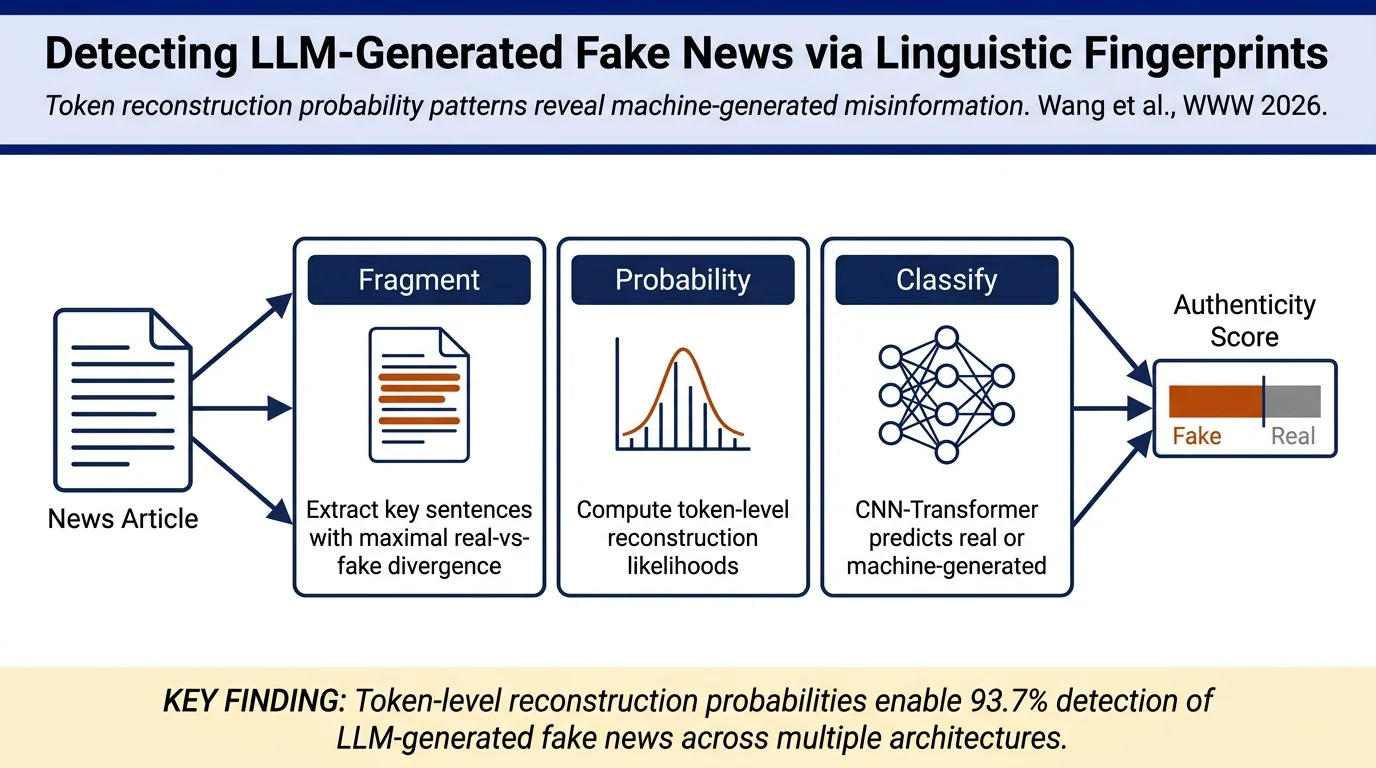
Prompt-Induced Linguistic Fingerprints for LLM-Generated Fake News DetectionLLMs can generate convincing fake news, but malicious prompts induce consistent statistical divergences in token-level reconstruction probabilities. The authors propose LIFE (Linguistic Fingerprints Extraction), which identifies key fragments where real and fake news differ most in their probability signature, achieving 93.7% accuracy on…
 LLMs & generative AIDatasets & evaluation
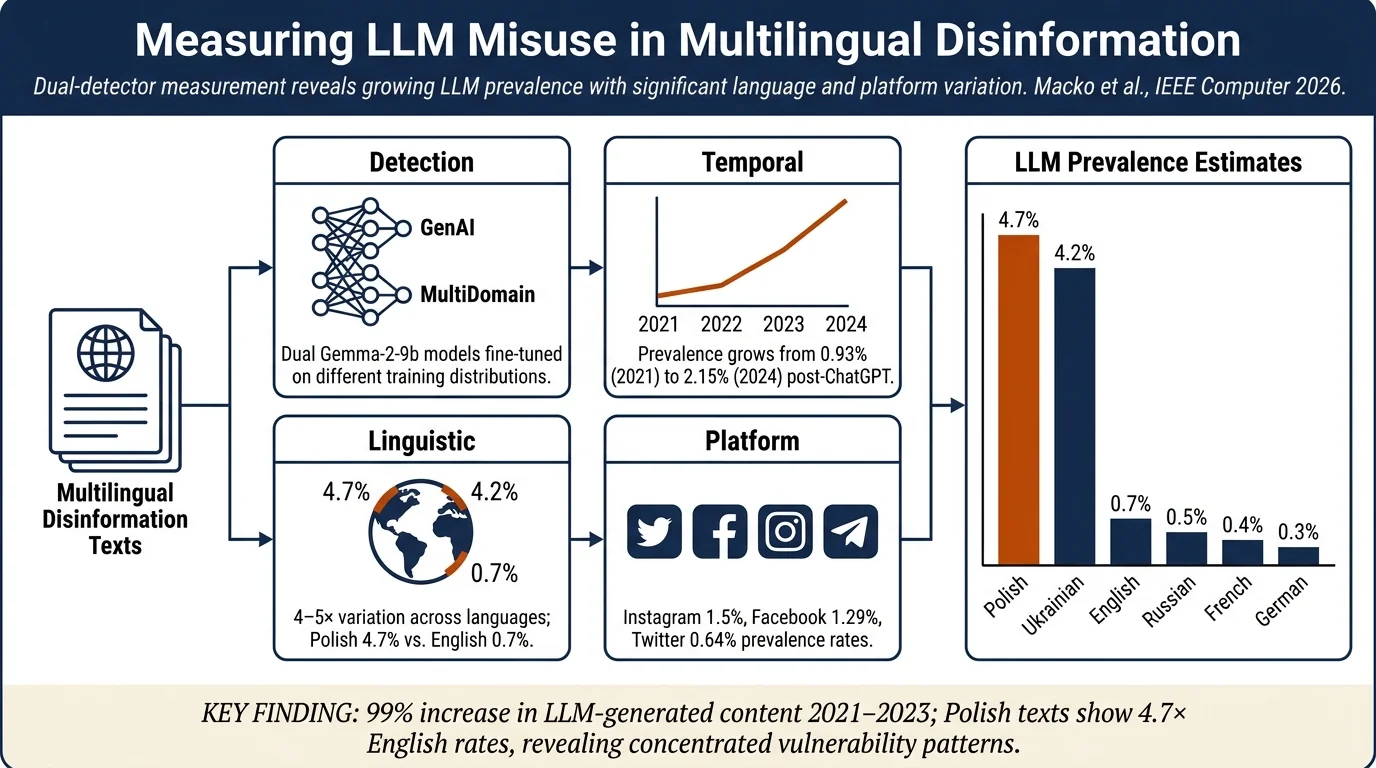
Beyond Speculation: Measuring the Growing Presence of LLM-Generated Texts in Multilingual DisinformationThis empirical study provides the first measurement of LLM-generated content in real-world disinformation datasets. Analyzing the MultiClaim dataset (fact-checked social media posts), the authors document a 99% increase in machine-generated content from 2021 to 2023 (0.93% to 1.85%), correlating with ChatGPT's November 2022 release.
 LLMs & generative AIDetection methods
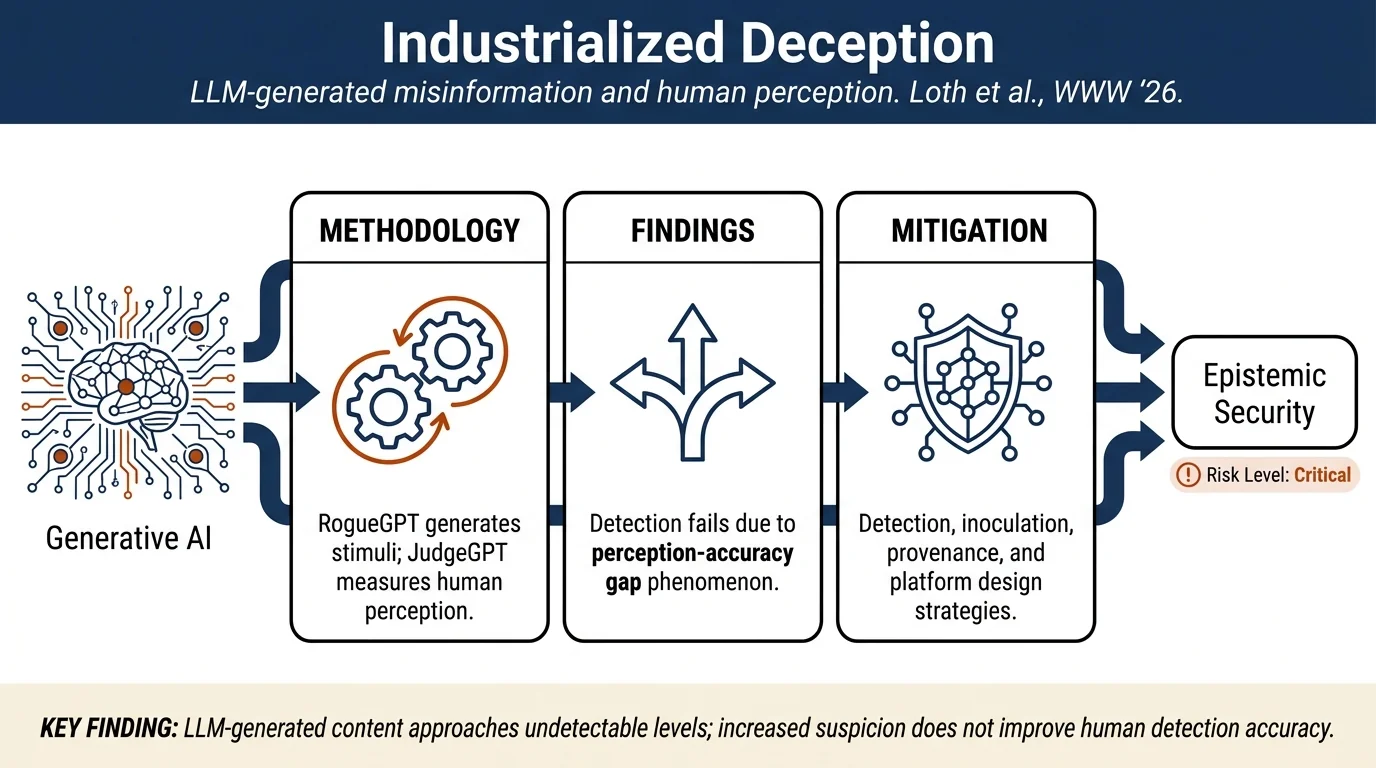
Industrialized Deception: The Collateral Effects of LLM-Generated Misinformation on Digital EcosystemsThis paper updates the state of generative AI and misinformation research since 2024, documenting the shift toward industrialized deception through improved LLMs and multimodal systems. The authors present two methodological tools—JudgeGPT (for measuring human perception of AI-generated content) and RogueGPT (for controlled stimulus…
 Deepfakes & multimodalDetection methods
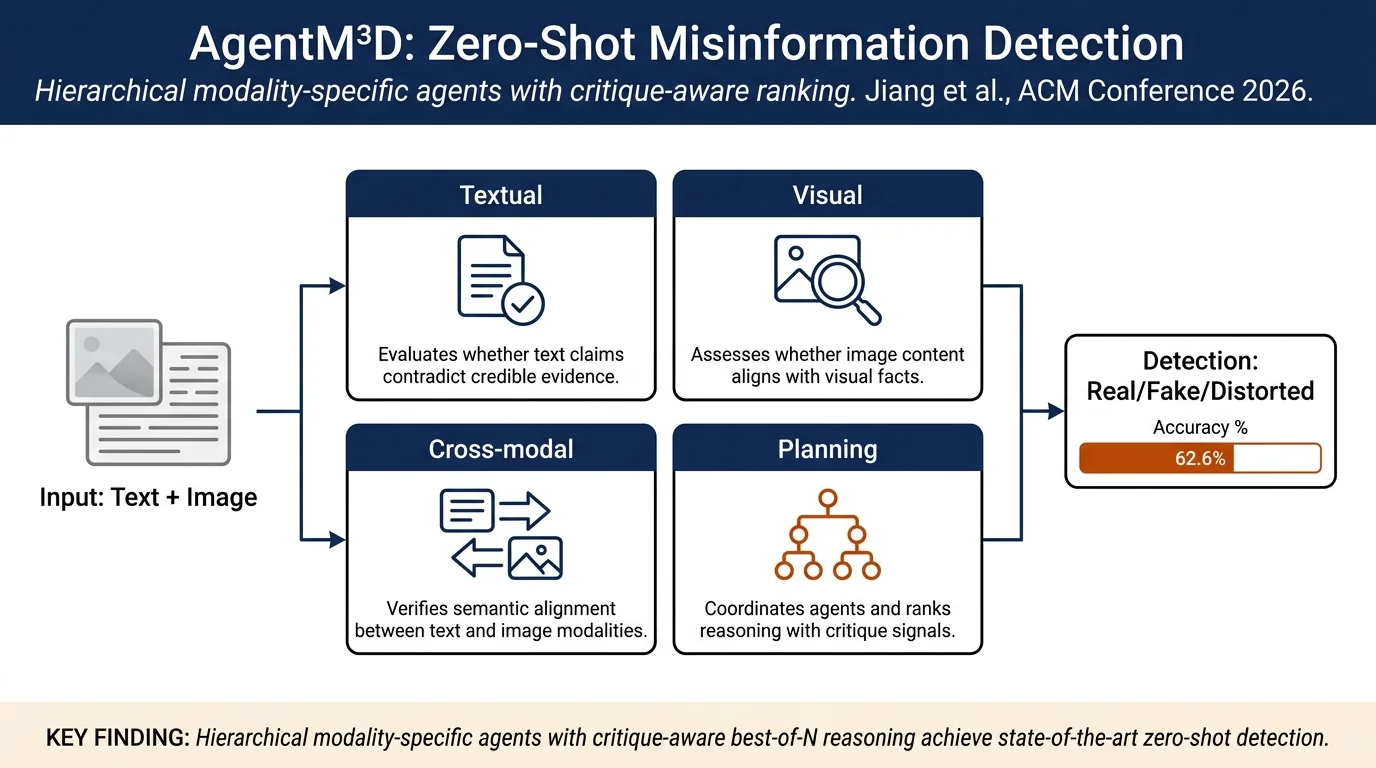
Agentic Mixed-Source Multi-Modal Misinformation Detection with Adaptive Test-Time ScalingVision-language models struggle with mixed-source multi-modal misinformation, where false information combines manipulated images with misleading text or text-image mismatches. This paper proposes AgentM³D, a hierarchical multi-agent framework that decomposes detection into modality-specific agents (textual, visual, cross-modal…
 Detection methodsLLMs & generative AI
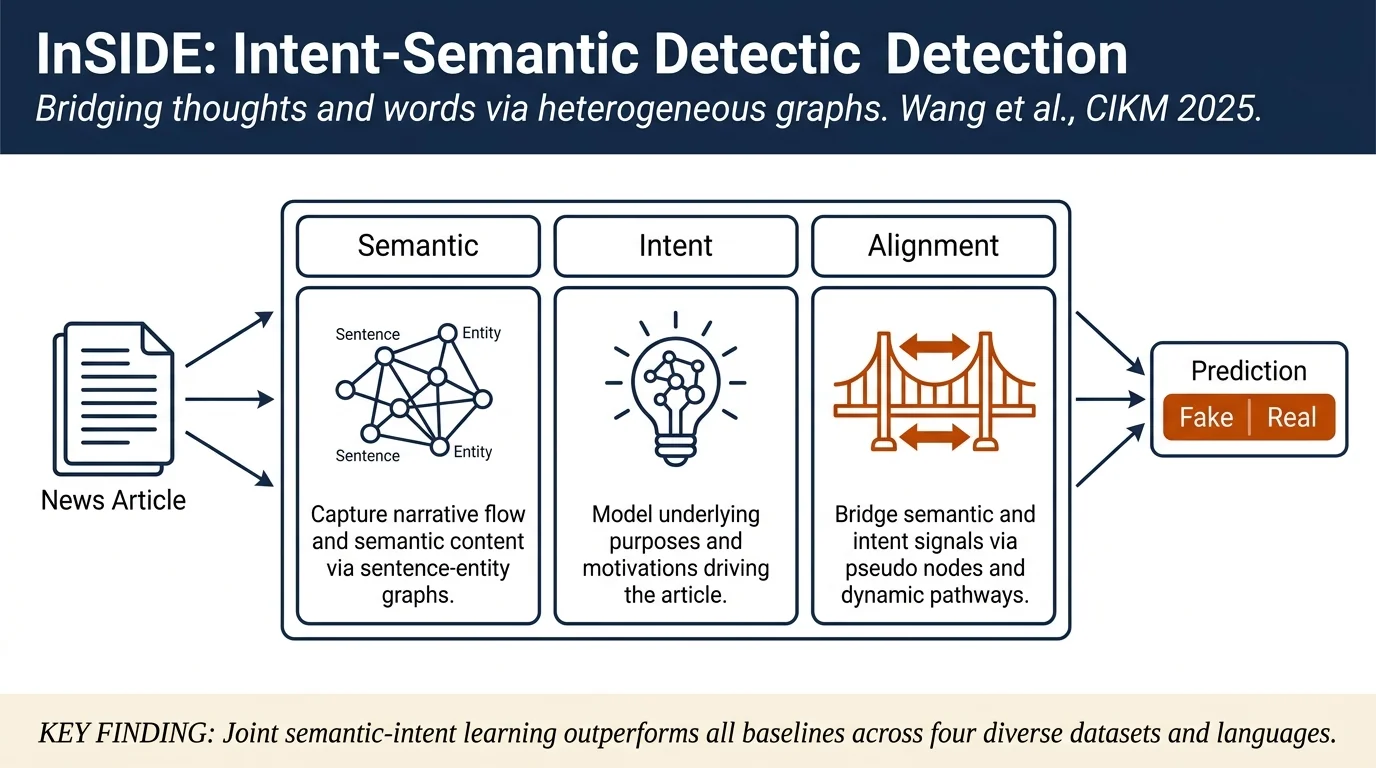
Bridging Thoughts and Words: Graph-Based Intent-Semantic Joint Learning for Fake News DetectionExisting fake news detectors rely on surface-level semantic patterns (emotional language, stylistic cues) and fail when writing styles shift. This paper proposes InSIDE, which combines semantic and intent signals via heterogeneous graphs: intent models the purpose behind an article (e.g., promoting a product), while semantics capture…
 LLMs & generative AIDetection methods
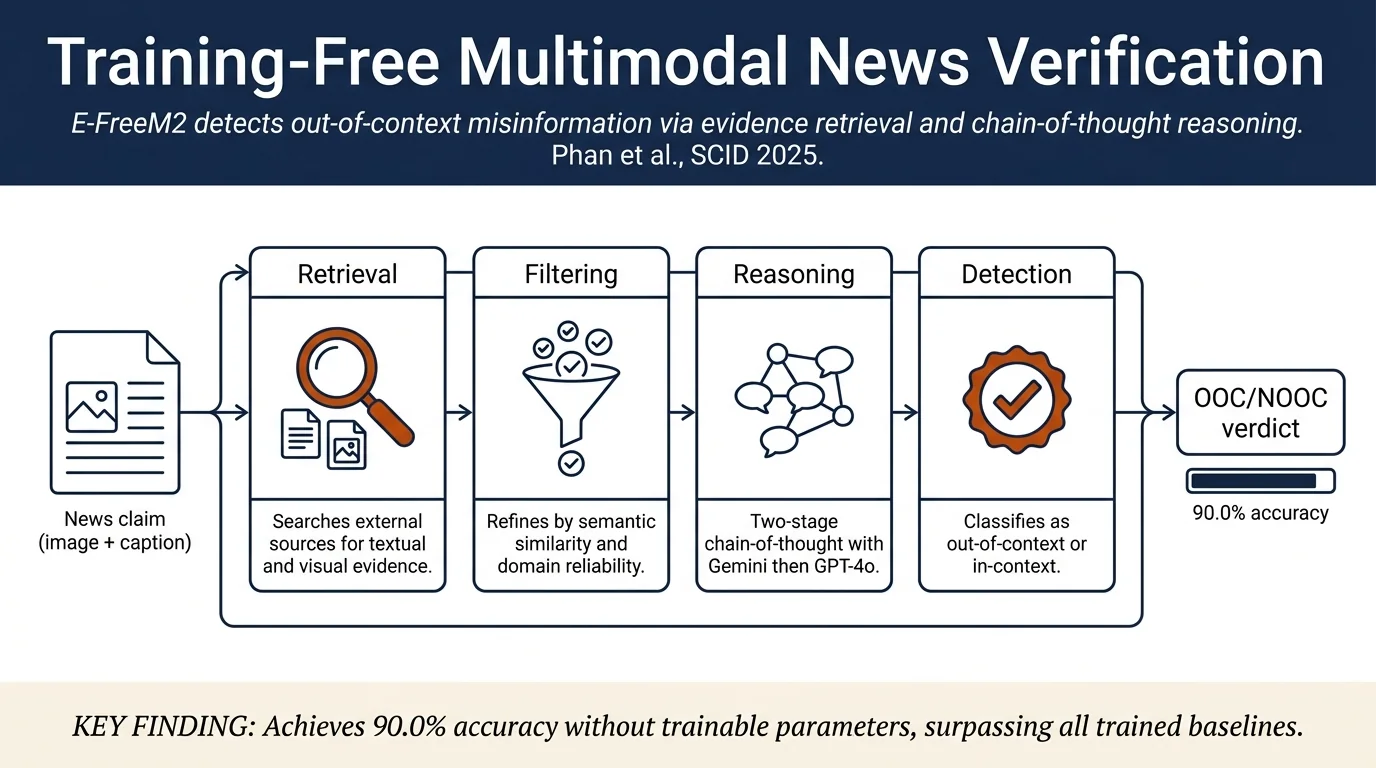
E-FreeM2: Efficient Training-Free Multi-Scale and Cross-Modal News Verification via MLLMsE-FreeM2 is a training-free, retrieval-based multimodal system for out-of-context (OOC) misinformation detection that leverages pretrained vision-language models (MLLMs) and two-stage chain-of-thought reasoning. By dynamically retrieving cross-modal evidence and ranking via visual similarity, the method achieves 90.0% overall accuracy on…
Detection methodsLLMs & generative AI
Propasafe: A BERT-based offline tool for propaganda detectionOriginal privacy-focused, offline browser extension using fine-tuned BERT on the Propaganda Techniques Corpus for sentence-level propaganda classification. No online inference required; binary classification (propaganda or non-propaganda).
 LLMs & generative AIDetection methods
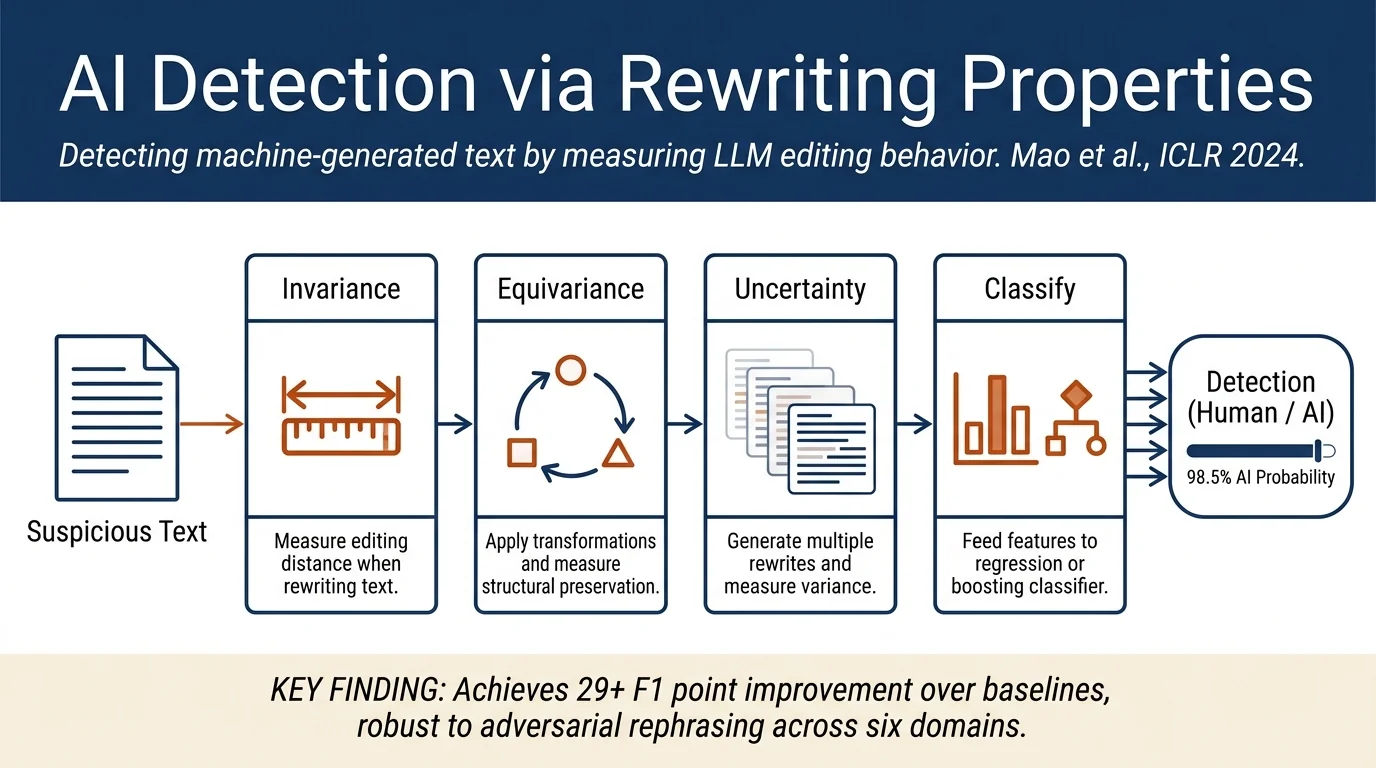
RAIDAR: Generative AI Detection via RewritingThis paper introduces Raidar, a method to detect machine-generated text by measuring how much LLMs modify text when asked to rewrite it. The key observation is that LLMs tend to preserve AI-generated text and modify human-written text more when rewriting.
 LLMs & generative AIDetection methods
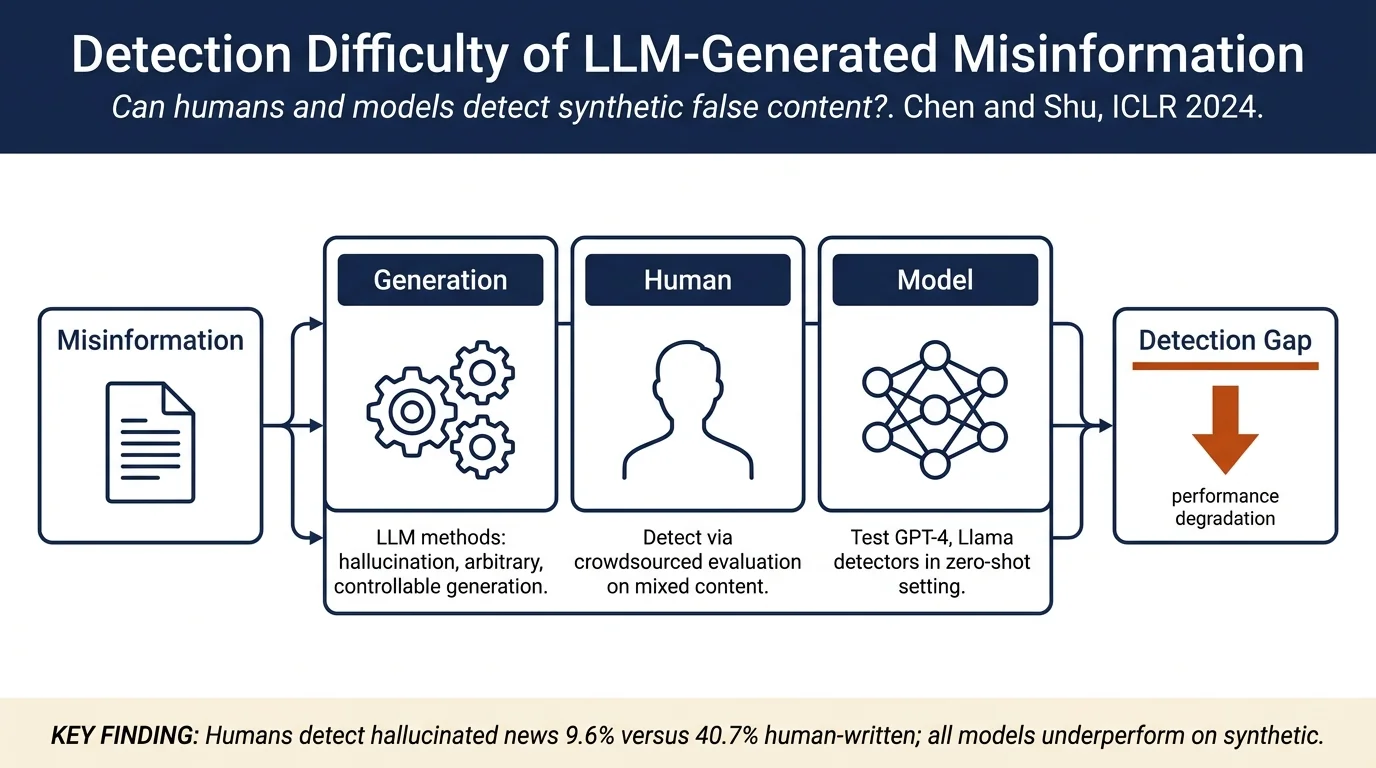
Can LLM-Generated Misinformation Be Detected?LLM-generated misinformation (from ChatGPT, Llama, Vicuna) is detectably harder for both humans and automated detectors to identify than human-written misinformation with identical semantics. The paper builds a taxonomy of LLM-generated misinformation across types, domains, and generation methods, then empirically demonstrates that…
 Spread & networksPlatforms, policy & society
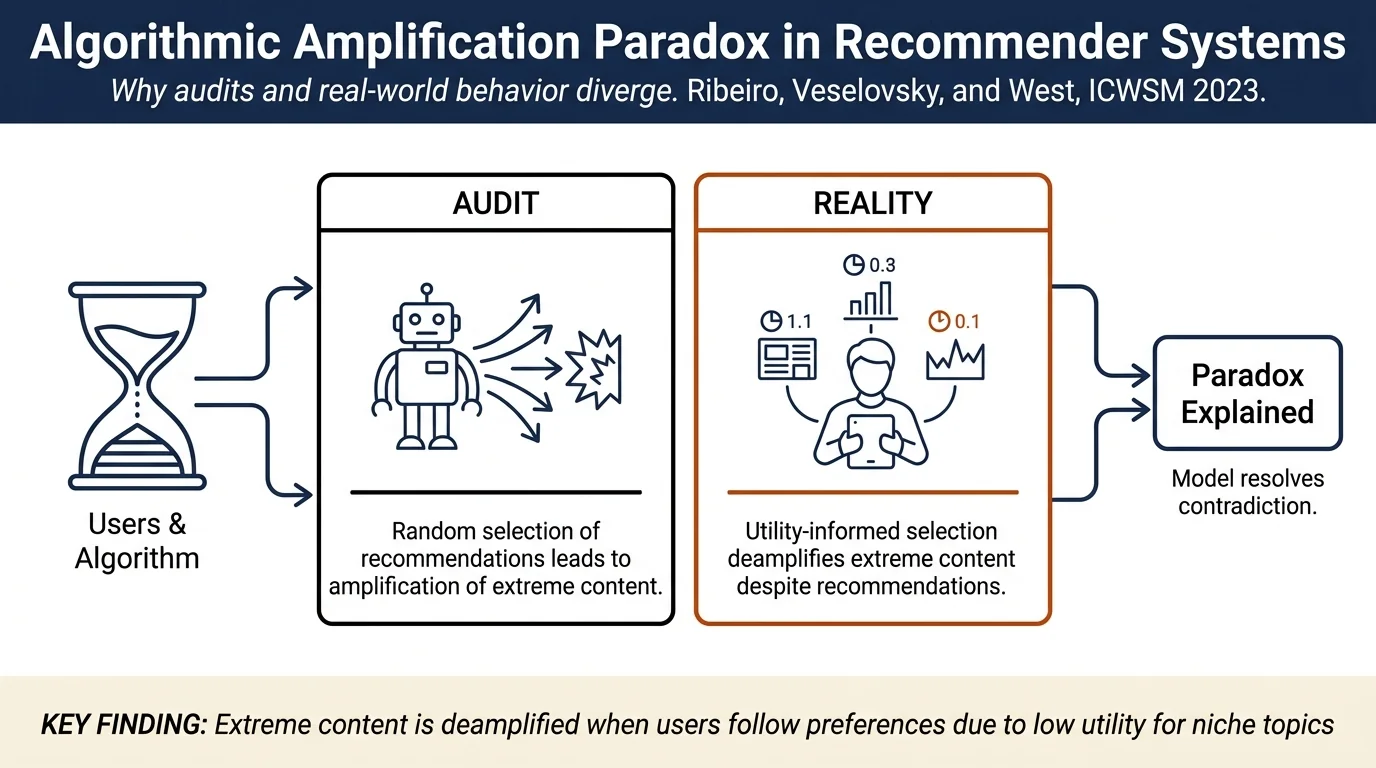
The Amplification Paradox in Recommender SystemsAlgorithmic audits find that blindly following YouTube recommendations leads to extreme content, yet real user logs show recommendations don't drive extreme content consumption. Using an agent-based model with realistic user preferences, the authors show this paradox arises because users rarely consume niche content even when recommended…
 Platforms, policy & societyLLMs & generative AI
Disinformation 2.0 in the Age of AI: A Cybersecurity PerspectiveDisinformation should be treated as a cybersecurity threat, particularly as AI advances enable its creation and dissemination at unprecedented scale. The paper introduces "disinformation 2.0"—where generative AI, perturbation techniques, detection evasion, and optimized spread strategies make false content more persuasive and harder to…
 LLMs & generative AIDetection methods
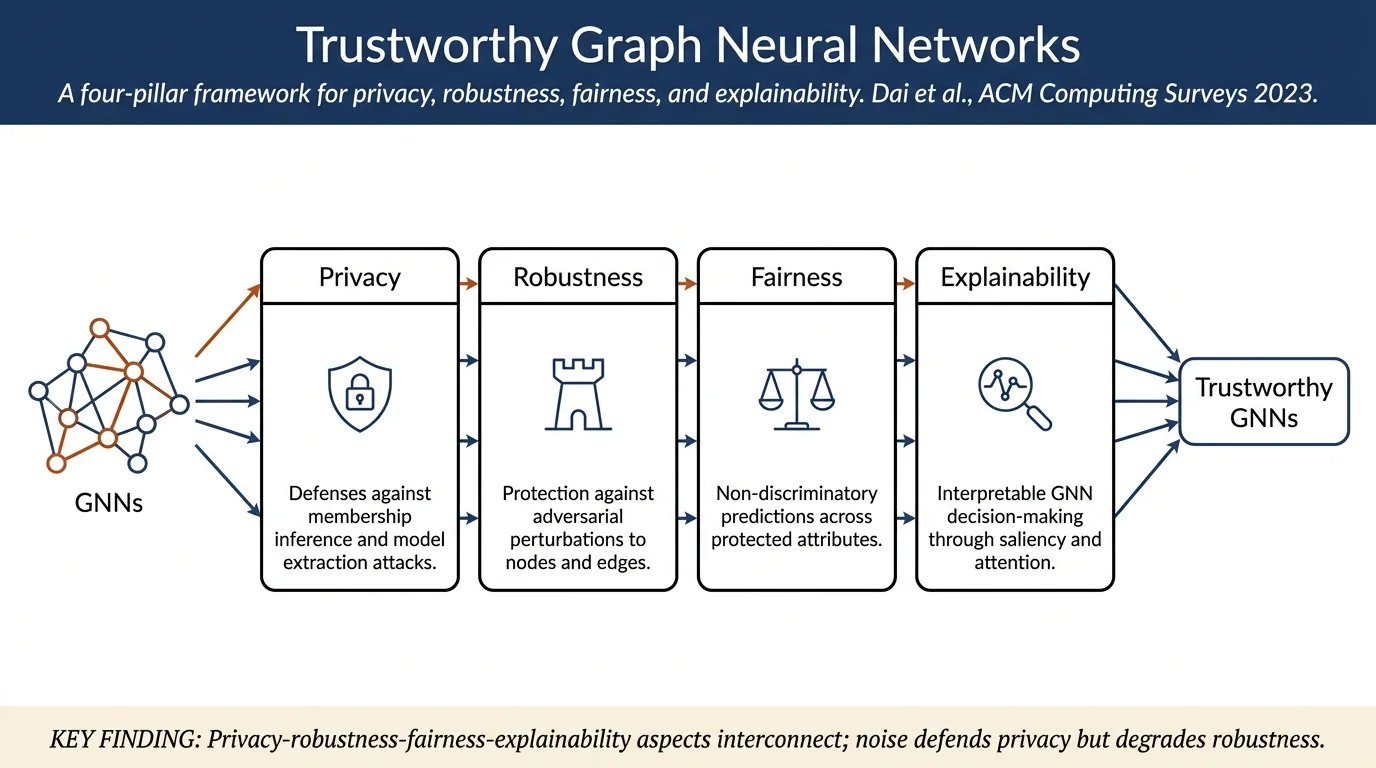
A Comprehensive Survey on Trustworthy Graph Neural Networks: Privacy, Robustness, Fairness, and ExplainabilityA comprehensive survey of trustworthy Graph Neural Networks covering four critical dimensions: privacy attacks and defenses against membership/property inference and model extraction; robustness against adversarial perturbations; fairness mechanisms to prevent discrimination in graph-based predictions; and explainability methods to…
 LLMs & generative AIDatasets & evaluation
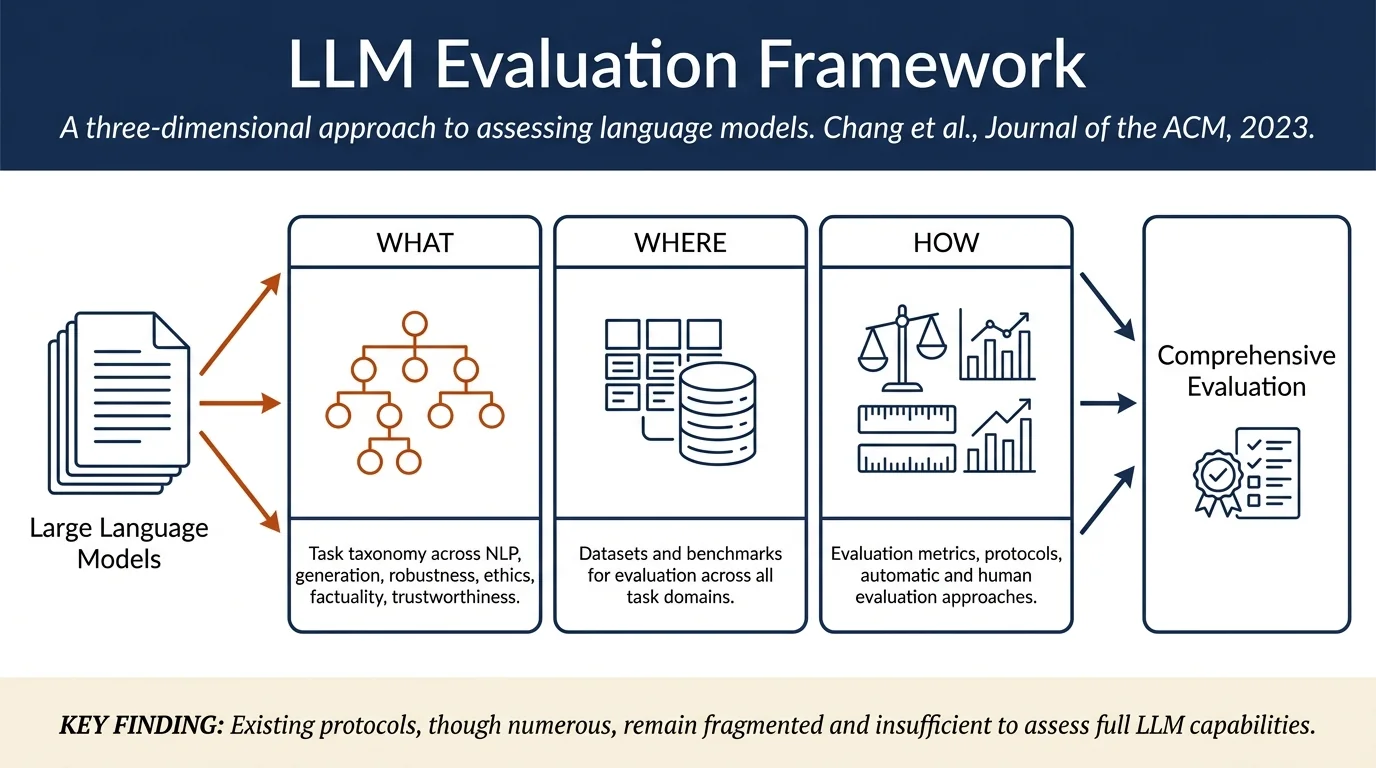
A Survey on Evaluation of Large Language ModelsThis survey provides a comprehensive review of evaluation methodologies for large language models across three dimensions: what to evaluate, where to evaluate, and how to evaluate. The paper encompasses evaluation tasks spanning natural language processing, natural language generation, robustness, ethics, bias detection, trustworthiness,…
 LLMs & generative AIDeepfakes & multimodal
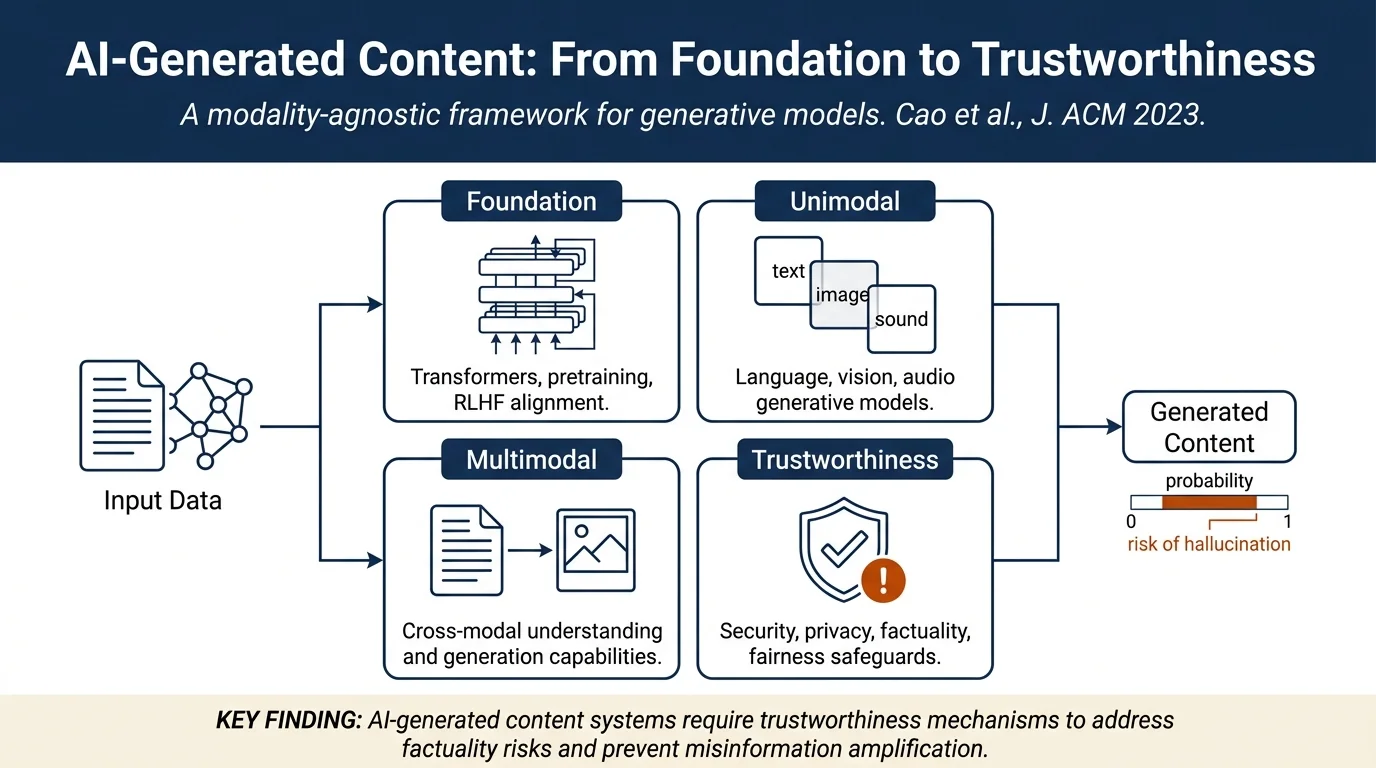
A Comprehensive Survey of AI-Generated Content (AIGC): A History of Generative AI from GAN to ChatGPTThis is the first comprehensive survey of AI-Generated Content (AIGC) covering the history, techniques, and applications of generative models from GANs through ChatGPT. It addresses both the impressive capabilities of these models (text, image, audio, video generation) and critical concerns including factuality, security, privacy, and…
 LLMs & generative AIDatasets & evaluation
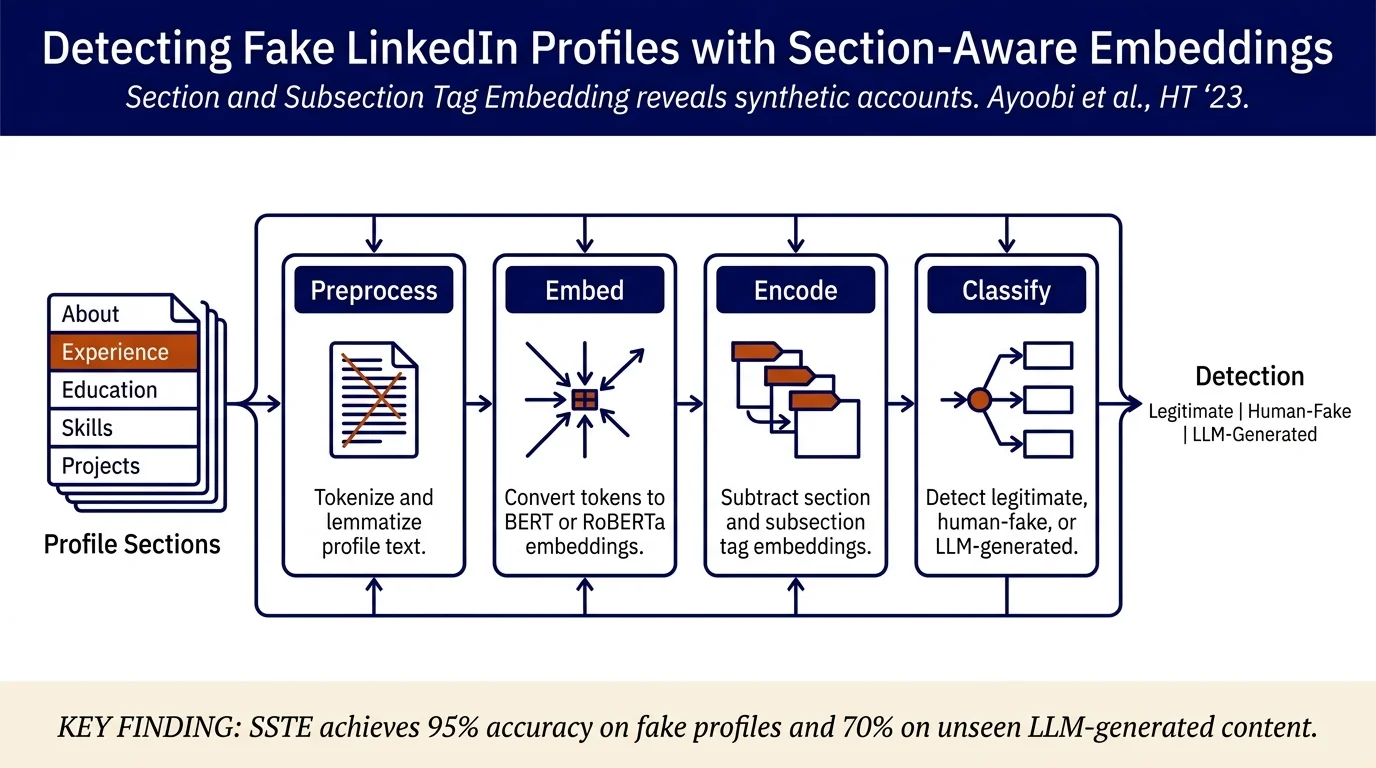
The Looming Threat of Fake and LLM-generated LinkedIn Profiles: Challenges and Opportunities for Detection and PreventionLinkedIn's lack of verification enables fake accounts that harm legitimate users and the platform's integrity. This work introduces a dataset of 3600 profiles (legitimate, manually created fake, and ChatGPT-generated) and proposes SSTE, a method that detects fake profiles immediately after registration using only profile text.
 LLMs & generative AIDetection methods
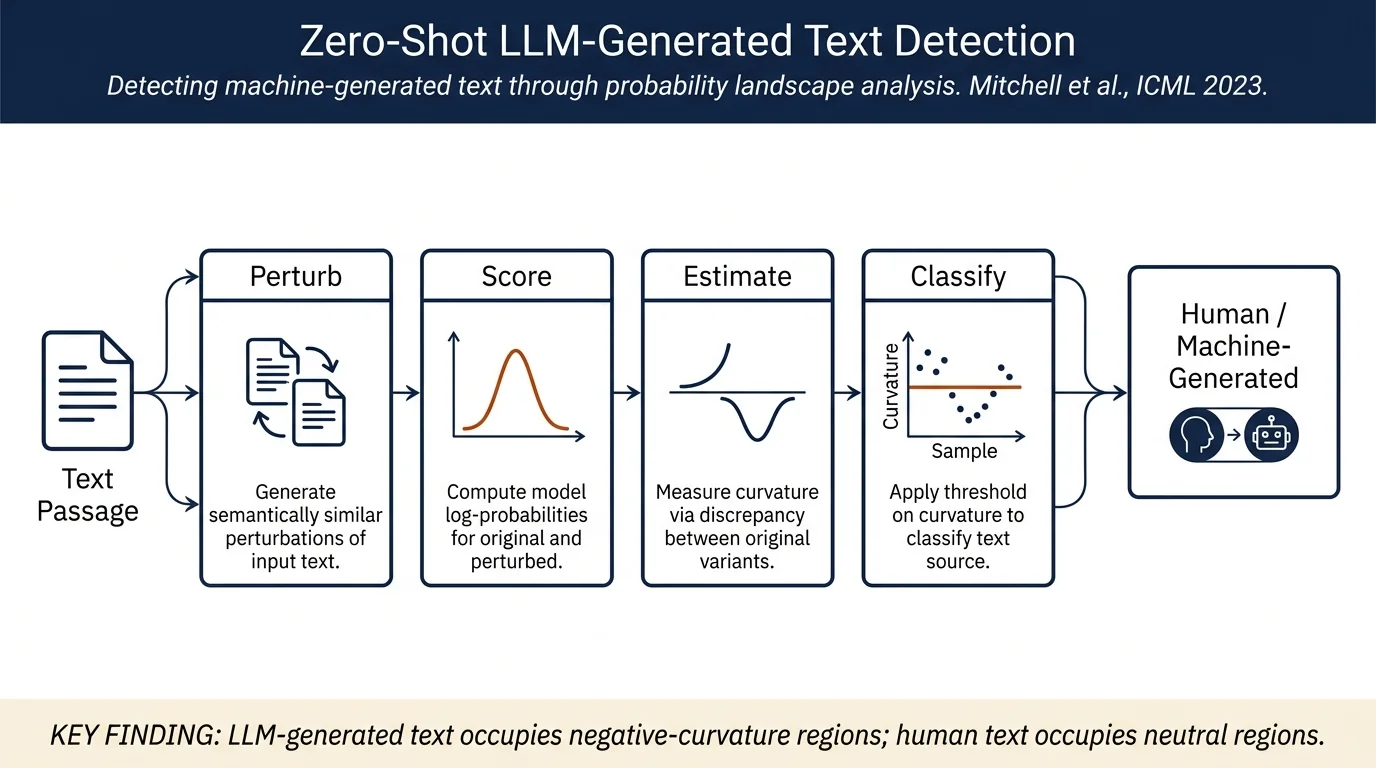
DetectGPT: Zero-Shot Machine-Generated Text Detection using Probability CurvatureThis paper identifies that text sampled from language models tends to occupy negative-curvature regions of the model's log-probability landscape, whereas human-written text occupies more neutral regions. DetectGPT leverages this observation to detect machine-generated text in a zero-shot manner by analyzing probability curvature, without…
 LLMs & generative AIDetection methods
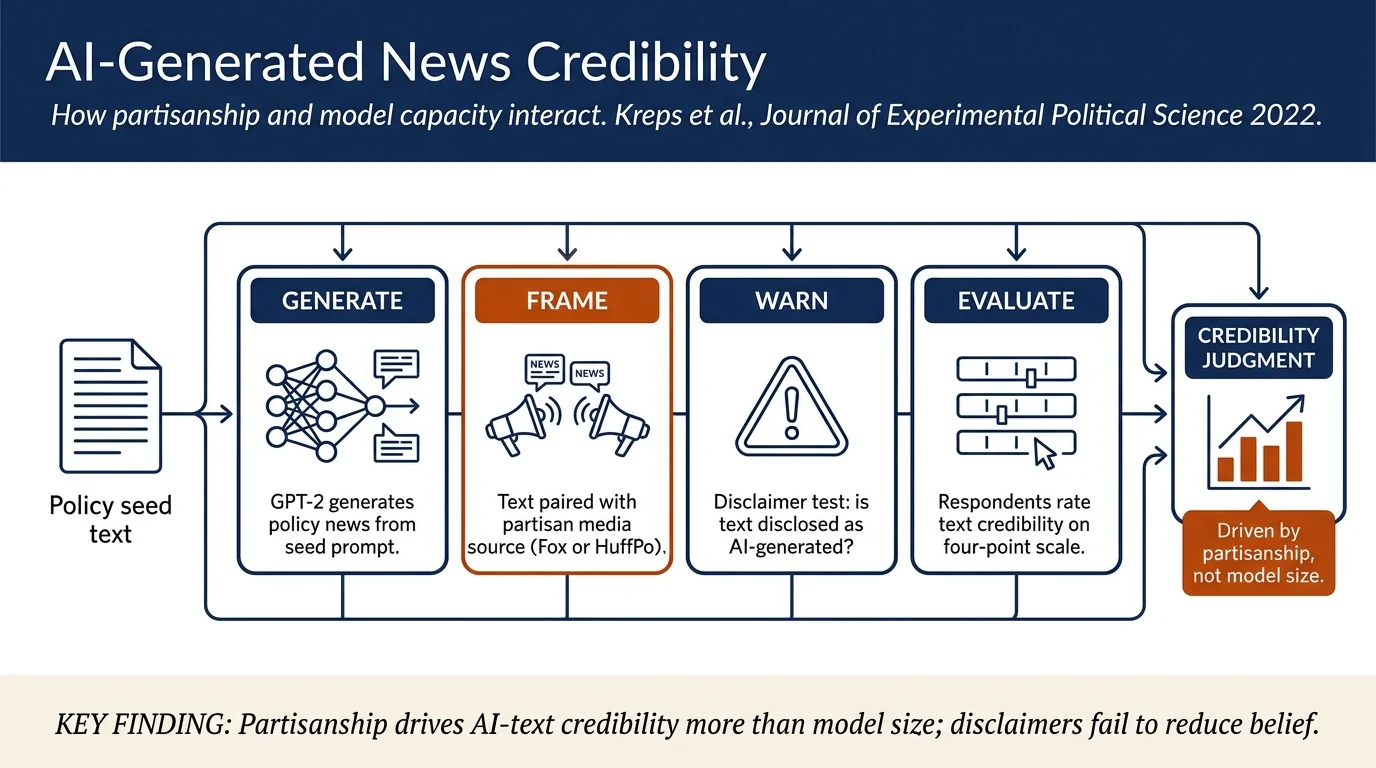
All the News That's Fit to Fabricate: AI-Generated Text as a Tool of Media MisinformationThree experiments investigate whether AI-generated news text can be credible and influence public opinion. The authors find that GPT-2 models (355M to 1.5B parameters) generate text nearly indistinguishable from human-written baseline news, particularly when politically congruent stories are paired with partisan audiences.
 Platforms, policy & societyDetection methods
A Comprehensive Survey on Trustworthy Recommender SystemsRecommender systems, while beneficial to users, can amplify harmful content, introduce discrimination, and enable adversarial attacks. This survey provides a comprehensive framework for trustworthy recommender systems across six critical dimensions: Safety & Robustness (defense against adversarial attacks), Non-discrimination & Fairness…
 Deepfakes & multimodalDetection methods
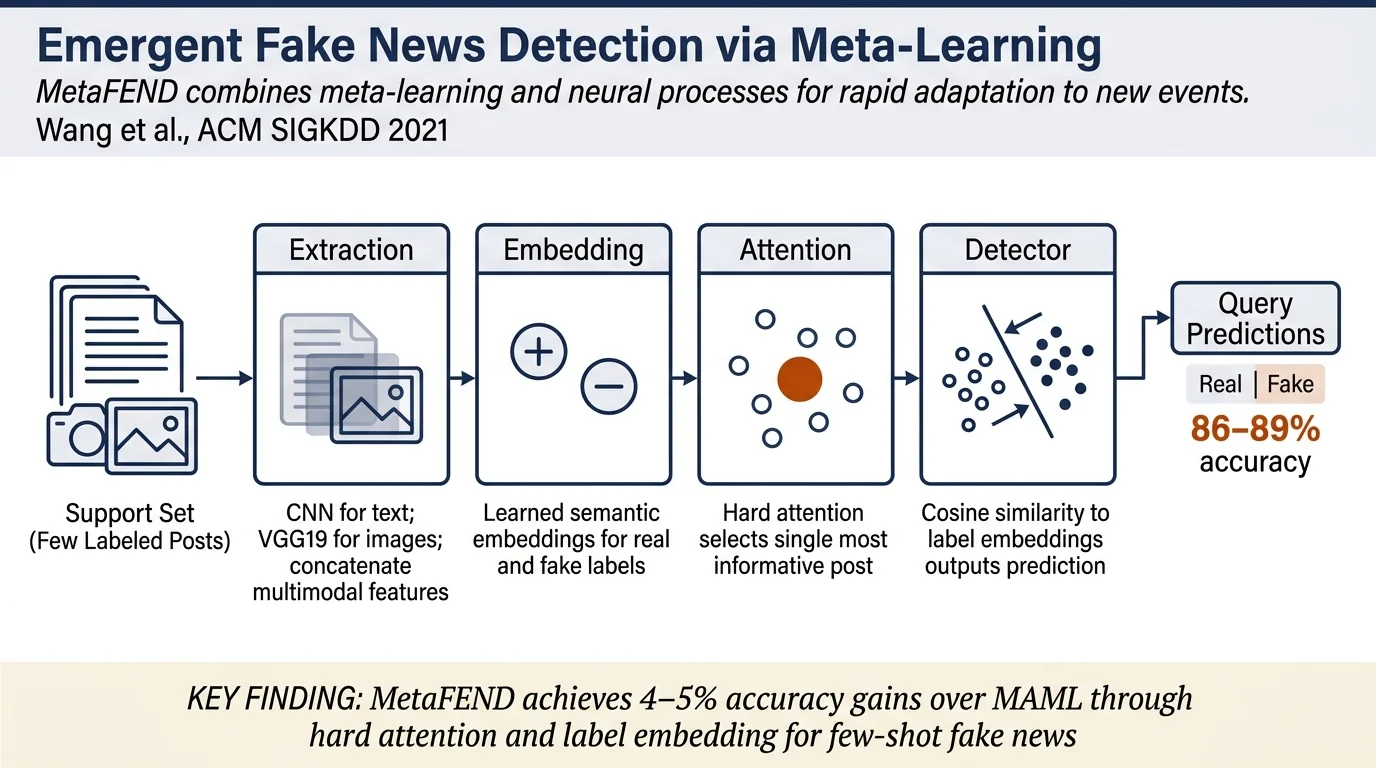
Multimodal Emergent Fake News Detection via Meta Neural Process NetworksExisting fake news detectors trained on labeled data perform poorly on novel, emergent events due to domain shift. The paper proposes MetaFEND, which combines meta-learning and neural processes to leverage a handful of labeled posts from a new event to quickly adapt a detection model.
 Detection methodsDatasets & evaluation
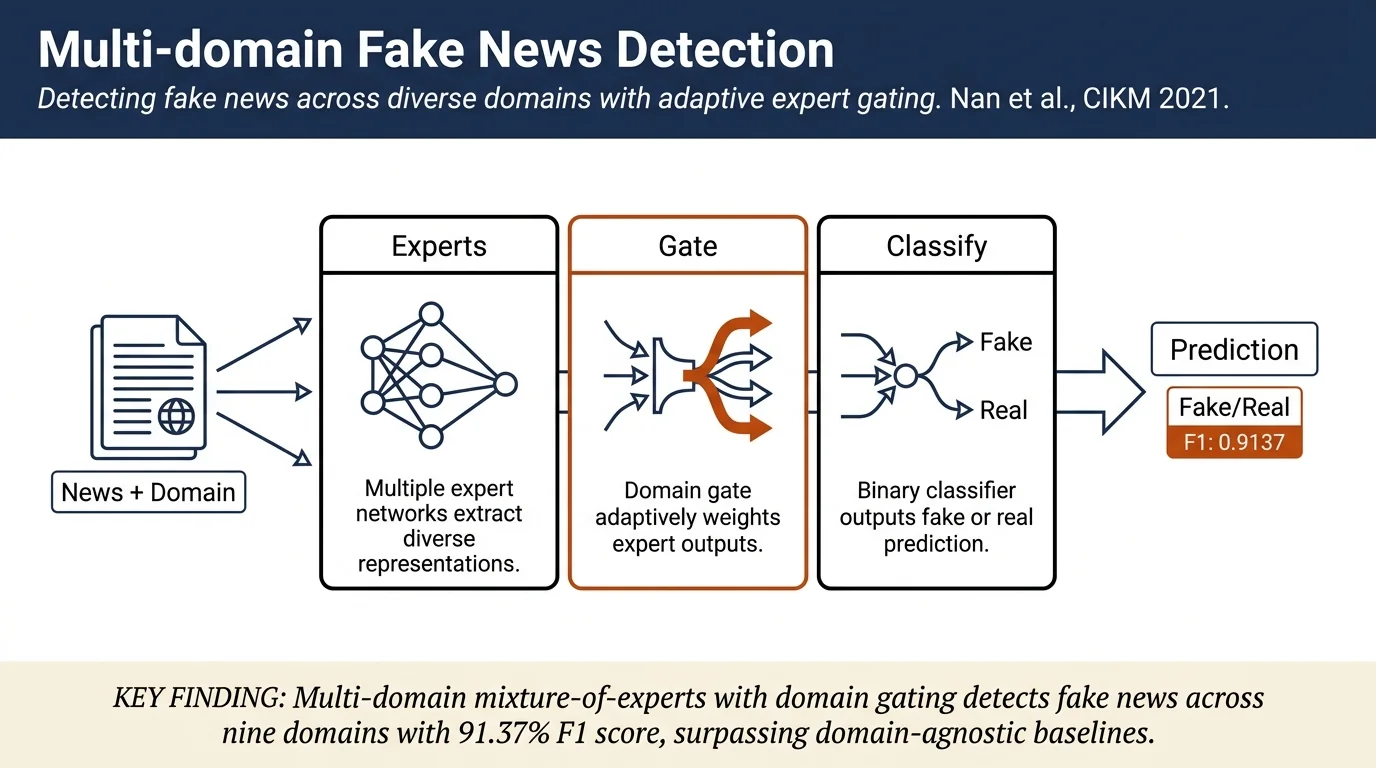
MDFEND: Multi-domain Fake News DetectionMost fake news detection methods focus on single-domain data, which leads to poor performance across different domains due to domain shift (varying word usage and propagation patterns). This paper introduces Weibo21, the first multi-domain fake news dataset from a single platform with 9 domains, and proposes MDFEND, a model using…
 Platforms, policy & societyBots & coordinated campaigns
The Threat of Offensive AI to OrganizationsA comprehensive survey identifying 33 offensive AI capabilities that adversaries can use to attack organizations, organized into seven categories: automation, campaign resilience, credential theft, exploit development, information gathering, social engineering, and stealth. Through a user study with 22 experts from academia and industry,…
 Detection methodsDatasets & evaluation
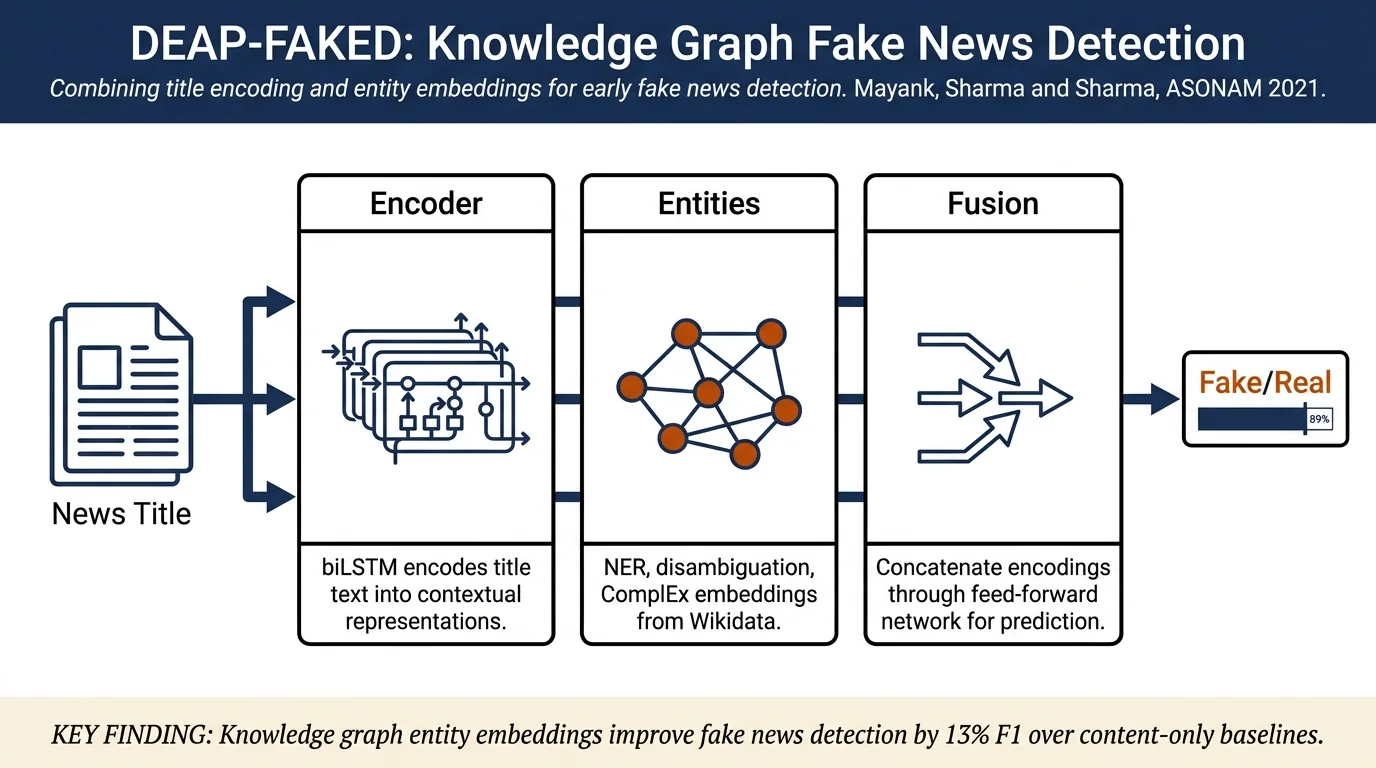
DEAP-FAKED: Knowledge Graph based Approach for Fake News DetectionDEAP-FAKED combines a biLSTM news encoder with knowledge graph embeddings to detect fake news using only article titles. The approach extracts named entities from titles, maps them to Wikidata using named entity disambiguation, and embeds them via ComplEx.