Explore papers
Filter by research area, year and venue. Every filter is in the address bar, so you can share a view as a link.
 Fact-checking & verificationDetection methods
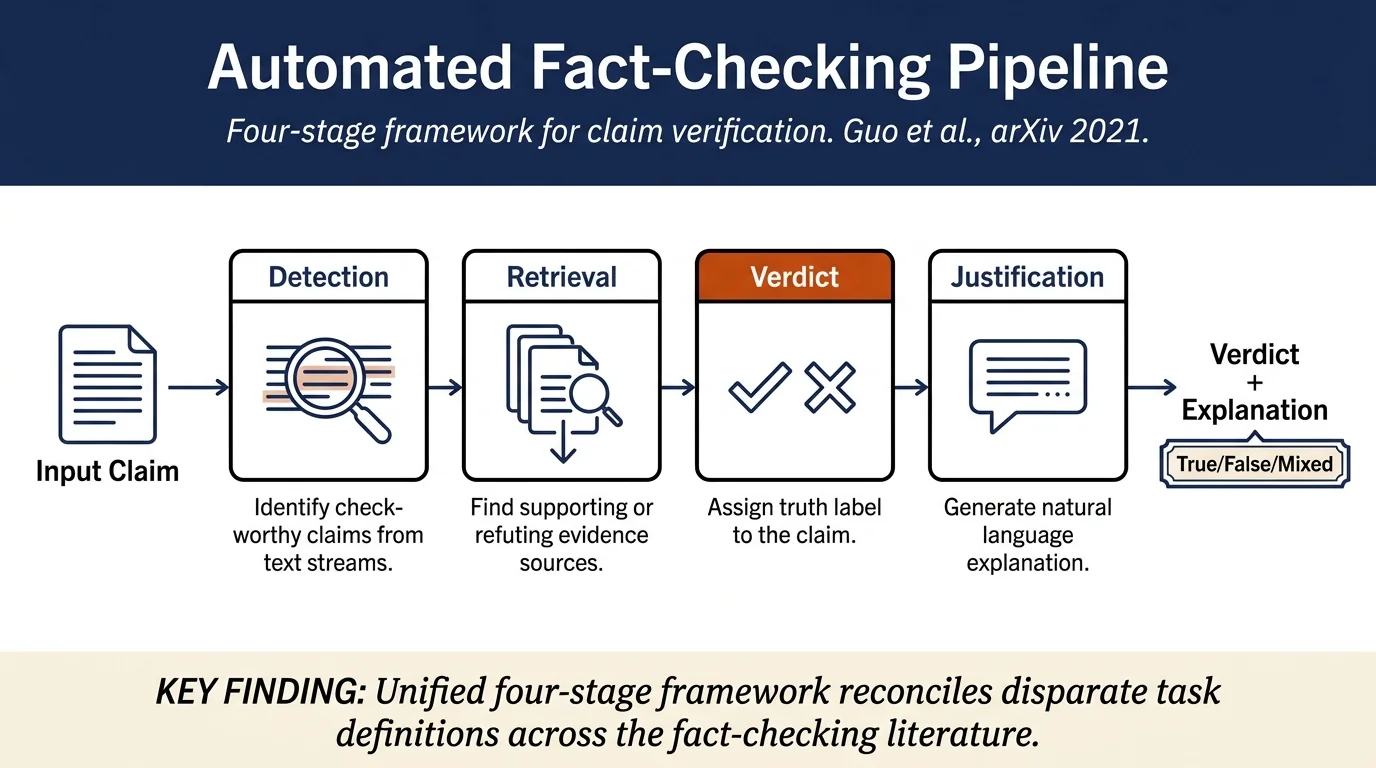
A Survey on Automated Fact-CheckingThis comprehensive survey unifies automated fact-checking research under a four-stage NLP framework: claim detection (identifying check-worthy claims), evidence retrieval (finding supporting/refuting information), verdict prediction (assigning truth labels), and justification production (explaining decisions). The authors review 25+…
 Detection methodsLLMs & generative AI
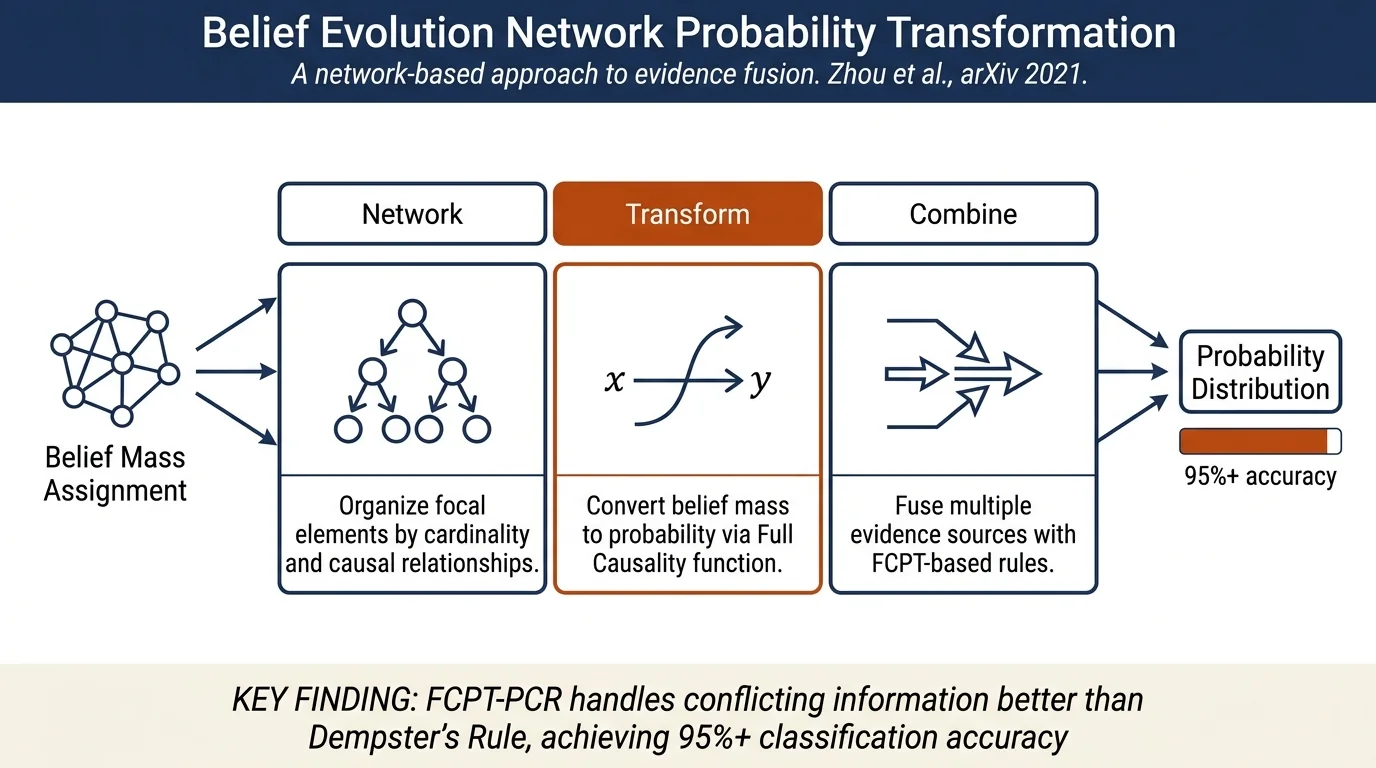
Belief Evolution Network-based Probability Transformation and FusionThis paper introduces a Belief Evolution Network (BEN) to model the evolution of belief functions and proposes a new Full Causality Probability Transformation (FCPT) method for converting belief mass assignments to probability distributions. The authors also propose FCPT-based fusion rules that outperform traditional Dempster's Rule of…
 Deepfakes & multimodalDetection methods
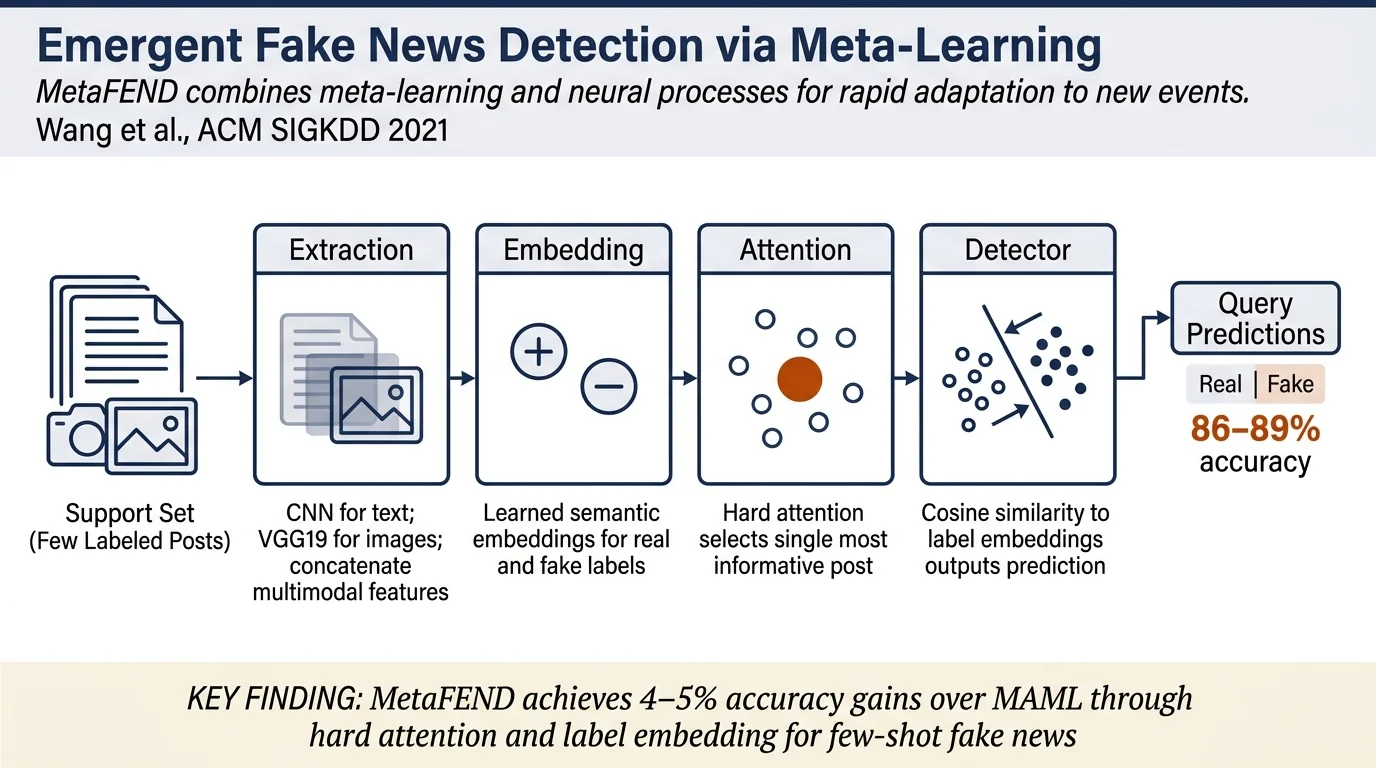
Multimodal Emergent Fake News Detection via Meta Neural Process NetworksExisting fake news detectors trained on labeled data perform poorly on novel, emergent events due to domain shift. The paper proposes MetaFEND, which combines meta-learning and neural processes to leverage a handful of labeled posts from a new event to quickly adapt a detection model.
 Detection methodsLLMs & generative AI
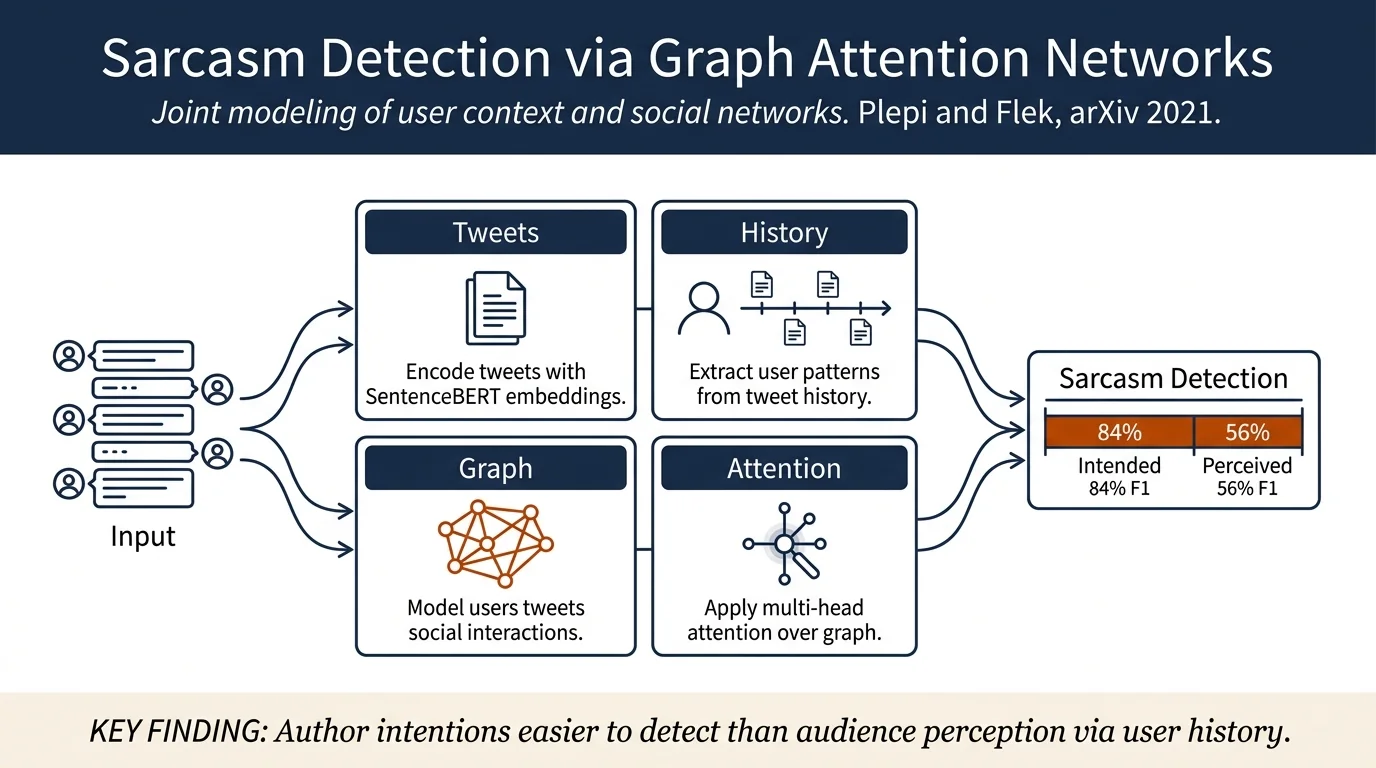
Perceived and Intended Sarcasm Detection with Graph Attention NetworksSarcasm detection requires understanding both the author's intent and the audience's perception. This work proposes a graph attention network (GAT) that jointly models user historical context and conversational social network information on Twitter, achieving state-of-the-art results on the SPIRS dataset and showing that detecting…
 Detection methodsDatasets & evaluation
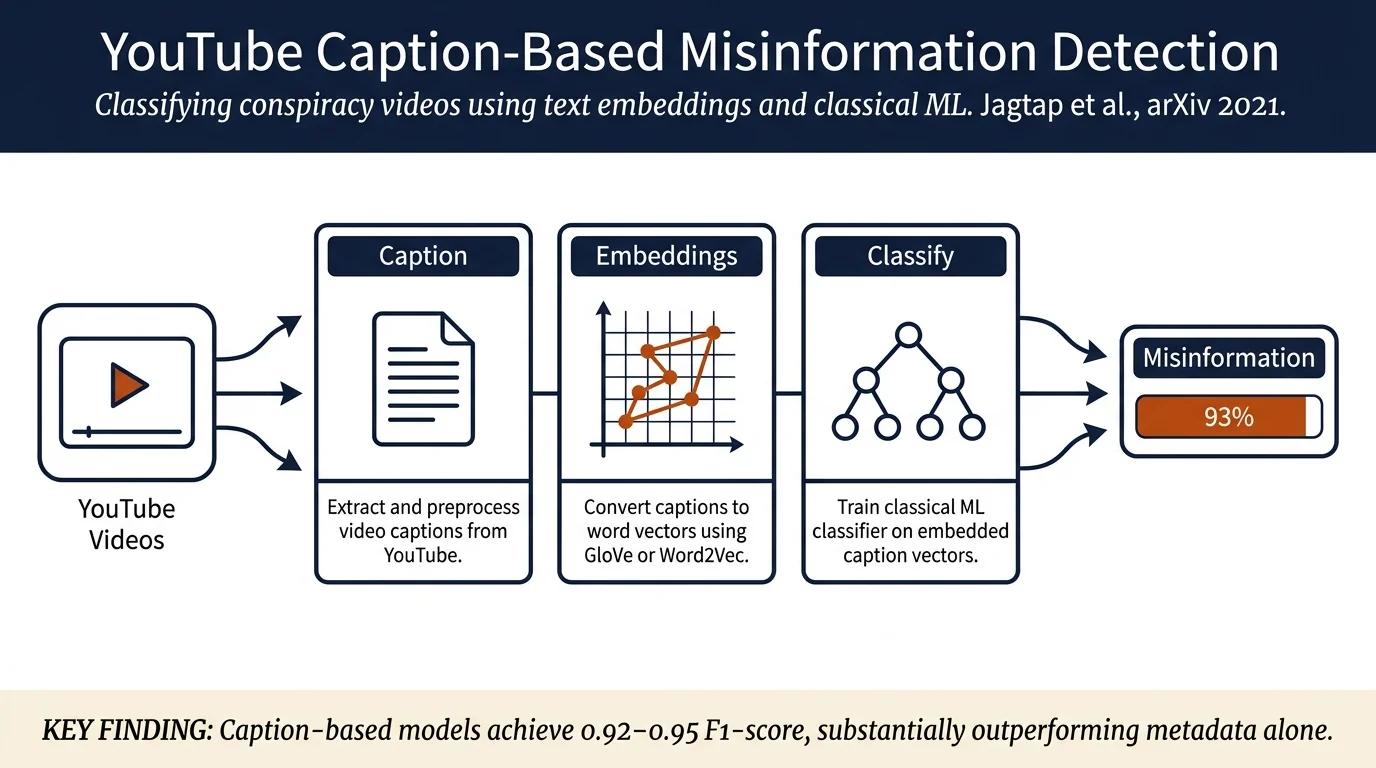
Misinformation Detection on YouTube Using Video CaptionsThis work proposes using video captions as text features for classifying YouTube videos as misinformation, debunking misinformation, or neutral content. Across five conspiracy topics (vaccines, 9/11, chemtrails, moon landing, flat earth), the authors achieve 0.85–0.90 F1-score on three-class classification and 0.92–0.95 F1-score when…
 Detection methodsLLMs & generative AI
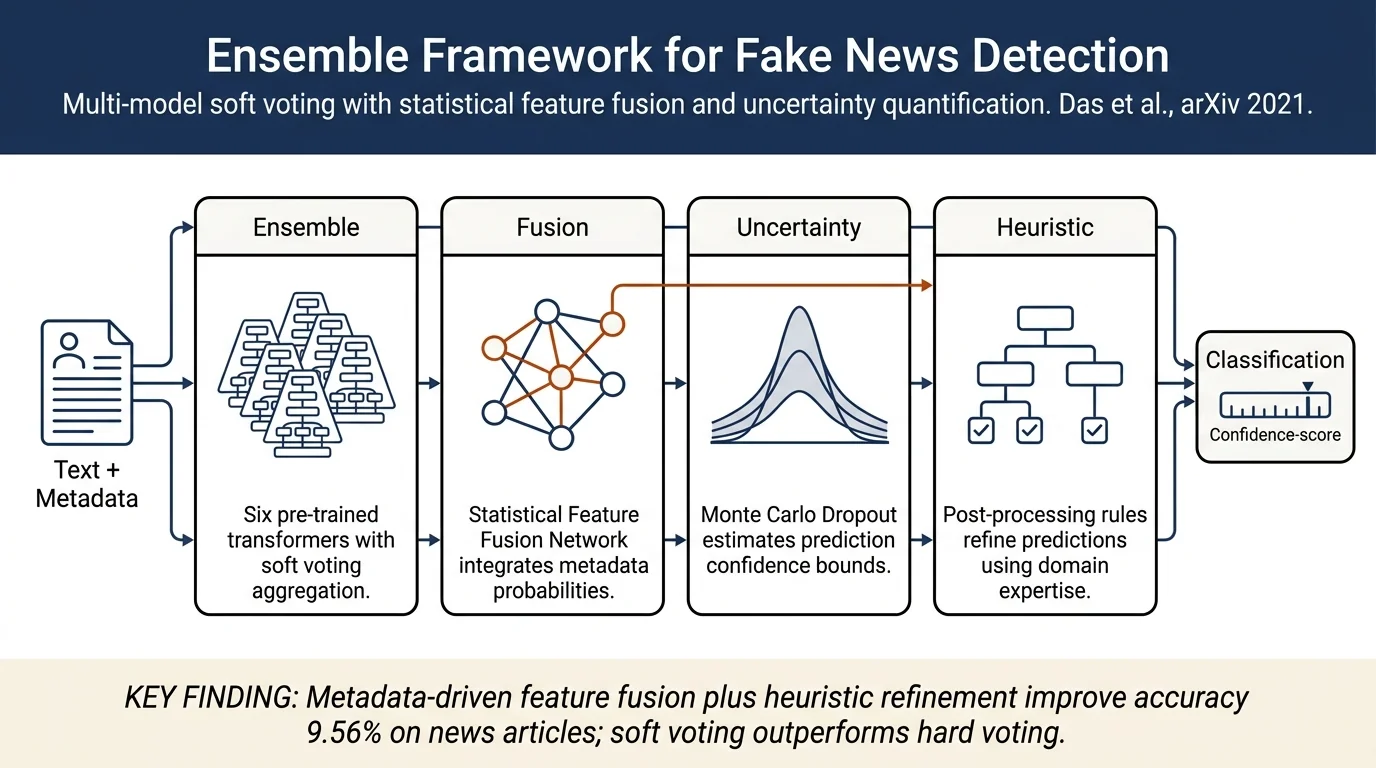
A Heuristic-driven Uncertainty based Ensemble Framework for Fake News Detection in Tweets and News ArticlesAn ensemble-based fake news detection system combining multiple pre-trained language models (BERT, RoBERTa, XLNet, DeBERTa, ERNIE 2.0, ELECTRA) with a Statistical Feature Fusion Network (SFFN) and heuristic post-processing. The framework incorporates Monte Carlo Dropout for uncertainty estimation and leverages metadata features (URL…
 LLMs & generative AIDeepfakes & multimodal
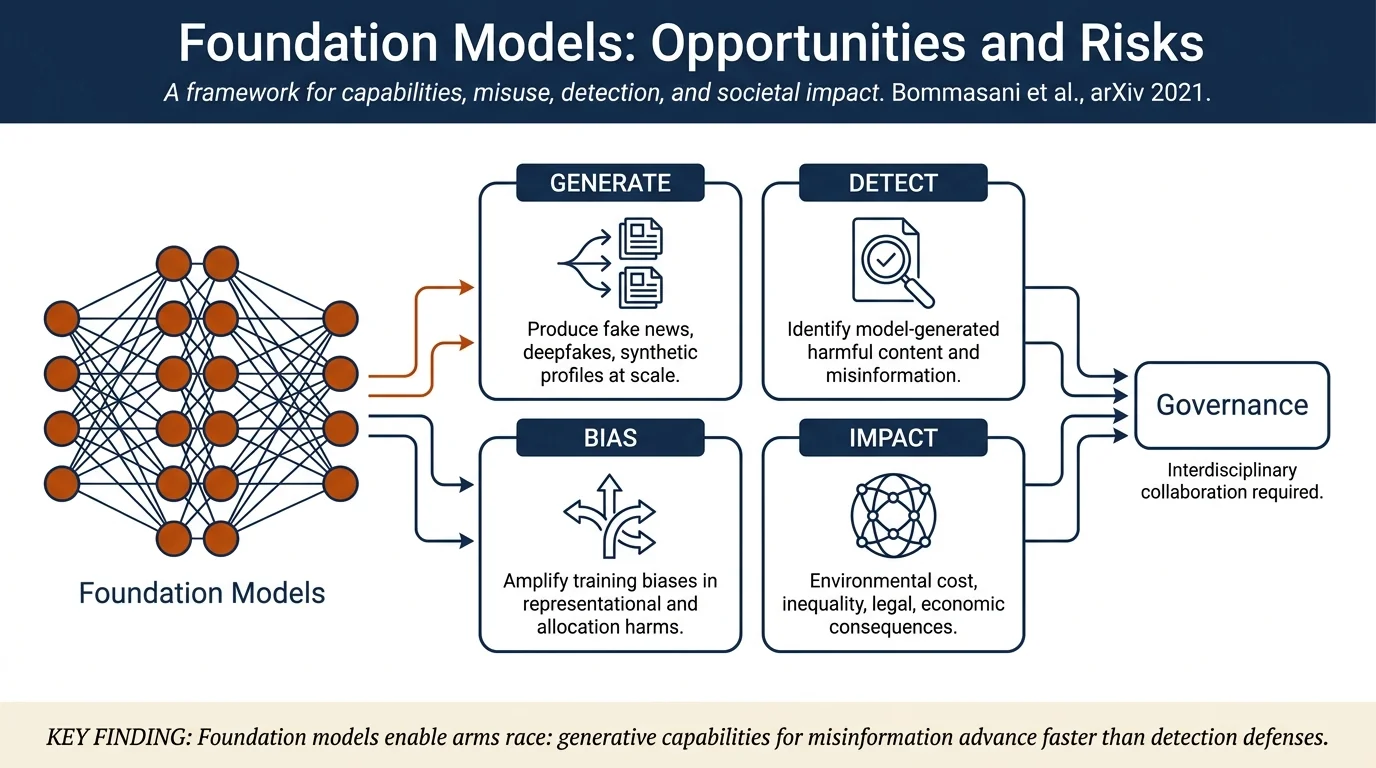
On the Opportunities and Risks of Foundation ModelsA comprehensive 214-page report analyzing foundation models—large neural networks trained on broad data that can be adapted to diverse downstream tasks (BERT, GPT-3, DALL-E). The report maps capabilities across language, vision, and reasoning; applications in healthcare, law, and education; and societal risks including misuse (generating…
 LLMs & generative AI
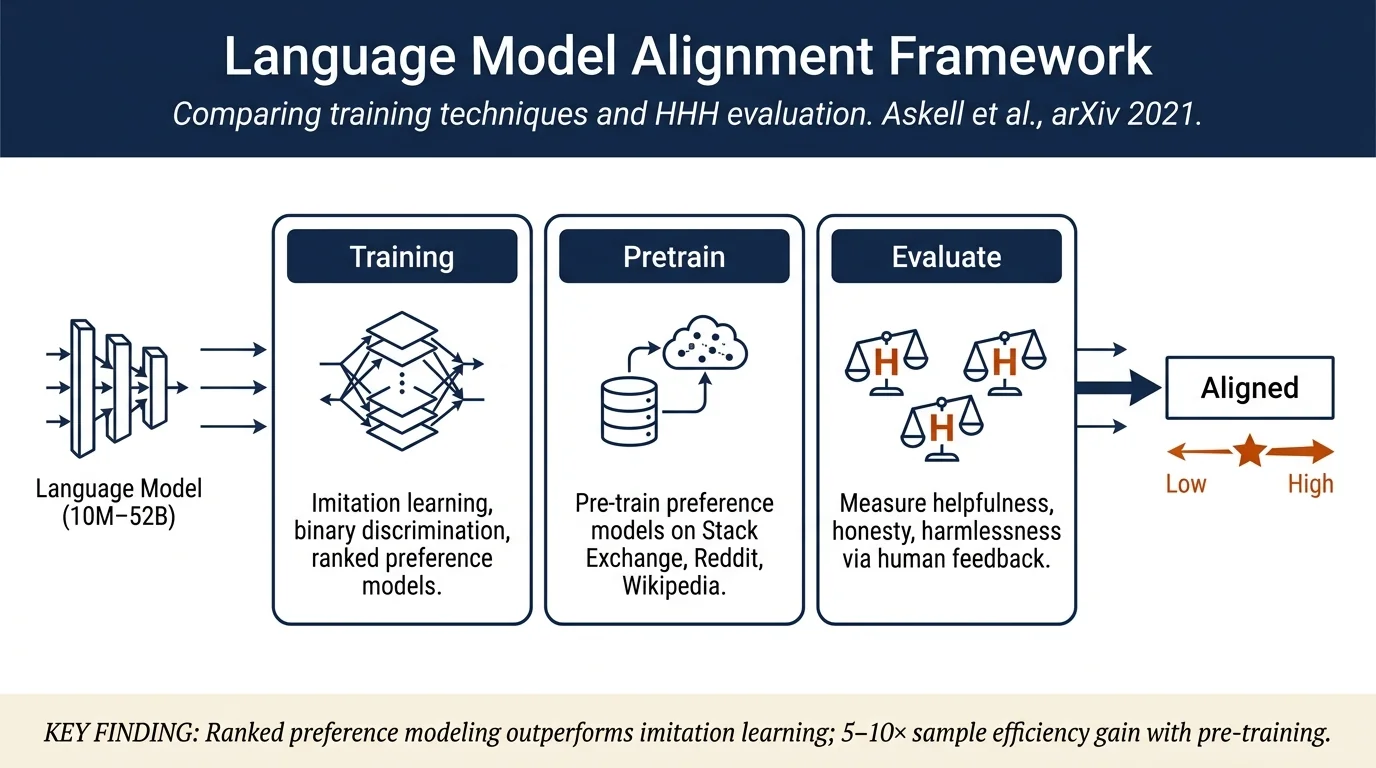
A General Language Assistant as a Laboratory for AlignmentAnthropic builds an interactive evaluation framework for measuring large language model alignment using three criteria: helpfulness, honesty, and harmlessness (HHH). By comparing prompting, imitation learning, binary discrimination, and ranked preference modeling approaches, the authors find that ranked preference models scale better…
 Detection methodsLLMs & generative AI
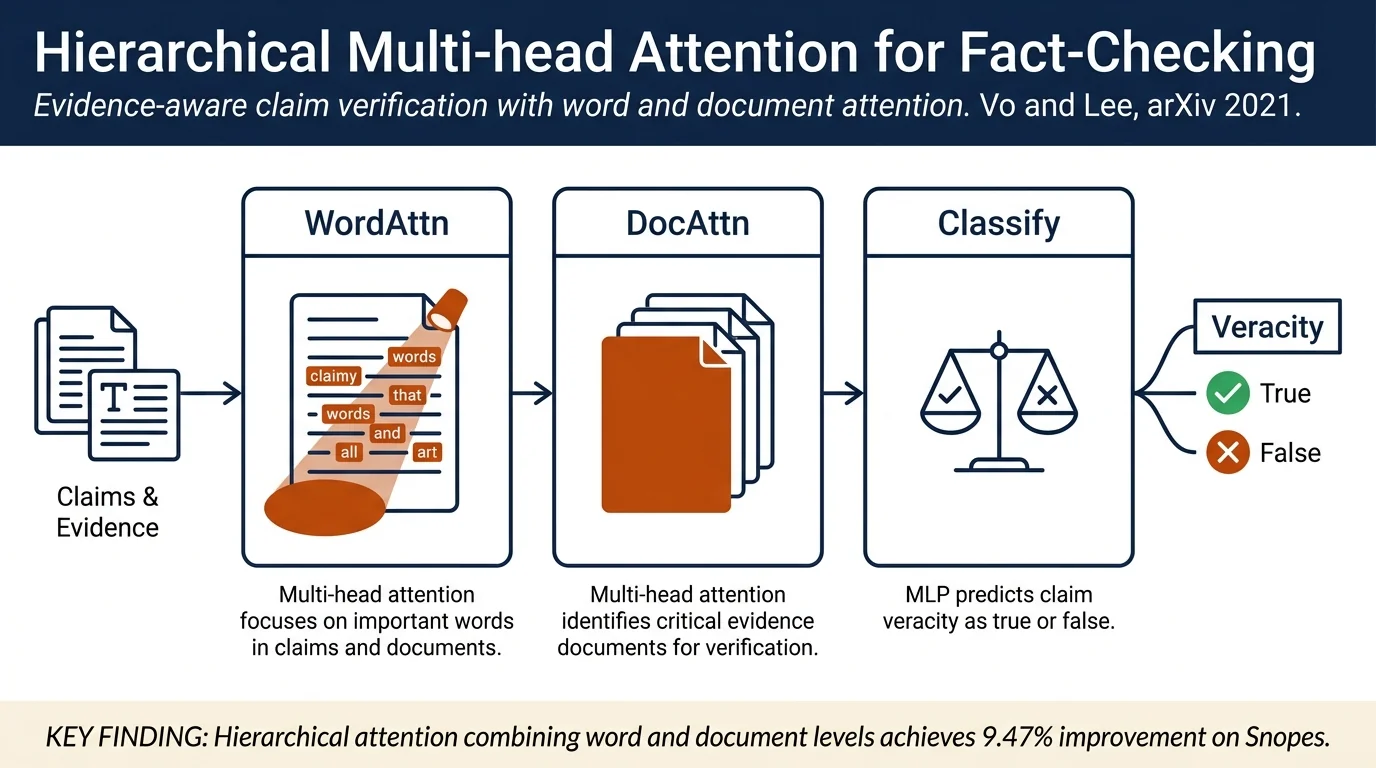
Hierarchical Multi-head Attentive Network for Evidence-aware Fake News DetectionThe paper proposes MAC, a hierarchical multi-head attention network that jointly learns word-level and document-level attention for fact-checking textual claims against evidence from external sources. Multi-head attention mechanisms capture different semantic aspects of claims and evidence documents, enabling the model to focus on…
 Detection methodsDatasets & evaluation
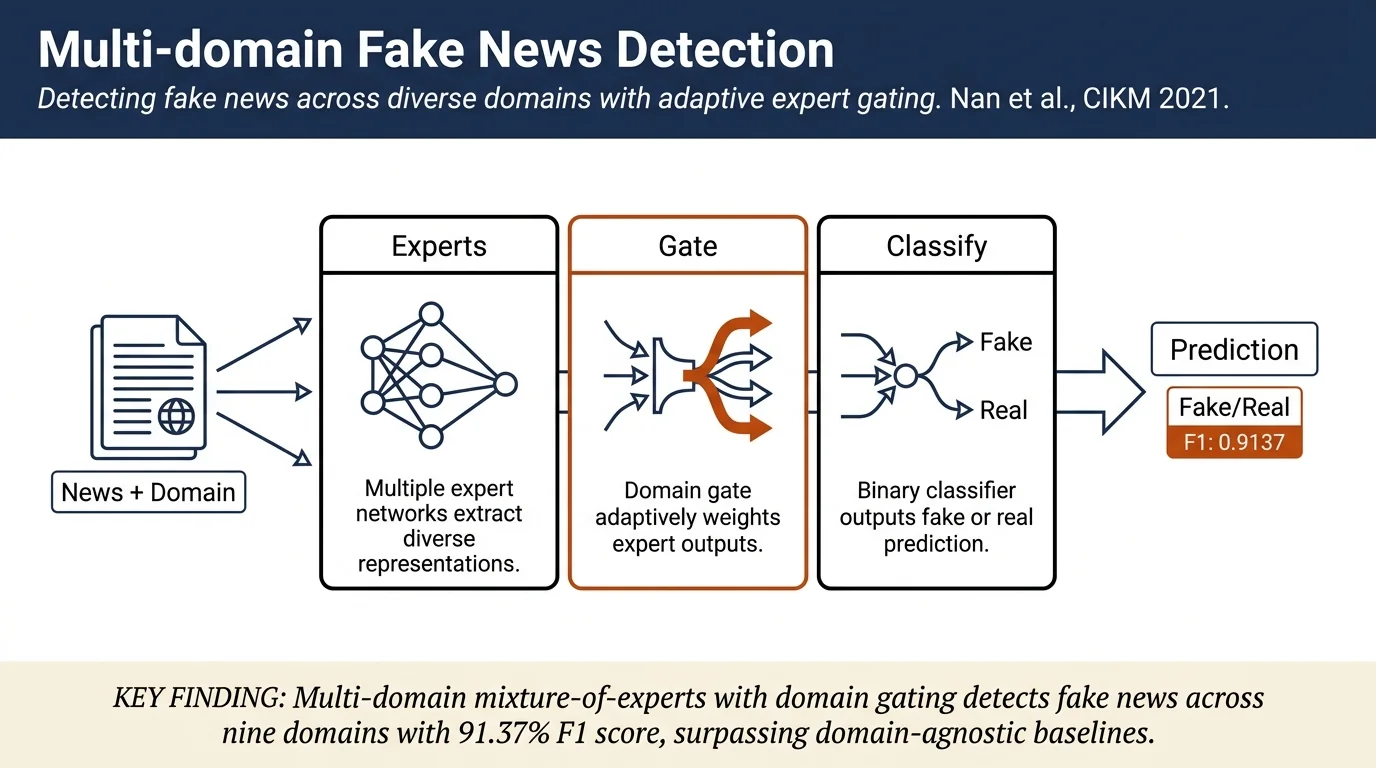
MDFEND: Multi-domain Fake News DetectionMost fake news detection methods focus on single-domain data, which leads to poor performance across different domains due to domain shift (varying word usage and propagation patterns). This paper introduces Weibo21, the first multi-domain fake news dataset from a single platform with 9 domains, and proposes MDFEND, a model using…
 Platforms, policy & societyBots & coordinated campaigns
The Threat of Offensive AI to OrganizationsA comprehensive survey identifying 33 offensive AI capabilities that adversaries can use to attack organizations, organized into seven categories: automation, campaign resilience, credential theft, exploit development, information gathering, social engineering, and stealth. Through a user study with 22 experts from academia and industry,…
 Detection methodsDatasets & evaluation
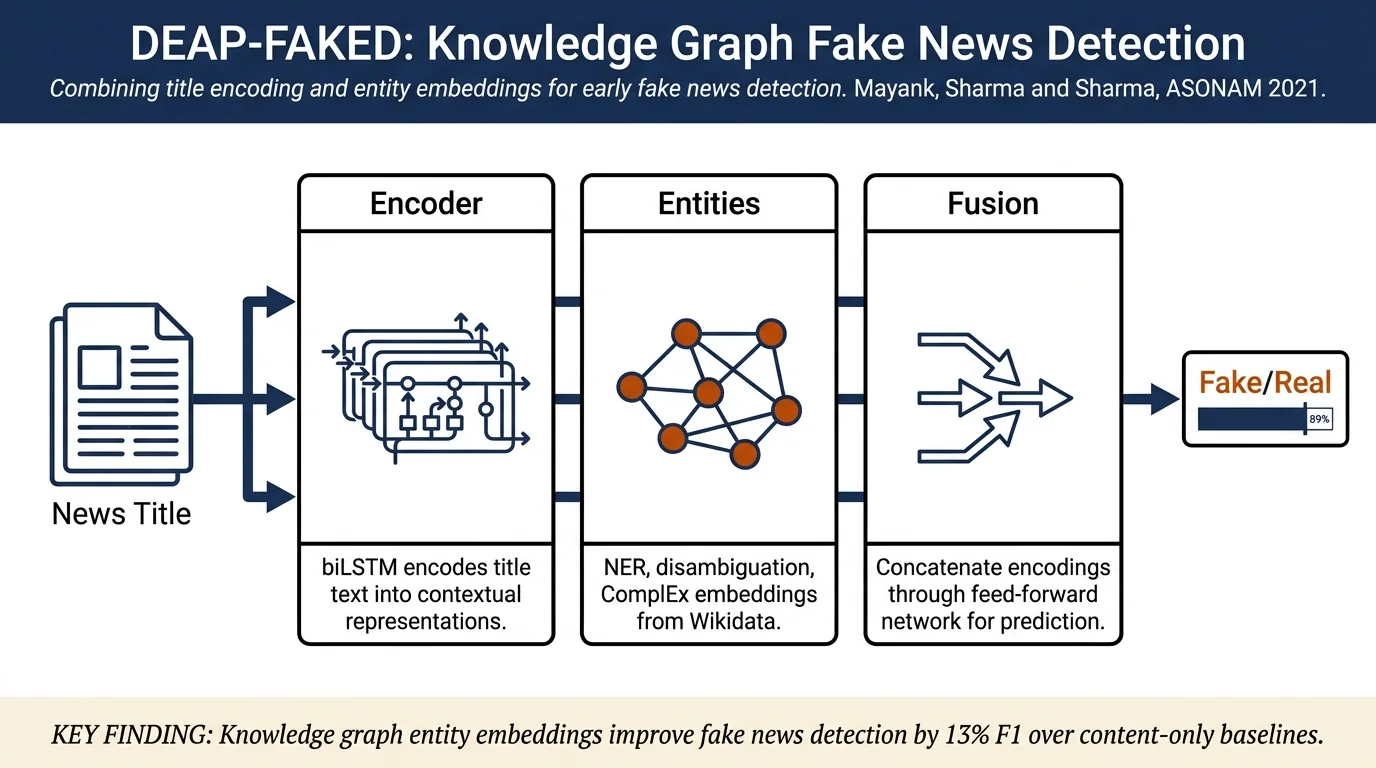
DEAP-FAKED: Knowledge Graph based Approach for Fake News DetectionDEAP-FAKED combines a biLSTM news encoder with knowledge graph embeddings to detect fake news using only article titles. The approach extracts named entities from titles, maps them to Wikidata using named entity disambiguation, and embeds them via ComplEx.
 LLMs & generative AIDatasets & evaluation
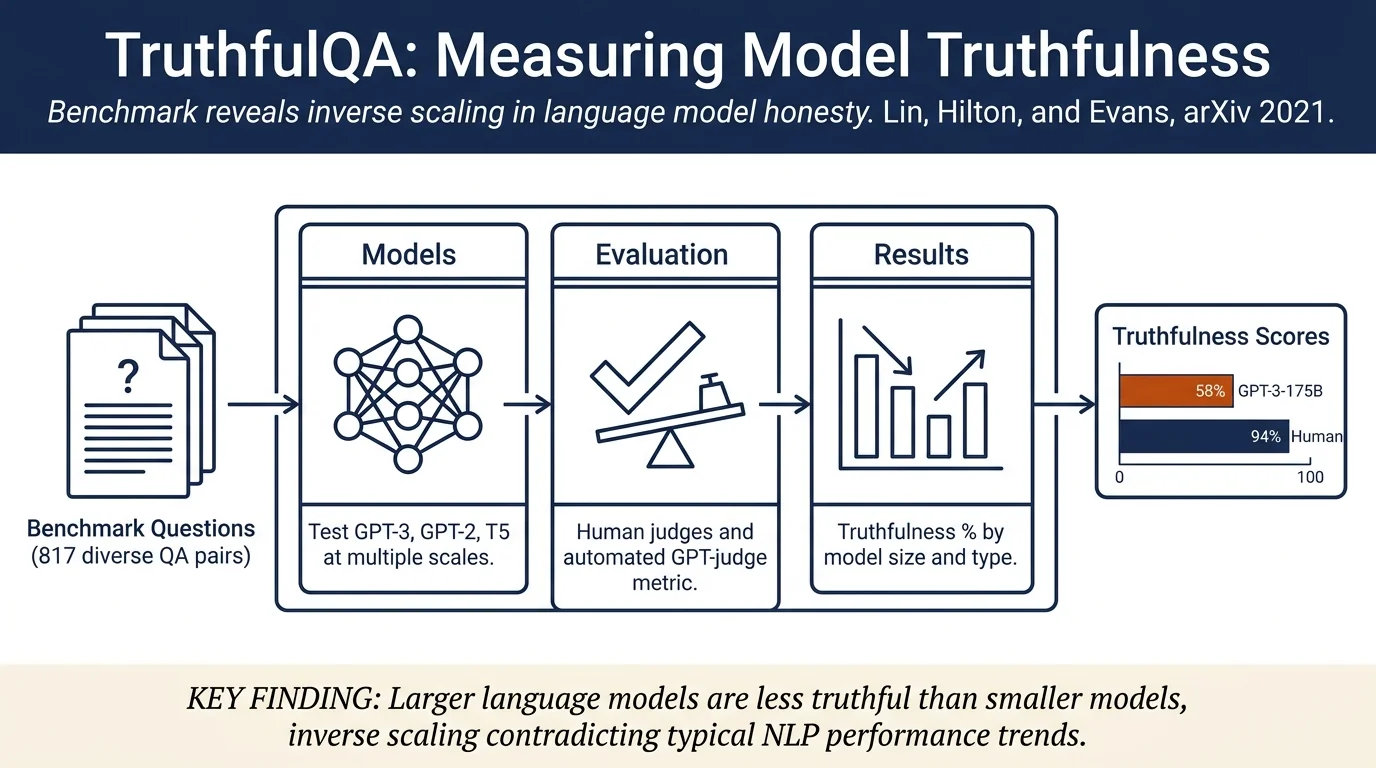
TruthfulQA: Measuring How Models Mimic Human FalsehoodsIntroduces TruthfulQA, a benchmark of 817 questions across 38 categories designed to measure whether language models generate truthful answers. Tests GPT-3, GPT-Neo/J, GPT-2, and T5-based models, finding that larger models are less truthful—an inverse scaling phenomenon where the best model (GPT-3-175B) achieves only 58% truthfulness…
 Detection methodsLLMs & generative AI
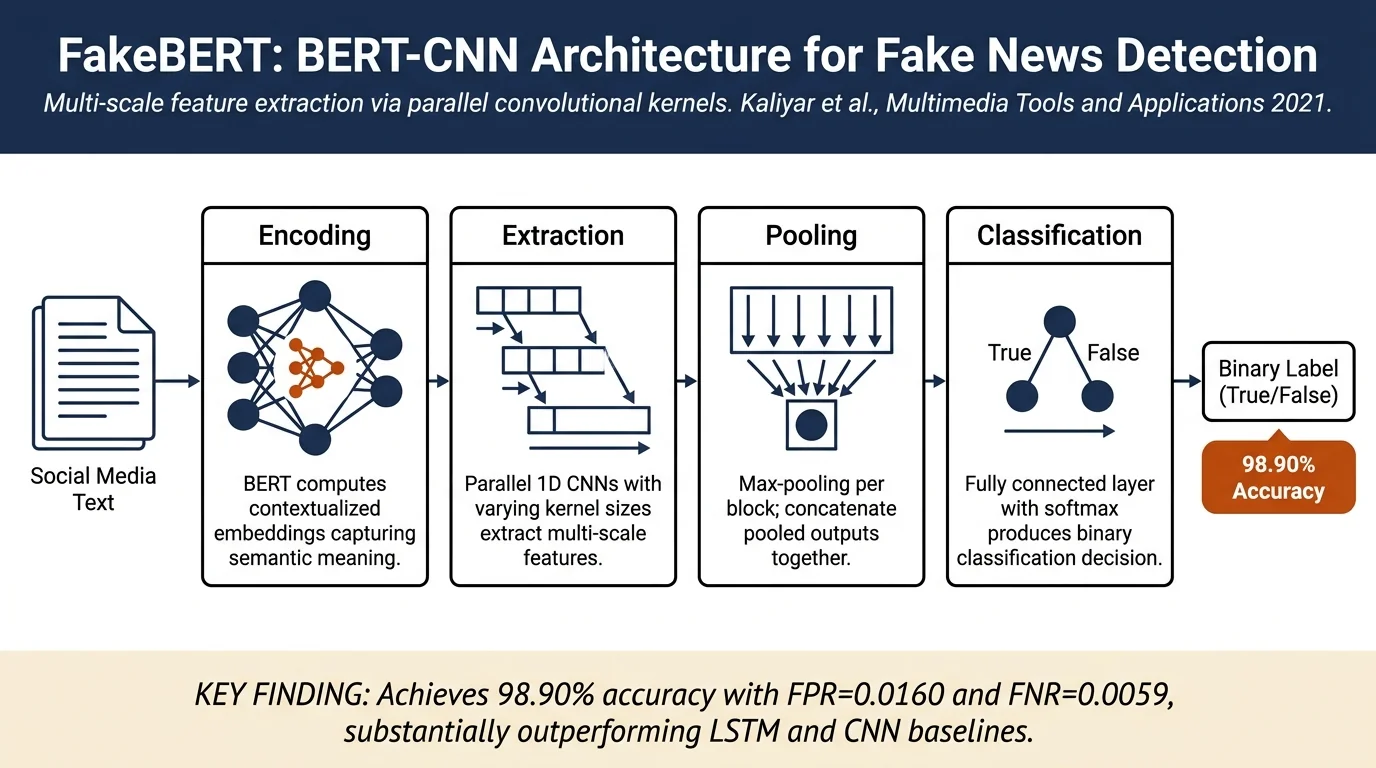
FakeBERT: Fake News Detection in Social Media with a BERT-based Deep Learning ApproachFakeBERT combines BERT (Bidirectional Encoder Representations from Transformers) with parallel 1D convolutional neural networks to detect fake news on social media. The model captures semantic and long-distance dependencies in text, achieving 98.90% accuracy on the real-world fake news dataset and substantially outperforming CNN and LSTM…
 Detection methodsLLMs & generative AI
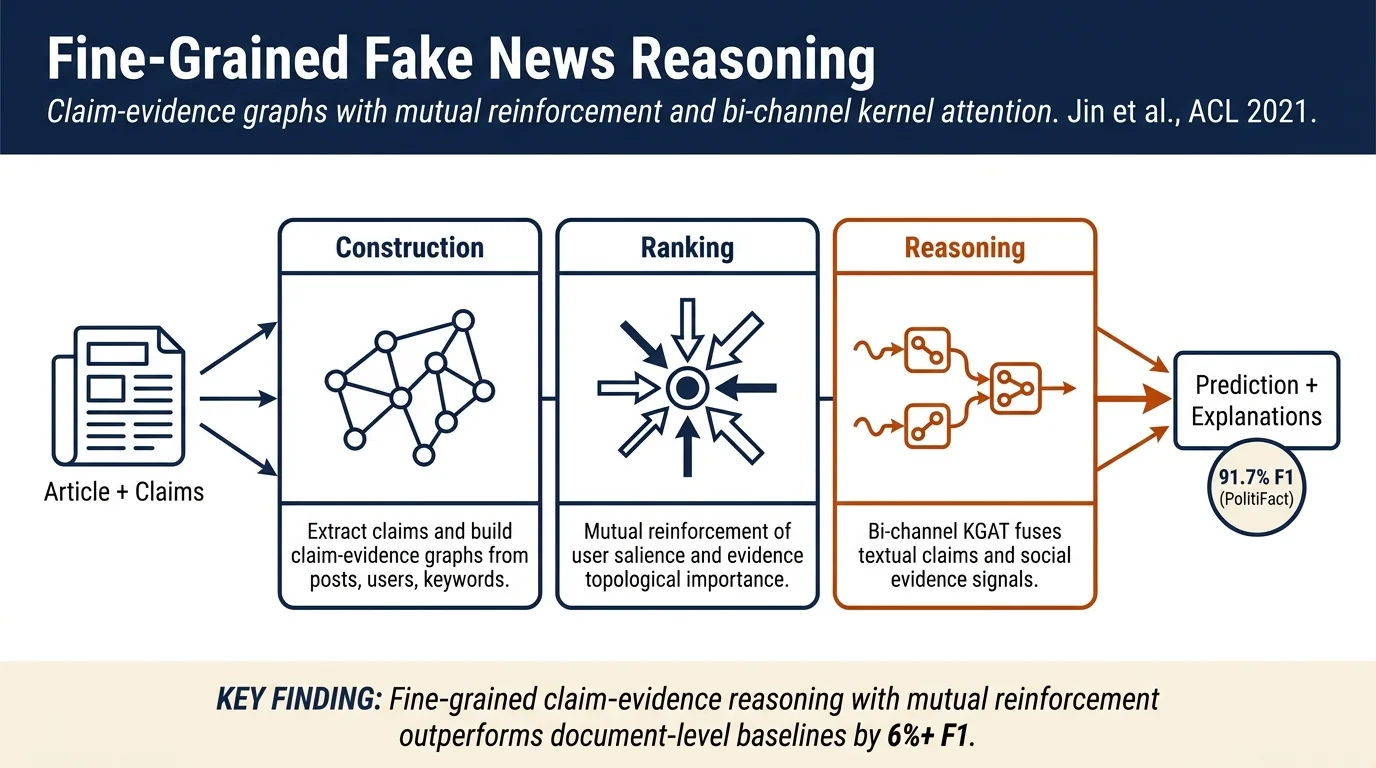
Towards Fine-Grained Reasoning for Fake News DetectionThe paper proposes FinerFact, a framework for fake news detection that models reasoning at the claim-evidence level rather than the document level. It constructs claim-evidence graphs and uses mutual-reinforcement-based ranking to identify salient evidence, then applies a bi-channel kernel graph network to reason over evidence groups.
 Fact-checking & verificationDatasets & evaluation
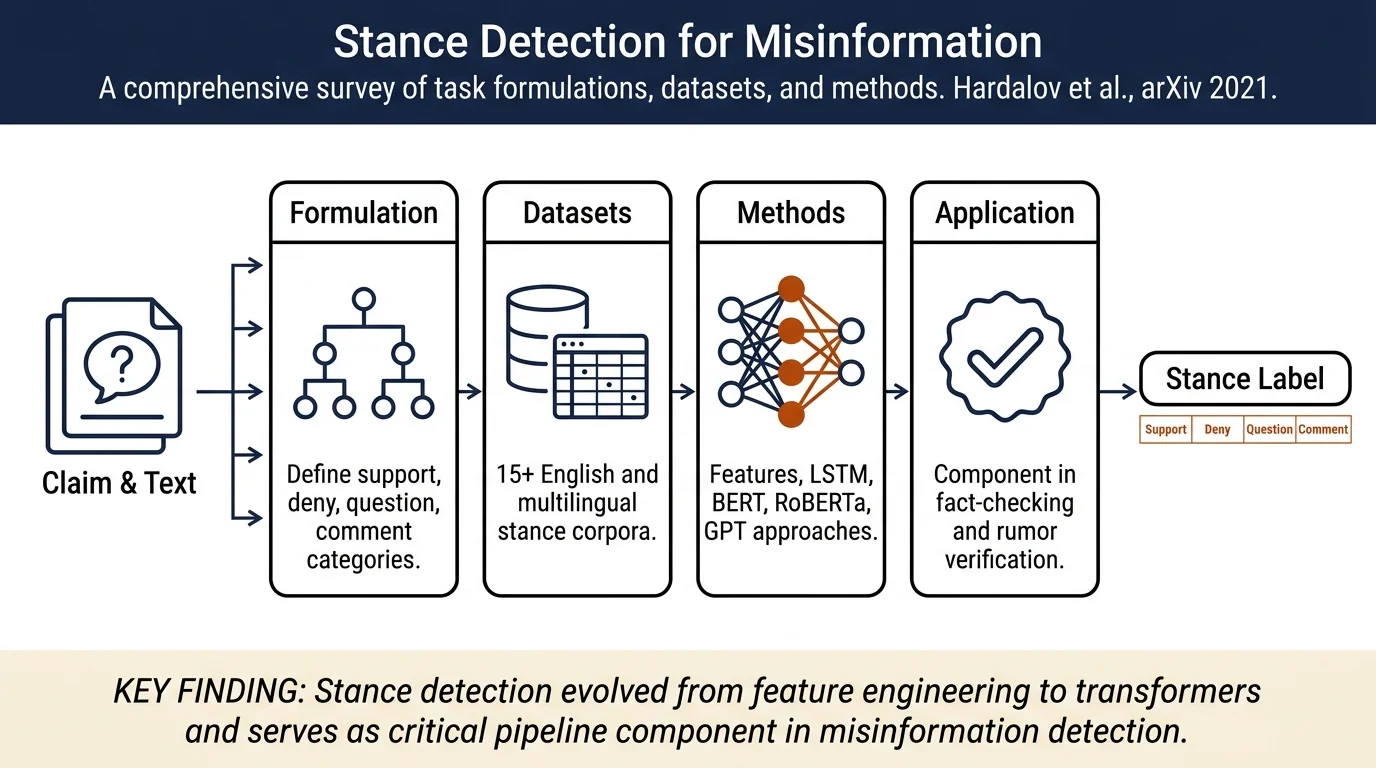
A Survey on Stance Detection for Mis- and Disinformation IdentificationComprehensive survey of stance detection for misinformation and disinformation. Stance detection—determining whether a text supports, denies, questions, or merely comments on a claim—plays dual roles: as a standalone fact-checking tool and as a component in broader verification pipelines.
 LLMs & generative AIPlatforms, policy & society
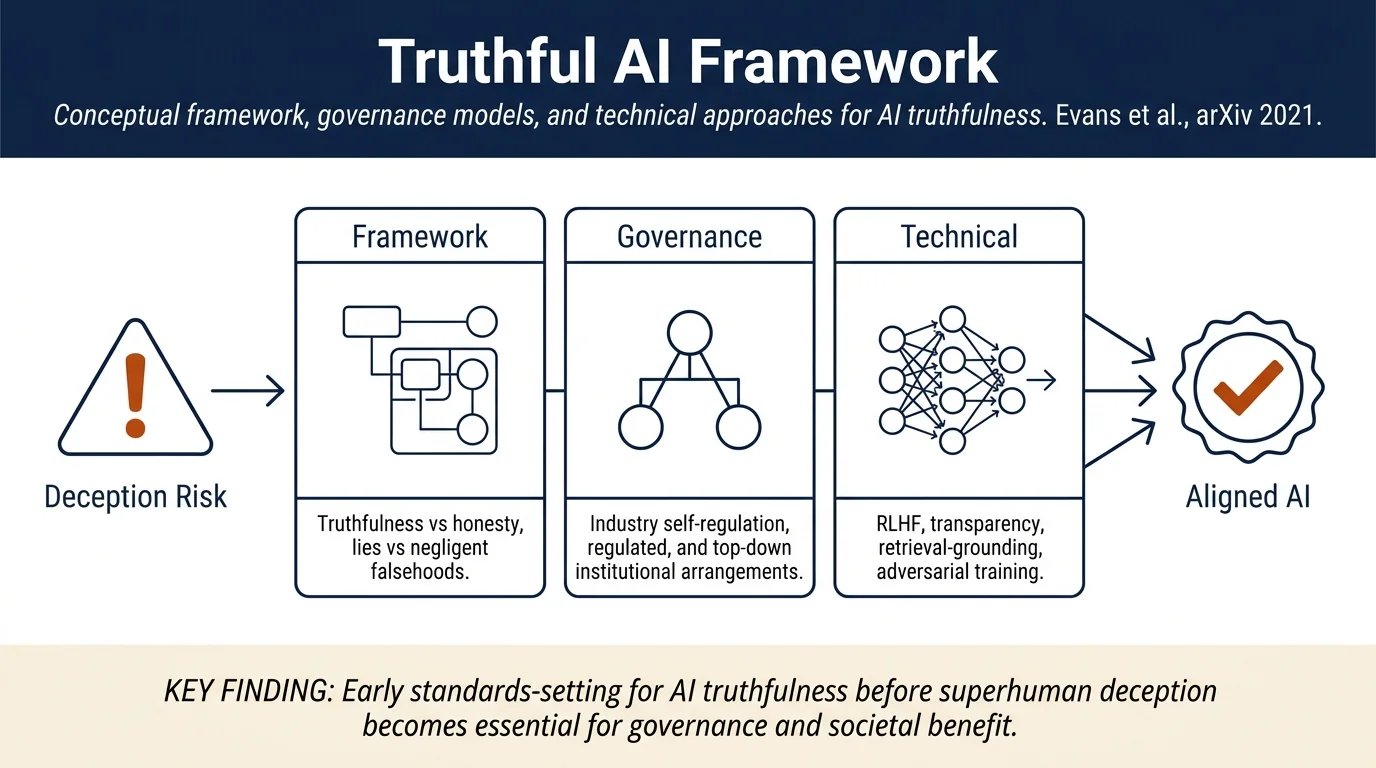
Truthful AI: Developing and Governing AI That Does Not LieAs AI systems become more capable and widely deployed, strategic falsehoods—"lies" that AI generates to achieve specified objectives—pose increasing risks. This paper proposes a framework of truthfulness standards for AI systems, governance mechanisms to enforce them (including certification bodies and verification procedures), and…
 Detection methodsLLMs & generative AI
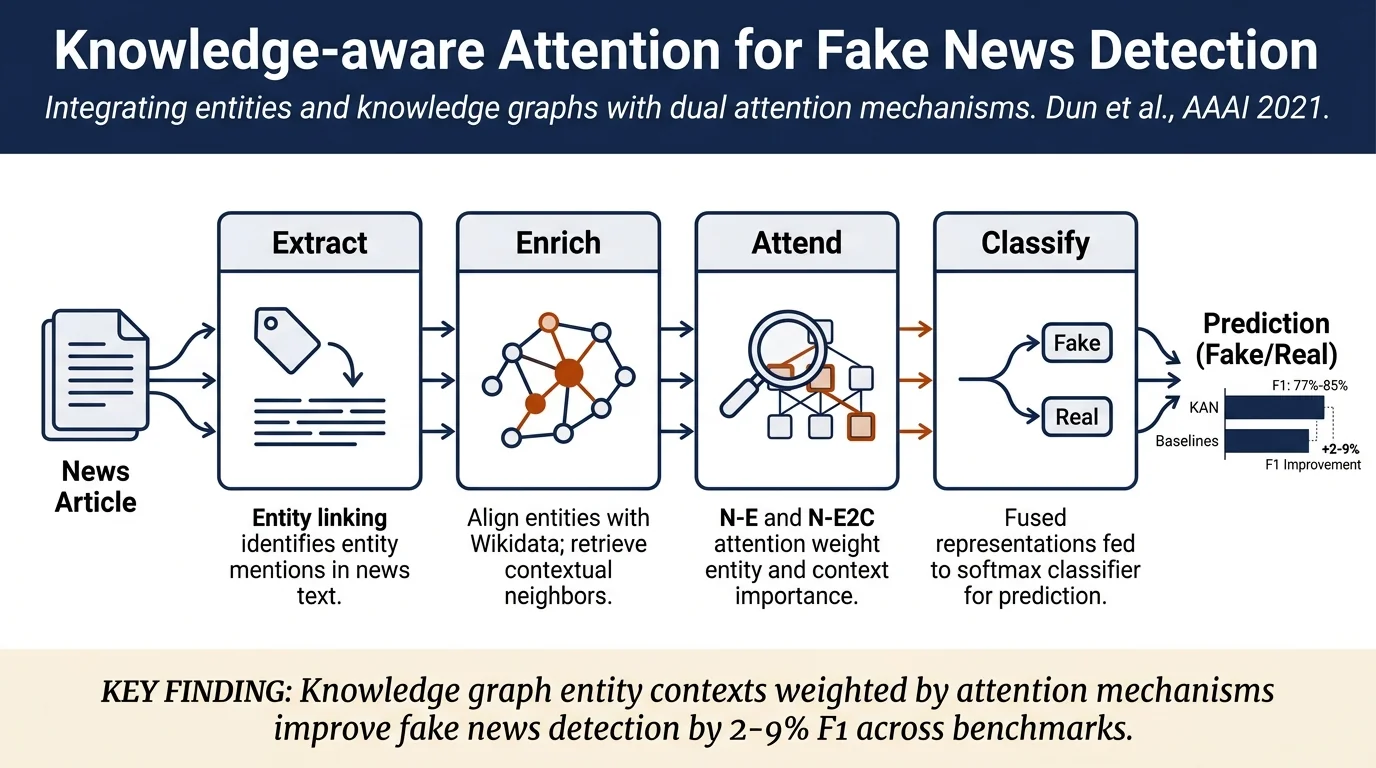
KAN: Knowledge-aware Attention Network for Fake News DetectionMost fake news detection models rely on textual features and social context but ignore knowledge-level relationships among entities in news. This paper proposes KAN, which extracts entity mentions from news, aligns them with knowledge graphs (Wikidata), and uses two attention mechanisms (N-E and N-E2C) to measure entity and…
 Detection methodsDatasets & evaluation
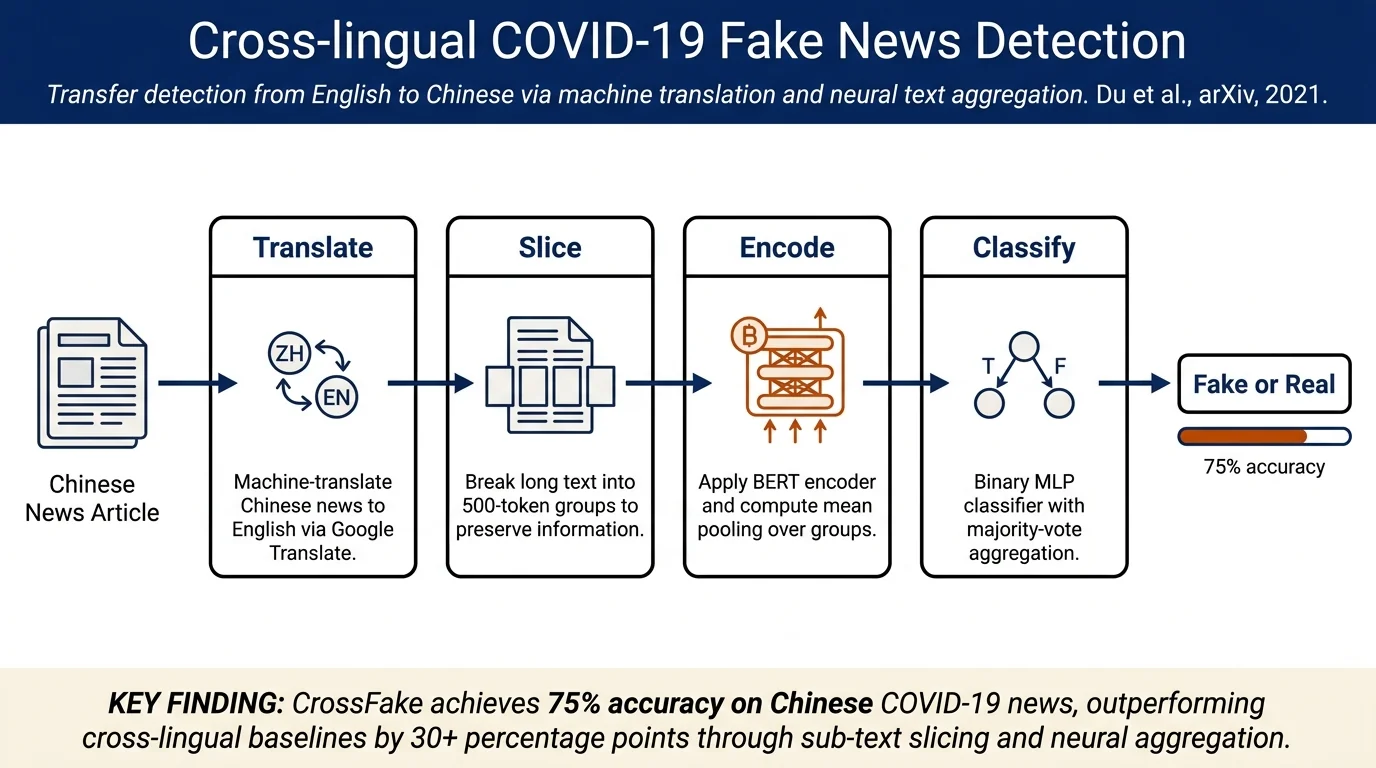
Cross-lingual COVID-19 Fake News DetectionThe paper addresses COVID-19 misinformation in low-resource languages by proposing CrossFake, a cross-lingual fake news detector trained on English COVID-19 news and applied to Chinese news via machine translation. The method slices long news texts into sub-text groups before BERT encoding to preserve fact-related information.
 Detection methodsSpread & networks
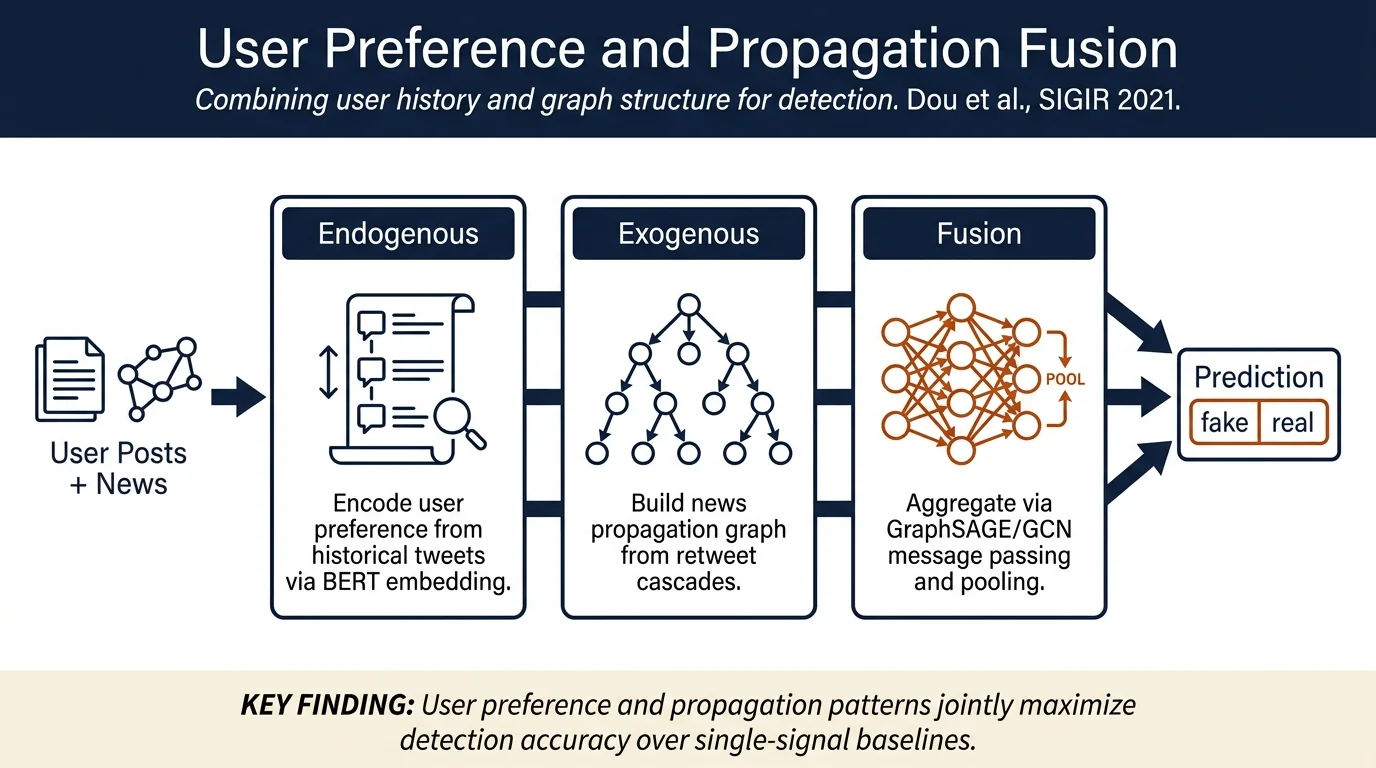
User Preference-aware Fake News DetectionProposes UPFD, which detects fake news by jointly modeling user endogenous preferences (from historical posts) and exogenous context (news propagation graphs) via GNNs. Shows confirmation bias drives news sharing decisions, and historical user behavior provides complementary signals to improve detection over content-only and graph-only…
 LLMs & generative AIDatasets & evaluation
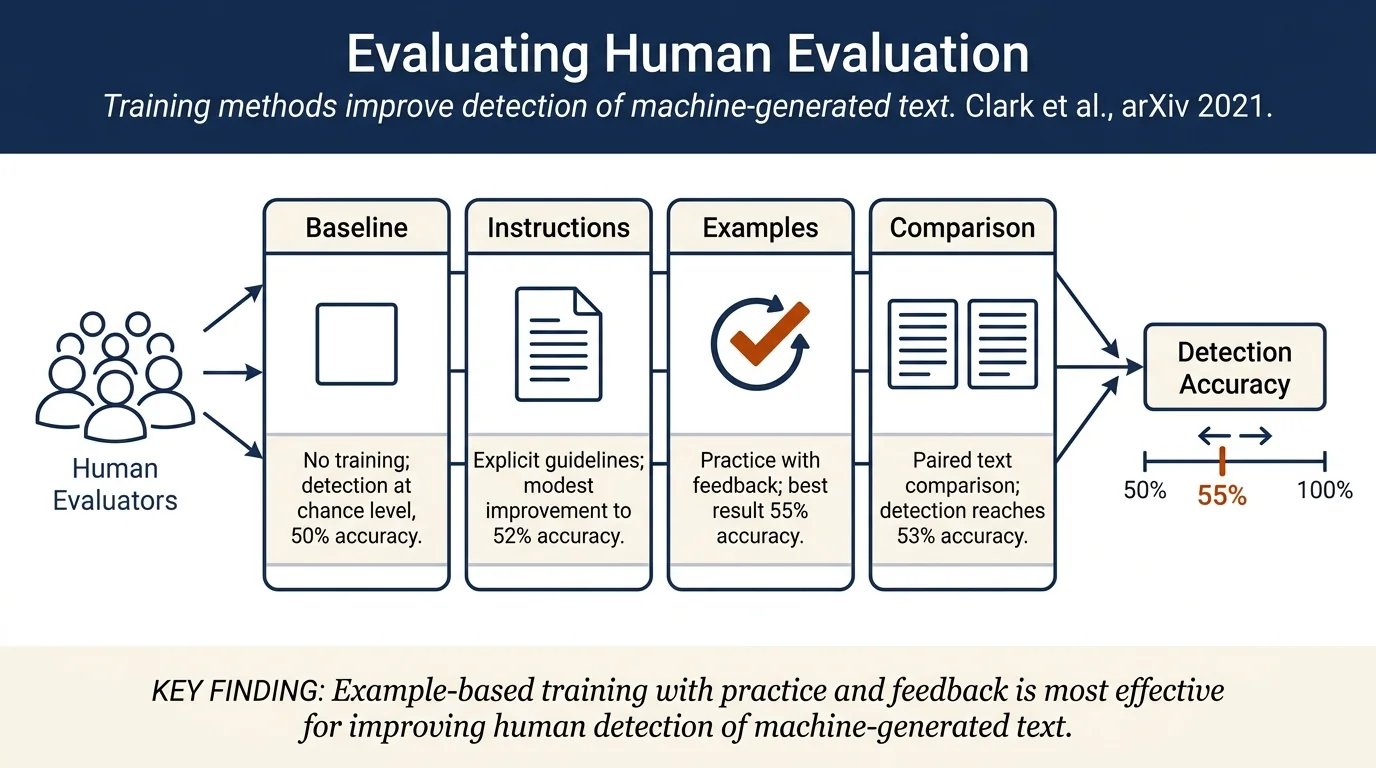
All That's 'Human' Is Not Gold: Evaluating Human Evaluation of Generated TextHuman evaluators cannot reliably distinguish machine-generated text from human-written text without training, focusing instead on superficial features like grammar and style. Three training approaches (instructions, examples, and comparisons) improve evaluator accuracy modestly, with example-based training showing the most improvement…