Explore papers
Filter by research area, year and venue. Every filter is in the address bar, so you can share a view as a link.
 Psychology & interventionsPlatforms, policy & society
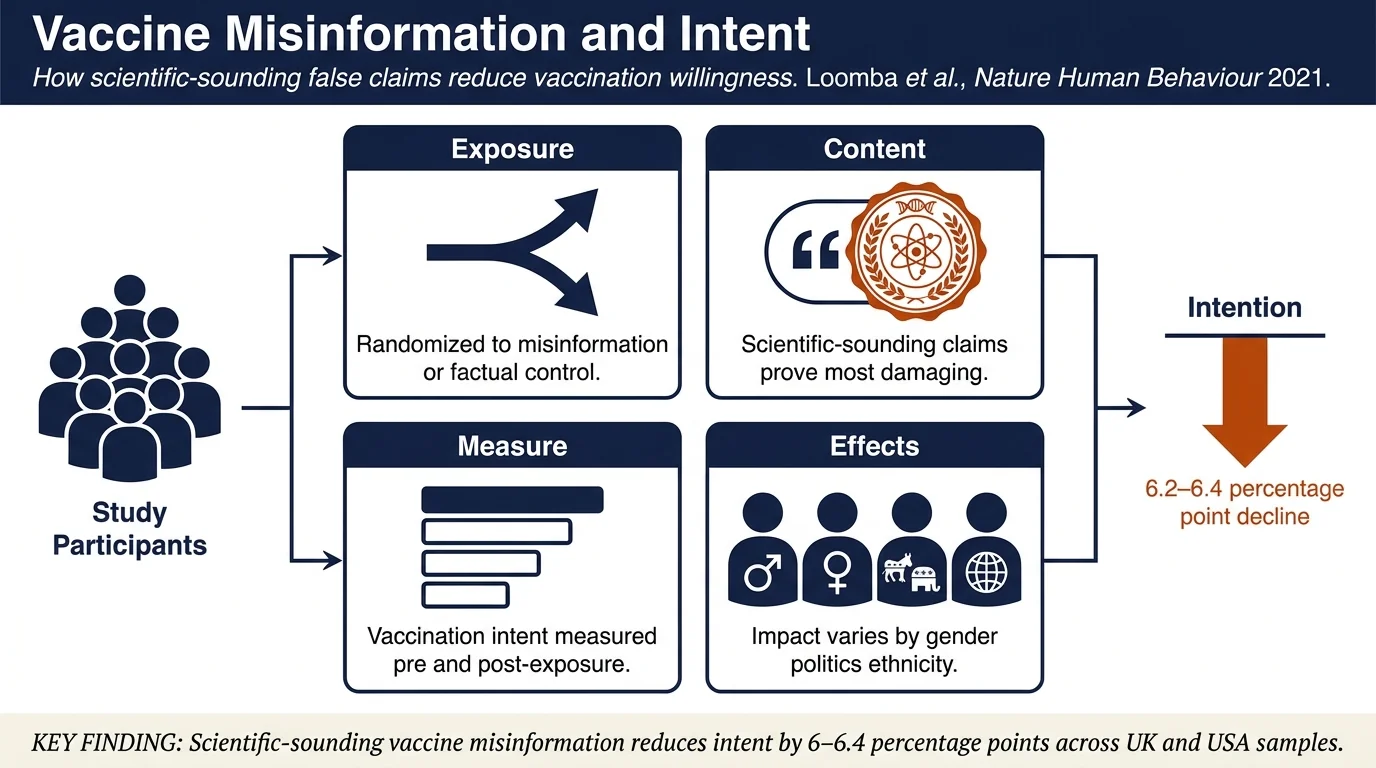
Measuring the impact of COVID-19 vaccine misinformation on vaccination intent in the UK and USARandomized controlled trial on 8,001 respondents (4,000 UK, 4,001 USA) measuring causal impact of exposure to COVID-19 vaccine misinformation. Exposure to misinformation reduced vaccination intent by 6.2 percentage points in the UK and 6.4 in the USA relative to exposure to factual information.
 Fact-checking & verificationDetection methods
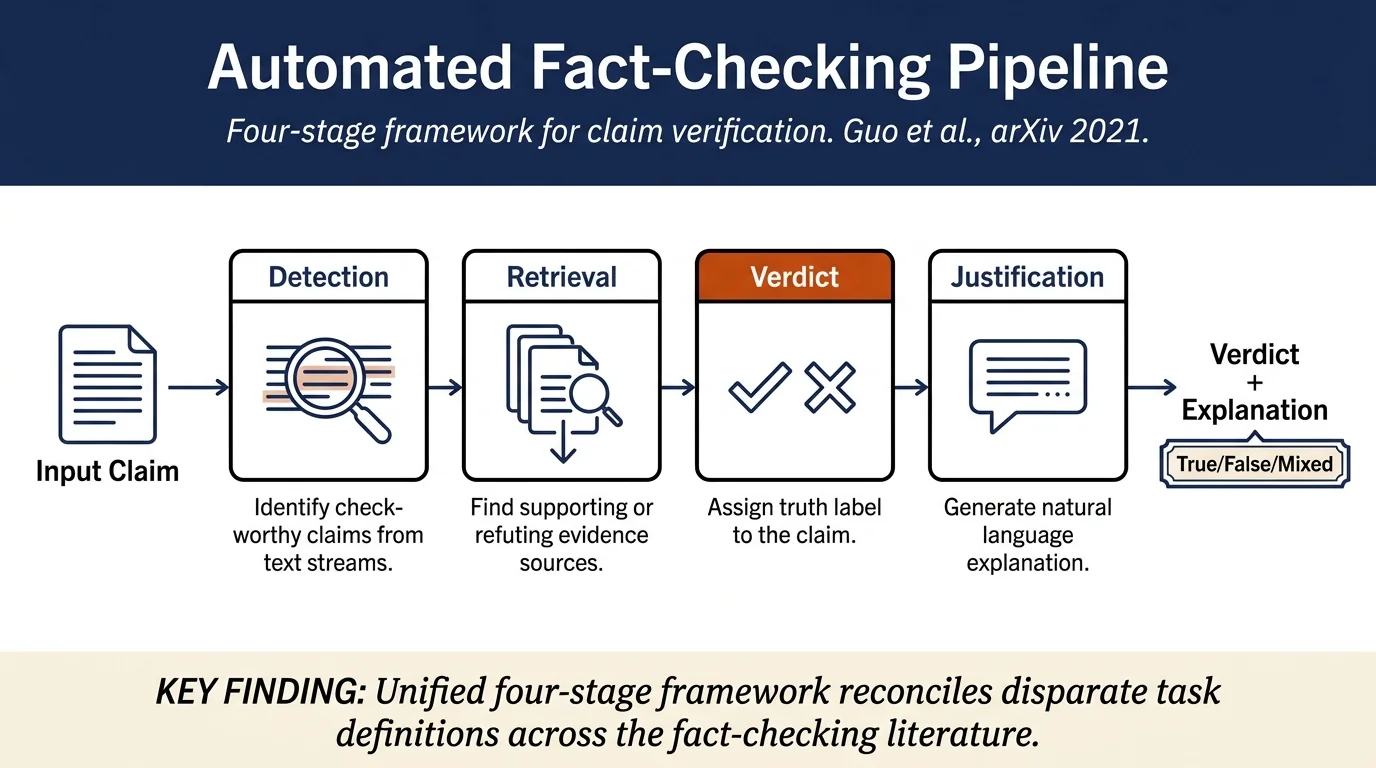
A Survey on Automated Fact-CheckingThis comprehensive survey unifies automated fact-checking research under a four-stage NLP framework: claim detection (identifying check-worthy claims), evidence retrieval (finding supporting/refuting information), verdict prediction (assigning truth labels), and justification production (explaining decisions). The authors review 25+…
 Spread & networksDatasets & evaluation
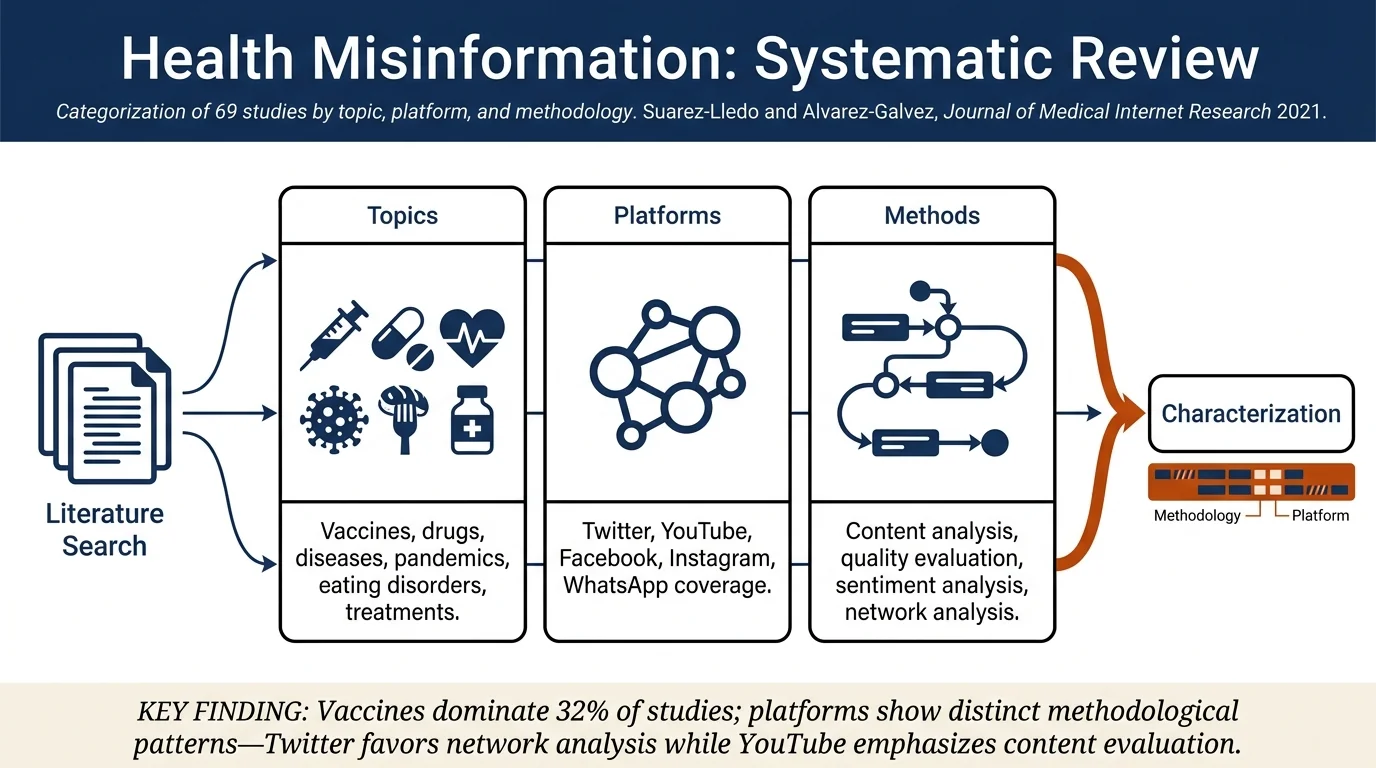
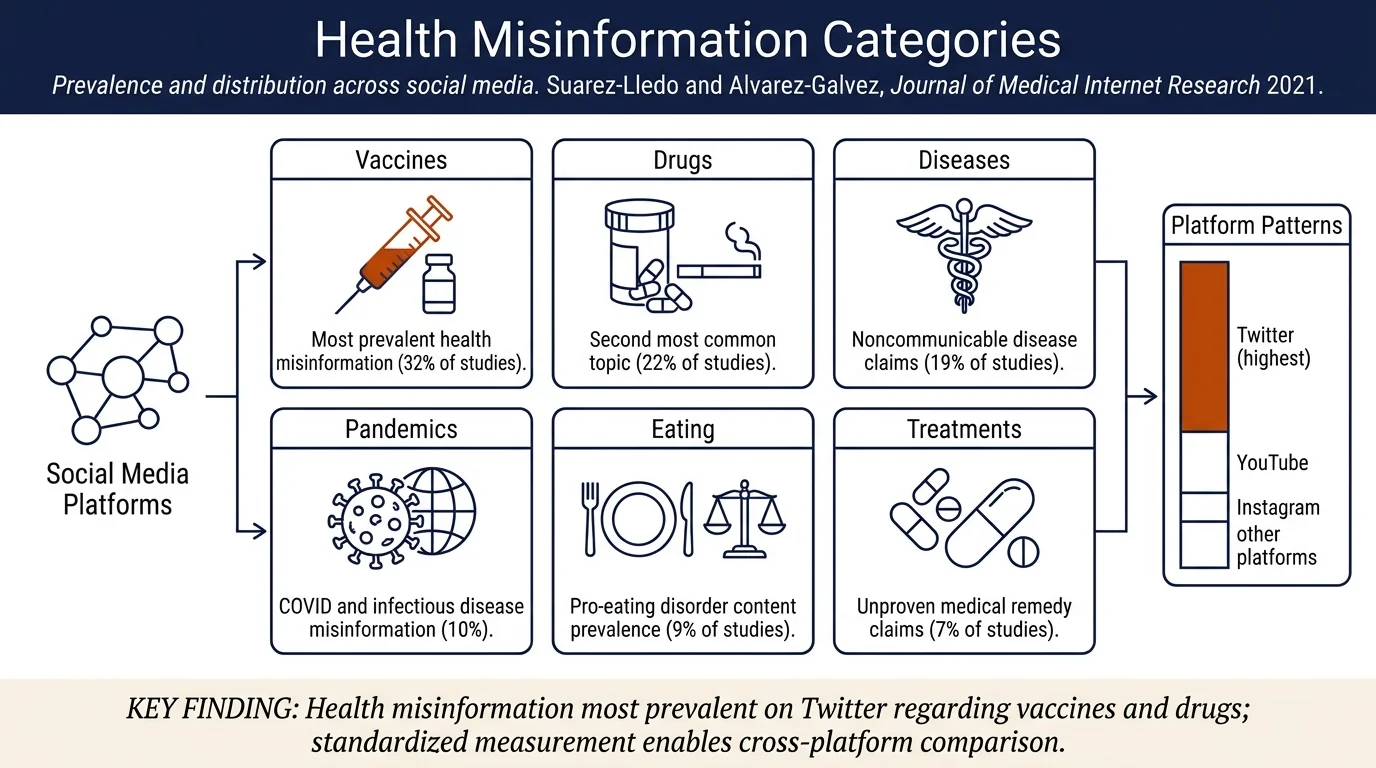
Prevalence of Health Misinformation on Social Media: Systematic ReviewSystematic review of 69 studies examining health misinformation prevalence across social media platforms. Vaccines, drugs, and smoking are the most-studied topics; Twitter is the primary platform for misinformation about smoking and substances, while vaccines are discussed broadly across platforms.
 Detection methodsLLMs & generative AI
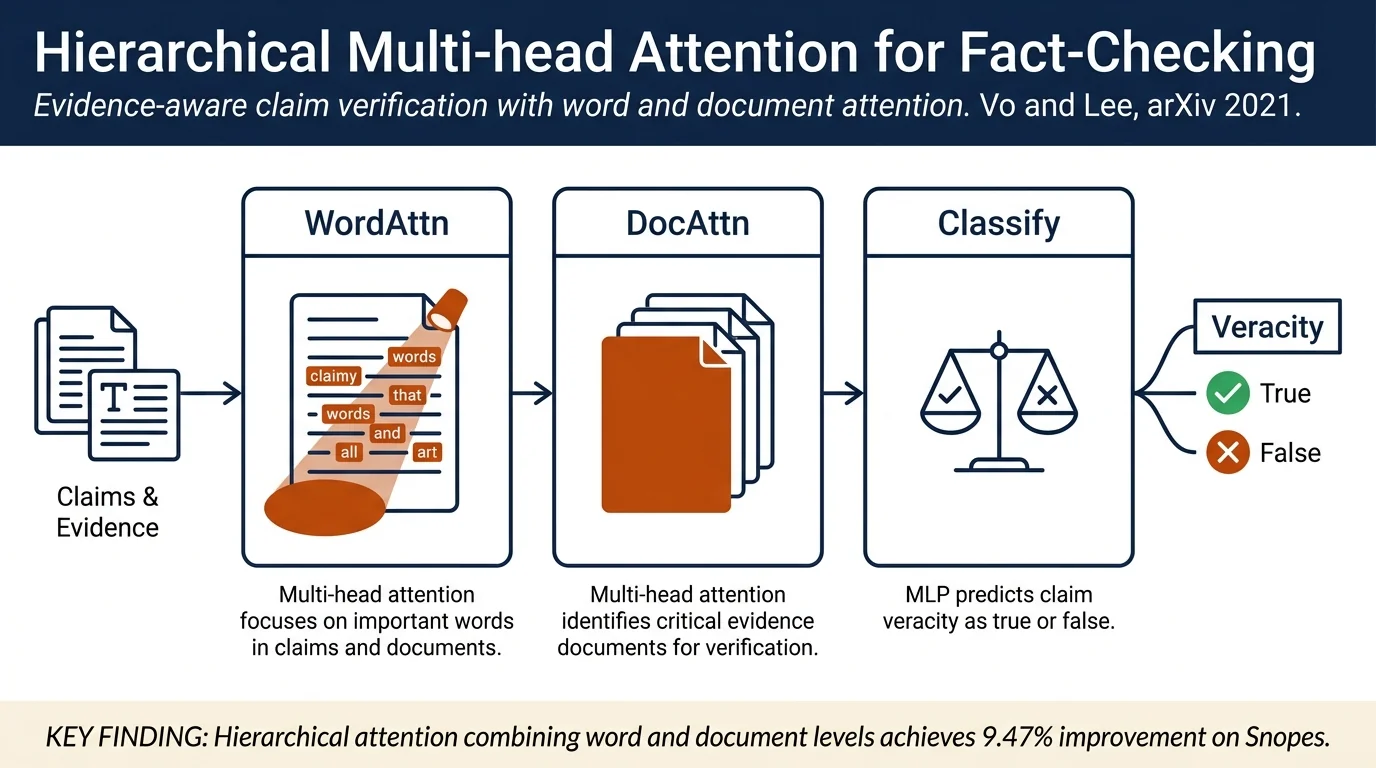
Hierarchical Multi-head Attentive Network for Evidence-aware Fake News DetectionThe paper proposes MAC, a hierarchical multi-head attention network that jointly learns word-level and document-level attention for fact-checking textual claims against evidence from external sources. Multi-head attention mechanisms capture different semantic aspects of claims and evidence documents, enabling the model to focus on…
 Spread & networksPlatforms, policy & society
Prevalence of Health Misinformation on Social Media: Systematic ReviewThis systematic review of 69 studies characterizes health misinformation topics and their prevalence across social media platforms. Health misinformation was most prevalent on Twitter regarding smoking and drugs; vaccines, noncommunicable diseases, and pandemics were also common topics.
 Fact-checking & verificationDatasets & evaluation
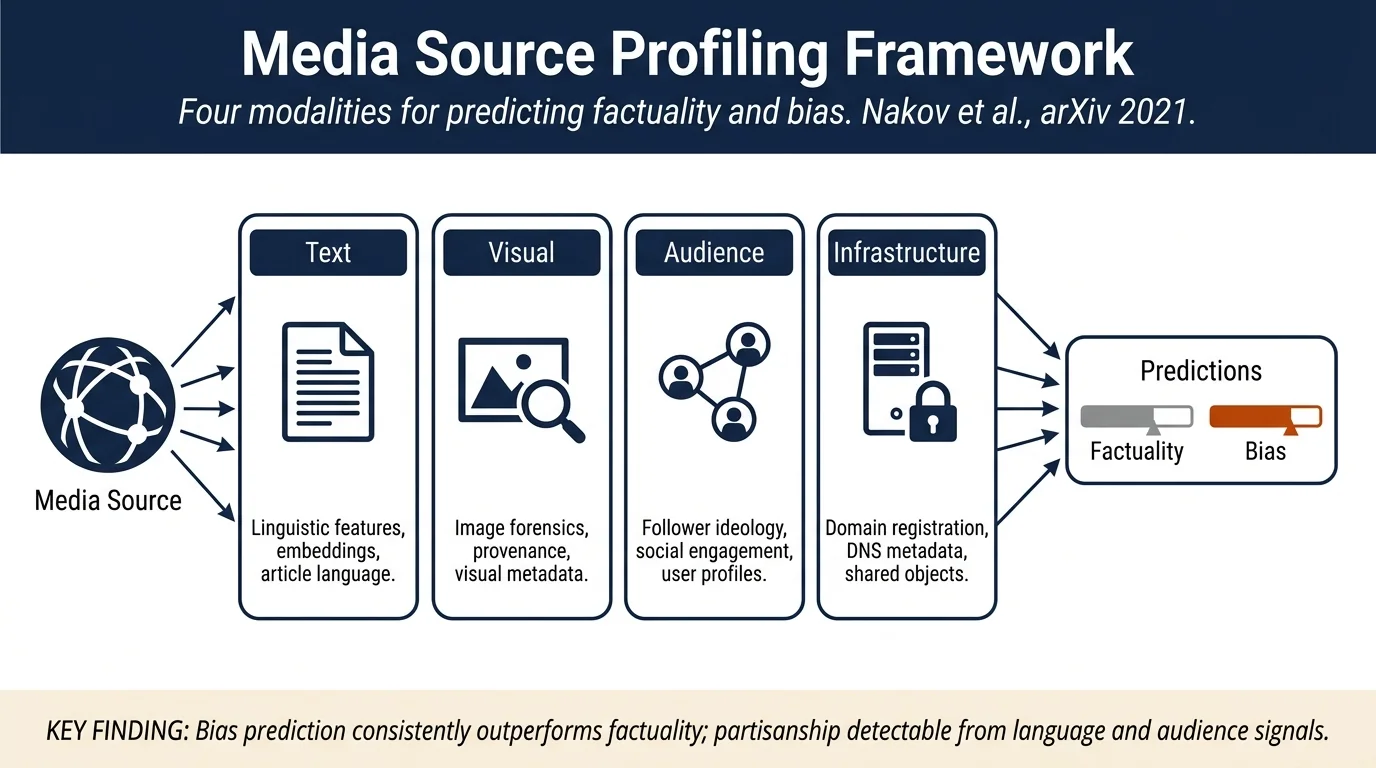
A Survey on Predicting the Factuality and the Bias of News MediaSurvey of media-level profiling methods for predicting news outlet factuality and political bias. Rather than checking individual claims or articles, the approach profiles entire news sources to enable early detection of unreliable content at publication time.
 LLMs & generative AIDatasets & evaluation
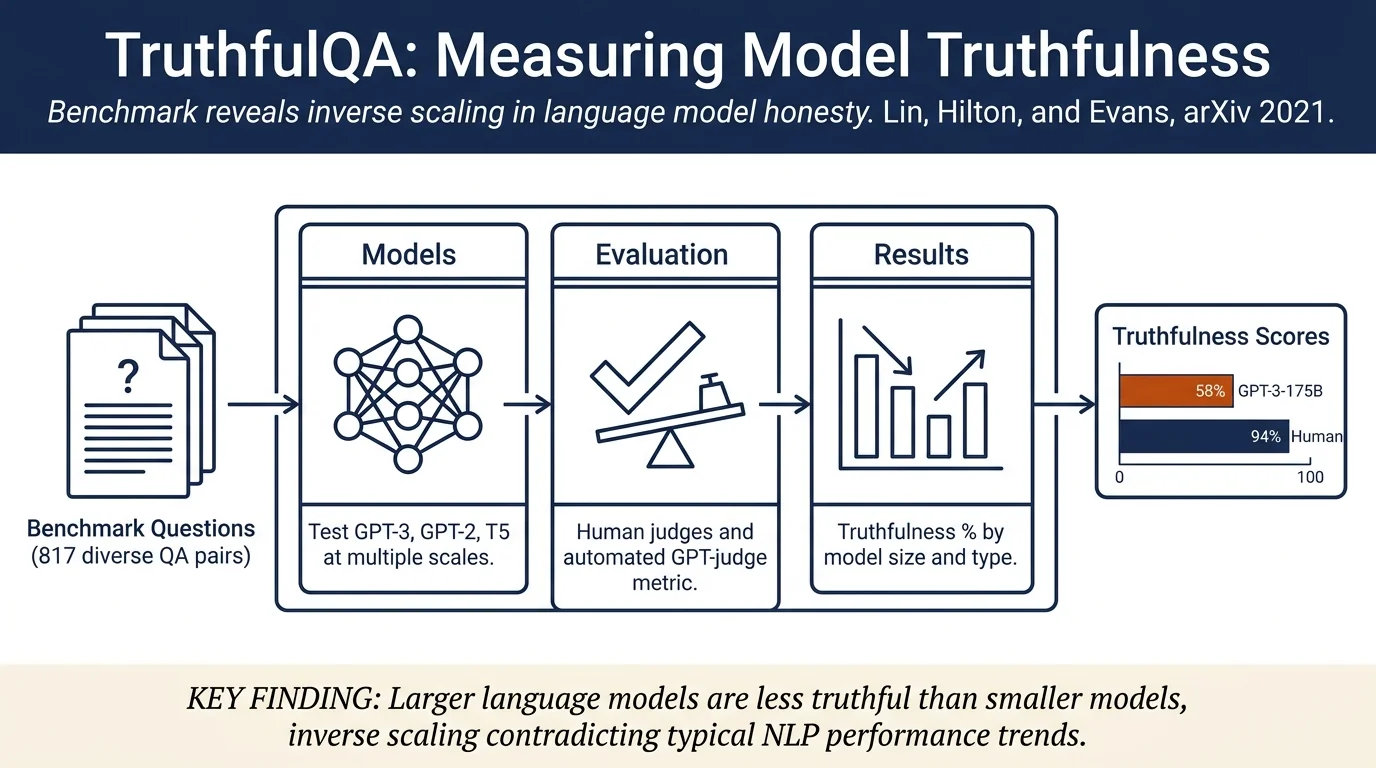
TruthfulQA: Measuring How Models Mimic Human FalsehoodsIntroduces TruthfulQA, a benchmark of 817 questions across 38 categories designed to measure whether language models generate truthful answers. Tests GPT-3, GPT-Neo/J, GPT-2, and T5-based models, finding that larger models are less truthful—an inverse scaling phenomenon where the best model (GPT-3-175B) achieves only 58% truthfulness…
 Detection methodsLLMs & generative AI
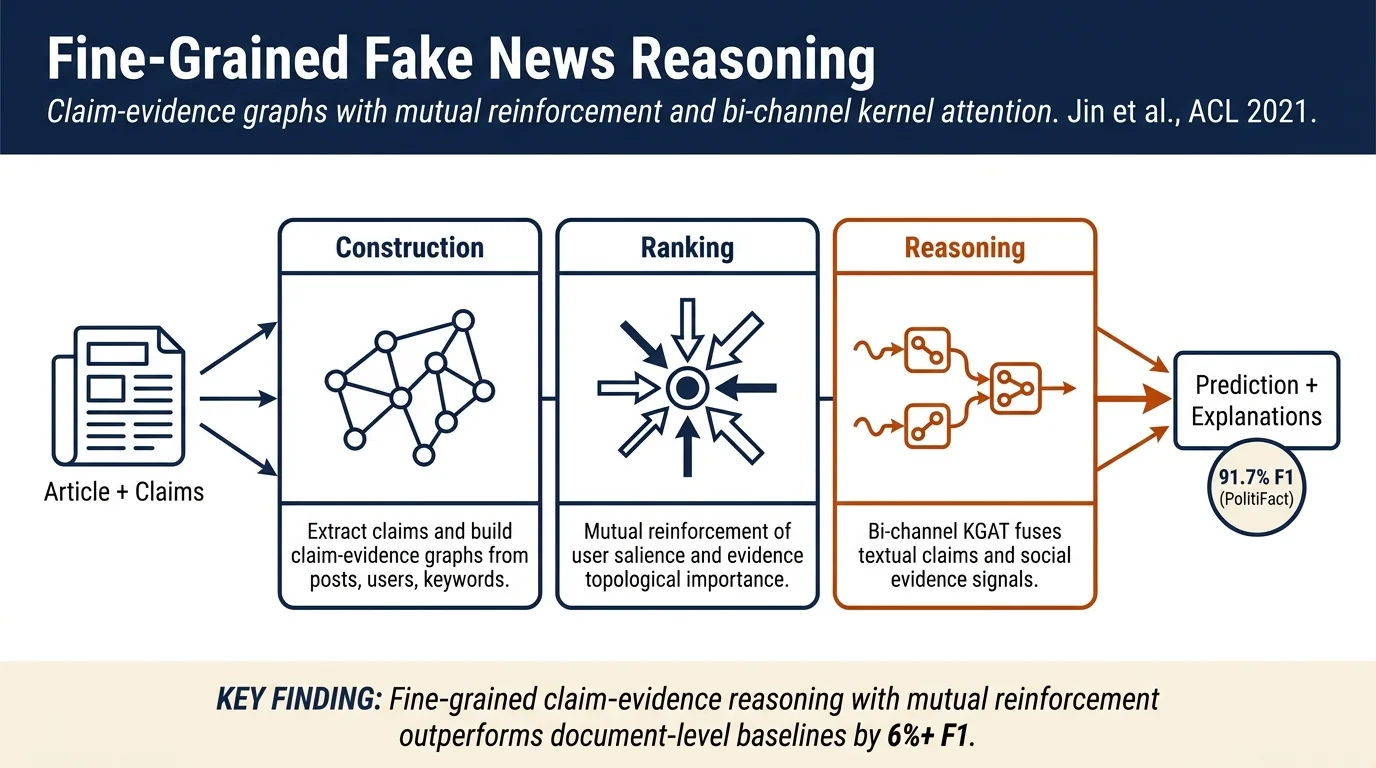
Towards Fine-Grained Reasoning for Fake News DetectionThe paper proposes FinerFact, a framework for fake news detection that models reasoning at the claim-evidence level rather than the document level. It constructs claim-evidence graphs and uses mutual-reinforcement-based ranking to identify salient evidence, then applies a bi-channel kernel graph network to reason over evidence groups.
 Fact-checking & verificationDatasets & evaluation
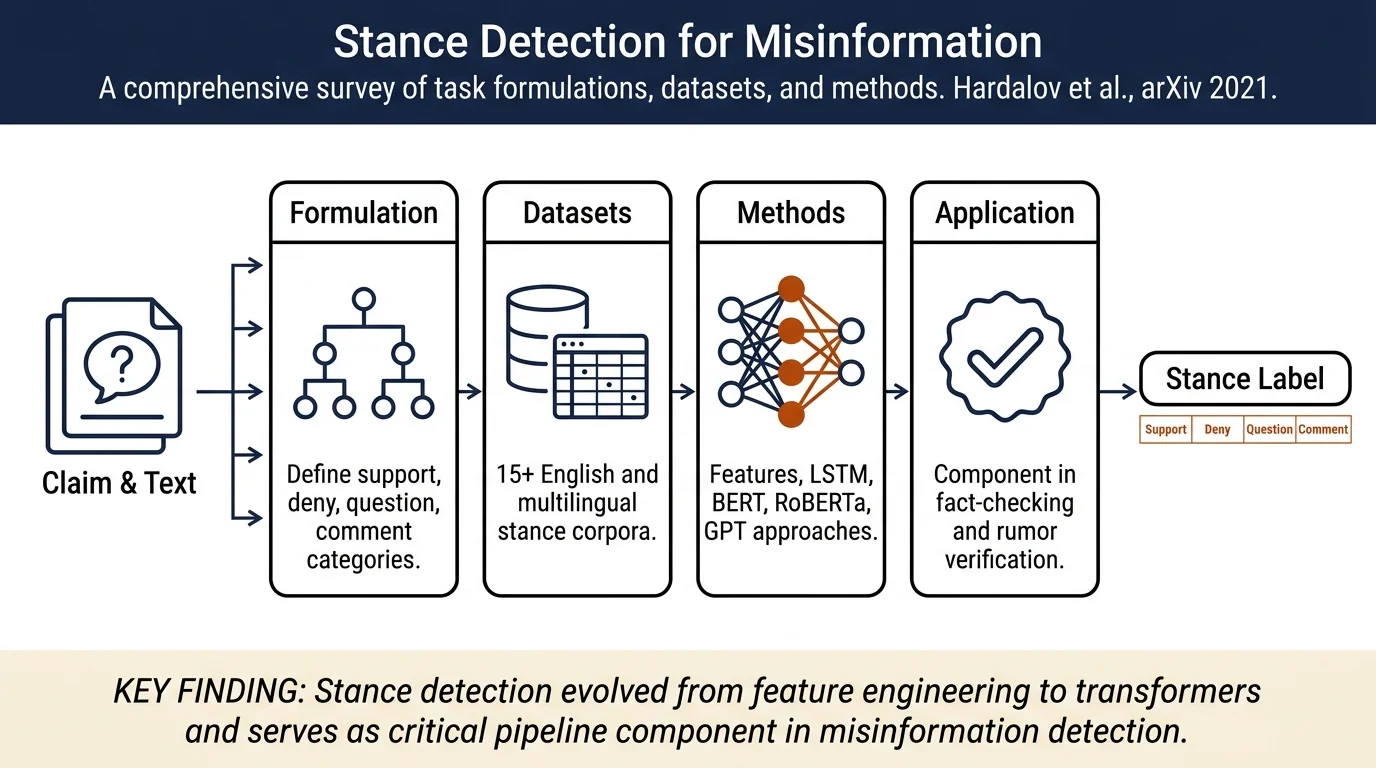
A Survey on Stance Detection for Mis- and Disinformation IdentificationComprehensive survey of stance detection for misinformation and disinformation. Stance detection—determining whether a text supports, denies, questions, or merely comments on a claim—plays dual roles: as a standalone fact-checking tool and as a component in broader verification pipelines.
 LLMs & generative AIPlatforms, policy & society
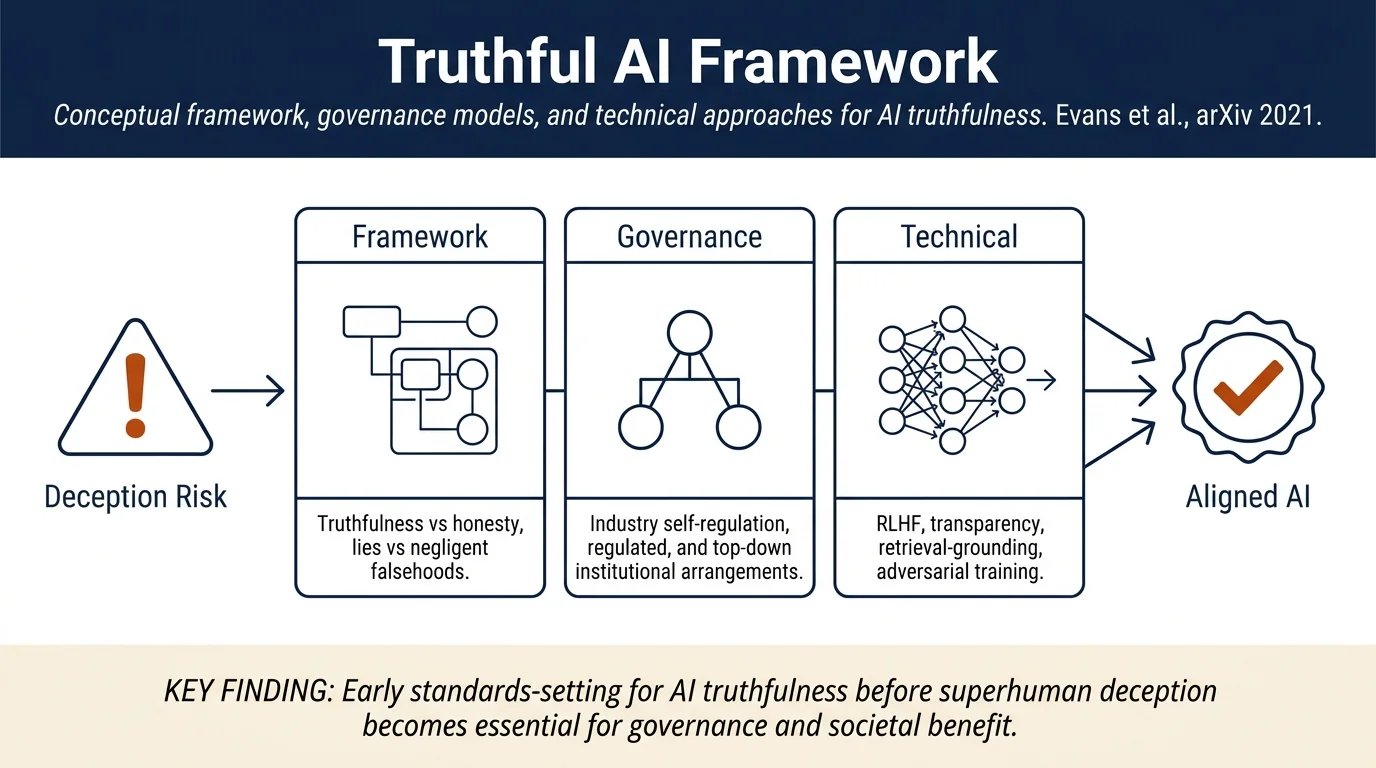
Truthful AI: Developing and Governing AI That Does Not LieAs AI systems become more capable and widely deployed, strategic falsehoods—"lies" that AI generates to achieve specified objectives—pose increasing risks. This paper proposes a framework of truthfulness standards for AI systems, governance mechanisms to enforce them (including certification bodies and verification procedures), and…
 Psychology & interventionsPlatforms, policy & society
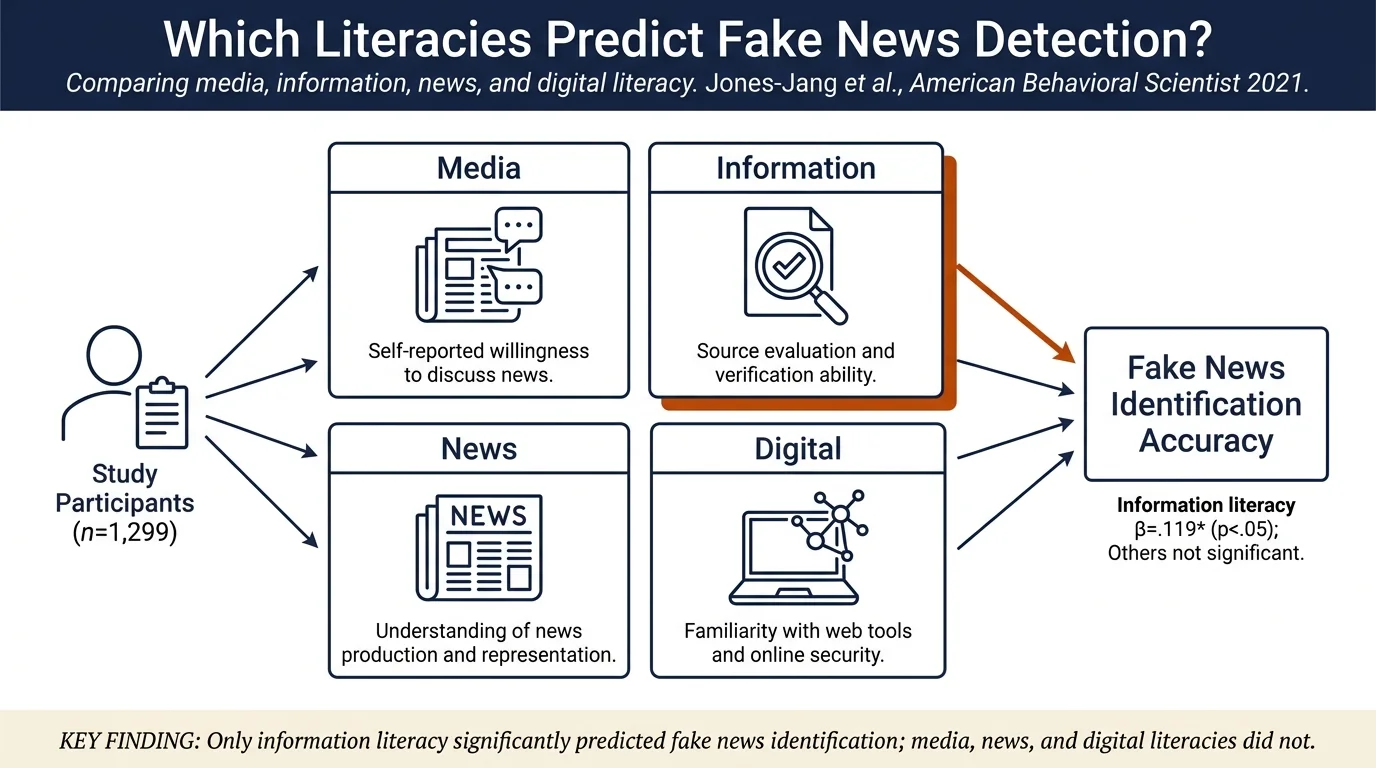
Does Media Literacy Help Identification of Fake News? Information Literacy Helps, but Other Literacies Don'tA survey of 1,299 U.S. citizens tests whether four types of media literacy—media, information, news, and digital—predict ability to identify fake news. Only information literacy (the ability to search and evaluate verified sources) significantly improves fake news identification; media, news, and digital literacies showed no significant…
 Spread & networksPlatforms, policy & society
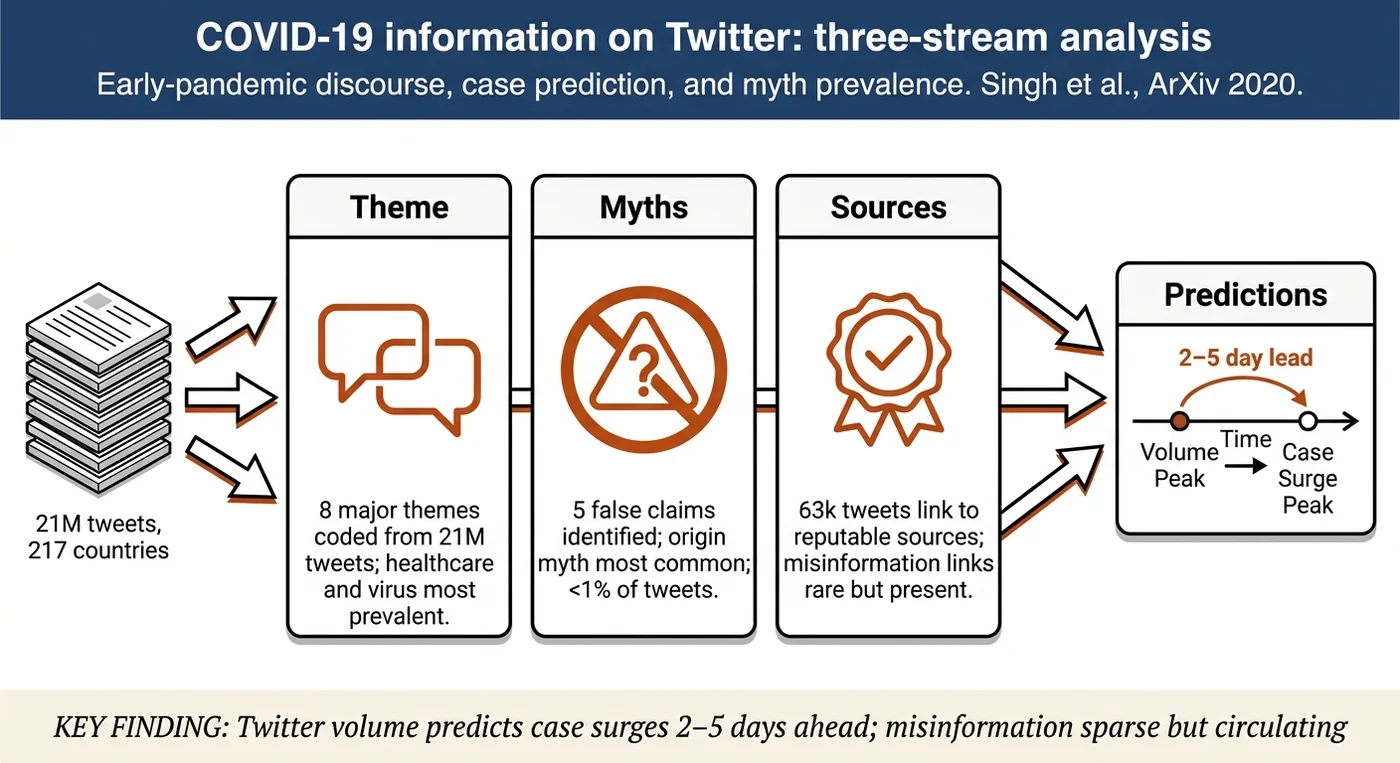
A first look at COVID-19 information and misinformation sharing on TwitterEarly-pandemic analysis of 21 million COVID-19 tweets showing Twitter conversations predict case increases by 2–5 days; identifies five prevalent myths (origin, flu comparison, heat, home remedies, vaccine) accounting for ~0.6% of tweets; finds most shared URLs point to reputable sources (CDC, WHO) rather than misinformation sites,…
 Spread & networksPlatforms, policy & society
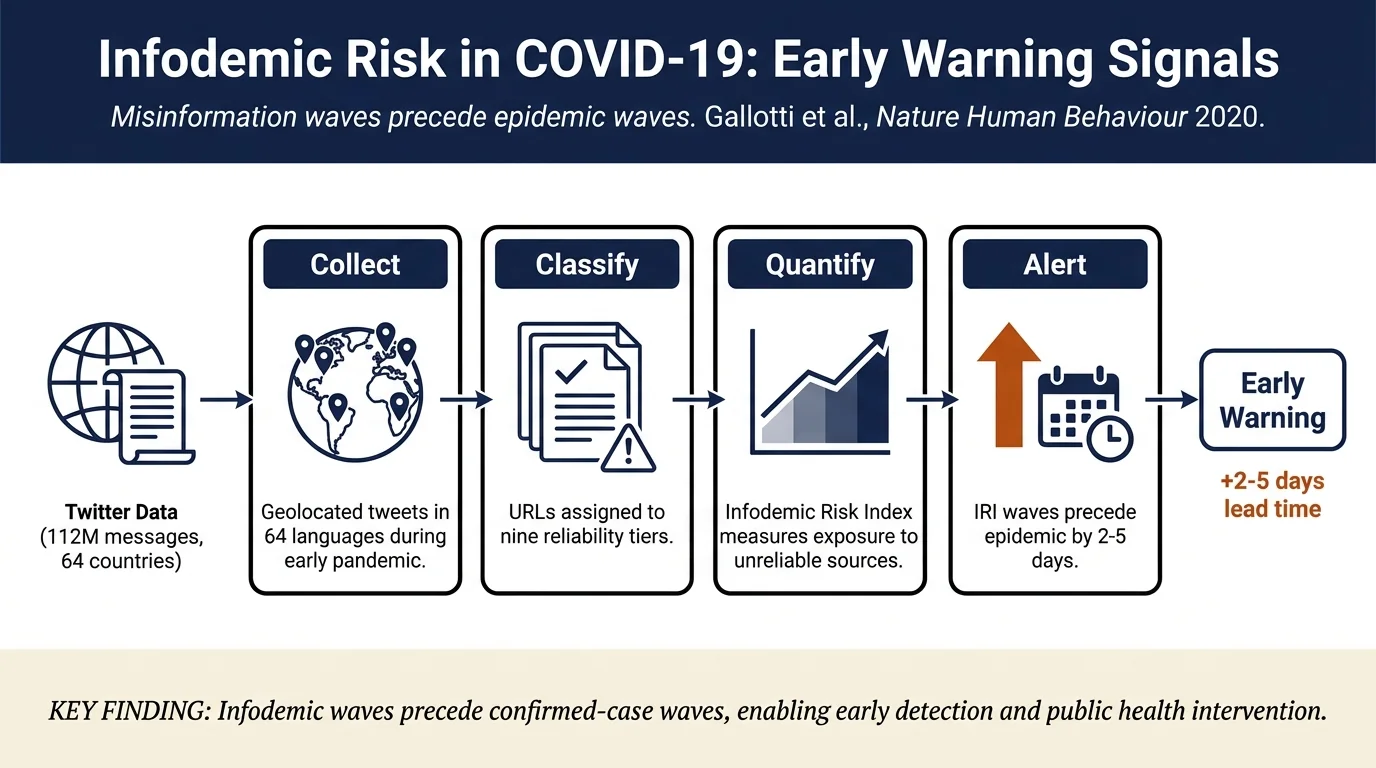
Assessing the risks of 'infodemics' in response to COVID-19 epidemicsAnalysis of 112+ million geolocated Twitter messages about COVID-19 (January–March 2020) across 64 languages and countries. Develops an infodemic risk index (IRI) measuring exposure to unreliable news; demonstrates that waves of unreliable information precede pandemic waves, providing early-warning signals for policy intervention.
 Fact-checking & verificationPlatforms, policy & society
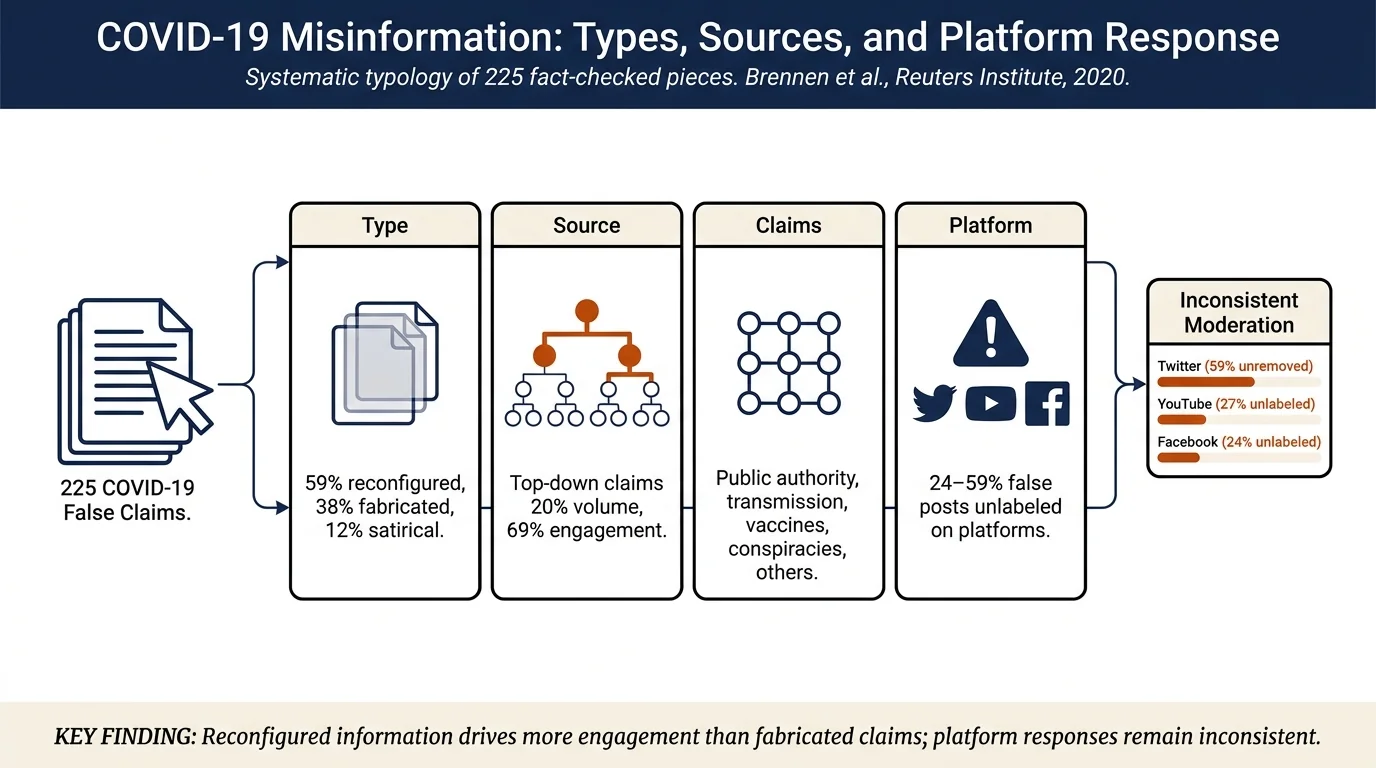
Types, Sources, and Claims of COVID-19 MisinformationSystematic analysis of 225 fact-checked COVID-19 misinformation pieces reveals that most false content reconfigures existing information (59%) rather than fabricating entirely new claims. Public authorities are cited in 39% of misinformation, yet top-down claims from politicians and celebrities account for only 20% of volume but drive…
 Detection methodsFact-checking & verification
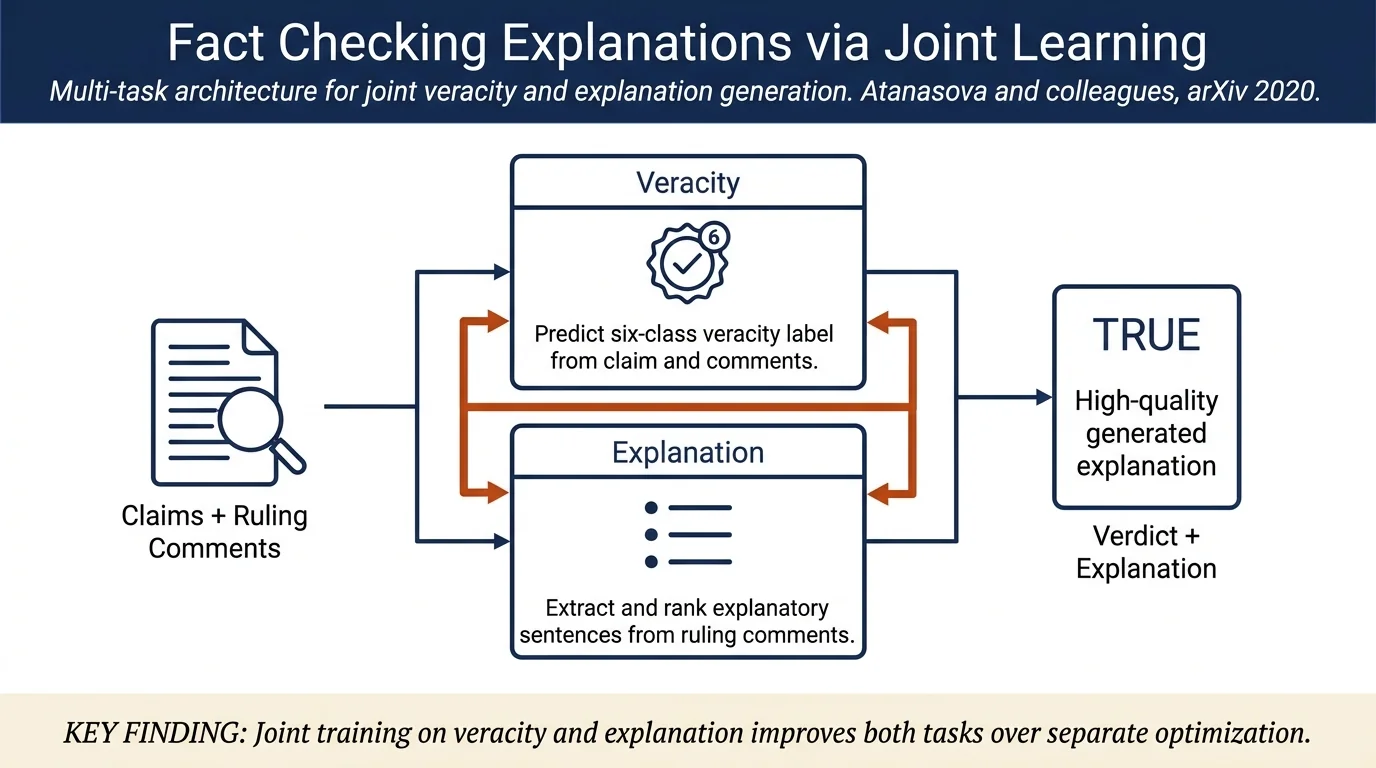
Generating Fact Checking ExplanationsThis paper presents the first study on automatically generating explanations for fact-checking veracity predictions. The authors show that jointly optimizing both veracity classification and explanation generation improves system performance.
 Datasets & evaluationSpread & networks
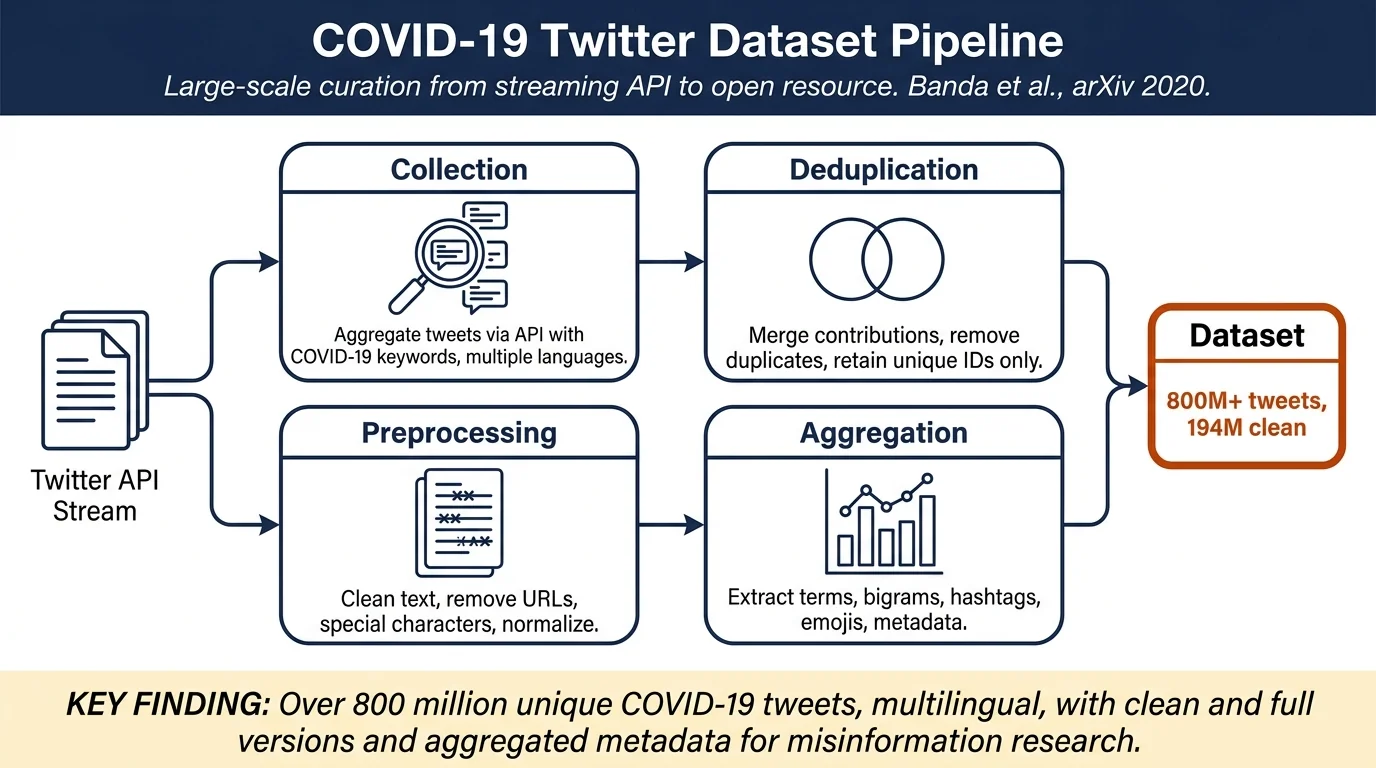
A large-scale COVID-19 Twitter chatter dataset for open scientific research - an international collaborationBanda et al. release a massive curated corpus of 800+ million COVID-19–related tweets collected from January through November 2020, with deduplication and language diversity. The dataset adheres to FAIR principles and provides both raw tweets and metadata (terms, bigrams, trigrams, hashtags, emojis, mentions) to support research on…
 Fact-checking & verificationDetection methods
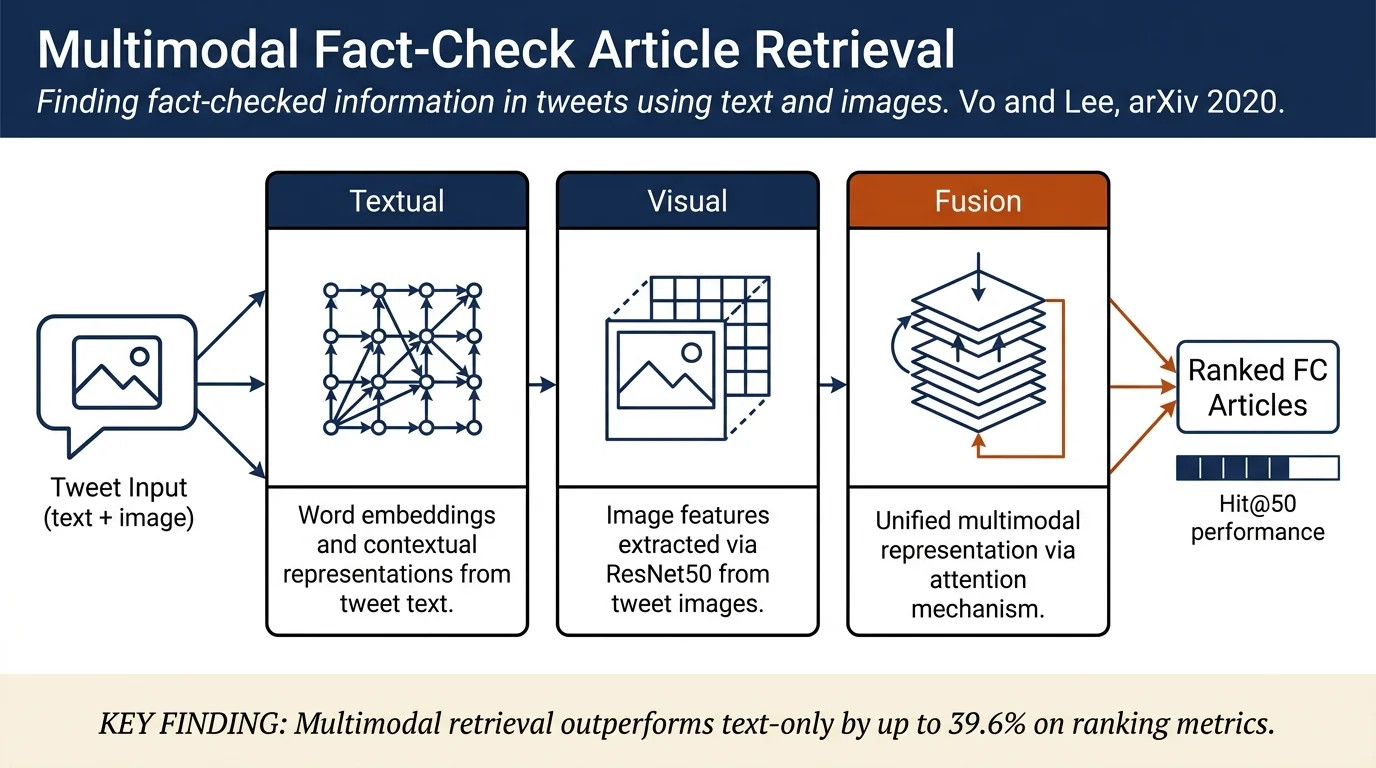
Where Are the Facts? Searching for Fact-checked Information to Alleviate the Spread of Fake NewsProposes a framework to automatically find fact-checking articles that address claims in original tweets. Uses a multimodal attention network (MAN) combining textual and visual content from tweets with fact-checking article text to rank candidate fact-checks; demonstrates that multimodal retrieval substantially outperforms text-only…
 Psychology & interventionsPlatforms, policy & society
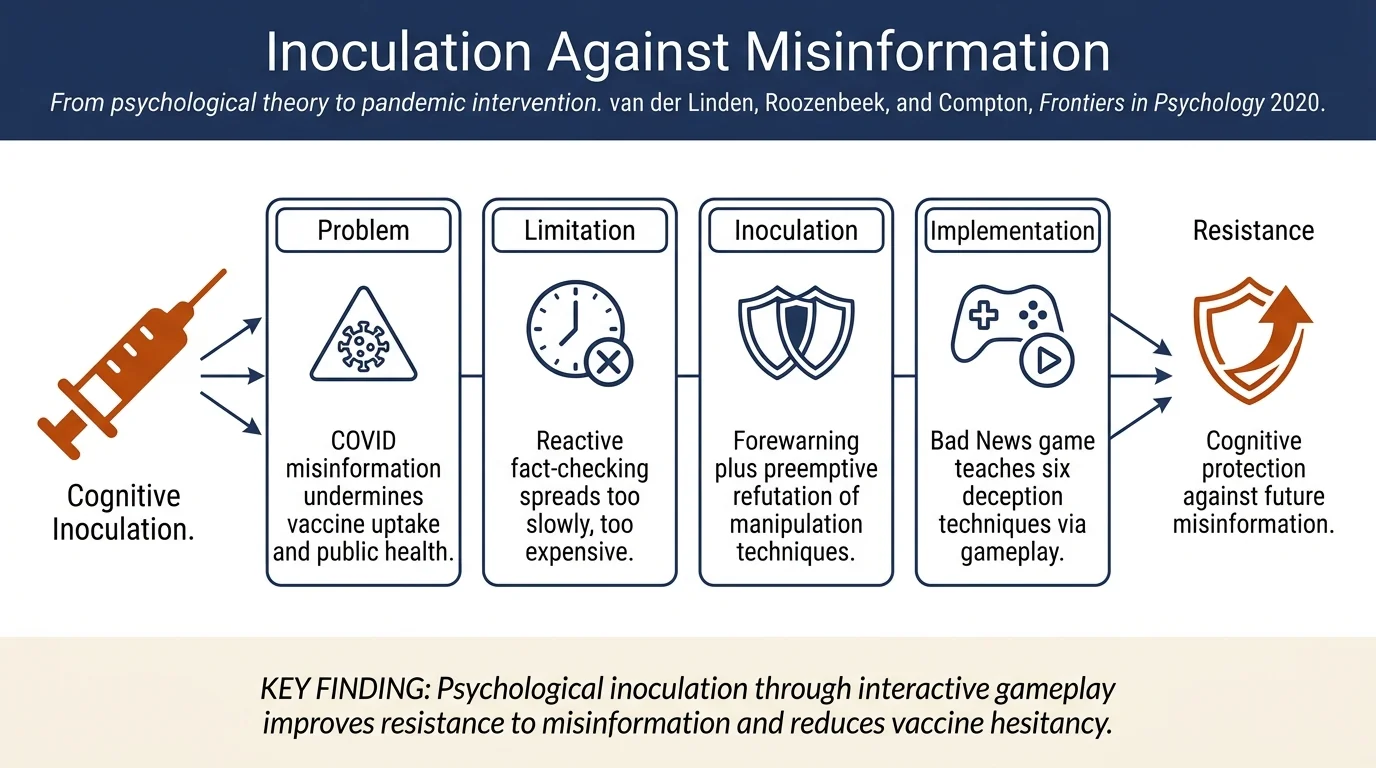
Inoculating Against Fake News About COVID-19COVID-19 misinformation has proliferated rapidly on social media, undermining public health responses and vaccination uptake. Rather than relying on post-hoc fact-checking (which spreads slower than misinformation), the authors propose psychological inoculation—exposing people to weakened doses of misinformation techniques beforehand to…
 Datasets & evaluationDetection methods
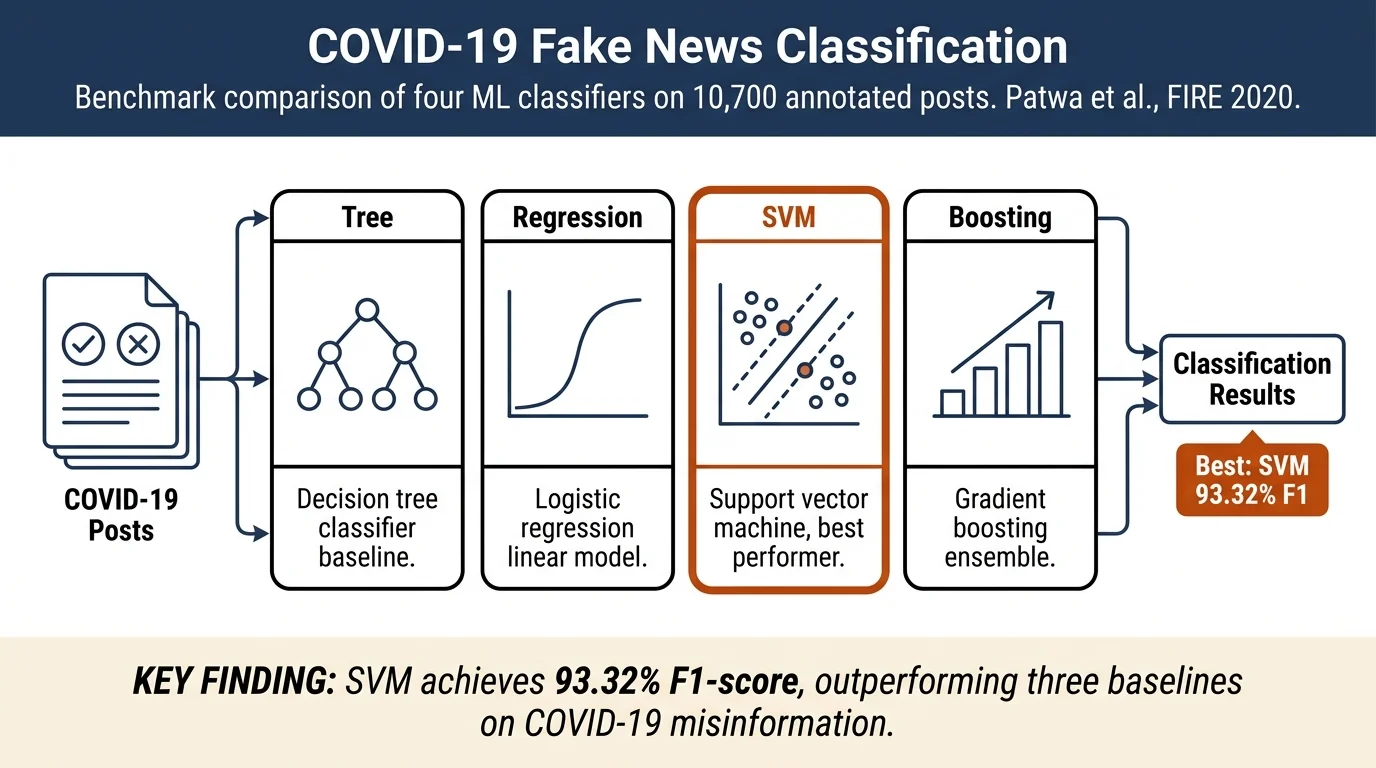
Fighting an Infodemic: COVID-19 Fake News DatasetThe authors present a manually annotated dataset of 10,700 COVID-19 related posts and articles (52% real, 48% fake) collected from social media and fact-checking websites. They benchmark four machine learning baselines (Decision Tree, Logistic Regression, SVM, Gradient Boost), achieving 93.32% F1-score with SVM, and release both the…
 Datasets & evaluationSpread & networks
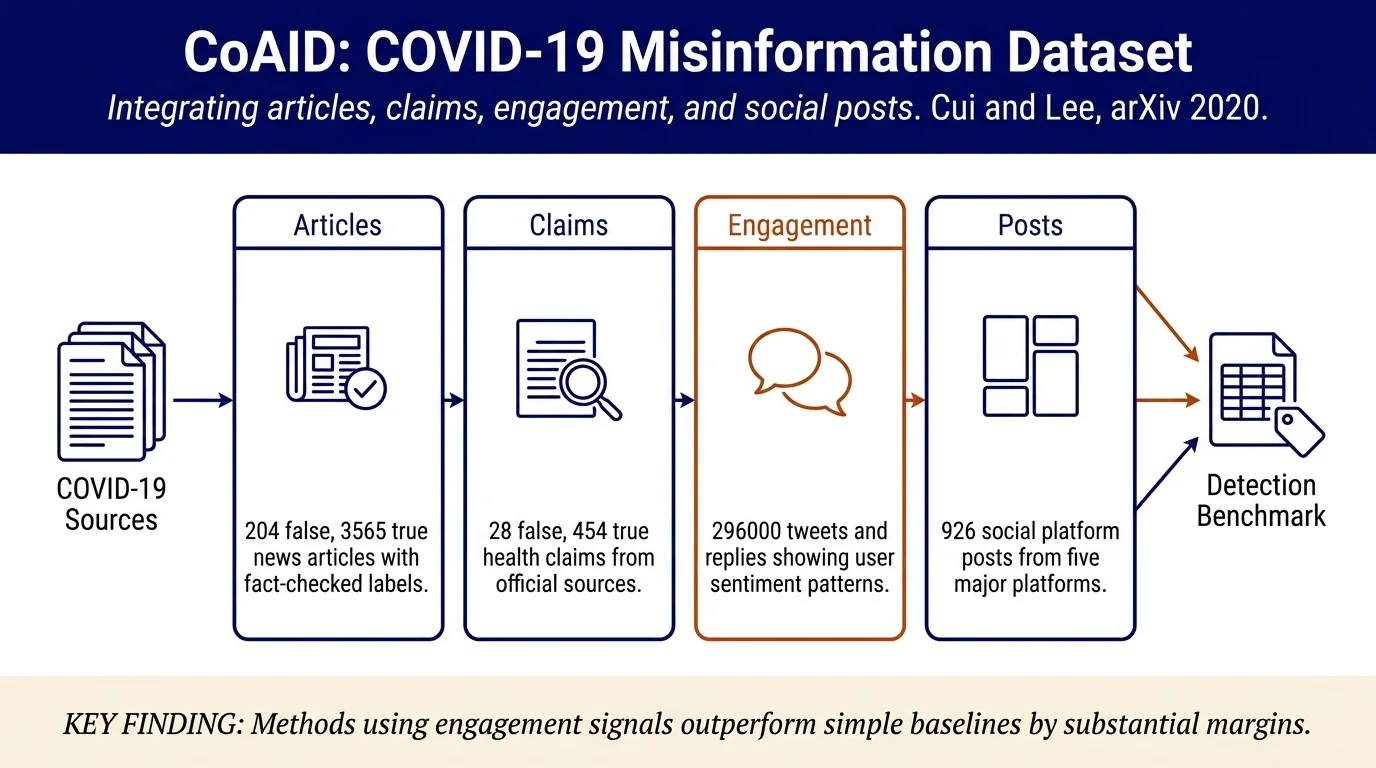
CoAID: COVID-19 Healthcare Misinformation DatasetCoAID is a benchmark dataset for COVID-19 healthcare misinformation detection comprising 4,251 news articles (204 fake, 3,565 true), 28 fake claims and 454 true claims, 296,000 user engagements from social platforms, and 926 social media posts with ground-truth labels. The dataset bridges text content, user engagement features, and…
 Spread & networksPlatforms, policy & society
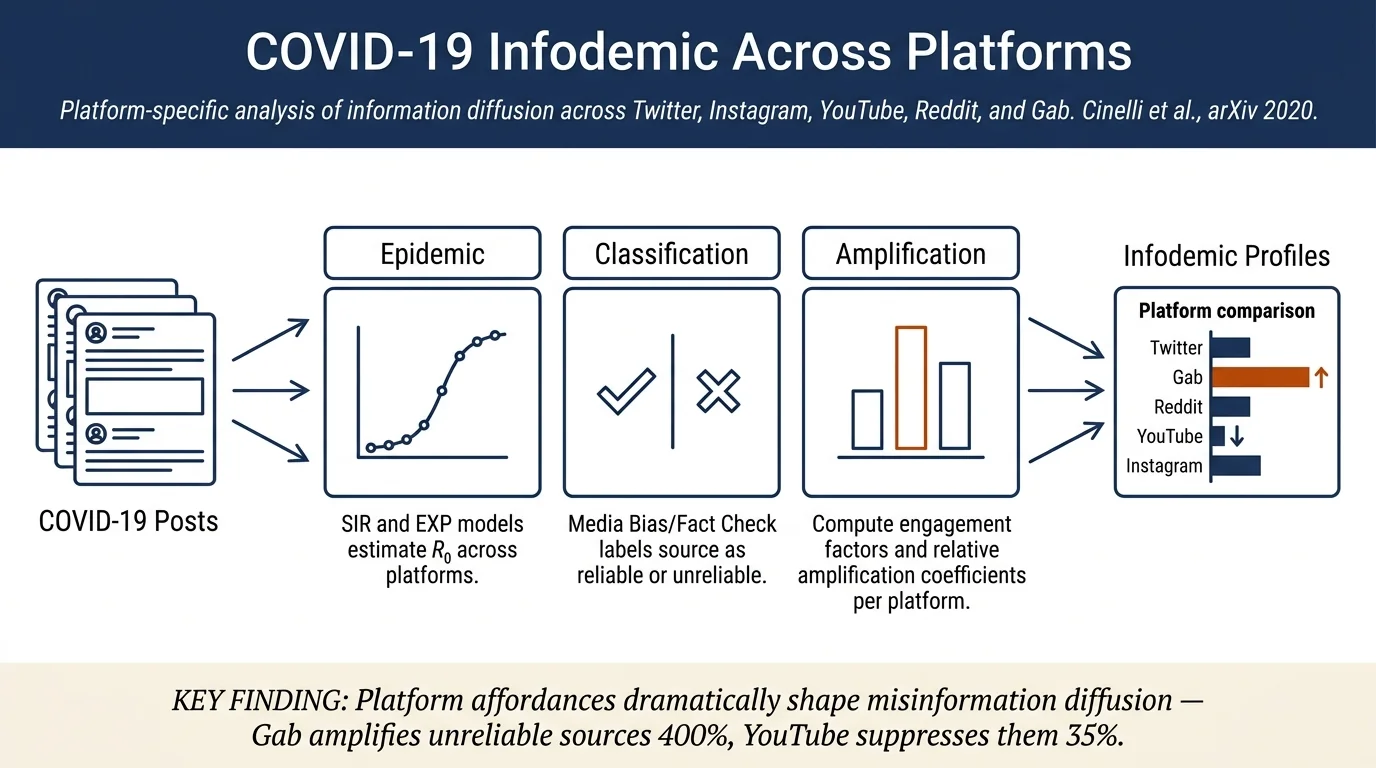
The COVID-19 Social Media InfodemicComparative analysis of COVID-19 information diffusion across five social media platforms (Twitter, Instagram, YouTube, Reddit, Gab) using epidemic models. All platforms exhibit infodemic characteristics (basic reproduction number R₀ 1), with platform-dependent differences in how misinformation spreads relative to reliable information.
 Deepfakes & multimodalFact-checking & verification
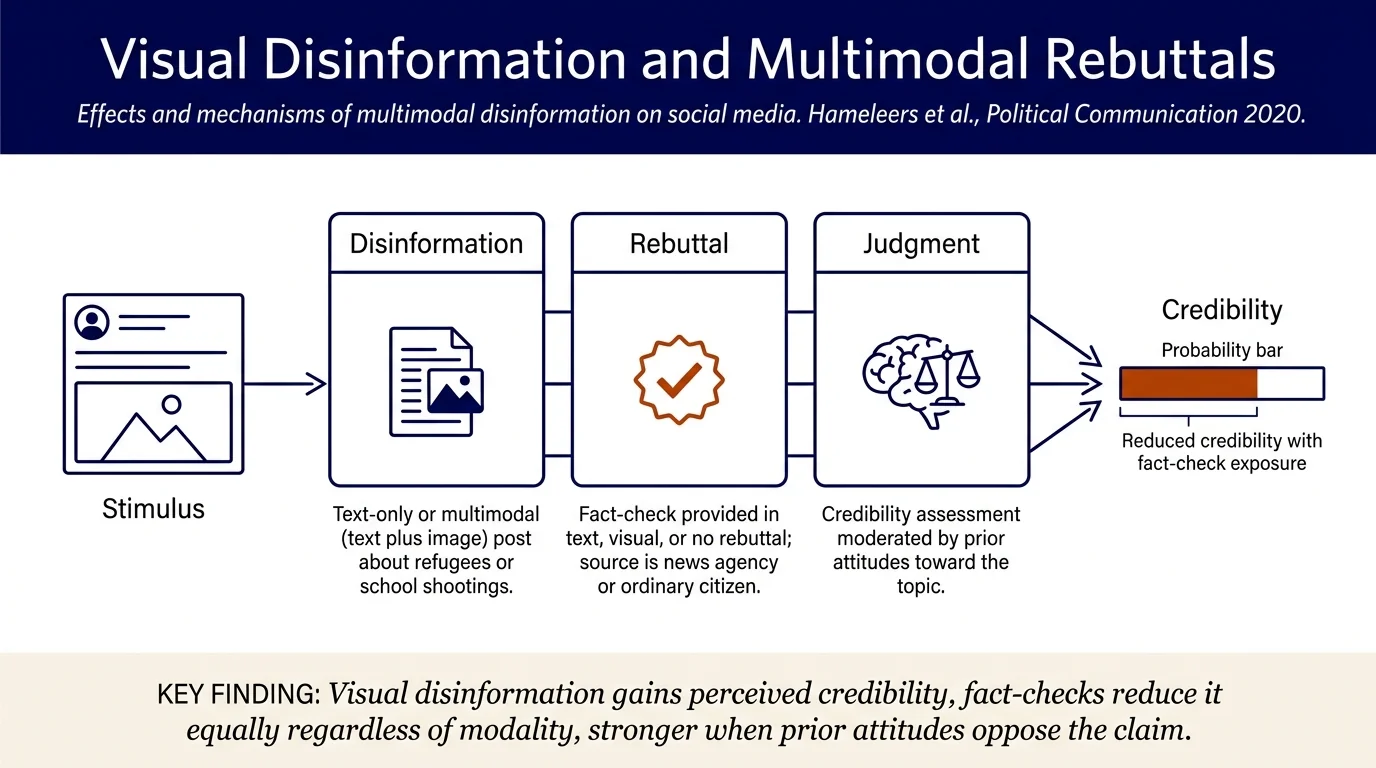
A Picture Paints a Thousand Lies? The Effects and Mechanisms of Multimodal Disinformation and Rebuttals Disseminated via Social MediaMultimodal disinformation (paired text and images) is perceived as more credible than text-only misinformation, but fact-checkers can overcome this effect. Importantly, the modality of fact-checks (visual or textual) matters less than their presence; fact-checks are more persuasive for people whose prior attitudes already oppose the…
 Platforms, policy & societySpread & networks
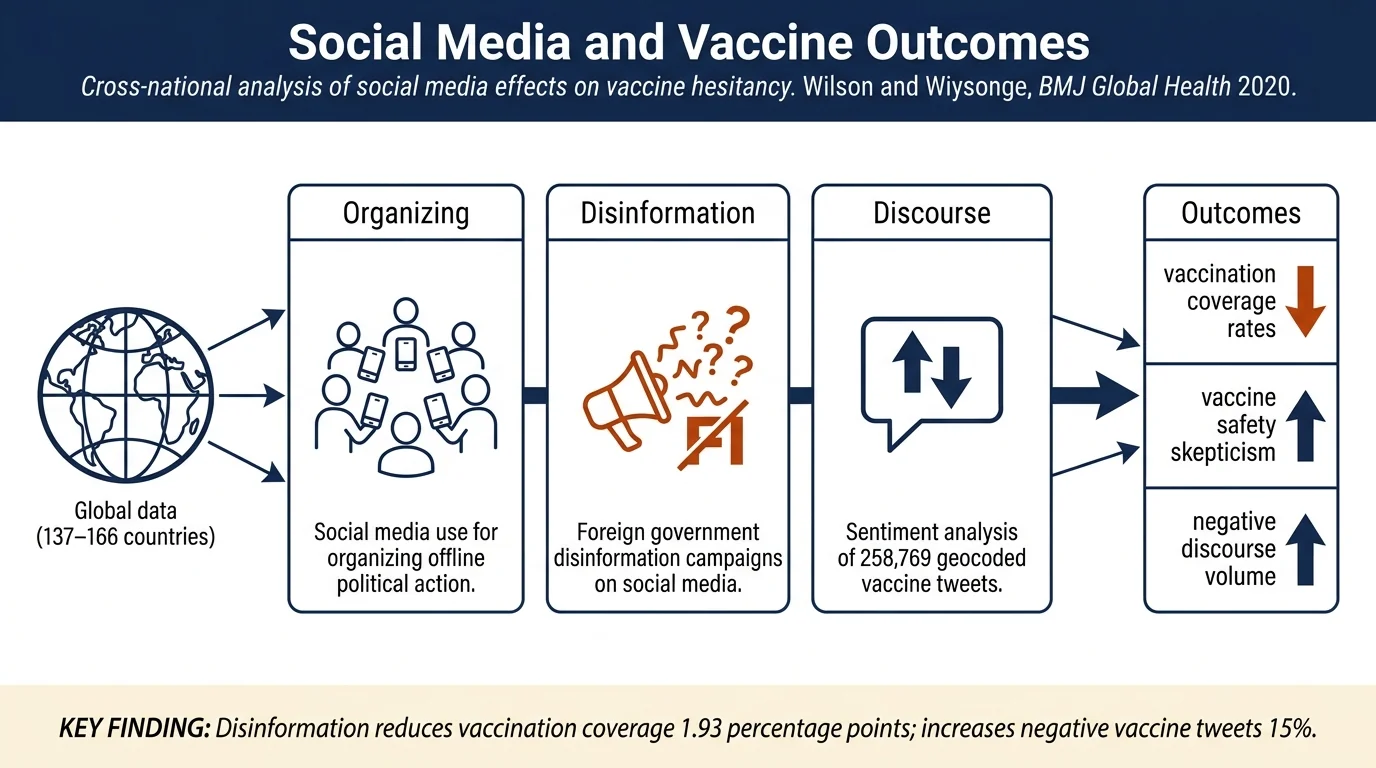
Social media and vaccine hesitancyLarge-scale cross-national analysis finds that social media use to organize offline action predicts public vaccine safety skepticism, while foreign disinformation campaigns significantly reduce vaccination coverage year-over-year. A one-point increase on the five-point disinformation scale correlates with a two-percentage-point drop in…
 Fact-checking & verificationPsychology & interventions
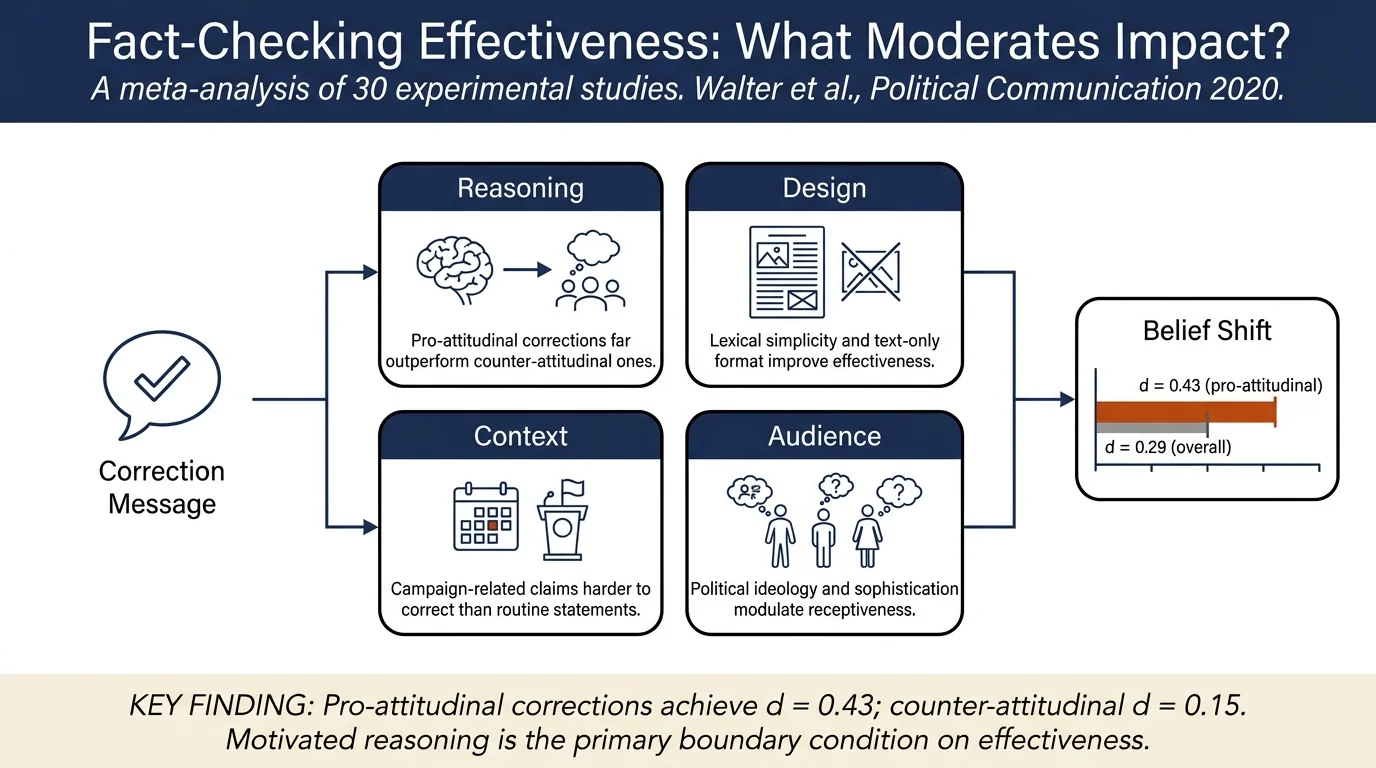
Fact-Checking: A Meta-Analysis of What Works and for WhomMeta-analysis of 30 studies on fact-checking effectiveness finds modest but significant positive effects (d = 0.29) on belief correction. However, effects are substantially moderated by motivated reasoning, political ideology, message design, and context: pro-attitudinal fact-checking works better than counter-attitudinal corrections,…