Explore everything
Filter by research area, year and venue. Every filter is in the address bar, so you can share a view as a link.
 Spread & networksPlatforms, policy & society
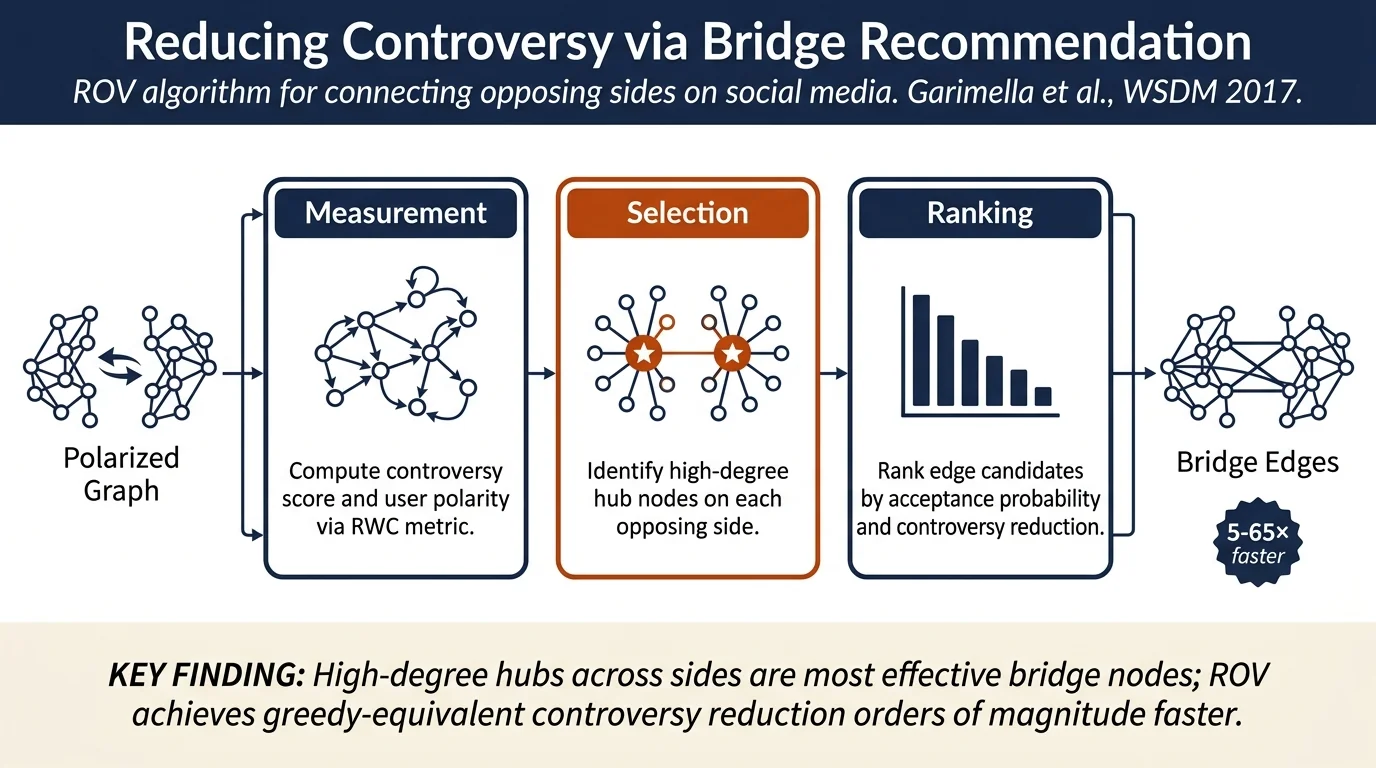
Reducing Controversy by Connecting Opposing ViewsThis paper proposes an algorithmic approach to reduce polarization on social media by recommending social connections (edges) between opposing sides. Using an endorsement graph representation and the random-walk-based controversy metric, the authors formulate the problem as k-edge-addition and develop an efficient algorithm (ROV) that…
 Spread & networksPlatforms, policy & society
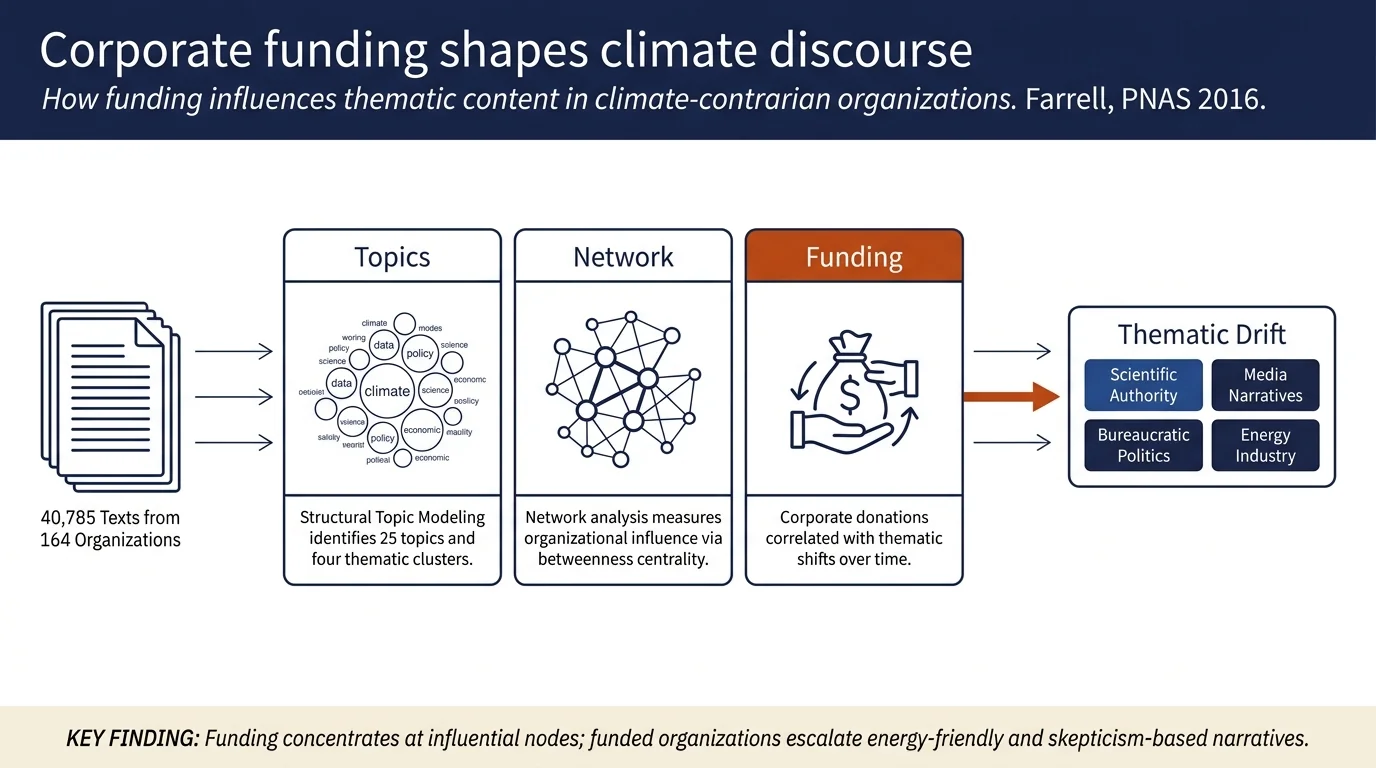
Corporate funding and ideological polarization about climate changeFarrell analyzes 40,785 texts (39+ million words) from 164 climate contrarian organizations between 1993–2013, employing Structural Topic Modeling and social network analysis to demonstrate that corporate funding from entities like ExxonMobil and Koch family foundations directly influences which polarization themes are created and…
 Fact-checking & verificationPlatforms, policy & society
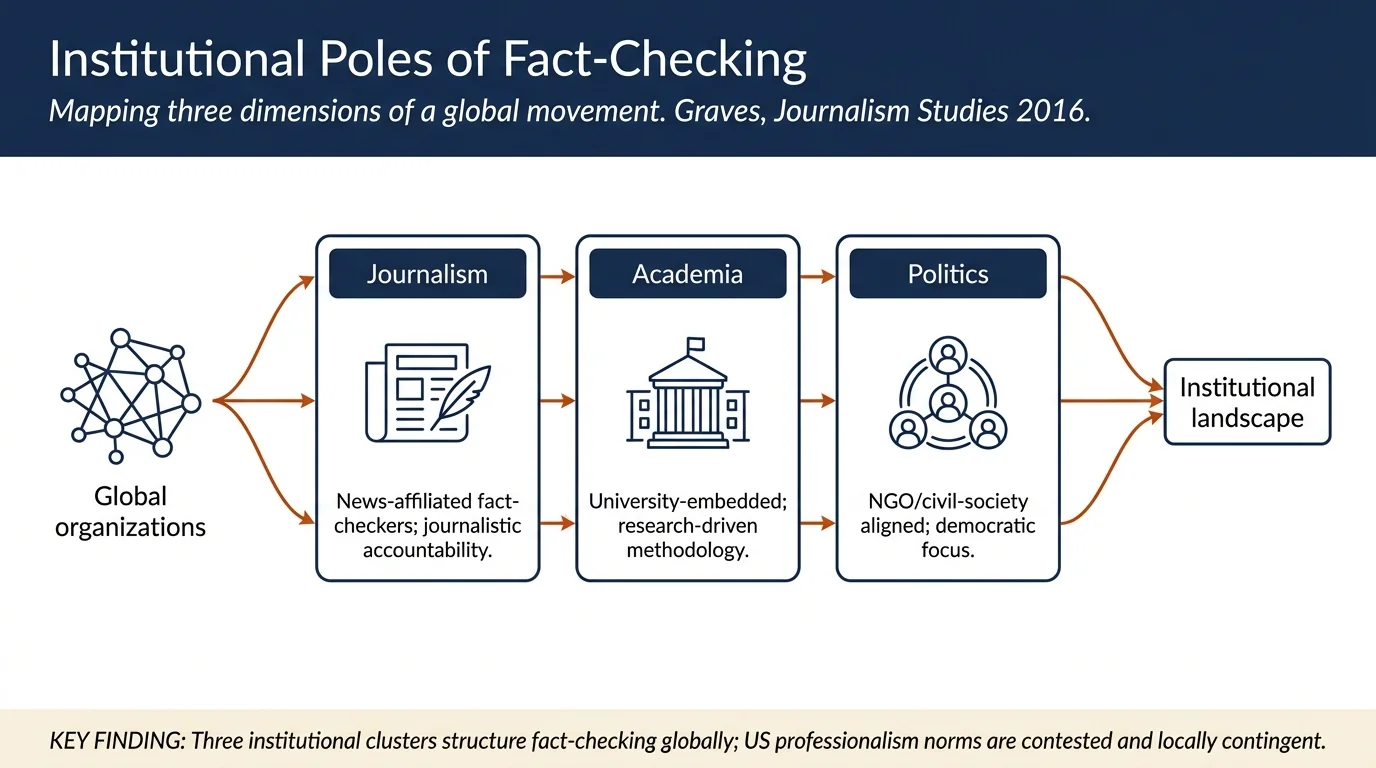
Boundaries Not Drawn: Mapping the institutional roots of the global fact-checking movementGraves maps the institutional landscape of 64+ fact-checking organizations globally across two summits (2014–2015), using ethnographic fieldwork and ternary plots to sort organizations along three axes: journalism, academia, and politics/civil society. The movement has a journalistic core but exhibits striking institutional diversity and…
 Fact-checking & verificationDatasets & evaluation
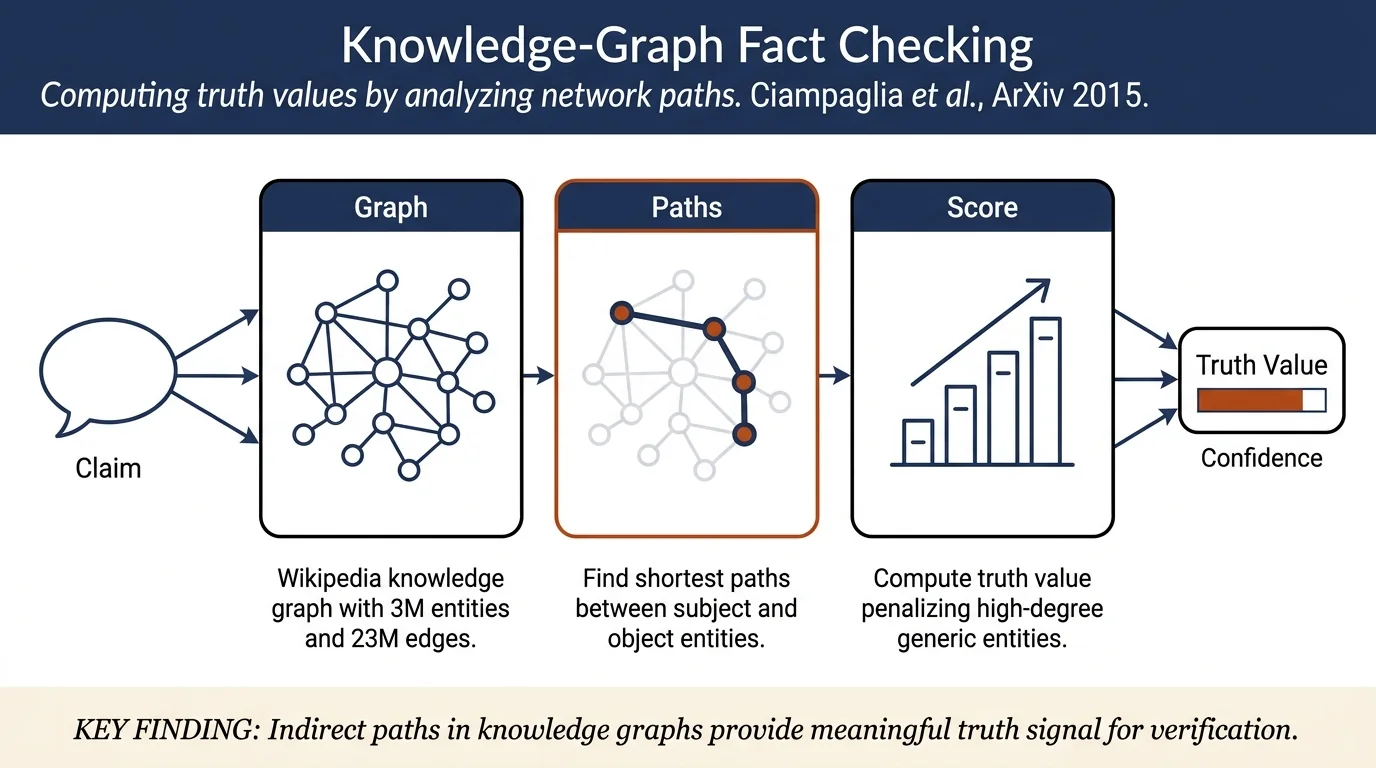
Computational fact checking from knowledge networksThis paper proposes a computational approach to fact checking by framing it as a network problem on knowledge graphs. The method finds the shortest path between entities in Wikipedia's knowledge graph using semantic proximity metrics that account for entity generality.
 Bots & coordinated campaignsDetection methods
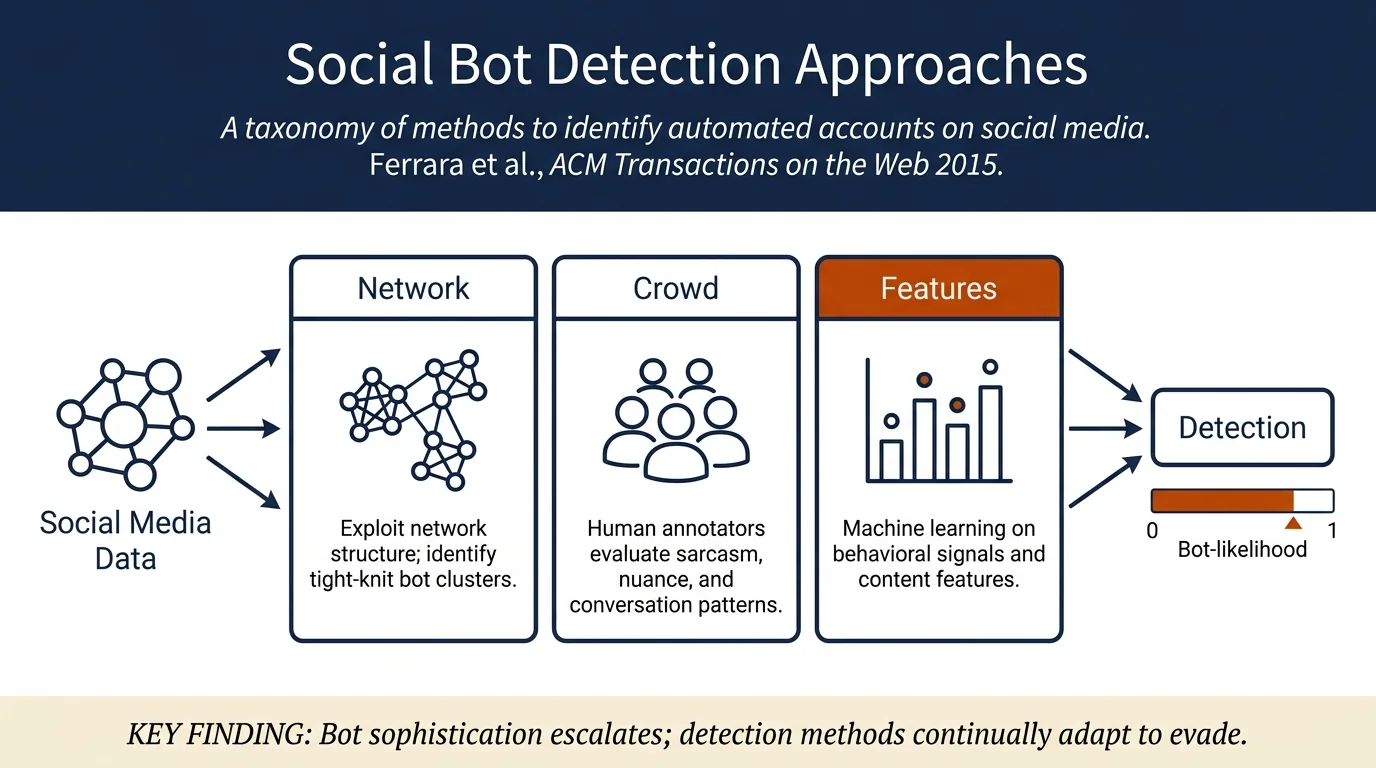
The Rise of Social BotsSocial bots—automated software agents in social media—are increasingly sophisticated and pose real threats including misinformation spread, trend manipulation, and election interference. This paper characterizes modern bot behavior, surveys detection challenges, and proposes a taxonomy of detection approaches: graph-based methods…
 Platforms, policy & societyPsychology & interventions
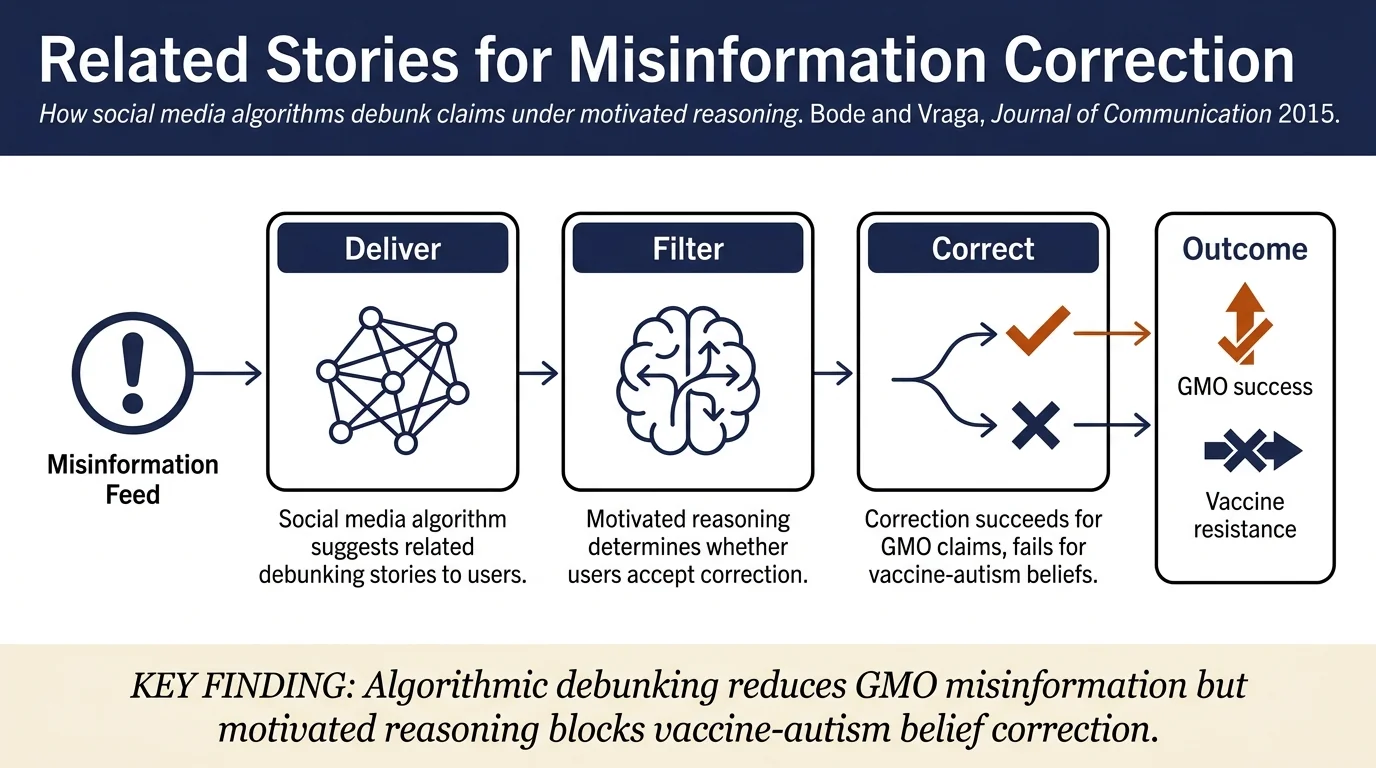
In Related News, That Was Wrong: The Correction of Misinformation Through Related Stories Functionality in Social MediaThis study tests whether Facebook's "related stories" feature can correct misinformation by exposing users to debunking information. Two experiments (students and Mechanical Turk workers) examined vaccine-autism and GMO-illness misperceptions.
 Detection methodsFact-checking & verification
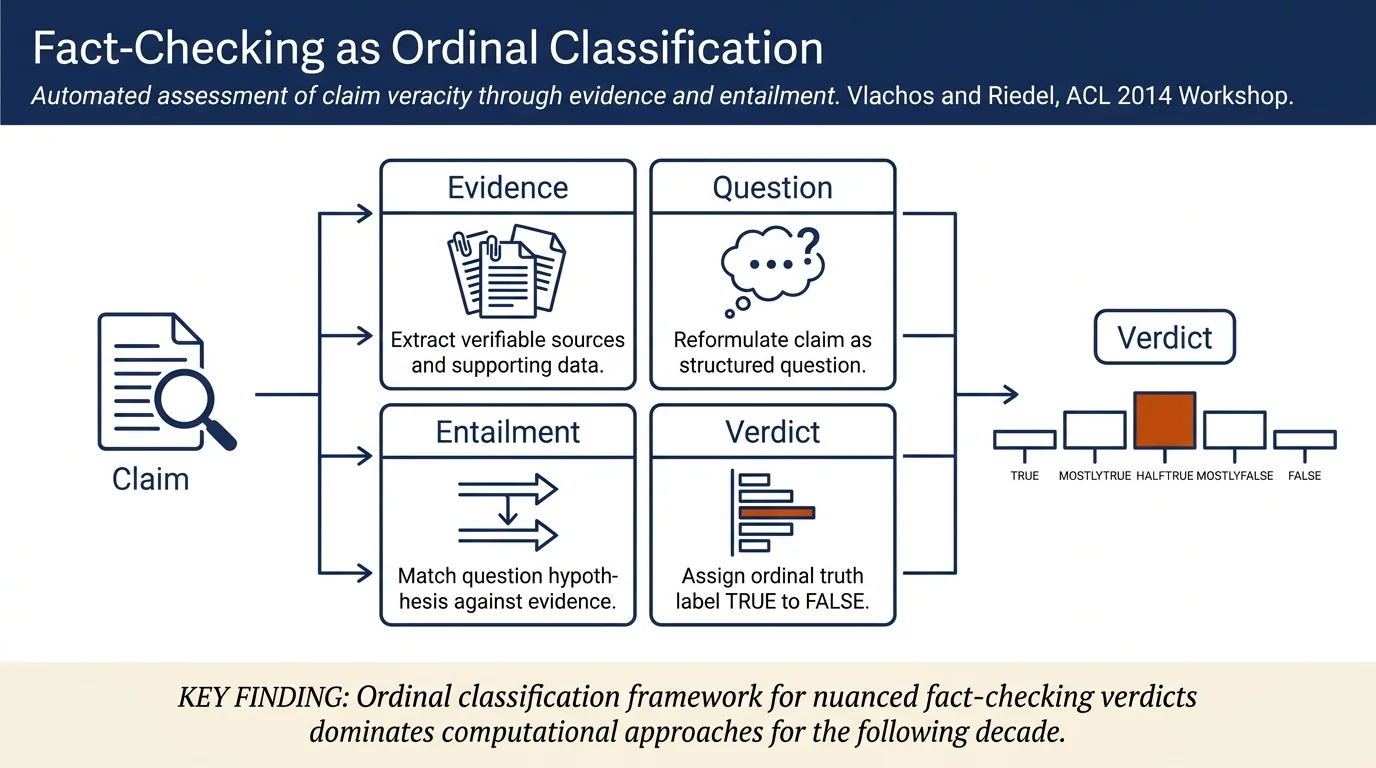
Fact Checking: Task definition and dataset constructionThis paper introduces fact-checking as a formal computational task: assessing the truthfulness of political claims as an ordinal classification problem with five labels (TRUE, MOSTLYTRUE, HALFTRUE, MOSTLYFALSE, FALSE). The authors construct a dataset of 106 objectively-verifiable fact-checked statements from PolitiFact and Channel 4 (out…
 Spread & networksDatasets & evaluation
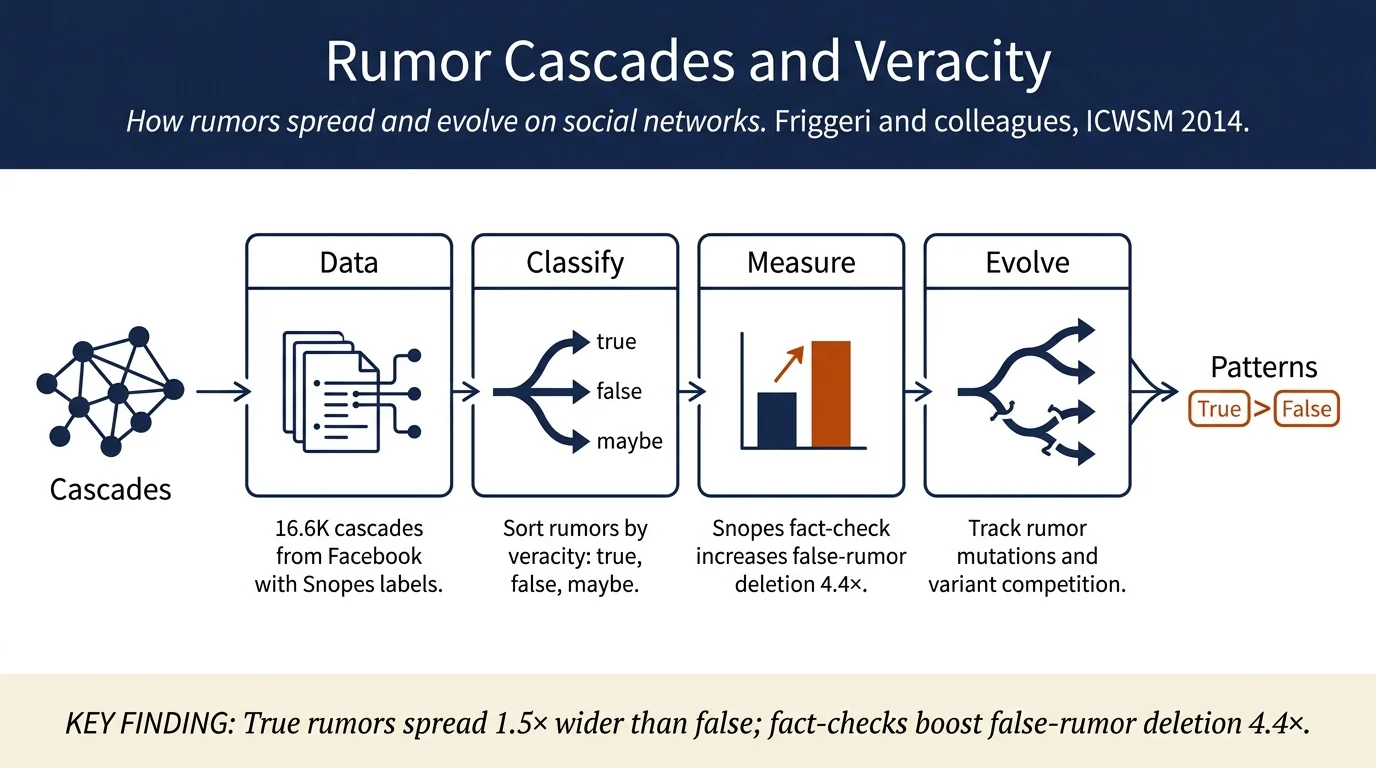
Rumor CascadesFriggeri et al. tracked thousands of rumors on Facebook using Snopes.com as ground truth, finding that rumor cascades run deeper in the social network than typical content. True rumors spread more virally than false ones despite false rumors being more frequently uploaded; Snopes fact-checks increase deletion likelihood for false rumors…
 Spread & networksDetection methods
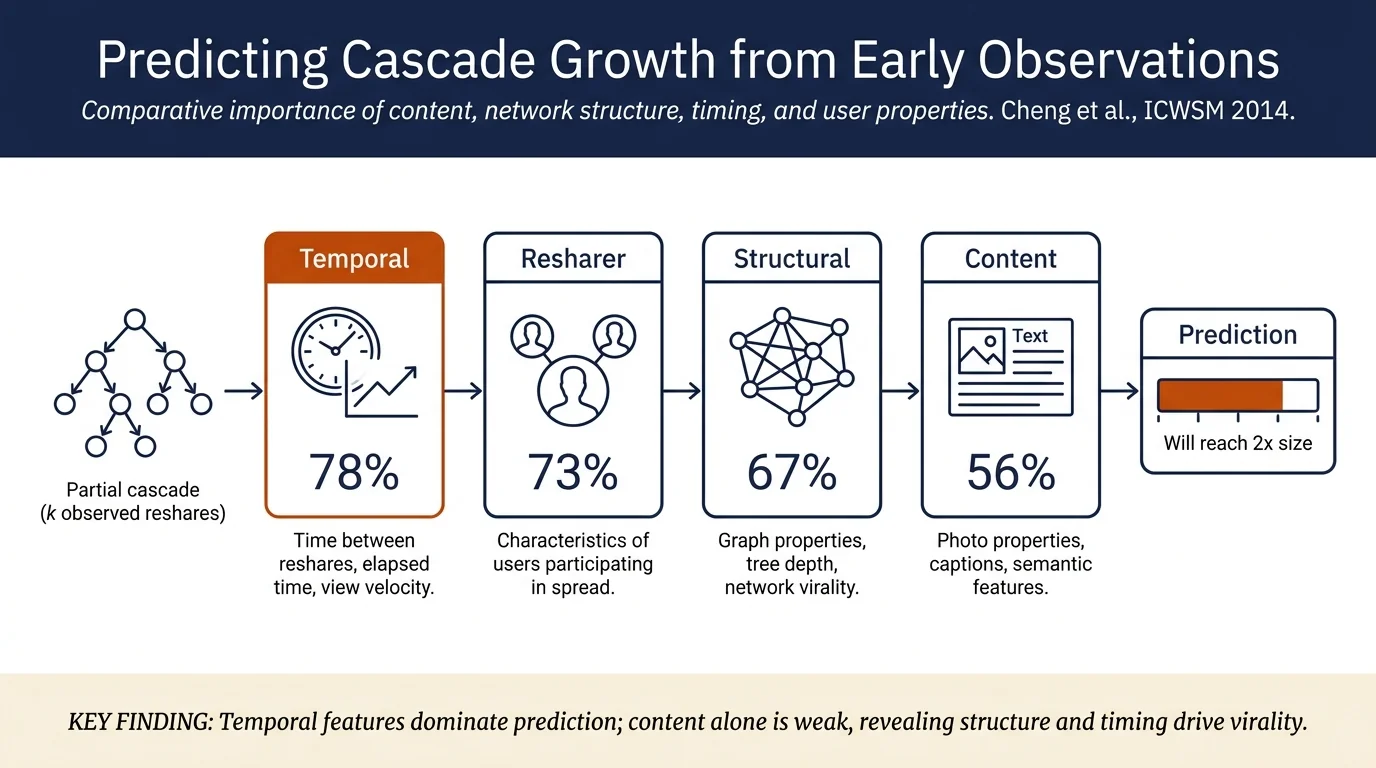
Can Cascades be Predicted?Information cascades on social networks can be predicted with reasonable accuracy (~80%) using temporal and structural features extracted from early observations. Performance improves substantially as more cascade stages are observed.
 Fact-checking & verificationPsychology & interventions
How to separate fact and fiction onlineMarkham Nolan, editor of Storyful, explains how journalists use open-source intelligence tools to verify content in the age of information overload. Through real-world case studies—including fake Hurricane Sandy photos and identifying locations in Syrian conflict videos—he demonstrates that truth-seeking requires human judgment combined…
 Psychology & interventionsFact-checking & verification
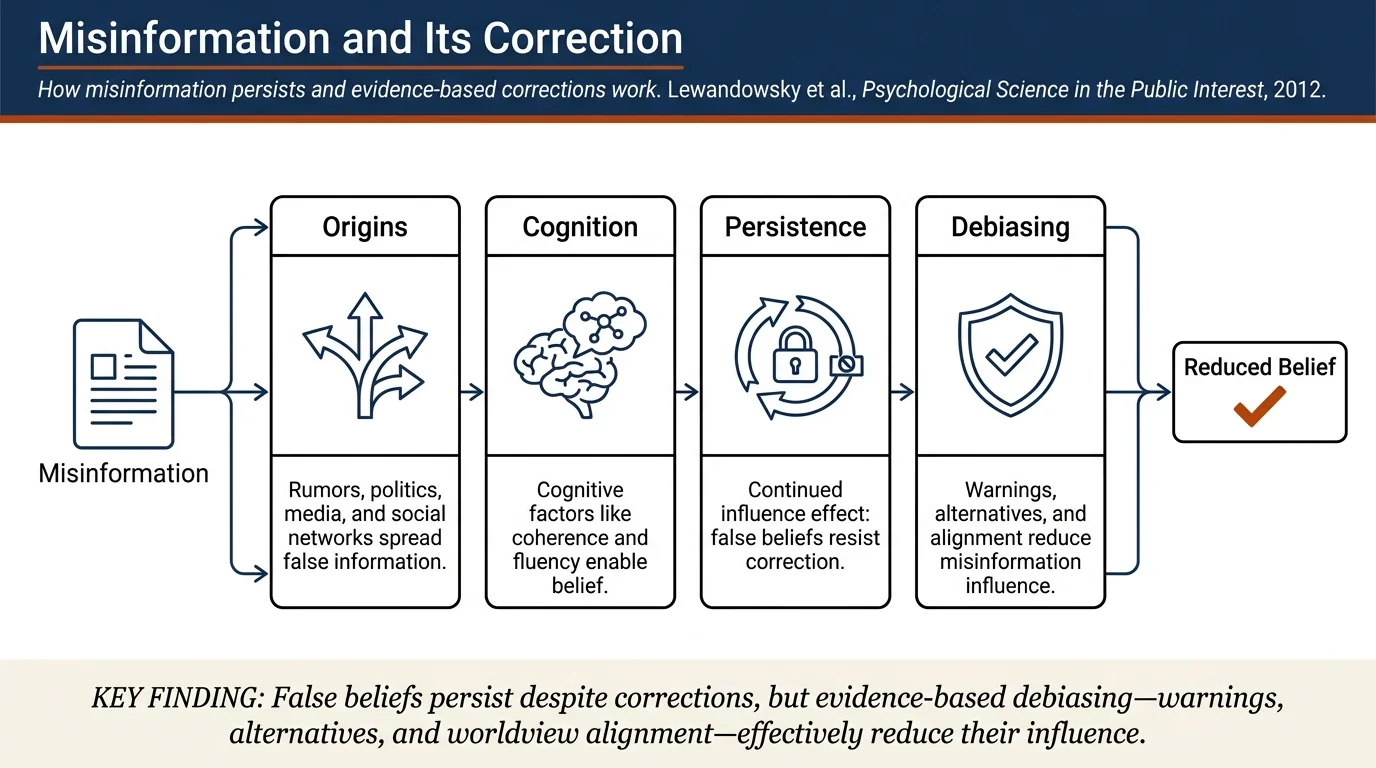
Misinformation and Its Correction: Continued Influence and Successful DebiasingThis comprehensive review synthesizes literature on why false beliefs persist despite corrections, examining cognitive mechanisms (coherence, credibility, source confusion, fluency) that render misinformation resistant to change. The authors propose evidence-based debiasing strategies—warnings, alternative explanations, repeated…
 Spread & networksPlatforms, policy & society
Beware online filter bubblesAlgorithmic personalization on major platforms like Facebook and Google has created "filter bubbles" — personalized information universes that show us what we're predicted to like rather than what we need to see. This invisible algorithmic gatekeeping threatens democracy and information diversity by isolating us in narrow perspectives,…
 Detection methodsSpread & networks
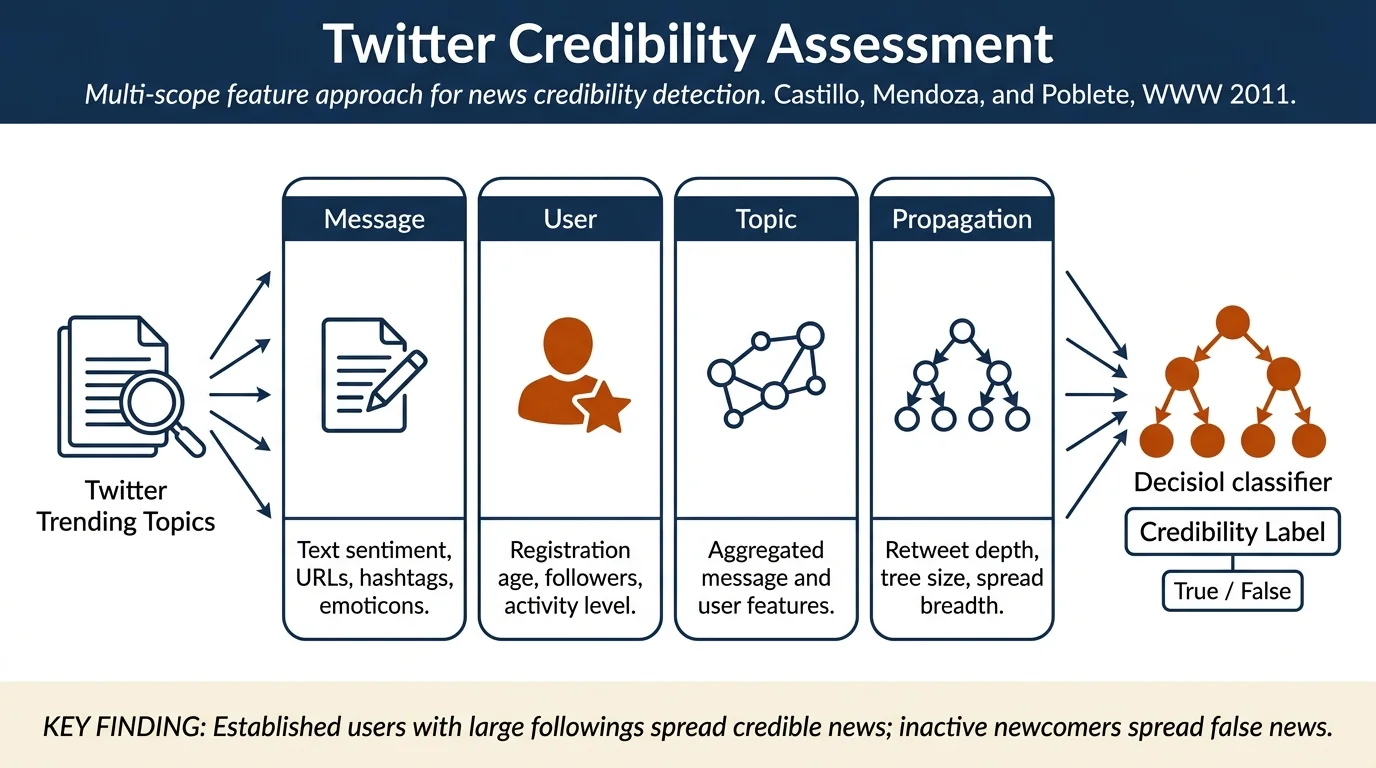
Information Credibility on TwitterThis paper proposes supervised learning classifiers to automatically assess the credibility of news discussed on Twitter. Using human-labeled topics from trending discussions, the authors extract message-level, user-level, topic-level, and propagation-level features to build classifiers that distinguish newsworthy from conversational…
 Spread & networksBots & coordinated campaigns
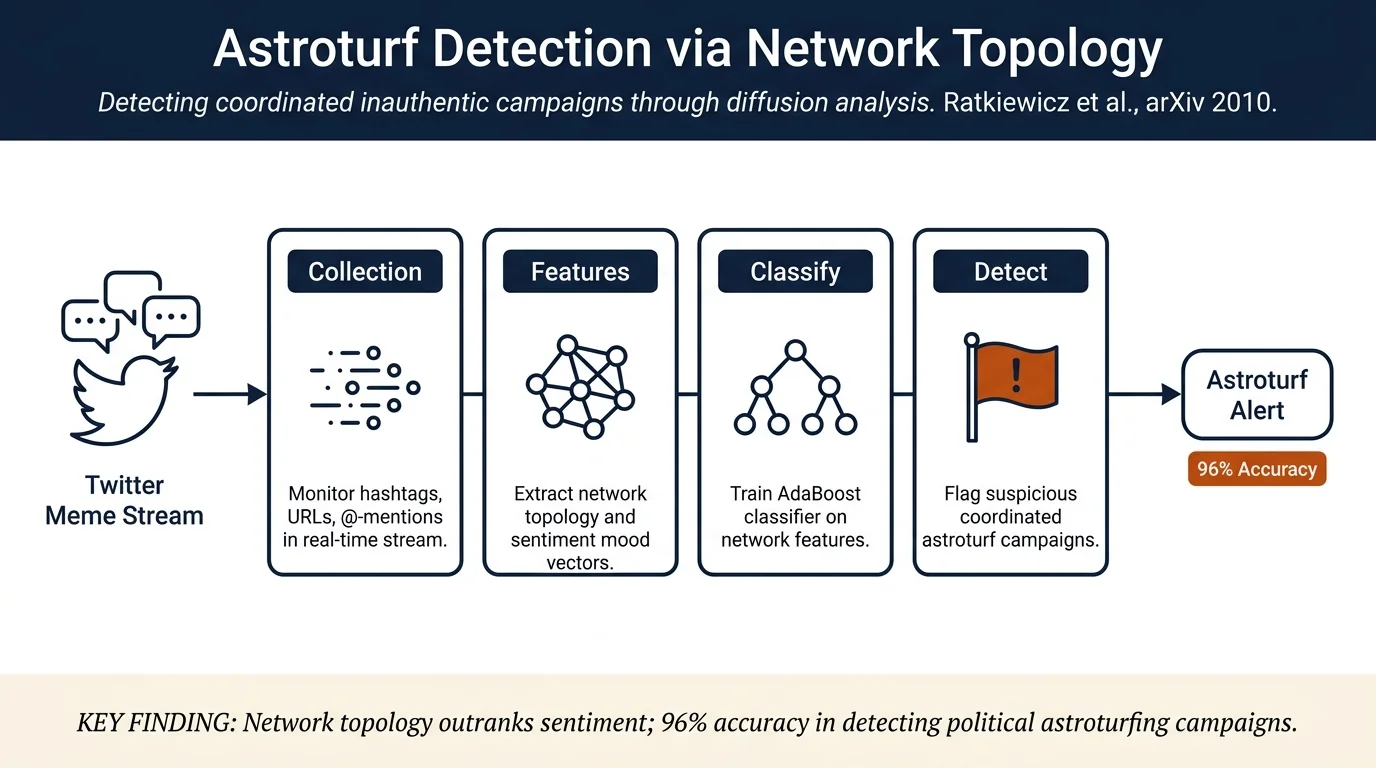
Detecting and Tracking the Spread of Astroturf Memes in Microblog StreamsPolitical campaigns increasingly use social media to amplify deceptive memes that mimic organic grassroots behavior—termed "astroturfing." This paper introduces the Truthy system, which analyzes meme diffusion networks on Twitter to detect orchestrated campaigns through network topology and sentiment analysis, achieving ~90%…
 Spread & networksDatasets & evaluation
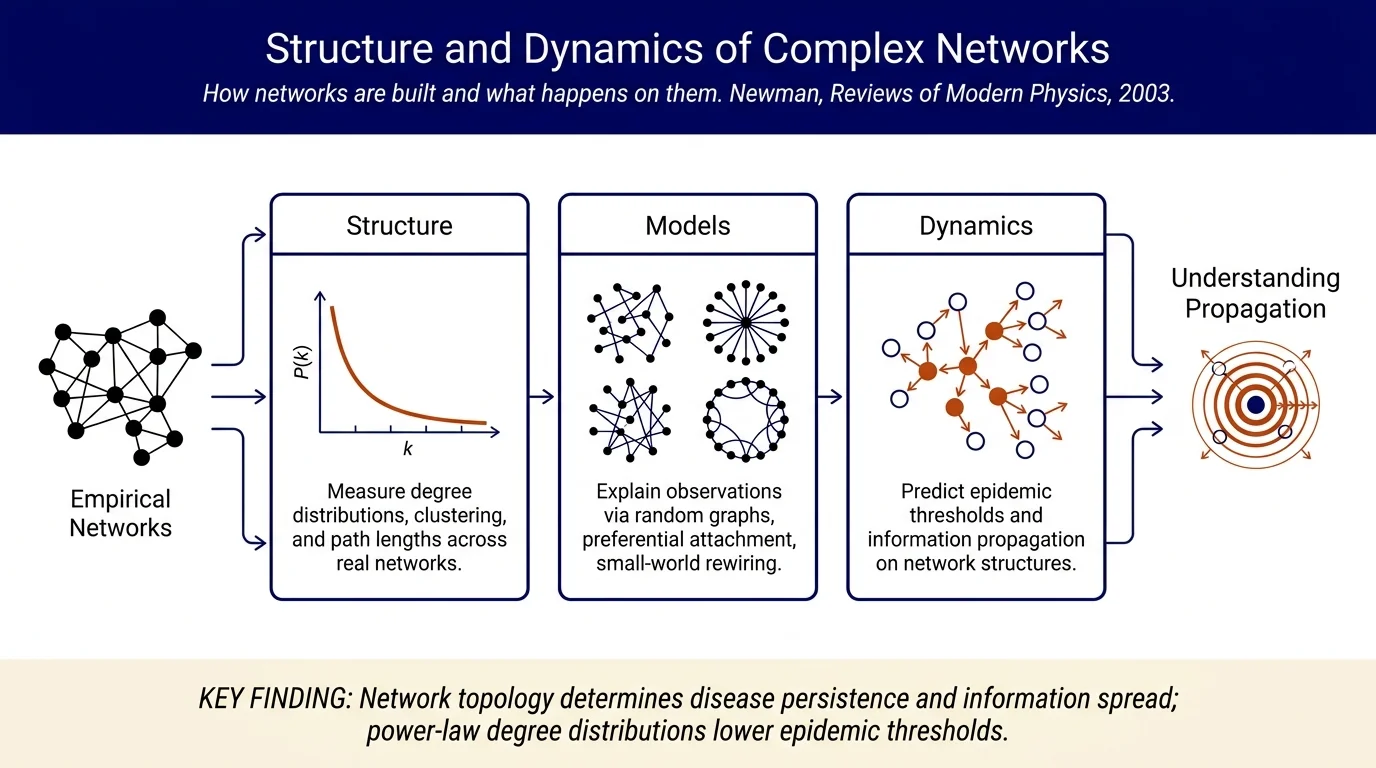
The structure and function of complex networksThis comprehensive review surveys the properties and mathematical models of complex networks across diverse domains: social networks, the Internet, biological networks, and collaboration networks. Newman covers observed structural properties (degree distributions, clustering, small-world effects), foundational models (random graphs,…
Spread & networksPsychology & interventions
A Theory of Fads, Fashion, Custom, and Cultural Change as Informational CascadesFoundational theoretical framework explaining how fads, fashions, and beliefs spread through sequential information cascades: when individuals use others' actions to infer information while ignoring their own private signals, widespread adoption of incorrect beliefs and practices can occur.
 Psychology & interventionsDetection methods
Why People Fall for MisinformationJoseph Isaac traces how misconceptions persist using the tongue map myth as exemplar: David Hänig's 1901 research found modest taste-sensitivity variations across tongue regions, but through translation barriers, visual simplification, and our preference for clean narratives, it became the false claim that sweetness is imperceptible at…
 Psychology & interventionsPlatforms, policy & society
How We Create Our Own Fake NewsBobby Duffy's "Perils of Perception" research (100,000+ interviews across 40 countries) reveals that people systematically misestimate social realities by factors of 2–3×. Using concrete examples (teenage pregnancy, murder rates, immigration, social media adoption), Duffy traces these perception gaps to four psychological mechanisms: (1)…
Platforms, policy & society
Don't blame the election on fake news. Blame it on the media.A critical analysis arguing that while fake news received disproportionate blame for Trump's 2016 victory, the mainstream media's coverage patterns—emphasizing scandals over policy—played a more significant role in shaping voter knowledge and behavior. Examining New York Times coverage, the authors demonstrate that scandal-focused…
Platforms, policy & societyBots & coordinated campaigns
Partisanship, Propaganda, and Disinformation: Online Media and the 2016 U.S. Presidential ElectionThis large-scale analysis of mainstream and social media coverage during the 2016 U.S. presidential election documents asymmetric partisan structures: conservative media formed an insulated, hyperpartisan ecosystem centered on far-right outlets like Breitbart, while liberal media remained anchored in traditional journalistic practices.…
Spread & networksPsychology & interventions
Avoiding the Echo Chamber About Echo Chambers: Why selective exposure to like-minded political news is less prevalent than you thinkThis Knight Foundation white paper reviews the academic literature on echo chambers and filter bubbles and argues that the narrative of pervasive ideological self-segregation in media consumption is significantly overstated. While people do prefer congenial political information, most Americans consume diverse media diets; most partisan…
Spread & networksPlatforms, policy & society
Social Media, Political Polarization, and Political Disinformation: A Review of the Scientific LiteratureThis comprehensive literature review examines the relationships among social media usage, political polarization, and political disinformation, synthesizing research across six topic areas: online political conversations, consequences of disinformation exposure, producers of disinformation, spreading strategies, content and polarization…
Bots & coordinated campaignsPlatforms, policy & society
The Global Disinformation Order: 2019 Global Inventory of Organised Social Media ManipulationA comprehensive inventory of government and political-party organized social media manipulation campaigns (cyber troops) across 70 countries. The report catalogs organizational structures, strategies, platforms, and resources deployed for computational propaganda; finds organized manipulation in 70 countries (up from 28 in 2017), with…
Spread & networksPlatforms, policy & society
WhatsApp vigilantes: an exploration of citizen reception and circulation of WhatsApp misinformation linked to mob violence in IndiaThis LSE report examines how WhatsApp misinformation circulation in India relates to lynchings and mob violence since 2015. The study investigates citizen reception, technological affordances, motivations for sharing, and the broader socio-political context shaping how false information spreads through messaging platforms and triggers…