Key claims
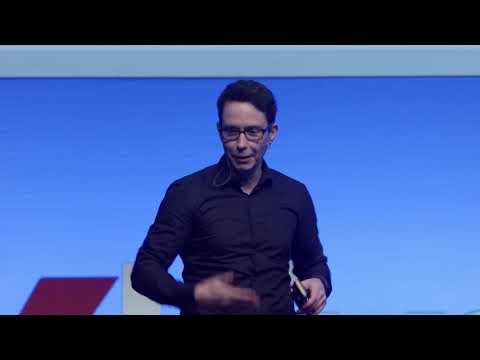
People systematically overestimate the magnitude of social phenomena they worry about. Across 100,000+ interviews in 40 countries, the Perils of Perception study found people overestimate teenage birth rates by 2–3×, think crime is rising when it's declined 29% in 30 years, and overestimate social media penetration based on their own bubble. This is driven by emotional innumeracy: we react emotionally to vivid events and use that emotional intensity as a proxy for frequency.
Negativity bias and the media's preference for the unusual amplify misperception. The brain is evolutionarily tuned to threat information: when humans were cave-dwellers, ignoring warnings of saber-tooth tigers could be fatal. This ancient adaptation persists: we overweight negative information, and media outlets, knowing this, preferentially cover dramatic and unusual events. Editors will never run a headline like "most people do most things right today" because audiences aren't drawn to it. This creates a feedback loop: media covers the unusual → we perceive it as normal → media covers more of it.
Selective memory ("hedonic adaptation") makes us susceptible to narratives of decline. Following Terrence Mitchell's research on holiday memories, Duffy shows that we systematically forget negative aspects of past experiences and remember them more fondly over time. This means we misremember the past as worse than it was, which in turn makes us believe the present is worse than it actually is. Politicians and media actors exploit this bias by claiming "things were better before" and "things are getting worse"—messaging that resonates with our cognitive wiring.
The "what we see is all that is" effect creates polarized worldviews in networked environments. When asked about Facebook penetration in India, online-survey respondents (who themselves have internet access and affluent social circles) dramatically overestimate usage rates because they generalize from their own bubble. This bias compounds in polarized online spaces where we see only like-minded content. We're not as normal as we think; this is a powerful and difficult effect to resist.
Modern information environments don't change what people believe—they increase certainty and polarization. Duffy emphasizes that misperception is not new; evidence from 1940s America shows people were equally wrong about immigration and unemployment then. What is different now is that platforms increase certainty and deepen conviction that the other side is wrong, not that they change fundamental beliefs. This polarization is more dangerous than mere belief change because it erodes shared reality and institutional trust.
People do change their minds when exposed to the right context. Drawing on his work with citizen assemblies, Duffy argues that while these biases are powerful and rooted in human cognition, they are not immutable. When people come together across divides in structured environments and are exposed to new information, they do shift their views and engage in genuine dialogue.
Mechanisms of misperception
Emotional innumeracy: We use emotional intensity as a substitute for numerical reasoning. If something makes us anxious, we overestimate how common it is.
Negativity bias: Evolutionary heritage makes negative information disproportionately salient. This is not a flaw; it's adaptive. But in modern media environments, it creates distorted perceptions.
Media selection bias: Journalists and editors know audiences prefer vivid, unusual, emotionally charged stories. This creates a supply-and-demand mismatch where rare events appear common.
Selective memory: We forget negative details and remember positive ones over time, retroactively making the past seem worse and current conditions seem worse by comparison.
Homophily and echo chambers: We see what we already believe through our social circles and online algorithms, and we extrapolate that bubble to the whole population.
Notes
Duffy's contribution is not to argue that misperception is new—his evidence shows it's ancient—but to diagnose its causes with precision and to separate this from the modern phenomenon of increased polarization and certainty. This is clinically important: if the goal is to reduce misperception itself, interventions must target the cognitive mechanisms (emotional innumeracy, negative bias, selective memory). If the goal is to reduce polarization and epistemic conflict, the focus shifts to building shared institutions and dialogue pathways.
The talk's emphasis on the "what we see is all that is" bias and how social bubbles generalize upward is particularly salient in the era of algorithmic curation. What Duffy shows is that this bias predates algorithms—it's intrinsic to homophily. Platforms amplify it, but don't invent it.
The reference to Trump's false claim about murder rates being "the highest in 47 years" (when it was actually half) is a concrete example of how false narratives exploit and reinforce the selective memory bias. The false claim resonates because it aligns with people's intuition that things are getting worse—an intuition rooted in how their brains work, not in actual data.
Duffy's evidence that people can change their minds (via citizen assemblies) is cautiously optimistic but not utopian. It shows that these biases are powerful (they shape most people's judgments) but not deterministic (some people do revise views when exposed to evidence and dialogue). This is a key contrast with purely technological or algorithmic solutions: the mechanism of change in his work is social and institutional, not informational alone.