Explore everything
Filter by research area, year and venue. Every filter is in the address bar, so you can share a view as a link.
 Psychology & interventionsDetection methods
Fact or Fake? The Psychology of MisinformationEcker presents an overview of misinformation psychology, covering definition, sources, behavioral impacts, and evidence-based interventions. He demonstrates that misinformation influences reasoning even after people receive corrections (the continued influence effect), and that corrections are only partially effective.
 Psychology & interventionsDetection methods
The Science of MisinformationVan Bavel synthesizes research on misinformation psychology, spread mechanisms, and evidence-based interventions. Misinformation is a persistent global risk (World Economic Forum priority).
LLMs & generative AIPlatforms, policy & society
Controlled Change(Stub page — referenced in context of GenAI adoption in journalism. To be expanded with full paper details.)
 Deepfakes & multimodalPlatforms, policy & society
Digital Forensic Expert Breaks Down Political DeepfakesFarid surveys the state of deepfake technology in the 2024 election cycle, demonstrating how synthetic images, audio, and video are weaponized to manipulate voters through fake endorsements, false statements, and inauthentic imagery. He details forensic detection techniques—perspective geometry, shadow physics, lip-sync analysis—that…
 Deepfakes & multimodalDetection methods
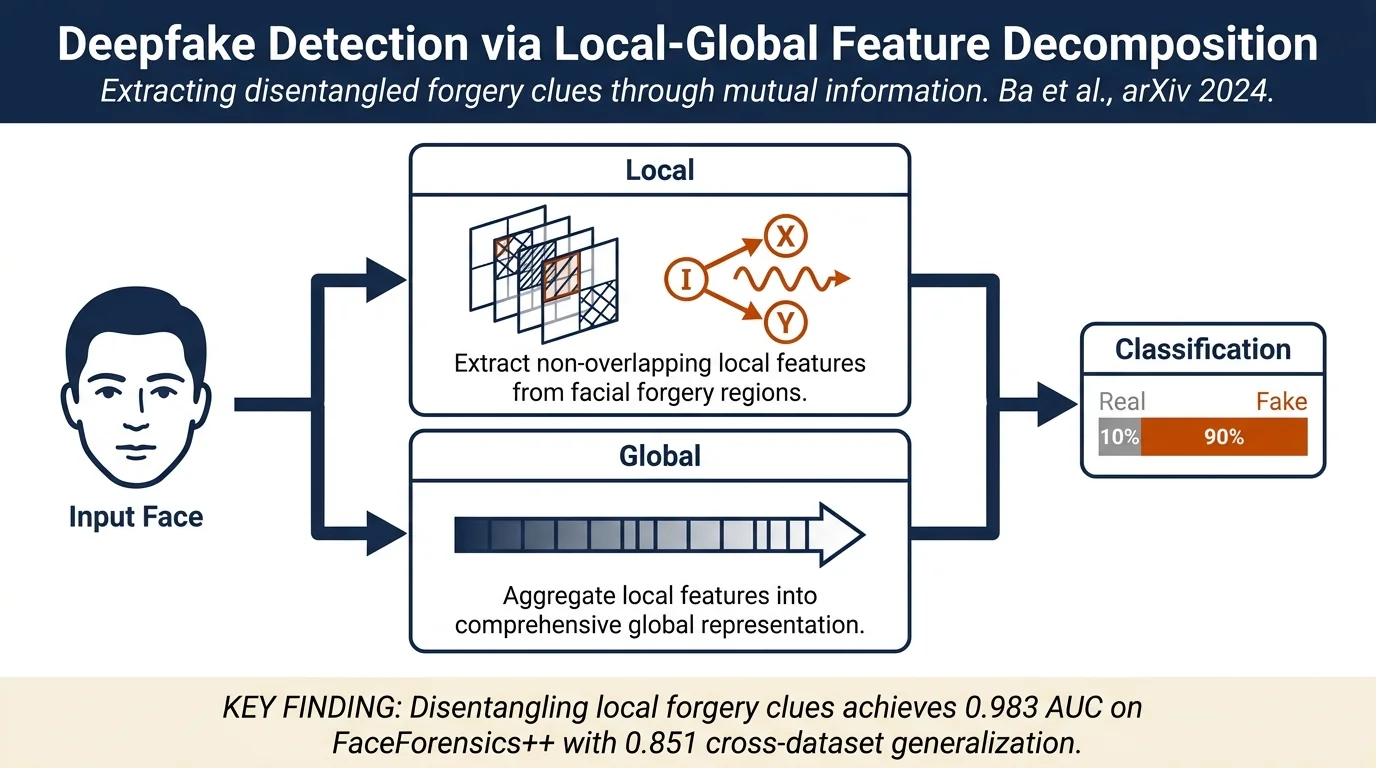
Exposing the Deception: Uncovering More Forgery Clues for Deepfake DetectionThis paper proposes a framework for deepfake detection that extracts both local and global forgery clues by decomposing facial features into disentangled local representations. Using mutual information theory to ensure comprehensive yet non-overlapping feature extraction, the method achieves state-of-the-art results on five benchmark…
 LLMs & generative AIPlatforms, policy & society
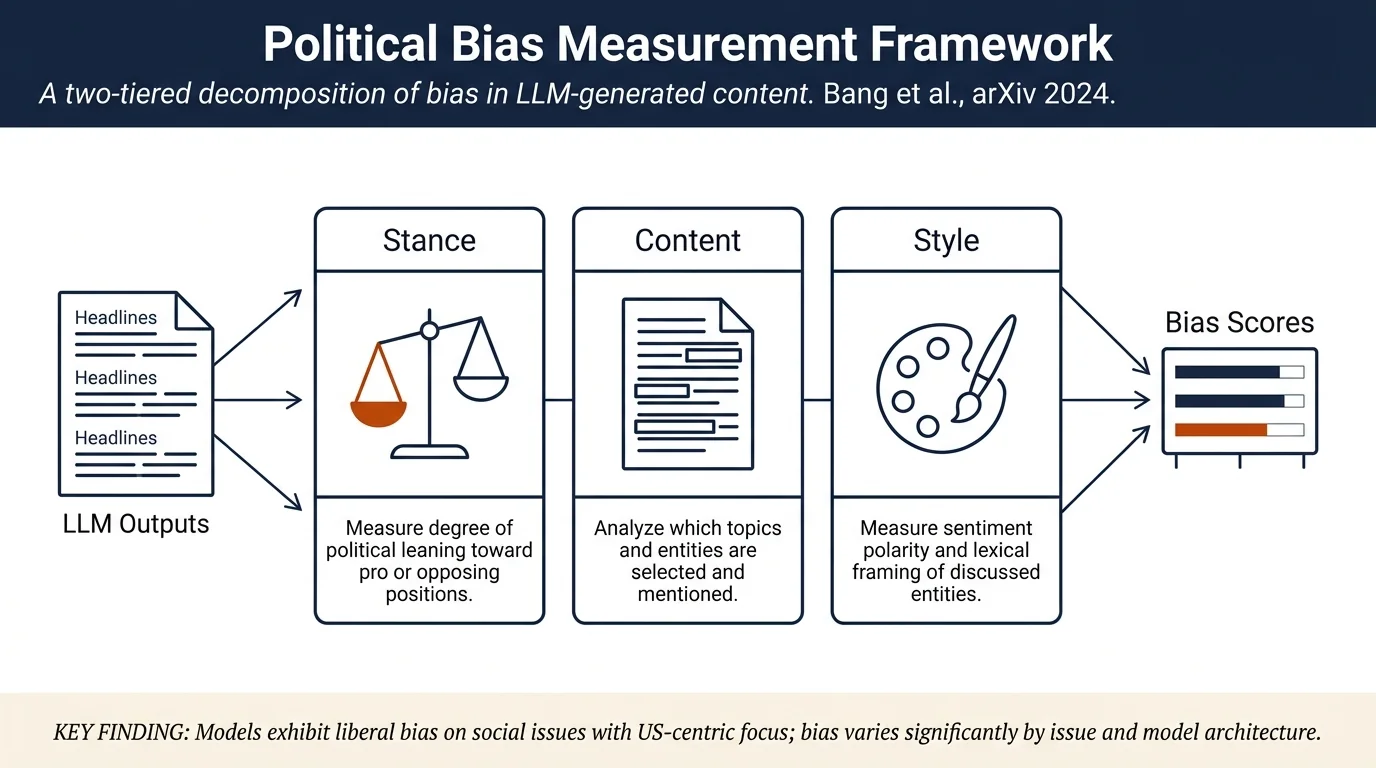
Measuring Political Bias in Large Language Models: What Is Said and How It Is SaidThis paper proposes a two-tiered framework for measuring political bias in LLM-generated content, separating bias into what is said (content bias) and how it is said (style/framing bias). Using extreme anchor comparison and frame analysis on 11 open-source LLMs across 14 politically divisive topics, the authors find that models exhibit…
 Psychology & interventionsLLMs & generative AI
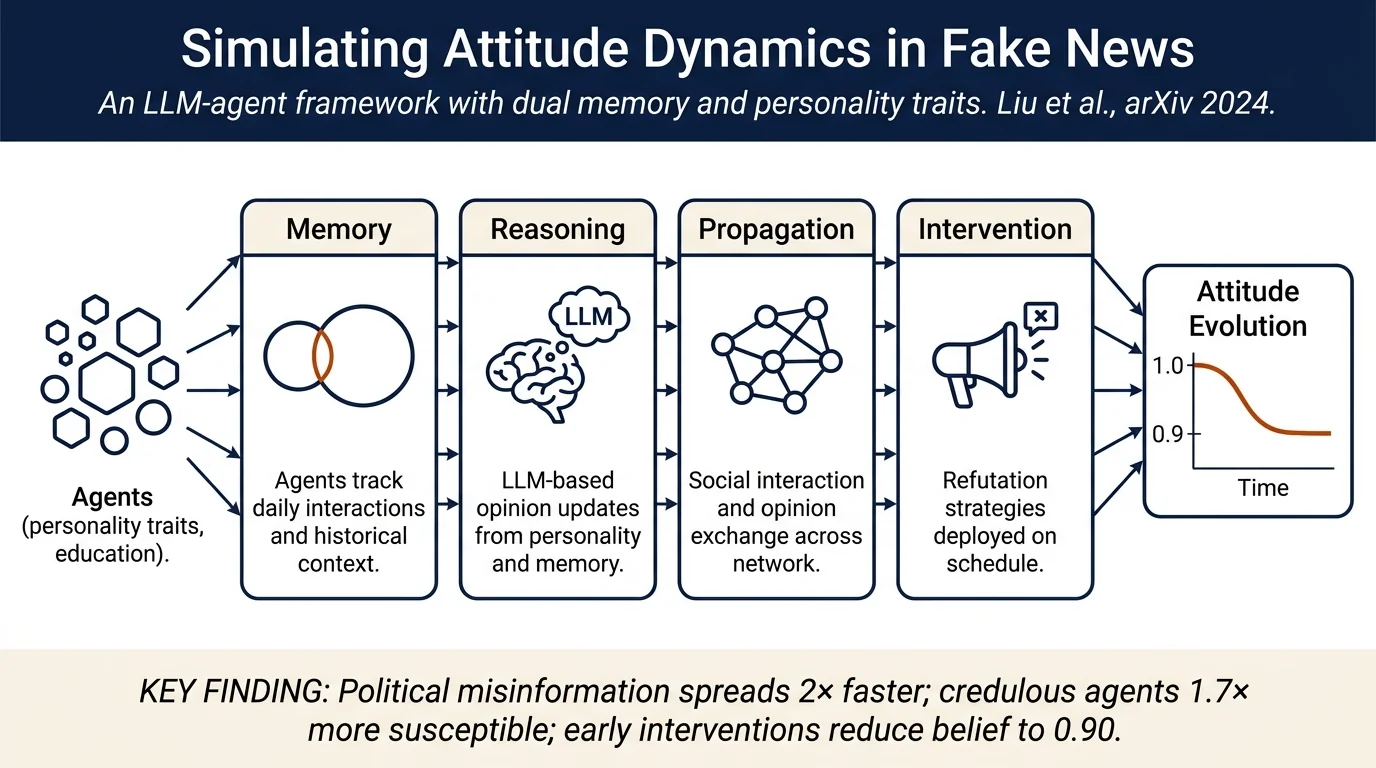
From Skepticism to Acceptance: Simulating the Attitude Dynamics Toward Fake NewsThis paper introduces FPS, an LLM-based agent simulation framework that models how individuals' opinions on fake news evolve through social interactions. Each agent has personality traits, dual memory (short- and long-term), and reasoning capabilities.
 LLMs & generative AIDetection methods
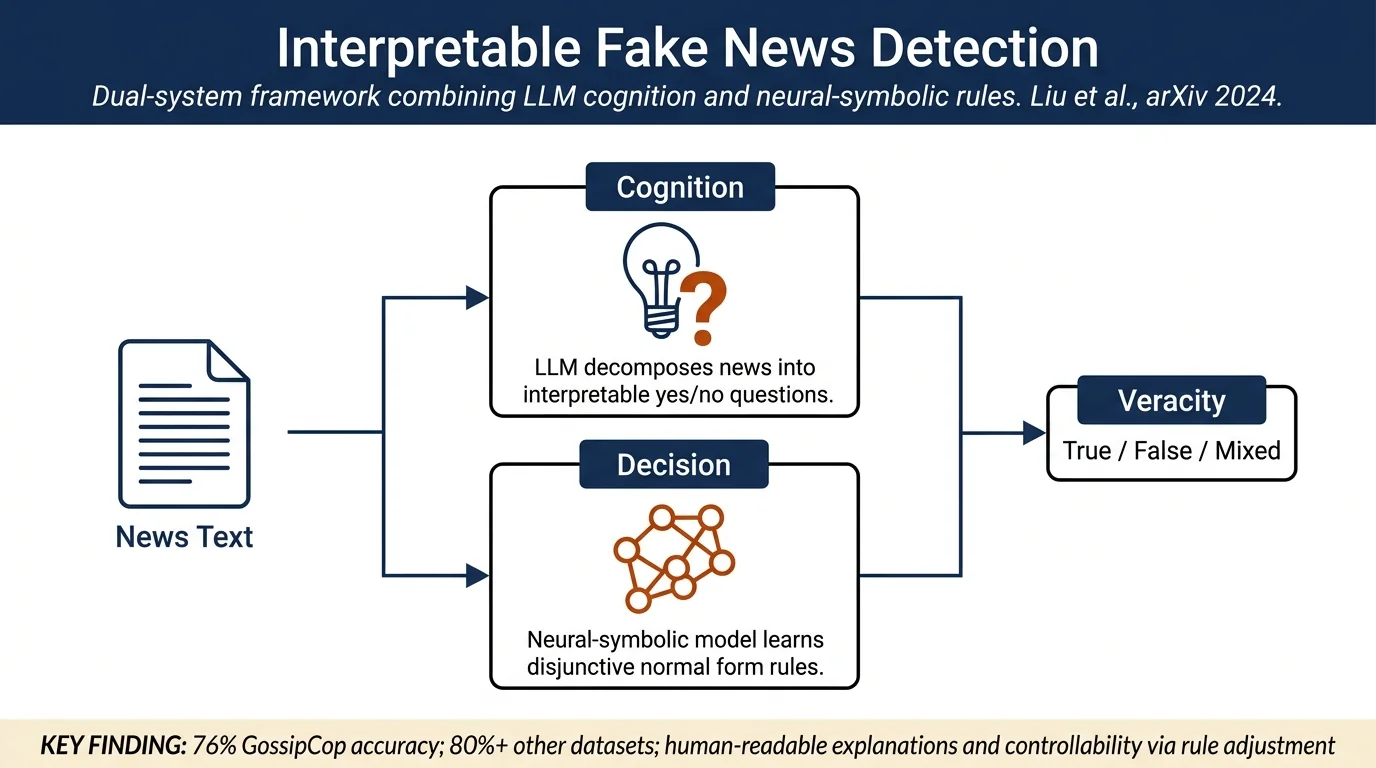
TELLER: A Trustworthy Framework For Explainable, Generalizable and Controllable Fake News DetectionTELLER proposes a dual-system framework for fake news detection that combines LLM-driven cognition (decomposing content into yes/no questions) with a neural-symbolic decision system (learning interpretable rules). The approach prioritizes explainability, generalizability, and human controllability, achieving 76% accuracy on GossipCop and…
 LLMs & generative AIDatasets & evaluation
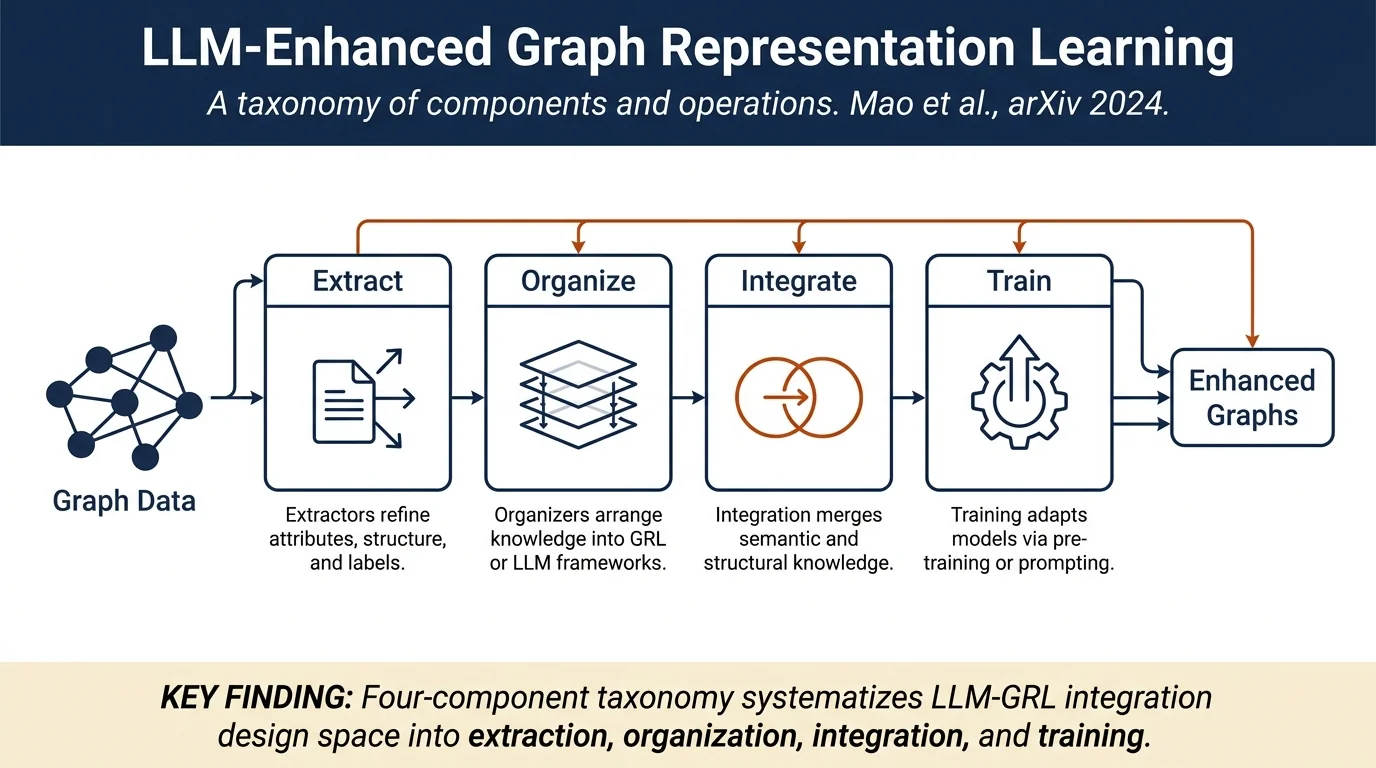
Advancing Graph Representation Learning with Large Language Models: A Comprehensive Survey of TechniquesThis comprehensive survey analyzes the integration of Large Language Models (LLMs) with Graph Representation Learning (GRL), breaking down the design space into two primary components—knowledge extractors and organizers—plus operation techniques for integration and training. The work provides a novel taxonomy for understanding how LLMs…
 LLMs & generative AIDetection methods
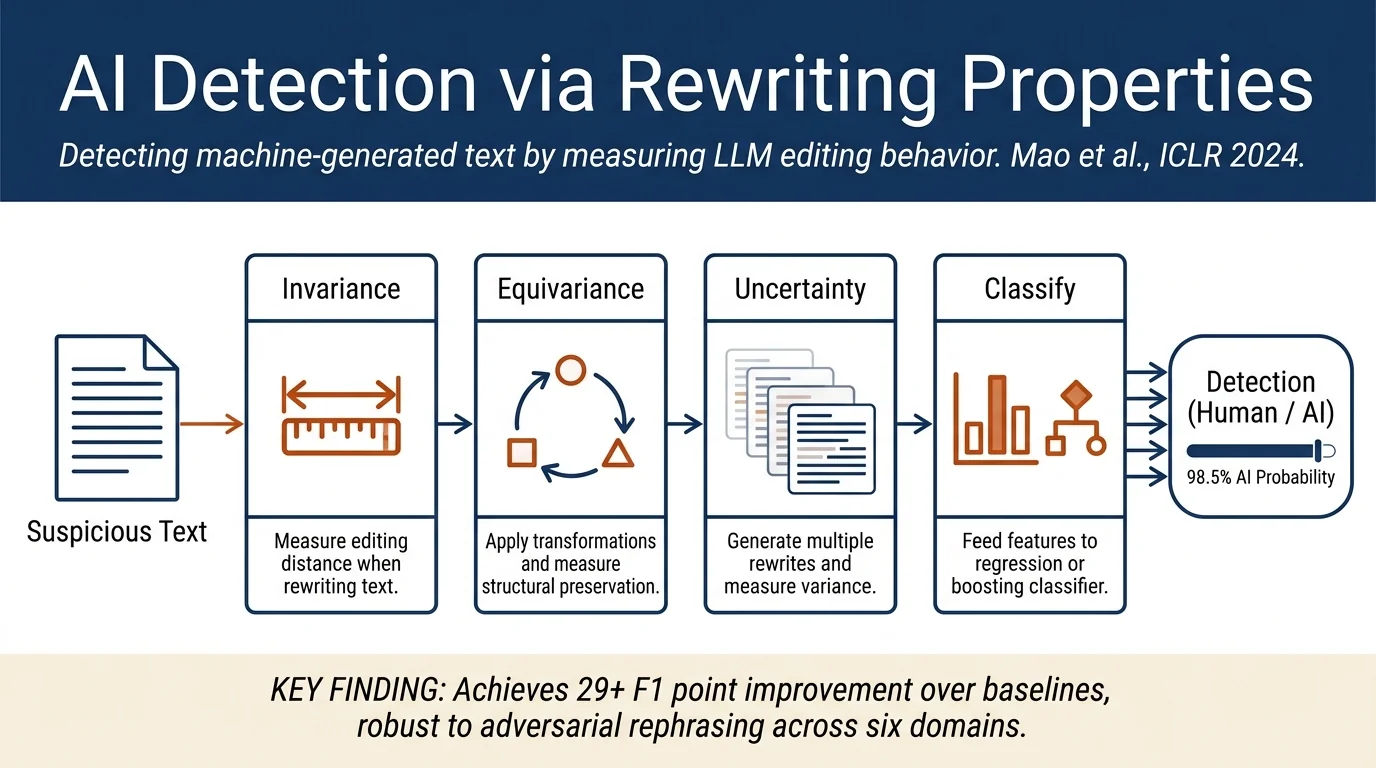
RAIDAR: Generative AI Detection via RewritingThis paper introduces Raidar, a method to detect machine-generated text by measuring how much LLMs modify text when asked to rewrite it. The key observation is that LLMs tend to preserve AI-generated text and modify human-written text more when rewriting.
 LLMs & generative AIPlatforms, policy & society
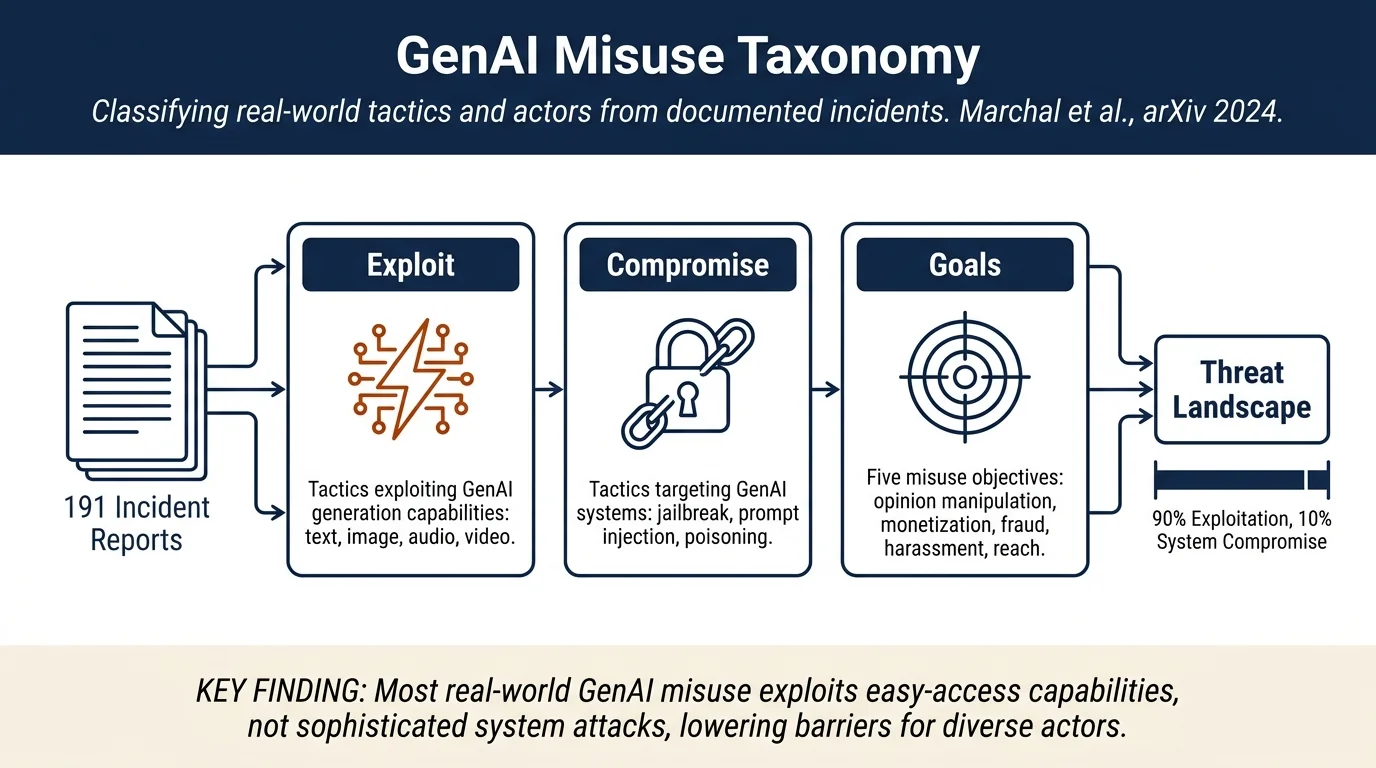
Generative AI Misuse: A Taxonomy of Tactics and Insights from Real-World DataThis paper presents the first comprehensive taxonomy of generative AI misuse tactics grounded in 191 real-world documented incidents (January 2023–March 2024). The authors identify two broad categories—exploitation of GenAI capabilities and compromise of GenAI systems—with 18 distinct tactics.
 LLMs & generative AIDetection methods
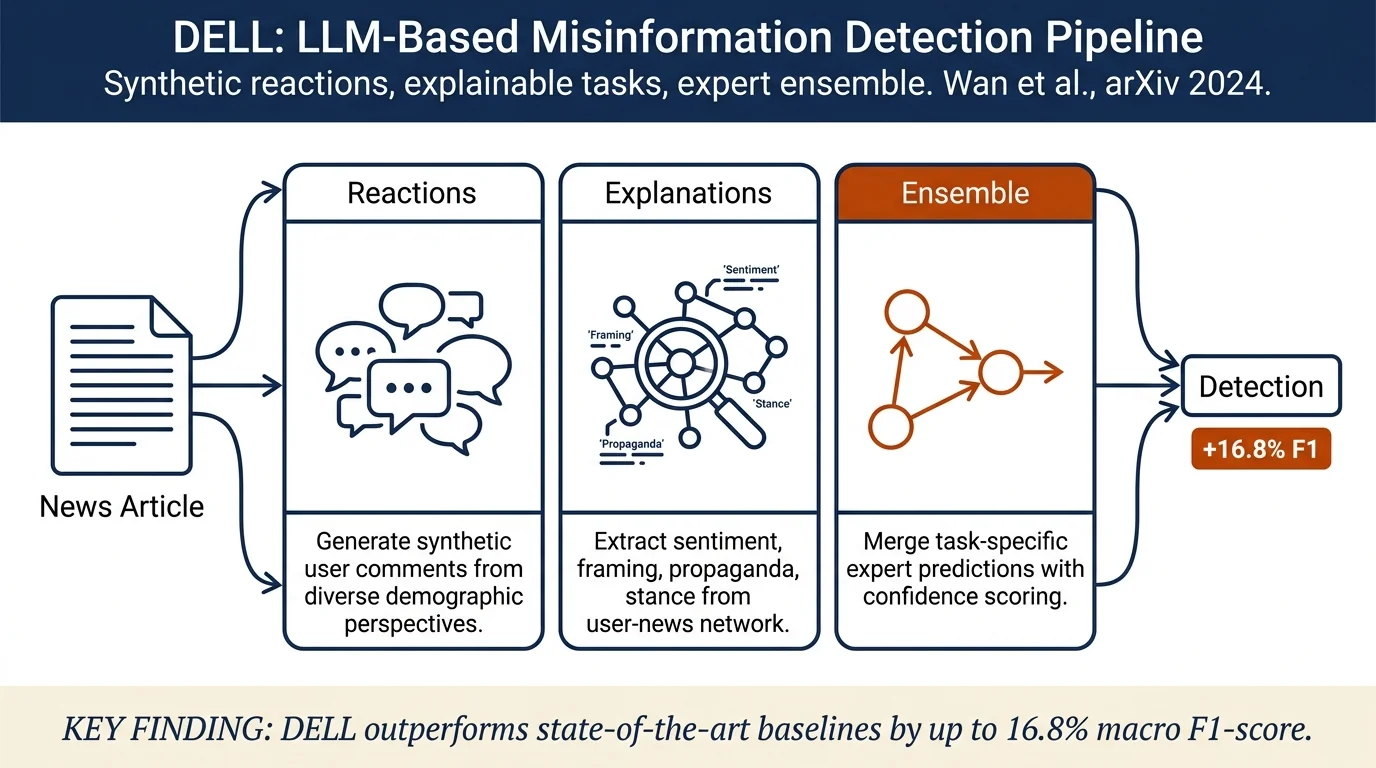
DELL: Generating Reactions and Explanations for LLM-Based Misinformation DetectionLarge language models struggle with factuality and hallucinations in misinformation detection. DELL proposes a three-stage pipeline where LLMs generate synthetic user reactions from diverse perspectives, create explanations for proxy tasks (sentiment, framing, propaganda tactics), and merge predictions from task-specific experts.
 LLMs & generative AIDetection methods
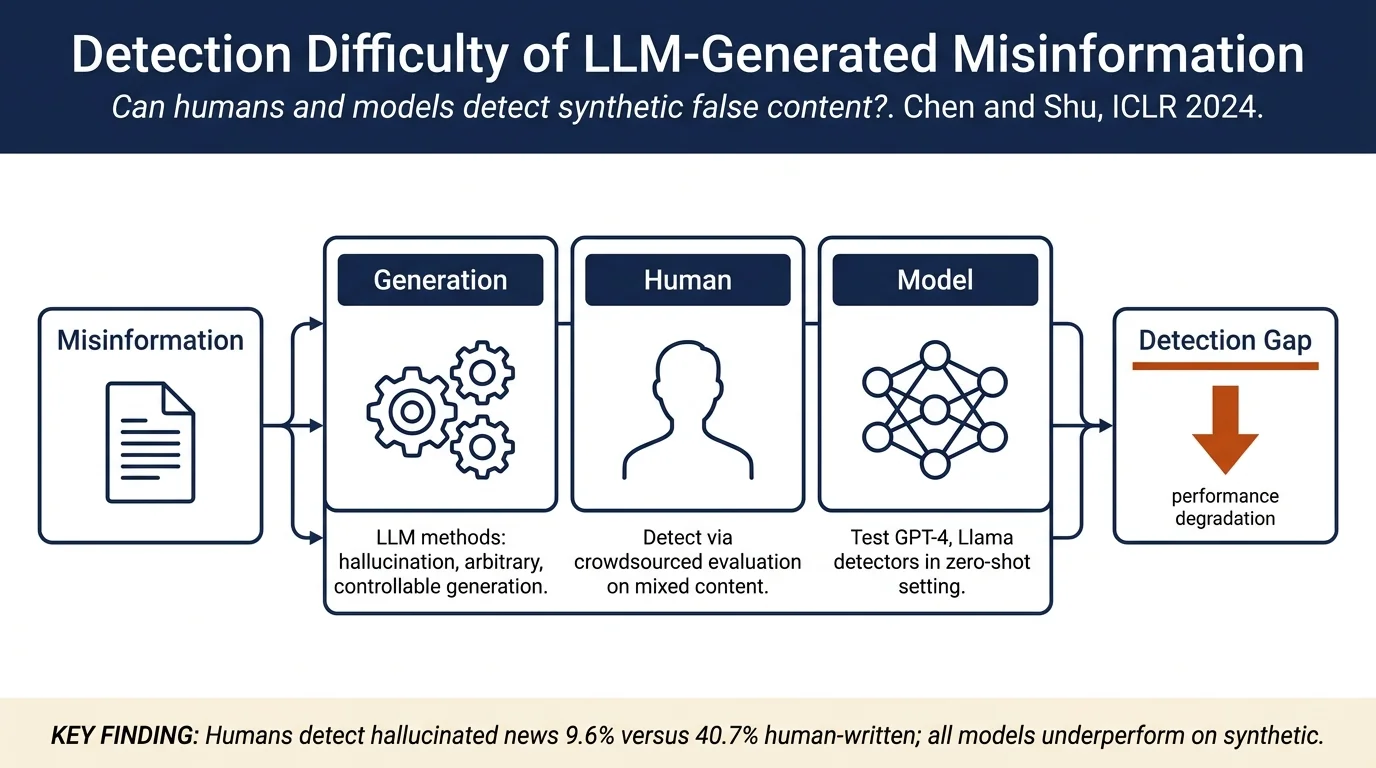
Can LLM-Generated Misinformation Be Detected?LLM-generated misinformation (from ChatGPT, Llama, Vicuna) is detectably harder for both humans and automated detectors to identify than human-written misinformation with identical semantics. The paper builds a taxonomy of LLM-generated misinformation across types, domains, and generation methods, then empirically demonstrates that…
 Psychology & interventionsDetection methods
Prebunking Misinformation on Social MediaJon Roozenbeek presents the case for prebunking—teaching people to recognize manipulation tactics before encountering false claims—rather than relying on reactive debunking. Drawing on inoculation theory from the 1960s, he argues that manipulation techniques recur across misinformation campaigns: emotional exploitation, false…
 Psychology & interventionsFact-checking & verification
Psychological Inoculation Against MisinformationSander van der Linden introduces psychological inoculation as a scalable alternative to fact-checking for building societal resistance to misinformation. Drawing on inoculation theory and his flagship intervention, the Bad News game, he demonstrates how preemptively exposing people to weakened examples of six core manipulation techniques…
 LLMs & generative AI
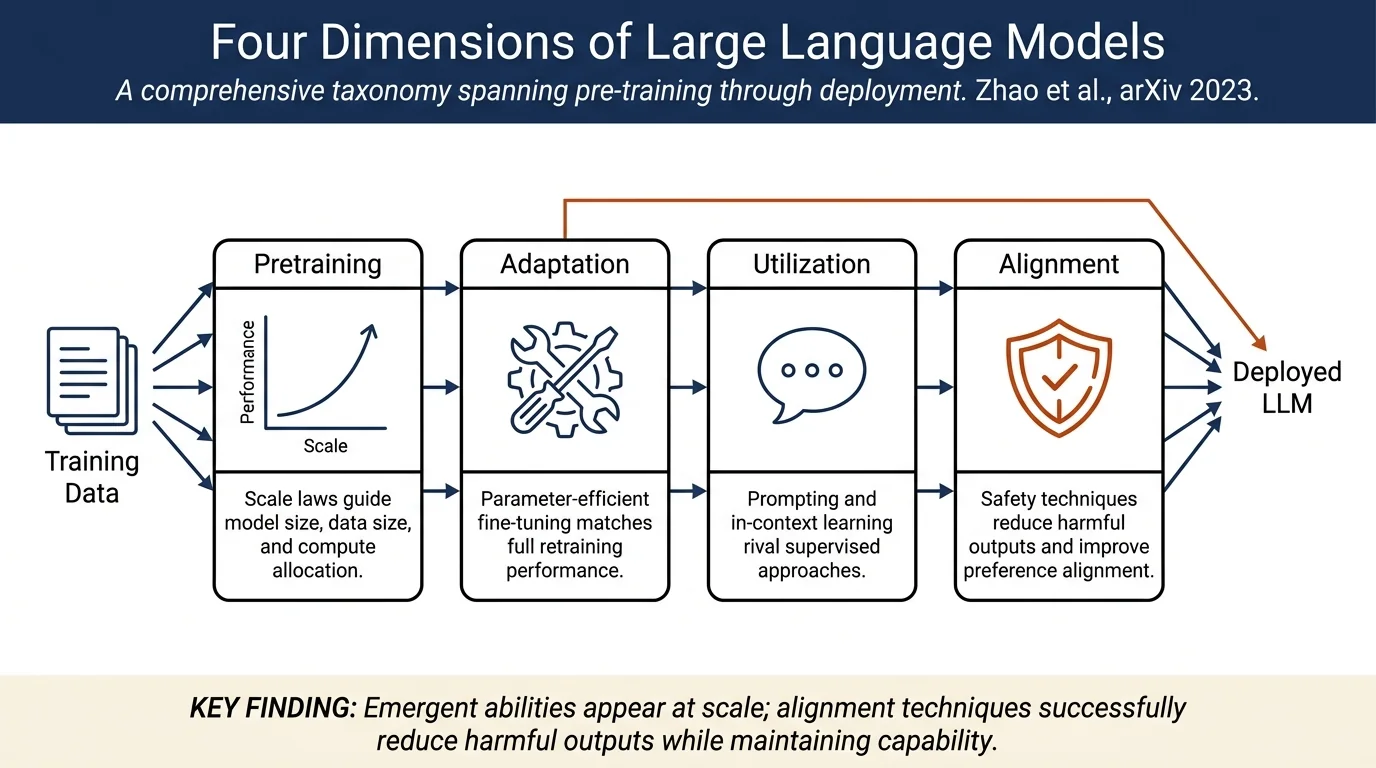
A Survey of Large Language ModelsThis comprehensive survey reviews the evolution of large language models (LLMs) from statistical language models through pre-trained models to contemporary transformer-based LLMs. The authors examine four major dimensions: pre-training strategies, parameter-efficient adaptation methods, utilization approaches (prompting and in-context…
 LLMs & generative AIDetection methods
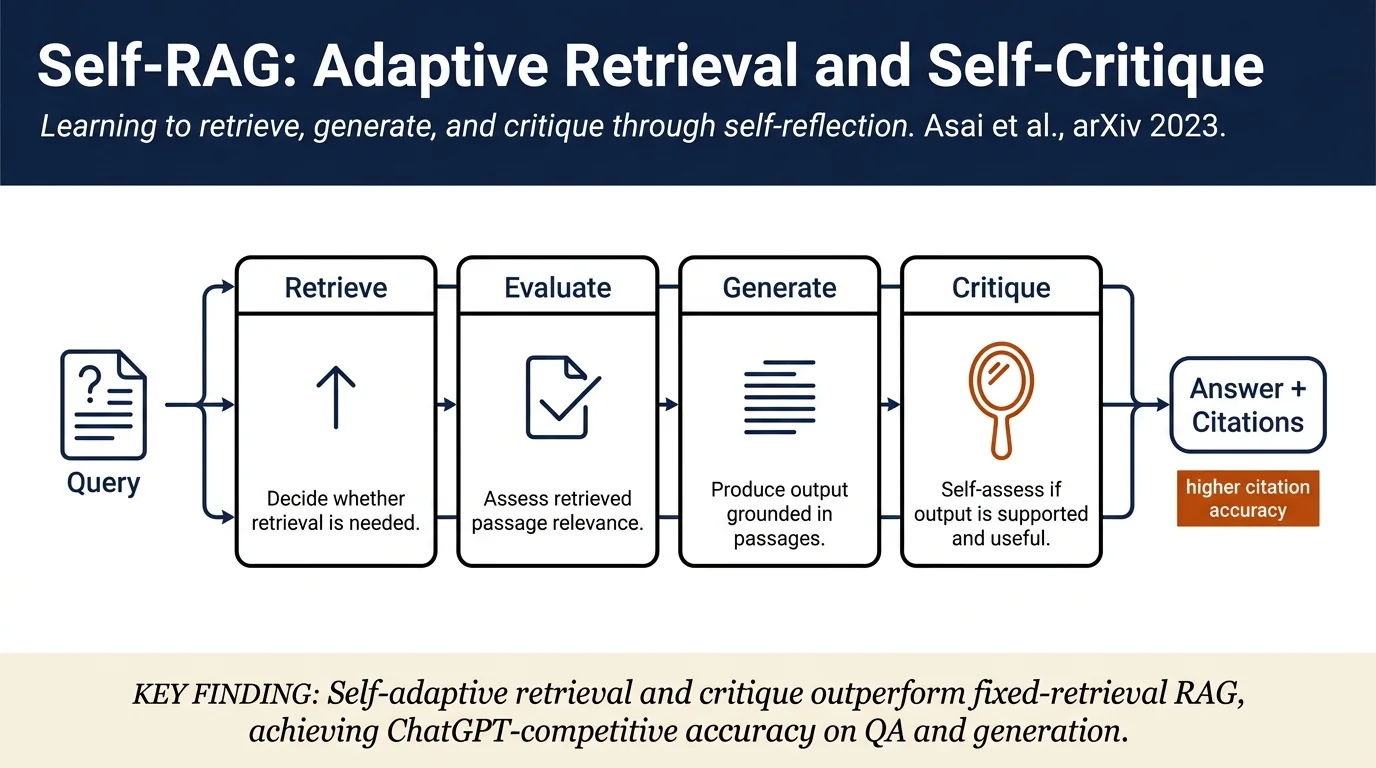
Self-RAG: Learning to Retrieve, Generate, and Critique through Self-ReflectionThis paper introduces SELF-RAG (Self-Reflective Retrieval-Augmented Generation), a framework that teaches language models to adaptively decide when to retrieve external passages, generate factually grounded responses, and critique their own outputs. Using special "reflection tokens," the model learns to self-evaluate at inference time…
 LLMs & generative AIDatasets & evaluation
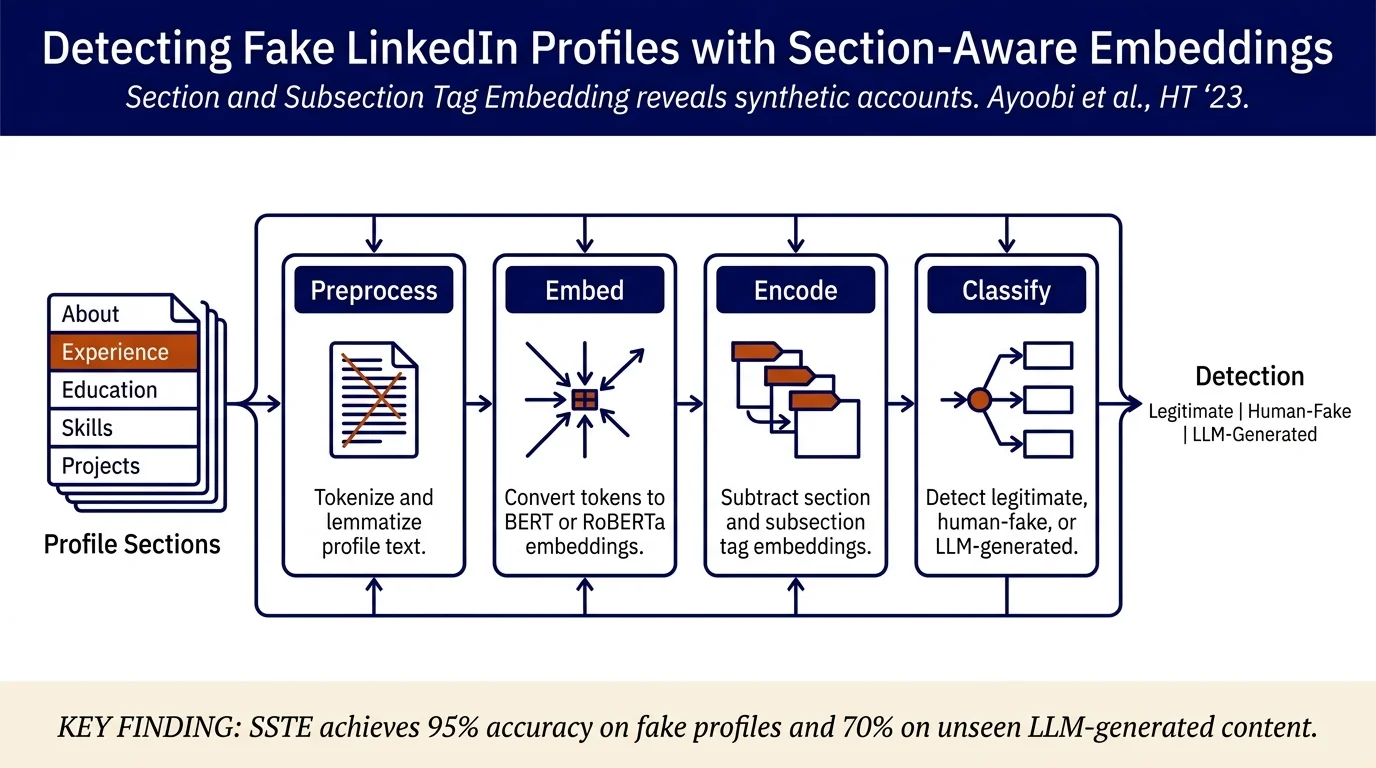
The Looming Threat of Fake and LLM-generated LinkedIn Profiles: Challenges and Opportunities for Detection and PreventionLinkedIn's lack of verification enables fake accounts that harm legitimate users and the platform's integrity. This work introduces a dataset of 3600 profiles (legitimate, manually created fake, and ChatGPT-generated) and proposes SSTE, a method that detects fake profiles immediately after registration using only profile text.
 LLMs & generative AIDeepfakes & multimodal
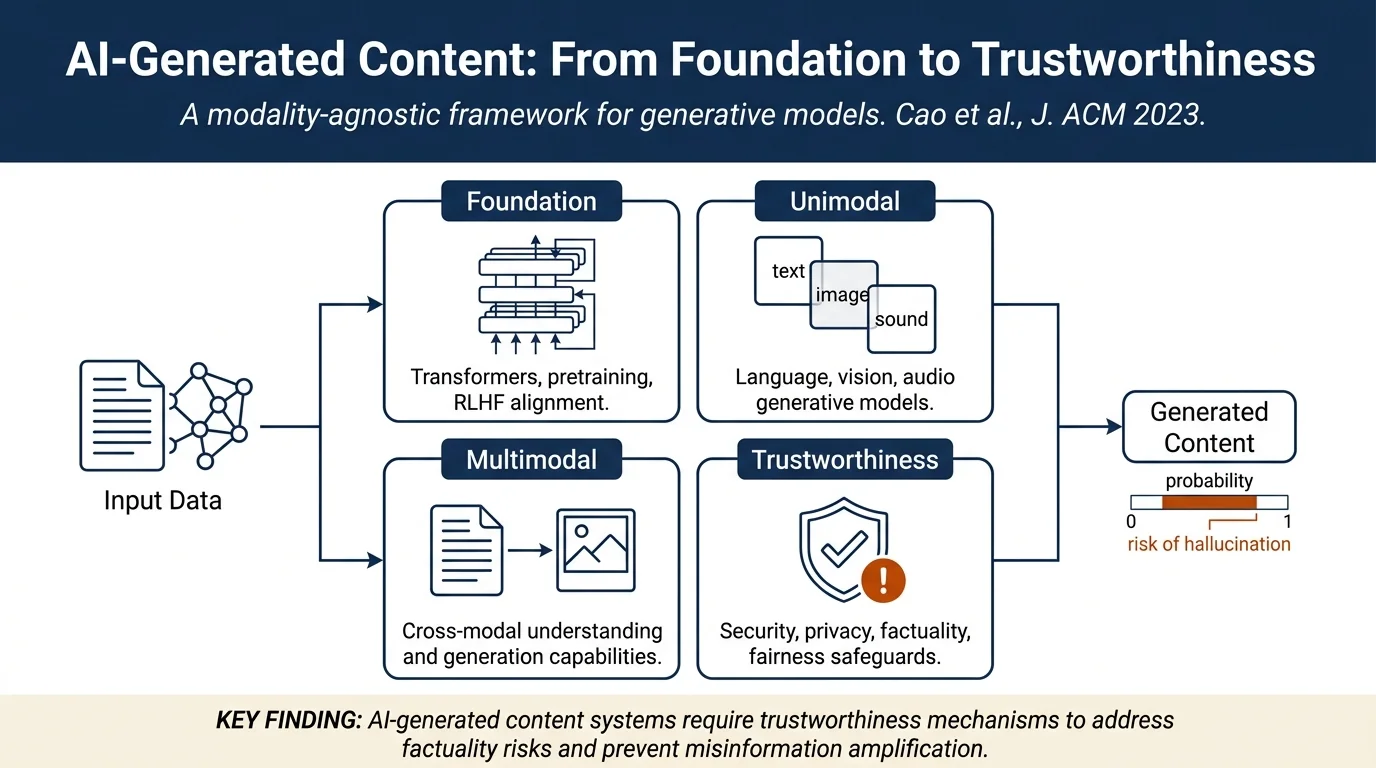
A Comprehensive Survey of AI-Generated Content (AIGC): A History of Generative AI from GAN to ChatGPTThis is the first comprehensive survey of AI-Generated Content (AIGC) covering the history, techniques, and applications of generative models from GANs through ChatGPT. It addresses both the impressive capabilities of these models (text, image, audio, video generation) and critical concerns including factuality, security, privacy, and…
 LLMs & generative AIDatasets & evaluation
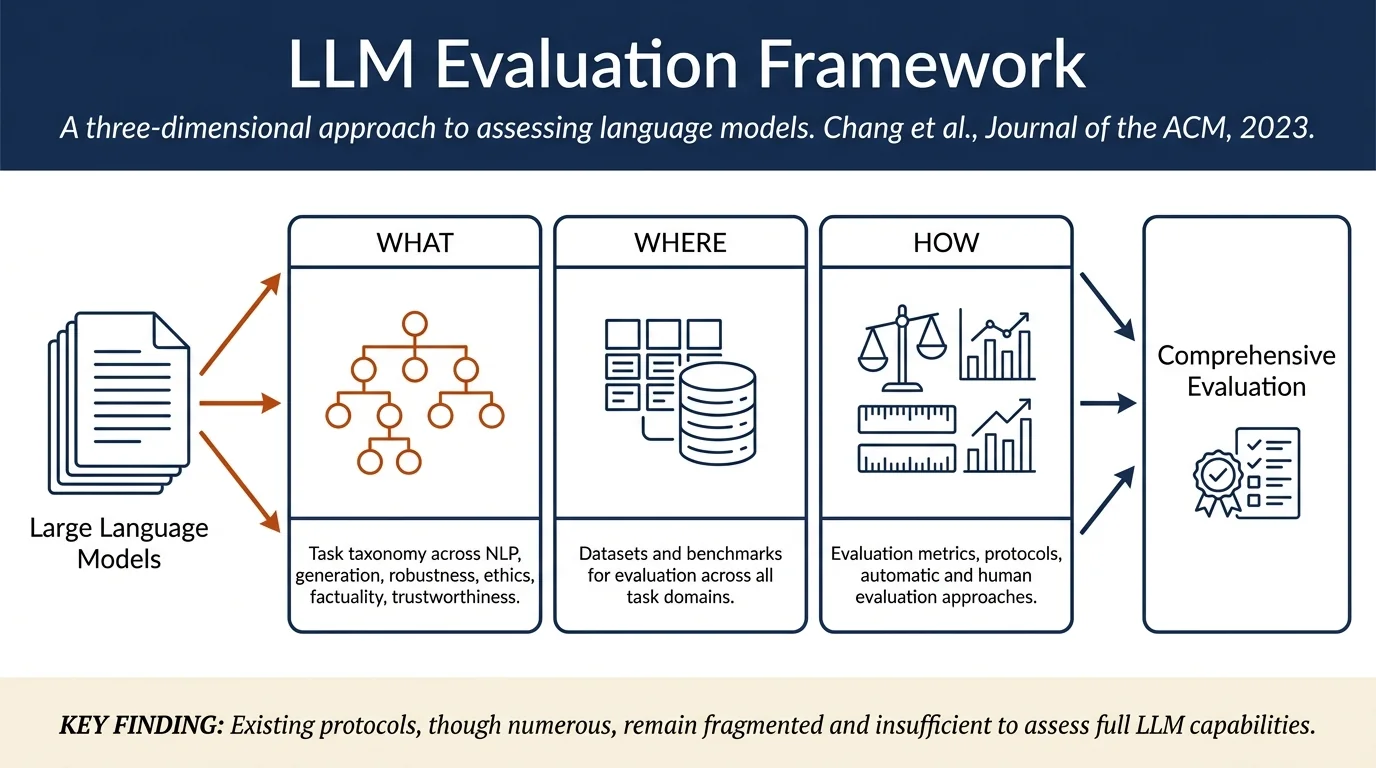
A Survey on Evaluation of Large Language ModelsThis survey provides a comprehensive review of evaluation methodologies for large language models across three dimensions: what to evaluate, where to evaluate, and how to evaluate. The paper encompasses evaluation tasks spanning natural language processing, natural language generation, robustness, ethics, bias detection, trustworthiness,…
 LLMs & generative AIDetection methods
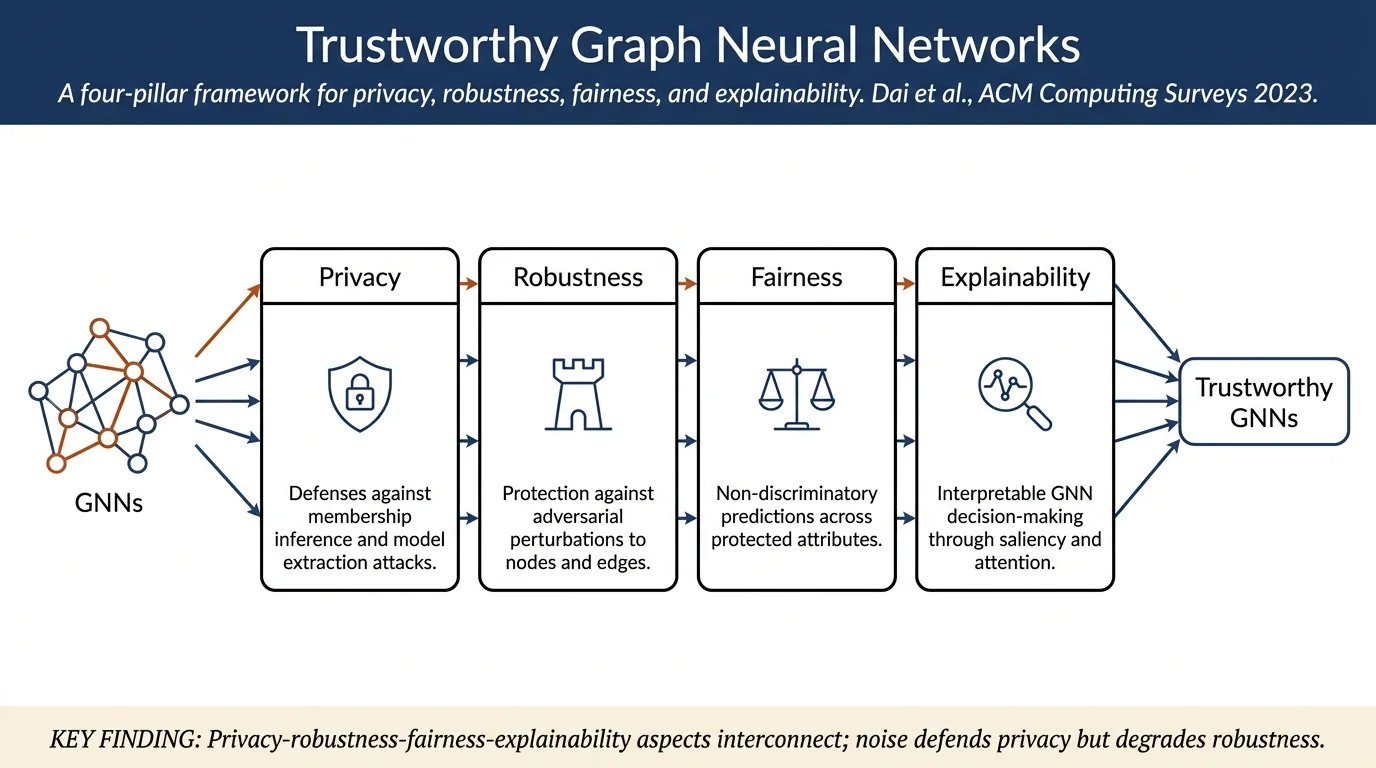
A Comprehensive Survey on Trustworthy Graph Neural Networks: Privacy, Robustness, Fairness, and ExplainabilityA comprehensive survey of trustworthy Graph Neural Networks covering four critical dimensions: privacy attacks and defenses against membership/property inference and model extraction; robustness against adversarial perturbations; fairness mechanisms to prevent discrimination in graph-based predictions; and explainability methods to…
 LLMs & generative AIPlatforms, policy & society
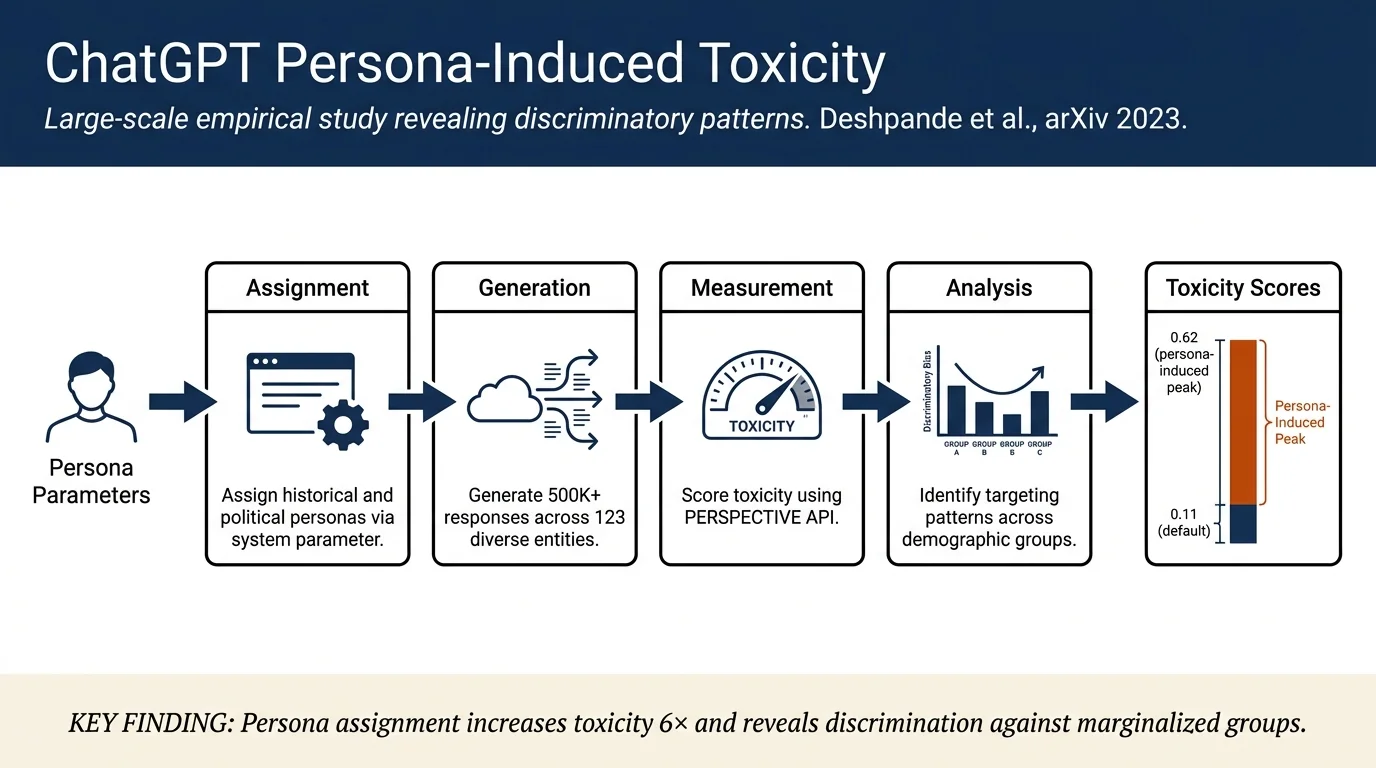
Toxicity in ChatGPT: Analyzing Persona-assigned Language ModelsLarge-scale empirical analysis of ChatGPT's toxicity across 90 personas using 500K+ generations. Assigning personas via the system parameter increases toxicity up to 6×, with variation depending on persona characteristics and target entities.
 LLMs & generative AIPlatforms, policy & society
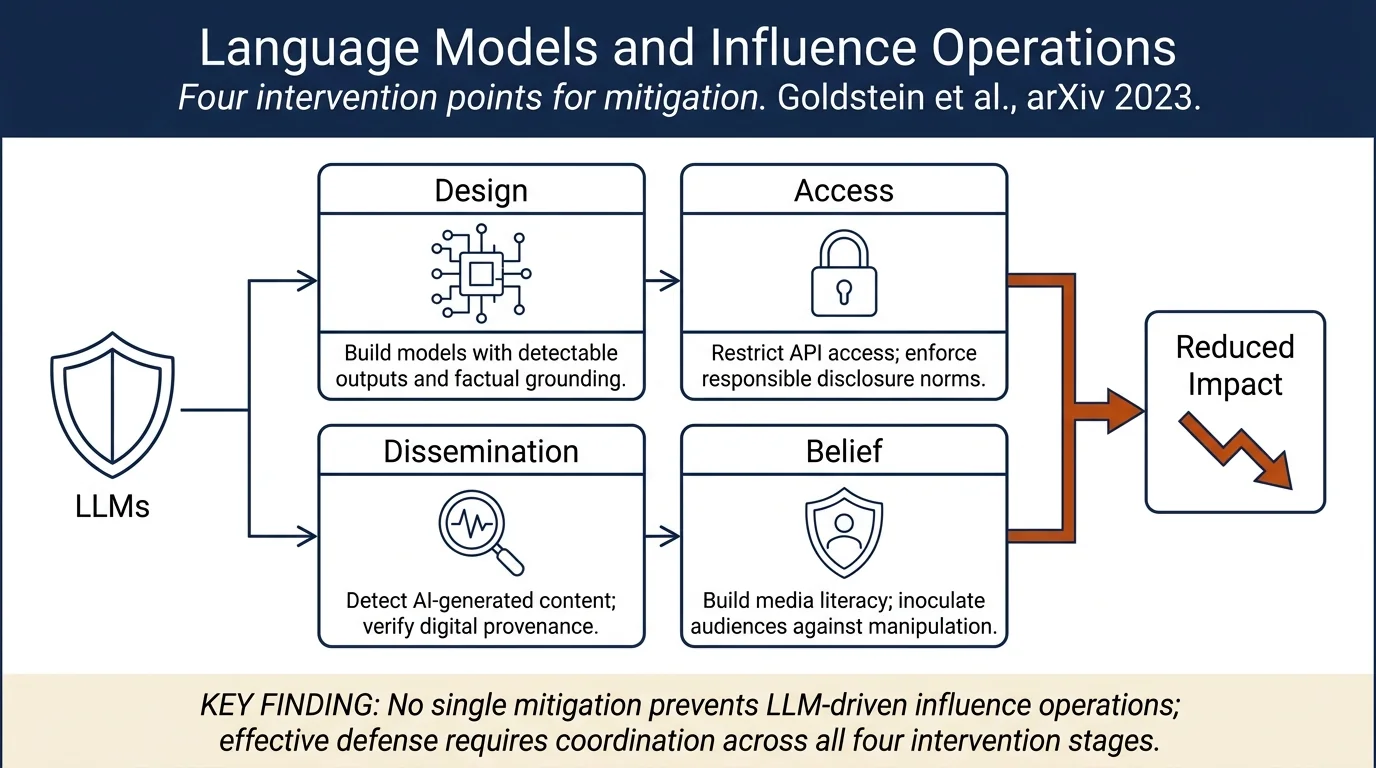
Generative Language Models and Automated Influence Operations: Emerging Threats and Potential MitigationsGenerative language models like GPT-3 and ChatGPT could significantly expand the scale and scope of influence operations by automating high-quality propaganda generation, lowering barriers to entry for new propagandists, and enabling novel tactics. The authors use an Actor-Behavior-Content (ABC) framework to identify how these models…
 LLMs & generative AIPlatforms, policy & society
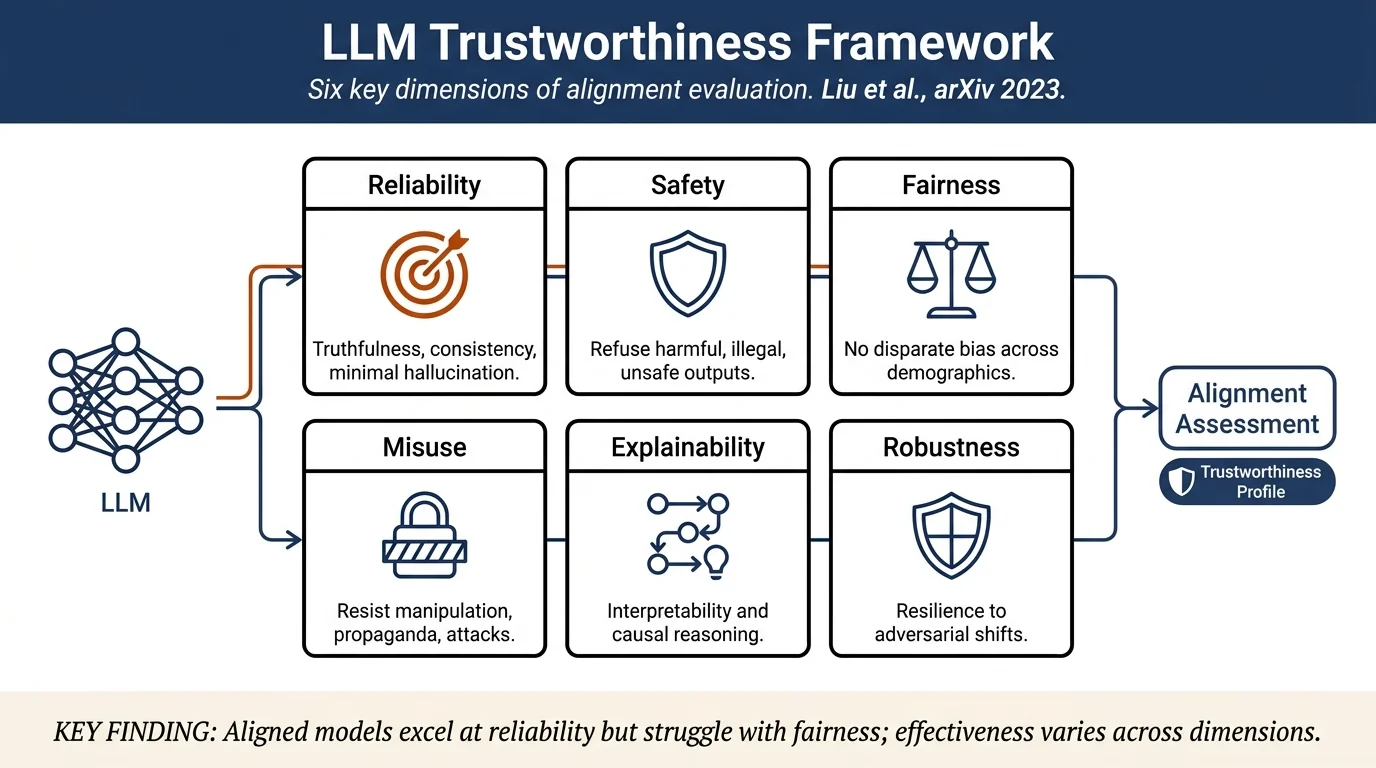
Trustworthy LLMs: A Survey and Guideline for Evaluating Large Language Models' AlignmentThis survey provides a comprehensive framework for evaluating LLM trustworthiness across seven dimensions: reliability, safety, fairness, resistance to misuse, explainability, social norms, and robustness. The authors present a detailed taxonomy with 29 sub-categories, conduct empirical measurements on widely-used LLMs (GPT-4, ChatGPT,…