Explore everything
Filter by research area, year and venue. Every filter is in the address bar, so you can share a view as a link.
 Psychology & interventionsPlatforms, policy & society
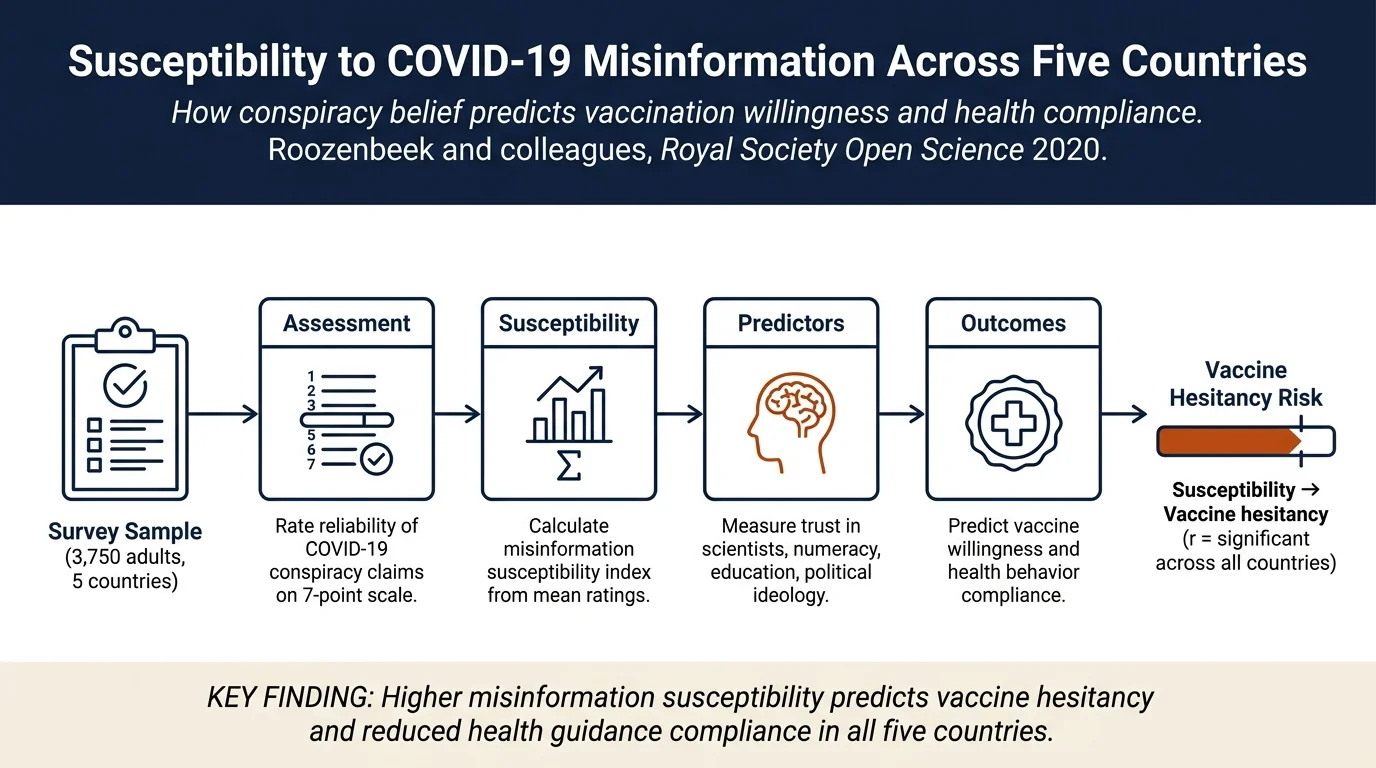
Susceptibility to misinformation about COVID-19 around the worldAn international survey of 3,750 adults across five countries (UK, Ireland, USA, Spain, Mexico) measured susceptibility to COVID-19 misinformation and examined how it predicts public health behaviors. While majorities in each country did not find COVID-19 misinformation credible, higher susceptibility to misinformation was strongly…
 Spread & networksPlatforms, policy & society
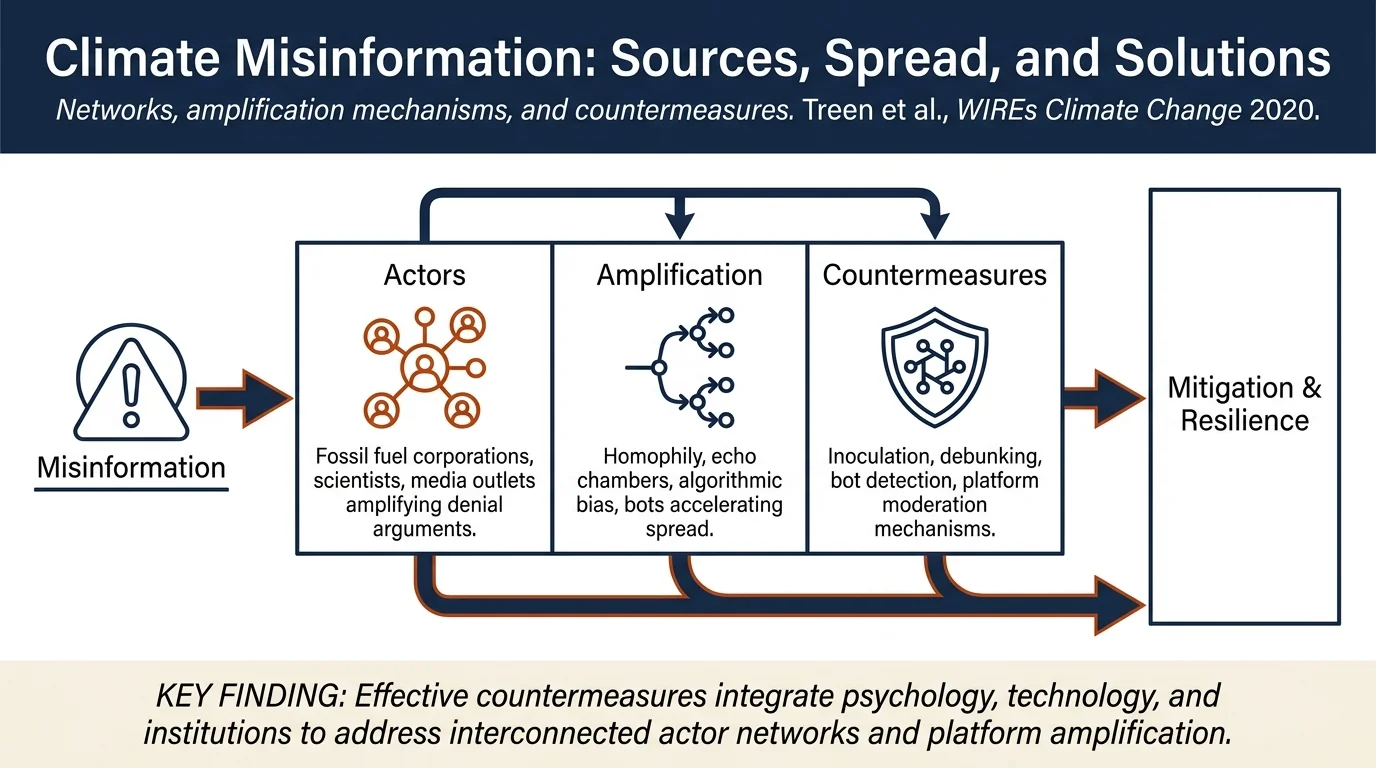
Online misinformation about climate changeComprehensive literature review examining climate change misinformation from multiple disciplinary angles. Defines misinformation vs. disinformation, identifies networks of actors (scientists, governments, industry, media) spreading false claims, examines how social media characteristics (homophily, echo chambers, algorithmic bias)…
 Spread & networksPlatforms, policy & society
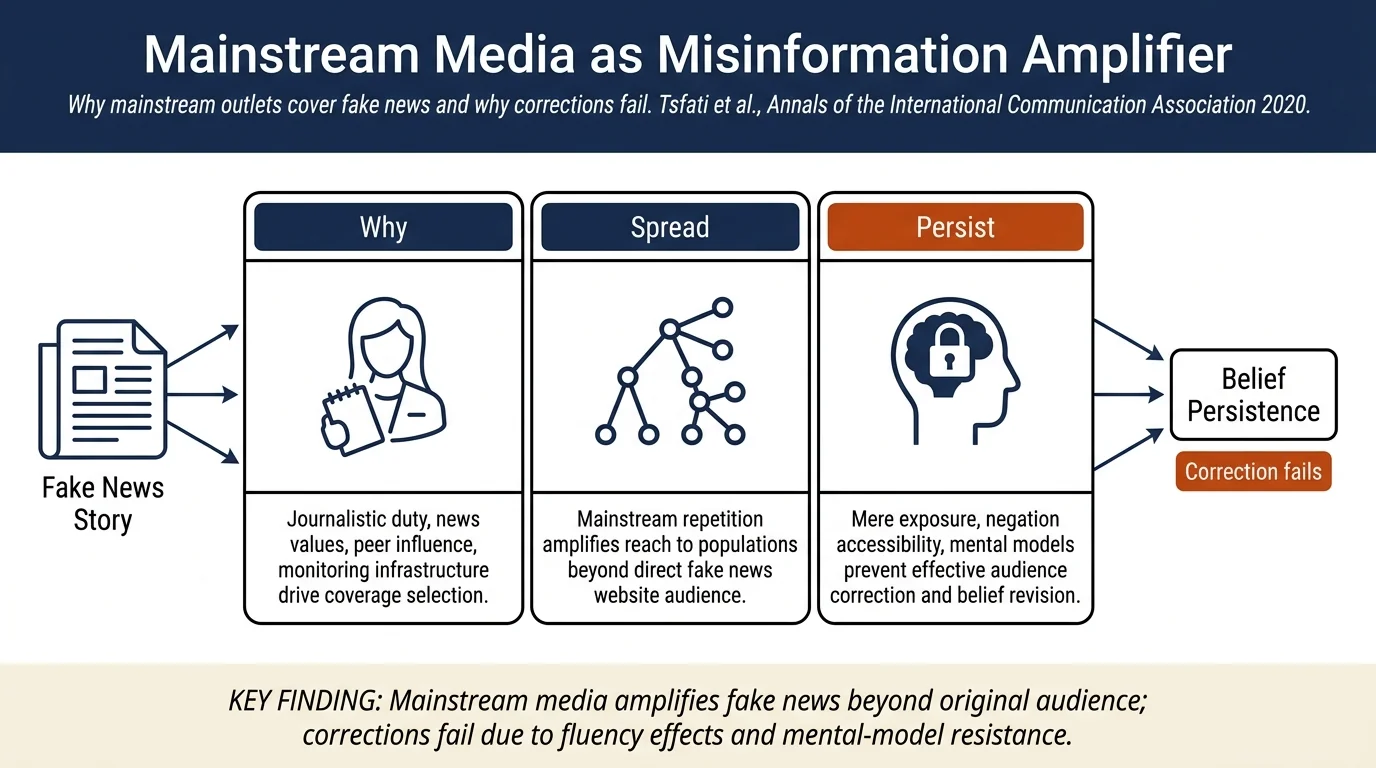
Causes and consequences of mainstream media dissemination of fake news: literature review and synthesisWhile fake news websites have limited direct reach, mainstream media coverage is probably how most people encounter fake news stories. This synthesis identifies why mainstream outlets cover falsehoods (journalists' professional duties, news values, peer psychology, technical infrastructure) and explores how mainstream coverage amplifies…
 Deepfakes & multimodalPlatforms, policy & society
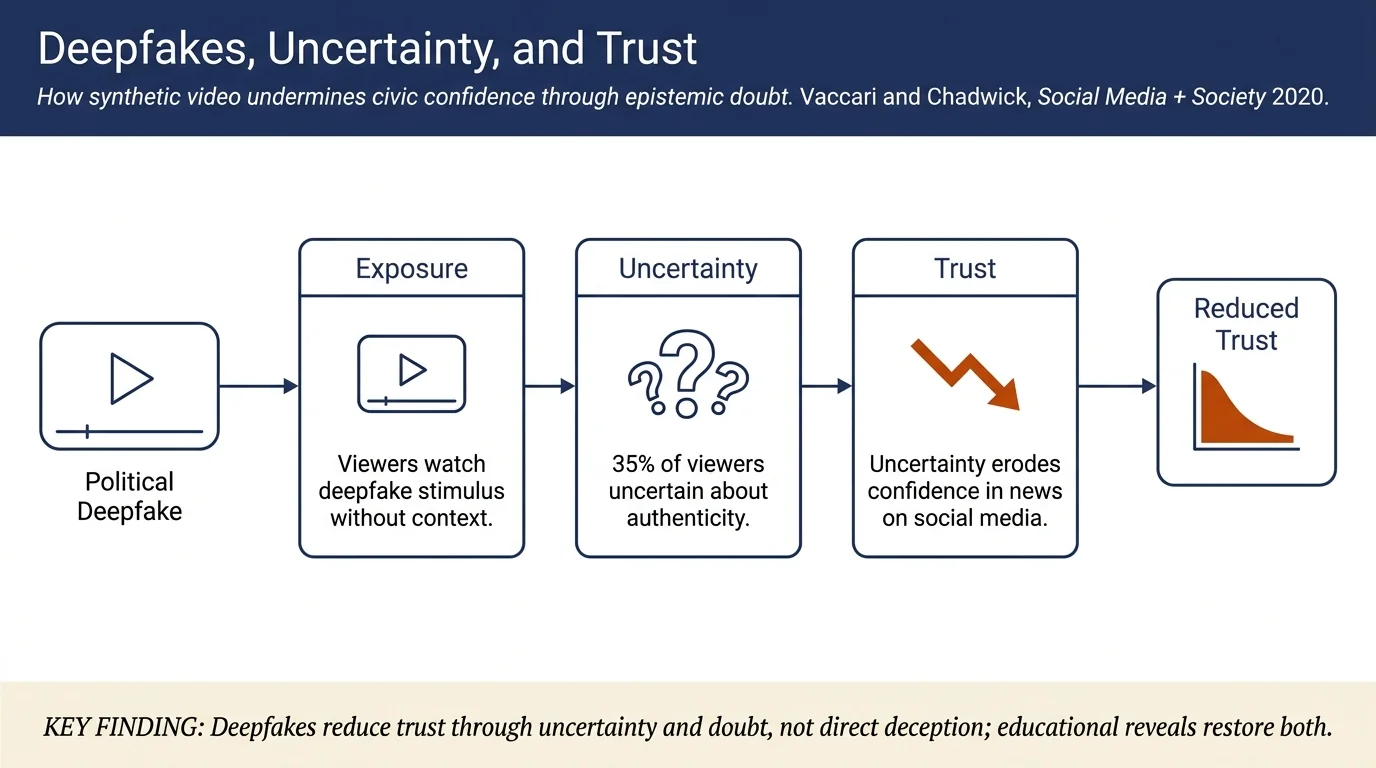
Deepfakes and Disinformation: Exploring the Impact of Synthetic Political Video on Deception, Uncertainty, and Trust in NewsExperimental study (N=2,005 UK respondents) testing how political deepfakes affect deception and trust in news. Deepfakes increased uncertainty about content, and that uncertainty mediated reduced trust in news on social media.
 Fact-checking & verificationPsychology & interventions
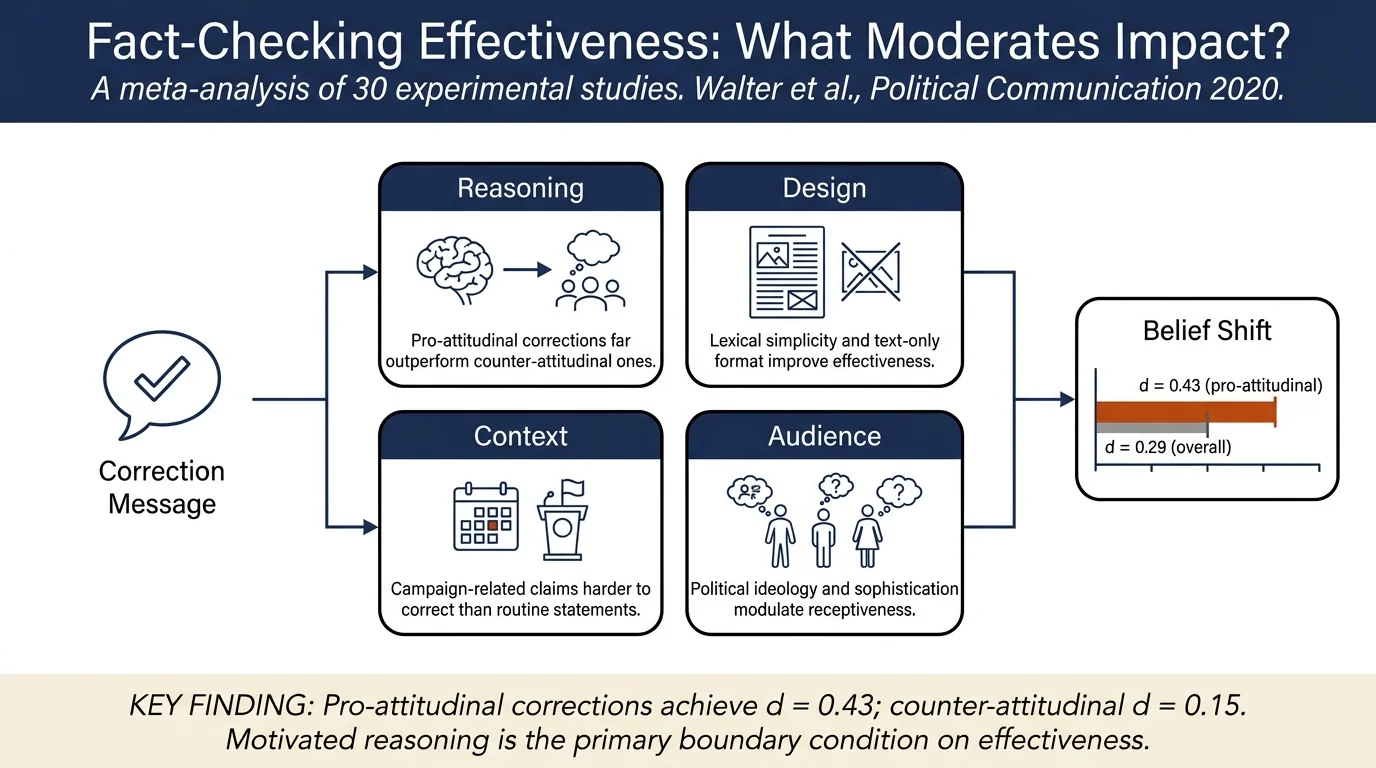
Fact-Checking: A Meta-Analysis of What Works and for WhomMeta-analysis of 30 studies on fact-checking effectiveness finds modest but significant positive effects (d = 0.29) on belief correction. However, effects are substantially moderated by motivated reasoning, political ideology, message design, and context: pro-attitudinal fact-checking works better than counter-attitudinal corrections,…
 Platforms, policy & societySpread & networks
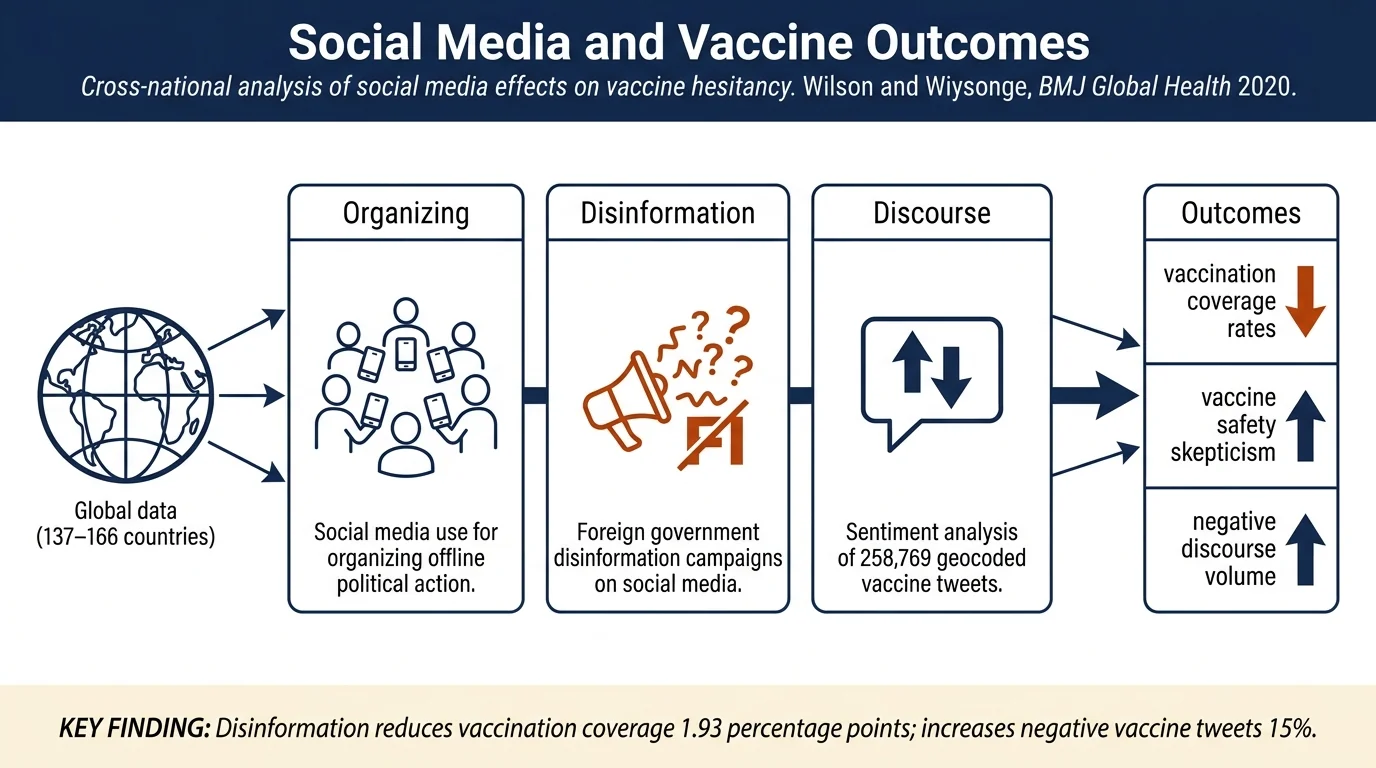
Social media and vaccine hesitancyLarge-scale cross-national analysis finds that social media use to organize offline action predicts public vaccine safety skepticism, while foreign disinformation campaigns significantly reduce vaccination coverage year-over-year. A one-point increase on the five-point disinformation scale correlates with a two-percentage-point drop in…
 Spread & networksDetection methods
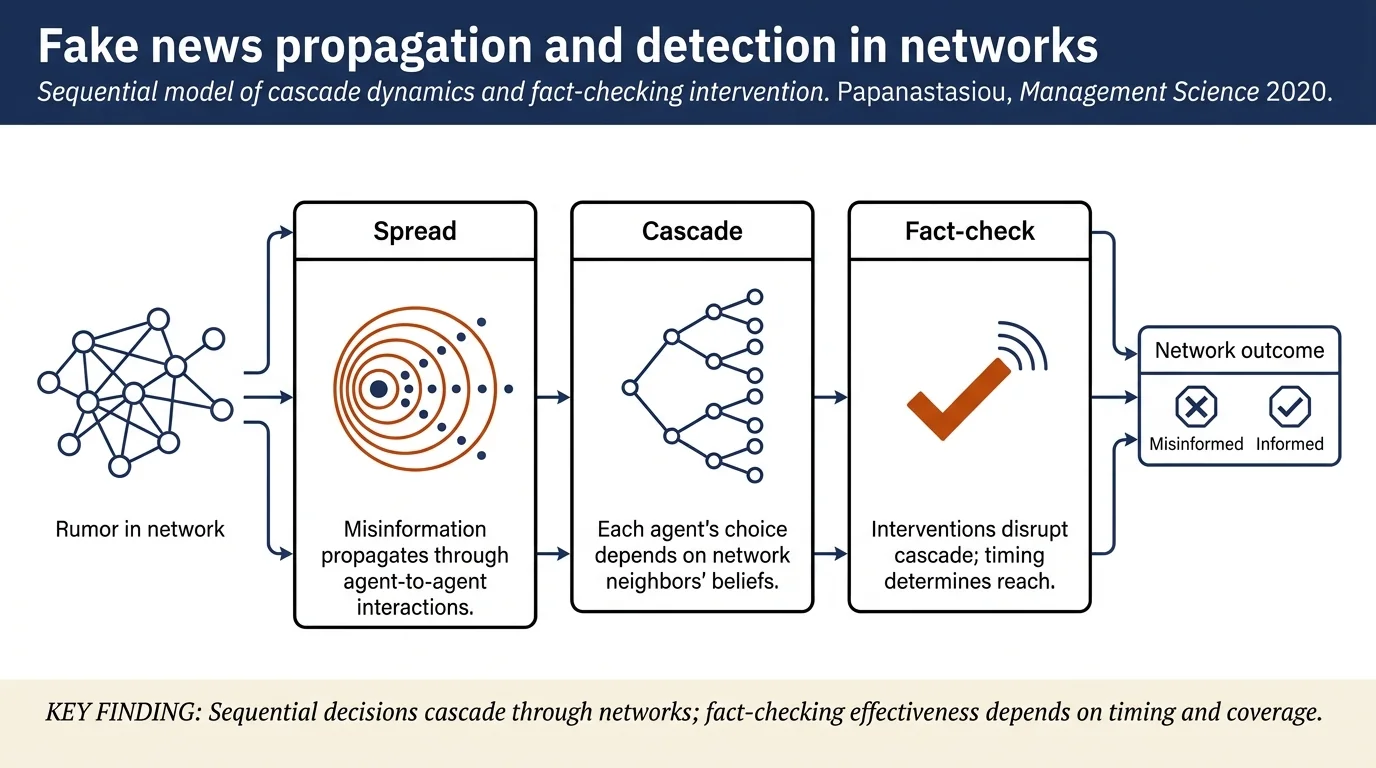
Fake news propagation and detection: A sequential modelFoundational sequential social learning model of misinformation spread and fact-checking. Introduces the framework for analyzing how agents' decisions cascade through a network and how fact-checking affects collective outcomes.
 Spread & networksPlatforms, policy & society
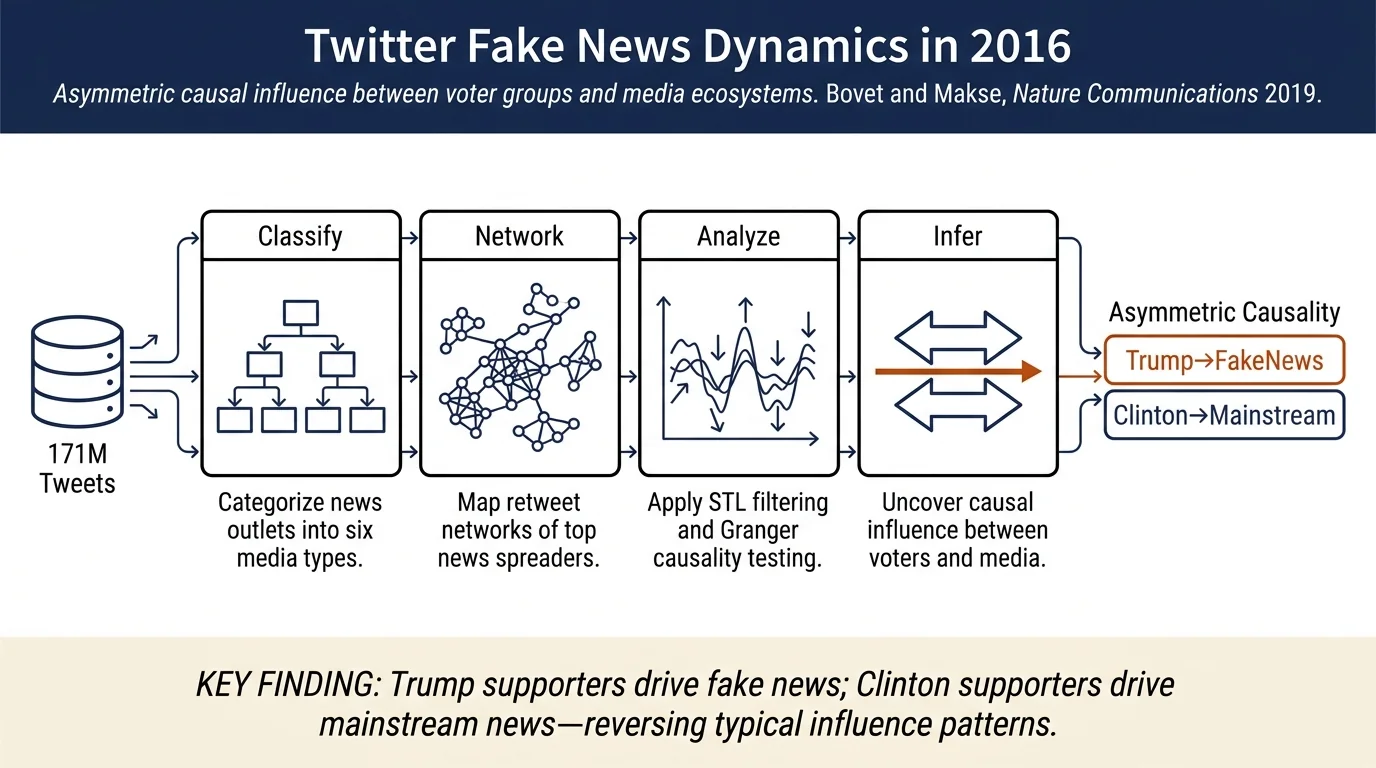
Influence of fake news in Twitter during the 2016 US presidential electionUsing 171 million tweets from the five months preceding the 2016 U.S. election, this study found that 25% of news-sharing tweets contained fake or extremely biased content. Network analysis revealed distinct clusters of fake, biased, and mainstream news spreaders.
 Platforms, policy & societyBots & coordinated campaigns
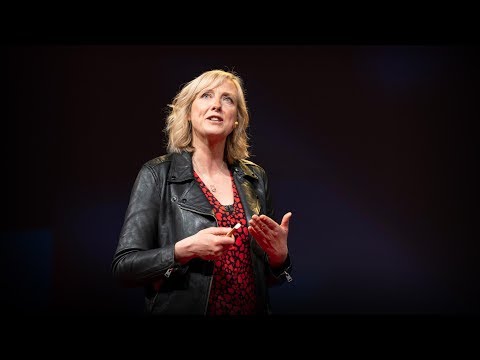
Facebook's role in Brexit — and the threat to democracyInvestigative journalist Carole Cadwalladr exposes the systematic abuse of Facebook as an instrument for election interference during the 2016 Brexit referendum. She documents illegal campaign spending, microtargeted disinformation, Cambridge Analytica's harvesting of 87 million user profiles, and traces connections between Brexit and…
 Deepfakes & multimodalPlatforms, policy & society
How deepfakes undermine truth and threaten democracyDeepfakes use machine-learning technology to create fabricated audio and video of people doing or saying things they never did. Law professor Danielle Citron explores the dual threats: individual harm (non-consensual sexual deepfakes targeting women, especially minorities and journalists) and societal damage (eroding trust in…
 Platforms, policy & societyPsychology & interventions
Inside the bizarre world of internet trolls and propagandistsJournalist Andrew Marantz spent three years investigating propagandists and online extremists, tracing how fringe conspiracy theories and hate speech go viral on social media platforms. He exposes how social media algorithms optimized for engagement enable propagandists to leverage emotion over truth, and documents the pipeline through…
 Detection methodsSpread & networks
Fake News in the 2016 and 2018 Campaigns: Prevalence, Detection, and EffectsNyhan presents empirical findings on fake news consumption in the 2016 and 2018 U.S. campaigns, drawing from survey data with browser tracking to measure actual article visits. While mainstream media reported on fake news as a widespread crisis, his research shows that only ~25% of Americans visited fake news websites, and consumption…
 Spread & networksBots & coordinated campaigns
5 Reasons Why Social Networks Make Us Vulnerable to MisinformationMenczer presents five fundamental factors that make social networks inherently vulnerable to misinformation spread. Information and misinformation propagate through networks at equivalent rates due to structural properties of scale-free networks combined with human cognitive limitations.
 Platforms, policy & societySpread & networks
How You Can Help Transform the Internet into a Place of TrustWardle examines the systemic challenges of moderating harmful content at internet scale while preserving freedom of expression. She argues that the core problem is not technical (AI could theoretically detect violations) but structural: platforms and governments lack clear authority to decide what constitutes harmful speech, face…
 Platforms, policy & society
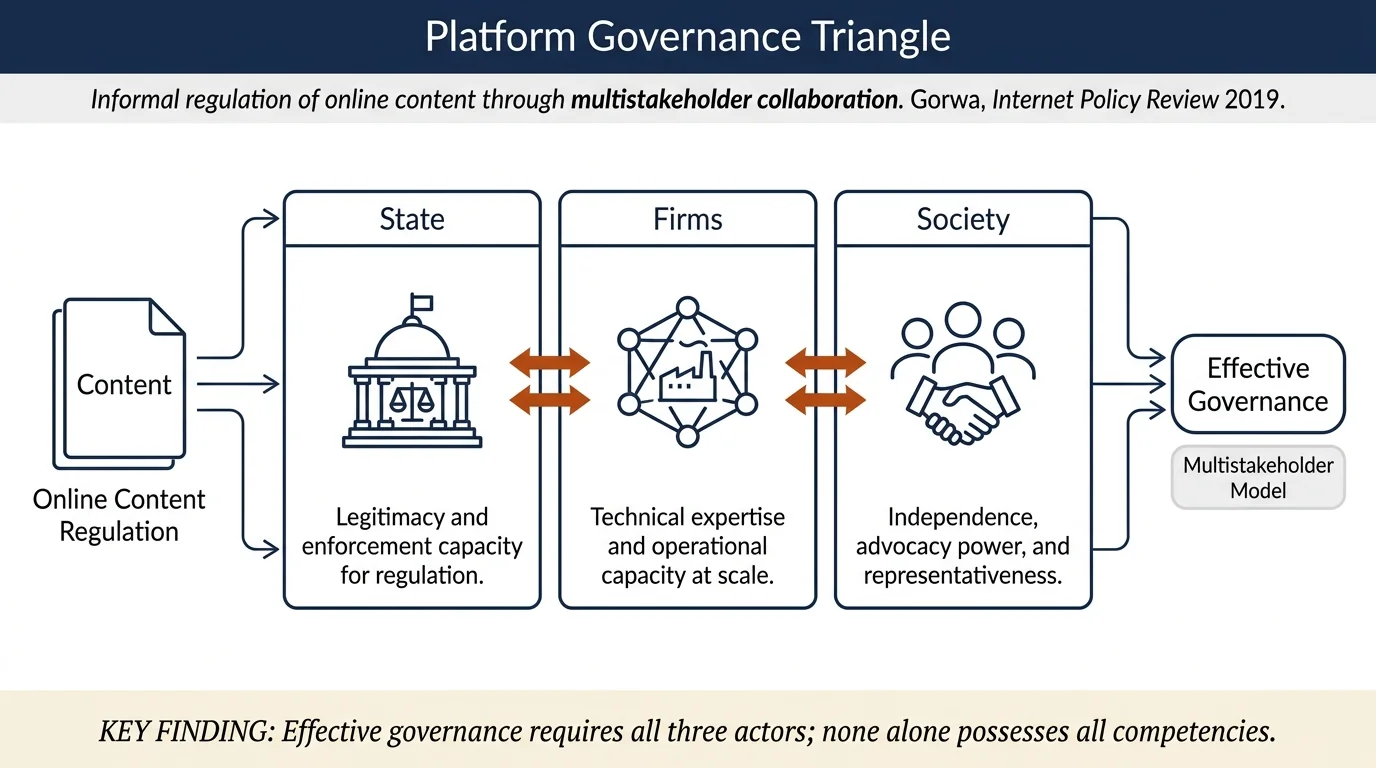
The platform governance triangle: conceptualising the informal regulation of online contentThis paper applies Abbott and Snidal's "governance triangle" framework to analyze how state actors, technology firms, and civil society organizations informally regulate online content through voluntary standards, codes of conduct, and multistakeholder initiatives. The analysis maps the European platform governance landscape, showing how…
 Spread & networksPlatforms, policy & society
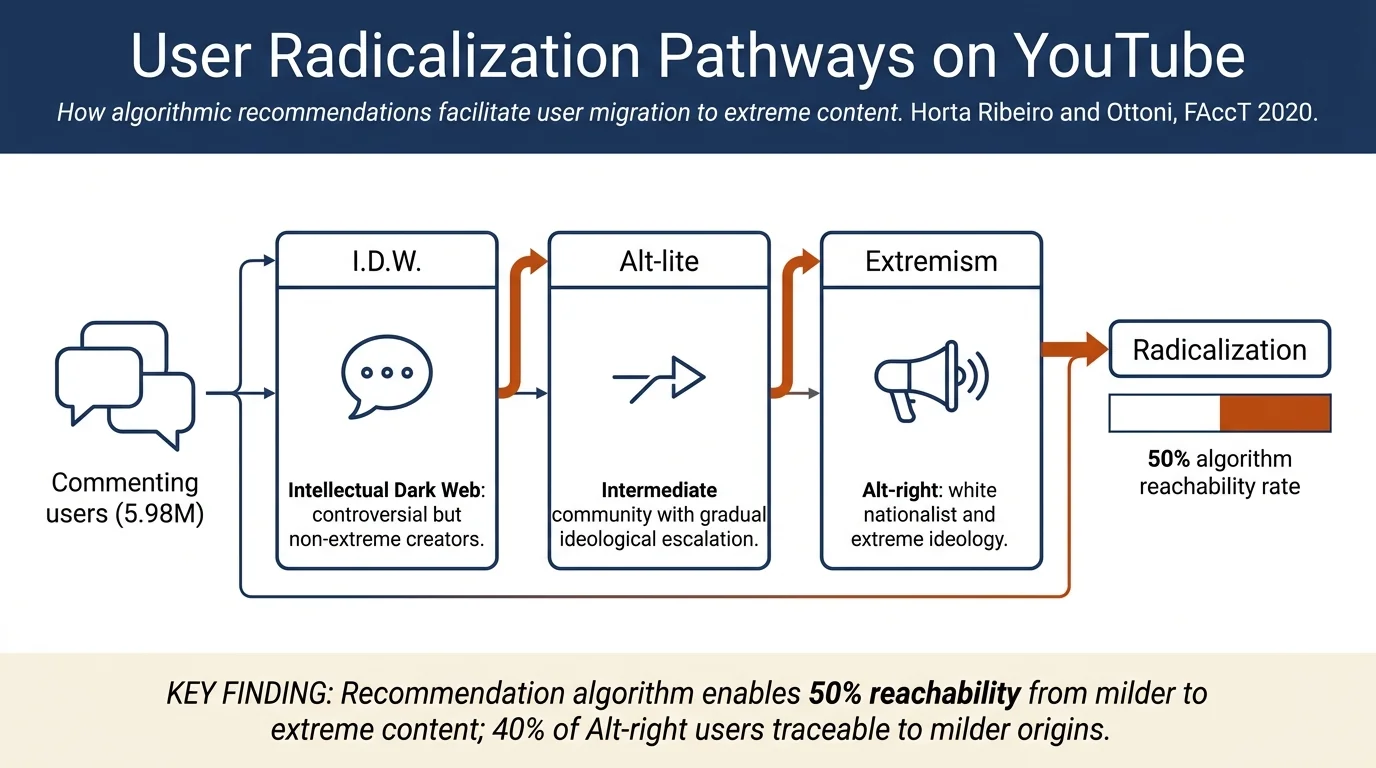
Auditing Radicalization Pathways on YouTubeFirst large-scale quantitative audit of user radicalization on YouTube. The authors tracked 349 channels across three ideological communities (Intellectual Dark Web, Alt-lite, Alt-right) and found strong evidence that users systematically migrate toward more extreme content.
 Datasets & evaluationDetection methods
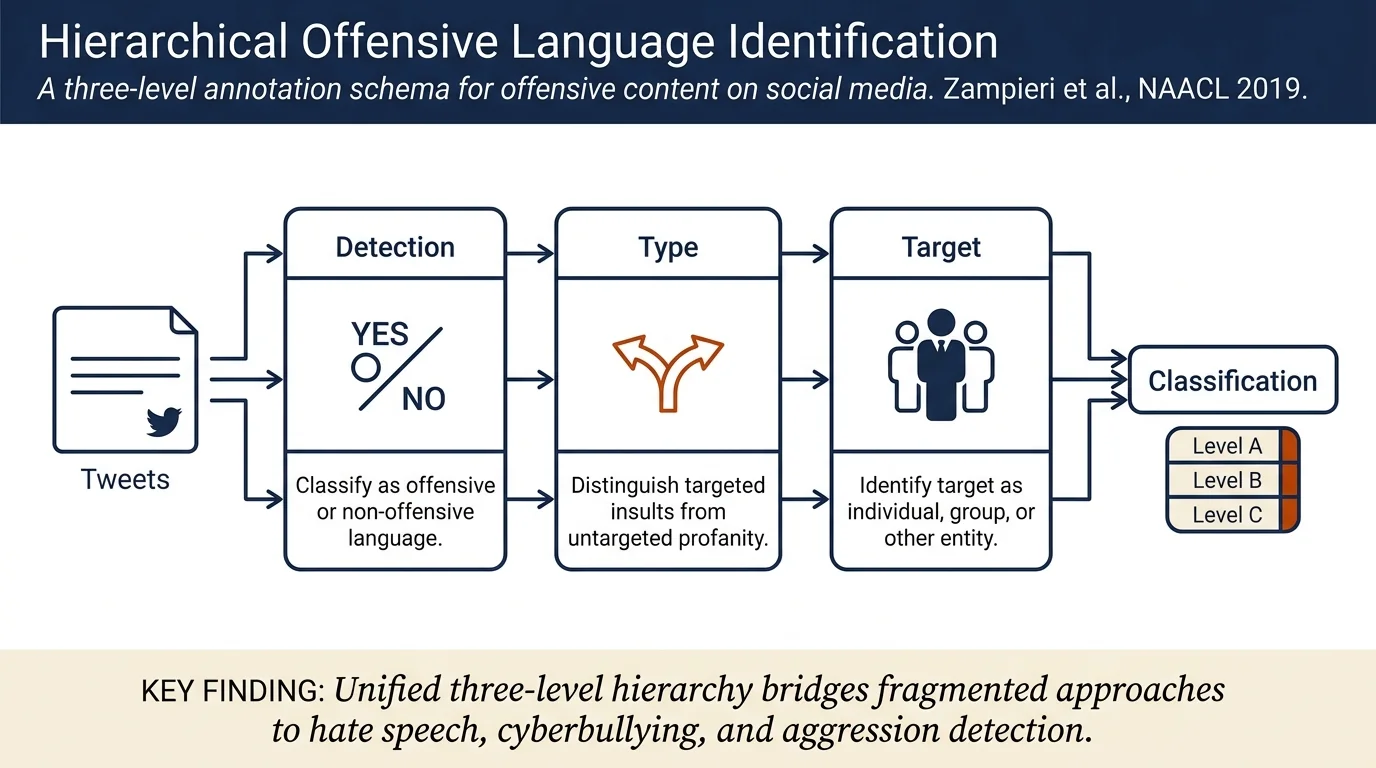
Predicting the Type and Target of Offensive Posts in Social MediaThis paper introduces OLID (Offensive Language Identification Dataset), a large-scale dataset of 14,100 English tweets annotated with a three-level hierarchical schema for detecting offensive content. The hierarchy distinguishes offensive from non-offensive posts (Level A), categorizes offense type as targeted insults or untargeted…
 Fact-checking & verificationPlatforms, policy & society
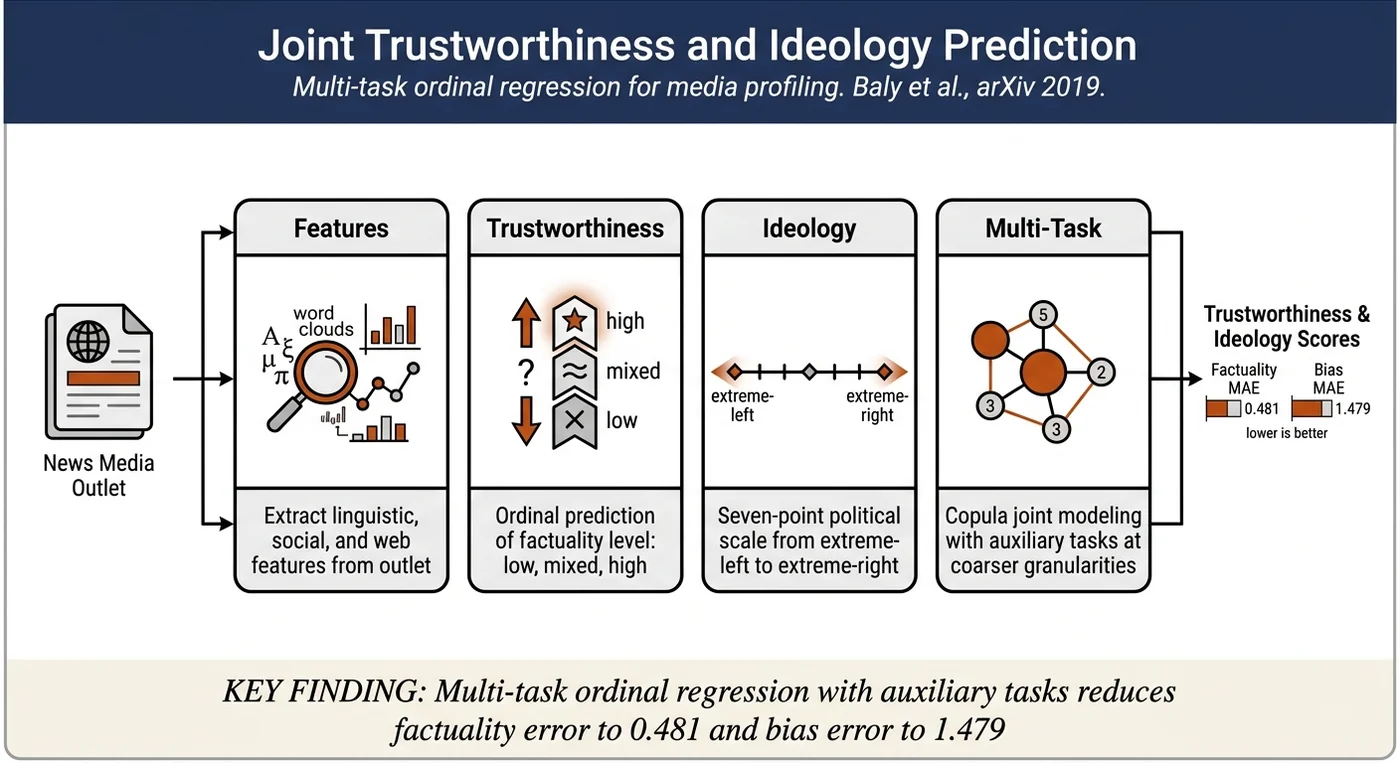
Multi-Task Ordinal Regression for Jointly Predicting the Trustworthiness and the Leading Political Ideology of News MediaRather than predicting media bias and trustworthiness separately, this paper jointly models both as ordinal regression tasks using Copula Ordinal Regression. The intuition is that hyper-partisan outlets tend to be less trustworthy, while centrist outlets are more factual.
 Bots & coordinated campaignsDetection methods
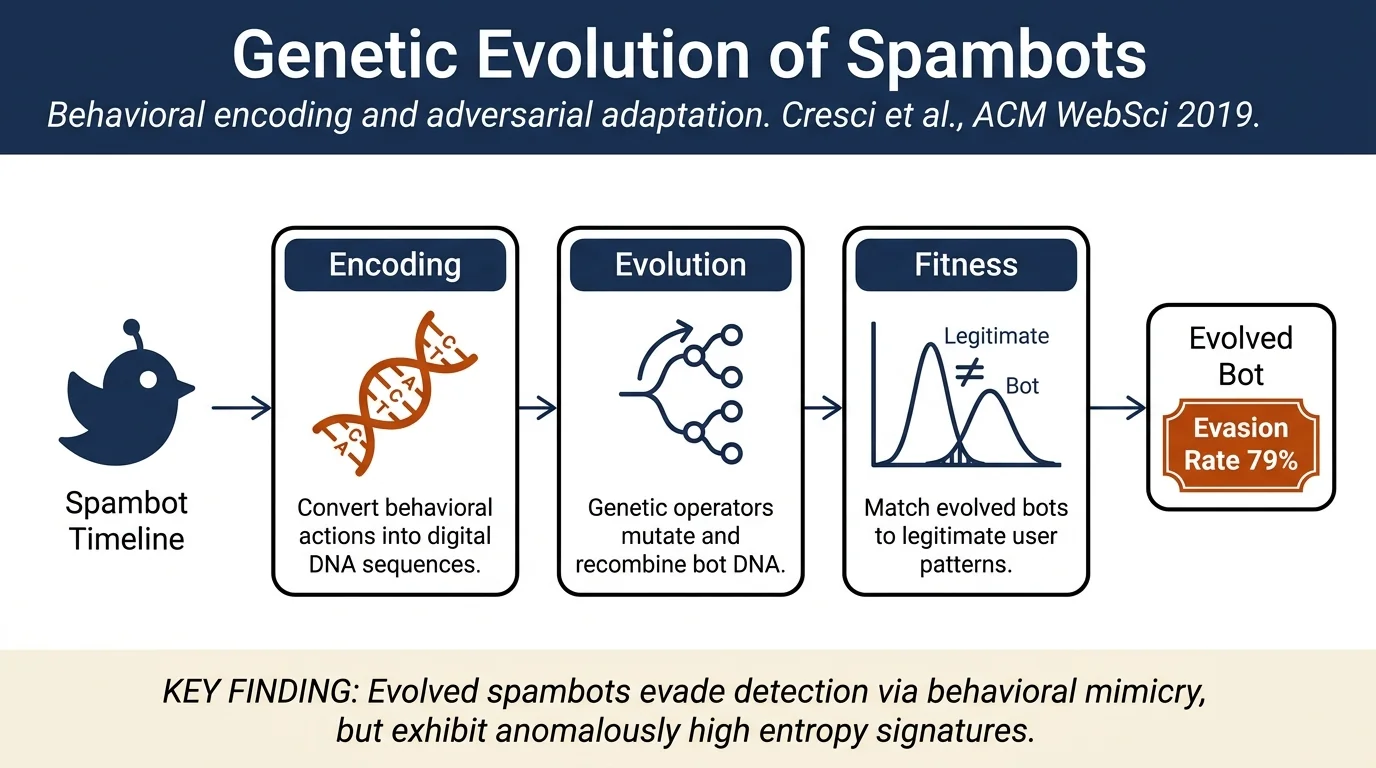
Better Safe Than Sorry: an Adversarial Approach to improve Social Bot DetectionProposes GenBot, a novel genetic algorithm that synthesizes evolved versions of existing spambots by encoding behavioral timelines as "digital DNA" sequences and iteratively evolving them to resemble legitimate user behavior. Tests the evolved bots against three state-of-the-art detection systems and finds they largely evade detection…
 LLMs & generative AIDetection methods
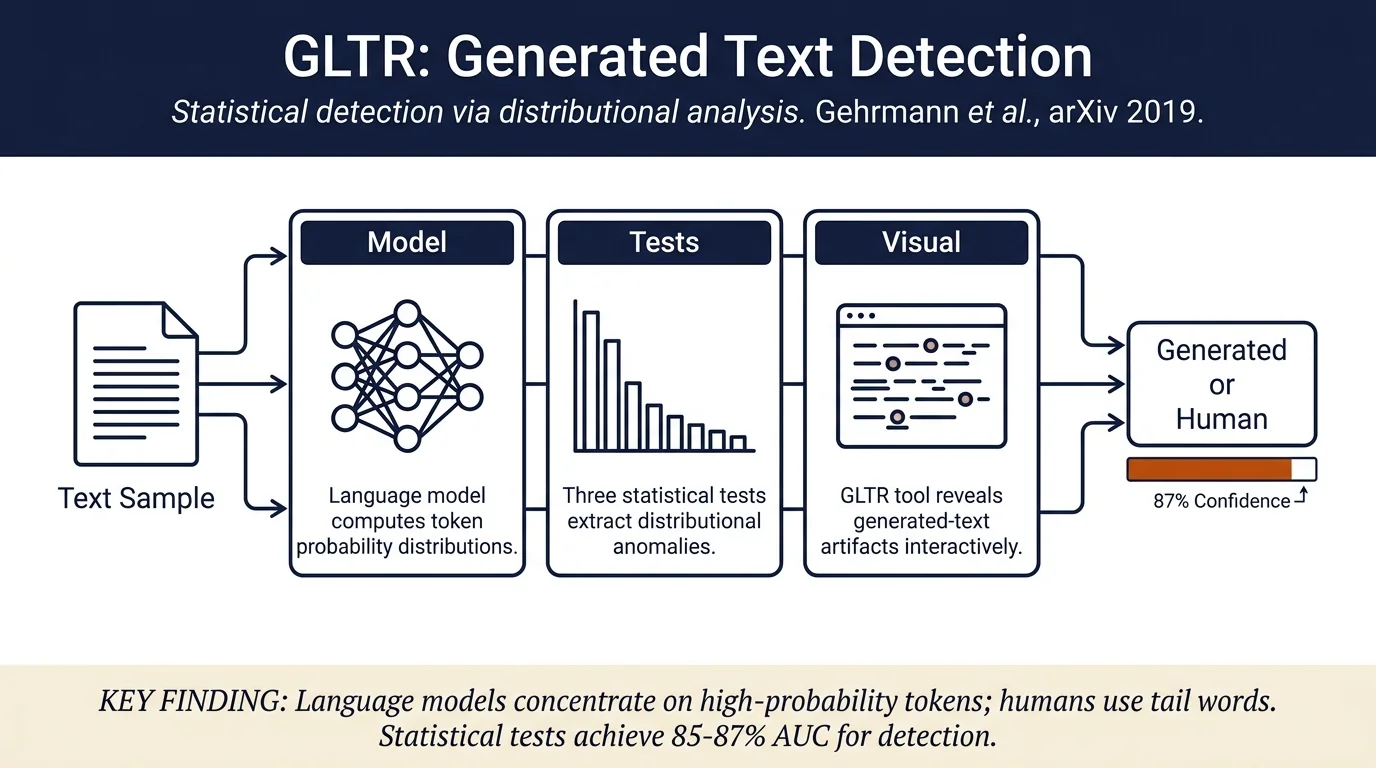
GLTR: Statistical Detection and Visualization of Generated TextGehrmann et al. present GLTR, a visual tool for detecting AI-generated text by analyzing statistical anomalies in language model output. The key insight is that language models sample from the head of the distribution (high-probability words), whereas humans use a wider vocabulary including low-probability choices.
 LLMs & generative AIDetection methods
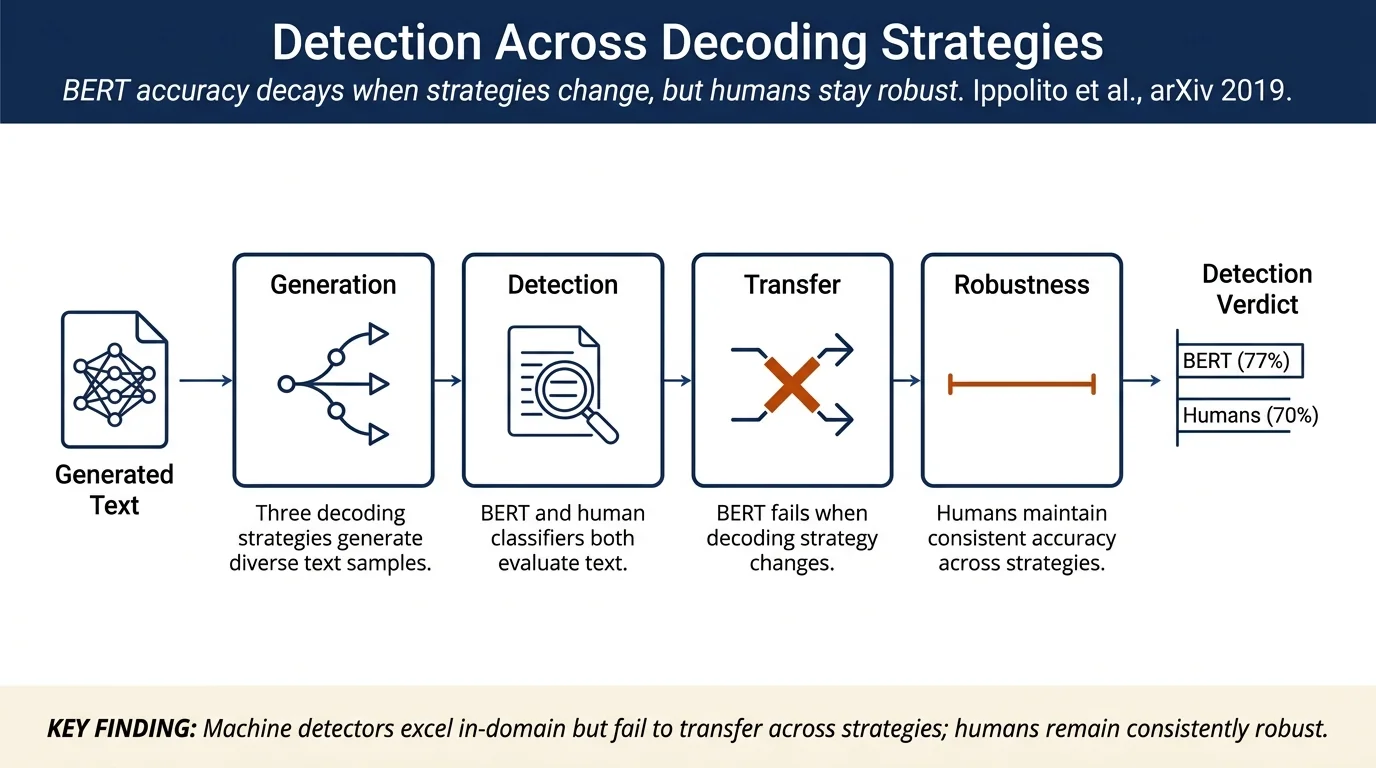
Automatic Detection of Generated Text is Easiest when Humans are FooledIppolito et al. investigate the complementary abilities of humans and machines to detect machine-generated text from GPT-2 under various decoding strategies. They find that fine-tuned BERT detectors outperform humans (achieving 80%+ accuracy on long excerpts versus 71% for expert human raters), but detector performance is highly…
 Bots & coordinated campaignsDatasets & evaluation
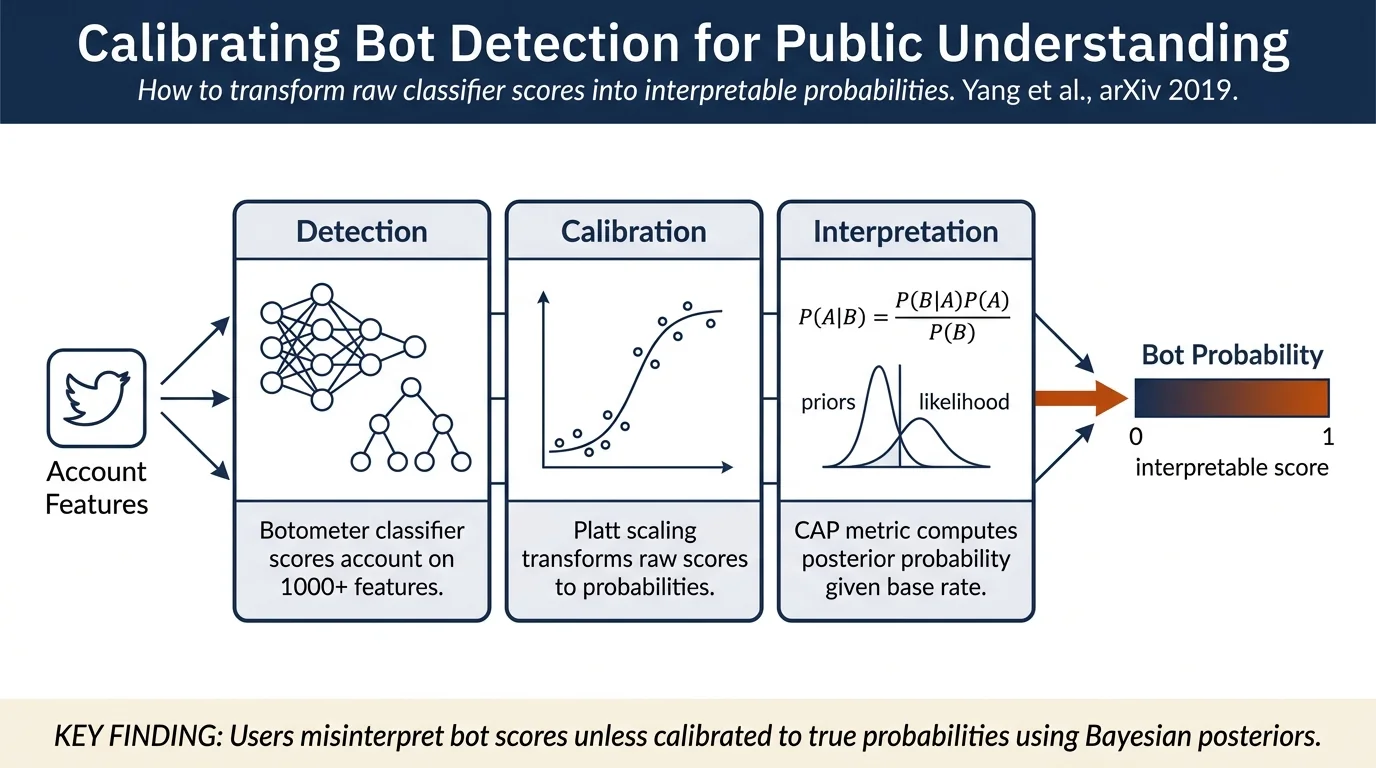
Arming the public with artificial intelligence to counter social botsThis paper reviews social bot types, their impact on online discourse, and detection methods, then presents Botometer as a case study in how detection tools are used and interpreted by the public. The authors conducted a user experience survey (731 participants) revealing that while users find the tool useful, they struggle with…
 Bots & coordinated campaignsDeepfakes & multimodal
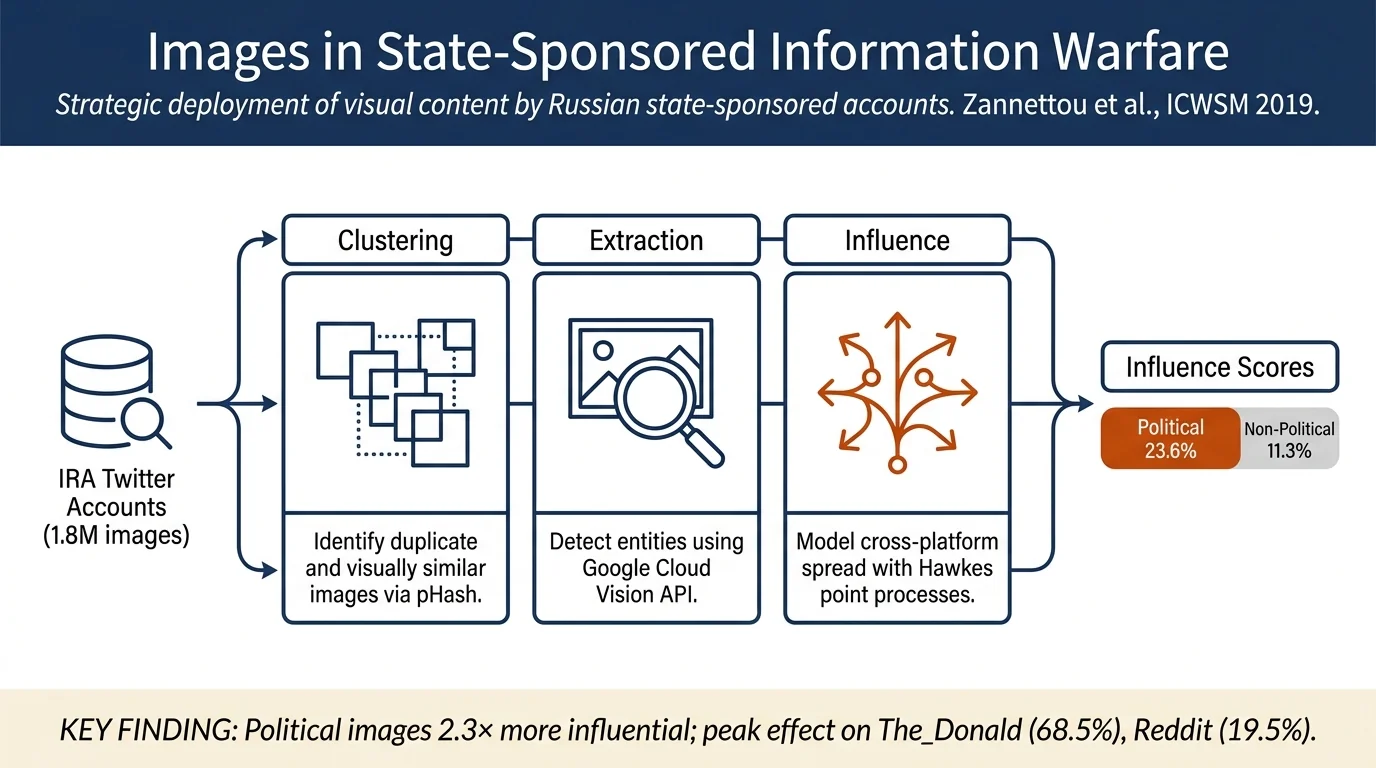
Characterizing the Use of Images in State-Sponsored Information Warfare Operations by Russian Trolls on TwitterLarge-scale analysis of 1.8M images posted by ~3.6K Russian state-sponsored Twitter accounts (IRA-controlled). Russian trolls strategically deployed images and memes to maximize political influence, with political imagery 2+ times more effective than general content.
 Detection methodsDatasets & evaluation
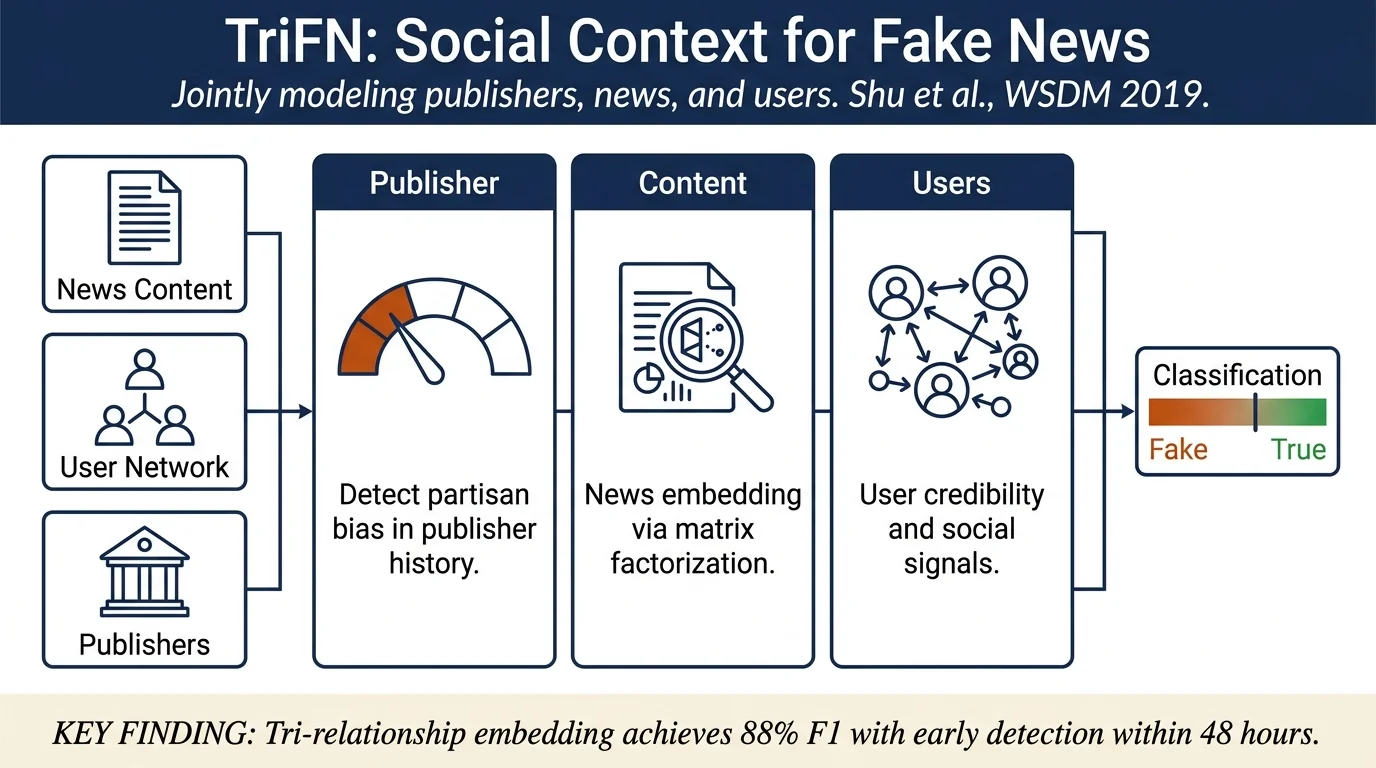
Beyond News Contents: The Role of Social Context for Fake News DetectionContent-only detection is insufficient because fake news is crafted to mimic real news. This paper argues that the tri-relationship among publishers, news pieces, and users forms rich social context for detection: partisan-biased publishers more likely publish fake news, and low-credibility users more likely share it.