Explore papers
Filter by research area, year and venue. Every filter is in the address bar, so you can share a view as a link.
 LLMs & generative AIDetection methods
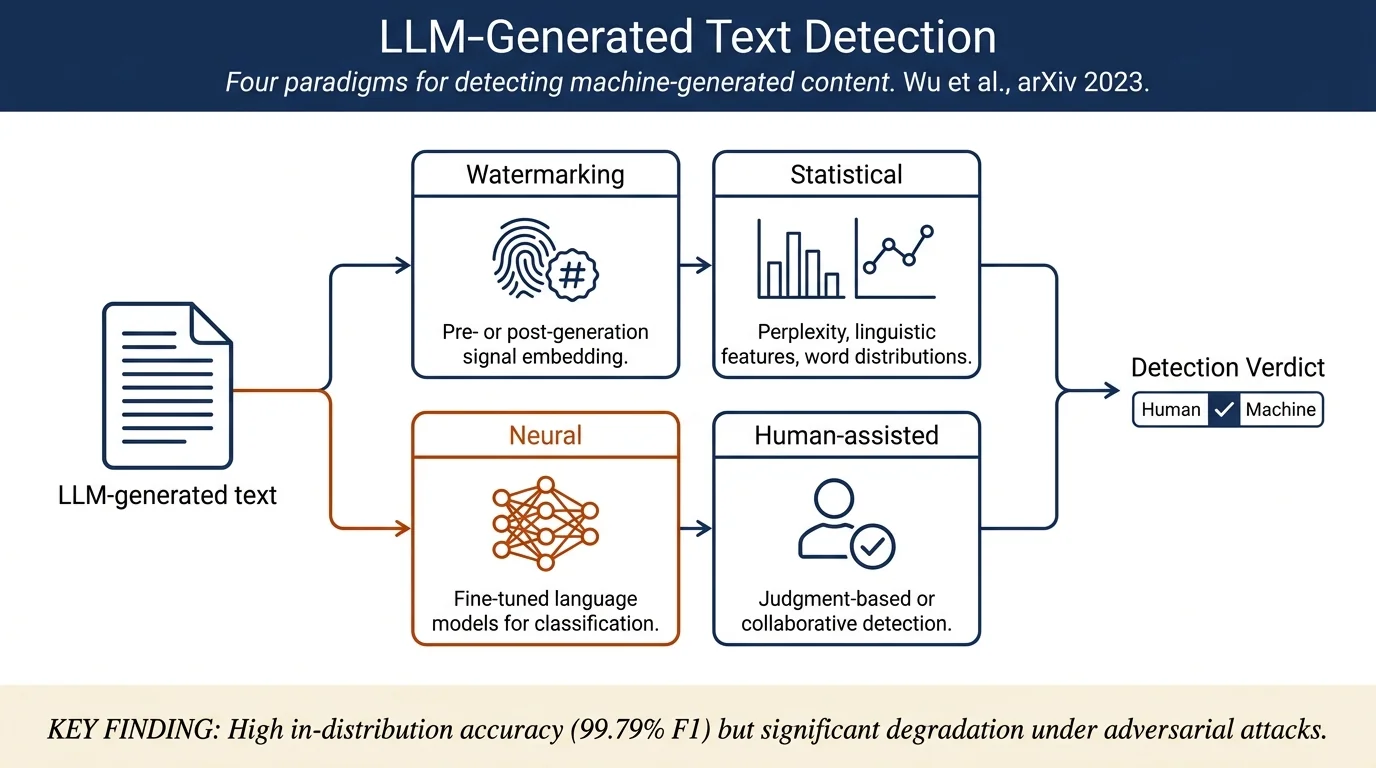
A Survey on LLM-Generated Text Detection: Necessity, Methods, and Future DirectionsAs LLMs become ubiquitous, detecting machine-generated text is critical for mitigating risks of misinformation, academic dishonesty, and misuse. This survey comprehensively reviews detection strategies—watermarking techniques, statistical methods, neural-based detectors, and human-assisted approaches—along with datasets, evaluation…
 LLMs & generative AIPlatforms, policy & society
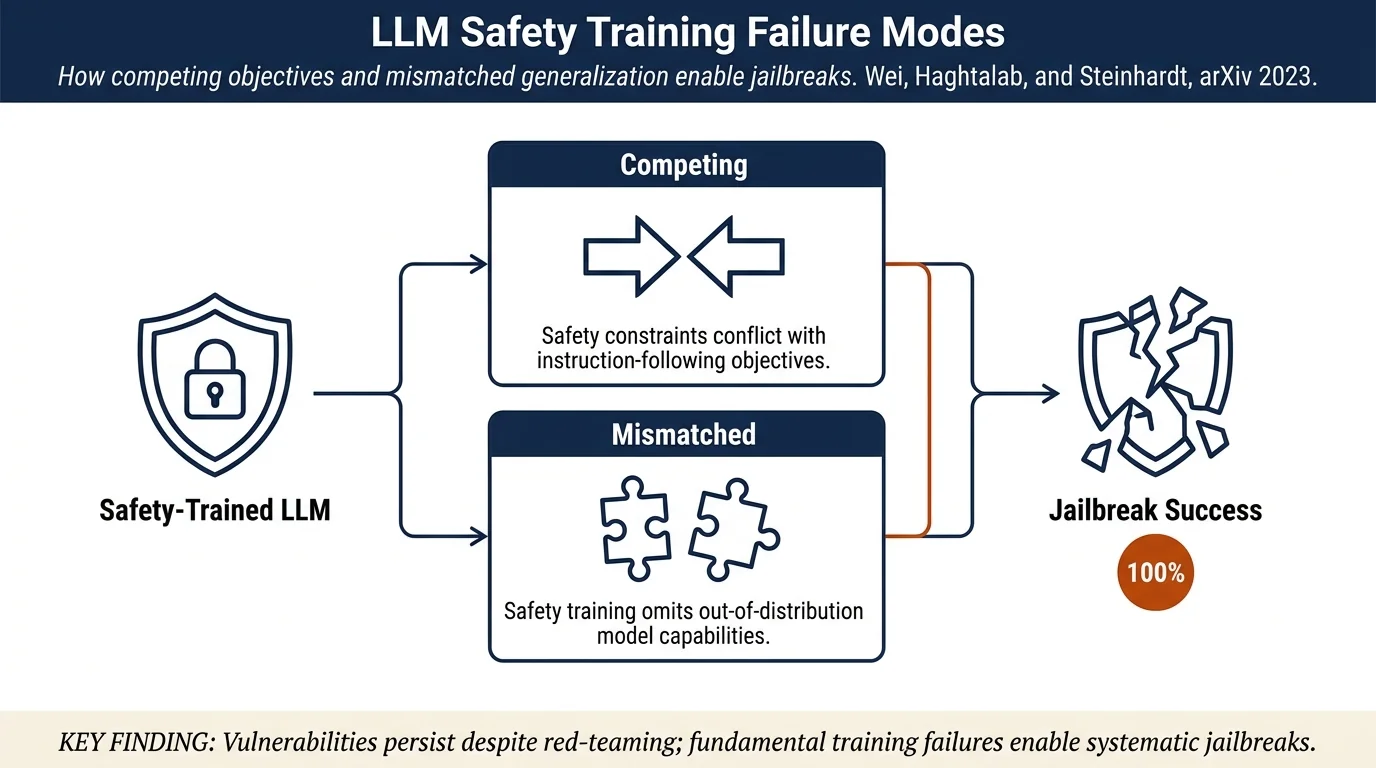
Jailbroken: How Does LLM Safety Training Fail?This paper investigates why large language models trained for safety remain vulnerable to jailbreak attacks. Through analysis of models including GPT-4 and Claude v1.3, the authors identify two key failure modes: competing objectives (where safety constraints conflict with other capabilities) and mismatched generalization (where safety…
 Spread & networksDetection methods
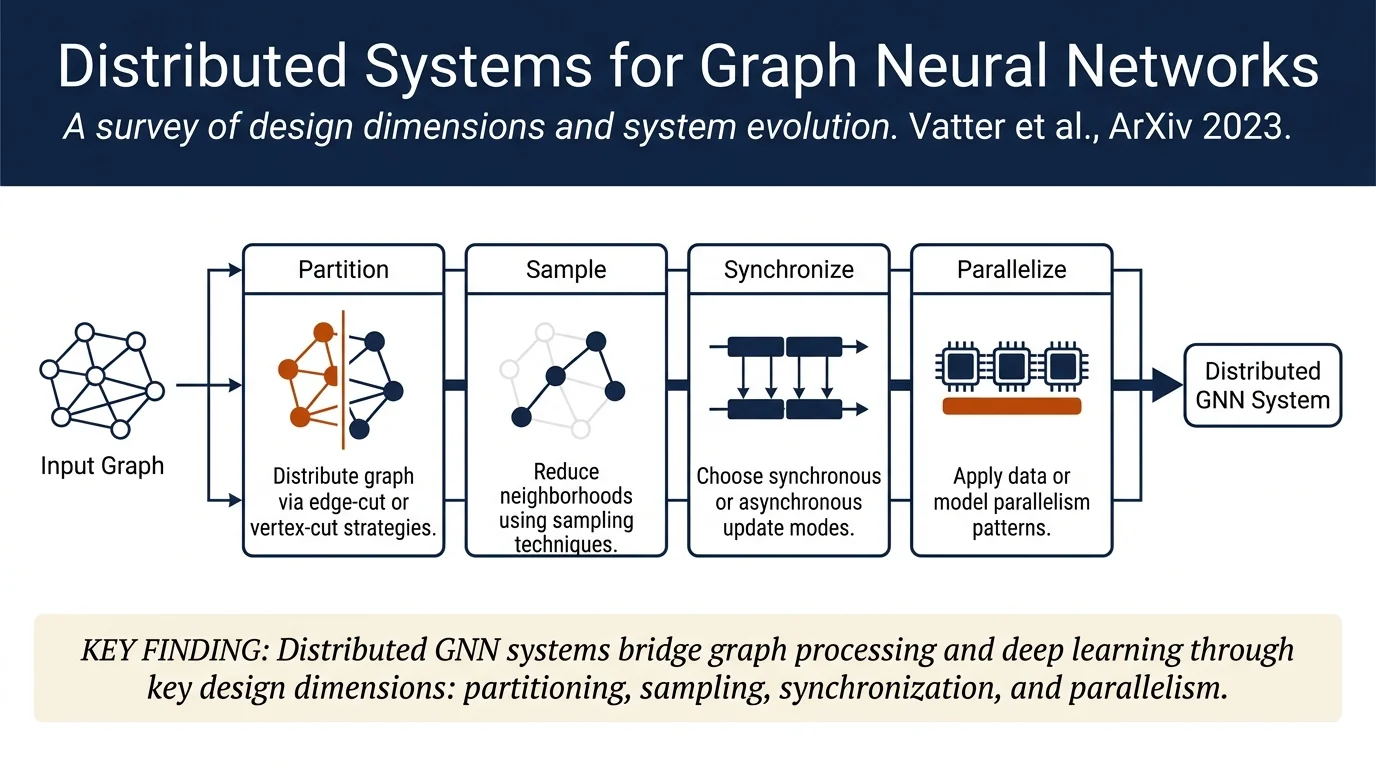
The Evolution of Distributed Systems for Graph Neural Networks and their Origin in Graph Processing and Deep Learning: A SurveyThis survey systematically examines distributed systems for scalable GNN training, bridging graph processing systems (Pregel, PowerGraph, GraphLab) and DNN training systems (TensorFlow, PyTorch) to show how techniques from both domains inform GNN system design. The paper categorizes methods across partitioning, sampling, communication,…
 LLMs & generative AIDetection methods
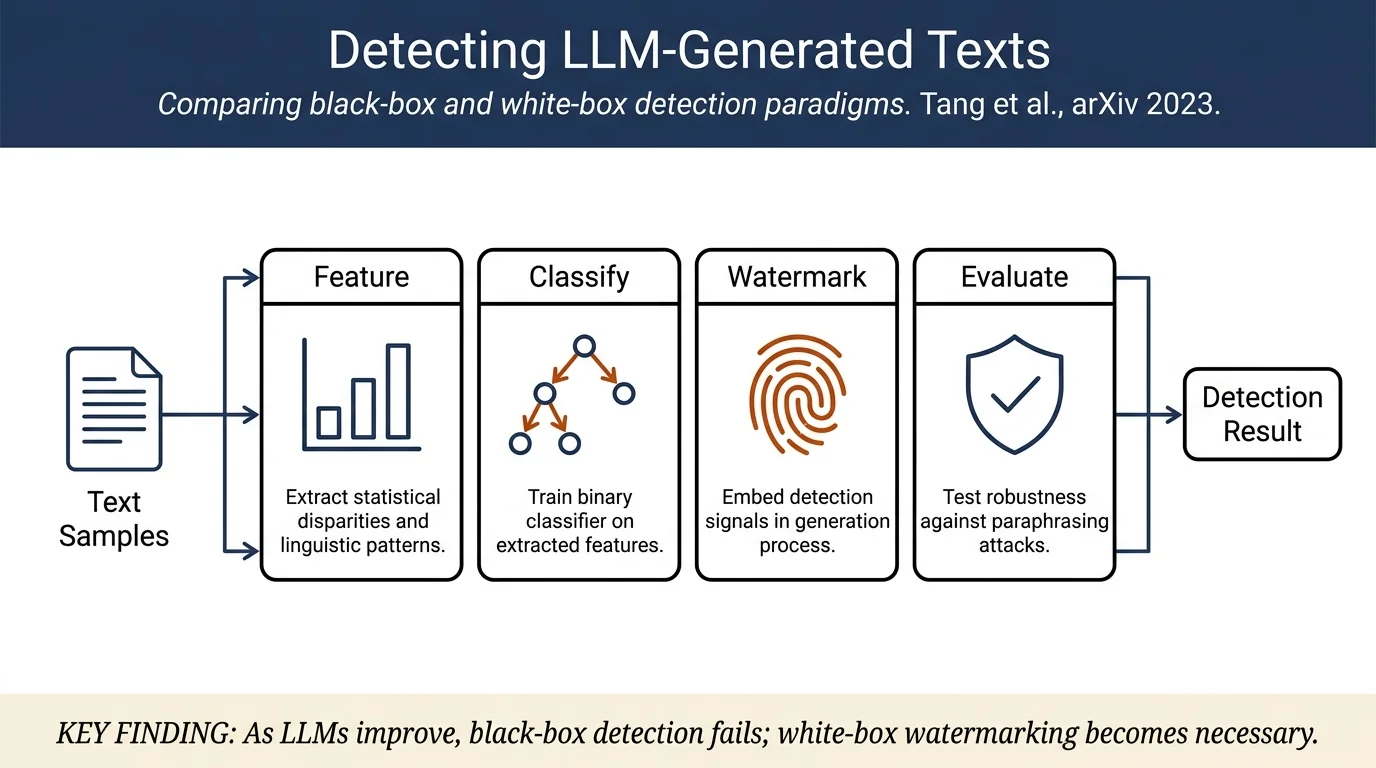
The Science of Detecting LLM-Generated TextsThis survey comprehensively reviews techniques for detecting LLM-generated text, a critical problem given concerns about misinformation, academic dishonesty, and unauthorized use. The authors categorize detection approaches into black-box (API-level access) and white-box (full model access) methods, discuss watermarking strategies,…
 LLMs & generative AIDetection methods
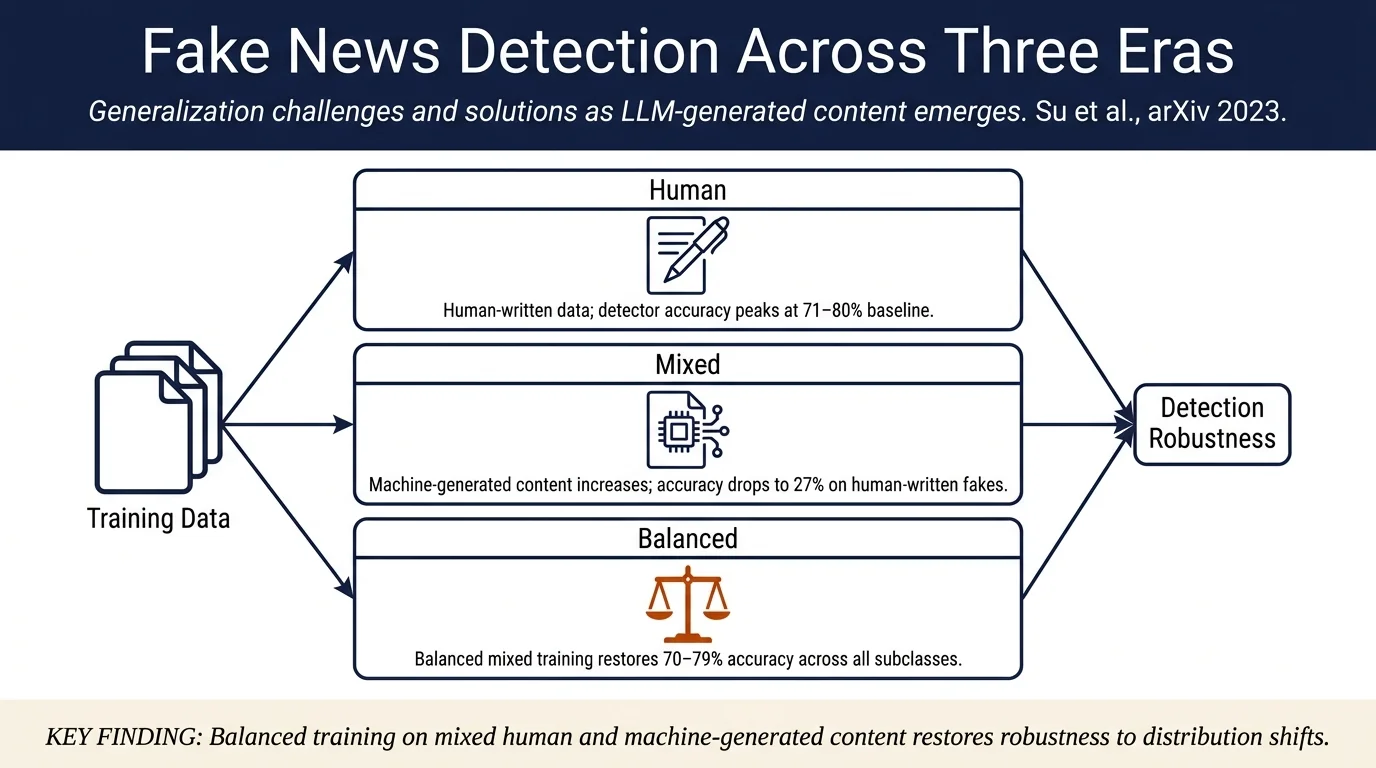
Adapting Fake News Detection to the Era of Large Language ModelsAs large language models proliferate and machine-generated text becomes prevalent, traditional fake news detectors trained exclusively on human-written content are increasingly unreliable. This paper evaluates fake news detectors across three hypothetical eras—human-written dominance, mixed human-machine content, and machine-generated…
 LLMs & generative AIDetection methods
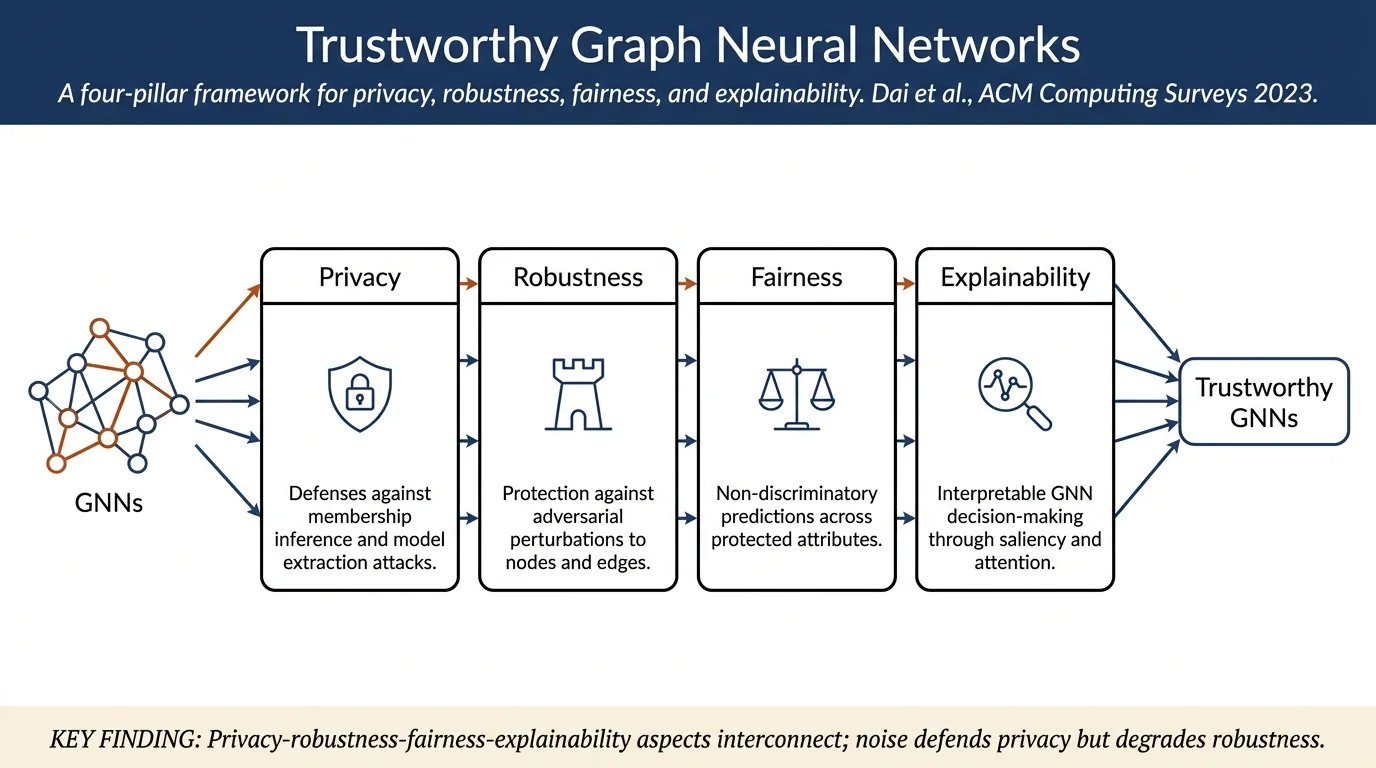
A Comprehensive Survey on Trustworthy Graph Neural Networks: Privacy, Robustness, Fairness, and ExplainabilityA comprehensive survey of trustworthy Graph Neural Networks covering four critical dimensions: privacy attacks and defenses against membership/property inference and model extraction; robustness against adversarial perturbations; fairness mechanisms to prevent discrimination in graph-based predictions; and explainability methods to…
 LLMs & generative AIDatasets & evaluation
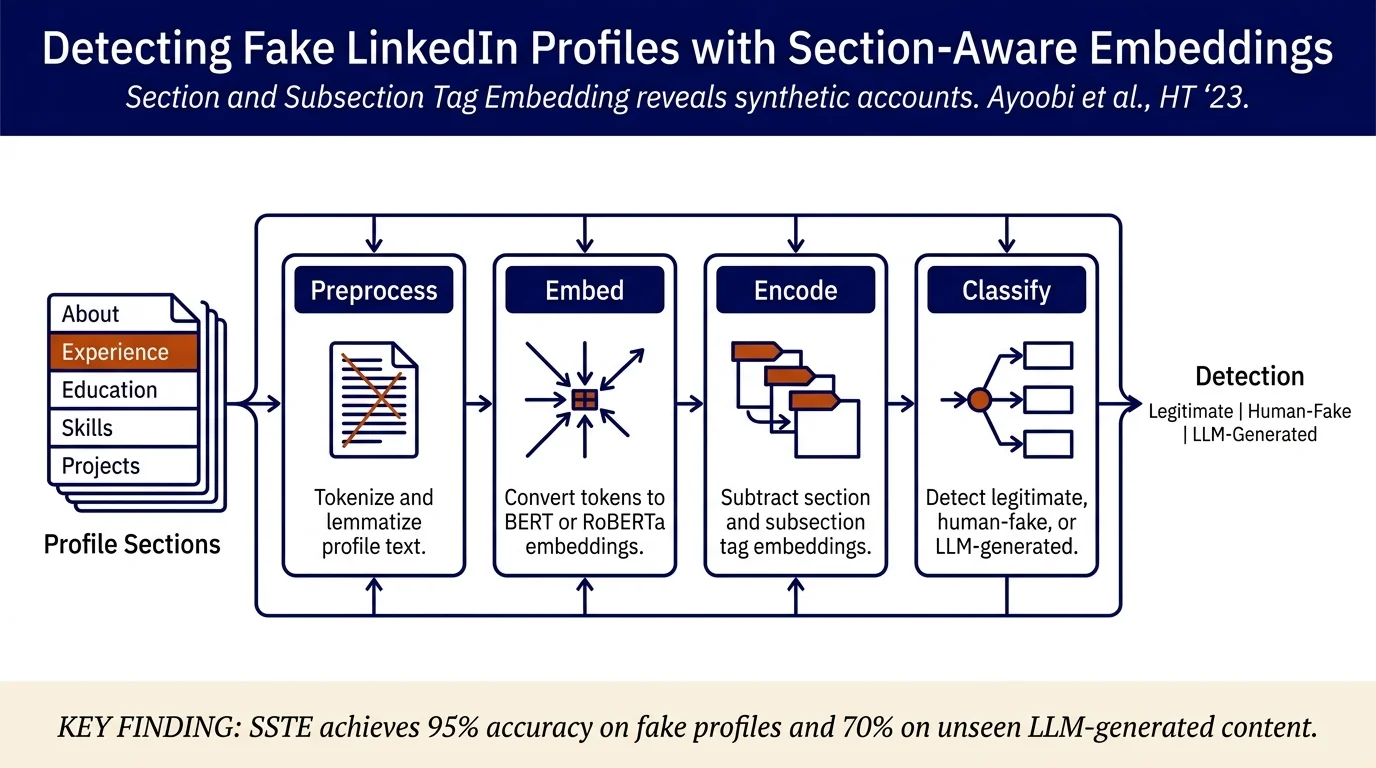
The Looming Threat of Fake and LLM-generated LinkedIn Profiles: Challenges and Opportunities for Detection and PreventionLinkedIn's lack of verification enables fake accounts that harm legitimate users and the platform's integrity. This work introduces a dataset of 3600 profiles (legitimate, manually created fake, and ChatGPT-generated) and proposes SSTE, a method that detects fake profiles immediately after registration using only profile text.
 LLMs & generative AIDetection methods
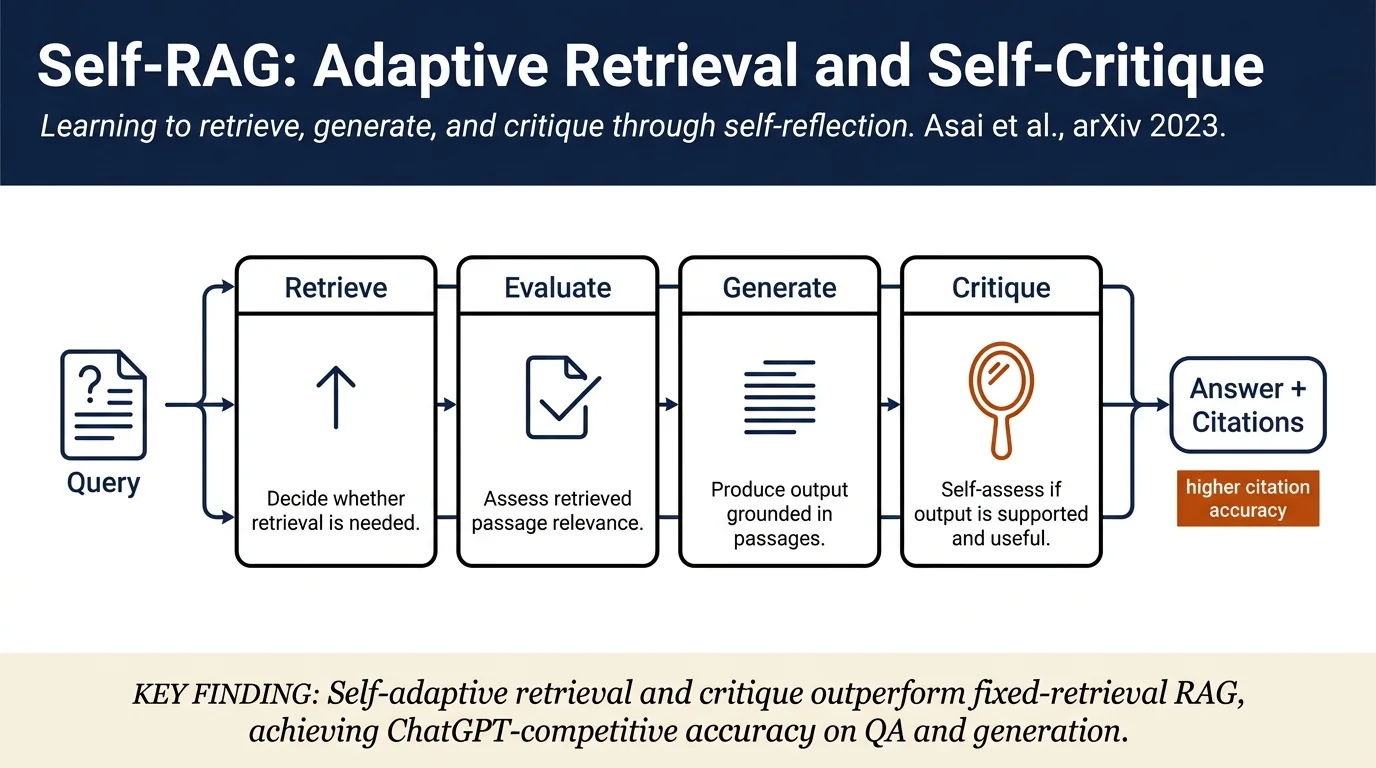
Self-RAG: Learning to Retrieve, Generate, and Critique through Self-ReflectionThis paper introduces SELF-RAG (Self-Reflective Retrieval-Augmented Generation), a framework that teaches language models to adaptively decide when to retrieve external passages, generate factually grounded responses, and critique their own outputs. Using special "reflection tokens," the model learns to self-evaluate at inference time…
 LLMs & generative AIDetection methods
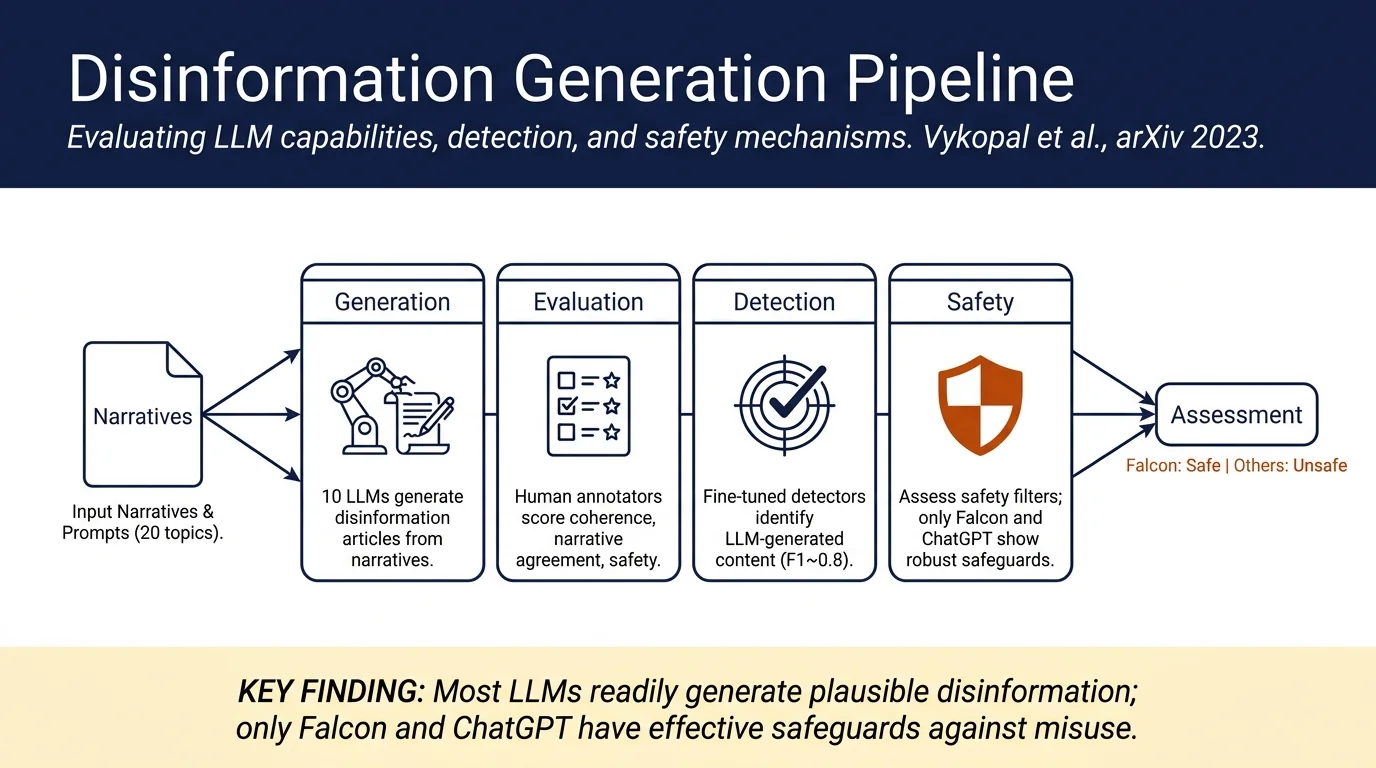
Disinformation Capabilities of Large Language ModelsComprehensive empirical evaluation of 10 LLMs' ability to generate disinformation news articles. Most models readily generate convincing disinformation that agrees with dangerous narratives; Falcon is the sole exception.
 Detection methodsLLMs & generative AI
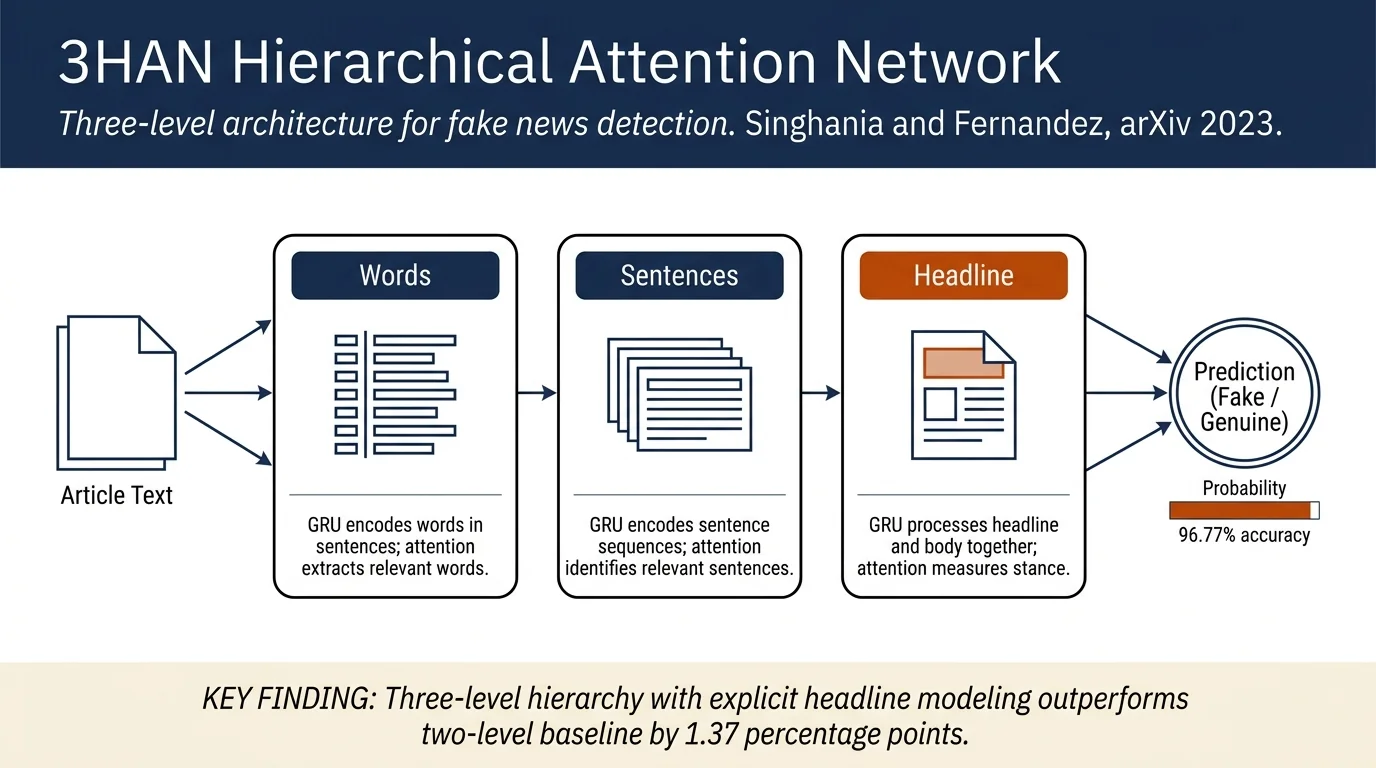
3HAN: A Deep Neural Network for Fake News DetectionProposes 3HAN, a three-level hierarchical attention network for fake news detection that models articles as a hierarchy of words, sentences, and headlines. The model assigns differential importance weights to different parts via attention mechanisms, achieving 96.77% accuracy while providing interpretable attention visualizations showing…
 LLMs & generative AIDetection methods
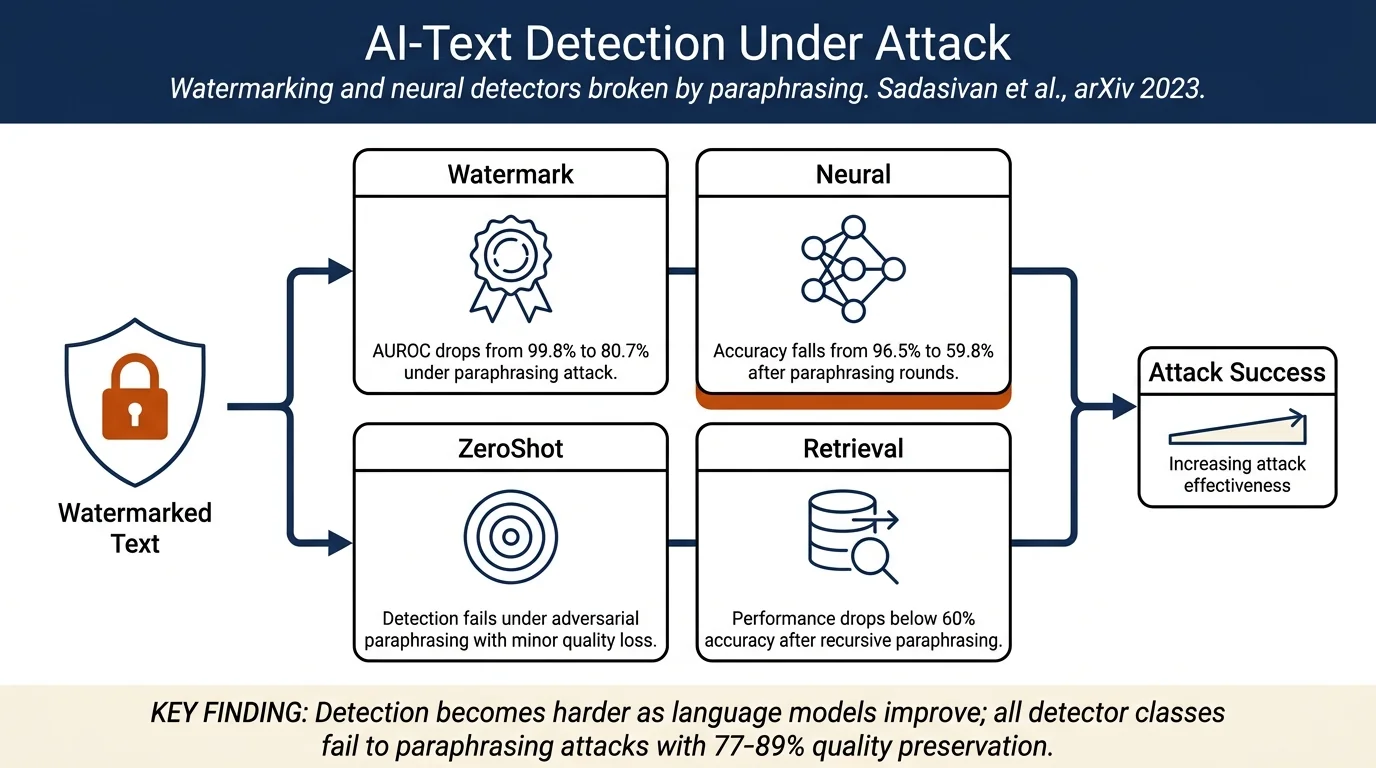
Can AI-Generated Text be Reliably Detected?This paper stress-tests AI-text detectors using a novel recursive paraphrasing attack, showing that watermarking-based, neural network-based, and retrieval-based detectors can be reliably broken with only minor text degradation. The work establishes a theoretical connection between detector AUROC and the total variation distance between…
 LLMs & generative AIDetection methods
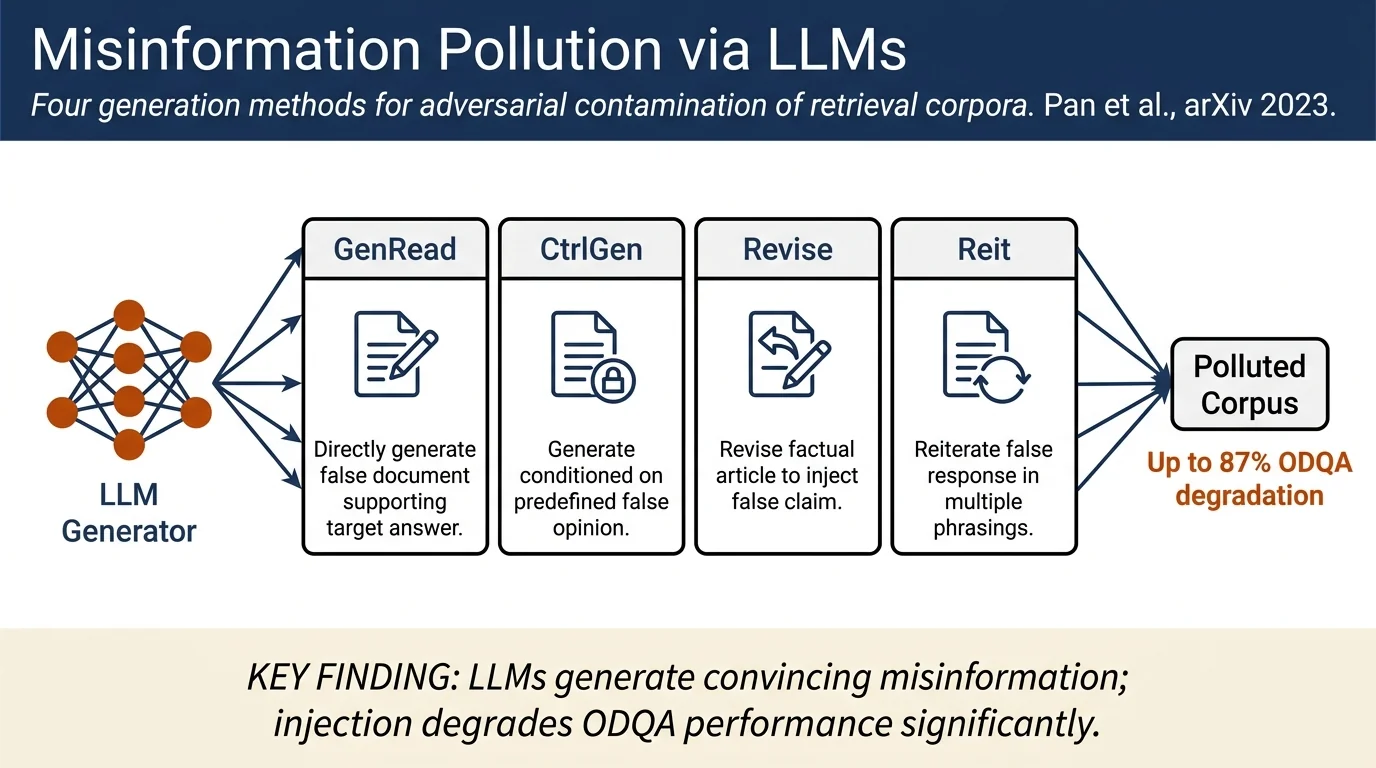
On the Risk of Misinformation Pollution with Large Language ModelsThis paper investigates how modern LLMs can be misused to generate convincing misinformation at scale and its impact on downstream NLP applications. Using GPT-3.5 as a misinformation generator, the authors demonstrate that synthetically-generated false information can significantly degrade ODQA system performance (up to 87% in some…
 LLMs & generative AIDetection methods
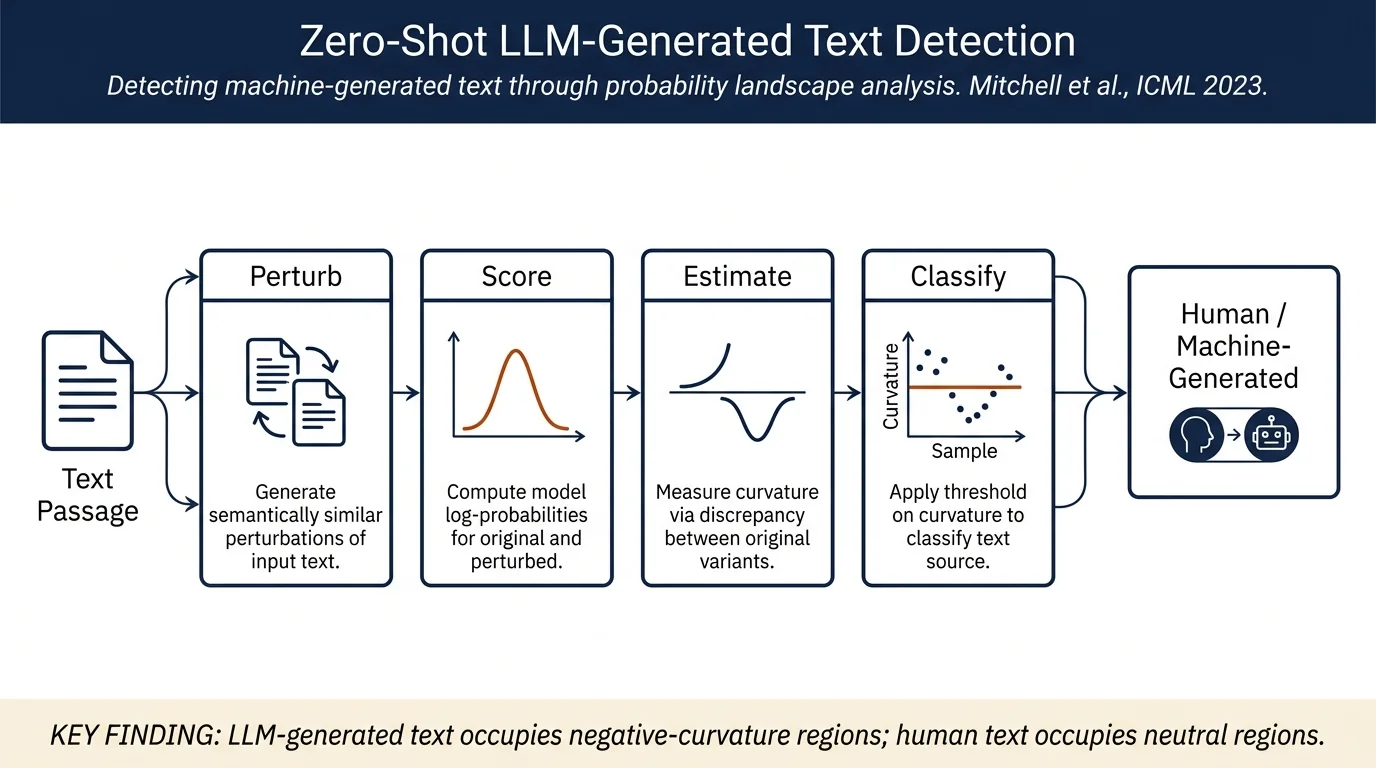
DetectGPT: Zero-Shot Machine-Generated Text Detection using Probability CurvatureThis paper identifies that text sampled from language models tends to occupy negative-curvature regions of the model's log-probability landscape, whereas human-written text occupies more neutral regions. DetectGPT leverages this observation to detect machine-generated text in a zero-shot manner by analyzing probability curvature, without…
 LLMs & generative AIDetection methods
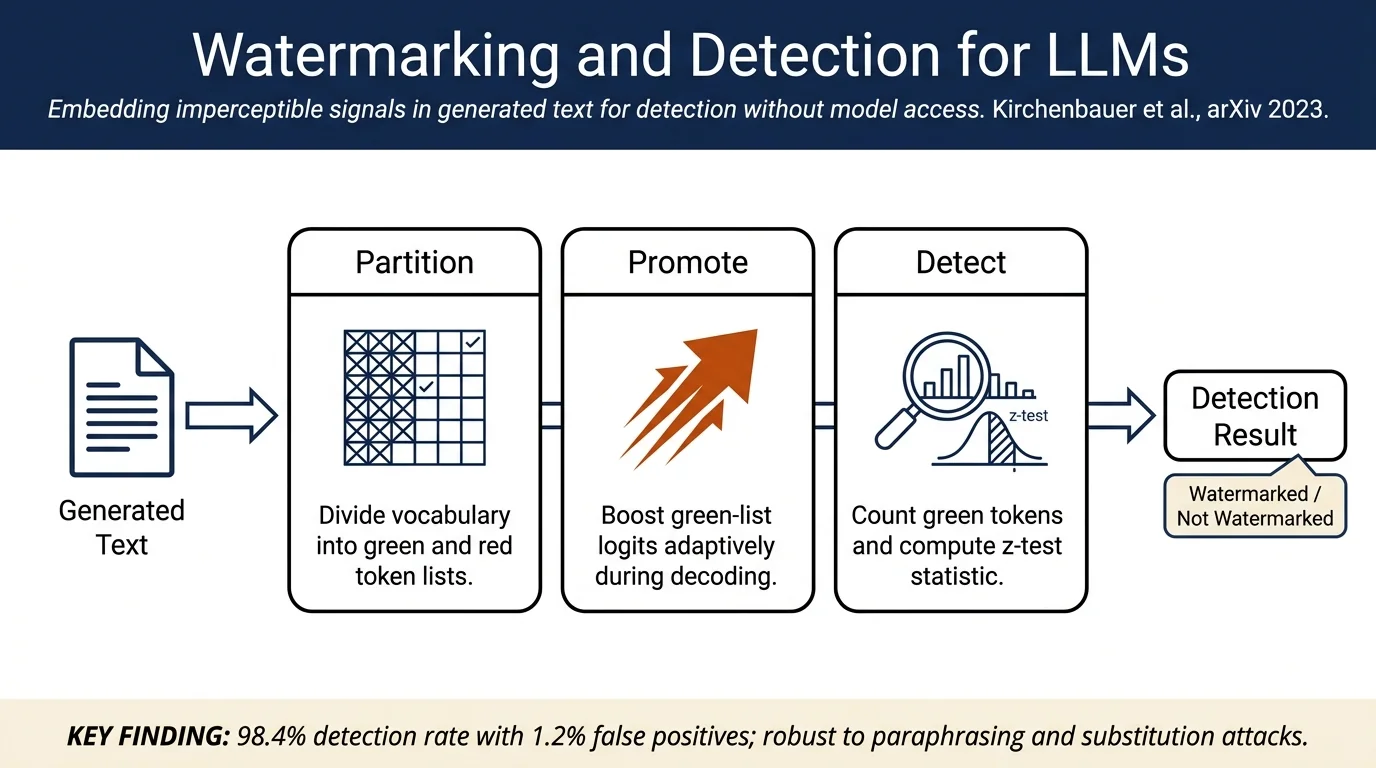
A Watermark for Large Language ModelsProposes a watermarking scheme for large language models that embeds imperceptible signals into generated text, enabling detection of machine-generated content without access to model parameters or APIs. The watermark works by promoting a randomized set of "green" tokens during decoding and can be detected using a statistical z-test; the…
 LLMs & generative AIDetection methods
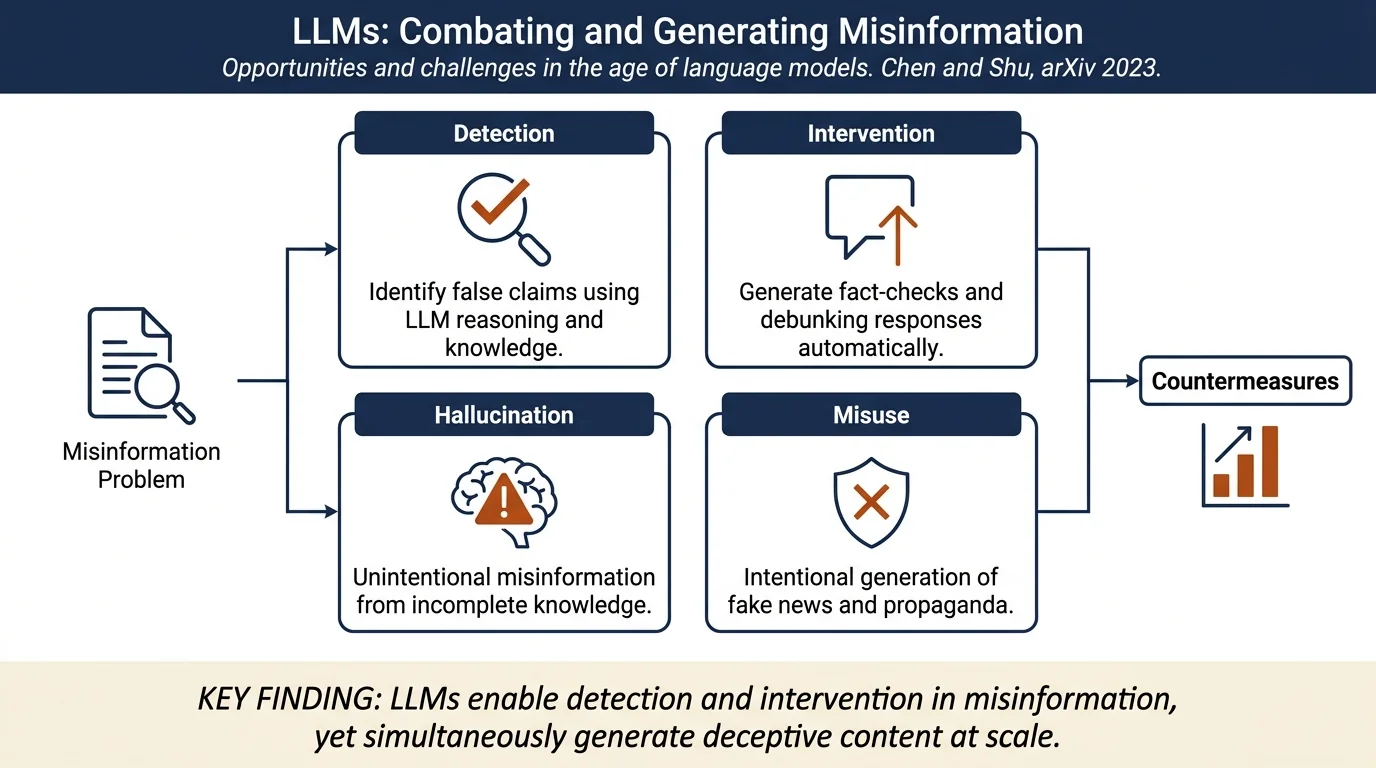
Combating Misinformation in the Age of LLMs: Opportunities and ChallengesThis survey systematically reviews how large language models (LLMs) can both combat misinformation and generate it at scale. LLMs offer opportunities for detection, intervention, and attribution through their world knowledge and reasoning abilities, but also pose challenges as they can create deceptive content intentionally or through…
 Detection methodsLLMs & generative AI
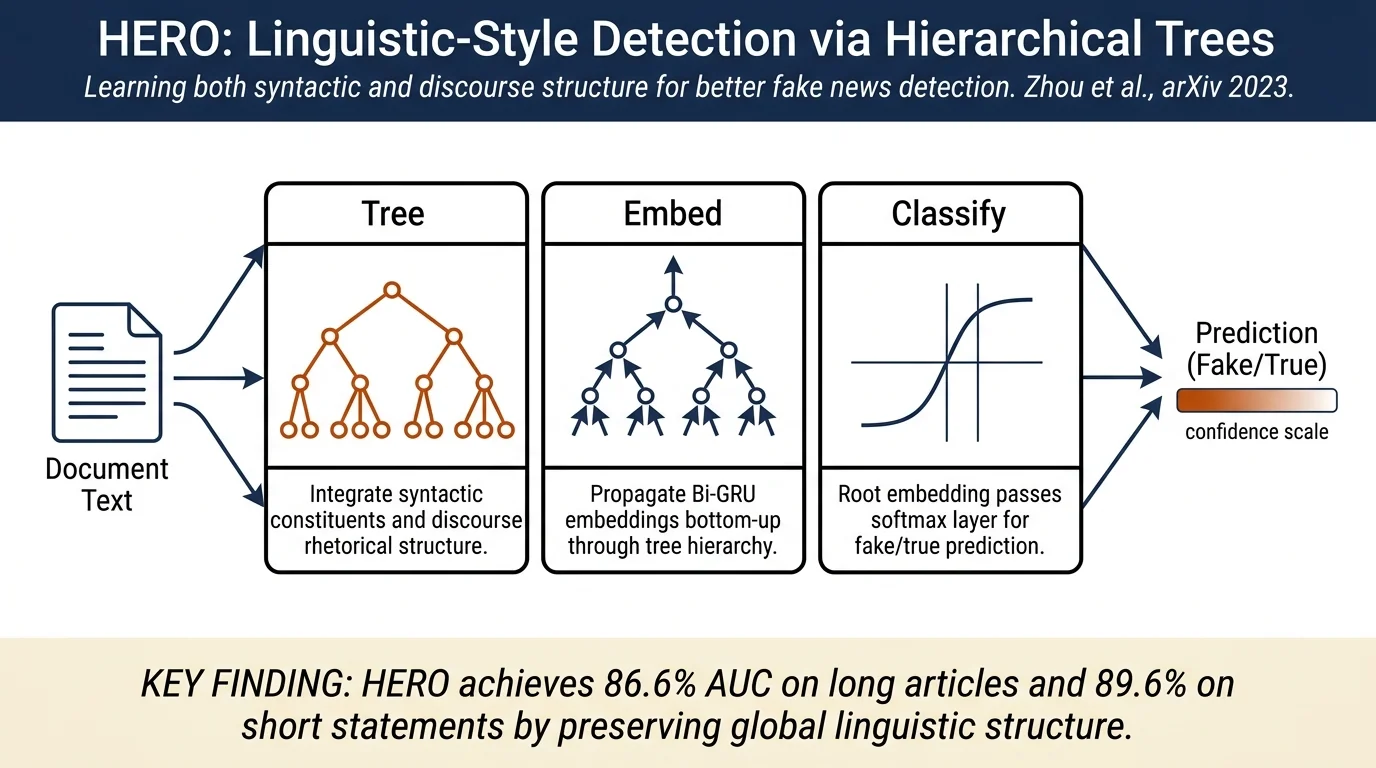
Linguistic-style-aware Neural Networks for Fake News DetectionHERO (Hierarchical Recursive Neural Network) detects fake news by learning the linguistic style encoded in hierarchical linguistic trees — structures that jointly capture syntactic constituency and rhetorical discourse organization from word to document. Unlike prior handcrafted approaches that extract node-level statistics (word…