Explore papers
Filter by research area, year and venue. Every filter is in the address bar, so you can share a view as a link.
 LLMs & generative AIPlatforms, policy & society
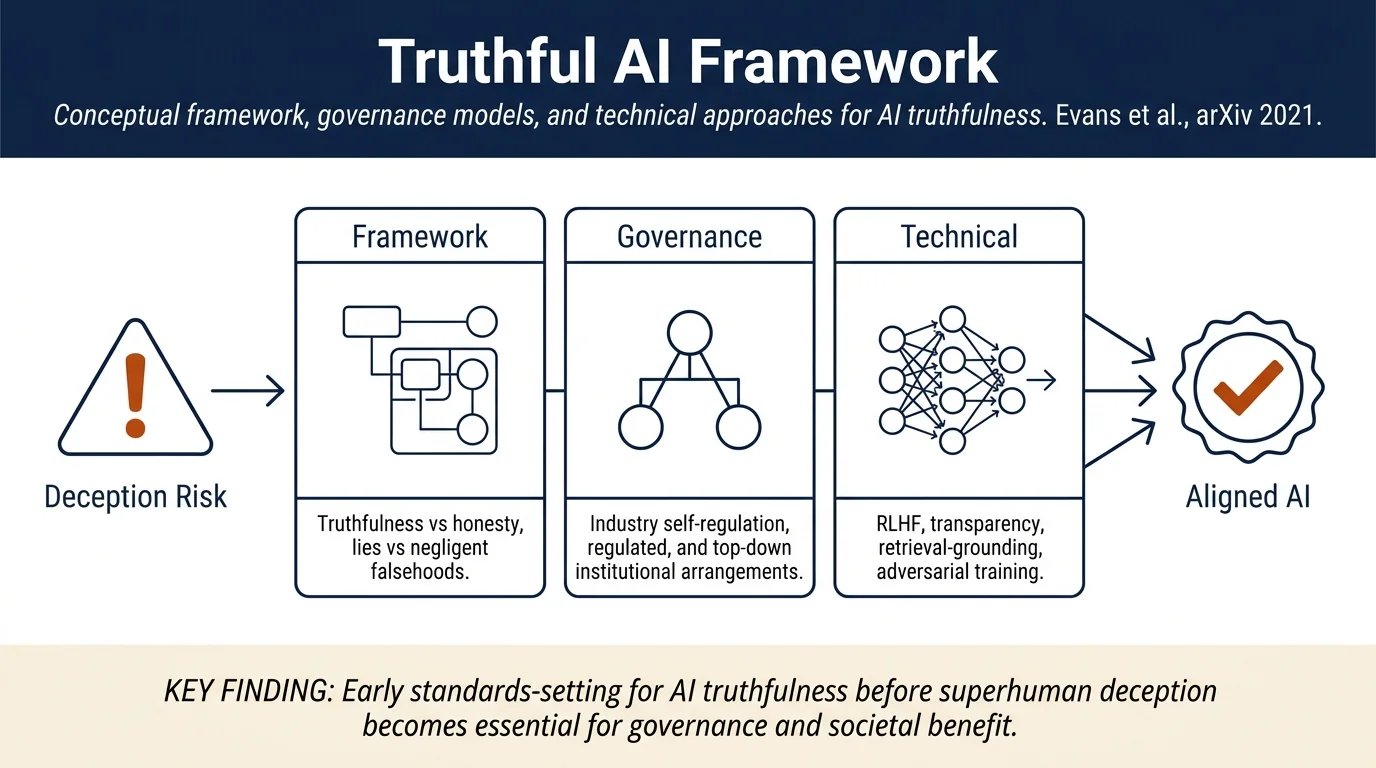
Truthful AI: Developing and Governing AI That Does Not LieAs AI systems become more capable and widely deployed, strategic falsehoods—"lies" that AI generates to achieve specified objectives—pose increasing risks. This paper proposes a framework of truthfulness standards for AI systems, governance mechanisms to enforce them (including certification bodies and verification procedures), and…
 Detection methodsLLMs & generative AI
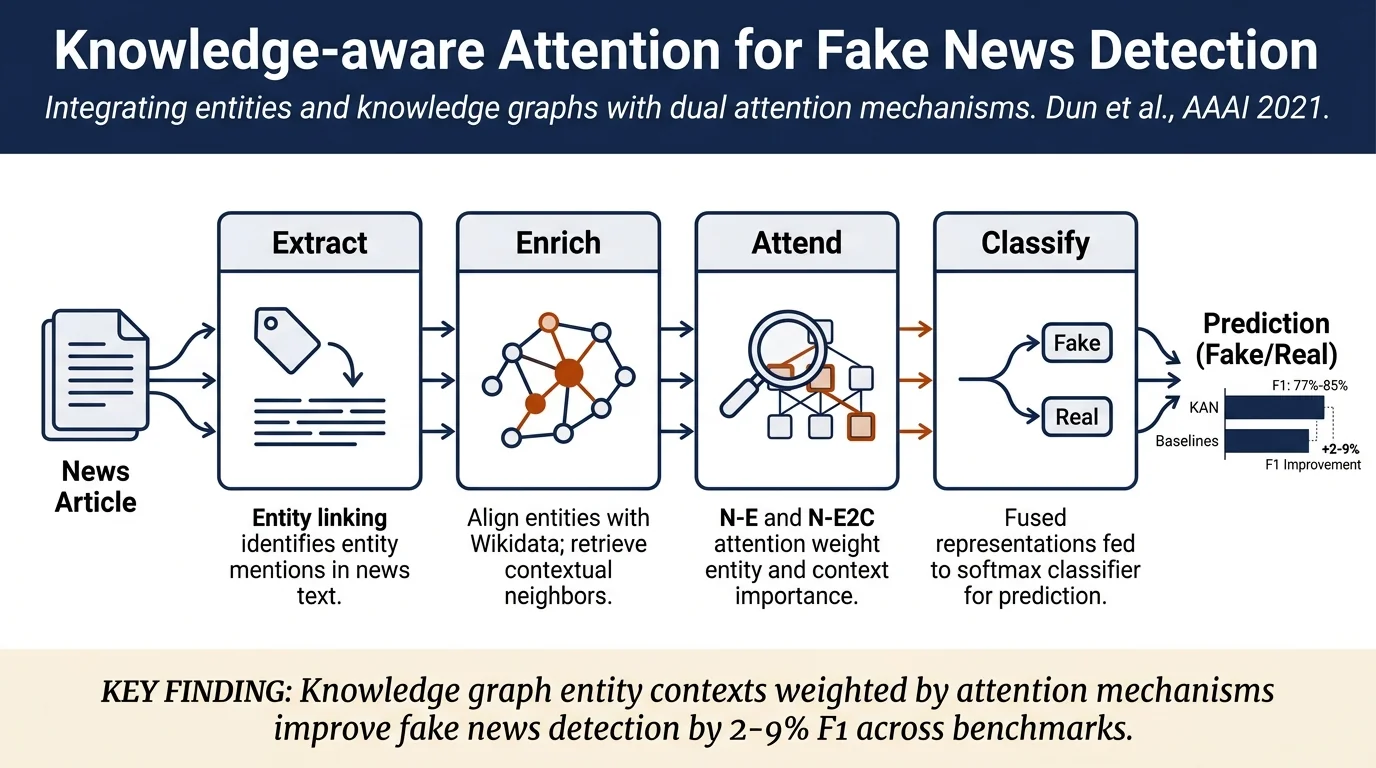
KAN: Knowledge-aware Attention Network for Fake News DetectionMost fake news detection models rely on textual features and social context but ignore knowledge-level relationships among entities in news. This paper proposes KAN, which extracts entity mentions from news, aligns them with knowledge graphs (Wikidata), and uses two attention mechanisms (N-E and N-E2C) to measure entity and…
 Detection methodsDatasets & evaluation
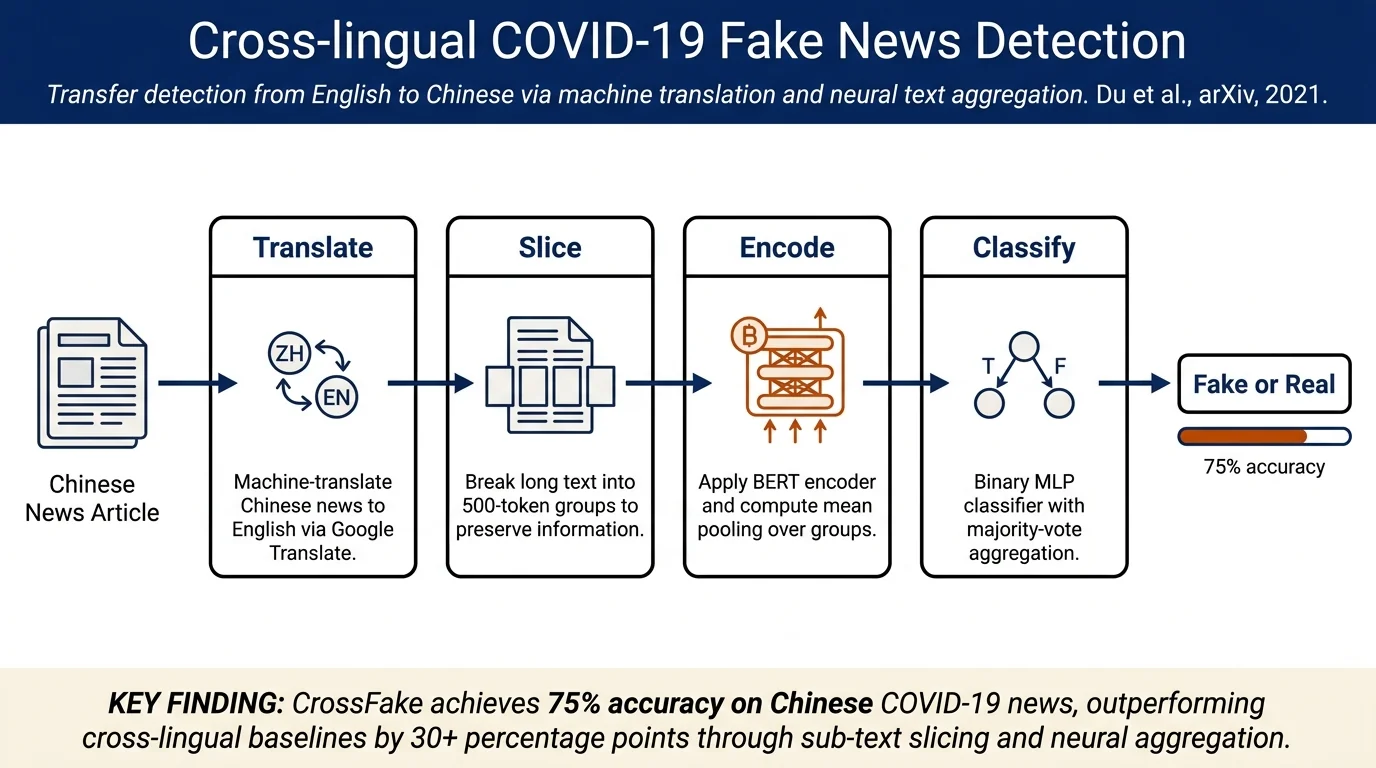
Cross-lingual COVID-19 Fake News DetectionThe paper addresses COVID-19 misinformation in low-resource languages by proposing CrossFake, a cross-lingual fake news detector trained on English COVID-19 news and applied to Chinese news via machine translation. The method slices long news texts into sub-text groups before BERT encoding to preserve fact-related information.
 Detection methodsSpread & networks
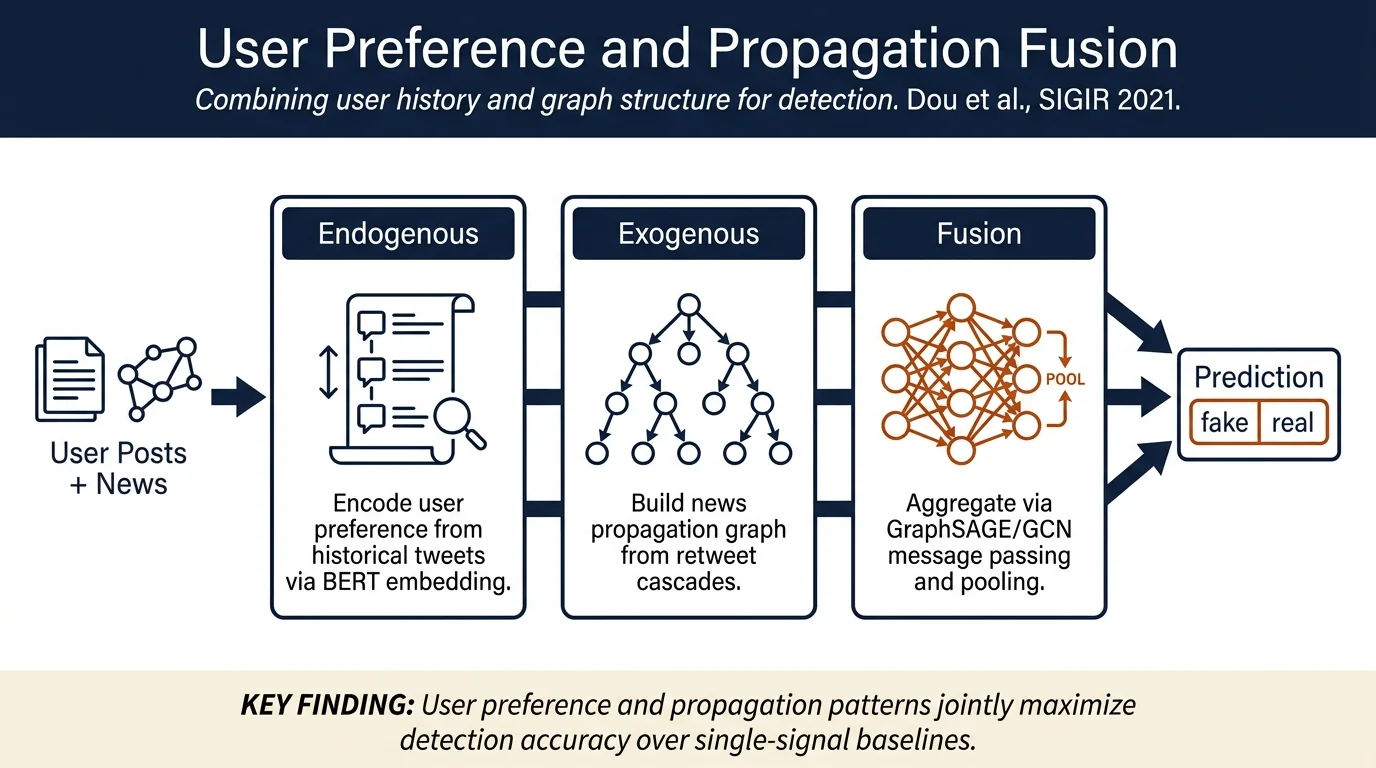
User Preference-aware Fake News DetectionProposes UPFD, which detects fake news by jointly modeling user endogenous preferences (from historical posts) and exogenous context (news propagation graphs) via GNNs. Shows confirmation bias drives news sharing decisions, and historical user behavior provides complementary signals to improve detection over content-only and graph-only…
 LLMs & generative AIDatasets & evaluation
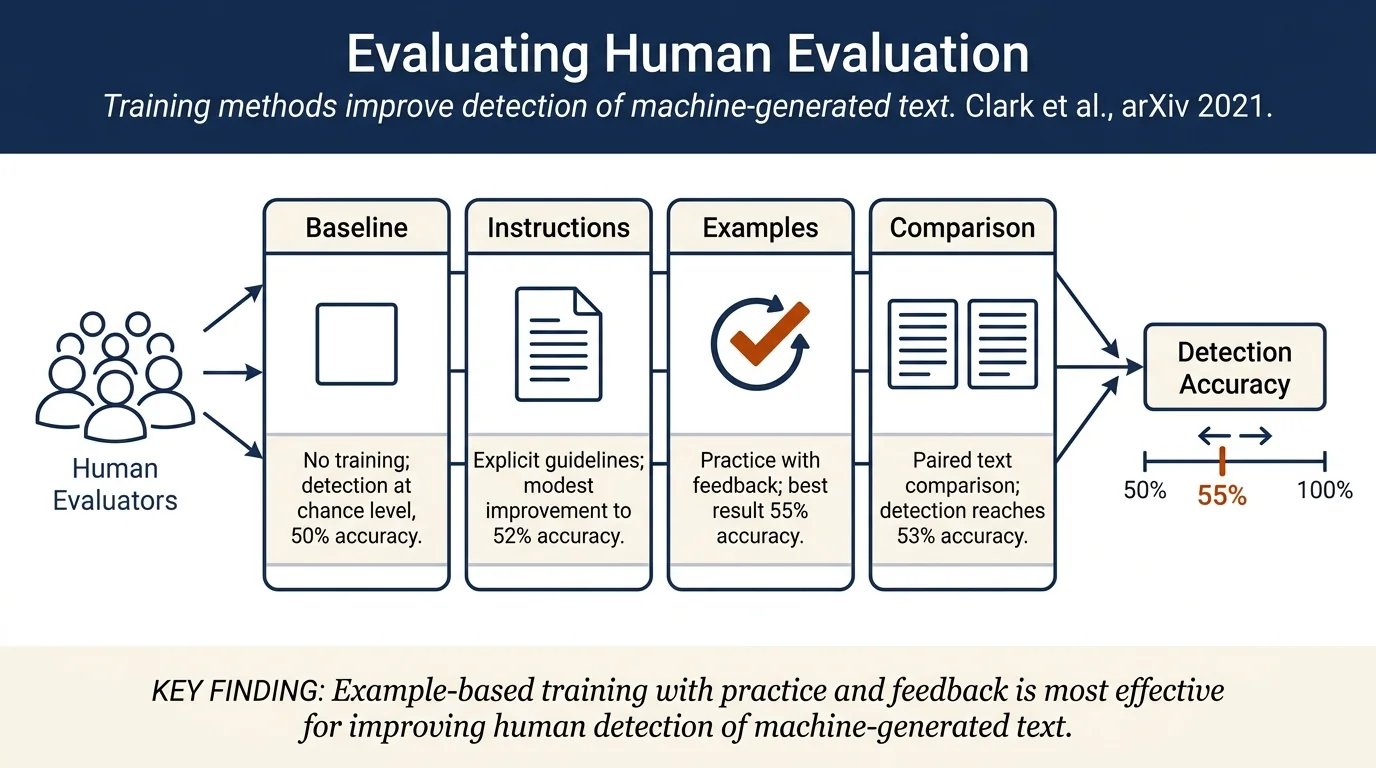
All That's 'Human' Is Not Gold: Evaluating Human Evaluation of Generated TextHuman evaluators cannot reliably distinguish machine-generated text from human-written text without training, focusing instead on superficial features like grammar and style. Three training approaches (instructions, examples, and comparisons) improve evaluator accuracy modestly, with example-based training showing the most improvement…
 Spread & networksDetection methods
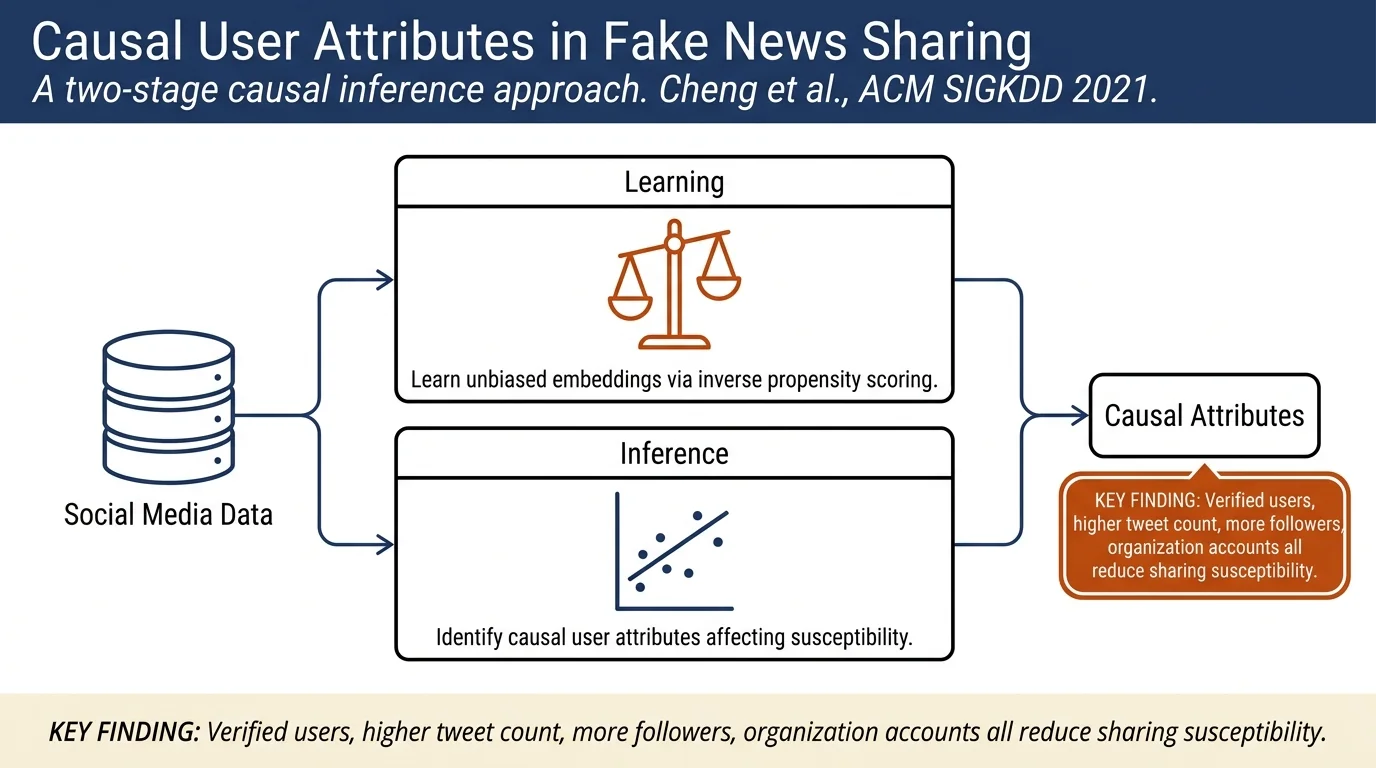
Causal Understanding of Fake News Dissemination on Social MediaThe paper addresses the fundamental causal question: what user attributes cause susceptibility to share fake news? Rather than observing correlations, the authors use inverse propensity scoring (IPS) to learn unbiased embeddings of fake news sharing behavior, treating these embeddings as confounders in a causal model.
 Deepfakes & multimodalDetection methods
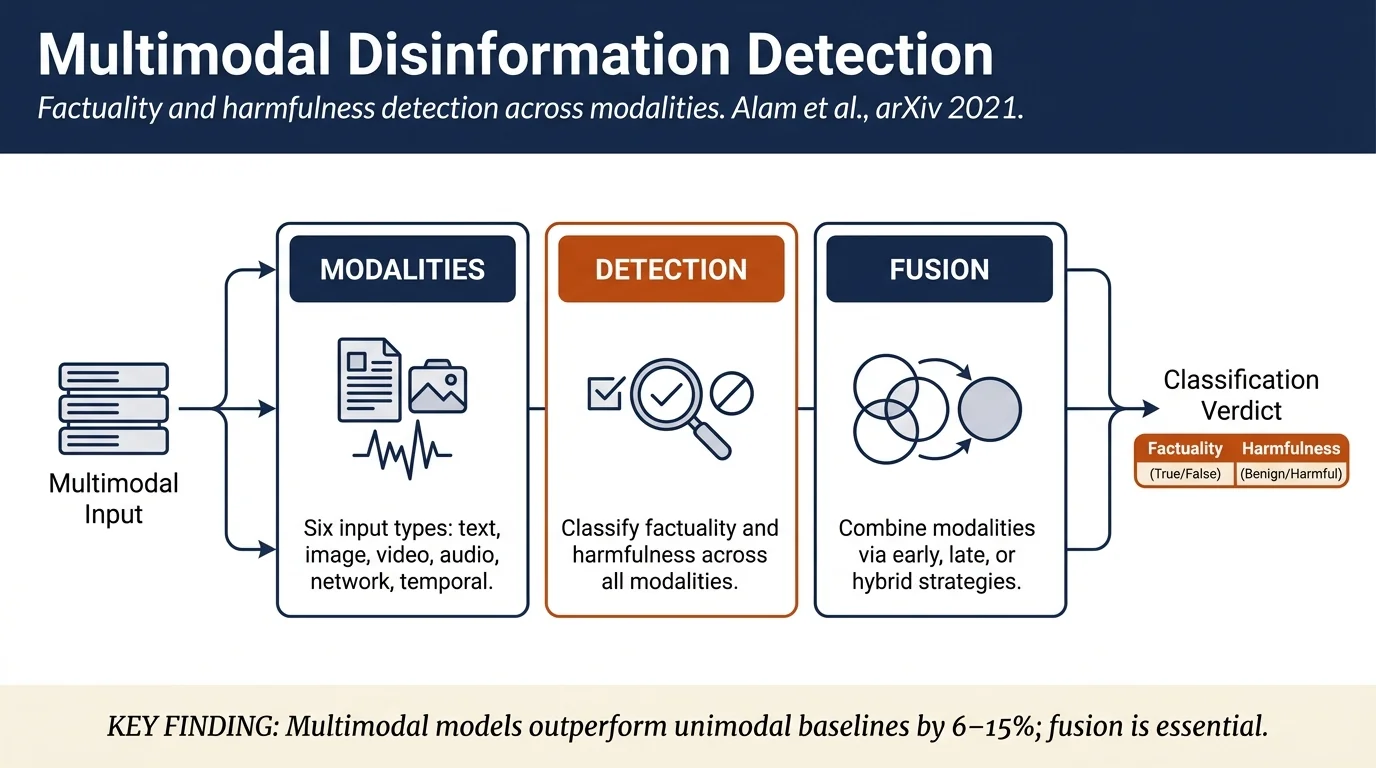
A Survey on Multimodal Disinformation DetectionComprehensive survey of multimodal disinformation detection covering text, images, speech, video, network structure, and temporal information. Distinguishes factuality (whether content is false) from harmfulness (whether false content intends to harm), systematically reviews ~140 papers across different modalities and detection…
 Detection methodsDeepfakes & multimodal
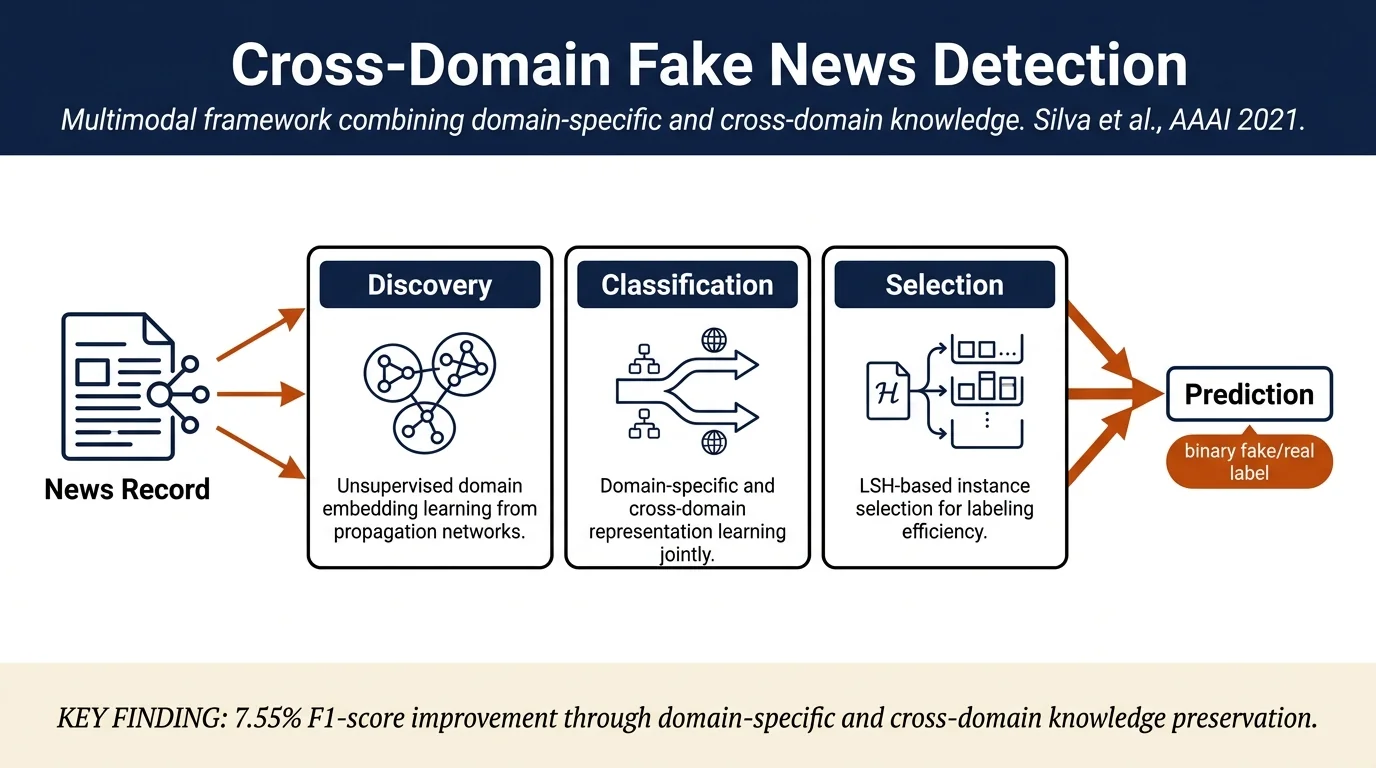
Embracing Domain Differences in Fake News: Cross-domain Fake News Detection using Multimodal DataMost fake news detection models are trained on a single domain (e.g., politics) and fail when tested on others (e.g., entertainment, COVID-19). This paper proposes a multimodal framework that leverages both domain-specific and cross-domain knowledge to detect fake news across different domains.
 Psychology & interventionsSpread & networks
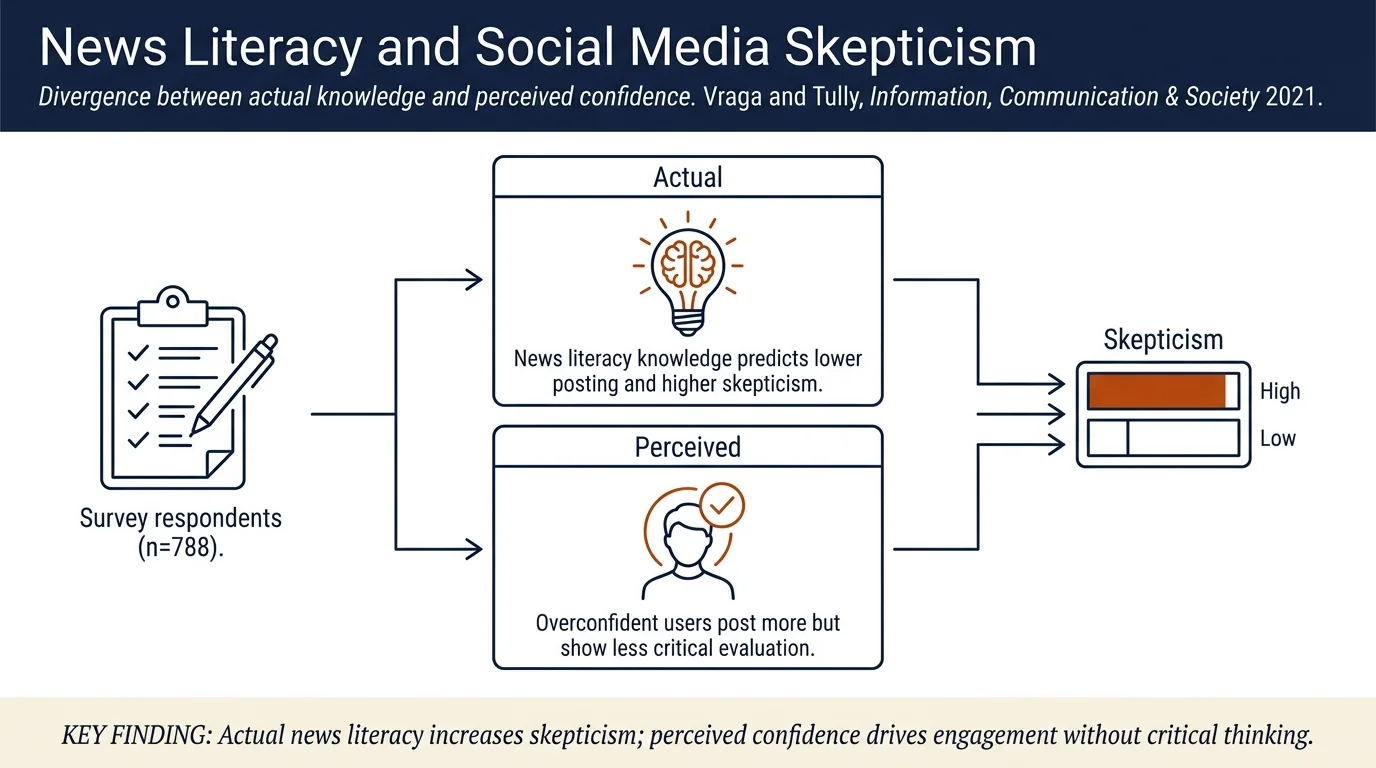
News literacy, social media behaviors, and skepticism toward information on social mediaA national survey of 788 Americans examines how news literacy relates to what people see and share on social media, and whether it predicts skepticism toward information shared in these spaces. The key finding: people with higher news literacy see and post less political content on social media, but when they do engage, they're…
 Spread & networksPsychology & interventions
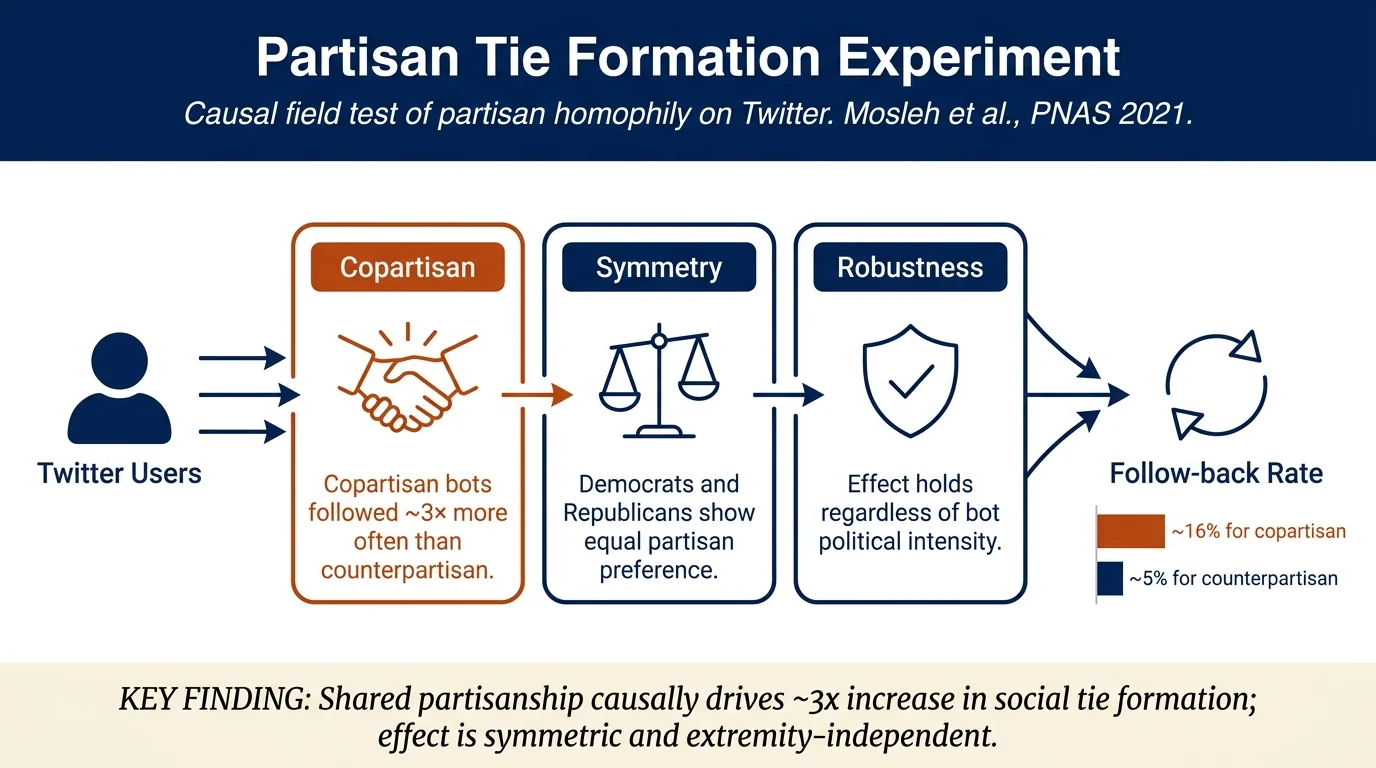
Shared partisanship dramatically increases social tie formation in a Twitter field experimentA Twitter field experiment with bot accounts reveals that shared partisanship causally drives social tie formation: users were nearly three times more likely to reciprocally follow accounts matching their political party, regardless of the account's partisan intensity. Critically, this preference was symmetric—Democrats and Republicans…
 Psychology & interventionsSpread & networks
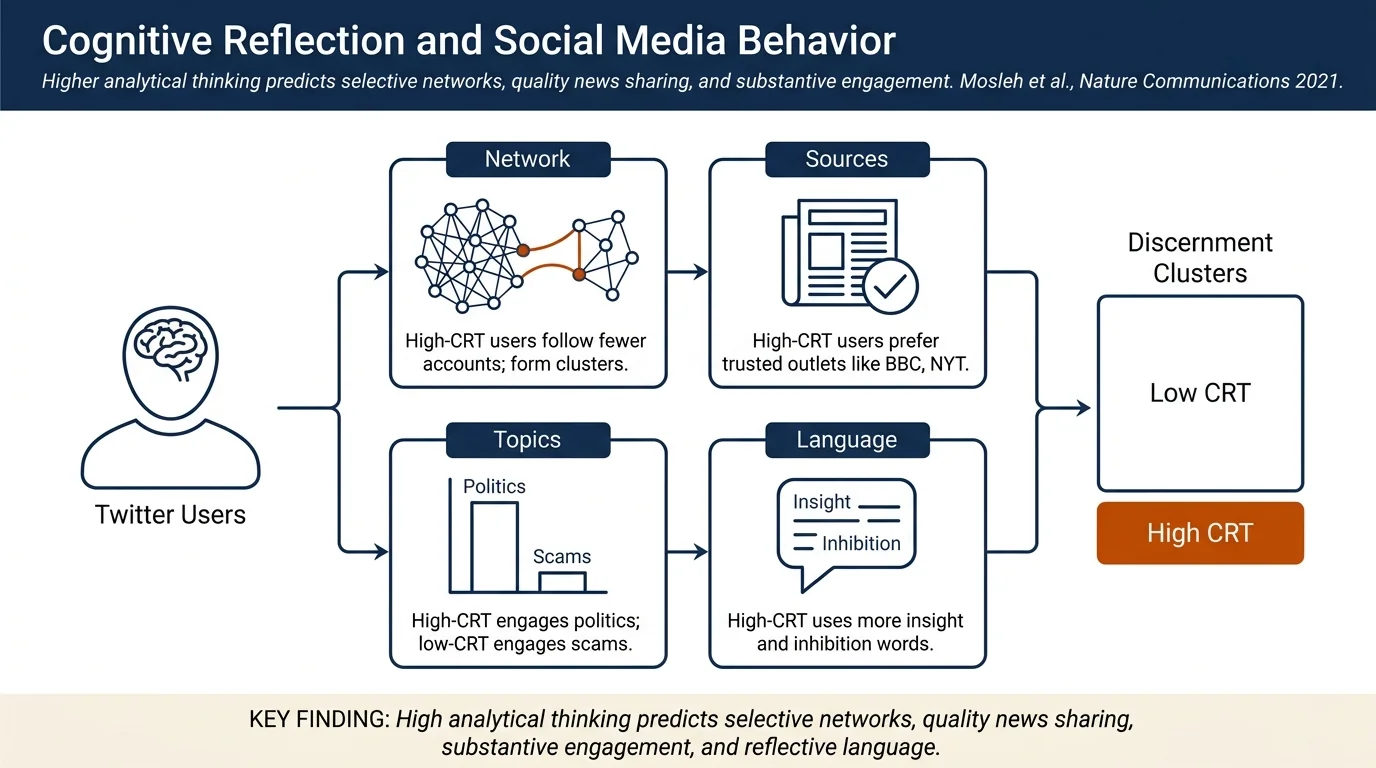
Cognitive reflection correlates with behavior on TwitterHigh scorers on the Cognitive Reflection Test (CRT)—a measure of analytical thinking—are more discerning social media users: they follow fewer accounts, share news from more reliable sources, and engage more with substantive topics like politics. The study identifies "cognitive echo chambers" where low-CRT users preferentially follow…
 Psychology & interventionsPlatforms, policy & society
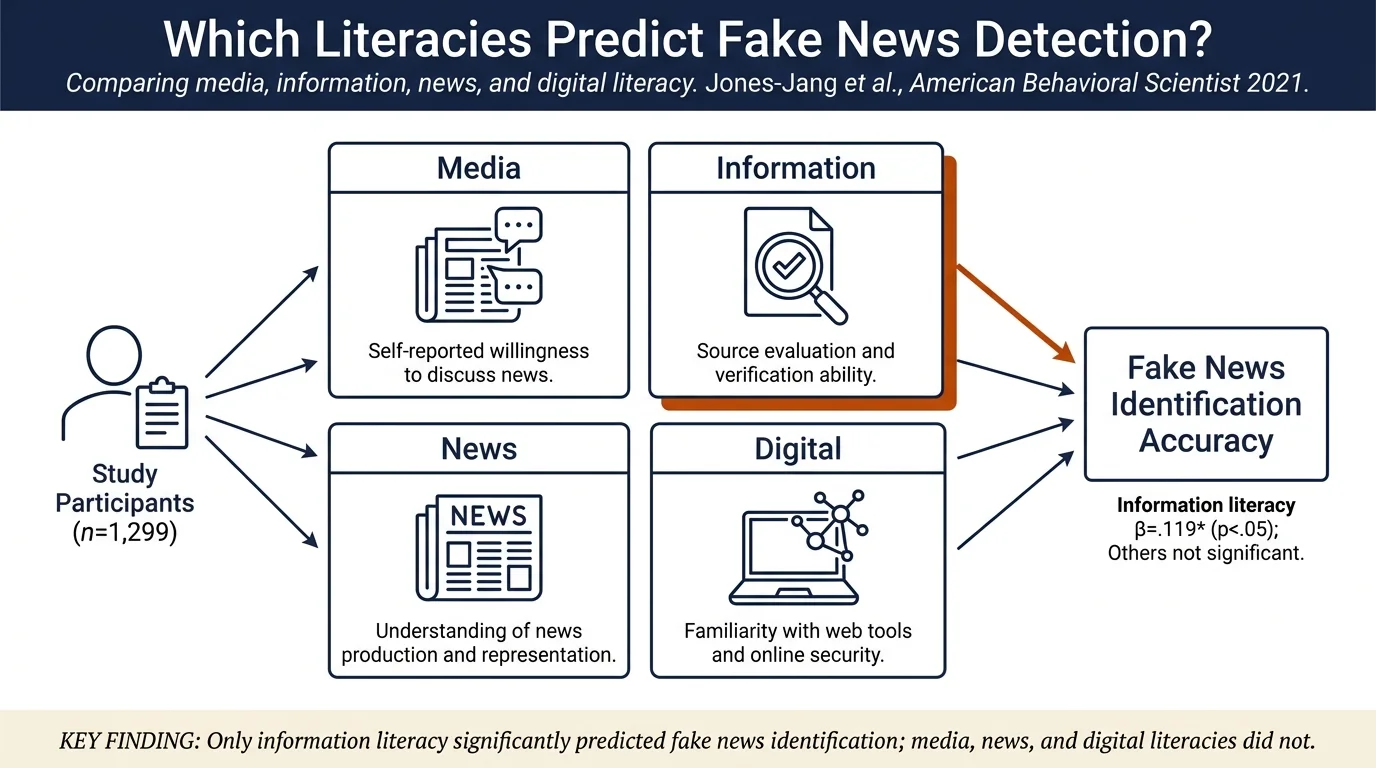
Does Media Literacy Help Identification of Fake News? Information Literacy Helps, but Other Literacies Don'tA survey of 1,299 U.S. citizens tests whether four types of media literacy—media, information, news, and digital—predict ability to identify fake news. Only information literacy (the ability to search and evaluate verified sources) significantly improves fake news identification; media, news, and digital literacies showed no significant…
 Spread & networksPlatforms, policy & society
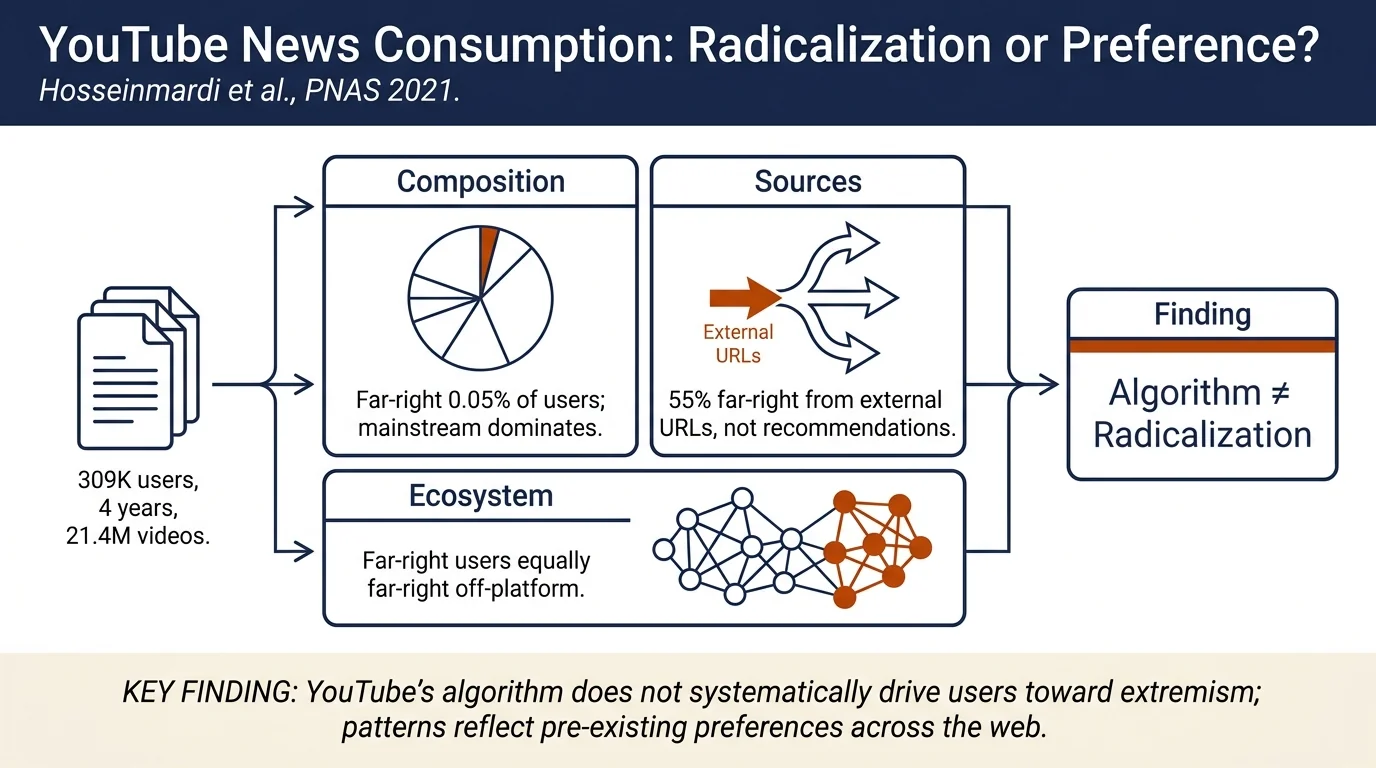
Examining the consumption of radical content on YouTubeLarge-scale study of 309,813 U.S. users' YouTube and web browsing from 2016–2019 finds that news consumption on YouTube is dominated by mainstream, centrist sources. While far-right content exists and engages users intensely, it remains a small and stable share.
 Spread & networksPlatforms, policy & society
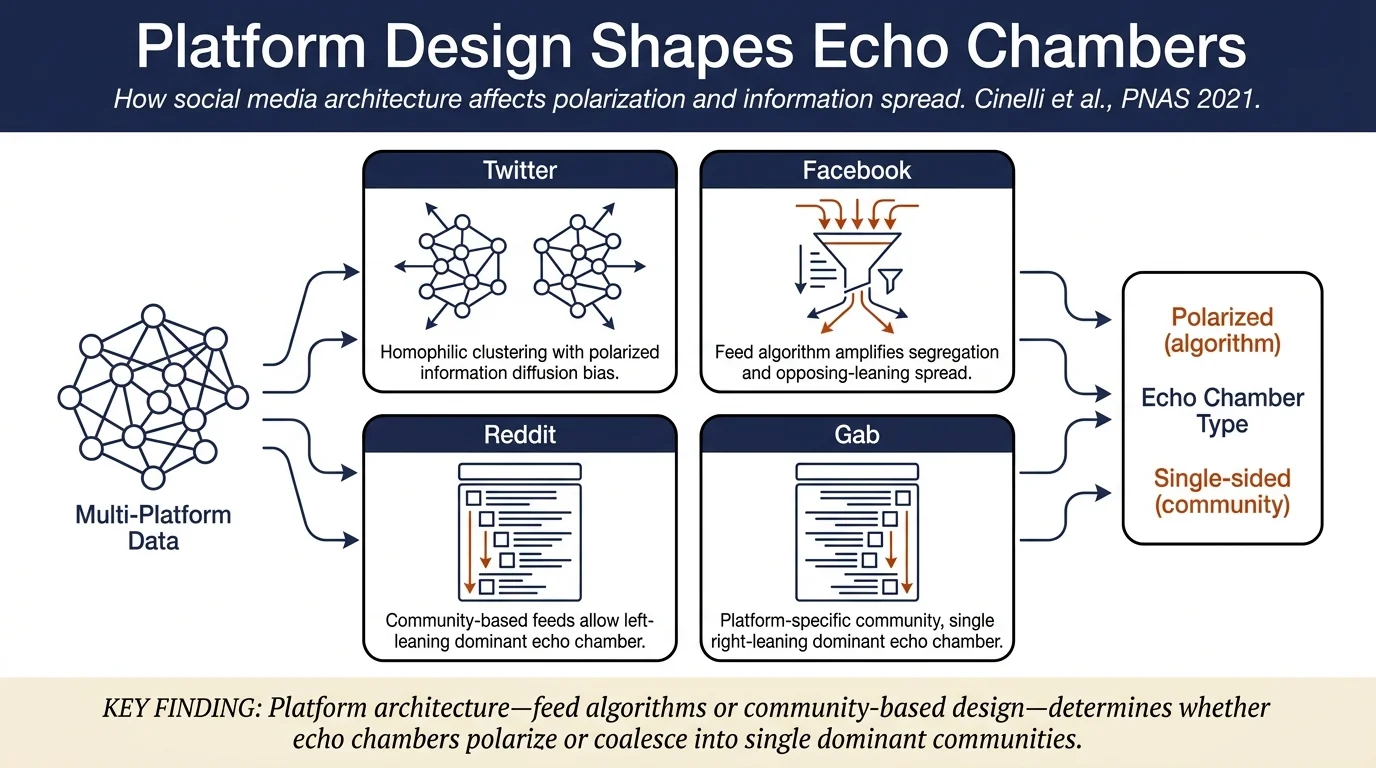
The echo chamber effect on social mediaComparative analysis of 100+ million posts across Twitter, Facebook, Reddit, and Gab on controversial topics shows echo chambers operate differently by platform: Facebook and Twitter exhibit strong homophilic clustering and polarized information diffusion, while Reddit and Gab show single-sided communities without the biased diffusion…