Explore everything
Filter by research area, year and venue. Every filter is in the address bar, so you can share a view as a link.
 Detection methodsFact-checking & verification
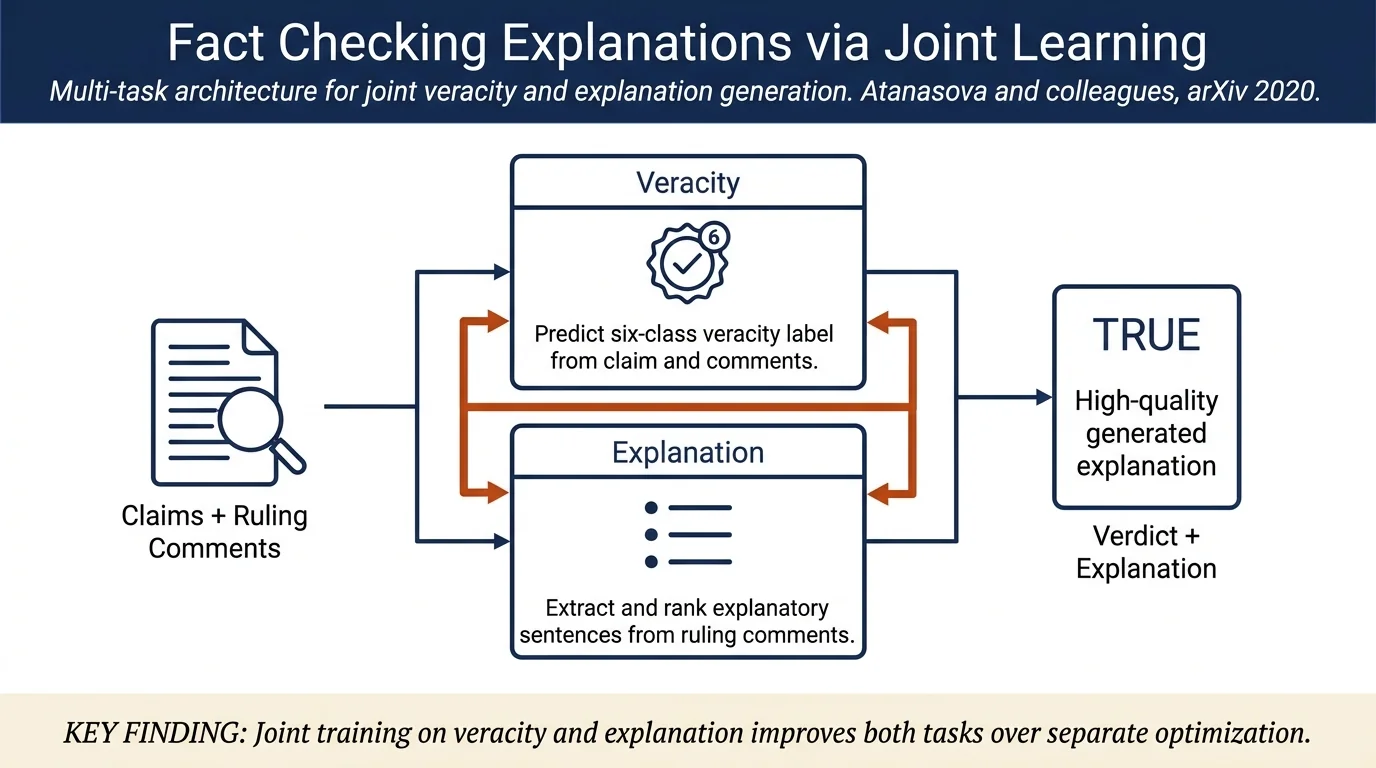
Generating Fact Checking ExplanationsThis paper presents the first study on automatically generating explanations for fact-checking veracity predictions. The authors show that jointly optimizing both veracity classification and explanation generation improves system performance.
 Fact-checking & verificationPlatforms, policy & society
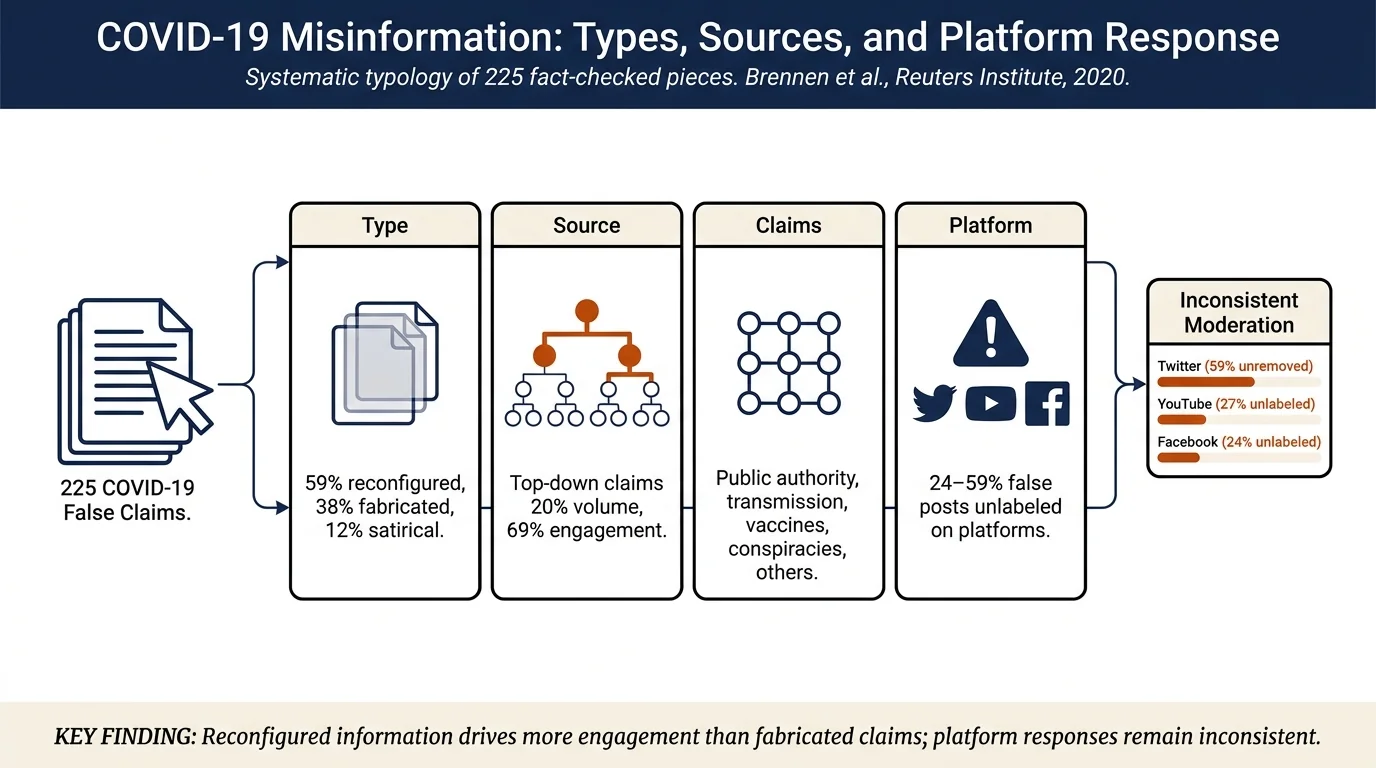
Types, Sources, and Claims of COVID-19 MisinformationSystematic analysis of 225 fact-checked COVID-19 misinformation pieces reveals that most false content reconfigures existing information (59%) rather than fabricating entirely new claims. Public authorities are cited in 39% of misinformation, yet top-down claims from politicians and celebrities account for only 20% of volume but drive…
 Spread & networksPlatforms, policy & society
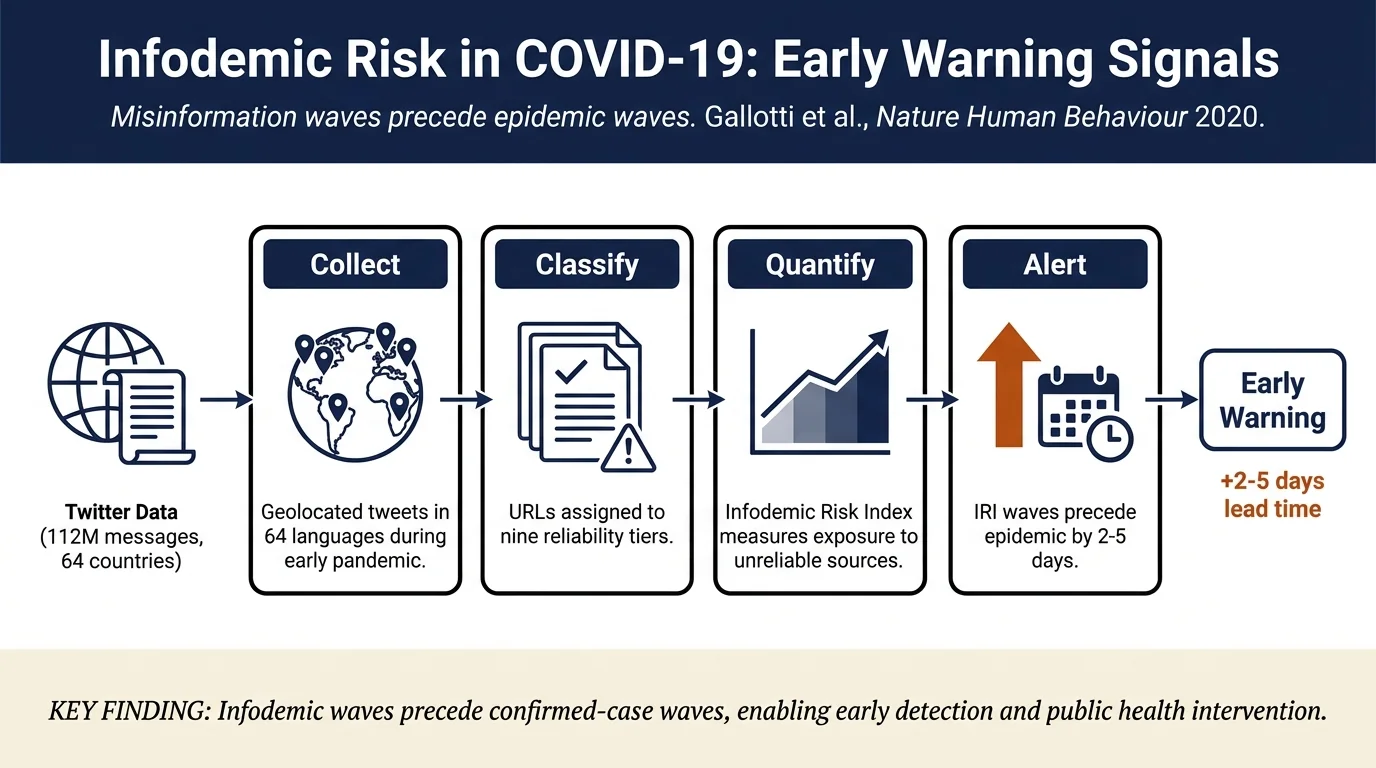
Assessing the risks of 'infodemics' in response to COVID-19 epidemicsAnalysis of 112+ million geolocated Twitter messages about COVID-19 (January–March 2020) across 64 languages and countries. Develops an infodemic risk index (IRI) measuring exposure to unreliable news; demonstrates that waves of unreliable information precede pandemic waves, providing early-warning signals for policy intervention.
 Spread & networksPlatforms, policy & society
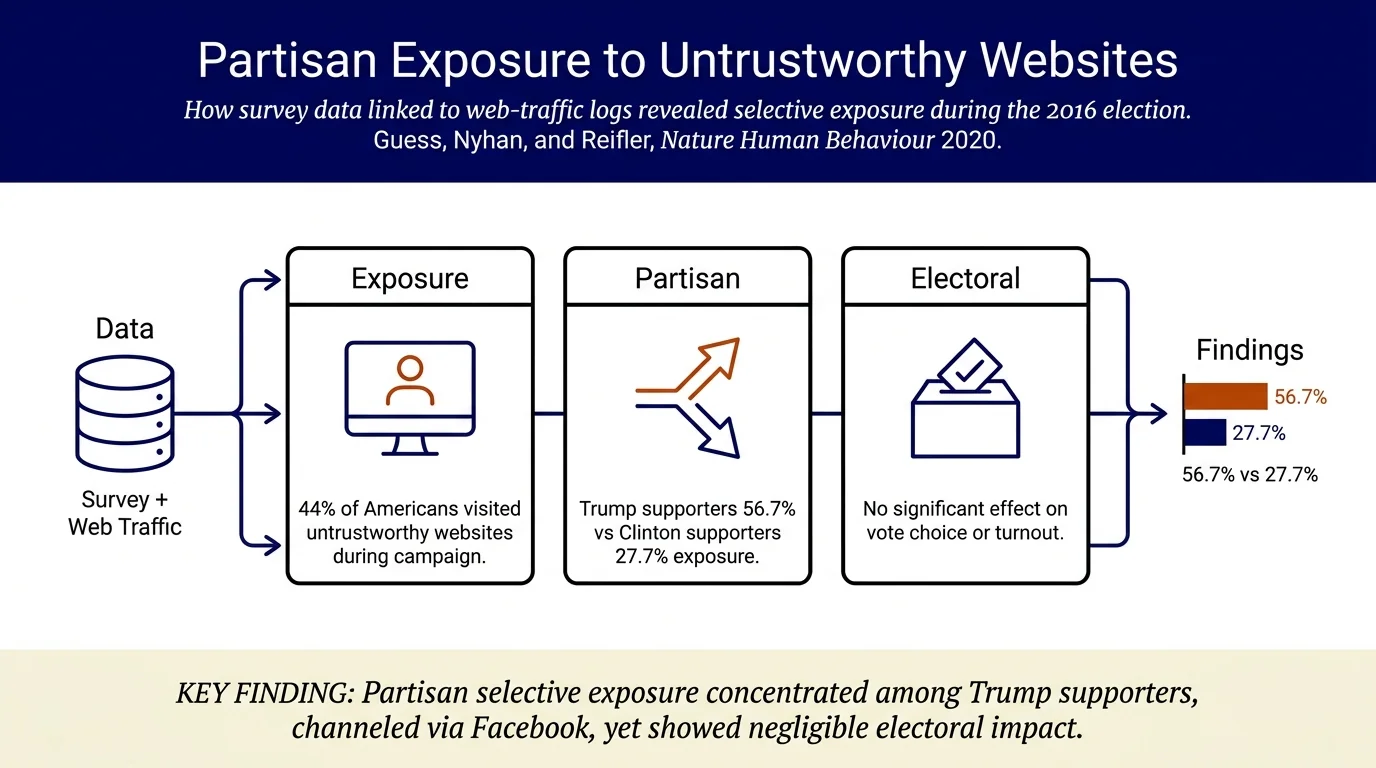
Exposure to untrustworthy websites in the 2016 US electionUsing combined survey and web-traffic data from the 2016 US presidential election, Guess et al. found that while 44.3% of Americans aged 18+ visited an untrustworthy website during the campaign, actual exposure was highly concentrated among Trump supporters (56.7% of Trump supporters vs. 27.7% of Clinton supporters). Facebook played a…
 Bots & coordinated campaignsSpread & networks
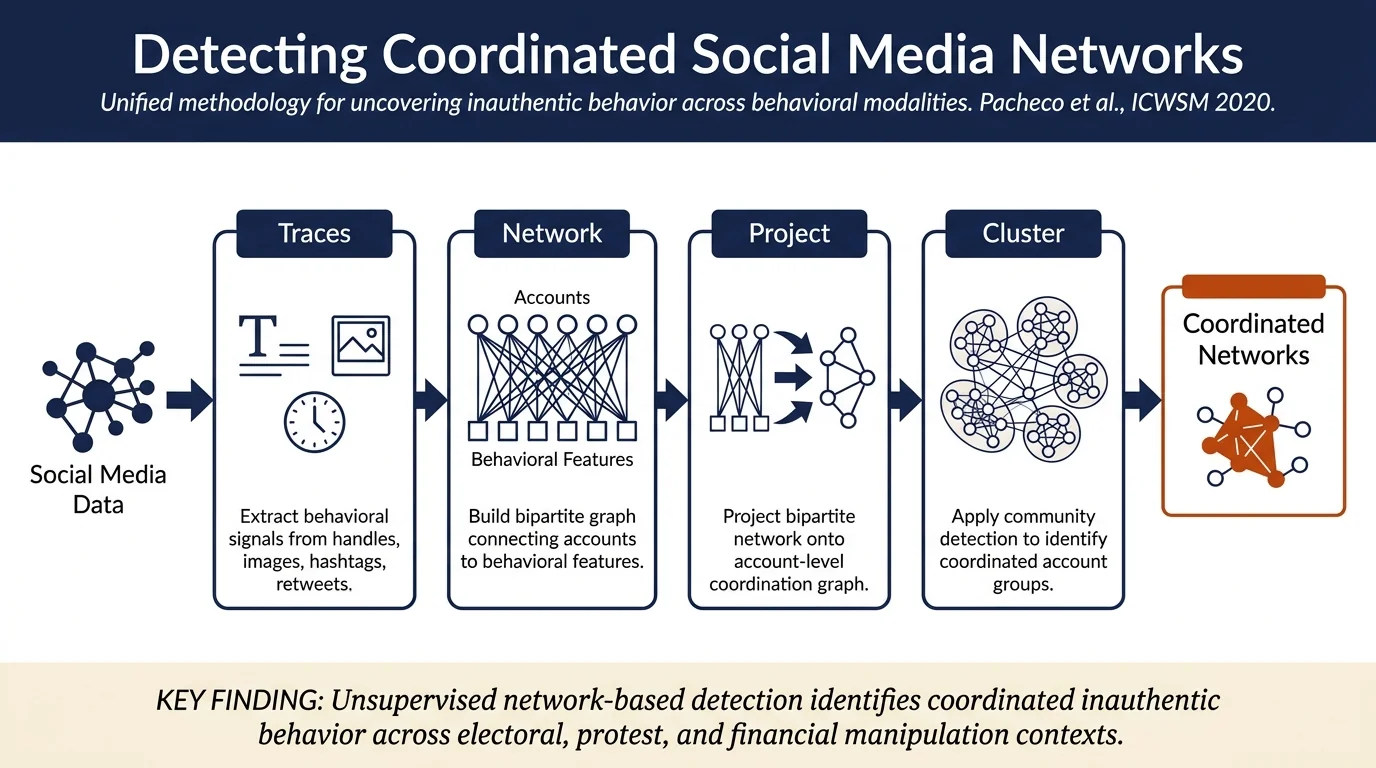
Uncovering Coordinated Networks on Social Media: Methods and Case StudiesThis paper proposes a general, unsupervised, network-based methodology to detect coordinated inauthentic behavior on social media. The approach identifies behavioral traces (handle changes, image sharing, hashtag sequences, co-retweets, synchronized actions) and constructs bipartite networks to discover clusters of accounts likely…
Detection methodsLLMs & generative AI
The Limitations of Stylometry for Detecting Machine-Generated Fake NewsWhile stylometry effectively detects impersonation and provenance, it fails to distinguish between legitimate and malicious uses of language models for generating false content. LMs produce stylistically consistent text regardless of veracity, and adding even a single auto-generated sentence within human-written text evades stylometric…
 Spread & networksPlatforms, policy & society
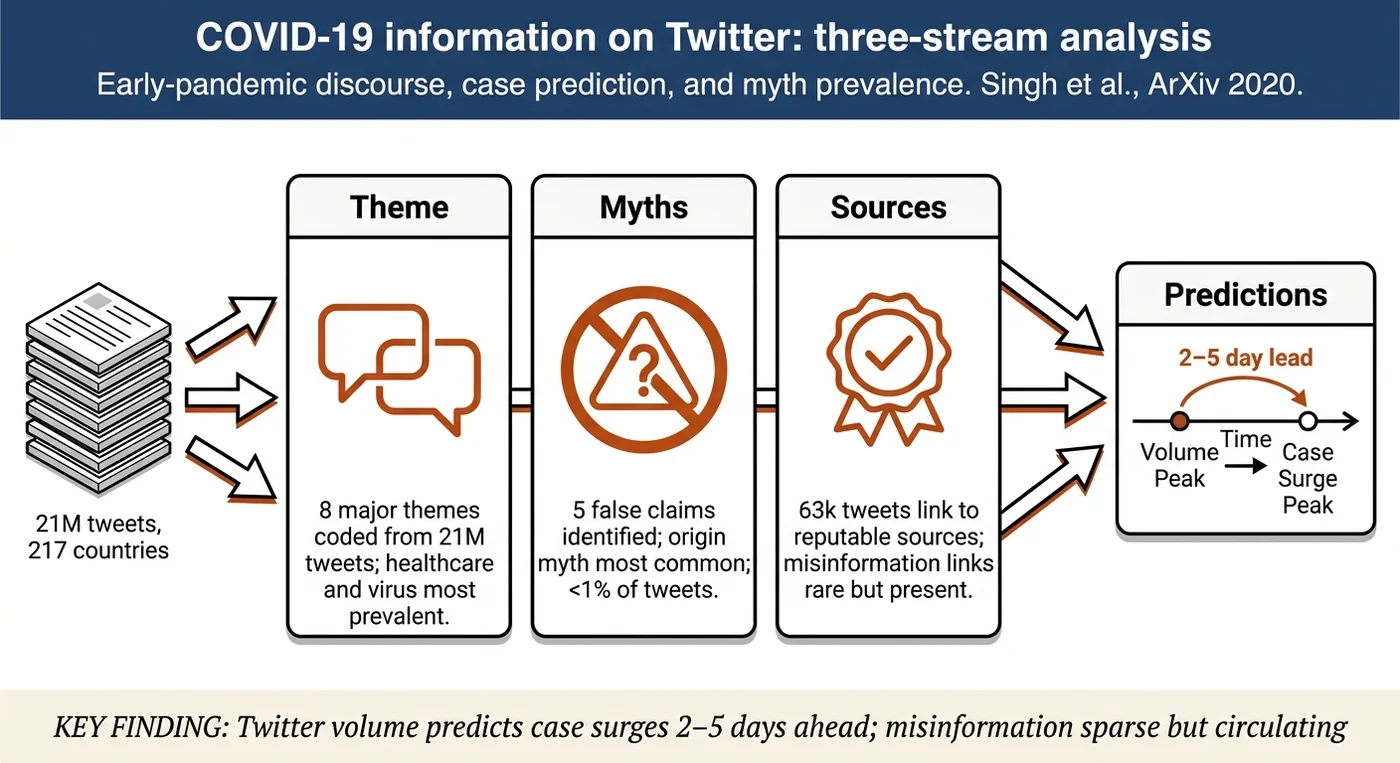
A first look at COVID-19 information and misinformation sharing on TwitterEarly-pandemic analysis of 21 million COVID-19 tweets showing Twitter conversations predict case increases by 2–5 days; identifies five prevalent myths (origin, flu comparison, heat, home remedies, vaccine) accounting for ~0.6% of tweets; finds most shared URLs point to reputable sources (CDC, WHO) rather than misinformation sites,…
 Spread & networksBots & coordinated campaigns
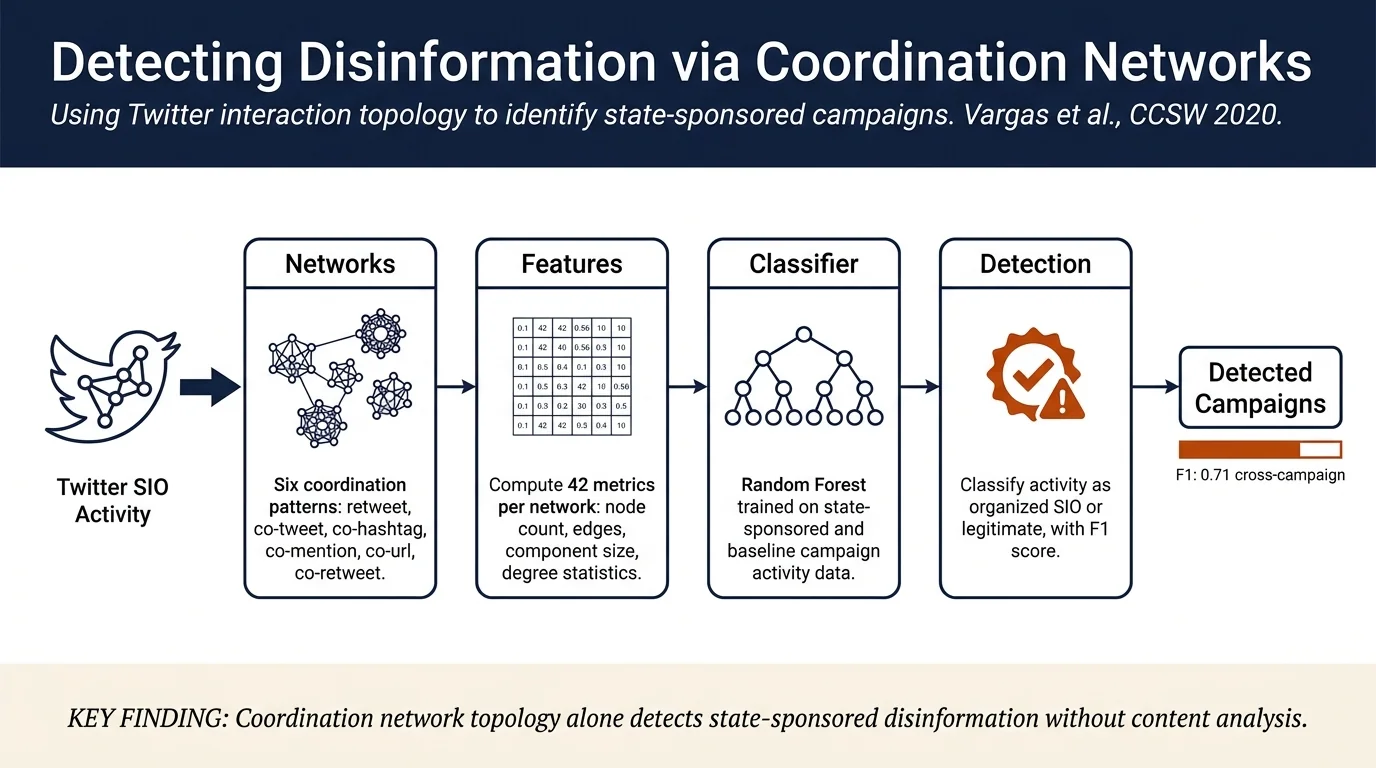
On the Detection of Disinformation Campaign Activity with Network AnalysisState-sponsored disinformation campaigns on Twitter exhibit distinct coordination patterns (shared messages, hashtags, URLs, retweet cascades) that differ from legitimate coordinated activity. The paper proposes using coordination network features—extracted from daily account interactions—to train a binary classifier that detects…
 Detection methodsDeepfakes & multimodal
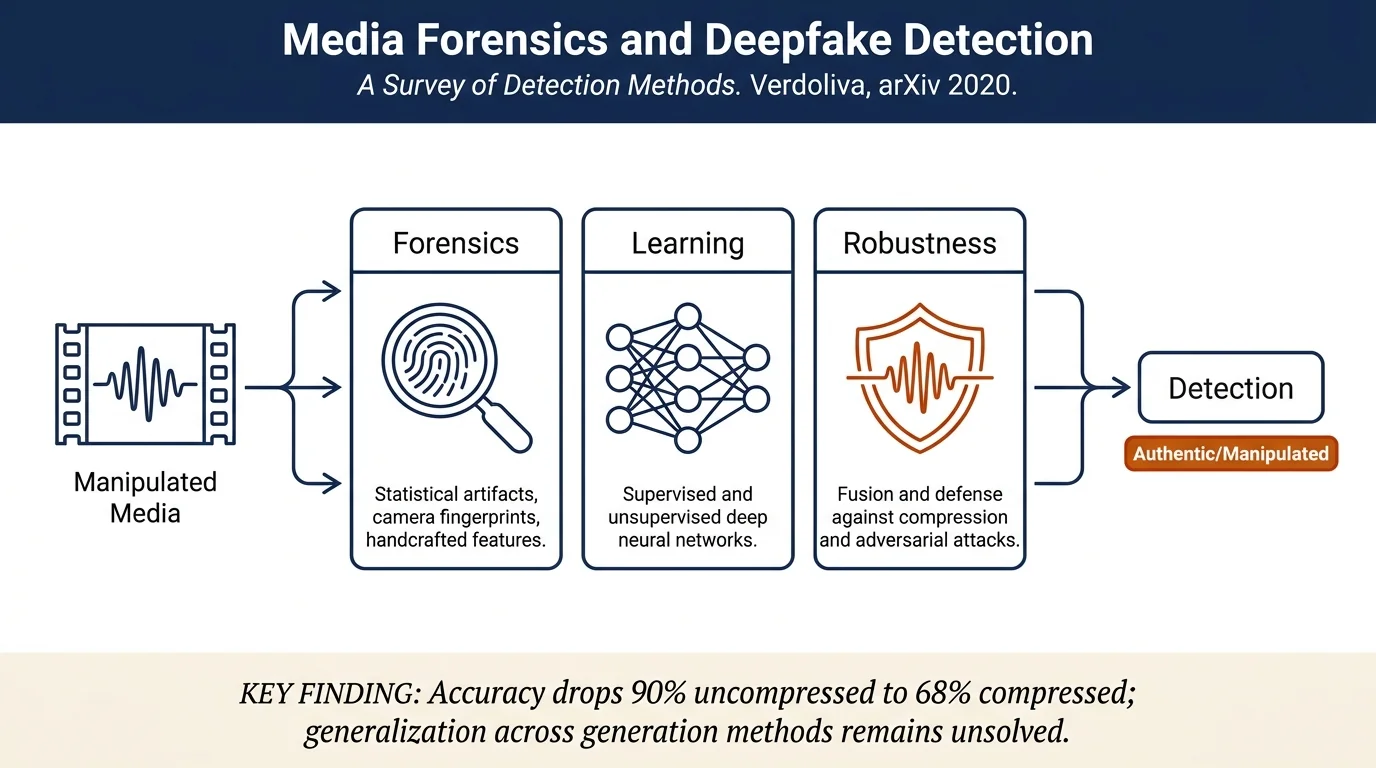
Media Forensics and DeepFakes: an overviewA comprehensive survey of media forensics and deepfake detection methods spanning fifteen years of research. The paper reviews both conventional signal-processing approaches (blind methods, sensor-based, handcrafted features) and deep learning-based detection techniques, covers major datasets and their characteristics, discusses…
 Spread & networksPlatforms, policy & society
The Hype MachineA book talk by MIT's Sinan Aral on "The Hype Machine," which explores how social media simultaneously disrupts elections, the economy, and public health while offering tremendous potential for good. The presentation synthesizes 20 years of research on social media diffusion, arguing that misinformation spreads faster than truth because…
 Psychology & interventionsDetection methods
The Continued Influence of MisinformationUllrich Ecker presents research on the continued influence effect—the phenomenon that misinformation continues to shape people's reasoning and memory even after they receive corrections and understand them. He examines four social factors that shape this effect: source credibility (trustworthiness matters more than expertise),…
 Spread & networksPlatforms, policy & society
Mis- and Disinformation During Crisis EventsKate Starbird, associate professor at UW's HCDE and co-founder of the Center for an Informed Public, discusses how misinformation and disinformation spread during crisis events, with case studies from the COVID-19 pandemic and 2020 election. She distinguishes between harmful misinformation (false but well-intentioned), disinformation…
 LLMs & generative AIDetection methods
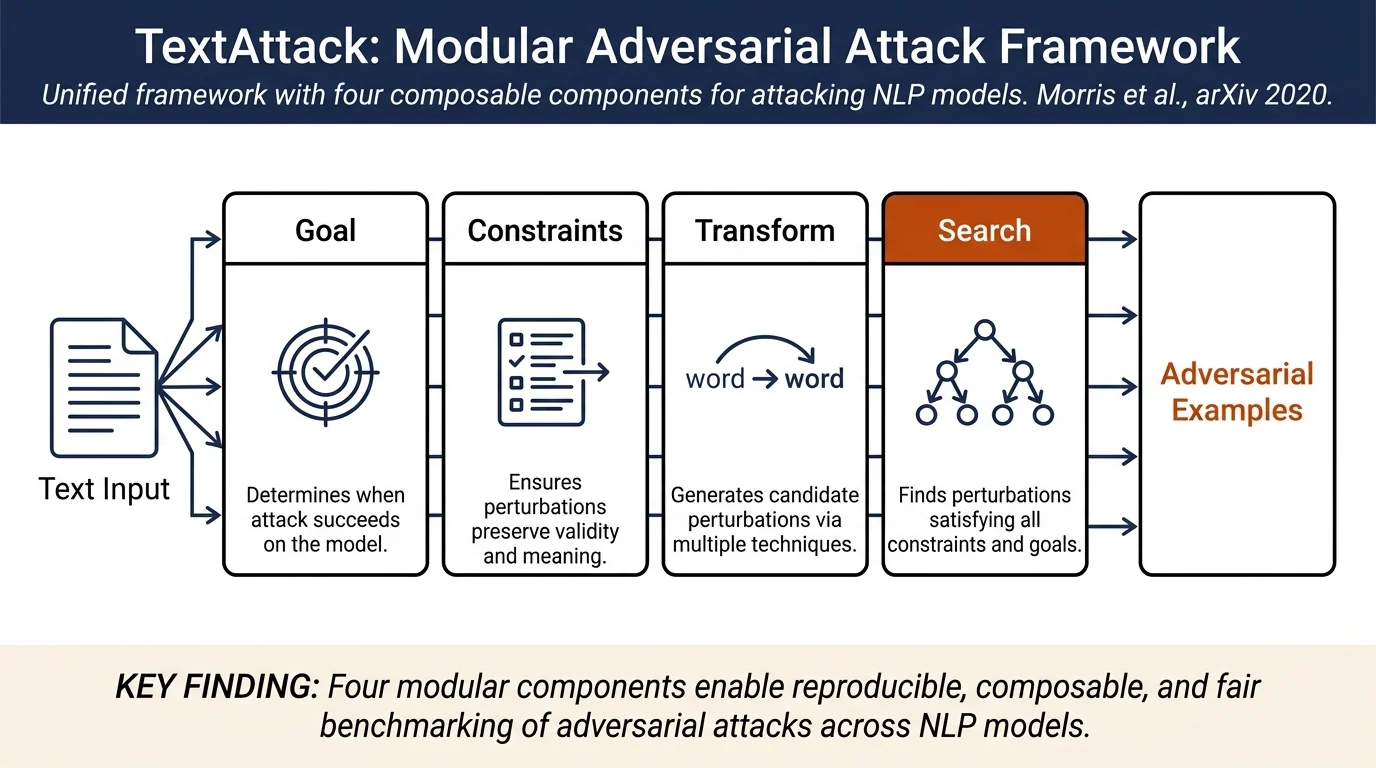
TextAttack: A Framework for Adversarial Attacks, Data Augmentation, and Adversarial Training in NLPIntroduces TextAttack, an open-source Python framework unifying 16 adversarial attacks from the literature into a modular architecture for testing and improving NLP model robustness. The framework decomposes attacks into four reusable components (goal function, constraints, transformation, search method), enables benchmarking attacks on…
 Datasets & evaluationSpread & networks
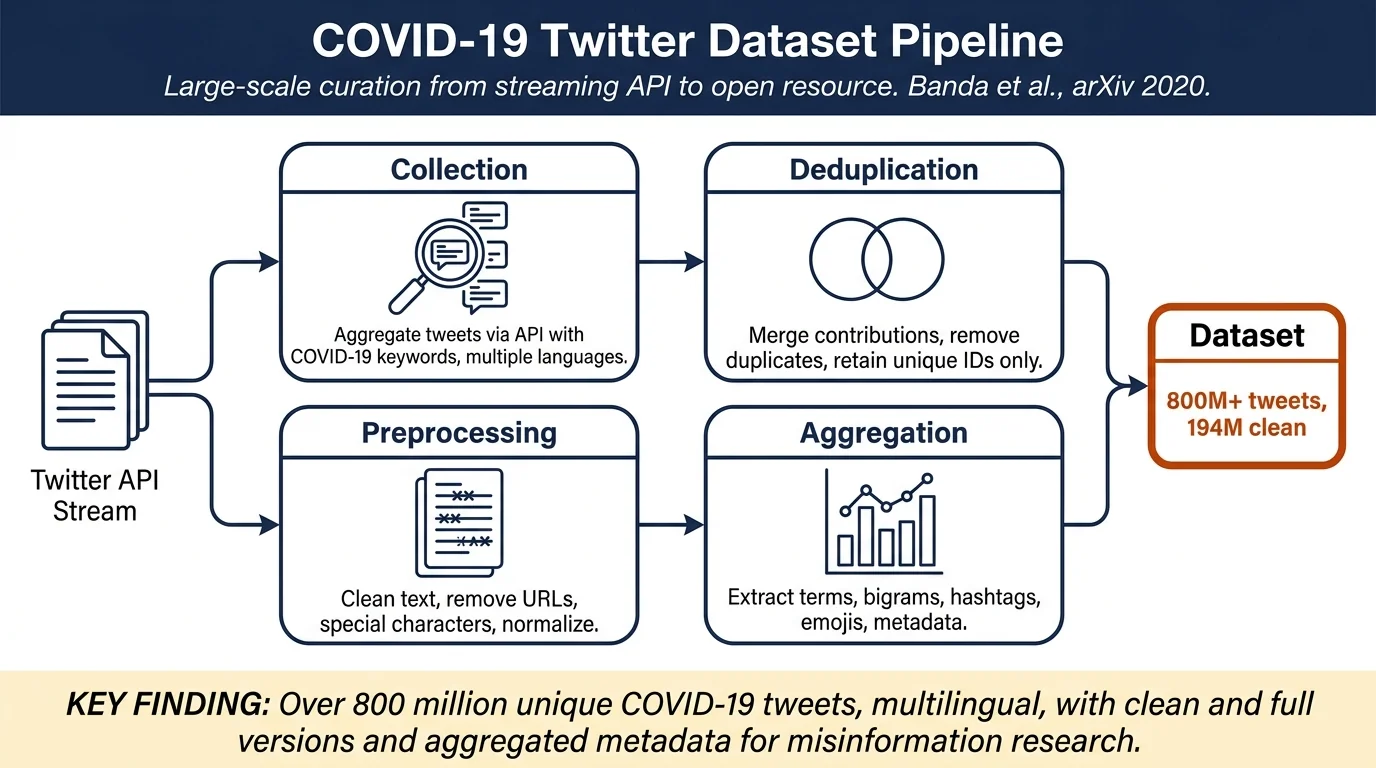
A large-scale COVID-19 Twitter chatter dataset for open scientific research - an international collaborationBanda et al. release a massive curated corpus of 800+ million COVID-19–related tweets collected from January through November 2020, with deduplication and language diversity. The dataset adheres to FAIR principles and provides both raw tweets and metadata (terms, bigrams, trigrams, hashtags, emojis, mentions) to support research on…
 LLMs & generative AIDetection methods
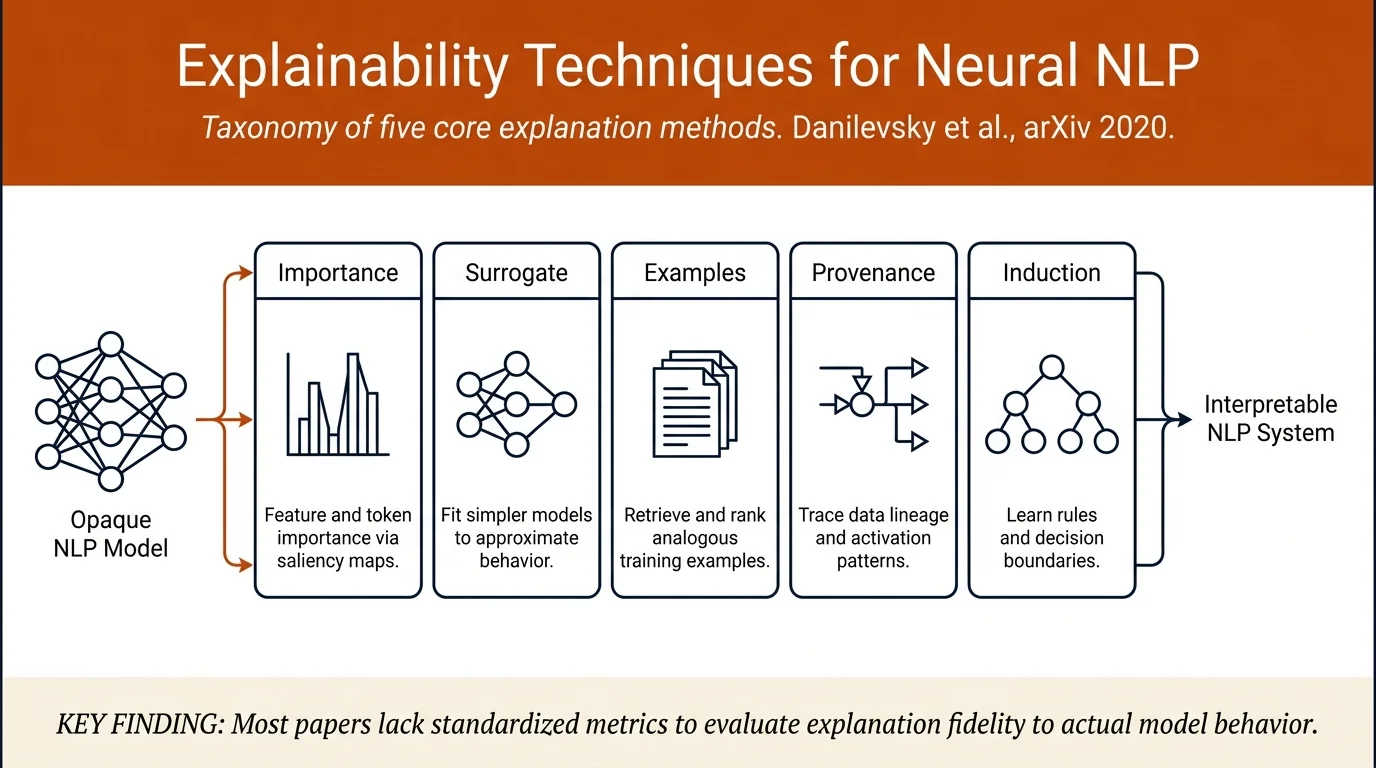
A Survey of the State of Explainable AI for Natural Language ProcessingRecent neural NLP models achieve strong performance but are often opaque. This survey systematically reviews explainable AI (XAI) research in NLP across 50 papers from major conferences (2013–2019), categorizing explanations by scope (local vs. global) and generation (self-explaining vs. post-hoc), detailing five major techniques…
 LLMs & generative AIPlatforms, policy & society
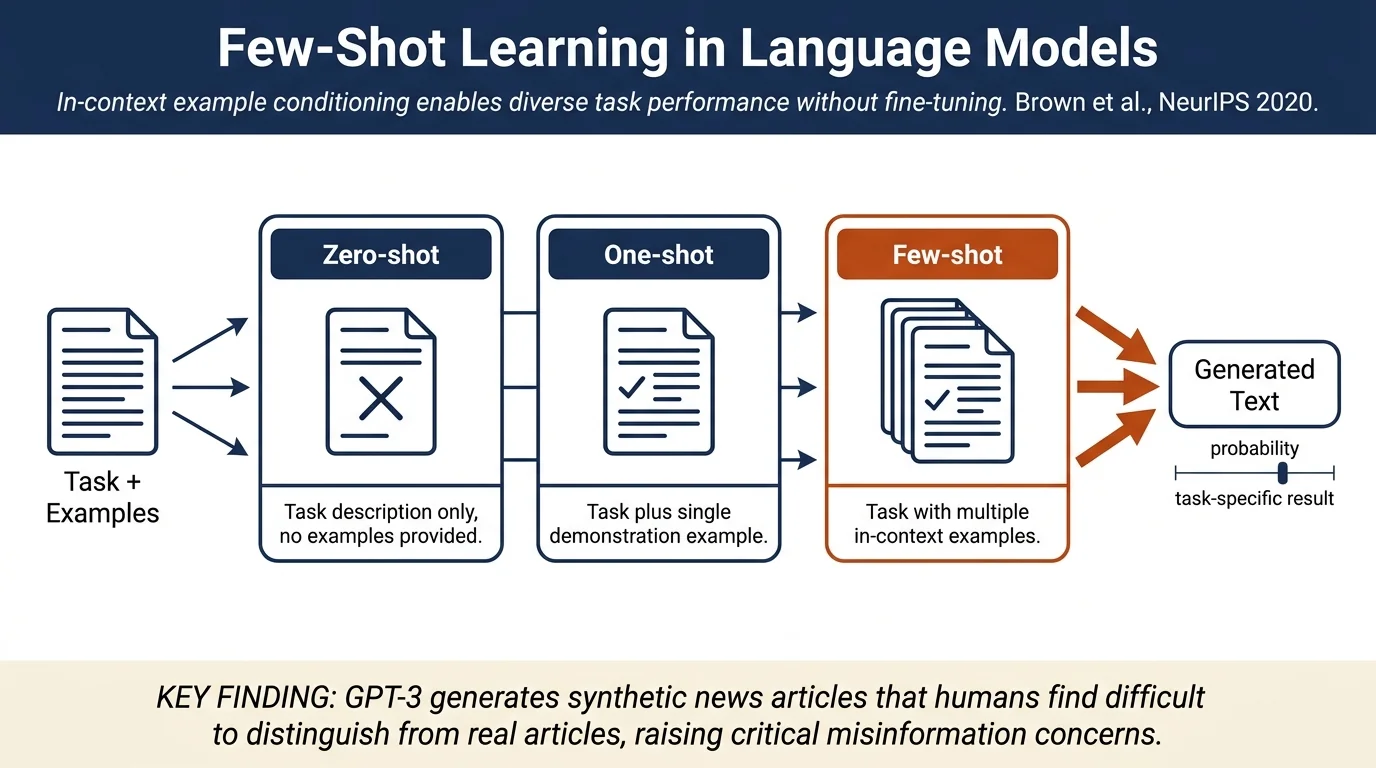
Language Models are Few-Shot LearnersThis landmark paper introduces GPT-3, a 175-billion-parameter autoregressive language model, and demonstrates that it achieves strong performance on diverse NLP tasks through in-context few-shot learning without any task-specific fine-tuning. The model exhibits remarkable scaling properties where larger models dramatically improve…
 Detection methodsLLMs & generative AI
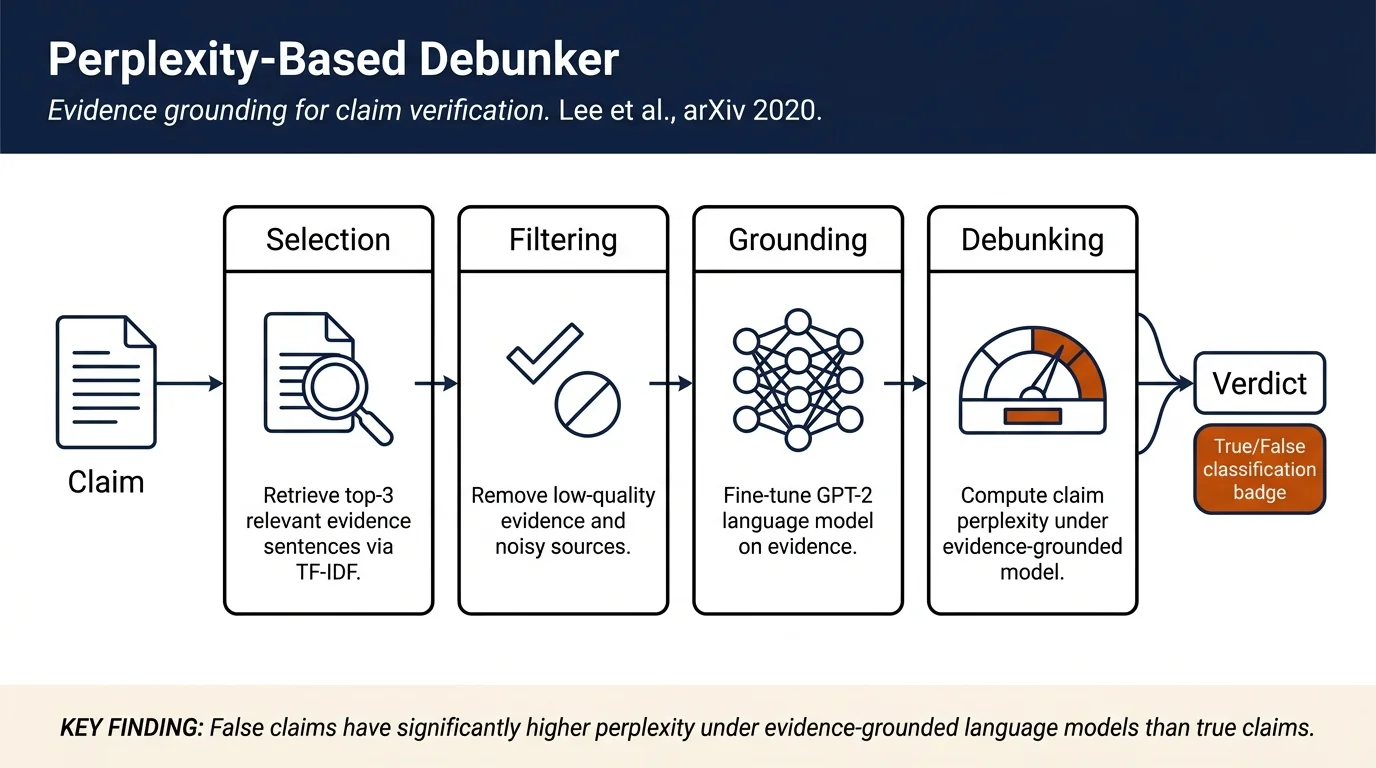
Misinformation Has High PerplexityFalse claims have measurably higher perplexity when scored by a language model primed with truthful evidence, while true claims have lower perplexity. The authors exploit this observation to build an unsupervised debunker that achieves 75% accuracy on scientific COVID-19 claims with minimal labeled data, releasing two new annotated test…
 Deepfakes & multimodalDetection methods
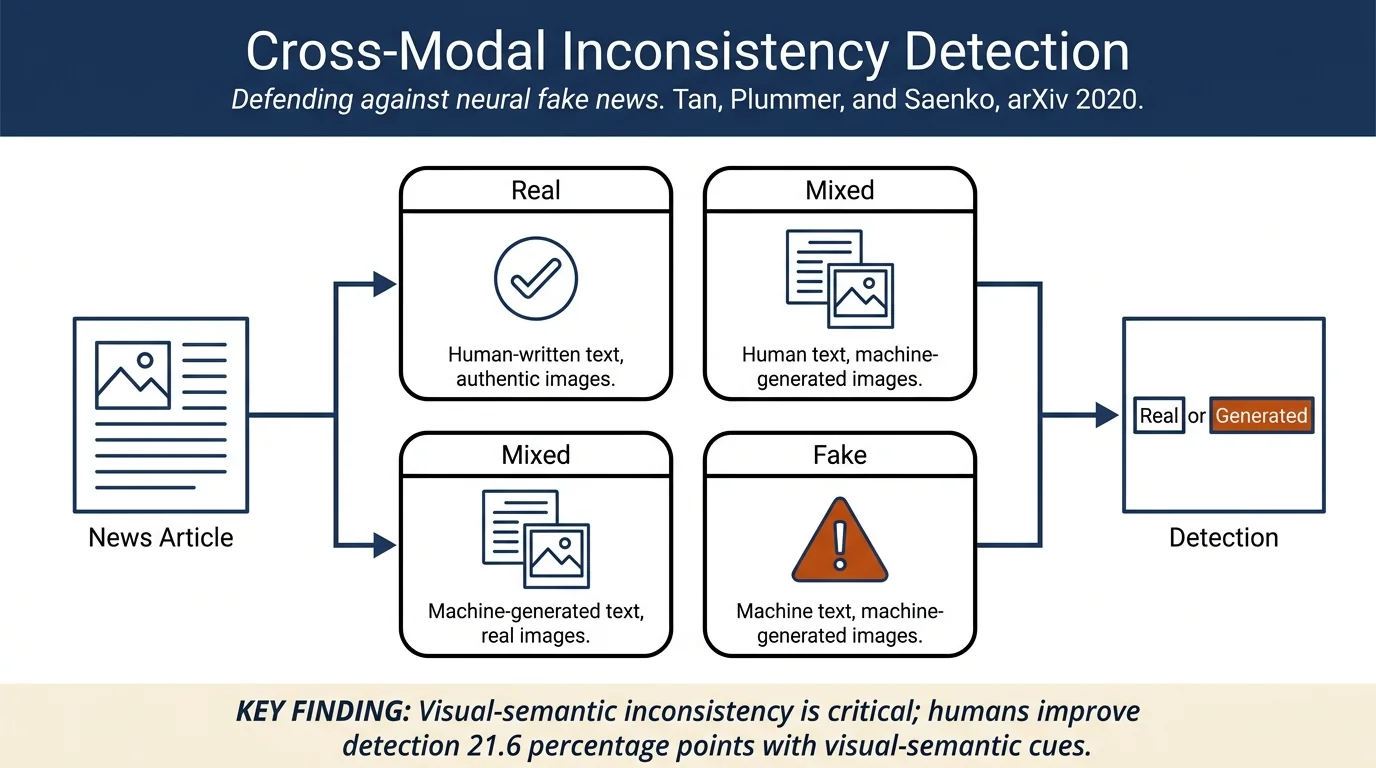
Detecting Cross-Modal Inconsistency to Defend Against Neural Fake NewsMachine-generated news articles with images and captions exploit visual-semantic inconsistencies that humans struggle to detect. This paper introduces DIDAN, a named entity-based approach to identify cross-modal semantic mismatches, and the NeuralNews dataset of 128K articles to benchmark multimodal fake news detection.
 Spread & networksDetection methods
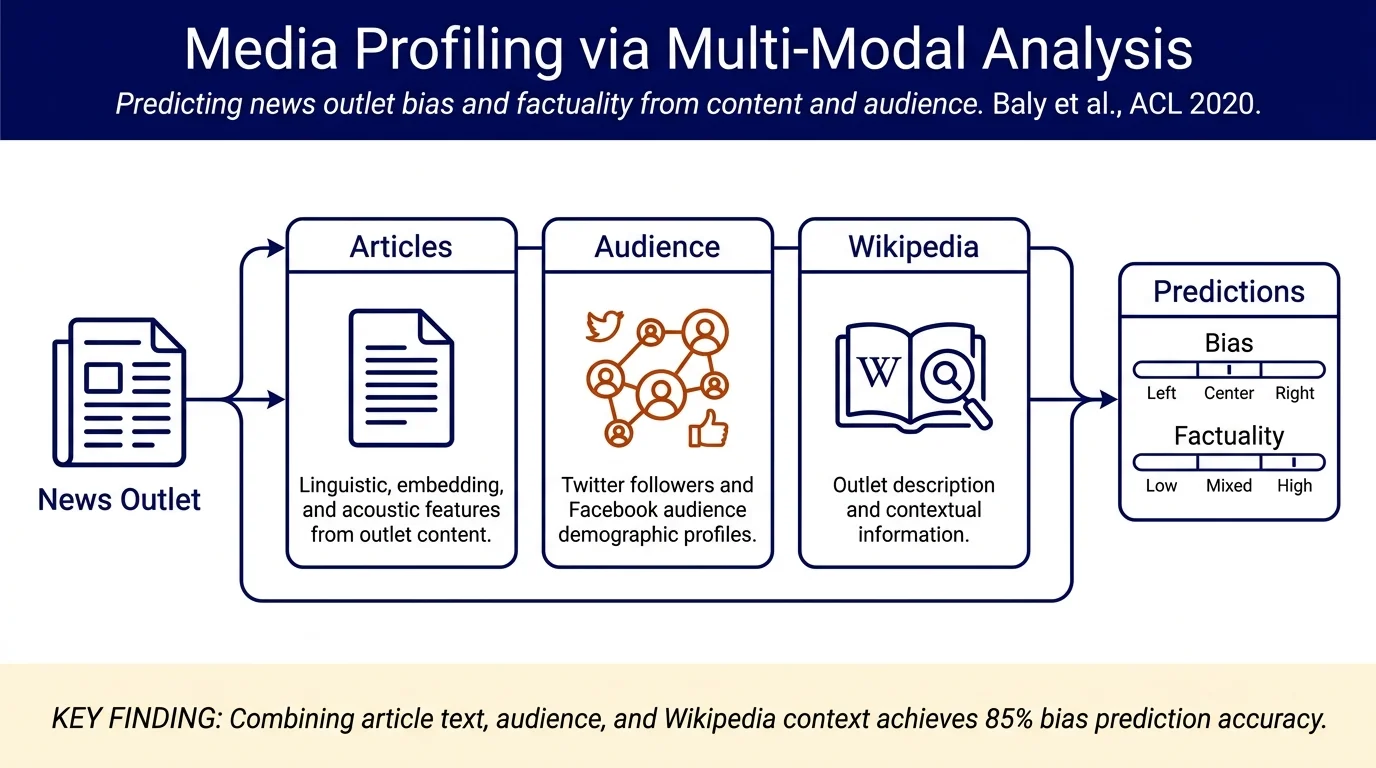
What Was Written vs. Who Read It: News Media Profiling Using Text Analysis and Social Media ContextThis paper predicts the political bias (left/center/right) and factuality (low/mixed/high) of news outlets by analyzing what articles they publish, who follows them on social media, and what Wikipedia says about them. The system achieves 85% accuracy on bias prediction by combining article text, YouTube video features, Twitter audience…
 Spread & networksDetection methods
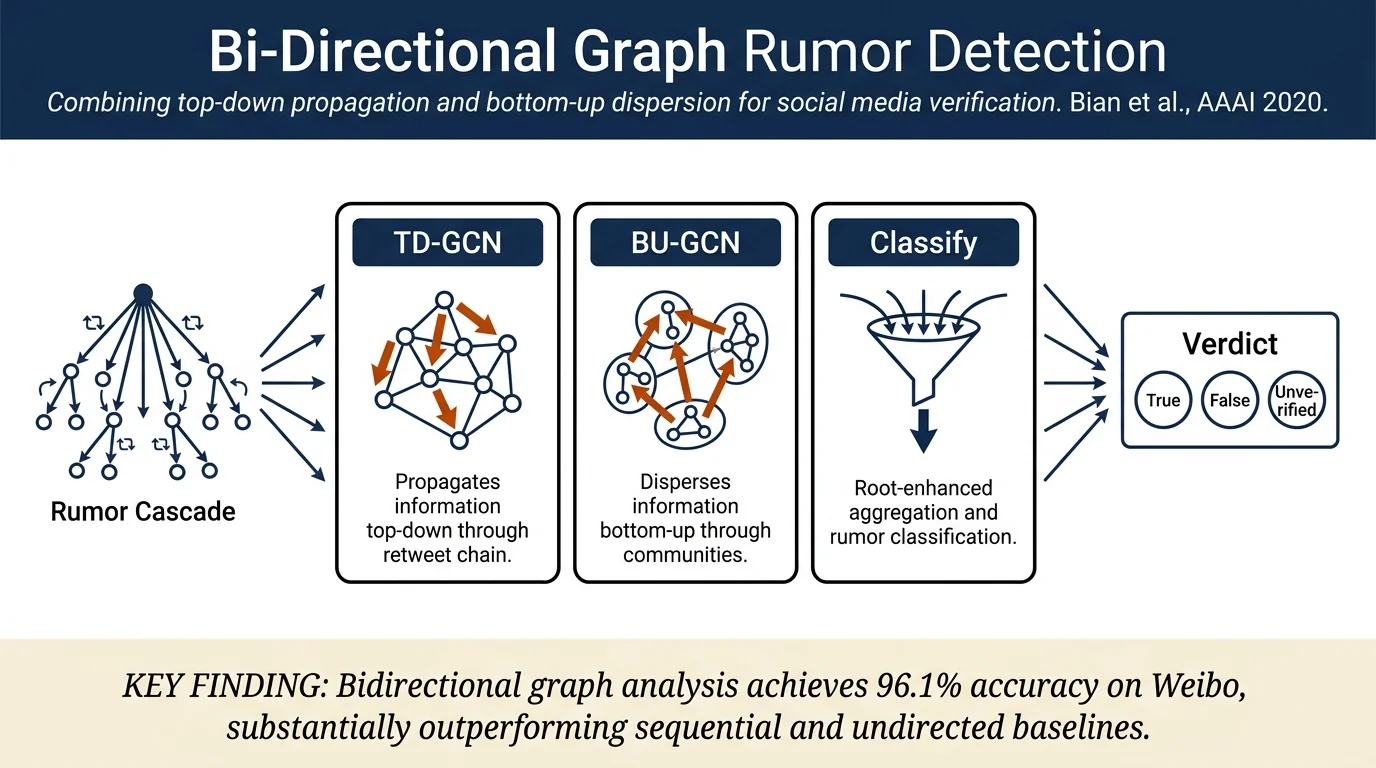
Rumor Detection on Social Media with Bi-Directional Graph Convolutional NetworksProposes Bi-GCN, a graph convolutional network approach for rumor detection that models both top-down propagation patterns (how rumors spread from source) and bottom-up dispersion patterns (how rumors diffuse within communities). By capturing both directional characteristics jointly and incorporating source post features at each layer,…
 Spread & networksPlatforms, policy & society
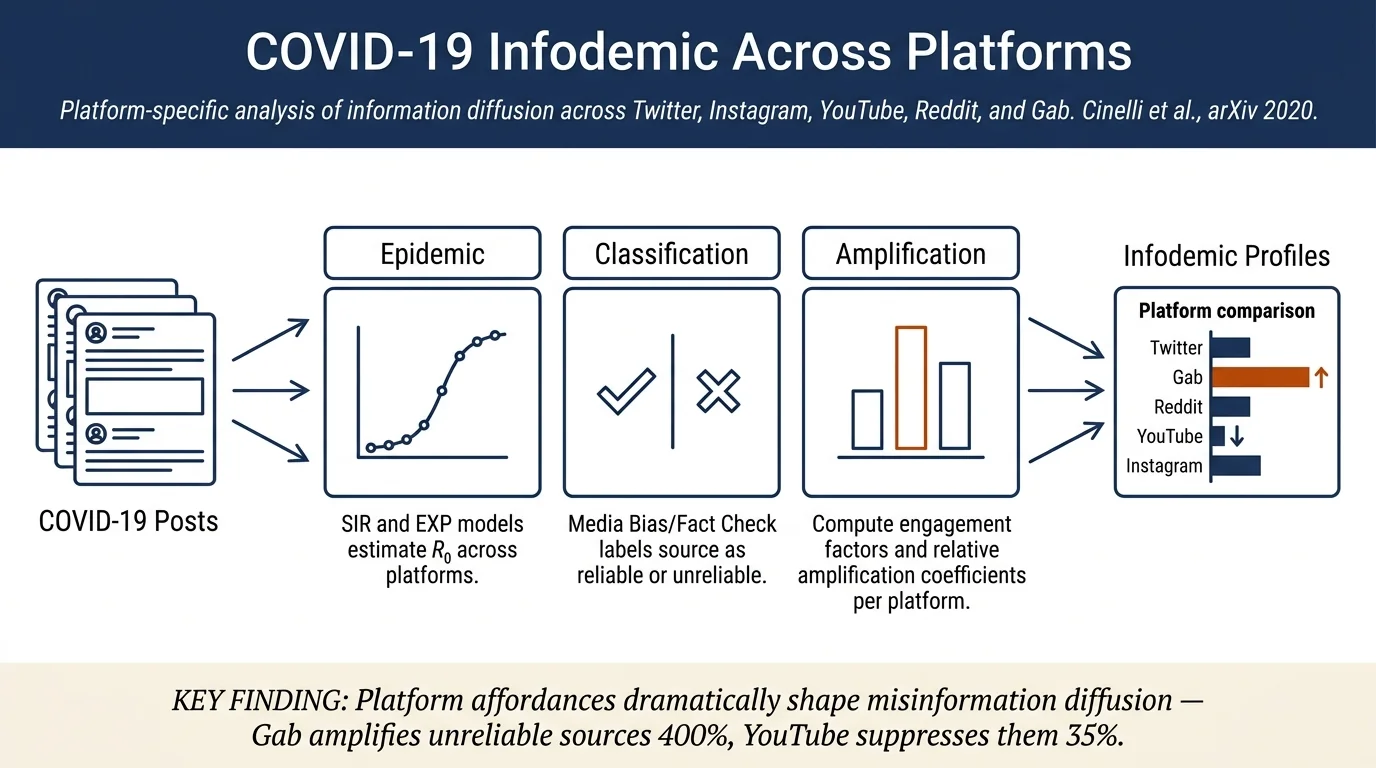
The COVID-19 Social Media InfodemicComparative analysis of COVID-19 information diffusion across five social media platforms (Twitter, Instagram, YouTube, Reddit, Gab) using epidemic models. All platforms exhibit infodemic characteristics (basic reproduction number R₀ 1), with platform-dependent differences in how misinformation spreads relative to reliable information.
 Bots & coordinated campaignsDatasets & evaluation
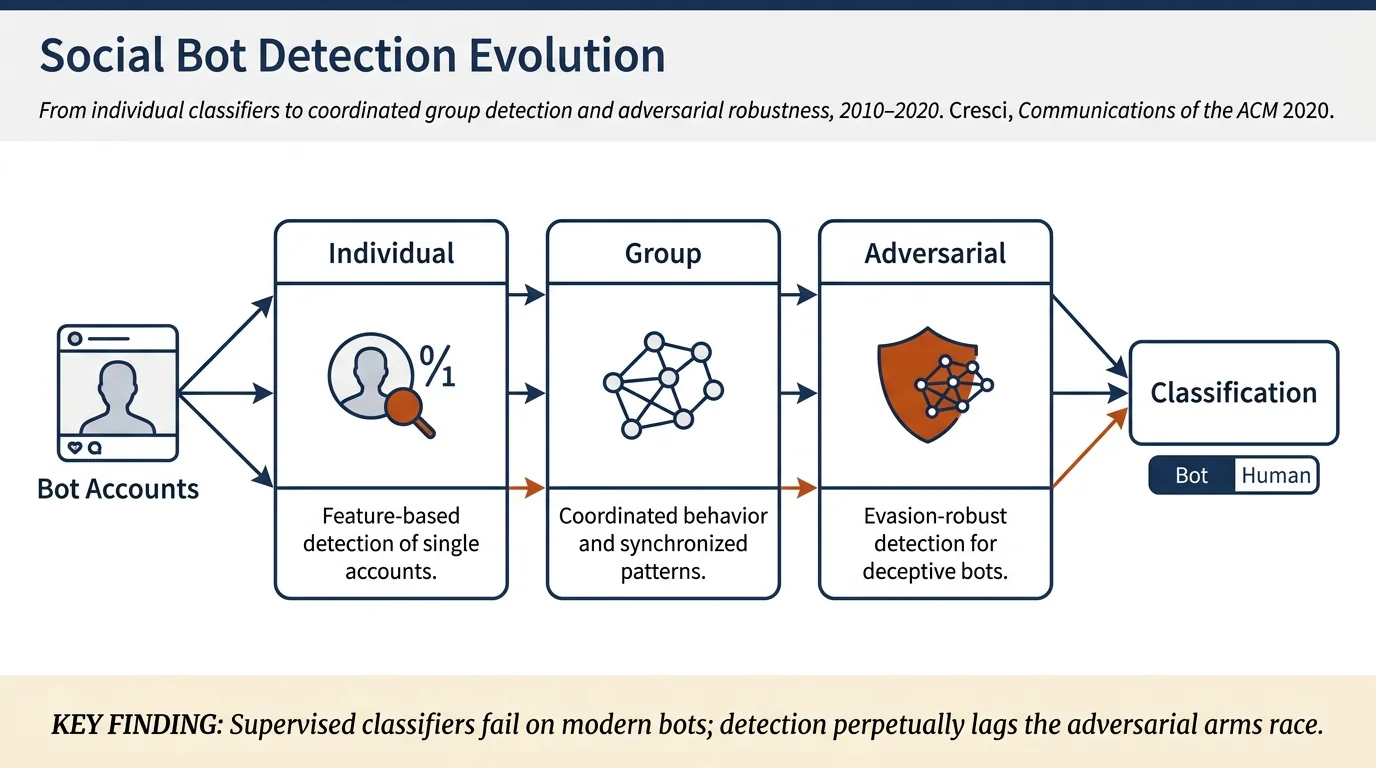
A Decade of Social Bot DetectionA comprehensive review of social bot detection research from 2010 to 2020, documenting the evolution from supervised individual-account detection to group-level approaches targeting coordinated inauthentic behavior. The paper traces the escalating "arms race" between bot developers and detection researchers, illustrates bots' documented…
 Datasets & evaluationSpread & networks
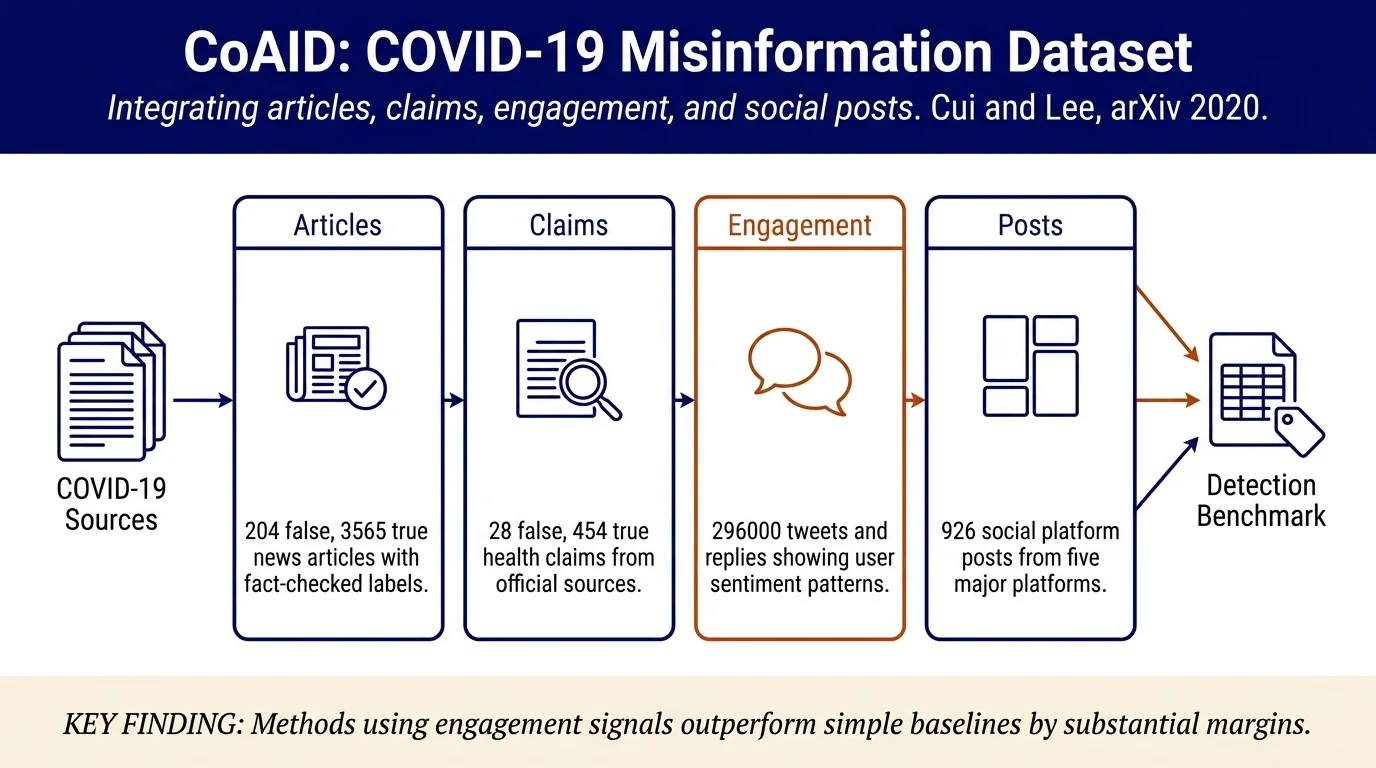
CoAID: COVID-19 Healthcare Misinformation DatasetCoAID is a benchmark dataset for COVID-19 healthcare misinformation detection comprising 4,251 news articles (204 fake, 3,565 true), 28 fake claims and 454 true claims, 296,000 user engagements from social platforms, and 926 social media posts with ground-truth labels. The dataset bridges text content, user engagement features, and…
 Deepfakes & multimodalDatasets & evaluation
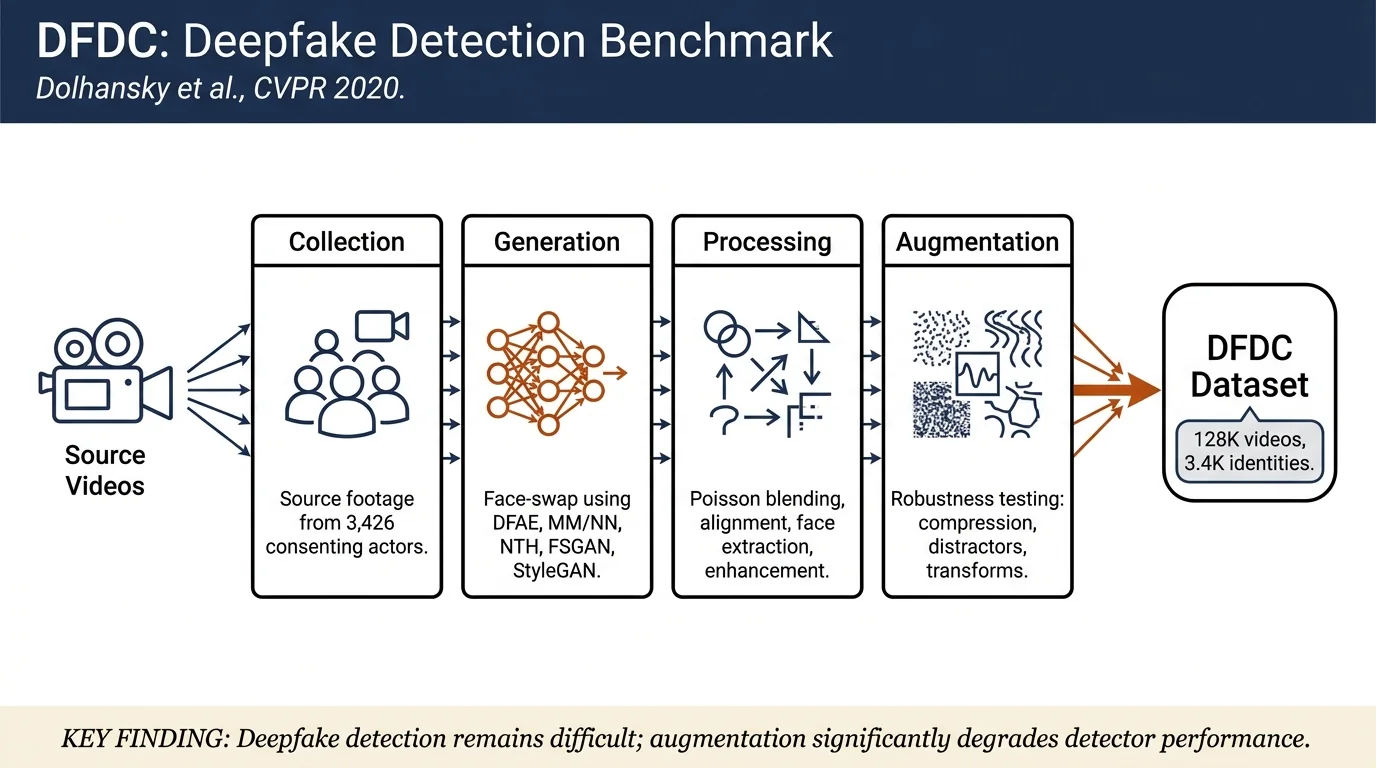
The DeepFake Detection Challenge (DFDC) DatasetThis paper introduces the DFDC Dataset, the largest publicly available deepfake detection benchmark at the time with 128,154 videos from 3,426 consented actors and 100,000 face-swapped clips. The dataset addresses ethical and methodological limitations of prior deepfake benchmarks by requiring explicit participant consent, including…