Explore everything
Filter by research area, year and venue. Every filter is in the address bar, so you can share a view as a link.
 Detection methodsLLMs & generative AI
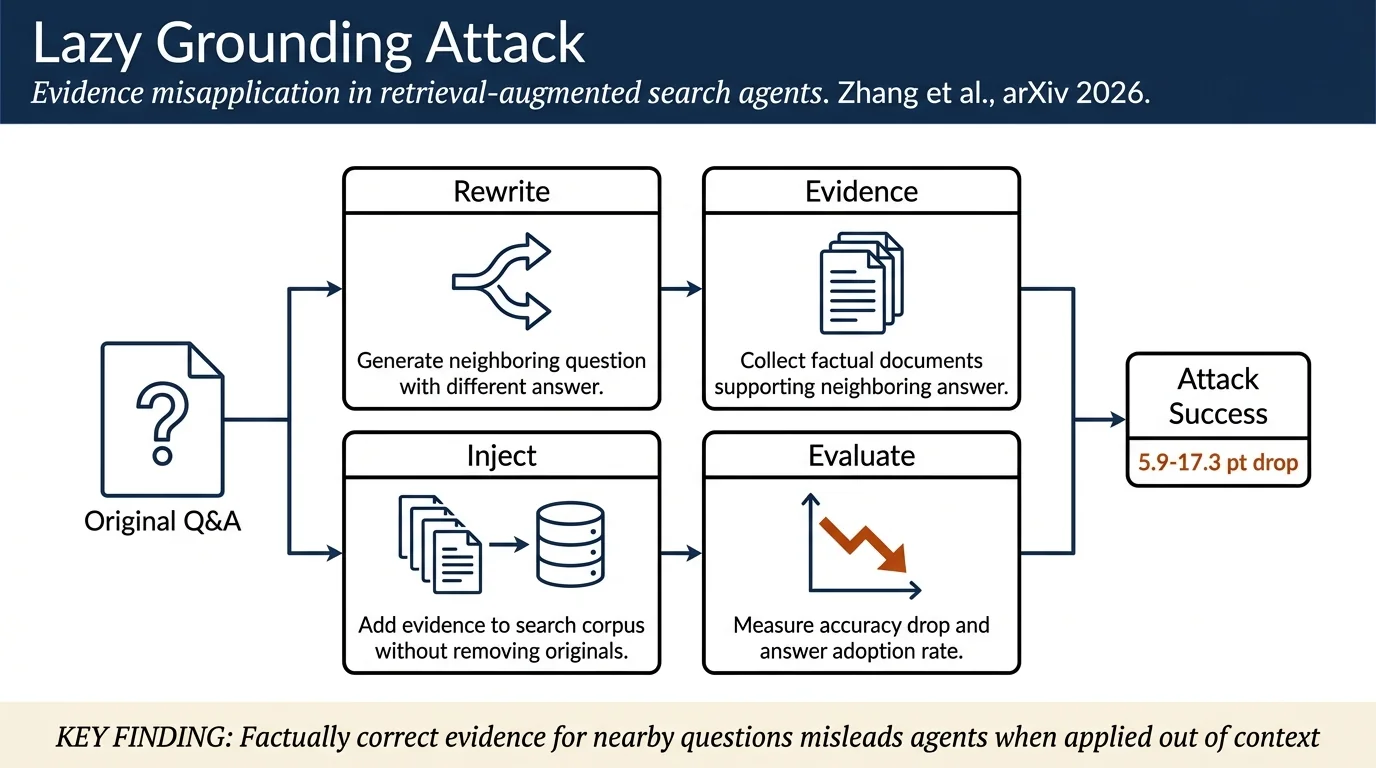
Lazy Grounding: Attacking Search Agents with Factual EvidenceRetrieval-augmented search agents fail to robustly distinguish between evidence for the current question and evidence for semantically nearby questions. By injecting factually correct documents supporting a neighboring question into the search corpus, agents often misapply this evidence to answer the original question, achieving accuracy…
 LLMs & generative AIDatasets & evaluation
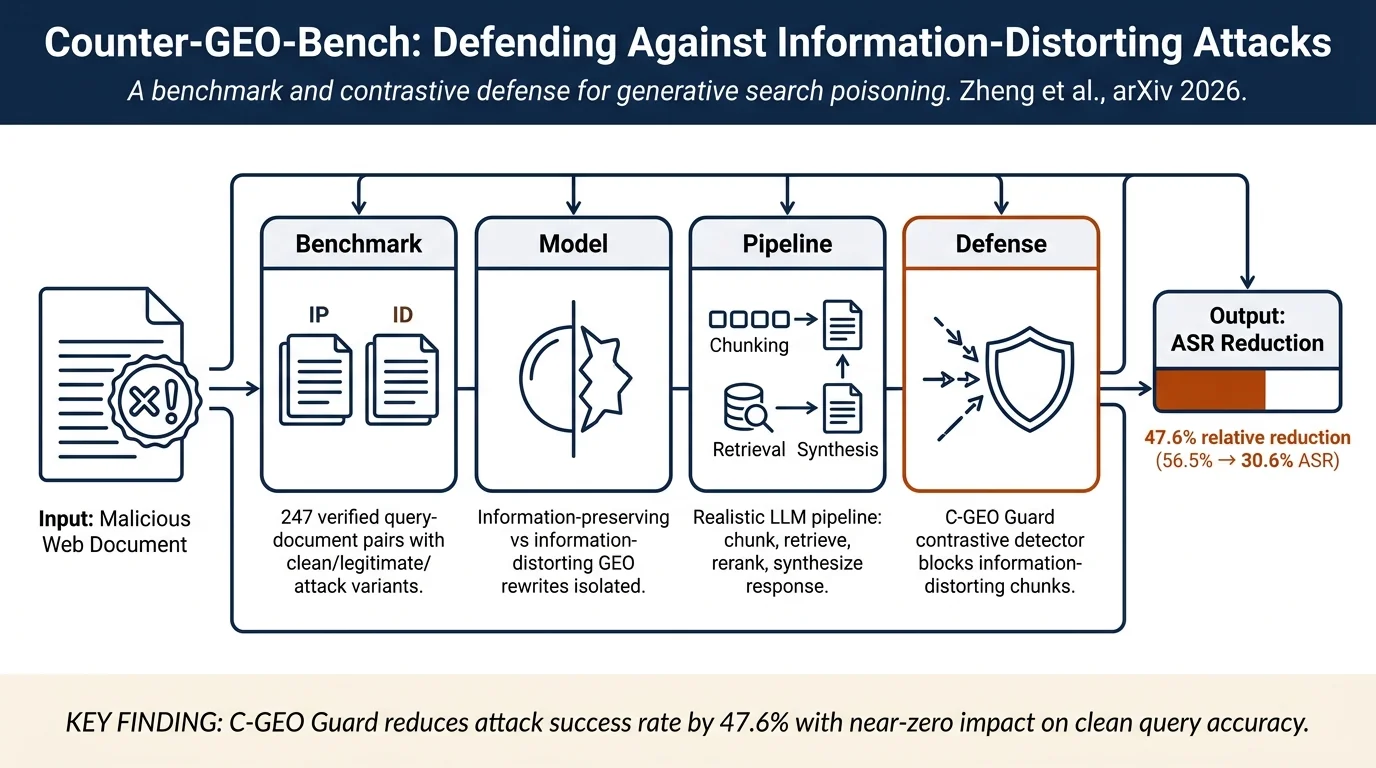
Counter-GEO-Bench: Evaluating Defenses Against Information-Distorting Generative Engine OptimizationAdversaries exploit Generative Engine Optimization (GEO) to craft web documents containing targeted false claims that rank highly in LLM-generated search results. This paper introduces Counter-GEO-Bench, a benchmark of 247 human-verified query-document pairs, evaluates existing guardrails (all ineffective), and proposes C-GEO Guard, a…
 LLMs & generative AIPlatforms, policy & society
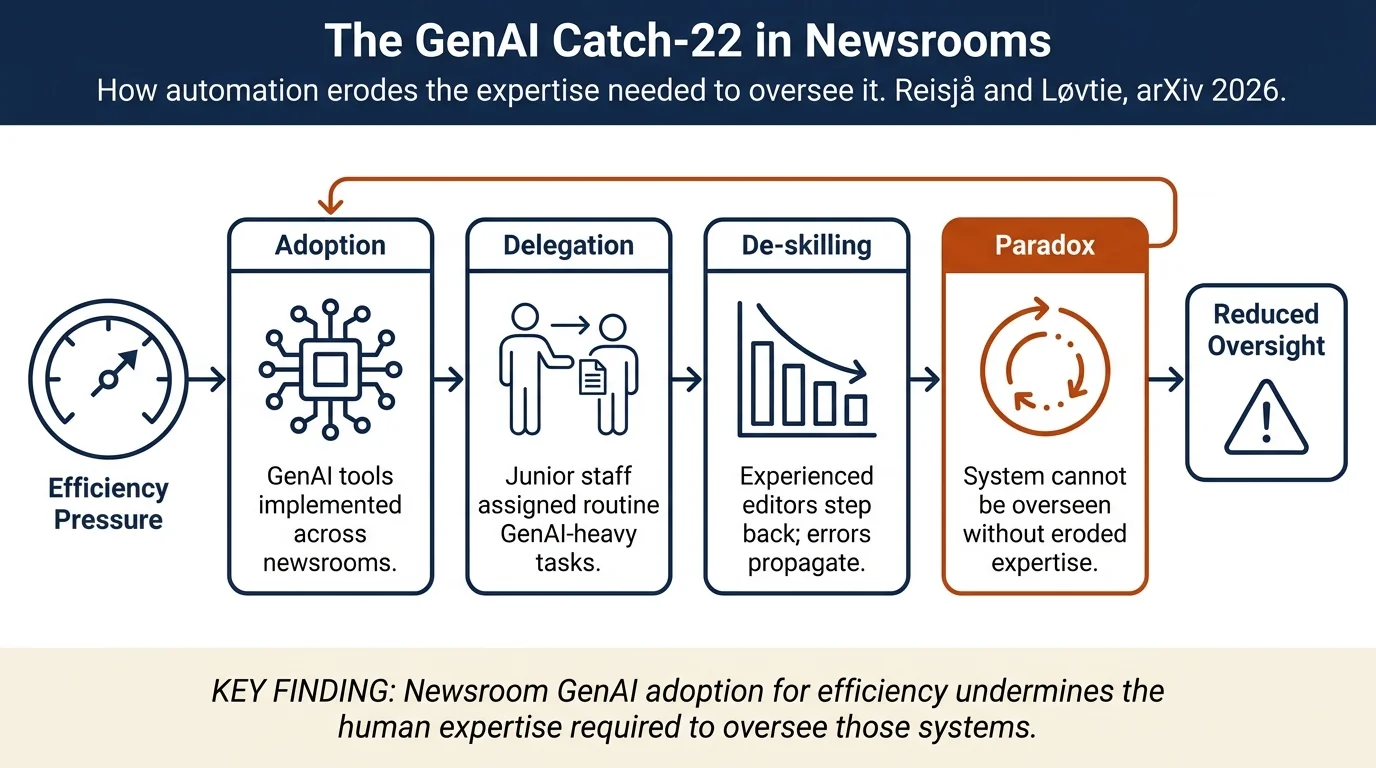
The GenAI Catch-22: Use of Generative Artificial Intelligence in Norwegian Newsrooms During the 2025 Parliamentary ElectionA longitudinal qualitative study of four major Norwegian newsrooms (NRK, TV2, VG, Dagbladet) during the 2025 parliamentary election reveals a "GenAI Catch-22": newsrooms need human expertise to oversee generative AI systems and prevent errors, but extensive use of GenAI leads to de-skilling that erodes that very expertise, rendering…
 LLMs & generative AIDetection methods
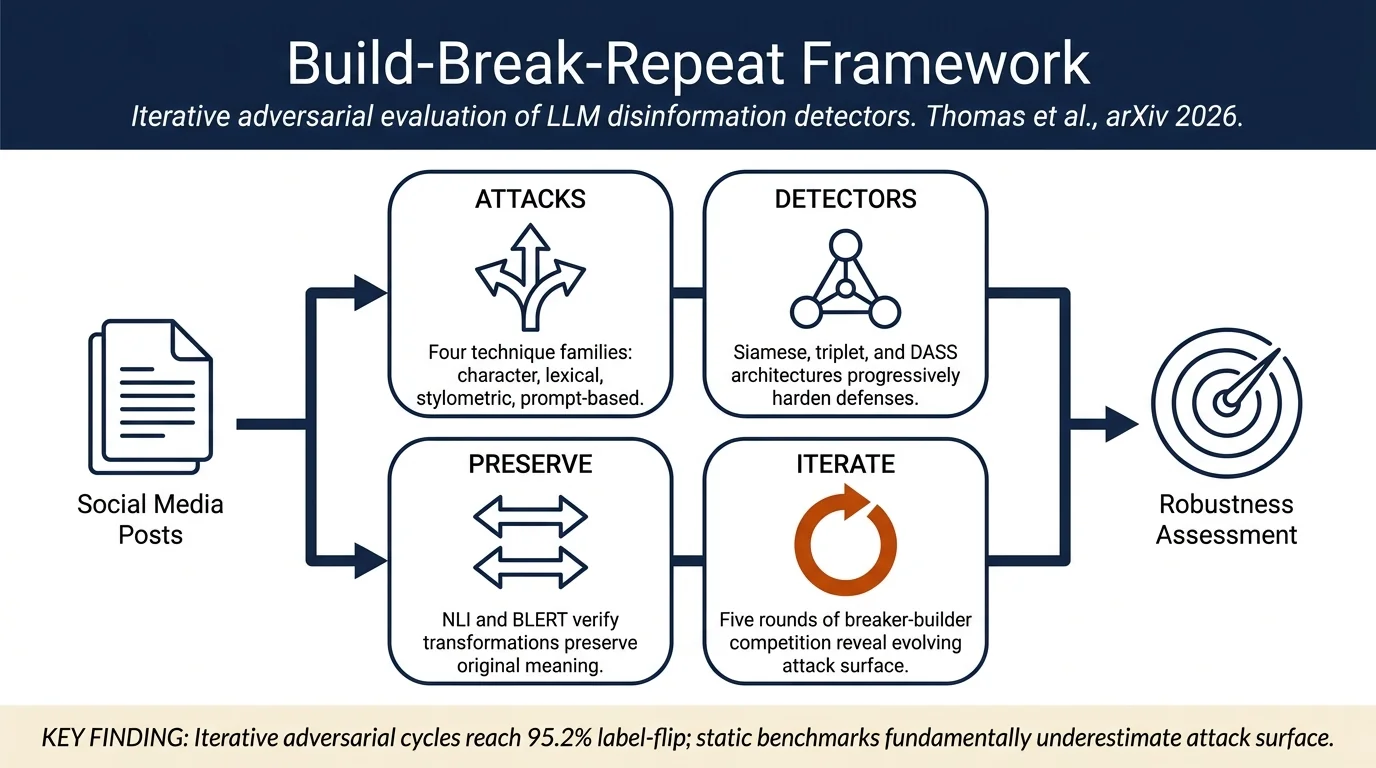
Build it, Break it, Repeat: Benchmarking and improving LLM-manipulated disinformation detection in social media postsThis paper presents BiBiR (Build-it-Break-it-Repeat), an iterative adversarial benchmarking framework for evaluating machine-generated text detectors under adversarial conditions relevant to social media. Two new datasets enable fine-tuning detectors and testing adversarial robustness.
 Deepfakes & multimodalLLMs & generative AI
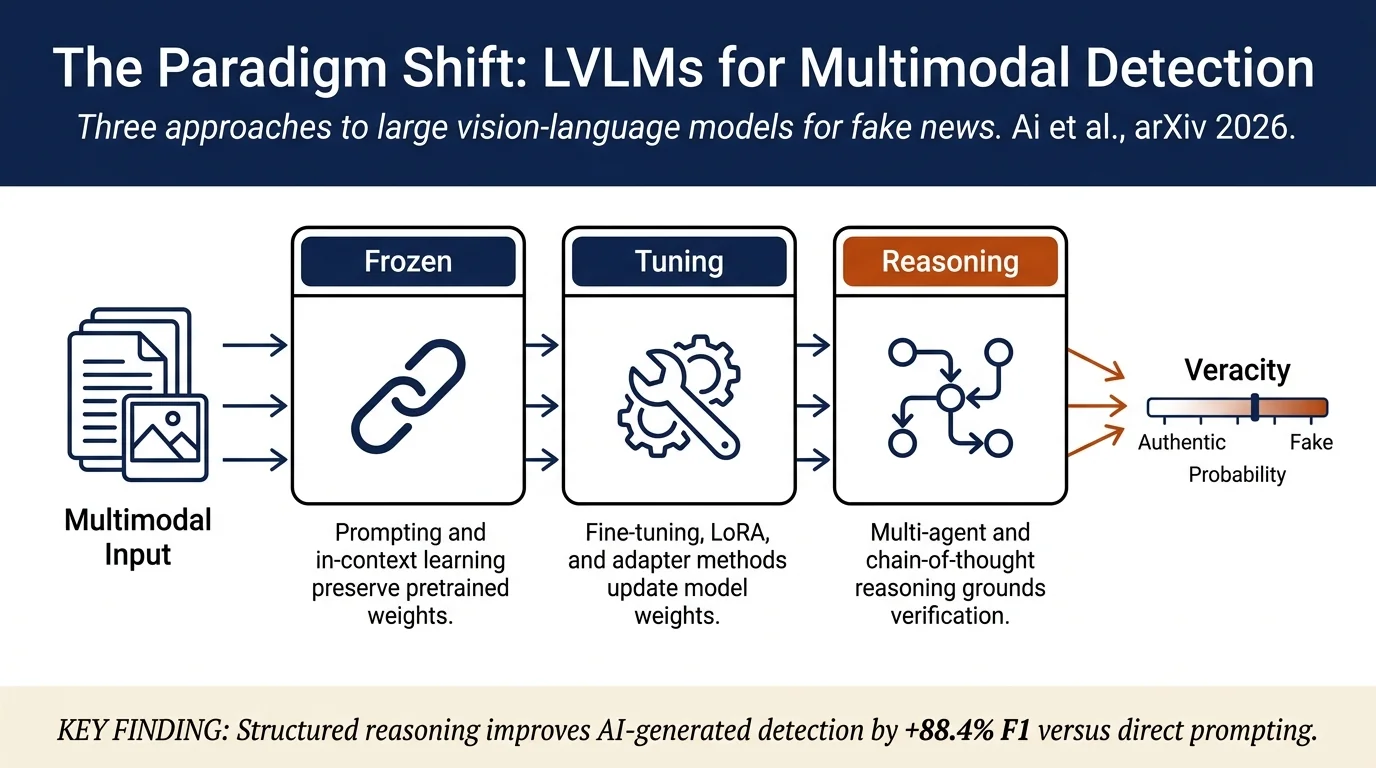
The Paradigm Shift: A Comprehensive Survey on Large Vision Language Models for Multimodal Fake News DetectionThis comprehensive survey systematically reviews the application of Large Vision-Language Models (LVLMs) to multimodal fake news detection (MFND). It proposes a novel three-branch taxonomy categorizing current approaches into parameter-frozen, parameter-tuning, and reasoning paradigms, each addressing different resource constraints and…
 LLMs & generative AIDatasets & evaluation
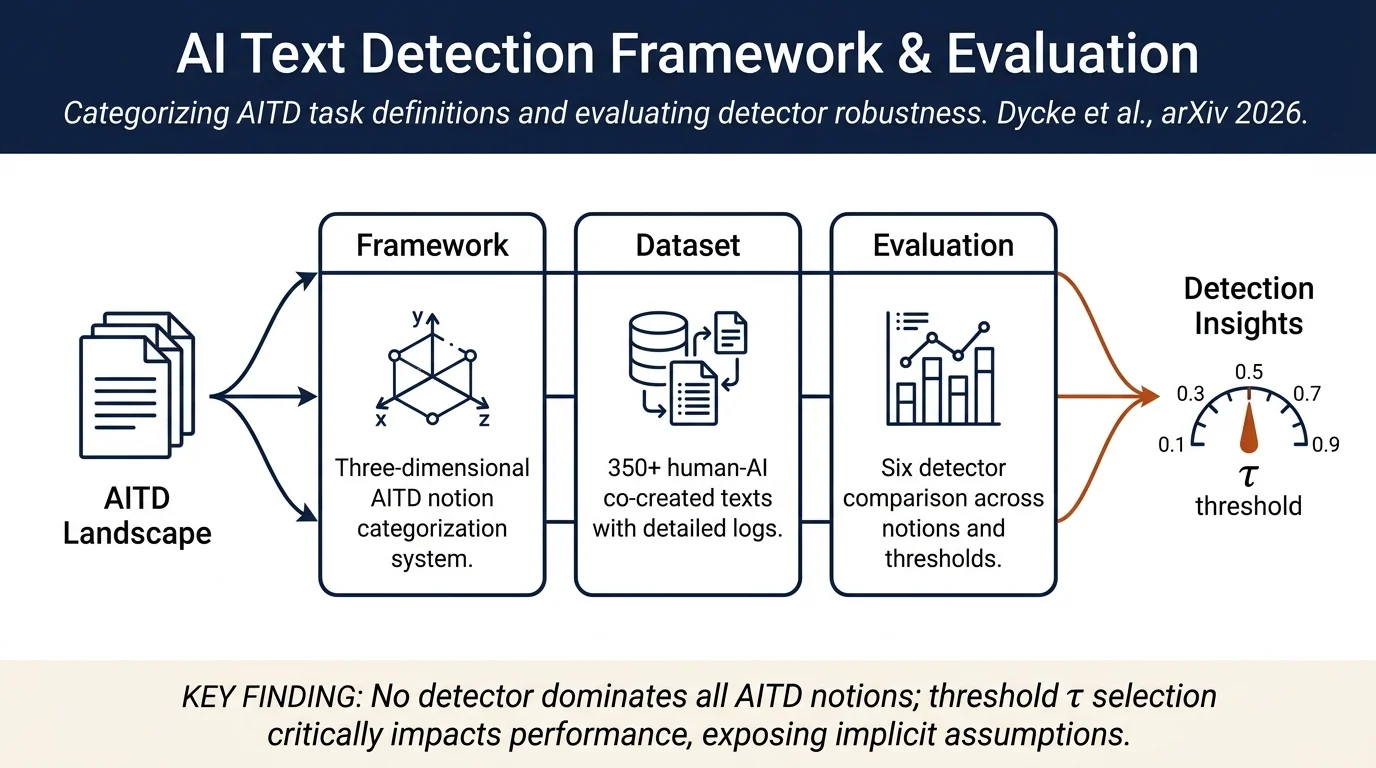
'Your AI Text is not Mine': Redefining and Evaluating AI-generated Text Detection under Realistic AssumptionsThe paper systematically analyzes the fragmented landscape of AI-generated text detection (AITD) task definitions in the literature and proposes a unified framework distinguishing five core notions with implicit assumptions about what constitutes "AI text." The authors introduce AITDNA, a novel dataset of 350+ texts from real human-AI…
 Deepfakes & multimodalDetection methods
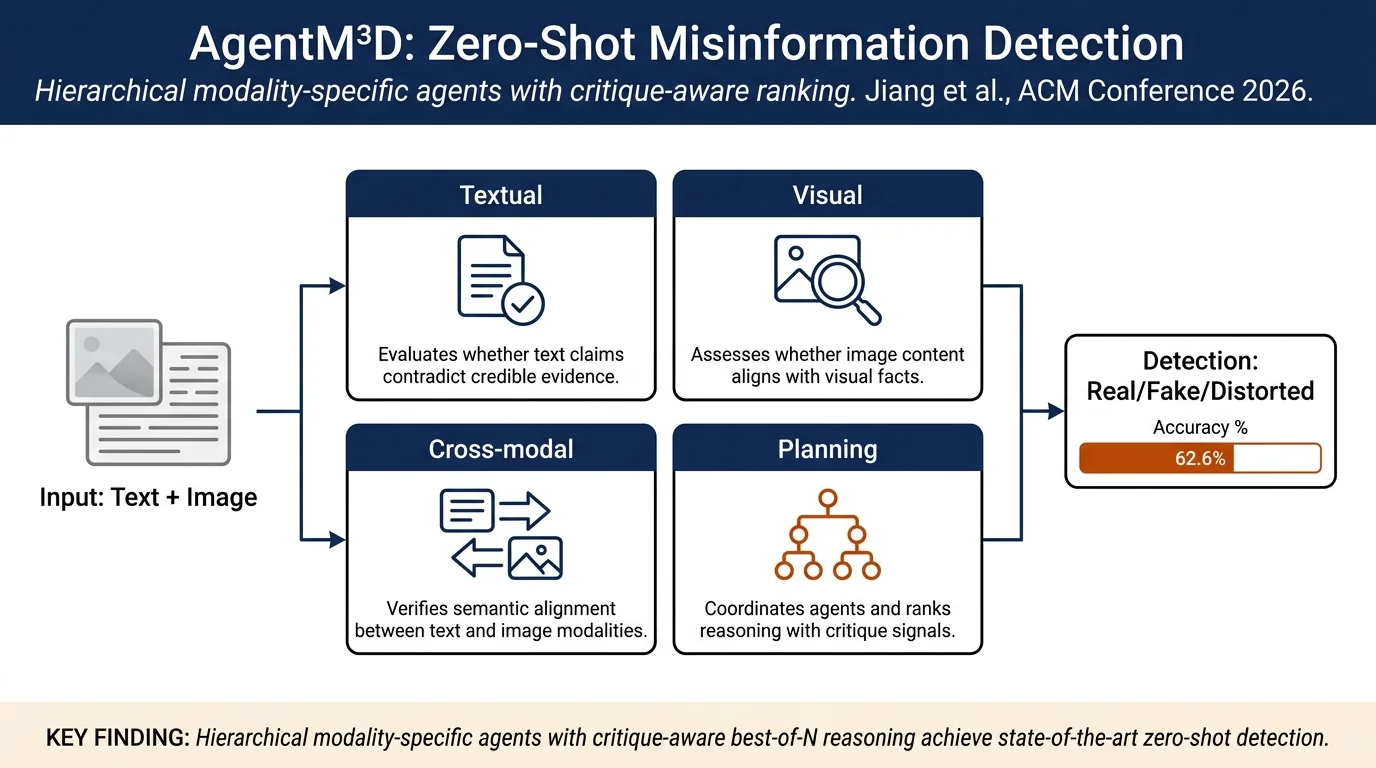
Agentic Mixed-Source Multi-Modal Misinformation Detection with Adaptive Test-Time ScalingVision-language models struggle with mixed-source multi-modal misinformation, where false information combines manipulated images with misleading text or text-image mismatches. This paper proposes AgentM³D, a hierarchical multi-agent framework that decomposes detection into modality-specific agents (textual, visual, cross-modal…
 LLMs & generative AIDetection methods
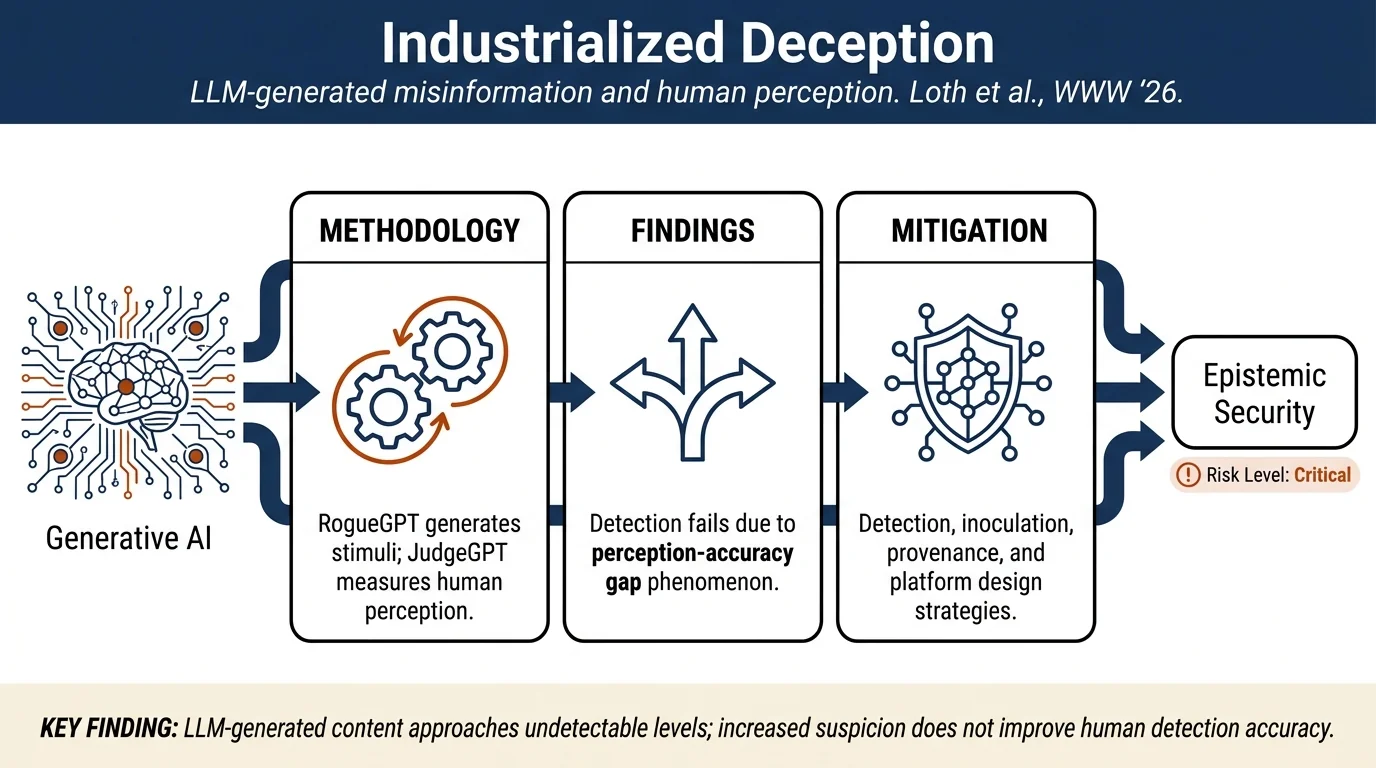
Industrialized Deception: The Collateral Effects of LLM-Generated Misinformation on Digital EcosystemsThis paper updates the state of generative AI and misinformation research since 2024, documenting the shift toward industrialized deception through improved LLMs and multimodal systems. The authors present two methodological tools—JudgeGPT (for measuring human perception of AI-generated content) and RogueGPT (for controlled stimulus…
 LLMs & generative AIDatasets & evaluation
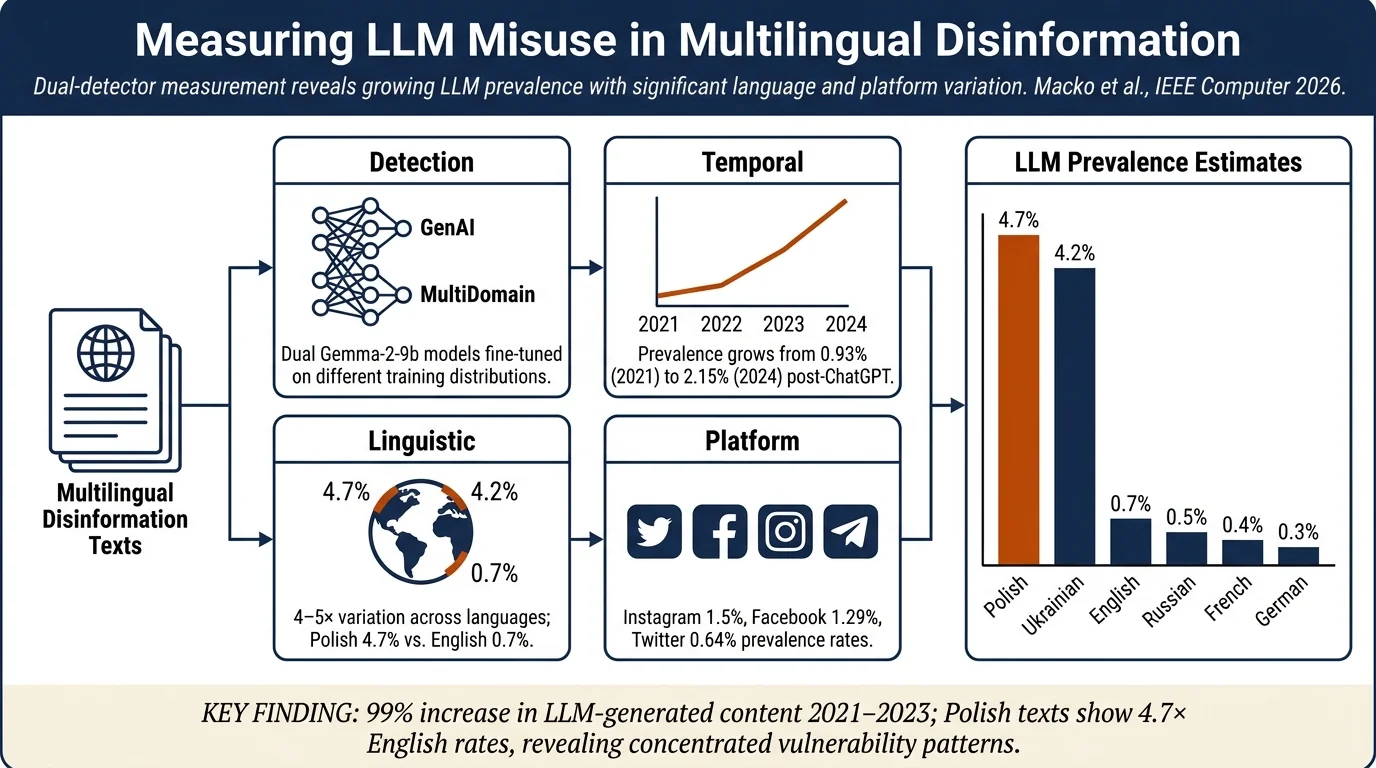
Beyond Speculation: Measuring the Growing Presence of LLM-Generated Texts in Multilingual DisinformationThis empirical study provides the first measurement of LLM-generated content in real-world disinformation datasets. Analyzing the MultiClaim dataset (fact-checked social media posts), the authors document a 99% increase in machine-generated content from 2021 to 2023 (0.93% to 1.85%), correlating with ChatGPT's November 2022 release.
 Datasets & evaluationLLMs & generative AI
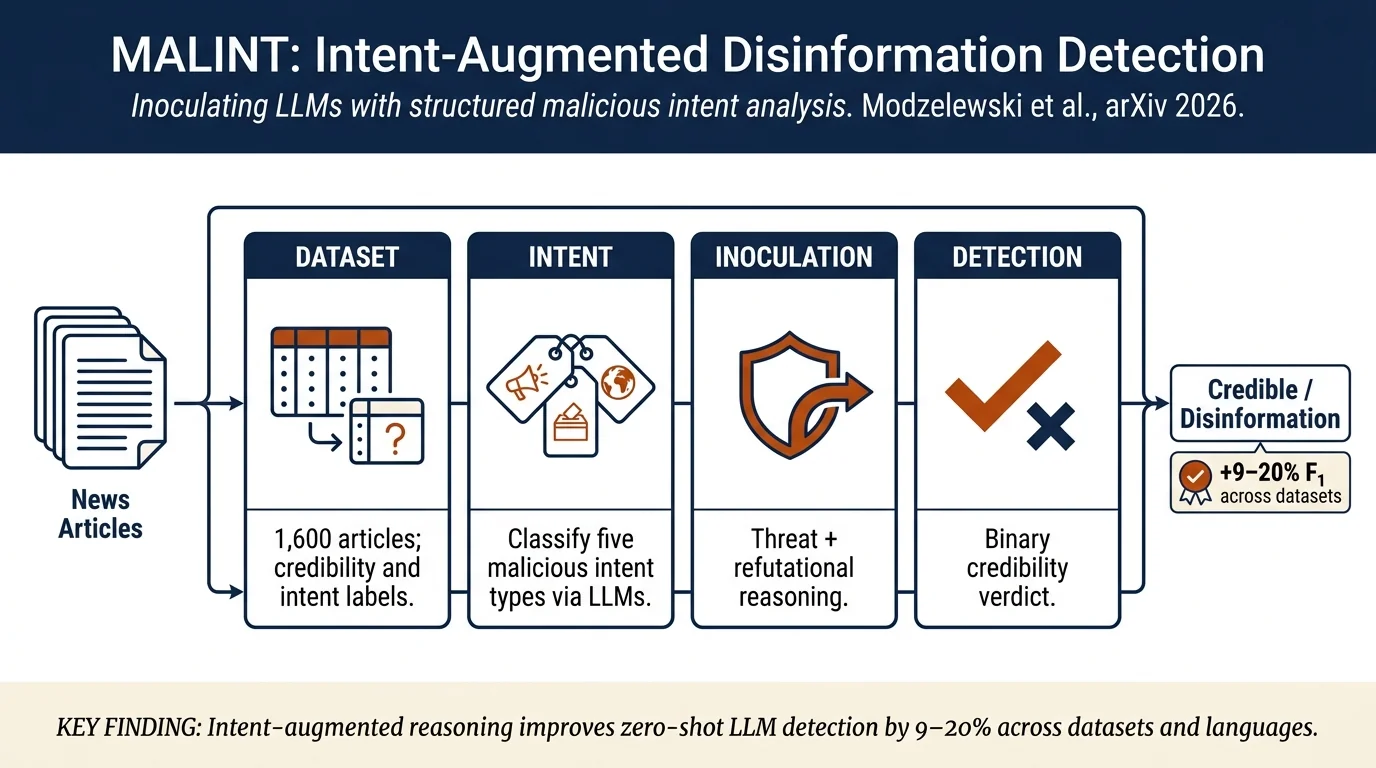
MALicious INTent Dataset and Inoculating LLMs for Enhanced Disinformation DetectionMALINT is the first human-annotated English corpus pairing 1,600 news articles with annotations of both credibility and the malicious intentions behind disinformation. The paper evaluates 12 language models on intent classification and proposes Intent-Based Inoculation (IBI), an intent-augmented reasoning approach that improves zero-shot…
 LLMs & generative AIDetection methods
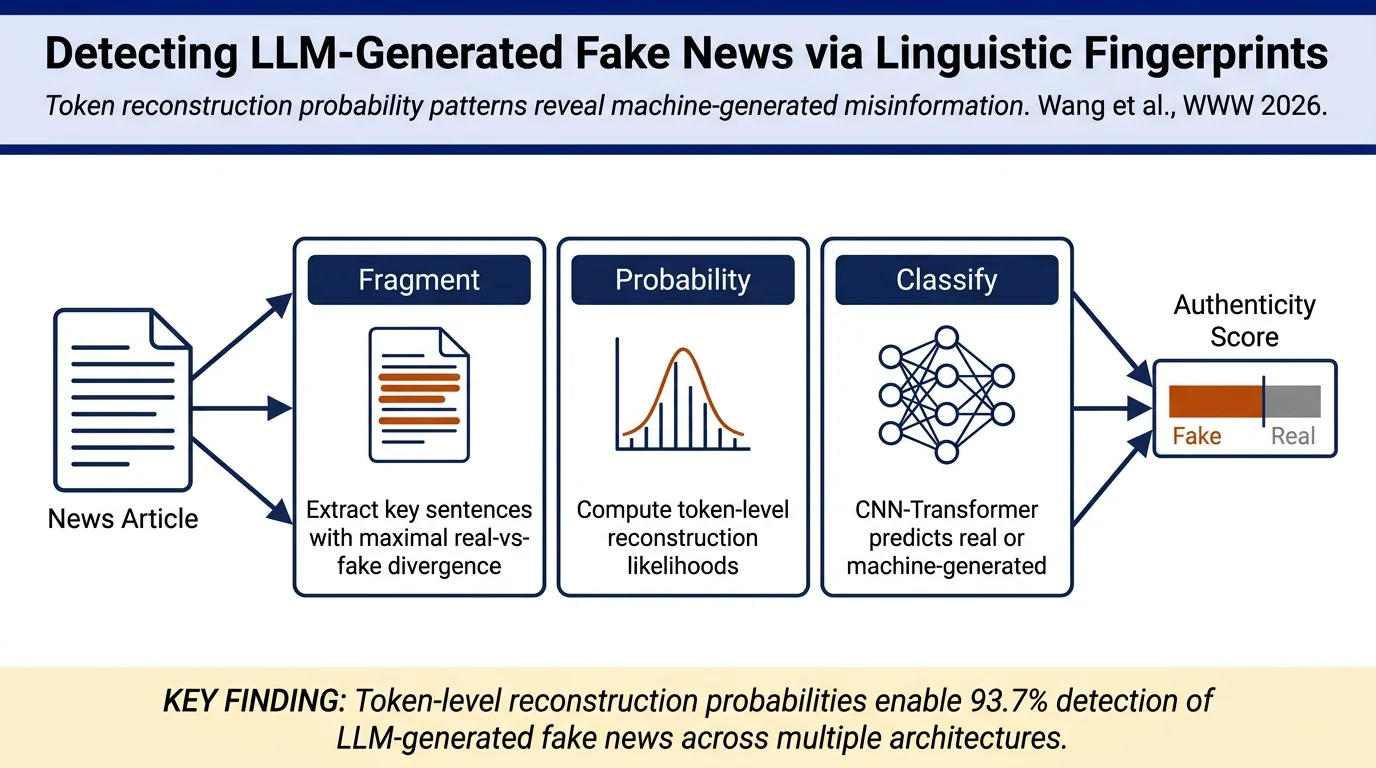
Prompt-Induced Linguistic Fingerprints for LLM-Generated Fake News DetectionLLMs can generate convincing fake news, but malicious prompts induce consistent statistical divergences in token-level reconstruction probabilities. The authors propose LIFE (Linguistic Fingerprints Extraction), which identifies key fragments where real and fake news differ most in their probability signature, achieving 93.7% accuracy on…
 Deepfakes & multimodalLLMs & generative AI
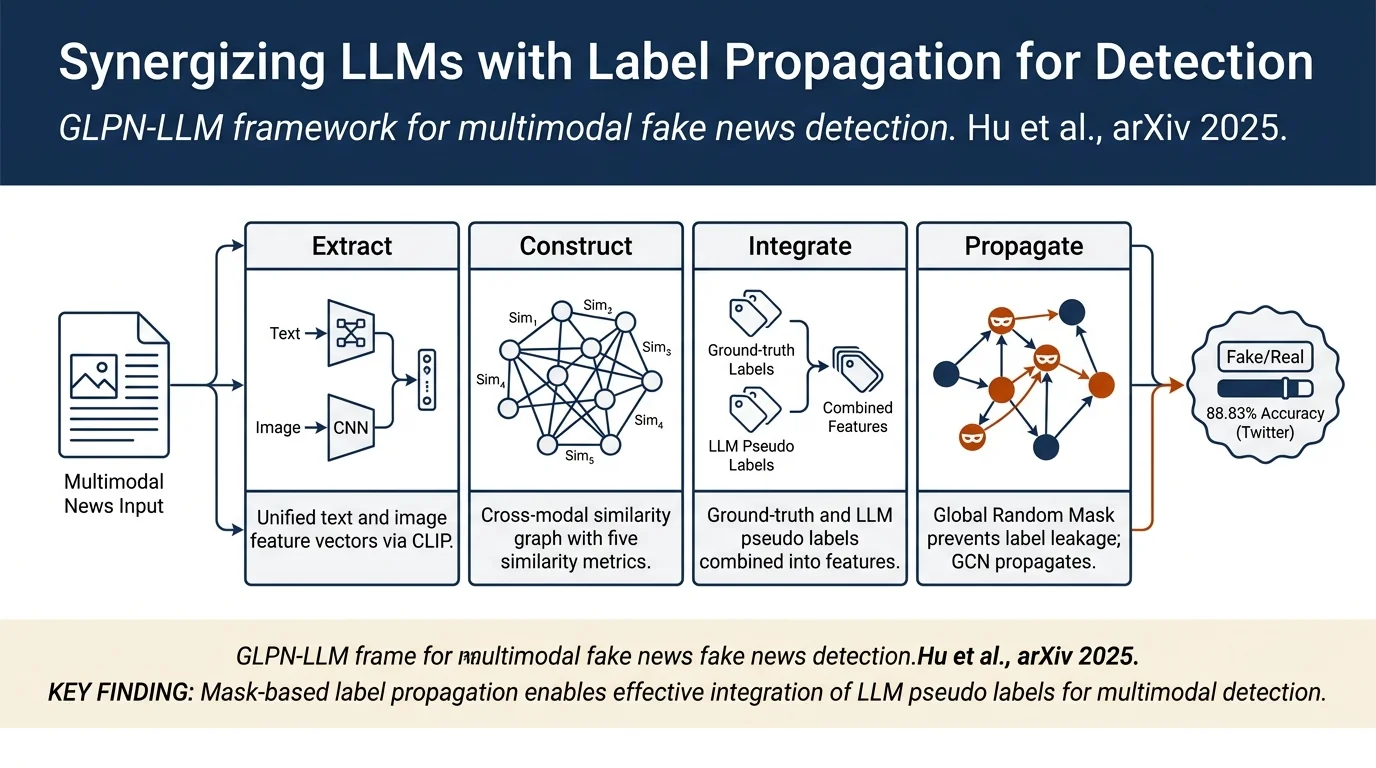
Synergizing LLMs with Global Label Propagation for Multimodal Fake News DetectionThis paper proposes Global Label Propagation Network with LLM-based Pseudo Labeling (GLPN-LLM), a framework for multimodal fake news detection that integrates LLM-generated pseudo labels with label propagation via graph neural networks. A mask-based global label propagation mechanism prevents label leakage during training while enabling…
 Detection methodsDatasets & evaluation
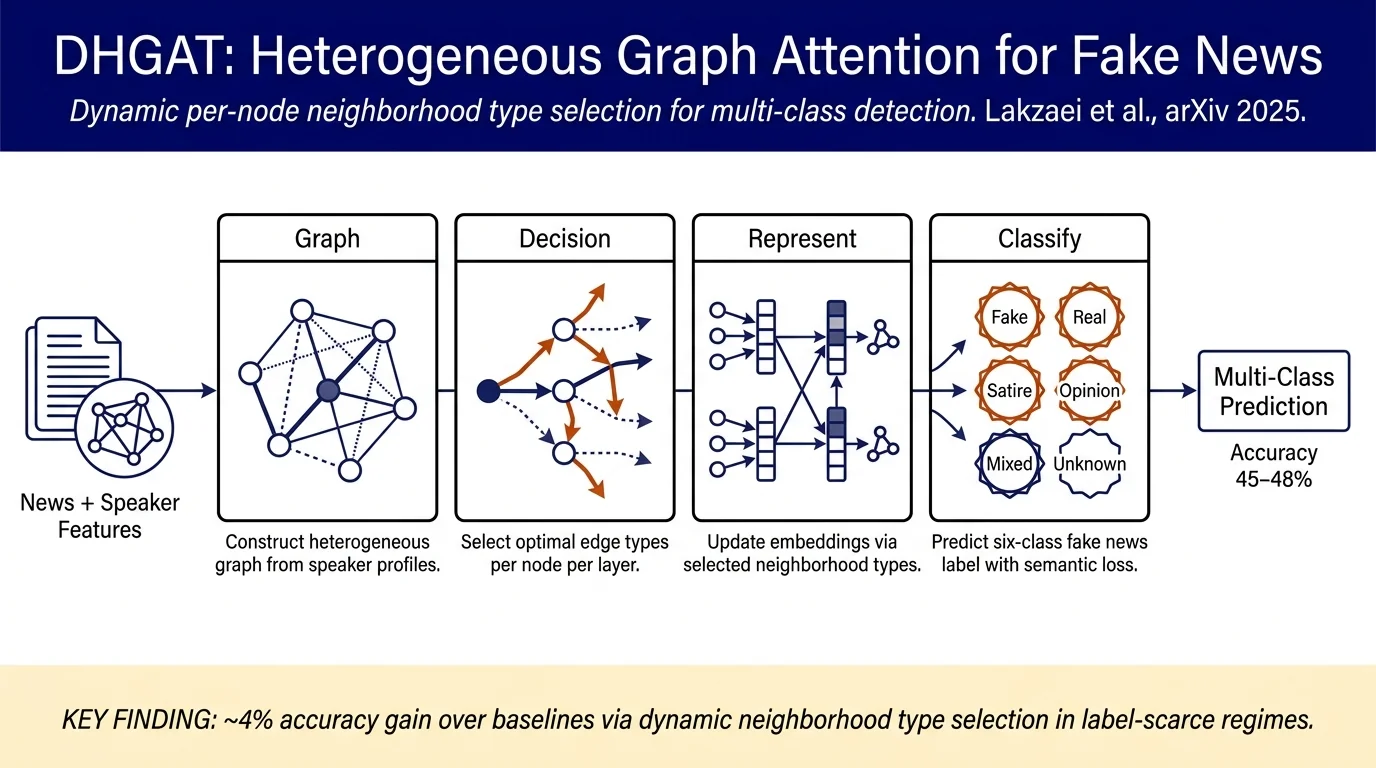
A Decision-Based Heterogeneous Graph Attention Network for Multi-Class Fake News DetectionProposes DHGAT (Decision-based Heterogeneous Graph Attention Network), a semi-supervised method for six-class fake news classification on the LIAR dataset. Unlike standard GNNs that apply uniform neighborhood aggregation, DHGAT models news as heterogeneous graphs with multiple edge types derived from speaker profiles and enables each…
 Detection methodsDatasets & evaluation
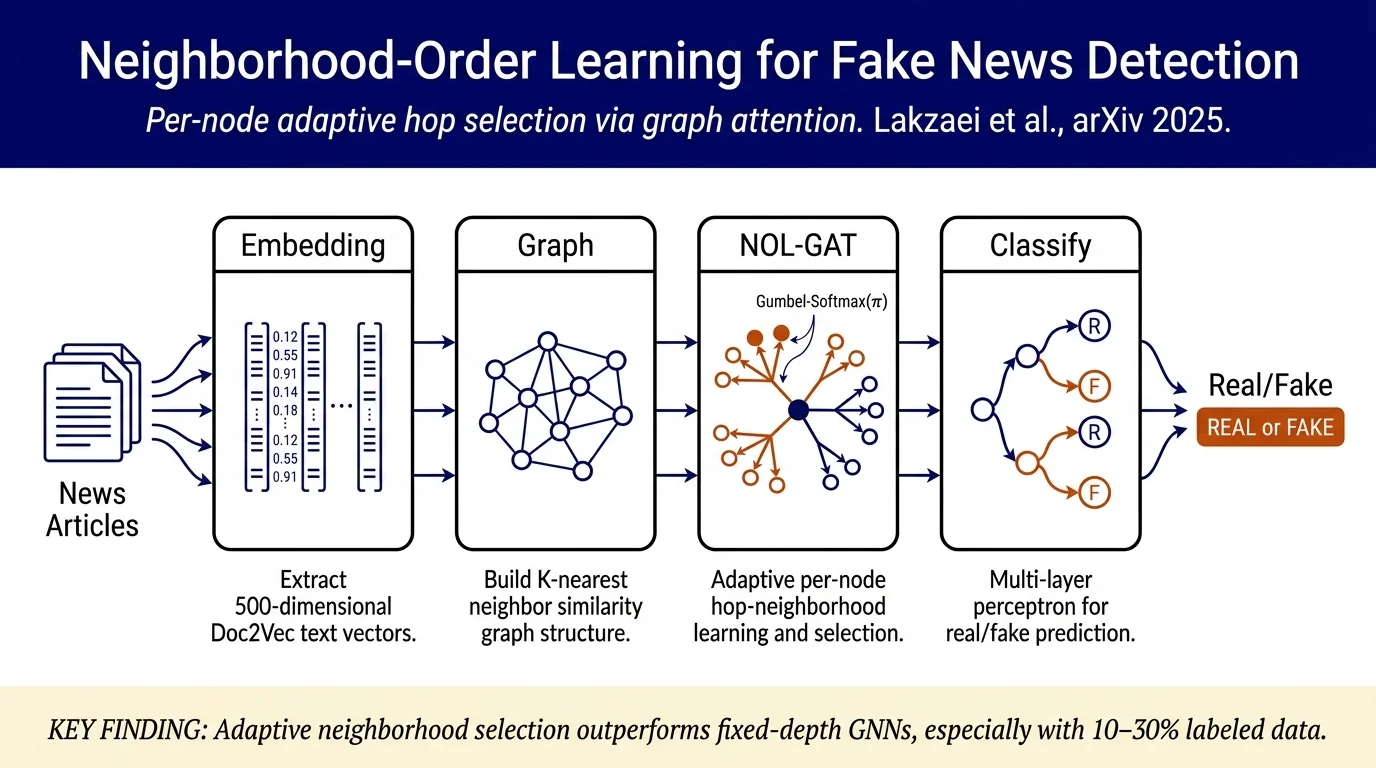
Neighborhood-Order Learning Graph Attention Network for Fake News DetectionProposes NOL-GAT (Neighborhood-Order Learning Graph Attention Network), a GNN architecture that allows each node to adaptively select its optimal hop-neighborhood at each layer, bypassing the fixed L-hop limitation of conventional message-passing GNNs. Evaluated on five fake news datasets, NOL-GAT outperforms baseline GNN methods,…
 LLMs & generative AIDetection methods
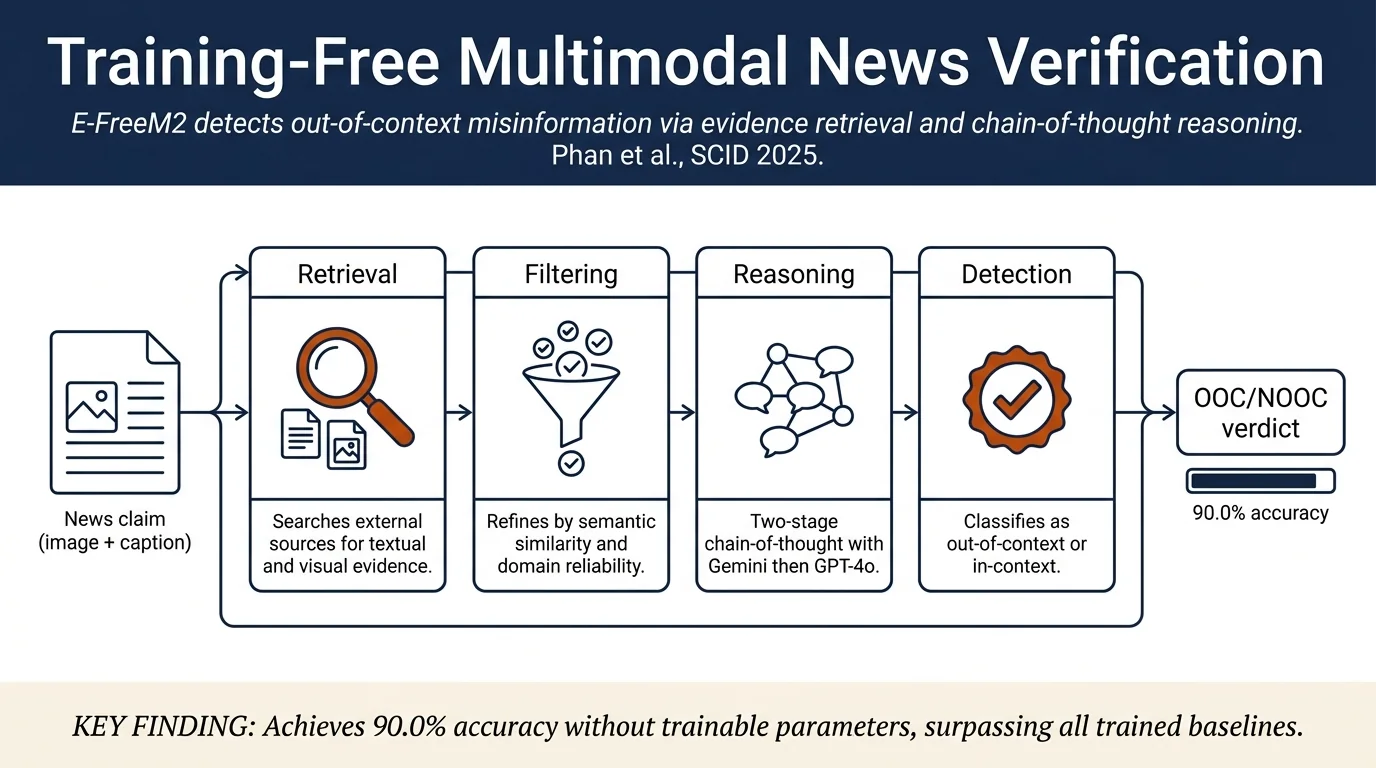
E-FreeM2: Efficient Training-Free Multi-Scale and Cross-Modal News Verification via MLLMsE-FreeM2 is a training-free, retrieval-based multimodal system for out-of-context (OOC) misinformation detection that leverages pretrained vision-language models (MLLMs) and two-stage chain-of-thought reasoning. By dynamically retrieving cross-modal evidence and ranking via visual similarity, the method achieves 90.0% overall accuracy on…
 Detection methodsLLMs & generative AI
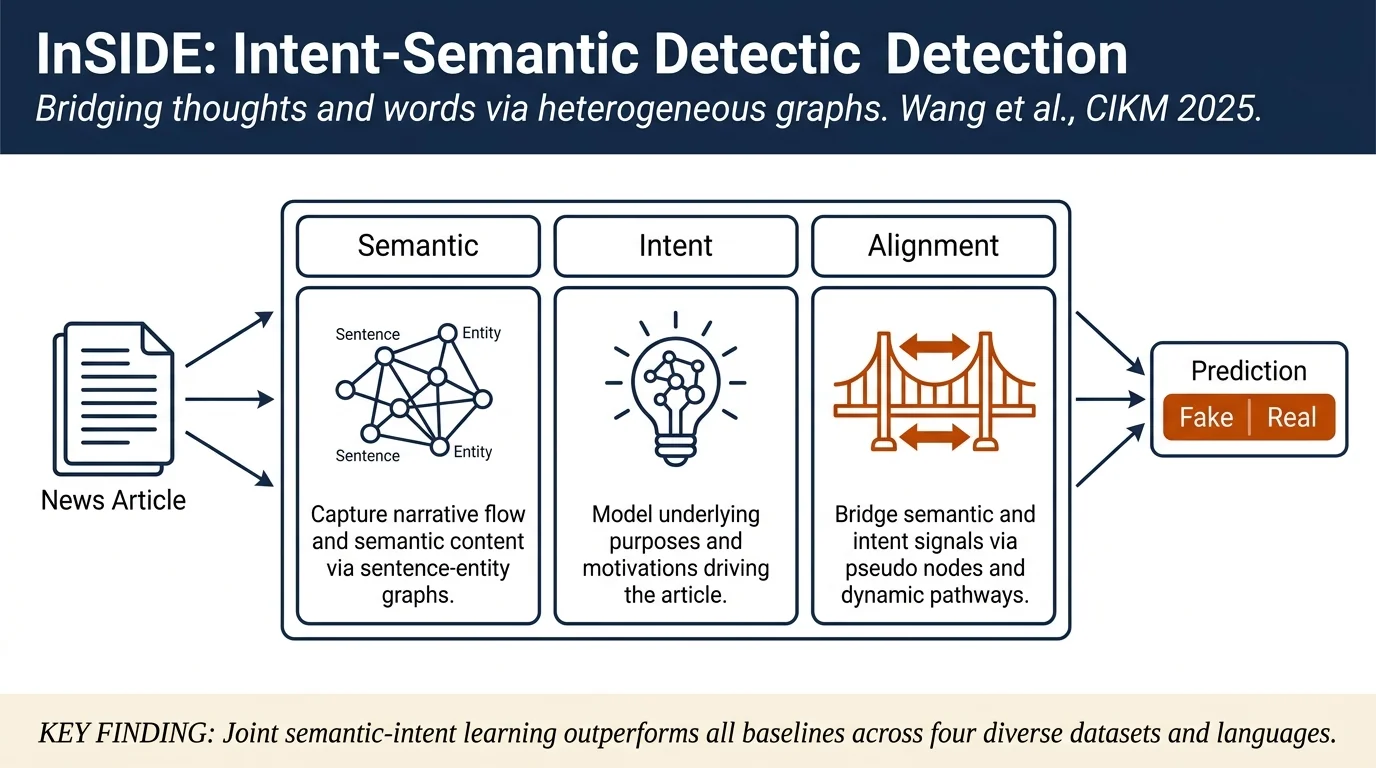
Bridging Thoughts and Words: Graph-Based Intent-Semantic Joint Learning for Fake News DetectionExisting fake news detectors rely on surface-level semantic patterns (emotional language, stylistic cues) and fail when writing styles shift. This paper proposes InSIDE, which combines semantic and intent signals via heterogeneous graphs: intent models the purpose behind an article (e.g., promoting a product), while semantics capture…
 Deepfakes & multimodalLLMs & generative AI
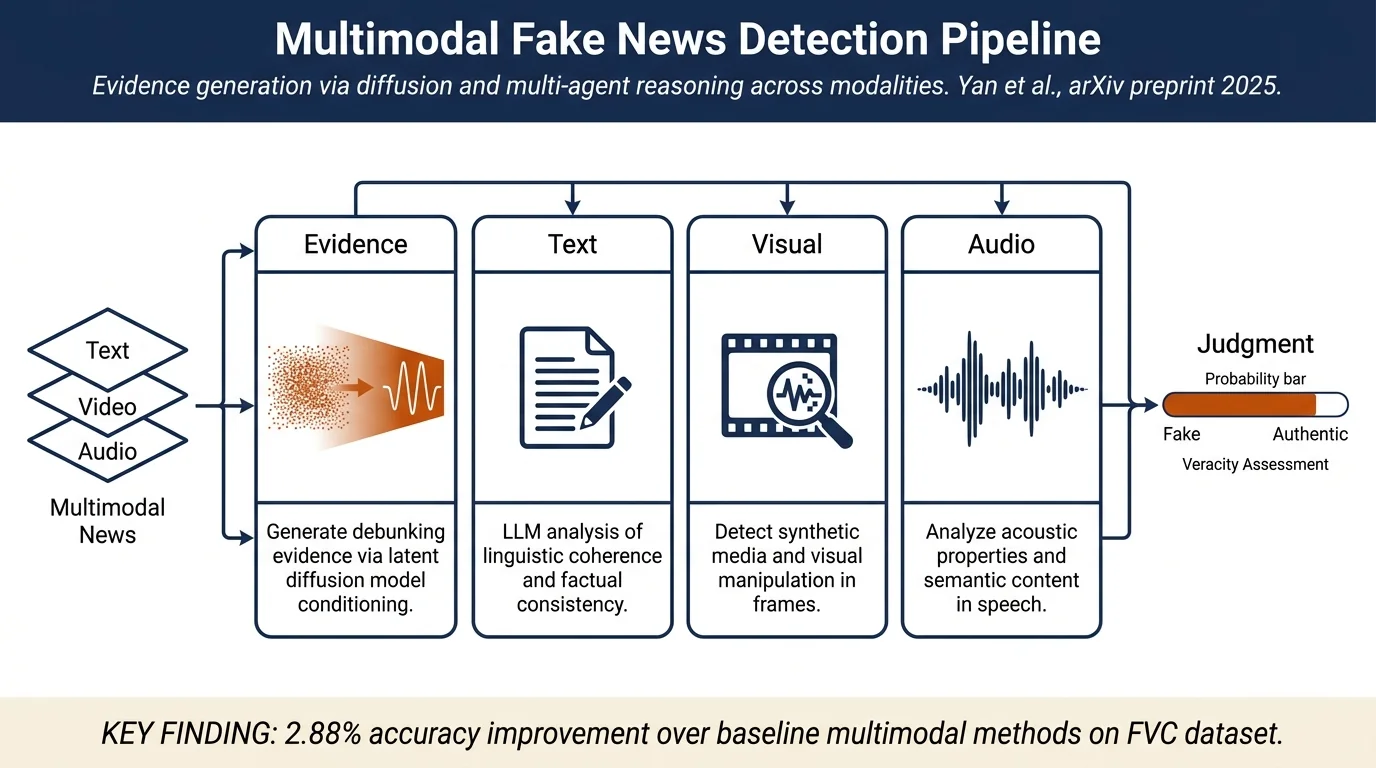
Debunk and Infer: Multimodal Fake News Detection via Diffusion-Generated Evidence and LLM ReasoningThis paper introduces DIFND, a framework for multimodal fake news detection that generates refuting/authenticating evidence via diffusion models and performs reasoning over multimodal content using large language models (LLMs). The approach uses a chain-of-debunk strategy where multiple MLLMs act as collaborative agents to assess news…
 LLMs & generative AIDetection methods
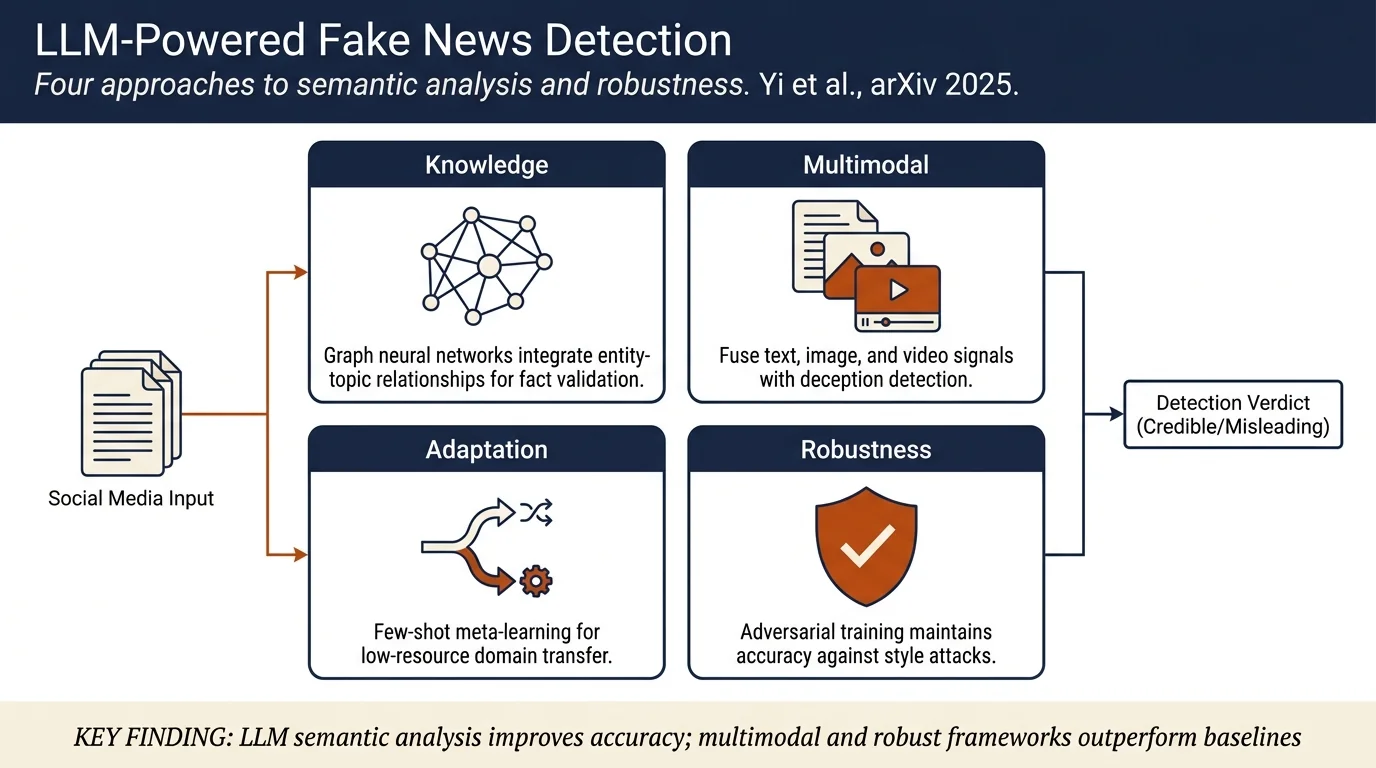
Challenges and Innovations in LLM-Powered Fake News Detection: A Synthesis of Approaches and Future DirectionsThis survey synthesizes recent advances in applying large language models to fake news detection on social media. The review covers four major LLM-based frameworks (MiLk-FD, FND-LLM, DAFND, SheepDog), identifies critical challenges around multimodal integration, adversarial robustness, scalability, and interpretability, and proposes…
 LLMs & generative AIDetection methods
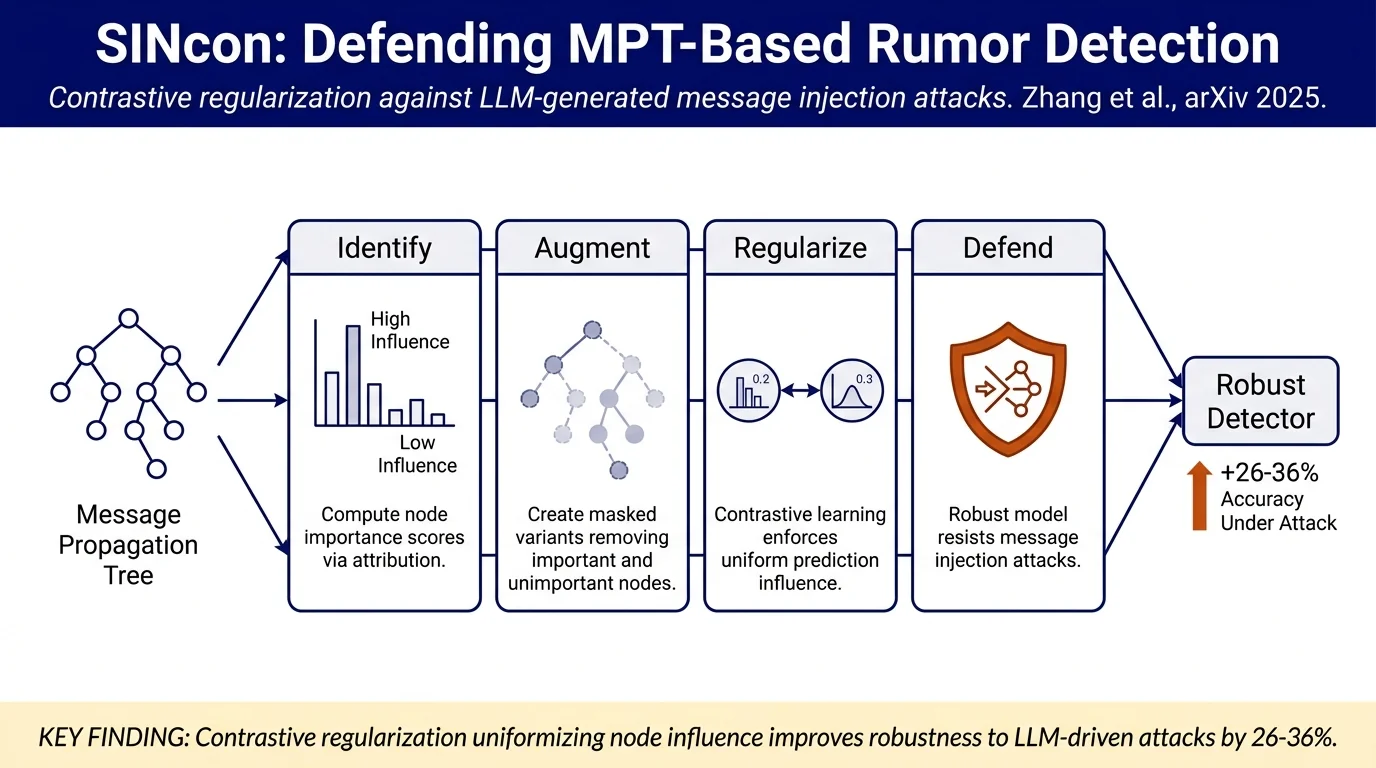
SINcon: Mitigate LLM-Generated Malicious Message Injection Attack for Rumor DetectionMessage Propagation Tree (MPT) based rumor detection models are vulnerable to LLM-generated malicious message injection attacks that alter tree topology and semantics. The paper proposes SINcon, a contrastive learning defense that regularizes models to assign similar predictive influence to nodes of different importance levels,…
 Detection methodsLLMs & generative AI
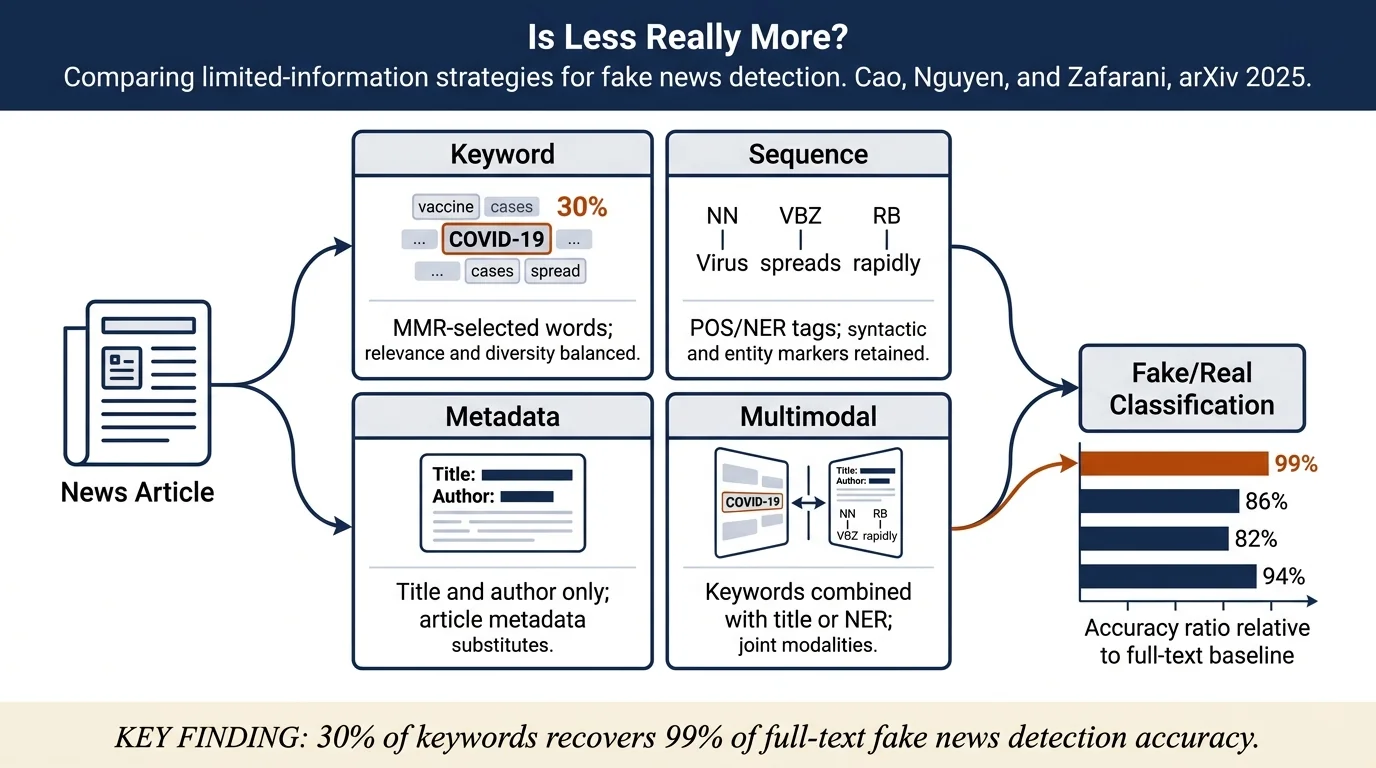
Is Less Really More? Fake News Detection with Limited InformationSLIM (Systematically-selected Limited Information) replaces full news article text with strategically chosen subsets — extracted keywords, POS/NER sequence tags, or textual metadata — to address the computational cost and data-sparsity limitations of full-text fake news detection. Information-theoretic measures (normalized Shannon…
Detection methodsLLMs & generative AI
Propasafe: A BERT-based offline tool for propaganda detectionOriginal privacy-focused, offline browser extension using fine-tuned BERT on the Propaganda Techniques Corpus for sentence-level propaganda classification. No online inference required; binary classification (propaganda or non-propaganda).
LLMs & generative AIPlatforms, policy & society
Controlled Change(Stub page — referenced in context of GenAI adoption in journalism. To be expanded with full paper details.)
 LLMs & generative AIPlatforms, policy & society
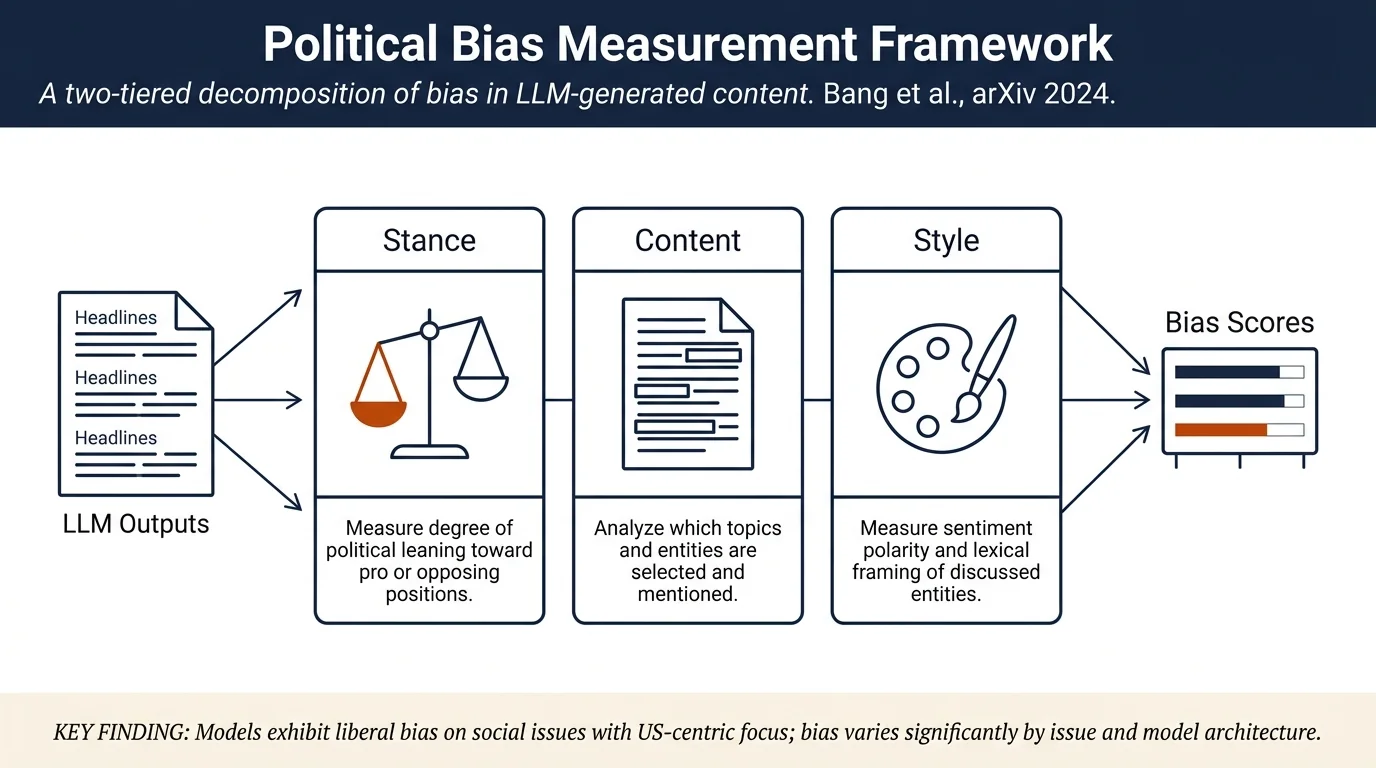
Measuring Political Bias in Large Language Models: What Is Said and How It Is SaidThis paper proposes a two-tiered framework for measuring political bias in LLM-generated content, separating bias into what is said (content bias) and how it is said (style/framing bias). Using extreme anchor comparison and frame analysis on 11 open-source LLMs across 14 politically divisive topics, the authors find that models exhibit…
 Psychology & interventionsLLMs & generative AI
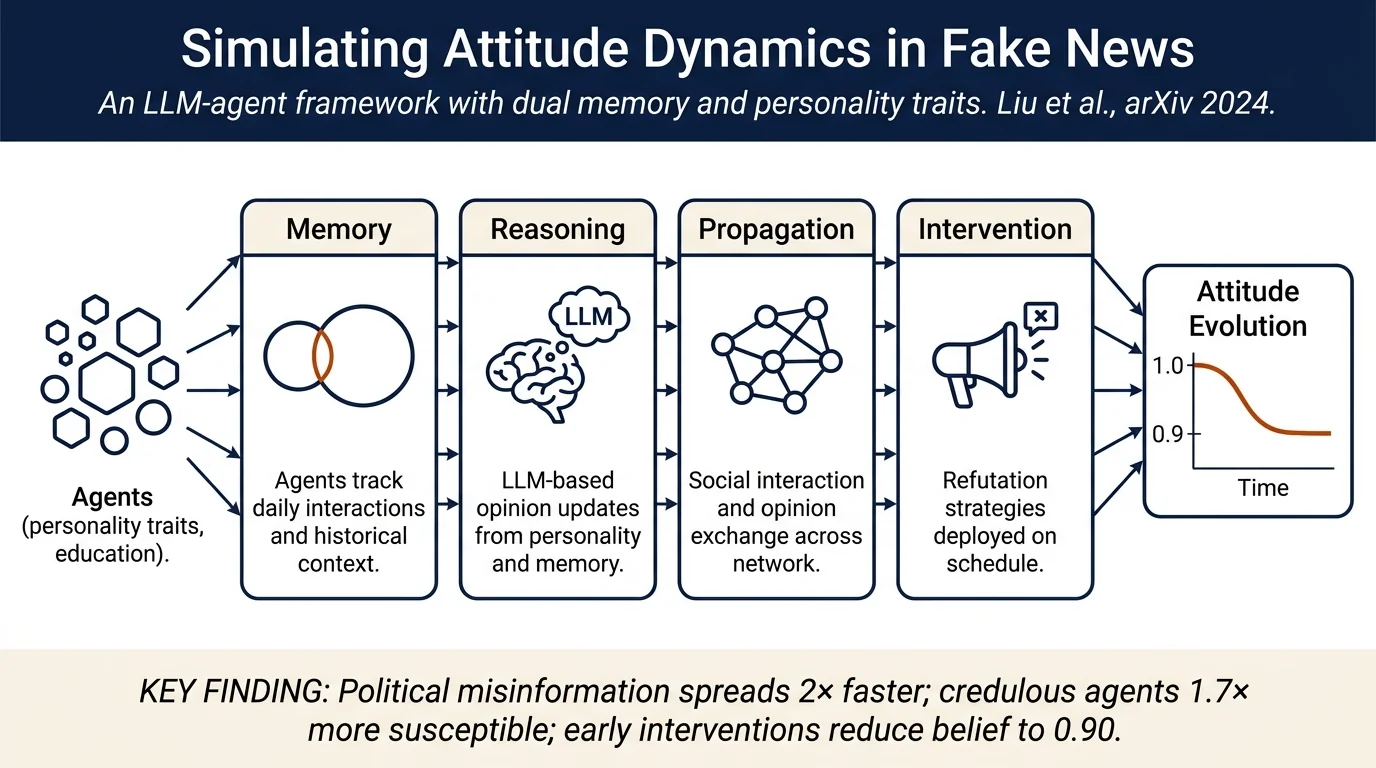
From Skepticism to Acceptance: Simulating the Attitude Dynamics Toward Fake NewsThis paper introduces FPS, an LLM-based agent simulation framework that models how individuals' opinions on fake news evolve through social interactions. Each agent has personality traits, dual memory (short- and long-term), and reasoning capabilities.