Explore papers
Filter by research area, year and venue. Every filter is in the address bar, so you can share a view as a link.
 Deepfakes & multimodalDetection methods
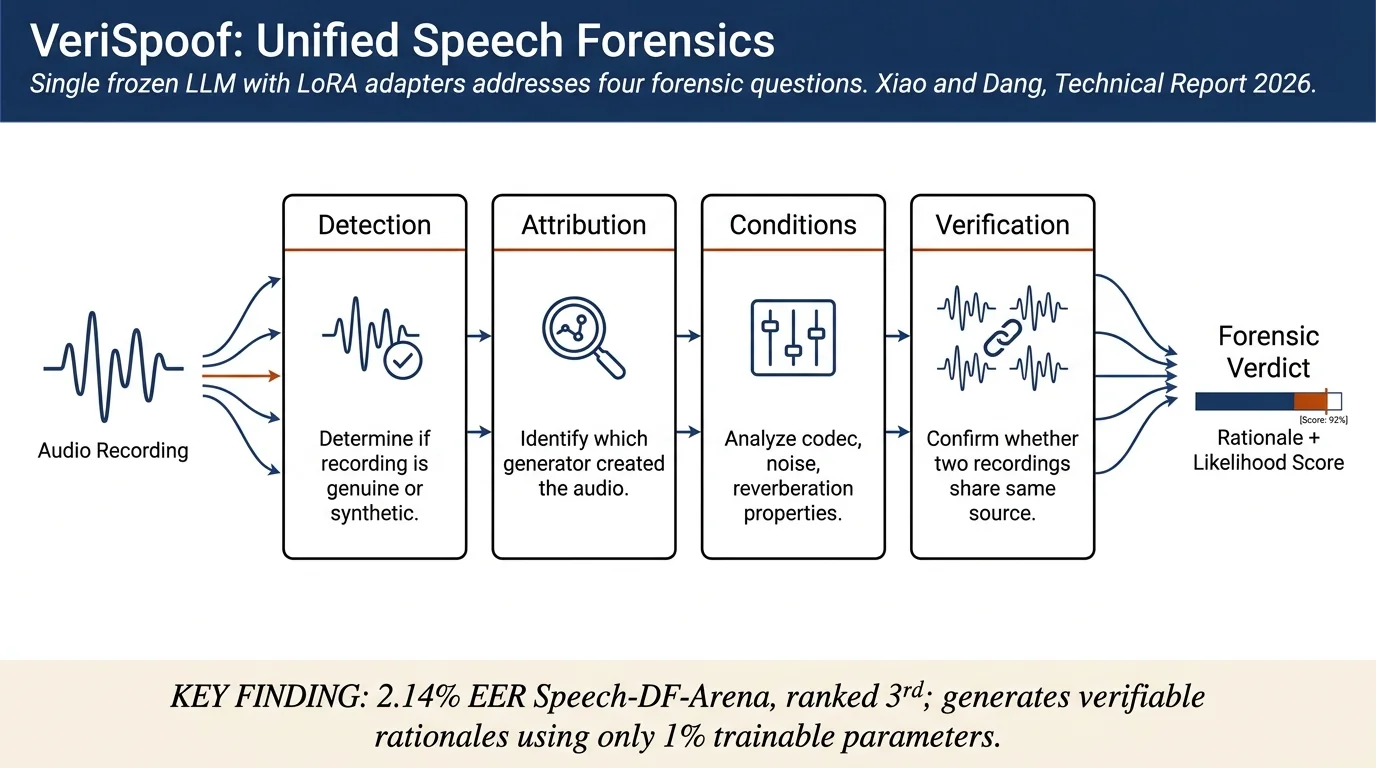
VeriSpoof: Beyond Real or Fake with One Audio LLMVeriSpoof is an audio language model system that unifies multiple forensic tasks in a single neural framework: detecting whether a speech recording is synthetic, identifying which generator produced it, analyzing recording conditions, and verifying whether two recordings share a source. The system achieves state-of-the-art results on…
 Deepfakes & multimodalDatasets & evaluation
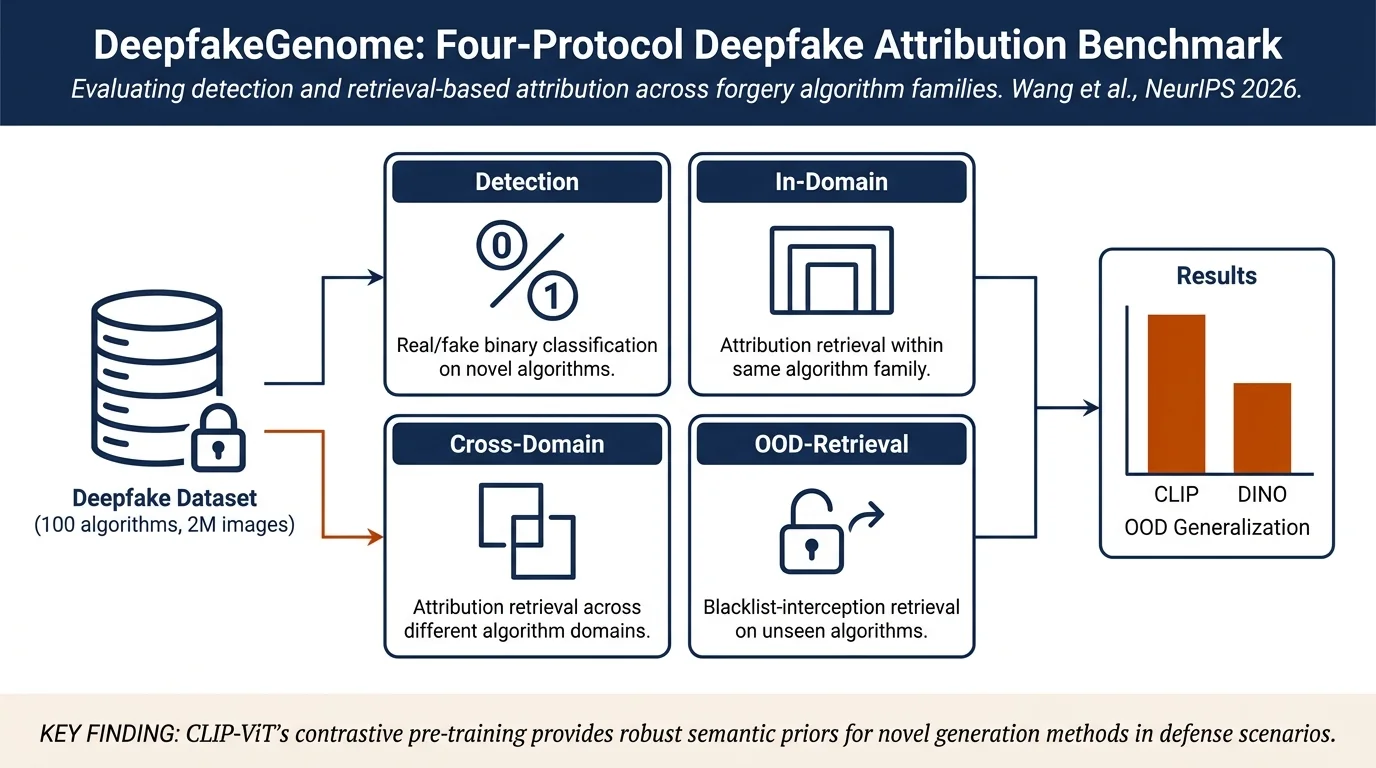
DeepfakeGenome: Toward Next-Generation Deepfake AttributionDeepfakeGenome (DFG) is a large-scale benchmark for deepfake detection and attribution covering 100 facial forgery algorithms and 2M images — 4–100× larger than prior benchmarks. The paper proposes 4 evaluation protocols using novel retrieval-based attribution metrics (mAP, Recall) instead of reject-class classification, and conducts…
 Datasets & evaluationDeepfakes & multimodal
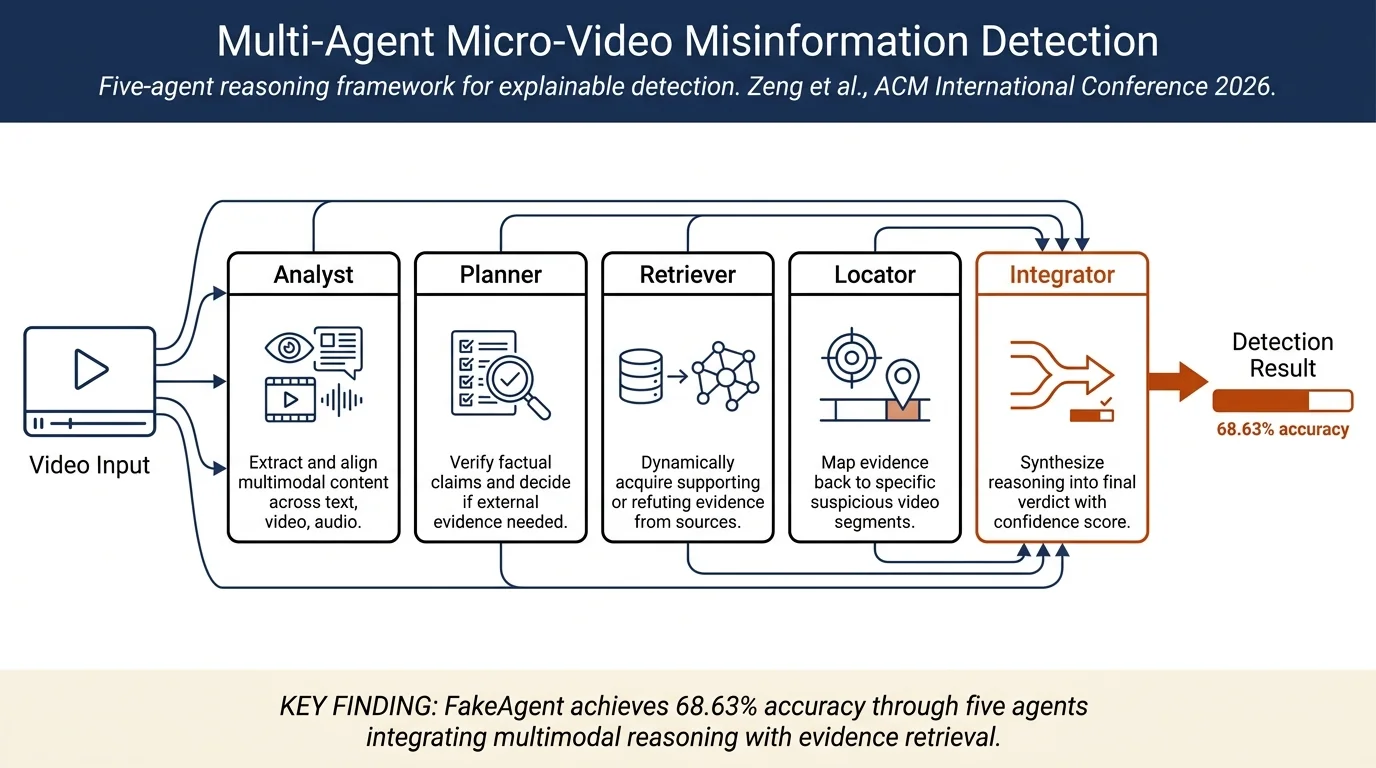
From Manipulation to Mistrust: Explaining Diverse Micro-Video Misinformation for Robust Debunking in the WildThe paper introduces WildFakeBench, a benchmark of 10,000+ real-world micro-videos spanning diverse misinformation types (manipulation, bias, AI-generated content, out-of-context) from six social platforms. The authors propose FakeAgent, a multi-agent reasoning framework combining neural networks and large language models, which achieves…
 Deepfakes & multimodalDetection methods
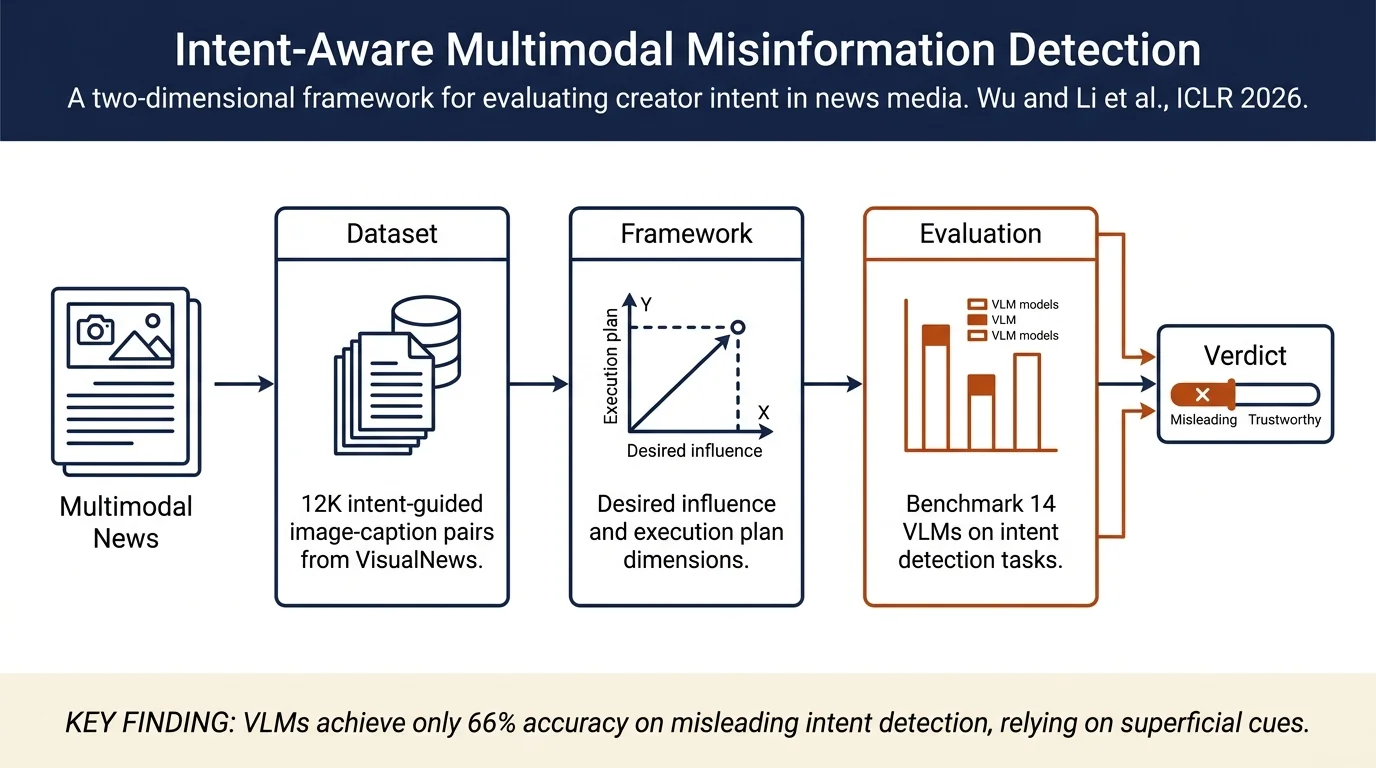
Seeing Through Deception: Uncovering Misleading Creator Intent in Multimodal News with Vision-Language ModelsThis paper introduces DECEPTIONDECODED, a benchmark of 12,000 image-caption pairs for evaluating multimodal misinformation detection with focus on creator intent. The authors find that state-of-the-art vision-language models struggle with intent reasoning and rely on superficial cues, motivating a framework for intent-aware multimodal…
 LLMs & generative AIDetection methods
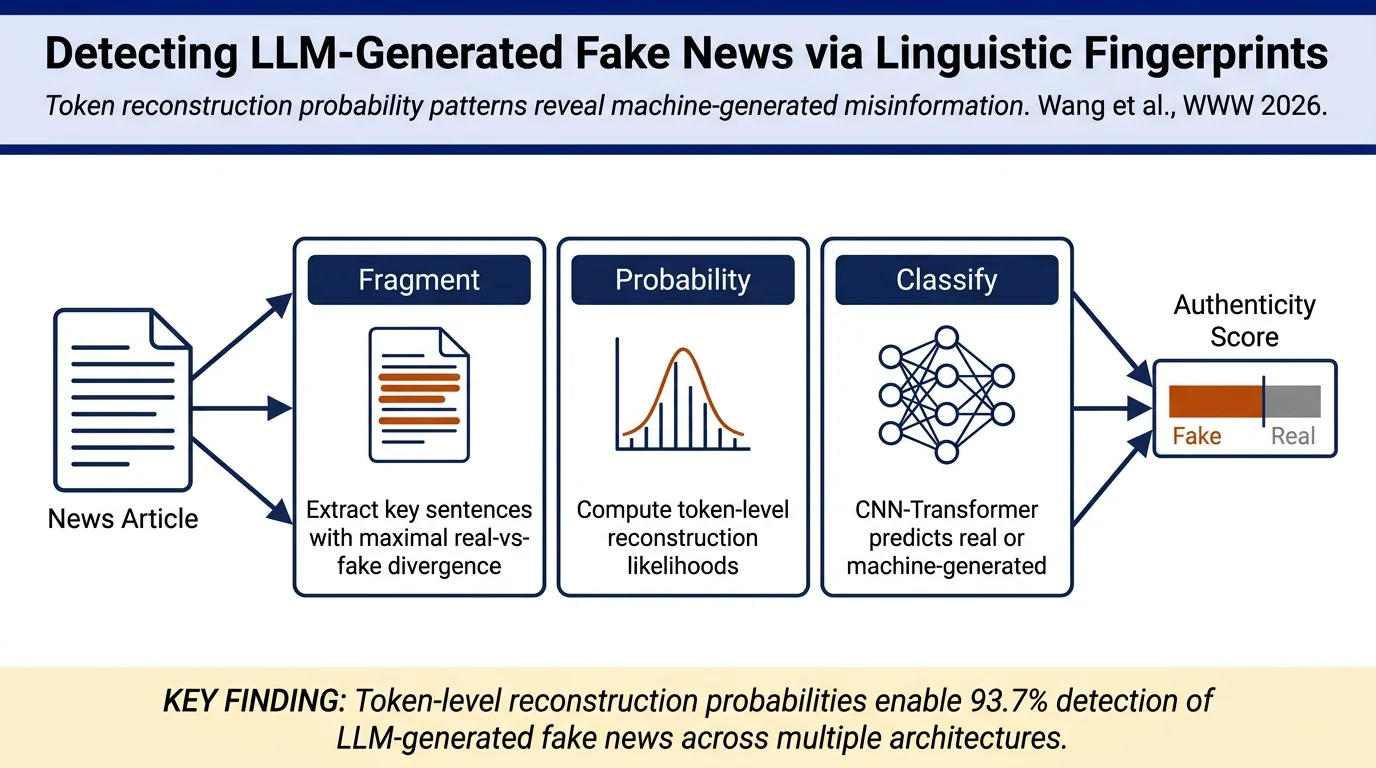
Prompt-Induced Linguistic Fingerprints for LLM-Generated Fake News DetectionLLMs can generate convincing fake news, but malicious prompts induce consistent statistical divergences in token-level reconstruction probabilities. The authors propose LIFE (Linguistic Fingerprints Extraction), which identifies key fragments where real and fake news differ most in their probability signature, achieving 93.7% accuracy on…
 Deepfakes & multimodalDetection methods
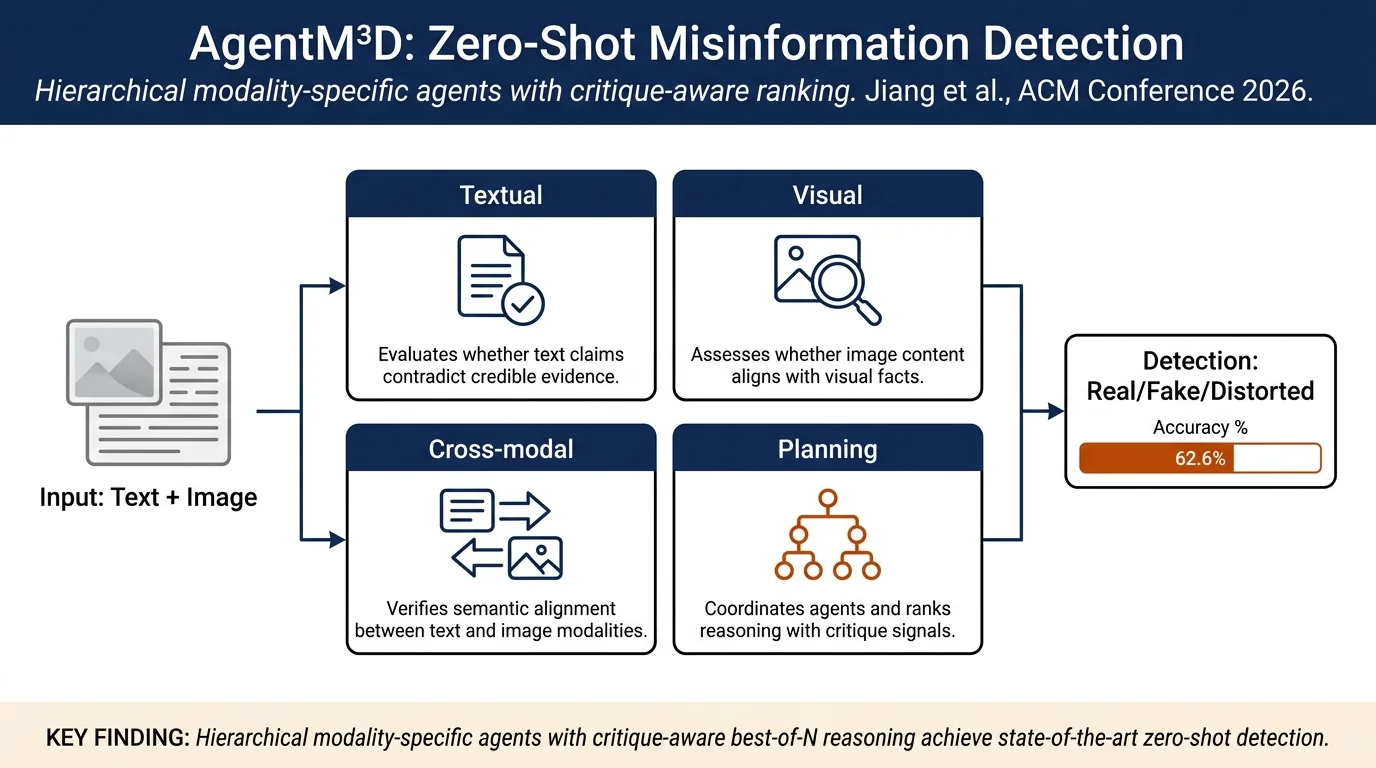
Agentic Mixed-Source Multi-Modal Misinformation Detection with Adaptive Test-Time ScalingVision-language models struggle with mixed-source multi-modal misinformation, where false information combines manipulated images with misleading text or text-image mismatches. This paper proposes AgentM³D, a hierarchical multi-agent framework that decomposes detection into modality-specific agents (textual, visual, cross-modal…
 LLMs & generative AIDetection methods
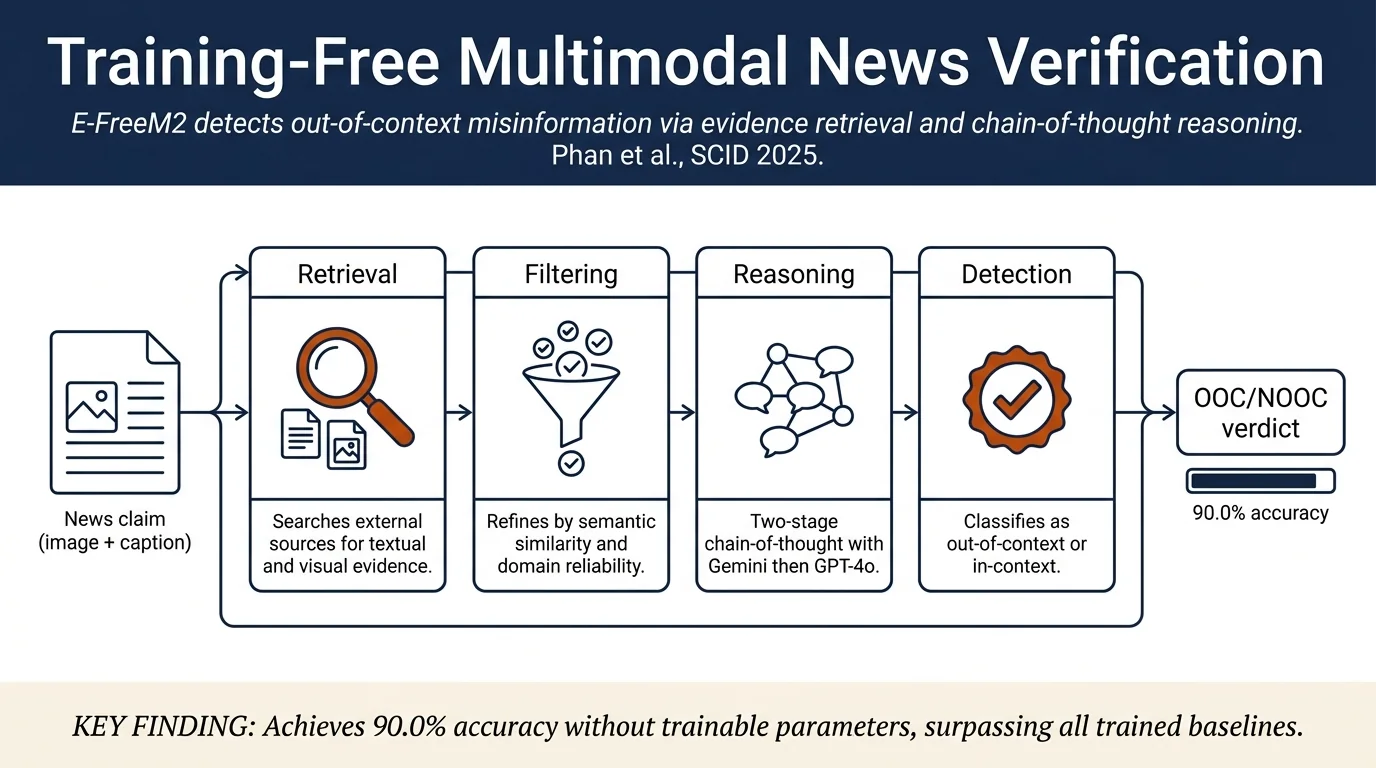
E-FreeM2: Efficient Training-Free Multi-Scale and Cross-Modal News Verification via MLLMsE-FreeM2 is a training-free, retrieval-based multimodal system for out-of-context (OOC) misinformation detection that leverages pretrained vision-language models (MLLMs) and two-stage chain-of-thought reasoning. By dynamically retrieving cross-modal evidence and ranking via visual similarity, the method achieves 90.0% overall accuracy on…
 LLMs & generative AIDeepfakes & multimodal
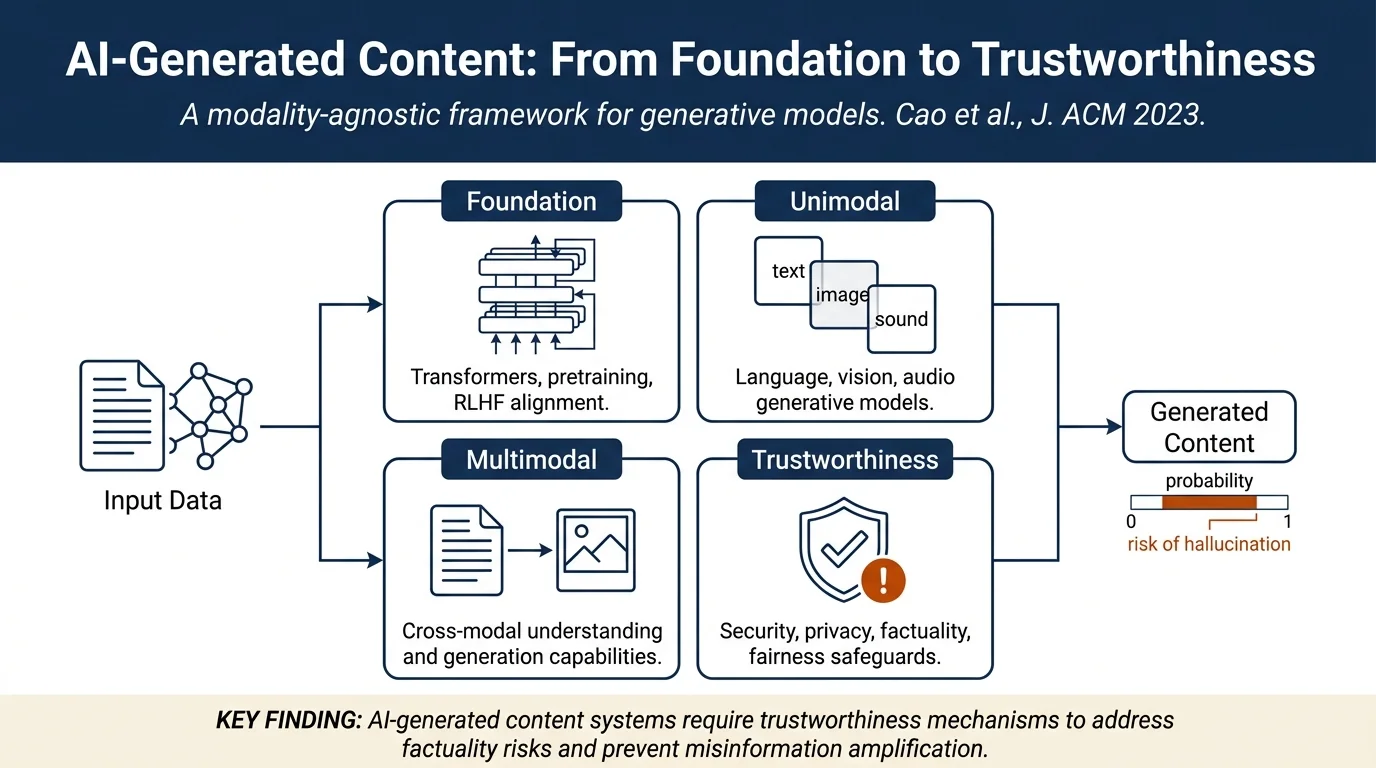
A Comprehensive Survey of AI-Generated Content (AIGC): A History of Generative AI from GAN to ChatGPTThis is the first comprehensive survey of AI-Generated Content (AIGC) covering the history, techniques, and applications of generative models from GANs through ChatGPT. It addresses both the impressive capabilities of these models (text, image, audio, video generation) and critical concerns including factuality, security, privacy, and…
 Deepfakes & multimodalDatasets & evaluation
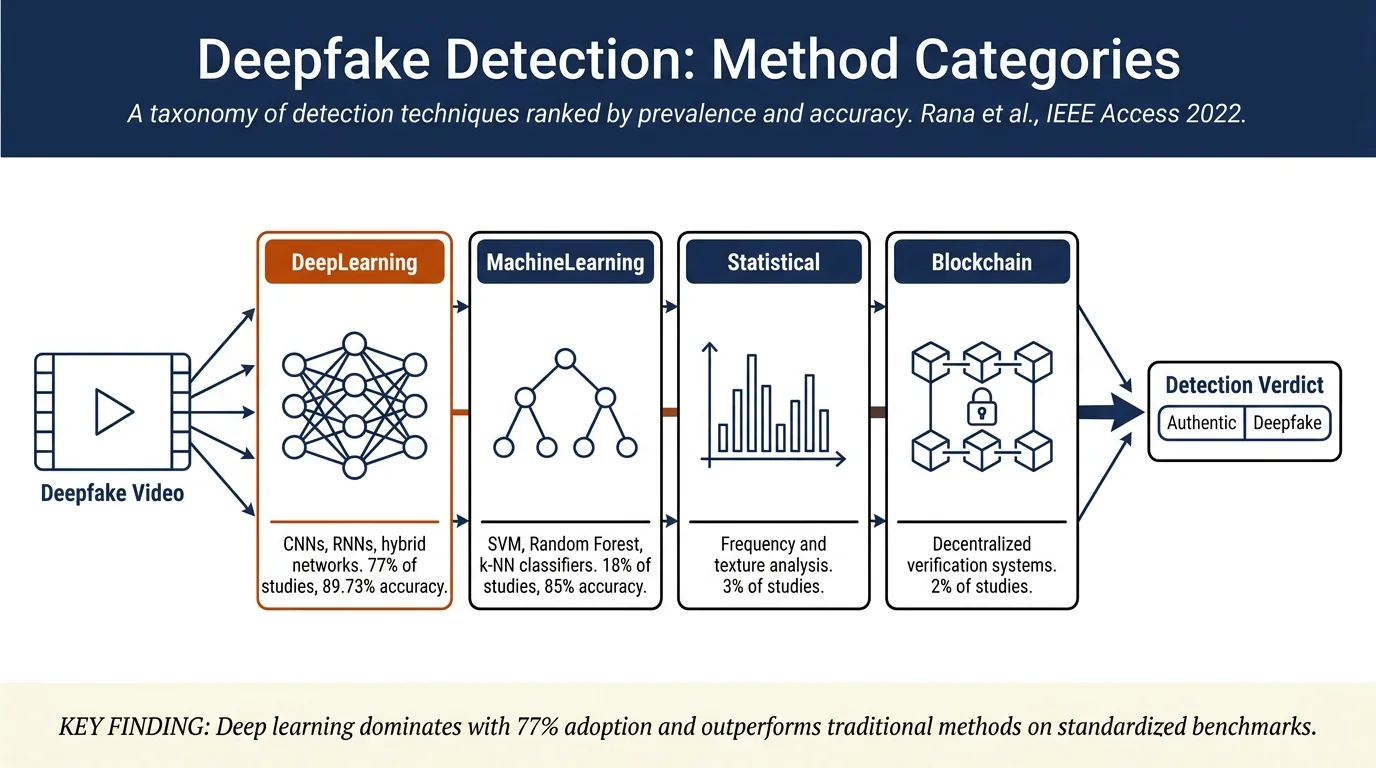
Deepfake Detection: A Systematic Literature ReviewSystematic review of 112 deepfake detection studies (2018–2020) categorizing techniques into deep learning, machine learning, statistical, and blockchain methods. Deep learning approaches (77% of studies, primarily CNNs) significantly outperform non-deep methods, achieving ~89.7% mean accuracy.
 Deepfakes & multimodalDetection methods
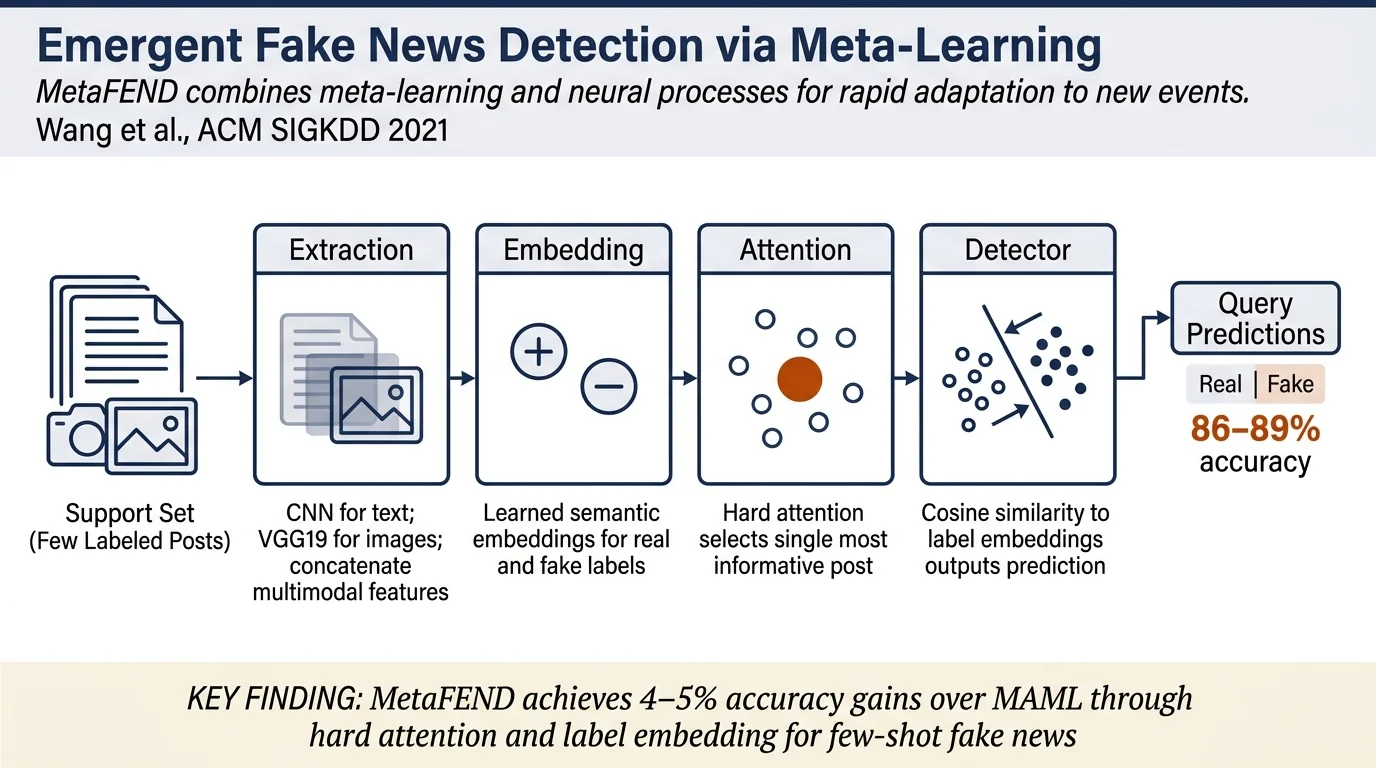
Multimodal Emergent Fake News Detection via Meta Neural Process NetworksExisting fake news detectors trained on labeled data perform poorly on novel, emergent events due to domain shift. The paper proposes MetaFEND, which combines meta-learning and neural processes to leverage a handful of labeled posts from a new event to quickly adapt a detection model.
 Detection methodsDeepfakes & multimodal
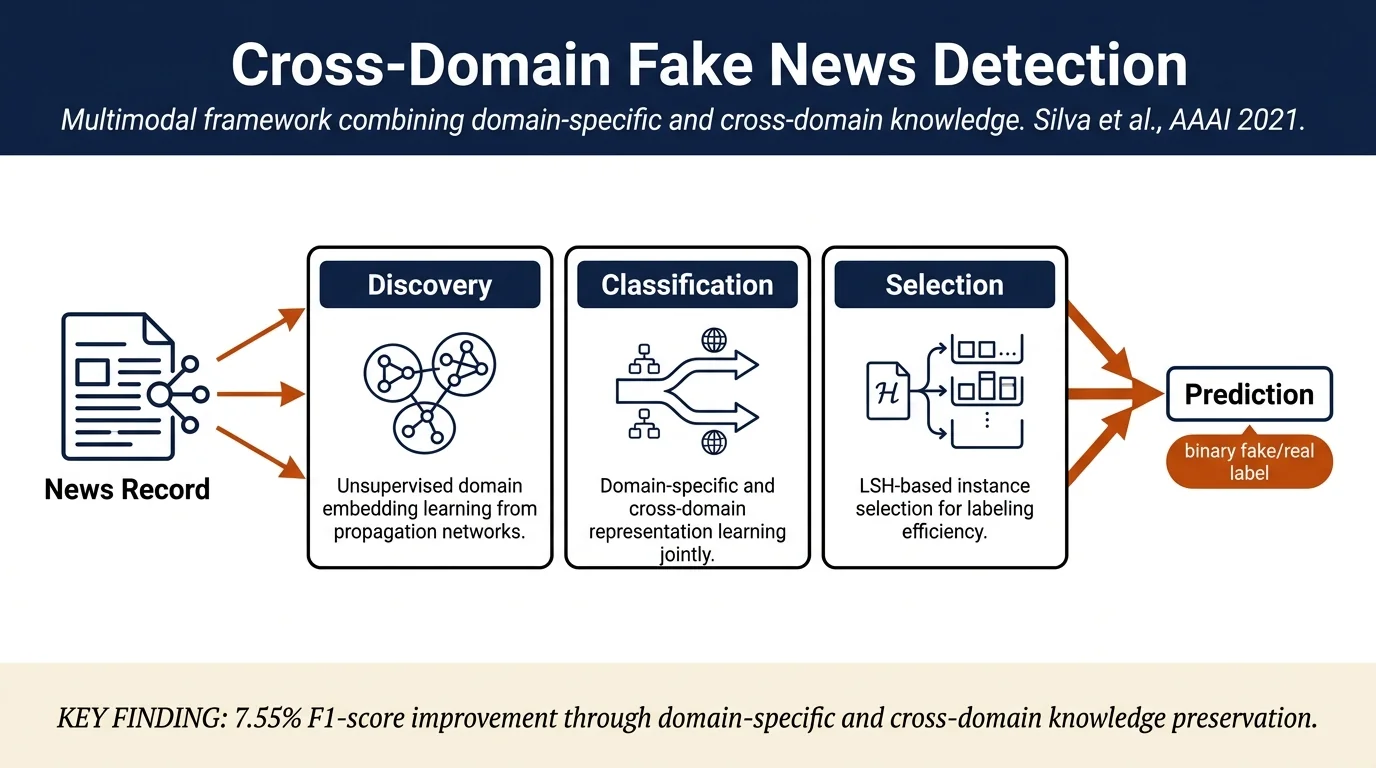
Embracing Domain Differences in Fake News: Cross-domain Fake News Detection using Multimodal DataMost fake news detection models are trained on a single domain (e.g., politics) and fail when tested on others (e.g., entertainment, COVID-19). This paper proposes a multimodal framework that leverages both domain-specific and cross-domain knowledge to detect fake news across different domains.
 Deepfakes & multimodalDetection methods
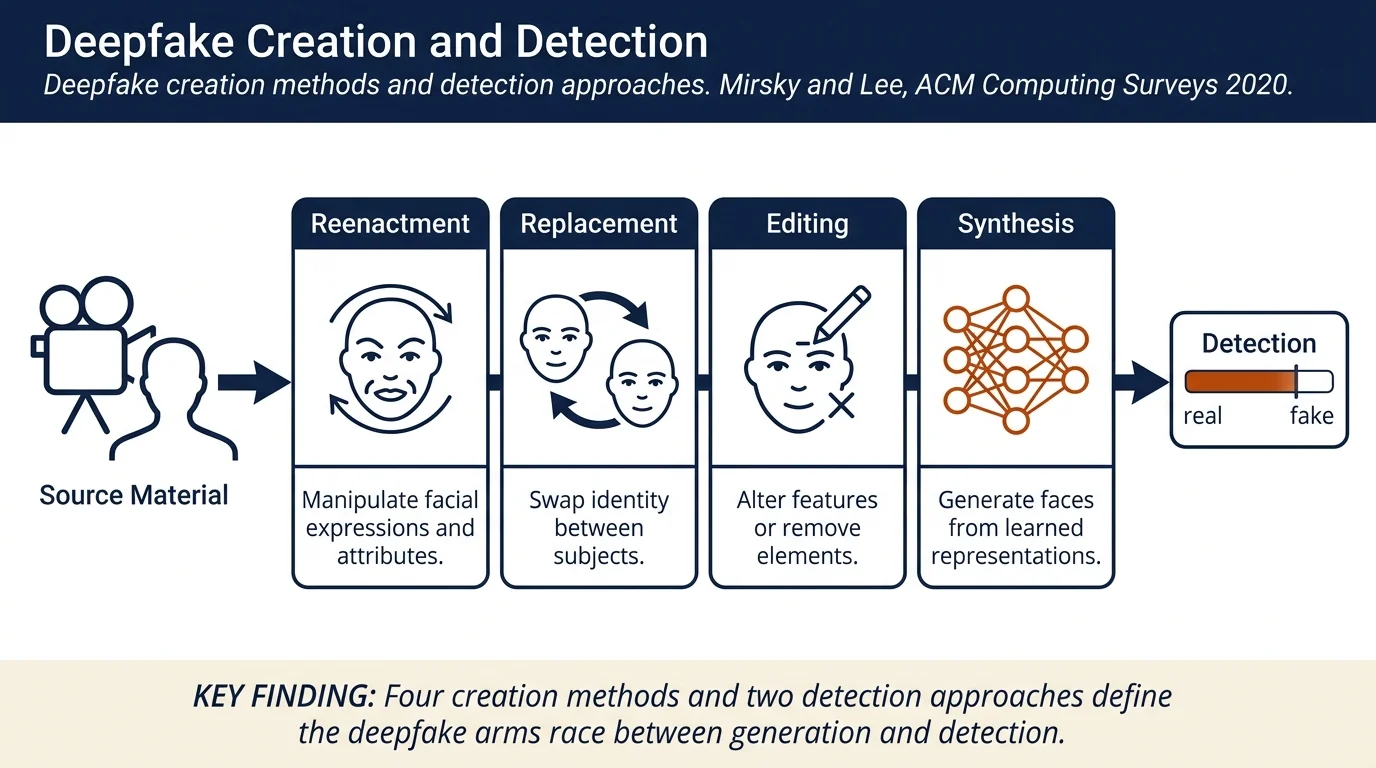
The Creation and Detection of Deepfakes: A SurveyComprehensive 38-page survey covering both creation and detection of deepfakes. Systematically reviews generative neural network architectures (GANs, autoencoders, CNNs, RNNs), technical approaches to reenactment, replacement, editing, and synthesis.
 Deepfakes & multimodalFact-checking & verification
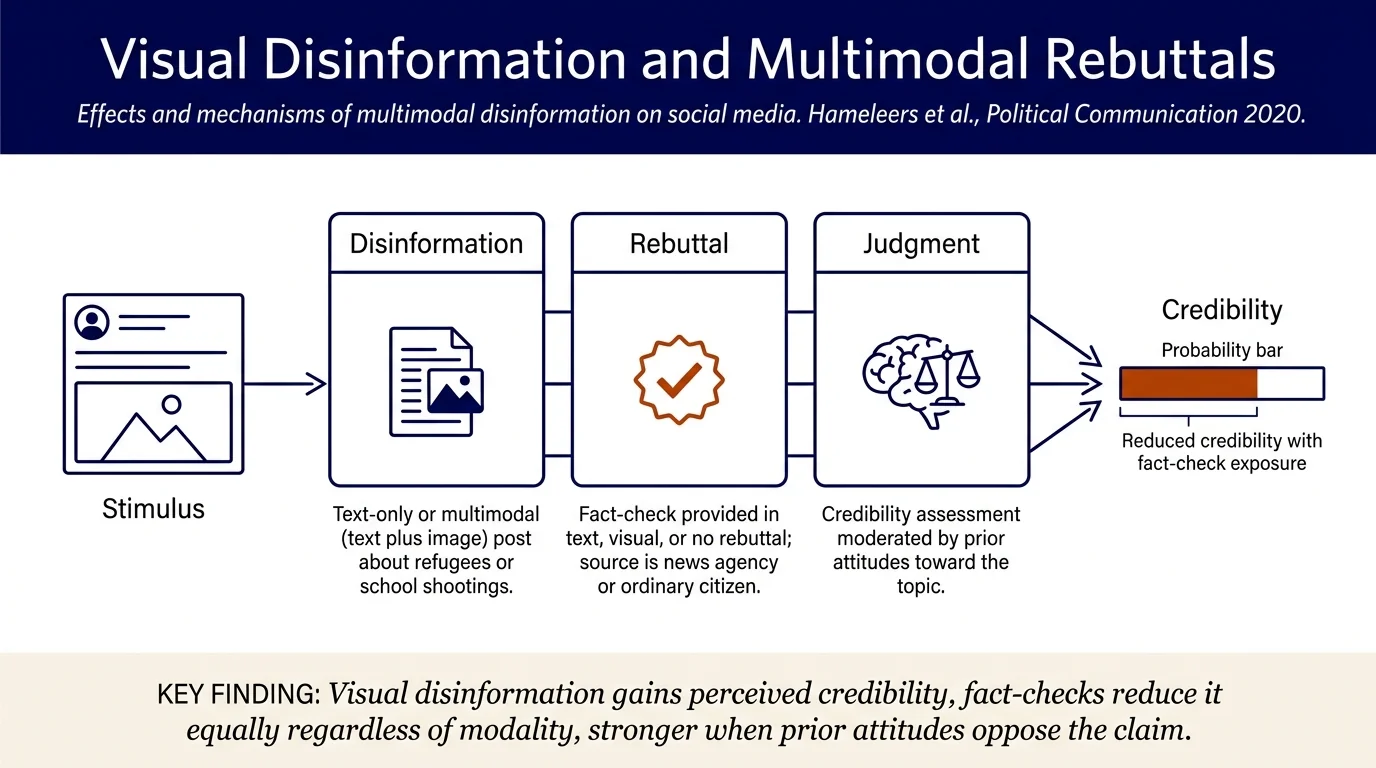
A Picture Paints a Thousand Lies? The Effects and Mechanisms of Multimodal Disinformation and Rebuttals Disseminated via Social MediaMultimodal disinformation (paired text and images) is perceived as more credible than text-only misinformation, but fact-checkers can overcome this effect. Importantly, the modality of fact-checks (visual or textual) matters less than their presence; fact-checks are more persuasive for people whose prior attitudes already oppose the…
 Deepfakes & multimodalPlatforms, policy & society
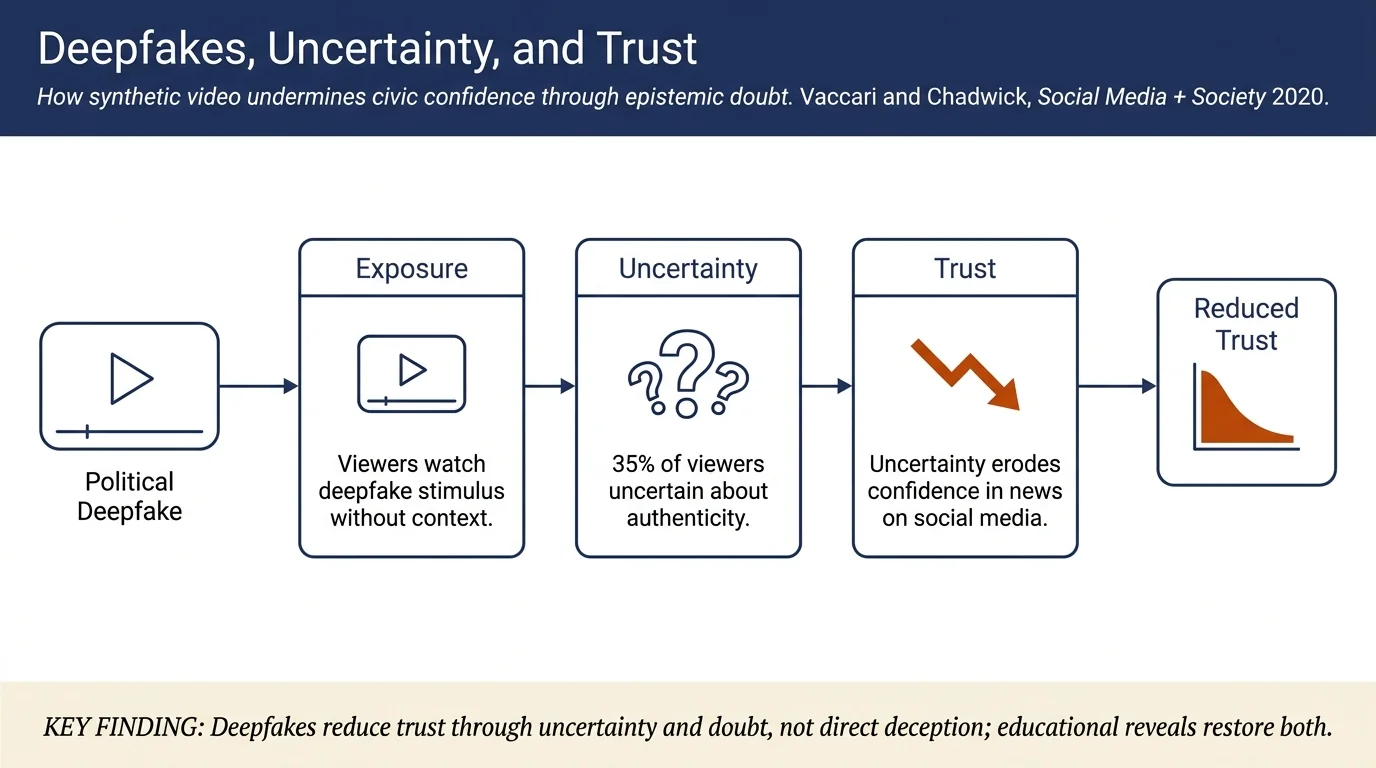
Deepfakes and Disinformation: Exploring the Impact of Synthetic Political Video on Deception, Uncertainty, and Trust in NewsExperimental study (N=2,005 UK respondents) testing how political deepfakes affect deception and trust in news. Deepfakes increased uncertainty about content, and that uncertainty mediated reduced trust in news on social media.
 Datasets & evaluationDeepfakes & multimodal
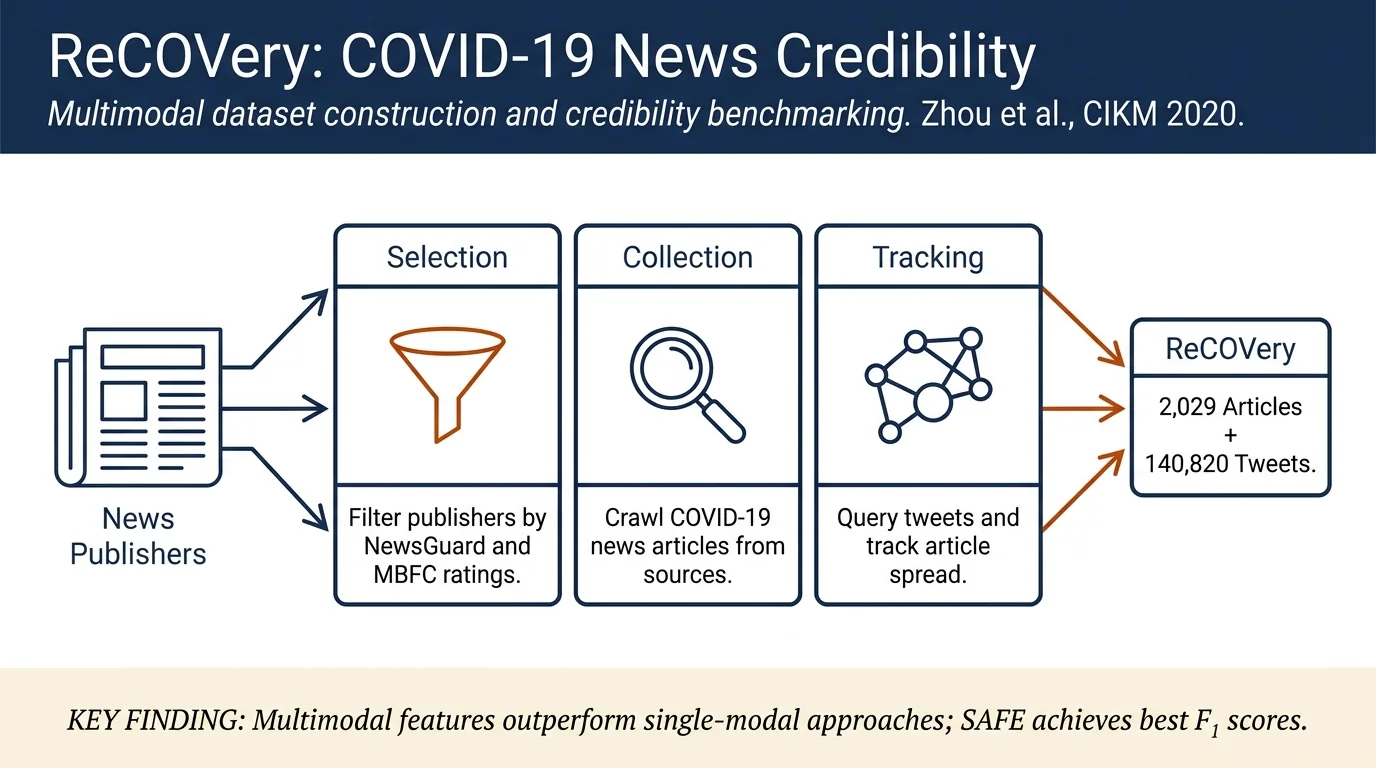
ReCOVery: A Multimodal Repository for COVID-19 News Credibility ResearchThe COVID-19 pandemic triggered a parallel "infodemic" of low-credibility news; this paper constructs ReCOVery, a multimodal repository of 2,029 COVID-19 news articles with binary credibility labels inherited from their publisher's NewsGuard/MBFC ratings, paired with 140,820 tweets tracking social spread. The key design trade-off is…
 Deepfakes & multimodalDetection methods
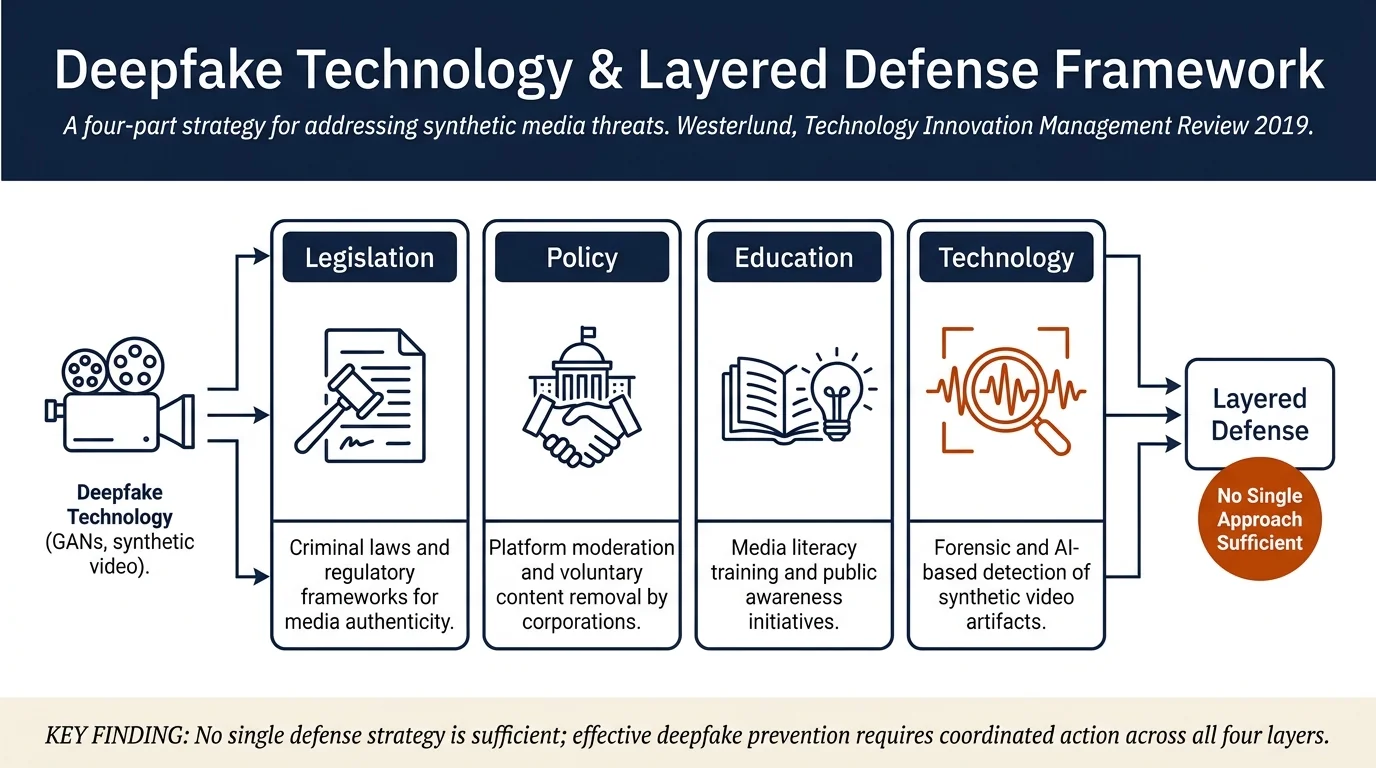
The Emergence of Deepfake Technology: A ReviewThis review analyzes 84 news articles about deepfakes to synthesize understanding of synthetic video technology, its applications, threats, and countermeasures. Deepfakes—hyper-realistic videos created using AI (primarily GANs)—lower the barrier to video forgery and represent a significant threat to trust, elections, and security.
 Bots & coordinated campaignsDeepfakes & multimodal
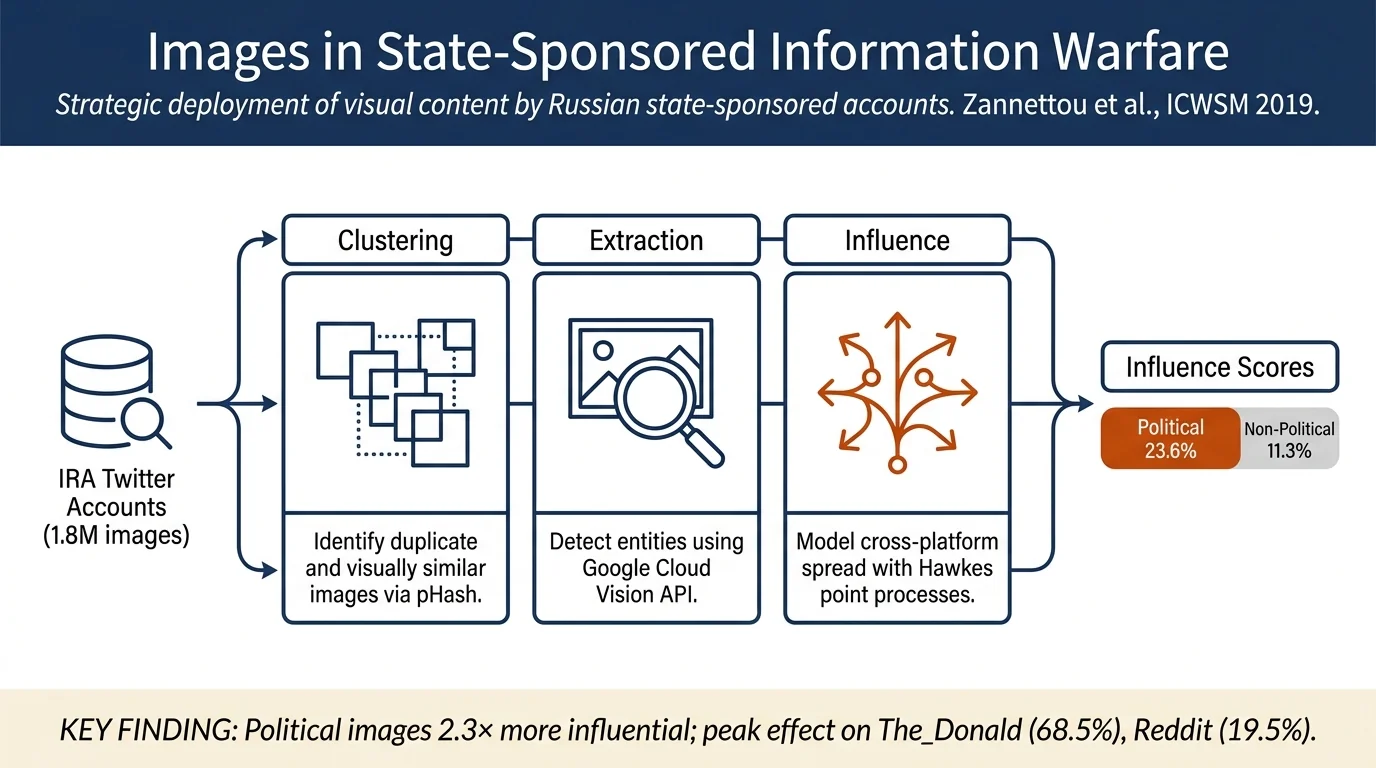
Characterizing the Use of Images in State-Sponsored Information Warfare Operations by Russian Trolls on TwitterLarge-scale analysis of 1.8M images posted by ~3.6K Russian state-sponsored Twitter accounts (IRA-controlled). Russian trolls strategically deployed images and memes to maximize political influence, with political imagery 2+ times more effective than general content.
 Deepfakes & multimodalDetection methods
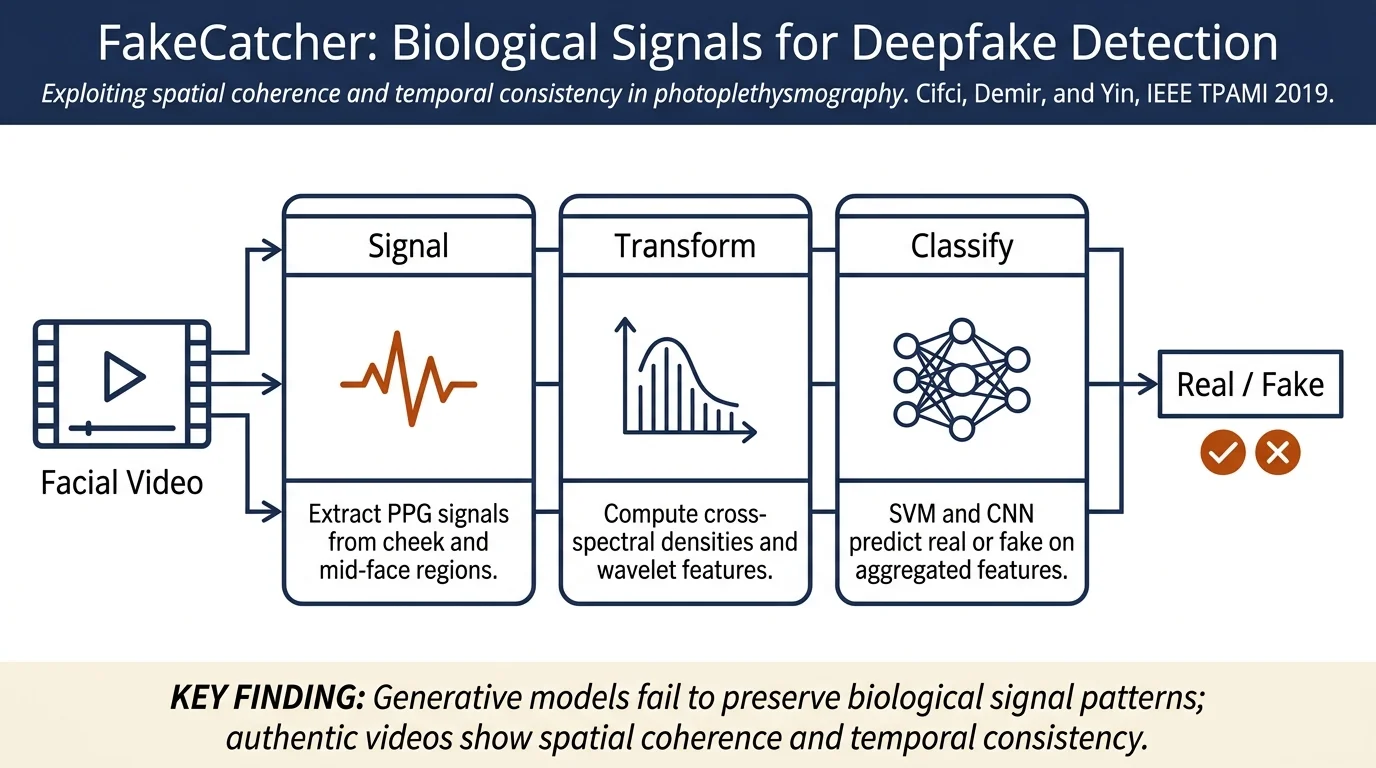
FakeCatcher: Detection of Synthetic Portrait Videos using Biological SignalsFakeCatcher detects deepfakes by analyzing biological signals (photoplethysmography—blood flow patterns) extracted from facial regions. The key insight is that generative models fail to preserve spatial coherence and temporal consistency of these signals in authentic videos, making biological signal analysis a powerful forensic tool…
 LLMs & generative AIDetection methods
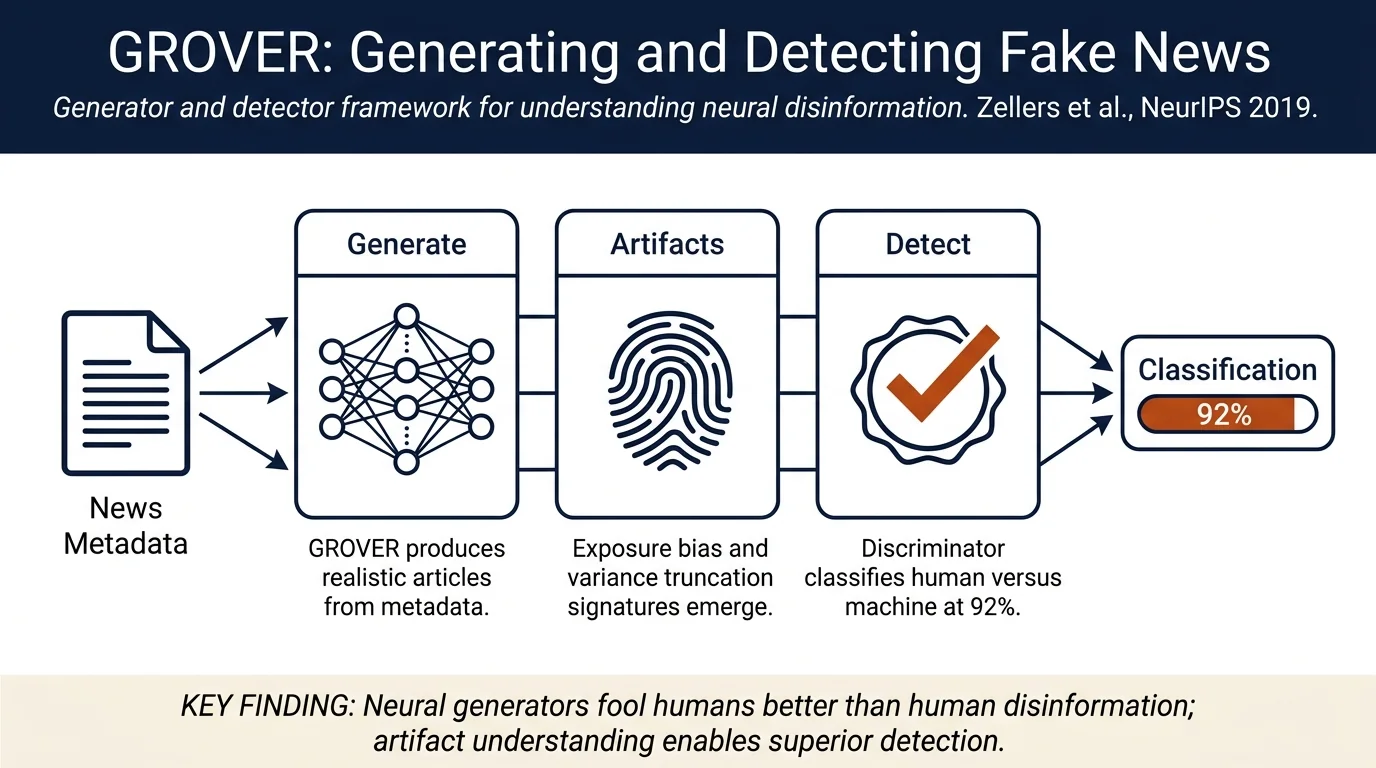
Defending Against Neural Fake NewsZellers et al. introduce GROVER, a conditional neural text generation model that can both generate and detect neural fake news. The paper shows that humans cannot reliably distinguish GROVER-generated propaganda from real human-written disinformation, rating machine-generated propaganda as more trustworthy (2.42/3 vs 2.19/3 for human…
 Deepfakes & multimodalDetection methods
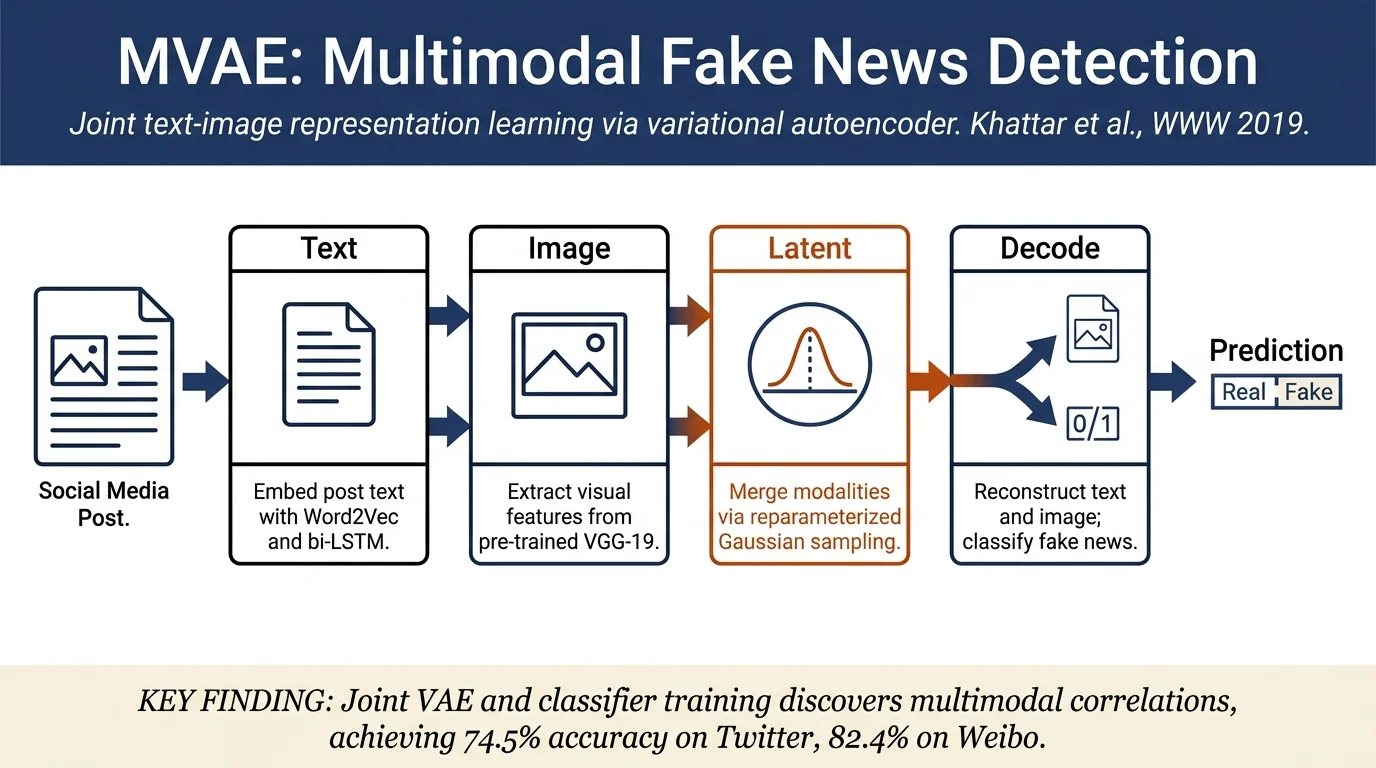
MVAE: Multimodal Variational Autoencoder for Fake News DetectionThe paper proposes MVAE, a variational autoencoder that learns shared representations of text and images in social media posts to detect fake news. The model jointly trains an encoder-decoder (to discover correlations across modalities) with a binary classifier.
 Deepfakes & multimodalDetection methods
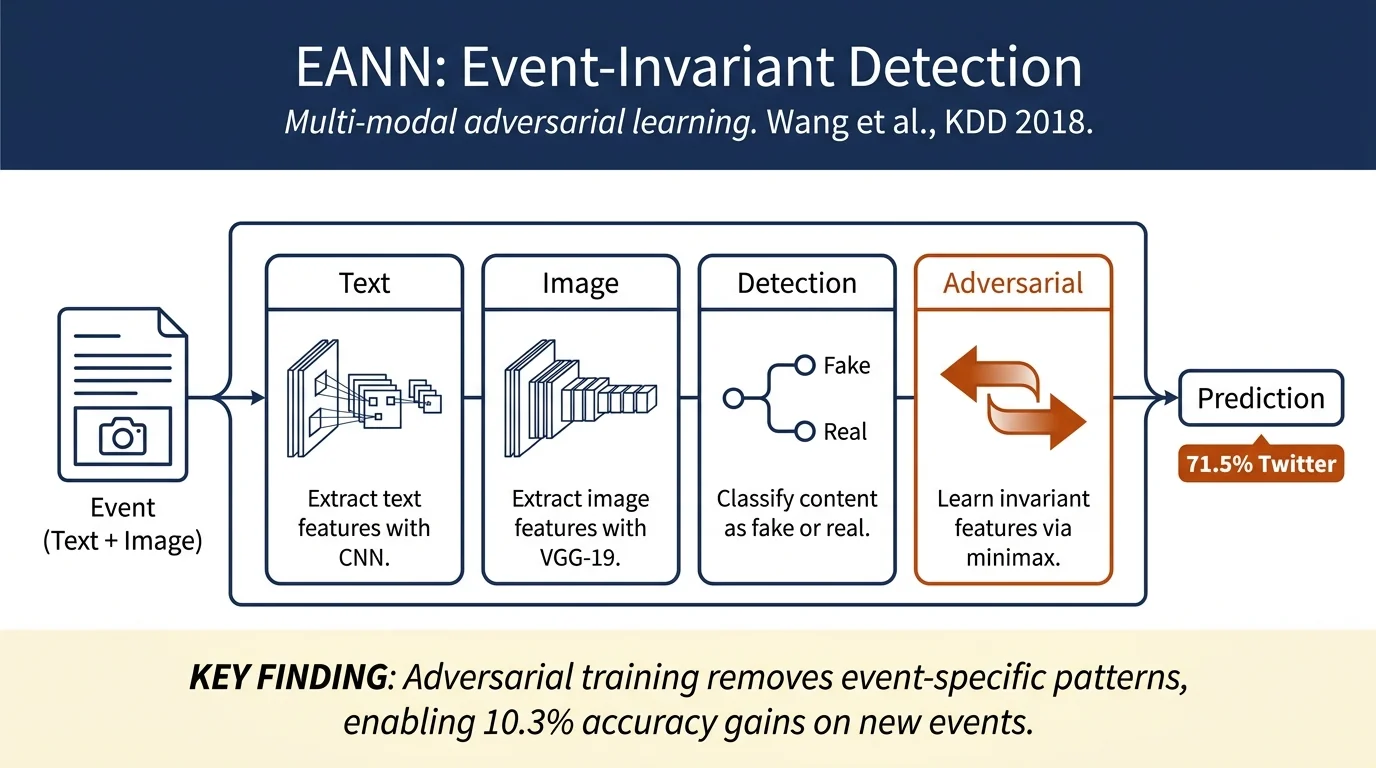
EANN: Event Adversarial Neural Networks for Multi-Modal Fake News DetectionThe paper proposes EANN, an adversarial neural network that detects fake news on newly emerged events by learning event-invariant features. An event discriminator forces the multi-modal feature extractor to remove event-specific features while preserving shared patterns across events.