Explore papers
Filter by research area, year and venue. Every filter is in the address bar, so you can share a view as a link.
 LLMs & generative AIDatasets & evaluation
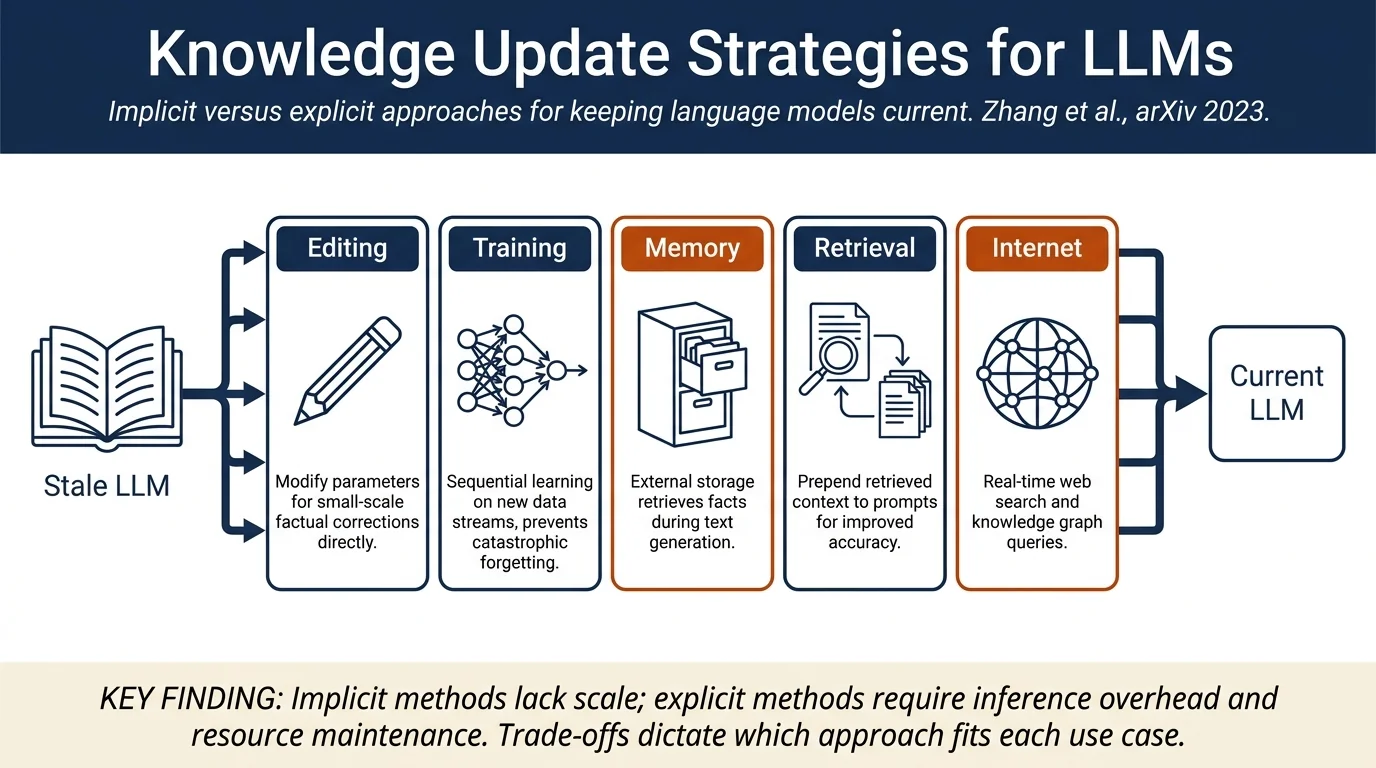
How Do Large Language Models Capture the Ever-changing World Knowledge? A Review of Recent AdvancesThis survey reviews methods for aligning large language models with ever-changing world knowledge without retraining from scratch. The authors systematically categorize approaches as either implicit (modifying LLM parameters directly via knowledge editing or continual learning) or explicit (augmenting LLMs with external resources via…
 LLMs & generative AIDetection methods
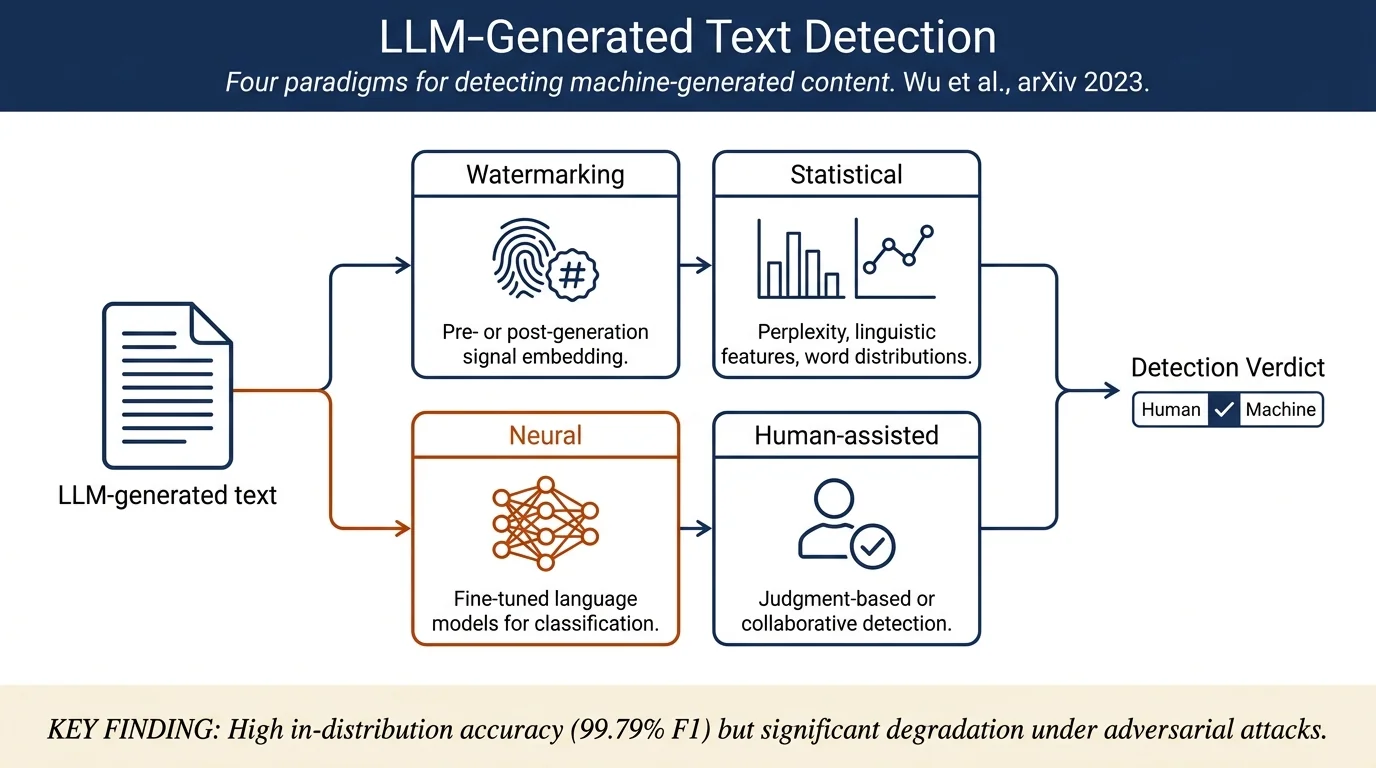
A Survey on LLM-Generated Text Detection: Necessity, Methods, and Future DirectionsAs LLMs become ubiquitous, detecting machine-generated text is critical for mitigating risks of misinformation, academic dishonesty, and misuse. This survey comprehensively reviews detection strategies—watermarking techniques, statistical methods, neural-based detectors, and human-assisted approaches—along with datasets, evaluation…
 LLMs & generative AIFact-checking & verification
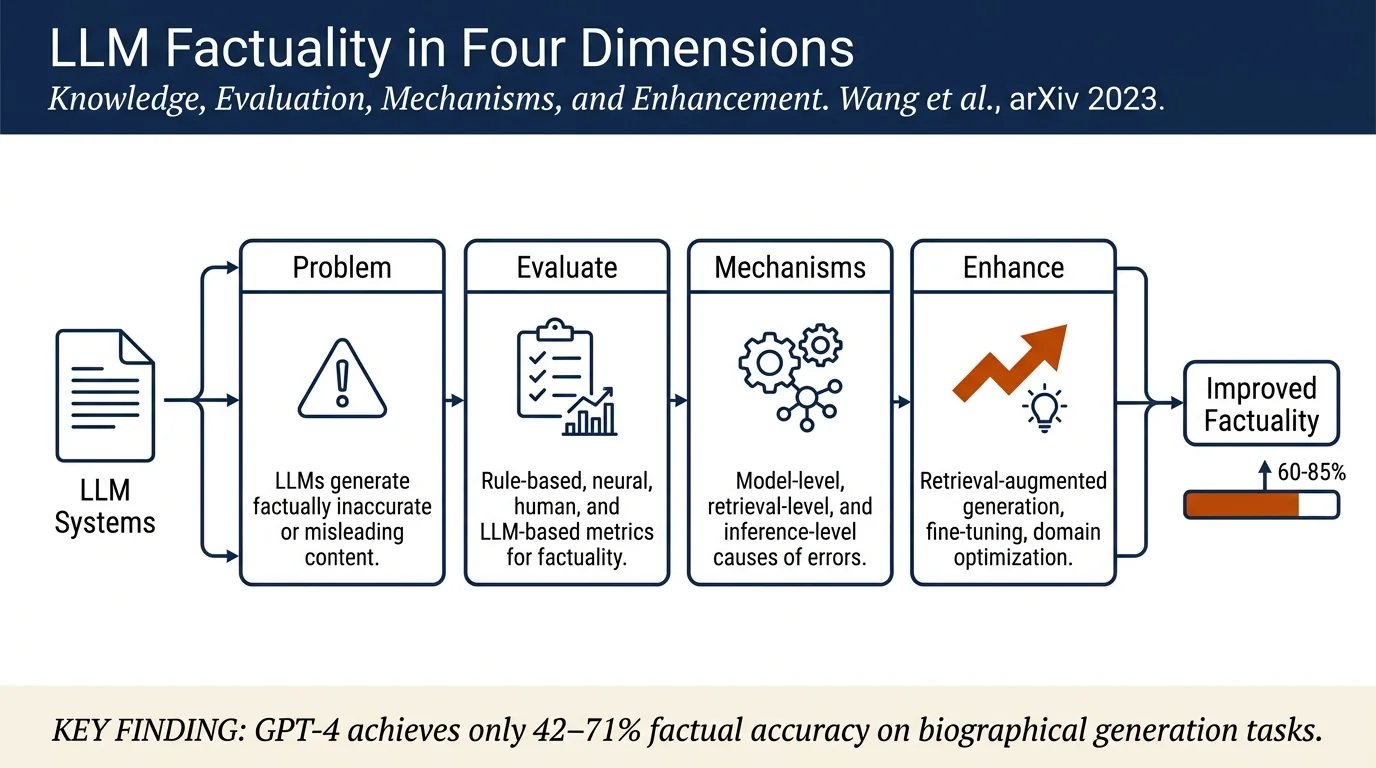
Survey on Factuality in Large Language Models: Knowledge, Retrieval and Domain-SpecificityThis comprehensive survey addresses the critical problem of factuality in large language models, examining how LLMs store and retrieve knowledge, analyzing the mechanisms through which they generate false or misleading content, and reviewing evaluation metrics and enhancement strategies. The paper distinguishes factuality issues from…
 LLMs & generative AIDetection methods
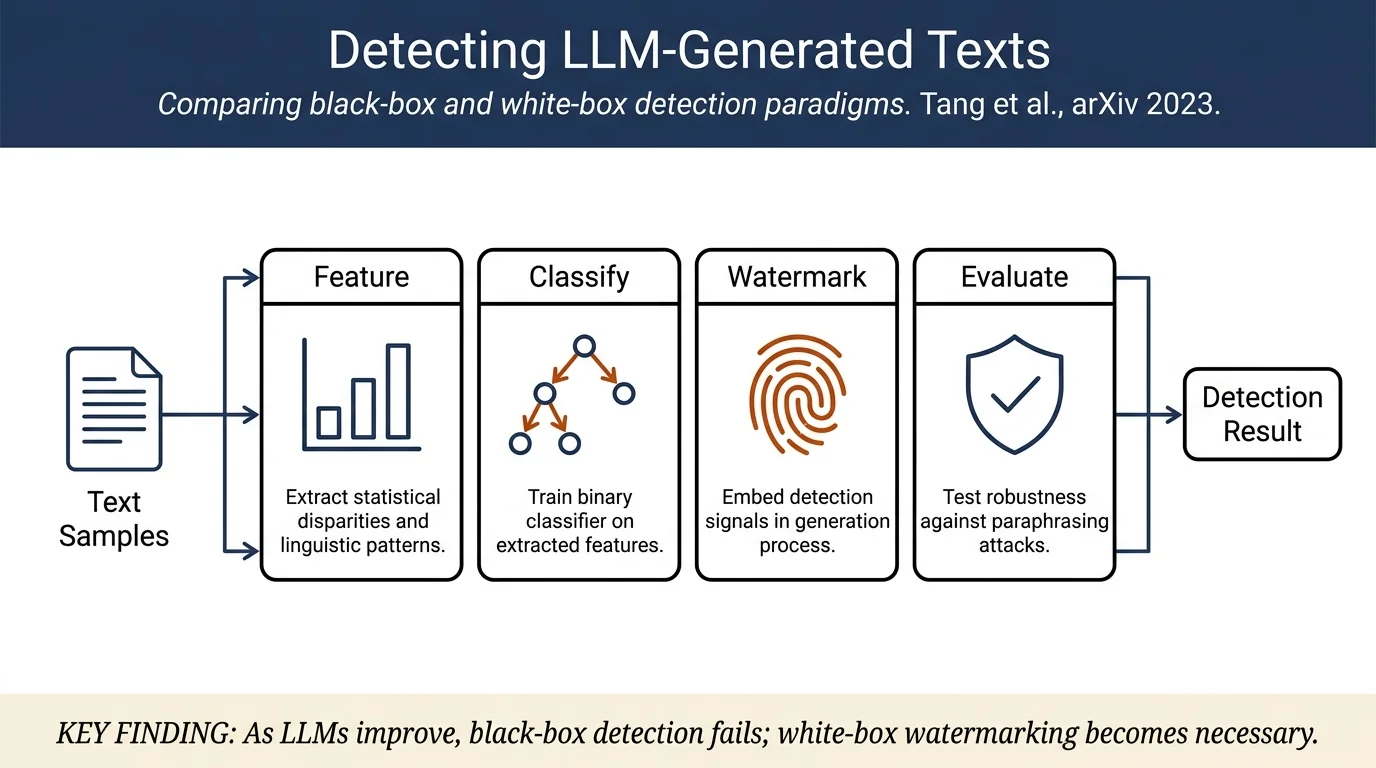
The Science of Detecting LLM-Generated TextsThis survey comprehensively reviews techniques for detecting LLM-generated text, a critical problem given concerns about misinformation, academic dishonesty, and unauthorized use. The authors categorize detection approaches into black-box (API-level access) and white-box (full model access) methods, discuss watermarking strategies,…
 LLMs & generative AIDetection methods
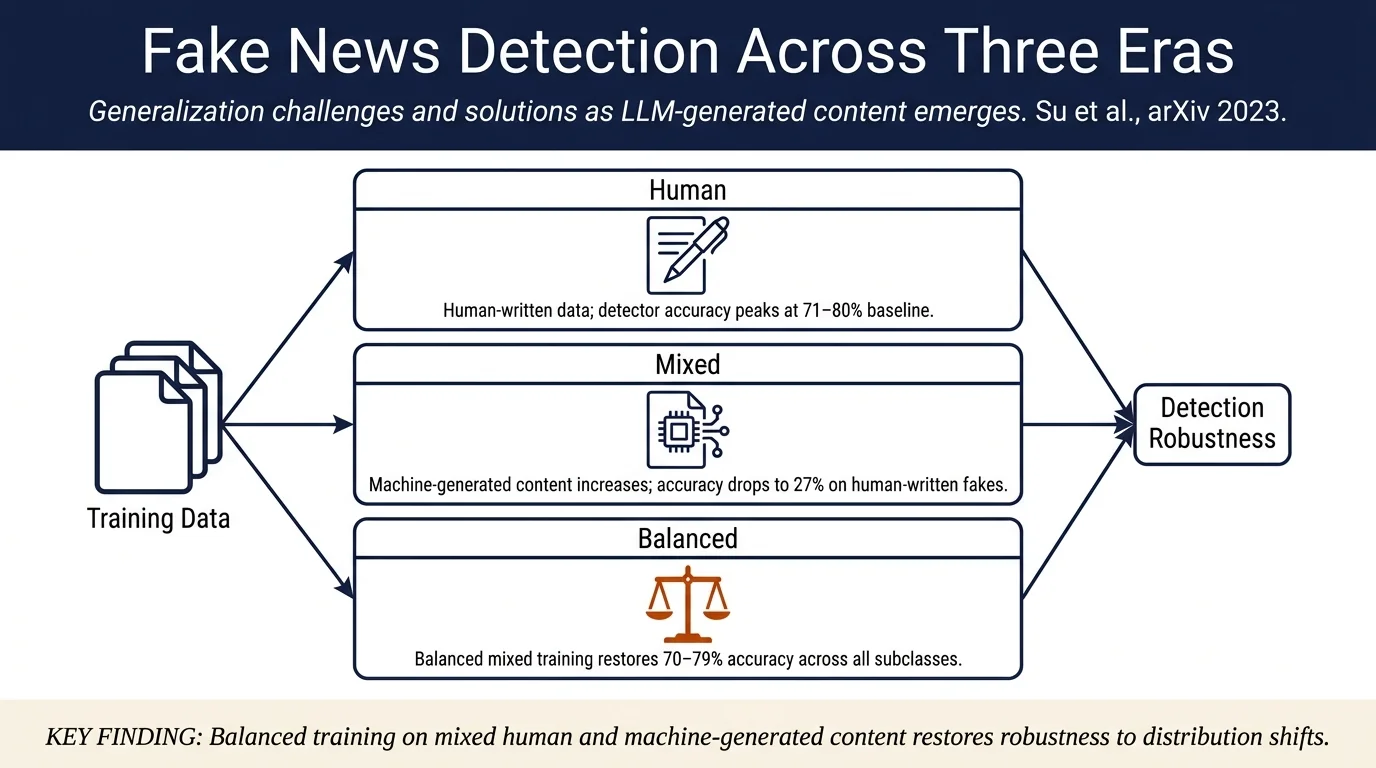
Adapting Fake News Detection to the Era of Large Language ModelsAs large language models proliferate and machine-generated text becomes prevalent, traditional fake news detectors trained exclusively on human-written content are increasingly unreliable. This paper evaluates fake news detectors across three hypothetical eras—human-written dominance, mixed human-machine content, and machine-generated…
 Fact-checking & verificationLLMs & generative AI
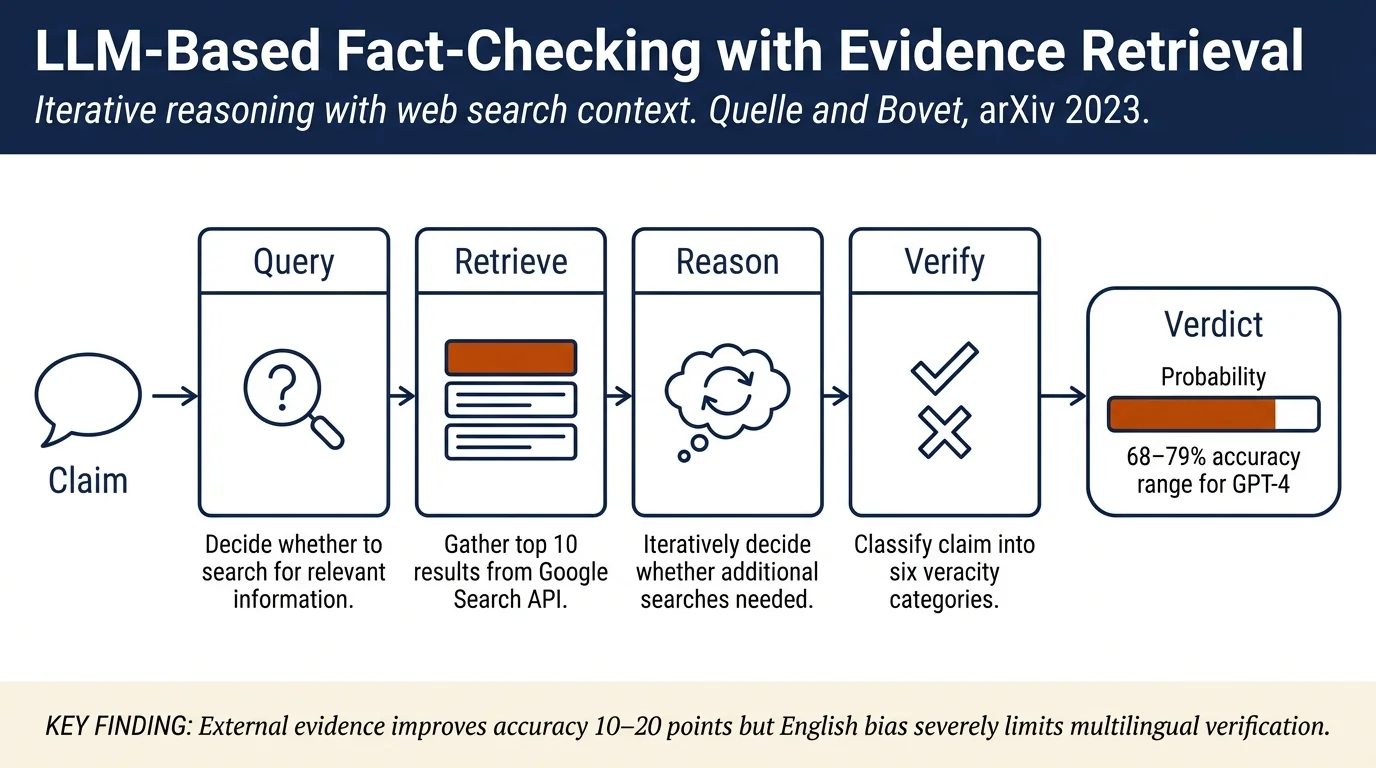
The Perils & Promises of Fact-checking with Large Language ModelsThis paper evaluates GPT-3.5 and GPT-4's ability to fact-check claims across English-only and multilingual datasets, showing GPT-4 substantially outperforms GPT-3.5 but both models show inconsistent accuracy when dealing with ambiguous verdicts. Critically, incorporating contextual information via Google Search significantly improves…
 LLMs & generative AIPlatforms, policy & society
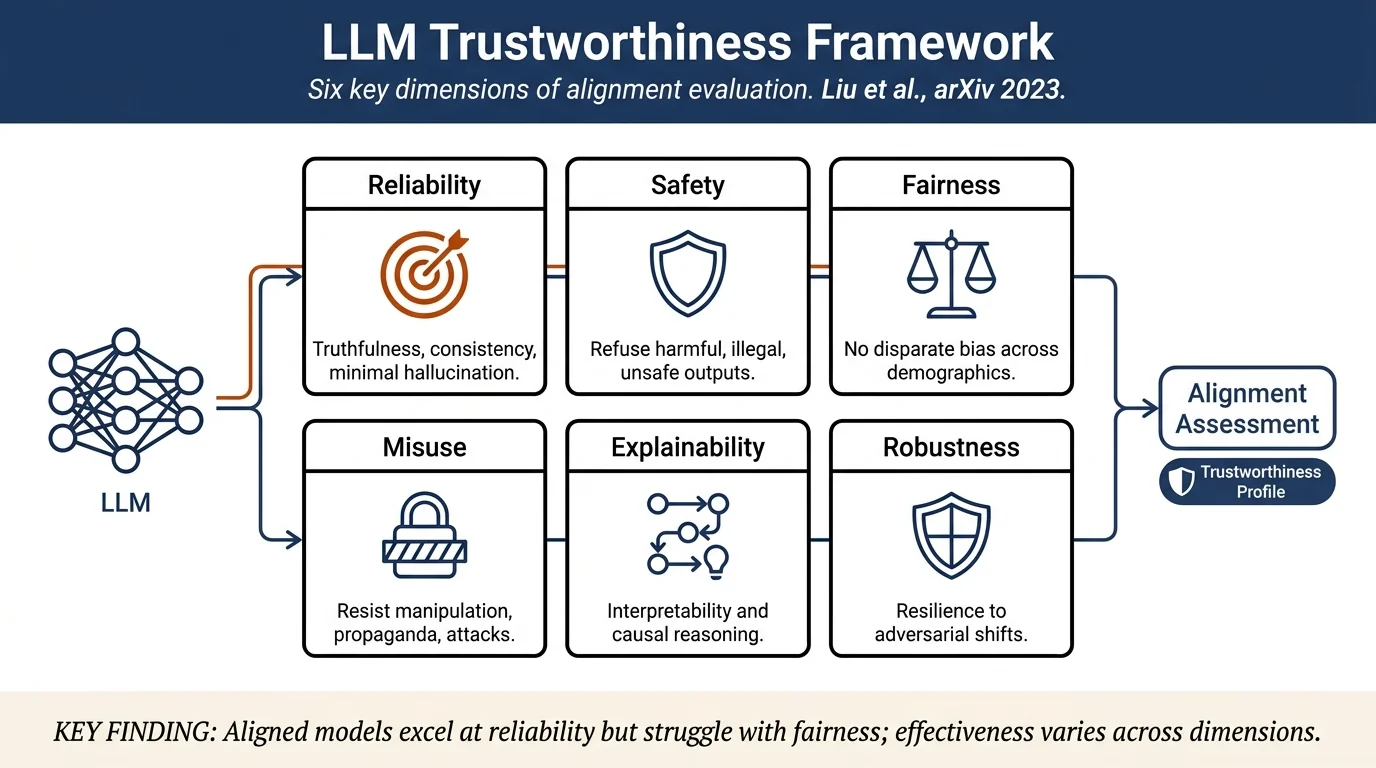
Trustworthy LLMs: A Survey and Guideline for Evaluating Large Language Models' AlignmentThis survey provides a comprehensive framework for evaluating LLM trustworthiness across seven dimensions: reliability, safety, fairness, resistance to misuse, explainability, social norms, and robustness. The authors present a detailed taxonomy with 29 sub-categories, conduct empirical measurements on widely-used LLMs (GPT-4, ChatGPT,…
 LLMs & generative AIDatasets & evaluation
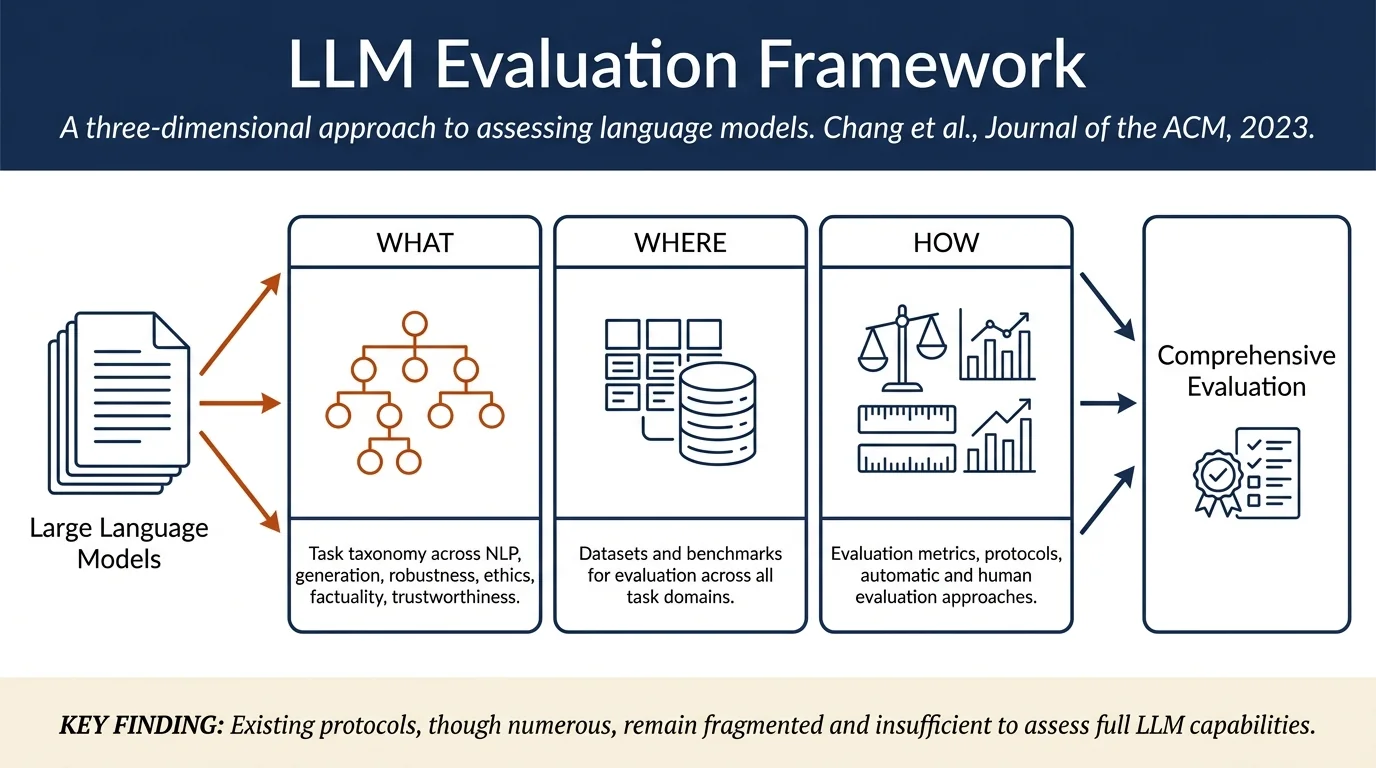
A Survey on Evaluation of Large Language ModelsThis survey provides a comprehensive review of evaluation methodologies for large language models across three dimensions: what to evaluate, where to evaluate, and how to evaluate. The paper encompasses evaluation tasks spanning natural language processing, natural language generation, robustness, ethics, bias detection, trustworthiness,…
 LLMs & generative AIDatasets & evaluation
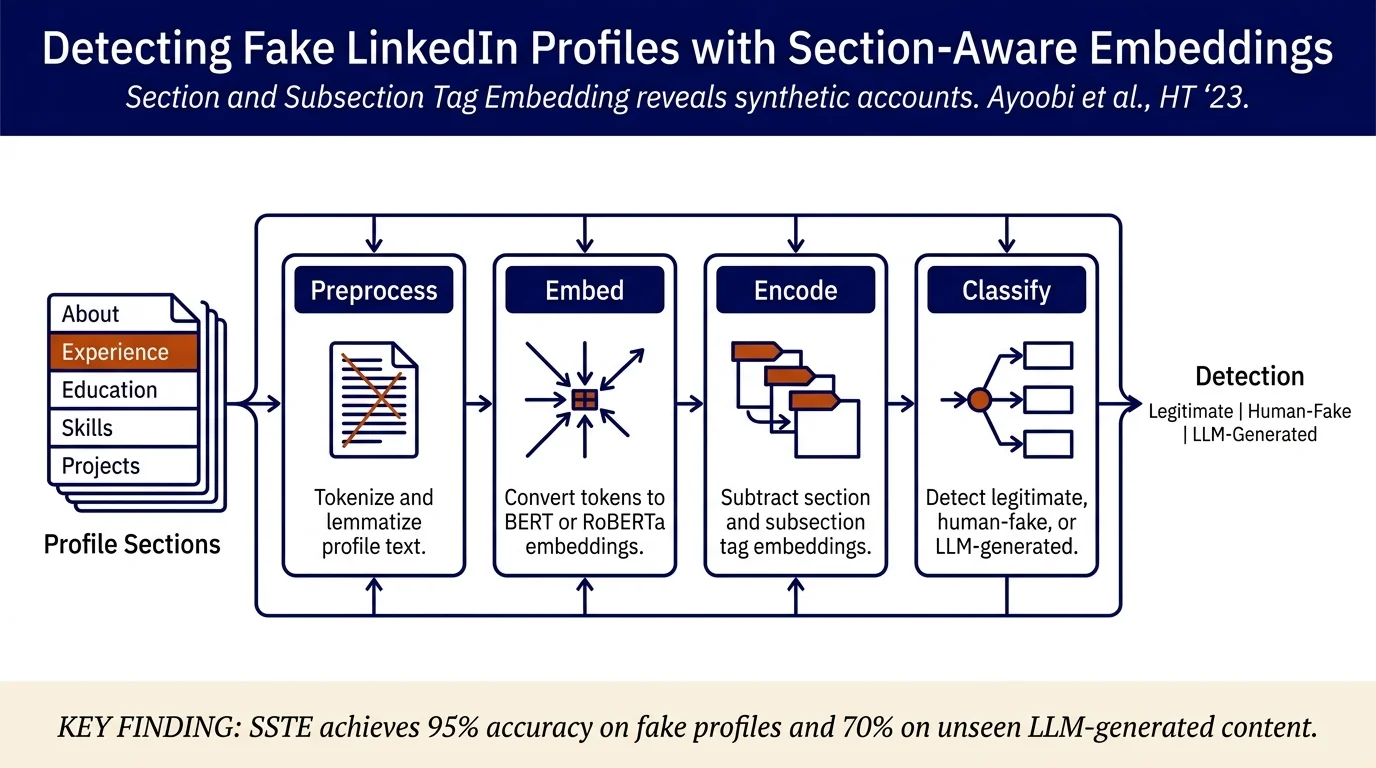
The Looming Threat of Fake and LLM-generated LinkedIn Profiles: Challenges and Opportunities for Detection and PreventionLinkedIn's lack of verification enables fake accounts that harm legitimate users and the platform's integrity. This work introduces a dataset of 3600 profiles (legitimate, manually created fake, and ChatGPT-generated) and proposes SSTE, a method that detects fake profiles immediately after registration using only profile text.
 Detection methodsLLMs & generative AI
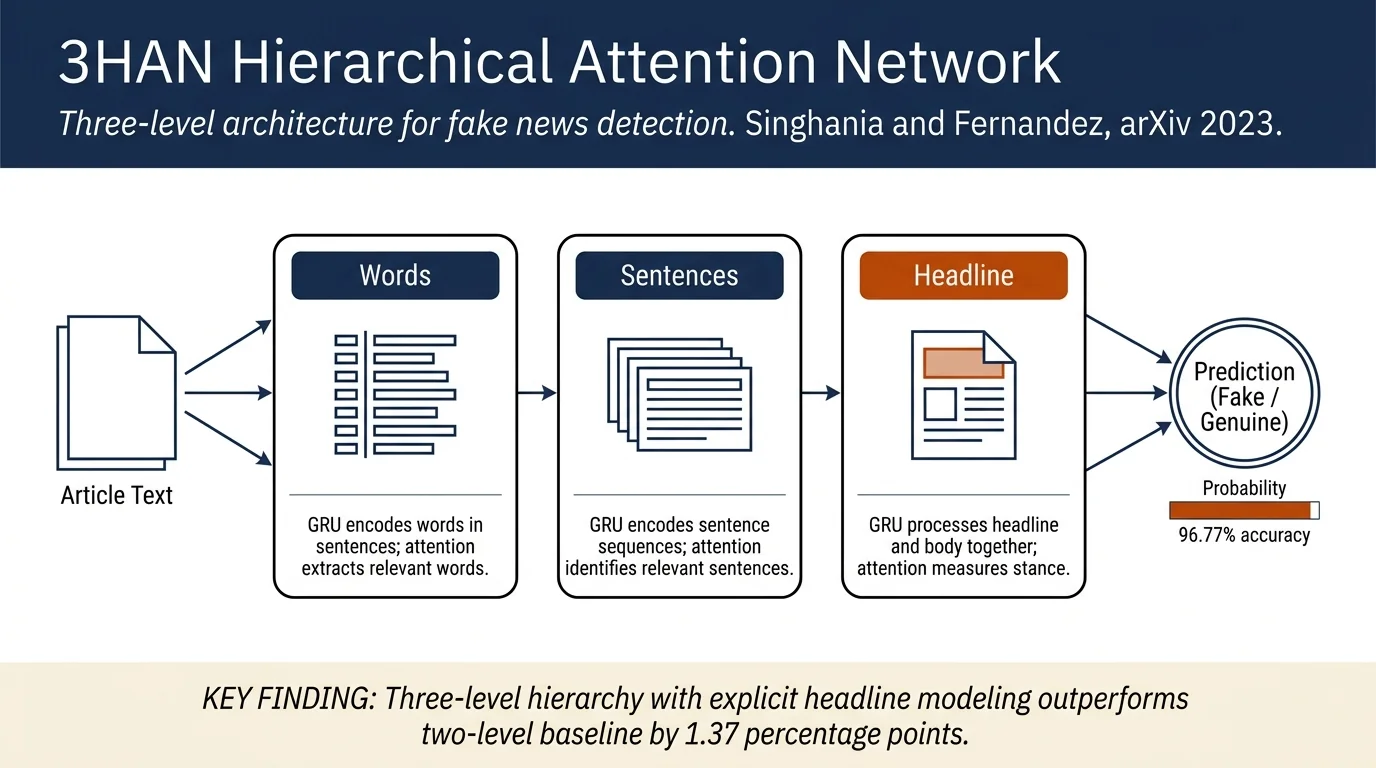
3HAN: A Deep Neural Network for Fake News DetectionProposes 3HAN, a three-level hierarchical attention network for fake news detection that models articles as a hierarchy of words, sentences, and headlines. The model assigns differential importance weights to different parts via attention mechanisms, achieving 96.77% accuracy while providing interpretable attention visualizations showing…
 Detection methodsLLMs & generative AI
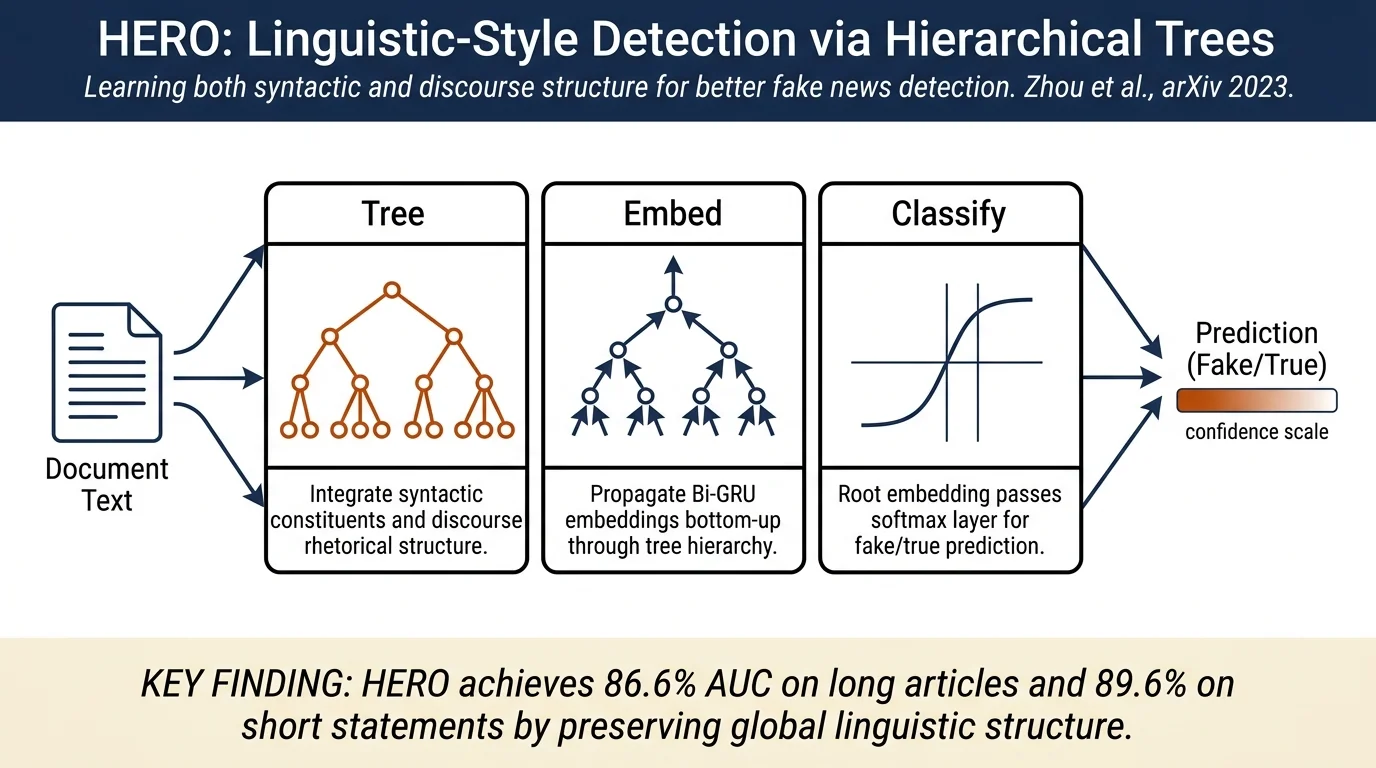
Linguistic-style-aware Neural Networks for Fake News DetectionHERO (Hierarchical Recursive Neural Network) detects fake news by learning the linguistic style encoded in hierarchical linguistic trees — structures that jointly capture syntactic constituency and rhetorical discourse organization from word to document. Unlike prior handcrafted approaches that extract node-level statistics (word…