Explore papers
Filter by research area, year and venue. Every filter is in the address bar, so you can share a view as a link.
 Spread & networksPlatforms, policy & society
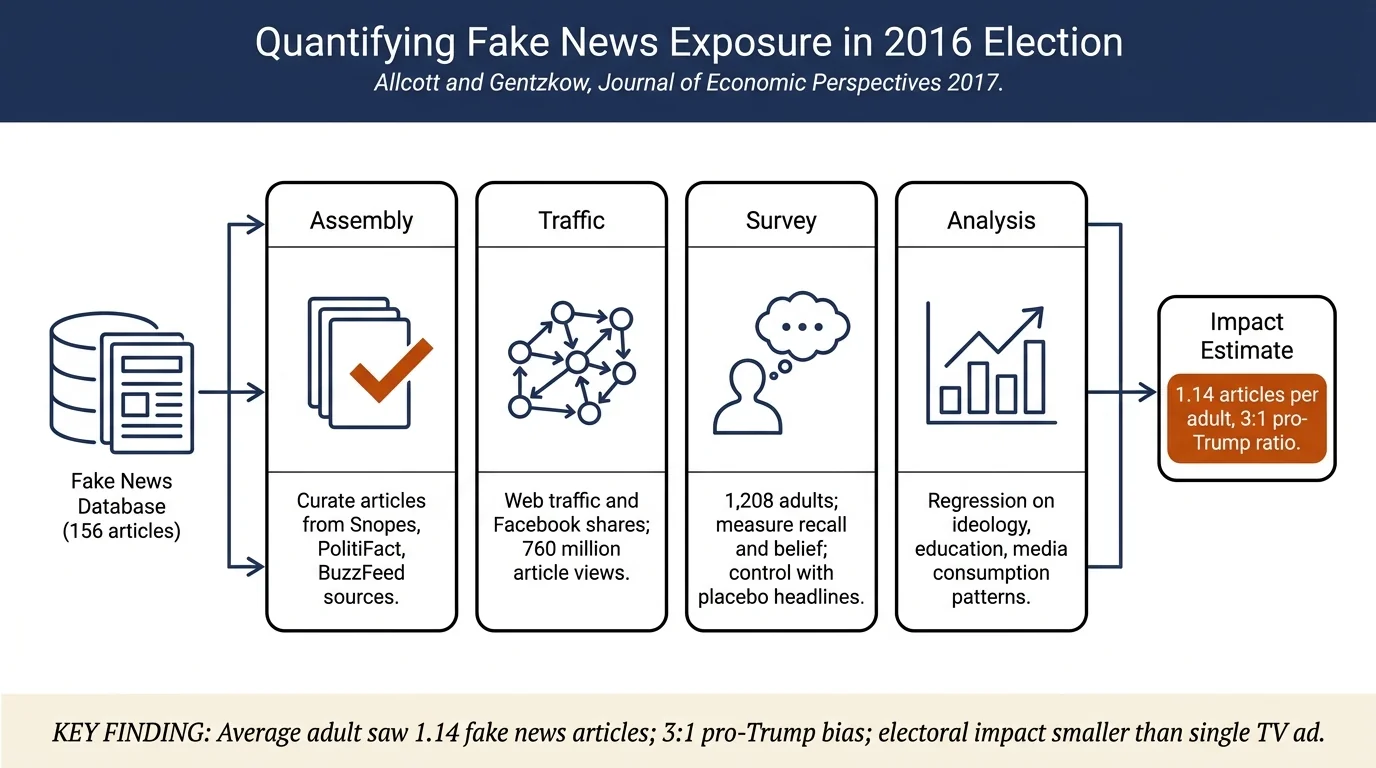
Social Media and Fake News in the 2016 ElectionAllcott and Gentzkov provide the first comprehensive empirical evidence on fake news exposure during the 2016 US election. Drawing on a curated database of 156 fake news articles, web traffic data, and a post-election survey of 1,200 adults, they estimate the average American saw and remembered 1.14 fake news articles during the election…
 Spread & networksPsychology & interventions
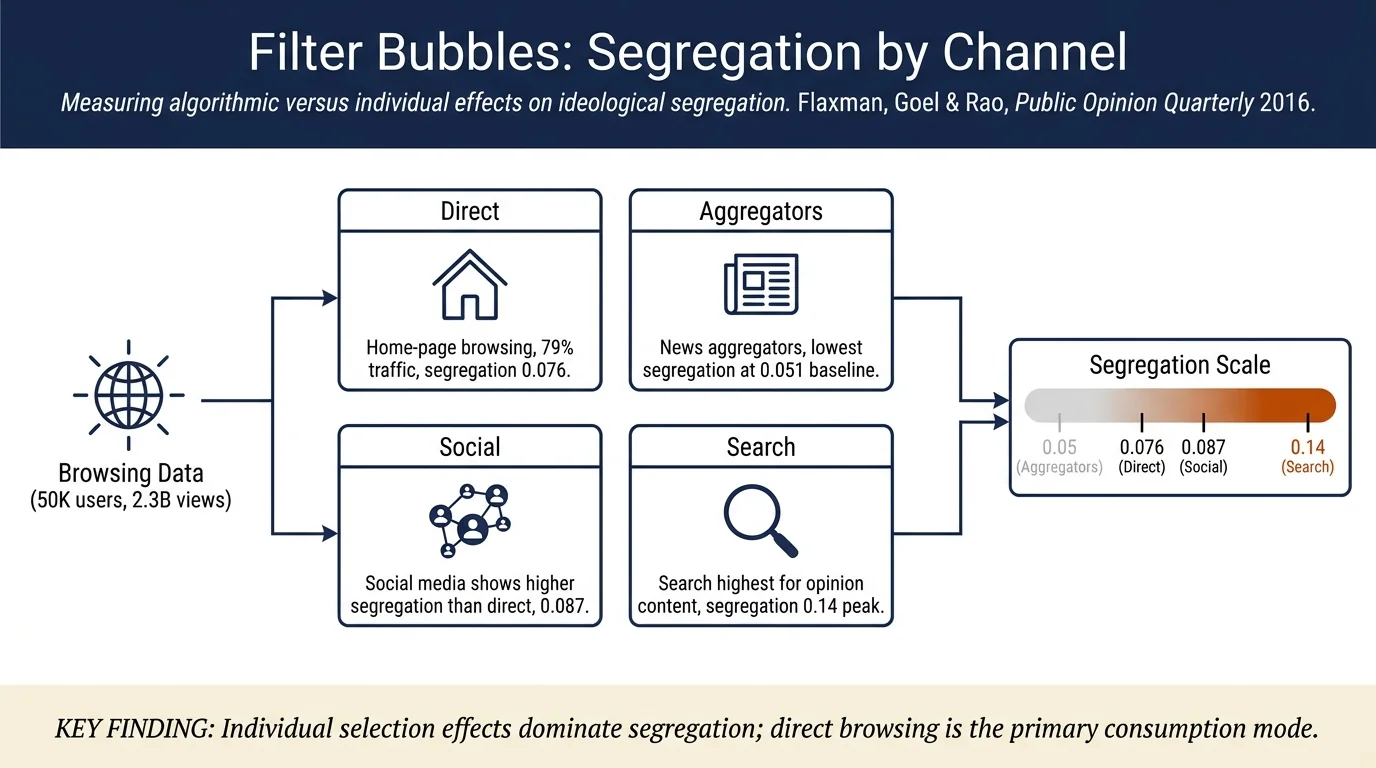
Filter Bubbles, Echo Chambers, and Online News ConsumptionThis paper examines whether technological changes (social media, search engines) increase ideological segregation in online news consumption by analyzing web-browsing data from 50,000 active news readers. They find that while social media and search are associated with higher segregation than direct browsing, the overall effects are…
 Datasets & evaluationFact-checking & verification
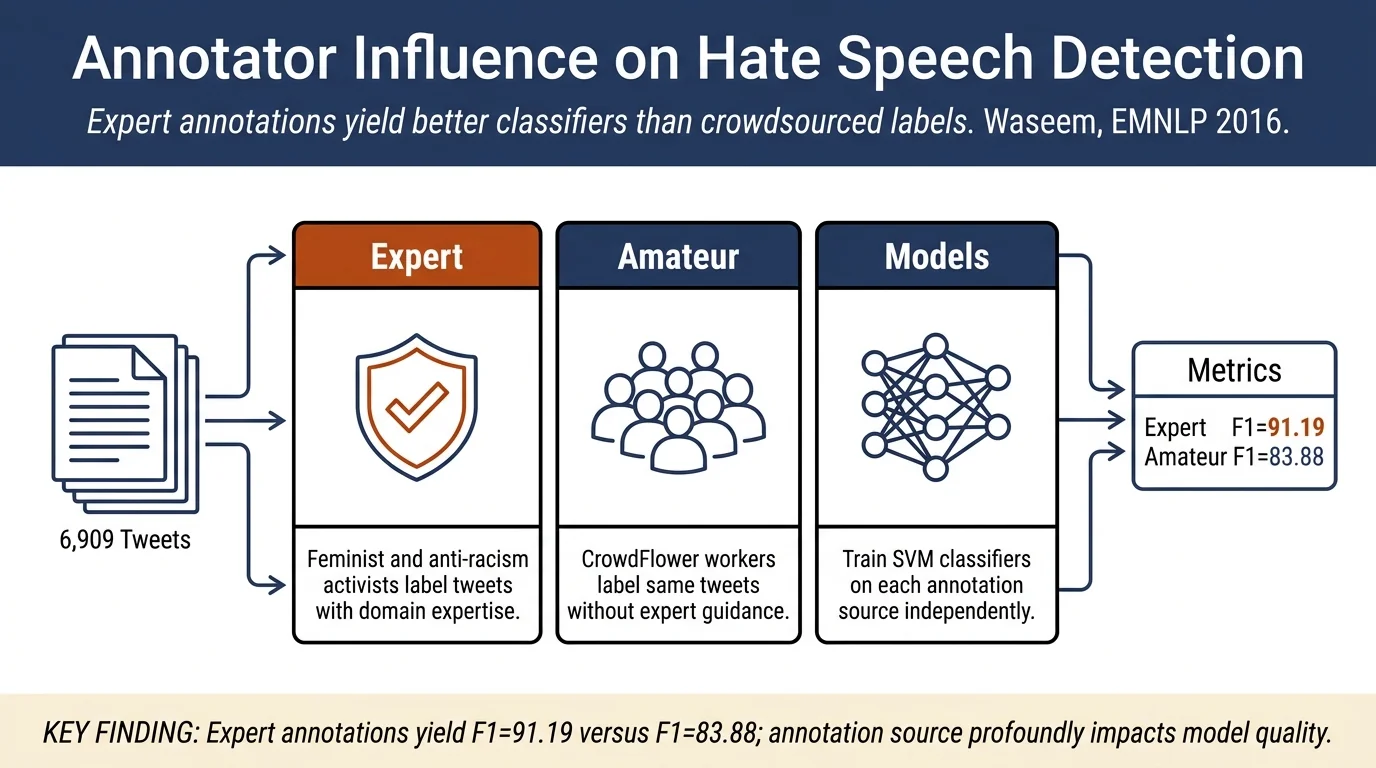
Are You a Racist or Am I Seeing Things? Annotator Influence on Hate Speech Detection on TwitterThis paper compares hate speech detection systems trained on expert annotations (from feminist and anti-racism activists) versus amateur annotations (crowdsourced via CrowdFlower) on 6,909 tweets. Systems trained on expert annotations significantly outperform those trained on amateur data, and amateur annotators systematically label more…
 Bots & coordinated campaignsDatasets & evaluation
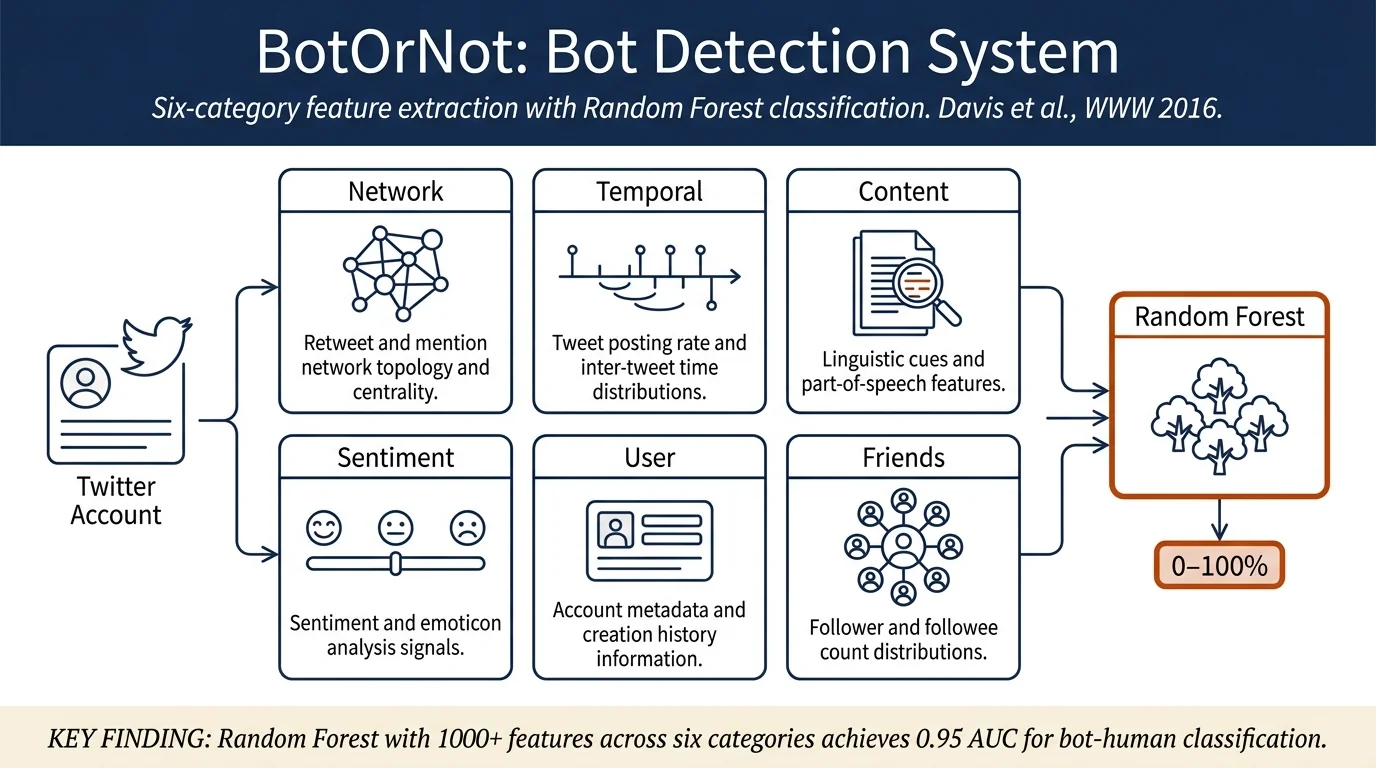
BotOrNot: A System to Evaluate Social BotsBotOrNot is a publicly available service and API that evaluates whether a Twitter account is controlled by a human or automated bot. Using 1,000+ features across six categories (network, user, friends, temporal, content, sentiment), the system applies Random Forest classification to achieve 0.95 AUC on a labeled dataset of 15k bots and…
 Spread & networksPlatforms, policy & society
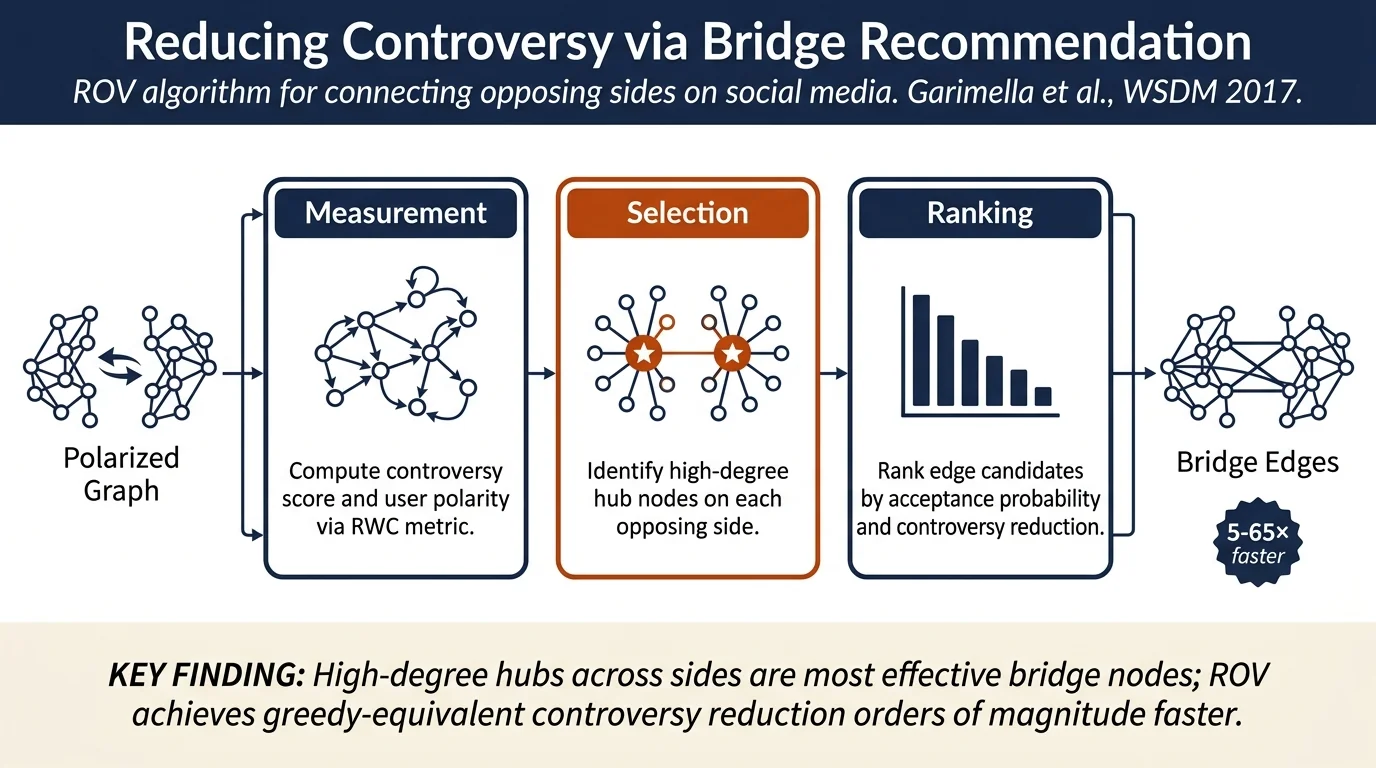
Reducing Controversy by Connecting Opposing ViewsThis paper proposes an algorithmic approach to reduce polarization on social media by recommending social connections (edges) between opposing sides. Using an endorsement graph representation and the random-walk-based controversy metric, the authors formulate the problem as k-edge-addition and develop an efficient algorithm (ROV) that…
 Fact-checking & verificationPlatforms, policy & society
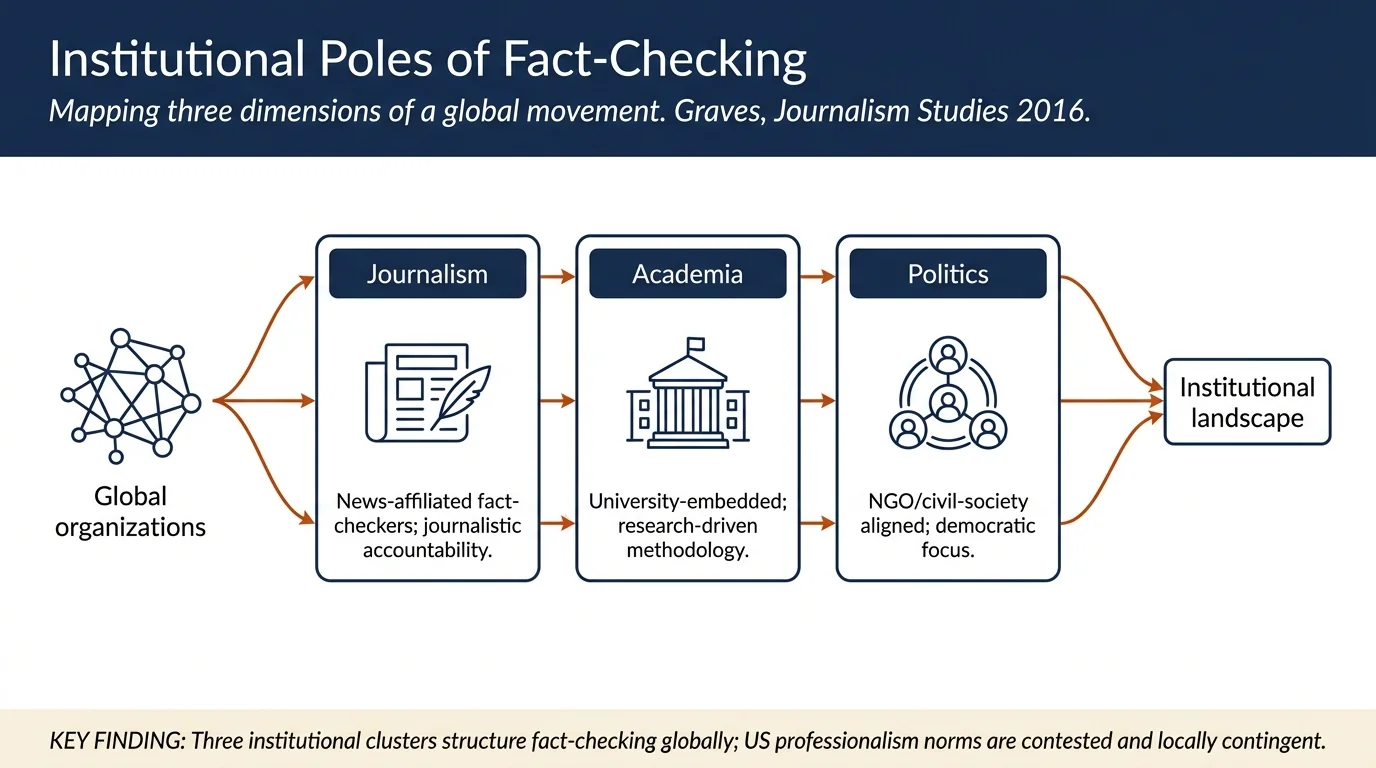
Boundaries Not Drawn: Mapping the institutional roots of the global fact-checking movementGraves maps the institutional landscape of 64+ fact-checking organizations globally across two summits (2014–2015), using ethnographic fieldwork and ternary plots to sort organizations along three axes: journalism, academia, and politics/civil society. The movement has a journalistic core but exhibits striking institutional diversity and…
 Spread & networksPlatforms, policy & society
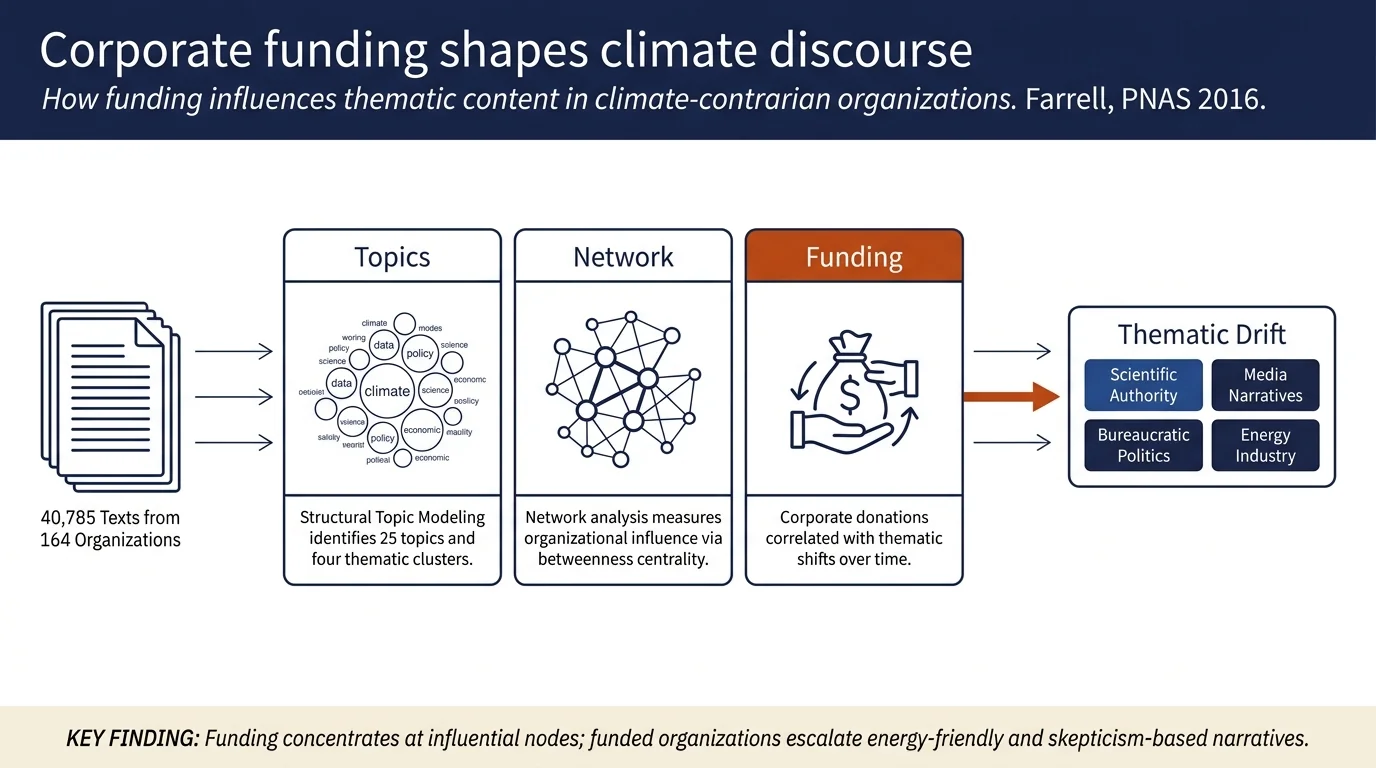
Corporate funding and ideological polarization about climate changeFarrell analyzes 40,785 texts (39+ million words) from 164 climate contrarian organizations between 1993–2013, employing Structural Topic Modeling and social network analysis to demonstrate that corporate funding from entities like ExxonMobil and Koch family foundations directly influences which polarization themes are created and…
 Bots & coordinated campaignsDetection methods
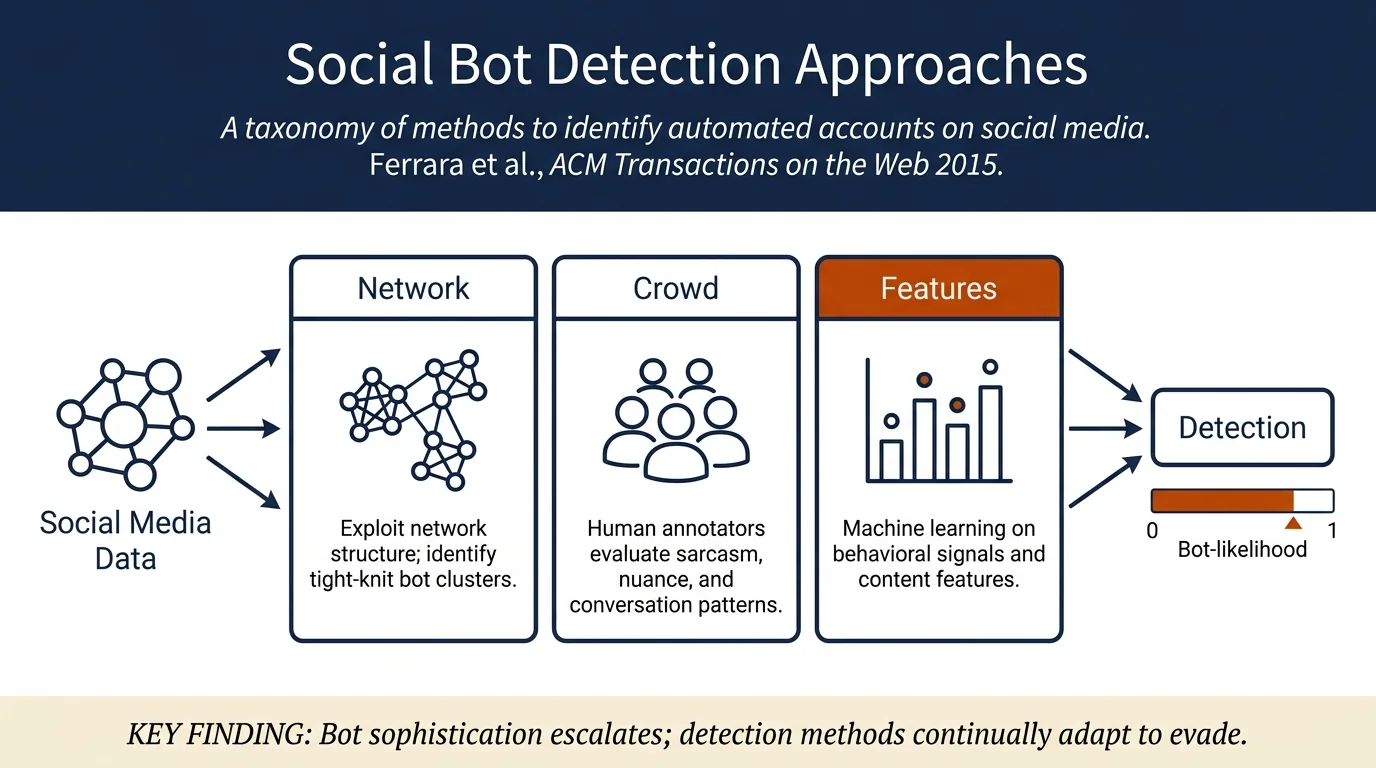
The Rise of Social BotsSocial bots—automated software agents in social media—are increasingly sophisticated and pose real threats including misinformation spread, trend manipulation, and election interference. This paper characterizes modern bot behavior, surveys detection challenges, and proposes a taxonomy of detection approaches: graph-based methods…
 Platforms, policy & societyPsychology & interventions
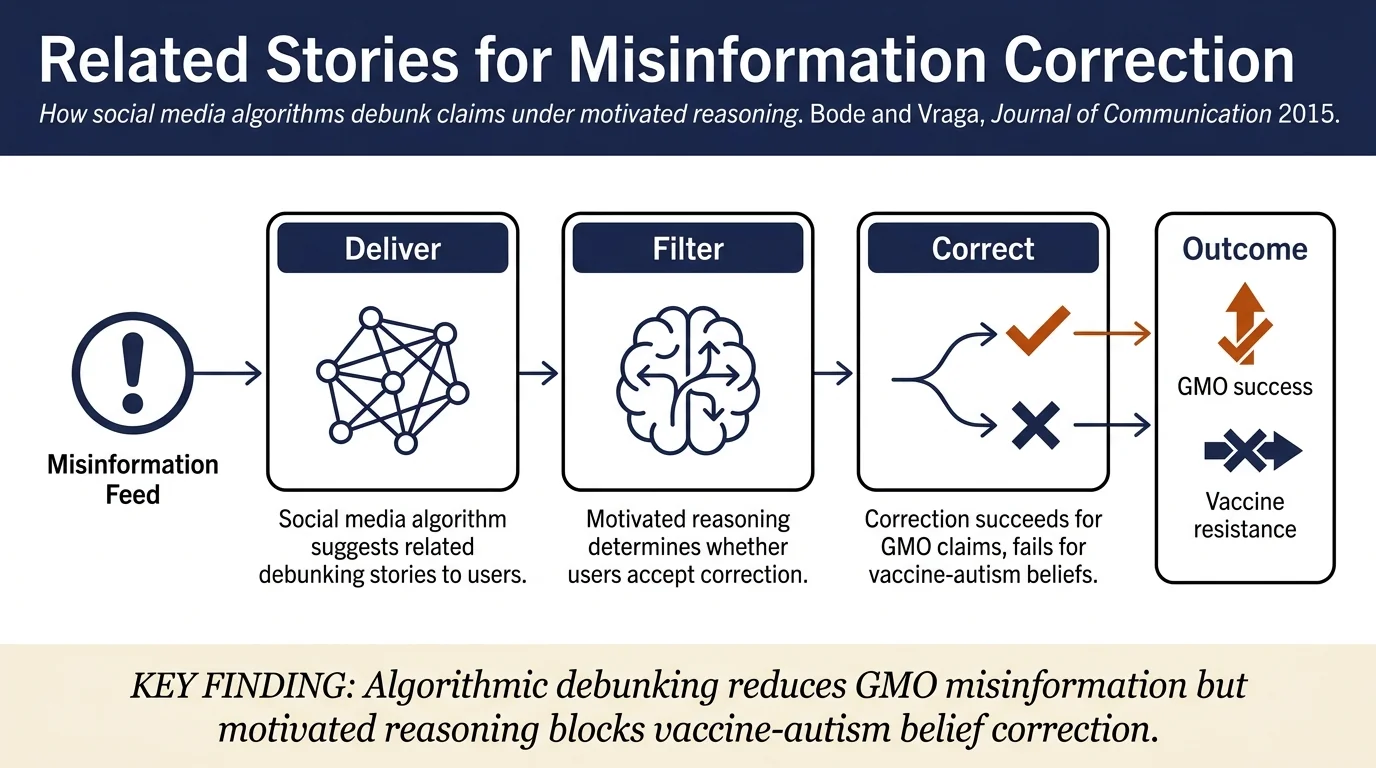
In Related News, That Was Wrong: The Correction of Misinformation Through Related Stories Functionality in Social MediaThis study tests whether Facebook's "related stories" feature can correct misinformation by exposing users to debunking information. Two experiments (students and Mechanical Turk workers) examined vaccine-autism and GMO-illness misperceptions.
 Psychology & interventionsFact-checking & verification
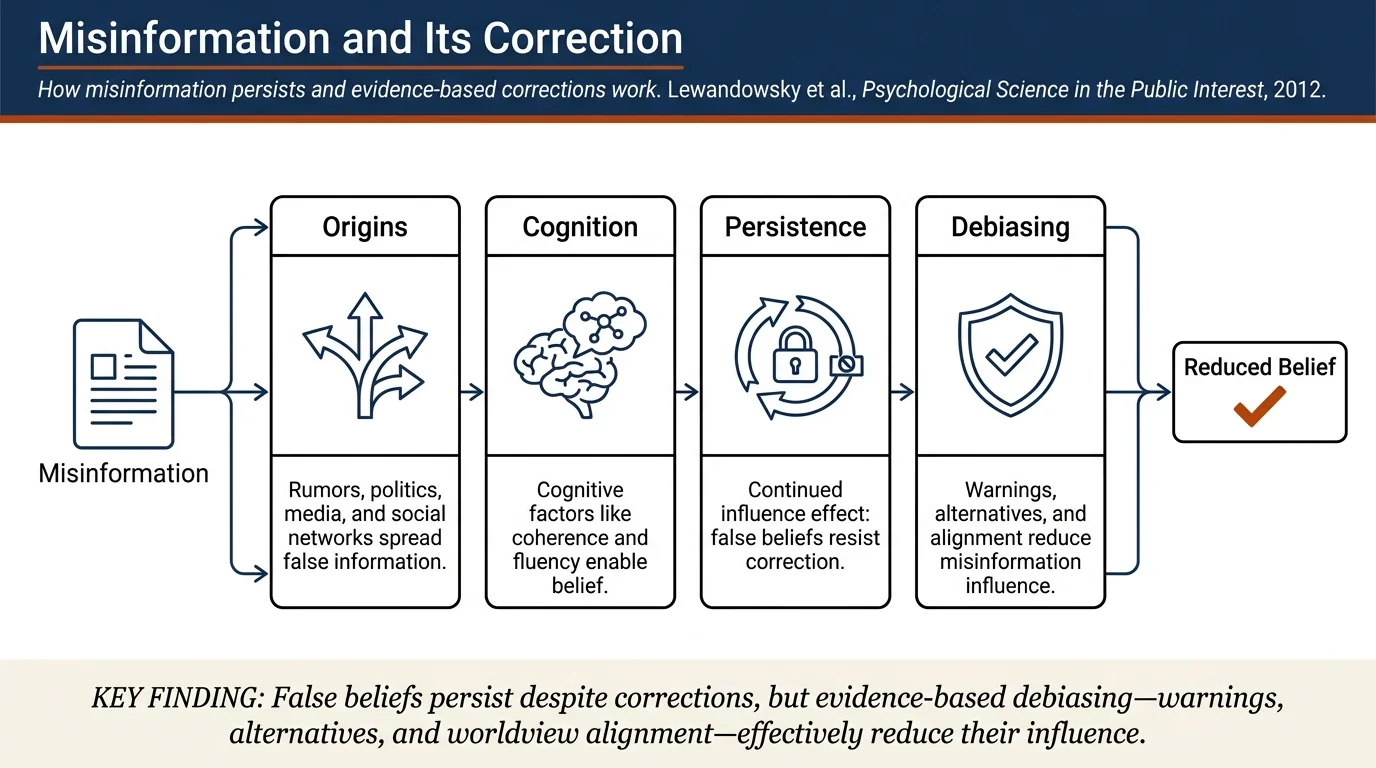
Misinformation and Its Correction: Continued Influence and Successful DebiasingThis comprehensive review synthesizes literature on why false beliefs persist despite corrections, examining cognitive mechanisms (coherence, credibility, source confusion, fluency) that render misinformation resistant to change. The authors propose evidence-based debiasing strategies—warnings, alternative explanations, repeated…
 Spread & networksBots & coordinated campaigns
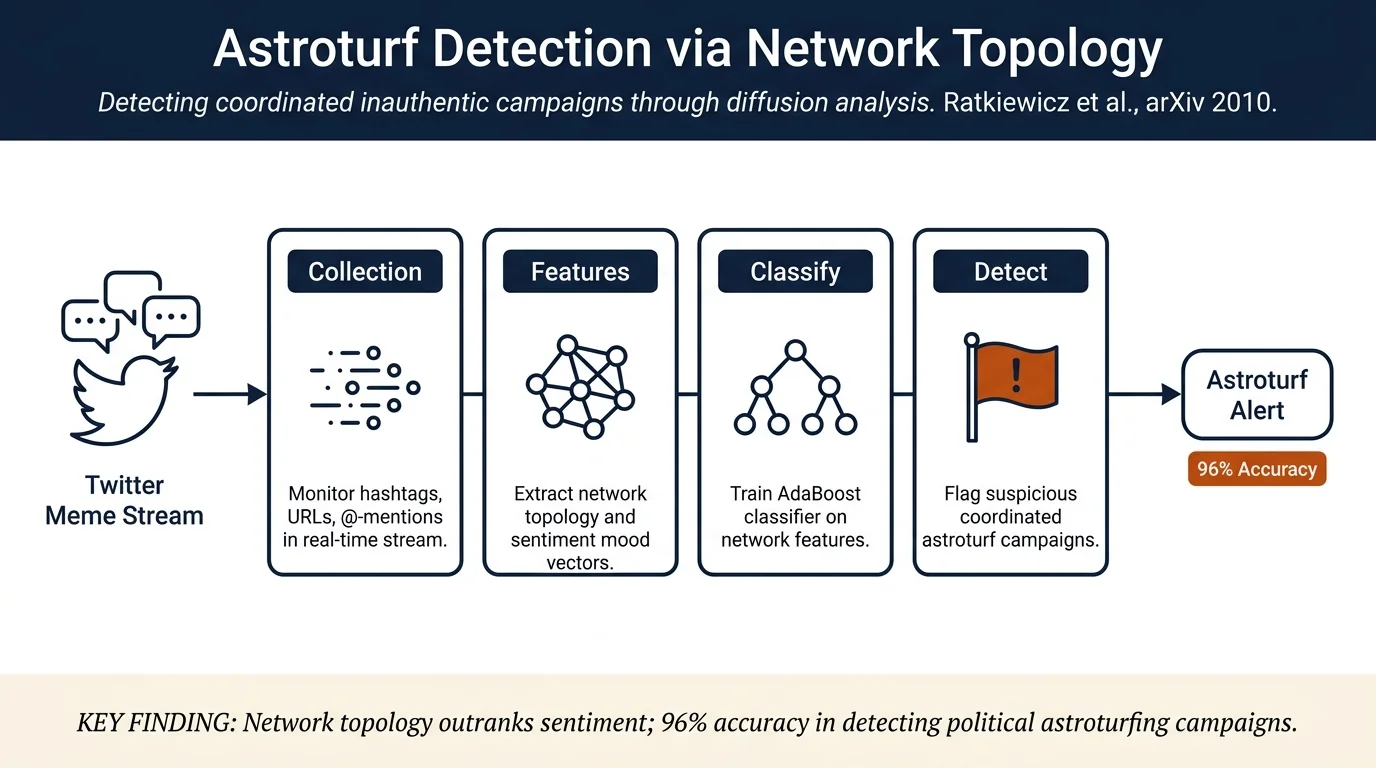
Detecting and Tracking the Spread of Astroturf Memes in Microblog StreamsPolitical campaigns increasingly use social media to amplify deceptive memes that mimic organic grassroots behavior—termed "astroturfing." This paper introduces the Truthy system, which analyzes meme diffusion networks on Twitter to detect orchestrated campaigns through network topology and sentiment analysis, achieving ~90%…
 Spread & networksDatasets & evaluation
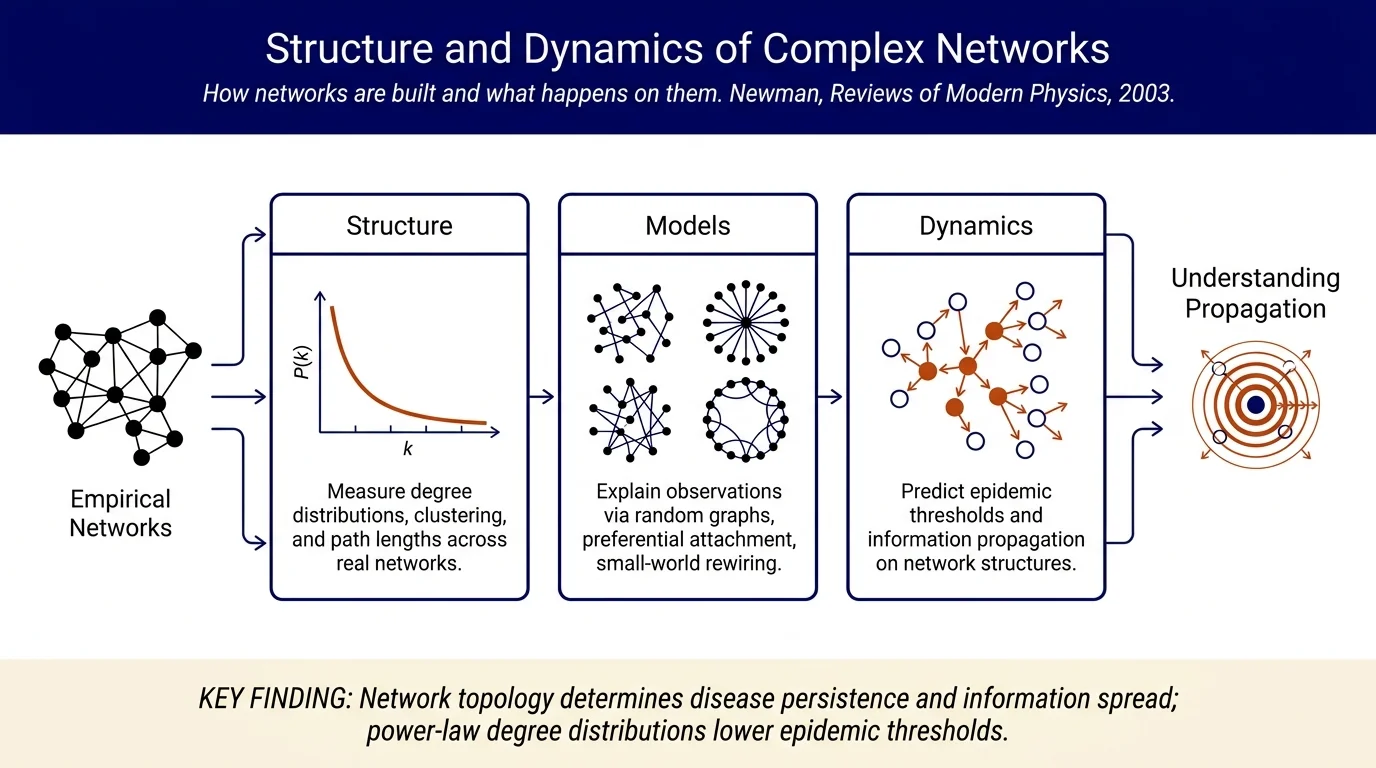
The structure and function of complex networksThis comprehensive review surveys the properties and mathematical models of complex networks across diverse domains: social networks, the Internet, biological networks, and collaboration networks. Newman covers observed structural properties (degree distributions, clustering, small-world effects), foundational models (random graphs,…