Explore papers
Filter by research area, year and venue. Every filter is in the address bar, so you can share a view as a link.
 Psychology & interventionsPlatforms, policy & society
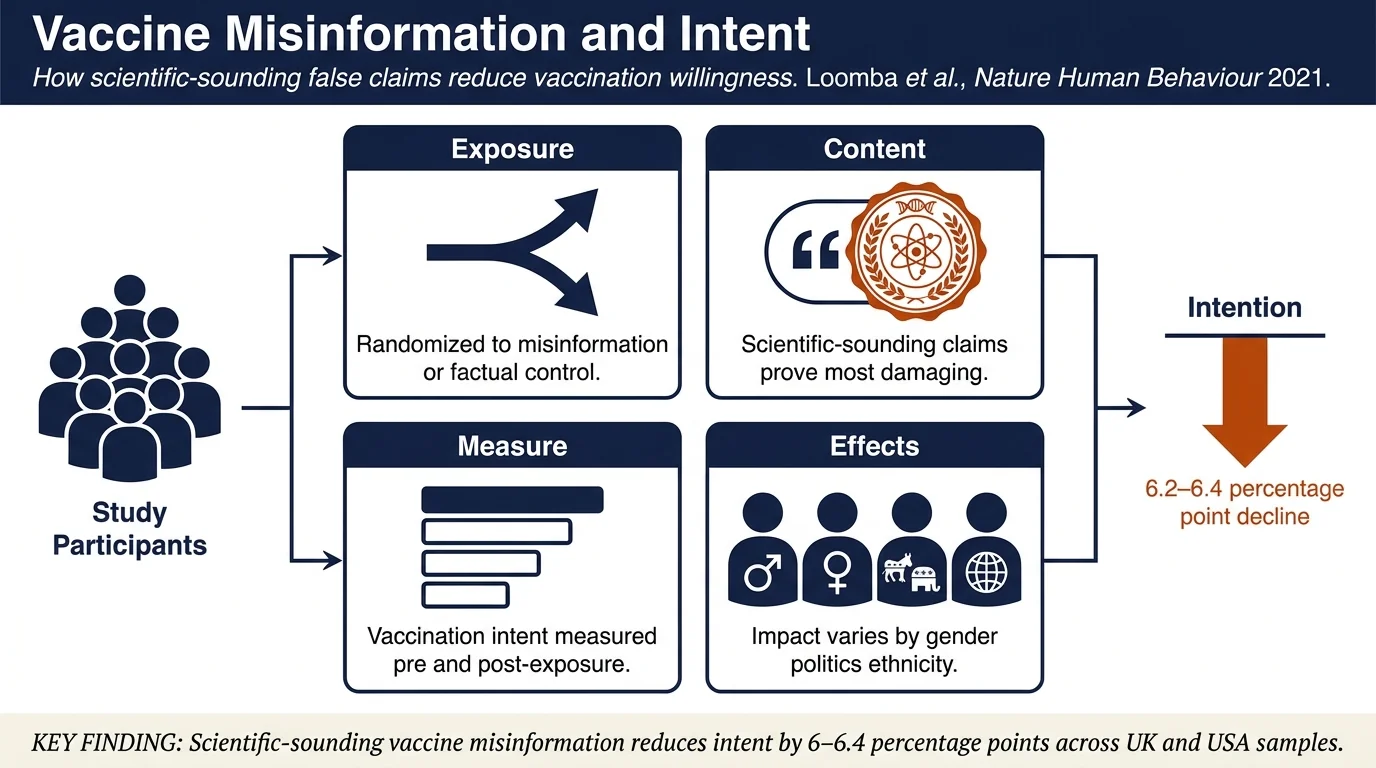
Measuring the impact of COVID-19 vaccine misinformation on vaccination intent in the UK and USARandomized controlled trial on 8,001 respondents (4,000 UK, 4,001 USA) measuring causal impact of exposure to COVID-19 vaccine misinformation. Exposure to misinformation reduced vaccination intent by 6.2 percentage points in the UK and 6.4 in the USA relative to exposure to factual information.
 Psychology & interventionsPlatforms, policy & society
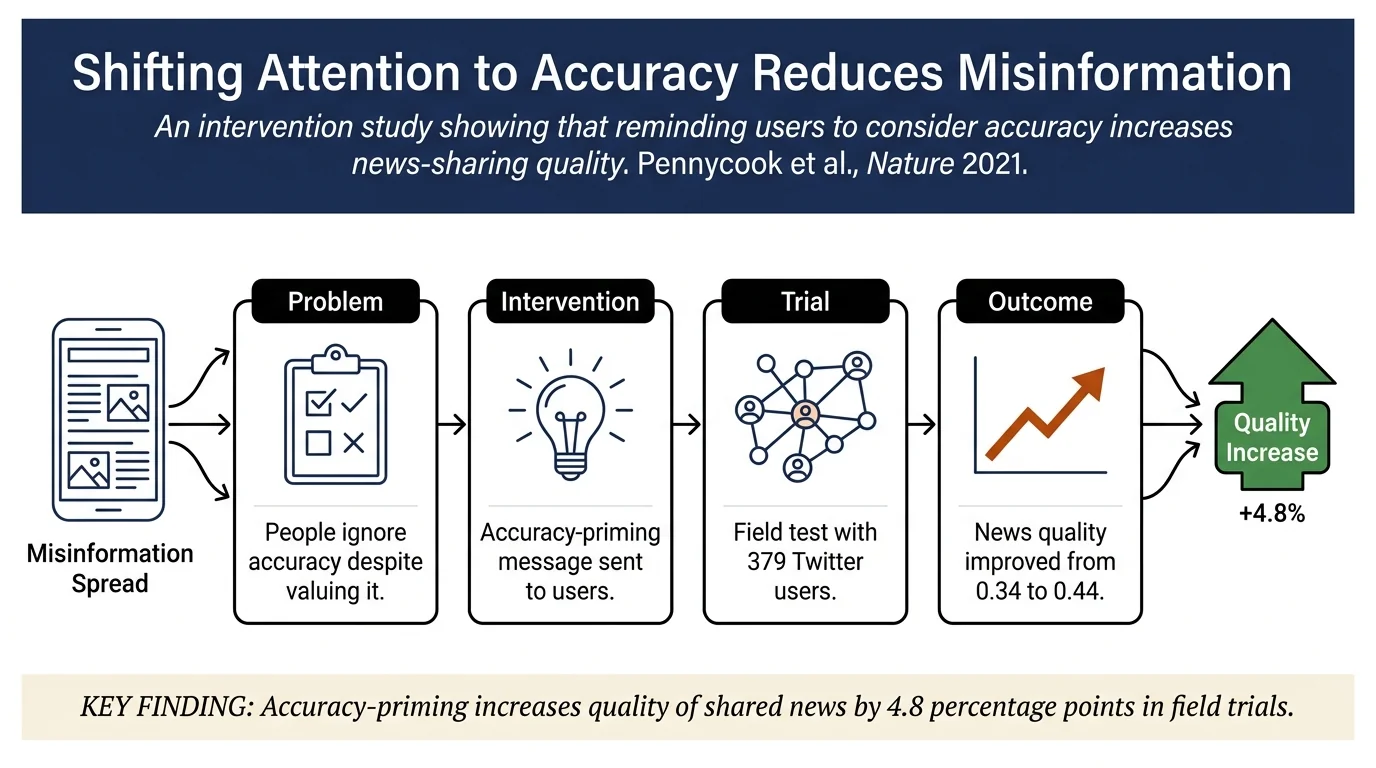
Shifting attention to accuracy can reduce misinformation onlineThe paper shows through six online experiments and a Twitter field trial that simply drawing people's attention to accuracy can substantially reduce their sharing of misinformation. When asked to rate the accuracy of headlines before deciding whether to share them, participants share more accurate content; a Twitter field experiment…
 Detection methodsLLMs & generative AI
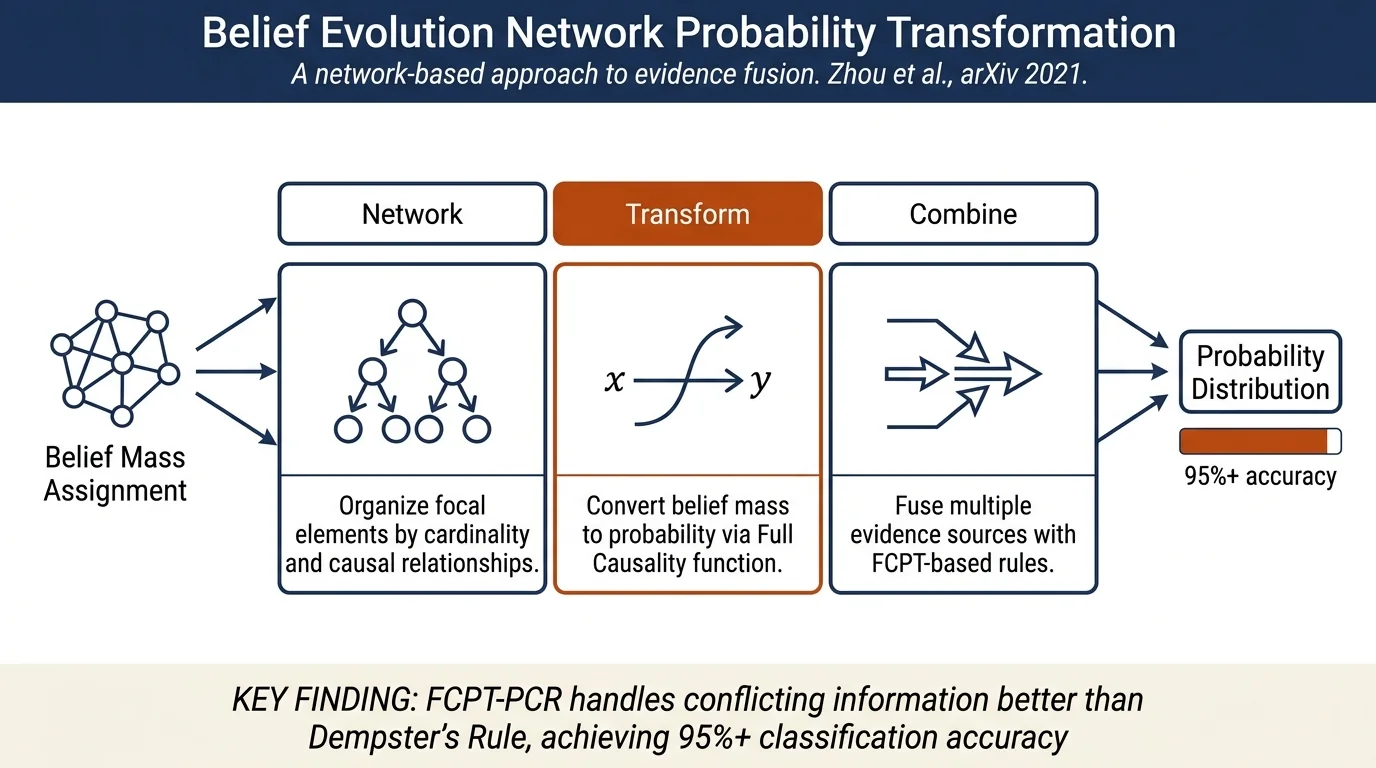
Belief Evolution Network-based Probability Transformation and FusionThis paper introduces a Belief Evolution Network (BEN) to model the evolution of belief functions and proposes a new Full Causality Probability Transformation (FCPT) method for converting belief mass assignments to probability distributions. The authors also propose FCPT-based fusion rules that outperform traditional Dempster's Rule of…
 LLMs & generative AIDeepfakes & multimodal
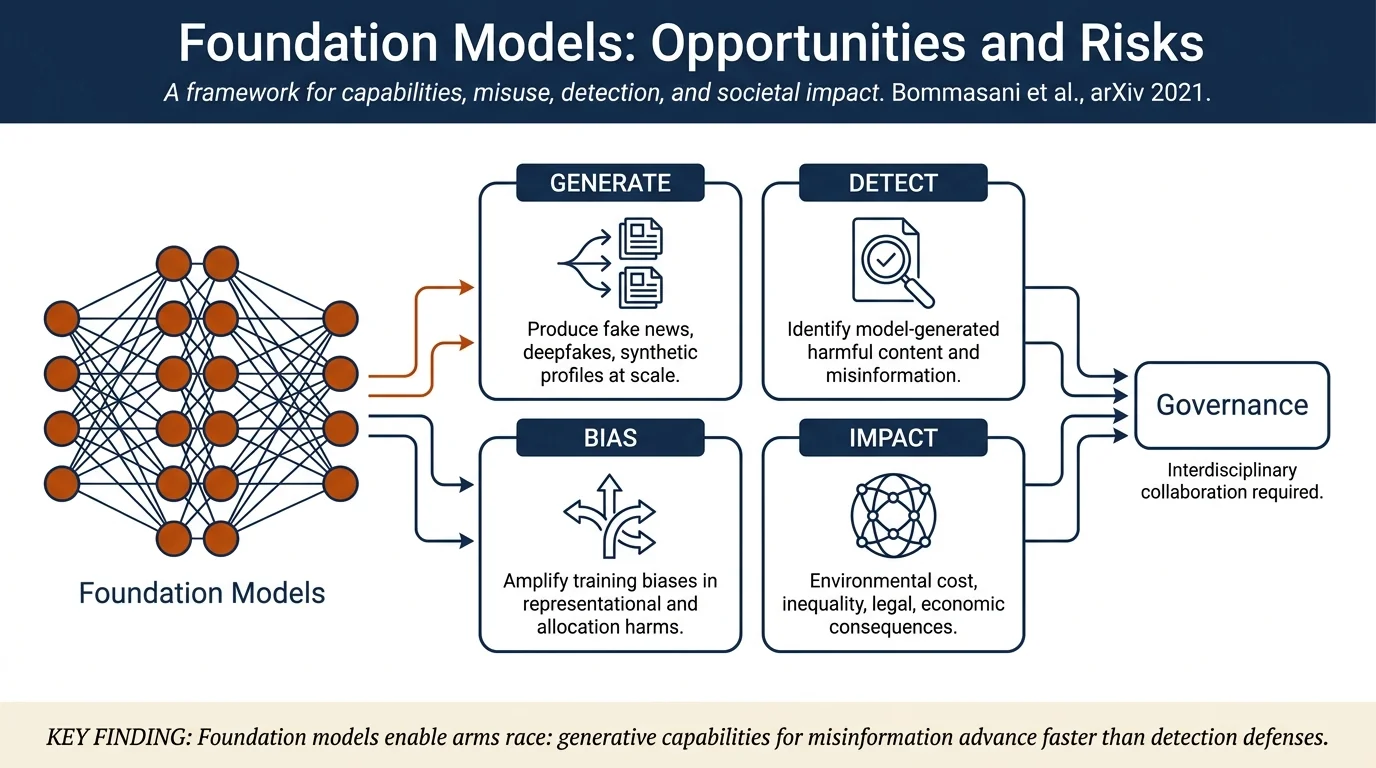
On the Opportunities and Risks of Foundation ModelsA comprehensive 214-page report analyzing foundation models—large neural networks trained on broad data that can be adapted to diverse downstream tasks (BERT, GPT-3, DALL-E). The report maps capabilities across language, vision, and reasoning; applications in healthcare, law, and education; and societal risks including misuse (generating…
 Spread & networksPlatforms, policy & society
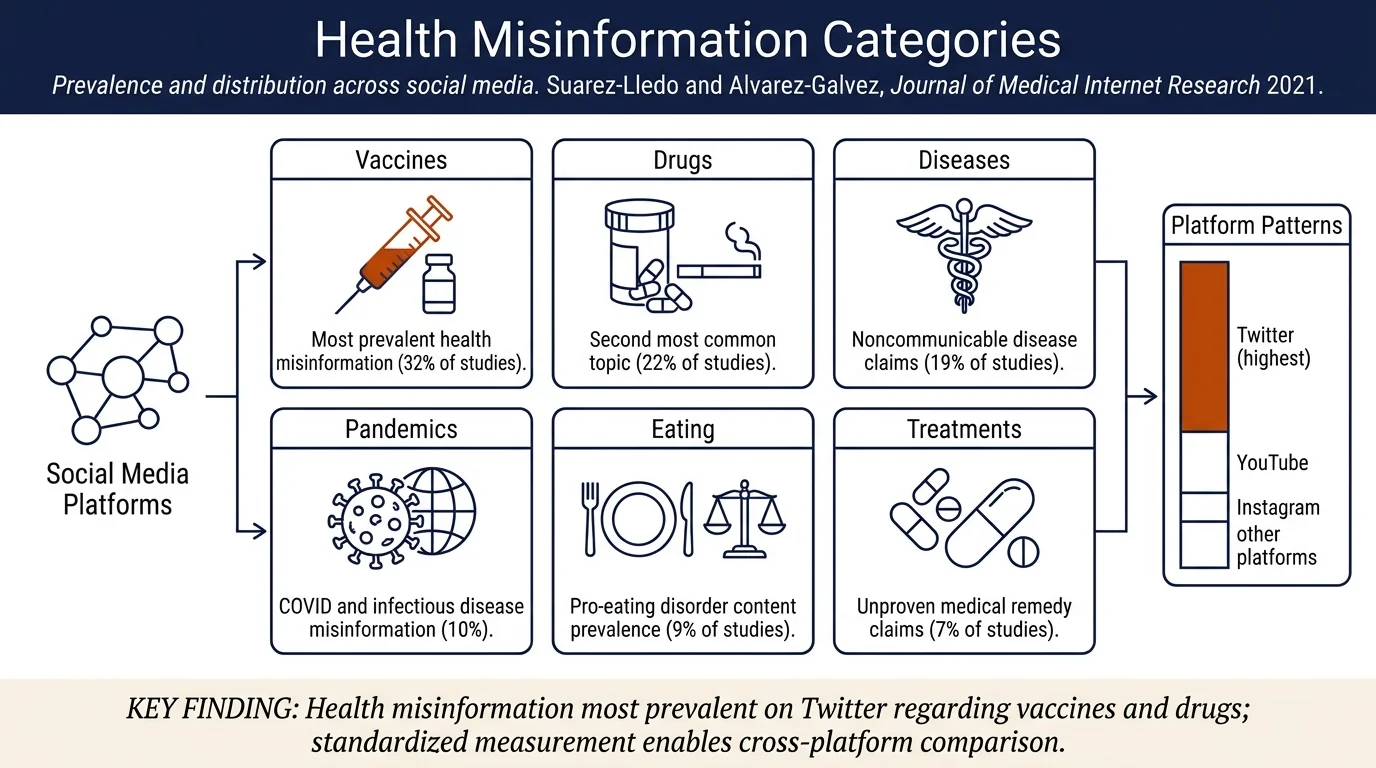
Prevalence of Health Misinformation on Social Media: Systematic ReviewThis systematic review of 69 studies characterizes health misinformation topics and their prevalence across social media platforms. Health misinformation was most prevalent on Twitter regarding smoking and drugs; vaccines, noncommunicable diseases, and pandemics were also common topics.
 Spread & networksPsychology & interventions
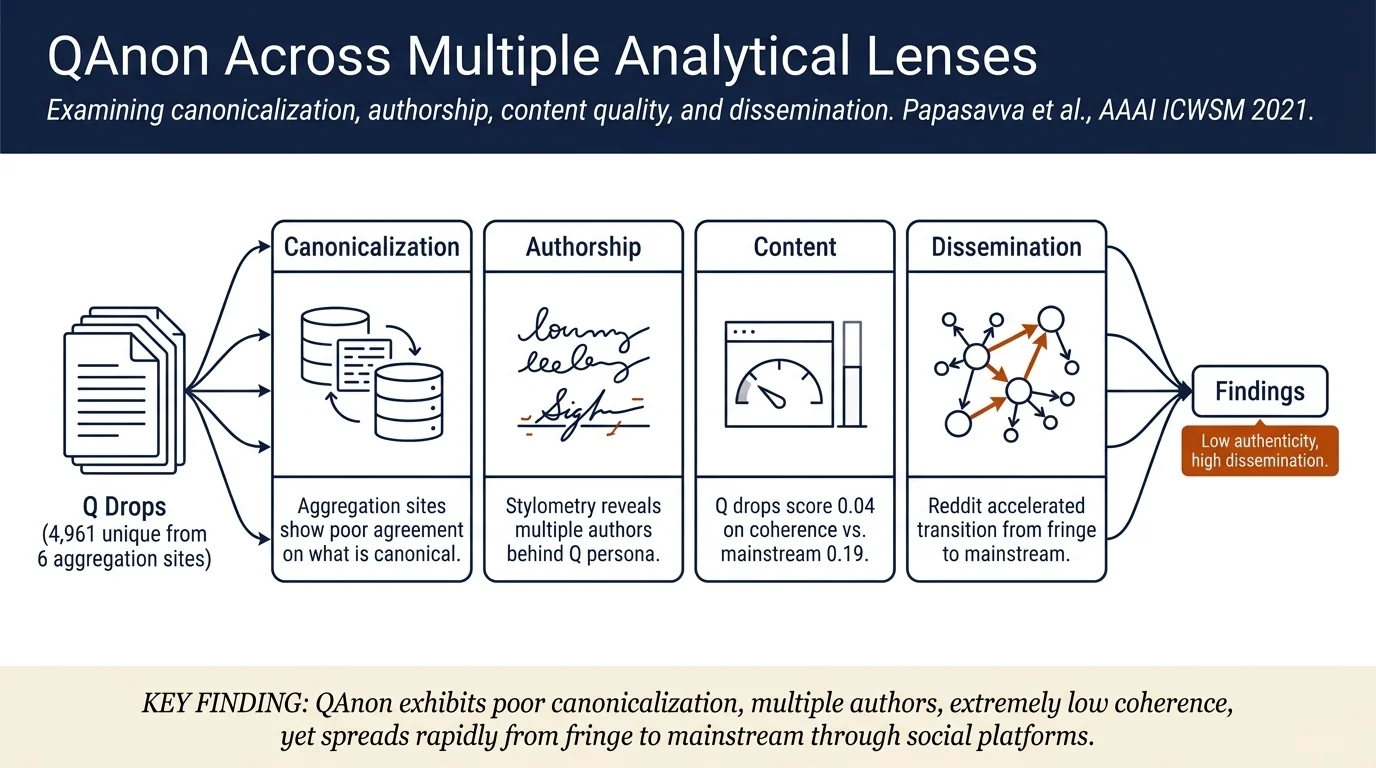
The Gospel According to Q: Understanding the QAnon Conspiracy from the Perspective of Canonical InformationThis paper systematically studies the QAnon conspiracy theory by collecting and analyzing 4,961 unique Q drops from six aggregation sites. The authors find that aggregation sites show poor agreement on what constitutes a canonical Q drop, that Q drops are incoherent and low-quality relative to other social media platforms, and that…
 Platforms, policy & societyBots & coordinated campaigns
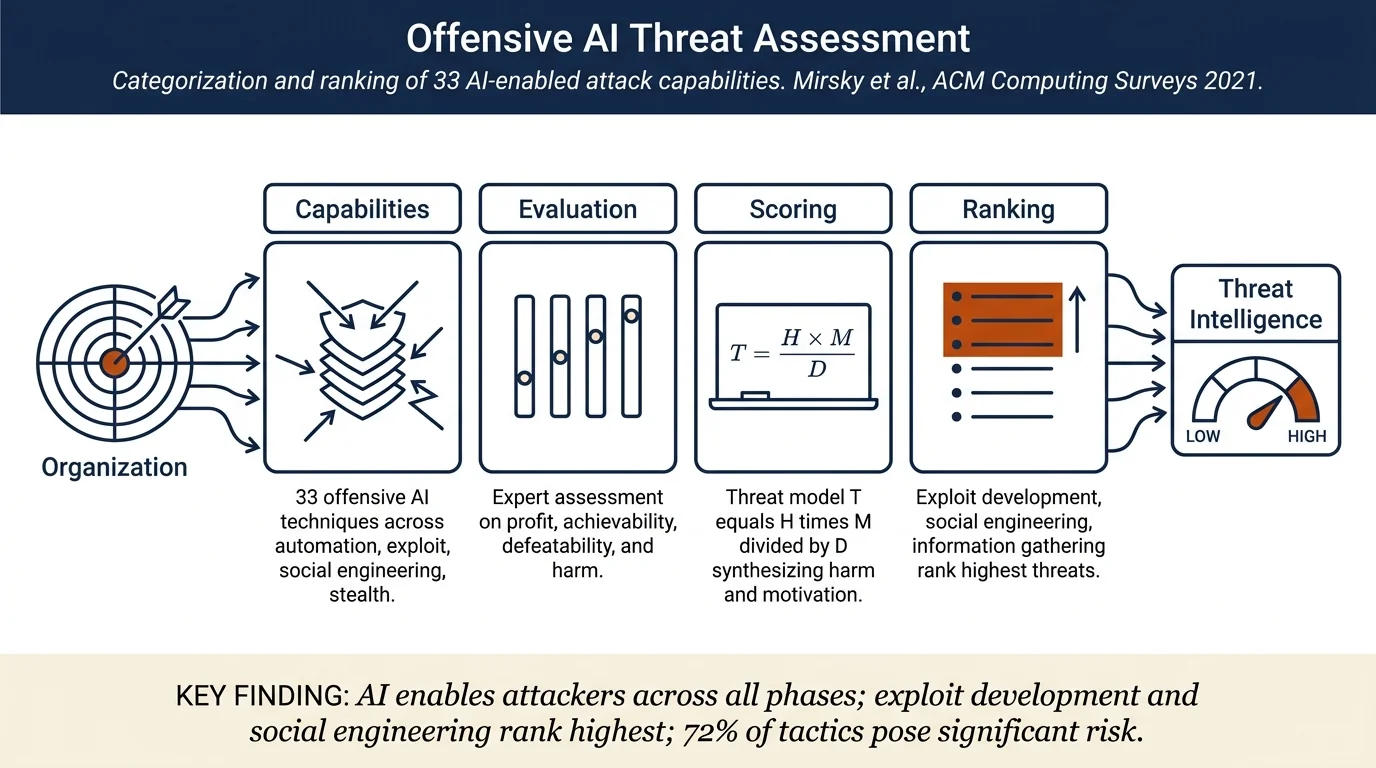
The Threat of Offensive AI to OrganizationsA comprehensive survey identifying 33 offensive AI capabilities that adversaries can use to attack organizations, organized into seven categories: automation, campaign resilience, credential theft, exploit development, information gathering, social engineering, and stealth. Through a user study with 22 experts from academia and industry,…
 LLMs & generative AIPlatforms, policy & society
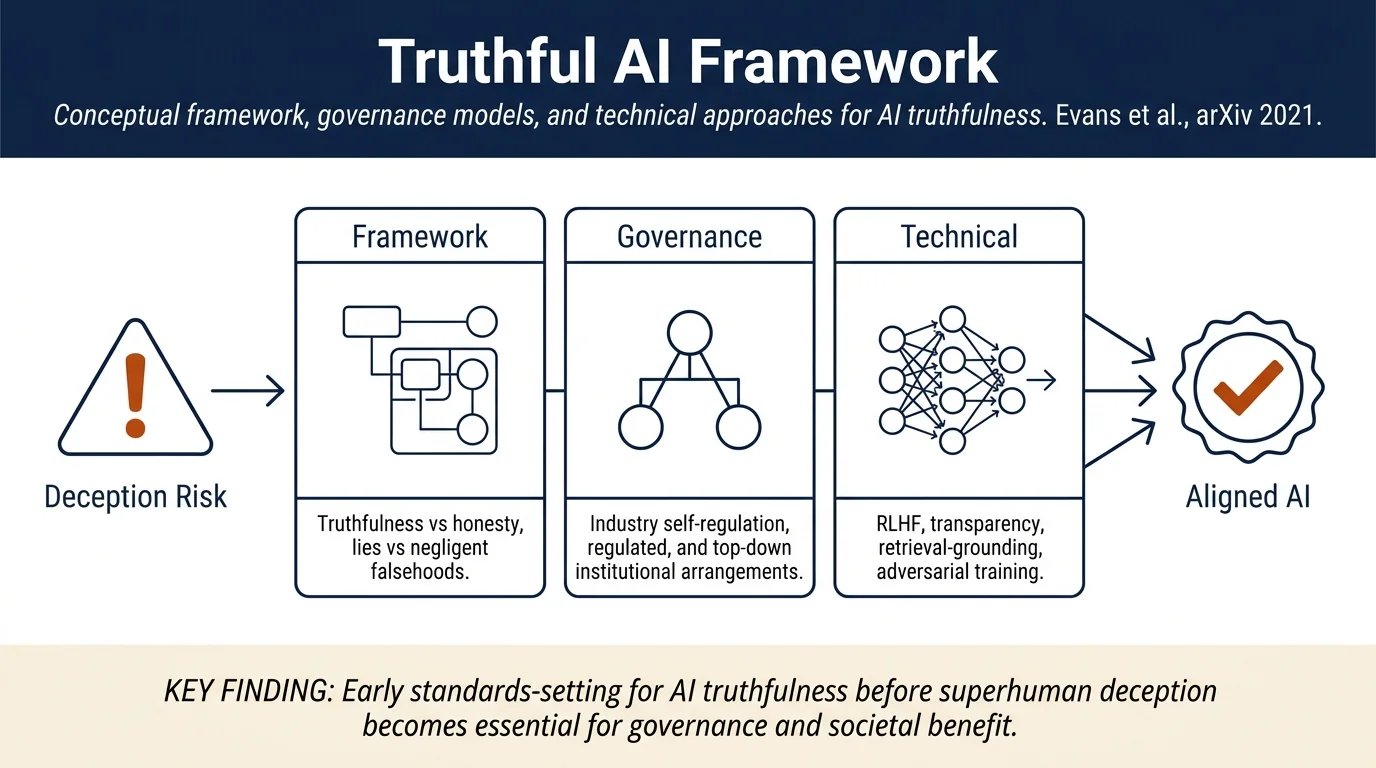
Truthful AI: Developing and Governing AI That Does Not LieAs AI systems become more capable and widely deployed, strategic falsehoods—"lies" that AI generates to achieve specified objectives—pose increasing risks. This paper proposes a framework of truthfulness standards for AI systems, governance mechanisms to enforce them (including certification bodies and verification procedures), and…
 Spread & networksDetection methods
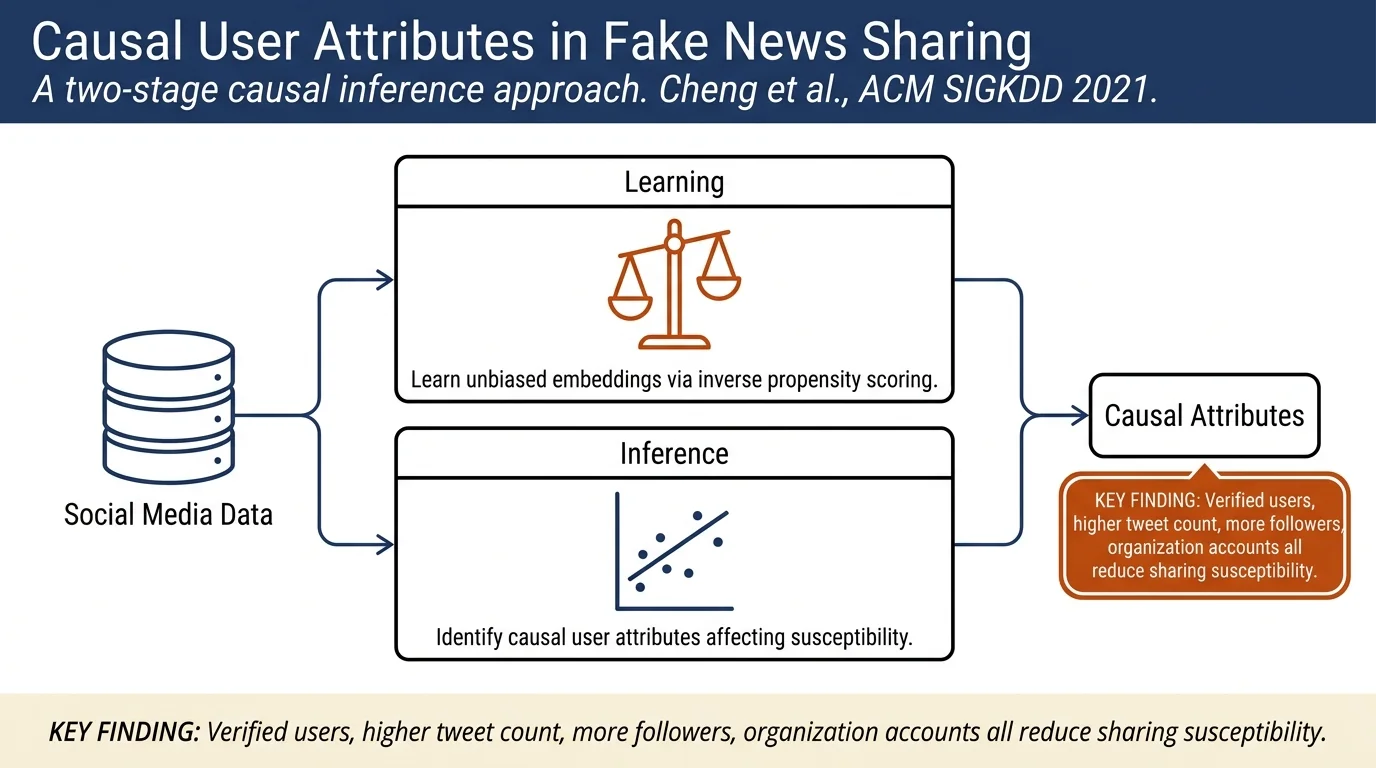
Causal Understanding of Fake News Dissemination on Social MediaThe paper addresses the fundamental causal question: what user attributes cause susceptibility to share fake news? Rather than observing correlations, the authors use inverse propensity scoring (IPS) to learn unbiased embeddings of fake news sharing behavior, treating these embeddings as confounders in a causal model.
 Psychology & interventionsSpread & networks
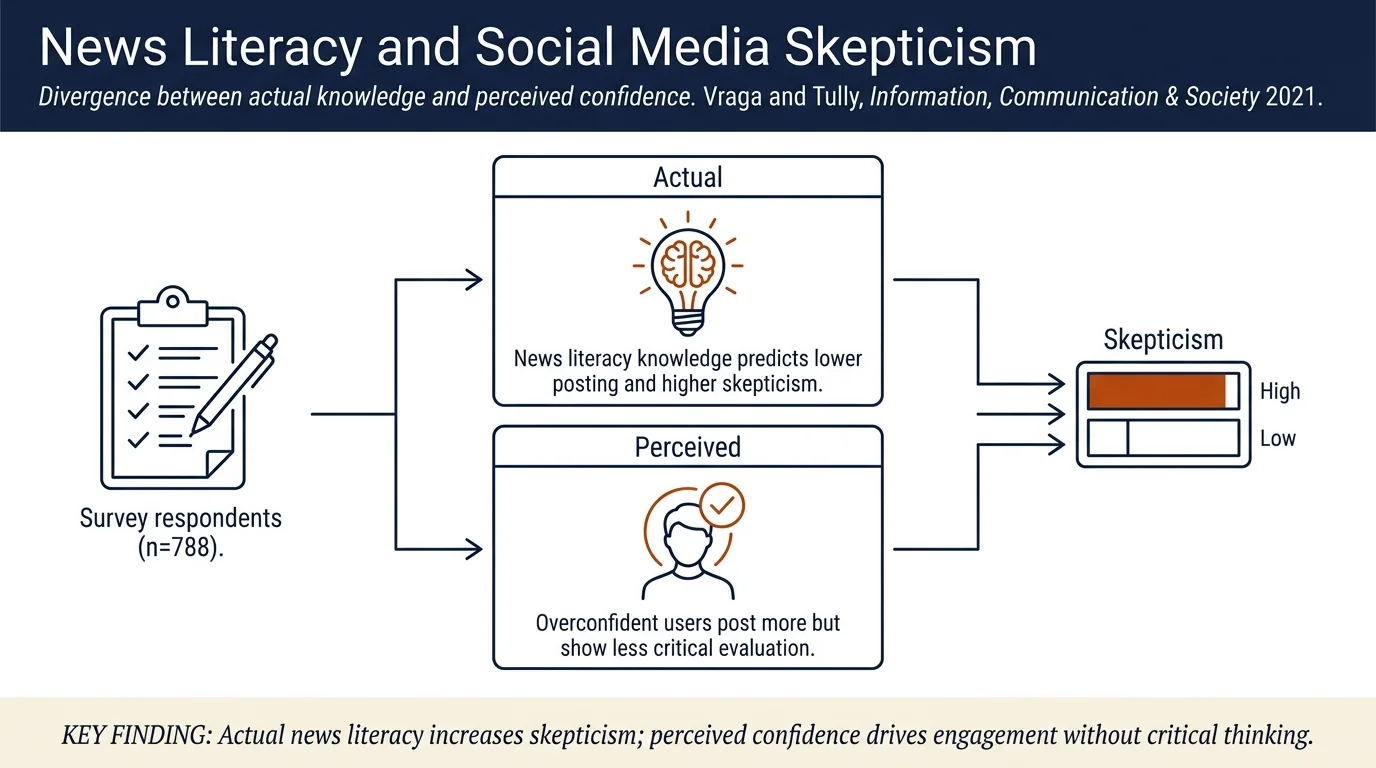
News literacy, social media behaviors, and skepticism toward information on social mediaA national survey of 788 Americans examines how news literacy relates to what people see and share on social media, and whether it predicts skepticism toward information shared in these spaces. The key finding: people with higher news literacy see and post less political content on social media, but when they do engage, they're…
 Psychology & interventionsSpread & networks
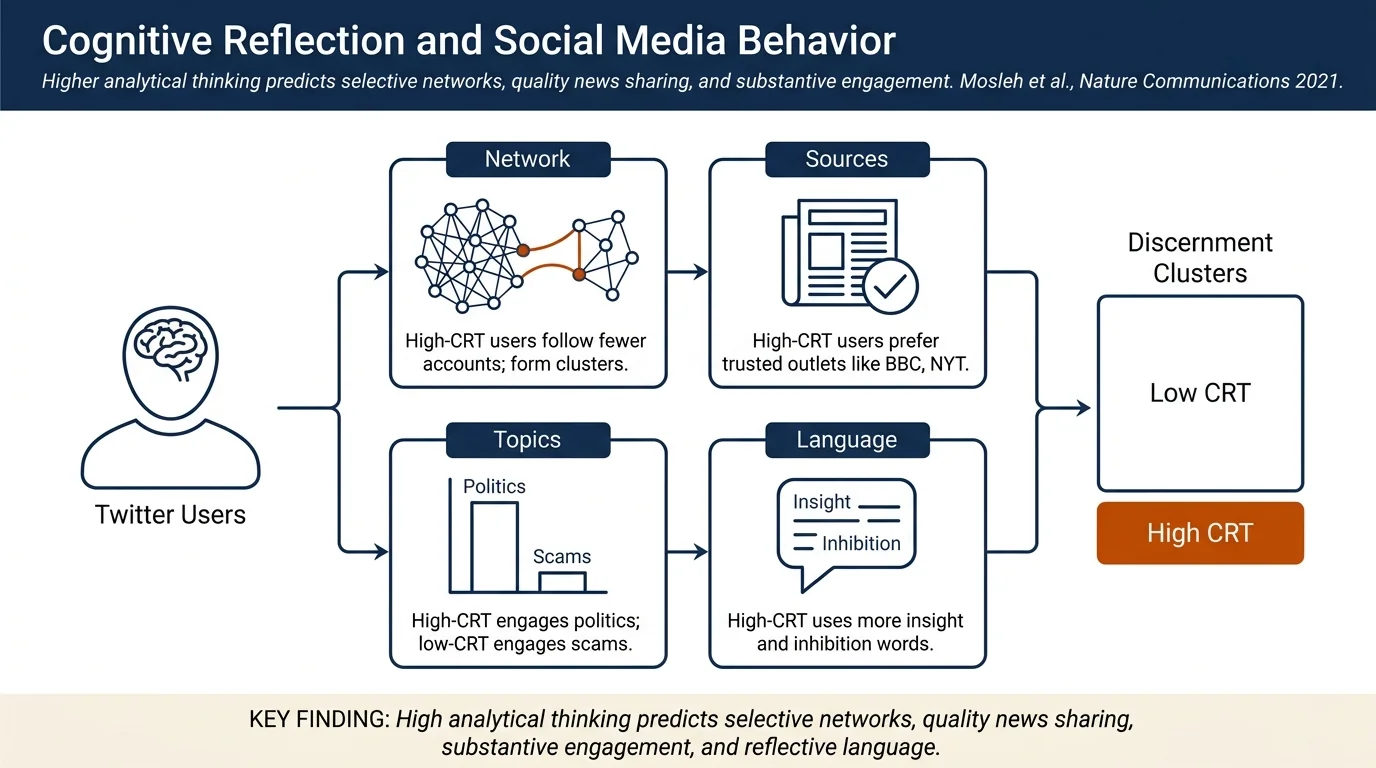
Cognitive reflection correlates with behavior on TwitterHigh scorers on the Cognitive Reflection Test (CRT)—a measure of analytical thinking—are more discerning social media users: they follow fewer accounts, share news from more reliable sources, and engage more with substantive topics like politics. The study identifies "cognitive echo chambers" where low-CRT users preferentially follow…
 Psychology & interventionsPlatforms, policy & society
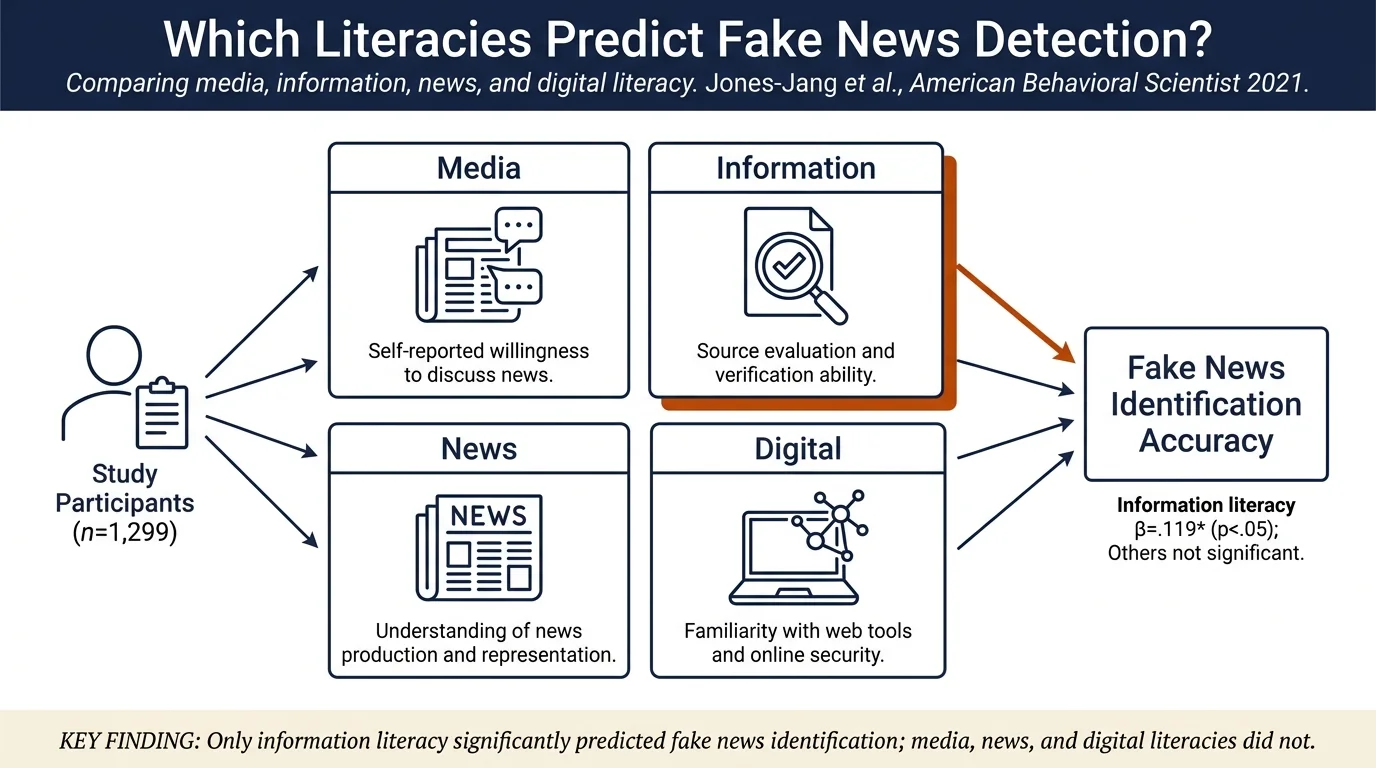
Does Media Literacy Help Identification of Fake News? Information Literacy Helps, but Other Literacies Don'tA survey of 1,299 U.S. citizens tests whether four types of media literacy—media, information, news, and digital—predict ability to identify fake news. Only information literacy (the ability to search and evaluate verified sources) significantly improves fake news identification; media, news, and digital literacies showed no significant…
 Spread & networksPlatforms, policy & society
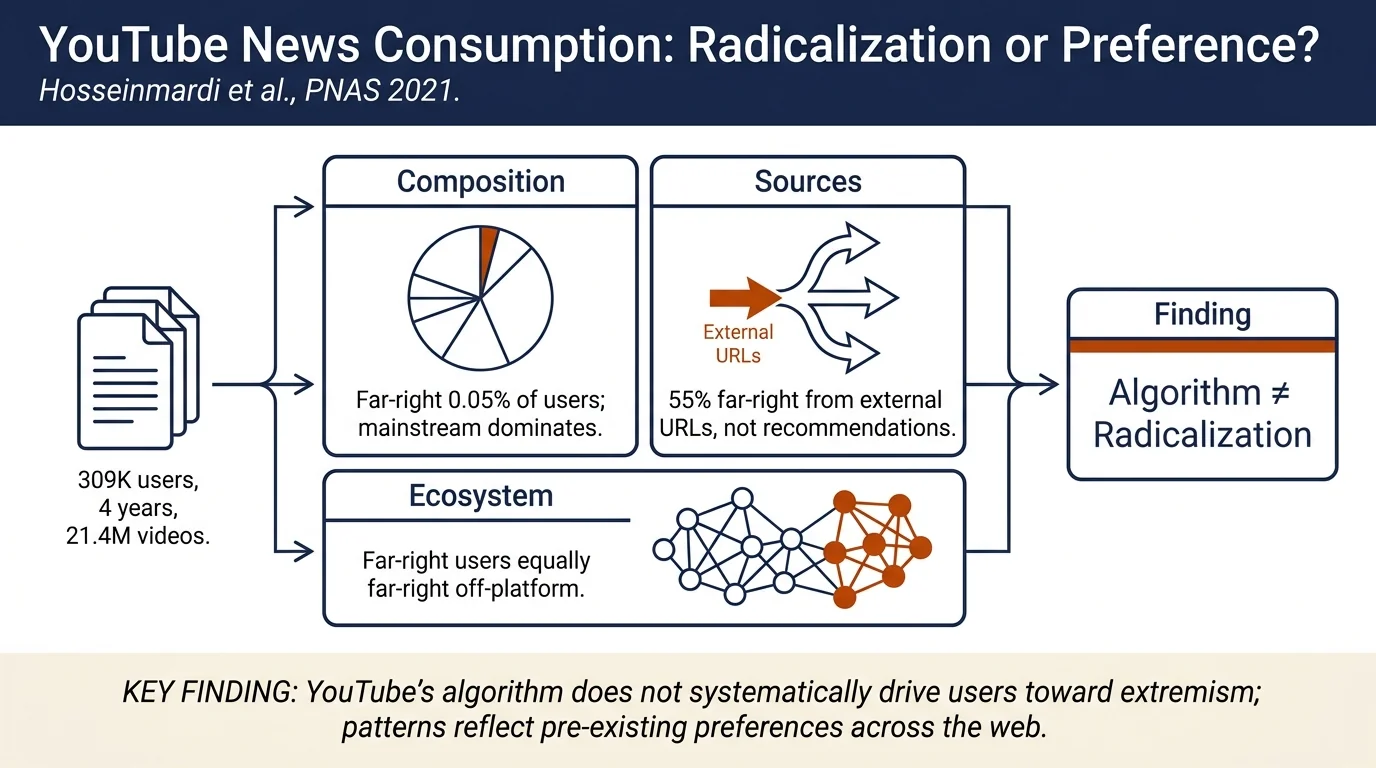
Examining the consumption of radical content on YouTubeLarge-scale study of 309,813 U.S. users' YouTube and web browsing from 2016–2019 finds that news consumption on YouTube is dominated by mainstream, centrist sources. While far-right content exists and engages users intensely, it remains a small and stable share.
 Spread & networksPlatforms, policy & society
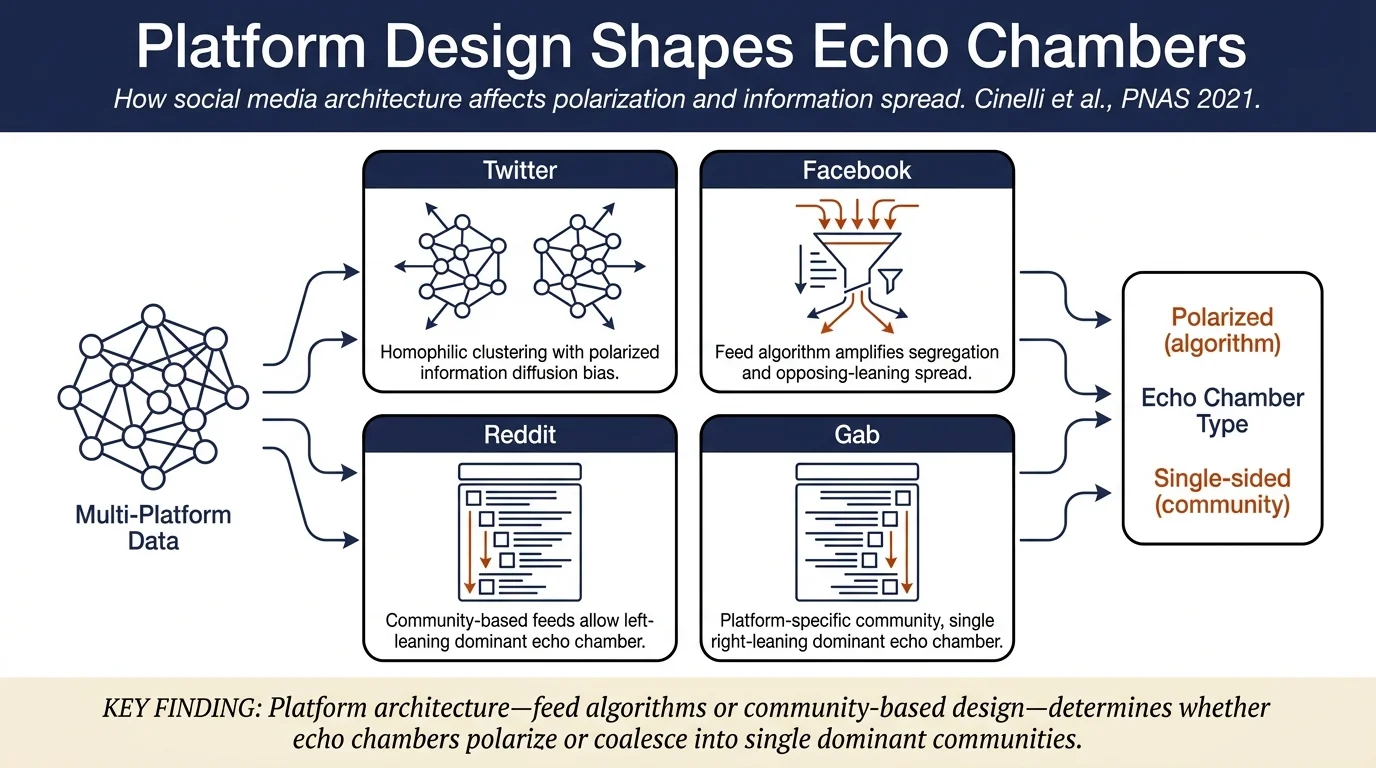
The echo chamber effect on social mediaComparative analysis of 100+ million posts across Twitter, Facebook, Reddit, and Gab on controversial topics shows echo chambers operate differently by platform: Facebook and Twitter exhibit strong homophilic clustering and polarized information diffusion, while Reddit and Gab show single-sided communities without the biased diffusion…