Explore papers
Filter by research area, year and venue. Every filter is in the address bar, so you can share a view as a link.
 Detection methodsDatasets & evaluation
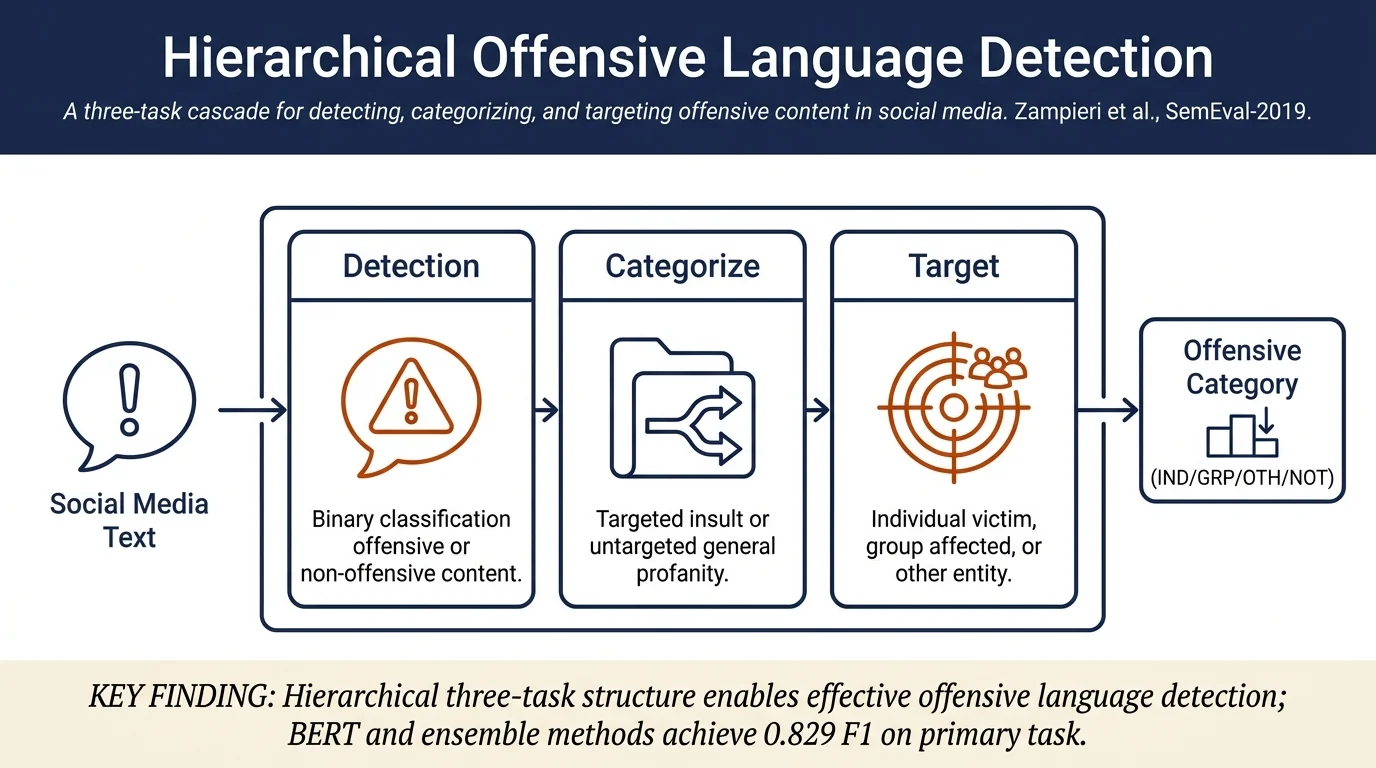
SemEval-2019 Task 6: Identifying and Categorizing Offensive Language in Social MediaSemEval-2019 Task 6 reports on a shared task competition for identifying and categorizing offensive language in social media using the OLID dataset. Approximately 800 teams registered and 115 submitted results across three sub-tasks: offensive language detection (104 teams), offense type categorization (71 teams), and offense target…
 Detection methodsDatasets & evaluation
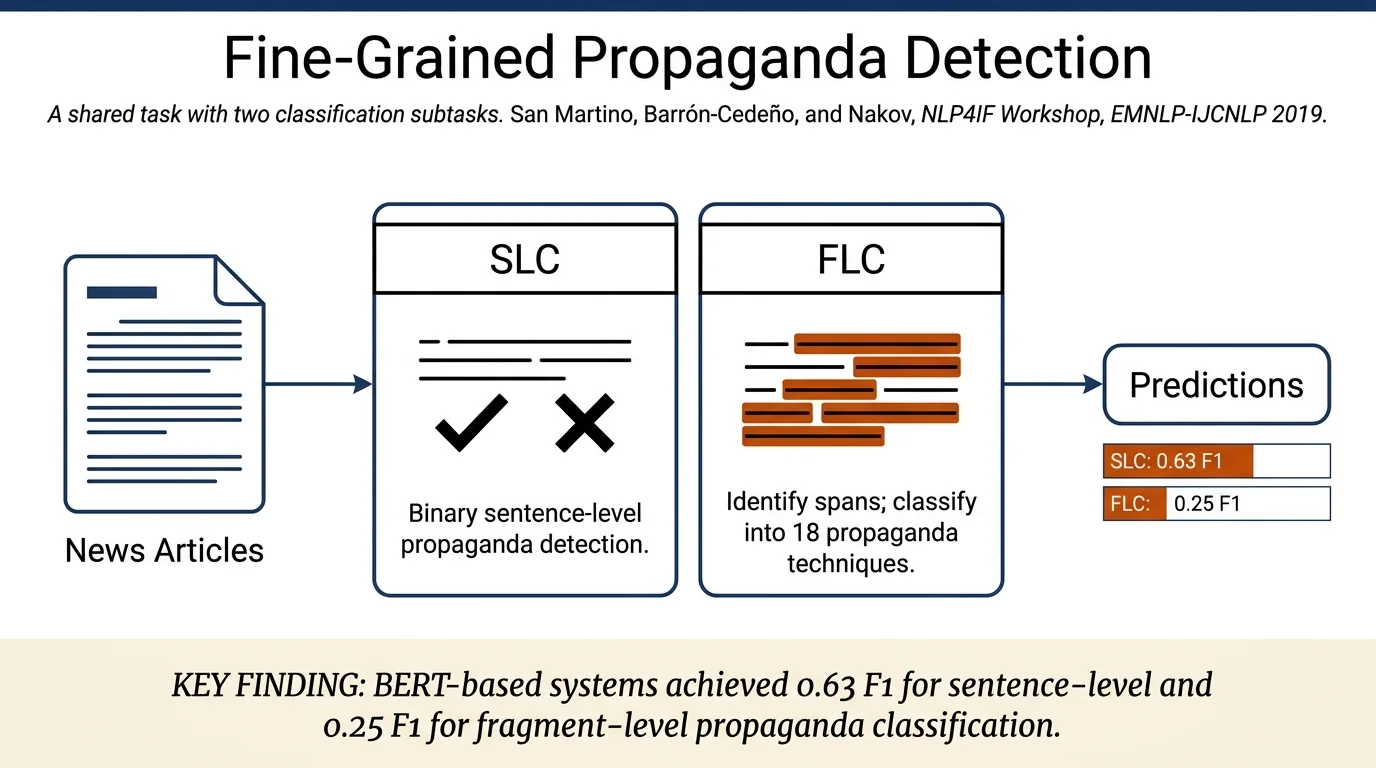
Findings of the NLP4IF-2019 Shared Task on Fine-Grained Propaganda DetectionThis paper reports findings from a shared task on fine-grained propaganda detection in news articles, featuring two subtasks: fragment-level identification and classification into 18 propaganda techniques, and sentence-level binary propaganda detection. The task attracted 90 registered teams with 39 making submissions; winning systems…
 Detection methodsSpread & networks
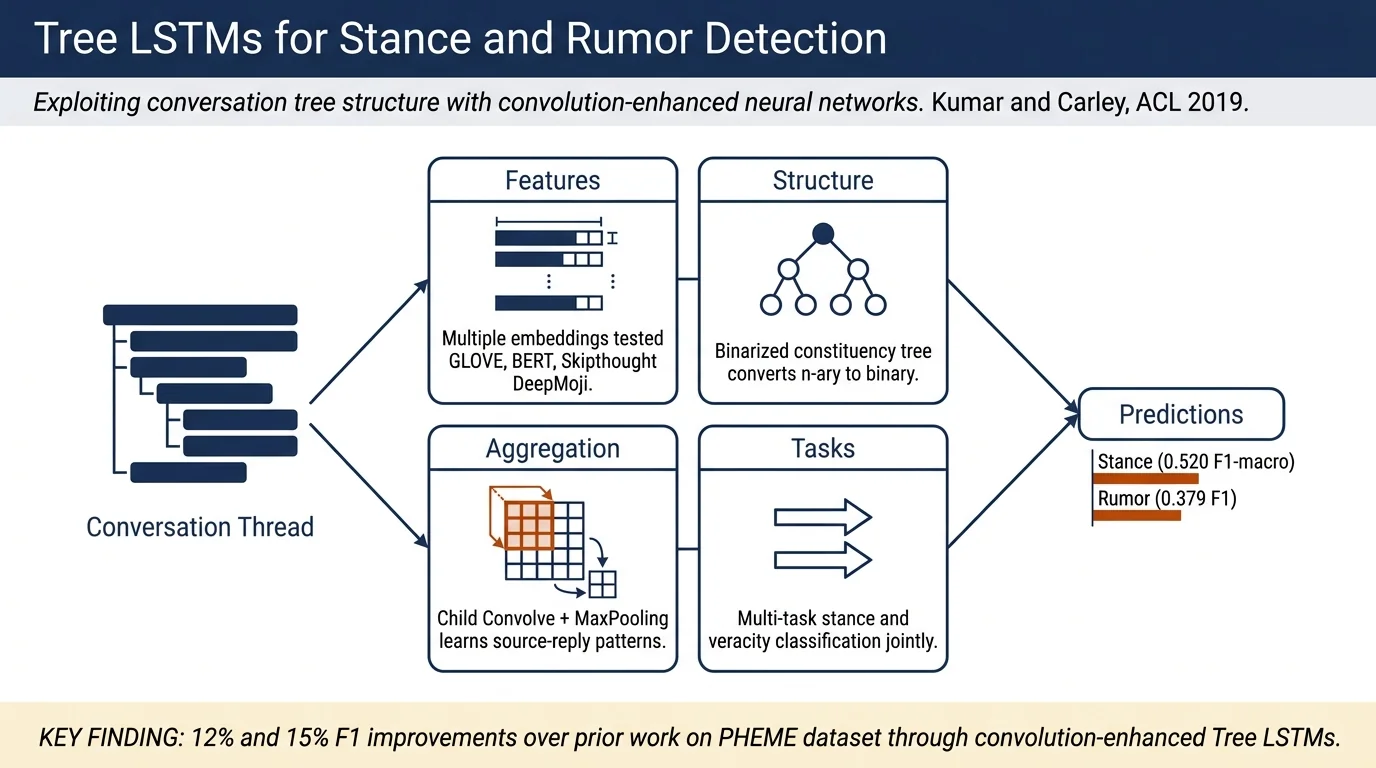
Tree LSTMs with Convolution Units to Predict Stance and Rumor Veracity in Social Media ConversationsProposes Tree LSTM and Binarized Constituency Tree (BCTree) LSTM architectures enhanced with convolution units to classify stance and predict rumor veracity in social media conversation threads. The approach exploits the tree structure inherent in threaded conversations (source post with nested replies) and combines it with convolutional…
 Deepfakes & multimodalDetection methods
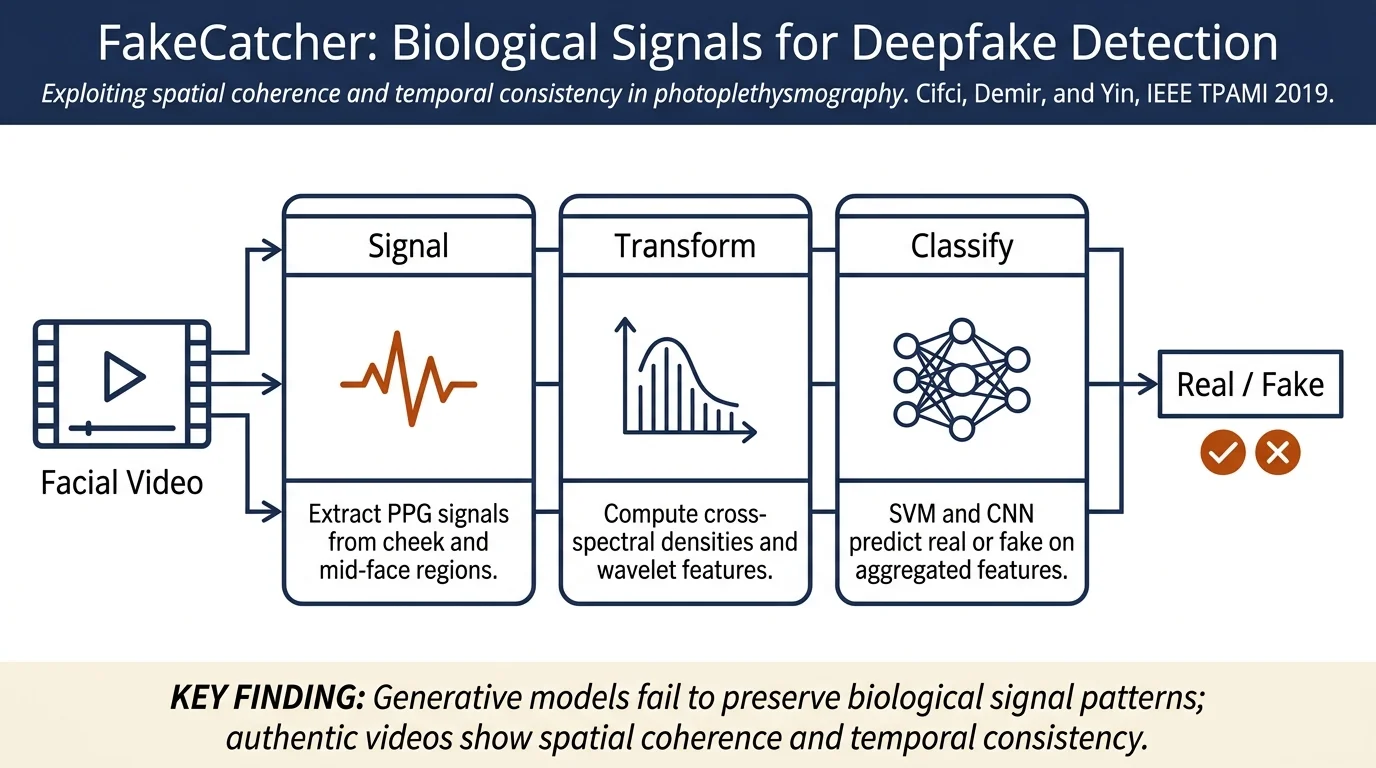
FakeCatcher: Detection of Synthetic Portrait Videos using Biological SignalsFakeCatcher detects deepfakes by analyzing biological signals (photoplethysmography—blood flow patterns) extracted from facial regions. The key insight is that generative models fail to preserve spatial coherence and temporal consistency of these signals in authentic videos, making biological signal analysis a powerful forensic tool…
 LLMs & generative AIDetection methods
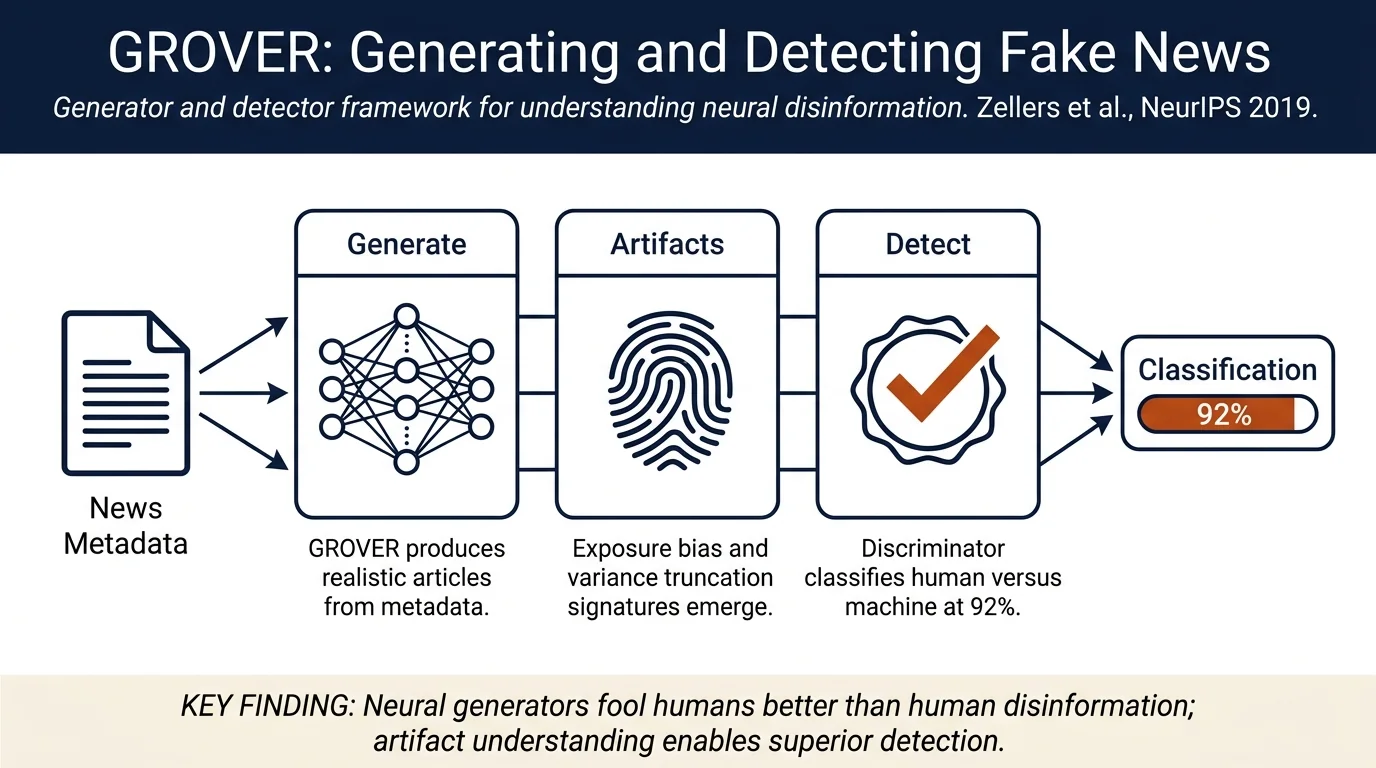
Defending Against Neural Fake NewsZellers et al. introduce GROVER, a conditional neural text generation model that can both generate and detect neural fake news. The paper shows that humans cannot reliably distinguish GROVER-generated propaganda from real human-written disinformation, rating machine-generated propaganda as more trustworthy (2.42/3 vs 2.19/3 for human…
 Detection methodsSpread & networks
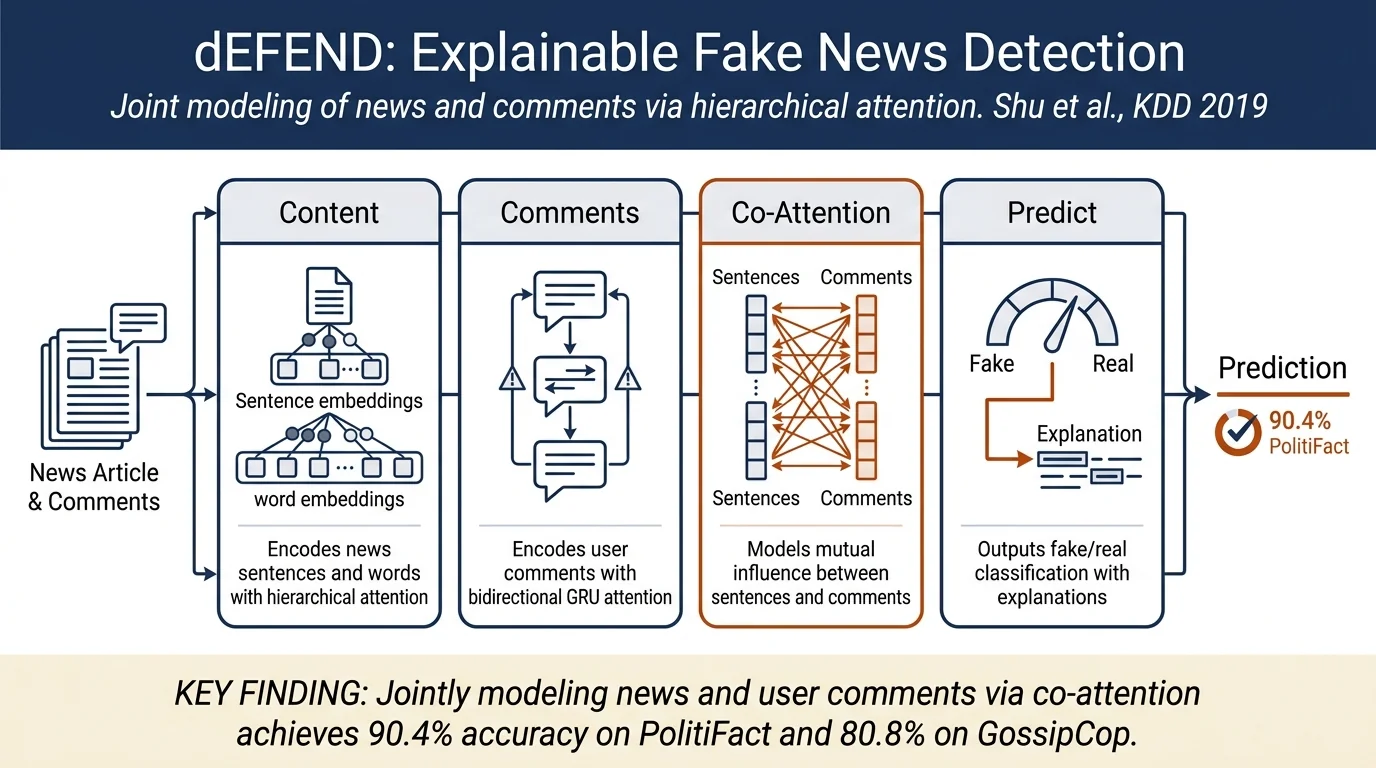
dEFEND: Explainable Fake News DetectionFake news detection on social media typically focuses on content alone, but user comments and reactions provide complementary signals. This paper proposes dEFEND, a hierarchical attention neural network that jointly encodes news sentences and user comments to both detect fake news and explain why a piece of news is detected as fake by…
 Psychology & interventionsPlatforms, policy & society
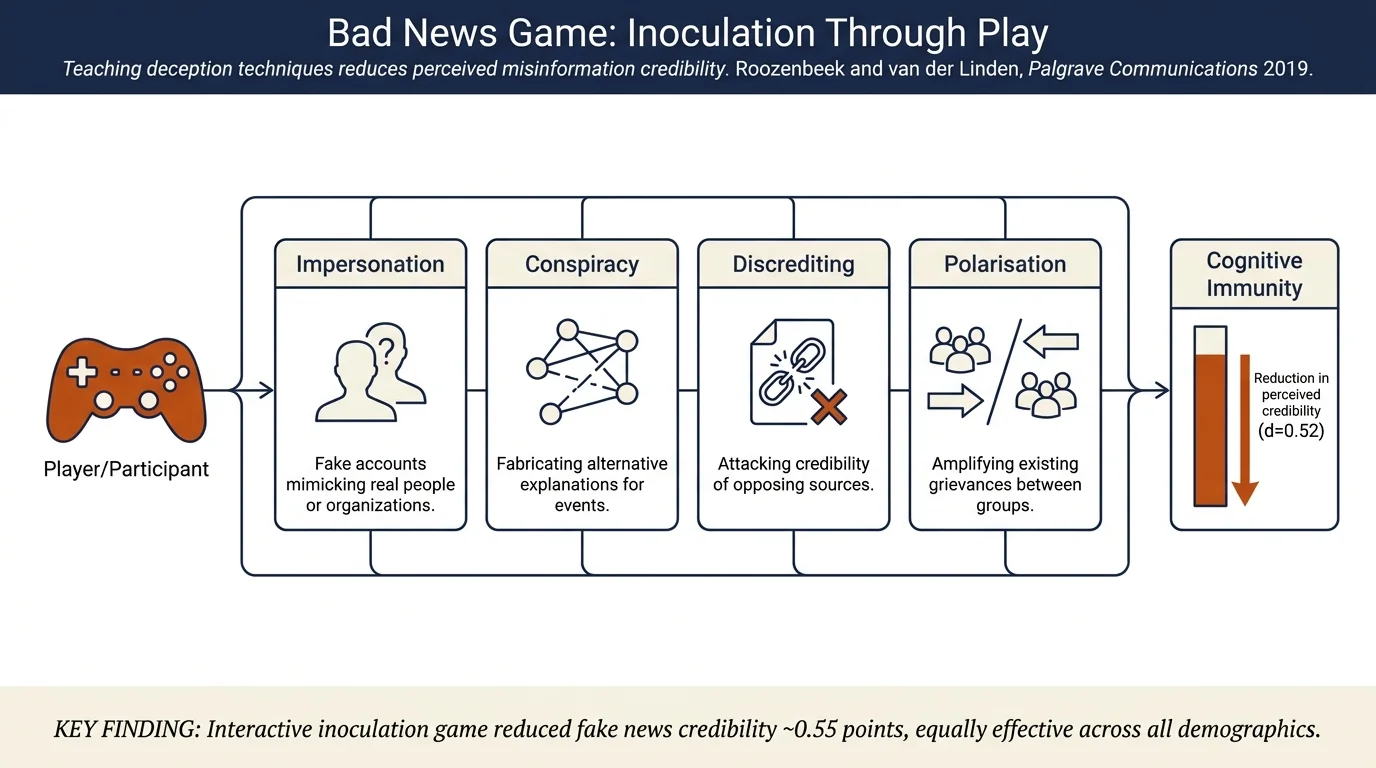
Fake news game confers psychological resistance against online misinformationThis large-scale empirical study demonstrates that a free ~15-minute online browser game teaching six common misinformation production techniques (polarisation, emotional manipulation, conspiracy theories, trolling, discrediting opponents, impersonation) significantly reduces perceived reliability of misinformation across N=15,000…
 Detection methodsDatasets & evaluation
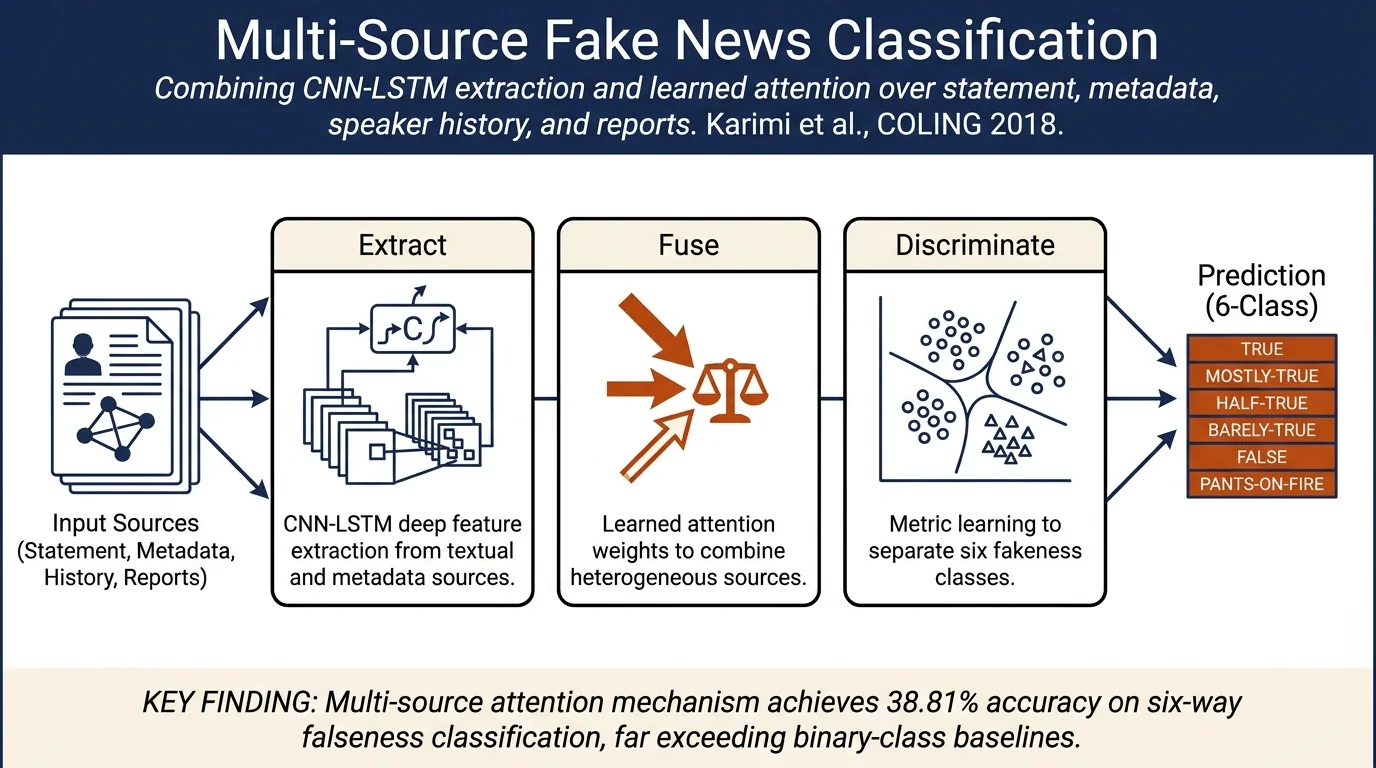
Multi-Source Multi-Class Fake News DetectionProposes MMFD, a multi-source multi-class fake news detection framework combining automated feature extraction (CNN-LSTM), interpretable multi-source fusion (attention mechanism), and fakeness discrimination. Achieves 38.81% accuracy on LIAR dataset across six classes of fakeness (true, mostly-true, half-true, barely-true, false,…
 Detection methodsLLMs & generative AI
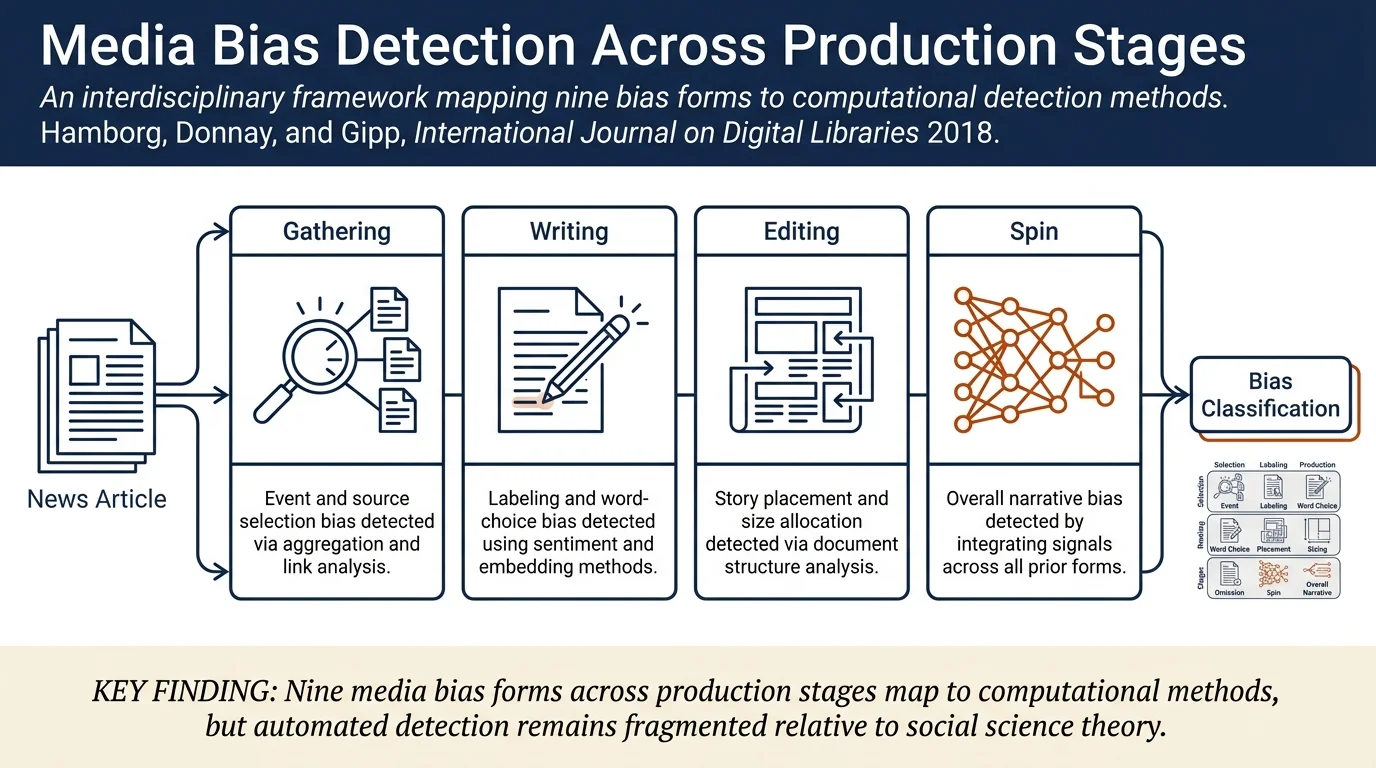
Automated identification of media bias in news articles: an interdisciplinary literature reviewThis paper surveys automated and manual methods for identifying media bias in news articles, bridging social science and computer science approaches. It defines nine distinct forms of media bias and maps social science research onto computational techniques, finding that NLP-based methods are promising for automated detection but remain…
 Fact-checking & verificationDatasets & evaluation
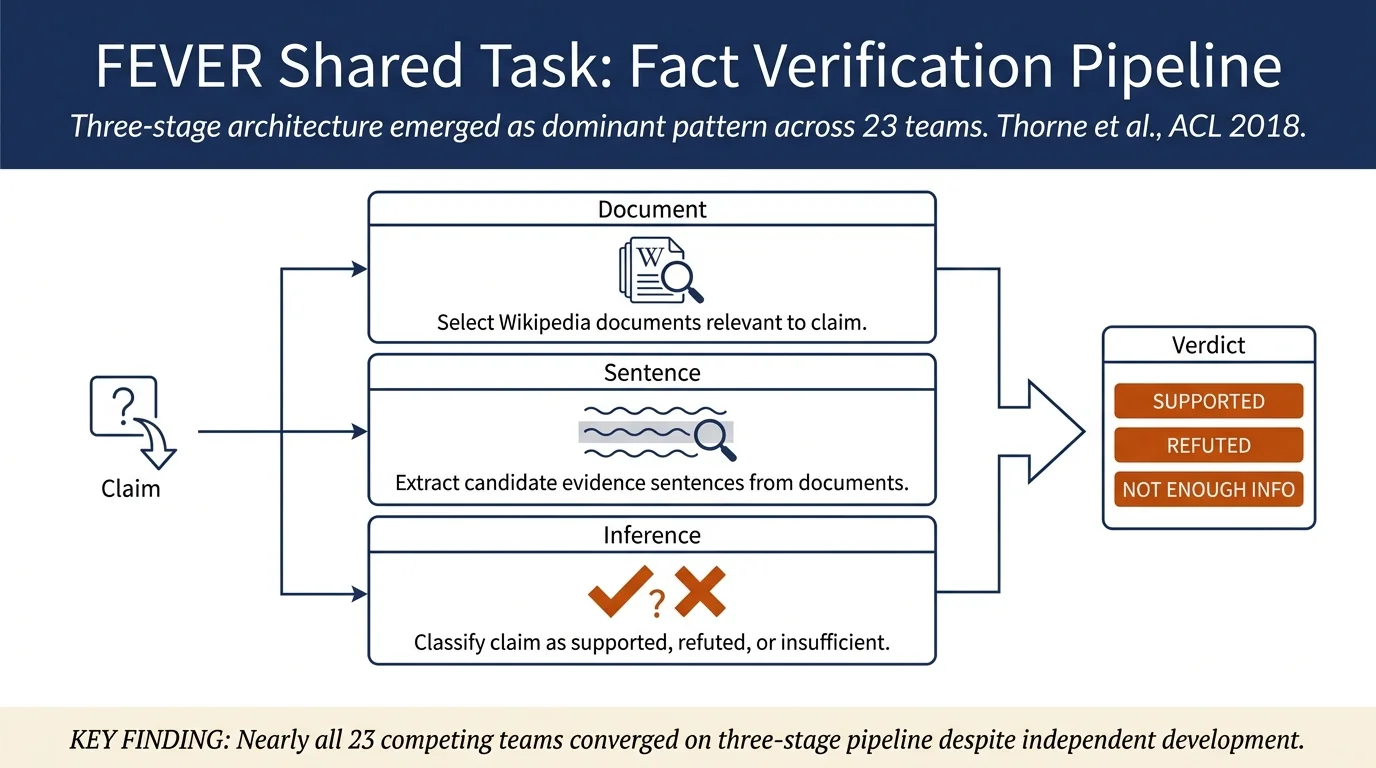
The Fact Extraction and VERification (FEVER) Shared TaskThis paper presents results of the first FEVER shared task competition, which challenged 23 teams to classify whether human-written factoid claims could be SUPPORTED or REFUTED using evidence retrieved from Wikipedia. The best system achieved 64.21% FEVER score, demonstrating the difficulty of joint evidence retrieval and natural…
 Spread & networksDetection methods
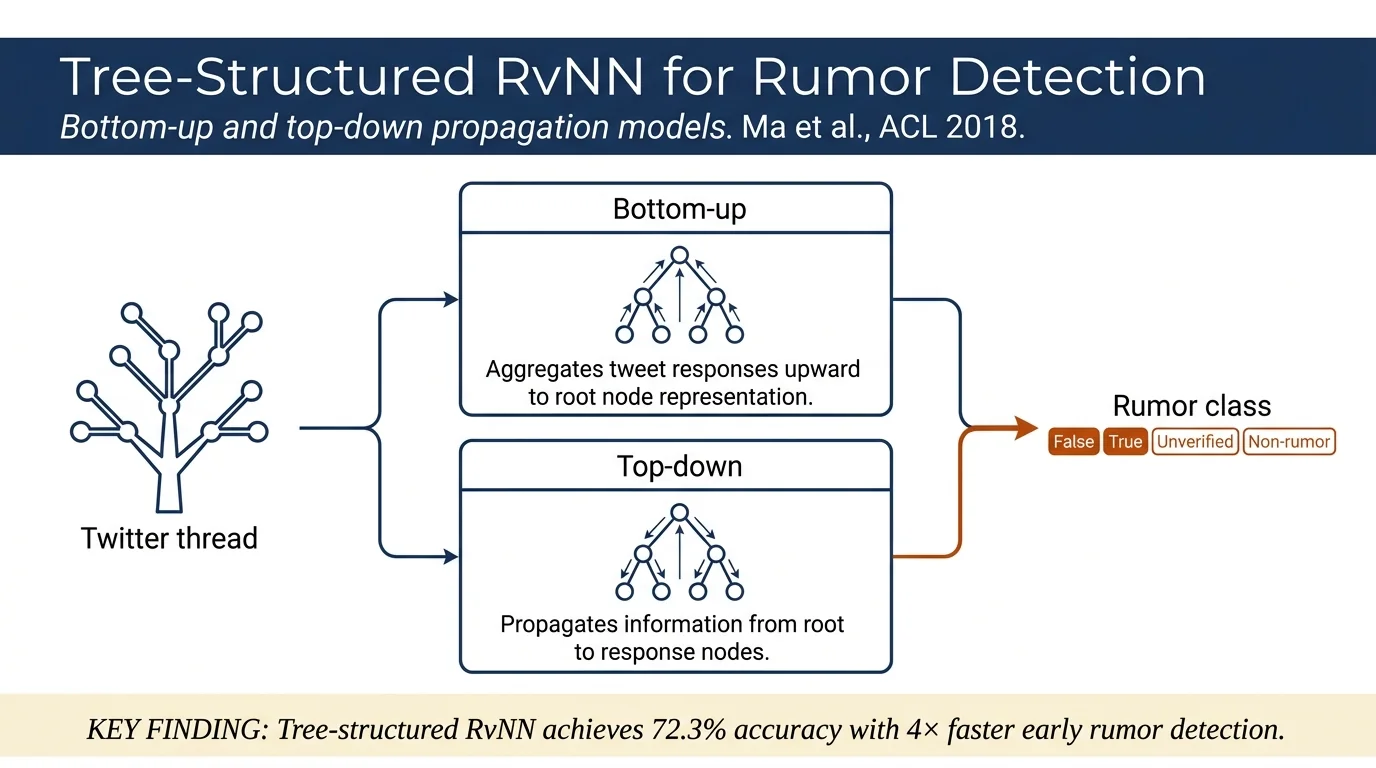
Rumor Detection on Twitter with Tree-structured Recursive Neural NetworksProposes two variants of recursive neural networks (RvNN)—bottom-up and top-down—that operate on propagation tree structures of tweets to detect rumors. Rather than treating tweets sequentially, the model learns representations that respect how tweets actually propagate in response threads.
 Detection methodsLLMs & generative AI
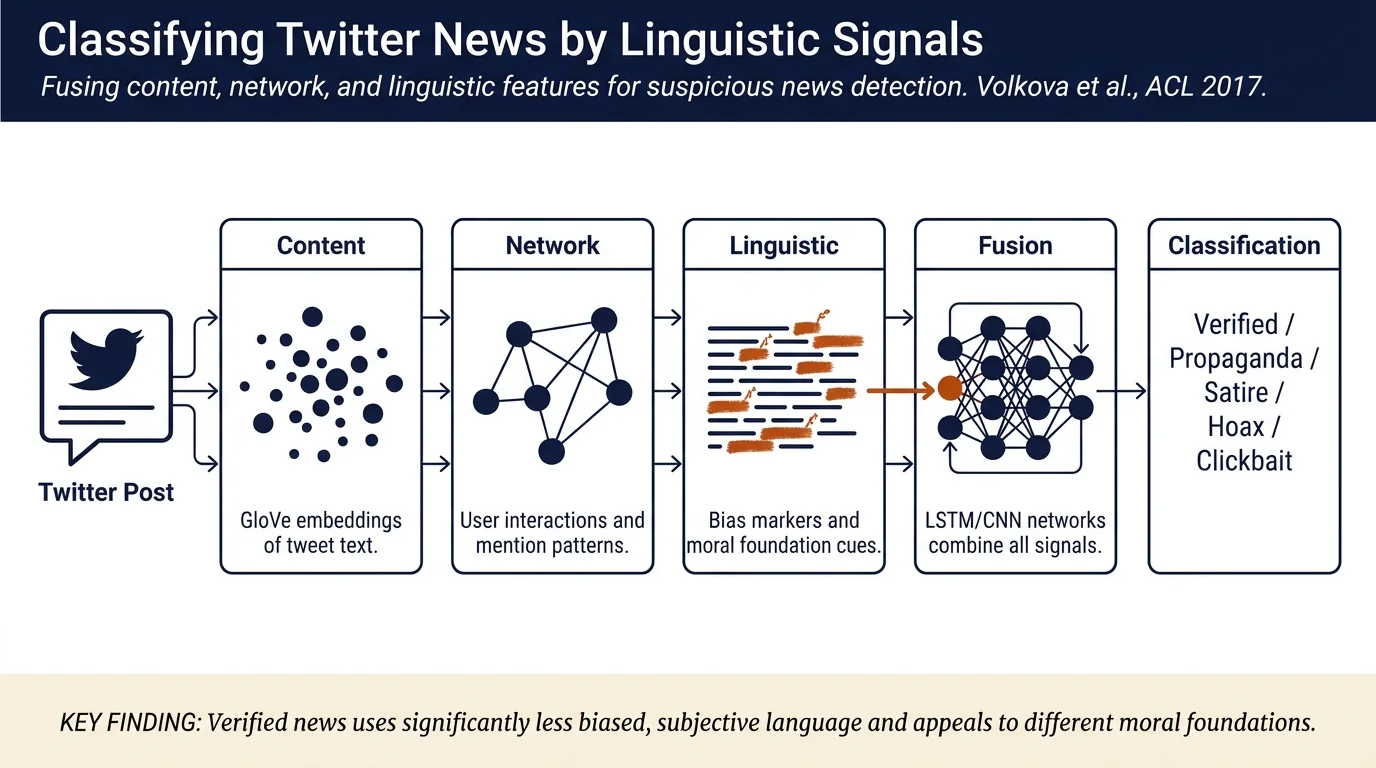
Separating Facts from Fiction: Linguistic Models to Classify Suspicious and Trusted News Posts on TwitterThis paper presents neural network models combining tweet content, social network interactions, and linguistic features (bias markers, subjectivity cues, moral foundations) to classify Twitter news posts as suspicious (propaganda, hoaxes, clickbait, satire) or verified. The models achieve 95% accuracy on binary classification and 0.7…
Fact-checking & verificationDatasets & evaluation
ClaimBuster: The first end-to-end fact-checking systemFoundational work introducing ClaimBuster, an end-to-end automated fact-checking system. Introduces a dataset of 23,533 human-annotated U.S. debate statements with check-worthiness labels, establishing baselines for automated claim check-worthiness detection and ranking.
 LLMs & generative AI
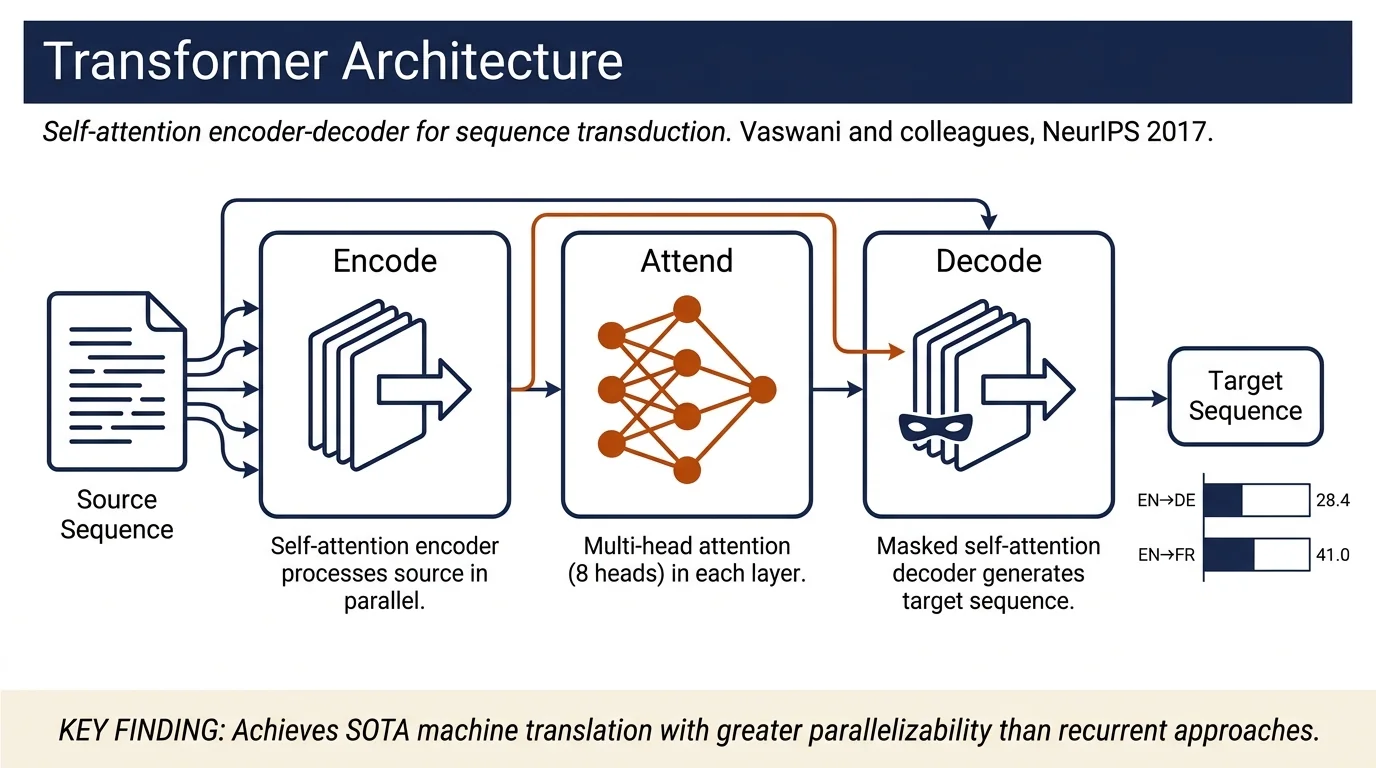
Attention Is All You NeedThe authors introduce the Transformer, a sequence transduction model based entirely on self-attention mechanisms that dispenses with recurrence and convolution. The model achieves state-of-the-art BLEU scores on machine translation tasks while being significantly more parallelizable and requiring less training time.
 Spread & networksDetection methods
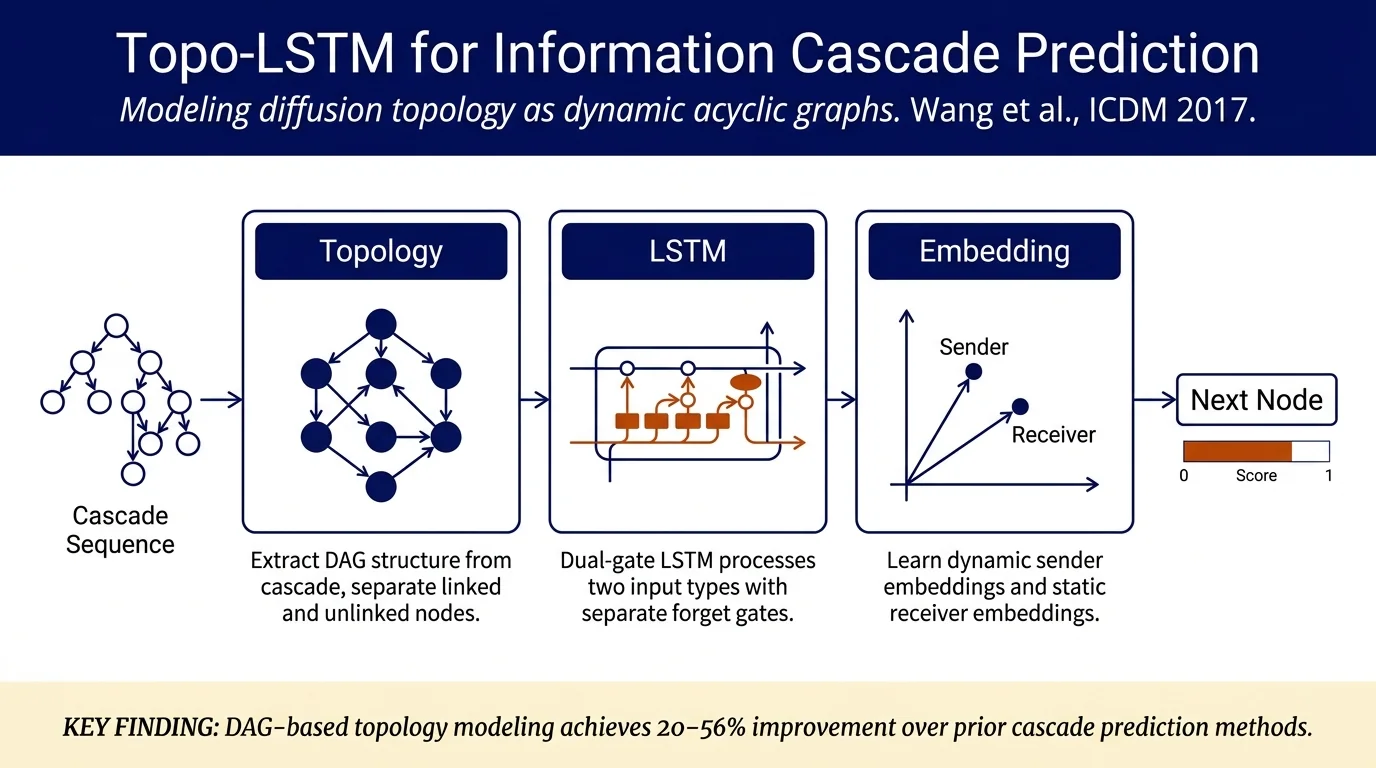
Topological Recurrent Neural Network for Diffusion PredictionWang et al. propose Topo-LSTM, a novel LSTM architecture for modeling dynamic directed acyclic graphs (DAGs) to predict which node will be activated next in information cascades. The key insight is that information diffusion on networks should be modeled explicitly as diffusion topologies—graphs showing how information spreads from…
 Spread & networksDetection methods
Turing at SemEval-2017 Task 8: Sequential Approach to Rumour Stance Classification with Branch-LSTMThis paper proposes Branch-LSTM, a sequential neural model for rumour stance classification in Twitter conversations. By decomposing conversation threads into linear branches and modeling them with LSTM layers, the approach captures conversational context while assigning stance labels (Support/Deny/Query/Comment) to each tweet.
 Detection methodsLLMs & generative AI
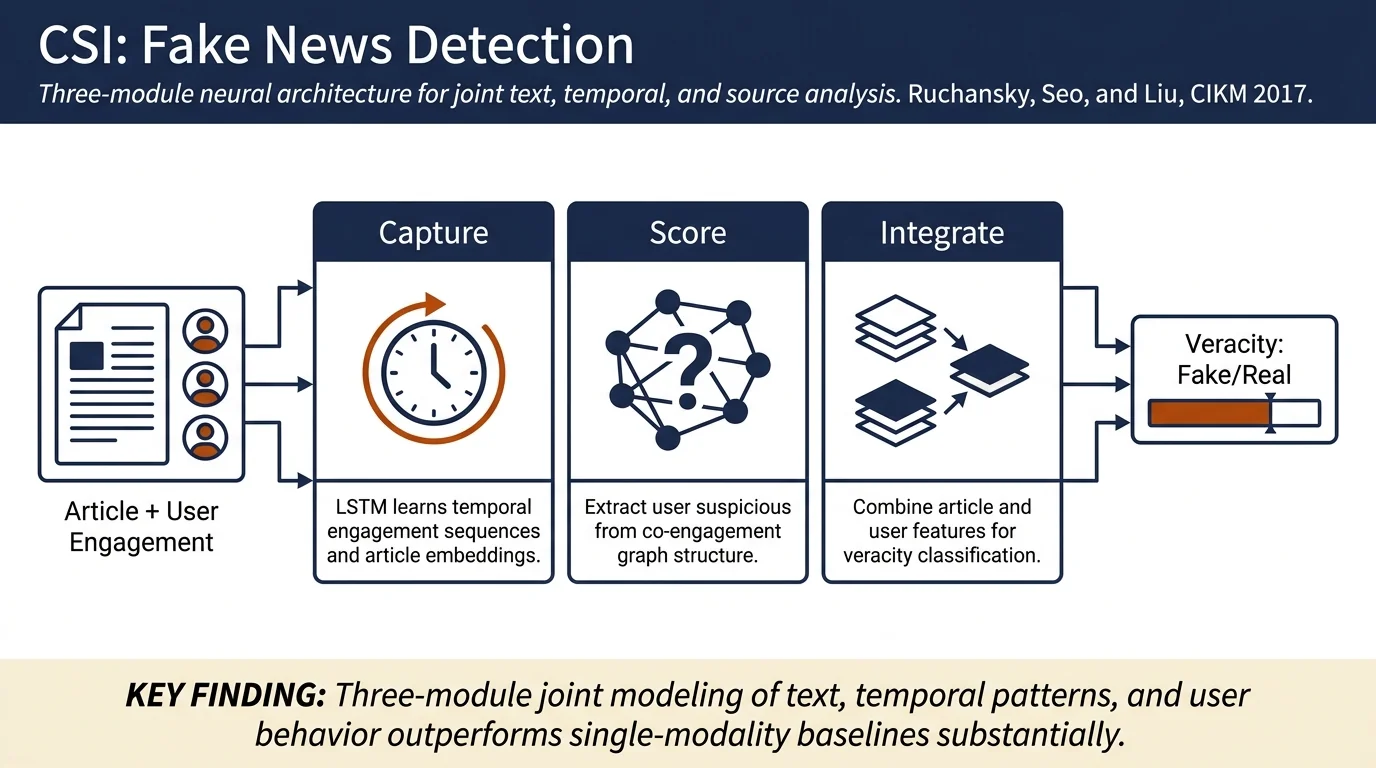
CSI: A Hybrid Deep Model for Fake News DetectionCSI is a three-module deep learning model that detects fake news by jointly modeling article text, temporal patterns of user engagement (response), and user behavior patterns (source). The Capture module uses LSTM to learn temporal response signals; the Score module learns user suspiciousness from co-engagement patterns; the Integrate…
 Detection methodsFact-checking & verification
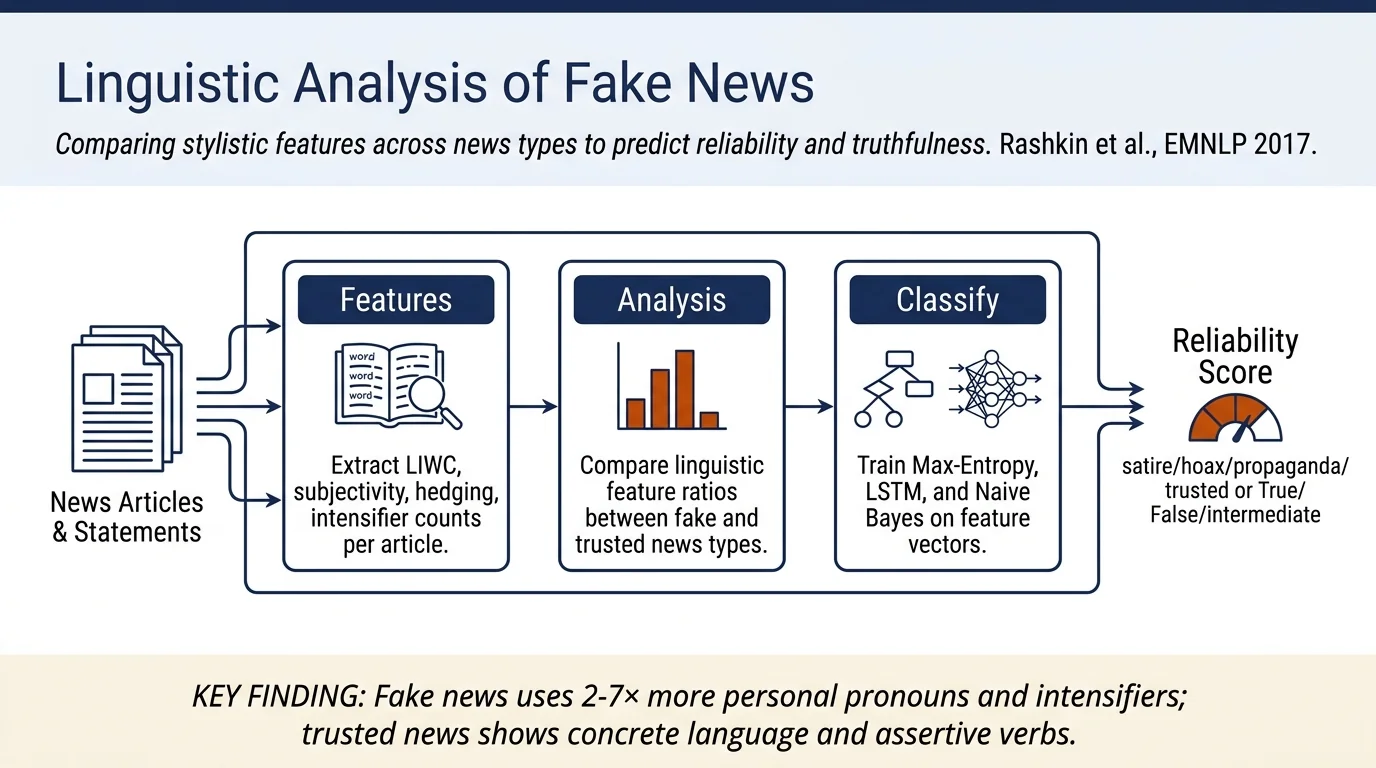
Truth of Varying Shades: Analyzing Language in Fake News and Political Fact-CheckingThis paper performs a linguistic analysis of fake news across four categories—satire, hoaxes, propaganda, and trusted news—using lexical features (LIWC, subjectivity, hedging, intensifiers). Experiments show that fake news articles use more first-person pronouns, exaggerative language (superlatives, modal adverbs), and hedging, while…