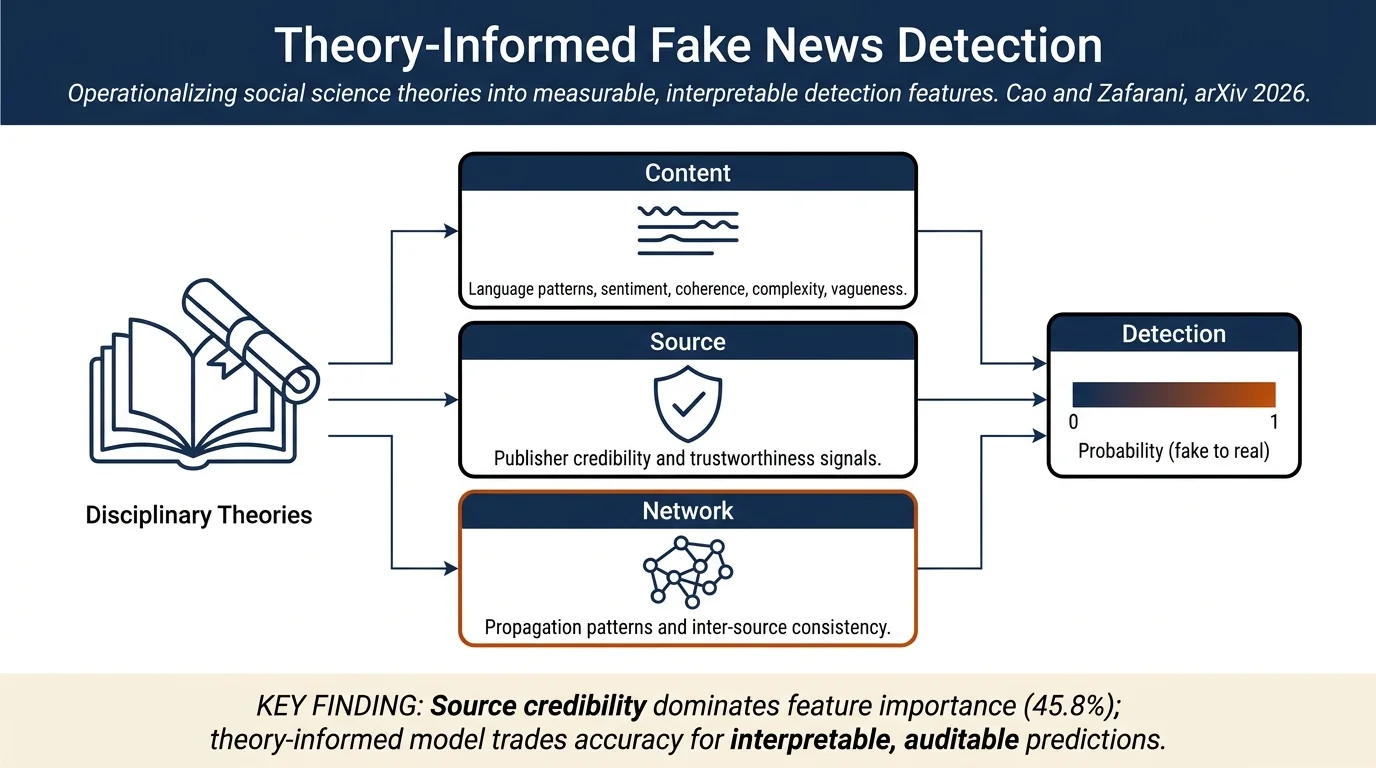
Credibility encompasses the perceived trustworthiness, expertise, and reliability of information sources. This topic covers psychological and social mechanisms underlying how people judge whether to believe information and sources, including factors like source reputation, source expertise, media type, presentation format, social proof, and heuristic shortcuts used in credibility assessment.
Key papers
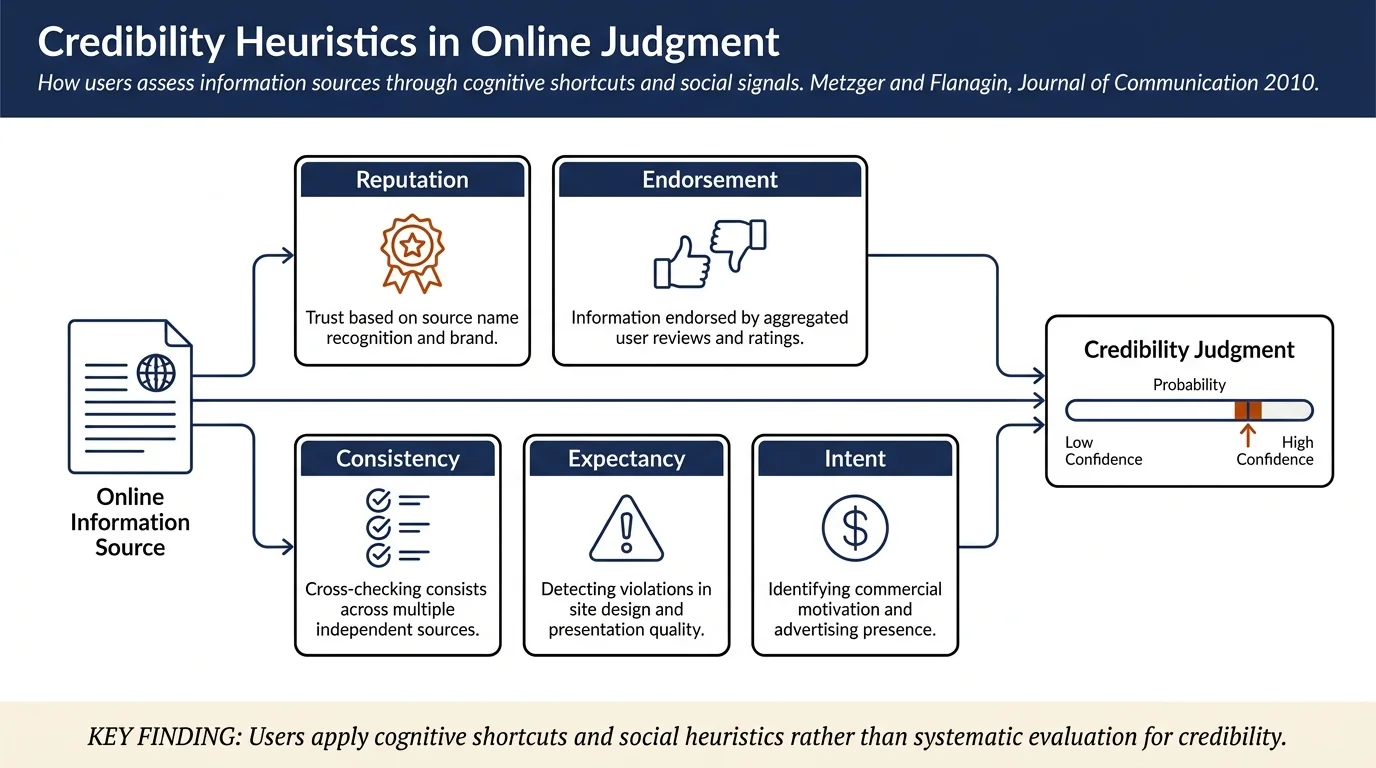
- 2010-metzger-social-heuristic-credibility — Focus group study identifying five cognitive heuristics (reputation, endorsement, consistency, expectancy violation, persuasive intent) and social means (information pooling, peer endorsements, enthusiast recommendations) used to assess credibility online
- 2007-metzger-credibility-on-web — Experimental study of how website design features, user attributes, and information verification behaviors influence credibility perception
- 2003-metzger-credibility-21st-century — Comprehensive theoretical synthesis of credibility assessment across source, message, and media dimensions
- 2000-flanagin-internet-information-credibility — Empirical study comparing how internet users assess credibility relative to traditional media
Related topics
- source-evaluation (the cognitive process of credibility judgment)
- misinformation (where credibility assessment fails)
- cognitive-heuristics (mental shortcuts in credibility judgment)
- information-processing (underlying cognitive mechanisms)
Notes
Credibility research bridges communication, psychology, and information science. Early work emphasized institutional gatekeepers and formal credentials, but internet-era research shows people increasingly rely on social and distributed forms of credibility assessment (peer ratings, reviews, peer networks) alongside traditional authority markers. Understanding credibility is foundational to misinformation research, since the first step in false-belief formation is often a judgment that misinformation is credible.