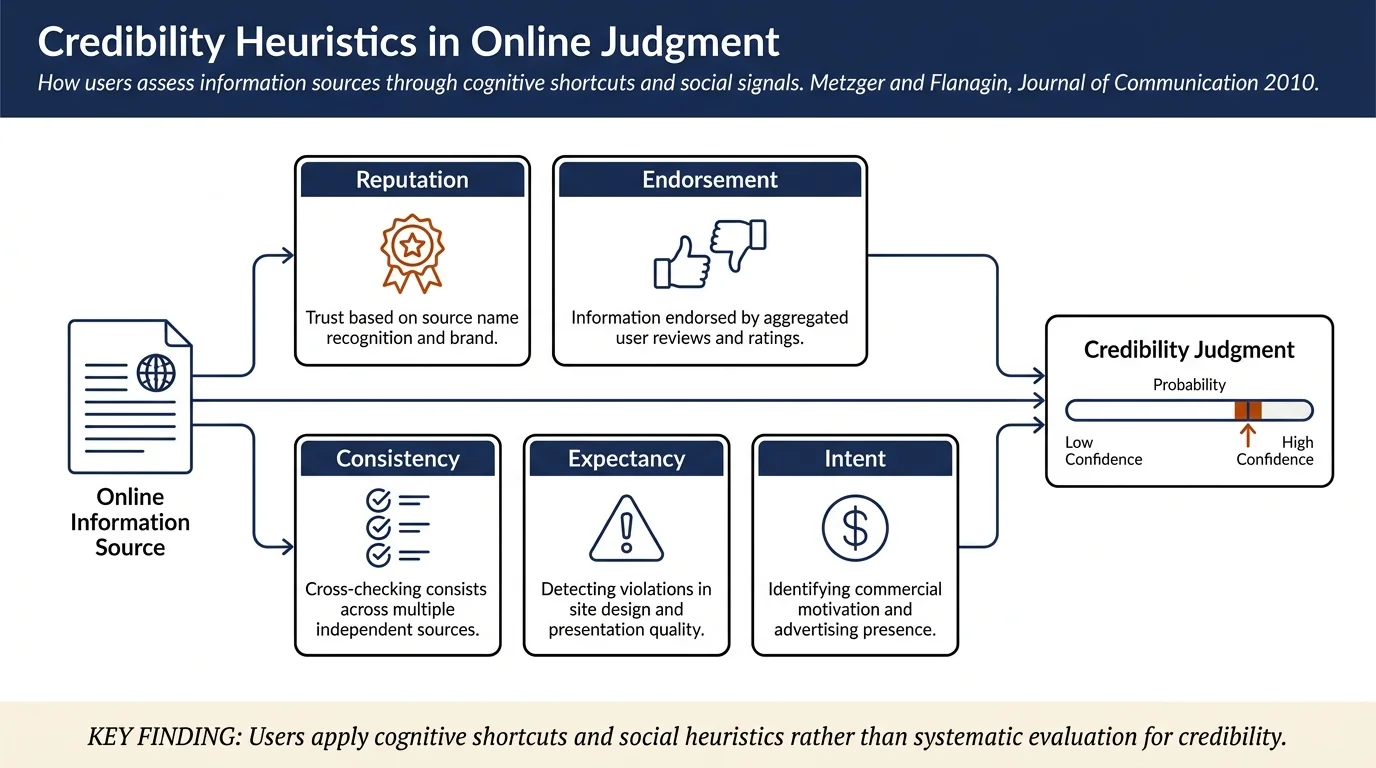
Information processing refers to the cognitive mechanisms by which people acquire, interpret, evaluate, and integrate information into their mental models and beliefs. Research in this area examines two primary processing routes: systematic/deliberate processing (careful, effortful evaluation of content and evidence) and heuristic/intuitive processing (rapid judgments based on mental shortcuts and surface characteristics). The balance between these routes depends on motivation, cognitive capacity, and context.
Key papers
- 2010-metzger-social-heuristic-credibility — Shows that people often rely on heuristic processing (reputation, social proof) rather than systematic content evaluation when assessing online credibility
Related topics
- cognitive-heuristics (mental shortcuts in processing)
- credibility (credibility judgments depend on how information is processed)
- misinformation (processing route influences susceptibility to false information)
- selective-exposure (people process information they encounter selectively)
Notes
The Elaboration Likelihood Model and related theories propose that under low motivation or high cognitive load, people engage in heuristic processing and are more vulnerable to persuasion and false claims. This has important implications for misinformation: in contexts of information overload (like social media feeds), people may be particularly likely to process information heuristically and accept claims based on surface credibility cues rather than evidence quality.