Explore everything
Filter by research area, year and venue. Every filter is in the address bar, so you can share a view as a link.
 Spread & networksPsychology & interventions
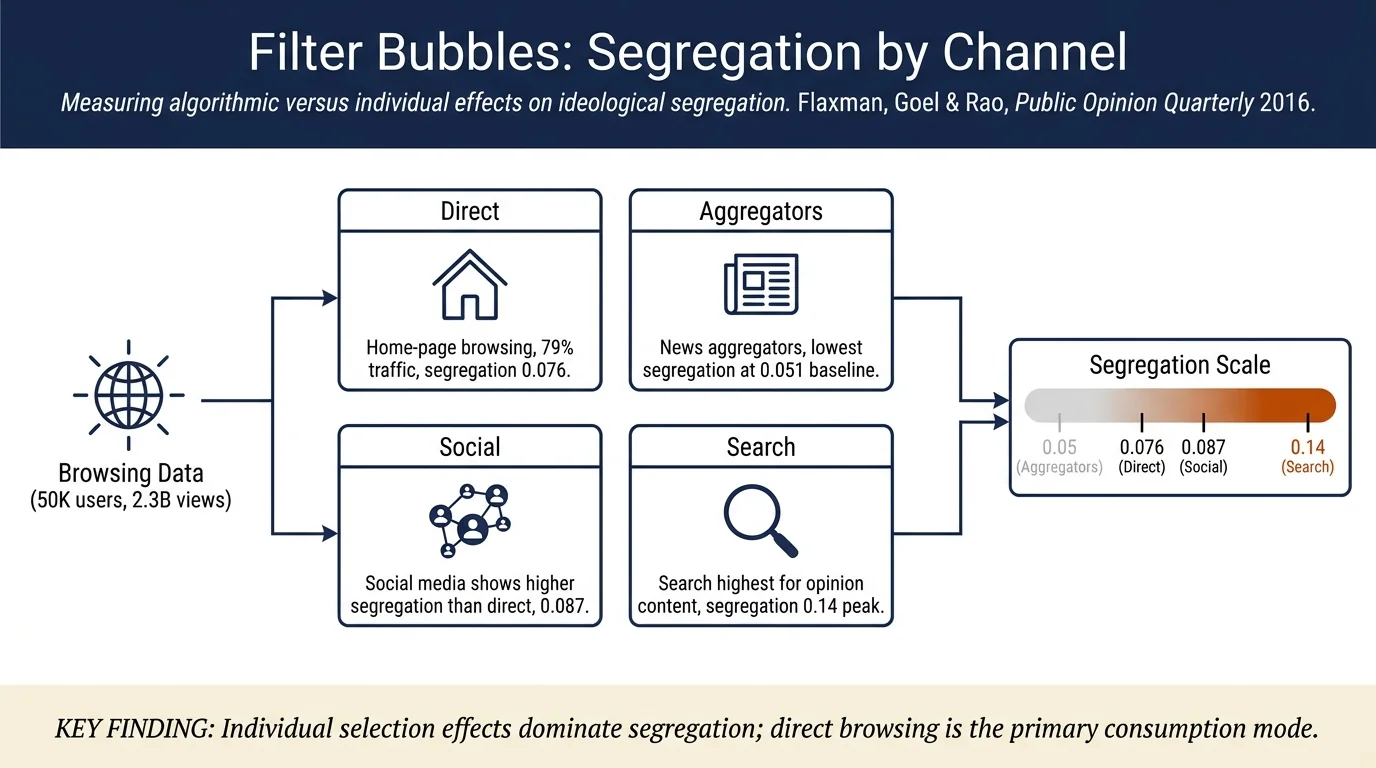
Filter Bubbles, Echo Chambers, and Online News ConsumptionThis paper examines whether technological changes (social media, search engines) increase ideological segregation in online news consumption by analyzing web-browsing data from 50,000 active news readers. They find that while social media and search are associated with higher segregation than direct browsing, the overall effects are…
 Datasets & evaluationFact-checking & verification
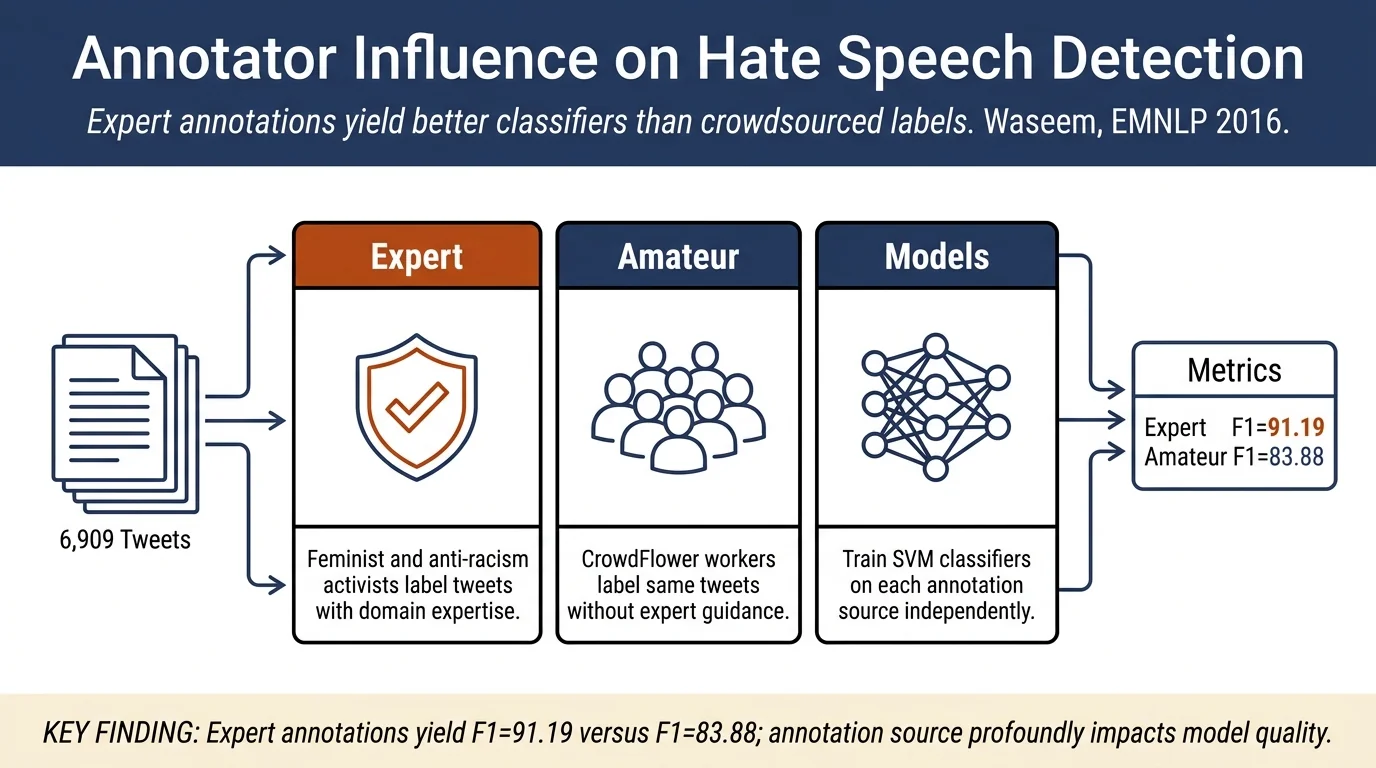
Are You a Racist or Am I Seeing Things? Annotator Influence on Hate Speech Detection on TwitterThis paper compares hate speech detection systems trained on expert annotations (from feminist and anti-racism activists) versus amateur annotations (crowdsourced via CrowdFlower) on 6,909 tweets. Systems trained on expert annotations significantly outperform those trained on amateur data, and amateur annotators systematically label more…
 Bots & coordinated campaignsDetection methods
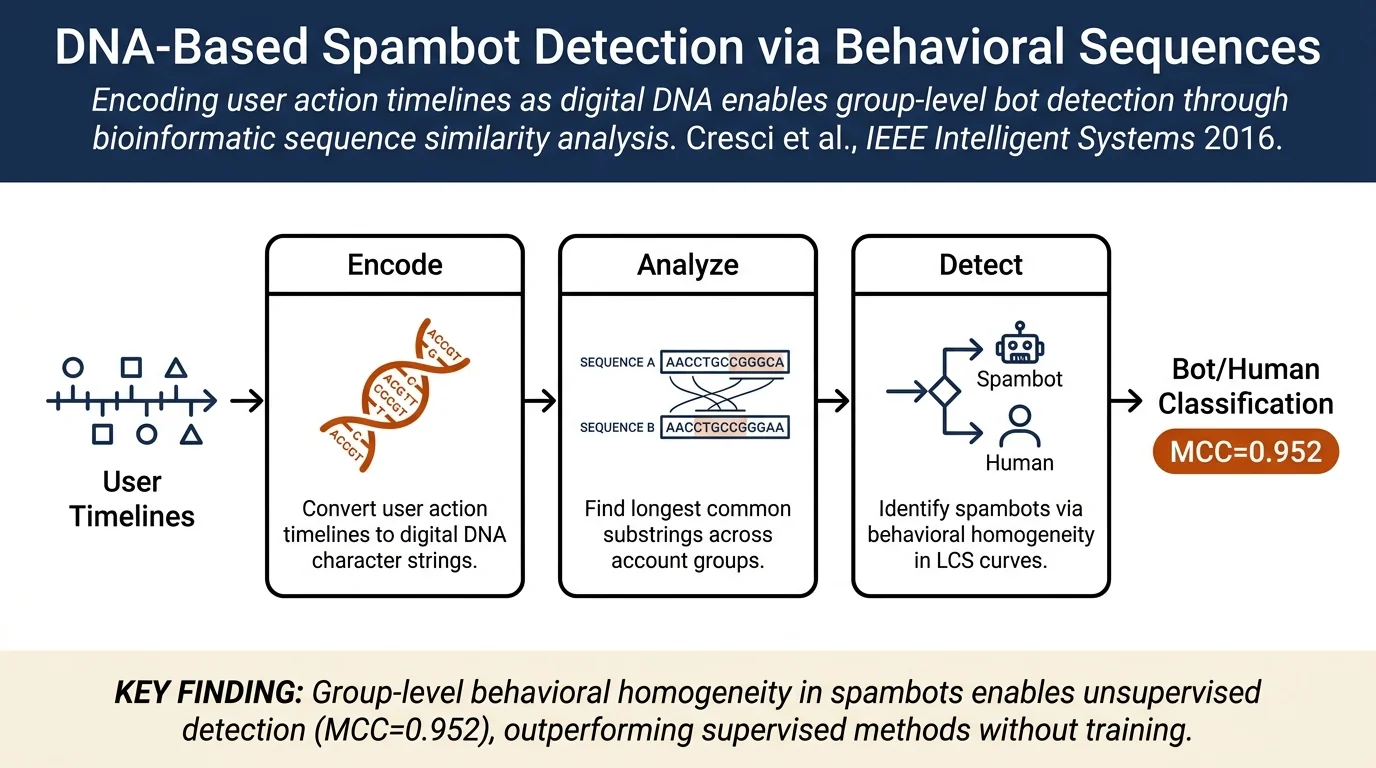
DNA-Inspired Online Behavioral Modeling and Its Application to Spambot DetectionProposes a novel methodology to characterize online user behavior using DNA-inspired digital sequences, where each user action (tweet type, content features) is encoded as a character in a string. Applies standard bioinformatic DNA analysis techniques—specifically longest common substring (LCS) analysis—to detect spambots on Twitter by…
 Bots & coordinated campaignsDatasets & evaluation
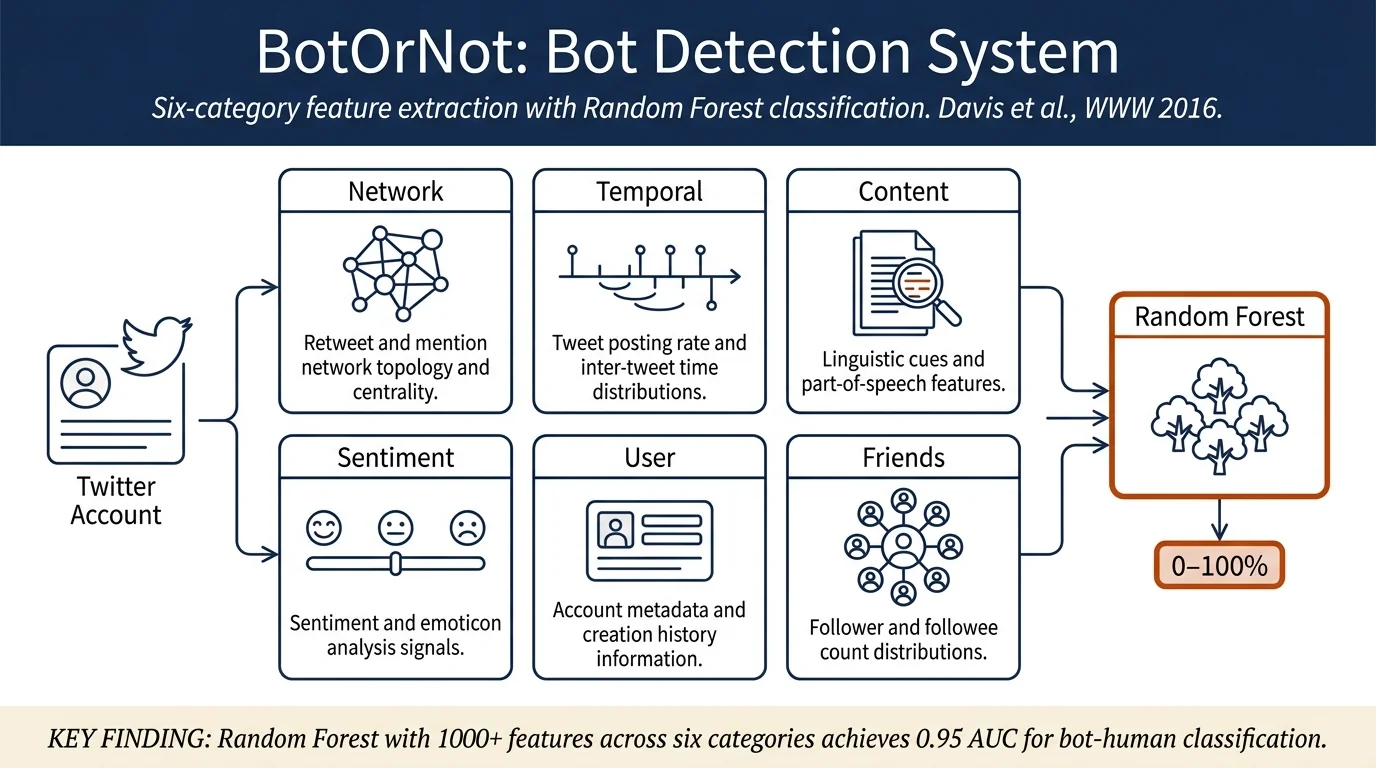
BotOrNot: A System to Evaluate Social BotsBotOrNot is a publicly available service and API that evaluates whether a Twitter account is controlled by a human or automated bot. Using 1,000+ features across six categories (network, user, friends, temporal, content, sentiment), the system applies Random Forest classification to achieve 0.95 AUC on a labeled dataset of 15k bots and…
 Spread & networksDetection methods
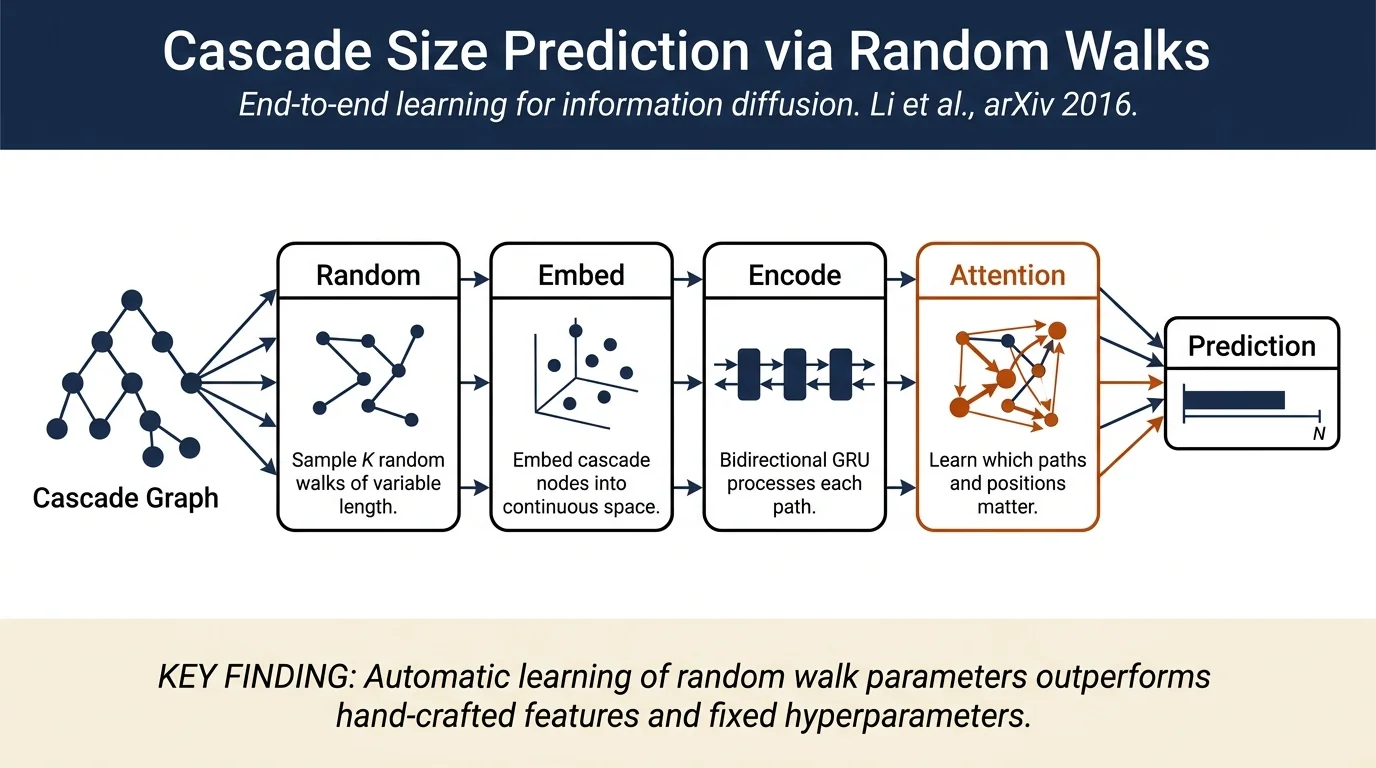
DeepCas: an End-to-end Predictor of Information CascadesDeepCas predicts the future size of information cascades (e.g., how many people will eventually retweet a post or cite a paper) using an end-to-end deep learning model that represents cascade graphs as sets of random walk paths. Instead of relying on hand-crafted network features, the model learns cascade representations automatically…
 Spread & networksDetection methods
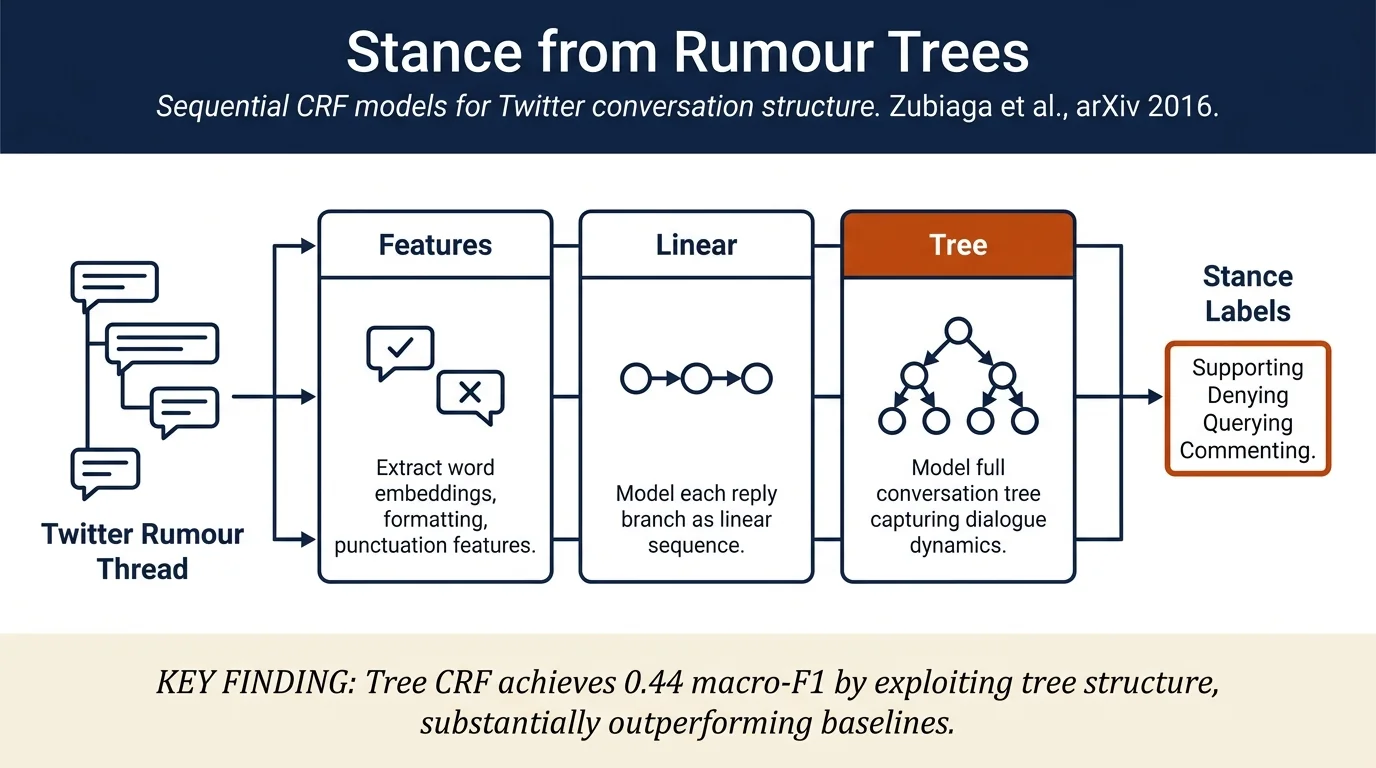
Stance Classification in Rumours as a Sequential Task Exploiting the Tree Structure of Social Media ConversationsProposes that modelling Twitter conversations as tree-structured sequences improves rumour stance classification. Introduces Linear and Tree Conditional Random Fields (CRF) to exploit the sequential structure of replies within rumour threads, showing that Tree CRF significantly outperforms non-sequential baselines on 4,519 annotated…
 Spread & networksPlatforms, policy & society
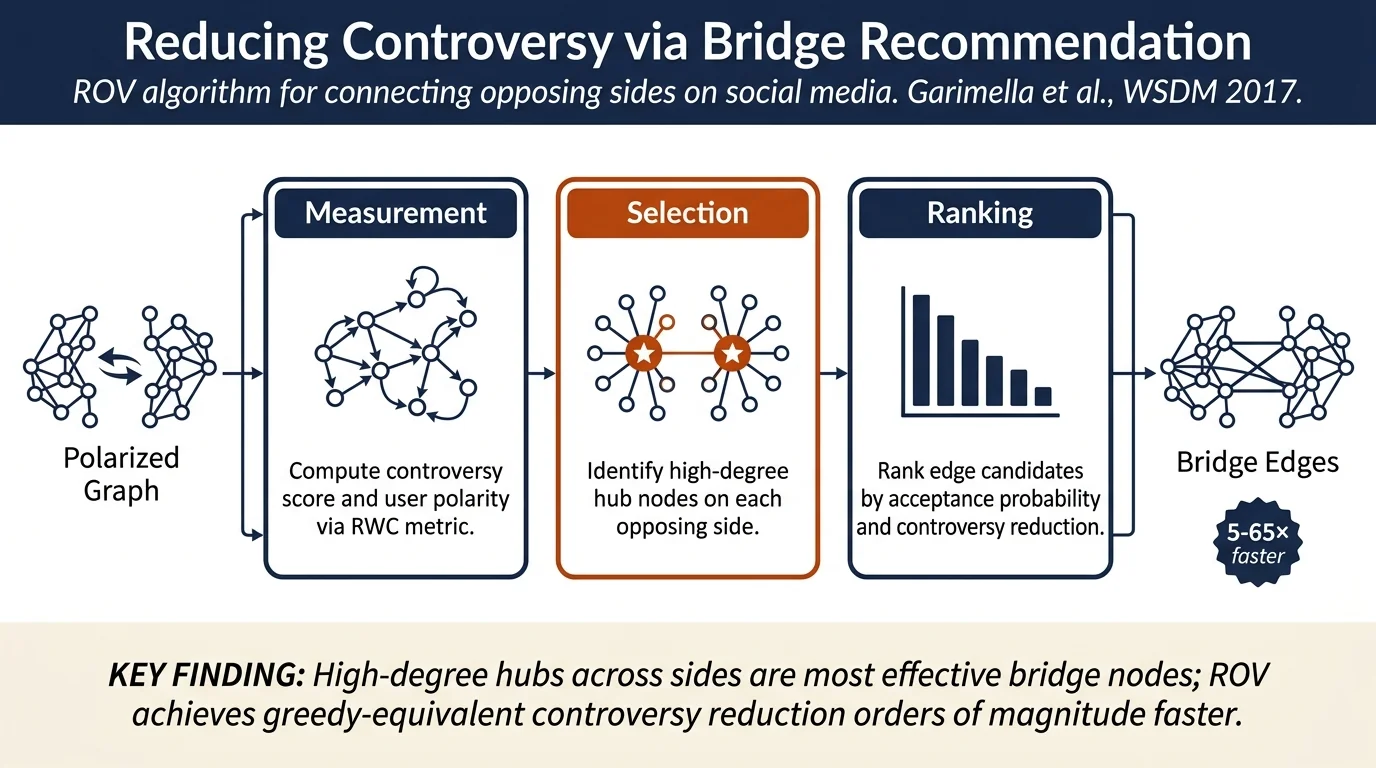
Reducing Controversy by Connecting Opposing ViewsThis paper proposes an algorithmic approach to reduce polarization on social media by recommending social connections (edges) between opposing sides. Using an endorsement graph representation and the random-walk-based controversy metric, the authors formulate the problem as k-edge-addition and develop an efficient algorithm (ROV) that…
 Spread & networksPlatforms, policy & society
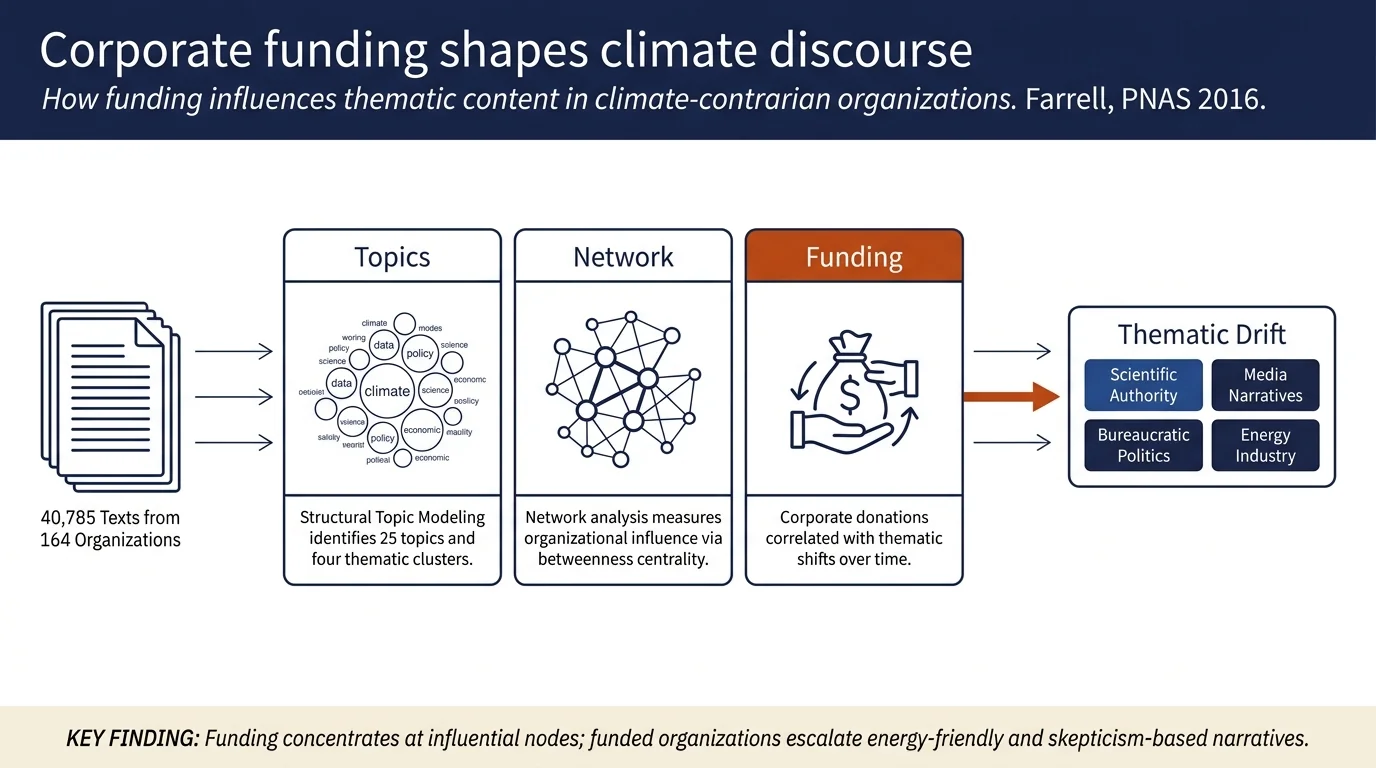
Corporate funding and ideological polarization about climate changeFarrell analyzes 40,785 texts (39+ million words) from 164 climate contrarian organizations between 1993–2013, employing Structural Topic Modeling and social network analysis to demonstrate that corporate funding from entities like ExxonMobil and Koch family foundations directly influences which polarization themes are created and…
 Fact-checking & verificationPlatforms, policy & society
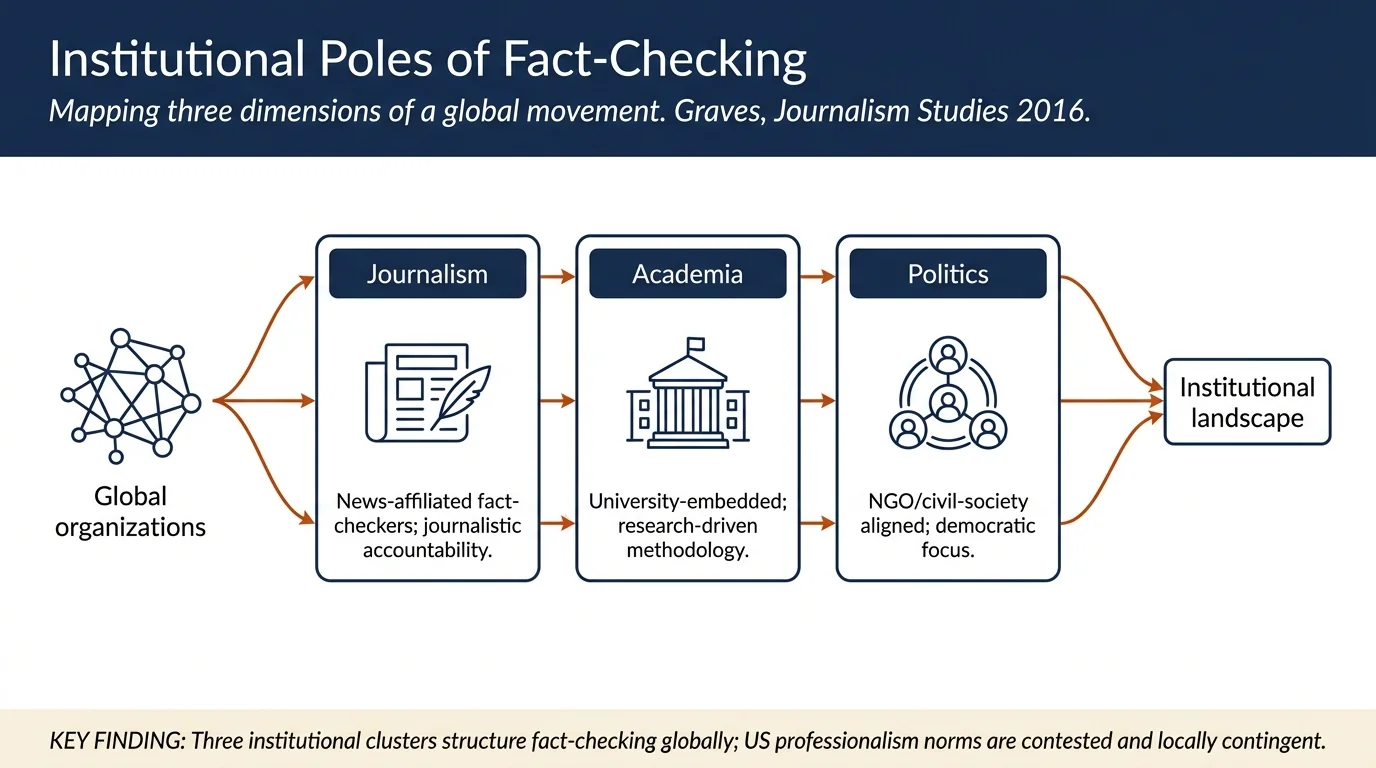
Boundaries Not Drawn: Mapping the institutional roots of the global fact-checking movementGraves maps the institutional landscape of 64+ fact-checking organizations globally across two summits (2014–2015), using ethnographic fieldwork and ternary plots to sort organizations along three axes: journalism, academia, and politics/civil society. The movement has a journalistic core but exhibits striking institutional diversity and…