Explore papers
Filter by research area, year and venue. Every filter is in the address bar, so you can share a view as a link.
 Detection methodsLLMs & generative AI
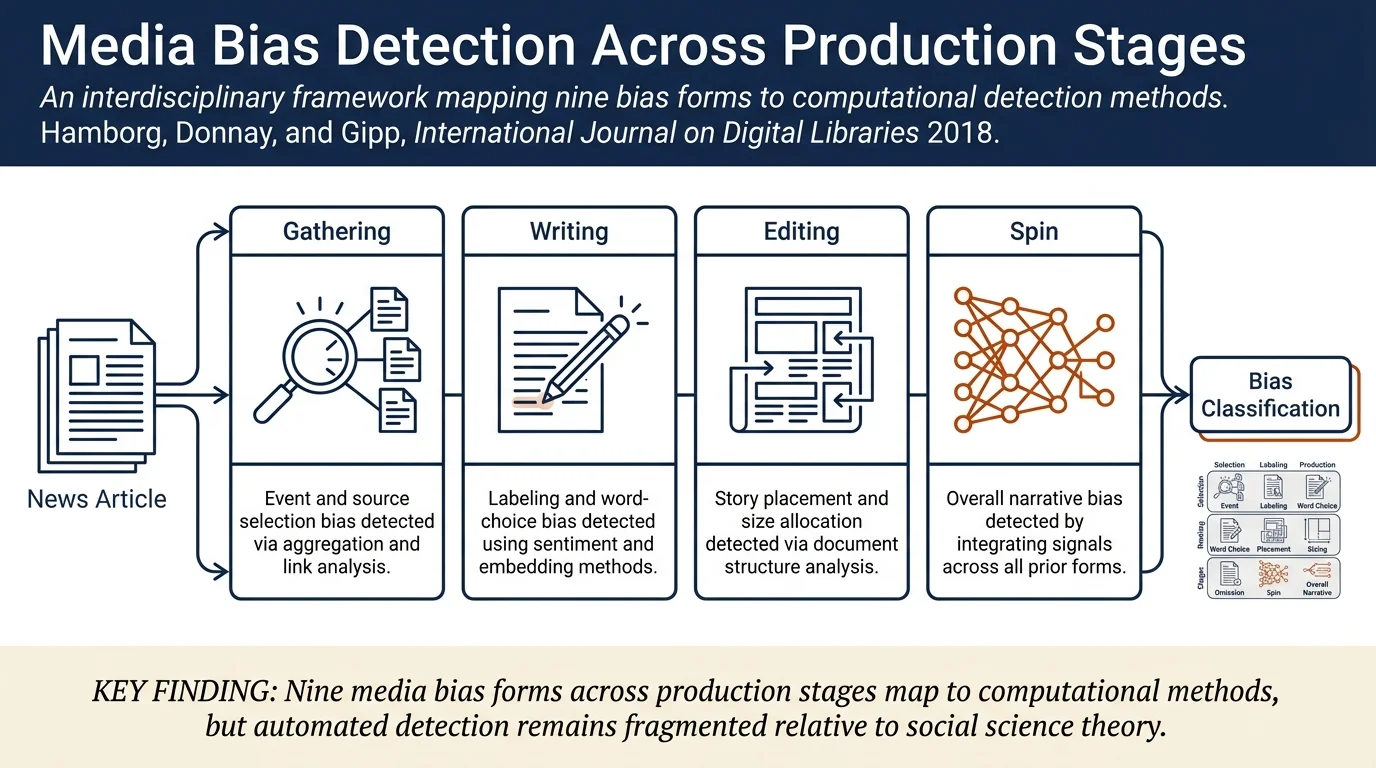
Automated identification of media bias in news articles: an interdisciplinary literature reviewThis paper surveys automated and manual methods for identifying media bias in news articles, bridging social science and computer science approaches. It defines nine distinct forms of media bias and maps social science research onto computational techniques, finding that NLP-based methods are promising for automated detection but remain…
 Spread & networksBots & coordinated campaigns
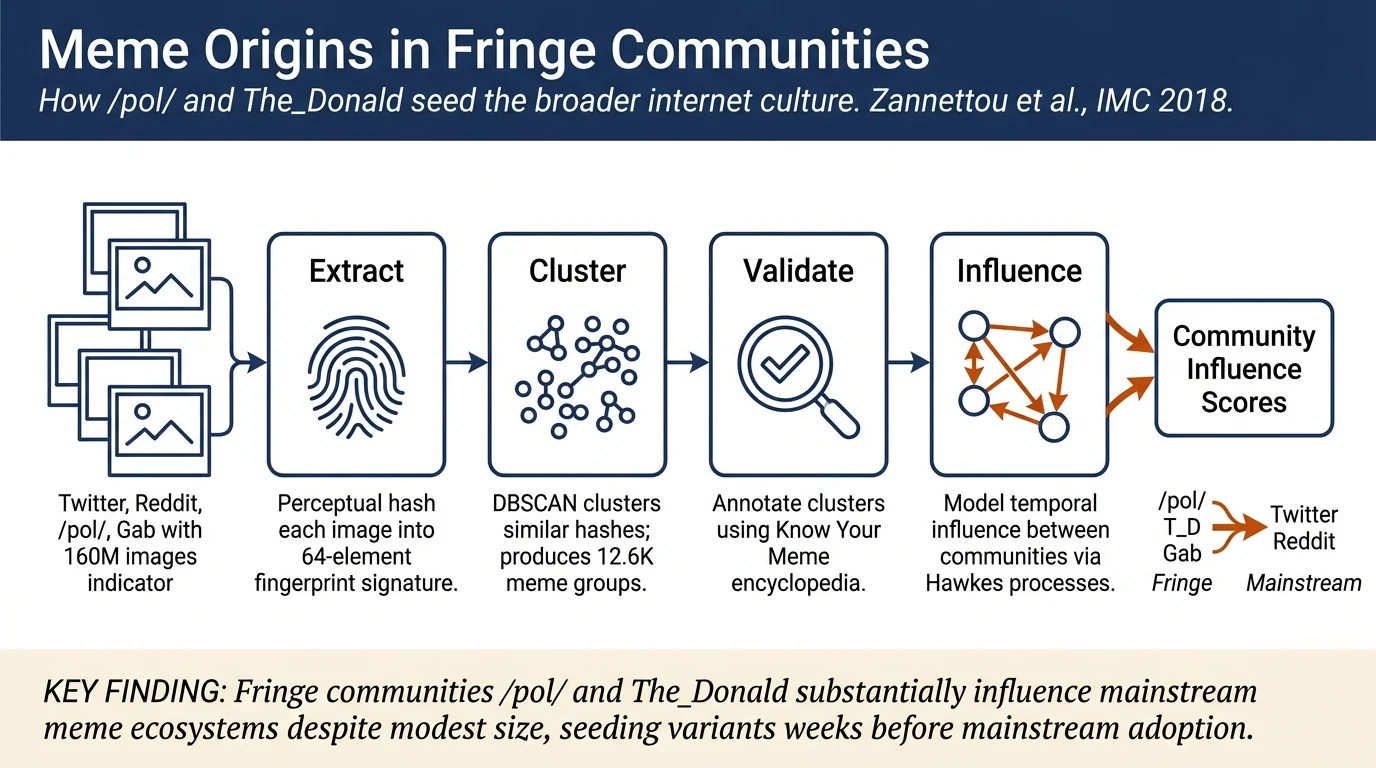
On the Origins of Memes by Means of Fringe Web CommunitiesLarge-scale empirical study of how image memes originate and propagate across fringe and mainstream Web communities. Analyzes 160M images posted to Twitter, Reddit, /pol/, and Gab (2016–2017) using perceptual hashing, clustering, and custom distance metrics.
 Psychology & interventionsPlatforms, policy & society
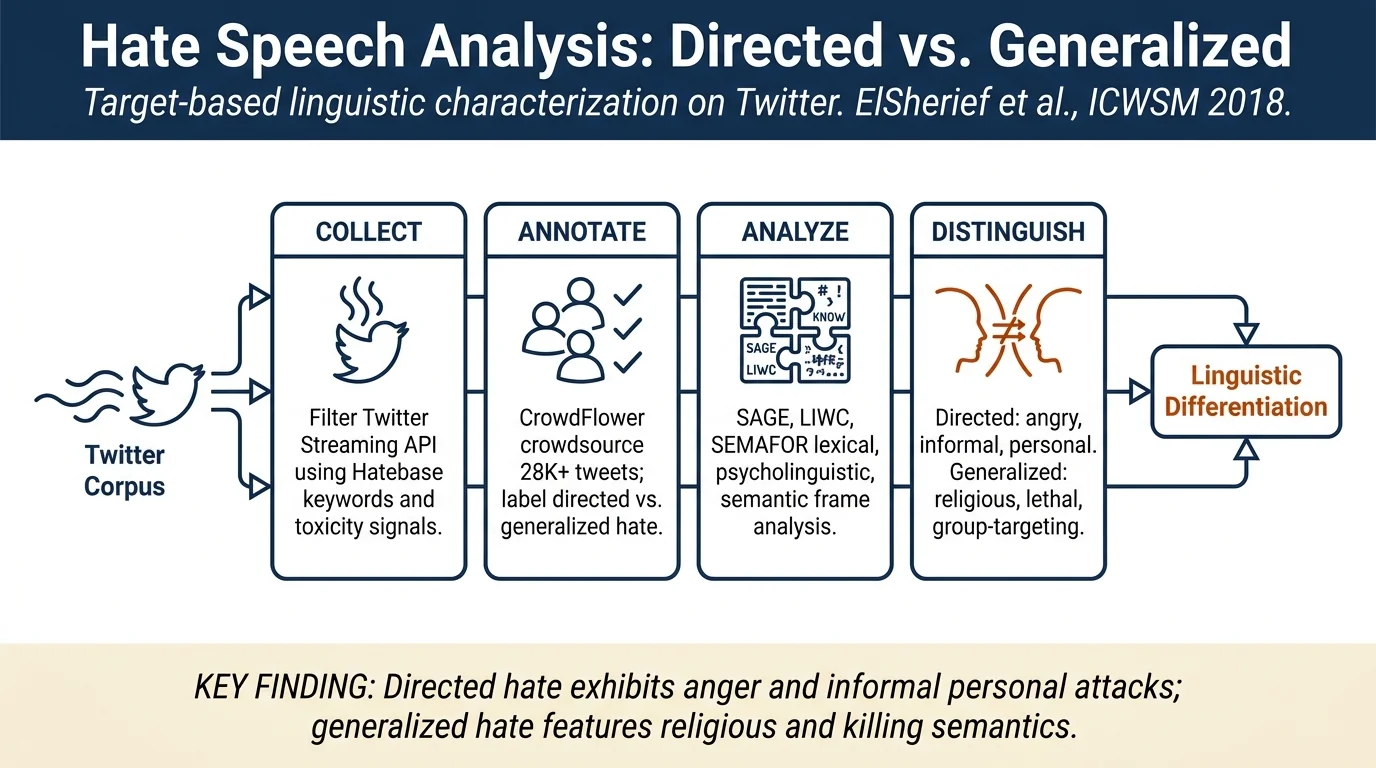
Hate Lingo: A Target-based Linguistic Analysis of Hate Speech in Social MediaThis paper presents the first large-scale linguistic and psycholinguistic analysis of hate speech categorized by its target: directed (personal attacks) versus generalized (targeting groups). The authors analyze 28,318 directed and ~2,500 generalized hate tweets, revealing that directed hate is more informal, angry, and explicitly…
 Fact-checking & verificationDatasets & evaluation
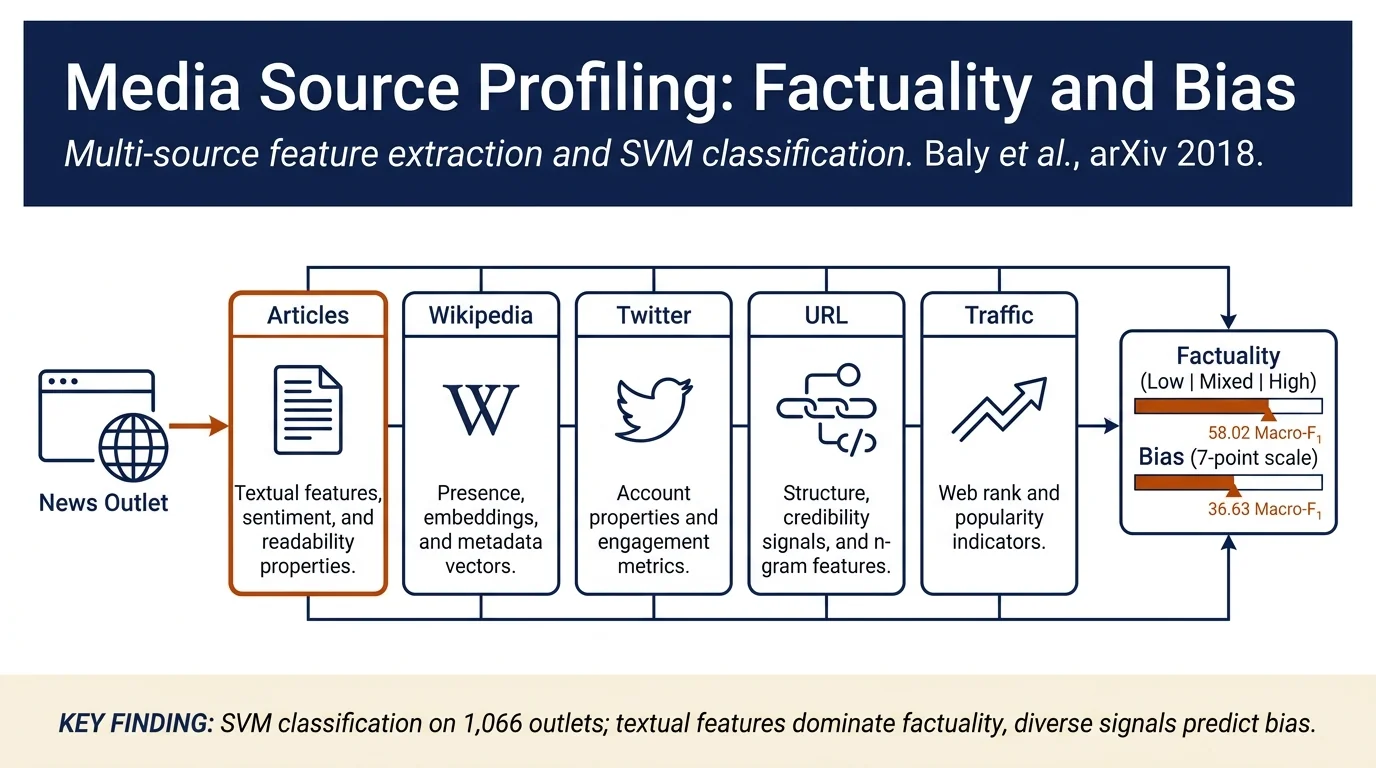
Predicting Factuality of Reporting and Bias of News Media SourcesThis paper frames predicting news media factuality and bias as classification tasks at the news outlet level rather than at the claim or article level. The authors extract 141 features from multiple sources (articles, Wikipedia, Twitter, URL structure, web traffic) and train SVM classifiers, creating a dataset of 1,066 websites manually…
 Platforms, policy & societyFact-checking & verification
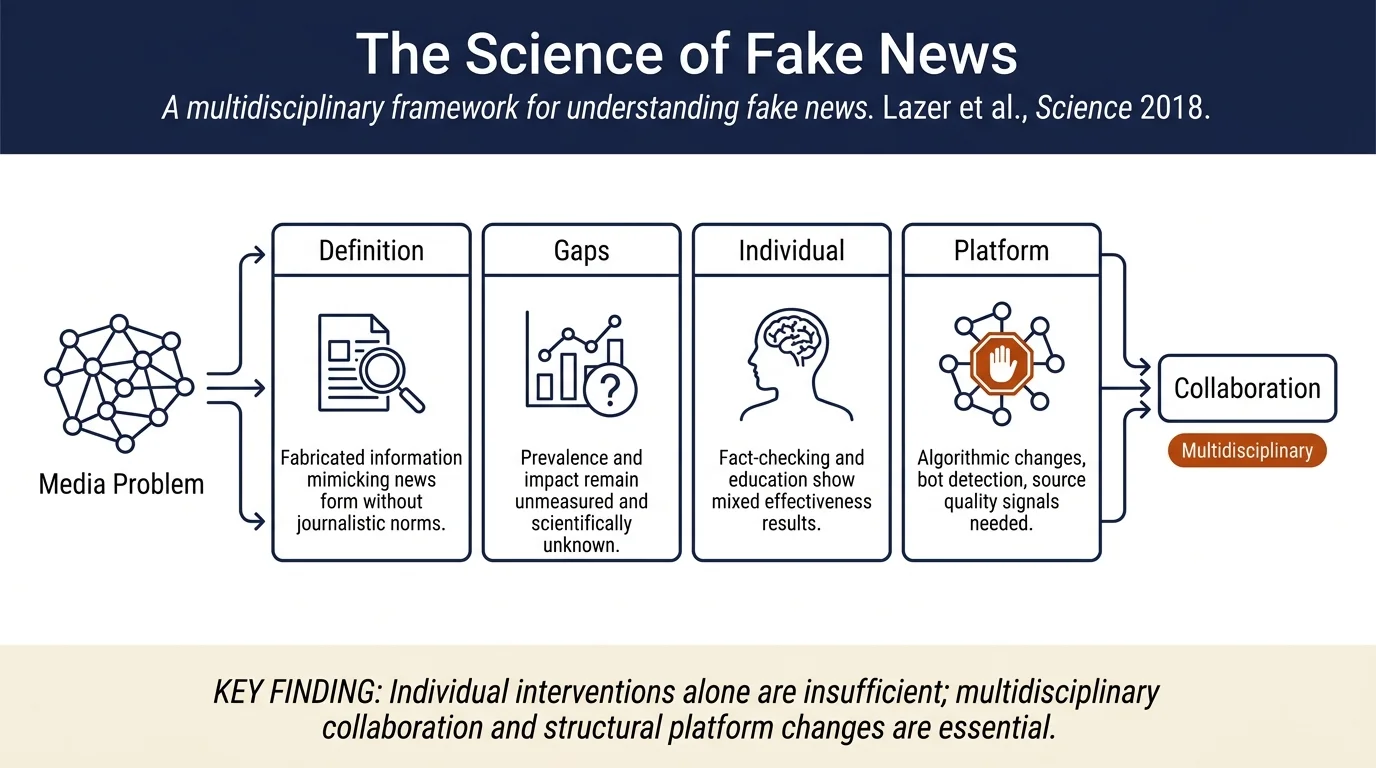
The Science of Fake NewsThis multidisciplinary review establishes a scientific framework for studying fake news, defining it as fabricated information that mimics news media form but lacks editorial norms. The paper identifies two mitigation strategies—empowering individuals through fact-checking and education, and structural platform interventions—while…
 Psychology & interventionsPlatforms, policy & society
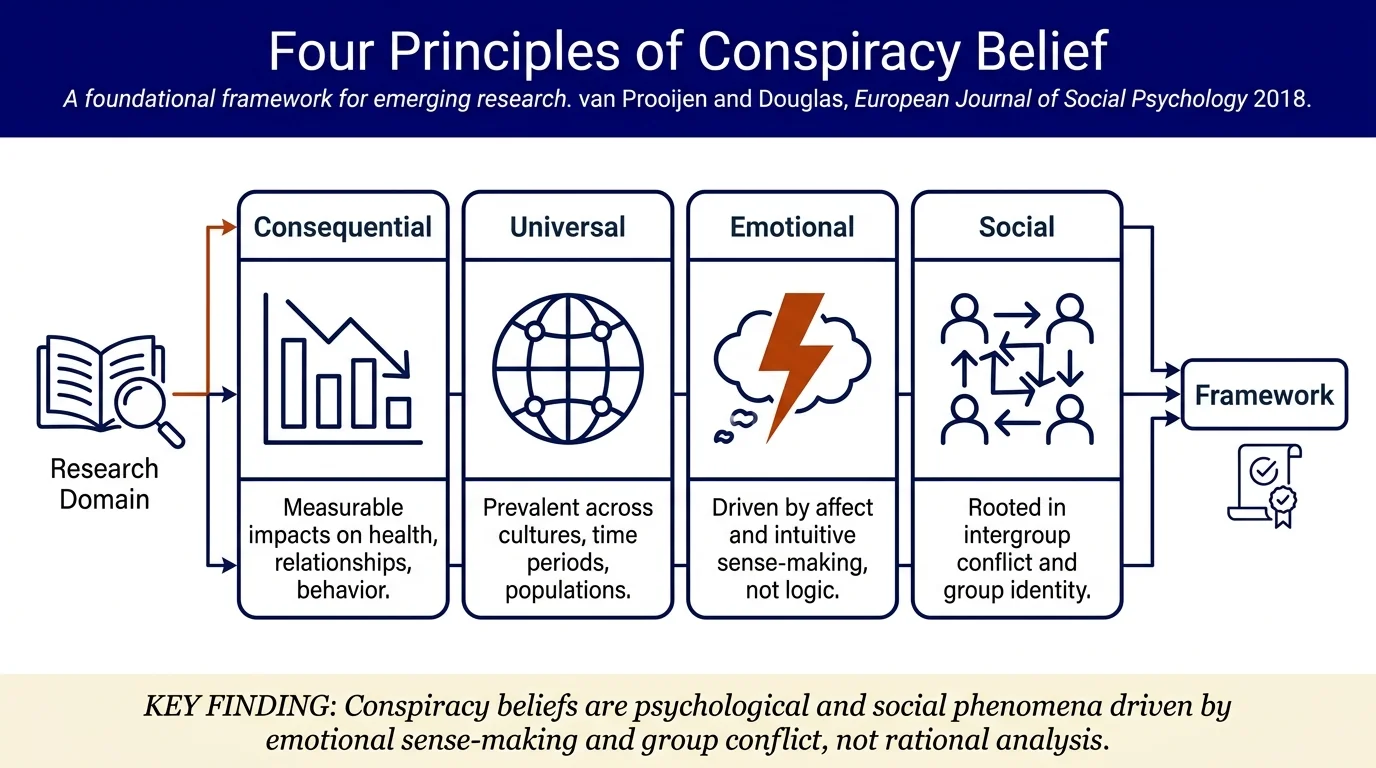
Belief in conspiracy theories: Basic principles of an emerging research domainThis special issue introduction proposes four foundational principles for the emerging scientific study of conspiracy belief: conspiracy beliefs are consequential (with real impacts on health and relationships), universal (across cultures and historical periods), emotional (driven by sense-making rather than logic), and social (rooted in…
 Spread & networksPsychology & interventions
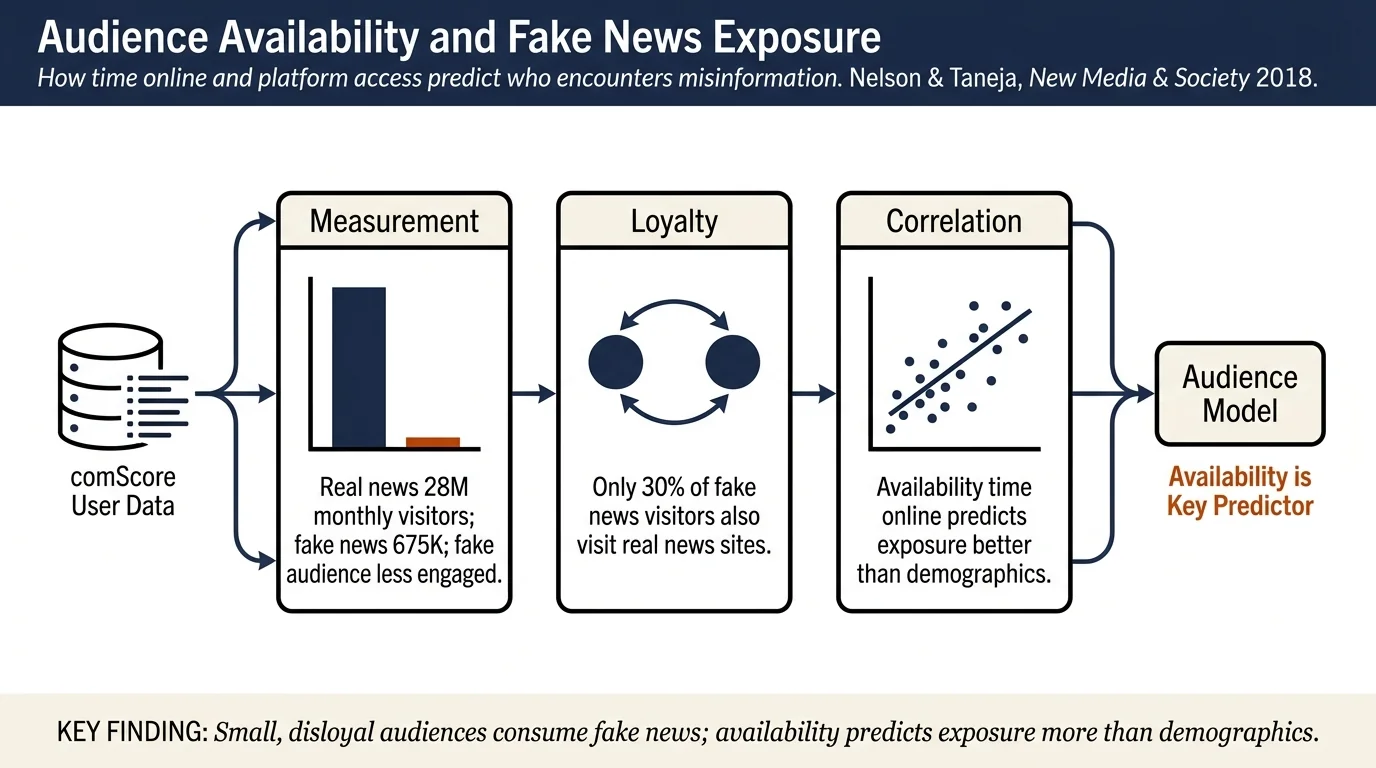
The small, disloyal fake news audience: The role of audience availability in fake news consumptionContrary to claims that fake news has reached a broad audience, this empirical analysis of comScore data shows the fake news audience is small and comprises heavy internet users. Applying the Law of Double Jeopardy from media theory, the authors show that fake news attracts disloyal audiences disproportionately from social platforms.
 Spread & networksPlatforms, policy & society
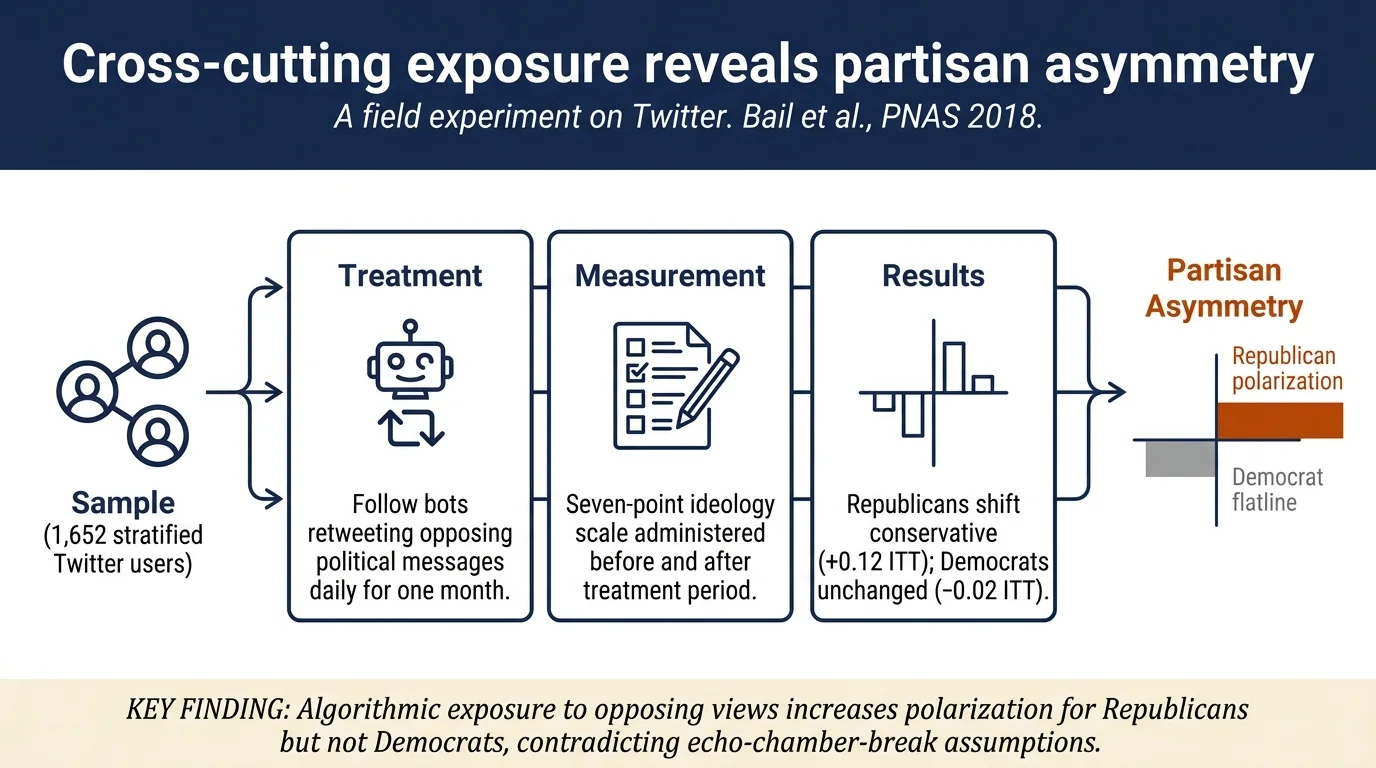
Exposure to opposing views on social media can increase political polarizationThis field experiment tested whether exposure to opposing political views on social media reduces polarization. Twitter users (Republicans and Democrats) were randomly offered money to follow bots retweeting messages from opposing politicians and opinion leaders for one month.