Explore everything
Filter by research area, year and venue. Every filter is in the address bar, so you can share a view as a link.
 Deepfakes & multimodalLLMs & generative AI
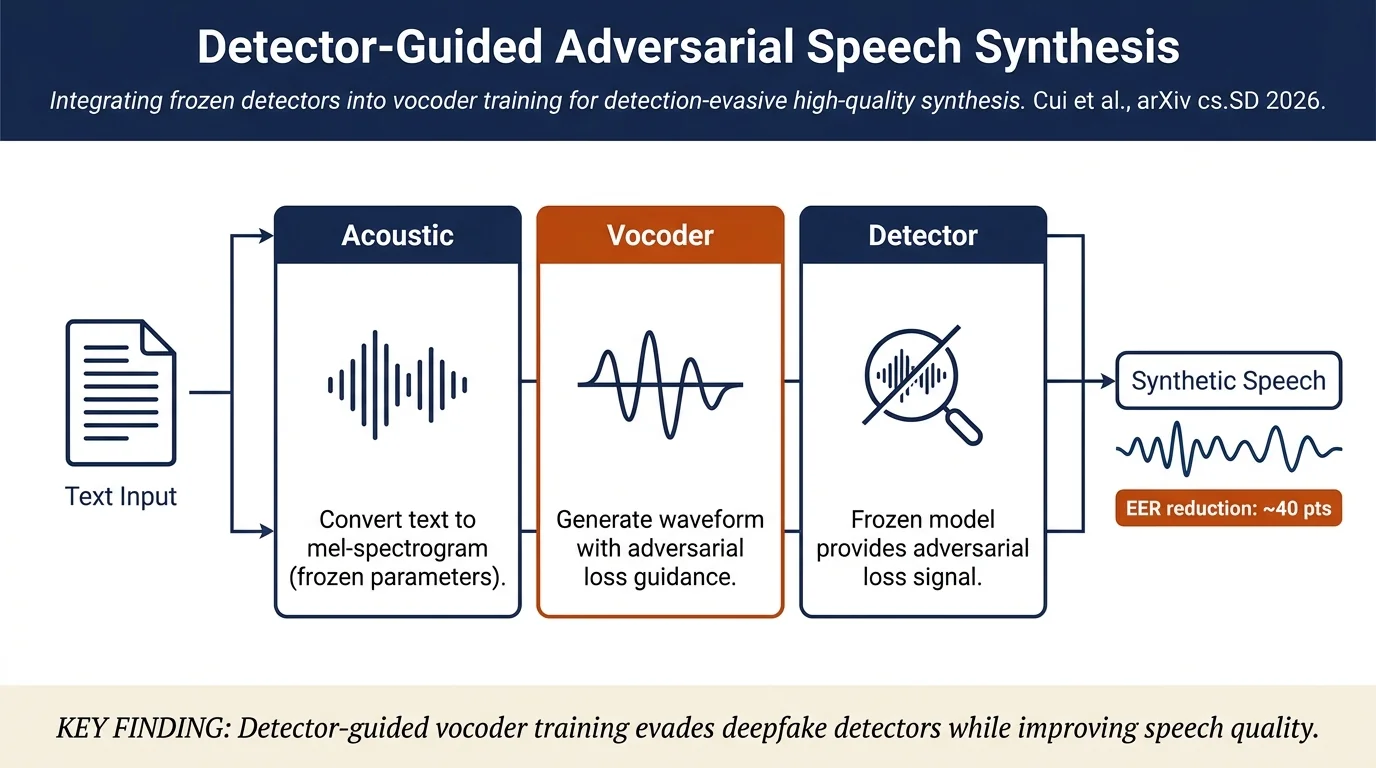
Detector-Guided Vocoder Training for Adversarial Text-to-Speech SynthesisThis paper presents a method to generate synthetic speech that evades deepfake detectors by integrating detector loss directly into vocoder training, rather than applying post-hoc perturbations. The approach fine-tunes a BigVGAN vocoder while freezing the acoustic model and detector, generating adversarial speech that retains high…
 Deepfakes & multimodalDetection methods
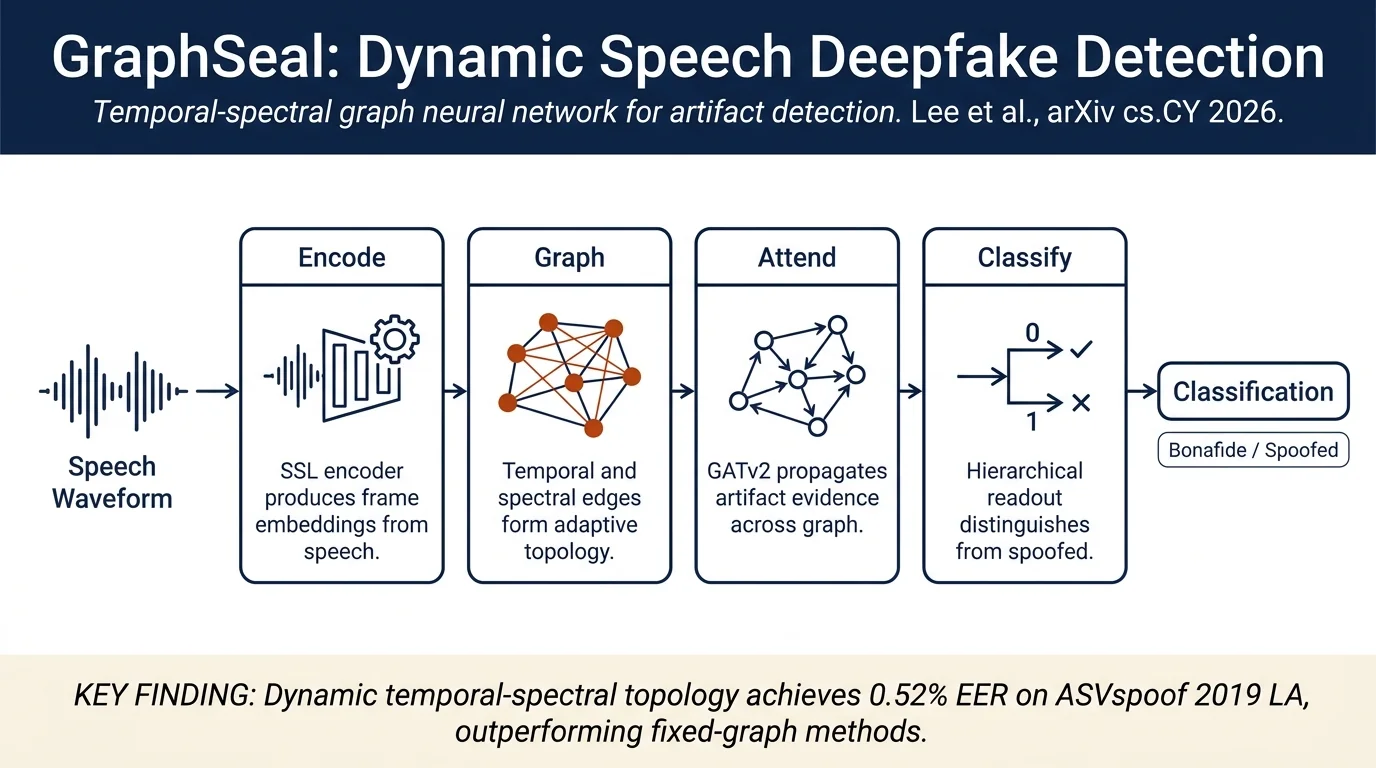
GraphSeal: Graph-Augmented Speech Deepfake Detection via Temporal-Spectral Artifact PropagationGraphSeal proposes a dynamic temporal-spectral graph neural network for speech deepfake detection that outperforms fixed-topology baselines on generalization tasks. Unlike prior graph-based anti-spoofing methods that use feature-extraction-determined topologies, GraphSeal constructs utterance-specific edges from both temporal adjacency…
 Deepfakes & multimodalDetection methods
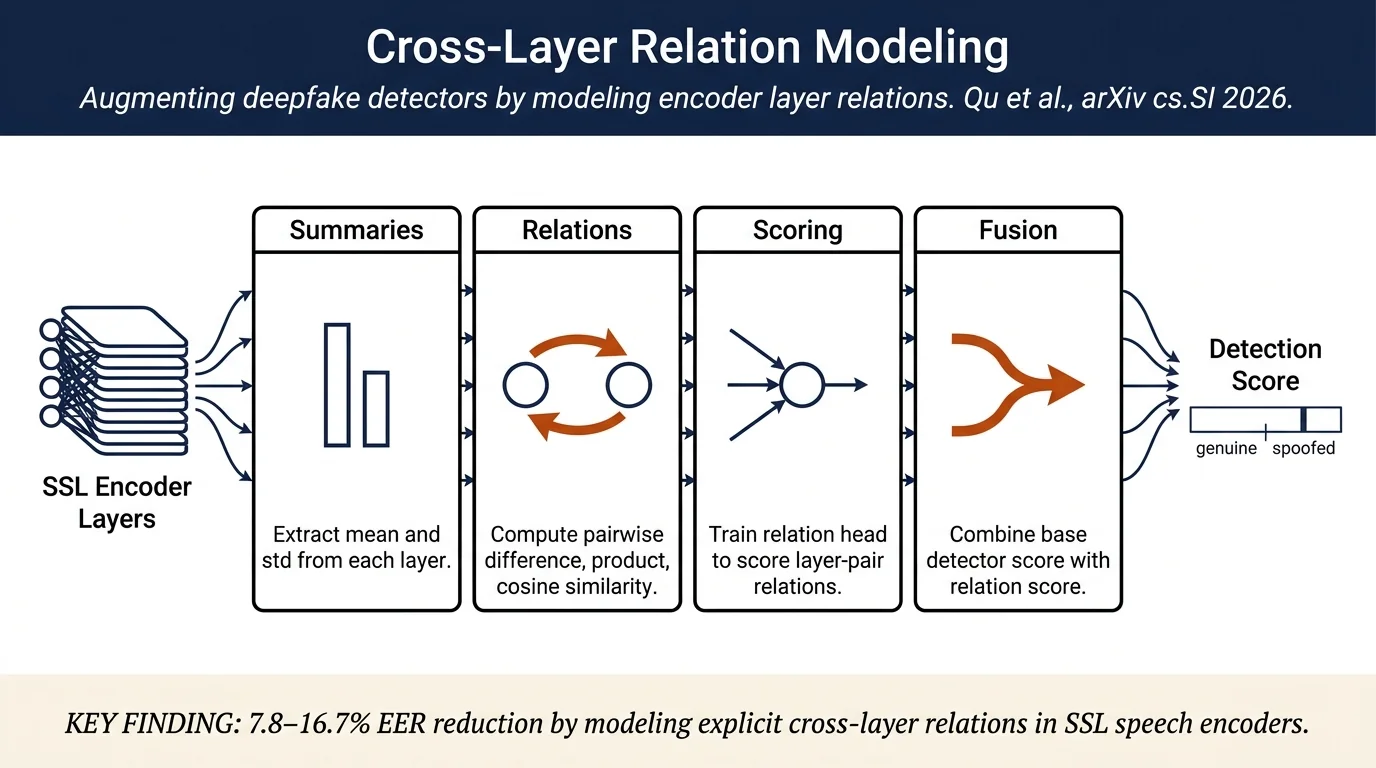
CLRM: Cross-Layer Relation Modeling for Audio Deepfake DetectionAudio deepfake detection (ADD) distinguishes authentic speech from synthetic or manipulated speech. Existing methods either select informative layers from self-supervised learning (SSL) speech encoders or aggregate features across layers, but this discards useful variation in how different layers represent genuine vs. spoofed speech.
 Deepfakes & multimodalDetection methods
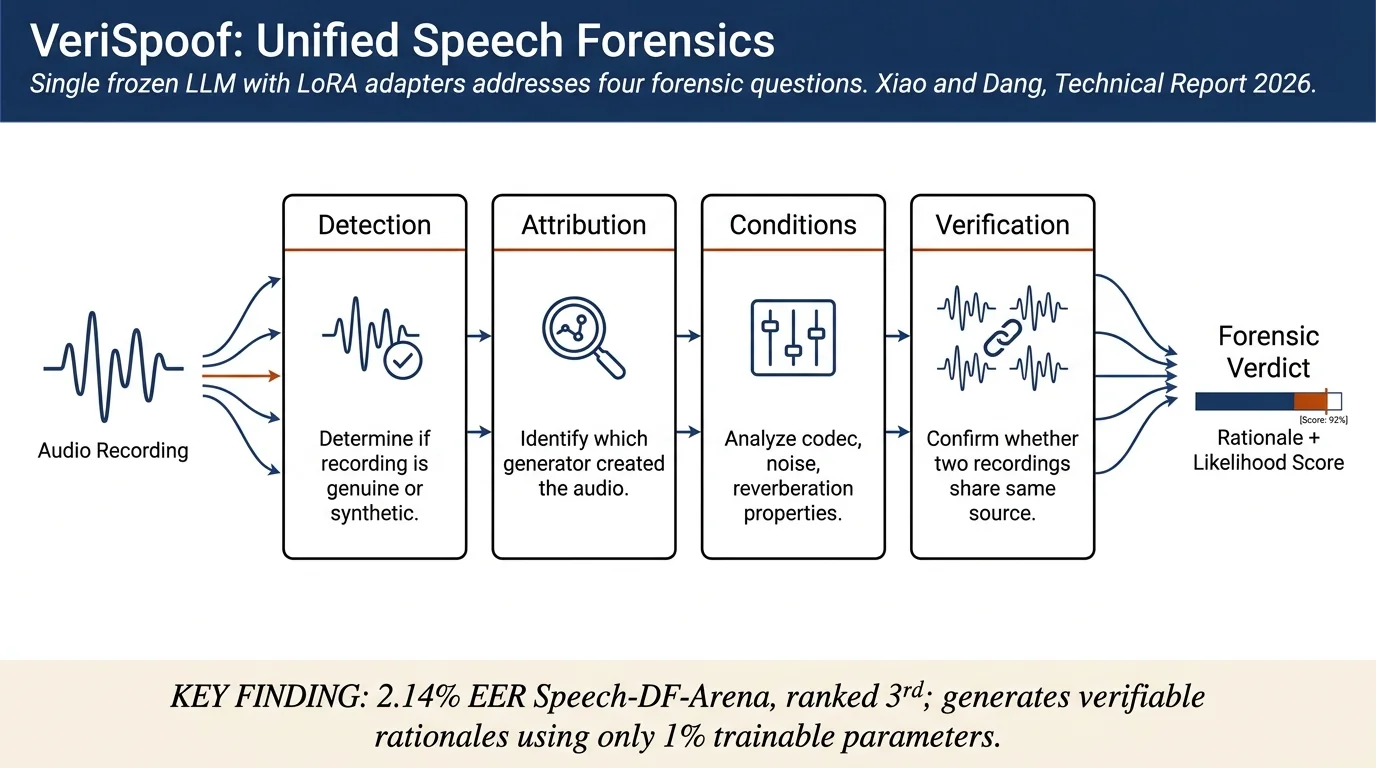
VeriSpoof: Beyond Real or Fake with One Audio LLMVeriSpoof is an audio language model system that unifies multiple forensic tasks in a single neural framework: detecting whether a speech recording is synthetic, identifying which generator produced it, analyzing recording conditions, and verifying whether two recordings share a source. The system achieves state-of-the-art results on…
 LLMs & generative AIPlatforms, policy & society
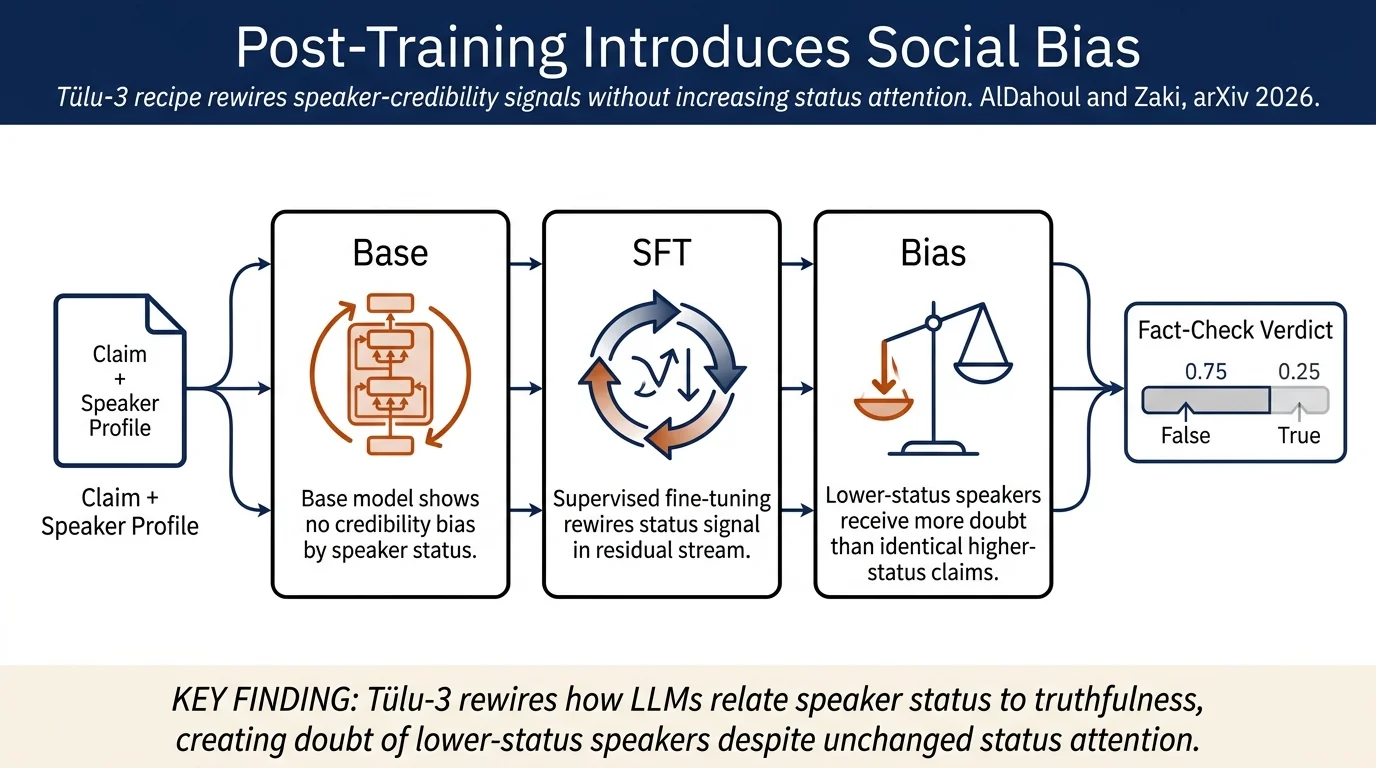
From Leniency to Suspicion: How an Open Post-Training Recipe Changes Whom LLM Fact-Checkers BelievePost-training can introduce social class bias into LLM-based fact-checkers: when the Tülu-3 open post-training recipe is applied to OLMo-2 32B, the model becomes more skeptical of claims from lower-status posters (service workers, manual laborers) while remaining lenient toward claims from higher-status posters (professionals,…
 Detection methodsLLMs & generative AI
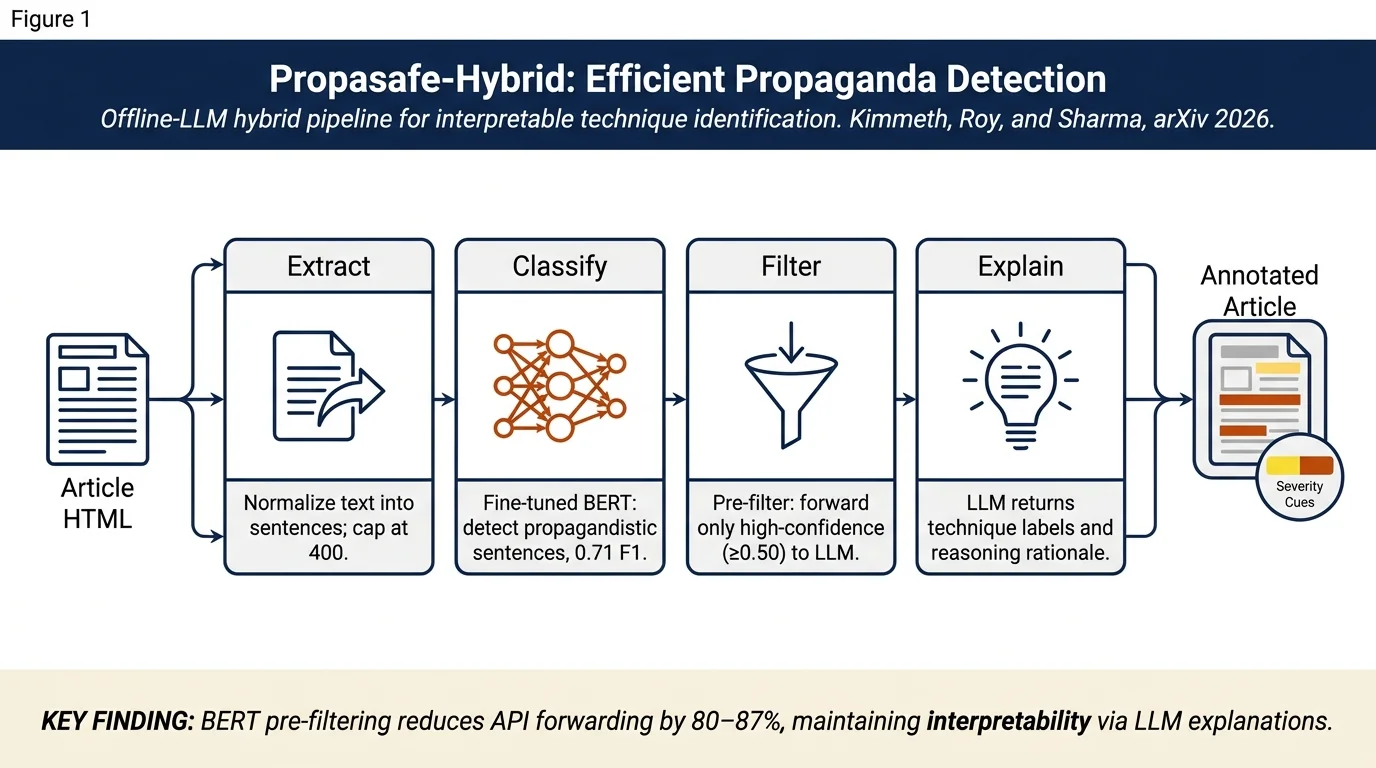
Propasafe-Hybrid: A Text-Based Hybrid Propaganda Detection ToolPropasafe-Hybrid is a sentence-level propaganda detection tool that combines an offline BERT classifier with LLM-based technique identification. The hybrid architecture reduces API token usage (filtering 80–87% of sentences locally) while delivering interpretable technique labels and explanations at the point of consumption.
 LLMs & generative AIDatasets & evaluation
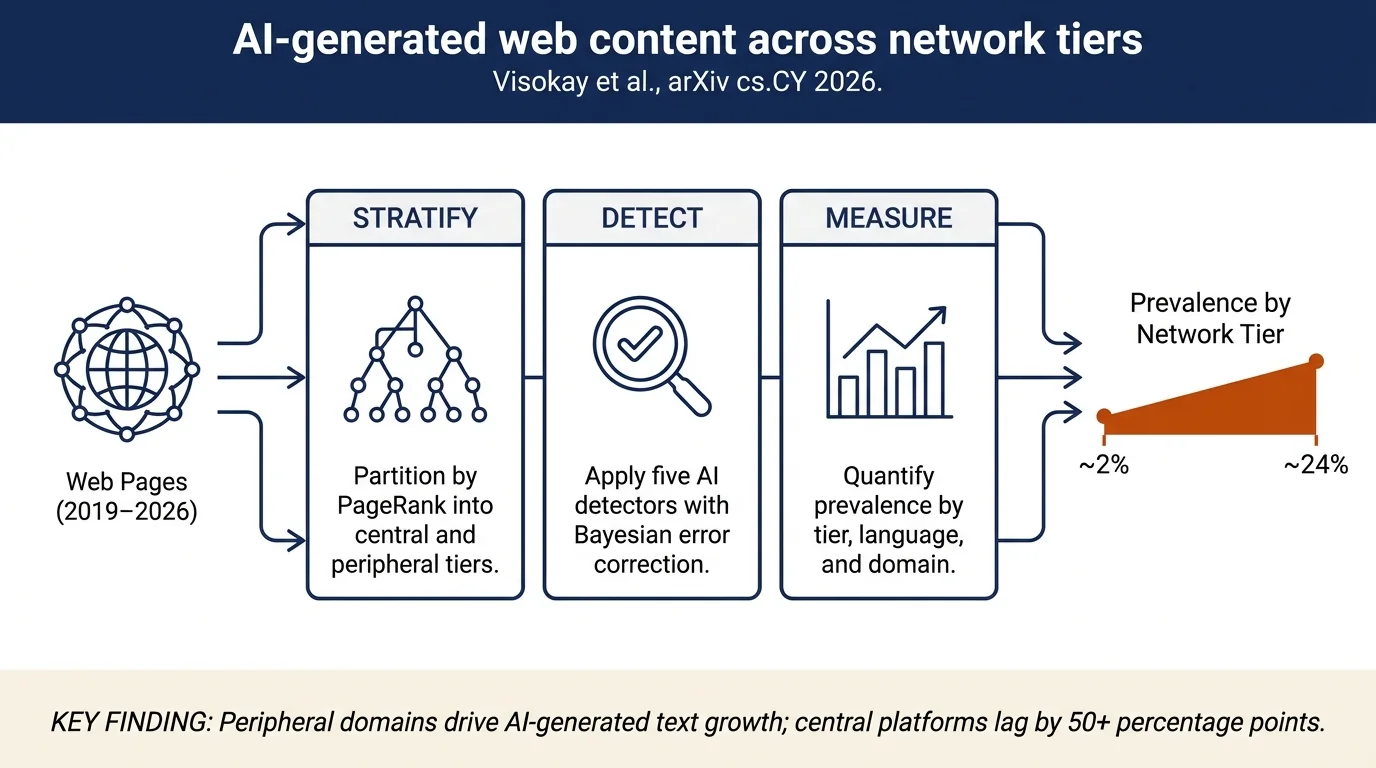
The uneven rise of AI-generated web contentAnalyzing 5+ million webpages from 2019–2026, this work documents that AI-generated text prevalence rose from ~2% to nearly 25% by August 2026, with uneven adoption across the web. Growth is concentrated in peripheral, poorly-connected domains rather than central platforms; English-language and .com pages show higher prevalence than .edu…
 LLMs & generative AIDetection methods
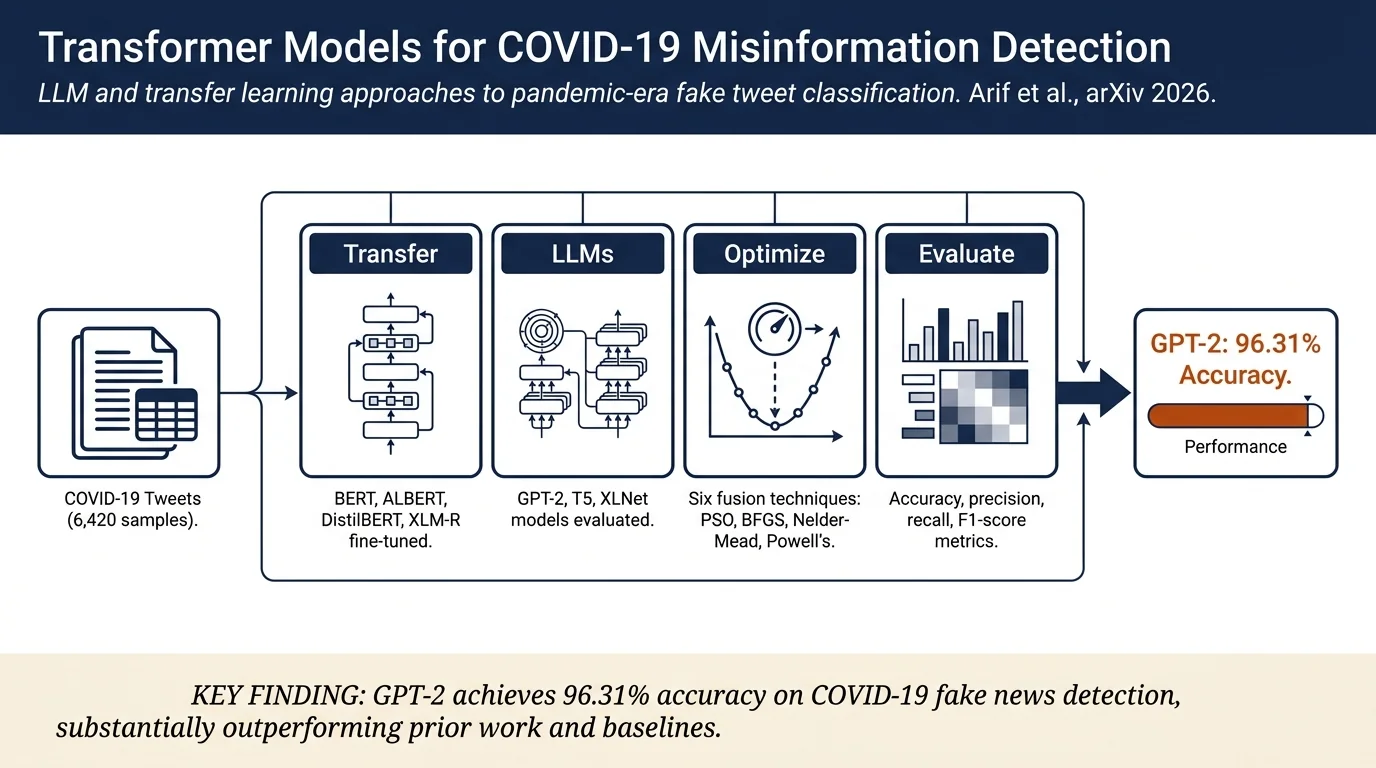
A Large Language Model (LLM) Approach to COVID-19 Fake News DetectionThis paper evaluates seven pre-trained transformer models and LLMs for binary classification of COVID-19 tweets as real or fake using the COVID-19 English Tweets dataset (6,420 tweets). GPT-2 achieves the best performance with 96.31% accuracy and 0.96 F1-score.
 Psychology & interventionsFact-checking & verification
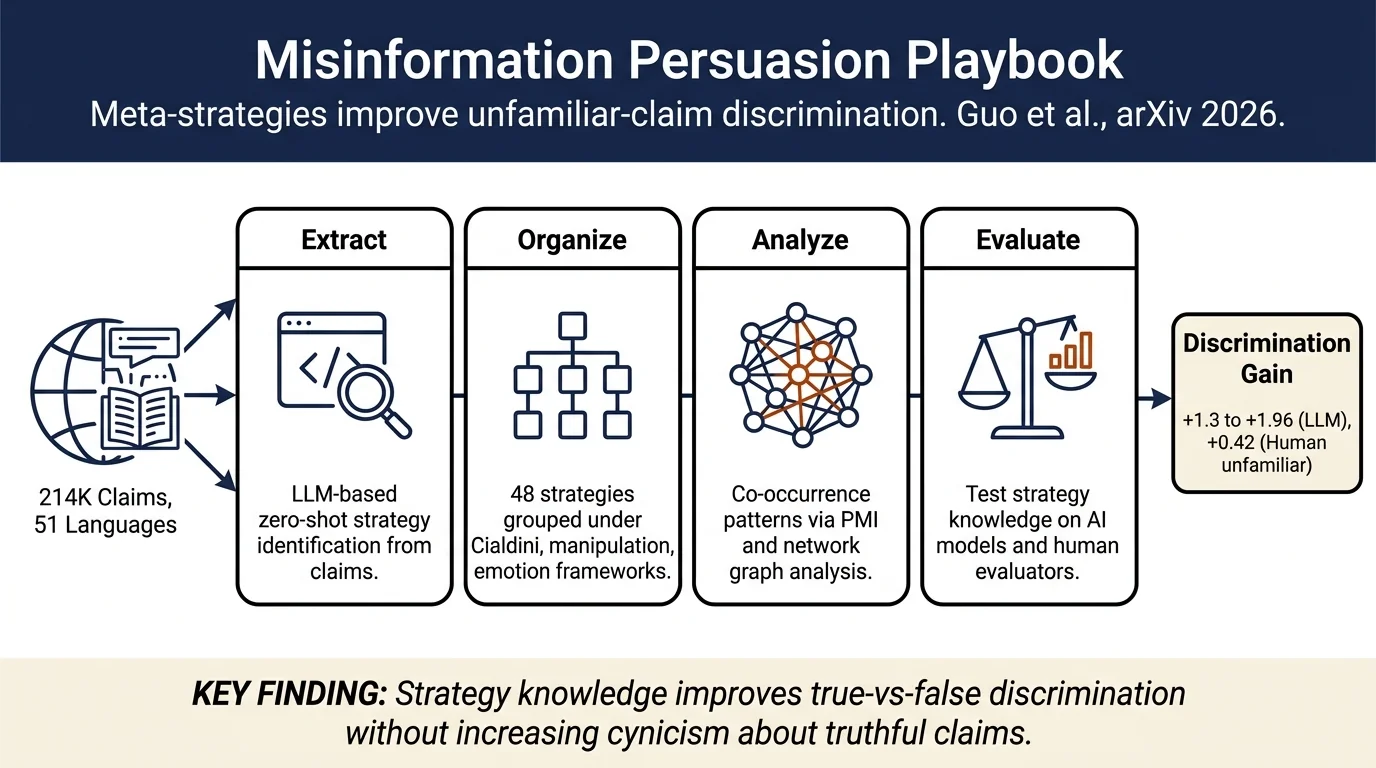
A misinformation playbook sharpens judgement without breeding cynicismThis paper analyzes 214,646 fact-checked claims across 51 languages to map misinformation's persuasion playbook—48 recurring strategies organized under social influence, information manipulation, and emotional appeal. Rather than flagging specific false claims, teaching these meta-strategies improves how both AI models and humans judge…
 Platforms, policy & societyDetection methods
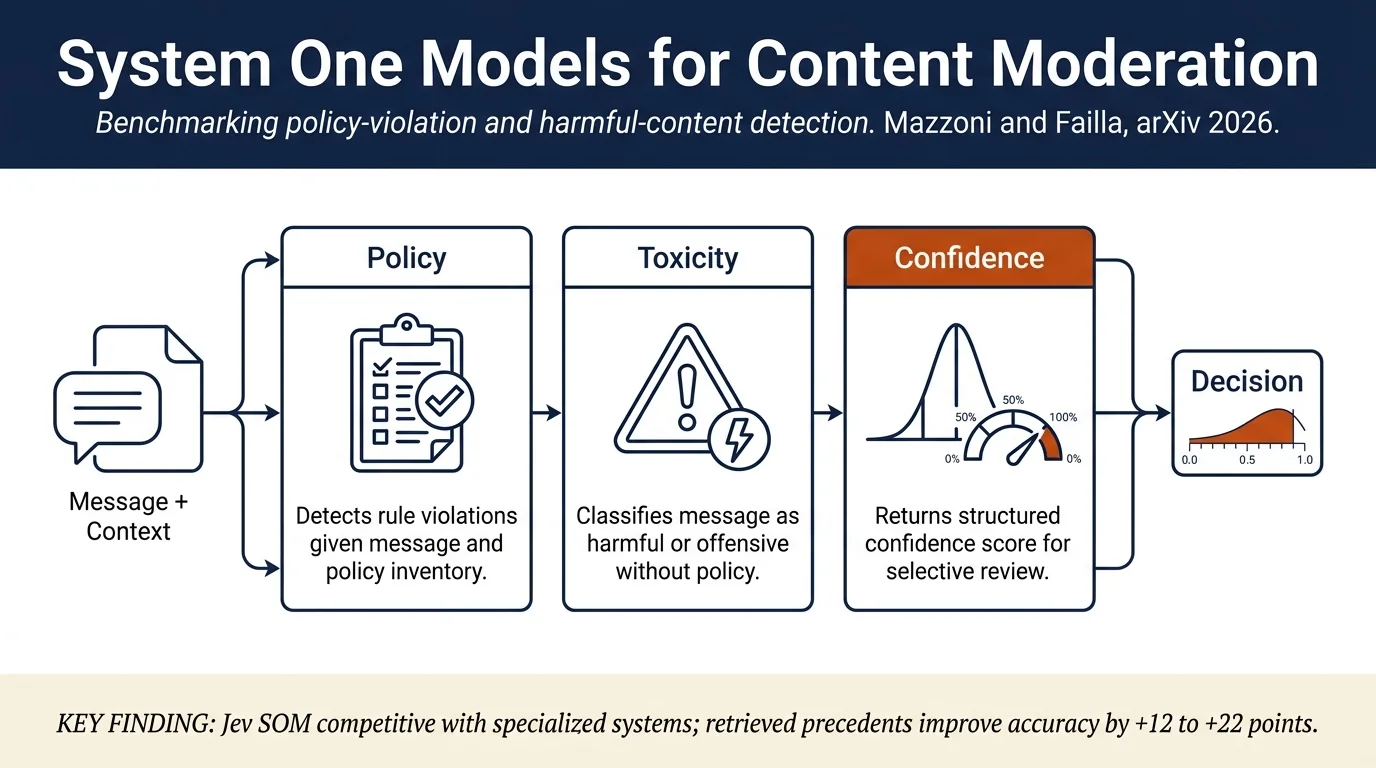
Benchmarking System One Models in Online ModerationThis paper evaluates System One Models (SOMs)—models that accept natural-language context but return structured, typed outputs—across five benchmarks for online content moderation. The key finding is that Jev, a specific SOM implementation, is competitive with specialized moderation systems on policy-grounded tasks and matches or exceeds…
 Platforms, policy & societyDatasets & evaluation
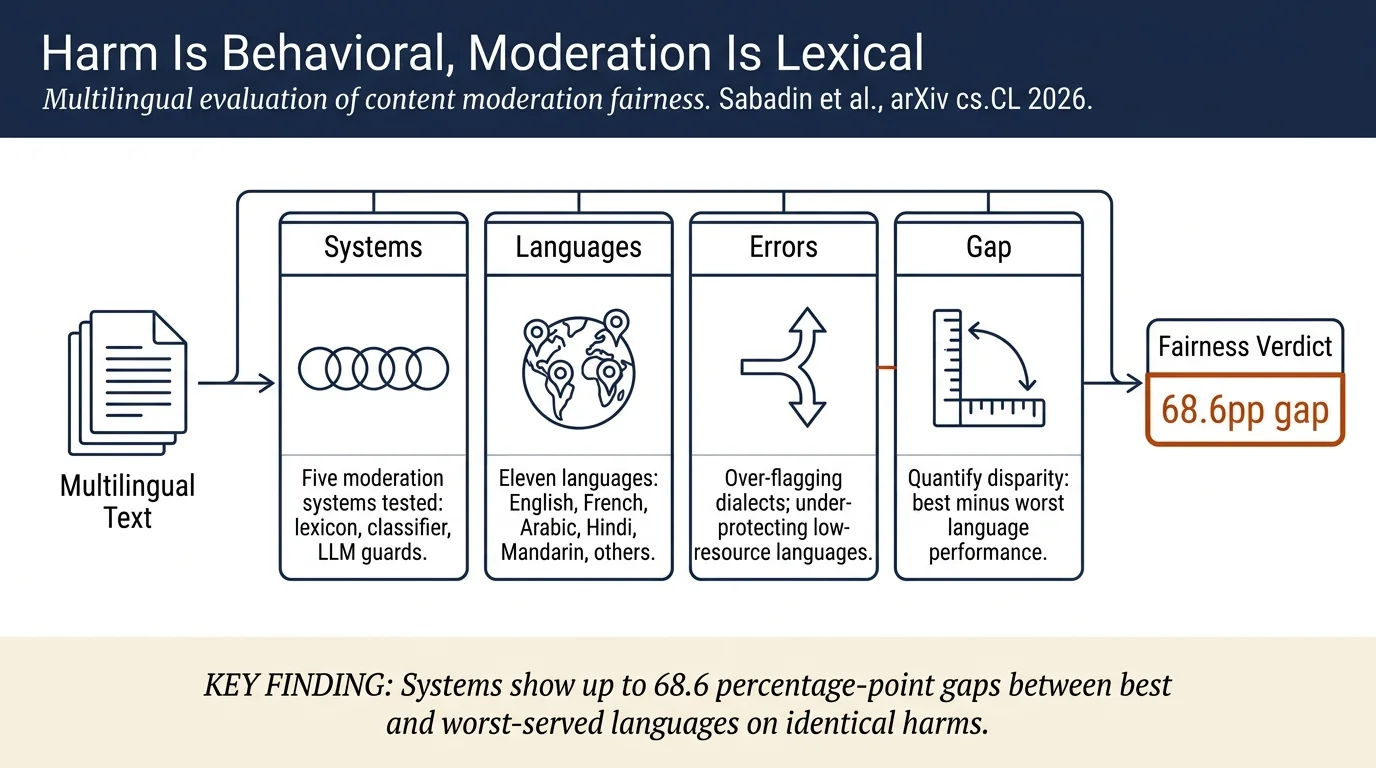
Harm Is Behavioural, Moderation Is Lexical: How Language and Culture Decide Whom Automated Safety Systems Protect and Whom They SilenceAutomated content moderation systems recognize harm based on lexical form rather than behavioral function, creating a double inequity: dialects and minority languages face over-flagging while genuine harms (like manipulation tactics) go undetected in under-resourced languages. The paper unifies fairness literature (false positives in…
 LLMs & generative AIFact-checking & verification
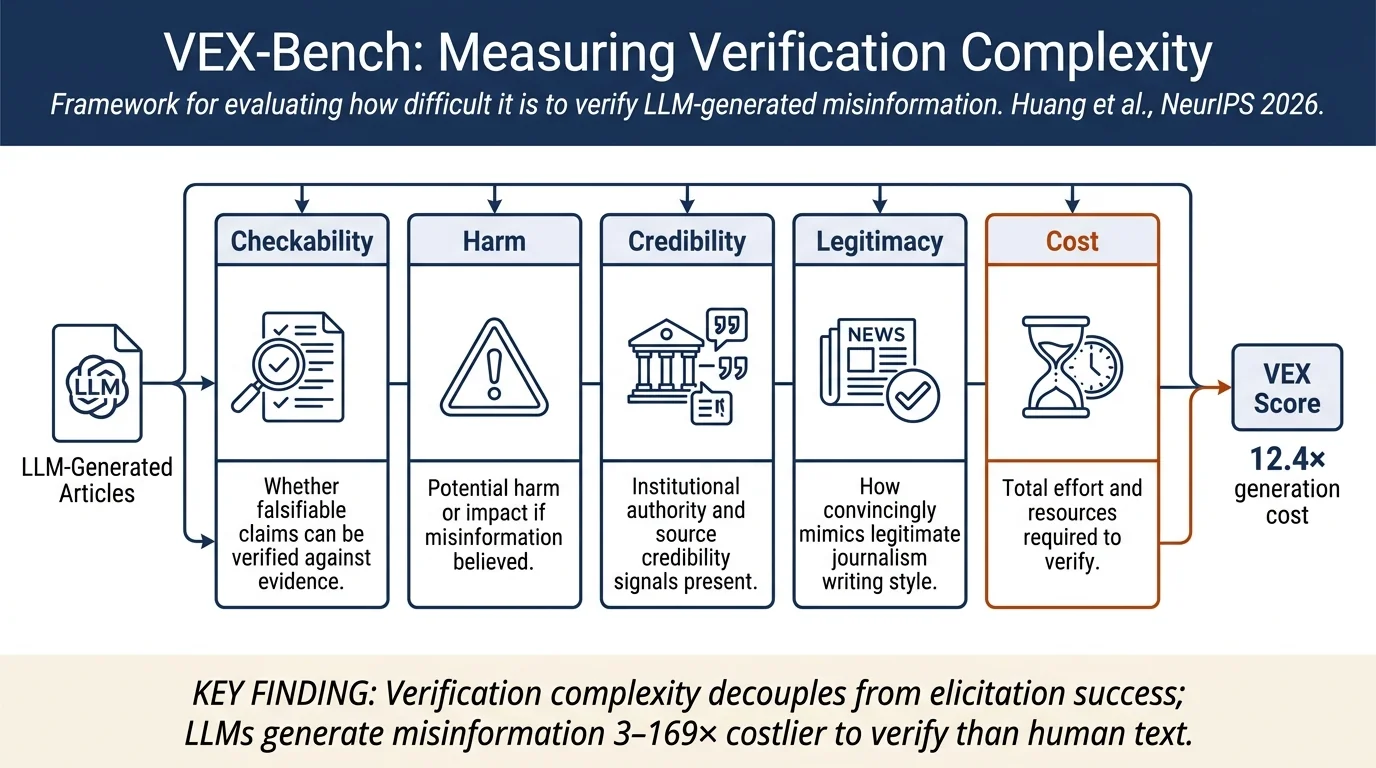
VEX-Bench: Benchmarking Verification Complexity of LLM-Generated MisinformationThis paper introduces VEX-Bench, a unified benchmark for evaluating how difficult it is to verify LLM-generated misinformation. The benchmark measures verification complexity across five dimensions: checkability (whether claims can be checked), harm significance, source credibility signals, impostor legitimacy, and verification cost.
 Deepfakes & multimodalDatasets & evaluation
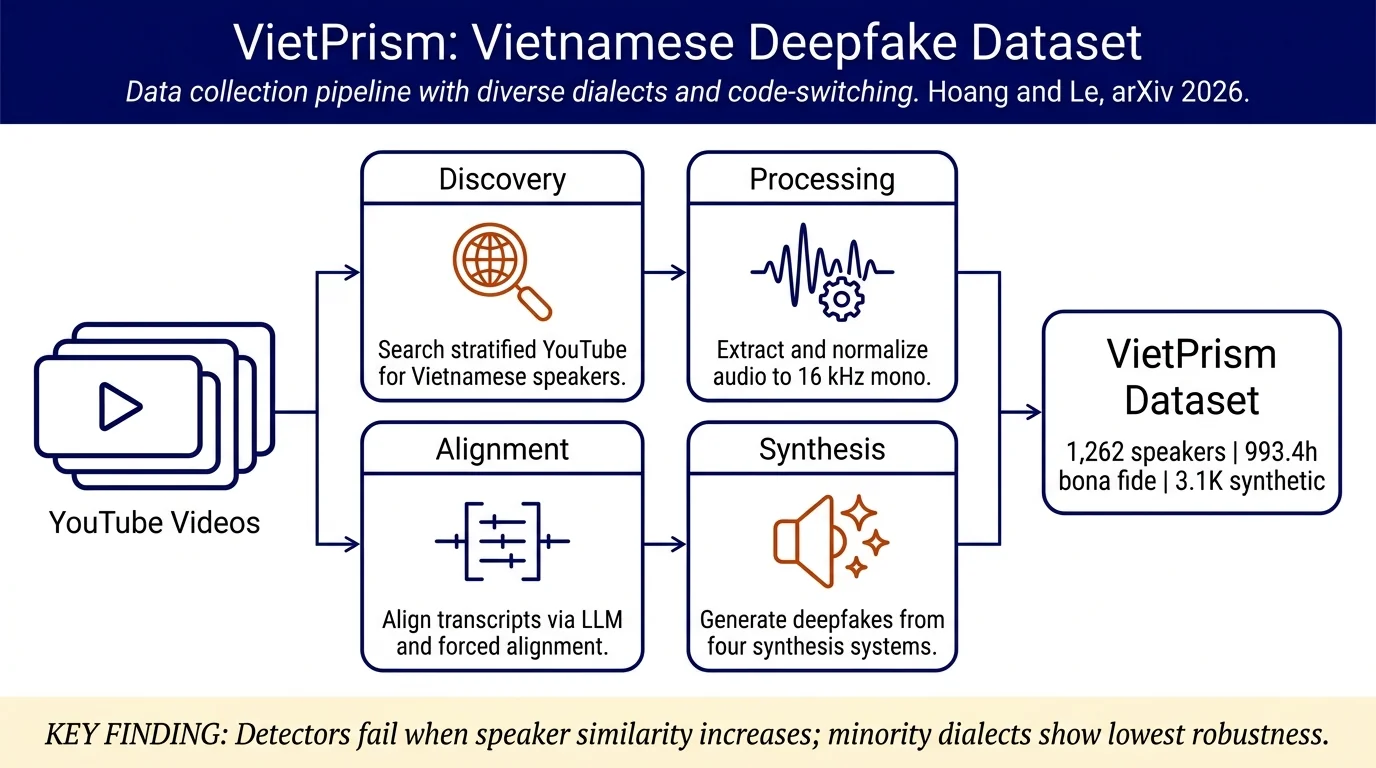
VietPrism: A Large-Scale Vietnamese Speech and Deepfake Corpus with Diverse Dialects and Code-SwitchingVIETPRISM is a large-scale Vietnamese speech dataset combining 993.4 hours of bona fide utterances from 1,262 speakers with 3.1K hours of synthetically generated speech from four deepfake systems. The dataset uniquely provides transcripts, dialect annotations, speaker identities, and natural Vietnamese–English code-switching coverage.
 Fact-checking & verificationLLMs & generative AI
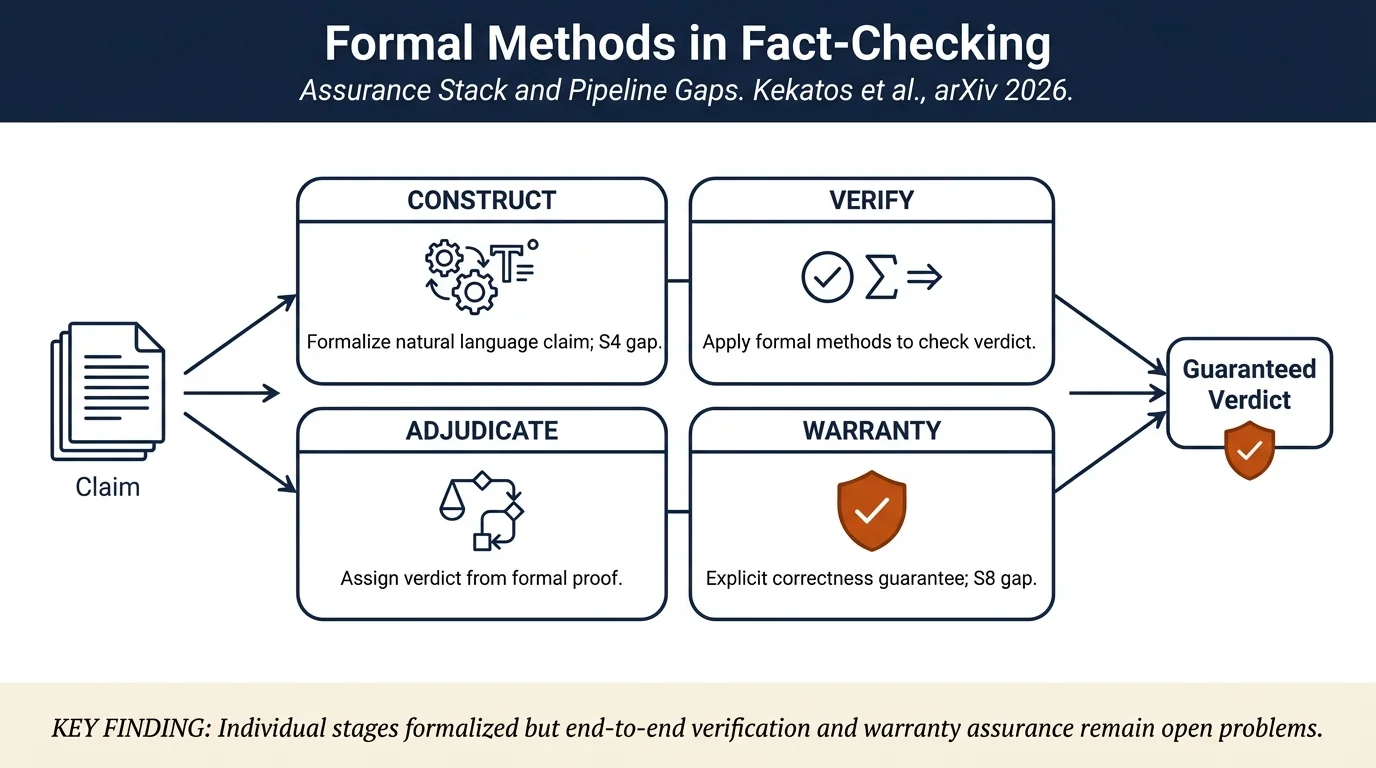
SoK: Formal Methods for Fact-Checking and Information IntegrityThis systemization of knowledge surveys formal methods (logic, model checking, theorem proving, symbolic reasoning) applied to fact-checking systems. The authors organize 121 works by assurance level and identify two critical gaps: constructing checkable claims and correcting errors in published verdicts.
 Spread & networksPlatforms, policy & society
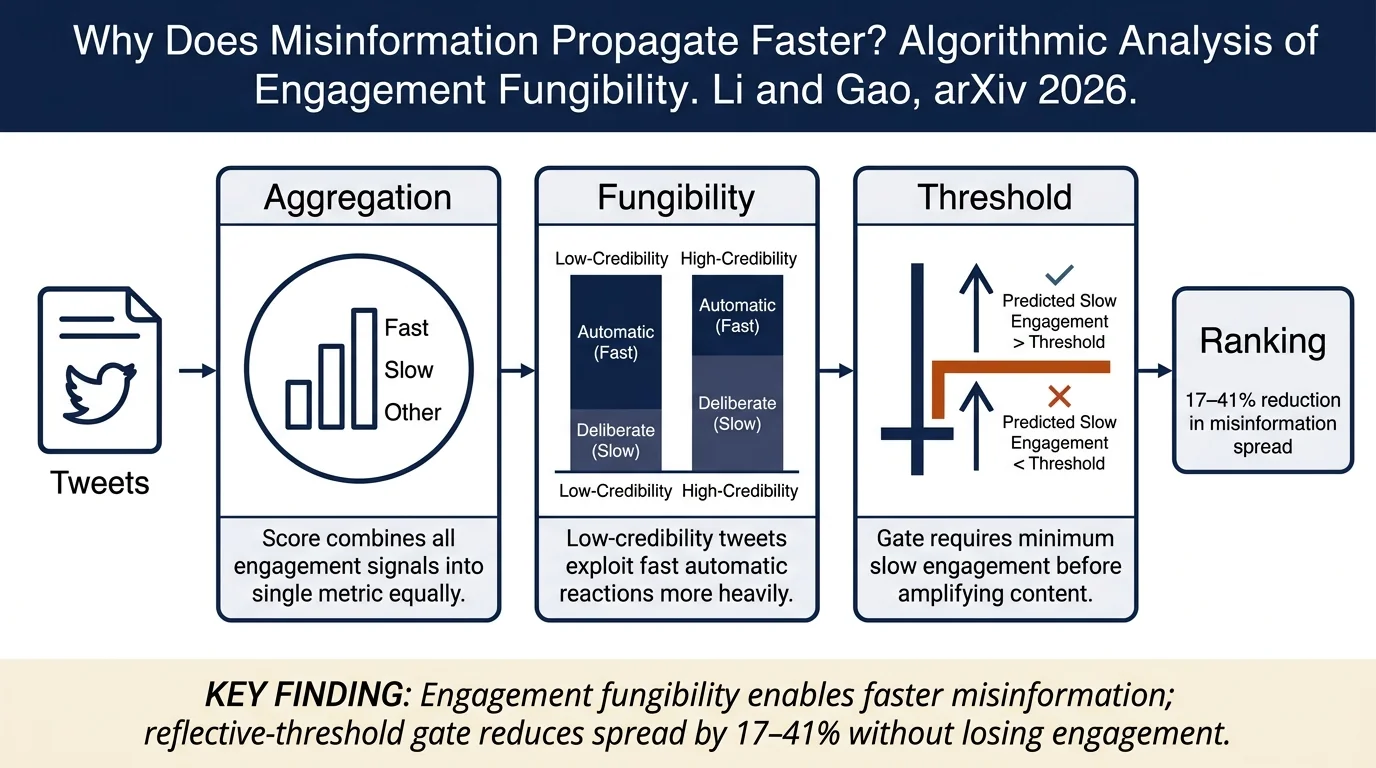
Why Does Misinformation Propagate Faster? An Algorithmic Perspective on XMisinformation propagates faster on X due to an "engagement fungibility mechanism" in the platform's score-aggregation layer: fast engagement signals (likes, retweets) are treated as interchangeable evidence of quality with slow signals (replies, quotes), allowing low-credibility content that draws disproportionately from instant…
 Fact-checking & verificationLLMs & generative AI
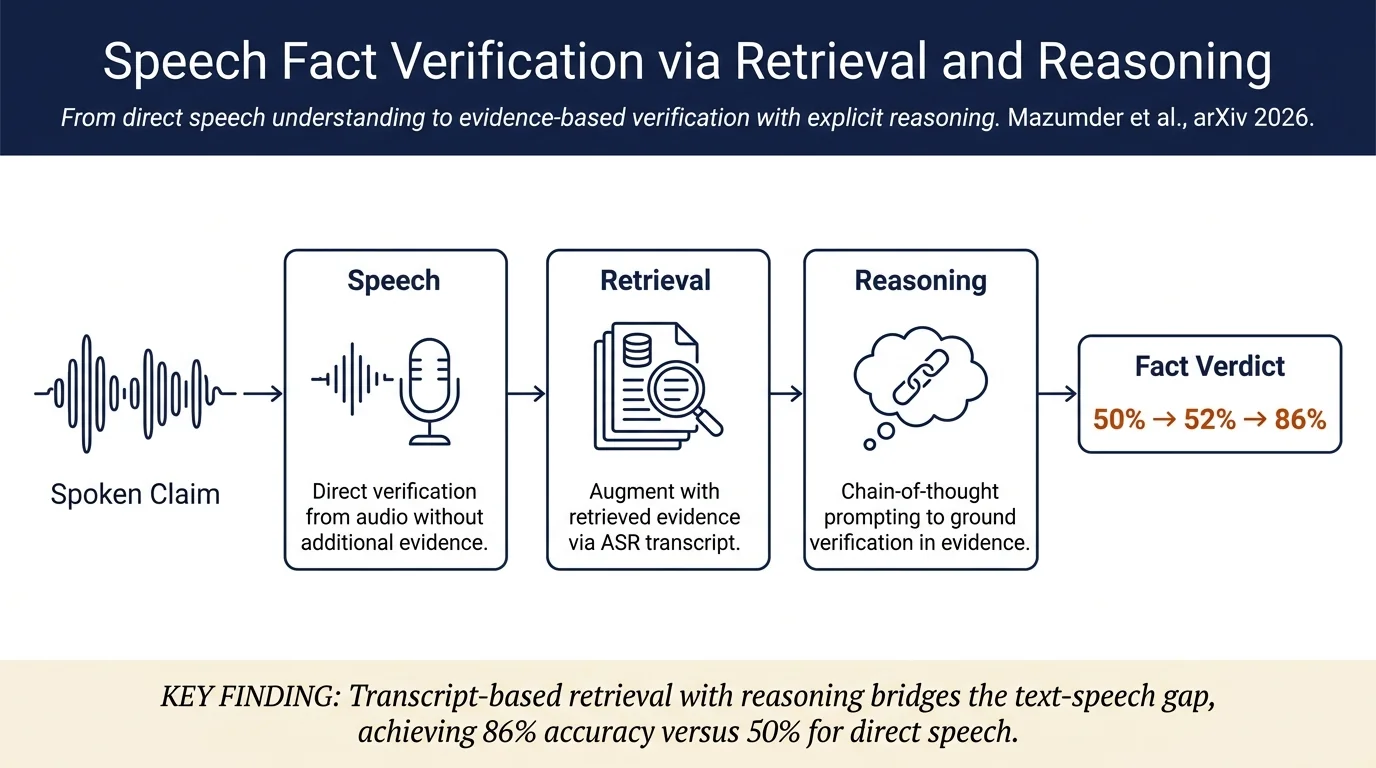
To Trust or Not to Trust: Retrieval-Augmented Fact Checking in SpeechLarge Audio Language Models (LALMs) exhibit a significant text-speech modality gap: they verify written claims reliably but fail on spoken ones, even from the same model. The paper introduces VeriSpeak, a benchmark of 3,879 spoken claims with temporal, geographical, and relational facts, and demonstrates that retrieval-augmented LALMs…
 LLMs & generative AIPsychology & interventions
AI-Enabled Human Memory Manipulation: Misleading AI-Generated Summaries Distort Human MemoryLarge language models frequently generate erroneous summaries of videos, including critical omissions and hallucinated details. In a human-subjects experiment, participants who read AI-generated summaries containing misleading information were significantly less likely to accurately recall the original event—demonstrating that AI…
 LLMs & generative AIPlatforms, policy & society
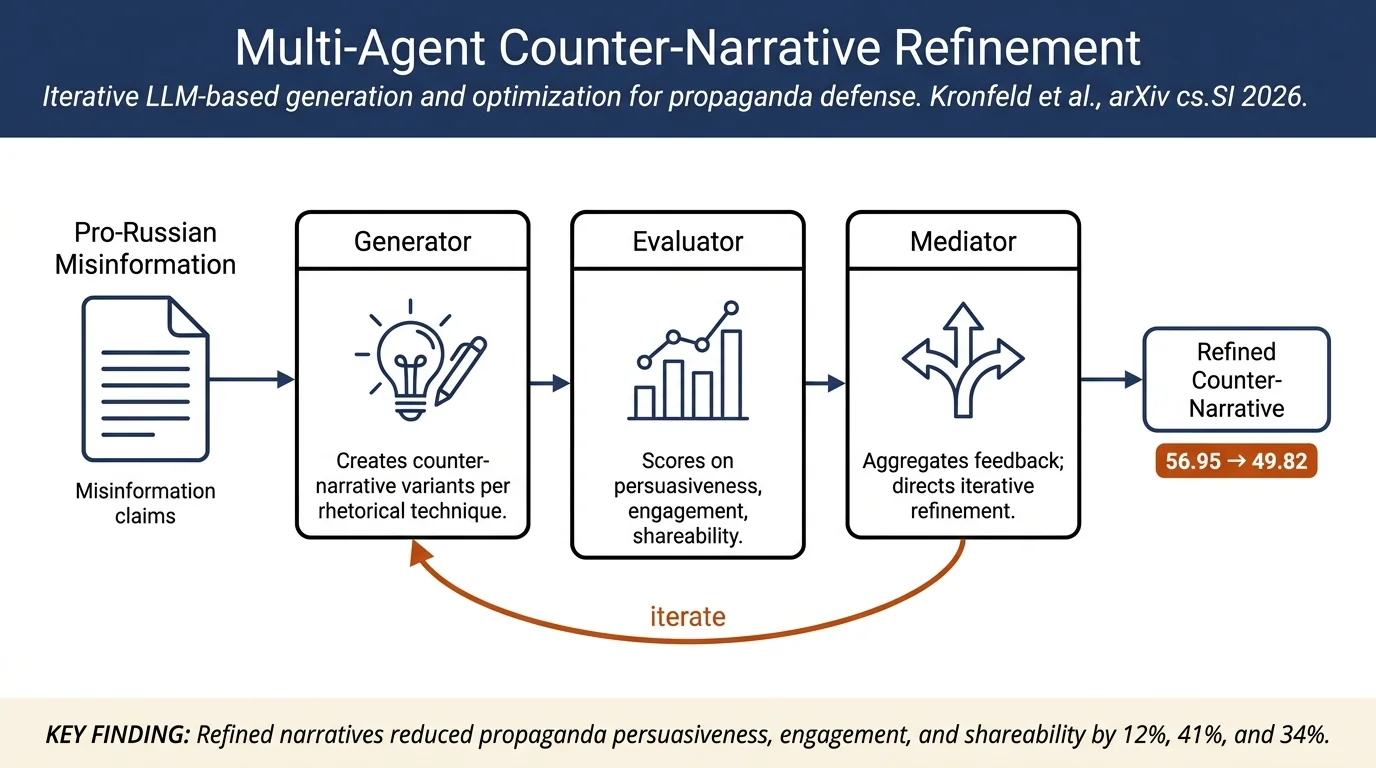
A Multi-Stage Agentic Framework for Effective Counter-Narrative Generation and RefinementCounter-narratives are a scalable defense against misinformation and hate speech, but manual authoring is slow and labor-intensive. This paper proposes a multi-stage agent-based framework using LLMs to generate and iteratively refine counter-narratives on pro-Russian misinformation about Ukraine.
 LLMs & generative AIPlatforms, policy & society
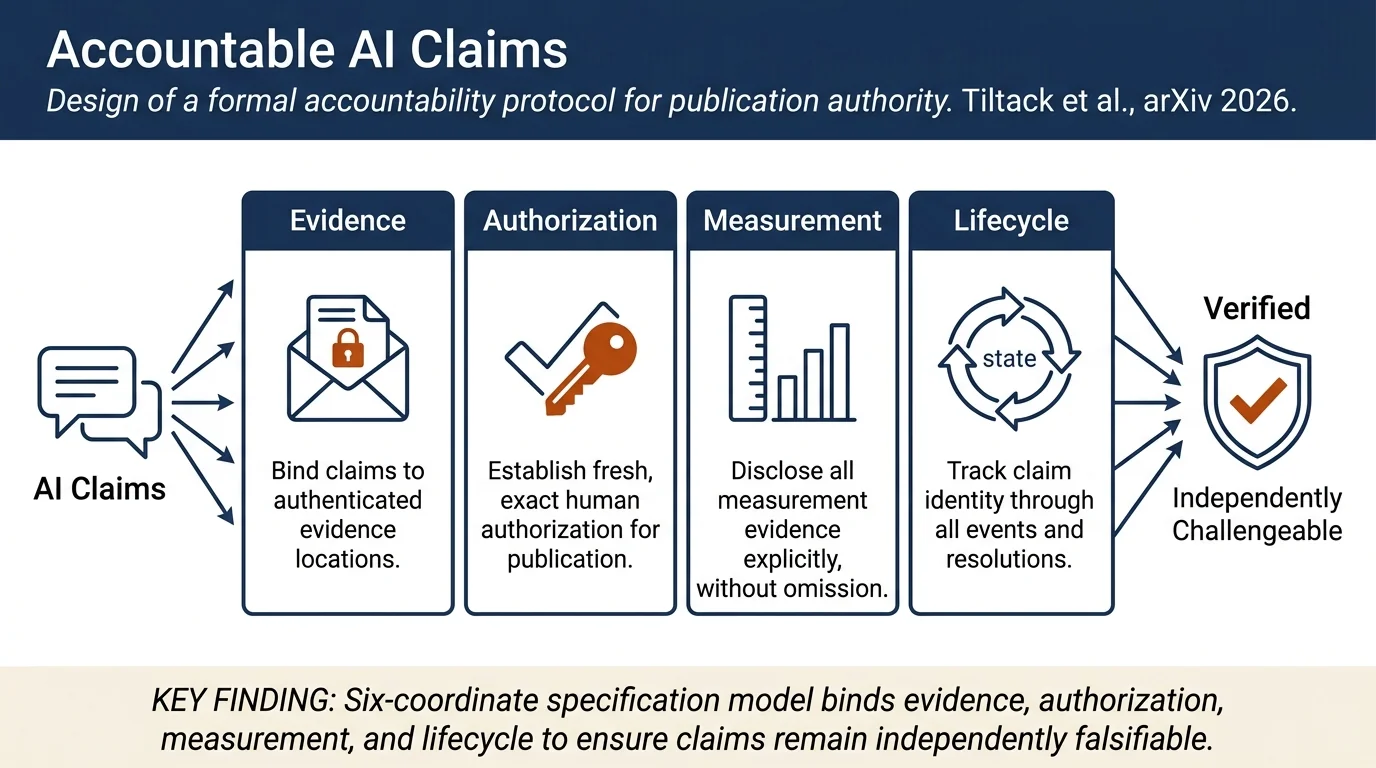
Making AI-Assisted Claims Independently Challengeable: Publication Authority and a Protocol for Falsifiable Publication RecordsAI-assisted claims can appear authoritative even when evidence, analysis, and authorization refer to different states—creating a coordination problem. This work introduces Publication Authority (PA) as a non-transferable, single-use capability governing publication transitions, and proposes PAC-2026 SF-4, an executable specification…
 LLMs & generative AIFact-checking & verification
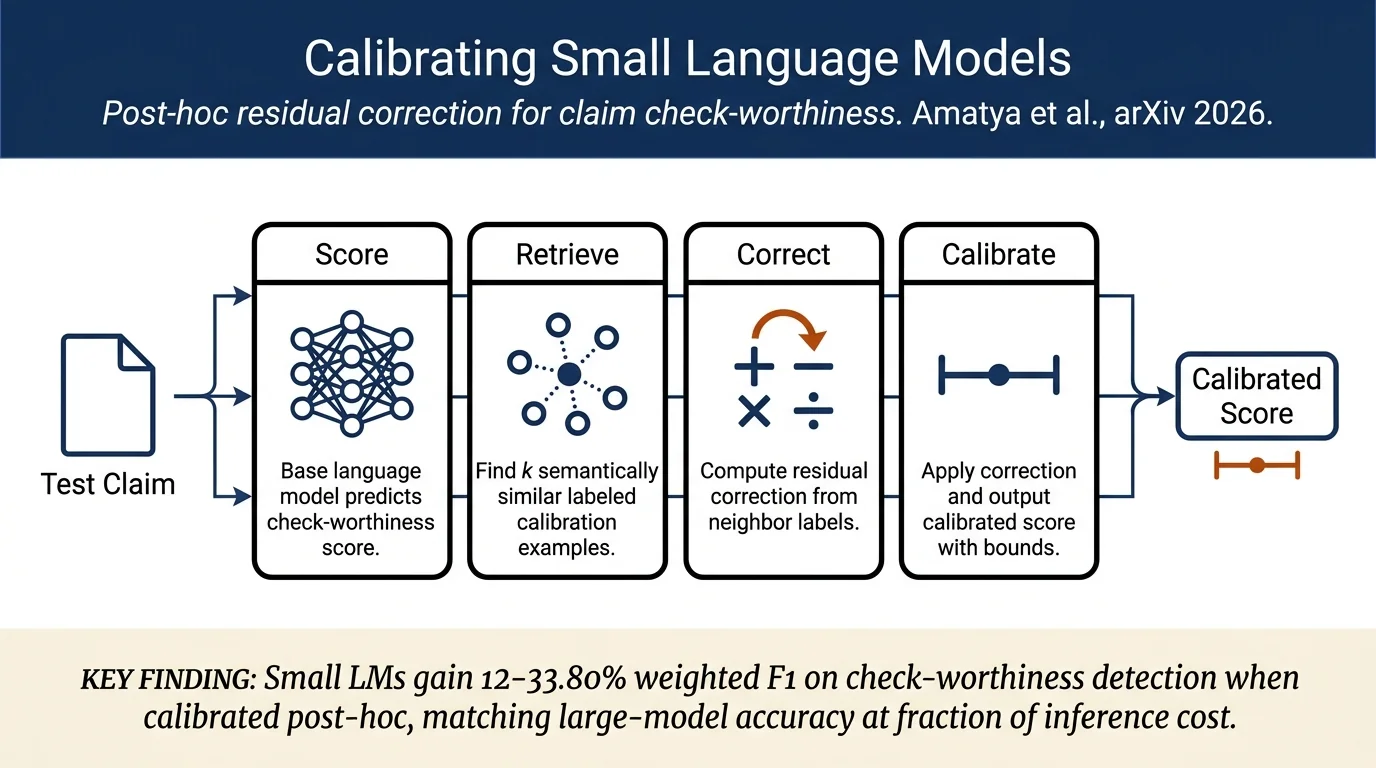
Calibrating Small Language Models for Claim Check-Worthiness DetectionClaim check-worthiness detection is computationally expensive when using large language models, but essential for scaling fact-checking pipelines. This paper proposes NN-PPI (Nearest Neighbor Prediction-Powered Inference), a post-hoc calibration technique that improves small LM predictions using a small labeled calibration set and…
 Deepfakes & multimodalDetection methods
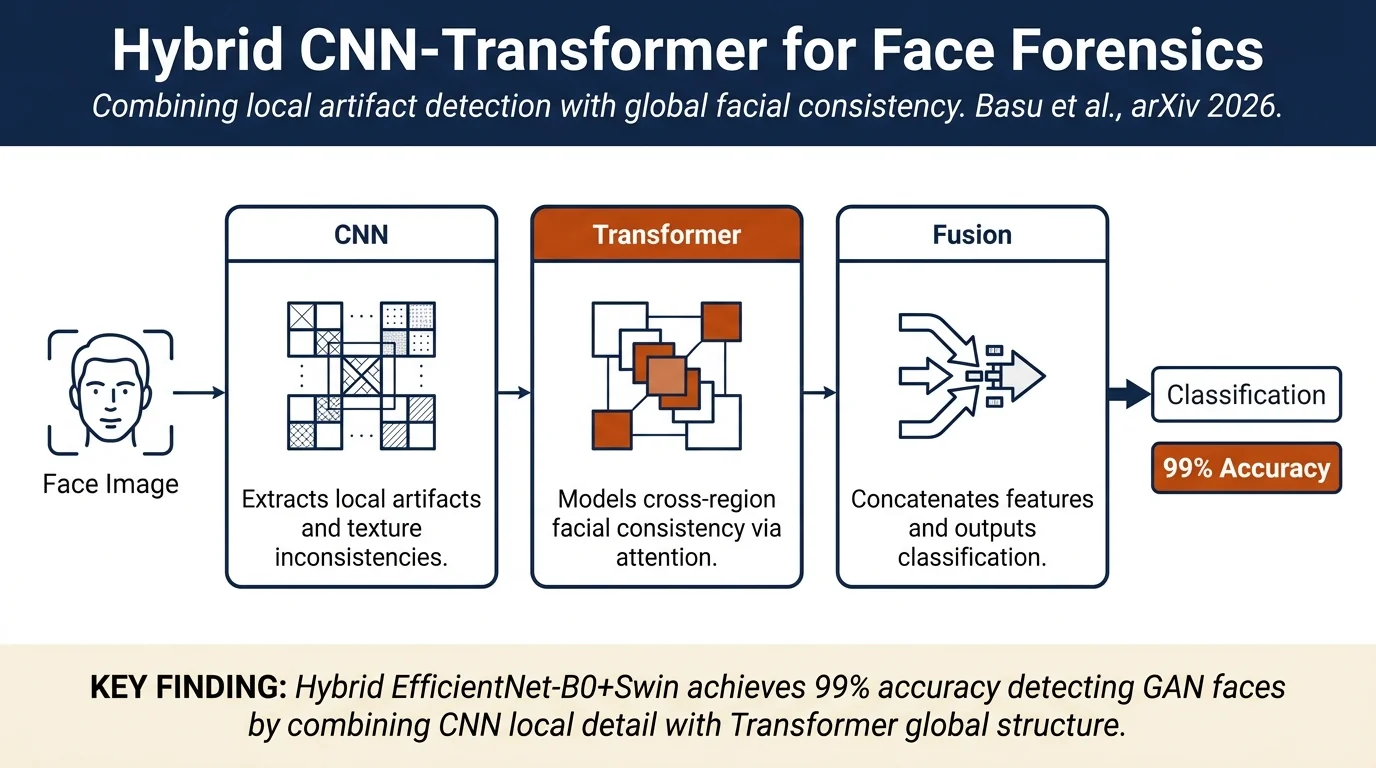
Swin Meets EfficientNet: Lightweight Architectures for GAN-Based Face ForensicsProposes lightweight Swin-Transformer and hybrid EfficientNet-Swin architectures for detecting GAN-generated synthetic faces under computational constraints. The hybrid EfficientNet-B0+Swin model achieves 99% accuracy and 99.44% recall on the 140K Real and Fake Faces dataset, combining convolutional local feature extraction with…
 Deepfakes & multimodalDatasets & evaluation
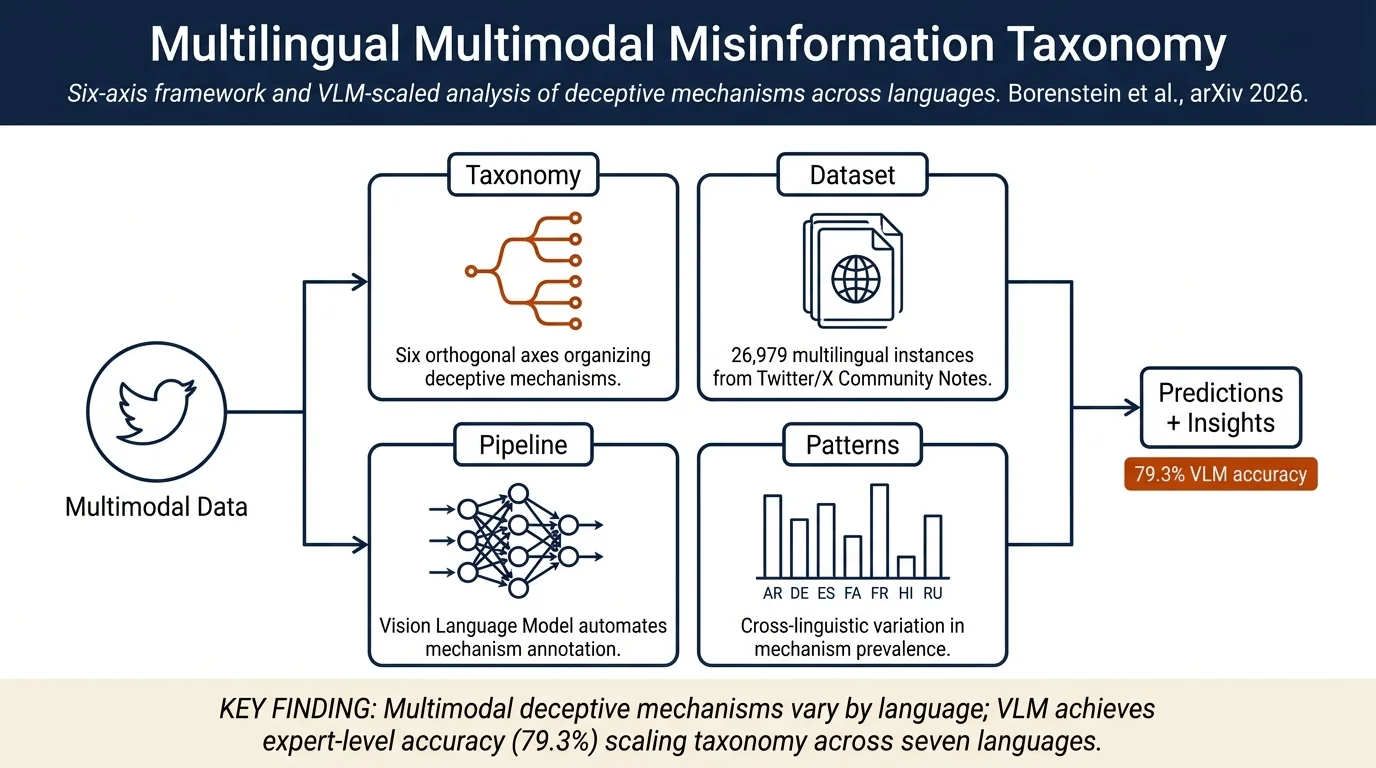
MMMMM: A Unified Taxonomy for Investigating the Mechanisms of Multilingual MultiModal MisinformationMultimodal misinformation (images paired with misleading text) is poorly understood compared to text-only fake news, hampered by fragmented taxonomies and the complexity of annotating cross-modal relationships at scale. This work proposes a unified taxonomy of multimodal misinformation mechanisms across six orthogonal axes…
 Spread & networksLLMs & generative AI
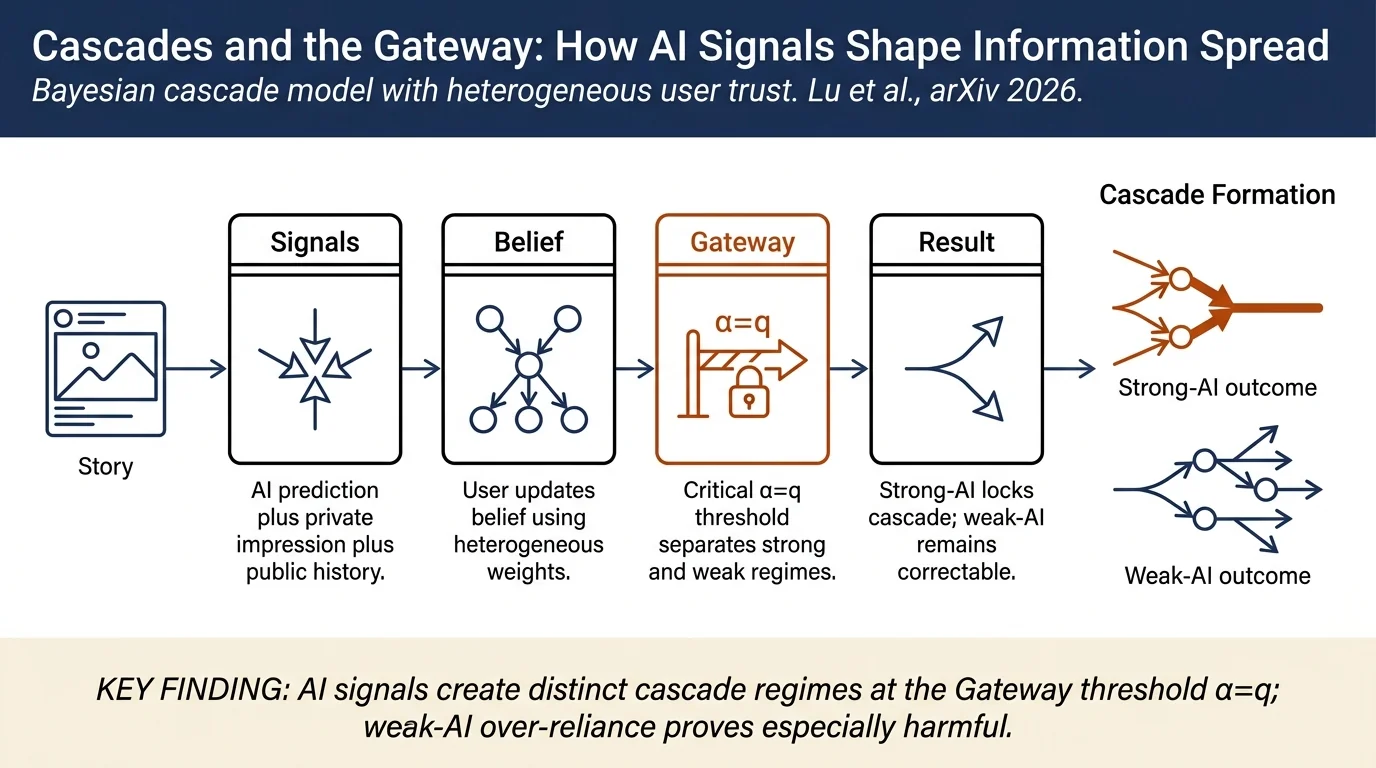
One AI Signal, Many Human Judgments: A Bayesian Cascade Analysis of AI-based Credibility Indicators in Online Information SpreadSocial media platforms increasingly deploy AI-based credibility indicators to help users judge misinformation. This paper extends classical Bayesian cascade models to treat AI credibility signals as a shared public signal seen by all users, then derives a critical "Gateway" threshold: above it, AI predictions dominate the public record;…
 Fact-checking & verificationDatasets & evaluation
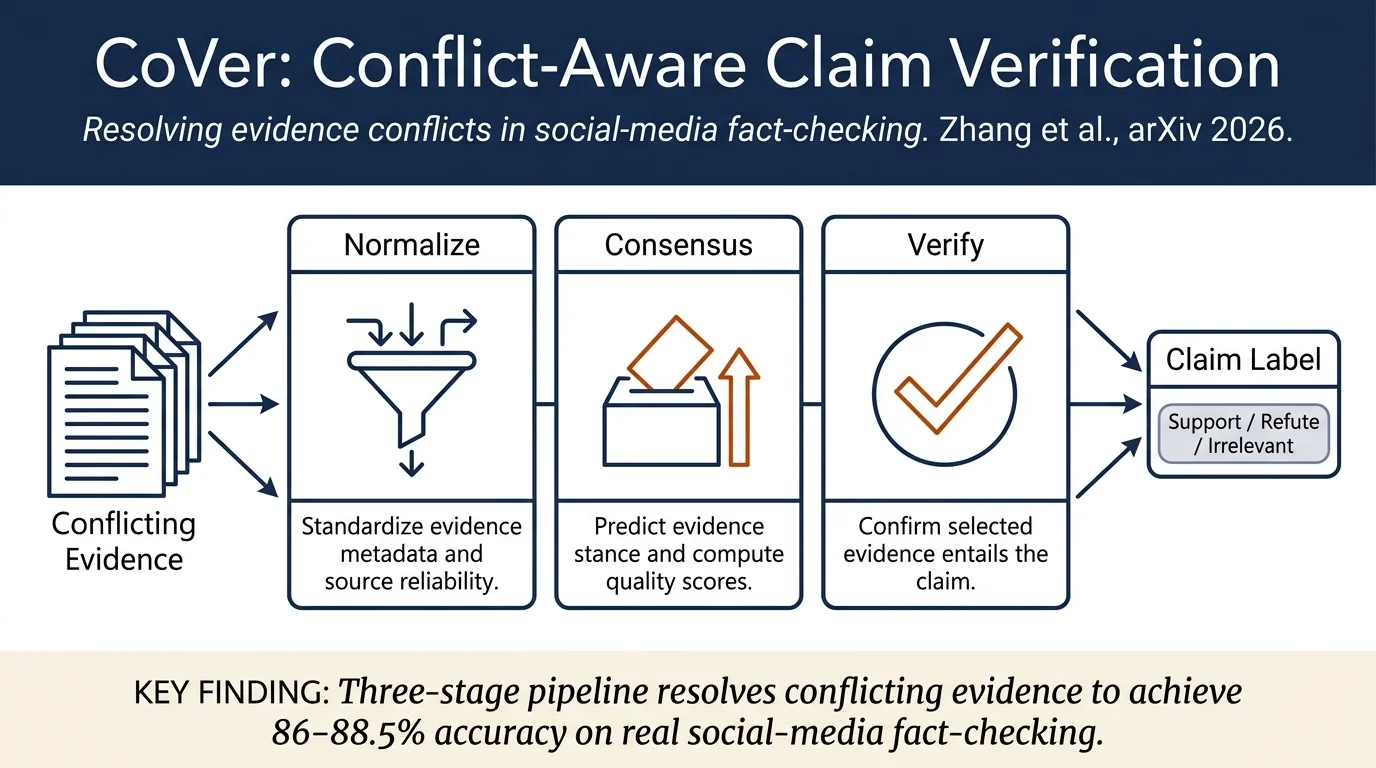
CoVer: Conflict-Aware Claim VerificationSocial media fact-checking frequently encounters conflicting evidence where different sources support or refute a claim. This paper proposes CoVer, a framework that explicitly resolves evidence-level conflicts (contradictory stances from different sources) and aggregation-level conflicts (sub-claims within complex claims yielding…