Explore papers
Filter by research area, year and venue. Every filter is in the address bar, so you can share a view as a link.
 Detection methodsDeepfakes & multimodal
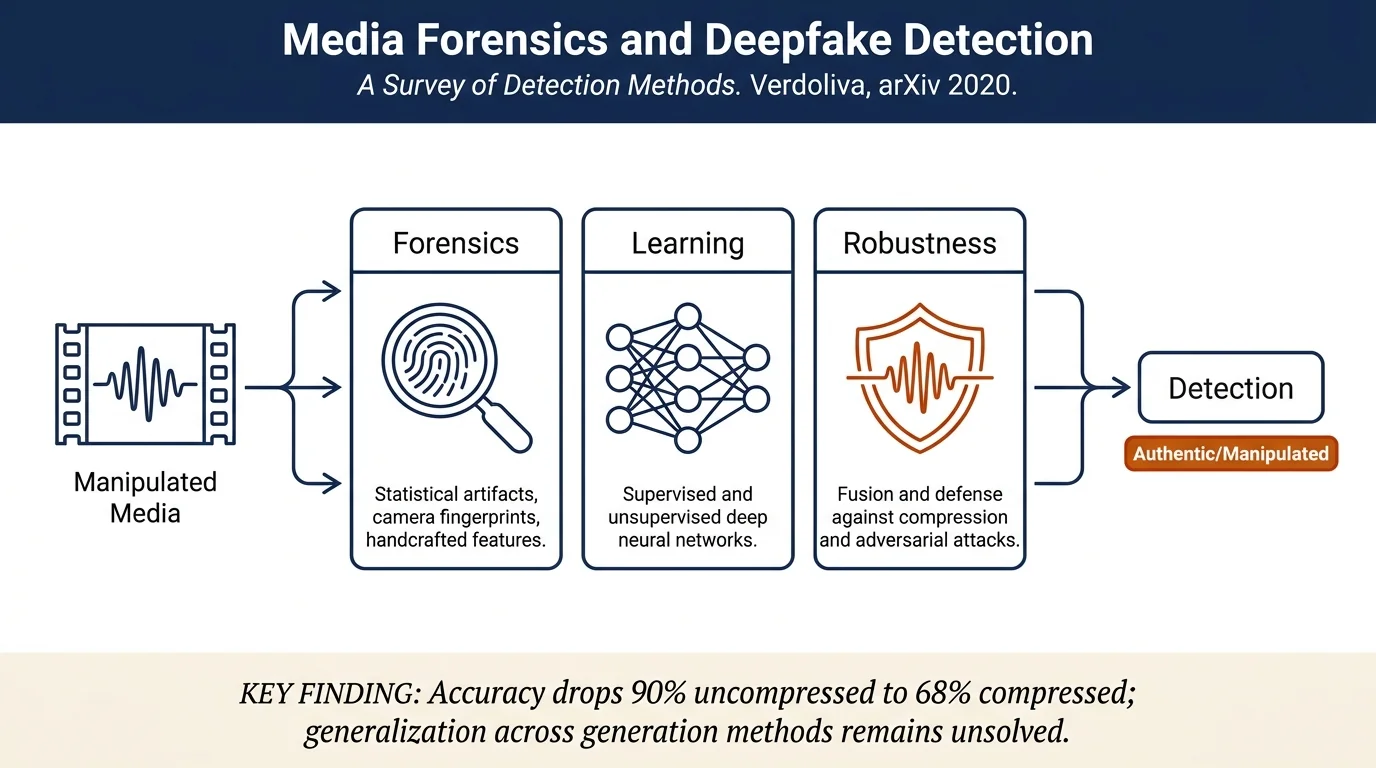
Media Forensics and DeepFakes: an overviewA comprehensive survey of media forensics and deepfake detection methods spanning fifteen years of research. The paper reviews both conventional signal-processing approaches (blind methods, sensor-based, handcrafted features) and deep learning-based detection techniques, covers major datasets and their characteristics, discusses…
 Deepfakes & multimodalDetection methods
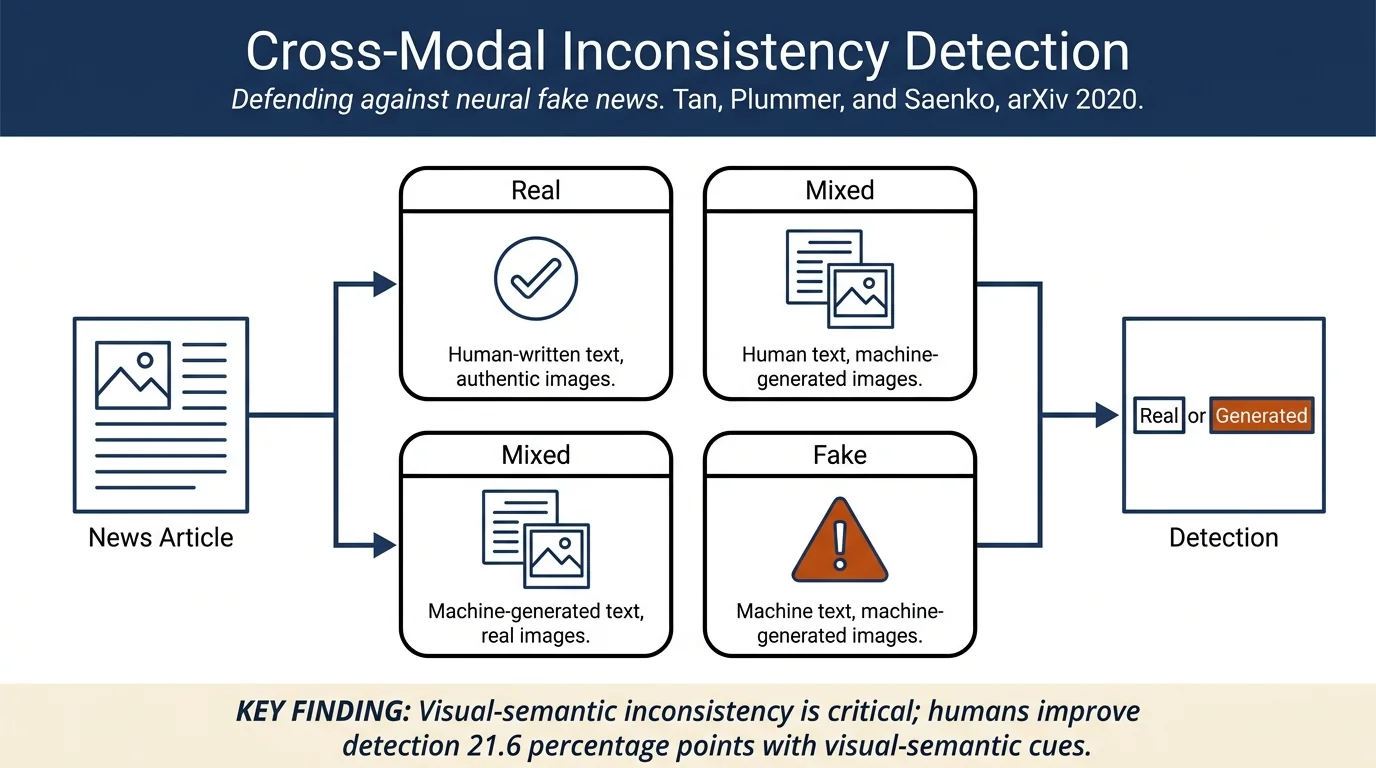
Detecting Cross-Modal Inconsistency to Defend Against Neural Fake NewsMachine-generated news articles with images and captions exploit visual-semantic inconsistencies that humans struggle to detect. This paper introduces DIDAN, a named entity-based approach to identify cross-modal semantic mismatches, and the NeuralNews dataset of 128K articles to benchmark multimodal fake news detection.
 Deepfakes & multimodalDetection methods
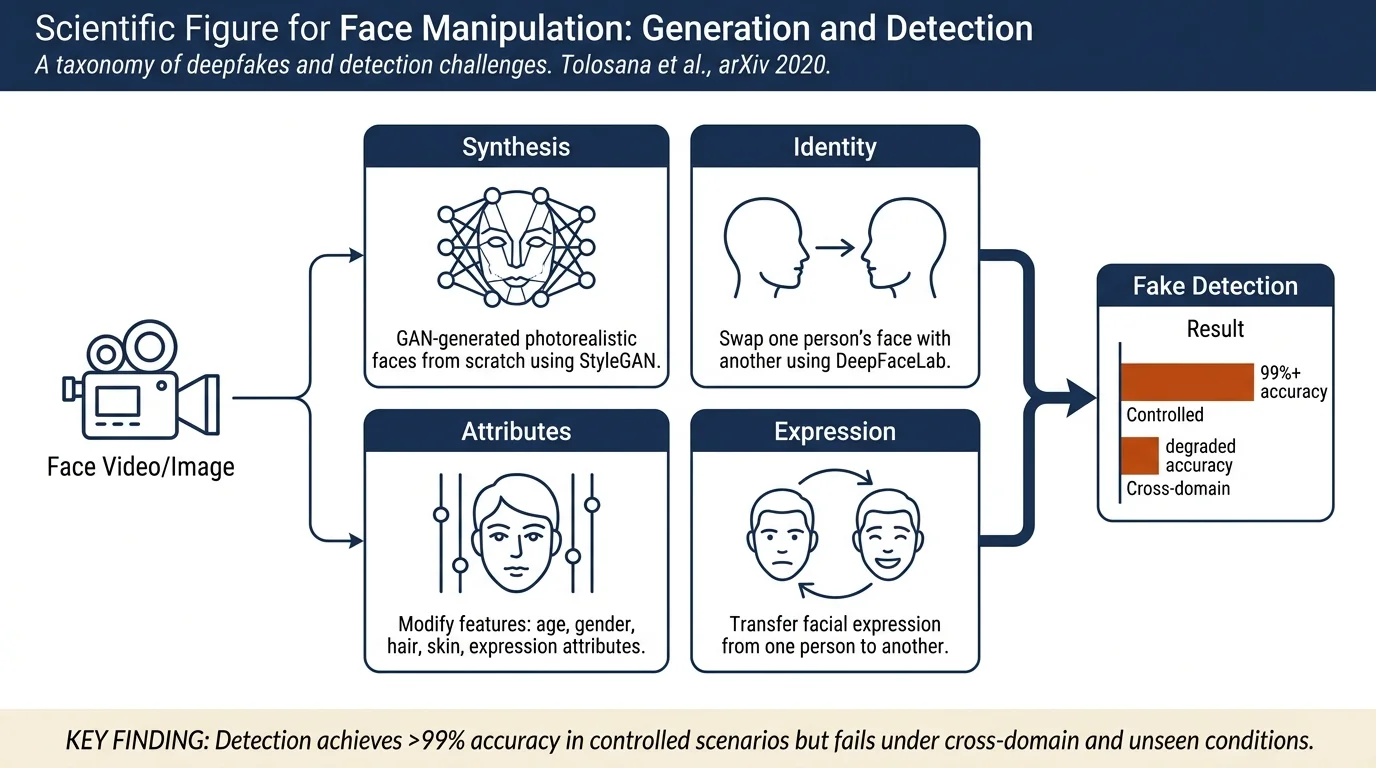
DeepFakes and Beyond: A Survey of Face Manipulation and Fake DetectionThis comprehensive survey reviews face manipulation techniques and detection methods in the era of deep learning. It categorizes facial manipulations into four types—entire face synthesis, identity swap, attribute manipulation, and expression swap—and surveys both generation and detection approaches across public datasets and benchmarks.
 Deepfakes & multimodalDetection methods
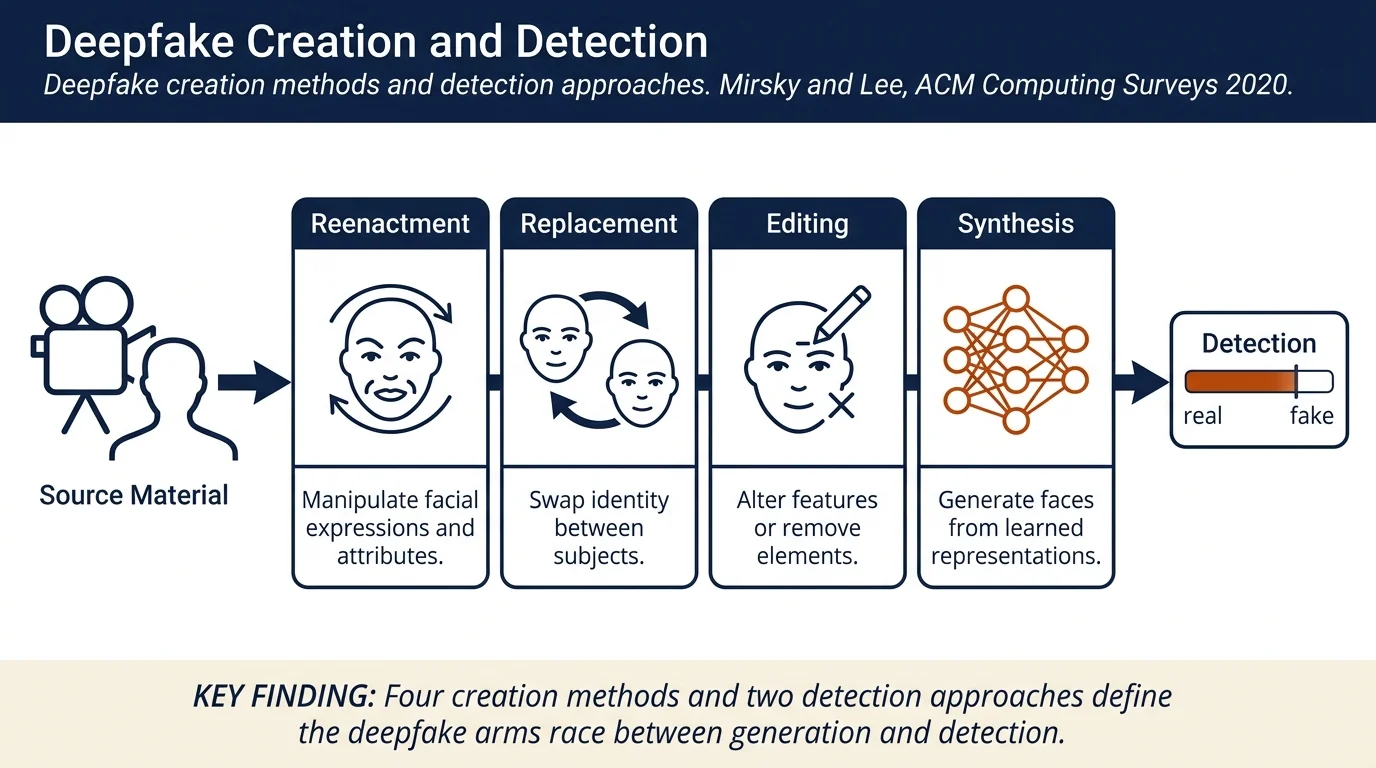
The Creation and Detection of Deepfakes: A SurveyComprehensive 38-page survey covering both creation and detection of deepfakes. Systematically reviews generative neural network architectures (GANs, autoencoders, CNNs, RNNs), technical approaches to reenactment, replacement, editing, and synthesis.
 Deepfakes & multimodalDetection methods
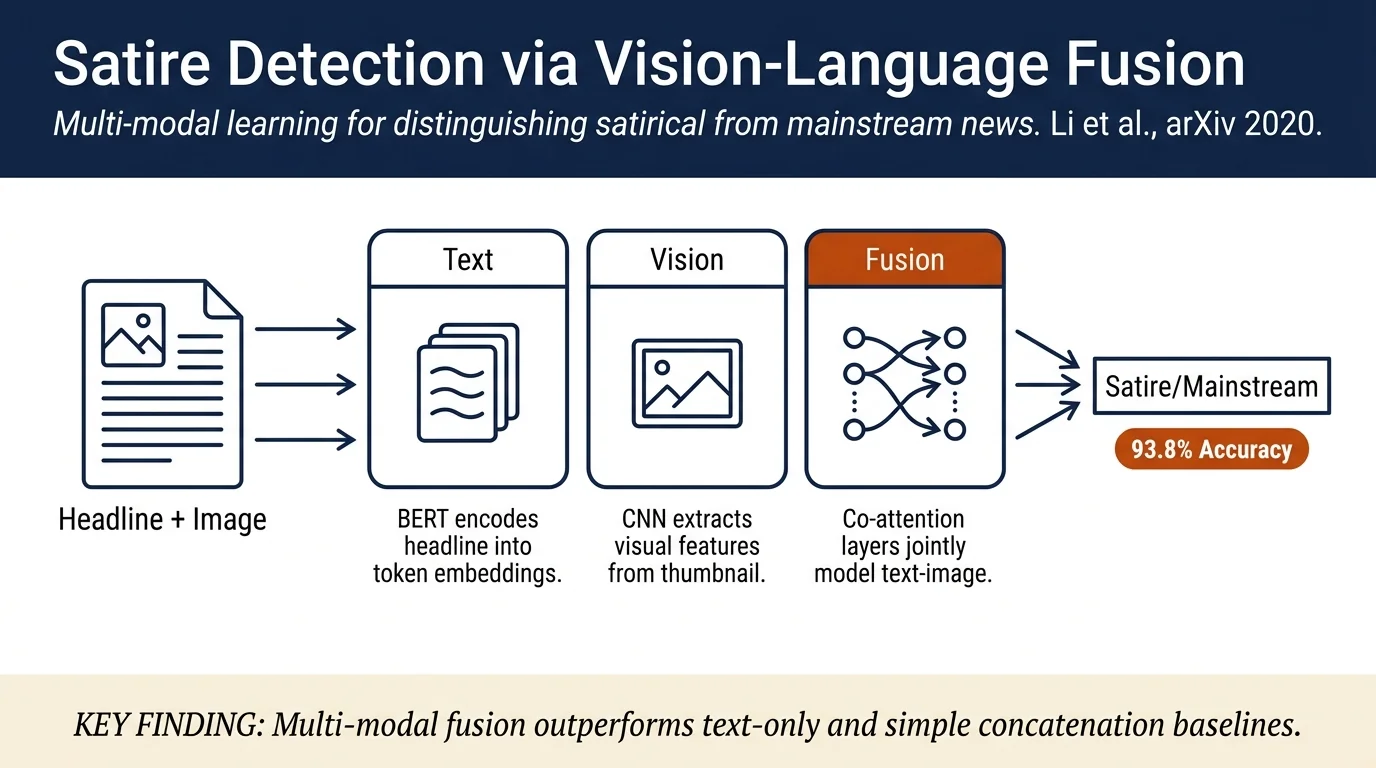
A Multi-Modal Method for Satire Detection using Textual and Visual CuesSatirical news articles are often misinterpreted as legitimate news. This work proposes a multi-modal approach using ViLBERT to detect satire by jointly analyzing headline text and thumbnail images, achieving 93.8% accuracy on a new dataset of 10,000 articles (4000 satirical, 6000 mainstream).
 Datasets & evaluationDetection methods
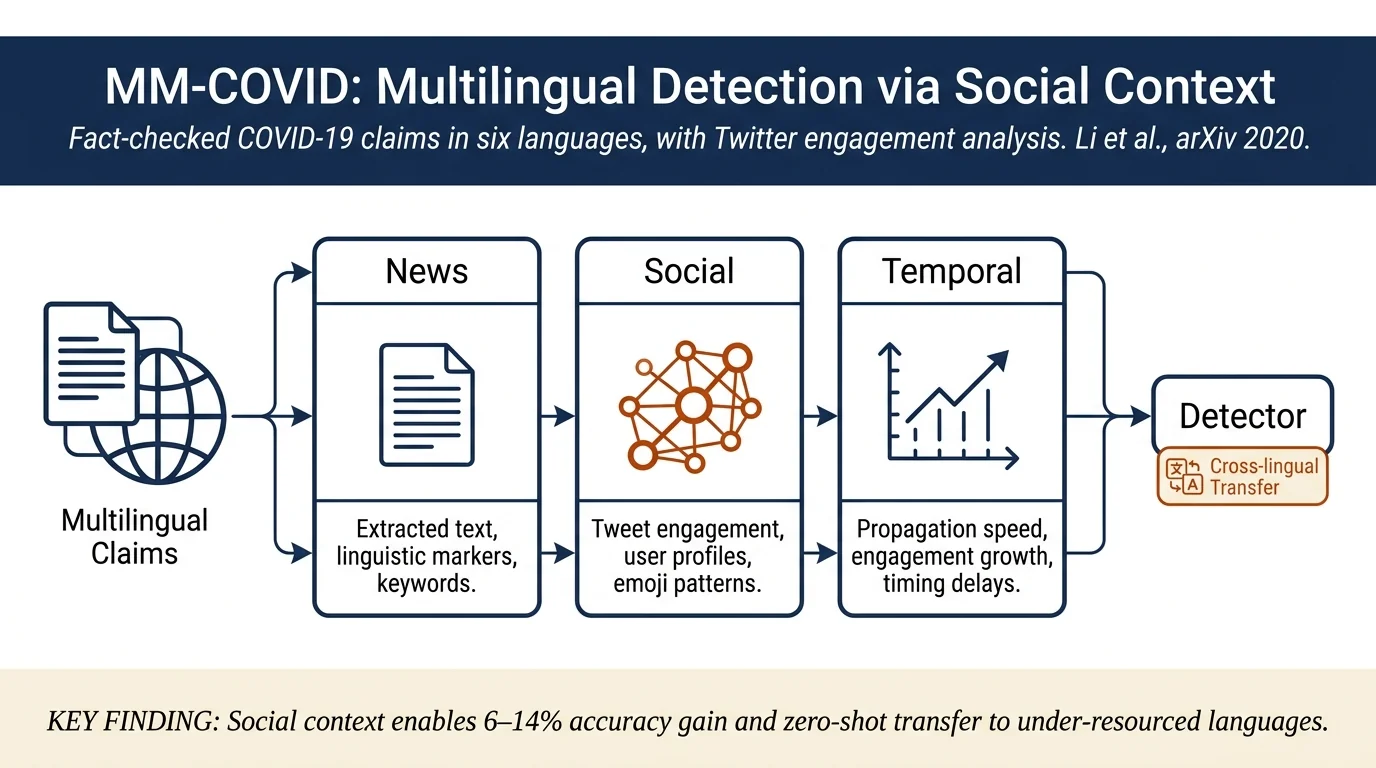
MM-COVID: A Multilingual and Multimodal Data Repository for Combating COVID-19 DisinformationThe paper introduces MM-COVID, a multilingual and multimodal dataset of COVID-19 fake news and social engagements in six languages (English, Spanish, Portuguese, Hindi, French, Italian). The dataset includes 3,981 fake news pieces with 7,192 tweets, fact-checking metadata, user profiles, and temporal propagation information.
 Deepfakes & multimodalDatasets & evaluation
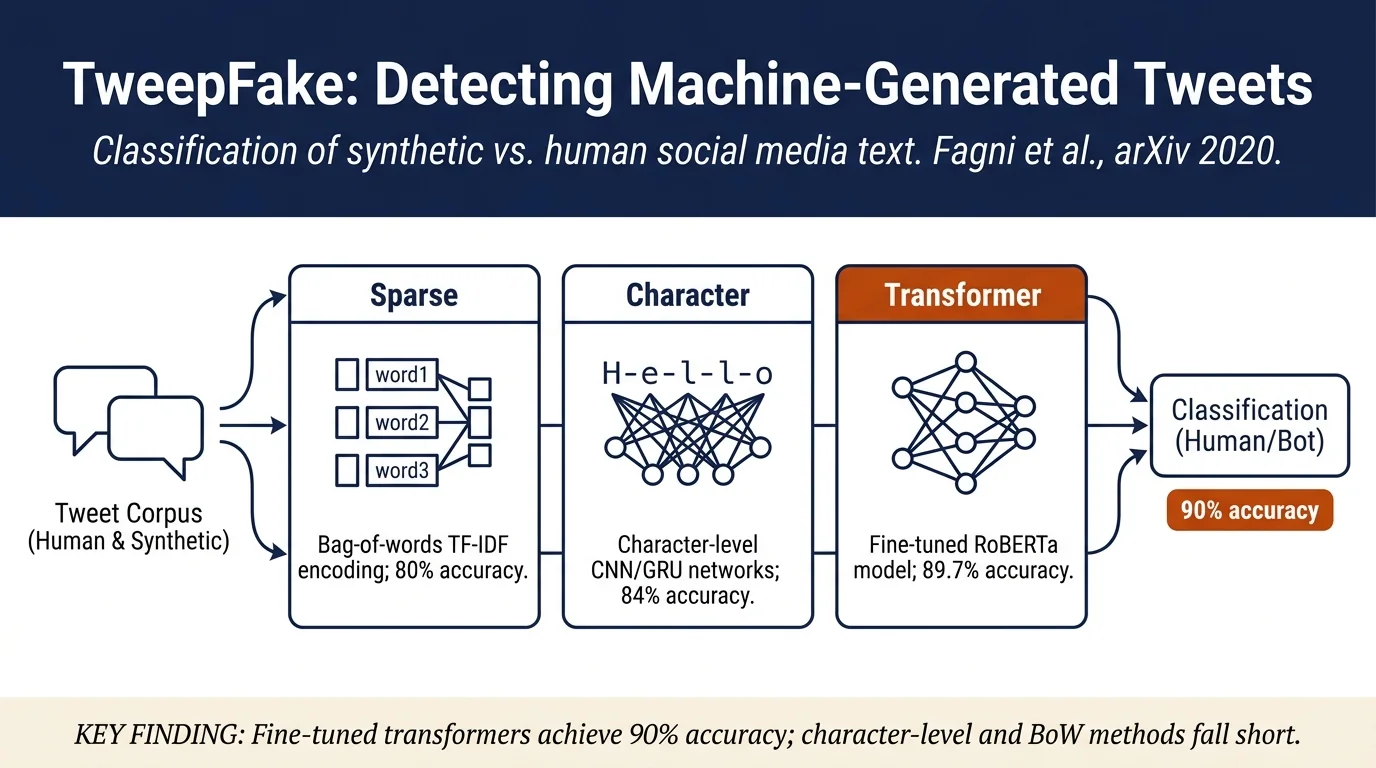
TweepFake: about detecting deepfake tweetsFirst publicly available dataset of real human-written and machine-generated tweets (TweepFake: 25,572 tweets, half human, half bot-generated from GPT-2, RNN, LSTM, Markov Chains, etc.). Benchmarks 13 detection methods and finds that transformer-based models fine-tuned on this task (RoBERTa) achieve ~90% accuracy, while BoW approaches…
 Deepfakes & multimodalDatasets & evaluation
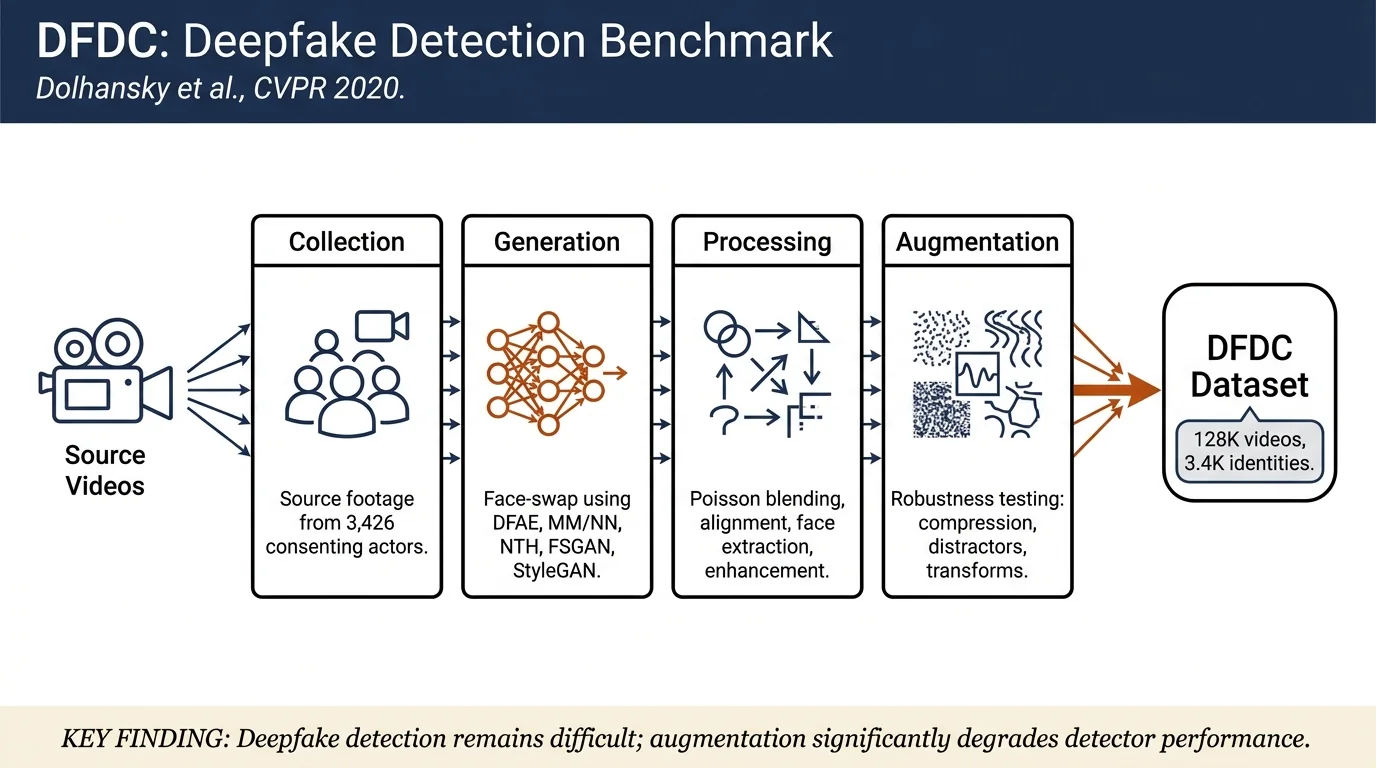
The DeepFake Detection Challenge (DFDC) DatasetThis paper introduces the DFDC Dataset, the largest publicly available deepfake detection benchmark at the time with 128,154 videos from 3,426 consented actors and 100,000 face-swapped clips. The dataset addresses ethical and methodological limitations of prior deepfake benchmarks by requiring explicit participant consent, including…
 Deepfakes & multimodalFact-checking & verification
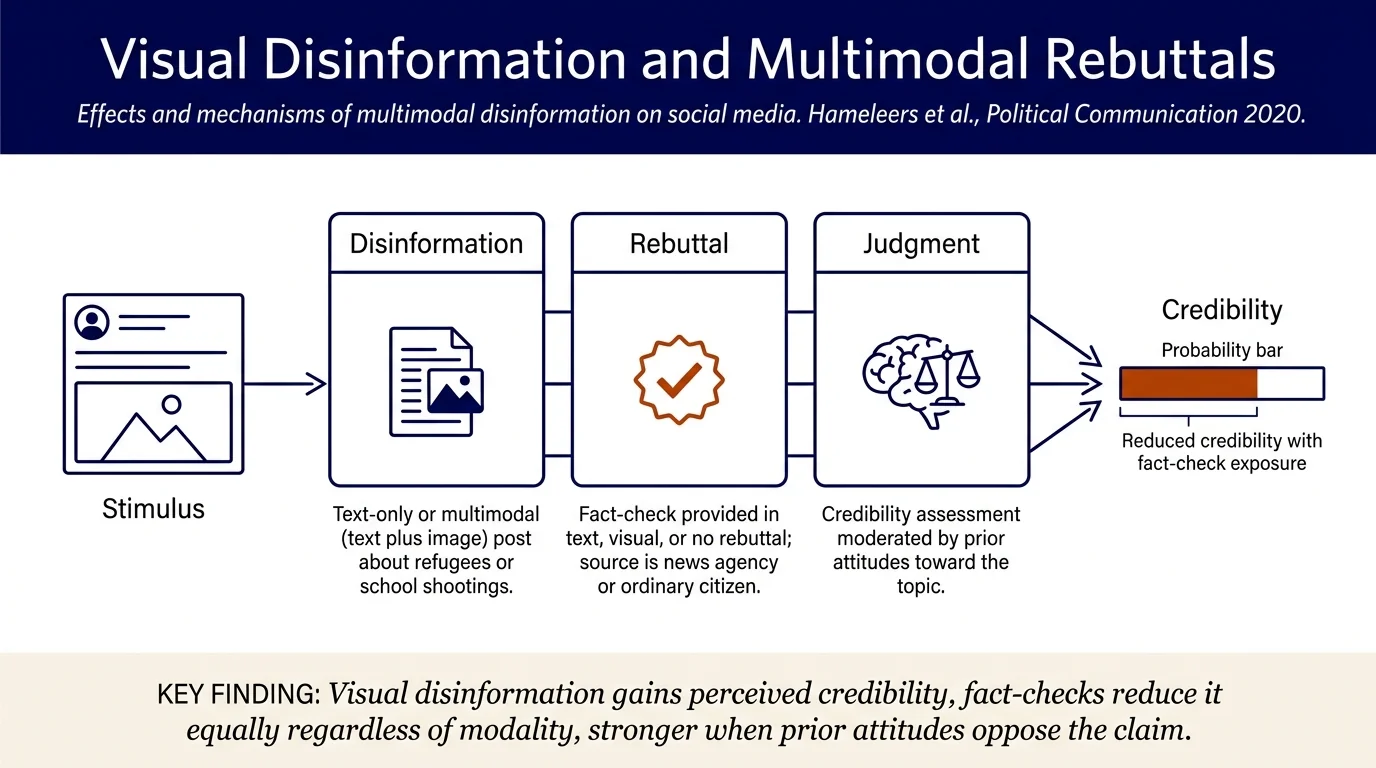
A Picture Paints a Thousand Lies? The Effects and Mechanisms of Multimodal Disinformation and Rebuttals Disseminated via Social MediaMultimodal disinformation (paired text and images) is perceived as more credible than text-only misinformation, but fact-checkers can overcome this effect. Importantly, the modality of fact-checks (visual or textual) matters less than their presence; fact-checks are more persuasive for people whose prior attitudes already oppose the…
 Deepfakes & multimodalPlatforms, policy & society
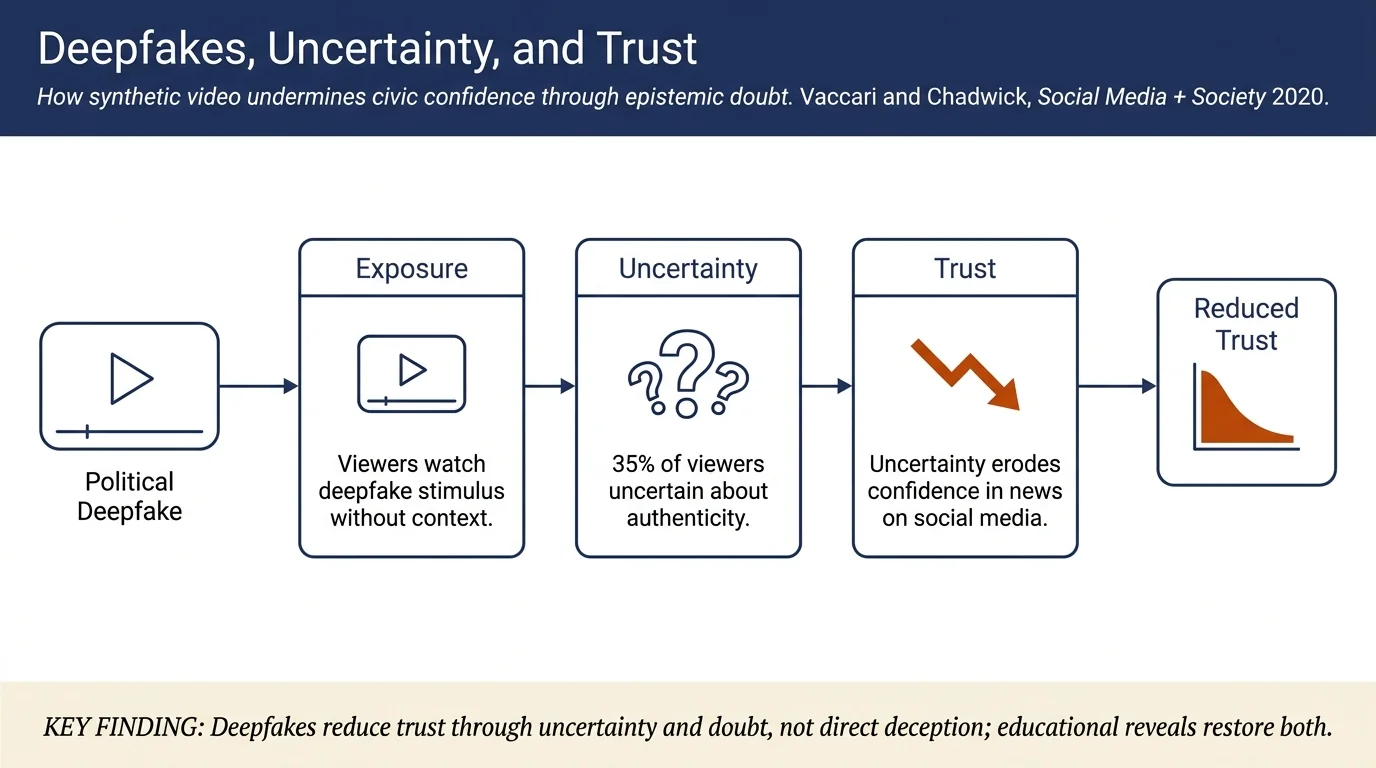
Deepfakes and Disinformation: Exploring the Impact of Synthetic Political Video on Deception, Uncertainty, and Trust in NewsExperimental study (N=2,005 UK respondents) testing how political deepfakes affect deception and trust in news. Deepfakes increased uncertainty about content, and that uncertainty mediated reduced trust in news on social media.
 Deepfakes & multimodalDetection methods
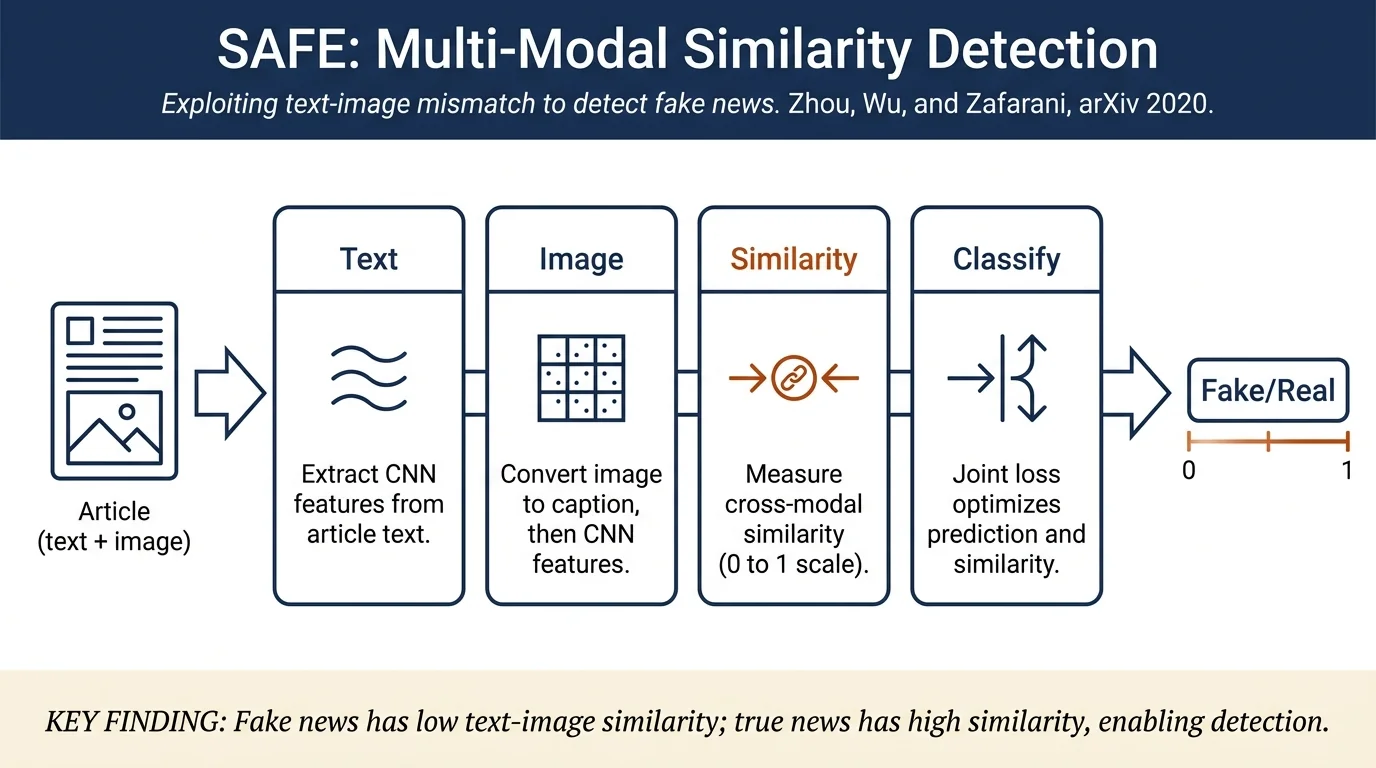
SAFE: Similarity-Aware Multi-Modal Fake News DetectionFake news articles frequently pair misleading textual claims with irrelevant or manipulative images, creating a detectable gap between the two modalities. SAFE addresses this by extracting separate neural representations of a news article's text and images — using the same Text-CNN architecture applied to an image2sentence embedding for…
 Datasets & evaluationDeepfakes & multimodal
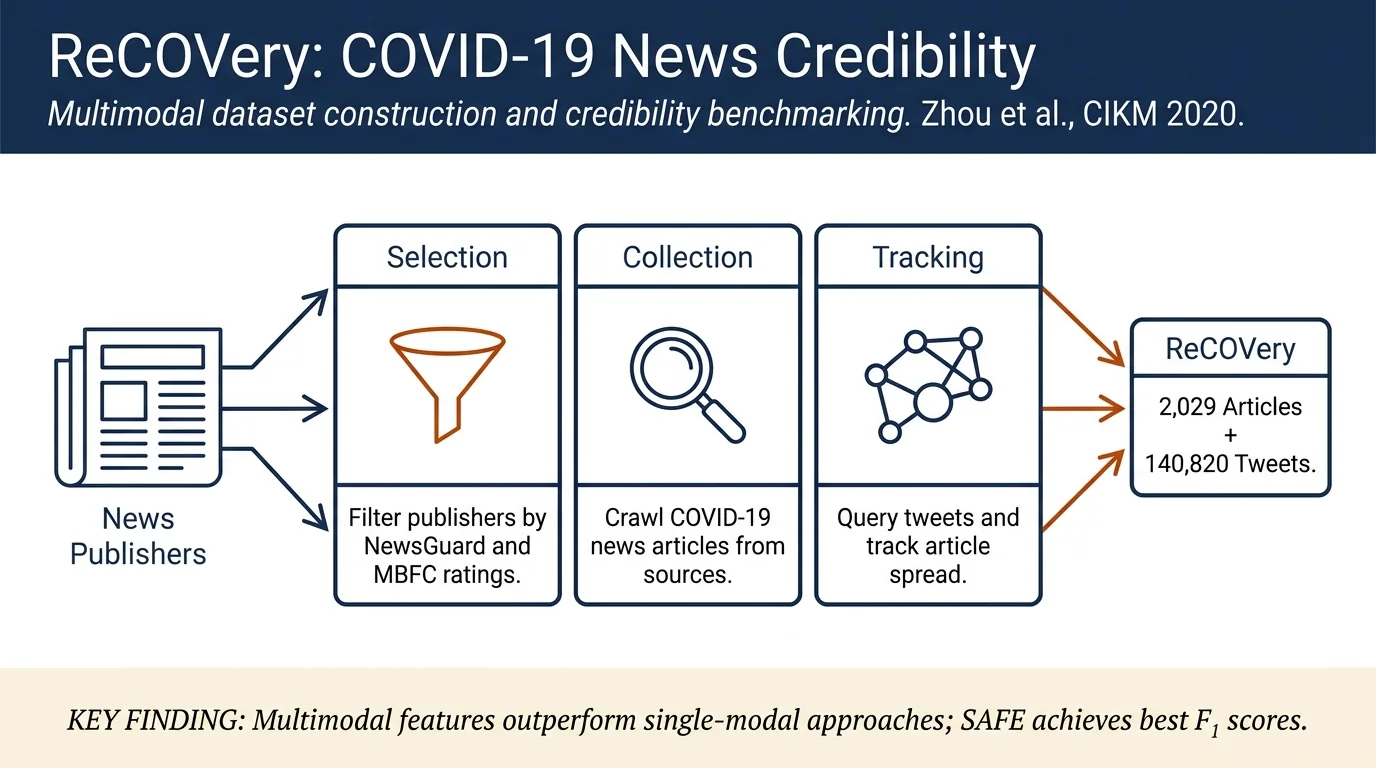
ReCOVery: A Multimodal Repository for COVID-19 News Credibility ResearchThe COVID-19 pandemic triggered a parallel "infodemic" of low-credibility news; this paper constructs ReCOVery, a multimodal repository of 2,029 COVID-19 news articles with binary credibility labels inherited from their publisher's NewsGuard/MBFC ratings, paired with 140,820 tweets tracking social spread. The key design trade-off is…