Explore papers
Filter by research area, year and venue. Every filter is in the address bar, so you can share a view as a link.
 Psychology & interventionsSpread & networks
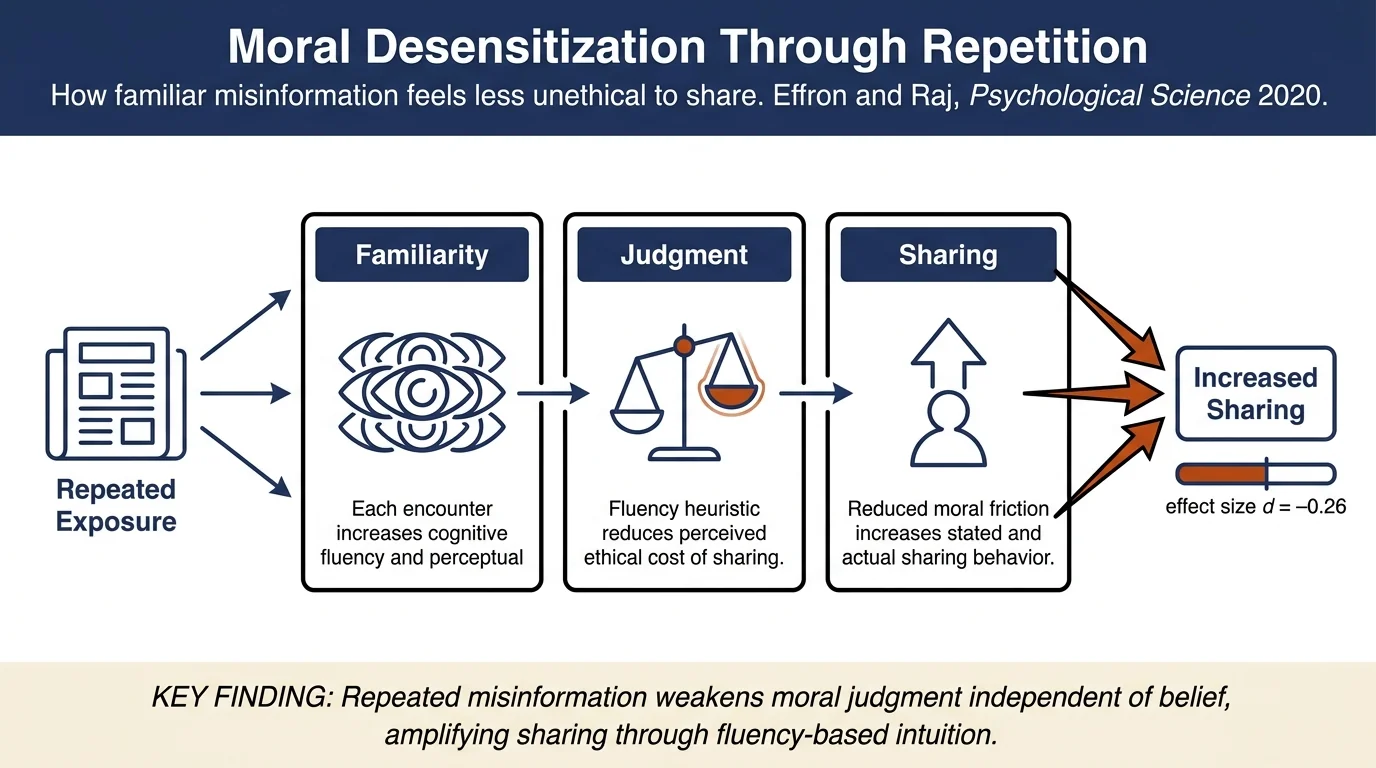
Misinformation and Morality: Encountering Fake-News Headlines Makes Them Seem Less Unethical to Publish and ShareFour preregistered experiments (N=2,587) show that repeatedly encountering fake-news headlines reduces moral condemnation of spreading them—regardless of whether people believe them. This "moral repetition effect" operates via fluency: familiar headlines feel less unethical to share, stronger inclinations to promote them online, and…
 Bots & coordinated campaignsPlatforms, policy & society
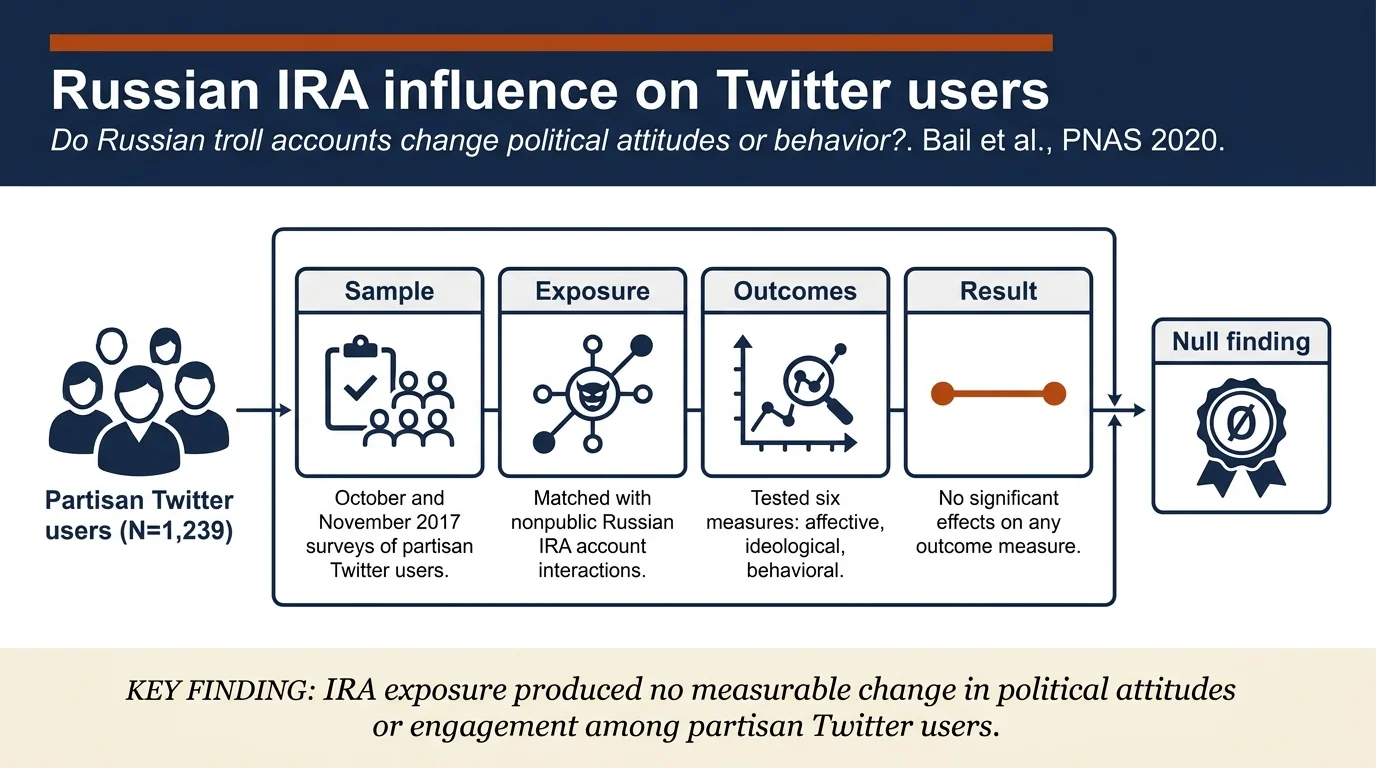
Assessing the Russian Internet Research Agency's impact on the political attitudes and behaviors of American Twitter users in late 2017Combining longitudinal survey data from 1,239 partisan Twitter users with nonpublic IRA account data, Bail et al. find no evidence that interaction with Russian Internet Research Agency accounts substantially impacted six measures of political attitudes (affective/ideological polarization) or behaviors (political engagement, network…
 Spread & networksPlatforms, policy & society
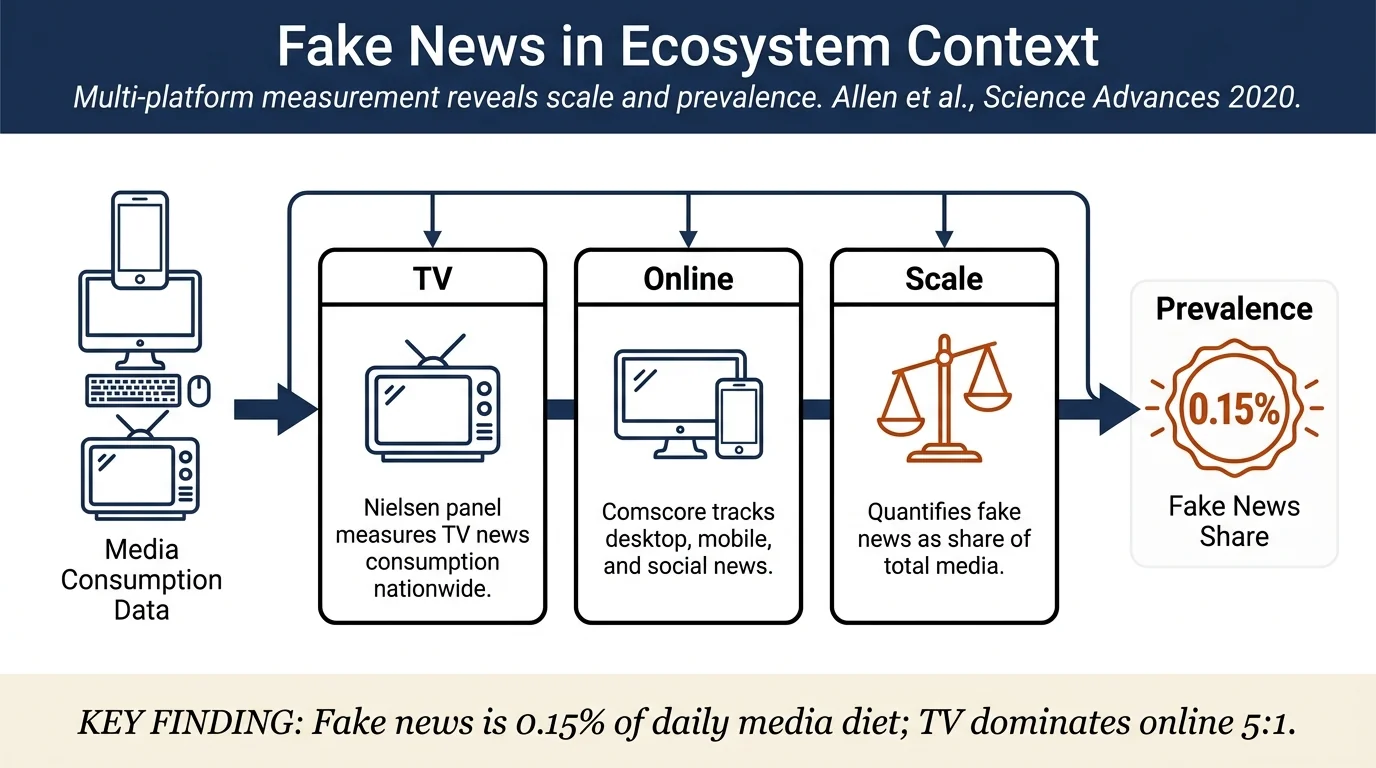
Evaluating the fake news problem at the scale of the information ecosystemUsing nationally representative data on mobile, desktop, and TV consumption spanning 2016–2018, the authors show that fake news comprises only 0.15% of Americans' daily media diet, while TV dominates news consumption by a 5:1 ratio over online. The paper challenges the widespread narrative of fake news as a pervasive crisis and suggests…
 Deepfakes & multimodalDetection methods
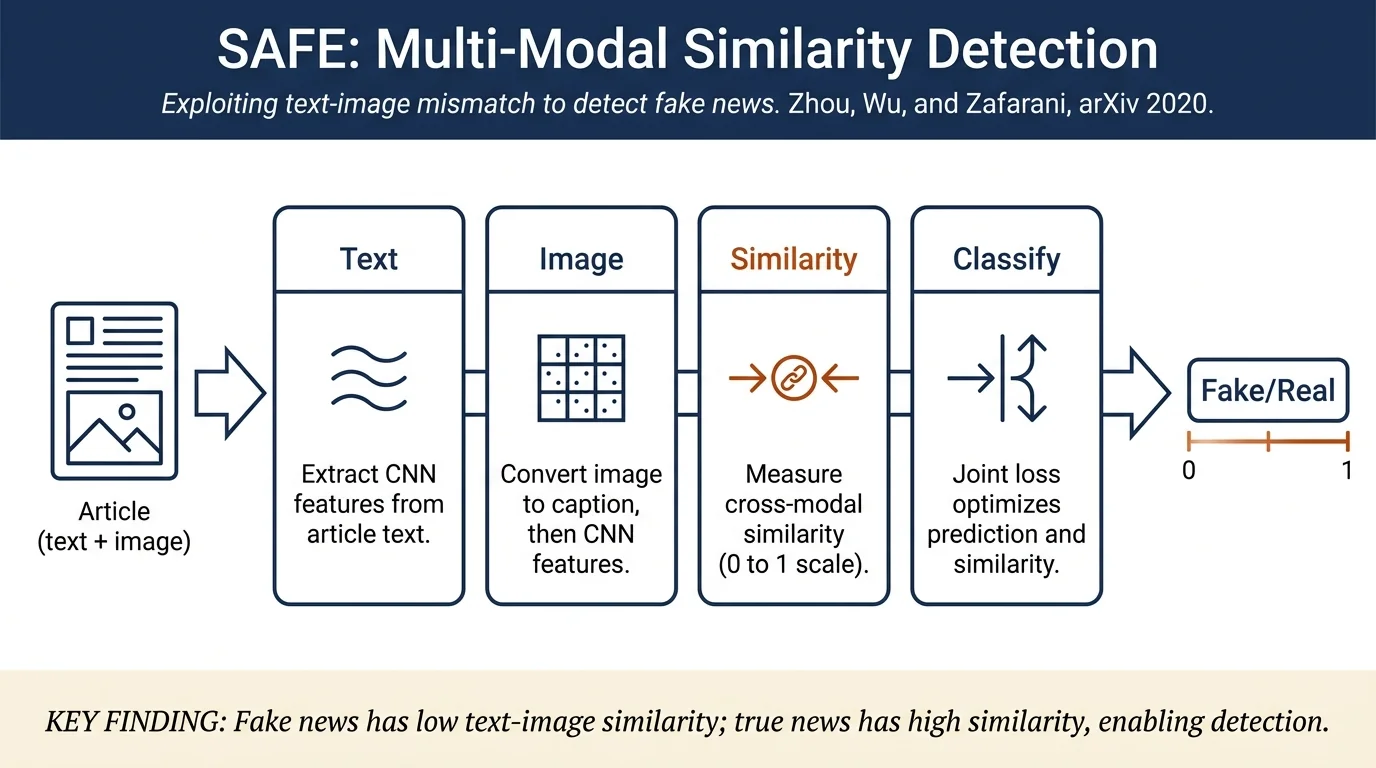
SAFE: Similarity-Aware Multi-Modal Fake News DetectionFake news articles frequently pair misleading textual claims with irrelevant or manipulative images, creating a detectable gap between the two modalities. SAFE addresses this by extracting separate neural representations of a news article's text and images — using the same Text-CNN architecture applied to an image2sentence embedding for…
 Datasets & evaluationDeepfakes & multimodal
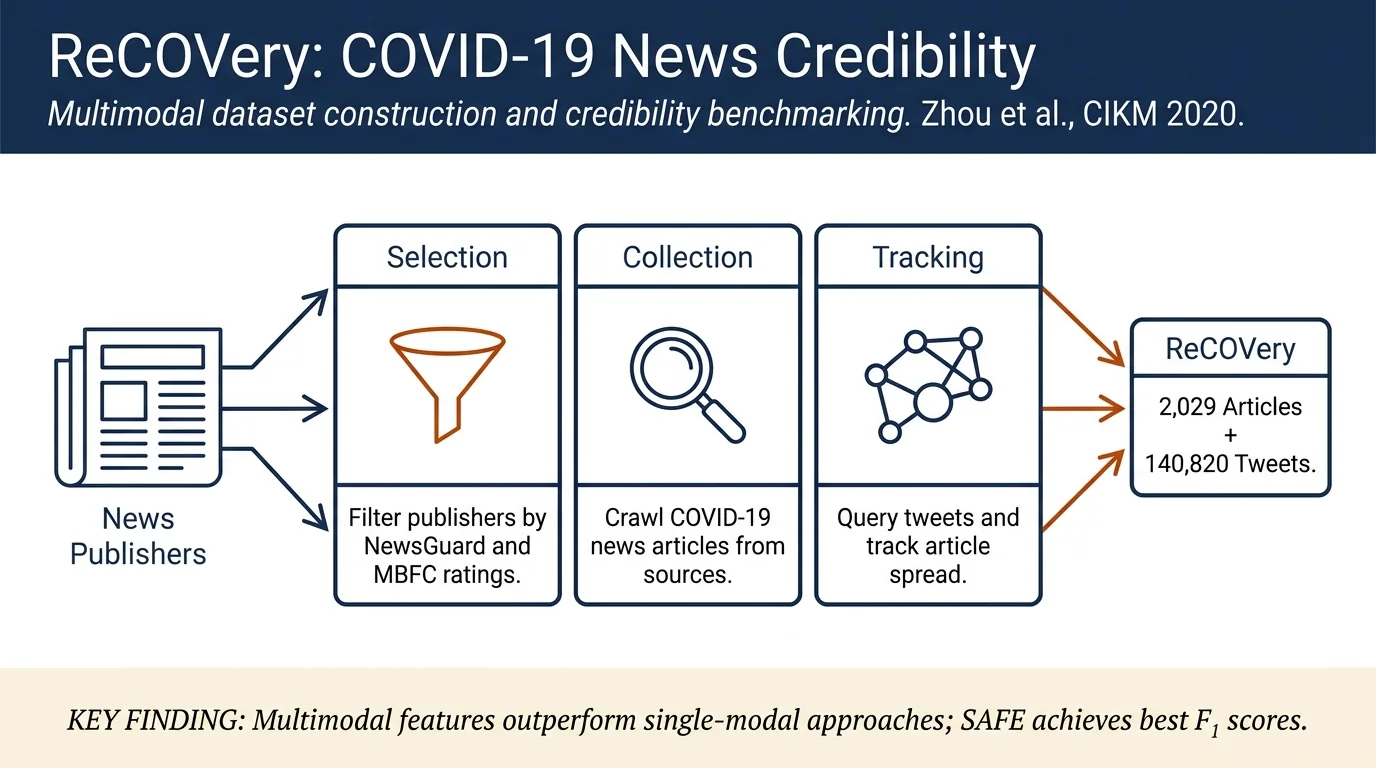
ReCOVery: A Multimodal Repository for COVID-19 News Credibility ResearchThe COVID-19 pandemic triggered a parallel "infodemic" of low-credibility news; this paper constructs ReCOVery, a multimodal repository of 2,029 COVID-19 news articles with binary credibility labels inherited from their publisher's NewsGuard/MBFC ratings, paired with 140,820 tweets tracking social spread. The key design trade-off is…
 Spread & networksDetection methods
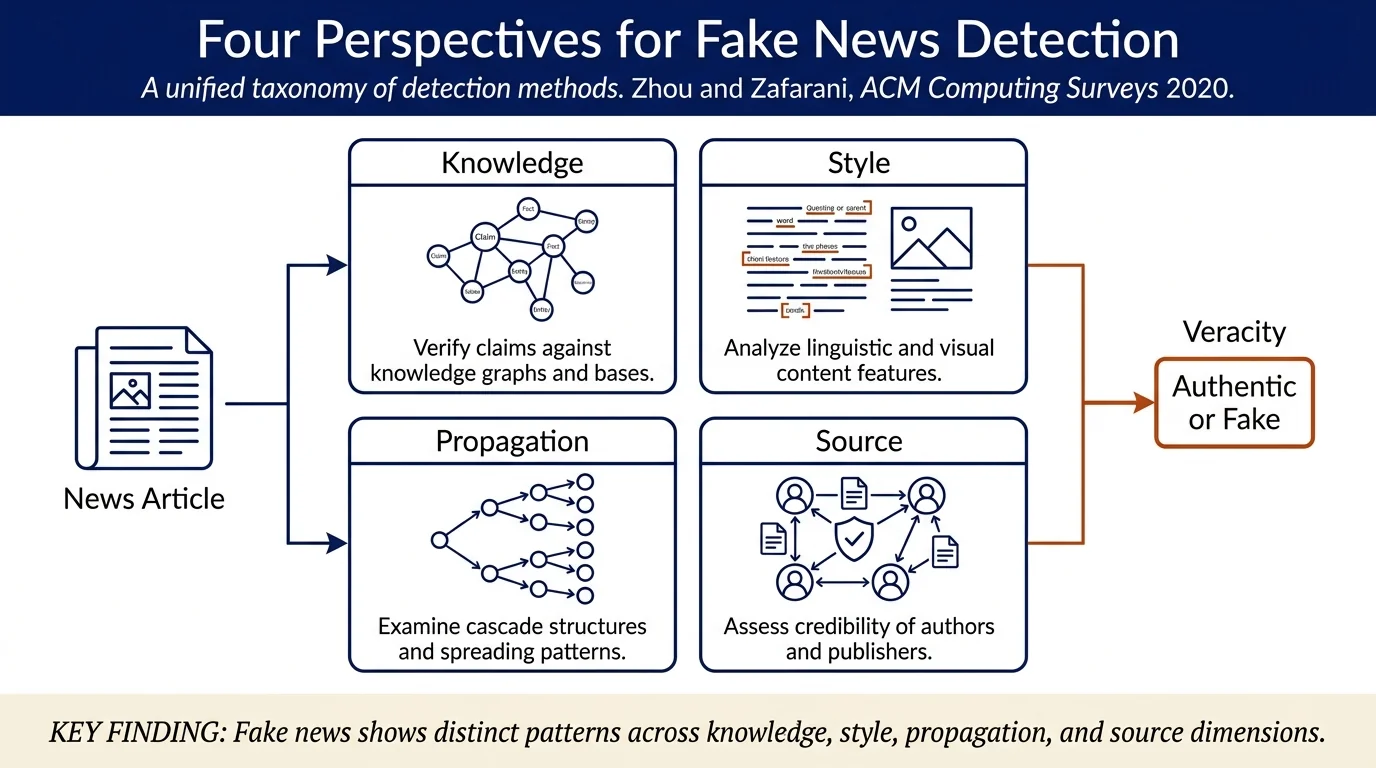
A Survey of Fake News: Fundamental Theories, Detection Methods, and OpportunitiesThis comprehensive survey defines fake news across both broad and narrow framings, systematizes detection methods across four perspectives (knowledge, style, propagation, source), connects detection strategies to interdisciplinary theories from psychology and social sciences, and identifies six open research challenges including early…
 Detection methodsLLMs & generative AI
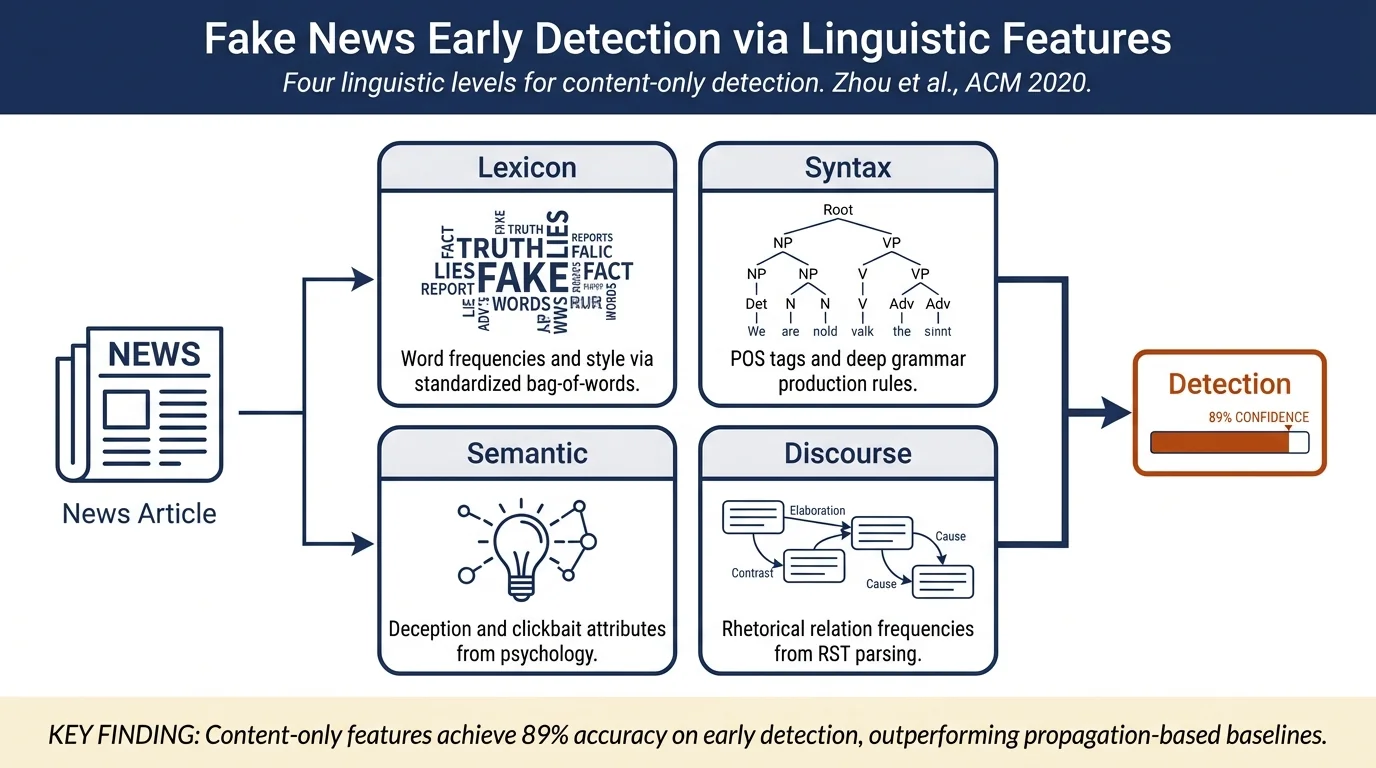
Fake News Early Detection: An Interdisciplinary StudyThis paper proposes a theory-driven, content-only model for fake news detection at publication time — before social-media propagation data exists. News articles are represented at four linguistic levels (lexicon, syntax, semantic, and discourse) using features grounded in social and forensic psychology; classical supervised classifiers…
 Datasets & evaluationDetection methods
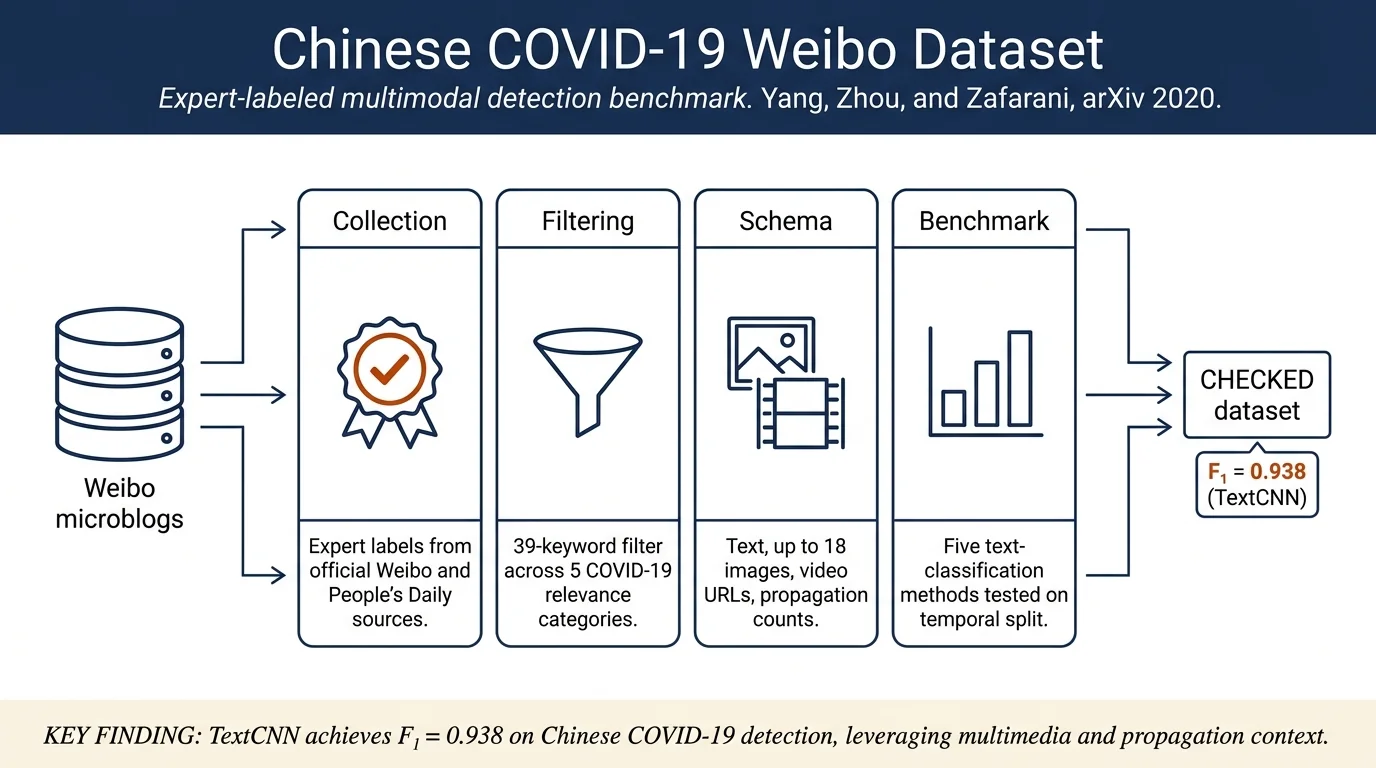
CHECKED: Chinese COVID-19 Fake News DatasetCHECKED is the first Chinese-language, fact-checked COVID-19 social media dataset — 2,104 Weibo microblogs (344 fake, 1,760 real) spanning December 2019 to August 2020, labeled using Weibo's expert-operated Community Management Center for fake posts and People's Daily official account for real posts. Each microblog carries rich…
 Spread & networksDetection methods
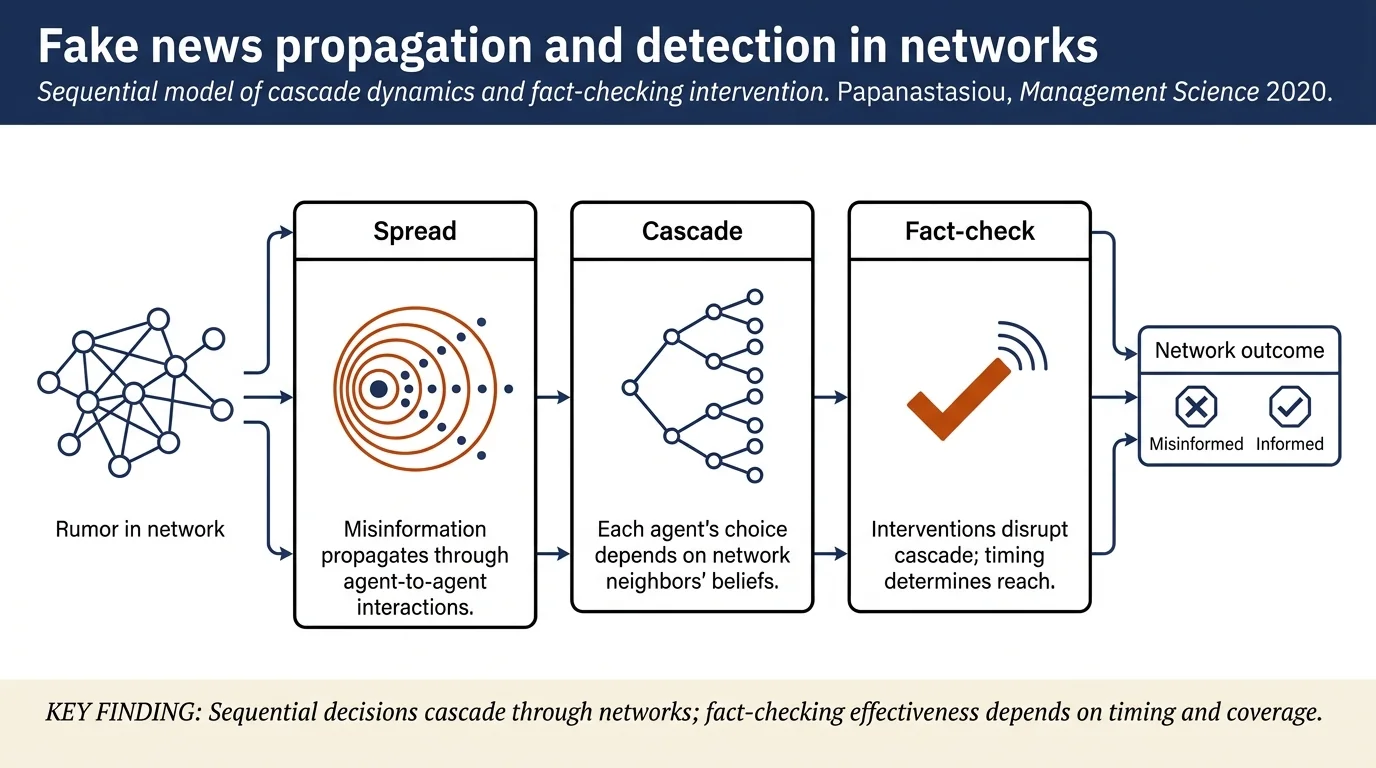
Fake news propagation and detection: A sequential modelFoundational sequential social learning model of misinformation spread and fact-checking. Introduces the framework for analyzing how agents' decisions cascade through a network and how fact-checking affects collective outcomes.