Explore papers
Filter by research area, year and venue. Every filter is in the address bar, so you can share a view as a link.
 Fact-checking & verificationPlatforms, policy & society
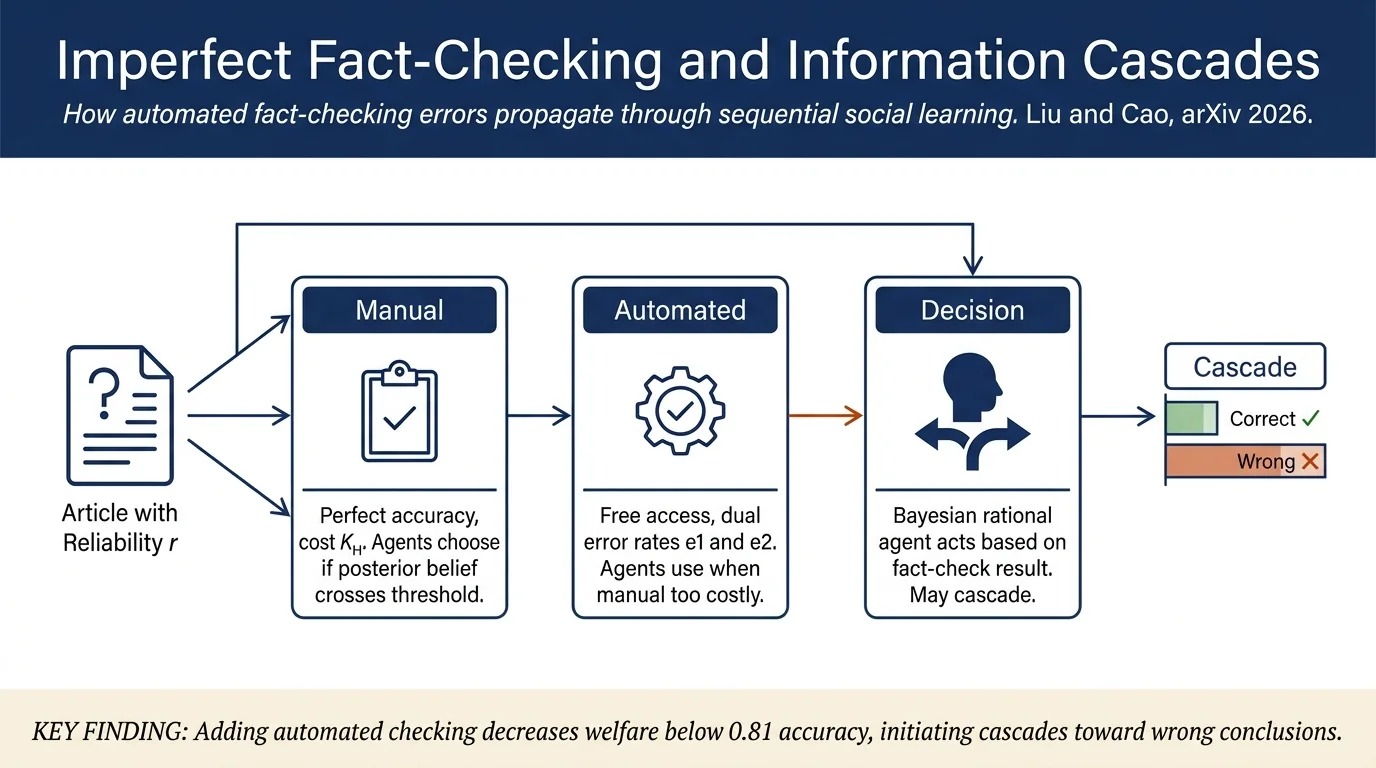
When Imperfect Automated Fact-Checking Backfires: Social Learning in the Presence of MisinformationAutomated fact-checking tools are free and fast but error-prone; manual checking is costly but accurate. This paper studies whether adding a free automated tool alongside manual fact-checking improves social welfare (defined as the probability a cascade reaches the correct conclusion).
 Fact-checking & verificationPlatforms, policy & society
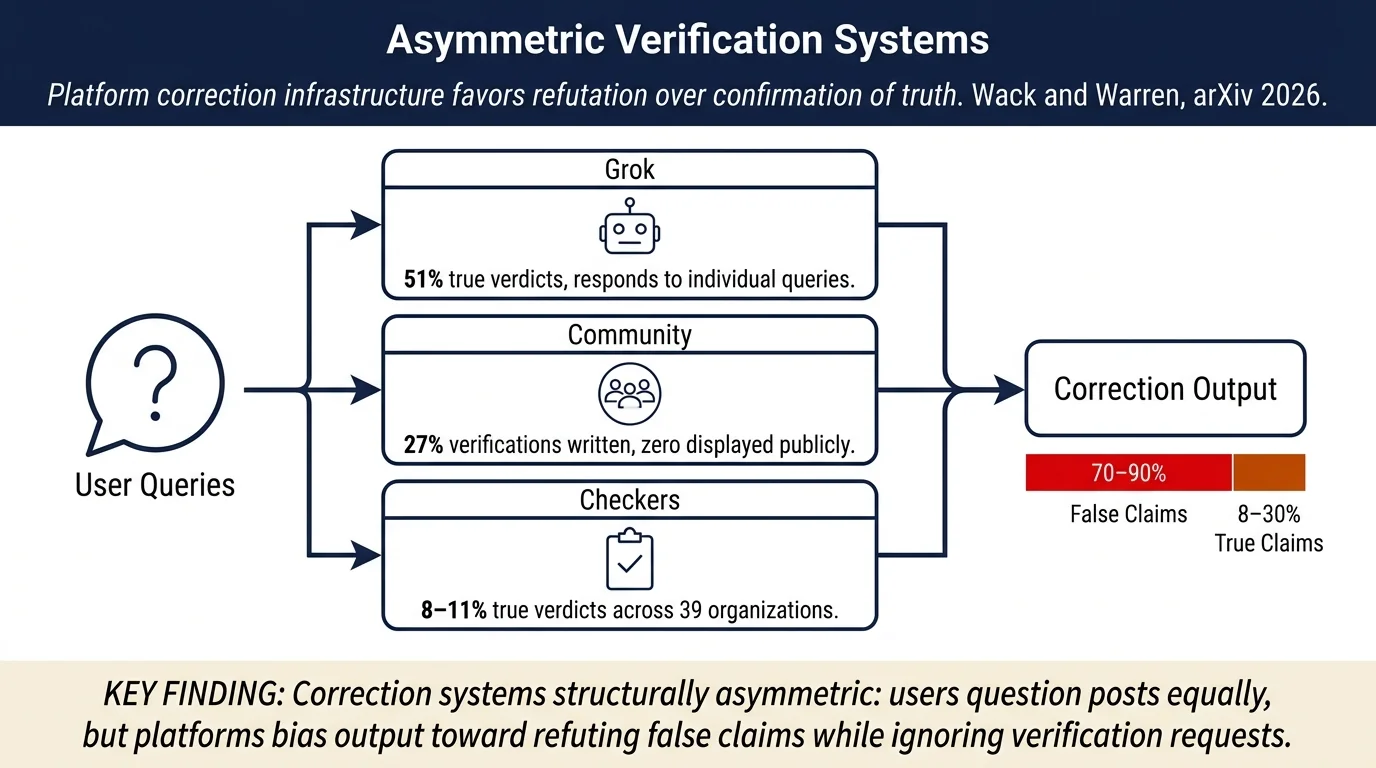
Fact-check? True!: Tracking Verification Requests and the Absence of Truth Verdicts across Correction SystemsExamining 47,899 X/Twitter users asking Grok (X's AI assistant) whether posts are true, the authors find that ~51% of questioned posts are actually accurate, yet correction systems (Community Notes, professional fact-checkers) focus overwhelmingly on false claims. Professional fact-checkers publish true verdicts in only 8–11% of their…
 Platforms, policy & societyDatasets & evaluation
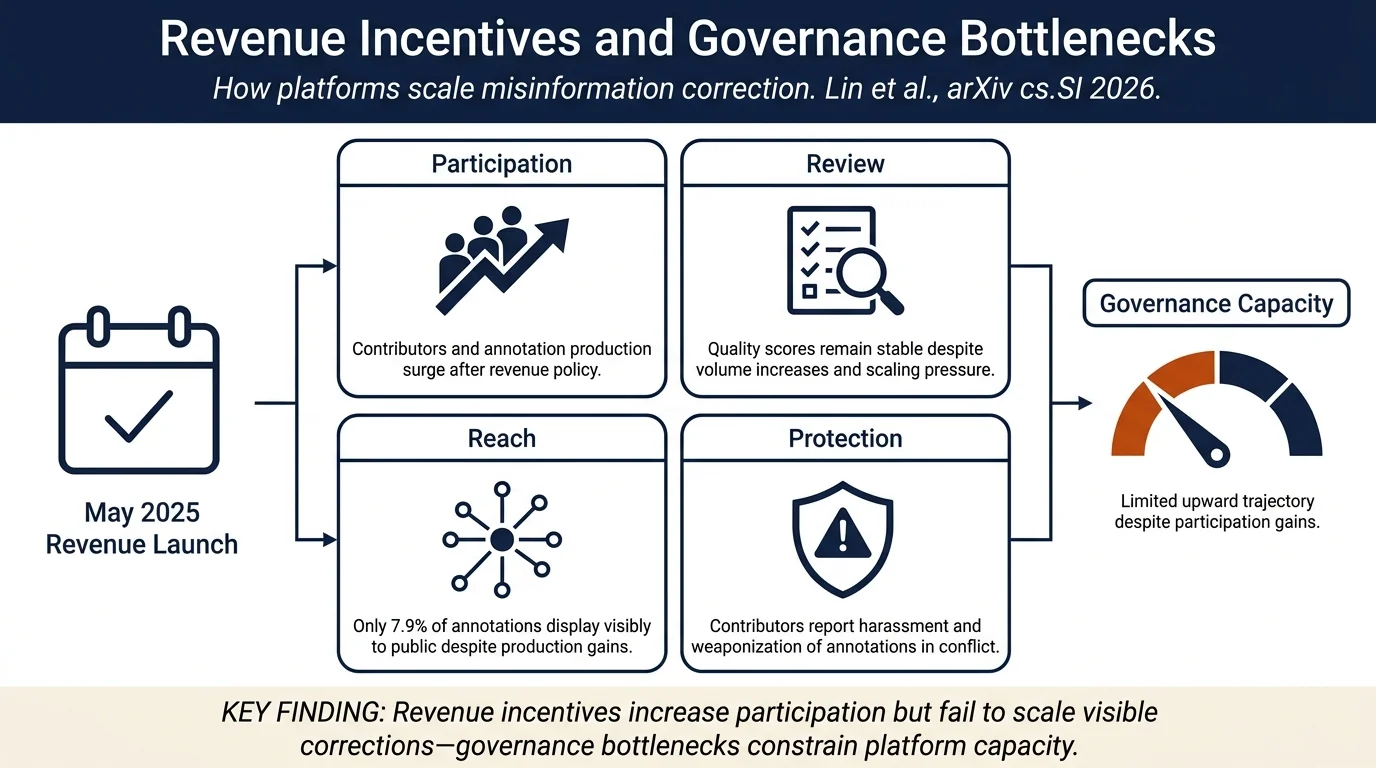
When Platforms Pay Users to Correct Misinformation: Revenue Incentives and Governance Capacity in Weibo AnnotationsWeibo Annotations is a crowdsourced governance system that lets users add corrections and contextual information to disputed claims. In May 2025, Weibo introduced monetary rewards for approved annotations.
 Psychology & interventionsFact-checking & verification
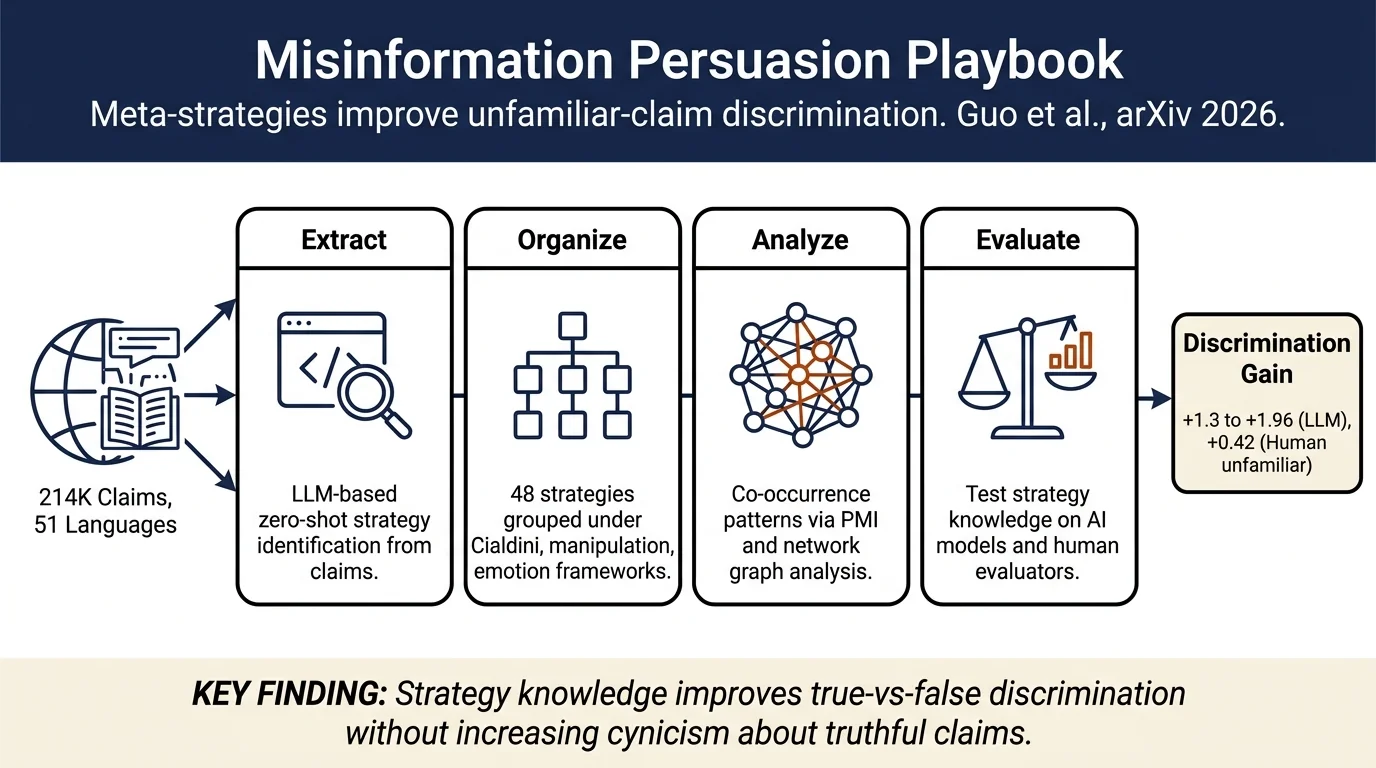
A misinformation playbook sharpens judgement without breeding cynicismThis paper analyzes 214,646 fact-checked claims across 51 languages to map misinformation's persuasion playbook—48 recurring strategies organized under social influence, information manipulation, and emotional appeal. Rather than flagging specific false claims, teaching these meta-strategies improves how both AI models and humans judge…
 LLMs & generative AIFact-checking & verification
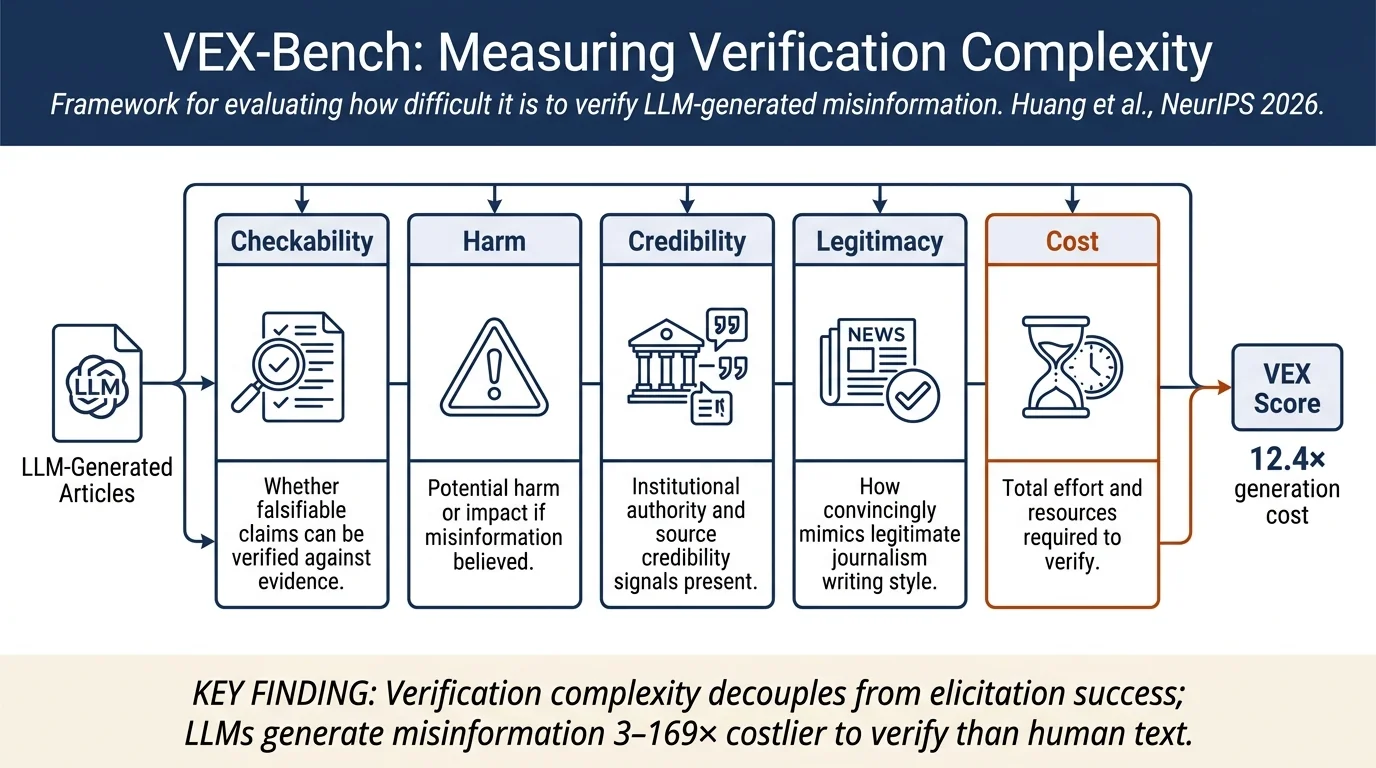
VEX-Bench: Benchmarking Verification Complexity of LLM-Generated MisinformationThis paper introduces VEX-Bench, a unified benchmark for evaluating how difficult it is to verify LLM-generated misinformation. The benchmark measures verification complexity across five dimensions: checkability (whether claims can be checked), harm significance, source credibility signals, impostor legitimacy, and verification cost.
 LLMs & generative AIPsychology & interventions
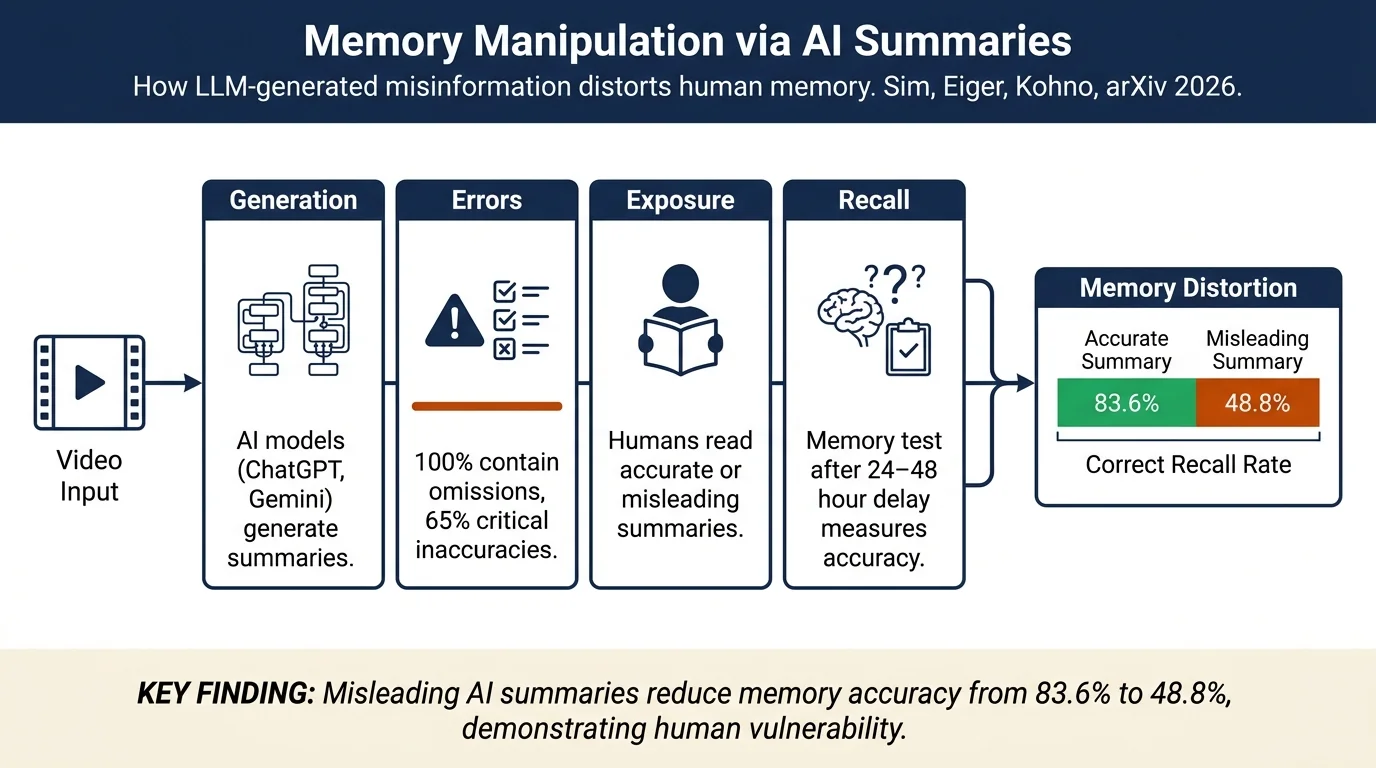
AI-Enabled Human Memory Manipulation: Misleading AI-Generated Summaries Distort Human MemoryLarge language models frequently generate erroneous summaries of videos, including critical omissions and hallucinated details. In a human-subjects experiment, participants who read AI-generated summaries containing misleading information were significantly less likely to accurately recall the original event—demonstrating that AI…
 Fact-checking & verificationLLMs & generative AI
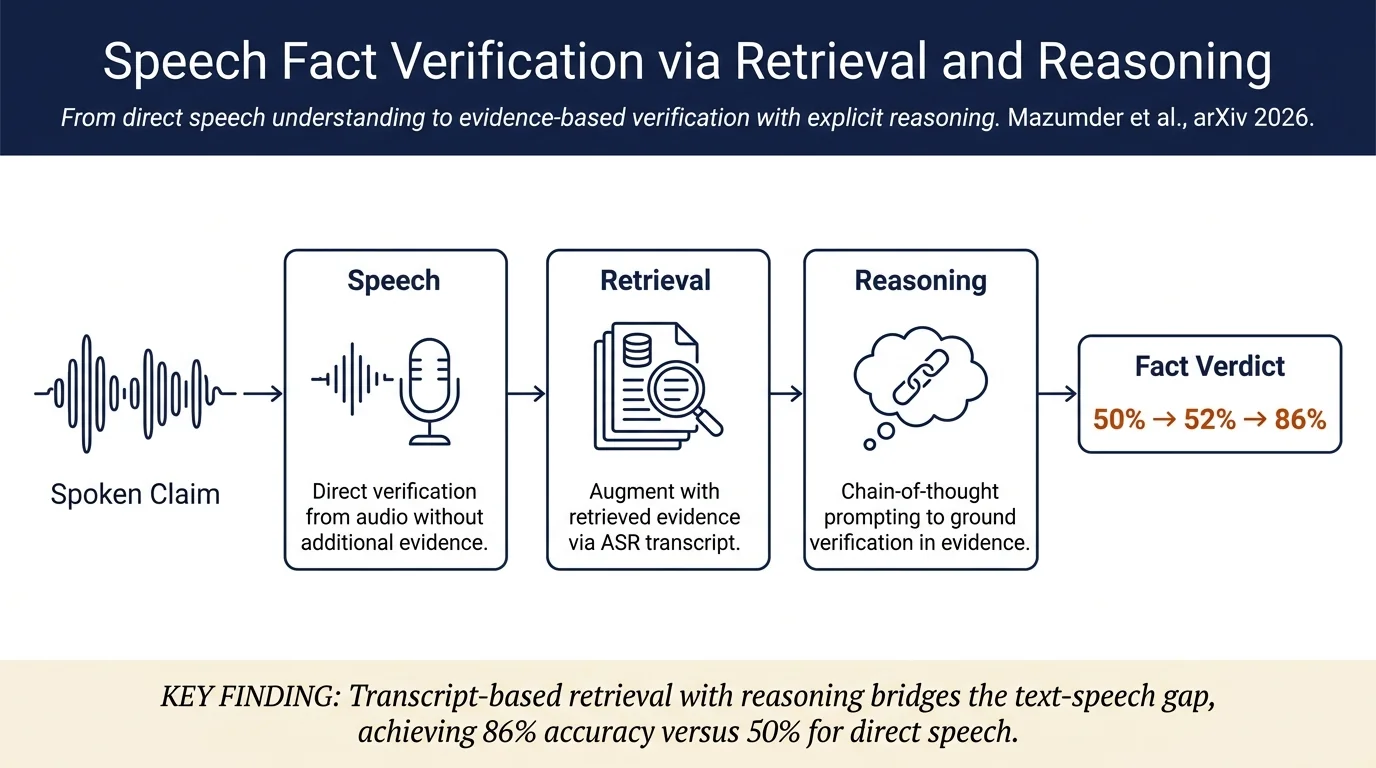
To Trust or Not to Trust: Retrieval-Augmented Fact Checking in SpeechLarge Audio Language Models (LALMs) exhibit a significant text-speech modality gap: they verify written claims reliably but fail on spoken ones, even from the same model. The paper introduces VeriSpeak, a benchmark of 3,879 spoken claims with temporal, geographical, and relational facts, and demonstrates that retrieval-augmented LALMs…
 Fact-checking & verificationLLMs & generative AI
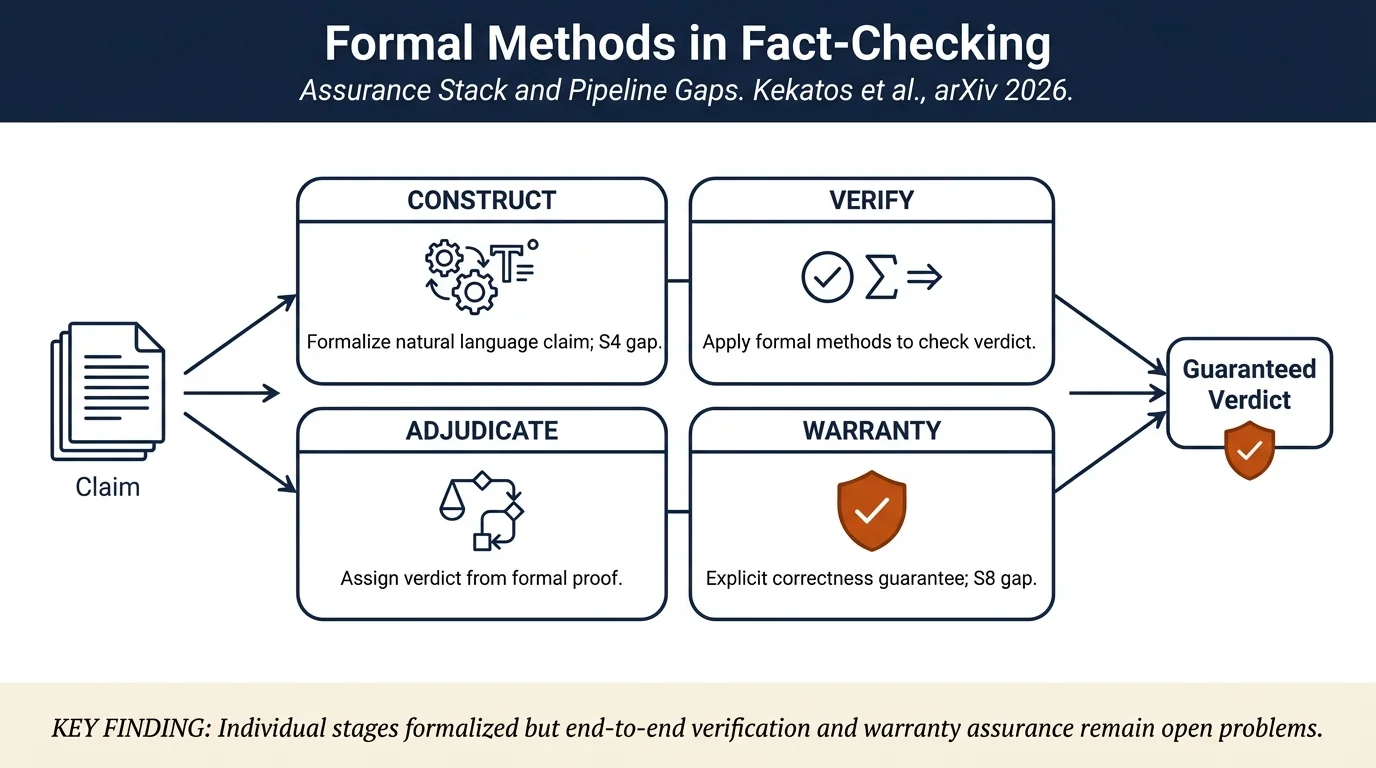
SoK: Formal Methods for Fact-Checking and Information IntegrityThis systemization of knowledge surveys formal methods (logic, model checking, theorem proving, symbolic reasoning) applied to fact-checking systems. The authors organize 121 works by assurance level and identify two critical gaps: constructing checkable claims and correcting errors in published verdicts.
 LLMs & generative AIPlatforms, policy & society
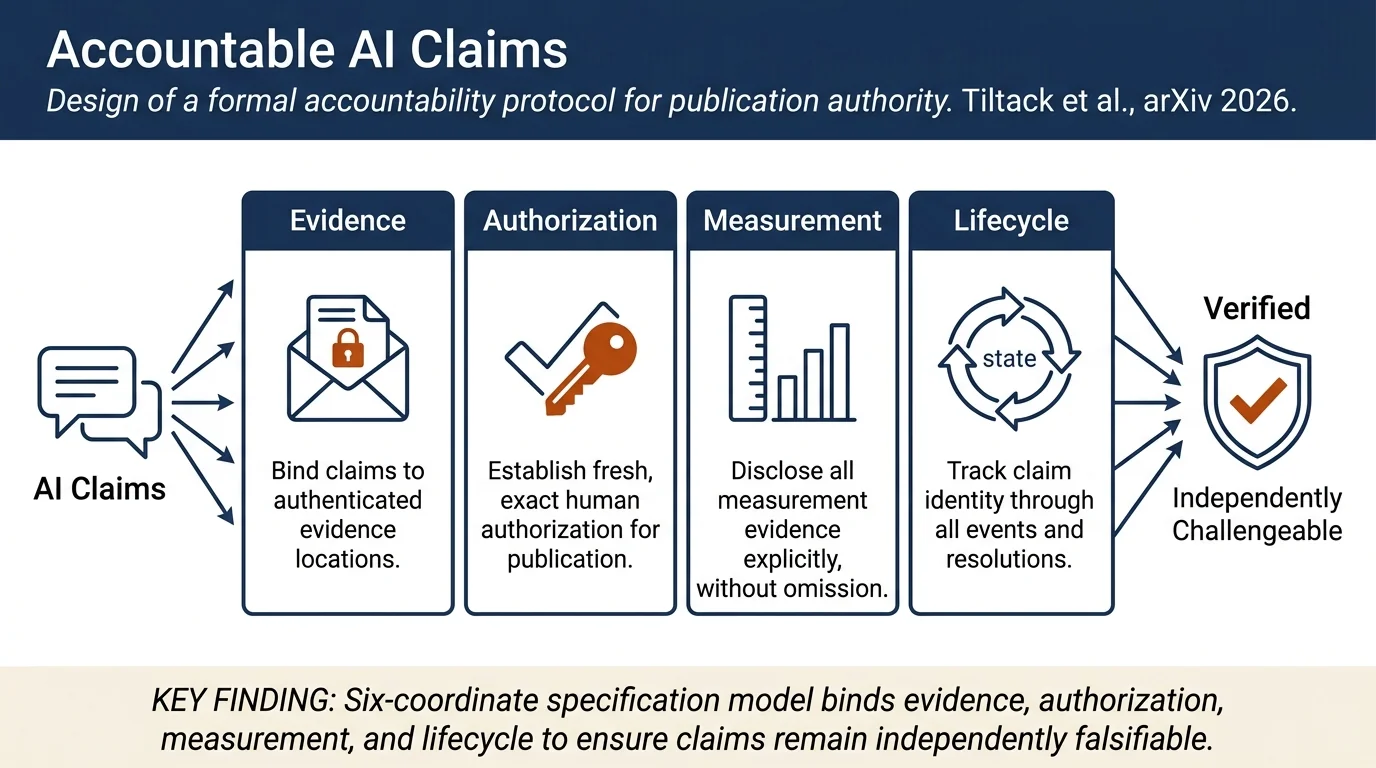
Making AI-Assisted Claims Independently Challengeable: Publication Authority and a Protocol for Falsifiable Publication RecordsAI-assisted claims can appear authoritative even when evidence, analysis, and authorization refer to different states—creating a coordination problem. This work introduces Publication Authority (PA) as a non-transferable, single-use capability governing publication transitions, and proposes PAC-2026 SF-4, an executable specification…
 LLMs & generative AIPlatforms, policy & society
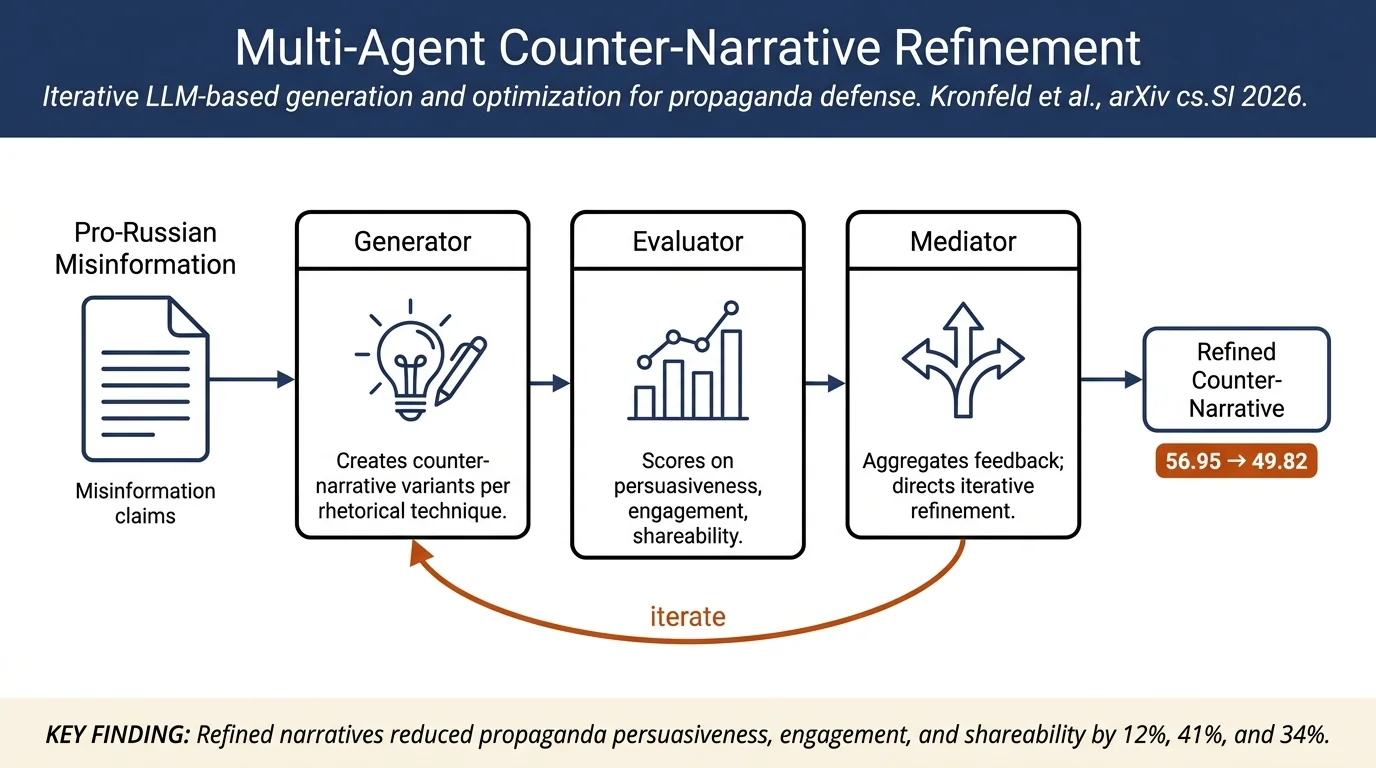
A Multi-Stage Agentic Framework for Effective Counter-Narrative Generation and RefinementCounter-narratives are a scalable defense against misinformation and hate speech, but manual authoring is slow and labor-intensive. This paper proposes a multi-stage agent-based framework using LLMs to generate and iteratively refine counter-narratives on pro-Russian misinformation about Ukraine.
 Fact-checking & verificationDatasets & evaluation
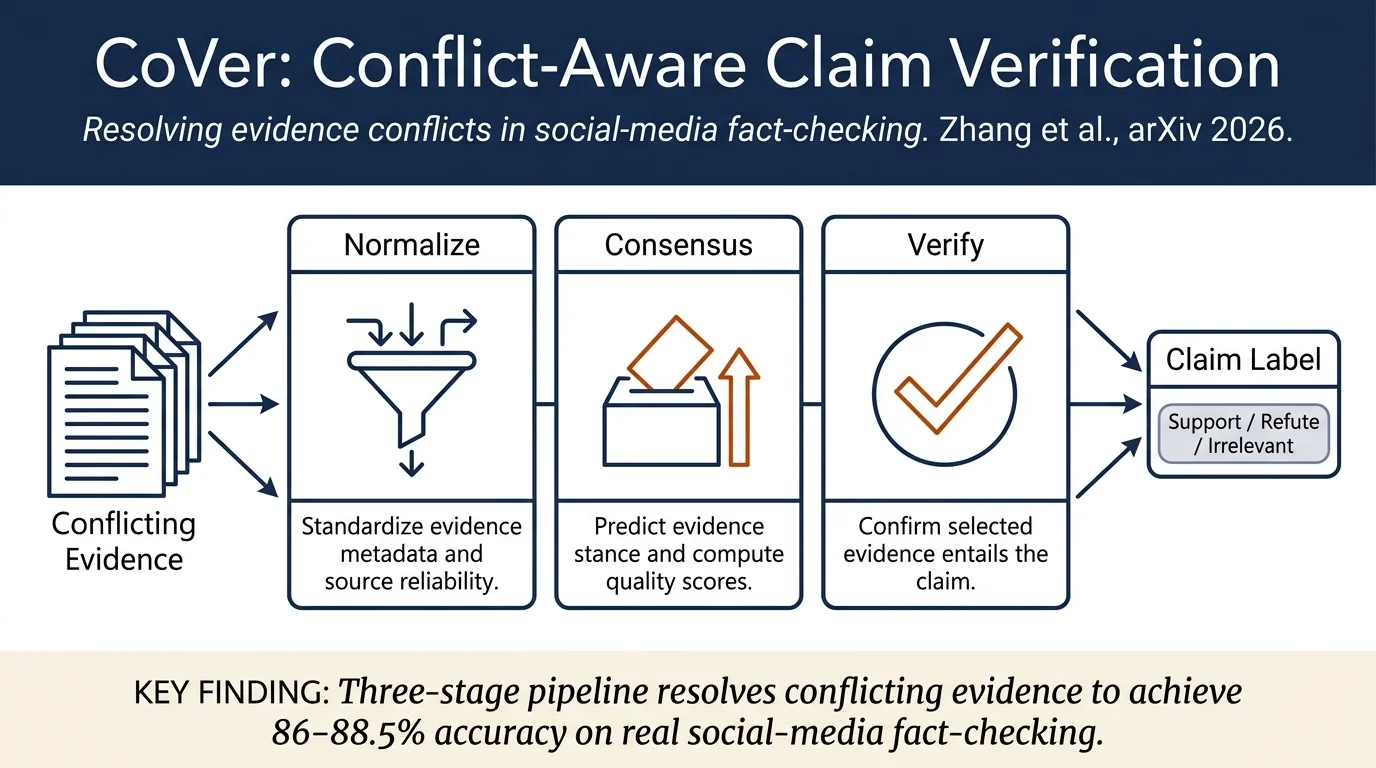
CoVer: Conflict-Aware Claim VerificationSocial media fact-checking frequently encounters conflicting evidence where different sources support or refute a claim. This paper proposes CoVer, a framework that explicitly resolves evidence-level conflicts (contradictory stances from different sources) and aggregation-level conflicts (sub-claims within complex claims yielding…
 LLMs & generative AIFact-checking & verification
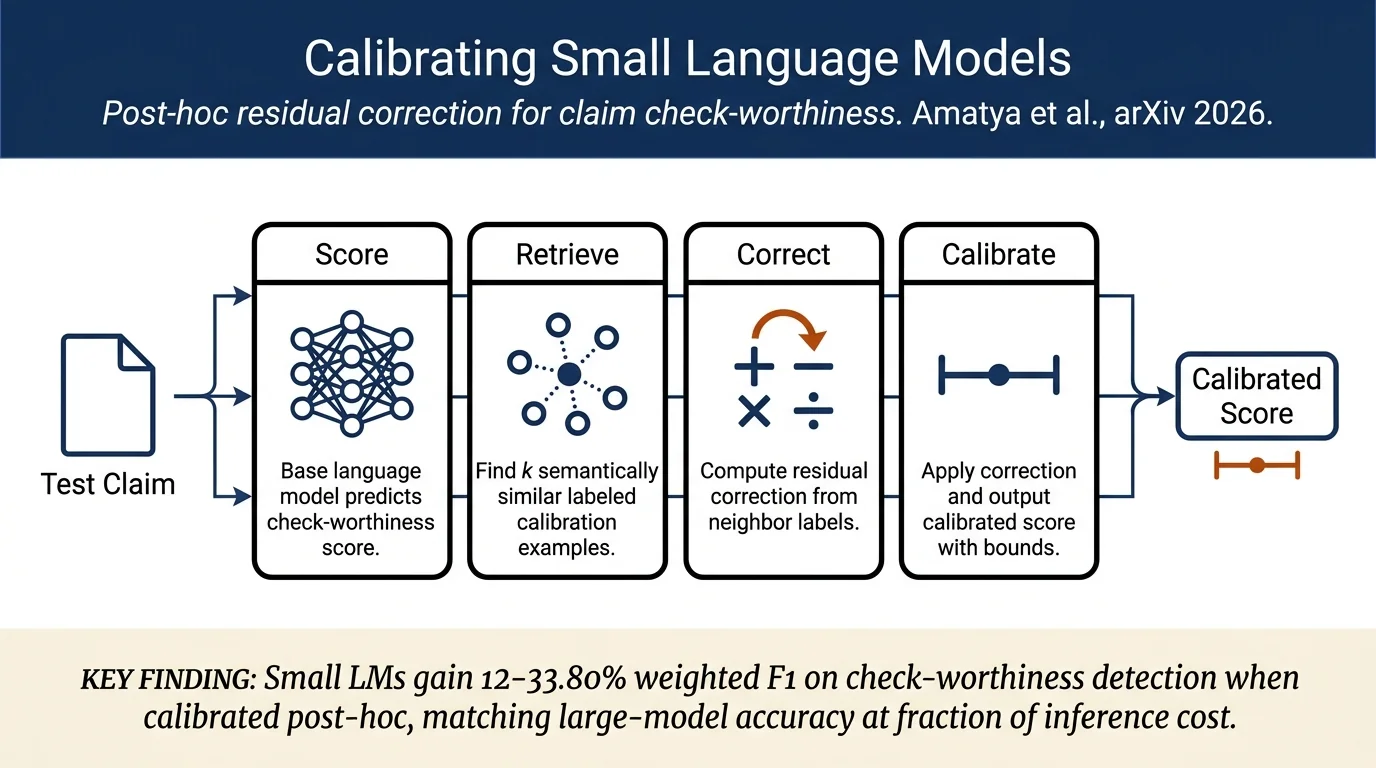
Calibrating Small Language Models for Claim Check-Worthiness DetectionClaim check-worthiness detection is computationally expensive when using large language models, but essential for scaling fact-checking pipelines. This paper proposes NN-PPI (Nearest Neighbor Prediction-Powered Inference), a post-hoc calibration technique that improves small LM predictions using a small labeled calibration set and…
 LLMs & generative AIPlatforms, policy & society
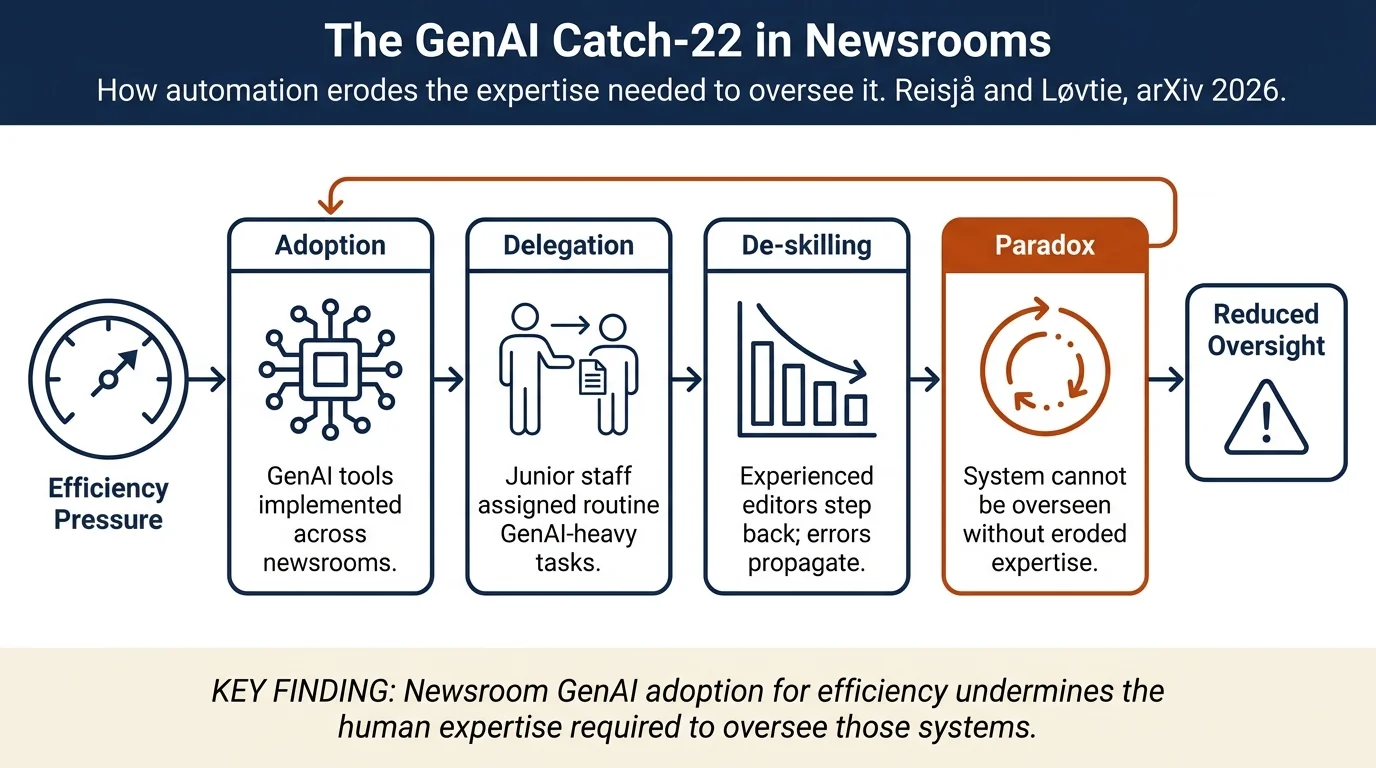
The GenAI Catch-22: Use of Generative Artificial Intelligence in Norwegian Newsrooms During the 2025 Parliamentary ElectionA longitudinal qualitative study of four major Norwegian newsrooms (NRK, TV2, VG, Dagbladet) during the 2025 parliamentary election reveals a "GenAI Catch-22": newsrooms need human expertise to oversee generative AI systems and prevent errors, but extensive use of GenAI leads to de-skilling that erodes that very expertise, rendering…
 Detection methodsDeepfakes & multimodal
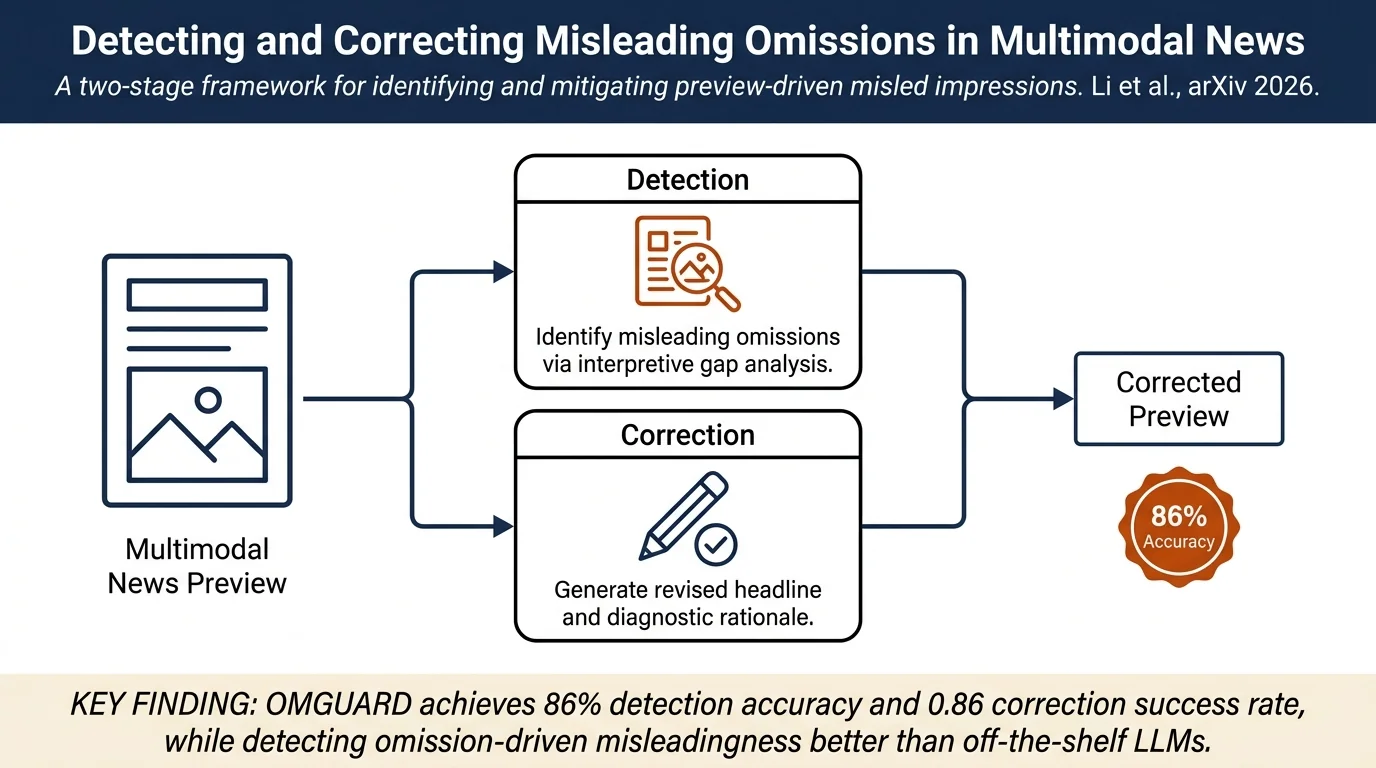
What's Left Unsaid? Detecting and Correcting Misleading Omissions in Multimodal News PreviewsNews previews (headline + image) on social media can mislead readers through selective omission of critical context present in the full article. This paper introduces MM-MISLEADING, a benchmark of 6,000 multimodal news previews annotated for misleading omissions, and proposes OMGUARD, a framework combining interpretation-aware…