Misinformation and disinformation specifically disseminated and amplified through social media platforms (Twitter, Facebook, Instagram, TikTok, YouTube, etc.). Social media facilitates rapid spread of false information through user networks, algorithmic recommendations, and platform affordances that reward engagement regardless of accuracy.
Why social media amplifies misinformation
Platform design: Algorithms that prioritize engagement often amplify emotionally charged, false, or polarizing content; like/share/retweet mechanics accelerate spread; comment features encourage continued engagement.
Network effects: Information spreads to follower networks; networked communities reinforce shared beliefs (echo chambers); viral cascades concentrate reach on a small number of posts.
Speed vs. accuracy: Information spreads faster than corrections; first exposure shapes perception more than later fact-checks.
Actor incentives: Verified accounts may profit from engagement (advertising, sponsorship); automated accounts (bots) amplify strategically; superpreaders leverage large audiences for outsized impact.
Information environment: Degraded quality of information on social media compared to traditional news; lack of editorial gatekeeping; anonymity enables deception.
Key dimensions
Platform variation: Different platforms host distinct misinformation ecosystems (Twitter skews political, Facebook organized communities, YouTube long-form conspiracy content, TikTok algorithm-driven viral trends).
Temporal patterns: Misinformation often peaks during crises (elections, pandemics, disasters); coordinated campaigns amplify strategically timed narratives.
Moderation challenges: Platforms balance free expression with harm prevention; content moderation lags behind spread; deplatforming of major actors remains contested.
Actor typology: Misinformation originators (content creators), platform users (organic sharing), amplifiers (bots, organized networks), influencers/verified accounts (outsized reach), coordinated inauthentic actors (computational propaganda).
Key papers and talks in this wiki
-
Pierri et al. (2022) — One year of COVID-19 vaccine misinformation on Twitter: Longitudinal study — Longitudinal analysis of 294M tweets tracking vaccine misinformation spread across 2021. Found that ~800 "superspreaders" accounted for 35% of misinformation reshares; verified accounts responsible for 43% of low-credibility content despite being <6% of posters. Demonstrates concentrated amplification through social networks.
-
Yang, Torres-Lugo & Menczer (2020) — Prevalence of low-credibility information on Twitter during the COVID-19 outbreak — Domain-based prevalence study finding 0.89% of tweets linked to low-credibility sources; demonstrates that retweets comprise 68% of misinformation spread; bots generate 15% of low-credibility volume at tweet level.
-
Chen et al. (2021) — Neutral Bots Probe Political Bias on Social Media — Study of neutral bot experiments probing political bias in Twitter algorithm; demonstrates platform's algorithm-based content filters and partisan content prioritization.
-
Bradshaw, Bailey & Howard (2021) — Industrialized Disinformation: 2020 Global Inventory of Organized Social Media Manipulation — Global catalog documenting computational propaganda campaigns in 57 countries; analyzes bot network deployment, organizational structures, and platform responses.
Related topics
- Misinformation — broader category of false information
- Information diffusion in social networks — mechanisms of information spread
- Social Media Analysis — methodologies for studying platforms
- Social bots — automated accounts amplifying content
- Echo Chambers — self-reinforcing information networks
- Algorithmic amplification — role of recommendation systems
Papers on this topic
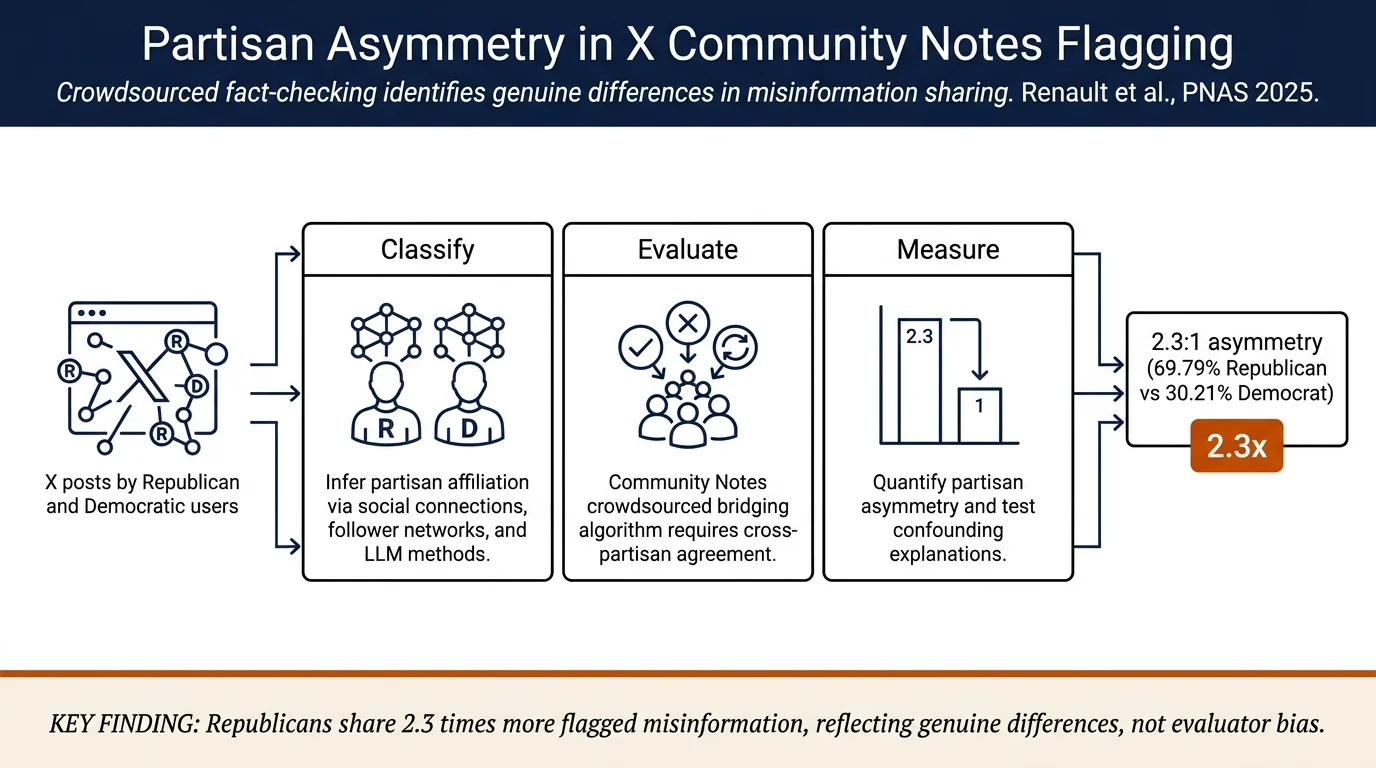 Detection methodsPlatforms, policy & society
Republicans are flagged more often than Democrats for sharing misinformation on X’s Community Notes
Detection methodsSpread & networks
An Analytical Emotion Framework of Rumour Threads on Social Media
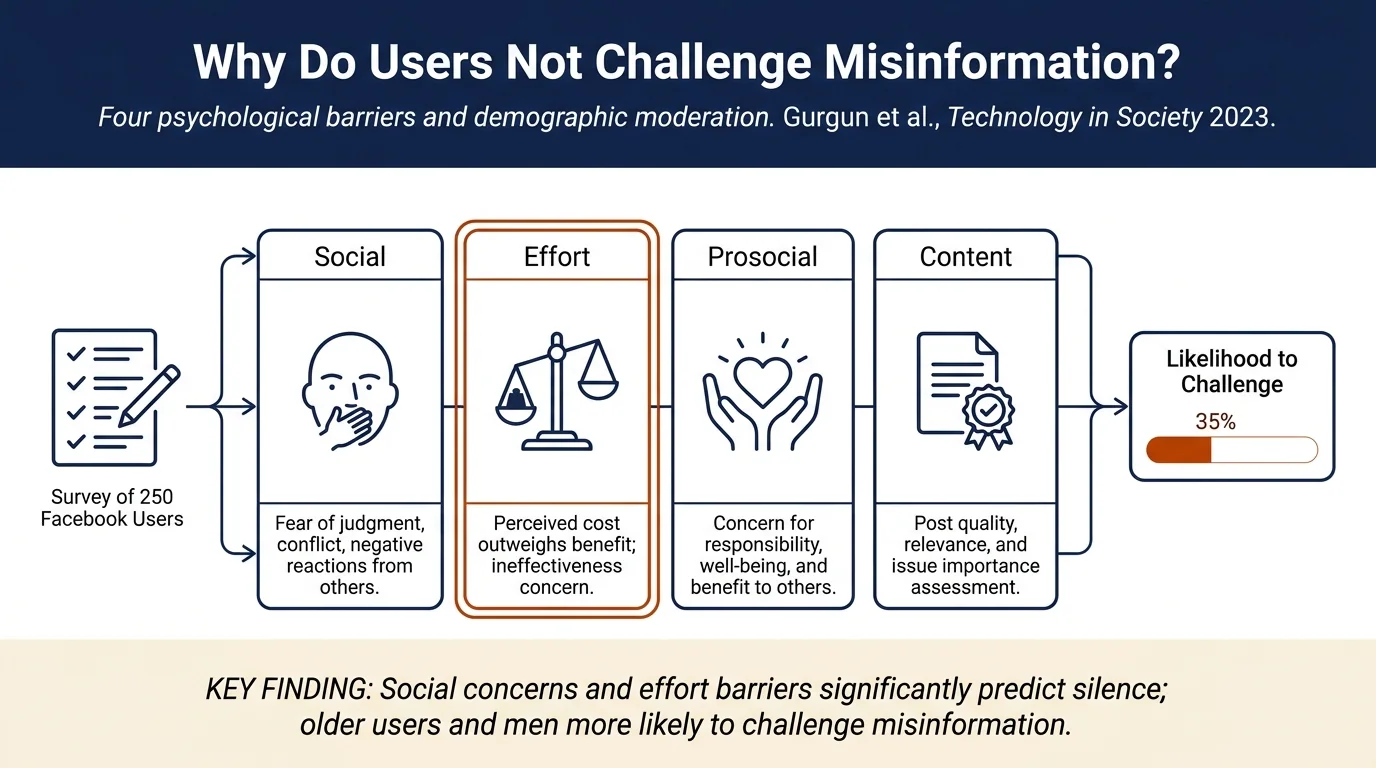 Psychology & interventionsDetection methods
Why do we not stand up to misinformation? Factors influencing the likelihood of challenging misinformation on social media and the role of demographics
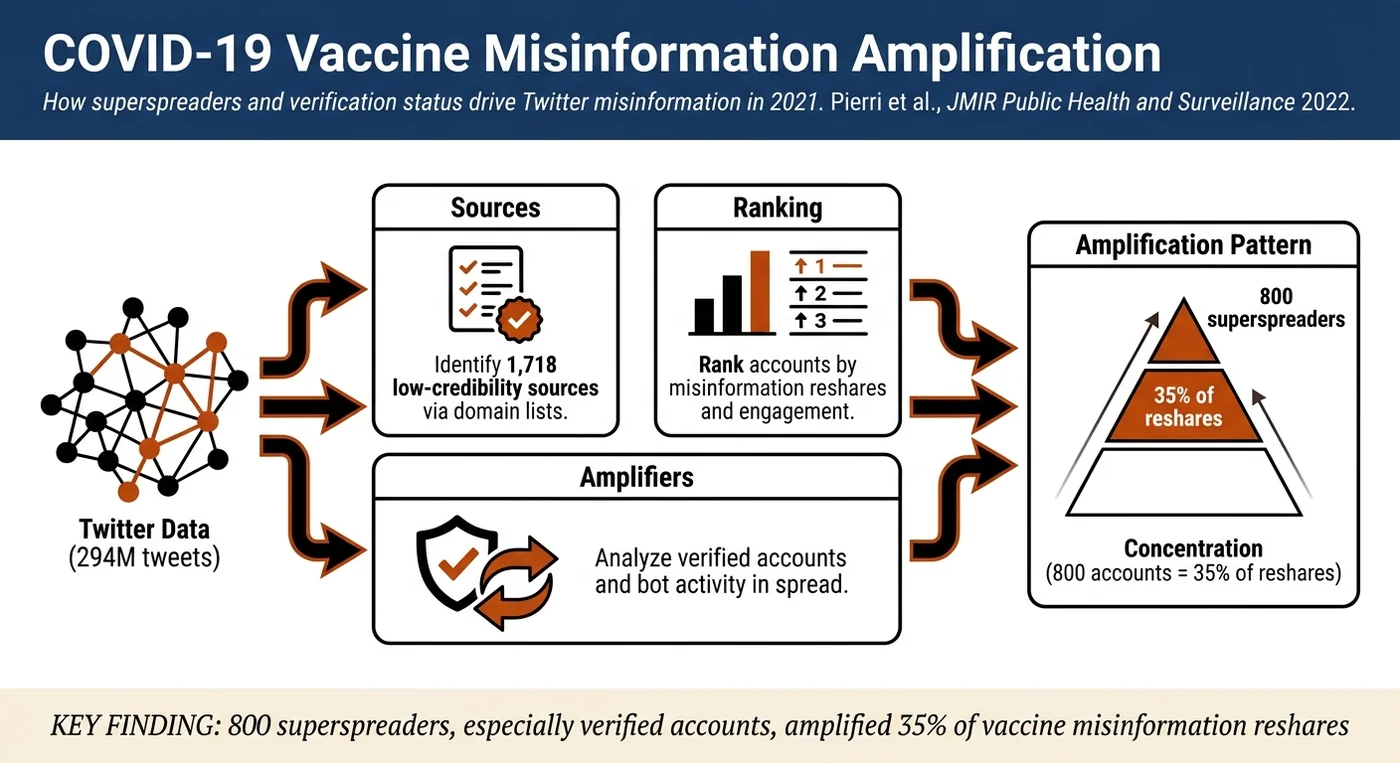 Detection methodsSpread & networks
One year of COVID-19 vaccine misinformation on Twitter: Longitudinal study
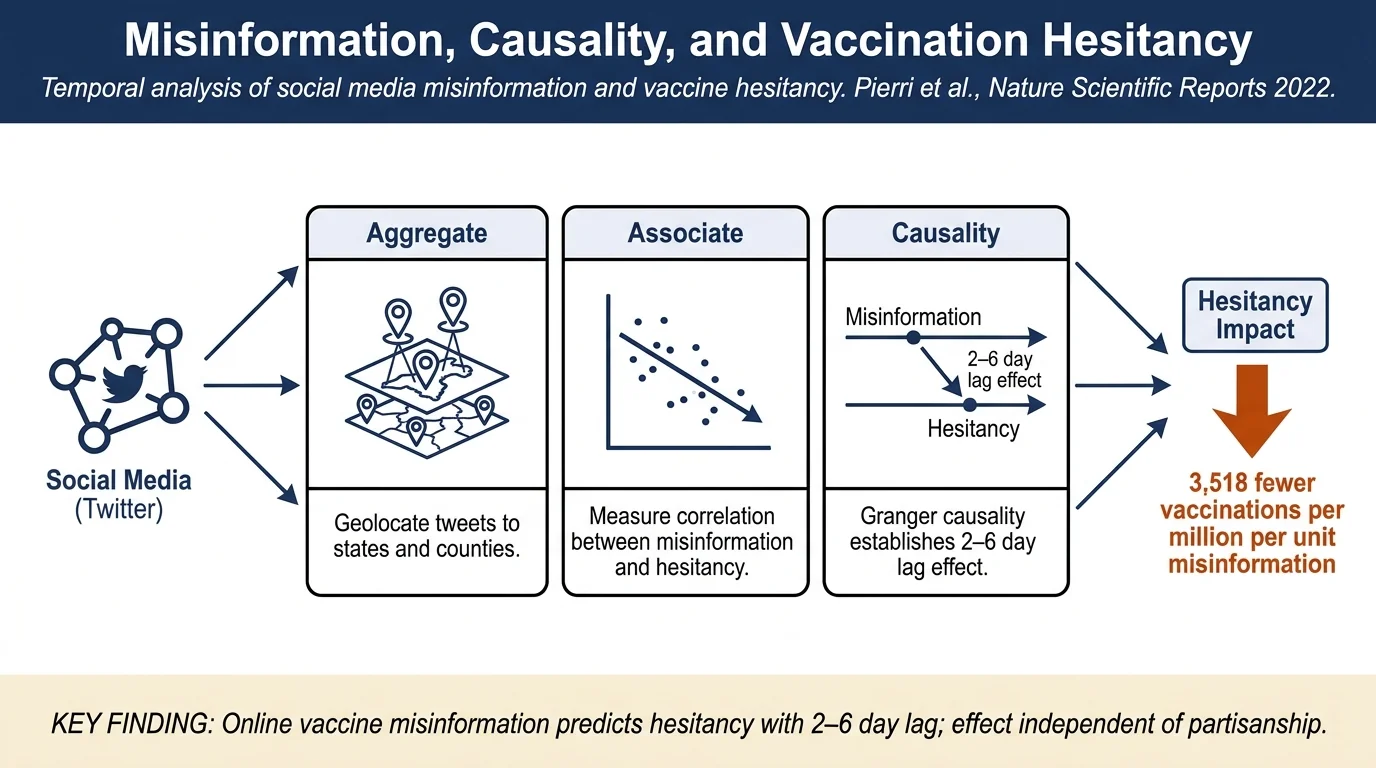 Detection methodsPlatforms, policy & society
Online misinformation is linked to early COVID-19 vaccination hesitancy and refusal
 Detection methodsPlatforms, policy & society
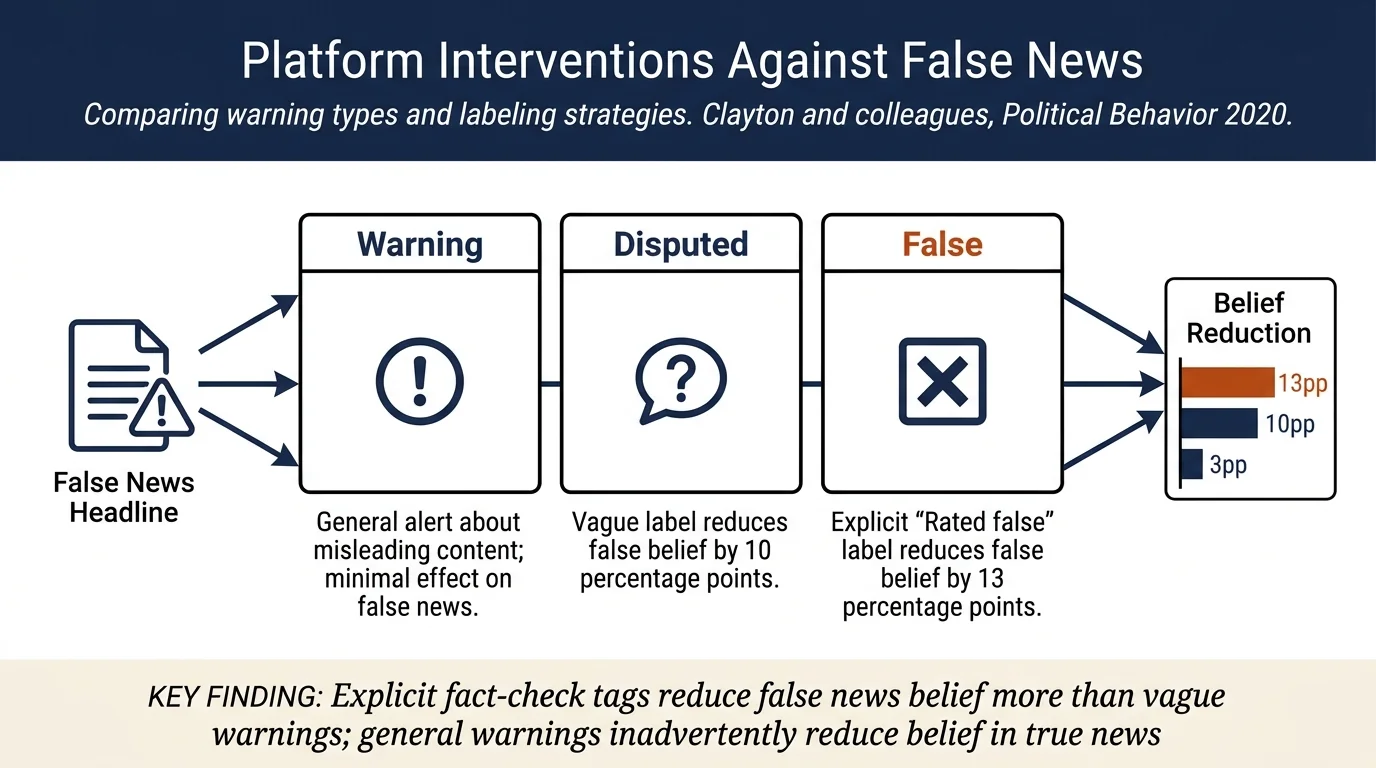
Real Solutions for Fake News? Measuring the Effectiveness of General Warnings and Fact-Check Tags in Reducing Belief in False Stories on Social Media
 Detection methodsSpread & networks
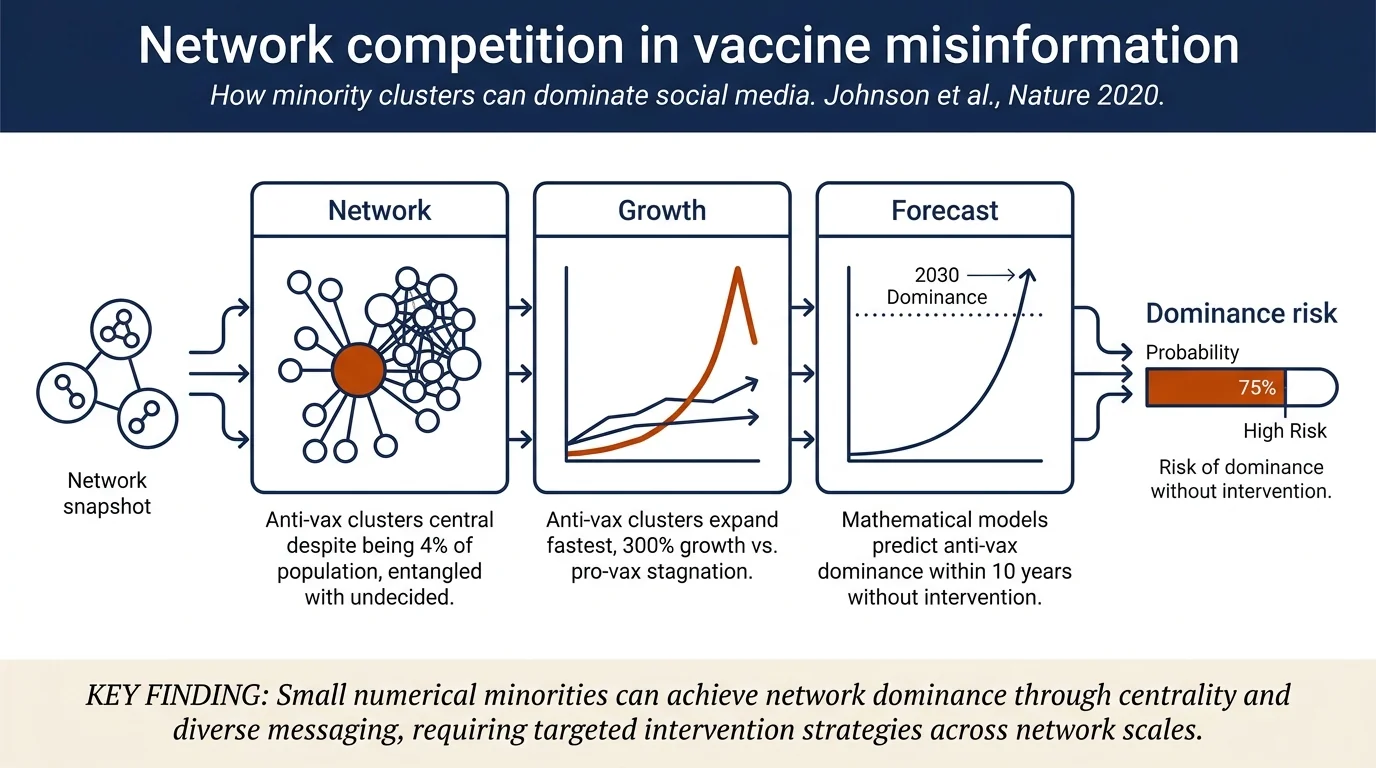
The online competition between pro- and anti-vaccination views