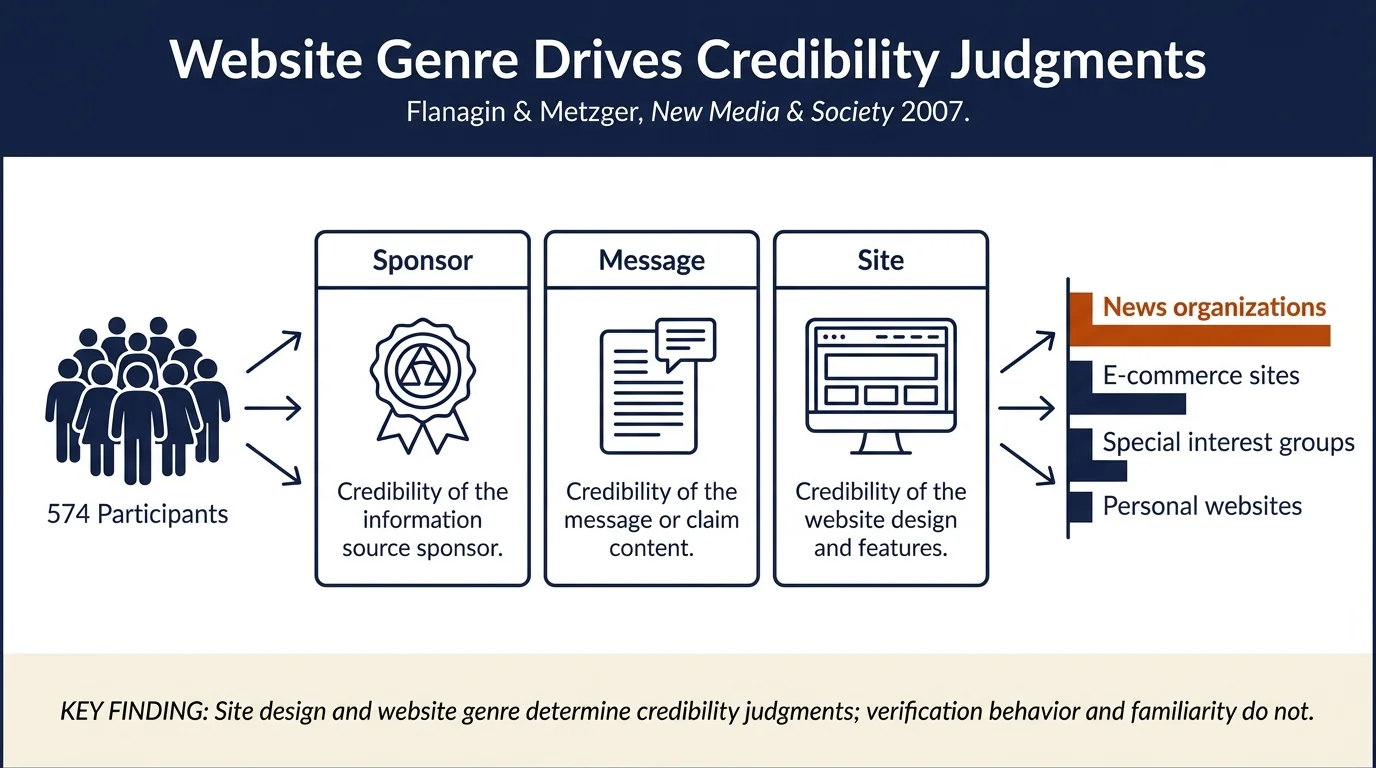
Information verification refers to the strategies and behaviors individuals employ when assessing whether a claim or piece of information is accurate and trustworthy. This includes both the cognitive processes (heuristics and systematic reasoning) and the specific tactics (checking sources, cross-referencing, consulting experts) people use to determine information credibility.
Key verification strategies
Empirical verification: Consulting multiple independent sources to compare accounts; seeking primary sources; checking if information is current and comprehensive.
Authority-based verification: Evaluating the expertise and qualifications of the source; checking institutional affiliation; assessing author credentials and track record.
Content-based verification: Examining whether the information is internally consistent; identifying logical fallacies or emotional manipulation; distinguishing factual claims from opinion.
Cross-reference verification: Seeking out other sources that address the same claim; checking for corroboration across diverse media; consulting fact-checking organizations.
Heuristic-based verification: Relying on mental shortcuts like source reputation, consistency with prior beliefs, or signals from trusted peers.
Verification gaps in practice
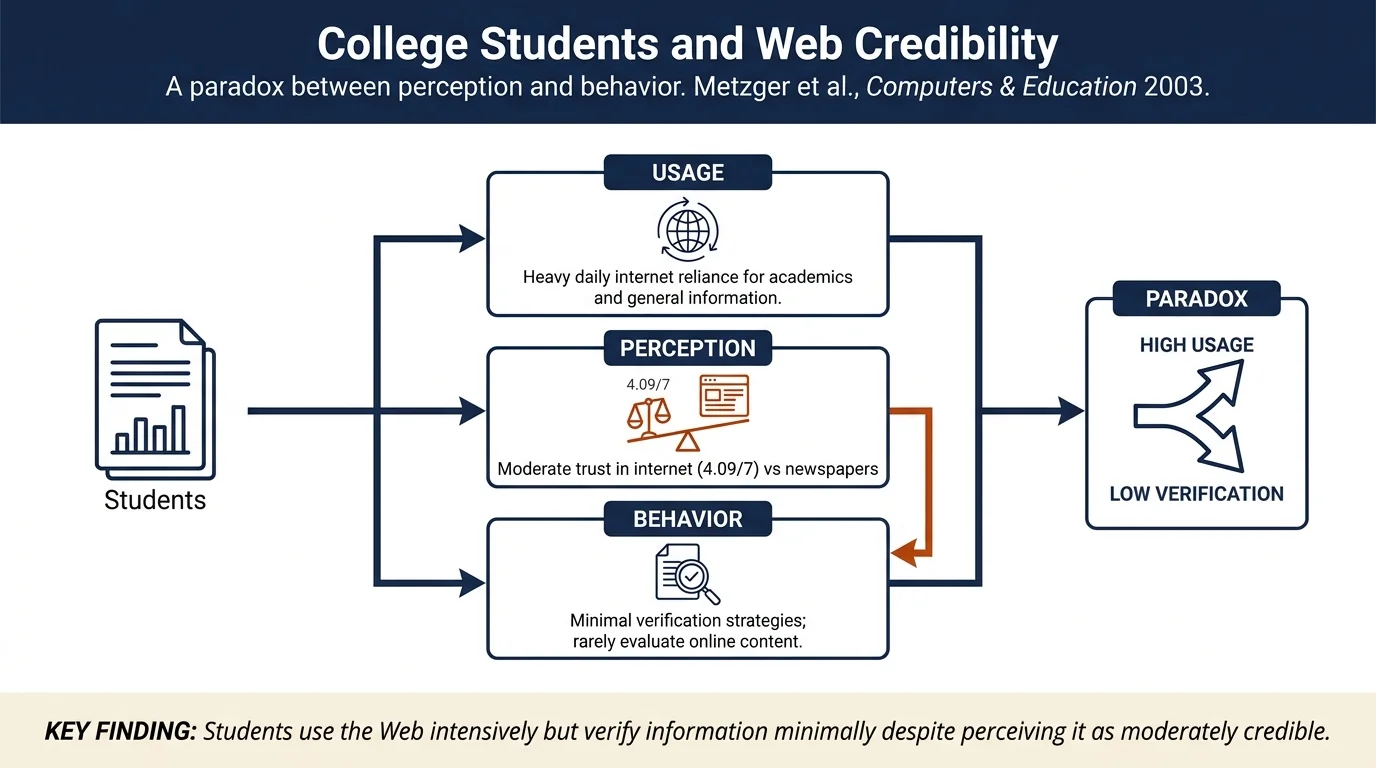
Research consistently documents a credibility paradox: individuals who use information-abundant sources (the Web, social media) most frequently verify information least often. College students in particular report heavy Web use but minimal verification effort. This gap between usage frequency and verification effort represents a critical vulnerability to misinformation: high-usage populations may develop false confidence in their ability to judge information quality, while lacking systematic evaluation practices.
Role in misinformation
Misinformation exploits gaps in verification behavior. When users apply heuristic-based verification (e.g., trusting information because it comes from a source with many followers), they become vulnerable to impersonation, deepfakes, and coordinated disinformation campaigns that mimic credible sources. Conversely, instruction in formal verification strategies—lateral reading, checking primary sources, understanding source funding and bias—has been shown to improve accuracy discernment.
Key papers
- Metzger, Flanagin & Zwarun (2003) — Empirical documentation of verification gap: college students verify Web information minimally (M = 2.49/5) despite heavy reliance; most frequent strategies involve checking currenciness and completeness rather than authority assessment; demonstrates credibility paradox where trusted users verify least.
- Metzger (2007) — Comprehensive review of verification strategies users employ online; proposes dual-processing model explaining when systematic evaluation (checking credentials, cross-referencing) occurs vs. heuristic evaluation (relying on design/reputation); identifies conditions that trigger thorough vs. superficial evaluation.
- Flanagin & Metzger (2000) — Foundational work identifying nine verification tactics users employ; shows verification frequency correlates with perceived helpfulness of information source.
- Lateral Reading and the Nature of Expertise: Reading Less and Learning More When Evaluating Digital Information — Expert study comparing verification strategies across professional fact-checkers, historians, and college students; demonstrates that fact-checkers use "lateral reading" (leaving a website to investigate claims and sources) while students rely on surface features (design, logos); shows that expert verification strategies are learnable and effective (high accuracy in <2 minutes).
- Metzger, Flanagin & Medders (2010) — Empirical work on how users employ social and cognitive heuristics during verification; identifies reputation, endorsement, consistency, and expectancy-violation as primary mental shortcuts; shows verification is rapid and often automatic.
Related topics
- Source Credibility — Foundation for authority-based verification
- Internet Literacy — Formal skills for effective information evaluation
- Fact-checking and corrections — Systematic verification by trained professionals
- Misinformation — Context in which verification is essential