Explore papers
Filter by research area, year and venue. Every filter is in the address bar, so you can share a view as a link.
 Spread & networksPlatforms, policy & society
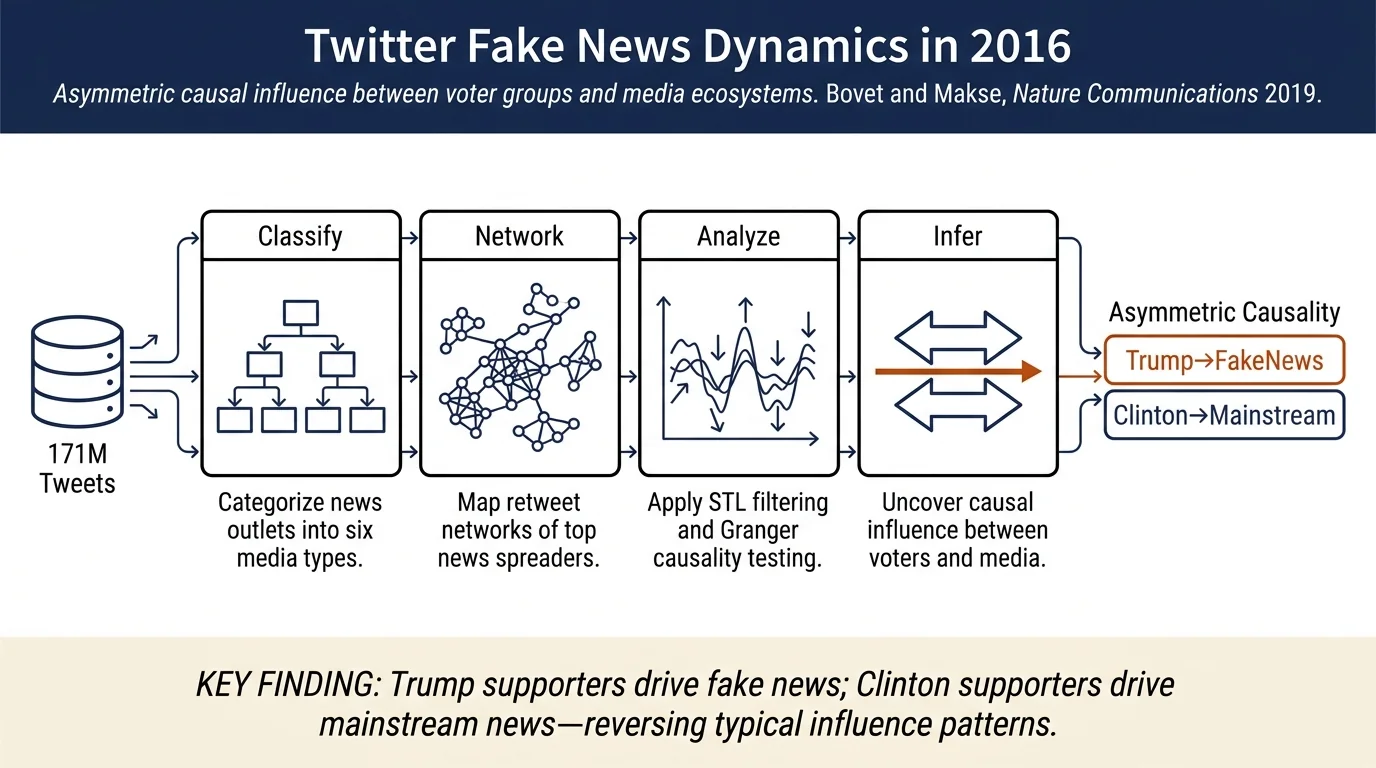
Influence of fake news in Twitter during the 2016 US presidential electionUsing 171 million tweets from the five months preceding the 2016 U.S. election, this study found that 25% of news-sharing tweets contained fake or extremely biased content. Network analysis revealed distinct clusters of fake, biased, and mainstream news spreaders.
 Fact-checking & verificationDatasets & evaluation
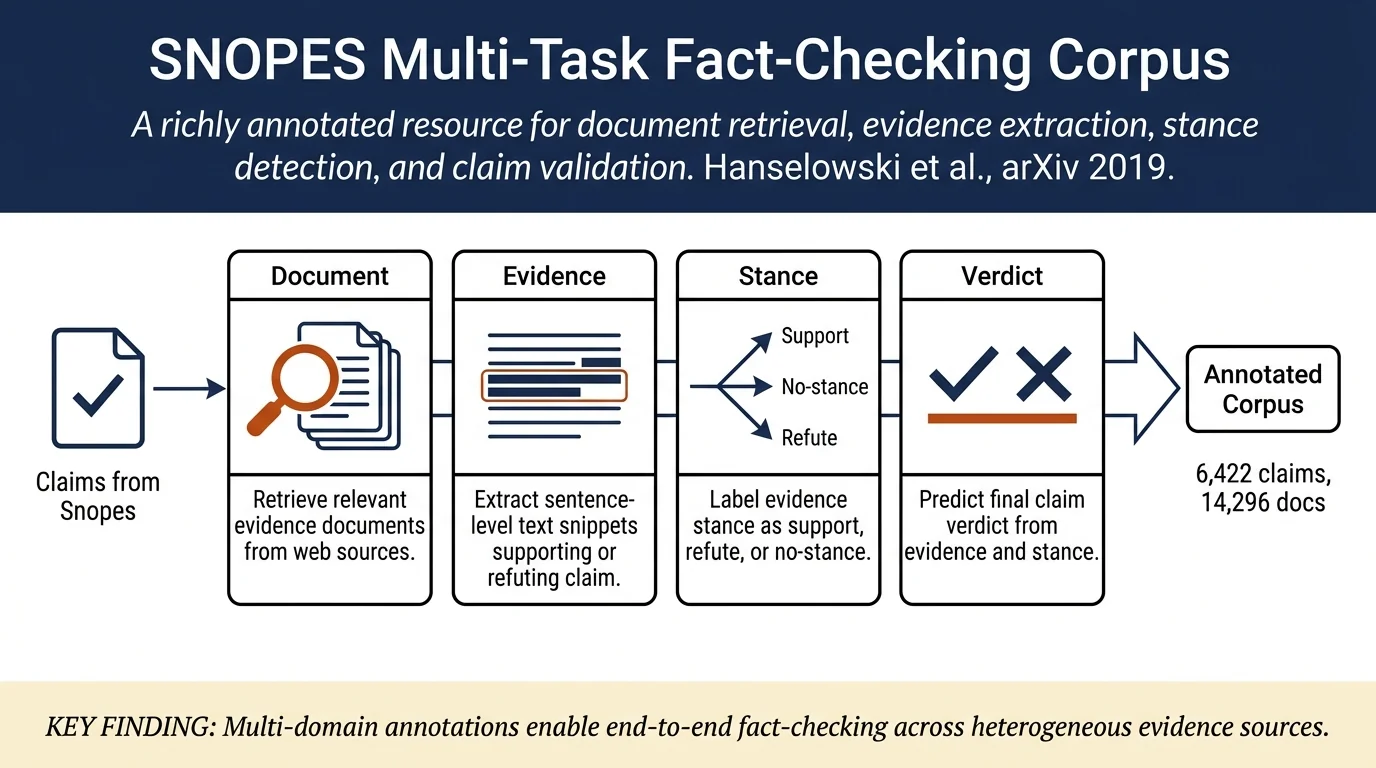
A Richly Annotated Corpus for Different Tasks in Automated Fact-CheckingThe paper introduces SNOPES, a large-scale fact-checking corpus with 6,422 validated claims and 14,296 documents covering multiple domains (news, social media, blogs). Each claim is annotated with evidence text snippets, evidence stance (support/refute/no stance), and verdicts, enabling training of models for four core fact-checking…
 Fact-checking & verificationDatasets & evaluation
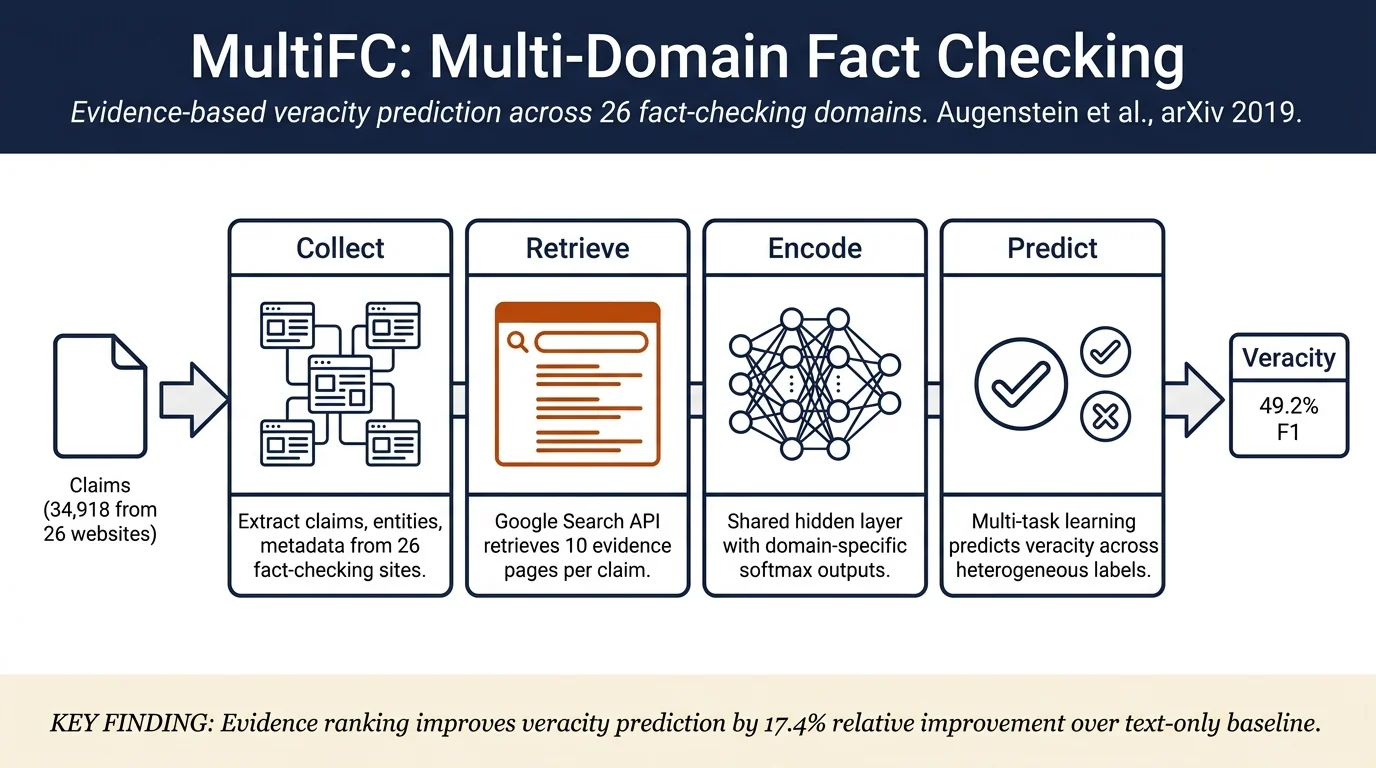
MultiFC: A Real-World Multi-Domain Dataset for Evidence-Based Fact Checking of ClaimsMultiFC is the largest publicly available real-world dataset of naturally occurring factual claims (34,918 claims) collected from 26 fact-checking websites, with rich metadata, evidence pages retrieved via Google Search, and entity linking to Wikipedia. The paper demonstrates that evidence ranking combined with veracity prediction…
 Datasets & evaluationSpread & networks
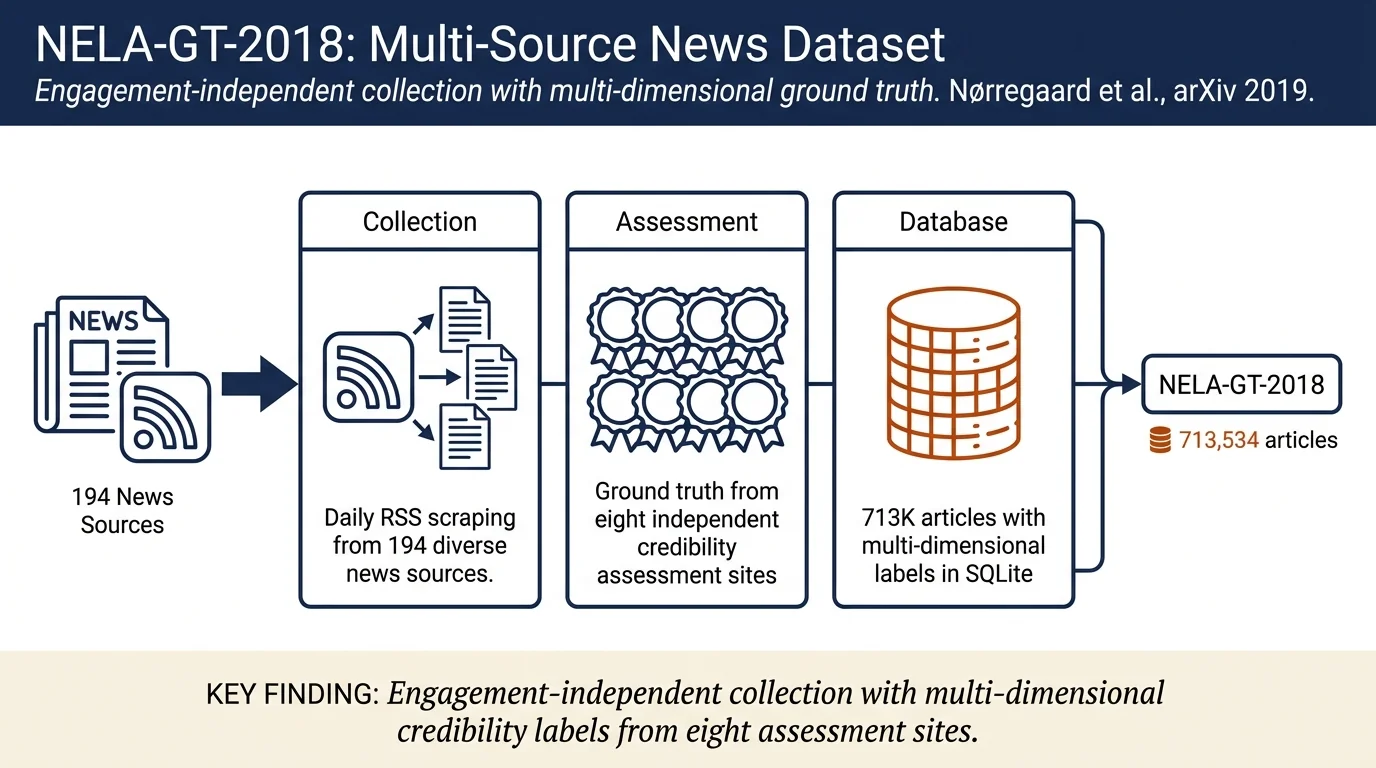
NELA-GT-2018: A Large Multi-Labelled News Dataset for The Study of Misinformation in News ArticlesNELA-GT-2018 is a large, engagement-independent collection of 713,534 news articles from 194 sources across 10 months (Feb–Nov 2018). It combines multi-source-level ground truth labels from eight independent assessment sites (NewsGuard, Pew Research, Wikipedia, OpenSources, Media Bias/Fact Check, AllSides, BuzzFeed News, PolitiFact)…
 Spread & networksDatasets & evaluation
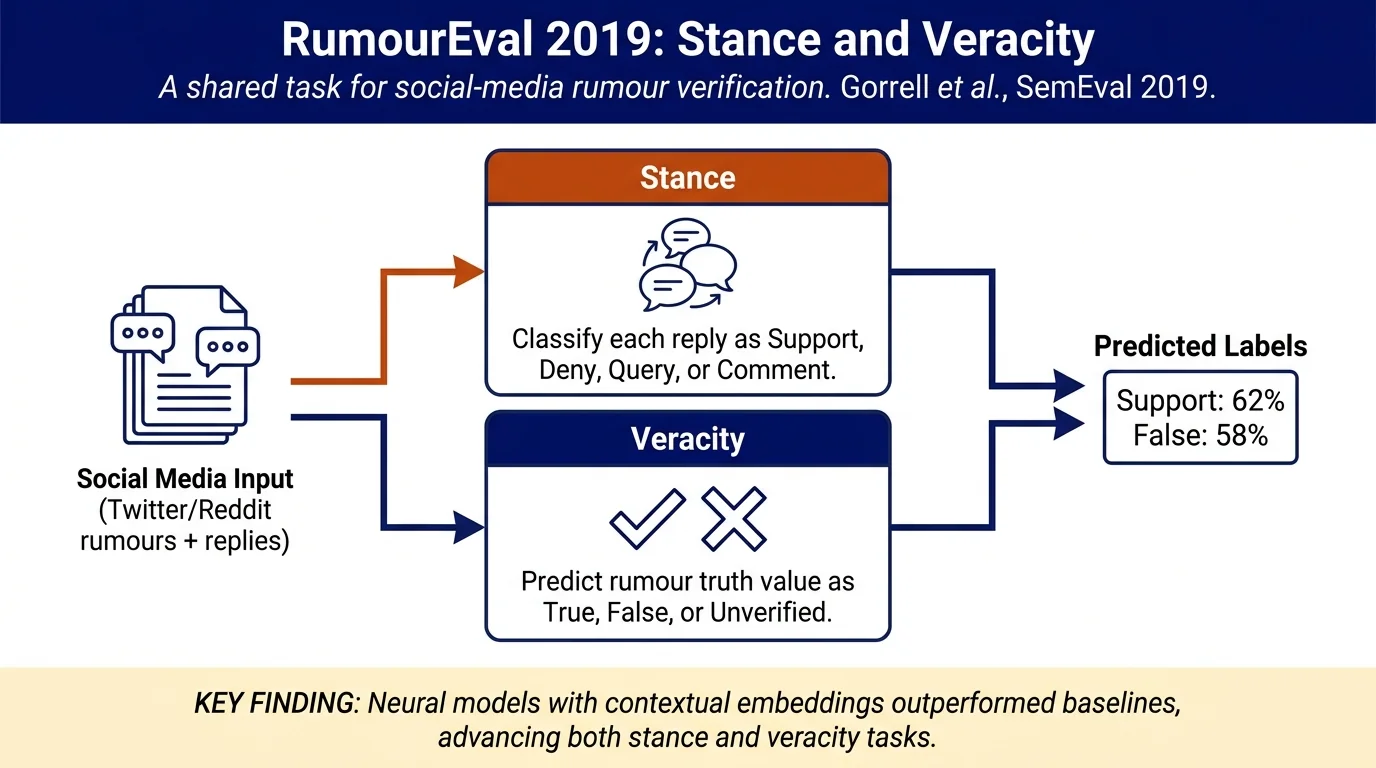
RumourEval 2019: Determining Rumour Veracity and Support for RumoursRumourEval 2019 is a shared task for rumour stance detection and veracity prediction on social media. Extending the 2017 edition, it introduces Reddit data alongside Twitter, provides datasets annotated for SDQC stance (Support/Deny/Query/Comment) and three-way veracity labels, and received 22 system submissions showing that modern…
 Fact-checking & verificationPlatforms, policy & society
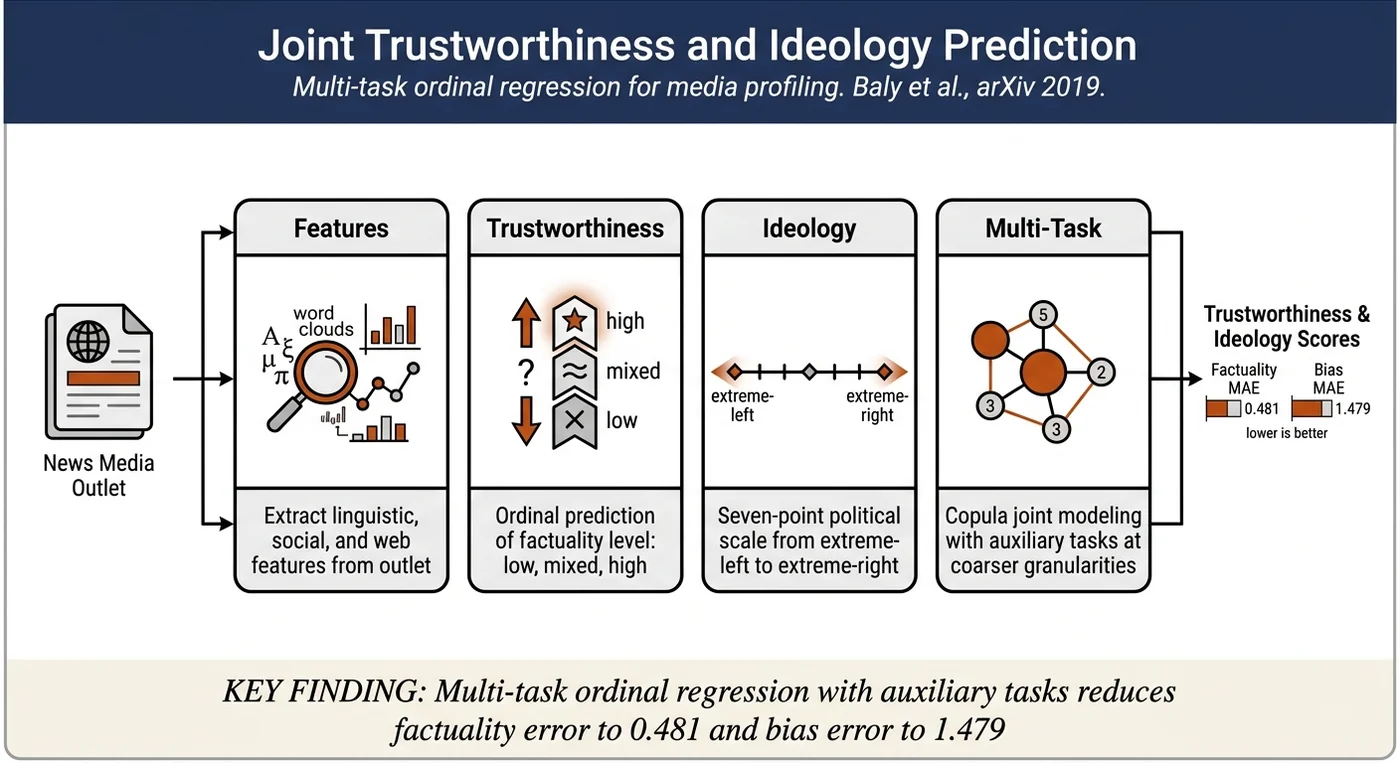
Multi-Task Ordinal Regression for Jointly Predicting the Trustworthiness and the Leading Political Ideology of News MediaRather than predicting media bias and trustworthiness separately, this paper jointly models both as ordinal regression tasks using Copula Ordinal Regression. The intuition is that hyper-partisan outlets tend to be less trustworthy, while centrist outlets are more factual.
 Fact-checking & verificationPlatforms, policy & society
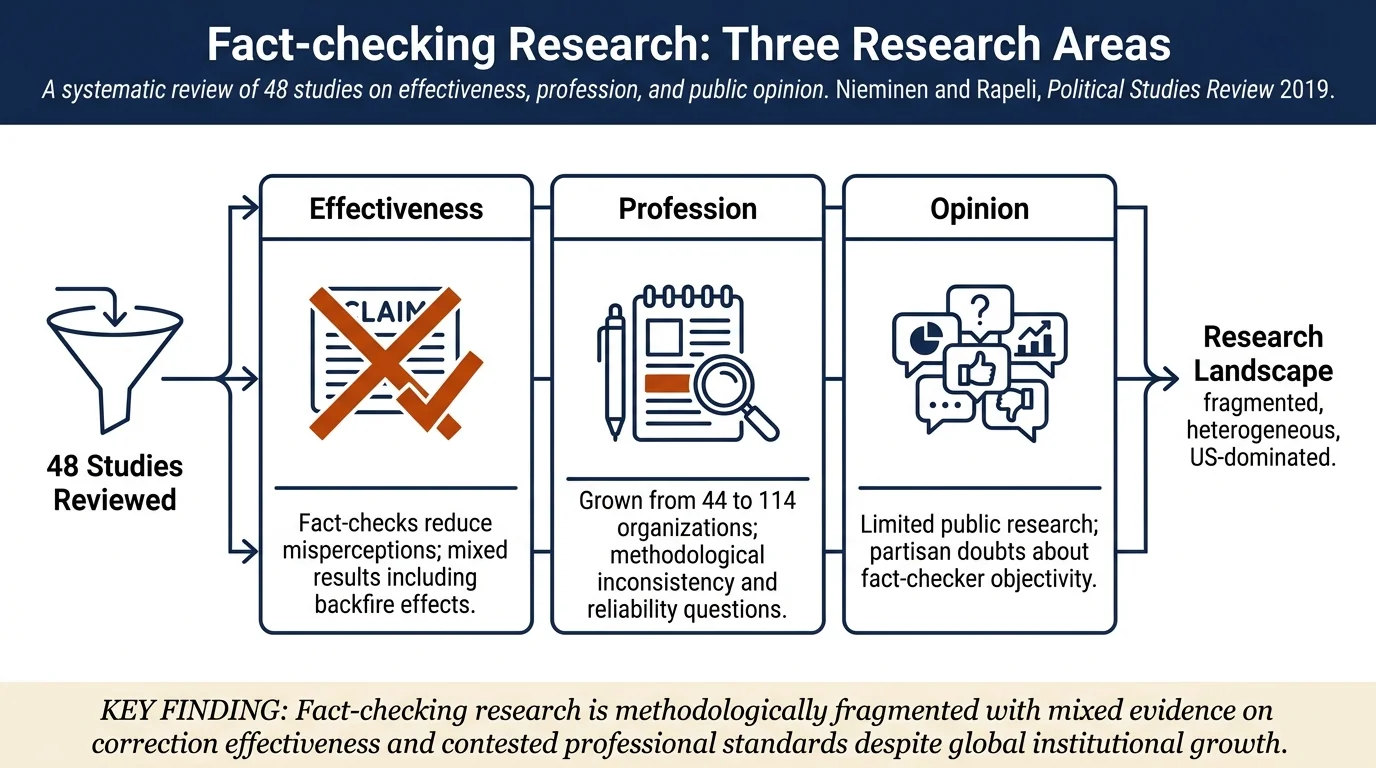
Fighting Misperceptions and Doubting Journalists' Objectivity: A Review of Fact-checking LiteratureComprehensive literature review of 48 studies on political fact-checking, organized into three research areas: (1) fact-checking effectiveness for correcting misperceptions (mixed results, including backfire effects); (2) fact-checking as a profession (contested methods and reliability); (3) public opinion about fact-checking (mostly…
 Psychology & interventionsSpread & networks
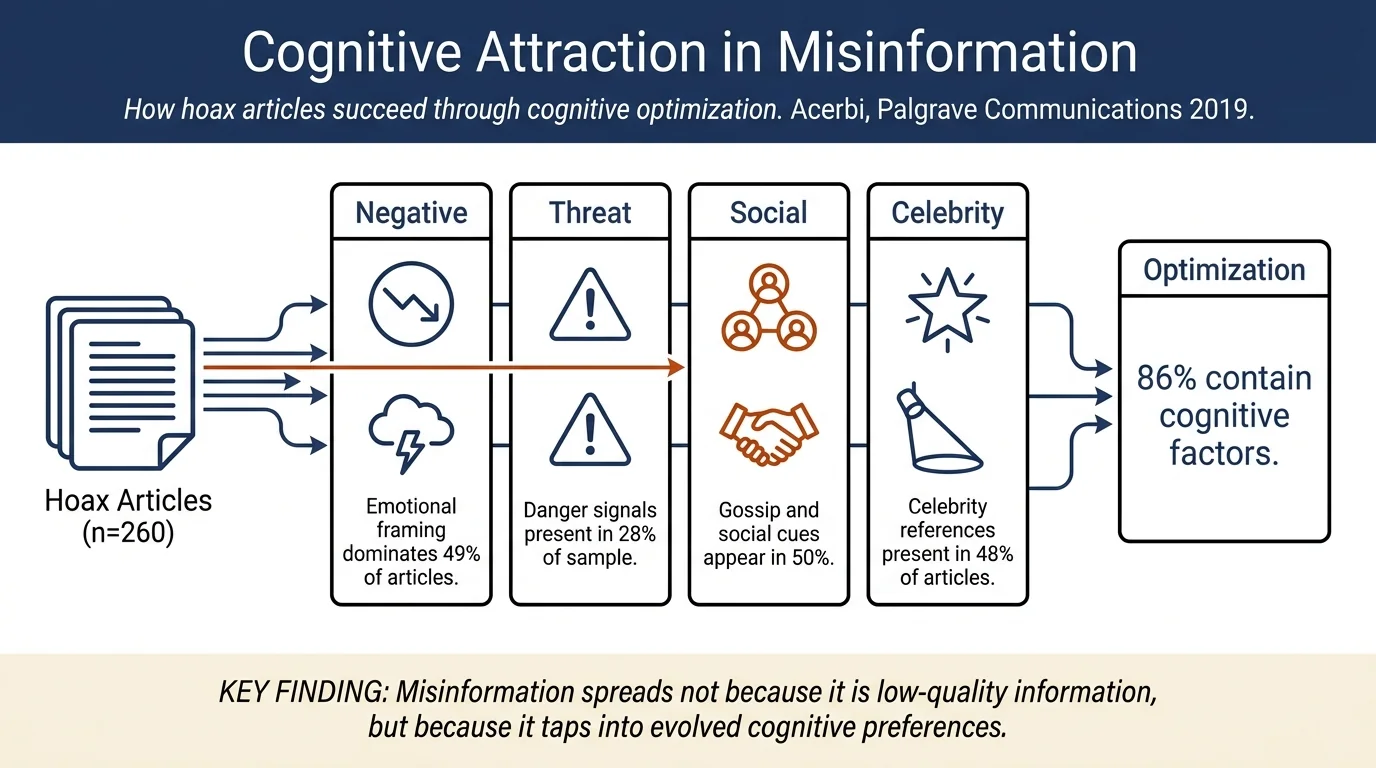
Cognitive attraction and online misinformationMisinformation spreads not because it is low-quality information constrained by digital media inefficiencies, but because it taps into general evolved cognitive preferences. A content analysis of 260 articles from 26 hoax websites shows that 86% contain at least one cognitive-appeal feature: negative framing (49%), threat descriptions…